Red Train Blog

Ramblings to the left

The Red Train Blog is a left leaning politics blog, which mainly focuses on British politics and is written by two socialists. We are Labour Party members, for now, and are concerned about issues such as inequality, nationalisation, housing, the NHS and peace. What you will find here is a discussion of issues that affect the Labour Party, the wider left and politics as a whole.

  • Home
  • Topics
    • Topics
    • EU referendum
    • The Crisis in the Labour Party
  • Art
  • Books
  • About us
  • Search

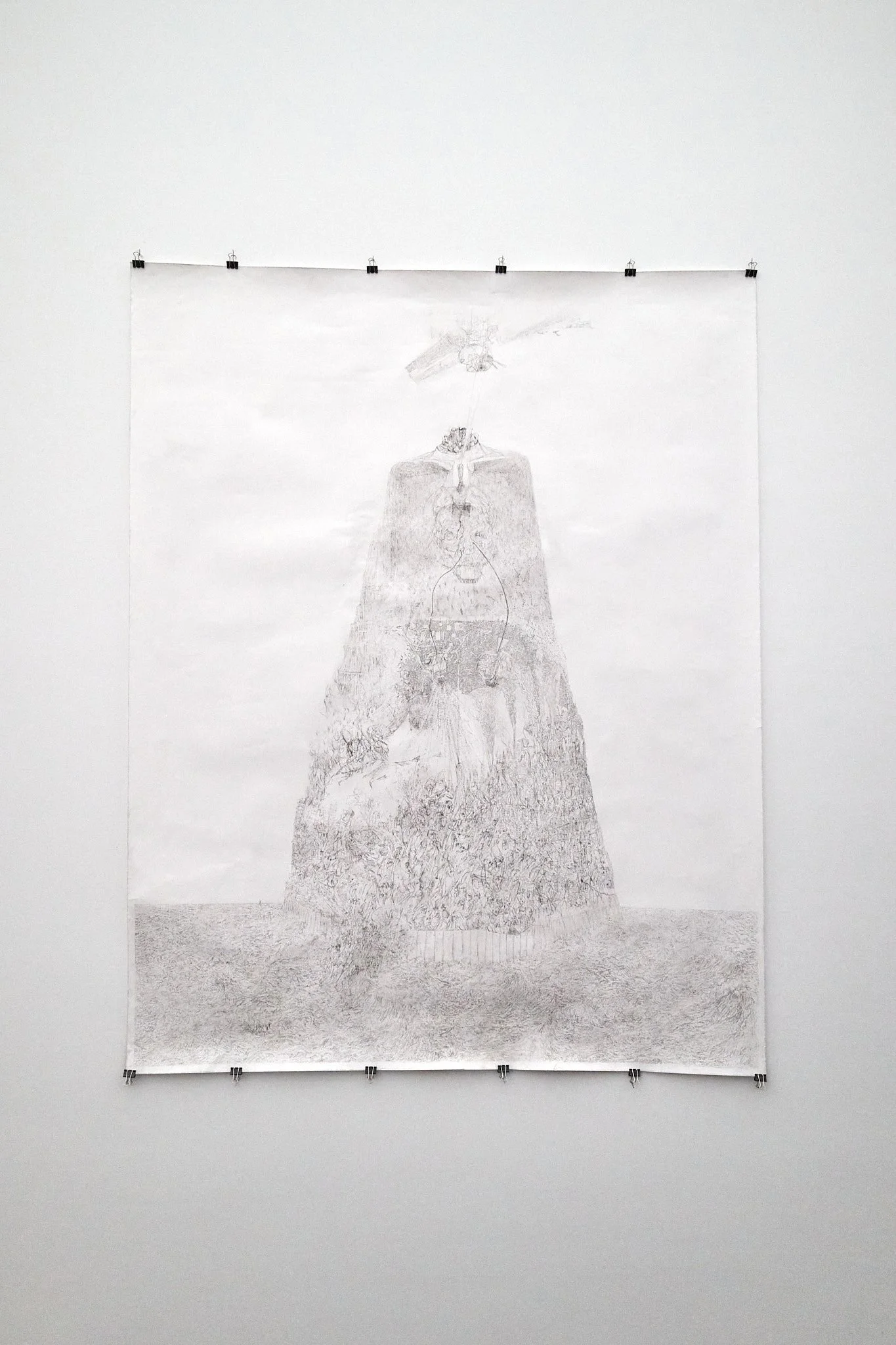
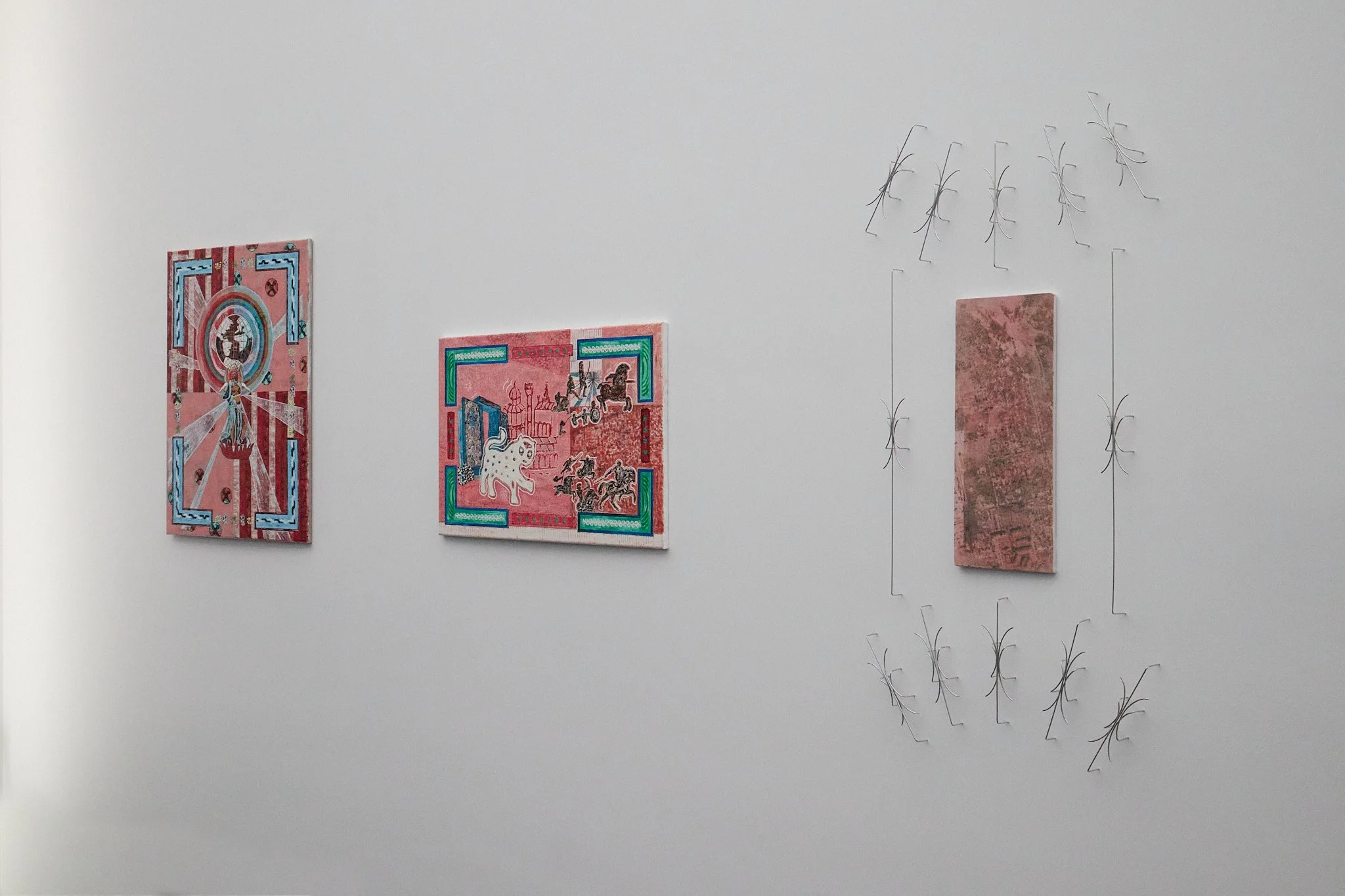
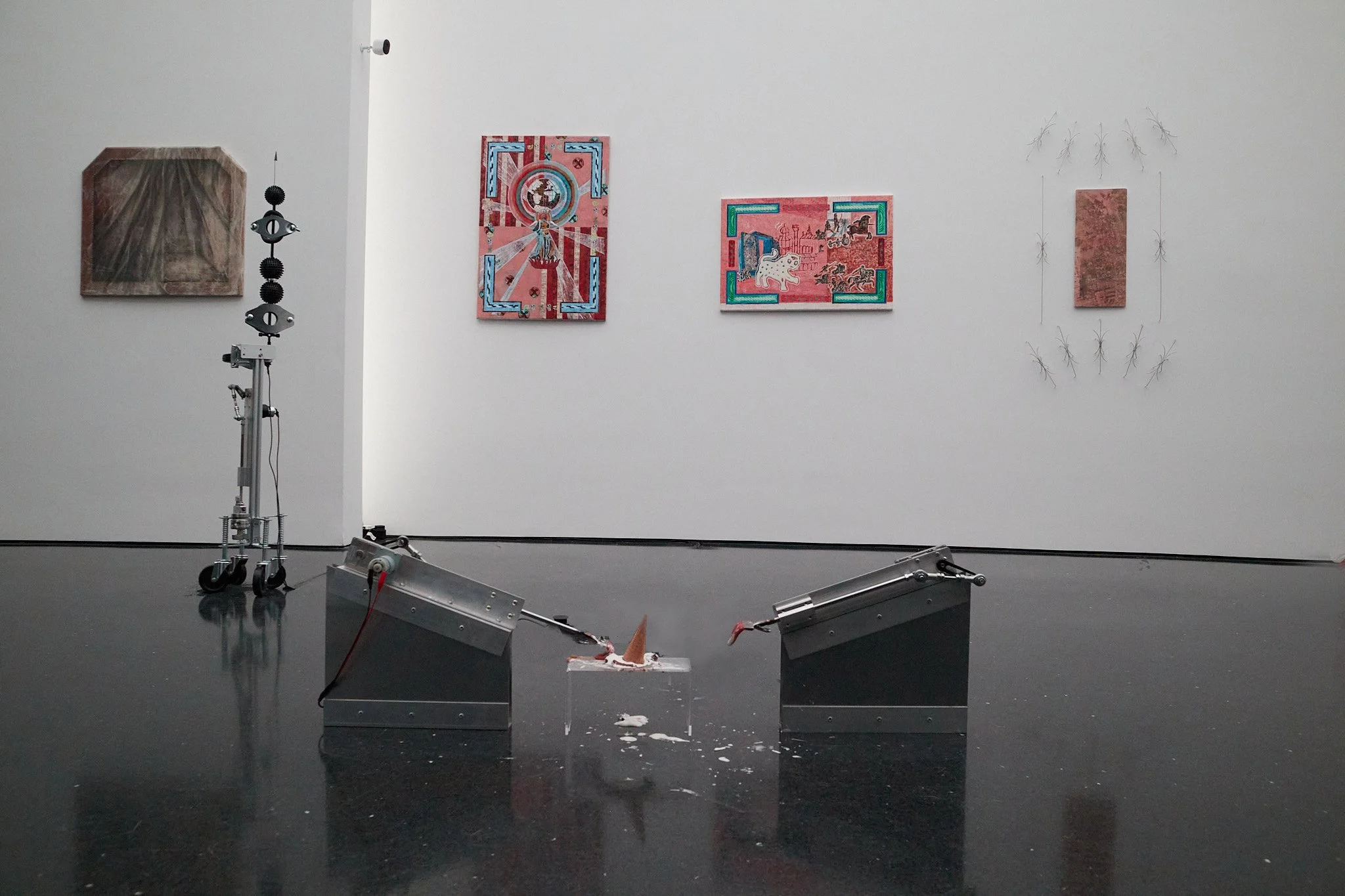
Nothing Holds On Its Own: social architecture and how we all live together  

November 19, 2025 by Alastair Ball in Art exhibition review

By Alastair JR Ball

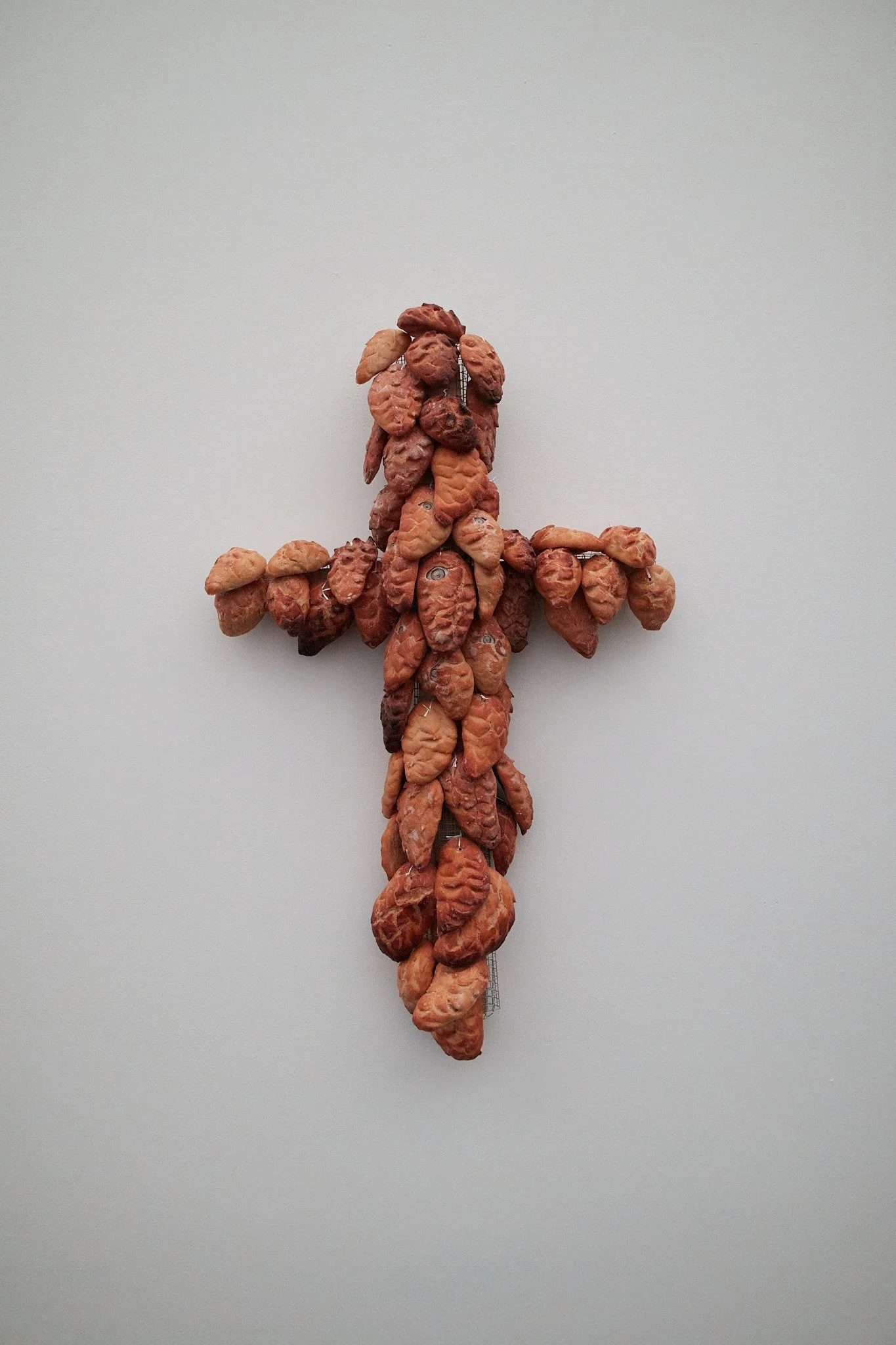
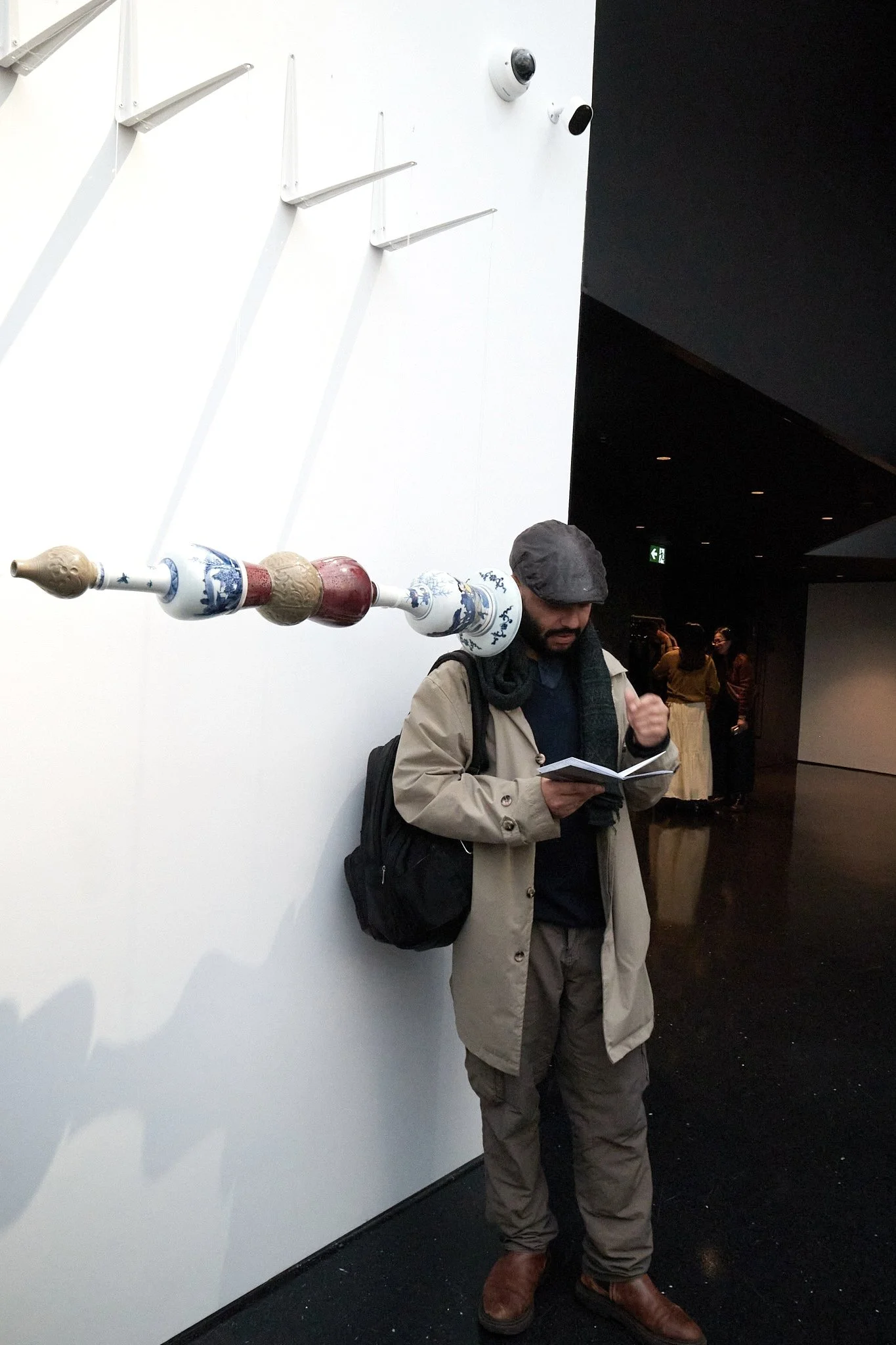
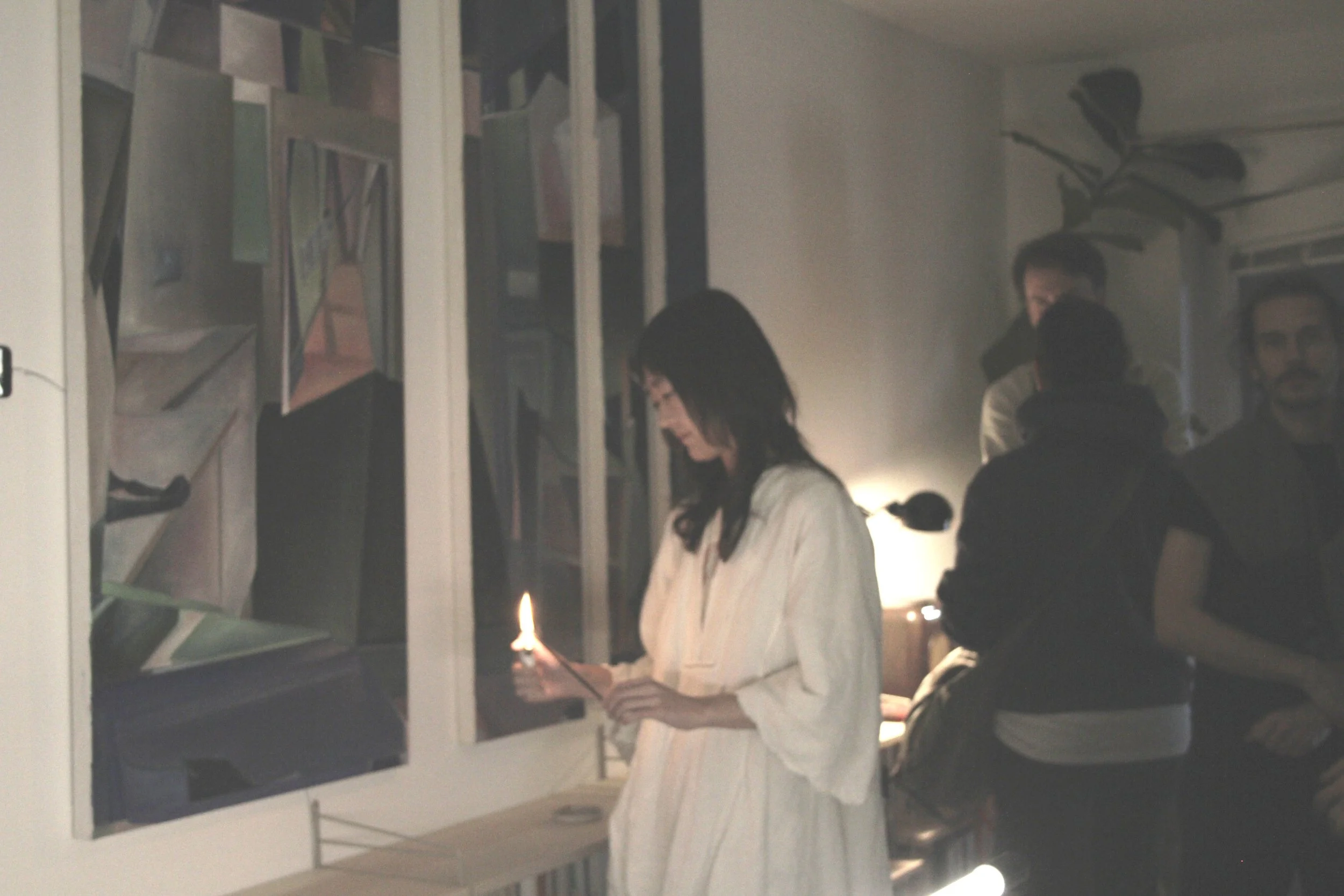
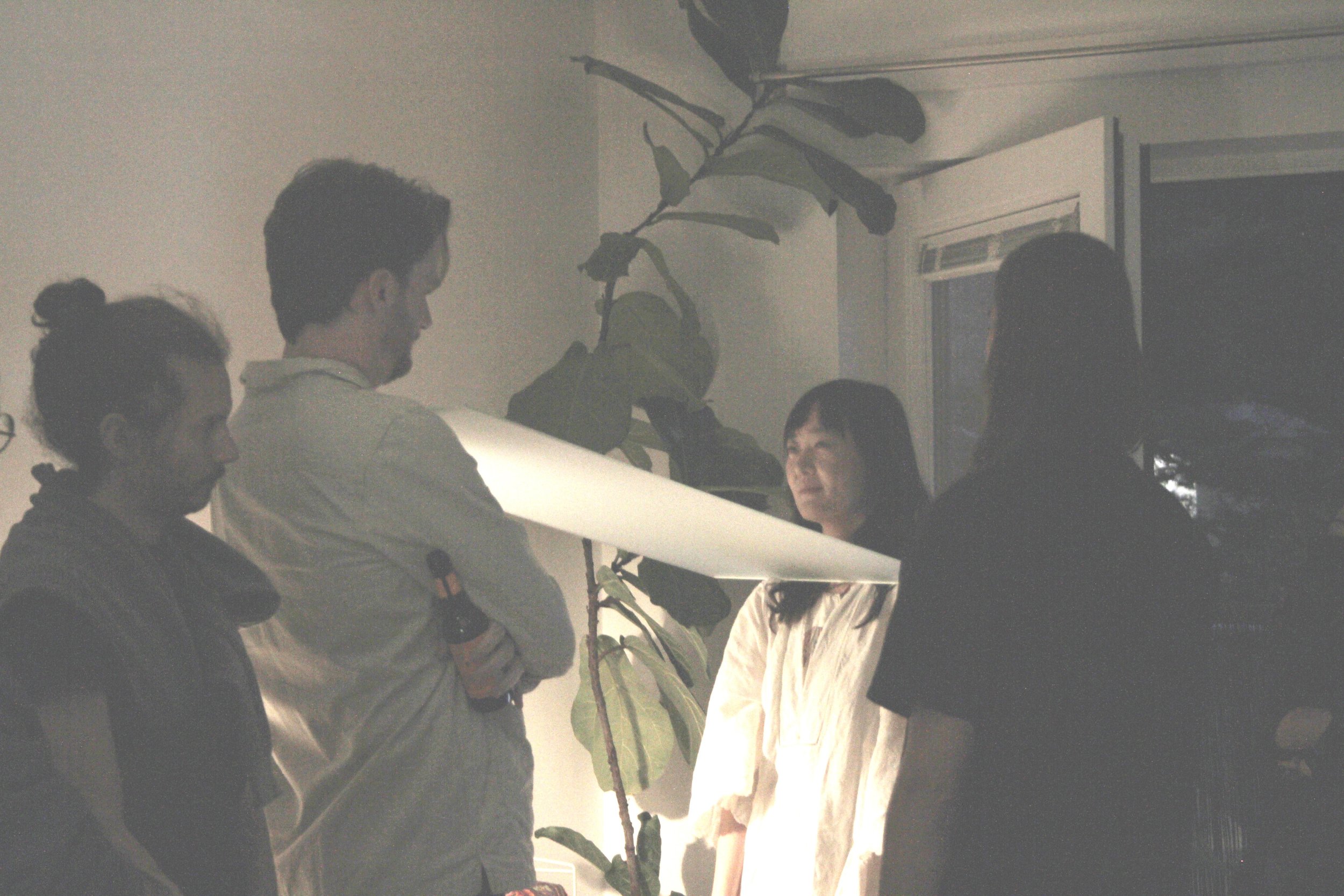
The air inside Nothing Holds On Its Own feels charged, not with spectacle, but with proximity. You sense it before you name it: the press of breath, the small, accidental symmetries between strangers, the hush that falls when a performance begins and you realise, with an odd tenderness, that you are part of the work simply by being there.

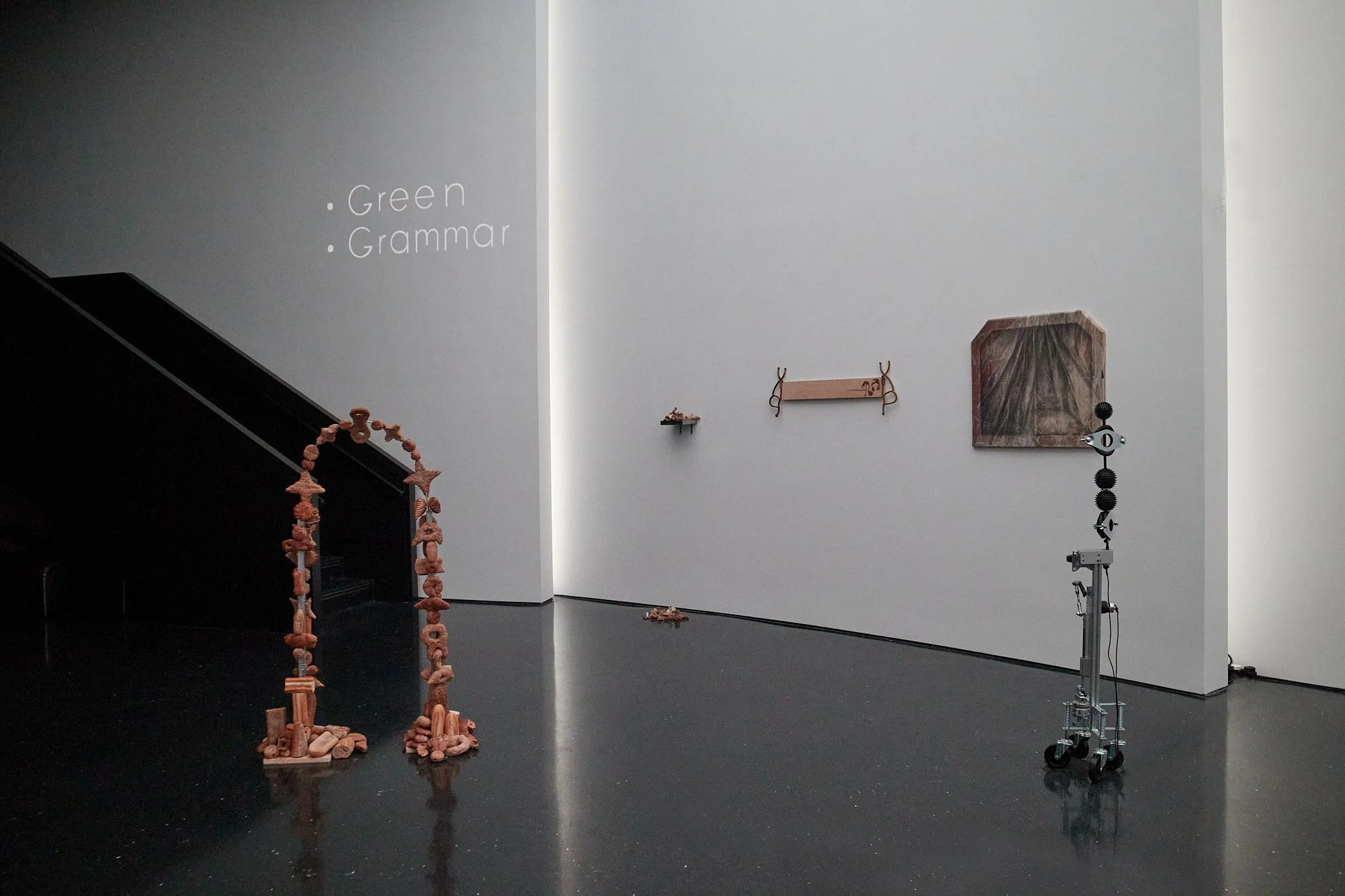
Green Grammar’s latest exhibition is less a show than an experiment in being-with, a curatorial attempt to trace what Marguerite Duras once called “the web of our existence,” where nothing, and no one, ever stands alone.

In a cultural moment obsessed with individuality, the personal brand, the solo genius, the algorithmic feed tailored to your exquisite uniqueness, Nothing Holds On Its Own feels almost insurgent. It insists that we are porous, symbiotic, and reliant. That love, care, and attention are not private emotions but social architectures, invisible yet load-bearing.

Wider ecology of connections

The exhibition takes Duras’s La Vie matérielle as its touchstone, but where Duras found poetry in domestic entanglement, Green Grammar extends her logic into the wider ecology of connection: between people, materials, memories, and the ghosts of the digital age.

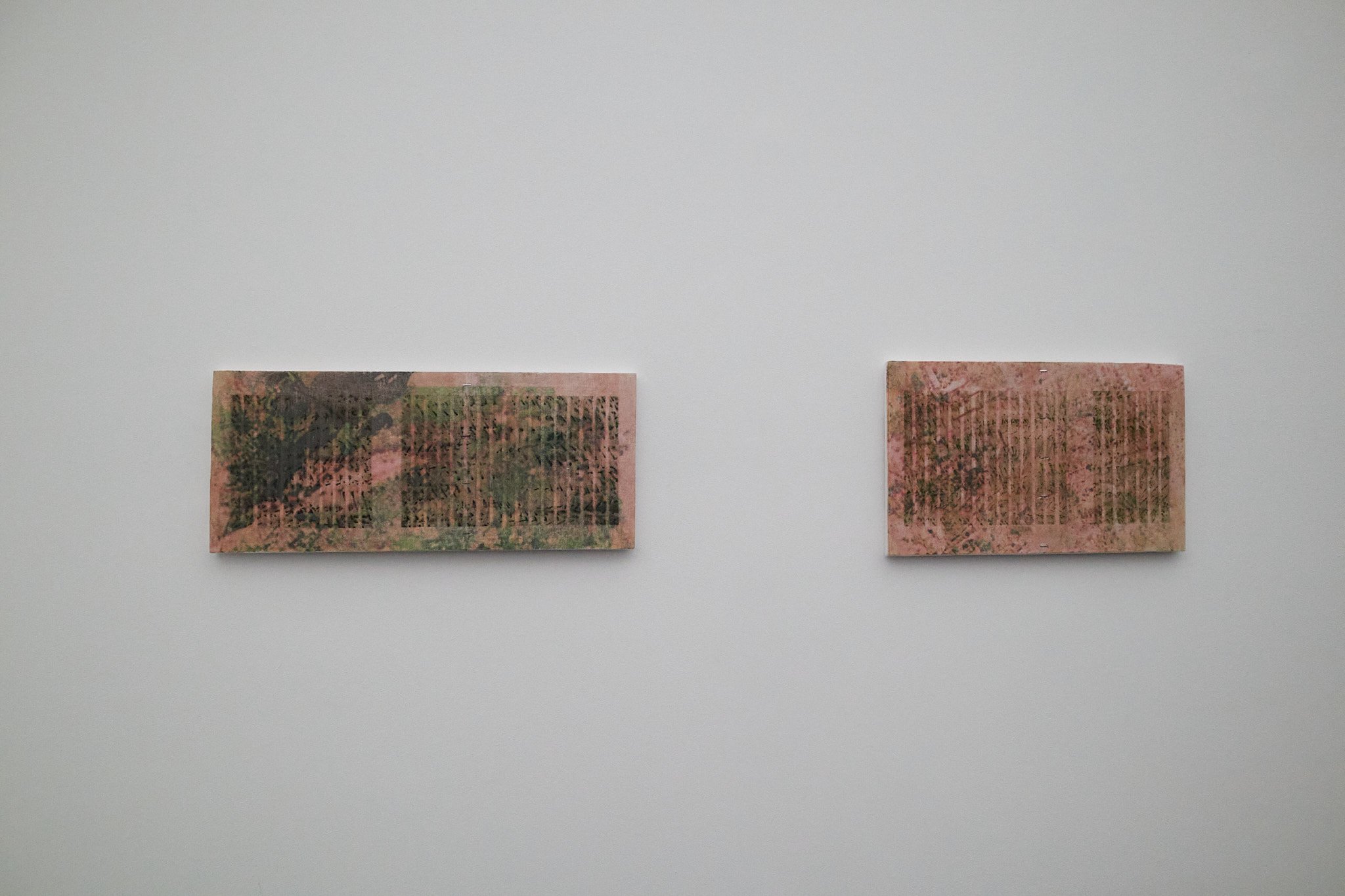
The gallery itself, a minimalist open space in the brutalist shadow of Metro Central Heights in Elfant and Castle, becomes a testing ground for intimacy. The curators, Moyu Yang and Chang Wang, who together are Green Grammar, have gathered a constellation of artists from across cultures and generations, creating a dialogue that feels less like a hierarchy than a gathering.

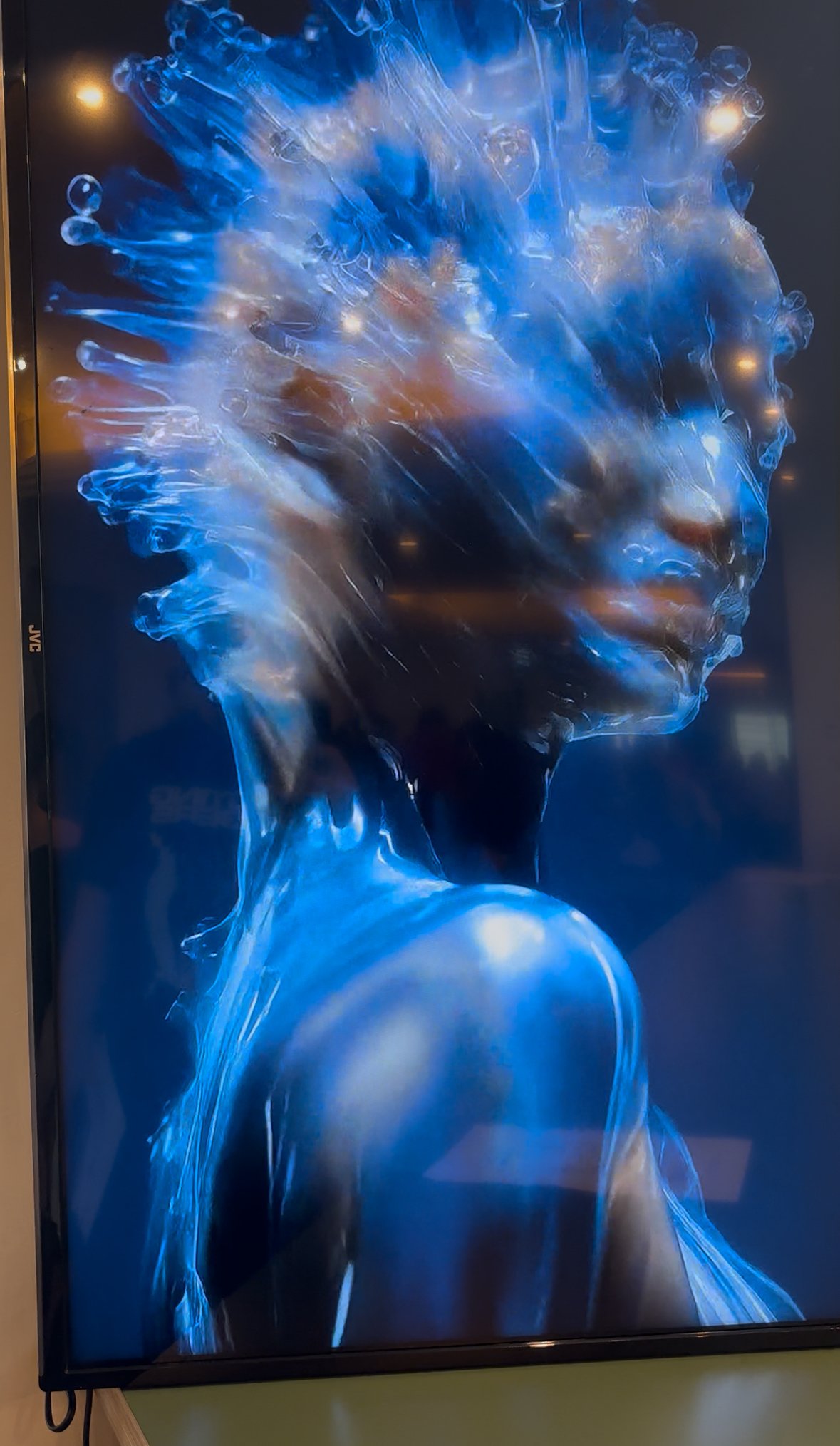
One of the most quietly devastating works is by Xinyuan Yan. In a darkened corner, she projects faint, pixelated images of her late grandmother, found, hauntingly, on the Chinese equivalent of Google Maps, onto the gallery wall. The images flicker between domestic banality and spectral revelation: a woman caught mid-step, frozen forever in algorithmic purgatory.

Between love and surveillance

It’s a work that sits between love and surveillance, grief and data. In an era when every loss is archived, Yan’s gesture asks what remains of intimacy once it’s been mediated by the machine. And yet, watching the audience gather, whispering softly to one another, it became clear that the projection had done something extraordinary: it had summoned a collective act of remembrance.

Nearby, Georgia Salmond’s sculptures anchor the exhibition in something bodily. A London-based artist known for her mould-making and life-casting, Salmond’s practice sits squarely within the uncanny. Her work here included masks of faces separate from bodies, gazing up from the floor with empty eyes.

At first glance, they resemble death masks from an ancient grave; look closer and the seams, pores, and air bubbles betray their contemporary origins. They are eerie but tender: a taxonomy of touch that collapses the distance between maker and made. In Salmond’s hands, the psychoanalytic becomes social. The unconscious, it turns out, has fingerprints.

Like the Great River

Then there’s the story that seemed to ripple through the opening night: the retired farmer from rural China, discovered by the curators after her daughter-in-law posted her embroidery online. Unable to read or write, she began “drawing” with thread after moving to the city, using discarded fabric to recreate the valley where she was born.

Her piece, Like the Great River, is a meditation on displacement and resilience, art made not for recognition, but survival. Standing before it, surrounded by Londoners from every conceivable background, you could feel the word “authentic” reclaiming its meaning. Not as an aesthetic category, but as an act of truth-telling.

What makes Nothing Holds On Its Own remarkable isn’t simply its sincerity, but its refusal to separate the art from the atmosphere. During Kairi Tokoro’s performance, a fluid musical composition played on the artist’s object-sculpture, I looked around the room and saw a diverse group of people all captivated, united in a mutual love of art.

Communal presence

This sense of communal presence runs throughout Green Grammar’s curatorial ethos. It’s the latest iteration of their ongoing interest in human connection, roots and our environment. It’s not a sterile, theory-heavy, contemporary art exhibition, but in a deeply personal, embodied.

They understand love not as muse but as methodology. For them, curating is a form of care work: connecting artists across continents, creating spaces where vulnerability is shared rather than performed.

At a time when so much contemporary art is preoccupied with irony or market logic, Nothing Holds On Its Own risks sincerity, and in doing so, feels radical. It argues that art’s most urgent function is not to innovate or provoke, but to remind us that we exist through one another. That in the midst of ecological collapse, political polarisation, and digital alienation, interdependence is not weakness but survival.

Loves becomes infrastructure

Leaving the Annex that evening, I found myself lingering at the threshold, watching as people hugged, exchanged numbers, and promised to meet again. The exhibition had done what few manage: it had made art feel like a form of collective respiration.

Love, in all its awkward, improvised forms, had become infrastructure once more. And for a moment, in that shared exhale, the city itself felt less lonely.

Related posts
Nothing Holds On Its Own.jpg
Nov 19, 2025
Nothing Holds On Its Own: social architecture and how we all live together  
Nov 19, 2025
Nov 19, 2025
IMG_1163.jpeg
Nov 10, 2025
Between Rooms: Siyuan Meng on Home, Thresholds, and the Art of Being Present
Nov 10, 2025
Nov 10, 2025
Siena-The-Rise-of-Painting.jpg
Aug 30, 2025
What Siena knew that we forgot: On painting, power, and the politics of gold
Aug 30, 2025
Aug 30, 2025
November 19, 2025 /Alastair Ball
Art exhibition review
Comment

Between Rooms: Siyuan Meng on Home, Thresholds, and the Art of Being Present

November 10, 2025 by Alastair J R Ball in Art exhibition interview

By Alastair JR Ball

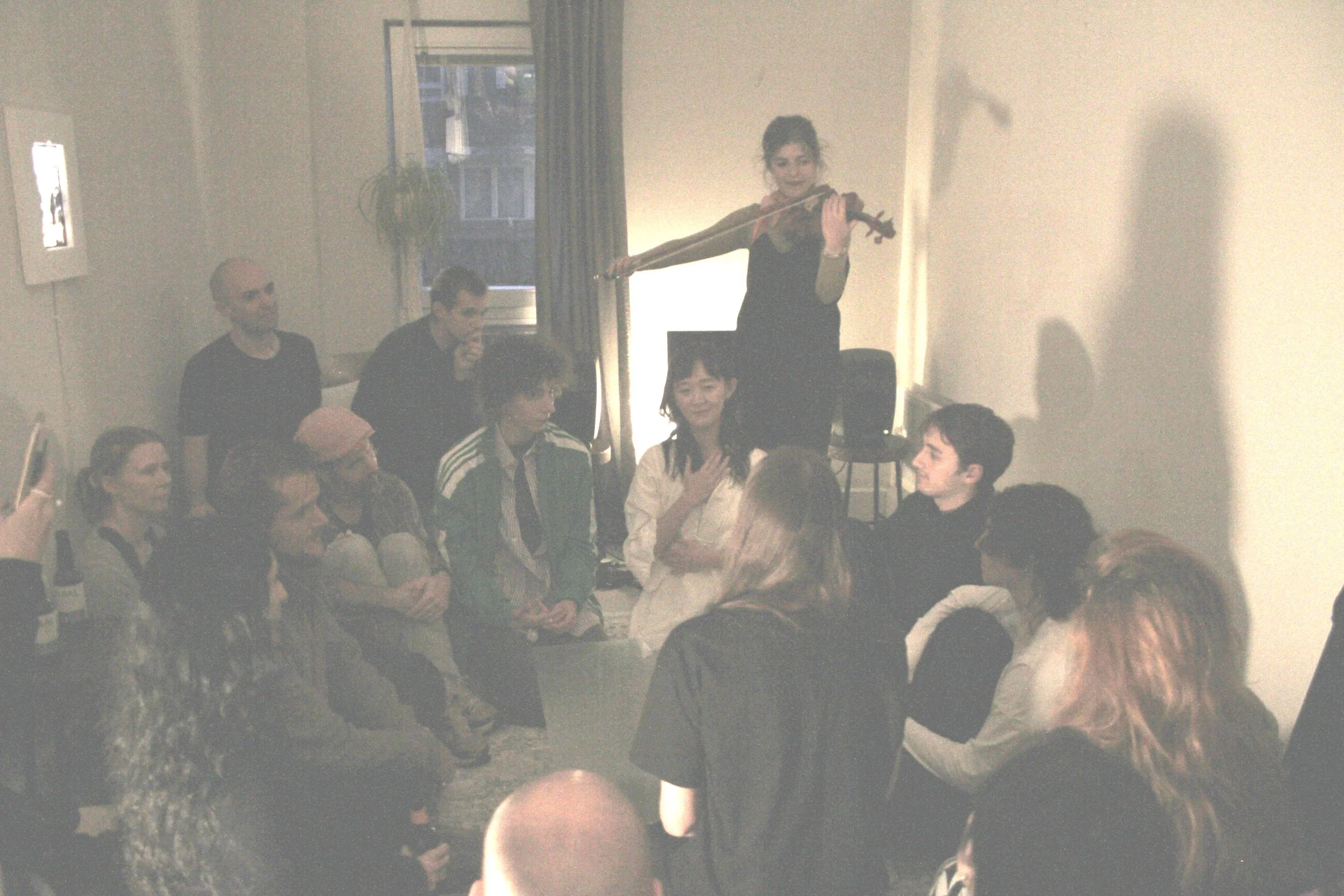
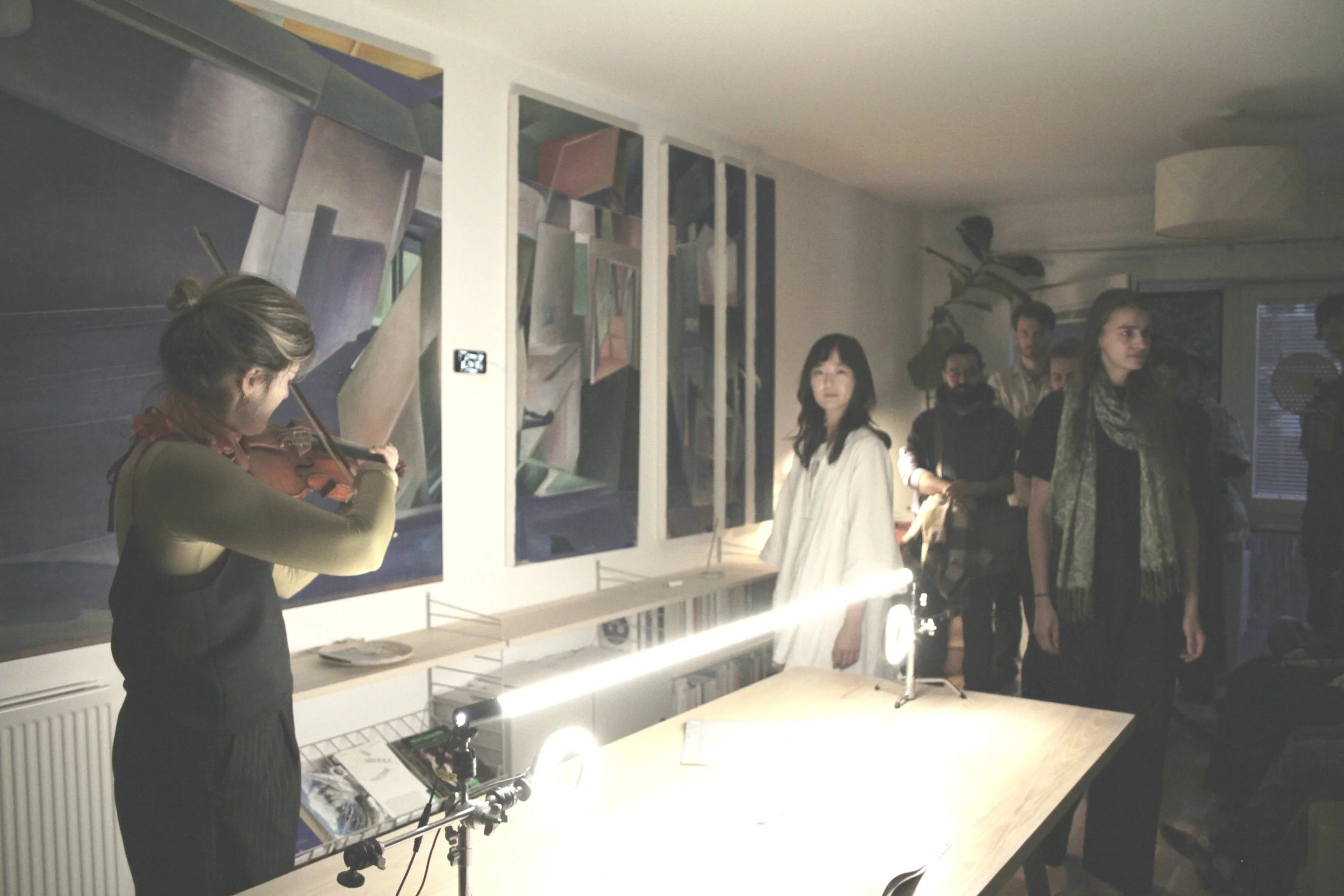
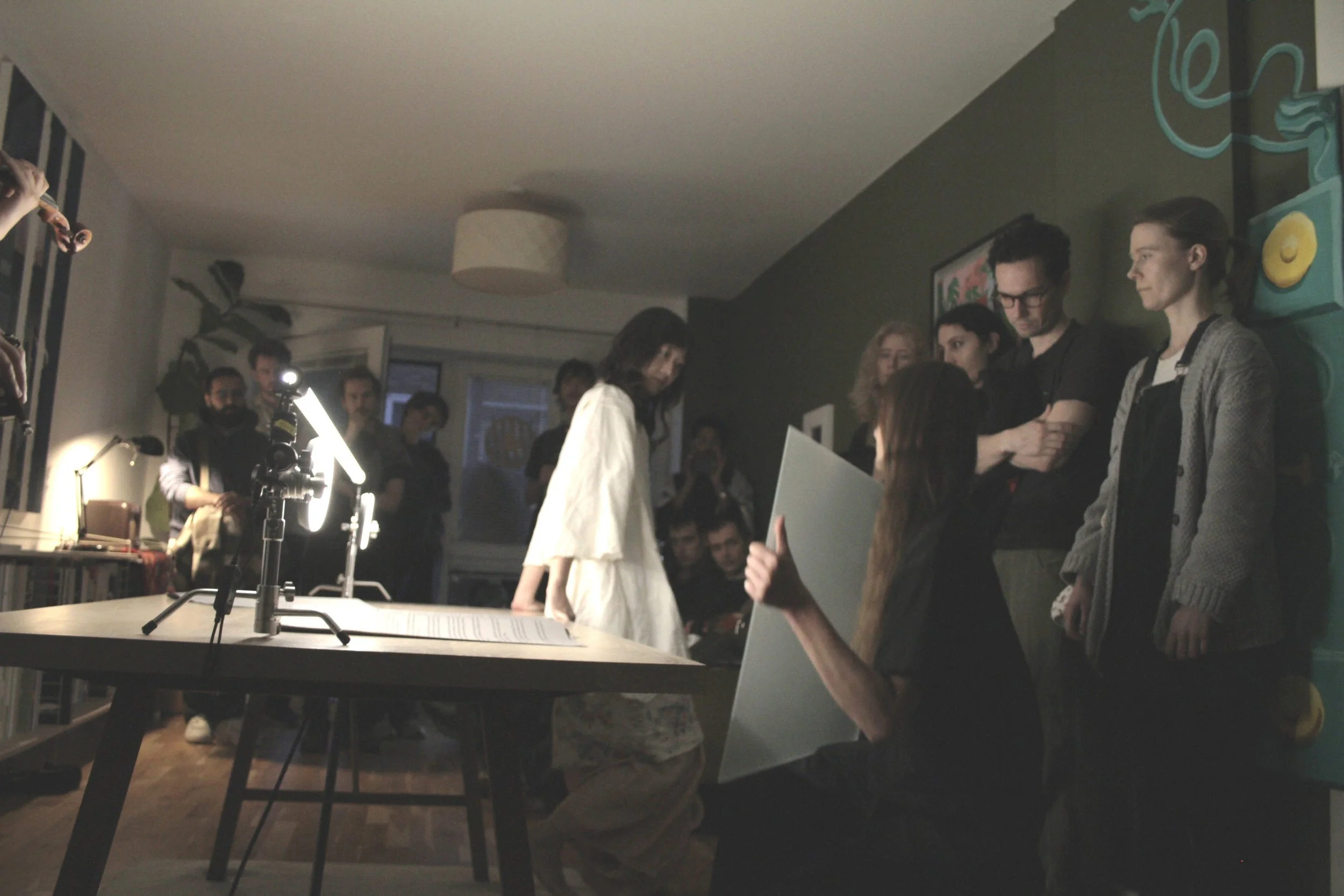
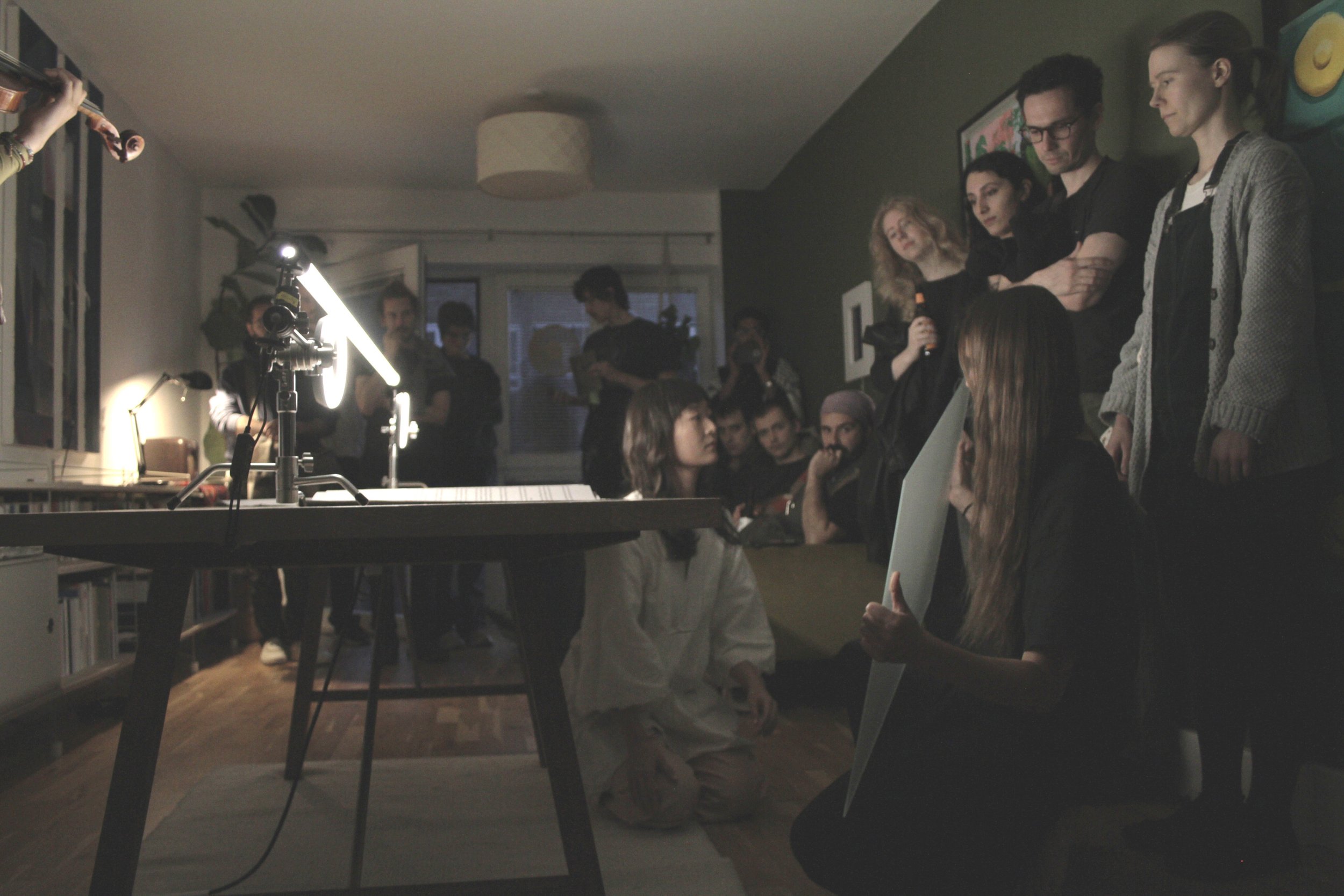
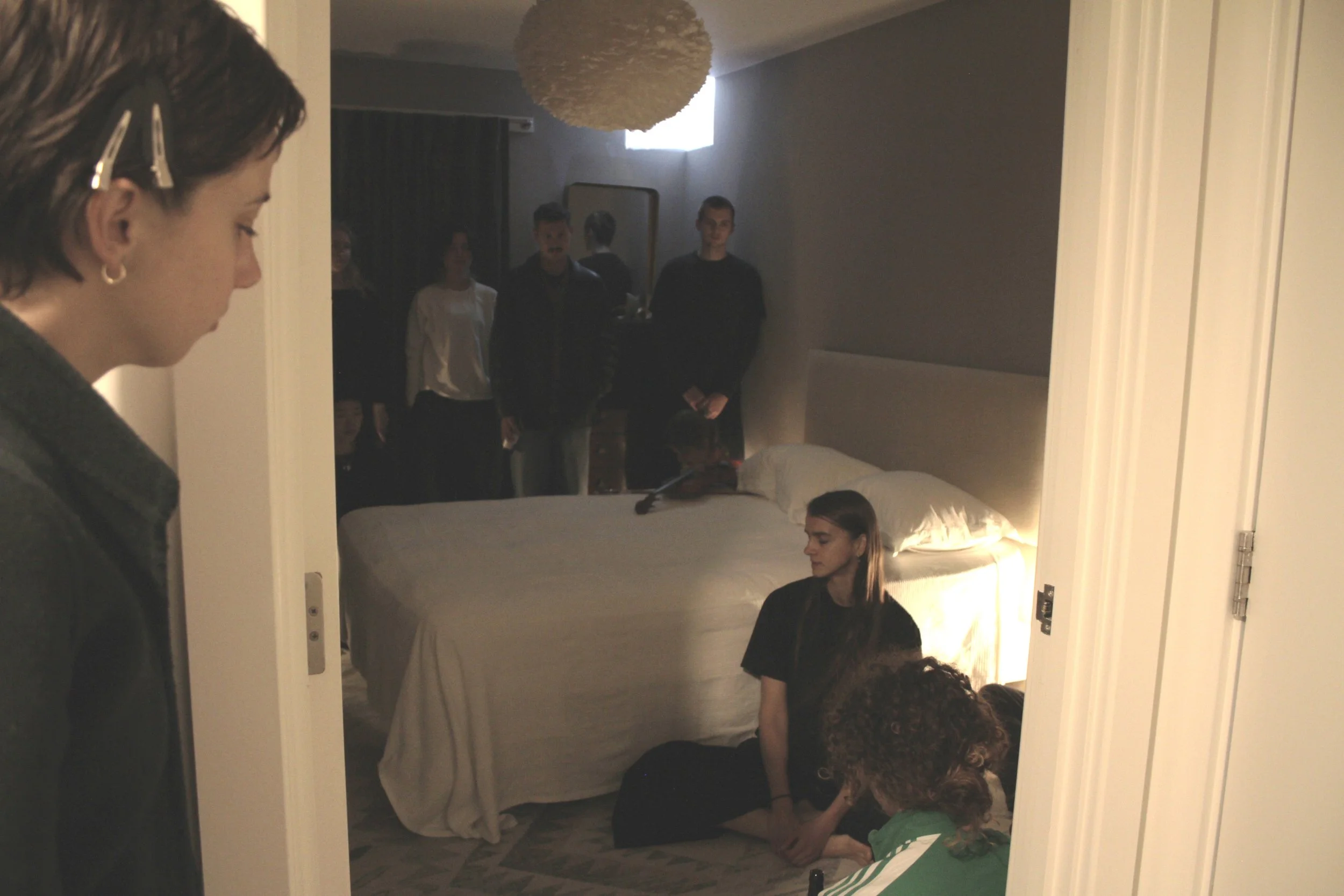
The performance begins not with a spotlight, but with a door opening. Visitors step into a lived-in flat, beds unmade, clothes draped, a faint scent of incense lingering. In the living room, artist Siyuan Meng holds a sheet of glass between herself and the audience, light scattering across its surface like a breath caught midair. “It was a site-specific improvisation,” she tells me afterwards. “I wanted to ask: What does home mean, and what separates us within it?”

For Meng, who grew up in China and now lives in the UK, the question of home is not a static one. It is something to be performed, re-negotiated, and sometimes mourned. Her latest work, shown as part of Threshold, a group exhibition in London exploring the spaces between public and private, self and other, invited audiences to move through rooms as if tracing her inner geography. The domestic setting became stage, membrane, and mirror all at once.

On home and belonging

“When I first came to the UK,” Meng says, “I felt very lost. I missed my home a lot, but I was also excited to explore a different world.” She pauses, considering her words carefully. “After some time, I realised I didn’t know where my root was, where I was belonging. When I returned to China for a while, I began to drink tea, learn more about Chinese culture. That’s when I thought: Oh, this is my root. Even now that I live in the UK, I try to bring that rhythm here, to make belonging in a new country.”

That rhythm hums through her work, quiet, deliberate, ritualistic. Past projects have explored the body’s relationship with fragile materials like paper; in Threshold, she shifted to the rigidity of glass. “Glass is hard,” she explains. “It separates the environment. So it was challenging: how do I engage people when there is a barrier?” The question feels both technical and existential. Meng’s practice continually searches for ways to connect across divides, cultural, emotional, architectural.

The threshold as a liminal space

The title of the exhibition, Threshold, resonates deeply with her. “For me, a threshold means distance,” she says. “Like the space between the living room and kitchen, they connect, but you don’t know where one ends and the other begins.” That ambiguity becomes her medium. Moving through domestic spaces, she blurs the boundaries between art and life, performance and conversation.

In one sequence, Meng guided small groups of viewers gently by the hand. “We used soft touch,” she recalls, smiling. “People followed each other with eyes closed. It was about trust, about finding presence together.” The gesture feels emblematic of her whole philosophy: intimacy without imposition, contact without control.

Her performances might look understated, a slow movement, a hand tracing a wall, a moment of stillness beside a bed, yet they pulse with quiet complexity. “You can’t force people to watch you,” she says. “So how do you make them feel involved, naturally, rather than forcing something?”

Relational presence

Meng calls this inquiry “relational presence”, the dynamic field between performer and audience. “It’s not just me showing something,” she says. “It’s about the vibration between us. What happens when we share a space, when we breathe together?”

During the Threshold performance, this vibration was almost tangible. Spectators found themselves caught between watching and participating, between being guests and collaborators. “It wasn’t a traditional stage,” one audience member remarked. “You were surrounded by beds and TVs. You had to decide how to move, what to look at. It made you aware of your own body.”

That awareness, Meng believes, is the point. “We are all from different countries, but we are in this space together now,” she says. “What is the presence between us? That’s what I want to explore.”

Domestic play

When asked what’s next, Meng laughs lightly. “I want to continue with domestic play,” she says. “I want to explore the relationship between me and audiences, how I can bring them into my world naturally.” The phrase domestic play encapsulates her fascination with the everyday: ordinary gestures transformed into choreography, household materials into symbols of intimacy.

Her performances often begin with sensory cues, fabrics, smells, sounds. “If I were to bring my own home into a new space,” she says, “I would use fabric, incense, maybe invite my friends and family. Those things make me feel at home.” Scent, especially, carries deep significance. “Smell is connected to memory,” she notes. “When I smell incense, I remember my childhood. It brings me back to myself.”

Practicing stillness

Lately, Meng has been turning inward. “I’m practicing calligraphy again,” she says, “and reading Buddhist texts, old Chinese sentences I can’t always understand. But I read and chant them anyway. It helps me unfold my frequency, to be present with myself.” The practice, she explains, began during a difficult period. “When I’m suffering or confused, I try to create a home within myself. Writing calligraphy, drinking tea, those are ways to return.”

This sense of inner architecture mirrors the structure of her performances. The audience journeys through physical rooms while Meng travels through emotional ones. The act of performance becomes both ritual and refuge. “It’s about remembering I’m not alone,” she says softly. “I can still pass through those difficulties.”

The art of being present

If Meng’s early pieces were about experimenting with materials, her current practice feels increasingly philosophical. “It’s not only about the object,” she says, “but about the relation. How we meet. How we are present.” Presence, for her, is not a static state but a conversation, between cultures, between people, between body and space.

As she reflects on Threshold, she smiles again: “It’s interesting, because I came to the UK looking for home, but maybe home is just this, this moment, when we are together.”

Her performances are small acts of empathy, unfolding quietly in living rooms, streets, and waiting rooms. They are not declarations but invitations. She does not shout; she listens. And in that listening, she finds a form of connection that feels increasingly rare, art as a shared heartbeat, trembling between bodies.

“When we are in the same space,” Meng says, “we are already creating something together. We don’t have to understand it fully. We just have to be there.”

Photographs taken by Barbara Pigon

Featured
Nothing Holds On Its Own.jpg
Nov 19, 2025
Nothing Holds On Its Own: social architecture and how we all live together  
Nov 19, 2025
Nov 19, 2025
IMG_1163.jpeg
Nov 10, 2025
Between Rooms: Siyuan Meng on Home, Thresholds, and the Art of Being Present
Nov 10, 2025
Nov 10, 2025
Siena-The-Rise-of-Painting.jpg
Aug 30, 2025
What Siena knew that we forgot: On painting, power, and the politics of gold
Aug 30, 2025
Aug 30, 2025
November 10, 2025 /Alastair J R Ball
Art exhibition interview
Comment

What Siena knew that we forgot: On painting, power, and the politics of gold

August 30, 2025 by Alastair J R Ball in Art and politics

By Alastair JR Ball

Like many people with an unhealthy obsession with both medieval history and modern politics, I found myself one sunny bank holiday Monday at Siena: The Rise of Painting at the National Gallery, and promptly lost my mind; ecstatically and in gold leaf.

Siena in the 13th and 14th centuries was not just a picturesque hill town with good wine. It was a city-state that sat like a brooch on the shoulder of the Silk Road, a cultural and political hub in an age when most of Europe thought that a drafty keep was the height of sophistication.

Its government, astonishingly for the time, was a semi-representative oligarchy - the Council of the Nine - who governed the city and brought stability in a time of upheaval across Europe. It was civic, sophisticated, and very interested in painting.

The not so different Mediaeval world

What struck me, wandering between crucifixions and Madonnas, is the similarities between their world and ours. Yes, it was soaked in religious devotion and occasionally in actual blood, and yes, their understanding of perspective in painting was lacking - giving the paintings that odd distinctively Mediaeval look - but they got something we don’t: they understood that power is not just violence. It’s image.

Sienese painting was political, not just in the banal sense that all art is political, but in the active, scheming, soft-power sense. Art was a tool of government. Simone Martini wasn’t just painting saints, he was helping invent the modern state.

Take The Mystic Marriage of Saint Catherine from the circle of Simone Martini. Gold. Everywhere. Gold that defies earthly logic, applied in ways that made me squint and think of offshore accounts. The point was not realism, but symbolism. Holiness gleamed. Power radiated. Saints wore Sienese silk. Catherine marries Christ, yes, but she does so wearing the high fashion of 14th-century Tuscany. This isn’t a history painting; it’s a political broadcast.

The modern political playbook

Look at The Marriage of the Virgin by Gregorio di Cecco di Luca. Mary and Joseph are getting hitched in a building that looks like the Palazzo Pubblico, again wearing the fashion of Siena at the time and not ancient Judah. They are dressed like wealthy merchants' children. This is not just anachronism; this is ideology. Siena was claiming spiritual legitimacy by inserting itself into the biblical story.

This is the same playbook as modern political spin doctors who want nothing more than to see a politician posing in a hard hat next to the construction site of some vast infrastructure project.

The cusp of the Renaissance

What’s more, this exhibition reminds us that they understood representation, both in painting and politics, as something revolutionary. Before the invention of linear perspective, these painters still reached toward a representation of the world that would be well understood at the time.

Madonna del Latte by Ambrogio Lorenzetti shows the Virgin nursing, not enthroned in majesty but as a mother, vulnerable and earthy. There is tenderness. Humanity. This is proto-humanism with gold halos.

Siena was on the cusp of the Renaissance, not just artistically, but civically. Its painters were working at the same time as Petrarch was inventing the idea of the individual. Martini even knew him personally. Imagine that, your local council commissioning art that philosophically aligns with the birth of humanism. Meanwhile, ours are still trying to get a recycling bin that works.

Not by sword, but by triptych

Then there’s the Avignon connection. When the papacy decamped from Rome to France, like a teenage runaway to a cooler friend’s house, it took the prestige of Sienese painting with it. Cardinals, kings, and power-hungry prelates all encountered this new kind of image-making, gilded, emotive, structured like a sermon but glowing like a Gucci ad. They copied it. They spread it. This was international influence, not by sword, but by triptych.

It made me think, uncomfortably, about how little regard we have now for the unquantifiable power of art. In our era of growth forecasts and spending reviews, we forget that civic pride, national identity, and even foreign policy can hinge on culture. Siena didn’t. They used painting like a scalpel; delicate, beautiful, and potentially fatal. We, on the other hand, treat it like an optional extra, to be cut when budgets tighten. Soft power isn’t in the balance sheet, so it doesn’t count. Until it does.

Painting in gold

The medieval world, for all its plagues, superstition, and saints with implausibly dainty hands, had a clearer understanding of how power works than we do. It knew that violence is only part of the story. Influence - the kind that lives in churches, in galleries, on screens - is subtler and stronger. It leaves fewer bruises, but longer memories.

So yes, their world was brutal, but at least they looked it in the face. If you think our world is less violent, then ask the people of Gaza what they think. We hide our brutality behind euphemisms and bury it in the endless scroll of social media. Siena painted theirs in gold.

Related posts
Nothing Holds On Its Own.jpg
Nov 19, 2025
Nothing Holds On Its Own: social architecture and how we all live together  
Nov 19, 2025
Nov 19, 2025
IMG_1163.jpeg
Nov 10, 2025
Between Rooms: Siyuan Meng on Home, Thresholds, and the Art of Being Present
Nov 10, 2025
Nov 10, 2025
Siena-The-Rise-of-Painting.jpg
Aug 30, 2025
What Siena knew that we forgot: On painting, power, and the politics of gold
Aug 30, 2025
Aug 30, 2025
August 30, 2025 /Alastair J R Ball
Art and politics
Comment

Roots of Roots: Making the buried visible

August 02, 2025 by Alastair J R Ball in Art exhibition review

By Alastair JR Ball

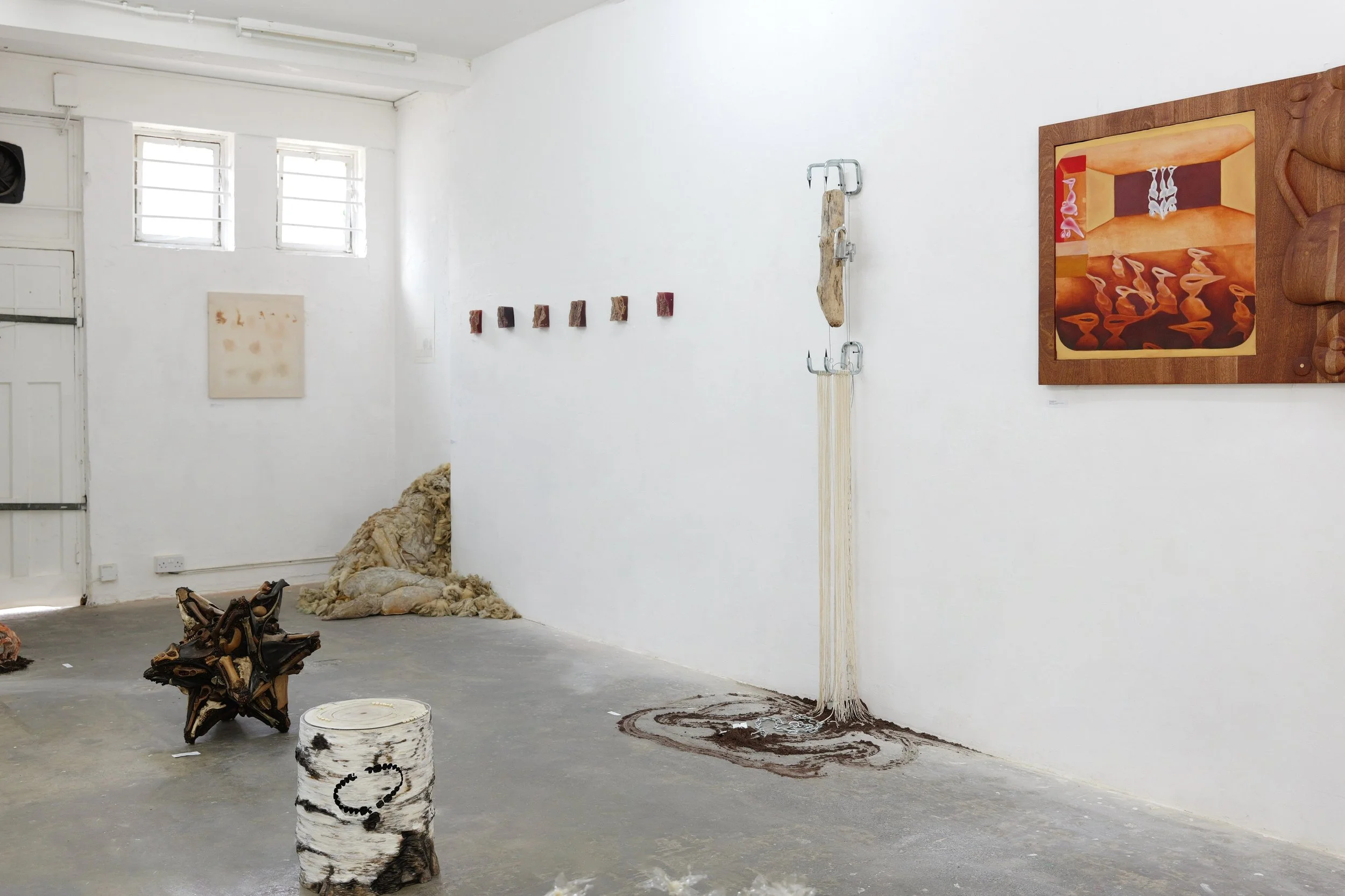
The first thing I noticed at Roots of Roots at Filet wasn’t an artwork. It was the height of the floor. Or rather, how close some of the works demanded you get to it. Clay. Hair. Driftwood. Soil. The show begins low, insistently. Not with spectacle, but with sediment. It makes you crouch, peer down, recalibrate the angle of encounter.

This is a show about roots, and it asks you to start from below.

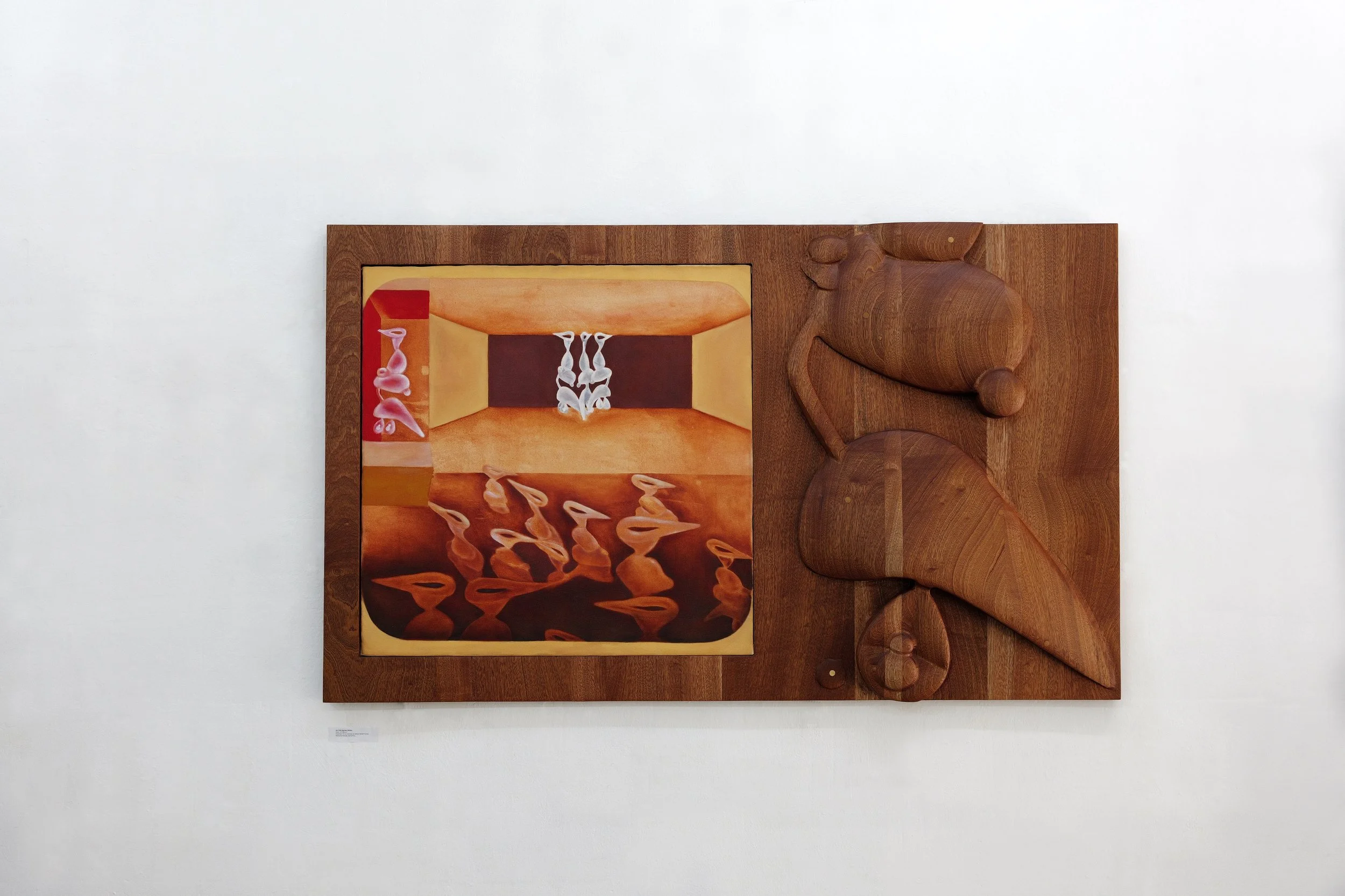
Curated by Chang Wang and Moyu Yang, Roots of Roots gathers a group of 50/50 Chinese and Western artists all working in London. Roots here are not worn as cultural markers or motifs. They are questions. How do we grow downward as well as forward? What does it mean to be rooted in a place you weren’t born in, or in a culture that never quite claimed you? What happens to roots when you keep moving?

One of the first pieces I was struck by was Georgia Salmond’s Ivy, which uses casts of ivy that had enveloped a tree to explore ideas of femininity. Her praxis uses the biological structure of plants and instantly brought ideas of how roots are essential to the natural world to mind. Placing this artwork in relation to artworks by Chinese artists made me think about the many different meanings of the word root and how they are all connected: grounding us, stabilising us, feeding us.

Sediment and storytelling

I began with Xiang Li’s To Root and Bloom, a sculpture placed directly on the floor, as if it had always belonged there. Plant fibres, human hair, clay. It radiated a kind of quiet insistence: soft, but unignorable. The work comes from an in-between space not resolution, but adaptation. The kind of root that doesn’t grip with force, but by staying, again and again.

Nearby, Sarah Fortais’ Lark leaned into London’s detritus: animal bones from the Thames, jackfruit skins, soil from the city’s edges. Bones, she writes, still marked with butchery from Smithfield Market. Jackfruit, both exoticised and consumed. In this stellated dodecahedron, nothing is native, but everything is absorbed. Here, roots are composite: historical, edible, necrotic, hybrid. I thought of compost. Of London as a digestive system.

Then there was Yihao Zhang’s Unlanded. Driftwood hung with fibrous cords, gently motorised, reaching downward but never quite making contact. Migration not as movement from A to B, but as a condition of suspended searching. The wood was heavy. The roots were light. The piece vibrated with longing, the kind that doesn’t resolve, only repeats.

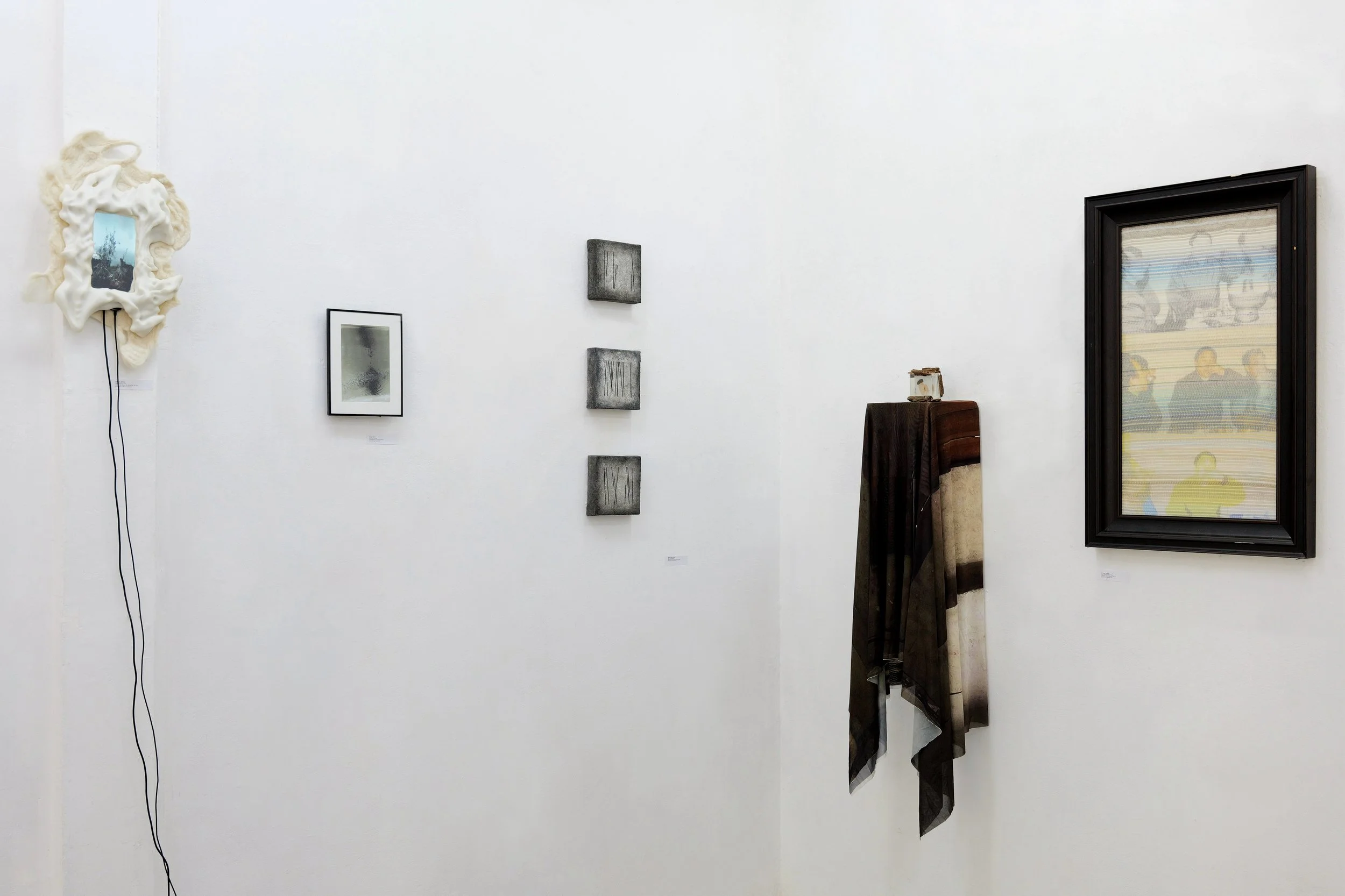
Up on the wall, Xinyi Liu’s Elegy offered silver-plate images of fading flowers and dusk light. A reclamation of grief, in a culture that often hides it. Liu’s work asked: can nature help us face what we’ve learned to forget? In her hands, roots became metaphor: for loss, for tradition, for the unspoken.

Across the space, Jingtang Wang’s birch tree sculpture, its trunk bitten with dental moulds, refused easy metaphors. Roots were not the focus here; the tree was already altered. Bark like skin, eyes, scars. A witness to intervention. It made me think of orthodontics, urban planning, language acquisition. The ways we “straighten” ourselves to fit.

Toward the living trace

It was the performance piece that held me longest. “Undone” performed by Siyuan Meng and Fruzsina Nagy, with choreography by Meng and music by Christopher Rodriguez, unfolded slowly inside the window space. Fragile materials: rice paper, water, salt. The body moved through them like a weather pattern, deliberate, porous, erratic.

We stood still on the street outside the gallery, looking in, watching the performance slowly unfold, held in a kind of quiet suspense. The performance wasn’t theatrical. It was bodily, atmospheric. The paper tore with sound. Salt scattered like memory. Water pooled. What was left: the trace. This was not metaphor. This was rooting itself, slow, sensory, unpredictable.

Watching Meng and Nagy, I felt something shift. All the earlier works, with their fibres and bones and digital hauntings, had prepared me to see the body differently. As a root system. As a site of erosion. As something that remembers where it’s been, even if it no longer knows where it’s going.

Wang and Yang’s curatorial hand was subtle but insistent. The works rhizomed, connecting through association, texture, breath. You weren’t told what to feel. You had to root around for it. It felt less like walking through a gallery, more like falling into a subterranean network.
Roots of Roots is not a nostalgic show. It doesn’t mourn disconnection or celebrate belonging. It dwells in the liminal: where roots are gestures, not guarantees. It reminds us that we depend on what lies beneath, nutrients, memory, history, grief, and yet we rarely see it. These artists make the buried visible. Not as spectacle. As survival.

As I left the gallery, I found myself looking at the pavement differently. Wondering what ran under it. Wondering what still does.

Photography by Gehena Ye

Related posts
Nothing Holds On Its Own.jpg
Nov 19, 2025
Nothing Holds On Its Own: social architecture and how we all live together  
Nov 19, 2025
Nov 19, 2025
IMG_1163.jpeg
Nov 10, 2025
Between Rooms: Siyuan Meng on Home, Thresholds, and the Art of Being Present
Nov 10, 2025
Nov 10, 2025
Siena-The-Rise-of-Painting.jpg
Aug 30, 2025
What Siena knew that we forgot: On painting, power, and the politics of gold
Aug 30, 2025
Aug 30, 2025
August 02, 2025 /Alastair J R Ball
Art exhibition review
Comment

Symbiotic Epidermis: Skin, species, and the trouble with being human

June 29, 2025 by Alastair J R Ball in Art exhibition review

By Alastair JR Ball

The first thing I noticed at Symbiotic Epidermis at Hypha Studios, before the striking visuals, before the whispering canvases and fleshy things rendered in paint, was the skin. Or rather, the obsession with its limits. Skin as border, as threshold. Skin as the ancient, tired metaphor for where "I" end and "you" begin. 

It’s the title’s epidermis, of course, that gives us the clue: not surface, but symptom. The group show, curated by John Angel Rodriguez, is not so much about transhumanism as it is about what we might need to shed, philosophically, emotionally, biologically, if we are to survive what’s coming next.

The base of our intellectual towers

We live, still, in the ruins of humanism. The Renaissance gave us Man (capital M, overwhelmingly white), standing upright in the centre of the cosmos, measure of all things. Modernism inherited his arrogance. Postmodernism deconstructs the above. All our Western intellectual towers are still built on Humanism’s foundations.

Humanism remains the base layer of our civilisational makeup, its values etched deep into our institutions, our law, our language, our machines. Symbiotic Epidermis asks: what if it’s time to evolve? What if we are the skin that must be sloughed?

A rebuke to anthropocentrism

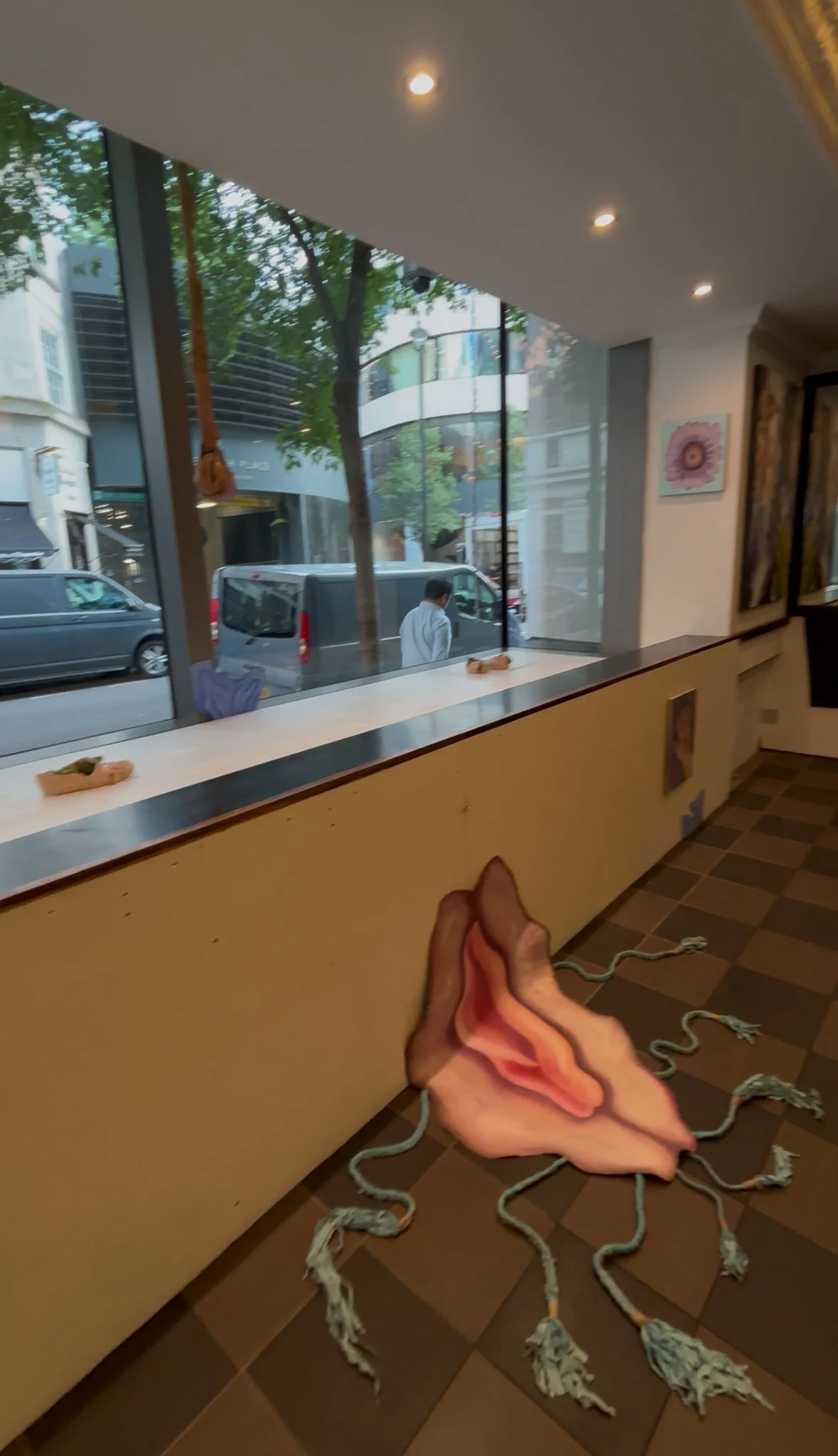
Kamila Sladowska’s work speaks this question in the low frequency of fruits and body parts. Her work - rootlike threads stretching out from a vulva, paintings that could be breasts or fruits, lace containing actual garlic - invites us into a world that mixes nature with the human experience.

This is not nature as a backdrop or resource. It is not Jean-Jacques Rousseau’s noble green to be rediscovered. It is something older, stranger. A rebuke to the anthropocentrism baked into the Western gaze since the Greeks were carving idealised bodies. Sladowska invites us to remember: we are a part of nature, not separate from it. We were always edible.

Rewriting sympathy in the face of strangeness

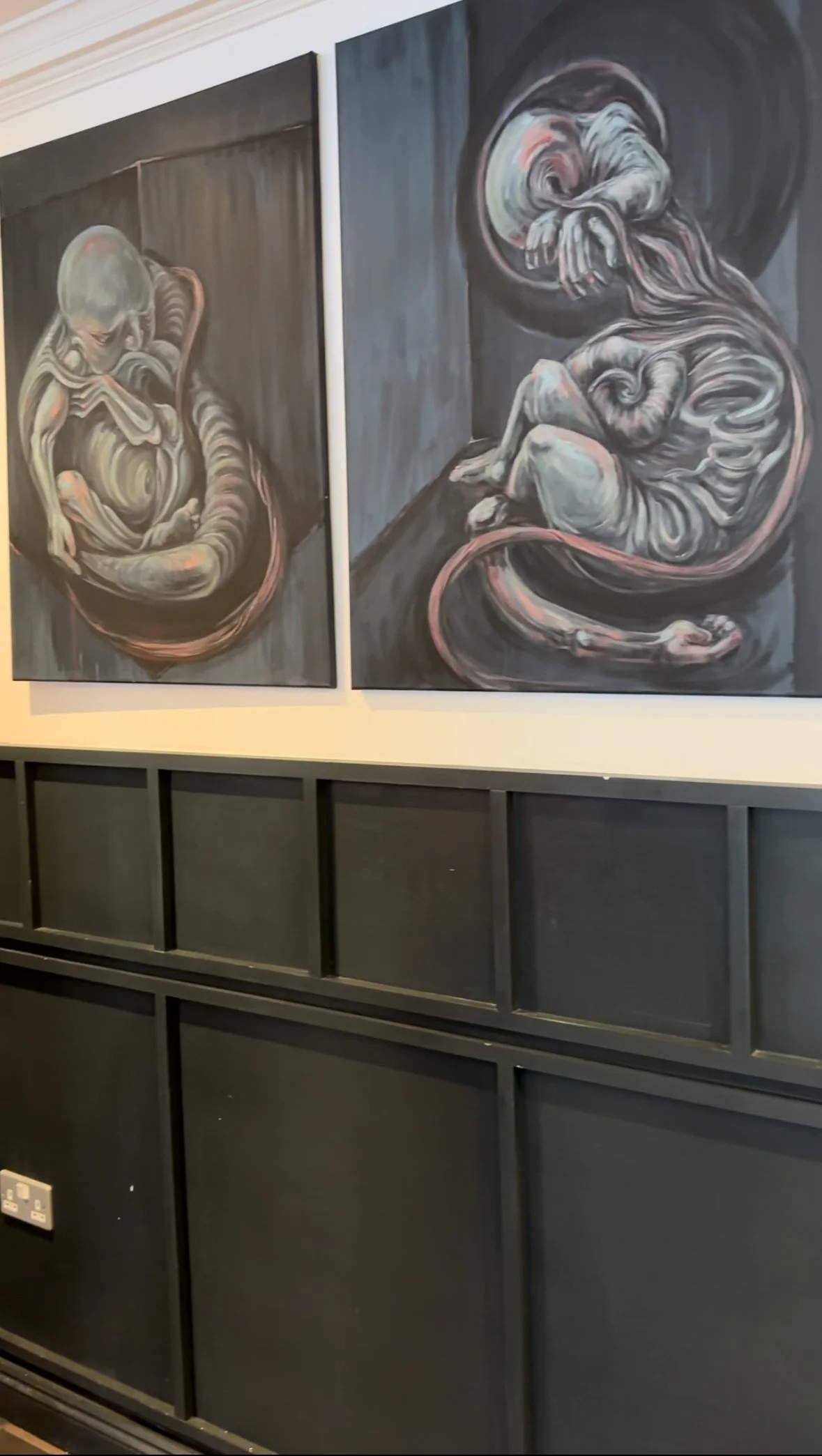
Olivia Bloodworth’s paintings are more unnerving. Her world is not a return to nature, but a confrontation with the other, the alien, the unborn, the soon-to-be. Her palette slithers somewhere between H.R. Giger’s biomechanics menace and Francis Bacon’s screaming mouths.

Yet, despite this horror aesthetic, I found myself feeling for her subjects, embryonic, liminal, caught in their not-yet-ness. She made me care about them, even as they unsettled me. That is an artistic coup: to rewire sympathy in the face of strangeness.

This is the real work of transhumanist art. Not to fantasise about uploading our minds into clouds or grafting metal onto skin, but to expand the field of empathy, across species, across futures, across the unrecognisable. The sublime ruin of Bloodworth’s art act like stage curtains for this moral drama: how to look at something unknowable and still say, you matter.

When the category “human” itself feels unstable

Rodriguez’s curation holds these tensions with clarity and bite. There are many other excellent artists in the show. Rodriguez gives us not a roadmap but a mood, one of philosophical vertigo. What do we preserve of humanism in an age when the category “human” itself feels unstable? Can we keep the dignity without the belief in human supremacy over nature? The care without the centrality?

As I left the show, I found myself thinking not about the future of art, but the future of ethics. What kind of values survive ecological collapse? What sort of empathy can stretch far enough to hold not just other people but the post-human, the hybrid, the unloved? Symbiotic Epidermis does not offer answers, but it makes space for the question: when the skin tears, what grows from underneath?

Featured
Nothing Holds On Its Own.jpg
Nov 19, 2025
Nothing Holds On Its Own: social architecture and how we all live together  
Nov 19, 2025
Nov 19, 2025
IMG_1163.jpeg
Nov 10, 2025
Between Rooms: Siyuan Meng on Home, Thresholds, and the Art of Being Present
Nov 10, 2025
Nov 10, 2025
Siena-The-Rise-of-Painting.jpg
Aug 30, 2025
What Siena knew that we forgot: On painting, power, and the politics of gold
Aug 30, 2025
Aug 30, 2025
June 29, 2025 /Alastair J R Ball
Art exhibition review
Comment

Dancing on Advertisements

June 20, 2025 by Alastair J R Ball in Art and politics

By Alastair JR Ball

I remember walking through Tottenham last winter, skint and raw-nerves, watching the world get brighter and louder with adverts I couldn’t afford to believe in. New iPhones, luxury toothpaste, craft beer at £8 a pint. All of it screaming in HD colour across walls, windows, and screens, promising salvation, if I just bought the right thing. I was meant to be grateful for these offers, but instead I felt like I was being hunted.

Nothing about their version of life made sense to me. I didn’t want it. I didn’t want to optimise, lose weight, or pretend I was living my best life on Instagram.

The graffiti, still visible down side streets off Tottenham High Road, once a symbol of resistance, felt neutered too. Stripped of teeth and commodified; if the zeal with which a Banksy was removed from the wall of a Wood Green Poundland is anything to go by. Most likely it’s in a private art collection now or is hanging in a Mayfair art gallery, framed and flogged to property developers as “urban aesthetic.”

Liberation in the form of a sharpie

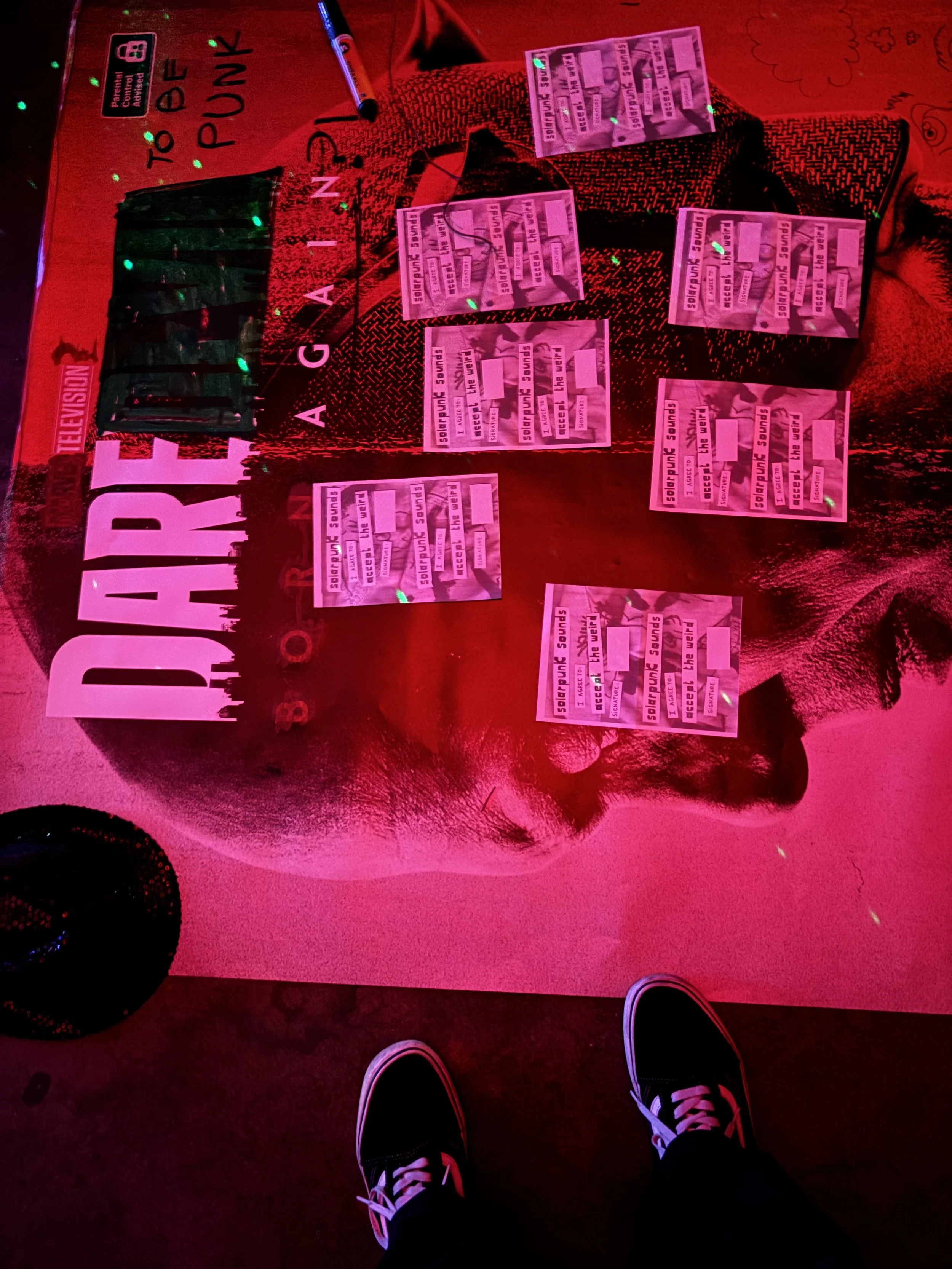
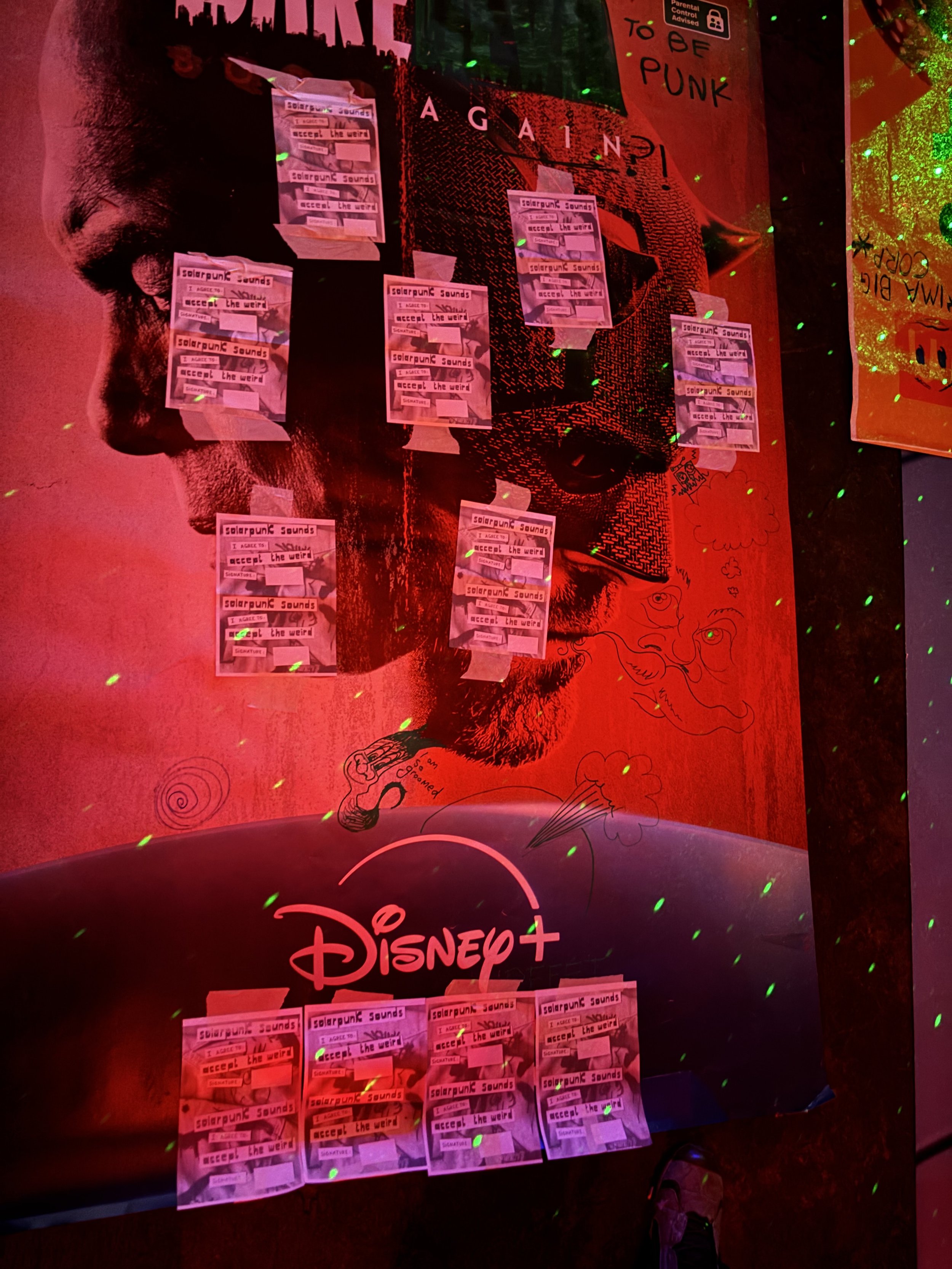
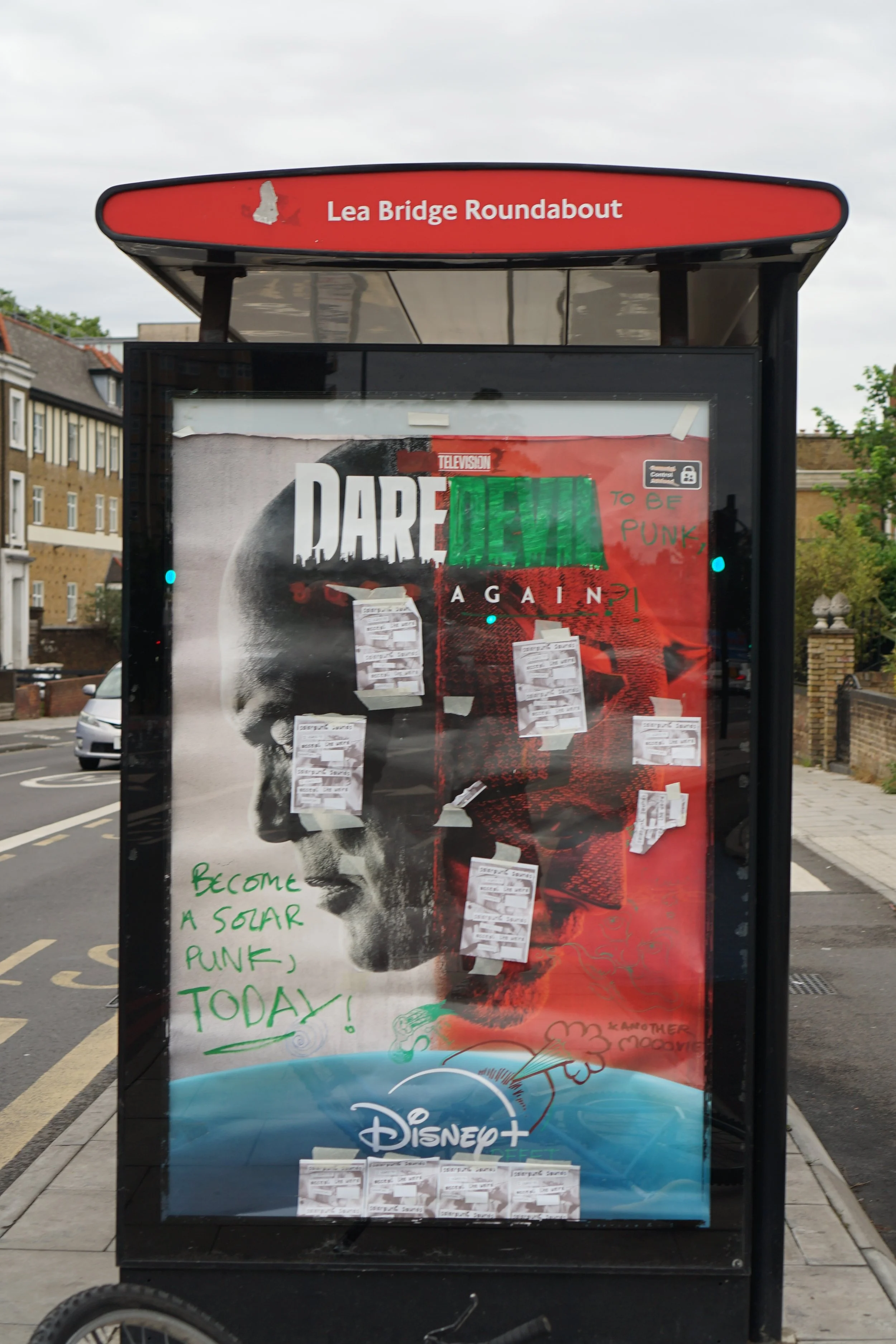
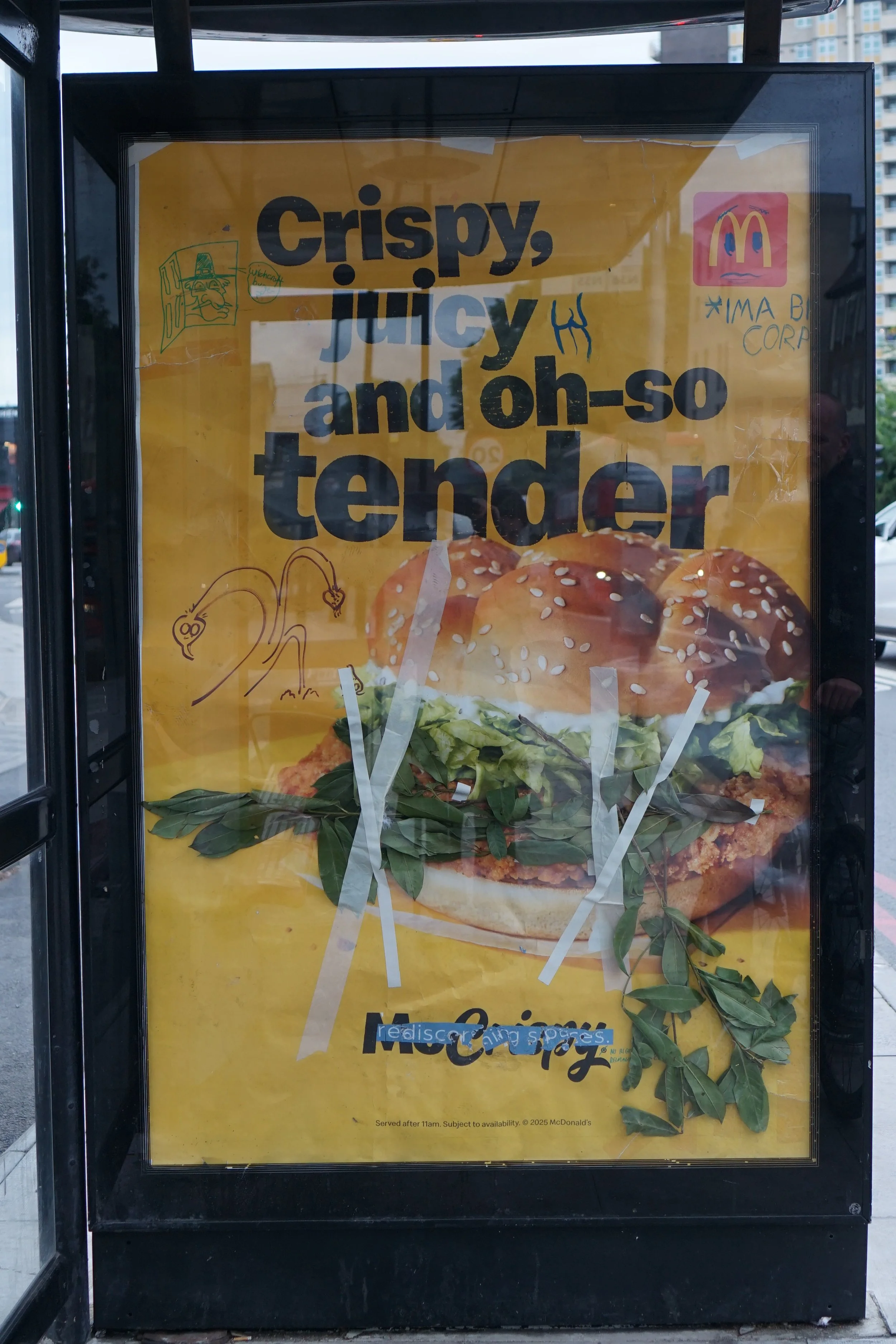
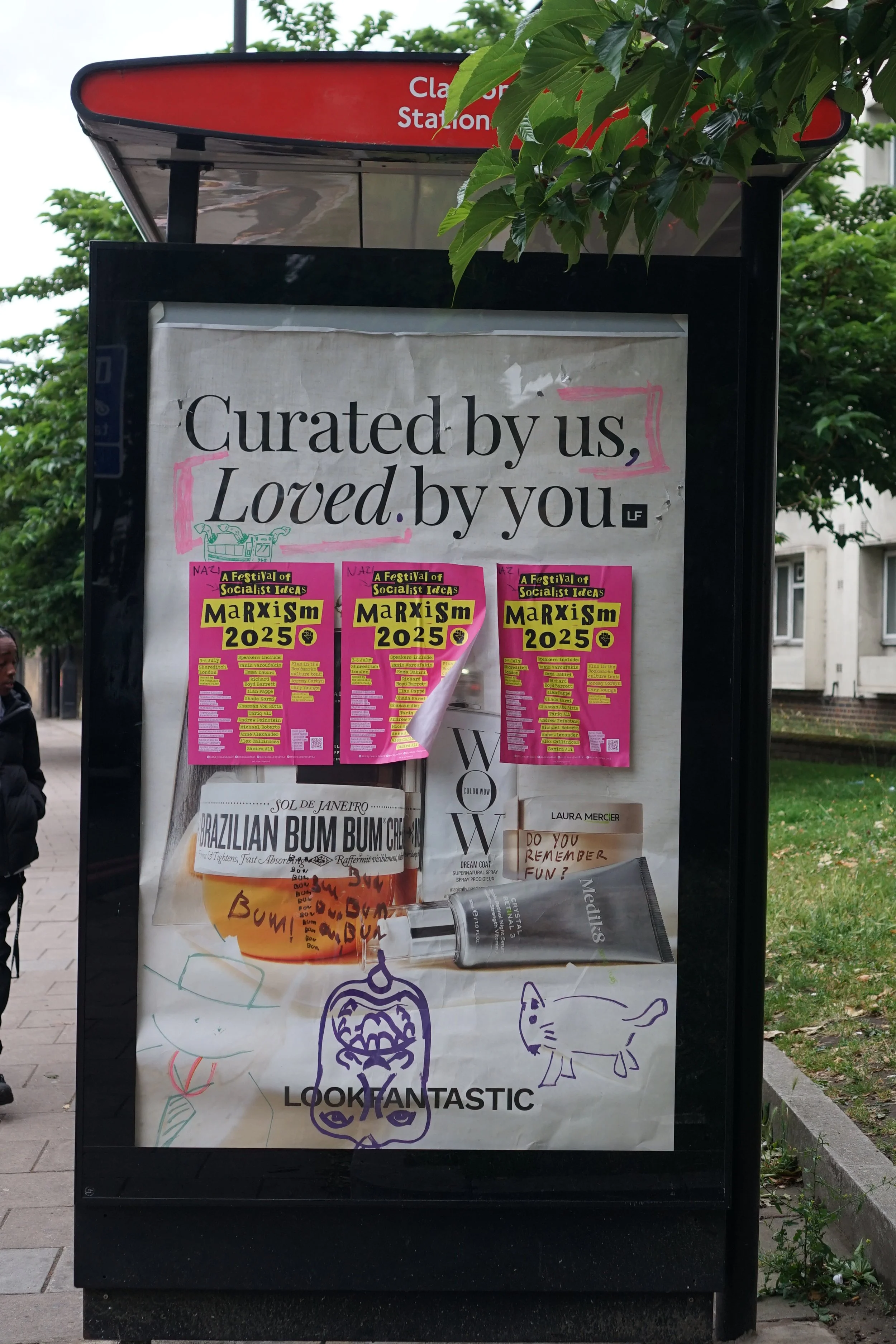
That’s when I found Solarpunk Social at The Post Bar, where I was handed a sharpie and some plants, then shown adverts freshly liberated from the glass of a London bus stop. It was joyful. It was political theatre. It was exactly what I needed.

Graffiti and subvertising are usually dismissed as vandalism. Even the more generous critics relegate them to “street art,” as if the spray can is somehow inferior to the oil brush. Or it’s only praised when it becomes worth a huge amount of money, like the Banksy liberated from a Poundland Wall to generate profit for someone somewhere.

What if, instead of seeing graffiti as a static image, we saw it as performance? What if the street isn’t just a gallery, but a stage, and every sprayed line, every hacked billboard, a fleeting act in a radical theatre of resistance? That’s the possibility that subvertising offers.

Defacing as a political gesture

Subvertising, short for “subversive advertising”, is the street’s remix culture. Think of it as cultural detournement: Nike slogans reworded to critique sweatshops, oil companies’ greenwashing torn apart with biting counter-texts, McDonald’s golden arches twisted into protest symbols. It’s an art of interruption, of jamming the signal.

Unlike sanctioned murals or publicly funded street art festivals, subvertising is deliberately illegal, unauthorised, and often anonymous. Its power lies in what it interrupts: the endless stream of ads that tell us who we should be, what we should buy, and how we should feel about our lack of it.

It’s the art of culture jamming: turning “Have it Your Way” into “Have Nothing, Be Grateful.” It’s resistance in Helvetica Bold.

Billboards lie. Spray paint doesn’t

Graffiti and subvertising reclaim the visual commons. They’re not just images, they’re insurgencies. Every tag is a refusal. Every defaced billboard is a vote of no confidence in the capitalism of the eye. These are performed critiques: urgent, embodied, and defiant.

Commercial messages are everywhere. We don’t consent to them. We don’t vote for them. Yet they haunt our commutes, leer at us from bus shelters, shout at us from phone screens. Subvertising answers back.

The graffiti artist as performer

Subvertising doesn’t happen in studios. It’s born in shadows, alleys, train yards. It’s as much choreography as creativity, part ninja, part dancer. There’s the scouting, the route planning, the escape map. The timing is precise. The adrenaline is real. The risk is the point.

This is not unlike performance art. Marina Abramović may have stared for hours, but hanging off scaffolding at 3am with a police van circling by seems more daring and more confrontational.

Subvertising is graffiti’s punk sibling: angry, quick, uninvited. A visual insurrection. A performed critique. Not just the image, but the body involved in putting it there, climbing, sneaking, pasting, running. It is live art made in alleyways and scaffolded silence. No stage, no script, just a flash of intention before the cleaners come.

Witness and audience

That night at The Post Bar, I realised how much I’d been craving something physical. Something collective. Not just reading radical theory on the tube while the world burns, but being in the mess with other people. Holding hands. Laughing. Risking. Making something together and then stomping on it with muddy boots.

It reminded me of performance art, not the solemn chin-stroking kind, but the raw, sweaty kind. Joy as an act of resistance, like the Idles album said. The act itself was the message. The audience? Whoever had popped into The Post Bar that night, lured by craft beer and reggae provided by Street Light Sound System.

Then, when the adverts went back out into the world freshly remixed and placed back in their protective glass the audience became whoever clocked the weird collage above the McDonald’s ad and did a double take. The commuter. The bus driver. The stoned teenager, walking home at 3am. Like all the best art, it was fleeting. It might be gone tomorrow. That’s what makes it matter.

This is not for Sotheby’s

Unlike the rarefied hush of the gallery, subvertising’s audience is unpredictable. It’s the morning jogger, the night bus driver, the teenager on her phone at the zebra crossing. It’s the pigeon.

This is the street artist's great democratic risk and reward: anyone can see it, and anyone can ignore it. However, those who do see it? They become part of it. Reactions, laughter, disgust, Instagram posts, arrests, are all part of the artwork’s performance arc.

Like any good live act, subvertising’s lifespan is short. A wall might be buffed clean in an hour. A remixed ad placed back in a bus shelter may be taken down by the council before sunrise. Or it might go viral before disappearing. Subvertising lives, and dies, on borrowed time.

Dancing on advertisements

We didn’t do it alone. Solarpunk Social at The Post Bar and the London School of Solarpunk are full of people who think the future can still be beautiful. We know we need new myths, new dreams, and new ways of being together in the city. The Post Bar is one of the last places where this kind of thing can happen, where rebellion can be tender, queer, funny, and covered in biodegradable glue.

After we had remixed the adverts, they served as an impromptu dance floor as we bopped the night away to reggae and dub. The walls of bus stops had become our floor. This was an act of personal liberation. I had honestly never danced on an advert before that night.

The street is still a stage. It’s where graffiti brought down regimes during the Arab Spring. It’s where Black Lives Matter murals carved power into pavement. It’s where Brandalism turned Coke slogans into climate warnings. This isn’t art about politics. This is politics. Not in galleries, but in gutters. Not for sale, but for sharing.

The street as a site of resistance

Throughout history, graffiti has flourished in moments of upheaval. In Cairo’s Tahrir Square, walls bloomed with revolutionary stencils. In Minneapolis, George Floyd’s face became a muraled martyr. In London, Solarpunk Social do their part to stand up to the oppressive tide of late-stage capitalism.

These works of art are not decorative. They are declarative. They refuse commodification. They ask not to be bought, but to be felt.

Unlike most gallery art, they don’t whisper. They scream. They exist in defiance of permission. They resist the sanitised, privatised, corporatised aesthetics of urban life.

The message in the mess

They are art, yes, but they are also acts. At The Post Bar we weren't creating masterpieces. We were becoming art. Temporary, illegal, unforgettable.

Subvertising isn’t just a visual practice. It’s a temporal one. It happens. Then it vanishes. It leaves behind a question. Not just “what does it say?” but “who did it speak to? Who did it challenge?”

That night, we left The Post Bar giggling, tipsy, looking back at the adverts we’d re-written. There was glue on our hands and slogans under our boots. It was messy. It meant something.

Escaping the bland commercial world

I felt rejuvenated from connecting with people instead of doom scrolling past adverts. It was exciting to be part of an act of resistance to the bland commercial world that a few hours earlier had seemed inescapable.

Graffiti and subvertising are verbs. Things you do. Things that interrupt, provoke, delight. So next time you see a billboard, don’t just ask what it says. Ask who it’s speaking to. Ask who made it. Ask what it’s stealing from you, and how you might steal it back.

Maybe the truest art isn’t in a museum. Maybe it’s smeared across the side of a bus shelter, fading in the rain, daring you to dance on it.

Related posts
Nothing Holds On Its Own.jpg
Nov 19, 2025
Nothing Holds On Its Own: social architecture and how we all live together  
Nov 19, 2025
Nov 19, 2025
IMG_1163.jpeg
Nov 10, 2025
Between Rooms: Siyuan Meng on Home, Thresholds, and the Art of Being Present
Nov 10, 2025
Nov 10, 2025
Siena-The-Rise-of-Painting.jpg
Aug 30, 2025
What Siena knew that we forgot: On painting, power, and the politics of gold
Aug 30, 2025
Aug 30, 2025
June 20, 2025 /Alastair J R Ball
Art and politics
Comment
Cole_Thomas_The_Course_of_Empire_Destruction_1836.jpg

What does a 185-year-old painting say about the attack on the Capitol Building?

February 01, 2021 by Alastair J R Ball in Art and politics

By Alastair JR Ball

Like many people, I was horrified by the events early this month at the US Capitol Building in Washington, when armed protestors broke into the building and members of Congress were forced to hide in fear for their lives. Images of the Capitol Building covered in smoke, surrounded by chaos, filled the world’s TV screens and social media feeds for days afterward. Days later an image came to my mind that encapsulated what had happened. It wasn’t a photo from the day, but a painting made 185 years ago.

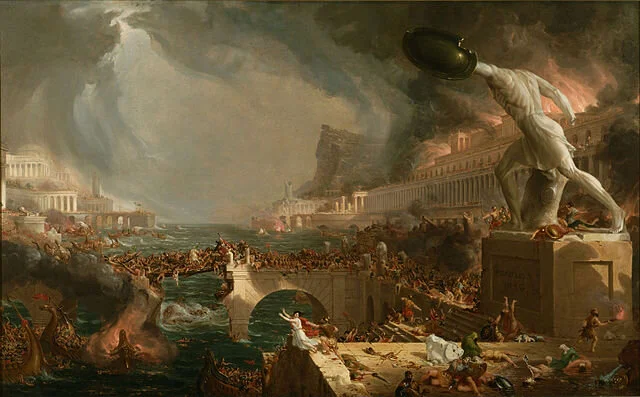
The painting is called Destruction and was painted by Anglo-American artist Thomas Cole in 1836. Cole couldn’t have foreseen our age of internet conspiracy theories or a time where the President of the United States would use Twitter to encourage people claiming to be patriots to attack the very seat of the American government, (I have been living through the last four years and I couldn’t have predicted this would happen - although perhaps I should have), however, his painting tells us a lot about how we got into this situation.

The Course of Empire

Take a look at the painting. Destruction is obviously apt to describe last week’s events, but the painting is relevant not just because it depicts a neo-classical capital city being disrupted by an uprising, but because of what Cole intended to communicate when he painted it.

Destruction is part of a series of paintings called The Course of Empire. In these paintings, Cole outlines the rise and fall of a fictional civilisation, according to a popular view at the time that history was a series of civilisations rising and falling. The five paintings show the complete life cycle of a civilisation, its rise from a nomadic existence, to a great culture that builds huge grand cities, to its destruction and then finally becoming abandoned ruins.

The fourth painting in the sequence, Destruction, shows the fall of the great civilisation as it is engulfed in either a civil war or an outside invasion. Although the paintings don’t depict any particular civilisation, they do show a classical civilisation in the model of Ancient Greece or Rome. The paintings make the argument that this is an inevitable trajectory for all civilisations: if you rise you will fall.

Pastoral America

For Cole, the second painting in the series, The Arcadian or Pastoral State, which represented pastoralism was the ideal state. This is where humanity is at peace with the land, farming it but living in harmony with it. Cole didn’t want America to lose touch with nature and become an urban, complex society as this would lead to America progressing along the expected trajectory of all civilisations and, ultimately, to its downfall. If America left pastoralism behind it would lead to the ruin shown in the 5th painting, Desolation.

The third painting in the sequence, The Consummation of Empire, shows a society at the height of its power, a society with a refined culture that has built great monuments to itself. However, the seeds of its downfall have already been sowed as a demagogue is shown riding to power on the back of waves of popular elation: this civilisation has found its Caesar.

These paintings have something to tell us about what happened in America last week. It’s telling that the society painted by Cole was brought down by a demagogue, loved by his people, who destabilised his society. However, what’s more instructive is Cole’s idea behind making the paintings: that the signs of civilisation or metropolitan living, as summed up in The Consummation of Empire, are in themselves a sign that America has lost its way and is headed for destruction.

Against civil society

Many Americans want America to be as Cole saw it: a pastoral, rural society. One free of complex things like modern governments, metropolitan culture and a plurality of ethnicities. It’s not that these people, many of whom support Donald Trump, think that Joe Biden or the Democrats are their enemies; it’s that they see the whole idea of American civil society as their enemy.

Being opposed to the peaceful transition of power after your leader loses an election equals being opposed to civil society. Leaving fact behind, and living in an alternative reality where Trump won the election and the Democrats are part of a satanic pedophile ring, is to set yourself against the common truth that make civil society possible. To hate cities and believe that everyone should live in small, rural communities is against civil society.

Cole’s paintings show that this resistance to civil society (not shown at all in the first painting, The Savage State, which shows a hunter-gatherer society, or the second painting, The Arcadian or Pastoral State) has been part of the American mindset from the beginning. Trump didn’t turn the people against civil society (although he certainly made them angrier with it) and getting rid of Trump will not change the fundamental view, held by many Americans, that their society has been on the wrong course since the time of Cole.

The real threat to America

Many Americans are still fighting to stop America from moving away from its pastoral roots. America needs to find some way to address the fact that a large number of Americans see their own civil society as against them, if the country is to move beyond its current state of being hopelessly divided, riven and at its own throats.

Take another look at Thomas Cole’s Destruction. It’s the ideas behind Cole’s paintings that, imbedded deep within the American consciousness, might lead to its destruction; not its progress along a mythical road to becoming metropolitan civilisation. The resistance to this process is more likely to destroy America than embrace it. That’s what we saw last week.

Image credit: Thomas Cole, Public domain, via Wikimedia Commons

Related posts
Nothing Holds On Its Own.jpg
Nov 19, 2025
Nothing Holds On Its Own: social architecture and how we all live together  
Nov 19, 2025
Nov 19, 2025
IMG_1163.jpeg
Nov 10, 2025
Between Rooms: Siyuan Meng on Home, Thresholds, and the Art of Being Present
Nov 10, 2025
Nov 10, 2025
Siena-The-Rise-of-Painting.jpg
Aug 30, 2025
What Siena knew that we forgot: On painting, power, and the politics of gold
Aug 30, 2025
Aug 30, 2025
Roots-of-Roots.jpg
Aug 2, 2025
Roots of Roots: Making the buried visible
Aug 2, 2025
Aug 2, 2025
IMG_3124.jpg
Jun 29, 2025
Symbiotic Epidermis: Skin, species, and the trouble with being human
Jun 29, 2025
Jun 29, 2025
IMG_1551.jpg
Jun 20, 2025
Dancing on Advertisements
Jun 20, 2025
Jun 20, 2025
Cole_Thomas_The_Course_of_Empire_Destruction_1836.jpg
Feb 1, 2021
What does a 185-year-old painting say about the attack on the Capitol Building?
Feb 1, 2021
Feb 1, 2021
2001-discovery.jpg
Sep 15, 2019
2001 captures the sublime in space
Sep 15, 2019
Sep 15, 2019
Warhammer-40k-Chaos-Chosen.jpg
May 14, 2019
The look of Warhammer 40,000: from medieval Salisbury to the grim darkness of the far future
May 14, 2019
May 14, 2019
February 01, 2021 /Alastair J R Ball
Art and politics
Comment
2001-discovery.jpg

2001 captures the sublime in space

September 15, 2019 by Alastair J R Ball in Art and sci-fi

By Alastair JR Ball

The sublime is a difficult feeling to articulate. Broadly, it’s a mixture of beauty and terror. It’s a sensation of beauty that has nothing to be with prettiness. The sublime is not found in cuteness or quaintness, but in scenes that inspire awe and wonder. It’s a beauty that is hard to look at, even hard to comprehend, but also hard to turn away from.

What is the sublime?

The 18th-century clergyman and Whig politician Edmund Burke , who has the dubious honour of being the founder of modern conservatism, said that: “No passion effectually robs the mind of all its powers of acting and reasoning as terror. And whatever is terrible in refuse to sight is sublime.” Burke believed that the sublime and beauty were mutually exclusive. He found the sublime in the poetry of John Milton, but not in the paintings of his day.

For a more modern commentary on the sublime, we need to look to Jonathan Meades, writer, documentary filmmaker, surrealist artist and the former Times restaurant critic. Meades said that: “The witness to the sublime is overwhelmed by vastness, by awe, by wonder, by terror. The sublime is crushing.”

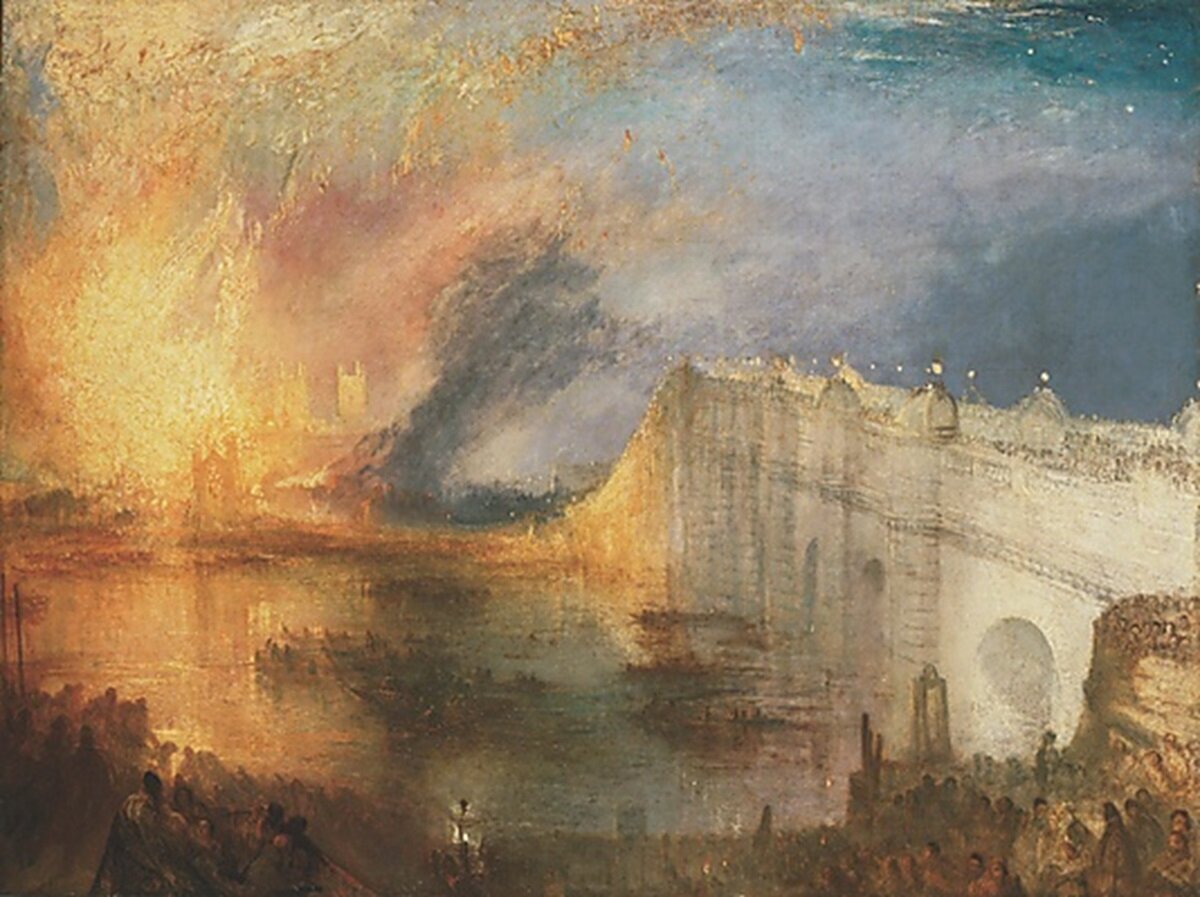
Meades identified the sublime with nature in seething oceans, basalt columns, waterfalls and the screaming wind. “Forces beyond human control”. He also identified the sublime with the painting of J. M. W. Turner, Caspar David Friedrich and John Martin, the latter of which he said his: “Every waking day was a molten apocalypse.”

JMW-Turner.jpeg

Meades makes a crucial distinction that: “Paintings which attempt to capture the sublime are not themselves sublime. Maybe any form of representation precludes sensation of sublimity.” He identified the sublime more with architecture. Not with a particular architecture movement or style, but with military installations, pylons, dams, oil refineries, power stations and gigantic chimneys. These structures challenge the forces of nature. Meades said: “Mankind usurped god. Mankind has, to put it mildly, augmented the inventory of the sublime, not through literary or pictorial representation, not by making art about it, but by matching it.”

I would add to Meades’s list that the sublime can be found in the painting of Mark Rothko - especially his composition for the Four Seasons restaurant in the Seagram Building on Park Avenue, New York, which is now resident in the Tate Modern - and in the films of Nicolas Winding Refen. The sensation of beauty mixed with terror can be directly experienced through the strange, artful delicacy that Refen uses when depicting a model slicing their own chest open to remove the toxic pieces of another model they have killed and eaten.

I would disagree with Meades that art which seeks to represent the sublime is not itself sublime. The immersive nature of cinema is ideal for depicting the sublime. Especially science fiction films. Burke defined the sublime’s characteristics as ruggedness, lack of clarity, infinity and darkness. Darkness and the infinite bring to mind the complete darkness and endlessness of space.

The sublime in space

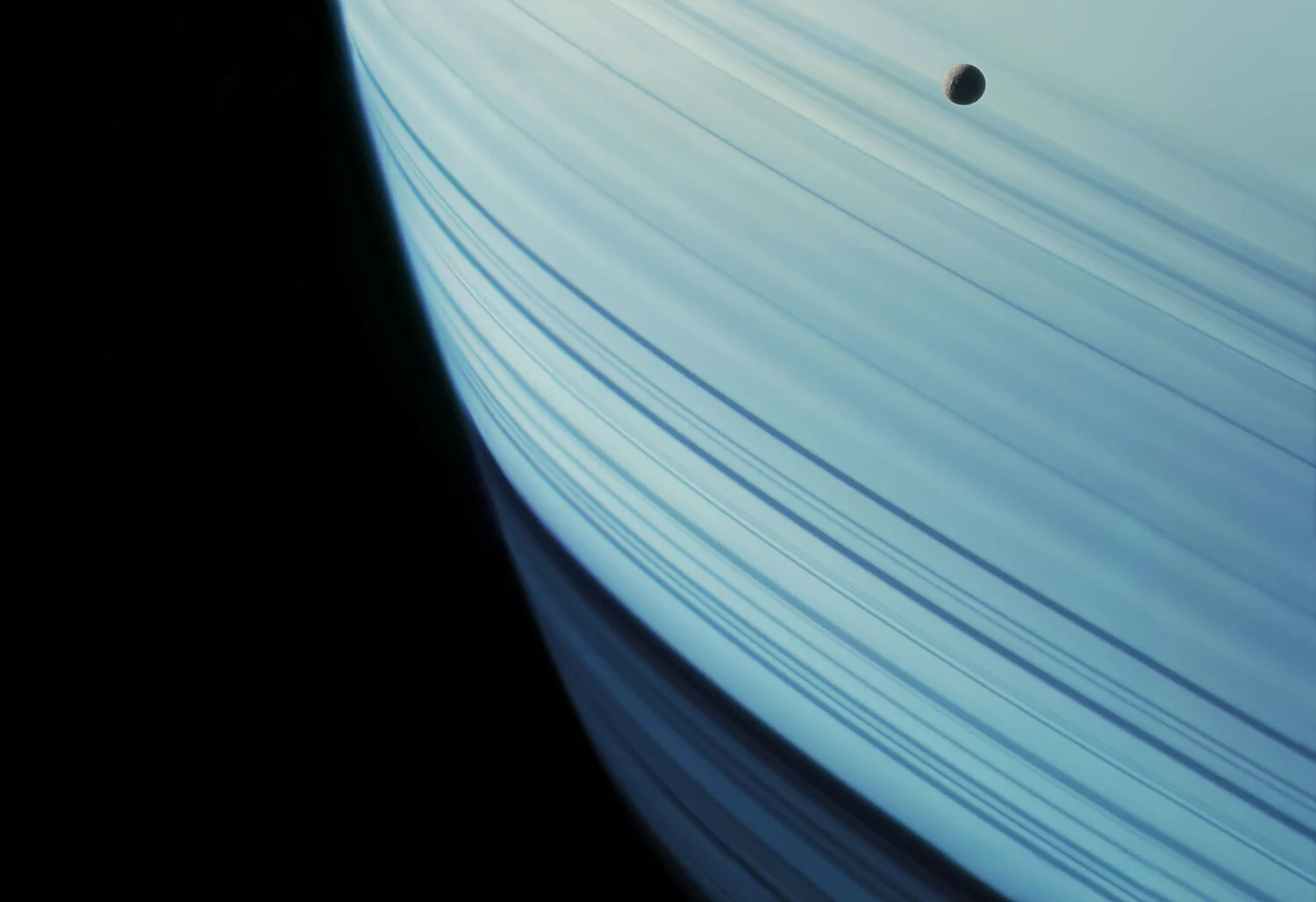
Many artistic works that attempt to represent space capture this sense of the sublime. The beauty of extraterrestrial phenomenon can be mixed with the terror that comes from their sheer scale of heavenly bodies, the huge power behind the physics that creates and destroys worlds, the apparent lifelessness of the cosmos, the crushing danger of the void and the fear of the unknown that darkness brings.

A good example is the photography of NASA and ESA probes, especially those gathered together for the 2016 Natural History Museum exhibition Otherworlds: Visions of our Solar System, but it can be found in the works of Iain M. Banks and the better episodes of Dr Who.

It is the vastness of space that stirs terror in us, which is ironic because the hard vacuum of space is very dangerous. Alien is scarier than Gravity because the thought of something terrible coming out the darkness is scarier than the idea of an accident in a hostile environment.

image-asset.jpeg

Space has the quality of being sublime, partly due to the universe's supreme scale but also because in the mind of science fiction writers it can inspire hope. The hope of a better world just beyond our reach or the hope that a spirit of adventure and discovery can unite people and inspire us to something greater. Hope is the beauty and space itself is the terror.

Nowhere is the hope better summed up than in the spirit of the 1960s space exploration and the utopian science fiction it inspired. Novels such as Frank Herbert’s Dune showed the possibilities of space and how dangerous other worlds could be. The best example of cinema science fiction from this period that captures the sublime in space is Stanley Kubrick's 2001: A Space Odyssey.

The film was made during the height of the Cold War. Kubrick began work on it in 1964, just two years after the Cuban Missile Crisis, when the world had been a hair’s breadth away from complete annihilation by new technological marvels of unparalleled destructive power. Meades also identified the sublime with the explosion of atomic bombs. The fear of nuclear war mixed with the sheer power of modern technology is another way in which 1960s science fiction captures the sublime.

Hope for the future

Hope in 2001 is shown through its optimism about space travel. It was released 14 months before the moon landing and its main theme is the possibility of space travel. Kubrick envisioned the film partly as a presentation about futurism and, in his own words, to: “Inform, intrigue and normalise ideas of technological progress and space travel.”

This film is a study of how people at the time imagined space exploration would progress. Scientists from NASA were invited to submit their ideas of what space travel would be like in 30 years’ time and painstaking detail was taken to be as scientifically accurate as possible. Ironically what the scientists failed to predict was the stagnation in space technology of the following decades.

The year of the film’s title is based on the scientists who advised the film’s belief that there would be a round trip to Mars by the 1980s and that a crewed mission to Jupiter would follow at the turn of the millennium.

2001-a-space-odyssey.png

The film did not just imagine a bold future for space travel. Companies like IBM contributed speculative designs for the computers of tomorrow, which informed the AI Hal, and Ford supplied the design of a future car that appears in a news clip that is watched during the sequence when Dr Heywood Floyd (William Sylvester) arrives on the moon.

Designers submitted ideas for what men’s clothing would look like in 35 years’ time. According to the film, the future will resemble Edwardian business suits, which keeps the film’s style from dating too obviously. Kubrick said: “The problem is to find something that looks different, and that might reflect new developments in fabrics, but isn’t so far out to be distracting.” Buttons, for example, are not present on the film’s costumes.

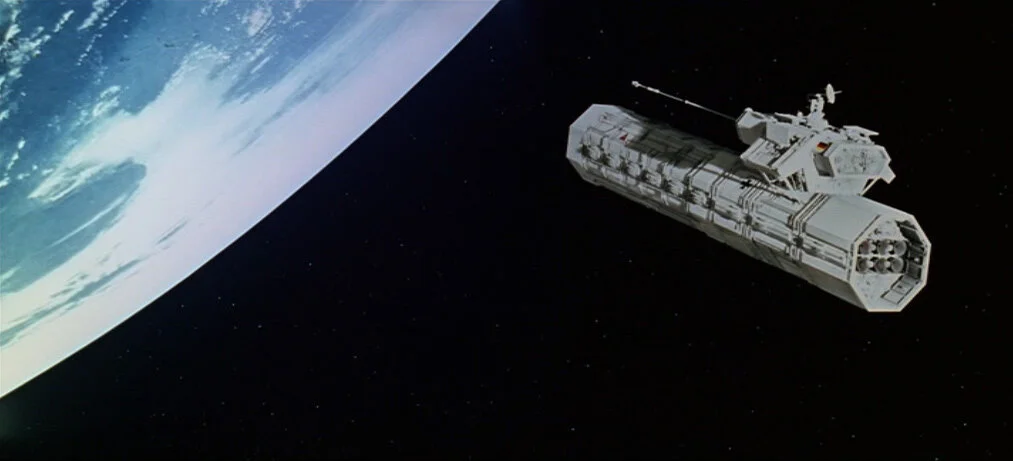
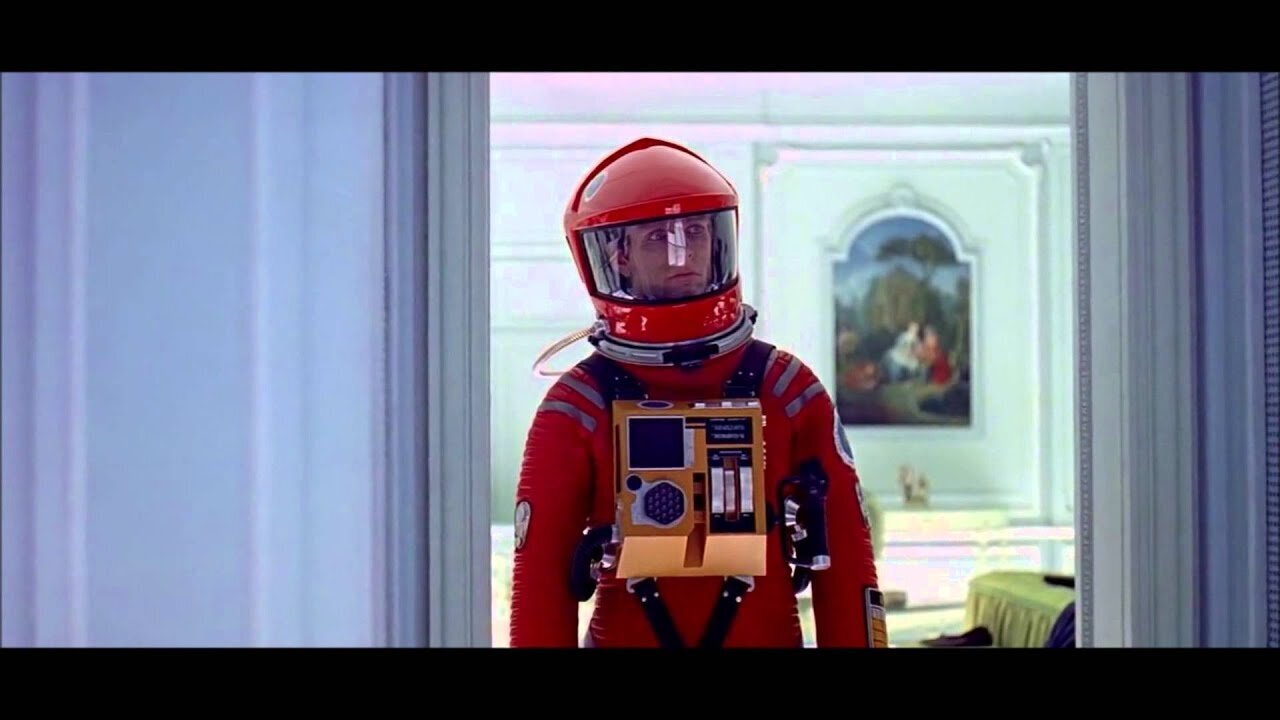
Lots of consideration was put into what the ships and space stations would be like or what life on the moon would be like. Beautifully intricate models were made to show the audience the technological possibilities of the near future. Thought was put into very minute detail, such as making accurate animations for the display screens that appear when space ships are coming into dock in the moon arrival sequence or on the display screens that Dr Dave Bowman (Keir Dullea) and Dr Frank Poole (Gary Lockwood) observe in the Discovery One.

Fear in space

There are contradictions in what appears at first to be a positive vision of the future in this film. The satellites that are shown orbiting the Earth immediately after the Dawn of Man sequence are military satellites. This creates an obvious parallel between the first weapons we see being used by the apes in the Dawn of Man sequence and their much more powerful descendants orbiting the Earth.

Details from narration that was originally included in the script, but was dropped from the film, said that these were nuclear weapons from all the world’s great powers. It also said that the weapon system was like an airline with a perfect safety record, no one expected it to last forever. The 1960s fear of nuclear annihilation is translated into space.

2001-A-Space-Odyssey.jpg

Despite the militarisation of space, 2001 also depicts American and Russian scientists having a friendly chat on the space station. I prefer this more optimistic vision of people coming together to explore space, which is found in other great works of 1960s science fiction like the original series of Star Trek. The future of 2001 is a little less optimistic, but does mix ideas of unity between nations in the exploration of space and conflict between nations with the weaponisation of space. These two concepts together capture the sense of beautiful hope, but also terrible destruction that make up the sublime.

Sublime alien encounters

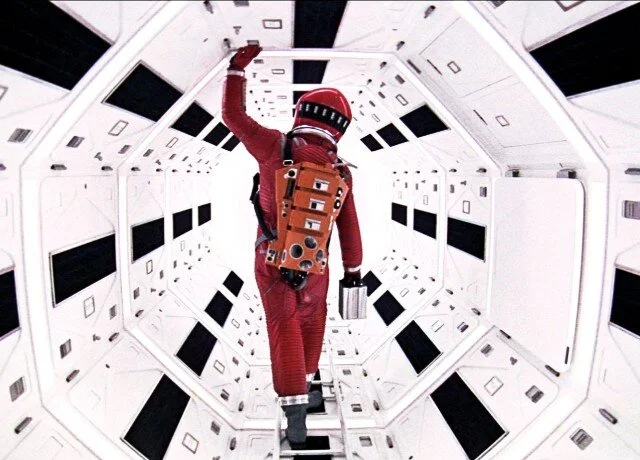
2001 best captures the sublime through the humans’ and proto-humans’ encounters with the alien monolith. An object that matches Meades definition of the sublime as being a force beyond mankind’s control and Burke’s definition of something possessing darkness and the infinite. In the final of the film’s four distinct sequences, the monolith is literally a portal to “Beyond the Infinite.”

The mix of beauty and terror that the monolith inspires in the audience can be found in the use of Hungarian composer György Ligeti’s Requiem, a haunting piece of music that has no discernable individual voice, but instead a formless expression that is both beautiful and terrifying.

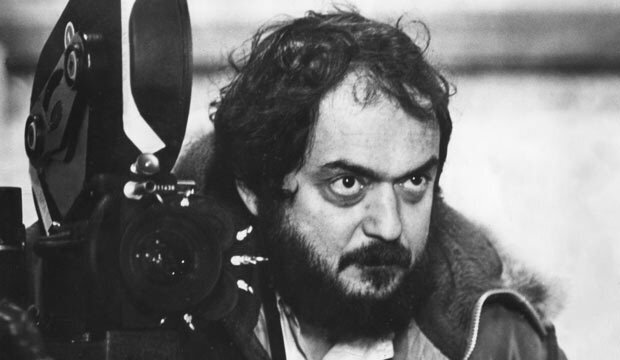
Stanley-Kubrick.jpg

This music accompanies the scene where Bowman is transported through the monolith. As Bowman travels we see a blur of abstract images that bring to mind paintings of Wassily Kandinsky, whose attempts to express intangible emotions are sublime in themselves.

The sublime and the Kuleshov Effect

The footage of the alien world that Bowman travels over after his transportation is of Scotland and Monument Valley, with the colour of the film adjusted. This brings out feelings of the sublime by taking something that is familiar and juxtaposing it with the abstract images from Bowman’s transportation to give the feeling a strange alien world.

In cinema this is known as the Kuleshov Effect named after Soviet filmmaker Lev Kuleshov, who discovered it. Kuleshov Effect shows that viewers get more information from the interactions of different shots than from individual shots. Complex sensations, such as that of the sublime, can be created through the interactions of footage of different objects.

Thus the combination of footage of ordinary landscapes such Scotland and Monument Valley, with the colour adjusted, can be transformed into bizarre alien worlds that engender sensations of the sublime, via the Kuleshov Effect that occurs when the viewer watches this sequence. The sublime itself is also an emotional Kuleshov Effect as its sensation comes from the juxtaposing of beauty and terror.

Unknowable aliens

The aliens in 2001 are unknowable with their strange landscape and of bizarre structures such as the diamonds that appear floating above the infinite horizon during Bowman’s transportation. The former is reminiscent of way that Turner painted light in his later works and the latter brings to mind the sublime geometric abstractions of Piet Mondrian. Original versions of the script included cities made out geometric shapes that would have given a hint at the architecture of these unknowable aliens.

2001-a-space-odyssey-beyond-the-infinite.jpg

The film ends with a climax that sums up the sublime with Bowman leaving physical form behind to be reborn as a Starbaby, a creature of pure energy and light. The film ends with the Starbaby floating above the Earth, Bowman having transcended the humanity that that we saw awakened in the Dawn of Man sequence. Older versions of the script, as well as Arthur C Clark’s novelisation of the film, end with the Starbaby simultaneously detonating the nuclear devices that circle the Earth. The sublimity of transcendence and the infinite identified by Burke is linked with the sublimity of nuclear explosions identified by Meades.

Other works of science fiction

No science fiction film so perfectly evokes the wondrous beauty and mind-numbing terror of the great expanse of nothing that lies beyond the heavens as 2001: A Space Odyssey. Other works of science fiction capture the sublime, such as the works of Iain M. Banks, whose novels contain creatures of pure thought and energy who inhabit a plane of existence known as the Sublime.

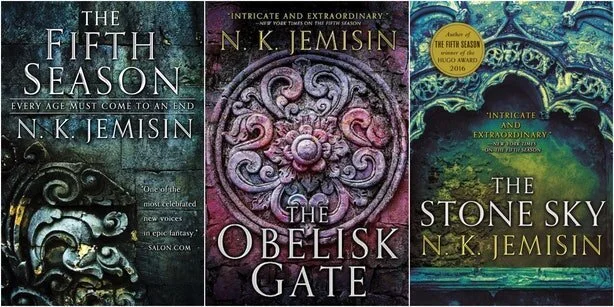
The writing of NK Jemisin captures the awesome and terrifying power of nature that is associated with the sublime. In her novels, the forces that in our world are beyond human control can be controlled by people, which only makes earthquakes and volcanoes more terrifying when they can be created by human anger or pain.

N-K-Jemisin-novels.jpg

Ada Palmer’s novels capture the beautiful diversity of humanity and contrast that against the merciless sweeping of time. People are nothing next to the majesty of the philosophies that have shaped the world and they are sublime in their power and how people are consumed by them.

Terry Pratchett made characters of gods and death that were beautifully human whilst still maintaining their awesomeness and their terrible indifference to humanity. He could evoke the sublime and, unusually, combine it with warmth and humour.

Experiencing the sublime

Science fiction as a gene is uniquely suited for depicting the sublime as space is filled with both beauty and terror. Transporting the audience to a world where the wonder and awe of the most powerful forces in the universe can be experienced not only depicts the sublime, but creates feelings of sublimity amongst the viewer.

2001-discovery.jpg

Both Meades and Burk believed that certain works of art could be sublime of themselves by imbuing the forces that are beyond human understanding or control. They have found the sublime in art forms from painting to architecture. I have sought to make the case that certain works of science fiction should be added to the inventory of the sublime.

It is through creating great works of art that humanity strives to match the awesomeness of nature. Stanley Kubrick's 2001: A Space Odyssey is such a work that goes beyond depicting the sublime, but is sublime. It is rare that works of art both reach for something greater than depiction and lets us reach for something greater ourselves, but 2001: A Space Odyssey is such a work of art.

Related posts
91IuATiJmaL._UF1000,1000_QL80_.jpg
Sep 28, 2025
The Lion and the Unicorn: Why Orwell’s English Revolution still matters
Sep 28, 2025
Sep 28, 2025
jason-cowley-who-are-we-now.jpg
Apr 24, 2025
I can’t see myself in Who Are We Now’s vision of England
Apr 24, 2025
Apr 24, 2025
Why We Get the Wrong Politicians by Isabel Hardman.jpg
Mar 21, 2024
Why We Get the Wrong Politicians by Isabel Hardman makes a strong case for why people don’t go into politics
Mar 21, 2024
Mar 21, 2024
Gamechanger-L-X-Beckett.jpg
Nov 15, 2022
Gamechanger by L. X. Beckett is part of a movement that says radical change is possible
Nov 15, 2022
Nov 15, 2022
Goldilocks-Laura-Lam.jpeg
Sep 15, 2022
Goldilocks shows the trends in our society that are leading us towards a misogynistic future
Sep 15, 2022
Sep 15, 2022
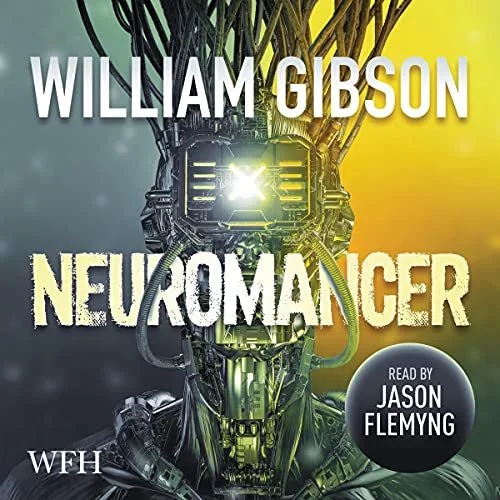
Neuromancer-William-Gibson.jpg
Aug 15, 2022
Much of Neuromancer was eerily accurate about the future. Now how do we change it?
Aug 15, 2022
Aug 15, 2022
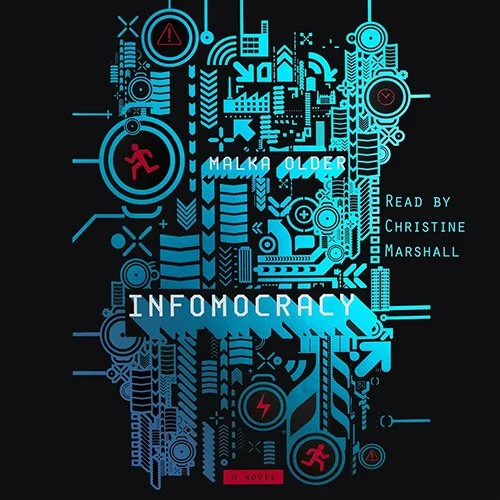
infomocracy.jpg
Jul 15, 2022
Infomocracy makes the case for local governments in a globalised world
Jul 15, 2022
Jul 15, 2022
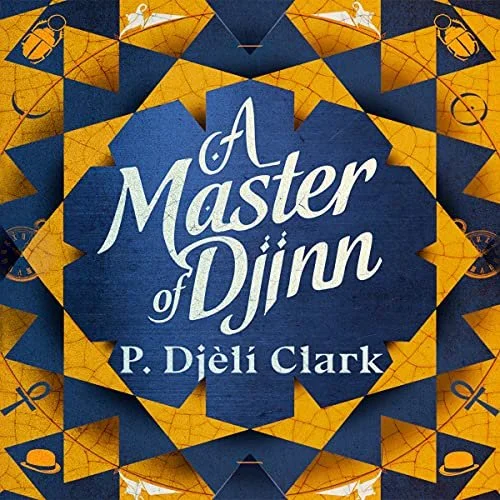
a-master-of-djinn.jpg
Jun 15, 2022
What The Master of Djinn can teach us about Gandhi and the end of colonialism
Jun 15, 2022
Jun 15, 2022
the-player-of-games.jpg
May 15, 2022
The Player of Games shows the lie behind the Hobbesian state
May 15, 2022
May 15, 2022
Free-Lea-Ypi.jpg
Apr 30, 2022
Free by Lea Ypi shows that it's worth fighting for a better society
Apr 30, 2022
Apr 30, 2022
September 15, 2019 /Alastair J R Ball
Art and sci-fi
Comment
Warhammer-40k-Chaos-Chosen.jpg

The look of Warhammer 40,000: from medieval Salisbury to the grim darkness of the far future

May 14, 2019 by Alastair J R Ball in Art and sci-fi

By Alastair JR Ball

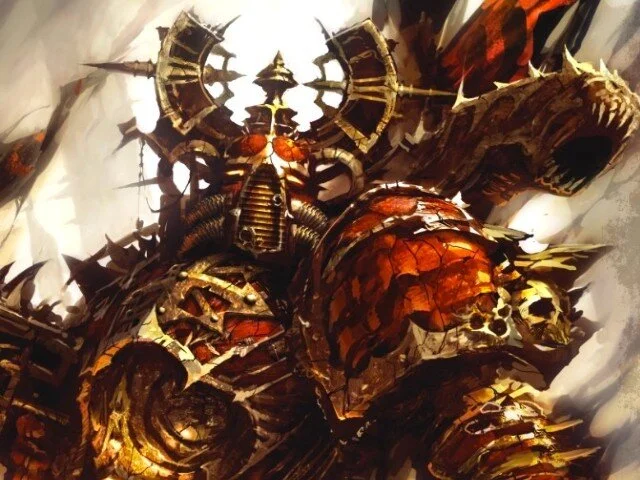
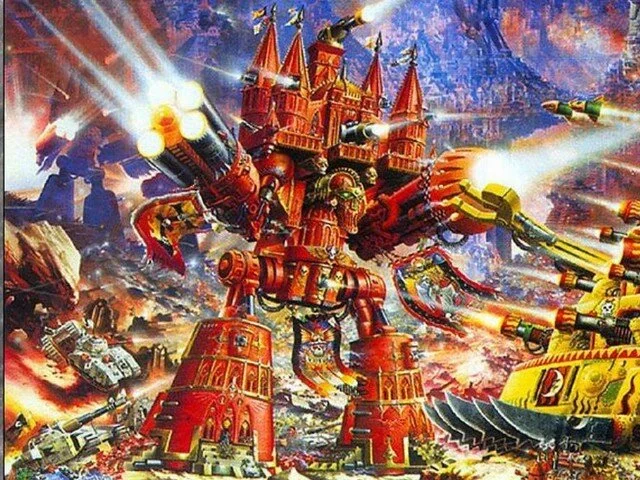
When I used to play Warhammer 40,000, one thing I loved as much as the game itself was the design of the models. They were beautiful evocations of the game’s aesthetic, representing a dark and violent future. This was best summed up in the illustrations included in the rule book and the different faction’s codexes. Between pages filled with character statistics there would be a moody tableau of scenes from Warhammer history rendered in ink as beautiful as a woodcut by Albrecht Dürer.

Theses picture were possessed by a morbid gloominess that made them slightly scary. The bodies they depicted were adjacent to reality. Space Marines had an intricate dieselpunk design that were baffling in their apparent needless complexity. There were monstrous Orks or twisted chaos figures, sick parodies of their Space Marine opposites. I could stare for hours at these science fiction nightmares.

Warhammer-40k-Chaos-Marine.jpg

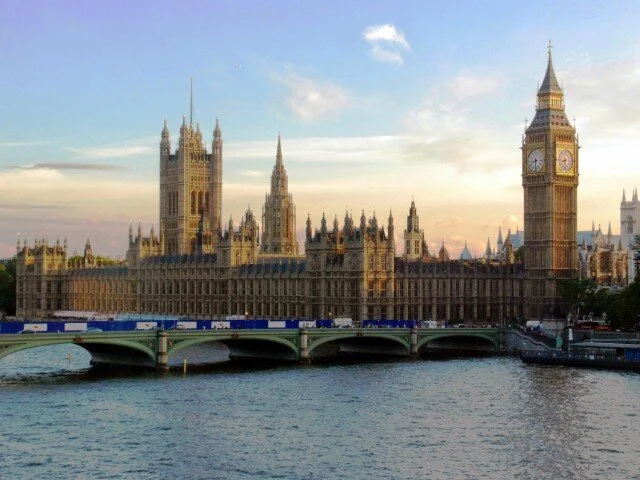
Years later I discovered that these images were heavily influenced by the neo-Gothic art style, sometimes called the Gothic Revival. In Britain this style was popular during the reign of Queen Victoria, specifically in the 1850s and 1860s. Although the neo-Gothic touched literature and other art forms, its best remembered for the architecture movement that produced stunning achievements of Victorian design such as The Palace of Westminster and Strawberry Hill House.

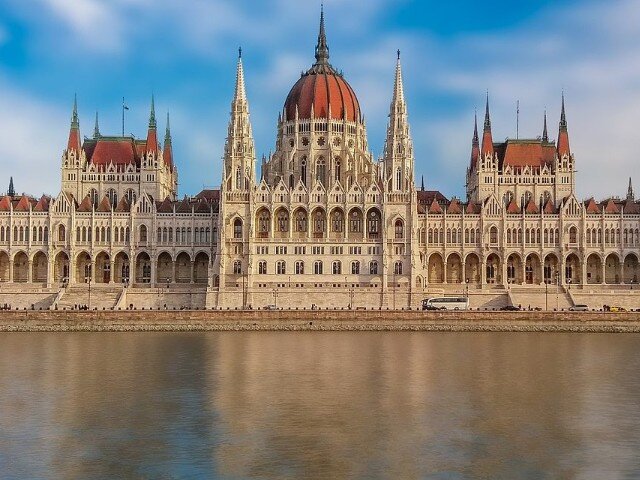
The neo-Gothic emphasises an exaggerated, slightly mythologised version of medieval Gothic buildings such as Salisbury Cathedral. Design features include sprites, gargoyles, ornamentation of every kind and a Victorian enthusiasm for unselfconsciously piling more on top of more. For me these buildings represent a link between the present and British history as they are relatively recent (compared to medieval castles) but are older than my grandparents, the oldest people I have ever known.

Gothic-palace-of-westminister.jpg

The reason that the neo-Gothic images of Warhammer 40k appealed to me is that they were very different to every other vision of the future I had seen through science fiction. Most sci-fi futures appear to have been designed by Apple. Their aesthetic is sleek, minimalist and modernist. The smooth surfaces and dramatic curves of the Starship Enterprise epitomise the modernist view of a perfectly engineered future. To paraphrase the great modernist architect, Le Corbusier: “a spaceship is a machine for living in”.

Warhammer 40k pays no such homage to the optimistic science fiction of the 1960s or sleek modernism of the 1930s. It looks instead to the Victorians with their morbid obsession and industrial vigor to paint a picture of a future that is pessimistic and bloody.

Having a style that consciously evokes a period in the past, rather than a contemporary view of the future, prevents Warhammer 40k’s vision of the future from dating. The complete dominance of modernist design elements in Stanley Kubrick’s 2001: A Space Odyssey looks as dated as the idea that we would live on the moon at the turn of the millennium. The design of Warhammer 40k remains immune from ageing.

2001-modernism.jpg

As time went by, I discovered that there were other alternatives to the perfectly engineered modernist science fiction, such as cyberpunk with its gloomy, rain-soaked, film noir aesthetic. This is best summed up by Blade Runner, a film I loved from the moment I saw it, but is also summed up by games such as Cyberpunk 2077 or the superb anime Ghost in the Shell.

Other visions of the future include Mad Max’s post-apocalyptic hellscape, which I find frightening as they show humans uninhibited by any laws created by states or social norms. As Cambridge economist Ha-Joon Chang has said, Max Max is the perfect neo-liberal society, one where individuals and markets have complete freedom, and it is disturbing. 
Mad-Max.jpg

Warhammer 40k’s use of the neo-Gothic also inspired fear of the constant presence of violence in me. The aesthetic of a society that was pious and fearful of death, perfectly suits a future human society that is consumed by constant war. A future where humanity is beset by terrifying aliens like the Tyranids or frightening creatures from beyond space and sanity, such as the Chaos Demons. The Warhammer 40k universe is scary to look at because it's scary to live in.
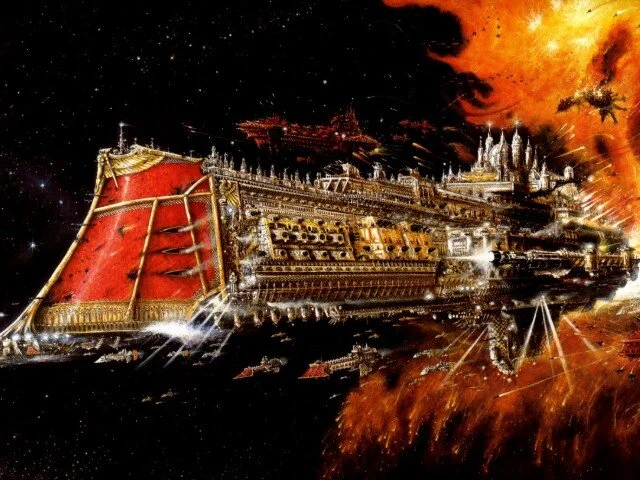
Battlefleet Gothic was perhaps the best incarnation of this aesthetic. The ships were salutes to Victorian cathedrals complete with spires and flying buttresses. It looks as if the great age of steam had taken off into space to fire broadside cannons the size of houses the horrors that descend on humanity from the stars. It specifically reminds me of the neo-Gothic cathedral at Cologne; a huge black form, covered in buttresses, gargoyles and spires that was once the tallest building in the world.

Battlefleet-Gothic.jpg

 The popularity of the neo-Gothic aesthetic of Warhammer 40k is surprising because of how unpopular it was in Britain for many years. Today we treasure buildings such as the Palace of Westminster, our national symbol, and curse the short-sightedness that wanted to turn St Pancras station into a concrete cube like Euston. However, throughout most of the 20th century, the neo-Gothic was hated for being gaudy, ugly, monstrous in proportions and symbolic of the self-righteous piety that tolerated enormous poverty and squalor.

Buildings such as The Cookridge Street Baths in Leeds were torn down, sometimes to make way for modernist buildings that were hated in their own turn. When a bomb fell on the Palace of Westminster during the Blitz, allegedly one of the people who scrambled to extinguish the flames shouted: “Save the [Medieval Westminster] Hall but left the gothic monstrosity burn.”

neo-gothic-architecture.jpg

Now we have reverence for the neo-Gothic, which should offer a warning from history about how we treat other much-maligned architectural styles such as Brutalism. Brutalism has been hated for the same reasons as the neo-Gothic; considered monstrous in proportions, ugly and in poor taste. Brutalism reminds me of a different science fiction vision of the future, that of early 1970s Dr Who adventures such as Frontier In Space, which was partly filmed on the Brutalist Heywood Gallery in London.

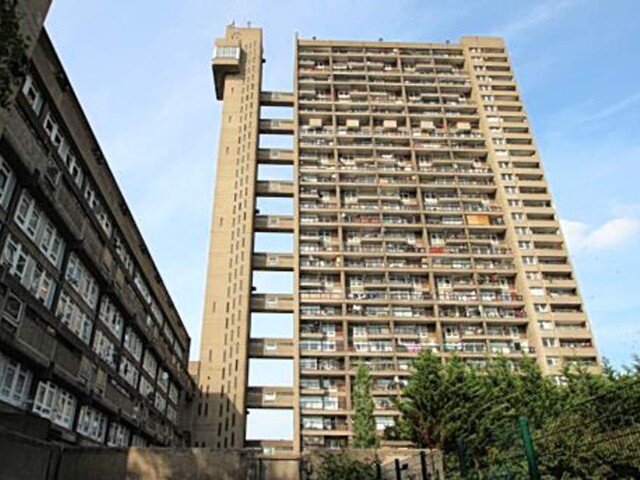
I believe that Brutalism is disliked because of its association with post-war council housing schemes, which were left underfunded to decay into sink estates. Building such as Trelick Tower in Kensal Green, the notorious Tower of Terror, or Robin Hood Gardens in Poplar became synonymous with the failures of postwar housing. They became a synonym for high crime, poor education, drug addiction, unemployment, teenage pregnancy and a whole host of other stereotypes about the poor.

Trellick-Tower.jpg

Brutalism painted a vision of the future associated that I associate with the optimism of the post-war consensus. When we see Brutalist buildings in the science fiction of the 1950s and 1960s, it reminds us of the hopes of those periods. Hopes that were destroyed when that consensus was dismantled in the 1980s. 

The neo-Gothic was hated because of the perceived hypocrisy of the Victorians with their strong Christian morality that still tolerated squalor, child poverty and the workhouses. Brutalism has also been hated due to the perceived hypocrisy of postwar council housing that sought to provide modern homes for the poor that quickly became poverty traps. During the 1980s, when there was a backlash against postwar state intervention, people turned on Brutalism and the estates that bore that aesthetic. Ironically this was when people began to embrace the neo-Gothic as beautiful.

warhammer-40k-gothic.jpg

A generation that came of age in the 1980s rehabilitated the neo-Gothic, which is evidenced by its use in Warhammer 40ks. Now my generation is seeking to rehabilitate Brutalism and the estates made in this style. I appreciate the ambition of Brutalism, just as I appreciate the ambition of the neo-Gothic. In the future, we may find these buildings to be beautiful and consider the razing of The Tricorn Centre in Portsmouth as the destruction of our cultural heritage, just as we do for the leveling of Euston Station’s Doric Arch.

It was through playing Warhammer 40k that I came to appreciate the neo-Gothic and the feelings that it invoked. Appreciating the neo-Gothic opened my minds to appreciating other controversial architecture styles such as Brutalism. Warhammer 40k added to my understanding of architectural history because it spiked my interest by being different to everything else that I had come to understand as science fiction. This deep appreciation all came from those dark, ink drawings found in Warhammer 40k rulebooks.

Related posts
91IuATiJmaL._UF1000,1000_QL80_.jpg
Sep 28, 2025
The Lion and the Unicorn: Why Orwell’s English Revolution still matters
Sep 28, 2025
Sep 28, 2025
jason-cowley-who-are-we-now.jpg
Apr 24, 2025
I can’t see myself in Who Are We Now’s vision of England
Apr 24, 2025
Apr 24, 2025
Why We Get the Wrong Politicians by Isabel Hardman.jpg
Mar 21, 2024
Why We Get the Wrong Politicians by Isabel Hardman makes a strong case for why people don’t go into politics
Mar 21, 2024
Mar 21, 2024
Gamechanger-L-X-Beckett.jpg
Nov 15, 2022
Gamechanger by L. X. Beckett is part of a movement that says radical change is possible
Nov 15, 2022
Nov 15, 2022
Goldilocks-Laura-Lam.jpeg
Sep 15, 2022
Goldilocks shows the trends in our society that are leading us towards a misogynistic future
Sep 15, 2022
Sep 15, 2022
Neuromancer-William-Gibson.jpg
Aug 15, 2022
Much of Neuromancer was eerily accurate about the future. Now how do we change it?
Aug 15, 2022
Aug 15, 2022
infomocracy.jpg
Jul 15, 2022
Infomocracy makes the case for local governments in a globalised world
Jul 15, 2022
Jul 15, 2022
a-master-of-djinn.jpg
Jun 15, 2022
What The Master of Djinn can teach us about Gandhi and the end of colonialism
Jun 15, 2022
Jun 15, 2022
the-player-of-games.jpg
May 15, 2022
The Player of Games shows the lie behind the Hobbesian state
May 15, 2022
May 15, 2022
Free-Lea-Ypi.jpg
Apr 30, 2022
Free by Lea Ypi shows that it's worth fighting for a better society
Apr 30, 2022
Apr 30, 2022
May 14, 2019 /Alastair J R Ball
Art and sci-fi
Comment

Powered by Squarespace

Related posts
Oct 31, 2025
Farage’s new immigration plan is cruelty as a governing principle
Oct 31, 2025
Oct 31, 2025
Trump-rally.jpg
Sep 30, 2025
Dr. Strangelove goes to Tehran: The hottest new war nobody ordered
Sep 30, 2025
Sep 30, 2025
Sep 16, 2025
The right finally discovers that life sucks for Millennials, but guess who they still blame
Sep 16, 2025
Sep 16, 2025
960px-Official_portrait_of_Angela_Rayner_MP_crop_2,_2024.jpg
Sep 9, 2025
Rayner’s resignation is another unforced error from Labour
Sep 9, 2025
Sep 9, 2025
Union-Jack.jpg
Aug 20, 2025
Who really holds power? The cultural illusion of middle-class dominance
Aug 20, 2025
Aug 20, 2025
Labour Party in parliament.jpg
Aug 2, 2025
What would Max Weber make of our politicians?
Aug 2, 2025
Aug 2, 2025
Jul 28, 2025
Why social media platforms spread the worst political messages
Jul 28, 2025
Jul 28, 2025
Trump-rally.jpg
Jun 20, 2025
Elon Musk and Donald Trump: The Beavis and Butt-Head of right-wing edge lords
Jun 20, 2025
Jun 20, 2025
Capitalism.jpg
May 27, 2025
“That’s Your GDP”: Labour’s big growth delusion
May 27, 2025
May 27, 2025
nigel farage.jpg
May 15, 2025
Nigel Farage is seriously uncool
May 15, 2025
May 15, 2025