Rebuild Babel explores communication through the language of artworks and has lots to say about the world today
by Alastair JR Ball
To enter Rebuild Babel is to step into a field of competing tongues: mechanical, edible, sculptural, whispered. One does not encounter a thesis. One encounters a condition. The exhibition, organised by curatorial team Green Grammar, takes as its point of departure the biblical parable of Babel, the proliferation of languages as both punishment and possibility, but refuses to dramatise it as catastrophe. Instead, confusion becomes atmosphere. Meaning circulates. Noise acquires density.
The curators, Moyu Yang and Chang Wang, cite Cildo Meireles’ Babel as an inspiration, a work in which radios broadcast in multiple languages, producing an engulfing simultaneity. In Rebuild Babel, this simultaneity is transposed into matter. Communication is not only spoken or written; it is tasted, handled, endured. The exhibition’s logic is less linguistic than metabolic. Information becomes something one consumes, mis-digests, excretes. The gallery becomes a body.
Biblical aesthetics
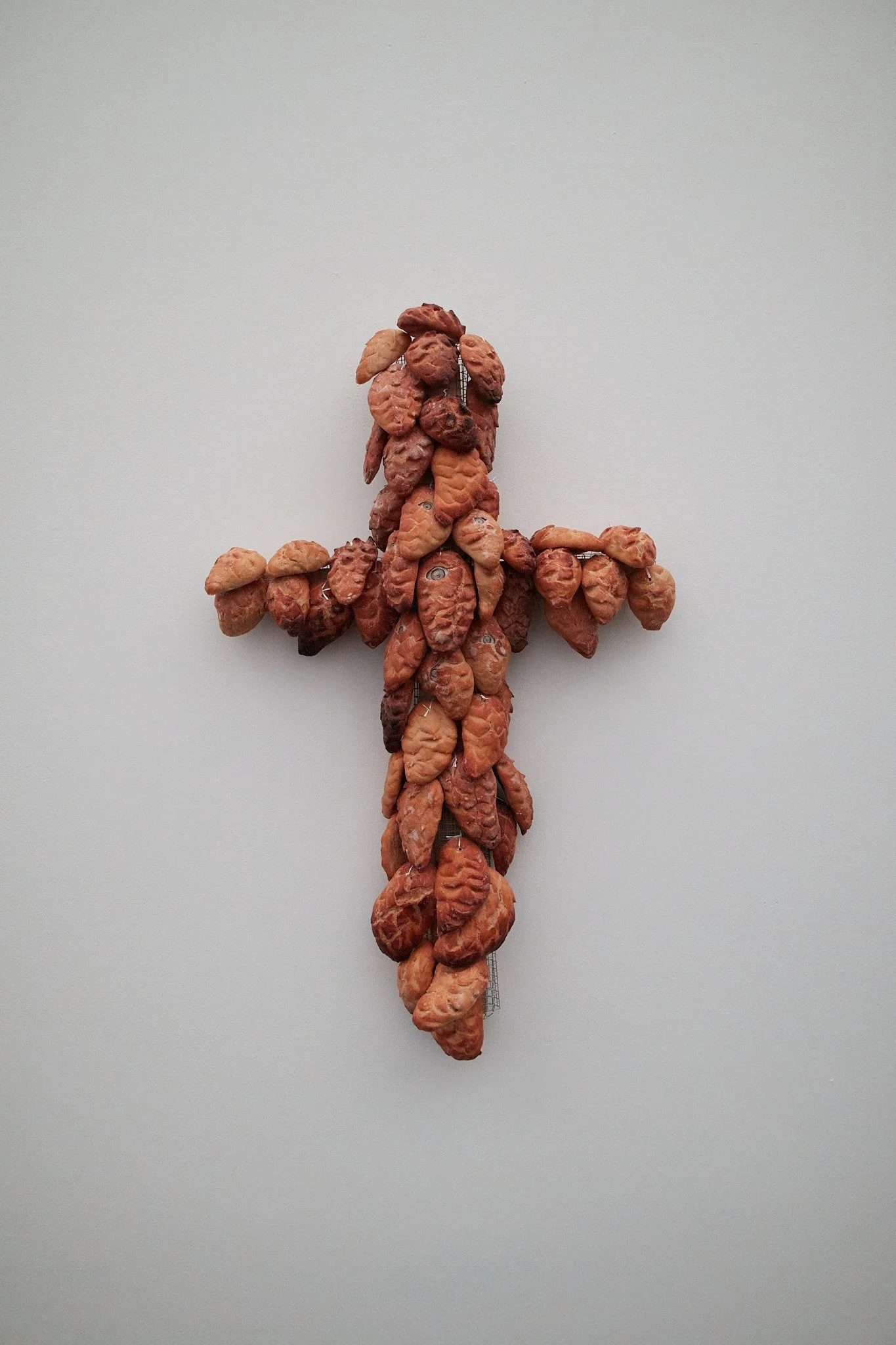
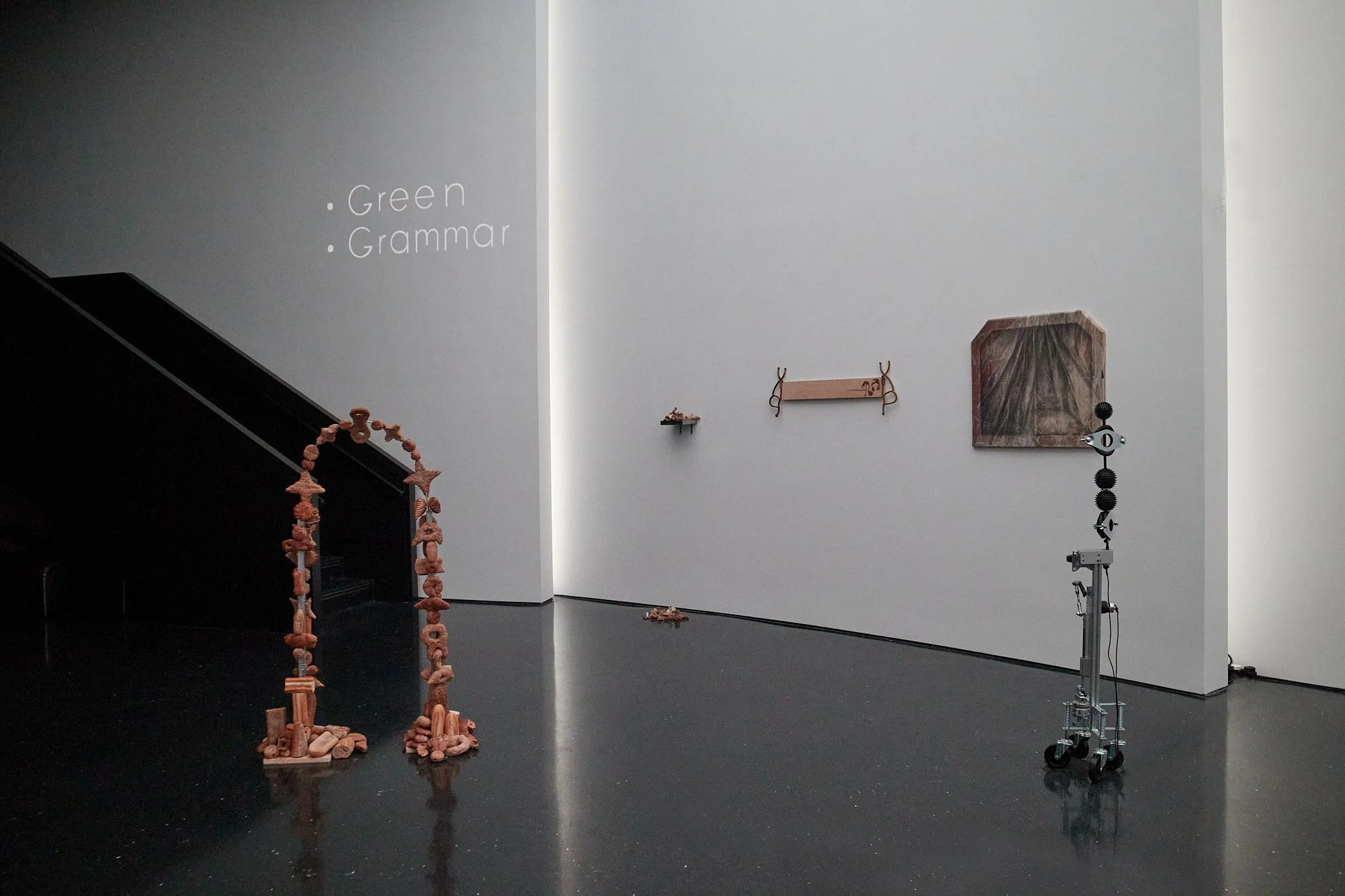
Biblical aesthetics thread through the space with a curious restraint. Bread recurs in sculptures by Moyu Yang and Zhen Zhen, humble, sacramental, a substance at once quotidian and charged. In Christian iconography it is both nourishment and body. Here, it appears without piety. It is pressed into artworks that feel devotional without sermonising. The sacred lingers as residue. One senses the afterimage of scripture, photocopied too many times, its authority softened into texture.
Co-curator Chang Wang said: “For us, language is not only spoken or written. Especially in our exhibitions, communication often happens through multimedia, materials, the body and the senses.” Co-curator Moyu Yang added: “Each artist uses their own artistic language - such as performance and installation - to express their ideas.”
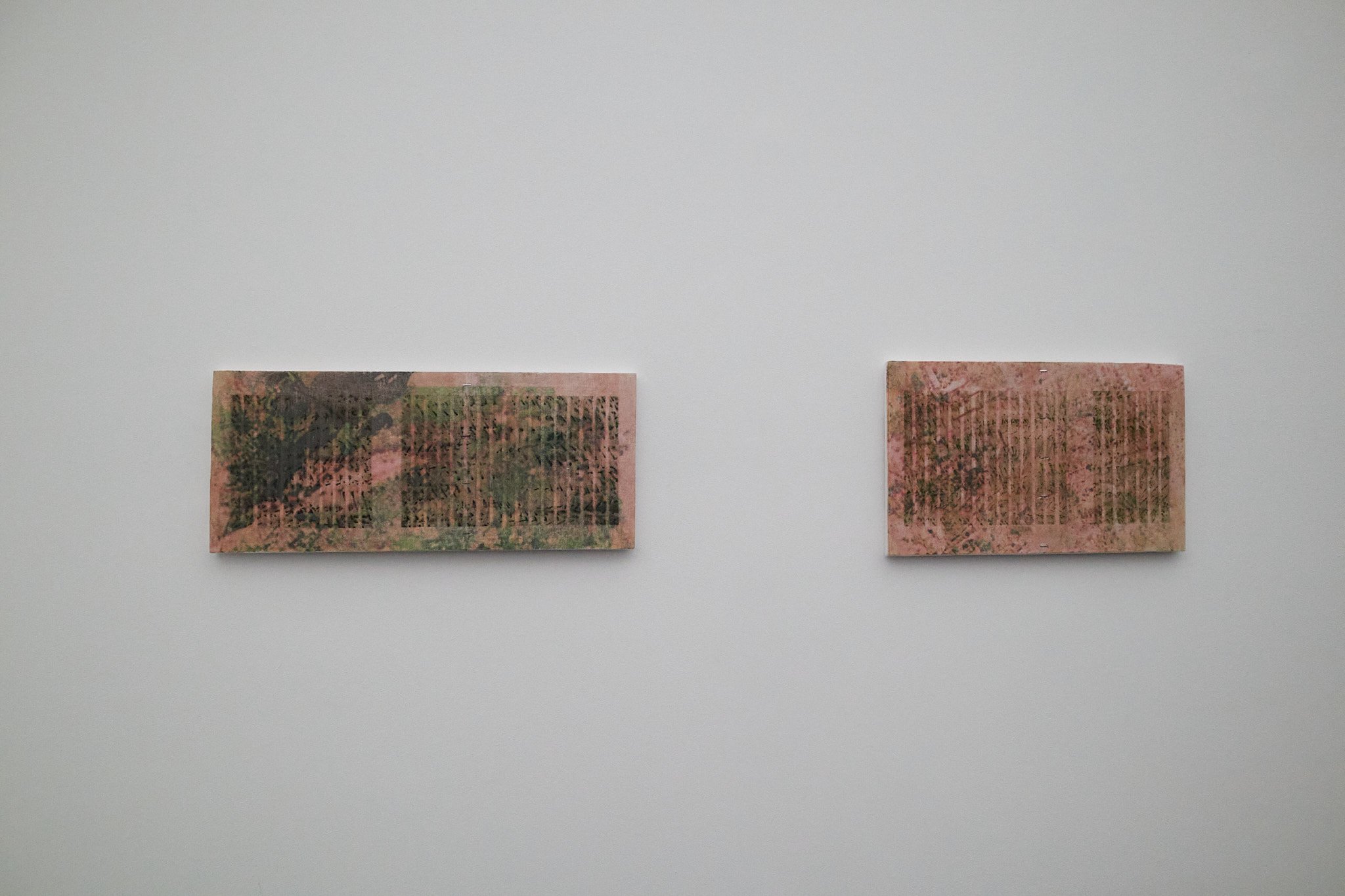
Yet if the exhibition evokes Babel, it is equally concerned with the market. Language is not only a divine gift; it is traded, hoarded, manipulated. The curators insist they did not set out to construct an exhibition about economics. Yet, as so often happens, the material realities of artists’ lives have seeped into the work. Themes of resource extraction, labour automation, and commodified history recur not as slogans but as shared anxieties.

Orbit of Obedience
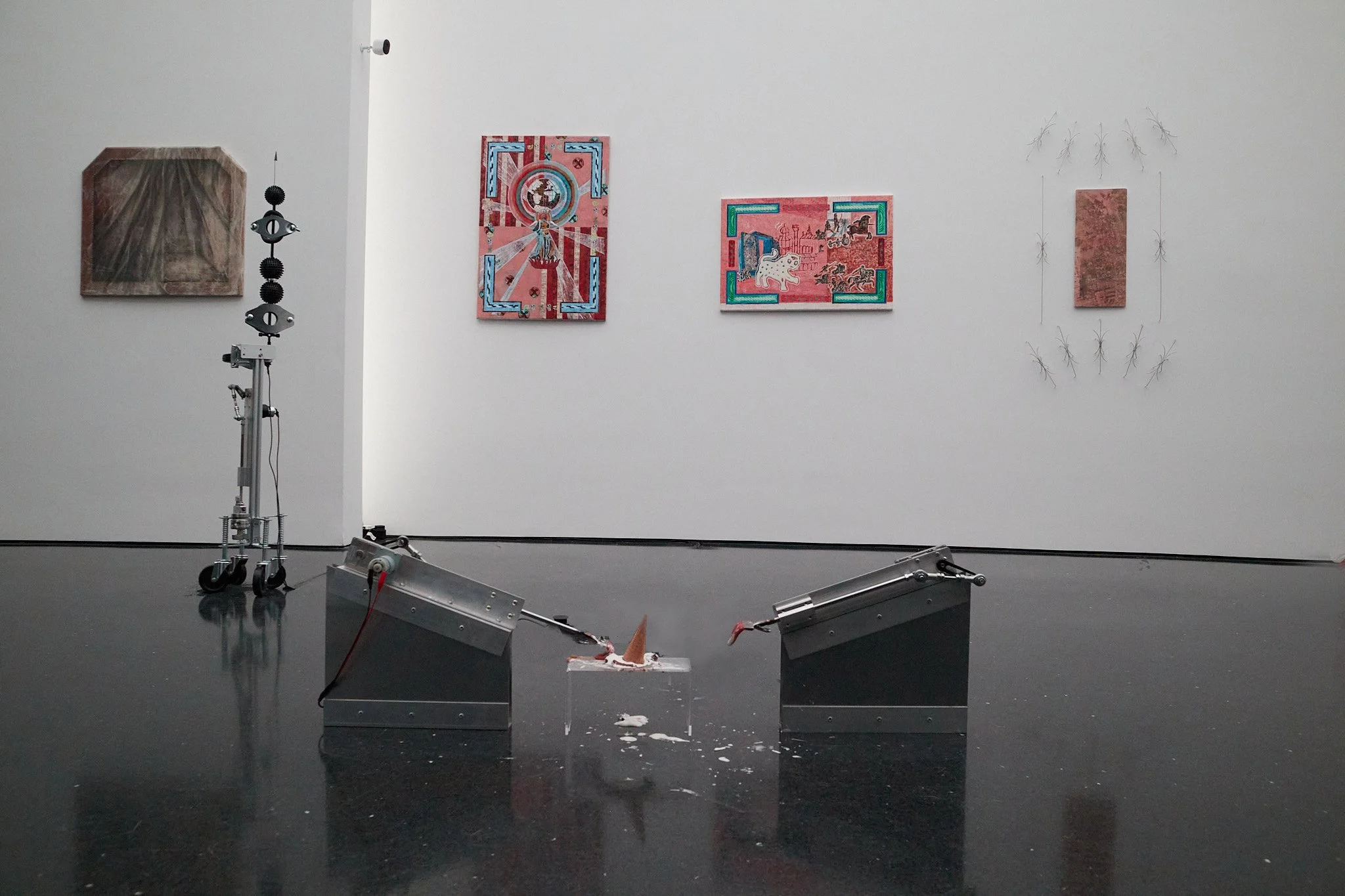
Louise Wan’s kinetic installation, Orbit of Obedience, stages control as choreography. A circle of balls hovers, each buoyed by hidden fans, some obediently moving, others stubbornly inert. A plastic barrier constrains their trajectories, ensuring that nothing strays too far from the prescribed orbit. Wan said: “This piece is about every individual under their own struggle, but they’re all in a circle as a collective, just like how society works.”
The work literalises power as air pressure, an invisible force that animates and restricts. One is reminded that collectively is never innocent. We communicate in order to form a social body, Wan suggests, yet that body is structured by constraints. The piece’s repetitive motion becomes an image of contemporary life: individual struggles arranged within systemic patterns.
Mechanical tongues lick ice cream they cannot taste
Her companion work, Mouthless, is more grotesque and more tender. Mechanical tongues lick ice cream they cannot taste. The sweetness melts, spills, and must be cleaned by human hands. Automation promises efficiency; it delivers dependency. “There are a lot of automation nowadays… but I feel like actually most of those automated machines cannot really help us from reducing our workflow … the self checkout machine, it always needs people to look after it,” Wan said.
The tongues’ in her artwork futile tasting becomes an allegory of commodified desire: consumption without satisfaction. In the biblical register of the exhibition, it is a parody of manna, food that never nourishes.
What is striking is how these works approach language through the senses. Wan speaks of “tasting” as a mode of communication. Here, speech is displaced into gesture, into repetitive action. The failure of language becomes productive. If Babel is the story of linguistic fragmentation, Rebuild Babel asks whether meaning might arise elsewhere: in rhythm, in touch, in the stubborn materiality of ice cream melting on the floor. “It might seem to be something not using language… so we try to speak through the senses of like tasting,” Wan said.
Clay becomes a language
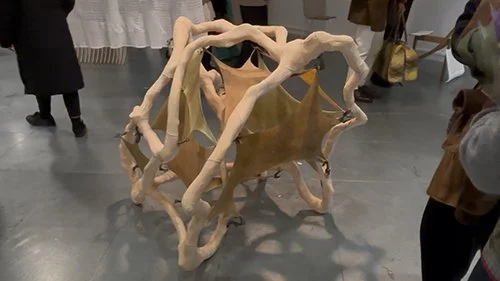
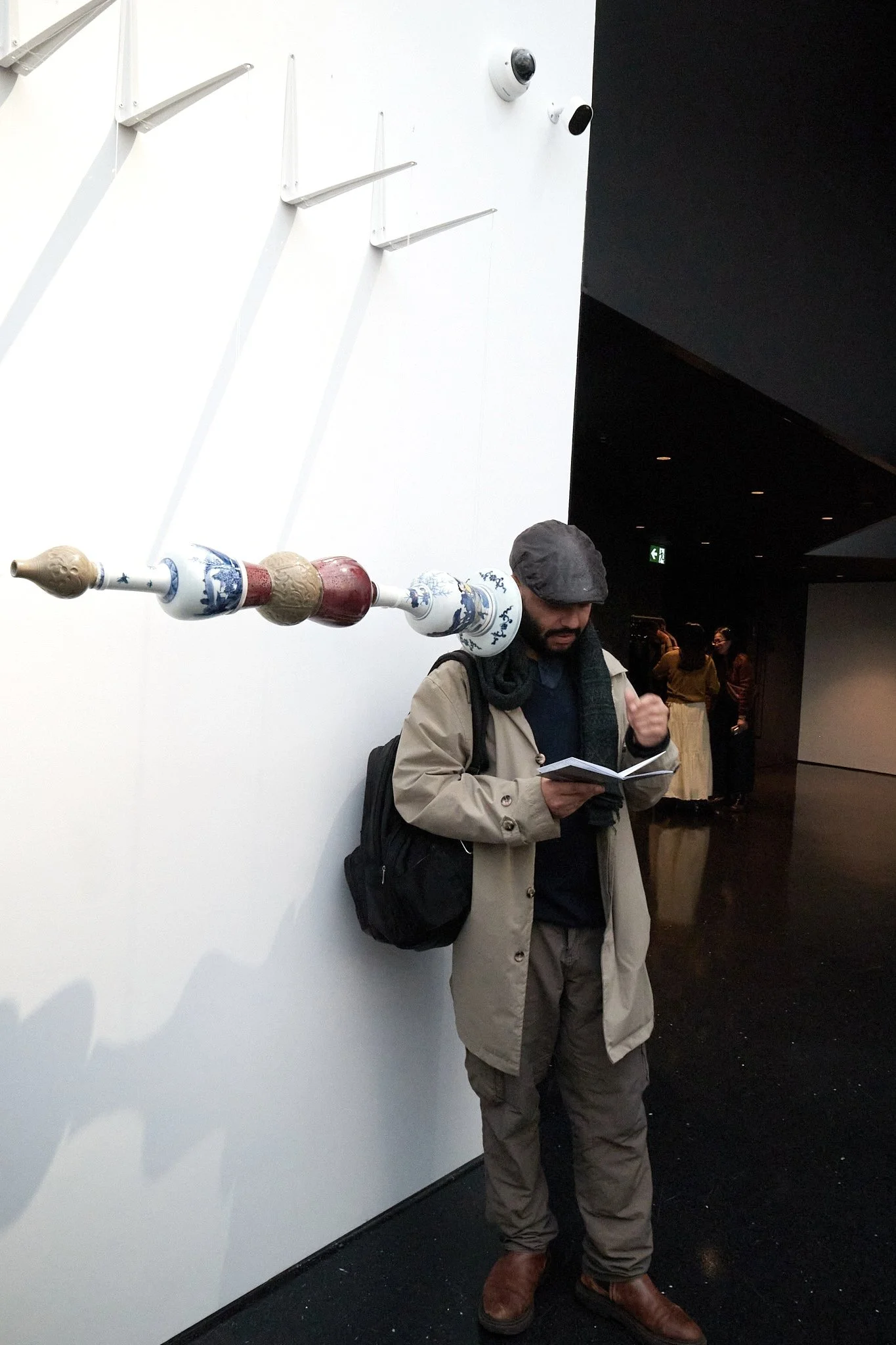
Lily Ye Zhang’s ceramics offer another inflection. Working with porcelain and red clay, she engages the earth as both resource and interlocutor. Clay becomes a language, one she speaks through shaping, remaking, firing. Her ceramics forms evoke natural growth yet remain unmistakably crafted. They suggest that interpretation itself is a form of extraction: we read the world, we harvest it for meaning.
Zhang’s biography, Uyghur Chinese and Canadian English, suspended between geographies, haunts the work quietly. She speaks of geography, of natural resources, of cultures mingling like cuisines. In a show preoccupied with Babel, her position between languages acquires symbolic force. The loss of her mother tongue is not dramatised, yet it shadows the ceramics. Each vessel becomes a container for what cannot be fully retrieved. The biblical theme of building and rebuilding acquires a geopolitical resonance. Towers rise; languages erode.
The fabrication of history
Another thread in the exhibition concerns the fabrication of history. Fake antiques appear as sly commentaries on authenticity. Once language loses its anchor, the past becomes a style to be replicated. In an economy of images, antiquity can be manufactured. The sacred becomes décor. This gesture aligns with the show’s broader suspicion of stable meaning. If bread can be both sacrament and commodity, if clay can be both earth and product, then history itself is porous.
The curators frame miscommunication not as failure but as generative gap. Yang said: “Sometimes this is not a failure of communication. It is part of how artworks work, meaning is produced through the encounter between the work and the viewer.”
Cities dense with linguistic exchange
In the context of Rebuild Babel, it acquires urgency. The exhibition was staged in London and Berlin, cities dense with linguistic exchange. Babel here is not mythic ruin but daily reality. Multiple voices coexist, overlap, misunderstand.
The question is not how to restore a single language but how to inhabit plurality without violence. “Many different voices, materials and artistic languages exist together, trying to understand one another,” Wang said.
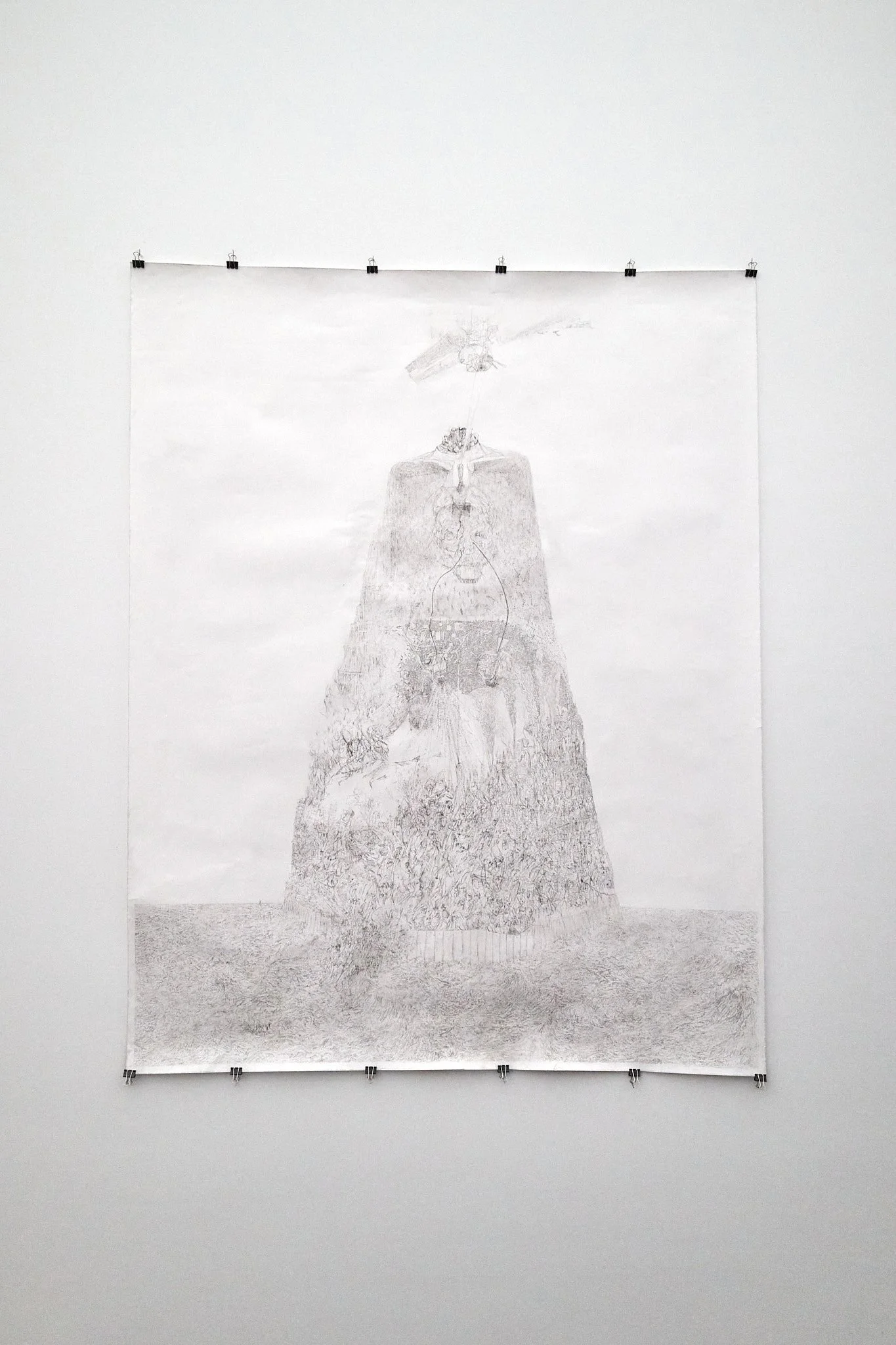
One might ask whether the biblical framework risks aestheticising crisis. Babel, after all, is a story about divine intervention halting human ambition. In our moment of ecological and economic precarity, the tower feels less like hubris than survival strategy. Yet the exhibition avoids apocalyptic rhetoric. It does not scream about collapse. It allows confusion to accumulate. The works sit with contradiction: collective power and incomplete circuitry, as Roman Vaughan-Williams’s imagined tower of society suggests.
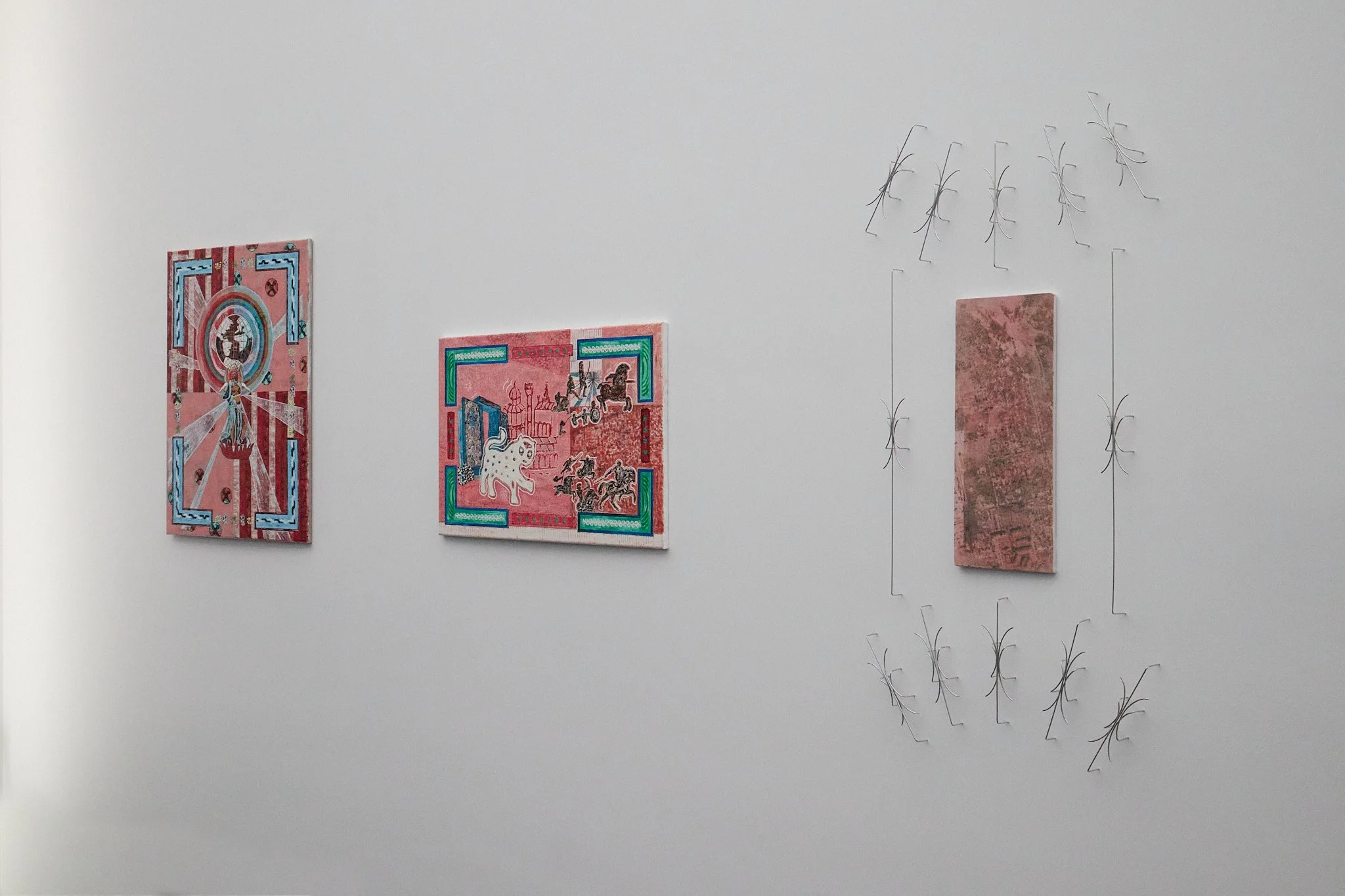
Communication is always entangled with power
What lingers after leaving Rebuild Babel is less a set of arguments than a sensation of expanded perception. The exhibition refuses the comfort of clear translation. It stages language as labour, as appetite, as resource. It suggests that communication is always entangled with power, economic, cultural, theological.
If there is a rebuke embedded in the show, it is directed at the fantasy of frictionless exchange. In the market, in the supermarket self-checkout, in the digital interface, we are promised seamlessness. Wan’s melting ice cream and humming machines expose the maintenance required to sustain that illusion. Zhang’s clay insists on the slow time of the earth beneath our transactions. Bread reappears as a reminder that sustenance is communal, fragile.
Rebuild Babel is mind-expanding not because it offers grand revelation, but because it destabilises the ground on which revelation might occur. It asks whether rebuilding means repair or reconfiguration. Perhaps Babel cannot be fixed. Perhaps it can only be inhabited, cracks and all. In that habitation lies a modest hope: that from miscommunication might arise not unity, but a more attentive form of listening.
Rebuild Babel was at art'otel London Hoxton.
Photography: Green Grammar.
Below are the details of everyone involved in the exhibition.
Artists
Jing Hsu, Kuba Stepien, Rory Bakker-Marshall, Louise Wan, Roman Vaughan-Williams, Tianhui Tao, Xiaoze Zhang, Luna Meng, Samuel Colley-Hunt, Ben Grosse-Johannboecke, Benjamin Tong, Xirong Gui, Xiaohan Luo, Xinyi Xu, Yuchen Wu, Rockforth Datuin, Carolin Meyer, Yihao Zhang, Lily Ye Zhang, Xinyu Gao, Moyu Yang, Zhen Zhen
Curators
Moyu Yang, Chang Wang