Between Rooms: Siyuan Meng on Home, Thresholds, and the Art of Being Present
By Alastair JR Ball
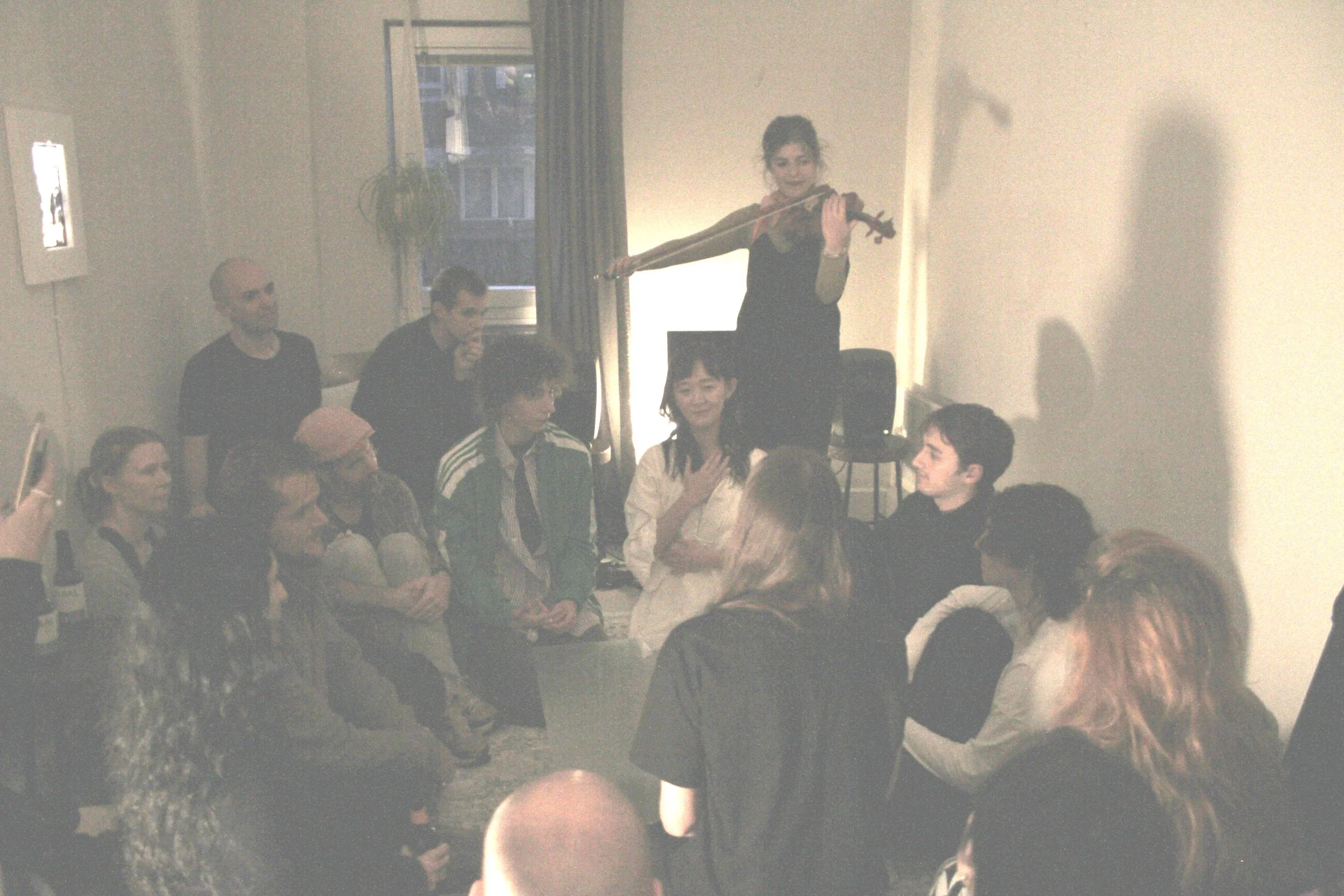
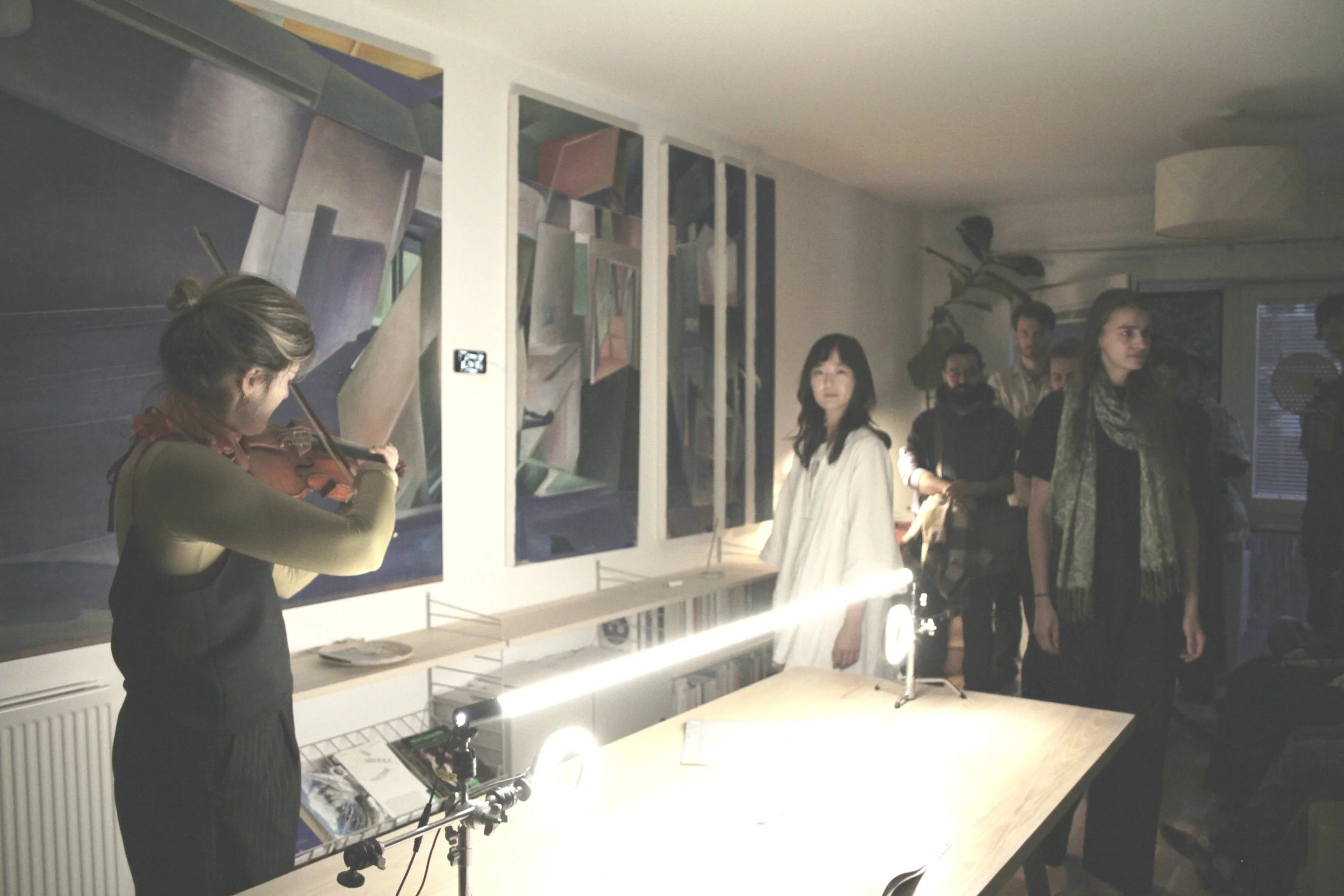
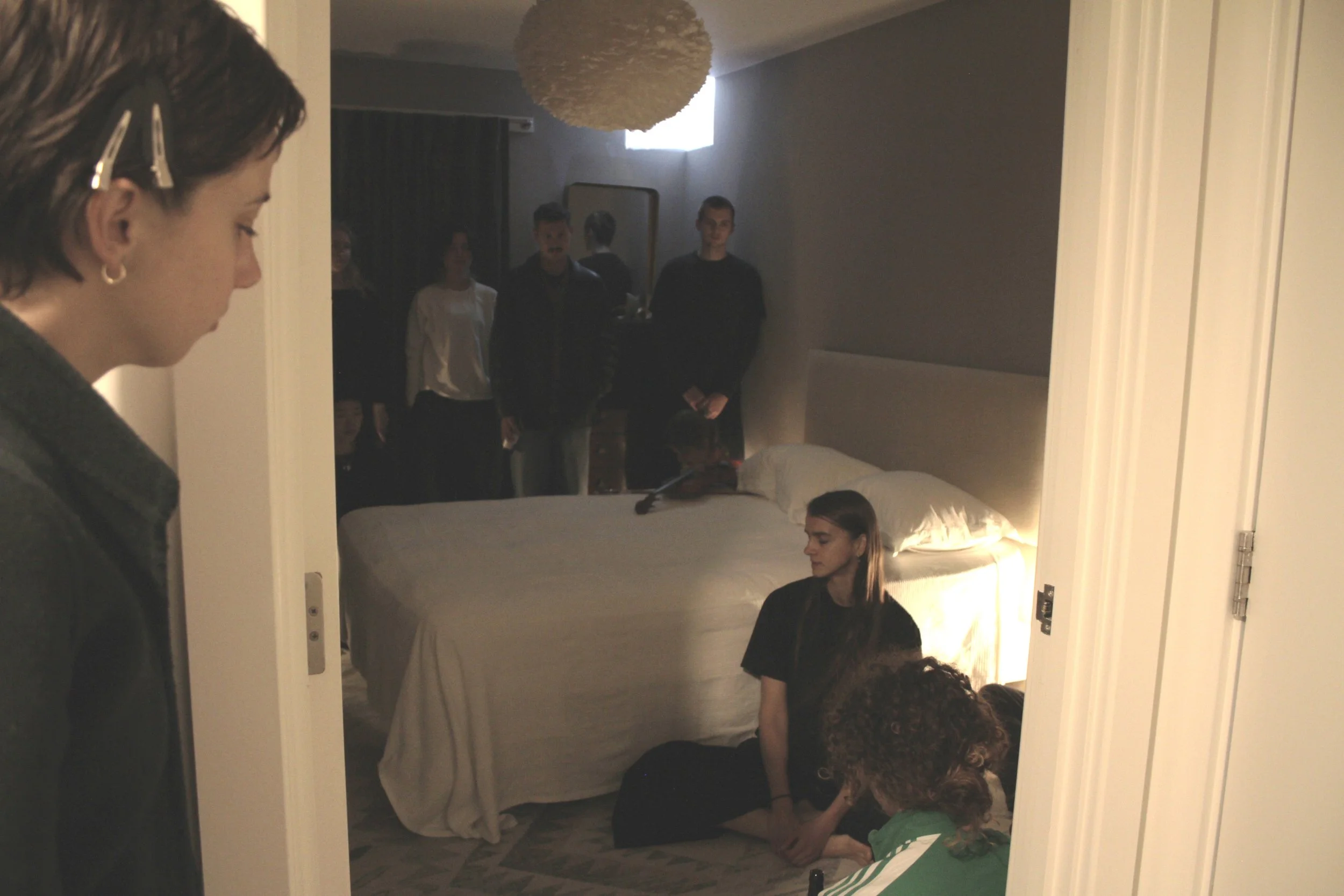
The performance begins not with a spotlight, but with a door opening. Visitors step into a lived-in flat, beds unmade, clothes draped, a faint scent of incense lingering. In the living room, artist Siyuan Meng holds a sheet of glass between herself and the audience, light scattering across its surface like a breath caught midair. “It was a site-specific improvisation,” she tells me afterwards. “I wanted to ask: What does home mean, and what separates us within it?”
For Meng, who grew up in China and now lives in the UK, the question of home is not a static one. It is something to be performed, re-negotiated, and sometimes mourned. Her latest work, shown as part of Threshold, a group exhibition in London exploring the spaces between public and private, self and other, invited audiences to move through rooms as if tracing her inner geography. The domestic setting became stage, membrane, and mirror all at once.
On home and belonging
“When I first came to the UK,” Meng says, “I felt very lost. I missed my home a lot, but I was also excited to explore a different world.” She pauses, considering her words carefully. “After some time, I realised I didn’t know where my root was, where I was belonging. When I returned to China for a while, I began to drink tea, learn more about Chinese culture. That’s when I thought: Oh, this is my root. Even now that I live in the UK, I try to bring that rhythm here, to make belonging in a new country.”
That rhythm hums through her work, quiet, deliberate, ritualistic. Past projects have explored the body’s relationship with fragile materials like paper; in Threshold, she shifted to the rigidity of glass. “Glass is hard,” she explains. “It separates the environment. So it was challenging: how do I engage people when there is a barrier?” The question feels both technical and existential. Meng’s practice continually searches for ways to connect across divides, cultural, emotional, architectural.
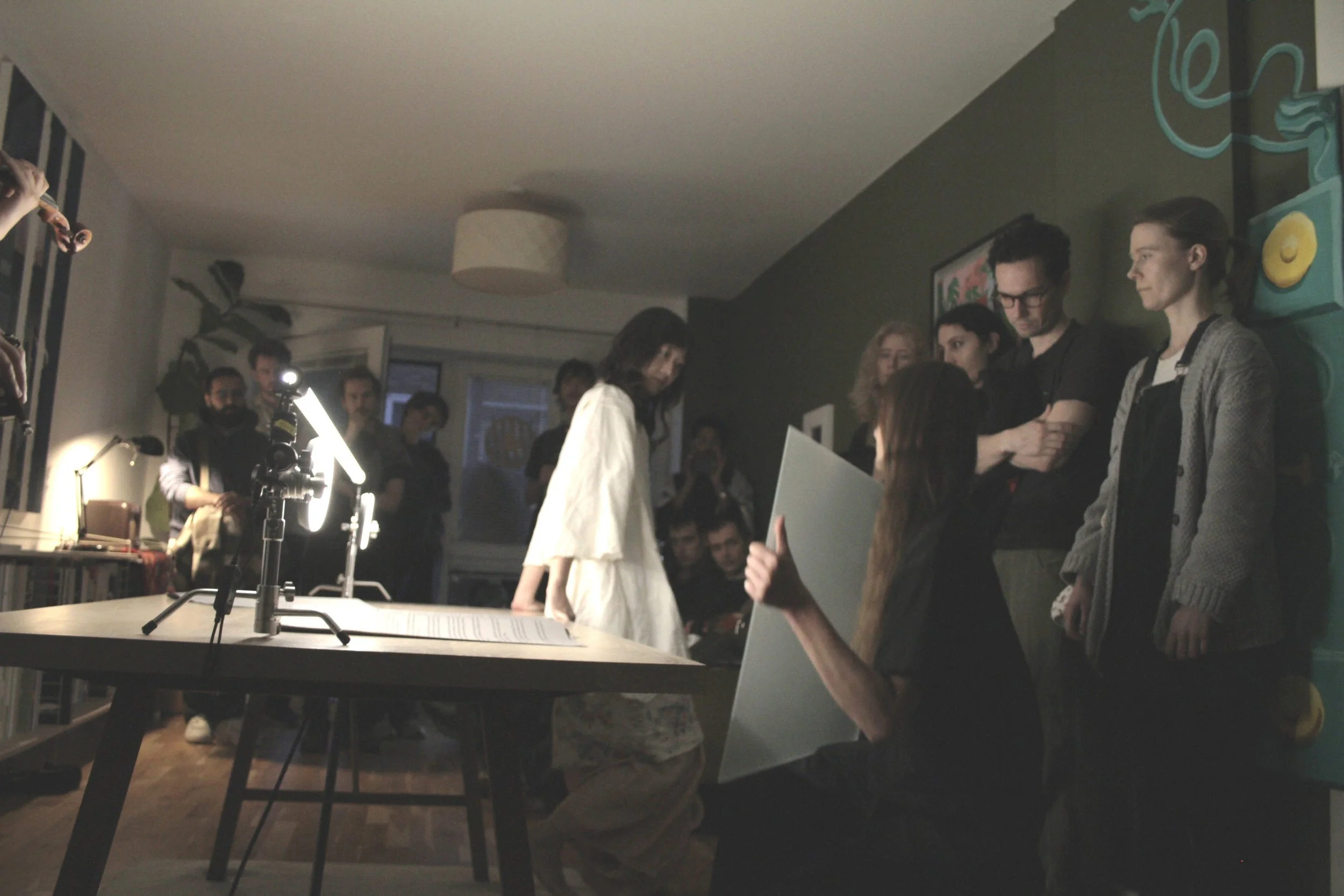
The threshold as a liminal space
The title of the exhibition, Threshold, resonates deeply with her. “For me, a threshold means distance,” she says. “Like the space between the living room and kitchen, they connect, but you don’t know where one ends and the other begins.” That ambiguity becomes her medium. Moving through domestic spaces, she blurs the boundaries between art and life, performance and conversation.
In one sequence, Meng guided small groups of viewers gently by the hand. “We used soft touch,” she recalls, smiling. “People followed each other with eyes closed. It was about trust, about finding presence together.” The gesture feels emblematic of her whole philosophy: intimacy without imposition, contact without control.
Her performances might look understated, a slow movement, a hand tracing a wall, a moment of stillness beside a bed, yet they pulse with quiet complexity. “You can’t force people to watch you,” she says. “So how do you make them feel involved, naturally, rather than forcing something?”
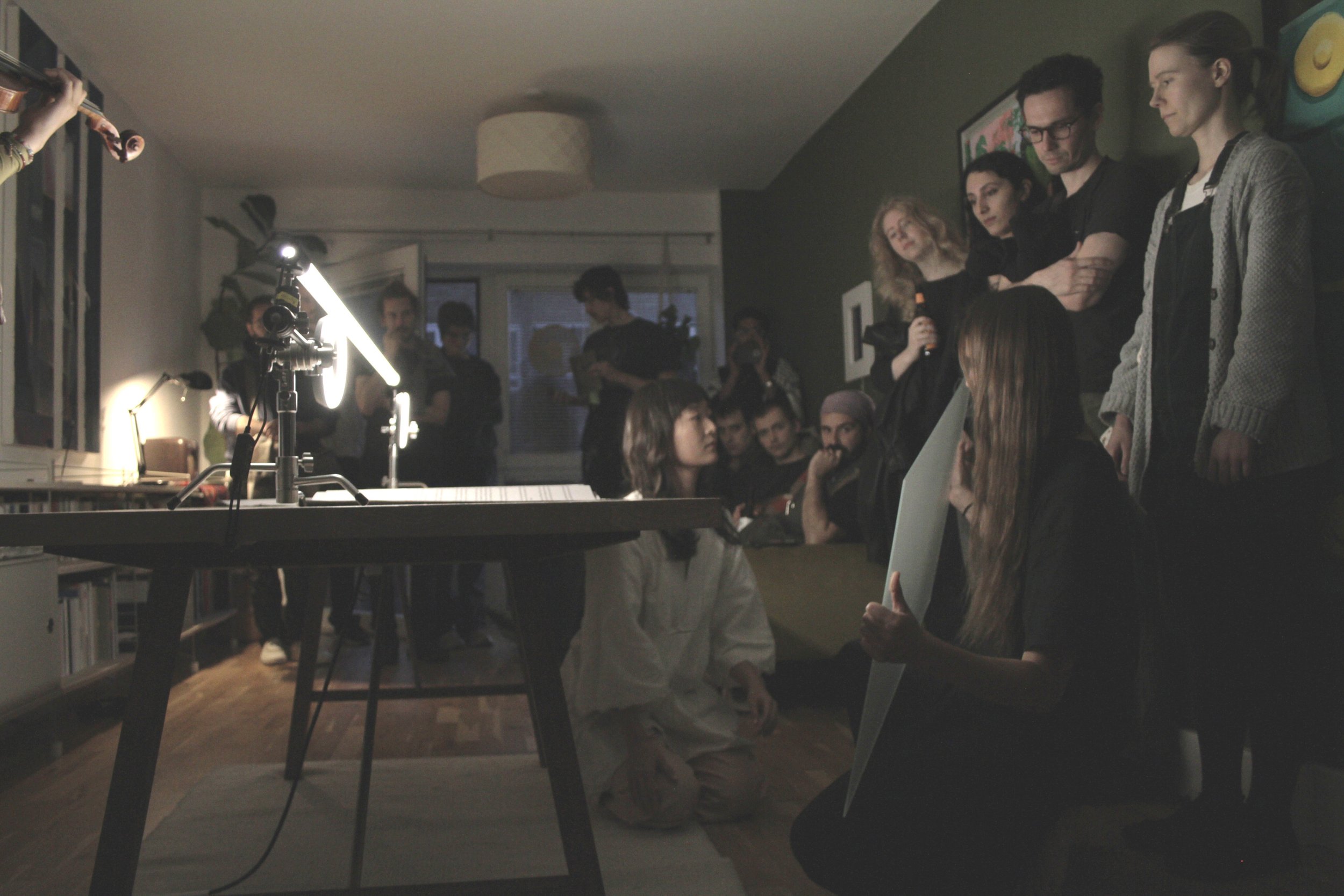
Relational presence
Meng calls this inquiry “relational presence”, the dynamic field between performer and audience. “It’s not just me showing something,” she says. “It’s about the vibration between us. What happens when we share a space, when we breathe together?”
During the Threshold performance, this vibration was almost tangible. Spectators found themselves caught between watching and participating, between being guests and collaborators. “It wasn’t a traditional stage,” one audience member remarked. “You were surrounded by beds and TVs. You had to decide how to move, what to look at. It made you aware of your own body.”
That awareness, Meng believes, is the point. “We are all from different countries, but we are in this space together now,” she says. “What is the presence between us? That’s what I want to explore.”
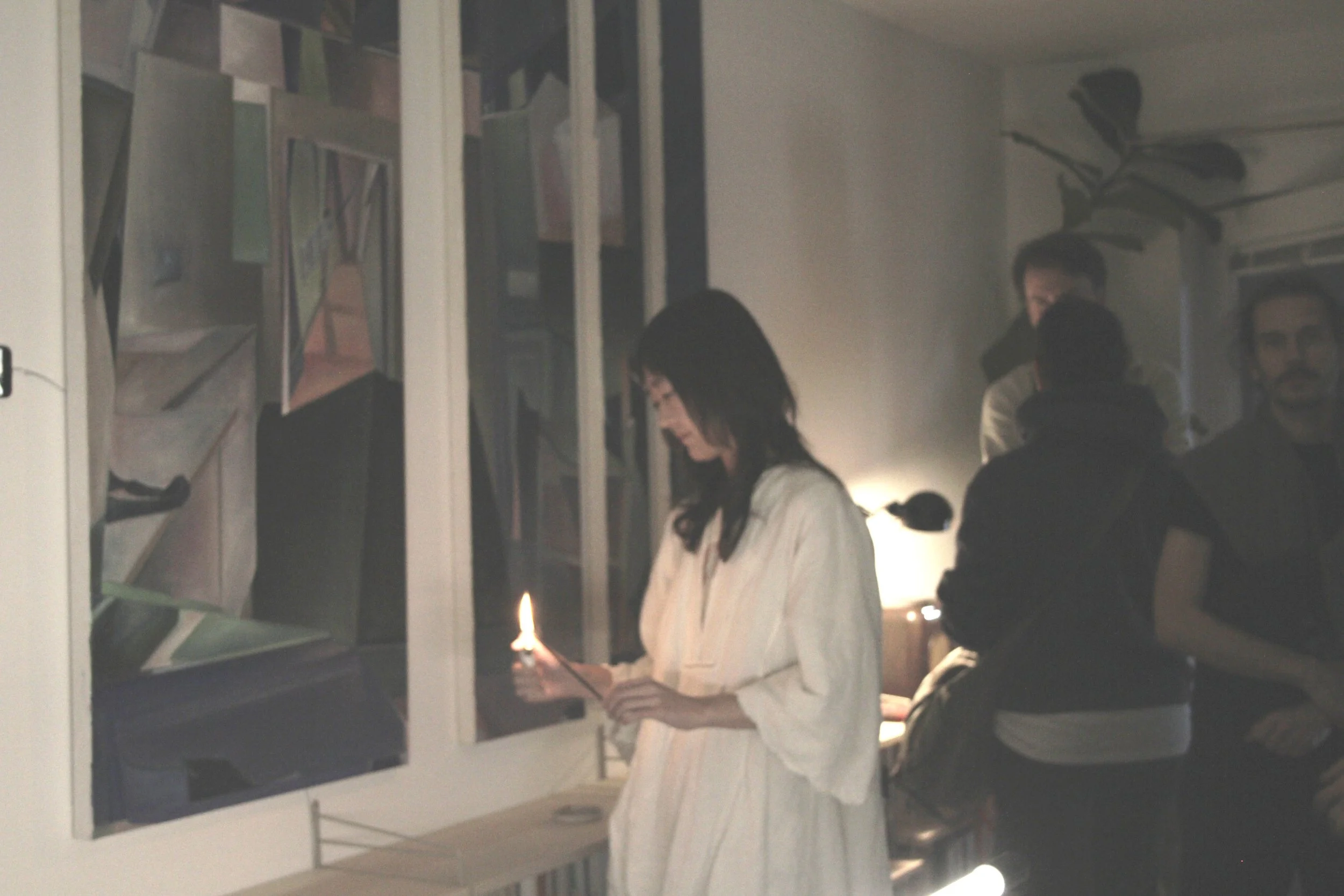
Domestic play
When asked what’s next, Meng laughs lightly. “I want to continue with domestic play,” she says. “I want to explore the relationship between me and audiences, how I can bring them into my world naturally.” The phrase domestic play encapsulates her fascination with the everyday: ordinary gestures transformed into choreography, household materials into symbols of intimacy.
Her performances often begin with sensory cues, fabrics, smells, sounds. “If I were to bring my own home into a new space,” she says, “I would use fabric, incense, maybe invite my friends and family. Those things make me feel at home.” Scent, especially, carries deep significance. “Smell is connected to memory,” she notes. “When I smell incense, I remember my childhood. It brings me back to myself.”
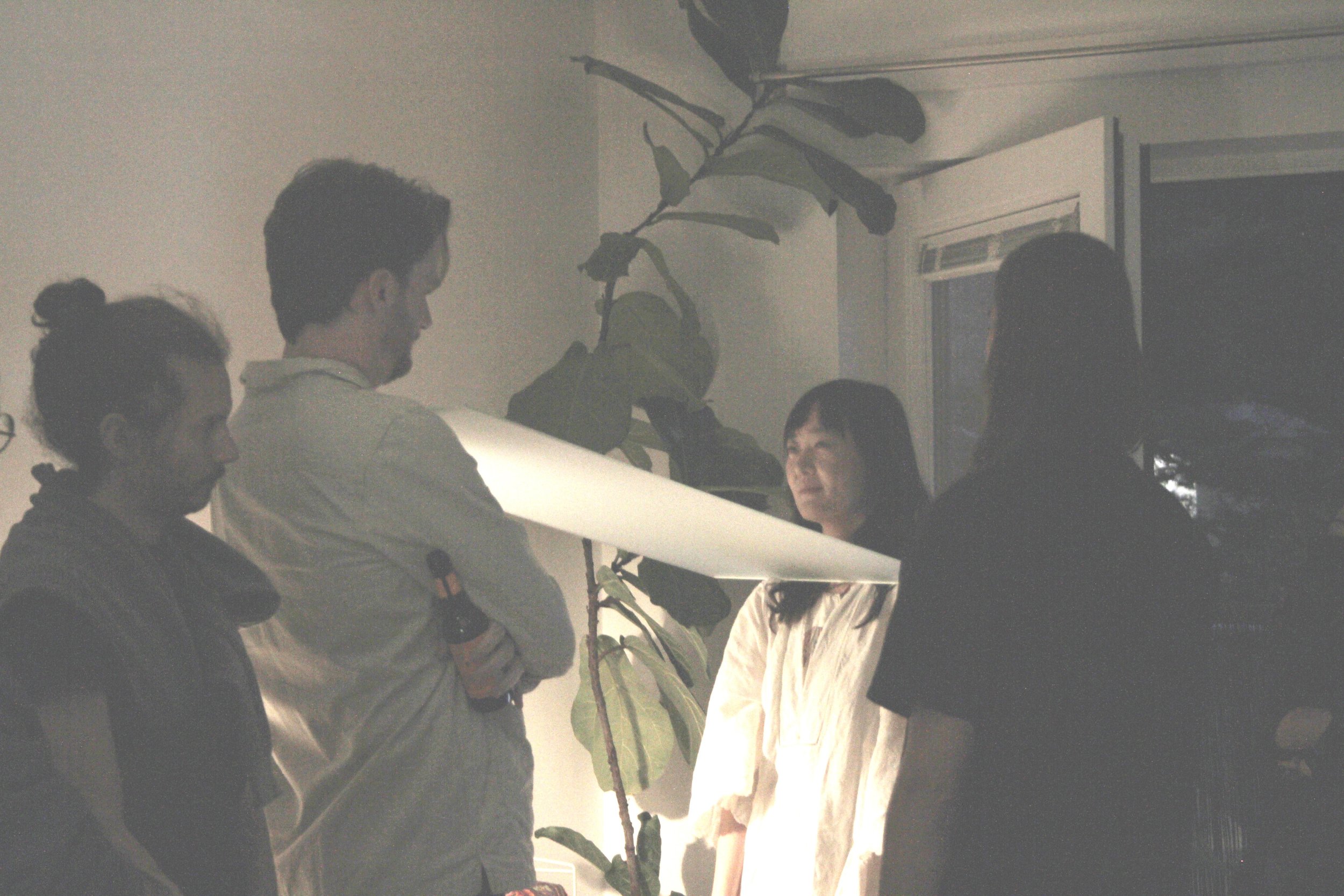
Practicing stillness
Lately, Meng has been turning inward. “I’m practicing calligraphy again,” she says, “and reading Buddhist texts, old Chinese sentences I can’t always understand. But I read and chant them anyway. It helps me unfold my frequency, to be present with myself.” The practice, she explains, began during a difficult period. “When I’m suffering or confused, I try to create a home within myself. Writing calligraphy, drinking tea, those are ways to return.”
This sense of inner architecture mirrors the structure of her performances. The audience journeys through physical rooms while Meng travels through emotional ones. The act of performance becomes both ritual and refuge. “It’s about remembering I’m not alone,” she says softly. “I can still pass through those difficulties.”
The art of being present
If Meng’s early pieces were about experimenting with materials, her current practice feels increasingly philosophical. “It’s not only about the object,” she says, “but about the relation. How we meet. How we are present.” Presence, for her, is not a static state but a conversation, between cultures, between people, between body and space.
As she reflects on Threshold, she smiles again: “It’s interesting, because I came to the UK looking for home, but maybe home is just this, this moment, when we are together.”
Her performances are small acts of empathy, unfolding quietly in living rooms, streets, and waiting rooms. They are not declarations but invitations. She does not shout; she listens. And in that listening, she finds a form of connection that feels increasingly rare, art as a shared heartbeat, trembling between bodies.
“When we are in the same space,” Meng says, “we are already creating something together. We don’t have to understand it fully. We just have to be there.”
Photographs taken by Barbara Pigon