Red Train Blog

Ramblings to the left

The Red Train Blog is a left leaning politics blog, which mainly focuses on British politics and is written by two socialists. We are Labour Party members, for now, and are concerned about issues such as inequality, nationalisation, housing, the NHS and peace. What you will find here is a discussion of issues that affect the Labour Party, the wider left and politics as a whole.

  • Home
  • Topics
    • Topics
    • EU referendum
    • The Crisis in the Labour Party
  • Art
  • Books
  • About us
  • Search

Why everyone thinks they're rational and everyone else is irrational

July 13, 2021 by Alastair J R Ball in Political narratives

One thing I have learned from years of talking to people about politics, both online and offline, is that everyone thinks that they are the only person being rational. Everyone from the far-left to the far-right via the centre thinks: “if you just look rationally at the facts you’ll see that I’m right”. Most people think that political disagreements are caused by an outbreak of irrationality amongst the people they disagree with. 

If you’re reading this, and thinking: “but I am right that if you look at the facts you’ll see they support my arguments” and “everyone else is only selectively interpreting the facts” then everyone else also thinks that. The one thing that we can all agree on is that everyone else is being irrational.

Incidentally, this is one reason why everyone who has ideas about politics reaches for the metaphor of The Matrix. It’s because everyone thinks that they’re the one who sees the underlying base code of how the world really is, and everyone else is just distracted by the woman in the red dress to the point that they can’t see that everything they believe in is a fiction.

Facts and stories

I’m here to tell you that everyone is actually irrational. Facts or evidence are just pieces of information that we include in the stories we tell. Stories are what we connect with emotionally; they are the essence of our political arguments. We tell stories about how the country would be better if we voted to leave the EU or to put Labour in power to win over others.

Almost everyone thinks that stories are the enemy of facts. Stories use emotion to distract people from the truth. Facts are the truth. Generally, I hear this argument more from people on the left than the right, which might go some way to explaining the poor performance of the left recently when faced with opponents who are much better at storytelling. To win we need both together. Facts and story united make the strongest argument possible.

Facts don’t care about your feelings

Ben Shapiro - a man some people look up to because he has a talent for the performative rudeness that passes for political debate online - has a catch phrase: “facts don’t care about your feelings”. It’s effective because this is how most people think of themselves when debating: calmly laying out the way things are whilst their opponent has an irrational emotional tantrum.

There’s no denying Shapiro is good at debating. He has said some dumb things and his hyper-confrontational approach to debate is part of the reason that American political discourse is so toxic. He’s also a grade-A right-wing shit muncher. He is good at the faeces throwing, no compromise, public humiliation contest that is our political discourse. However, and this is crucial, he is not good at debating because he uses facts - he’s good at it because he uses narrative.

Aisling McCrea argues that despite Shapiro’s catch phrase, his arguments are mainly full of insults, tropes and highly emotional statements. This is a great tactic: say I only speak facts and then pass off your emotional bluster as facts. It also works because his whole “I’m on the side of facts and the left only care about feeling” shtick is a narrative, not a fact. His approach to debating is based on a story. A story that says: “my side controls truth and the other side is trying to suppress truth with adolescent emotional outbursts.” It’s a great story.

Left-wing resistance to storytelling

The lesson of Shapiro’s success (if you define success as climbing to the top of the flaming trash pile that is right-wing American political punditry, or winning the admiration of millions of people whose Twitter profile picture is them wearing shades in their car, who like to send angry tweets to anyone calling themselves a feminist) is not to use facts, but to tell a compelling story.

On the left, we are more resistant to storytelling than the right. There is a deep seated belief that rationally stating the facts is all that’s needed to win a political argument. Alina Siegfried, an expert on storytelling, narrative and a spoken word artist, has written on this topic.

She interviewed Alex Evans, author of The Myth Gap, who said: “the left places undue value on rationality and reductionist scientific reason above other ways of knowing, as if that’s the only way to win an argument and change behaviour. We forget how crucial a role story, narrative and myth play in our lives and our psyches. Nigel Farage and Donald Trump alike crafted a mighty compelling myth. Just think of the slogan, Make American Great Again. Taken at face value, what American wouldn’t want that?”

Stories not lies

Looking at the success of the right globally, we can see the need for telling a story that resonates with the electorate. Storytelling isn’t a magic bullet; the left is faced with a wide range of challenges from declining class solidarity to ageing populations. However, our reliance on facts over storytelling is part of the problem. Just look at climate change: as the world hurtles towards an environmental disaster and all the evidence points towards the desperate need to act, serious work to avoid a climate catastrophe is further away than ever.

This is not an argument for post-truth politics. I’m not saying that we abandoned facts and rationality completely to pursue storytelling above all else. I’m also not advocating for bare faced lying, even if it helps us tell stories that can win elections. Lies from politicians matter. They degrade trust in politics, even if the lie helps you tell a more convincing story.

There have been many high profile lies in politics in the last five years. Donald Trump, Nigel Farage, Vladimir Putin and Boris Johnson all have a casual attitude to the truth. Let’s take one big recent example, the bus that claimed that we sent £350 million a week to the EU. This claim is, at best, very inaccurate. Although the impact of the stat has been exaggerated by bitter Remainers desperate to prove that Leave cheated, it was both an effective campaigning slogan and not true.

Tory lies and left-wing facts

When fellow travellers on the left talk about being the only ones making a rational argument or preferring facts to stories, the Brexit bus is what they mean. We think: “their side lies, but they dress it up in a good story so people believe it. Whereas, we tell the truth using facts, which makes us better.”

A closer look at the “facts” of the EU referendum will reveal that both sides had a relaxed attitude to the truth in the campaign. Then Chancellor George Osborne’s statement that if the UK voted to leave, a punishment budget would be necessary turned out to be completely not true. As did talk of the pound crashing and all business fleeing the UK. This is not to justify all the economic mismanagement that has been done in the name of Brexit, of which there is a lot, but it has been a slow bleeding away and not the sudden cardiac arrest that was promised by the Tory Remain campaign.

You can argue that the EU referendum was different types of Tories lying to get what they want, and that the left tried to inject some facts into the campaign that were ignored, and there’s some truth to that. What’s more important is that an effective campaign exposes the lies that the other side tells. You can wrap a lie in a story, but that doesn’t make it invulnerable. A truth wrapped in a story can defeat it, if delivered by a skilful politician. It’s a shame that all the politicians pushing the Remain argument were about as effective as a damp piece of tissue in stopping a speeding train.

Stop being so rational

Some people will always believe that facts, plainly stated, will always defeat stories and/or lies. If you think that then I wish you all the best in your political campaigning. You should choose the approach you think is best. However, if this doesn’t work, it’s not because of a grand conspiracy involving Michel Foucault and social media companies to destroy the idea of objective truth. It’s because facts without story are boring. And that’s a fact. If you are angered by that fact, maybe you’re being irrational?

The left needs to get over this idea that the plain facts will win out against a good story. This isn’t an argument for tall tales and highly emotional exaggerations. It’s an argument to combine facts with good storytelling to be most effective in our campaigning. This is something we’d do well to learn from the right.

When you’re next discussing politics with someone you think is being irrational or overly emotional, it’s worth reminding yourself that the other person most likely thinks the same. Especially if their supposed irrationality is making you angry. Isn’t that an emotional reaction?

Related posts
Sep 16, 2025
Political narratives
The right finally discovers that life sucks for Millennials, but guess who they still blame
Sep 16, 2025
Political narratives
Sep 16, 2025
Political narratives
Union-Jack.jpg
Aug 20, 2025
Political narratives
Who really holds power? The cultural illusion of middle-class dominance
Aug 20, 2025
Political narratives
Aug 20, 2025
Political narratives
Apr 12, 2025
Political narratives
How should the left view the porn industry?
Apr 12, 2025
Political narratives
Apr 12, 2025
Political narratives
Books.jpg
Mar 28, 2025
Political narratives
Behold the smartest people in the room: The Waterstones Dads
Mar 28, 2025
Political narratives
Mar 28, 2025
Political narratives
Feb 18, 2025
Political narratives
Russell Brand isn’t the only person on the hippy to alt-right pipeline and the left should be aware of this
Feb 18, 2025
Political narratives
Feb 18, 2025
Political narratives
polling-station.jpg
Dec 3, 2024
Political narratives
Steve Rayson’s Collapse of the Conservatives shows how Labour benefited from voters’ volatility but may also suffer from it
Dec 3, 2024
Political narratives
Dec 3, 2024
Political narratives
nigel farage.jpg
Aug 13, 2024
Political narratives
The rhetoric from mainstream politicians on migration caused these riots
Aug 13, 2024
Political narratives
Aug 13, 2024
Political narratives
IMG_4111.JPG
Mar 19, 2024
Political narratives
The discourse around extremism is based on hand waving at best and Islamophobia at worst
Mar 19, 2024
Political narratives
Mar 19, 2024
Political narratives
Tony-Blair.jpg
Sep 26, 2023
Theater, Political narratives
What does Tony! [The Tony Blair Rock Opera] tell us about how the Blair era is remembered?
Sep 26, 2023
Theater, Political narratives
Sep 26, 2023
Theater, Political narratives
8644221853_6af3ffe732_c.jpg
Aug 22, 2023
Political narratives
The cost of living crisis isn’t recent and has deep roots in the economy
Aug 22, 2023
Political narratives
Aug 22, 2023
Political narratives
July 13, 2021 /Alastair J R Ball
Political narratives
Comment
Union-Jack.jpg

I don’t feel patriotic, but Labour needs to appeal to more than just people like me

June 15, 2021 by Alastair J R Ball in Political narratives, The crisis in Labour

As a society we have spent a lot of time writing about Labour’s woes. As a political blogger all I have done is added to the pages and pages written about how Brexit has realigned politics so that the places that solidly voted Labour for a century are now electing Tories. In these blogs, newspaper articles, Twitter threads and pub discussions one word comes up again and again: “patriotism”.  

For many, the underlying cause of Labour’s woes in places from Workington to Hartlepool is that it’s not seen as patriotic. Or that the party is controlled by middle-class, craft beer drinking, pansexual, students who care more about Palestine than Britain, and sneer at anyone with an England flag in their window as if they were some kind of subspecies of semi-intelligent human. 

Rebecca Long-Bailey attempted to use the idea of progressive patriotism to launch her bid for Labour leader. The idea was poorly received amongst her supporters. At the time, I wrote a blog that was critical of progressive patriotism, but now I think I should have been more open to the idea.

The reason that Labour isn’t seen as patriotic is not just because the radical left controlled the party for four and a bit years. Getting rid of Jeremy Corbyn as Labour leader hasn’t fixed Labour’s patriotism problem. Former leader Ed Miliband was also plagued by patriotism problems, most notably when shadow minister Emily Thornbury was accused of insulting the England flag. It’s still dogging Keir Starmer as, in May this year, the idea that Labour isn’t patriotic enough was back in the discourse.

Disliking patriotism

When writing these words, I’m imagining that I’m talking to people whose views are like mine. People who don’t consider themselves to be patriotic, or even … whisper it … people who consider patriotism to be a bad thing. A fellow middle-class leftie once said to me that “all patriotism has ever done is get working-class people to kill each other”. It’s not an over generalisation to say that, in the circles I move in, this is widely accepted.

You might firmly believe that patriotism is just socially acceptable racism, or that patriotism has been used throughout history to convince the poor of the world to throw themselves into a meat grinder with other poor people who follow a different flag, so that kings or bankers can continue ruling over the pile of bones that’s left behind. In that case I probably can’t change your mind, so you might want to skip the rest.

My key point is: I don’t think of myself as patriotic, but I understand that lots of people do consider themselves to be patriotic and these people aren’t necessarily regressive nationalists. I want Labour to appeal to more than just people like me. One thing the last few years have shown is most people (even on the far-left) have different opinions to me, so Labour needs to broaden its reach from just me to win.

I’m not saying that the left should embrace patriotism because it’s popular with voters. Certainly, something being popular and being right are not the same thing. However, my views on patriotism have changed in the last couple of years. I don’t feel any more patriotic than I once did, but I do feel Labour needs to, at least, appear to not be against patriotism.

Why patriotism matters

Already, I can hear muttering at the back that I have gone “Blue Labour” or that I’m starting down the road that led to Michael Foot supporters singing the praises of Tony Blair. Again, if you think patriotism is the same as racism, or that any acknowledgement of patriotism is inherently right-wing, then I’ll save you a few minutes and tell you now that you won’t agree with the below. However, if you’ll listen to me, I’ll set out the case as to why Labour should be a little bit patriotic.

The 2019 election result shows that Labour needs to win more seats to be in power, and while Scotland is out of the picture, Labour must win the places there Jeremy Corbyn’s perceived lack of patriotism was a drag on the Labour ticket.

67% percent of voters

Patriotism is important to a great number of voters. “Some 67 percent of Britons describe themselves as ‘very’ or ‘slightly’ patriotic,” according to an article by Helen Lewis in The Atlantic.

 Again, you could say that Labour needs to break with its 120 year history and find a new voter coalition that’s completely different to the old one (I will address this idea in a future blog post). However, if we rule out Labour completely changing politics, then the party will have to find something to say about patriotism.

There has been a lot of talk of Labour needing a narrative to unite its disparate voter coalition, so as a public transport-using metropolitan, I find it hard to ask this question: how does Labour win over people who love the flag?

Go UKIP or go home

What is key to the idea of how patriotic Labour should be is what I would call “light touch patriotism” or something subtler than the types of flag waving we usually see from politicians. Light touch patriotism doesn’t need to be in your face or loud, but it is present. On the left, there is a perception that to be seen as patriotic Labour has to go UKIP or go home. This is an exaggeration.

We fall into the trap of thinking that all patriotism is the UKIP style of angry, belligerent nationalism that gets so much attention because it’s so loud. Most people think of patriotism as “I love my country” but UKIP style patriotism is “I want my country to dominate other countries”. That’s the difference between most patriots and regressive nationalists.

UKIP patriotism is singing Rule Britannia with enough gusto to create a gale. It’s boasting about the power of the British Empire. It’s bringing up the Second World War over and over again. This isn’t love for your country. It’s fanaticism. It’s the way that children love football teams: with an undying belief in their side’s complete superiority to all others.

The alienating effect of UKIP style patriotism

That’s not what’s needed to win elections. In fact, UKIP patriotism is alienating to a lot of people, even those who consider themselves to be patriotic. One of the reasons why Leave won the Brexit referendum is that they recognised that people who were fanatical about their country would always vote for Brexit, and that they needed a softer message to appeal to people put off by chest-thumping patriotism.

This is what led to Brexit being sold as a vote for sovereignty and the NHS, and not a vote to take a dump on the Champs-Élysées and then wipe our arse with a 100 Euro note. Labour could learn a lot from how the Leave campaign used patriotism. I.e., ignore the purple-faced, flag underpants-wearing blowhards as they will never vote Labour, concentrate on how patriotism fits into a narrative with the things swing voters want: stability, control over their lives, a future for their children and communities.

Light touch patriotism

Light touch patriotism is not just the milder version of fanatical patriotism, it’s in opposition to it. It can be critical of the country at the same time as not saying that everything about Britain is so filled with toxicity that the entire national project should be condemned faster than a 1970s plastic factory still filled with poisonous goo.

Crucially, light touch patriotism can be combined with a radical economic message. It says: the country we love is ill and needs change. As with a recently divorced dad, who has hit the Johnnie Walker, Chinese buffet and angry calls to LBC a bit too hard since things went downhill, the way to help someone you love can be a radical intervention that holds back no criticism of how shitty they behaved in that trip to Costa del Sol. To save the country we love we need radical change to the state, the economy and our communities so that we can one day feel better about our lives.

The point of light touch patriotism is to reassure voters that Labour doesn’t hate the country, but wants to fix its problems. Like an abusive partner, the right uses love of the country as an excuse to do terrible things to it. They think love makes them exempt from criticism. Light touch patriotism should be a vision of patriotism that younger, more radical people in cities can get behind. It’s patriotism for people who aren’t Abbot Ale glugging, beetroot-coloured Boomers shouting at women Labour MPs on Question Time.

Inclusive and not exclusive

Light touch patriotism needs to appeal to people’s hopes and not their fears. Too often patriotism appeals to fears. It unites the people of the country by reducing us to our lowest common dementor: i.e. our hates and fears. Light touch patriotism can show how we are connected through the higher ideals of tolerance and fairness that (almost) everyone can agree with.

Light touch patriotism can include acknowledging what was wrong about the British Empire and celebrating multicultural Britain. It’s more about the Chartists than Rule Britannia. It’s Mo Farah and Jessica Ennis. Above all, it’s inclusive, not exclusive. What we all have in common is that we shared these small, rainy, inhospitable and stunningly beautiful few islands. We can live together or we can die alone.

Angry patriots

When I suggest light touch patriotism to other people on the left, I am confronted with a counter argument that it’s this view of patriotism - sensible, inclusive and critical of the country where it needs to be - that the people who have stopped voting Labour are rebelling against. People on the left argue that Mo Farah won’t be seen as an authentic symbol of Britain next to Nigel Farage.

I don’t think this is an accurate representation of the voters that Labour needs to win over. There are certainly some loud people - we have all seen them in the Question Time audience, on Twitter or even writing in national publications - who scoff at the idea that patriotism needs to be inclusive and would call light touch patriotism “metropolitan, elite, PC, woke, nonsense”. I’m not saying that these people don’t exist, but they are not representative of the people who consider themselves to be patriotic.

67% of the country doesn’t think that Nigel Farage is the embodiment of patriotism. Labour doesn’t need to convince everyone who wolfs down everything that Brendan O'Neill writes, or the people who go on Question Time to yell about “woke PC culture” until they turn the colour of a pint of Ruddles Best, that they are patriotic. Most of these aging boomers will never vote Labour anyway as they own their own homes and the Tories have protected their pensions.

Appealing to people who aren’t like me

Labour only needs to convince younger and middle-aged people who are struggling with bad housing, rising costs of living, low pay, long waits at the GP and underfunded schools that they love this country to win their vote. A little reassurance, coupled with a message of radical economic change can help Labour win back the seats that have been drifting away since the 2005 election.

In the past I have written in scorn about progressive patriotism, or light touch patriotism as I am calling it now, but Labour needs to think about how patriotism fits into the story it wants to tell about how the country will be better under a Labour government if it is to win back the support it has lost. I don’t feel particularly patriotic, and my goals for a Labour a government concern radical policy, but that doesn’t mean Labour shouldn’t seek to appeal to patriotic voters or that the two can’t be combined.

If the last seven years have shown anything, it’s that there aren’t enough people like me in the country for Labour to rely solely on people of my ilk to win power. Labour will need to appeal to people who aren’t like me to win power.

Related posts
Political narratives
The right finally discovers that life sucks for Millennials, but guess who they still blame
Political narratives
Union-Jack.jpg
Political narratives
Who really holds power? The cultural illusion of middle-class dominance
Political narratives
How should the left view the porn industry?
Political narratives
Books.jpg
Political narratives
Behold the smartest people in the room: The Waterstones Dads
Political narratives
Russell Brand isn’t the only person on the hippy to alt-right pipeline and the left should be aware of this
Political narratives
polling-station.jpg
Political narratives
Steve Rayson’s Collapse of the Conservatives shows how Labour benefited from voters’ volatility but may also suffer from it
Political narratives
nigel farage.jpg
Political narratives
The rhetoric from mainstream politicians on migration caused these riots
Political narratives
IMG_4111.JPG
Political narratives
The discourse around extremism is based on hand waving at best and Islamophobia at worst
Political narratives
Tony-Blair.jpg
Theater, Political narratives
What does Tony! [The Tony Blair Rock Opera] tell us about how the Blair era is remembered?
Theater, Political narratives
8644221853_6af3ffe732_c.jpg
Political narratives
The cost of living crisis isn’t recent and has deep roots in the economy
Political narratives
June 15, 2021 /Alastair J R Ball
Political narratives, The crisis in Labour
Comment
Shopping-centre.jpg

The pandemic has shown what’s wrong with our urban environment

May 18, 2021 by Alastair J R Ball in Where In The World?

A month or so ago I took a walk through Wood Green. In any other week of the ten plus years that I have been living in London, this would be thoroughly unremarkable, however, in these strange days of Covid-19, it was the closest thing to “traveling” I have done since the pandemic began.

For the last 13 months, I have barely strayed further than the park around the corner from my house. Walking through a different part of London was something of a treat. I was instantly transported back to all the other times I have walked through Wood Green, going to or from The Green Rooms or The Toll Gate, visiting friends, or watching a film at Vue Wood Green (hands down the best place in London to watch any of the Fast and Furious movies).

This time, all of Wood Green’s many shops were closed. On what would have been a busy shopping afternoon any day of the last ten years, the high street was practically empty. I felt as if I were walking through occupied territory. Not territory occupied by an enemy who had set up checkpoints and pillboxes to suppress the locals, but a crawling infectious enemy that transforms the land it occupies into a twisted parody of itself. Something more like Command and Conquer’s Tiberium or the creeping weirdness unleashed in Annihilation.

The shattered ruins of our former lives

For me, staying home for the last 13 months has been a manageable challenge. I’m surprised at how quickly - given beer deliveries from local breweries and the endless volume of films on Netflix - I have adapted to not going out. I found a routine that has sustained me for the last year and a bit. It involves pretending that the outside world doesn’t exist and spending as much time on my sofa as possible. It also involves not thinking about all the theatres, cinemas and museums that I can’t visit.

Being outside and walking previously familiar streets reminded me of what we have all collectively lost. Outside is the shattered ruins of the lives we had before the pandemic. I walked through urban centres designed entirely around shopping, which isn’t possible during the lockdown. Everywhere I went I saw useless urban spaces, built for the glorification of the god of retail. A god that Covid-19 has killed.

The embourgeoisement of the inner city

These large shopping centres that now stand silent are part of a specifically designed urban environment. A lot of them were parts of elaborate regeneration schemes that were designed to boost the local economy. The idea that underpinned this was that shopping would move away from the soulless American style out of town shopping centres, with acres of car parks surrounding grey warehouse-sized shops, towards something more French: inner city spaces where we could live, shop and do leisure in the same few streets.

Writer on urbanism Jonathan Meades describes this as the “embourgeoisement of the inner city” in his book Museum Without Walls. Meades says that this embourgeoisement, when combined with the decline in social housing has resulted in a demographic change around our town centres.

Walking through Wood Green I can see the evidence of the embourgeoisement of the inner city, the fancy coffee shops and craft beer bars, but these are closed alongside the Wetherspoons and the Argos. Embourgeoisement of an urban space didn’t protect it from Covid-19.

From life to death

The embourgeoisement of the inner city was supposed to breathe life into these spaces. Instead, it was just another wave of the commercialisation of all public space. Embourgeoisement created shops, shops, shops, more shops and the occasional branch of Costa Coffee where you can take a break from your shopping. Before embourgeoisement, Wood Green had shops, shops, shops, more shops of a different kind and the occasional non-brand cafe where you can take a break from your shopping. This is now all pointless.

We would like our urban centres to look like the modern day equivalent of a painting by L. S. Lowry when viewed from a nearby hill. Small brightly coloured people move between home and industry, part of a larger community. Now they resemble a painting by Giorgio de Chirico, deserted and life-less, populated by huge structures that have a disturbing absence of purpose. This is architecture without industry. Urbanism without community.

We need a new way of thinking about our urban environment. Putting large shopping centres in the middle of former industrial areas and expecting everything to turn into the prettier parts of Paris or New York is hopelessly naive. In a world where shopping is online and a pandemic can close us off from most of our urban environment, we need to ask the question: is our surroundings contributing positively to our lives?

Accessible to all

A different vision of our urban environments would include more green spaces, more places to meet people that weren’t based around buying either goods or coffee, and more leisure spaces. It goes without saying that these spaces should be inclusive for disabled people, people of different income levels or social classes, and people of different racial or cultural backgrounds.

This mustn’t be some corporate vision of people shopping and living together in a “mixed use urban development” or a world inhabited by the indistinct, characterless people who appear on the awnings that cover new developments of luxury flats. These need to be places that real people, all real people, can use. Even in a pandemic.

An opportunity for change

The pandemic is an opportunity to change and looking at our urban spaces dominated by rows of closed shops the case for change is obvious. Even if we can go back to the way things were - Saturdays given over to shopping and the occasional quick refreshment break - our urban environments are still not suitable for us.

They are too dominated by private commercial spaces that you need to spend money in to be allowed to use. They should be accessible for public transport and contribute towards the solution to the environmental challenges we all face.

We won’t be able to change our urban spaces as quickly as we were able to close them down, but we can start thinking about the different urban environment we want post-pandemic. Then when we know what it is we want, we can make it real.

"Empty Shopping Centre" by delcond is licensed under CC BY-NC-SA 2.0

Related posts
Florence.jpg
Where In The World?
We are still in the Renaissance: How the art, culture and politics of Florence helps us understand how this city has shaped the West and what could come next
Where In The World?
Where In The World?
Derry.jpg
Where In The World?
What do we think about when we think about Derry?
Where In The World?
Where In The World?
Shopping-centre.jpg
Where In The World?
The pandemic has shown what’s wrong with our urban environment
Where In The World?
Where In The World?
Bruce-Castle-Park.JPG
Where In The World?
Austerity bites in Haringey parks
Where In The World?
Where In The World?
Notre-Dame.jpg
Where In The World?
The Notre-Dame fire is a tragedy, but so was Grenfell
Where In The World?
Where In The World?
Bucharest-Palace-of-the-People-small.jpg
Where In The World?
The past is all around us: A tale of architecture in Bucharest
Where In The World?
Where In The World?
May 18, 2021 /Alastair J R Ball
Where In The World?
Comment
Coded-Bias.jpg

Coded Bias shows how deeply embedded racism is in our society

May 11, 2021 by Alastair J R Ball in Film

The film of A Time To Kill opens with a scene of horrific racism. I’m not going to describe it here because it’s awful. If you’ve seen the film (or read the book it’s based on) you’ll know what I mean. If not, then take my word for it being both horrific and racist.

Events like this scene have been terrifyingly common throughout American history, as well as occurring in countries like Britain - where we like to pat ourselves on the back for being less racist than America, whilst celebrating our own racist colonial history. In addition to being a shocking depiction of how horrifying racism can be, this scene underlies some of the common misconceptions about racism. 

I’m aware that I’m a white person writing about racism and I don’t fully appreciate what it’s like to experience it as an everyday occurrence. I can’t speak for all white people, but from my experience there is an incorrect assumption by many white people that racism has two criteria. Firstly, that it’s an action that someone made a conscious decision to do, i.e. someone chose to be racist. Secondly, racism is always clearly racism, i.e. something that, if seen by a neutral white person, they would understand to be horrific. Events such as murder, rape, arson and beatings fall into this definition.

The subtle nature of racism

The opening of A Time To Kill meets these two criteria. An awful act - so bad that it moves an all-white jury - and one that the perpetrators choose consciously to do, even as a spur of the moment decision. Burning down an African American church or lynching someone also fits these criteria. The misconception that racism must have these two criteria obscures how subtle a lot of racism is.

A new documentary on Netflix presents a different picture of racism. It shows that it might not appear horrific at first and not arise through conscious decisions. This is a more nuanced exploration of racism than the very violent opening of A Time To Kill. It’s more nuanced than the films that focus on the sort of instances of racism that even a white person, unaware of their white-privilege, would consider racist.

This film is called Coded Bias. It begins by exploring the inbuilt biases in facial recognition technology. The film follows Joy Buolamwini, a grad student at MIT who was working on a project involving facial recognition and discovered that the software being used to scan people’s faces struggled to read faces of women and people of colour. Buolamwini realised that she had to wear a white mask for the software to recognise her face.

Failing to recognise faces

Buolamwini discovered that the problem with the software failing to recognise women or people of colour’s faces meant that many times, facial recognition software failed to match, or provided the wrong match, for people who are not white men.

Coded Bias goes on to look at a group called Big Brother Watch, who are organising against the use of facial recognition software by the Metropolitan Police in London. They follow police surveillance vans using facial recognition software, which is flagging people for the police to question who aren’t the suspects they are looking for. The film shows an example of a school boy, a person of colour, who is questioned by the police but is not someone they are looking for. He was flagged for questioning by the software.

The reason for these mistakes is that the software is not familiar enough with women or people of colour’s faces. The AIs that match police camera footage to databases of suspects need to be trained to analyse human faces. To do this, these AIs are fed millions of photographs to scan for faces. However, not enough women or people of colour were included in the training data that has been fed to AIs, so the AIs didn’t understand the difference between different women or people of colour when they encountered them in the real world.

The taint of discrimination

The reason why women and people of colour were not included in the training databases is that these databases were initially made out of the photos that were to hand, i.e. pictures of the staff at the elite universities and computer science labs that pioneered AI and facial recognition research. I’m sure I don’t have to explain to you why women and people of colour have been historically underrepresented at elite universities and research institutions.

This failure of facial recognition software to recognises people of colour’s faces - which has real world consequences when this software is being used by police - shows how subtle racism is and how the taint of discrimination creeps into everything that our society produces. Machines may not have bias in their hearts, but the society that produced them did.

The companies and institutions that use this technology are not transparent about how they are used. When the police question someone, that person has no way of knowing that the reason they are being questioned is because an AI that can’t tell the difference between different people of colour flagged them as a police suspect. If we don’t know what means are being used to investigate crime, then the concept of due process and fair legal proceedings goes out the window.

Assumptions about racism

Some believe that using machines to select candidates to interview for a job, or to identify police suspects in a crowd, is a way to strip out the human biases from these processes. There is no denying that humans bring their gender and racial biases into their decisions (consciously or unconsciously). However, machines only follow the programmes of their designers and unconscious bias can creep into their design. The machines our society makes reflect the prejudices of our society, just as the makeup of the faculty and student body of our elite universities represents the prejudices of our society.

The problems that Buolamwini found when she tried to design a piece of university course work that could recognise her face is connected to the opening of A Time To Kill. They both show how racism is a part of our society, but their differences show an assumption that many people make: that racism is a conscious decision by bad people and that it’s not something that can come about through unconscious biases that are so deeply ingrained in society that they are invisible. Like the air around us, racism can be invisible, and we don’t think about it, but it's always there.

No one set out, with deliberate malice in their heart, to create a facial recognition AI that would misread women and people of colour’s faces so that police in London can harass an innocent school boy. However, that is exactly what happened.

Racism doesn't have to announce itself

Many people (most of them white) like to tell themselves that if they don’t have hate in their heart and they don’t use the N word they’re not racist. If you’re thinking that, then you can give yourself a pat on the back for being a better person than a far-right thug with swastika tattoos, throwing bricks through the windows of a mosque. You are objectively better than that piece of scum.

However, you can still be doing something racist without deliberately choosing to be racist and without being motivated by hate. You could be using software that’s incorrectly flagging up people of colour for police questioning, and not stop to ask what’s happening or what the effects of this are on the people being falsely questioned by the police.

This idea that racism is only done by people like the vile dirt-bags depicted in the opening of A Time To Kill, people who have hate in their hearts and the N-word on their lips, leads many white people to either ignore or become angry at the people of colour who try to explain how racism is often subtler than the clear morality of a Hollywood film. Racism doesn't have to announce itself with Sieg Heils and street fights. It can be brought quietly into the world by people with the best of intentions, who are still subject to the deep-rooted biases in society.

Deeply embedded racism

Coded Bias shows how deeply racism is embedded into our society and how it manifests in surprising ways that have profound effects on people’s lives. The film ends with Buolamwini testifying before Congress about the serious impact that biases in facial recognition software can have.

We need to be aware of how our technology can replicate the deep-rooted injustices in our society. We also need to be aware that just because something isn’t obviously racist that doesn’t mean it’s not racist.

Related posts
Coded-Bias.jpg
Film
Coded Bias shows how deeply embedded racism is in our society
Film
Film
Seaspiracy.png
Film, Environment, Political narratives
Seaspiracy is weakened by framing the environment as a consumer issue
Film, Environment, Political narratives
The-Big-Meeting.jpg
Film
The Big Meeting is a celebration of radical left culture
Film
Film
peterloo_film.jpg
Film
Everyone should go and see Mike Leigh’s Peterloo
Film
Film
the-death-of-stalin.jpg
Film
The Death of Stalin
Film
Film
Film
Living memory of death in war
Film
Film
Aylesbury Estate 1.png
Housing, Film
Dispossession: The Great Social Housing Swindle
Housing, Film
Housing, Film
Film
I, Daniel Blake
Film
Film
Film
Fuck for Forests
Film
Film
Film
Invisible Britain
Film
Film
May 11, 2021 /Alastair J R Ball
Film
Comment
Whatever it is, the way you tell your story online can make all the difference.

Labour can be the party for Walthamstow and Workington, but it needs a vision first

May 10, 2021 by Alastair J R Ball in Political narratives, Starmer, The crisis in Labour

Once again, it’s my sad duty to report that the Labour Party has lost an election. This time it’s the Hartlepool by-election; another post-industrial Northern seat has gone over to the Conservatives. On the same, Super Thursday, day of voting Labour also managed to come third in the Scottish elections. The party did win the elections for the Welsh Assembly and the London Mayor, but even the latter victory was by a smaller margin than anticipated. 

What this shows is that Keir Starmer isn’t the natural winner he was advertised to be. The idea was that a man in a smart suit, who is schooled in political strategy, has a good brain and knows how to run things would instantly be seen as the best man to lead the country, especially when compared with an incompetent clown like Boris Johnson. Starmer’s Prime Ministerialness is turning out to be less self-evident than his boosters thought.

To explain how we got into the situation of choosing a man who looks like he’s running a branch of NatWest as the leader of the Labour Party, and then finding out that there’s more to becoming Prime Minister than holding a really good meeting, we need to talk about Tony Blair. Now, I know there are a lot of hot takes about Blair, and I don’t mean to add to the pile, but he was the last Labour leader to win a general election.

What does Blair have to say about being Labour leader?

Shortly before Starmer became Labour leader, Blair was interviewed about the future of the party. Recently a clip from this interview popped up in a Labour Facebook group I’m in. The poster was trying to make the point that we should listen to Blair as he knows how to win.

In this interview when Blair is asked about who should be the new Labour leader, he says that “the most important thing is a leader with the politics to help us win an election”. I find this statement a little annoying. It’s not a profound or novel concept. It’s a sideways dig at the left of the party, not only saying that they didn’t win an election, but that they didn’t want to win. Say what you will about Jeremy Corbyn, he wanted to win an election.

Let’s take this statement at face value: the most important thing is a leader with the politics to help us win an election. This begs the question: what are the politics to help us win?

Winning politics

We know from Blair’s speech on the 120th birthday of the Labour Party last year what he thinks the politics of winning an election is. He said that his mission was to move Labour to the centre to bring together the Labour and Lib Dem vote. This is factually inaccurate; firstly because the Lib Dem vote was at its strongest when Blair was PM, and secondly because Blair won by winning over Scotland and some of Middle England to Labour, whilst not losing too much of the traditional Labour vote.

He did this by being socially liberal, pro-EU, pro-immigration and pro-free market and I’m guessing that this is what Blair meant by the “politics to help us win an election”. I have argued with Starmer boosters on Facebook that Labour being socially liberal, pro-EU, pro-immigration and pro-free market will go down like a cup of cold sick with the voters that Labour needs to win back. How many people in Hartlepool are going to come back to Labour after they announce a return to Blair’s pro-EU, pro-immigration politics?

Are the politics to win an election anti-immigration, anti-BLM, waving the flag a lot, disparaging young people and talking about how great the British Empire was when Britannia ruled the waves? It’s more likely to be the above than pretending it’s 1995 again, dusting off the John Lennon sunglasses and sticking Some Might Say on my cassette Walkman.

Winning back lost voters

Well, Blair’s successors from the Labour Right want to grab this particular bull by the horns. They don’t go as far as saying we should make Laurence Fox head of campaigns (I would prefer that we put Count Binface in charge, at least he makes better social media videos) but they do have views on what side of the culture war Labour should be on.

A recent Fabian pamphlet called Hearts and Minds: Winning the Working Class Vote says, amongst other things, that voters “are entitled to be worried about illegal migrants crossing our borders, or becoming a drain on our resources” and that some people feel “a stranger in their own country” and that Labour should be tougher on repatriating failed asylum seekers.

I don’t agree with this pamphlet and its ideas, but it does go further than platitudes, or the usual hand waving about Labour needing to connect with people from both big cities and small towns. It does seem to say that Labour should align itself with the socially conservative values of the voters it lost in 2019. Paul Mason described this plan as Labour standing for “the agglomerated prejudices of elderly people in small communities,” which about sums up how I feel about it.

Blame the young

I’m pretty sure that Blair didn’t think that the politics to win an election involved making Labour the party of the agglomerated prejudices of elderly people in small communities. I’m sure that’s the opposite of what he wants. He probably means the politics to win an election is people in sharp suits, schooled in comms and business concepts, talking about how qualified they are to run the country - y’know, New Labour - but we’ve had this since Starmer took over and it’s not working. So, now the Labour Right have another idea.

This focus on the voters which Labour has been steadily losing since about the time Blair became PM also has a hefty dose of blame for the young city people with their craft beer, tattoos and music festivals in parks for the downfall of Labour. If only they weren’t obsessed with things old boomers in small towns hate, like treating trans people with dignity and not dying from a global freshwater shortage. Corbyn might have gone, but apparently the people who liked him are still poisoning the party a year after Starmer took over.

As a member of the left of the Labour party, I get that the right of the party doesn’t want the radical change I want. They want to make capitalism more bearable, not overthrow it. Making life more bearable for the people at the sharp end of capitalism is a noble aim and I can get behind campaigns for better wages for workers, more jobs, better housing, etc. I want a revolution, but that doesn’t mean we have to live in extractive capitalist misery until it happens. If the Labour Right think they can use the power of the state to improve the lives of the poor, then that sounds good to me.

A place of greater safety

Right now, no-one in Labour is getting what they want. In Hartlepool we’re bleeding support from the fans of Mrs Brown’s Boys, and in London, the viewers of I May Destroy You are not voting for Sadiq Khan with truckloads of enthusiasm. (Don’t write in and say you watch both, you have to choose one or the other, I don’t make the culture war rules). The party is going backwards slowly and a PM who, allegedly, said “let the bodies pile high” and then oversaw 120,000 deaths just won another election.

Maybe this is more evidence that voters do really want a leader who is a craven, narcissistic, lying self-promoter who doles out culture war soundbites like they’re brightly coloured shots at an early-00s student club night (showing my age with that one). Whenever I pointed out to Starmer boosters on Facebook that the politics of winning an election look more like what Boris Johnson is doing and less like what Starmer is doing, I was told that I was wrong and that the electorate want a sensible, centre-left, social democrat, who’s a safe pair of hands.

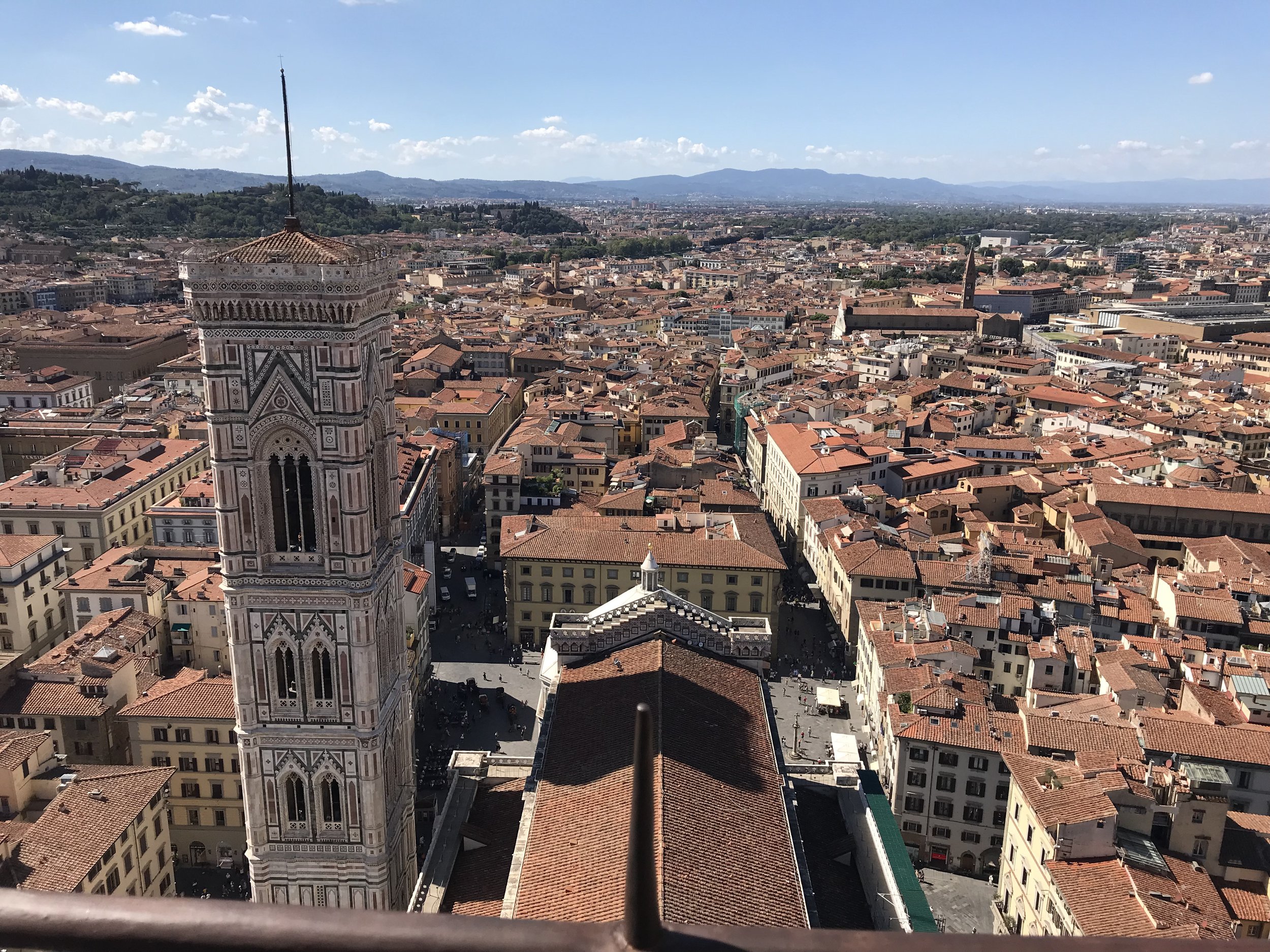
This view seems to have become the underlying assumption amongst a good number of Labour supporters and it needs to be challenged. Labour has retreated to a place of safety. We have ended up in the centre left, smart suit, soft speaking, dinner at Pizza Express, don’t rock the boat too much or you’ll annoy people place of safety. The problem is, the Labour Party is aspiring to run more than a middle-class family holiday to Florence, and it needs some passion and some risk-taking to do this.

What does Labour stand for?

The idea that all that’s needed to win an election is a leader who is a media trained man in a smart suit and who has a proven track record of running things is comforting and reassuring to a lot of Labour members. I get that we want to be seen as reliable next to Johnson’s chaos, but this is not a vision. Labour needs a vision of how it will change people’s lives if it’s given the reins of power. Not just relying on the voters seeing us as the sensible choice.

In the absence of a clear vision, people can project whatever they want onto Labour - and none of that will be good. No-one is willing to give Labour the benefit of the doubt if it isn’t 100% clear exactly what the party stands for. Right now, what Starmer’s Labour stands for, aside from better grooming, is vague at best.

The Labour Right’s vision

The Labour Right has at least the beginning of a vision for what Labour stands for. It may be the agglomerated prejudices of elderly people in small communities, but that’s better than the nothing we have now. I disagree with Labour embracing socially conservative values - it means the party would be running away from me (as opposed to gently sliding away from me, which it’s doing right now). However, I can see how tacitly this is better than the fudge that is Starmerism.

The Labour Right’s enthusiasm for this can be seen in how keen certain members are to purge Momentum or anyone to the left of Jess Philips from the party. That would send a strong message about Labour’s identity to the voters they have lost. To justify this, they’re keen to blame all of Labour’s current woes on its younger, more socially liberal supporters scaring off frightened Boomers with all this radical talk of black lives mattering.

The party of Walthamstow and Workington

I don’t believe in blaming Labour’s problems on young city people with their strange coloured hair and strange desire to not die breathing in polluted air in the drowned ruins of our major cities before we all turn 50. I also don’t believe in ratchetting up the rhetoric on asylum seekers and immigrants as a means to win back support from Boomer Brexit voters. Especially as immigration has got less saliant as a political issue since we left the EU.

I don’t think we should take for granted Labour support in cities, like the party did with working class support in small towns during the Blair years. I also don’t think we should give up on everyone who voted for Brexit or the Tory party in the last five years as irredeemably racist and not worth attempting to convince to vote Labour again. Labour can be the party of Walthamstow and Workington, if it has a vision of radical economic change that can tackle the problems of both places.

A narrative for all

Labour needs to know what it stands for. We all know what it’s against: Tory corruption and incompetence, which is harder to argue as they successfully roll out the vaccine. Being against the government isn’t enough for an opposition, it needs to be for something. Once we know what we’re for we can craft a narrative about this country, what has gone wrong and where Labour will take it that voters of all stripes can believe in.

The result in Hartlepool and London show that Labour’s approach isn’t working. Putting on a suit and looking managerial isn’t enough to win broad support in the 21st century. There are ways that Labour can win back the voters it has lost in places like Hartlepool, along with holding onto the voters it has gained in places like London and Wales.

This will involve careful navigation of the values gap between these voters. Most notably on the issue of patriotism. More on that in the next blog post.

"Extinction Rebellion-11" by juliahawkins123 is licensed under CC BY 2.0 

Related posts
Keir_Starmer.jpg
The crisis in Labour
Where is Labour going?
The crisis in Labour
High-Conflict-Amanda-Ripley.jpg
The crisis in Labour
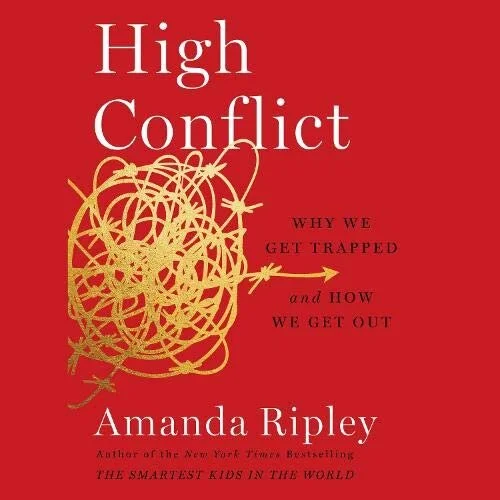
The civil war in Labour has become a High Conflict. How do we get out of it?
The crisis in Labour
Union-Jack.jpg
Political narratives, The crisis in Labour
I don’t feel patriotic, but Labour needs to appeal to more than just people like me
Political narratives, The crisis in Labour
polling-station.jpg
Political narratives, Starmer, The crisis in Labour
Labour can be the party for Walthamstow and Workington, but it needs a vision first
Political narratives, Starmer, The crisis in Labour
polling-station.jpg
Political narratives, The crisis in Labour
How Labour lost the working-class
Political narratives, The crisis in Labour
Labour Party.jpg
The crisis in Labour, Political narratives
The Fall of the Red Wall by Steve Rayson shows the role that narrative played in Labour’s defeat
The crisis in Labour, Political narratives
social-media.jpg
The crisis in Labour, Technology, Political narratives
Does the left live in a bubble?
The crisis in Labour, Technology, Political narratives
Labour Party.jpg
Political narratives, The crisis in Labour
The Labour needs an effective story to start winning again
Political narratives, The crisis in Labour
Scotland-flag.jpg
The crisis in Labour
Labour is trapped by the split over Scottish independence in Scotland and England
The crisis in Labour
Rebecca_Long_Bailey.jpg
The crisis in Labour
Who should be the next Labour leader?
The crisis in Labour
May 10, 2021 /Alastair J R Ball
Political narratives, Starmer, The crisis in Labour
Comment
Seaspiracy.png

Seaspiracy is weakened by framing the environment as a consumer issue

April 27, 2021 by Alastair J R Ball in Film, Environment, Political narratives

Politics and food are deeply entwined because what you eat is a powerful statement of your identity, but also because food shopping is where individuals can use their consumer power to create change. You may think that your purchasing habits are insignificant, but the boycott of South Africa was partly responsible for the end of Apartheid. Lots of people changing how they shop can have a big impact.

It’s hard to talk about the politics of food without thinking about this consumer choice framework. If we stop people from buying Soda Streams and Israeli dates, can we stop Israeli settlements in the West Bank? Debates around buying Fair Trade or sustainably sourced produce stems from the Gandhi insured idea that we should use our consumer power to be the change we want to see in the world.

Seaspiracy vs The Cove

It is with this in mind that I approached Seaspiracy, a new Netflix documentary about the fishing industry. The film begins by looking at whaling and dolphin killing in Japan. Seaspiracy makes a case that these practices are unnecessarily bloody and cruel, although this subject is covered more effectively by the 2009 documentary The Cove.

The film quickly moves on from this to explore the environmental impact of the fishing industry, first in Japan and then all over the world. I consider myself to be reasonably well informed about environmental issues, but I was flabbergasted at how destructive the fishing industry is.

Oil spills and garbage patches

Perhaps the most impactful moment of the film is when it argues that the BP Oil spill in the Gulf of Mexico in 2010 was a net benefit for marine life, because it caused a temporary stop to fishing. This fact was not only surprising, but brought home to me the impact of an industry I had naively assumed was largely benign. I had made this assumption because, even in news sources that report on environmental stories, there is little reporting of overfishing and pollution from the fishing industry.

The film draws an interesting parallel between the high level of concern over plastic straws, and other single-use plastics, against the lower level of concern about the environmental impact of the fishing industry. One thing I didn’t know is that nearly half of the Great Pacific Garbage Patch is fishing gear the industry abandons.

(Un)sustainable fishing

The contrast between the two is important, as single-use plastic is seen as an issue that can be tackled with consumer power - simply stop buying single-use plastics - whereas it’s much harder to change how the fishing industry goes about catching fish. Shouldn’t we only buy sustainably sourced fish and thus change the fishing industry using our consumer power, I hear you ask? Well, Seaspiracy doesn’t think this will work.

Seaspiracy shows that buying sustainably sourced fish is not an effective way to stop the damaging practices of the fishing industry. The film demonstrates that there is no way to accurately inspect the fishing boats whilst at sea to make sure they are fishing according to sustainability standards.

In one interview, a representative of the body who certifies that the food we buy is sustainably fished, admits that their representatives don’t check all the boats that are supposed to be catching sustainably sourced fish and can be bribed even if they did see unsustainable practices.

The role of government

The film concludes that the only way to protect ocean life is to eat less fish, once again framing an environmental issue as one of consumer choice. The focus on using consumer power to affect environmental change is not just limited to issues of fishing, it is a key part of many environmental narratives. Framing an environmental problem as an issue of consumer choice places the emphasis on individuals to address these big problems and overlooks the role of collective action in tackling them.

Consumers do hold a lot of power in our capitalist economic system and by shopping with the environment in mind we can send signals that might cause industries to change. I’m not for a second saying we shouldn’t consider the ethics of what we spend our money on.

However, the problems facing the environment are not just ones of consumer choice. In a world where 71% of emissions comes from 100 companies, there is a vital role for governments to take on these mega-polluters as even consumer power isn’t enough to get them to change. They must be compelled to change by the only thing more powerful than industry: the government.

Employment and the fishing industry

Seaspiracy focuses too much on consumer change as a solution to the problems of the fishing industry and not enough on what can be done by the government. It also fails to explore the impact of the collapse of the fishing industry, following everyone stopping buying fish.

The film takes aim at the subsidies that Western governments give to fishing and blames them for the environmental damage that results from these subsidies. Although it is correct that by supporting the fishing industry the government is supporting the damage it does to the environment, subsidies exist to protect sources of employment. Many economically depressed coastal communities depend on income that comes from the fishing industry, which is kept going by the subsidies.

The film does not adequately explore what the impact of everyone stopping eating fishing would be on the people who work in the fishing industry. It does explore the effect that industrial fishing from Chinese fishing boats has had on small-scale fishing in Africa. It argues that small-scale fishing is no longer sustainable because of the impact of large industrial Chinese fishing.

When fishing stops being a viable source of food and employment, it pushes the former fishermen into either piracy or trading in bush meat, the latter of which the film blames for the recent Ebola outbreak. Seaspiracy shows the negative effects of unemployment in the African fishing industry, but it doesn’t stop to consider the effect of shutting down large industrial fishing operations that employ many more people in other countries.

A powerful argument

Seaspiracy powerfully portrayals the huge environmental impact of the fishing industry. It’s horrifying to see the devastation that this industry causes, and more needs to be done to stop this damage before it becomes irreversible.

The film makes a powerful argument to stop eating seafood as a means to prevent the destruction of our oceans. I agree that we should stop using our consumer spending to support the fishing industry, but by framing this as only a matter of consumer choice, the film is missing the broader social change that is needed so that government power can be brought to bear to protect the environment from exploitative industries.

If we think of the environment as something that can be fixed at the checkout, we ignore the complex political issues - from food distribution to employment - that are mixed in with the environmental protection that together are needed as part of a broad political response to the environmental crisis we all face.

Related posts
Coded-Bias.jpg
May 11, 2021
Film
Coded Bias shows how deeply embedded racism is in our society
May 11, 2021
Film
May 11, 2021
Film
Seaspiracy.png
Apr 27, 2021
Film, Environment, Political narratives
Seaspiracy is weakened by framing the environment as a consumer issue
Apr 27, 2021
Film, Environment, Political narratives
Apr 27, 2021
Film, Environment, Political narratives
The-Big-Meeting.jpg
Sep 5, 2019
Film
The Big Meeting is a celebration of radical left culture
Sep 5, 2019
Film
Sep 5, 2019
Film
peterloo_film.jpg
Nov 4, 2018
Film
Everyone should go and see Mike Leigh’s Peterloo
Nov 4, 2018
Film
Nov 4, 2018
Film
the-death-of-stalin.jpg
Oct 22, 2017
Film
The Death of Stalin
Oct 22, 2017
Film
Oct 22, 2017
Film
Jul 23, 2017
Film
Living memory of death in war
Jul 23, 2017
Film
Jul 23, 2017
Film
Aylesbury Estate 1.png
Jun 25, 2017
Housing, Film
Dispossession: The Great Social Housing Swindle
Jun 25, 2017
Housing, Film
Jun 25, 2017
Housing, Film
Oct 22, 2016
Film
I, Daniel Blake
Oct 22, 2016
Film
Oct 22, 2016
Film
Mar 20, 2016
Film
Fuck for Forests
Mar 20, 2016
Film
Mar 20, 2016
Film
Dec 6, 2015
Film
Invisible Britain
Dec 6, 2015
Film
Dec 6, 2015
Film
April 27, 2021 /Alastair J R Ball
Film, Environment, Political narratives
Comment
polling-station.jpg

How Labour lost the working-class

April 16, 2021 by Alastair J R Ball in Political narratives, The crisis in Labour

The British working-class is a notoriously slippery concept to define. Coming up with a robust definition that fully embraces the complexities of class in modern Britain is challenging. It needs to be more than if you work in a coal mine, follow association football and own a whippet you’re working-class.

Many easier to define alternatives have been suggested, such as “the precariat” or the social grade C2D2, but despite these efforts most people still divide everyone in Britain into working-class, middle-class and upper-class.

The Labour Party and the working-class

For much of the 20th century the Labour Party was the home of working-class politics, supported by many (but by no means all) of the working-class at the ballot box. This has changed. Across Britain, and the Western world, more middle-class people are voting for left-wing parties and more working-class people are voting for right-wing parties. In Britain for the last ten years or so middle-class people have moved to become more left-wing on issues such as immigration and benefits while working-class people’s views have moved to the right.

There are a variety of explanations as to why this shift has happened, each one tells a story about where that theory’s proponents think that the Labour Party, and the left more broadly, has gone wrong in the last five, 10, 20 or 30 years. These explanations are competing narratives about the Labour Party, its history and its future. Below I will explain a few of the prominent narratives. My list is by no means exhaustive, but it covers the major explanations I found through my research. 

Who are the working-class?

To start we need to ask the question: who is the working-class? We could fall back on the historic definitions used by Karl Marx or Frederick Engels. Marx defined the proletariat as the social class that doesn’t own the means of production and their only means to survive is to sell their labour. This covers more than the working-class of today, a highly paid and highly skilled worker such as a software engineer or architect might fit this definition.

It also doesn’t describe the life of someone who worked in a factory in the 1970s, bought their council flat in the 80s, sold it in the 2000s property boom and now lives in leafy semi, enjoying a generous pension, but still views themselves as working-class. Someone who used to sustain themselves with their labour, but now lives rent free off a generous pension. This person might not have solidarity with younger people who are still working, regardless of what class they are.

A retired person, who considers themselves to be working-class, might be better off or more comfortable than a graduate (even one whose parents went to university) who is now struggling to pay rent from their zero-hours contract job. For the purposes of this essay, I’m limiting my focus to the people who consider themselves to be working-class as opposed to the poorest people in Britain.

“People who consider themselves to be working-class” and the “the poorest people in Britain” are not exactly the same thing (although there is a lot of overlap between the two groups). A 2016 British Social Attitudes Survey found that 60% of the British public identify as working-class and of those people who consider themselves to be working-class 47% had managerial or professional jobs. The survey called this “the working class of the mind”, which chimes with an LSE blog that says that: “Britons tend to identify themselves as working class – even when holding middle class jobs.”

A cultural definition of the working-class

The “working-class of the mind” highlights something that didn’t exist in Marx’s day, a means of defining the working-class by culture instead of economics. The proletariat were a new social group in Marx’s time, which is why he thought they held the key to overthrowing capitalism. A new group wasn’t weighed down with a history and culture that made it conform to the dominant capitalist ideology.

Whether Marx was right or wrong about this is by the by. The cultural definition of the working-class is important to how many working-class people see themselves. Having a certain shared set of values, tastes and attitudes is how many working-class people define themselves. The right attempts to win the voters of the working class by appealing to the attitudes that the average wealthy Tory and working-class voter have in common, such as shared sense of patriotism and dislike of “liberal nonsense”.

The right attempts to appeal to the cultural identity of the working class, but this doesn’t address the needs of the poor, suffering in poor quality housing or with low paid and insecure work. This cultural appeal to the working class is often more successful with older, usually better off, members of the working-class. Although under certain circumstances (such as the 2019 election) this can expand to appeal to more than just the comfortable members of the working-class.

An economic definition of the working class

I’m not here to argue that someone who runs their own business or works in a top profession like medicine or accounting (and maybe earns a 5 or 6 figure income) is not working-class, if they think they are. I’m making the point that this isn’t an essay about poverty. It’s about the political perceptions of the people who consider themselves to be working-class.

A modern economic definition of the working-class, as distinct from the middle-class, needs to go beyond what Marx wrote, as many working and middle-class people today are reliant on wage labour for their income. The more robust definition of the working class can be found in their material circumstances. The working-class are the people who cannot fall back on the reserves that the middle-class have, for example a family member who can support you if you fall on hard times.

This is the ideas of class that the left need to appeal to. The idea that the working-class are the people who are struggling with low pay, high costs of living, insecure work and poor-quality housing; the people for whom work doesn’t allow them to provide for themselves and their families. This different view of class takes into account how much our economies have changed since the idea of separate classes came into our minds.

The BBC commissioned The Great British Class survey in 2013, which found that Britain has seven classes, not the usual three. This is probably a more accurate summary of class in modern Britain, but to map seven classes onto my analysis will turn this essay into a book. So, to make this a manageable task I am limiting my definition of the working-class to the people who think they are working-class, as a state of mind or otherwise.

Different stories about the working-class

Some areas of the country thought of as traditionally working-class, such as the former Red Wall seats, are not solely defined as areas with a high density of working-class people living in them. Young people and better educated people have moved away from these areas as the jobs have moved to cities, which means these constituencies are now dominated by a specific subset of working-class people who are older, whiter and are less likely to have gone to university than the median voter.

Contrast this to places such as Haringey, which also has low wages and low levels of University attendance but is considerably younger and less white than Red Wall seats. From my experience, when arguing with someone they tend to change their definition of the working-class to fit the argument they are making, drawing more heavily on one or the other of these two broad icons.

I will try to keep my definition of the working-class in this article as wide as I can, to bring in as many stories and experiences as possible. However, the purpose of this essay is to find out why the working-class voters that Labour needs to win over to be in power are deserting the party, so I will inevitably lean more towards the Northern and Midlands, post-industrial working-class than the Southern or city based working-class who are still reliably voting Labour.

Why stories matter for this debate

In the absence of a reliable definition of the working-class we rely on stories about who the working-class are and why they might not be voting Labour anymore. Stories are not the same as political science, backed up by focus groups and polling, but they offer a way to understand the political shifts that have taken place recently in the UK.

In 2019, former mining town Bolsover elected its first Tory MP in over 100 years. To accurately explain why this happened from a political science perspective I would require hundreds of thousands of words and mountains of data, which I don’t have access to. The stories I am about to explore talk in generalities, but they are useful because they provide a broad vision of how the Labour Party has managed to lose the support of places like Bolsover. It’s up to the current Labour leadership to turn these stories into messaging and policies to win these voters back.

Story 1: It’s all about Brexit

Let’s start with an obvious one: Labour messed up the EU referendum. Working-class people were more likely to support Leave and Labour has been strongly identified with Remain. This was not only during the EU referendum itself, but in the three and a half years between Britain voting to leave and actually leaving the EU.

The story states that it was a mistake for Labour to adopt the same position as the Tories in the referendum, making it look like the establishment was lining up behind Remain and against working-class people’s desire to leave.

Grace Blakeley makes this argument in her article for Tribune titled How Labour Lost the Working-Class. She wrote: “During the [2019] election, I spoke to voters up and down the country who expressed the same sentiment: with the entire British establishment united behind Remain, they finally had a chance to kick back at a political class they felt had cheated their communities over many years.”

Blakeley makes other arguments about how Labour lost the working-class, not just the Party’s stance on Brexit, but her article is part of a story that seeks to use Brexit to explain Labour’s loss of support amongst the working-class.

There are issues with this story, not the least that it relies on a stereotype of working-class voters as Leave voters. Analysis from Lorenza Antonucci, Laszlo Horvath, and André Krouwel at the London School of Economics has shown that Leave voting is not collated with being working-class or having low levels of education (as is often claimed).

In a blog post for LSE they wrote: “rigorous analysis showed that the profile of Brexit voters is more heterogeneous than initially thought, and that it includes voters with high education and ‘middle class’ jobs.”

They go on to argue that Leave voting is more highly collated with a newly emerging “impoverished middle class” i.e. people who have middle-class jobs but have seen their standard of living squeezed.

This story also ignores the fact that Labour’s support amongst the working-class had been declining before the referendum, before Jeremy Corbyn became Labour leader, or Ed Miliband became Labour leader. For example, in the 2010 election, 37% of people on social grade C2, skilled manual occupations, voted Conservative against 29% who voted Labour.

Labour’s disconnect with its former working-class supporters who voted for Brexit in 2016 and the Tories in 2019 is a symptom of a deeper disconnect rather than the cause itself. It’s not just that Labour made the wrong choice on whether to be pro or anti-Brexit; Labour failed to understand why people wanted Brexit. To get to the bottom of this we need a story that goes deeper and goes back further in time.

Story 2: A decline in representation

This story holds that a decline in the number of Labour MPs from working-class backgrounds has led to the fall in Labour’s support amongst the working-class. During the period where working-class support for Labour has steadily declined, it became more common for middle-class Labour candidates to represent working-class constituencies.

This often happened because these were seen as “safe seats” and a way to get political advisers into parliament, as part of the career path for middle-class Labour apparatchiks; from Oxford, to think tank, to political adviser, to MP. An obvious example is how middle-class Tristram Hunt (born in Cambridge, the son of a life-peer) was parachuted in to represent the heavily working-class seat of Stoke-on-Trent Central.

Ashley Cowburn explores the story of declining working-class representation in Labour in detail in his longread for the New Statesman: how political parties lost the working-class.

In his article, Cowburn said: “Data available from the House of Commons library shows that around 37 per cent of MPs from the party came from a manual occupation background in 1979. Fewer than 7 per cent did in 2015. Oliver Heath, an academic at Royal Holloway, University of London, claims this harmed the party’s image among its traditional voters.”

The roots of the representation issue go back at least until the 1980s. Cowburn spoke to Heath for this article who says that the decline in working-class support for Labour can be “quite clearly” traced to Neil Kinnock’s leadership "when he tried to distance the party from working-class radicalism". Heath said to Cowburn: “[Kinnock presented] a more middle-class, more sort of professional, social image of the party that then might attract some more middle-class voters. And that continued under Tony Blair.”’

The decline in working-class support for Labour happened over the same period that representation of the working-class decreased amongst Labour MPs. However, there hasn’t been a corresponding rise in support for other parties led by working-class politicians.

UKIP chose Paul Nutall as its leader in November 2016, who wanted to make UKIP the “patriotic voice of the working-class”. Today, this looks daft when we remember how ineffective Nutall was as UKIP leader, however, it was a very real fear for people on the left after the Brexit vote.

In 2017 Cowburn spoke to Nutall for his article and Nutall was keen to emphasize that many Labour MPs “have got absolutely nothing in common" with their constituents. “I mean look, do they have anything in common with a working man’s club in Durham, or a working man’s club in Hull, or Leeds. I doubt it very much indeed," he said to Cowburn.

Despite fear on the left of UKIP becoming the voice of the working-class, some people were skeptical of Nutall’s appeal. Angela Rayner, then shadow education secretary, said to Cowburn: “It’s not enough just to be northern and working-class – we’re not stupid.” She added: “We’ve been hoodwinked… it’s incredibly patronising, it’s not enough to just say we’ll have some northern trinket. You’ve got to have substance behind you.”

Why bring up the debate around an ineffective and largely forgotten UKIP leader? It highlights a flaw in the simple logic of the story that decreased working-class representation amongst Labour MPs is the cause of the loss of working-class support. UKIP were unable to steal Labour votes using working-class representation.

That said, this story is supported by evidence and goes some way to explaining why Labour’s support amongst the working-class has declined. However, I don’t think it offers a complete explanation, so we need to look at some other stories.

Story 3: Labour has chosen to prioritise middle-class values over working-class ones

This story covers a broad spectrum of ideas, such as “choosing Jeremy Corbyn as leader was alienating to the working-class” and “Labour has become too ‘woke’ for the working-class”.

Corbyn’s alienating effect on working-class former Red Wall voters is the largest factor in Labour losing last year’s election. However, like Brexit, choosing a Labour leader so at odds with what a lot of past-Labour voters wanted speaks to a deeper disconnect. The problem is not that Corbyn was Labour leader, but that most party members wanted him to be Labour leader.

The Labour Party is still made up of the people who voted for Corbyn to be leader twice. These are the members who want Keir Starmer to be more vocally supportive of the recent Black Lives Matter protest and make stronger commitments to left-wing policies. What these members advocate for has an effect on how Labour is perceived by working-class voters.

These members are at odds with working-class voters (and most other voters) on issues of identity. They are much more likely to be skeptical of patriotism, the military and the police than most voters. They have a more negative view of British history, especially imperial history.

A recent Labour Together report into the 2019 general election highlighted how the three groups (of the 14 they studied) that were most likely to support Labour had radically divergent views from the rest of the country on social issues such as immigration and patriotism. 

I write this as a middle-class Labour Party member who voted for Corbyn to be leader and whose views on immigration and patriotism are divergent for the average voter, as I have become plainly aware from polling and talking to people. I’m writing this essay whilst drinking craft beer, in trendy East London and leafing through the Dishoom cookbook deciding what I’m making for lunch whilst listening to Dream Nails. I am aware that this story says that the Labour Party has prioritised my values over those of working-class voters.

This story is best summed by a recent RT article by Dr Lisa McKenzie that argued that contemporary middle-class left-wing activists are more interested in symbolic victories (such as removing a statue of a slave trader in Bristol) than in improving the lives of working-class people.

McKenzie wrote: “The erection or removal of statues are symbolic decisions made by those with the most power to celebrate or denigrate any point, person, or narrative in history. Rather than argue among ourselves about effigies of dead white men, let’s do something positive and lasting for people who are still alive today.”

This story expects us to believe that Labour spent the last four years only talking about cultural appropriation, trans-rights and Palestine. Corbyn offered an economically radical program aimed at improving the situation of the poorest in society. Many of these policies were individually popular, but the overall perception of Labour and its leader led to defeat.

This story is also based on the assumption that all working-class people are white, Daily Express readers who have an inbuilt hostility to anything socially progressive. Some working-class people are LGBTQ+, or people of colour, or young people, who might have views about immigration or trans-rights more in line with those of Labour activists.

The working-class are not a single monolithic block who share one common set of values. Even a sub-set of the working class (such as Red Wall voters who supported the Tories in 2019) did not all vote the same way for the same reasons. There are groups within groups. Some more inclined to vote Labour than others.

Older, retired members of the working class are the most likely to hold socially conservative views and be at odds with Labour activists. They are also the least likely to be in an economically precarious position as their income (pensions mainly) have been protected by the last ten years of Tory governments, who chipped away at every other form of welfare apart from welfare for the old.

Labour is very unlikely to win back these voters, who might have voted Labour when they were working, but the ring fencing by Tories of their benefits means they are now free to vote for the party that aligns most with their socially conservative values.

Younger working-class people are more likely to vote Labour and have values more similar to the middle-class, metropolitan Labour supporters. There is a middle group between these two groups. People who are working age working-class voters in crucial swing seats, whose material conditions have become much more precarious over the last 11 years of Tory rule, and can be convinced to vote Labour if the party is serious about fixing the issues that blight this group. For example, regional underinvestment, lack of jobs and quality housing.

Research from Labour Together has shown that many working-class, former Red Wall voters have different social attitudes to metropolitan Labour voters; for example, seeing patriotism as something positive. The Tories appeal to the social values of working-class voters. Even those who are economically struggling and likely to benefit from Labour policies. Identity politics is a big issue that can turn these voters away from Labour.

The story of the Labour Party adopting more middle-class values that are alienating the working-class voters does a lot to explain Labour’s problems. However, it doesn’t explain why Labour’s economic policies were popular with both middle-class and working-class voters. To understand why this is, we’ll need to look in more detail at the political forces affecting working-class voters.

Story 4: Labour embraced neoliberalism

This story is based around the idea that it was Labour’s acceptance of the post-Thatcher neoliberal consensus that alienated the party from the working class. When Labour came back into office in 1997 they did little to challenge the low tax, low regulation, “free markets are more efficient” ethos of Margaret Thatcher and John Major’s Tory governments. Labour also did little to rebuild the power of the trade unions that had been decimated.

The story’s strongest evidence is Blair’s statement that his job “was to build on some Thatcher policies” and Thatcher’s statement that New Labour was her greatest achievement. This indicates that there was an ideological consistency between the two governments, which contributed to the prevalence of the alienating view that all politicians are the same.

Again, the process of Labour becoming a neoliberal party did not begin with Blair. It was a slow process that began in the 1980s under Kinnock, who took the party away from its traditional trade union roots and focused it towards winning the votes of the middle-class. In doing this he rejected many of the economic orthodoxies of the Labour Party. This continued wholeheartedly under Blair.

Most people don’t understand economic theory (including those who claim they do) and ideas like “neoliberalism” that might be common parlance in left-wing political circles don’t feature much in the considerations of the average voter.

Most people do have a keen awareness of the effects of economics on their jobs, their wealth and their communities. Many Labour voters have seen the negative effects of economic change in their communities as decent jobs disappeared and were replaced by insecure, low paid, causal work or nothing at all. The damage this has done in some communities (particularly in the former Red Wall) has caused many voters to look for solutions to their problems they would not have considered before, such as voting UKIP or Tory.

New Labour did very little to reverse the trend of deindustrialisation, (that began in the 1970s and was accelerated by the Thatcher government), which hit working-class communities hardest. New Labour creamed some off the top of the rabid financial capitalism of the City and used it to make welfare more generous for the working-class communities who had lost most of their industry, but they did very little in terms of offering hope or a vision of a better future to these communities.

Steve Rayson argues in his book The Fall of the Red Wall that working-class voters’ economic views are more left-wing than the average middle-class voter’s, and that voters in the former Red Wall would prefer higher taxes and more redistribution. This supports the idea that Labour’s move away from these policies in the 80s and 90s has moved them away from the values of working class-voters.

This story does little to explain why certain working-class voters switched from Labour to Tory, the party of Thatcher and synonymous with neoliberalism. The Tories’ support for Brexit partly explains this, but as we have seen, Labour’s declining working-class support predates Brexit. Brexit’s strongest advocates (the Farages and Jacob Rees-Moggs of this world) see Brexit as a neoliberal project. They’re not fighting to bring back heavy industry to Britain, but to free business and the ultra-wealthy from the oversight of the EU.

This story also doesn’t explain why Corbyn (who rejected neoliberalism) lost support amongst the working-class. It also doesn’t explain why Miliband’s Labour, with mild criticism of neoliberalism, performed worse amongst working-class voters than New Labour, who embraced neoliberalism.

The reasons for declining working-class support for Labour are more complicated than just economics. Although Labour’s acceptance of neoliberal economic policies did put them at odds with the values of many working-class voters, the social signals that Labour has been sending since the 1980s are also a factor. For an explanation of this, we’ll need to look elsewhere.

Story 5: Working-class voters are cross-pressured

This story uses the concept of being “cross-pressured” to explain the decline in Labour’s working-class support. This argument is heavily drawn on in Steve Rayson’s book The Fall of the Red Wall. Rayson writes that working-class people (especially those in the former Red Wall constituencies that he studied) typically have economic views that are drastically to the left of the median voter, but social views strongly to the right. This puts cross-pressure on said voters when choosing between a Labour Party that reflects their economic values and a Tory Party that reflects their social values.

This concept of being cross-pressured is interesting as it shows how working-class politics are different to middle-class politics. Middle-class people’s political views are likely to be more moderate than working-class people on both economic and social issues. For a long time (again probably since Kinnock in the 1980s) Labour has been chasing middle-class voters and has thus moved to the centre, alienating working-class voters on economic and social issues.

This story explains the difference between middle-class and working-class politics and also explains why the Tories were able to appeal to working-class voters, despite their economic policies being opposed to the self-interest of working-class voters.

(For those who are interested, the argument about working-class voters being cross pressured is explored in more detail in Steve Rayson’s book The Fall of the Red Wall. Shameless plug time: you can also read my article about his book that explores this topic as well.)

One piece of good news for Labour is the issue that has created the greatest cross pressure, immigration, is decreasing in its political salience. The socially liberal values of many Labour activists and the economic model based on the easy movement of workers, which the last Labour government was committed to, put Labour at odds with many working-class voters who were hostile to the rise in immigration that happened under New Labour.

Since voting to Leave the EU, immigration is seen as a less critical issue by many voters. This could be because voters feel Britain now has more control over its borders after leaving the EU. Some voters are, supposedly, not opposed to immigration, just to immigration that parliament doesn’t approve. It might also be because voters feel that immigration has declined since we left the EU.

Immigration may be less of a hot button issue, but Labour still needs to do more to make sure that the Tories cannot use the cross-pressured nature of working-class voters to lure them away from Labour. This involves Labour putting forward a program of radical economic change, one which both its working-class and middle-class supporters will like and benefit from. It also involves making sure that the party appears sufficiently aligned with working-class voters on social issues. This later part is easier said than done and bears looking at in more detail.

Appealing to the working class

There is no one clear story that explains where Labour has gone wrong in the last 40 years in holding the support of the working class and there is no single solution to the situation the party is in now. It is important to not think of the working class a single group. Younger members of the working-class are more likely to have values that align with younger people in the middle-class, who form the bulk of Labour’s activists. Winning over older working-class voters, many whom are materially well off, will be a lot harder.

Social issues, such as patriotism or Britain’s Imperial history, and identity politics will remain divisive issues that are likely to increase the cross-pressure on voters who can be won over by a Labour. To alleviate this cross-pressure Labour will have to appear more patriotic, or at least find a way to avoid accusations of being ashamed of or embarrassed by patriotism.

I’m not a patriotic person and I do think that political patriotism has many problems. I would like to explore the effects of patriotism, good and bad, on our politics in a separate essay. There are risks for Labour if the party attempts to appear more patriotic (not the least it being seen as insincere) but to win back the working-class Labour will need to appear more patriotic.

This doesn’t mean excessive or comic amounts of patriotism. Many voters require reassurance that Labour shares their values and isn’t sneering at them. For Labour to be seen as patriotic, it isn’t a case of “go UKIP or go home”, light touch patriotism is all that is needed.

Many people across the country are struggling with low pay, insecure work or unemployment, poor quality, housing, long waits at their GPs, a shortage of school places, their local school/hospital/any public building falling down, poor transport infrastructure and a general break down in the fabric of society that is supposed to hold everyone together. Meanwhile the wealthy’s interests are protected by the government. Covid-19 has made this problem much worse. This is the foundation that Labour can build a winning electoral coalition on.

The problems above affect both the working and middle-classes. Many people were struggling before a deadly disease ripped through society. There is an opportunity to win lots of votes with a message of change for the better and then, maybe, the chance in government to actually make people’s lives better.

Patriotism can be appealed to whilst also arguing for radical economic change. Over time many people whose views appear intransient can be convinced to be more open minded. The route to winning over the working-class is telling a story that offers a solution to their material problems, instead of fighting over issues of identity that divide the voters that Labour needs to win over.

The common thread of these stories

Each of these stories tells us something about where Labour has gone wrong in trying to win the support of the British working-class. Almost all of these stories trace the blame for this back many decades. Although, Corbyn carries the blame for not acting to reverse this trend and in many places accelerating it.

Corbyn has gone and his chosen successor is no longer in the shadow cabinet. The soft-left is in charge of the Labour Party and Labour’s polling has improved, but they still lag behind in the seats the Tories took from Labour in the 2019 general election. Corbyn’s election as Labour leader is a symptom of the larger disconnect between Labour’s middle-class activists and its working-class constituencies, which stories 2 and 3 argue.

Each of these stories helps us to understand where Labour has gone wrong. None offer a complete prescription for fixing the problem and the current Labour leadership would do well to bear all in mind when forming a strategy for winning back Labour support from the Tories.

Although each of these stories has useful information and all are good explanations, Labour cannot tell five different stories to win back the working-class or they all drown each other out in a cacophony of confusion. Labour needs to find the common threads of these stories to create a narrative that will win over the working-class and middle-class votes that Labour needs to get into power.

Polling station image taken by Rachel H and used under creative commons.

Related posts
Political narratives
The right finally discovers that life sucks for Millennials, but guess who they still blame
Political narratives
Union-Jack.jpg
Political narratives
Who really holds power? The cultural illusion of middle-class dominance
Political narratives
How should the left view the porn industry?
Political narratives
Books.jpg
Political narratives
Behold the smartest people in the room: The Waterstones Dads
Political narratives
Russell Brand isn’t the only person on the hippy to alt-right pipeline and the left should be aware of this
Political narratives
polling-station.jpg
Political narratives
Steve Rayson’s Collapse of the Conservatives shows how Labour benefited from voters’ volatility but may also suffer from it
Political narratives
nigel farage.jpg
Political narratives
The rhetoric from mainstream politicians on migration caused these riots
Political narratives
IMG_4111.JPG
Political narratives
The discourse around extremism is based on hand waving at best and Islamophobia at worst
Political narratives
Tony-Blair.jpg
Theater, Political narratives
What does Tony! [The Tony Blair Rock Opera] tell us about how the Blair era is remembered?
Theater, Political narratives
8644221853_6af3ffe732_c.jpg
Political narratives
The cost of living crisis isn’t recent and has deep roots in the economy
Political narratives
April 16, 2021 /Alastair J R Ball
Political narratives, The crisis in Labour
Comment
Labour Party.jpg

What does the left want?

March 30, 2021 by Alastair J R Ball in Political narratives, Starmer

The only thing everyone on the left seems able to agree on is that things aren’t going well for Labour. A year into the Covid-19 pandemic and the government has presided over a crashed economy and the highest death rate in the world, but still the Tories are ahead in the polls.

Everyone has their hot take on this. Is Labour not patriotic enough? Is Labour not socialist enough? Is Labour too focused on winning back the Red Wall? These questions are missing the bigger point: what is the change that we want to see?

It’s worth discussing this bigger question. I want to expand it beyond asking “what does the Labour Party want?” to asking, “what does the left want to achieve as a movement?” Or “what are we fighting for?”

What are we fighting for?

By asking this question, I want to involve more people than just those on the left of the Labour Party. The answer should include the Greens, the more left-wing members of the SNP or people who don't associate themselves with any political party, but do consider themselves part of the broader cultural and political movement sometimes called The Left.

One thing we all want is the defeat of our common enemy: The Tories. It may look like the Tories are destined to be in power forever, riding the wave of Boomer resentment of modernity, but it’s certainly possible to get Labour into power. In 2007 Labour looked unbeatable, but three years later they were in opposition. Labour can get into power and use the enormous power of the British state to make people’s lives a little bit better.

If this is our goal, then we have to start thinking tactically. What will cause the voters we need to move over from Tory to Labour? The answer to this might require some compromising over Labour being seen as patriotic. Patriotism is something I find distasteful, but might be needed to get Labour into power.

Labour in power

If the plan is to get Labour into power and then to use the power of the state to sand off the worst edges of capitalism, then we need to have a discussion about whether Keir Starmer can do this and whether Labour’s current strategy will work.

Undoing the damage of a decade of austerity would make a real difference in the lives of many homeless people, people with insecure work and people who are struggling to put food on the table. Labour can stop a lot of poor people suffering by ending austerity, and stop a lot of migrants suffering by ending the hostile environment.

To get Labour into power in 2024 will require Labour winning back the voters who switched from Labour to Tory in 2019. Voters who want Labour to be more patriotic and are opposed to identity politics. This fact is inescapable.

The left and patriotism

I don’t like patriotism and the steam roller effect it has on political debate where everything associated with patriotism is good and everything not associated with it is bad. However 75% of British voters consider themselves to be very or slightly patriotic, so patriotism needs to be reckoned with. [### link]

Labour (and the left more broadly) needs to either find a way to convince some of that 75% that we’re patriotic or convince these people that actually they don’t care about patriotism. It’s one or the other. Saying “yuck, patriotism” and hoping it goes away won’t help.

We need a plan if we’re going to convince 75% of the public that patriotism is toxic and it isn’t something we should expect from politicians. If we can’t do this then, as someone who is comfortable in my middle-class existence, it would be callous of me to say to poor people they must continue suffering under austerity because I don’t want Labour to embrace patriotism.

A bigger change to society

Does the left want to achieve a bigger change than this? Do we want to end capitalism and build a radically different society? Do we want to create a national or international identity that doesn’t rely on a patriotic, nostalgic version of Britain?

There’s lots of energy around making a big change. Every talk or meeting I attend has representatives from groups fighting neo-liberal capitalism or systemic racism in one way or another. However, the impact has been low. Capitalism remains entrenched. The racist systems that underpin society remain unchanged. The power of the banks and the right-wing media isn’t going to end any time soon.

If we want to achieve a bigger change then we need a strategy. Our strategy can’t be: wait until the climate and all the wars created by capitalism are so bad that even Daily Mail readers wake up and realise what’s going on. Too many people will be dead by that point.

The left’s identity crisis

All over the world, left wing parties don’t know what they stand for in the wake of the 2008 financial crash. The Third Way between left and right has been discredited. Does the left now stand for ending capitalism and stopping the constant cycle of crises it produces? Does the left seek an accommodation with capitalism, where taxes can be used to finance government programs to protect against its worst excesses?

We’re no closer to the answer 13 years on from the financial crash and one year into capitalism’s latest crisis.

Lessons from the last five years

For the last five or so years the left’s plan has been to put a good person in charge of the state. The Corbyn project didn’t provide a solution to the left’s identity crisis or a template for left-wing change elsewhere. Neither has Joe Biden’s victory in the US.

I’m sure that Jeremy Corbyn would have been a good Prime Minister and made sure that the Covid-19 crisis didn’t fall most heavily on the poor and marginalised. However, the fact that the left didn’t have a plan beyond “make Corbyn Prime Minister” has left us adrift now that he has gone.

A better idea of what we want

The left taking over the Labour Party to get what we wanted didn’t work. If we have learned anything in the last five or six years is that we can’t fight everyone from the soft left to the far-right all at the same time and win. We need a better idea of what we want and a plan to get it.

A clear answer to what the left wants will inform our strategy. Are we being big and ambitious or small and realistic? Anything can be achieved if we know what we’re aiming for.

Labour Party picture taken by Andrew Skudder and used under creative commons.

Featured
Sep 16, 2025
The right finally discovers that life sucks for Millennials, but guess who they still blame
Sep 16, 2025
Sep 16, 2025
Union-Jack.jpg
Aug 20, 2025
Who really holds power? The cultural illusion of middle-class dominance
Aug 20, 2025
Aug 20, 2025
Apr 12, 2025
How should the left view the porn industry?
Apr 12, 2025
Apr 12, 2025
Books.jpg
Mar 28, 2025
Behold the smartest people in the room: The Waterstones Dads
Mar 28, 2025
Mar 28, 2025
Feb 18, 2025
Russell Brand isn’t the only person on the hippy to alt-right pipeline and the left should be aware of this
Feb 18, 2025
Feb 18, 2025
polling-station.jpg
Dec 3, 2024
Steve Rayson’s Collapse of the Conservatives shows how Labour benefited from voters’ volatility but may also suffer from it
Dec 3, 2024
Dec 3, 2024
nigel farage.jpg
Aug 13, 2024
The rhetoric from mainstream politicians on migration caused these riots
Aug 13, 2024
Aug 13, 2024
IMG_4111.JPG
Mar 19, 2024
The discourse around extremism is based on hand waving at best and Islamophobia at worst
Mar 19, 2024
Mar 19, 2024
Tony-Blair.jpg
Sep 26, 2023
What does Tony! [The Tony Blair Rock Opera] tell us about how the Blair era is remembered?
Sep 26, 2023
Sep 26, 2023
8644221853_6af3ffe732_c.jpg
Aug 22, 2023
The cost of living crisis isn’t recent and has deep roots in the economy
Aug 22, 2023
Aug 22, 2023
March 30, 2021 /Alastair J R Ball
Political narratives, Starmer
Comment
British-Rail.jpg

How can British Rail’s failed Modernisation Plan teach us to ‘build back better’?

March 16, 2021 by Alastair J R Ball in Environment, Transport

If we are to reshape our economy to achieve net zero emissions, our transport system must change radically. At the same time, as we emerge from the pandemic, there’s plenty of discussion about how we could ‘build back better’.

What historical precedents can we learn from? Policymakers could start by taking a look at the expensive disaster that was British Rail’s 1955 Modernisation Plan. This story may be well known to train geeks like me, but I am convinced it should be more widely understood. We could learn a lot from it.

After an initial post-war boom, by the early 1950s the newly nationalised British Rail was losing money as traffic began to shift to the roads. Aiming to reverse this, the £1.24bn Modernisation Plan – a staggering £29bn in today’s money – was announced in 1955.

With such an enormous remit and budget, how did they get it so wrong?

The vision seemed sound. Electrification and diesels would replace steam traction, freight handling would be streamlined, and signalling and stations would be brought up to date. The failure of the plan was a combination of incompetent execution, political pressures, and most importantly, fundamental miscalculations about the future. The two main areas in which this can be seen were traction and freight handling.

Initially, BR had continued to commission new steam engines, despite electric and diesel traction being increasingly used elsewhere, notably in the oil-rich US. Superficially that made sense. Steam locos used domestically-produced coal, when mining was one of Britain’s biggest employers. However, by the 1950s, this was beginning to look like a mistake. As labour costs increased, the labour-intensive nature of steam was becoming a problem.

In the decade of the Clean Air Act, railway yards and stations were becoming unhappy neighbours with their towns and cities. It also contributed to a PR problem: the perception that the railways were old-fashioned, dirty and reminiscent of the bad old days of pre-war life, in contrast with the dynamic consumerist happiness promised by car advertisements.

Unable to afford widespread electrification, diesels were the answer. Buying in proven designs from the US, when Britain had always built its own trains, was politically a non-starter. Instead, the idea was to trial prototypes from a range of British manufacturers, with the best performing types to be adopted as standard and commissioned in large numbers. So far so good. Until someone decided it wasn’t happening fast enough.

The result? BR started panic-buying batches of the untested prototypes. I’ve often wondered what back-handers might have been part of the procurement process here. But whatever the reason, instead of a standardised fleet, they ended up with a mixed bag of too many incompatible types from different builders. Some were so unreliable that they ended up being scrapped after only a few years. For some, the sight of a broken-down diesel being towed by a steam engine seemed to encapsulate the incompetence of the organisation.

Freight handling, too, needed huge work to modernise. At the time, most freight was conveyed in mixed trains and inefficiently handled at small facilities at most stations, much as it had been since Victorian times – as can be seen in this fascinating period video.

The Modernisation Plan’s answer was investment in vast, partly automated new marshalling yards around the country designed to sort trains wagon by wagon. These worked well, but by the time they opened in the early ‘60s, it was obvious that they were a giant waste. They would have been helpful a couple of decades earlier, but by now, lorries (aided by new motorways) were making the traditional mixed goods train a relic of the past. The new yards were a bang-up-to-date solution to a previous era’s problem.

The Plan’s failure was an enormous missed opportunity. Despite the investment, by the early ‘60s, BR was still in deficit. The government lost patience and shifted to a programme of cuts, which today are remembered as the infamous ‘Beeching Axe’. This set the tone for decades. The railway was a ‘parallel’, declining transport system, and what voters wanted was more spending on roads.

These assumptions persisted for a long time, but now themselves seem outdated. Faced with the threat of climate change, we need a transport revolution far greater than the changes BR attempted in the ‘50s, but at the same time we need to learn from the past.

A couple of themes ran through BR’s mis-steps. One was planning for the past, not the future. Another was a fundamental lack of imagination. Those empty white-elephant marshalling yards were an attempt to modernise the old, disappearing railway – a bit of foresight would have suggested investment in containerisation and bulk handling facilities instead.

We could be about to make a similar mistake with electric cars. Clearly, EVs will be a major part of the solution to drive down emissions. But EVs cannot solve the other problems of car culture, such as congestion or parking in cities. BR’s bad investment in too many types of diesel locomotives reminds me of the need to standardise EV facilities too. If we are not careful, we’ll end up with a plethora of incompatible battery charging systems and connectors.

Another of BR’s errors was simply replacing steam with diesel on a like-for-like basis, rather than recognising diesel power’s inherent advantage of less down time, meaning fewer locos should have been needed overall. Have we really thought properly about the possibilities of electric cars? Does a higher initial cost, but much reduced servicing requirements, make communal ownership schemes more viable, for example?

Whatever the advantages of EVs, a more pertinent question would be, should we even be seeking to replicate today’s car-centric transport system? With ever fewer numbers of young people owning cars or even acquiring driving licences, we have arguably already passed ‘peak car’, yet this is hardly ever reflected by policy-makers obsessed with the private car. BR’s Modernisation Plan seemed oblivious to the wider context of road building and increasing car ownership; today’s transport policy must avoid such a silo mentality.

On today’s railways, the myopic focus on speed – just like how BR focussed on wagon-load freight despite foreseeable trends away from it – seems to me to be a mistake. HS2 will lower journey times between some cities, but trains are already the quickest method for intercity travel. The emphasis instead should be on increasing capacity, and lowering ticket prices – that’s what most people actually want.

It’s also important to recognise when existing technology is the obvious solution. Electric express trains are the most effective and cleanest method of transporting people between cities ever invented. Just as the electric commuter train is the fastest and cleanest method of mass transit within cities. This doesn’t require any new technical innovations – just investment. It’s scandalous that some of Britain’s main routes are still entirely diesel-operated. Investment in overhead wires might not have made sense in the ‘70s or ‘80s, but times (and passenger numbers) have changed.

But the overarching lesson of the Modernisation Plan is that it isn’t just about having enough money to spend. In the 1950s BR demonstrated the risk of blowing a fortune on the wrong things because of outdated assumptions. To adapt to the coming green revolution, we need to ask ourselves what the transport system of the future will look like. Policy makers need to be asking people – especially young people – what their transport system should be for. Otherwise we’ll only end up trying to solve yesterday’s problems, just like BR did.

"British Railways Brush Type 2 D5500 (Class 31, 31018)" by Stuart Axe is licensed under CC BY-NC-SA 2.0

Featured
British-Rail.jpg
Mar 16, 2021
How can British Rail’s failed Modernisation Plan teach us to ‘build back better’?
Mar 16, 2021
Mar 16, 2021
Ribblehead.jpg
Apr 29, 2018
This viaduct is more impressive when you know what went into building it
Apr 29, 2018
Apr 29, 2018
British-leyland.jpg
Jan 21, 2018
Did politics kill British Leyland?
Jan 21, 2018
Jan 21, 2018
Apr 25, 2014
The Left’s Elephant in the Room
Apr 25, 2014
Apr 25, 2014
British-rail.jpg
Apr 1, 2013
HS2: On the Right Track?
Apr 1, 2013
Apr 1, 2013
March 16, 2021 /Alastair J R Ball
Environment, Transport
Comment
Keir_Starmer.jpg

Labour needs a message and to stick to it

February 23, 2021 by Alastair J R Ball in Starmer, Political narratives

Usually watching England play in a major football tournament is a depressing affair, which is why I was pleasantly surprised at how well the team did in the 2018 World Cup. I’m not a football expert, but it seemed like new manager Gareth Southgate had got the team to function better as a single unit. The ball was skillfully passed and players were on point to receive it. 

When it all fell apart in the semi-final against Croatia, the formerly well-functioning team had turned into what I called “Shit England”, as it seemed they were just hoofing the ball up the pitch and hoping for the best.

This is how I feel about Labour right now. Like England, a change in manager seemed to deliver some good results initially. Keir Starmer introduced himself to the country and received a positive reception from people who don’t follow politics closely. The polls were moving in the right direction and Starmer had avoided the initial landmine of being accused of playing politics during the outbreak of a deadly disease.

Seeing what sticks

Recently the slick performance has given way to an undisciplined fumble. Like Shit England, Labour are throwing out anything and seeing what sticks. This reminds me of some of Ed Miliband’s cringe-worthy mistakes, such as constantly trotting out new era-defining buzzwords - One Nation, predistribution - only for it to be forgotten a week later in the desperate search to find something to make the Labour Party popular.

The latest example of this is the idea that Labour should be more pro-business. This annoys me more than the last idea, seemingly thrown out at random, that Labour should be more patriotic. Making Labour look more patriotic is about how the party is presented to the voters, not about policy. Patriotism can equally accompany neoliberal or radical economic policies. If Labour wants to appear more pro-business, this will require specific pro-business policies.

Politics for the wealthy

Britain doesn’t need another pro-business party, when we have the Tories (the party of the wealthy) the Lib Dems (the party of the wealthy with a bit of a conscience), UKIP (the party of the people who think that Britain is both a company and an Empire and should be run according to the worst aspects of both) and the SNP (who will turn Scotland into a low tax, low regulation, tax haven to lure away business from England).

Politics is already slanted towards the interests of the wealthy, without another party attempting to court the votes of the rich (and the confused people who aren’t rich, but seem to think it’s important to make life as easy as possible for those who are).

A vision for the future

All this flailing around is distracting people from the important work of outlining an alternative to the Tories. It comes at the same time a Starmer attempting to outline his vision for the future.

Starmer argued that Tory ideology made the UK more vulnerable to Covid-19. This framing came alongside a platter of policy announcements, including that Labour would “keep the universal credit uplift, end the pay freeze for key workers, prevent council tax rises, extend business rates relief and the VAT cut for hospitality and leisure, and renew the furlough scheme.”

LabourList editor Sienna Rodgers’s said: “It tied together the themes we’ve seen in Labour’s interventions over the past year: family, dignity, security, fiscal responsibility and long-term thinking.”

Tackling the problems of Britain

It’s good that Starmer is making the argument that 10 years of Tory rule led to the UK having the highest Covid-19 death rate in the world, but how does being pro-business fit alongside this?

Being pro-business is at odds with a number of the things a Labour government needs to do to fix the problems with this country. Can Labour be pro-business whilst taking on the fossil fuel companies destroying the planet? Can Labour be pro-business whilst tackling the issue of slum landlords and sky-high property prices, which blight the poor and the middle-class? Can Labour be pro-business whilst fixing the problem of too many companies offering low pay and insecure work? A commitment to tackling these problems puts the Labour party at odds with “business”.

Starmer’s pledges

When Starmer stood for Labour leader, he made a series of pledges. Many Labour members, myself included, took this as an indication of his commitment to a left-wing policy platform, or at least a commitment to a centre-left socially democratic policy platform.

The first of these pledges was: “Increase income tax for the top 5% of earners, reverse the Tories’ cuts in corporation tax and clamp down on tax avoidance, particularly of large corporations. No stepping back from our core principles.”

Is decreasing the income of the top 5% pro-business? Or is it the politics of envy, advocated by greedy socialists who want to take money away from hard-working innovators and give it to feckless teachers and nurses? The sort of thing Jeremy Corbyn would do?

Who will this win over?

The idea of chasing the support of business (or the people who enjoy a good lick of a millionaire’s boot) are at odds with what the Labour Party should stand for. There is a middle ground between Lenin’s War Communism and whatever “pro-business” means in actuality, such as taxing the wealthy a bit and using the money to offer a helping hand to the poorest in society.

This is not what Labour should stand for and it’s another example of Labour being Shit England. This “pro-business” idea is just hoofed out there to see if it scores a goal by accident, in the absence of anything resembling a strategy.

Who is this designed to win over? Everyone who voted Labour in 1997? It will take more than Keir Starmer praising Richard Branson as a job creator to achieve that.

Losing momentum

Starmer has lost momentum (in more ways than one), since the start of the year. He pitched himself as the competent alternative to the Tories, but as the government has successfully rolled out the vaccine program the wind has come out of Starmer’s sails.

There’s no better illustration of this than this recent video from Joe.co.uk talking to Red Wall voters.

Labour needs a clear communication strategy and not jumping from framing to framing, as they did under Miliband. Talk about being pro-business or more pro-flag is distracting from making the case that Starmer outlined in his speech about the future.

A message that needs to be repeated

As Sienna Rodgers said: “the argument that the Tories left the UK exposed to the worst of Covid must be repeated ad nauseam.” This simple message is what Labour needs to stick to. Just as David Cameron repeated over and over that Labour’s spending caused the financial crash or how “take back control” became ubiquitous during the referendum campaign.

Labour pitching themselves as pro-business is just throwing out things that Corbyn wasn’t in the hope that the polls will narrow. It’s the same as Shit England, firing the ball around and hoping for the best. It looks desperate even to the untrained eye and no amount of energetic kicking is a substitute for a solid strategy.

"File:Official portrait of Keir Starmer crop 1.jpg" by Chris McAndrew is licensed under CC BY 3.0

Related posts
960px-Official_portrait_of_Angela_Rayner_MP_crop_2,_2024.jpg
Sep 9, 2025
Rayner’s resignation is another unforced error from Labour
Sep 9, 2025
Sep 9, 2025
Capitalism.jpg
May 27, 2025
“That’s Your GDP”: Labour’s big growth delusion
May 27, 2025
May 27, 2025
Keir_Starmer.jpg
May 13, 2025
Labour’s plan to defeat Farage by becoming him
May 13, 2025
May 13, 2025
8644221853_6af3ffe732_c.jpg
Apr 6, 2025
With welfare cuts Starmer’s Labour is grabbing the Tory spade and digging deeper
Apr 6, 2025
Apr 6, 2025
8644221853_6af3ffe732_c.jpg
Oct 31, 2024
The 2024 Labour Budget: A real left-wing budget? Or rearranging the deckchairs on the Titanic
Oct 31, 2024
Oct 31, 2024
Keir_Starmer.jpg
Sep 30, 2024
With the Labour freebies scandal Starmer has wasted his opportunity to restore faith in politics
Sep 30, 2024
Sep 30, 2024
Labour Party.jpg
May 7, 2024
Disgruntled, ignored, demonised: the voters switching from Labour to the Greens
May 7, 2024
May 7, 2024
Labour Party.jpg
Jan 23, 2024
Is voter apathy a problem for Labour?
Jan 23, 2024
Jan 23, 2024
Keir_Starmer.jpg
Oct 24, 2023
If Starmer is the new Blair, then here are some things he can learn from Blair
Oct 24, 2023
Oct 24, 2023
Labour Party.jpg
May 16, 2023
As the Tories and Labour become increasingly similar, many left-wing voters find themselves politically homeless
May 16, 2023
May 16, 2023
February 23, 2021 /Alastair J R Ball
Starmer, Political narratives
Comment

How the left should tell stories about poverty

February 09, 2021 by Alastair J R Ball in Political narratives

The evidence is in: putting money directly into the pockets of poor people is the best way to address systemic poverty. This simple approach is the most effective solution to poverty. Doing something clever involving vouchers that can only be spent at certain shops is simply less effective.

A recent study from Oxford University has found that giving money directly to poor people protects them against external economic shocks, is easier to distribute than food (or other goods) and it stimulates the economy.

In a blog post about the report, researchers said: “There are anecdotes of welfare queens: people spending their welfare money poorly. But the anecdotes just do not bear out the reality in large samples of people. There is really no good evidence of waste. A review of 19 studies by the World Bank found cash grant recipients did not increase spending on alcohol or cigarettes.

UK welfare policy

This should inform welfare policy in the UK. In this country, we have seen the impact that cutting the amount that goes to the poor has had over the last ten years. Child poverty is up, homelessness is up, food poverty is up, child malnutrition is up. Who knew there was a simple answer to this?

So, why don’t we give more money to the poor? Well, you can imagine why. The reason is the bluster that would explode all over the right-wing press if the government were to do anything as nice as giving people who need money, some money. 

This means we have reached a point where most people in society (or at least a vocal minority) are dictating that the government follow a strategy for poverty elimination not supported by evidence. According to The Joseph Rowntree Foundation, 56% of people living in poverty in 2018 were in a household where at least one person was working, but we still hear stories about scroungers and the work-shy.

Stories about poverty

Why? Because most people have an image of poor people being lazy and feckless that has been built up in their minds over years. Mainly by right-wing tabloids, keen that the government stop doing anything that will help anyone who isn’t already rich, but also through cravenly opportunistic TV shows eager to jump on a stereotype as an excuse for topical programming. These stories, from Benefits Street to Daily Mail headlines about single mums, have a greater effect on the public than the evidence of a report from the country’s leading University.

This is because stories that we connect with work better than evidence in changing our minds, or re-enforcing that we already believe. This is something that the left has struggled with for a while, as this post by Alina Siegfried points out. It’s mainly focused on American politics, but it applies equally to the UK. Especially when she says: 

“Using the examples of the election of Trump, the leave vote of Brexit, and the complete failure of our global society to meaningfully address the threat of climate change, [Alex] Evans points out how the left places undue value on rationality and reductionist scientific reason above other ways of knowing, as if that’s the only way to win an argument and change behaviour. We forget how crucial a role story, narrative and myth play in our lives and our psyches. Nigel Farage and Donald Trump alike crafted a mighty compelling myth. Just think of the slogan, Make American Great Again. Taken at face value, what American wouldn’t want that?”

Bleak stories about poverty 

The solution to this? The left need to tell stories about welfare and poverty that contradict the right-wing narrative that is ever-present in society, instead of relying on facts to win the day. However, these need to be the right kind of stories to have the desired impact.  

It’s tempting (especially from the point of view of a middle-class person, like myself, who didn’t grow up in poverty) to make these stories as bleak as possible. We could paint a picture of a bedraggled underclass who toil all day in thankless jobs yet are unable to feed their children whilst paying rent on their damp, draughty bug-infested flat on a forgotten council estate. Something between a modern Charles Dickens and Cathy Come Home for the 2020s.

This would be a mistake. The evidence shows that using images that are bleak for depicting poverty doesn’t work in creating empathy or promoting social change. Instead, this makes everyone feel hopeless and it alienates poor people who feel stereotyped.

Stories can change minds

This applies for stories as well as photography (which is what the article above specifically dives into). Political storytelling is more than just words, creating a narrative that challenges the dominant perception of the poor will require the use of photography, video, writing and other techniques across a variety of platforms, from social media to the news bulletins on music radio.

There are several organizations in the UK who are telling these stories, some of them are charities such as Shelter and the Joseph Rowntree Foundation, some are publications such as the Guardian. These stories are having an effect, as public opinion is (slowly) moving away from rapid anti-welfare sentiments and towards more sympathy for the poor. Recently a number of Tory MPs supported an increase in the rate of Universal Credit. Was this sudden outpouring of care a result of more people (and more middle-class people) claiming UC because of the pandemic or a sign of a wider change? Only time will tell.

A narrative against austerity

The left needs to think hard about the stories about welfare that we want to tell. Public sector debt has risen during the pandemic and the narratives of austerity, with its insistence on the need to cut public spending, look likely to come roaring back into politics. It’s important that the left has a counter narrative to this. A narrative about the importance of welfare as a safety net that isn’t based on depressing depictions of poverty, but ones that empower poor people and challenges stereotypes about the work-shy.

 By putting the needs, stories and opinions of the people living in poverty at the centre of any political narrative, the left can win the argument and guarantee that welfare is available to help the poorest in society. We already have the facts that show that this works; now we just need the narrative to convince everyone.

 Cover image by Victoria Johnson and used under creative commons.

Related posts
Political narratives
The right finally discovers that life sucks for Millennials, but guess who they still blame
Political narratives
Union-Jack.jpg
Political narratives
Who really holds power? The cultural illusion of middle-class dominance
Political narratives
How should the left view the porn industry?
Political narratives
Books.jpg
Political narratives
Behold the smartest people in the room: The Waterstones Dads
Political narratives
Russell Brand isn’t the only person on the hippy to alt-right pipeline and the left should be aware of this
Political narratives
polling-station.jpg
Political narratives
Steve Rayson’s Collapse of the Conservatives shows how Labour benefited from voters’ volatility but may also suffer from it
Political narratives
nigel farage.jpg
Political narratives
The rhetoric from mainstream politicians on migration caused these riots
Political narratives
IMG_4111.JPG
Political narratives
The discourse around extremism is based on hand waving at best and Islamophobia at worst
Political narratives
Tony-Blair.jpg
Theater, Political narratives
What does Tony! [The Tony Blair Rock Opera] tell us about how the Blair era is remembered?
Theater, Political narratives
8644221853_6af3ffe732_c.jpg
Political narratives
The cost of living crisis isn’t recent and has deep roots in the economy
Political narratives
February 09, 2021 /Alastair J R Ball
Political narratives
Comment
Keir_Starmer.jpg

What should Labour do?

January 25, 2021 by Alastair J R Ball in Starmer

It’s a new year and we’re all trying to turn over a new leaf; as much as is possible during a third lockdown. We’re trying to be better people and achieve the things we didn’t do last year. So, in that spirit, what should the Labour Party do this year to rise in the polls?

Labour needs to turn over a new leaf. There’s a huge health and economic crisis in the UK right now - not that anyone needs reminding - but the Labour Party is only 1% ahead in the most recent polls. In 2020 the government didn’t missed an opportunity to screw up, but Labour’s poll lead is within the margin of error and 41% of the population doesn’t think Keir Starmer looks like a Prime Minister in waiting (compared to 33% who do).

We all know what the problem is: Labour’s game is too defensive. To borrow a football metaphor Steven Bush used on the New Statesman podcast: Labour are playing a strongly defensive game in the hope that they’ll get lucky and the other side will concede a goal, so that they can eke out a 1-0 win. However, it just takes one screw up and the opponent gets a goal and then Labour will need 2 goals, which won’t come from playing defensively.

The alternative to defensive play

In this case, playing defensively is trying hard to avoid culture war issues and not being seen as too critical of the government during a national crisis. Taking ginger steps to avoid any cultural landmines won’t produce the ten-point poll lead Labour needs. So, what would?

Labour needs to describe a vision of how Britain would be different under a Labour government. It’s not necessary to announce specific policies at this point, when it’s so far from a general election, but Starmer and Labour need to tell a story about how the country could be different.

David Cameron did this effectively with Broken Britain, a slogan that conjured up visions of urban decay that united rural Tories and fretful, middle-class suburbanites in fits of pearl-clutching about everything that had gone wrong under the soulless technocracy of New Labour.

Constructive opposition isn’t helping Labour

It’s not enough to say where the Tories are going wrong. Starmer has consistently pointed out the mistakes that the Tories have made during the pandemic and, although Labour now have a small poll lead, the government is still polling in the high 30s. The Tories have plenty of time to switch leaders and fight a dirty campaign, filled with warnings of Labour profligacy and dog whistles about Cultural Marxism, to win the next general election.

It’s essential that Labour outline a vision for how the country will be different if Starmer is elected Prime Minister. The electorate need to believe in more than competence. They need a vision that inspires them to take a gamble on putting someone else in charge after what will be 14 years of Tory rule at the next election.

A strange voting coalition

The story that Labour should tell about how the country will be different should mainly be economic in nature. It should be focused on tackling inequality, creating jobs, providing decent housing, building infrastructure and redistributing wealth. A desire for this type of change is what unites Labour’s coalition, from young people in large cities struggling with poor quality housing and insecure work, to older people in towns with crumbling infrastructure.  

As Helen Thompson said on the Talking Politics podcast, all electoral coalitions look strange and the coalition that Labour need to assemble looks very strange indeed, filled with people with very different values and opinions. They are divided on issues such as immigration, patriotism, how they view British history and social justice. An economic message can unite these voters.

Pain points for Labour

This will be hard to do. It’s a difficult thing to outline a compelling vision of how the country will be different under Labour that the electorate can believe in. The last three Labour leaders failed to do this.

It will also be hard to avoid being dragged into a cultural war over social issues, such as statues or trans-rights. There will also be people who will try and make issues such as Scottish Independence and our relations with the EU, pain points for Labour. (Some of these people will be motivated by a genuine passion to achieve something they believe in, but they will largely succeed in causing problems for Labour and getting more Tories elected.)

Something else that will make this difficult is that the politics of debt has reared its ugly head again. The government has had to borrow substantially during the pandemic the national debt has risen and Rishi Sunak appears willing to make this an important issue again. Whether he genuinely thinks that large public debts are unsustainable or is promoting this issue as it will be tricky for Labour to navigate (or both) is a moot point.

The lesson of Brexit

Calls for austerity following a period of large public borrowing is a simple message that can be easily explained to the electorate and one that Labour has struggled to deal with in the past. However, Brexit shows that it is possible to tell a political story that transcends economics. There are things that people care about more than money, as many people were willing to be (at least a little bit) worse off in exchange for the promise of freedom that Brexit was supposed to bring.

The Leave Campaign used “Project Fear” as a means to dismiss the economic concerns over Brexit. It worked during a time of lackluster economic growth, where many were feeling the pinch of low wage growth and high costs of living. Despite this many were willing to take the risk that things could be worse in exchange for the hope they could be better.

A vision of hope

The people who voted for Brexit were barking up the wrong tree. However, they show that a story about how the future can be better than the present can make handwringing about economic constraints look timid or expose them as an argument in favour of the status quo, if enough people believe in the story of change.

Labour must offer a vision of hope and tell a story about how we can build a fairer and better economy, which works for everyone. That is Labour’s only route back to power. Playing a defensive game in the hope that the government messes up enough for Labour to eke out a narrow victory won’t work.

"File:Official portrait of Keir Starmer crop 1.jpg" by Chris McAndrew is licensed under CC BY 3.0

Related posts
960px-Official_portrait_of_Angela_Rayner_MP_crop_2,_2024.jpg
Sep 9, 2025
Rayner’s resignation is another unforced error from Labour
Sep 9, 2025
Sep 9, 2025
Capitalism.jpg
May 27, 2025
“That’s Your GDP”: Labour’s big growth delusion
May 27, 2025
May 27, 2025
Keir_Starmer.jpg
May 13, 2025
Labour’s plan to defeat Farage by becoming him
May 13, 2025
May 13, 2025
8644221853_6af3ffe732_c.jpg
Apr 6, 2025
With welfare cuts Starmer’s Labour is grabbing the Tory spade and digging deeper
Apr 6, 2025
Apr 6, 2025
8644221853_6af3ffe732_c.jpg
Oct 31, 2024
The 2024 Labour Budget: A real left-wing budget? Or rearranging the deckchairs on the Titanic
Oct 31, 2024
Oct 31, 2024
Keir_Starmer.jpg
Sep 30, 2024
With the Labour freebies scandal Starmer has wasted his opportunity to restore faith in politics
Sep 30, 2024
Sep 30, 2024
Labour Party.jpg
May 7, 2024
Disgruntled, ignored, demonised: the voters switching from Labour to the Greens
May 7, 2024
May 7, 2024
Labour Party.jpg
Jan 23, 2024
Is voter apathy a problem for Labour?
Jan 23, 2024
Jan 23, 2024
Keir_Starmer.jpg
Oct 24, 2023
If Starmer is the new Blair, then here are some things he can learn from Blair
Oct 24, 2023
Oct 24, 2023
Labour Party.jpg
May 16, 2023
As the Tories and Labour become increasingly similar, many left-wing voters find themselves politically homeless
May 16, 2023
May 16, 2023
January 25, 2021 /Alastair J R Ball
Starmer
Comment

2020: The year that things fell apart

December 30, 2020 by Alastair J R Ball in Year in review, Covid-19

For the last five years politics has been many things, but it has rarely been dull. Despite the rollercoaster of unexpected twists, turns and sudden jolts of the last five years, I didn’t expect 2020 to be such an extraordinary year. Words like “extraordinary” “unprecedented” and “challenging” have been so overused in the last 12 months that they have ceased to have any meaning, but that is because this has been an “extraordinary” year and it’s worth taking a moment to reflect on all the unbelievable things (most of them bad) that have happened. 

At the start of the year, when Jeremy Corbyn was still Labour leader and Britain was still in the EU, almost no one had predicted the impact that the novel coronavirus, aka Covid-19, would have on the world. However, from mid-March onwards people worldwide have been subjected to lockdowns, event cancellations, periods of isolation, travel bans and endless discourse about the R-rate. In some countries the health service has been driven almost to the point of collapse and several times this year it looked touch and go for our beloved NHS.

Covid-19’s impact has been such that it has divided politics into the old, pre-pandemic politics and the new pandemic politics. Years of slow, anemic growth since the 2000’s great recession was brought to an end this year, when the UK experienced its sharpest economic contraction ever. Last year I pointed out that we were overdue a recession and that the “impact of a second recession after years of anemic growth could be devastating.” At the time I didn’t know how much of an understatement this was. Even if the UK can roll out a Covid-19 vaccine next year, we’re likely to be looking at many years of a painful, slow recovery.

Covid-19 made everything worse

In many ways Covid-19 has changed everything. Rishi Sunak, a fiscally conservative Chancellor, has embraced massive borrowing and massive government intervention into the economy to keep Britain on life support, in the hope of making it through the pandemic. For this he briefly enjoyed immense popularity, but now the old politics of austerity and large public debts is rearing its head again, and Sunak’s commitment to balanced budgets during a time of economic hardship and health uncertainty has caused his start to wane.

Covid-19 has rubbed salt into the wounds of this country’s already battered social fabric. Inequality has become worse during the lockdown, as has child poverty, housing uncertainty and almost everything that can be made worse by the combination of a health crisis and an economic recession has been made worse. There’s even talk of a “K shaped recovery” where certain regions or sectors of the economy rapidly bounce back and others do not.

There is almost nothing that is bad about Britain that Covid-19 hasn't made worse, from the brunt of the pandemic being born by overstretched health workers, to people on zero hour contracts working in manual labour or in the care profession being the ones most likely to get sick, to the fact that Covid-19 has become the subject of misinformation and culture wars.

Spreading the virus and spreading misinformation

People like Laurence Fox - a perpetual attention seeker, stirrer of internet outrage and spreader of dangerous ideas about the severity of the virus - who would have been considered too crude to be shock-jocks in the past have become household names by railing against the common sense precautions of staying home and wearing a mask during a pandemic.

The fact that sane, rational people - people who don’t see signs of a conspiracy behind every health briefing - don’t have any effective counter-arguments to use against the people who have the deadly combination of not much knowledge about the virus, but loud views about how we should handle it, and that social media platforms spread disinformation with wild abandon, is an indictment of the human race’s ability to communicate in the age of unlimited communication.

New depths of incompetence

The virus has thrown a wrecking ball at the already crumbling facade of British society and any government - especially one only a few months into its term of office - would have struggled with this challenge, but Boris Johnson’s Tory government has managed to plunge new depth of indecision, incompetence and corruption, that even the last four years of continuous political disaster didn’t lead us to expect.

Each month has brought along what would have once been a regime ending fuck up. From not locking down quickly enough, to unlocking too soon, to failing to deliver a test and trace system despite spending billions on it, to not providing enough PPE for health workers and then, of course, the government saying we would unlock for Christmas and then canceling Christmas at that last minute.

On top of all that, there was Dominic Cummings shredding the little remaining credibility the government had with his misadventure to Barnard Castle over the summer. I’m sure I have forgotten some other titanic disasters, which appeared to be career ending at the time, but have since been forgotten. This year no one was held accountable, made to resign or even look publicly ashamed in the never-ending parade of screw ups that the government presided over.

Forensic opposition

This seemingly endless carnival of mishandlings, including the UK having the highest number of excess deaths in Europe, has not led to a dramatic change in the polls. The Labour Party, despite offering “forensic opposition”, has not been able to exploit the government’s serial failings or present itself as a credible alternative government. During the summer they ceded the position of official opposition to Marcus Rashford, the country’s only successful political operator, who managed to get some food to hungry children, whilst everything fell apart.

Labour’s inability to make a breakthrough happened despite repeated government failures, a new Labour leader and a new style of constructive opposition. The Tories won 44% of the vote in last year's general election and at the end of a disastrous year they are polling at around 40%, which is nothing short of a disgraceful performance from the Labour leader. Surely, any other Labour leader would be 20 points ahead when faced with the worst government ever.

Trump and Biden

The left managed to perform a little better in America this year, which offers some hope. The year began with the Democrats’ failure to impeach Donald Trump, before Covid-19 swept through the country and changed everything. Trump’s re-election campaign was set against the backdrop of rising Covid-19 fatalities and his indulgence of his own worst instinct to sow confusion, spread misinformation and fuel culture wars at a time when his country needed clear leadership.

America managed a spectacularly disastrous response to the pandemic, which made the British government look almost competent. Joe Biden and the Democrats were able to eke out an electoral victory and the world breathed a sigh of relief that by mid-January, we could at least be reassured that the end of the world wouldn’t be brought about someone saying means things to the President of the United States on Twitter.

By choosing Biden, the Democrats rejected the chance of offering a radical alternative to Trump's nationalism early on in the year and decided to run on the platform of a return to normality. In a year where everything fell apart, I can see why this appealed to many voters. However, Biden won some key states by only a percentage point or two, the Democrats lost seats in the House and the Senate remained in Republican control.

Not a repudiation of Trumpism

This wasn’t the repudiation of Trumpism that the world wanted. Despite the virus killing hundreds of thousands of Americans, the economic ruin it produced, riots on the street and his obvious unsuitability for the job of President, Trump still managed to win over 74 million votes and many believe the lies Trump is spreading about the election being stolen from him.

Even if Trump leaves The White House peacefully in January - which is still undecided - Trumpism will continue under Trump or another leader. The left doesn't have a counter narrative to halt the spread of Trump’s violent nationalism, which even won over a reasonable amount of minority voters in the November election. The US election doesn't offer any help in resolving the left’s ongoing post-2008 identity crisis.

Brexit rumbles on

The UK is ending the year with the possibility that Brexit will be over, now that Johnson has negotiated a trade deal with the EU. The usual Brexit intransigence over issues of sovereignty and fishing led us to yet another cliff edge, which once again we were only saved from at the last minute. Brexit is still a bad idea and there is still no way of stopping the slow roll towards belligerent nationalism that David Cameron began over five years ago.

Despite the many failures of Brexit, those opposed to it have consistently failed to present an argument that offers an alternative that voters actually want. This year saw hardcore Labour Remainers abandon their crusade against Brexit and finally declare that it is a losing issue for Labour. The country is still split along Brexit lines and nothing has managed to heal this divide and bring either the left or the country together. Not even the fight against Covid-19.

Now certain sections of the right are planning the next round of divisive, culture war politics by starting a campaign for a referendum on the reintroduction of the death penalty. Apparently, the country isn’t divided enough, angry enough and we aren’t directing enough spite at each other for the professional outrage merchants of the right. We have the resurfacing of this issue to look forward to.

The Labour Party

This lack of clear direction of progress for the left can be most clearly seen in the Labour Party. Keir Starmer won this year’s Labour leadership election by a huge margin, but has had little success against this monstrously incompetent Tory government. There is no uniting line of attack or narrative. Labour is not a party of economic populism, or pragmatic centrism, or liberalism, or social democracy, or socialism.

The Tories are still polling at around 40%, despite everything. Most voters don't blame the Tories for the virus or its effects. They see other countries with large numbers of cases and struggling health systems, and don't see how the situation is worse in the UK. This is a failure of the opposition to articulate a narrative about the government mishandling the outbreak of Covid-19.

On the 27th of February this year, it was the 120th anniversary of the founding of the Labour Party. A sobering thought is that Labour has been in power for only 32 of those 120 years and currently the party looks a long way off winning power. Labour won’t win an election if one happens next year. The party still has no way to bridge the divide between Bolsover and Bethnal Green. Labour are also struggling in Scotland and have no hope of forming a majority government without winning back a significant volume of seats north of the border.

Why isn’t the left doing better?

What story could unite the country? A vision of economic radicalism? Patriotic left economic populism? Biden style return to normality? I don’t know, but Labour (and the left more broadly) need to decide the story we want to tell, if we want to start winning again. As this year has shown, saying “we’re not the Tories'' isn't enough. The Tories are handling everything terribly, yet this hasn’t led to a huge swing towards Labour. Labour needs a story to tell to win voters over.

After a year of disasters for right-wing governments worldwide, why isn’t the left doing any better? We are still adapting to the post-2008 crisis world, let alone figuring out where we need to be for the post-Covid-19 world. A new Labour leader and the US election didn’t answer the question of what does a vote for a left-wing party mean in the 21st century?

What story are we telling that voters can believe in? What does our movement stand for? What will we change when in power?  These are the questions we urgently need answers to as the world needs a left alternative to the status quo quickly.

New challenges for 2021

The environment is getting worse. This year started with bushfires in Australia that showed the danger we face from the looming environmental disaster. The Tories have committed to a program of environmental policies, which doesn’t go far enough and has opened up a new front of the culture war. Nigel Farage, Laurence Fox and a host of other far-right personalities are ready to make resistance to environmentalism a right-wing populist issue. We can see how this will play out with the battles that are already happening over cycle lanes in Kensington and Chelsea. The left needs to be ready for this fight.

Next year offers a series of challenges to the left. There will be Holyrood elections and the SNP are likely to win by a lot, which will put the issue of Scottish Independence back on the agenda in a big way. This offers problems for Labour whose position on Independence is at odds with the views of many of their target voters. Labour needs an effective story to tell in Scotland, quickly.

Labour will also need to make sure that the vaccine is rolled out fairly and effectively. I’m confident that the government will find a way to screw that up as well.

The roaring 20s

Then what? People are talking about another “roaring 20s”, of hedonism and indulgence after the vaccine is rolled out. However, we all remember how the last roaring 20s ended up: with economic collapse and the rise of fascism.

The future contains some huge challenges for the left, from the environment, to threats to the union, to far-right nationalism. The left hasn’t been able to use Covid-19 and the failure of right-wing governments to win popularity this year. We need to think about why this is, what we want differently in the future and what story we want to tell to win over voters. And we need to do this quickly.

Related posts
Keir_Starmer.jpg
Dec 30, 2024
2024: The year of volatility
Dec 30, 2024
Dec 30, 2024
Keir_Starmer.jpg
Dec 31, 2023
2023: The year nothing got better
Dec 31, 2023
Dec 31, 2023
Liz-Truss.jpeg
Dec 30, 2022
2022: The year everything got worse
Dec 30, 2022
Dec 30, 2022
Dec 31, 2021
2021: The year we failed to rebuild
Dec 31, 2021
Dec 31, 2021
Jul 31, 2021
7 lessons from 10 years of the Red Train Blog
Jul 31, 2021
Jul 31, 2021
Dec 30, 2020
2020: The year that things fell apart
Dec 30, 2020
Dec 30, 2020
Corbyn.jpg
Dec 30, 2019
2019: The year of rapid motion
Dec 30, 2019
Dec 30, 2019
polling-station.jpg
Dec 30, 2018
2018: The year of stagnation
Dec 30, 2018
Dec 30, 2018
polling-station.jpg
Dec 31, 2017
2017: The year normality returned
Dec 31, 2017
Dec 31, 2017
Dec 31, 2016
2016: the year everything stopped making sense
Dec 31, 2016
Dec 31, 2016
December 30, 2020 /Alastair J R Ball
Year in review, Covid-19
Comment
Keir_Starmer.jpg

How well is Starmer doing as Labour leader?

December 15, 2020 by Alastair J R Ball in Starmer

As we prepare to say goodbye to the god-awful year that has been 2020, we pause for a moment to take stock in all the ways this year has been less than we hoped. Keir Starmer became Labour leader this year and although recent polls show a slight overall preference for Labour (40% vs 37% for the Tories) I had expected Labour to be further ahead at the end of a year when the economy crashed and the government mishandled a serious disease outbreak.

There’s also the fact that we were assured numerous times during Jeremy Corbyn’s leadership that any other leader would be 20 points ahead and that Starmer in particular was the man to lead Labour to the sunlit uplands of a 1997 style majority.

Policy commitments

Anyway, Starmer is the leader now, for better or worse, so how well is he doing? Well, many (if not everyone) who consider themselves to be a Labour socialists or on the left of the Labour Party are not happy with Starmer's leadership. From abstaining on the Spy Cops bill to suspending Corbyn, Labour socialists have been provided with many reasons to be narked.

This annoyance with Starmer goes deeper than specific issues, even hot button issues such as the Spy Cops bill or Corybn’s response to the EHRC report. Many Labour socialists, myself included, say that what we want from the Labour Party are left-wing policies, i.e. commitments to actually doing things to improve the country. Many also claim that it is Starmer’s lack of commitment to Corbyn’s (largely popular) policy platform that is the source of their anger with him.

A typical example is Shadow Chancellor Anneliese Dodds saying that Labour has ruled out a commitment to Universal Basic Income (UBI) in the next Labour manifesto. This didn’t go down well on my Twitter timeline (storm in a teacup, perhaps) and was seen as further evidence of the lack of left-wing policy from this opposition.

The five week wait

Looking beyond the headlines, Starmer’s Labour Party is still committed to many solid left-wing policies. These include reforming Universal Credit (UC), taxing the top 5% of earners and the Green Recovery (aka the Green New Deal).

Yes, Labour have announced that they will not seek to implement UBI in power, but they will instead change the amount of time that a new UC claimant has to wait for their first payment, which is currently five weeks. Dodds said: “People waiting five weeks for social security doesn’t make sense.”

The five week wait for UC causes immense suffering for the poorest people in society. If you need welfare, being made to wait five weeks for it drives people to destitution and homelessness. Changing or scrapping the five week wait is desperately needed.

The vibe of politics

Many Labour socialists who don’t like Starmer have argued that he will go back on this and his other policy commitments before the next general election, offering more centrist policies instead. This might be the case, but for now there is a raft of left-wing policy that Labour is committed too, from climate change to housing.

Can Labour socialists who are angry at Starmer see the future? Maybe, and you rarely lose money betting that the Labour Party will disappoint you. However, from where I stand, there is every chance that Starmer will offer a policy platform in the next general election that is to the left of the one Ed Miliband offered in 2015. So why are all the policy loving Labour socialists so disappointed in Starmer?

Stephen Bush, the political editor of the New Statesman, has said many times your impression of a politician is mainly about the vibe that is given off and not about specific policies or statements. He has also said that left-wing Labour members’ dissatisfaction with Starmer is because they don’t like his vibe. I think Bush is right. I must admit that I don’t like the Starmer vibe either. I don’t like how he talks about respect for the troops or the police like he’s ticking off the Daily Mail’s list of the most important people.

The vibe is not good. But the policy is

I don’t like the vibe of Starmer telling Labour MPs to abstain on a bill to expand the clandestine powers of the state in order to appear tough on security. (Also, how do you appear tough by essentially doing nothing?) I’m sure there’s worse vibes to come, probably on immigration and some stupid culture war issue that the right-wing press will make really important to cause pain for Labour.

This said, I’m willing to accept the shitty middle England vibe, if it’s in exchange for the policies that are being offered, such as an end to the five week wait or the green recovery, or more money for schools and hospitals, or steps to tackle homelessness and the huge numbers of people with insecure accommodation. Mouthing Daily Mail talking points about the troops and the flag costs nothing, despite the fact that I personally find it distasteful.

The policies that Starmer is offering are not my first choice. I would prefer Universal Basic Income as part of a Labour government’s welfare policy. The environmental policy that Labour ultimately offers in the next general election is likely to be more moderate than the one I would prefer, but there’s every chance that it will rise to meet the challenge of the looming environmental disaster.

Put your vote where your mouth is

I’m still willing to vote and advocate (to my tiny following) for The Labour Party as they’re offering policies to improve the lives of many people, including the poorest and most disadvantaged in society.

When Starmer became Labour leader, I assumed that I wouldn’t like some of the things he would say, such as praising the army or Winston Churchill, but if he’s willing to actually do something about poverty, homelessness and the environment then he’ll be worth voting for.

A hill to die on

Many Labour socialists who claim to dislike Starmer because of his abandonment of left-wing policies, are responding to the vibe he gives off. As Bush has said, the point where the vibe went bad for many Labour socialists was when Starmer sacked Rebecca Long-Bailey from the Shadow Cabinet. Their estimation of him then continued to go downhill with Starmer’s handling of the EHRC report.

My own view is that Starmer has mishandled the publication of the EHRC report and the suspension of Corbyn has turned this into an even bigger inter-party row than was needed. Corbyn is entitled to make a statement in his defense following the publication of the EHRC report, but at the same time Labour needs to do more to tackle antisemitism. A big intra-party row doesn’t help with putting in place a process to kick antisemites out of the Labour Party or help Labour rebuild its public image as a party that is against discrimination.

It turns out that the hill that many Labour socialists are willing to die on is the argument that antisemitism has been weaponised against Corbyn. I don’t think that everyone on the left of the Labour Party is an antisemite or that it’s antisemitic to support Corbyn. I also don’t think that the treatment of Corbyn by the current Labour leader is the biggest issue facing the left right now. The fact that unless we stop capitalism's uncontrolled rampage through the natural environment the outside world will look like The Desert of The Real from The Matrix by 2100 is the most important issue in politics.

Pro-welfare reform. Anti-environmental collapse

That’s the hill I am willing to die on. Probably literally. The most important dividing line in politics is between those who want to do what it takes to stop the looming environmental disaster and those who think dealing with it can be deferred (or that small adjustments will make the difference). Another crucial division is between those who genuinely want to use the state to help the least fortunate in society and those who want to use it to funnel money towards their mates. Next to these issues, internal Labour Party beef matters about as much as a fart in one of those tornadoes made out of fire that they have in Australia now.

Maybe it will be revealed that Starmer doesn’t take the looming climate threat seriously enough to commit Labour to the necessary radical reforms to protect the continued existence of the human race. Maybe he will go back on commitments to policies that will help the poorest in society to try to win the votes of Daily Mail reading curtain-twitchers. If so, then I wouldn’t be able to justify voting for him. Until then, a vote for Labour remains the best way to make society better.

I’m not about to run out and get a Starmer tattoo or claim he’s the greatest Labour leader ever, but if Labour socialists are serious about wanting left-wing policy then that’s still what Labour stands for. The fight for left-wing policy should be the hill we are willing to die on and the fact that we don’t like the vibe - however disappointingly Sainsbury’s Saturday afternoon shopping trip the vibe is. So far Starmer still has my vote, but it’s a long time until the next election so I’ll have to keep watching.

"File:Official portrait of Keir Starmer crop 1.jpg" by Chris McAndrew is licensed under CC BY 3.0

December 15, 2020 /Alastair J R Ball
Starmer
Comment
polling-station.jpg

Do young people’s votes matter?

December 08, 2020 by Alastair J R Ball in Identity politics

Sage, the government’s scientific advisory group, has issued a stark warning about the effects of the pandemic on young people. Children’s schooling has been disrupted. Students have been locked down at universities. Retail and hospitality jobs, overwhelmingly staffed by young people, have been devastated by the pandemic.

The report warns of a lost generation, which reminds me of the previous time we were warned about a lost generation: when the 2008 financial crash wiped out the prospects of a different generation of young people.

Despite getting very little credit for it, young people have sacrificed so much to protect their predominantly retired elders (their job prospects; their independence, their university experiences; their relationships). Irresponsible parties or raves are very much the outliers. Young people, like all age groups, are generally following lockdown rules. They are also more likely to recognise government failings in managing covid, whereas older people are more likely to blame ‘the public’.

Appealing to this government’s conscience to help young people will not work. This government has figured out that it can do whatever it likes to young people and it won’t make any difference. Young people didn’t vote for this government and the Tories don’t care about anything apart from inflaming the culture wars that keep older, socially conservative Brexit voters mad and voting Tory.

Winning over older voters

Young people like me didn’t vote for this government. Older people voted for this government. Older Brexit voters switching from Labour to Conservative was a major factor in Boris Johnson winning the largest majority in more than ten years. Young people like me (by which I mean anyone under 45, the age at which party affiliation flips) have clustered together in cities either to go to university or because that’s where the jobs are. Whatever party young people vote for it will only affect a handful of seats and thus the interests of young people can be safely ignored.

Just take a look at Jeremy Corbyn’s leadership of the Labour Party. Corbyn was very popular amongst young voters like me. I, and many other people like me, were tired of different forms of bland centrism. Corbyn offered the chance to broaden the political debate.

However, Corbyn’s lack of patriotism and reluctance to commit to annihilating millions of people in a nuclear war was a major turn off for older voters. Offending some Boomers’ sense of patriotism massively outweighed inspiring millions of young people, and thus led to a huge electoral defeat for Labour.

A commitment to young people

I can see why tactically older voters are more valuable than young ones. However, I’m disappointed by Labour’s failure to stand up for young voters. Young people have to deal with insecure employment, bad housing, low wages and are looking at being the first generation to be worse off than their parents across their lifetime. All we can see from Labour is reassurance that Keir Starmer supports our troops.

How about a commitment to improving the housing situation, from Labour? Or tackling the looming environmental apocalypse? No, that would be the sort of thing young people want, definitely not the sort of thing that wins votes. I’m not sure who Keir Starmer’s Labour is supposed to appeal to, but it’s definitely not young people.

A mass defection of young voters

I would say that all young people should spurn Labour for The Green Party or for some other party (except the Lib Dems, we’ve seen where that gets us), however, it would make little difference. Young people are clustered together in cities where Labour has huge majorities. Even a mass defection of young voters to the Greens is unlikely to make any difference to Labour.

Boomers living in Tory/Labour swing seats have a much greater impact on elections and thus politics is catered towards them, with parties falling over each other to be tough on immigration and to be seen as on their side in the culture war. The First Past The Post voting system means that in seats with large Labour majorities, the party can afford to lose the votes of lots of young people.

A tale of two constituencies

My own constituency of Walthamstow is the sort of place that young, left-wing, socially liberal people live. We have craft beer bars, pop-up restaurants and a chronic housing shortage. Our MP Stella Creasy has been the MP since the 2010 General Election. In the 2019 General Election, she won 36,784 votes or 76% of the votes. That’s a majority of 30,862. The Tories came second in 2019, with less than 6,000 votes. If 10,000 young people switched from Labour to the Greens as a protest about how Labour is ignoring young voters, it would be a 577% increase in the Green vote but, Labour would still have a majority of 20,862, making that huge Green surge pointless.

Meanwhile in Bolsover in Derbyshire, where they have working men’s’ clubs and deindustrialization, we see how crucial a few voters are. Bolsover is the sort of place that young people leave to find work elsewhere and Boomers live in larger numbers. In 2019 the Tories elected their first-ever MP to this seat since it was created in 1950. The Tory majority is only 5,299 votes. Labour being seen as unpatriotic or relaxed about immigration can make all the difference in this seat. This is where the votes matter. 

Not just an age divide

Of course, young people are not all the same. Young people’s views differ by race, class, location and who they vote for just as they do for every other voting demographic. I’m sure that there are young people in Bolsover who didn’t like Corbyn’s perceived lack of patriotism and don’t like social liberalism, are hostile to Black Lives Matter and not fussed about the environment.

I know that in Walthamstow, there are Boomers that care passionately about social justice, the fate of the planet and the problems affecting young people. The country is divided by more than age alone. There’s an education divide, a wealth divide, a geographic divide and a values divide.

However, it’s a depressing future for young people, whilst politics is geared so much towards the old. Especially the old who live in specific places, care about a specific set of issues and have a specific set of values. Reports like this one should be a wake-up call for politicians to help the young, but I fear it will fall on deaf ears.

Polling station image taken by Rachel H and used under creative commons.

Related posts
Oct 31, 2025
Farage’s new immigration plan is cruelty as a governing principle
Oct 31, 2025
Oct 31, 2025
Trump-rally.jpg
Sep 30, 2025
Dr. Strangelove goes to Tehran: The hottest new war nobody ordered
Sep 30, 2025
Sep 30, 2025
Sep 16, 2025
The right finally discovers that life sucks for Millennials, but guess who they still blame
Sep 16, 2025
Sep 16, 2025
960px-Official_portrait_of_Angela_Rayner_MP_crop_2,_2024.jpg
Sep 9, 2025
Rayner’s resignation is another unforced error from Labour
Sep 9, 2025
Sep 9, 2025
Union-Jack.jpg
Aug 20, 2025
Who really holds power? The cultural illusion of middle-class dominance
Aug 20, 2025
Aug 20, 2025
Labour Party in parliament.jpg
Aug 2, 2025
What would Max Weber make of our politicians?
Aug 2, 2025
Aug 2, 2025
Jul 28, 2025
Why social media platforms spread the worst political messages
Jul 28, 2025
Jul 28, 2025
Trump-rally.jpg
Jun 20, 2025
Elon Musk and Donald Trump: The Beavis and Butt-Head of right-wing edge lords
Jun 20, 2025
Jun 20, 2025
Capitalism.jpg
May 27, 2025
“That’s Your GDP”: Labour’s big growth delusion
May 27, 2025
May 27, 2025
nigel farage.jpg
May 15, 2025
Nigel Farage is seriously uncool
May 15, 2025
May 15, 2025
December 08, 2020 /Alastair J R Ball
Identity politics
Comment
Extinction-Rebellion.jpg

Why the environmental movement needs mindbombs and critiques of capitalism

November 24, 2020 by Alastair J R Ball in Political narratives, Environment

Getting people to care about climate is difficult. Years of raising awareness about the looming environmental catastrophe have not resulted in popular demand to enact systematic change. The far less existential threat of Covid-19 has had a far bigger impact for the simple reason that people saw an immediate danger to themselves and acted.

For those of us who want to change society to mitigate the worst of rising global temperatures, there remains the elusive goal of finding a message that will cut through and finally effect real change. A message that will escape the echo chambers of middle-class lefties and convince people of the immediate need to act.

Social media noise

Social media seems to be the ideal tool for this as it allows climate activists to go directly to the public without the need to filter their message through the traditional media, much of which is hostile to the message that rapid social change is needed. However, more than 15 years of social media (Facebook was founded in 2004) has not moved us any closer to achieving the goal of a widespread awakening to the need for environmental change. 

There is a lot of noise on social media, so for a climate message to cut through it needs to be attention grabbing. Remember it needs to hold people’s attention in a world where Donald Trump and Kayne West are creating a lot of noise.

Mindbombs

To find what works in the age of social media, inspiration can be drawn from the pre-digital age. It’s worth looking at Greenpeace, who pioneered a strategy they called the “mindbomb”. A 2015 article by Karl Mathiesen defines the mindbomb as: “an image that sends a collective shock through the world leading to action.” This can be seen as a precursor to today’s viral memes.

The original Greenpeace mindbomb was footage of a Russian whaling ship, hunting whales with harpoons in the Arctic, shot from a rubber speed boat in 1975. Over the years Greenpeace has been adept at creating images that stick in the public's mind and prompt action.

Jerry Rothwell, who directed an award-winning 2015 film about Greenpeace called How to Change the World talked in Mathiesen’s article about the importance of bearing witness to an event in creating mindbombs. “Things like Ferguson, the witnessing of an event can still have the power to get people to active and out on the streets and protesting,” he said.

The problem with relying on social media

So, we need to create social media mindbombs that grab attention. However, to cut through all the noise on social media these mindbombs have to be really attention grabbing. Rothwell had criticisms of many contemporary activists, he said: “There’s been a tendency within the organisation to just paint a banner and hang it off a famous building and I think that just doesn’t wash, it’s just not interesting enough.”

There is a problem with relying on social media to deploy mindbombs to spread a story, which is that social media can distract us from or distort our goals. Social media is very good at getting our attention. It’s on our phones, carried with us everywhere we go and is constantly using push notifications to get us to stop what we’re doing and pay attention to it. Social media is good at holding what psychologists call the “spotlight” of our attention - i.e. what we are focusing on right now - but in doing this it distorts our desires and goals.

Distorted goals

Former Google employee and winner of the Three Dots prize James Williams explains this in his book Stand Out of Our Light: Freedom and Resistance in the Attention Economy that as well as distracting our spotlight, what we are paying attention to now, social media can distract our “starlight”, which is our ability to navigate by our higher goals and values, our guiding stars.

Williams argues that social media distracts our starlight by changing our actions so that we are no longer guided by our values, but instead we are guided by the goals of social media platforms. Williams says that when our starlight is distracted it makes us want simple pleasures over complex ones and short-term rewards over long-term ones. It means that we can’t live our lives according to the values we want to live by.

This happens when reach, shares, clicks and engagements on social media take the place of our higher goals such as changing minds or prompting people to take action. 10,000 shares is not 10,000 people convinced. It’s probably not 100 people convinced. It’s just more time spent on social media, seeing more ads and having more of our data extracted to sell to advertisers.

Owning the libs or being owned by platforms?

This becomes political when a movement’s higher goals become replaced by reaching people on social media. Political movements become distracted from their starlight when they focus on increasing their metrics on social media platforms instead of winning people over to their cause. This happens when a political movement believes that 10,00 shares is 10,000 people convinced.

This can be most easily seen with the America right. They have become obsessed by sharing videos of Ben Shapiro or Jordan Peterson “owning libs” as their support shrinks to a narrower and more radicalised section of society. The US right’s goals have been replaced by that of social media platforms to such a degree that they are constantly sharing content that holds attention, whilst not stopping to think that a video of Shapiro shouting over a college student isn’t convincing anyone who wasn’t already signed up to their agenda.

Stories not content

This should be a lesson for the environmental movement when creating social media mindbombs. Yes they get attention, but are they serving our goals or the goals of social media platforms? It might be better to create attention grabbing stories, rather than attention grabbing social media content.

We need a story that people can believe in, that becomes their goals or starlight. When we are all motivated by our starlight to make this world a greener, fairer, better place changing the world will be easy.

Middle-class, hipster environmentalism

As middle-class environmentalists it's tempting to make this story we want to tell a reflection of our values and lifestyles. Our advocating for economic change needs to go beyond wanting the economy to be based locally, producing organic craft beer and avocado toast. These specific examples are deliberately stereotypical, but they serve to make the general point that we mustn’t make the story we tell about a greener future one where we shop differently but everything else is the same.

Something that appears cool and desirable to middle-class Westerns might not be desirable to everyone. Vijay Kolinjivadi, in an article for Al Jazeera, said:

“In theory, ‘coolness’ just is. It is imbued with all the things that reflect deep relational values of care, affection, creativity, connection, authenticity, and meaning. It should have no racial, gendered or socio-economic boundaries and likewise, have no impact on those fronts either.

“In practice, it involves the reproduction of a particular way of being which invariably sets in motion new avenues for capital to expand, allowing everything that has meaning to be hollowed-out and commodified for profit.”

A critique of capitalism

We need to be aware of a story that is environmentally progressive, but doesn’t include a critique of capitalism, racism or other power systems that are preventing the social change needed to stave off an environmental catastrophe. The story we want to tell needs to be transformative in many ways and not just environmentally.

We see this with gentrification. When middle-class people move into an area of a city, we often see a focus on green living reflected in the changes to the local economy, such as zero-waste shops or organic cafes opening.

This overlooks the damage done by gentrification to lives of poor people. As Kolinjivadi said: “In the process, the implicit socio-economic violence behind gentrification will be invariably ‘greenwashed’ and presented as development that would make the area more ‘sustainable’, ‘beautiful’ and ‘modern’.

“Thus, immigrant-owned grocery stores, halal butcheries and community centres will soon be replaced by vegan chain restaurants, hip vintage clothing joints, organic food stores and coffee-shops galore, as landlords push out poor tenants to make space for more well-to-do ones.”

A story that wins support

The story we tell about the change we want to see in the world must not be a story about changing consumer patterns, but instead focus on ”resistance on externally-conceived and profit-driven developments as a moral and even survivalist imperative and work to re-establish community through solidarity economies, replenishing those relations severed by the growth-centred logic.”

If we want to win over people to believing in our story about a better, greener future then it needs to offer more change than making everyone an environmental hipster. It needs to tackle the root causes of injustice, such as capitalism, racism, sexism, homophobia. etc.

Planet of the Humans

Now is a time where we need challenging narratives about a better future where we have overcome the problems created by capitalism or racism. Optimistic stories about the environment are threatened by eco-fascist narratives, doom and gloom narratives about there being no hope and narratives about the environmental movement itself being suspect.

The most recent example of the latter is Michael Moore’s new film Planet of the Humans, which spreads disinformation about the climate movement. To give you an idea of bad it is, singer-songwriter and climate activist Neil Young described the film as: “erroneous and headline grabbing TV publicity tour of misinformation. A very damaging film to the human struggle for a better way of living, Moore’s film completely destroys whatever reputation he has earned so far.”

Moore’s film blames overpopulation for the looming environmental disaster and spreads disinformation about how the green movement has distracted attention from overpopulation as the cause of climate breakdown.

Unexpected praise for Michael Moore from the far-right

Moore doesn’t offer any answer to the question of “what do we do about there being too many humans?” The audience can make up their own mind and many people have jumped to the worst possible solution. Unsurprisingly, this focus on too many humans as an environmental problem has led to the film being heralded by the most extreme parts of the right.

Bill McKibben, one of the people Moore targets in the film, wrote a response in Rolling Stone where he reports that “Breitbart loves the movie” and that so does “every other climate-denier operation on the planet”. I don’t think it was Moore’s intention to make a climate film that energises the far-right (I think he wanted to bolster his reputation as an edgy provocateur by taking on the liberal establishment), but his environmental narrative of too many people aligns with the far-right narrative of certain groups of people being a threat to society. 

This is what happens when the basis of the narratives we tell about the environment are not positive stories about the better world that we can create. Doom and gloom stories can be easily co-opted by eco-fascists and turned to their ends.

Freeing people trapped by doom and gloom narratives

This is why the environmental movement needs mindbombs AND critiques of capitalism. We can win people over to the idea of a better tomorrow, with an attention-grabbing story that offers solutions to the loom environmental catastrophe that tackles many of society’s social and economic problems.

Our narrative needs to be informed by what worked well in the past, such as Greenpeace’s mindbomb approach, which can be adapted for a social media age. However, we need to be aware of the problems of social media and make sure that the goals of tech platforms do not substitute our goals. We must be guided by our Starlight, which is our goal to make a better future.

There are many people captured by environmental doom and gloom narratives who think that the problem is too many people and not our economic and political systems. Our story about a better tomorrow can free these people and make the world a better place, if we can tell it right.

Related posts
Sep 16, 2025
The right finally discovers that life sucks for Millennials, but guess who they still blame
Sep 16, 2025
Sep 16, 2025
Union-Jack.jpg
Aug 20, 2025
Who really holds power? The cultural illusion of middle-class dominance
Aug 20, 2025
Aug 20, 2025
Apr 12, 2025
How should the left view the porn industry?
Apr 12, 2025
Apr 12, 2025
Books.jpg
Mar 28, 2025
Behold the smartest people in the room: The Waterstones Dads
Mar 28, 2025
Mar 28, 2025
Feb 18, 2025
Russell Brand isn’t the only person on the hippy to alt-right pipeline and the left should be aware of this
Feb 18, 2025
Feb 18, 2025
polling-station.jpg
Dec 3, 2024
Steve Rayson’s Collapse of the Conservatives shows how Labour benefited from voters’ volatility but may also suffer from it
Dec 3, 2024
Dec 3, 2024
nigel farage.jpg
Aug 13, 2024
The rhetoric from mainstream politicians on migration caused these riots
Aug 13, 2024
Aug 13, 2024
IMG_4111.JPG
Mar 19, 2024
The discourse around extremism is based on hand waving at best and Islamophobia at worst
Mar 19, 2024
Mar 19, 2024
Tony-Blair.jpg
Sep 26, 2023
What does Tony! [The Tony Blair Rock Opera] tell us about how the Blair era is remembered?
Sep 26, 2023
Sep 26, 2023
8644221853_6af3ffe732_c.jpg
Aug 22, 2023
The cost of living crisis isn’t recent and has deep roots in the economy
Aug 22, 2023
Aug 22, 2023
November 24, 2020 /Alastair J R Ball
Political narratives, Environment
Comment
Joe-Biden.jpg

What can the left learn from Biden’s victory?

November 10, 2020 by Alastair J R Ball in Biden

Finally, some good news. Donald Trump is on his way out of the White House. He may not admit it, he may be incapable of accepting that he lost, but this particular circus is nearly over. Trump will be a one term President.  

It's unequivocally a good thing that Joe Biden Beat Trump in last Tuesday’s election. A second Trump term would likely have been worse than the first, more corrupt and more incompetent. It’s difficult to put into words how glad I am that the world doesn’t have to worry about the President starting a nuclear war to settle a Twitter beef.

Joy tempered by disappointment

There is a caveat to my joy, which is that the Democrats should have easily won this election. Trump received more than 72 million votes, which is way too many for a man who left the economy in ruins, allowed the coronavirus to run rampant and is a compulsively lying, authoritarian who doesn’t respect himself, the office of the President or even soldiers who have died for America. The Democrats should have been able to beat Trump in their sleep. Not by less than 4% of the vote.

Of course a win is a win, but the numbers are more than just to boost Joe Biden’s ego. This was not a repudiation of Trump. There was no blue wave and Trumpism is very much alive, even if Trump is on his way out. Downballot, the Democrats did poorly, they failed to take back the Senate and lost seats in the House, narrowing their majority.

What can the left learn from this?

What can the left worldwide learn from this election? The American election doesn’t offer a solution to the left’s post 2008 financial crash identity crisis. Yes, a centrist, establishment left-wing politician won, but he was up against an unpopular incumbent and it was after a summer of radical-left activism that fired voters up for change, or at least dumping Trump. The closeness of the election could also be read as many voters being lukewarm towards a President who will be dependent on radical left Congressional Representatives to pass legislation. 

One clear lesson is that simply being competent and sensible isn’t enough to win, even when faced with a clownishly incompetent opponent, so take note Keir Starmer. Biden is the very measure of a moderate, sensible, experienced, competent politician and he only narrowly beat a deranged serial fraudster whose administration has been a giant dumpster fire and let a deadly virus rip through the country whilst ruining the economy. Clearly values and issues of identity are more important to many voters than even extreme incompetence. 

Another crucial lesson for the left in Britain is that many Americans don’t blame Trump for the spread of the coronavirus, which is likely the same for the Tories in the UK. People view this as a natural disaster (or the fault of China) and not a matter of effective government. There’s evidence that Trump handled the virus badly, worse than a lot of other countries, but many voters aren’t considering different countries’ relative performance in handling the virus. They just see lots of countries with lots of cases and think: “everyone has it bad so it’s no one’s fault”.

The left needs to win more than the centre

Enthusiastic talk about a blue wave or a Biden landslide turned out to be overconfident bluster. In some of the key states, such as Pennsylvania, Georgia and Wisconsin, Biden won by less than 1% of the vote. This tells us that being in the centre isn’t a sure path to victory, even when faced by an opponent of (or at least supported by) the extreme right.

Biden won the majority of registered Independents and Independents made up a bigger proportion of the electorate than in 2016. Biden also won the key swing voter groups of white college educated women, suburban voters and white working-class voters. However, Trump was able to turn out his base and loyalist Republicans, which was nearly enough to see him to victory. Winning the middle helped Biden, but whilst populists like Trump are finding new supporters on the right, the left needs to think about more than just winning the centre.

Biden’s success with swing voters has carried him to the White House, but it didn’t translate into support for downballot Democrats. The Democrats failure to take the Senate will most likely result in four years of Republican stonewalling to make Biden look ineffective, so that an establishment Republican can win in 2024. Any talk of a new age of moderation and compromise, when the Republican Party is led by Mitch McConnell, is only hot air.

A Democratic vision for America 

The Democrats should have done better than they did. They chose a gaffe prone, dull candidate and failed to express a coherent vision of how the country would be different under their leadership. The fact that the coronavirus prevented a lot of campaigning played to their favour as the less the country saw of Biden, the better.

I am not saying that the Democrats have to move further to the left to win. The policies I support in Britain would be considered extremely left-wing in America (policies like not letting corporations trample all over politics and people not having to pay for healthcare) and I recognise that America has different politics. The Democrats need a vision that can transcend left and right politics, instead of sitting in the middle. They shouldn’t rely on “we’re less corrupt, stupid and incompetent than the other guys so you have to vote for us.”

The appeal of Trump

Trump surprised us all by winning over more Latino and black voters that anticipated. The tactic of calling him a racist and then expecting everyone not appalled by racism to vote against him didn’t work. Trump is a racist, but he didn’t divide the electorate along racial lines. The left needs to realise that the appeal of populists, like Trump, clearly goes beyond just a sense of white grievance at changing demographics and the anger of the “left behind”. 

Trump’s appeal is rooted in anti-establishment, anti-elitist and anti-liberal right-wing populism. However, he also has a message that it’s okay to feel good about American history and that you don’t need to worry about racism or sexism, as long as you’re not saying the N word or hitting women.

Trump’s message is that those who think racism and sexism are more complicated than the above are at best whipping up a lot of fuss about nothing and at worst are planning a Mao Zedong style Cultural Revolution with violent public denouncements. This message appeals to more than just white, blue collar voters. Some minorities want to hear it too, which should concern the left.

Difficult problems in the future

The Democrat’s policies on healthcare are more popular than they are as a party. Just as Labour’s policies on tax and redistribution are more popular than they are in the UK. It seems voters want left-wing policies, but not left-wing governments. The left needs to ask itself: what is stopping us from winning if we have popular policies that the voters want? I don’t have an answer to this and whatever the answer is it won’t be simple or easy. 

Trump will be out of the White House before the Super Bowl, but it’s not all bread and roses for the left in America. There’s little hope of resolving the left’s identity crisis and no clear path forward for the 2022 midterms, where it’s essential that the Democrats take the Senate and hold onto their majority in the House.

Even if Trump quietly disappears (which I very much doubt he will) the threat of Trumpism remains and this election has left the ground fertile for a less incompetent aspiring extreme-right authoritarian, whereas it was supposed to be the destruction of the populist right and the restoration of liberal democracy in America.

When thinking about our fight against the populist right I’m left to conclude that Trumps’ defeat is not the end. It is not even the beginning of the end, but it is, perhaps, the end of the beginning.

"Joe Biden" by Gage Skidmore is licensed under CC BY-SA 2.0

Related posts
Trump-rally.jpg
Sep 30, 2025
Dr. Strangelove goes to Tehran: The hottest new war nobody ordered
Sep 30, 2025
Sep 30, 2025
Trump-rally.jpg
Jun 20, 2025
Elon Musk and Donald Trump: The Beavis and Butt-Head of right-wing edge lords
Jun 20, 2025
Jun 20, 2025
Trump-rally.jpg
Feb 10, 2025
Trump is back in the White House and the billionaires are in the Rotunda
Feb 10, 2025
Feb 10, 2025
USA-flag.jpg
Dec 17, 2024
Murder is not the answer to America’s healthcare problems, but people are driven to extremes by politicians’ lack of action
Dec 17, 2024
Dec 17, 2024
Trump-rally.jpg
Nov 11, 2024
What does the left do now that Trump will be President, again
Nov 11, 2024
Nov 11, 2024
Trump-rally.jpg
Jul 23, 2024
Violence, hypocrisy and assassinations. Oh, what a mess we are in
Jul 23, 2024
Jul 23, 2024
Trump-rally.jpg
Oct 27, 2020
Will Trumpism continue without Trump?
Oct 27, 2020
Oct 27, 2020
Trump-rally.jpg
Apr 21, 2019
The Mueller Report is the end of the beginning of the Trump Presidency
Apr 21, 2019
Apr 21, 2019
Trump-rally.jpg
Oct 15, 2017
American cannot ignore the problems of its history
Oct 15, 2017
Oct 15, 2017
Feb 11, 2017
Why are we surprised when Trump does what he said he would do?
Feb 11, 2017
Feb 11, 2017
November 10, 2020 /Alastair J R Ball
Biden
Comment
The-Moon-Under-Water.jpg

The Zoom Under Water

November 03, 2020 by Alastair J R Ball in Pubs

In 1946 George Orwell outlined his model for the perfect pub, in an essay for the Evening Standard, which he called The Moon Under Water. This essay describes the ideal London (or any city based) local drinking establishment and it sets the standard for idyllic pubs, as well as inspiring the name of many Wetherspoons across the country.

Orwell’s pub had “barmaids [who] know most of their customers by name, and take a personal interest in everyone” and a design aesthetic where “everything has the solid, comfortable ugliness of the nineteenth century.” Right now, I would very much like to visit a “pub that has draught stout, open fires, cheap meals, [and] a garden,” as pub going has been seriously curtailed by the current deadly disease outbreak.

These are dark days for the local boozer. Now that we’re heading towards winter flu season, the Covid-19 infection rate is rising and many parts of the country under are local lockdowns. Another national lockdown or countrywide closing of pubs could happen at any moment, which would be a serious blow to the pub industry, its employees, pub goers nationwide, and my own relaxation.

Even on the few occasions I have been to the pub in the last six months, it hasn’t been as relaxing as it once was. The threat of getting sick and dying does impede my ability to unwind somewhat. I take the risk of catching Covid-19 seriously, and I can see why as a nation we prioritise keeping schools open, but we all need a break from the unending misery of life during a pandemic and now that pub trips are off the menu I feel that I am rapidly losing my marbles. 

Collective online drinking 

This isn’t to say that I haven’t been engaging in social drinking since the beginning of the Covid-19 pandemic, I have just been doing it at home. A drinking session now involves gathering around a laptop with a bottle of beer ordered as part of a Tesco's delivery and dialing into a Zoom video call; whereas before it involved gathering around a small table with a freshly poured pint and looking at the actual, corporeal version of my friends. 

Collective online drinking can take many forms, as can in person drinking. I have attended intimate one on one sessions where we engage in in-depth philosophical discussions, rowdy group piss ups and even online beer festivals. In these Covid-19 times, it seems there is no aspect of collective public drinking that can’t be turned into collective online drinking. 

This virtual pub, that provides so many of the features of its offline predecessor could have many names. The Skype Arms? That’s a little unimaginative. Maybe, The Home and Hounds, which is cosy like a pub should be. Orwell had his Moon Under Water, so for the rest of my essay I will refer to this pub as the Zoom Under Water. 

Enter the Zoom Under Water 

So, we have gone from Orwell’s Moon Under Water to our Zoom Under Water. The Zoom Under Water offers many of the social benefits of an offline pub, such as providing a space for unwinding, socialising and inebriation. It can provide beer and companionship, which is the minimum viable (MVP) product for a pub. 

This concept of MVP is worth dwelling on for a second. MVP is product designer speak for the absolute minimum a user will expect from a product. It’s worth thinking about because most of us don’t spend much time considering the minimum we would expect from a product or a place or a pub. 

Minimum viable pub 

Whenever I pop into a pub for a quick drink, or a long session, I evaluate this against my tastes and expectations. Every pub is compared to my own personal Moon Under Water. This standard is subjective, every pub I go into doesn’t have to conform to my exacting ideas of what a pub should be for me to drink in it. Most places aren’t the maximum viable pub, a high bar that only a few places come to meet.

This is how most of us (or at least those of us who try to think critically about pubbing and/or have a sense of personal taste that relates to where we drink) approach the idea of evaluating a pub. This is difficult when applied to a pub in our own home, which simultaneously conforms to our tastes more than any pub ever could and at the same time is a long way from our ideal version of a pub, because it’s a home and not a pub.

This is why it’s worth approaching the Zoom Under Water the opposite way around. We should start by thinking about the minimum viable pub. What do we need for our homes to be transformed into a pub? I would argue that it is relaxation, inebriation and company. 

The Zoom Under Water vs the Moon Under Water 

The Zoom Under Water can offer these things, without the negative aspects of pubbing such as:  obnoxious drunk strangers, missing last orders, being unpleasantly sobered up by wind on exit or cramming onto public transport whilst resisting falling asleep so that our phones isn’t stolen on the way home.

Granted those are all positives. The main flaw of the Zoom Under Water, and it is a significant flaw, is that it is always the same. No amount of customisable Zoom backgrounds can convince you that you are not always in your home. 

Limited and unlimited choice

This sameness usually means that the Zoom Under Water always serves the same beers. If we order our beer online to be delivered to our homes then we have, theoretically, all the beer in the world to choose from. When presented with this near-infinite range of options, most of us fall back on what we know well. Netflix offers hundreds of thousands of shows, but the most watched shows are Friends and The US Office, because most people are already familiar with these titles. When presented with an ocean of new and uncertain options, we cling to the rocks of what we are familiar with.

The same applies to beer, when shopping online I am more likely to buy Brewdog, Beaver Town or Fullers Beers as I know them well. This means that the Zoom Under Water lacks a crucial part of the pub experience: discovering new drinks.

When faced with a limited range of options, such as the three, four or even ten beers, we are presented with the possibility of trying something new. Sure, some people always order Carling or London Pride, because that’s their drink, but many take this opportunity to broaden their taste. This is one of the great things about pubs, they give us the chance to find new beers for ourselves.

Algorithms and entrenched brands

In the world of internet content this is called discovery. The internet is supposed to be the ultimate tool for discovery and although it does offer people the opportunity to try something they didn’t know they wanted before (have you considered fascism, you might like it?) generally the internet has not opened us to a whole new world of discovery. If anything, it has entrenched the power of established brands that we were already familiar with.

This is because there is so much stuff on the internet that it needs to be curated for us, which is done by algorithms on tech platforms. These algorithms look at what they know about you, what they know about what you like and what they know about what the people who are similar to you like, and then make recommendations based on this. The net result is that the same things that you already like are being constantly fed back to you. 

The impact of this touches everything from the beer that we buy to the news that we read. It becomes dangerous when it extends to our politics. The process of reflecting ideas that we already like back to us means we are not exposed to new ideas or people who think differently to us. By showing us more of what we agree with and less of what we disagree with, we end up in an echo chamber where more and more extreme versions of our beliefs are bounced back to us.

The loss of discovery 

When I am sitting at home drinking the same beers that I like, checking Facebook and Twitter and reading opinions that I agree with, I am left thinking that discovery is something we’ve lost. The internet once promised to open us up to new possibilities, but it has entrenched the power of established brands and established political parties. We’re angrier than ever, but a revolution seems further away than ever. 

The freedom that all the choice in the world should offer has been lost because it is un-navigable and anything built to make it navigable has so far only created echo chambers. The solution to this is to remember to be open-minded, to seek out new experience and views that challenge your own. To keep trying new things. 

Right now, we are stuck at home without new things to try. Apart from being at home all the time, which is new for me at least. However, now that there’s nowhere to go we might as well spend our time trying something new even if it’s small. A new hobby or a new TV show or even try a new beer, rather than always ordering the same ones over and over. 

We need novelty

We need novelty and we need new discoveries, as we have seen the problem with having what we already like constantly fed back to us. This has been the great strengths of off-line pubs, how they allow us to discover new beers by limiting our options. It’s one reason why the beer industry supports a huge diversity of breweries and has become more diverse in an age where large brands are becoming more entrenched. 

The Zoom Under Water doesn’t show us anything new, it only reflects ourselves back to us. That's why we need the experiences that create novelty. In an increasingly online world this is what’s being lost, but if we are aware of this we can seek out novelty and try to add some discovery to our lives.

Image of The Moon Under Water, High Street, Watford was taken by Dr Neil Clifton and was found on Wikipedia. It used here under Creative Commons.

Related posts
Wetherspoons.jpg
Oct 25, 2021
Is Wetherspoons’ boss Tim Martin the UK’s highest-profile Libertarian?
Oct 25, 2021
Oct 25, 2021
The-Moon-Under-Water.jpg
Nov 3, 2020
The Zoom Under Water
Nov 3, 2020
Nov 3, 2020
Pub.jpg
Jan 20, 2019
In defence of rainy weekend days in January
Jan 20, 2019
Jan 20, 2019
The-Green-Rooms.jpg
Aug 26, 2018
Haringey: A borough of two halves
Aug 26, 2018
Aug 26, 2018
the_royal_pavilion_ramsgate.jpg
Jul 1, 2018
Between the Mega Spoons and the Brown Jug: A tale of the Kent coast
Jul 1, 2018
Jul 1, 2018
Pub.jpg
Sep 17, 2013
Calling Time on Alcohol Policy
Sep 17, 2013
Sep 17, 2013
November 03, 2020 /Alastair J R Ball
Pubs
Comment
Trump-rally.jpg

Will Trumpism continue without Trump?

October 27, 2020 by Alastair J R Ball in Trump

Four years ago I was confident that Hillary Clinton would easily beat Donald Trump, so it’s with some trepidation that I start this blog post by saying that the polls are looking good for Joe Biden in the election this November. 

Election website 538 forecasts a Biden win in 87 of the 100 scenarios they projected (at time of writing). The predictions of a Democratic victory could be wrong and Trump has come from behind to beat the odds in the past, but the smart money is certainly on Biden and he could possibly win a huge landslide.

There is the very real possibility of Trump refusing to acknowledge his defeat and sitting in the White House like the blockage in the drain of democracy that he is. If that happens it will be the most unprecedented thing that has happened in this whole unprecedented Presidency. 

I think Trump will leave office if he loses. Probably not without a fair amount of grumbling on Twitter. He will most likely go when, after losing them the White House, Senate and House of Representatives, the Republican Party finally grows a spine and cuts him loose. The more important question is: what happens to Trumpism after Trump? Will it die with his political career? Will someone else emerge to be the standard bearer for bloviating hate in American politics?

Trumpism beyond Trump

Trumpism won’t end with Trump. Trump satisfied a need that a group of American voters want. This may be a minority of voters, and if Biden really wallops Trump then we’ll find out exactly what the floor in Trump’s support is, however, the itch in American politics that Trump scratches won’t go away if Trump loses.

What some voters want, and what Trump stands for, is America’s naked self-interest, free from constraint by any other principle. Trump is purely transactional; he sees the world through the prism of what benefits him (which is why he doesn’t understand military service despite claiming to be a patriot) and he appeals to voters who see politics the same way. The “ask not what you can do for your country, but what your country can do for you” voters.

America First

This is summed up by Trump’s adoption of the (antisemitic in origin) slogan: America First. Trump supporters want America First. They don’t care about America’s allies or the values that America is supposed to represent around the world. They don’t have vainglorious ideas about America being the world’s policeman or the exporter of free-market capitalism, which makes them different from how many establishment Republican politicians see America. They want what benefits America (and themselves) within the country.

They don’t want to apologise for America or to compromise for America. They see the world as everyone vs America and make no distinction between fellow democracies, America’s close allies or authoritarian dictatorships. They see all countries as equal before the question of: what have you done for America recently? Many voters see politicians in these terms and Trump is the perfect candidate for them.

Bellicose politics

Trump is also rude about his enemies. He isn’t restrained about what he says or holds back in any way, especially when laying into someone he (and his supporters) doesn’t like. This is another itch that Trump scratches. During the Cold War American conservatives had the perfect enemy they could loudly denounce: communism. Communism was the ultimate anti-America and conservatives could be as loud as they want in demonising it.

Since the end of the Cold War, conservatives have wanted an enemy they can be loud about hating. The politics of globalisation and international cooperation of the 1990s didn’t provide this. Islamic terrorism in the 2000s was a partial substitute for communism, but it didn’t provide the need for an enemy inside America working to bring down the country that communism provided. Islamic terrorism is mainly something that happens far away from America (barring one notable and high-profile exception) and therefore doesn’t exist to many Americans.

Trump’s endless bellicose crusade against liberals, mainstream conservatives (mainstream by American standards, or terrifyingly right wing by everyone else’s standards) BLM, antifa, the media and anyone else who has been mildly critical of Trump’s massive corruption and defaming of the highest office in America, meets the need for conservative voters who want an enemy they can hate and indulge in violent fantasies about defending their local grocery store from.

Blue collar social conservatives

Trump also provides a rallying point for blue collar social conservatives. This is odd as Trump is in many ways the opposite of a socially conservative blue collar voter. Sure, he hates immigrants, liberals and people who went to college, and he isn’t afraid to say so in un-PC ways, but in many other ways he is the opposite of blue collar socially conservative values.

Trump has no time for faith (he claims to be religious, but clearly doesn’t believe there is a power higher than himself), he has no self-denial (Trump has never held back on indulging himself), he is an affront to the traditional family (Trump is a serial cheater and serial divorcee) and he doesn’t believe in service to the community (Trump has never done anything that doesn’t benefit him personally immediately).

These blue collar socially conservative values are at odds with liberal metropolitan America’s values of self-expression and self-actualisation. Trump certainly believes in pursuing his own self-actualisation and pretty much insults every blue collar socially conservative value, but he still provides a rallying point for people with those values. By saying you support Trump, you are able to make a bold statement about your politics, which is another need in American politics that he satisfies: being the visible symbol for a group of people with certain values.

The culture war isn’t going away

This stark divide in values between many Americans has led to a culture war between liberal and conservative Americans, which shows no sign of ending even if Trump loses big time. Not all conservatives are Trump supporters, but Trump does provide some things that many conservatives want: America First, being aggressive towards conservative America’s enemies and being the symbol of blue collar America - at least until Google invents a self-driving, Confederate flag flying, country music blasting pickup truck that is legally allowed to stand for office.

Yelling “America First” and being rude about his enemies is key to Trump’s success. He may have gotten into the White House because people disliked Hilary Clinton more than they disliked him and he may get kicked out of the White House because more people dislike Trump more than they dislike Biden, however, Trump got the Republican nomination because he gave conservatives what they wanted.

Another politician will emerge to provide these things, whatever happens to Trump in November. This may be a politician who is less of an unhinged, impulsive, stupid, megalomanic than Trump and thus might be a lot more effective at rallying their support against the restrictions that the American constitution places on the power of the presidency, which is something we should all be worried about. If Trump is Barry Goldwater to someone else’s Ronald Regan, then we should all fear that someone else.

All this means that the era of Trump’s politics isn’t over, even if Biden wins in a landslide.

Donald Trump picture taken by Gage Skidmore and used under creative commons.

Related posts
Oct 31, 2025
Farage’s new immigration plan is cruelty as a governing principle
Oct 31, 2025
Oct 31, 2025
Trump-rally.jpg
Sep 30, 2025
Dr. Strangelove goes to Tehran: The hottest new war nobody ordered
Sep 30, 2025
Sep 30, 2025
Sep 16, 2025
The right finally discovers that life sucks for Millennials, but guess who they still blame
Sep 16, 2025
Sep 16, 2025
960px-Official_portrait_of_Angela_Rayner_MP_crop_2,_2024.jpg
Sep 9, 2025
Rayner’s resignation is another unforced error from Labour
Sep 9, 2025
Sep 9, 2025
Union-Jack.jpg
Aug 20, 2025
Who really holds power? The cultural illusion of middle-class dominance
Aug 20, 2025
Aug 20, 2025
Labour Party in parliament.jpg
Aug 2, 2025
What would Max Weber make of our politicians?
Aug 2, 2025
Aug 2, 2025
Jul 28, 2025
Why social media platforms spread the worst political messages
Jul 28, 2025
Jul 28, 2025
Trump-rally.jpg
Jun 20, 2025
Elon Musk and Donald Trump: The Beavis and Butt-Head of right-wing edge lords
Jun 20, 2025
Jun 20, 2025
Capitalism.jpg
May 27, 2025
“That’s Your GDP”: Labour’s big growth delusion
May 27, 2025
May 27, 2025
nigel farage.jpg
May 15, 2025
Nigel Farage is seriously uncool
May 15, 2025
May 15, 2025
October 27, 2020 /Alastair J R Ball
Trump
Comment
Boris-Johnson.jpg

I have nothing to offer except my bafflement

October 10, 2020 by Alastair J R Ball in Boris Johnson

Sometimes I am lost for words (although that doesn’t stop me blogging). I don’t have the words to express how outraged I am about the fact that the number of Covid-19 cases is going up and at the current rate of spread we could see 50,000 new cases in a day by mid-October.

This comes after the government encouraged us to eat out to help out, go back to work in offices and go forth and stimulate the economy. They asked us to do all this and now the number of cases is growing at an exponential rate. Who could have predicted this would happen? Oh wait. Everyone.

Howls of rage

There should be howls of rage at the state of the UK. Every newspaper and news website should be shouting about how terribly the government has managed the Covid-19 outbreak. How can they encourage us to go eat out when there is a deadly virus on the loose? Why didn’t everyone with a voice or public platform shout: “No! This is irresponsible!” How can the government act surprised when their own policies drive up the infection rate?

Even the most right-wing newspapers should be calling for this government to go based on how badly they have managed the pandemic. But no. It looks increasingly like the government can do whatever it wants, manage the situation however badly, and get away with it. Even the outrageous case of Dominic Cummings breaking all the lockdown rules led to no accountability. The government folded its arms and said “no” to accepting any responsibility and that was that.

Difficult situation

I realise that it’s difficult to deal with a global pandemic and manage the economy so that there is some industry left at the end of all this. However, right now life is returning to normal in Berlin whilst London is looking at a second lockdown and England (the only part of the UK under direct Tory control) has the highest level of excess deaths. We should look at how life is returning to something resembling normal in our neighbours across the Channel and then scream loud enough to bring the Palace of Westminster crashing down on top of this useless government.

Wanted: an opposition

It would help if there was some kind of alternative to this shambles. However, her majesty's loyal opposition has focused too much on the loyal part of their role of late. Keir Starmer’s tactic is to point out what’s gone wrong after the fact, like your laziest and least helpful colleague. Anyone can point at this slow-moving disaster and say that it’s gone wrong. I’m doing it right now. Maybe I should be the leader of the opposition? Of course I shouldn’t! I’m just a twat with a blog. But I had expected our opposition to do more to improve the running of this country, than what armchair internet commentators can do. 

This is doubly annoying as it comes after years of ceaseless calls for real opposition when Jeremy Corbyn was leader of the Labour Party. Remember this from the New Statesman? Well, I want an opposition right now. For years we heard that Corbyn was doing nothing and that things would be better if Starmer was Labour leader. Now he is leader of the opposition and we hear nothing except gentle chiding of the government.

What do I know?

I never thought that I would say this, but I would prefer to go back to Theresa May’s Brexit stalemate than endure another day of Boris Johnson’s rolling fuck-up that not only fails to rise to the occasion but seems to find new depths of incompetence to sink into. At least last year we could commiserate about the sad state of politics in the pub, with our friends.

Then again, Labour is now ahead in some national polls, so what do I know? Although these polls don’t take into account electoral geography, such as Labour being nowhere in Scotland and still struggling to break through in former Red Wall constituencies, so maybe let’s not start handing out the ministerial parking spaces yet.

Is this what the country really wants? Someone with a better haircut than Boris Johnson who is willing to say they’re a patriot 58 times a day and loves the troops? Then again, if the last few years have made anything apparent, it’s that I live in a bubble and not even one of those good bubbles that keep infectious diseases out.

Maybe I don’t know anything about politics and I have nothing to offer except my bafflement.

"Boris Johnson at Conservative Party Conference" by conservativeparty is licensed under CC BY-NC-ND 2.0

Related posts
Oct 31, 2025
Farage’s new immigration plan is cruelty as a governing principle
Oct 31, 2025
Oct 31, 2025
Trump-rally.jpg
Sep 30, 2025
Dr. Strangelove goes to Tehran: The hottest new war nobody ordered
Sep 30, 2025
Sep 30, 2025
Sep 16, 2025
The right finally discovers that life sucks for Millennials, but guess who they still blame
Sep 16, 2025
Sep 16, 2025
960px-Official_portrait_of_Angela_Rayner_MP_crop_2,_2024.jpg
Sep 9, 2025
Rayner’s resignation is another unforced error from Labour
Sep 9, 2025
Sep 9, 2025
Union-Jack.jpg
Aug 20, 2025
Who really holds power? The cultural illusion of middle-class dominance
Aug 20, 2025
Aug 20, 2025
Labour Party in parliament.jpg
Aug 2, 2025
What would Max Weber make of our politicians?
Aug 2, 2025
Aug 2, 2025
Jul 28, 2025
Why social media platforms spread the worst political messages
Jul 28, 2025
Jul 28, 2025
Trump-rally.jpg
Jun 20, 2025
Elon Musk and Donald Trump: The Beavis and Butt-Head of right-wing edge lords
Jun 20, 2025
Jun 20, 2025
Capitalism.jpg
May 27, 2025
“That’s Your GDP”: Labour’s big growth delusion
May 27, 2025
May 27, 2025
nigel farage.jpg
May 15, 2025
Nigel Farage is seriously uncool
May 15, 2025
May 15, 2025
October 10, 2020 /Alastair J R Ball
Covid-19
Boris Johnson
Comment
  • Newer
  • Older

Powered by Squarespace

Related posts
Oct 31, 2025
Farage’s new immigration plan is cruelty as a governing principle
Oct 31, 2025
Oct 31, 2025
Trump-rally.jpg
Sep 30, 2025
Dr. Strangelove goes to Tehran: The hottest new war nobody ordered
Sep 30, 2025
Sep 30, 2025
Sep 16, 2025
The right finally discovers that life sucks for Millennials, but guess who they still blame
Sep 16, 2025
Sep 16, 2025
960px-Official_portrait_of_Angela_Rayner_MP_crop_2,_2024.jpg
Sep 9, 2025
Rayner’s resignation is another unforced error from Labour
Sep 9, 2025
Sep 9, 2025
Union-Jack.jpg
Aug 20, 2025
Who really holds power? The cultural illusion of middle-class dominance
Aug 20, 2025
Aug 20, 2025
Labour Party in parliament.jpg
Aug 2, 2025
What would Max Weber make of our politicians?
Aug 2, 2025
Aug 2, 2025
Jul 28, 2025
Why social media platforms spread the worst political messages
Jul 28, 2025
Jul 28, 2025
Trump-rally.jpg
Jun 20, 2025
Elon Musk and Donald Trump: The Beavis and Butt-Head of right-wing edge lords
Jun 20, 2025
Jun 20, 2025
Capitalism.jpg
May 27, 2025
“That’s Your GDP”: Labour’s big growth delusion
May 27, 2025
May 27, 2025
nigel farage.jpg
May 15, 2025
Nigel Farage is seriously uncool
May 15, 2025
May 15, 2025