Red Train Blog

Ramblings to the left

The Red Train Blog is a left leaning politics blog, which mainly focuses on British politics and is written by two socialists. We are Labour Party members, for now, and are concerned about issues such as inequality, nationalisation, housing, the NHS and peace. What you will find here is a discussion of issues that affect the Labour Party, the wider left and politics as a whole.

  • Home
  • Topics
    • Topics
    • EU referendum
    • The Crisis in the Labour Party
  • Art
  • Books
  • About us
  • Search

The right finally discovers that life sucks for Millennials, but guess who they still blame

September 16, 2025 by Alastair J R Ball in Political narratives

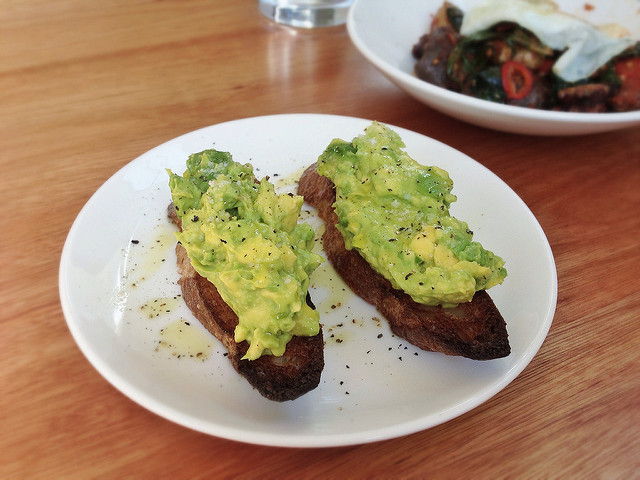
Well, well, well, if it isn’t The Right suddenly noticing that millennials aren’t all avocado-stuffed snowflakes swanning about in oat flat whites and moral certainties. According to The Critic – a publication so right-wing it makes Jacob Rees-Mogg look like a performance artist in drag – young people are struggling. Struggling, I tell you. Nicolas, 30 ans, is in a flatshare. Drinking tepid £7 IPAs. Paying taxes and not seeing the benefit. Who could have caused such a tragedy?

In a piece that reads like Domminic Cummings doing stand-up at a Clerkenwell supper club, The Critic introduces us to poor Nick, a white-collar London professional earning just enough to pay for everyone else’s lifestyles.

This includes Karim, the Somali drug-dealing rapper (yes, really, they went there, with the heavily racially coded name and all); Simon and Linda, those parasitic pensioners with triple-locked cruises and four BTLs in Tooting; and, naturally, the Great British Aid Budget, which apparently is single-handedly hoovering up Nick’s salary and funnelling it to interpretive dance workshops in Mogadishu.

Empathy for millennials

Now, let’s be fair: the piece does at least acknowledge that Nick’s woes are not the result of laziness, fecklessness, or spending too much time making beaded bracelets in Ibiza. No, the article actually suggests he’s being shafted. Not by bad decisions or excessive brunch, but by a rigged social contract that’s got him trapped between spiralling rent, student loan repayments, and high marginal taxes.

This, from The Critic! A magazine that usually reacts to empathy for millennials like Dracula to garlic bread.

This being The Critic, once the violin solo ends, the real agenda kicks in. The villains of the piece aren’t just Simon and Linda, whose decade-long property binge now entitles them to life off the wages of others whilst calling them lazy. No – the real enemy is Karim, who smokes weed, sends money to Somalia, and – worst of all – has not read Jordan Peterson.

Is a shift coming?

It’s all very neat. The narrative, not unlike the inside of Simon and Linda’s rental property, is carefully staged: boomers are gently chided, but never truly blamed. Immigrants, benefit claimants and the international development budget are trotted out as easy scapegoats. You know, the usual suspects. It’s less Rawlsian philosophy and more a Daily Mail comments section pretending to be a hard look at the problems facing young people.

Still, this sort of article is interesting, not because it’s right (it isn’t right about aid and benefits being the source of Nick’s problems, although it has some surprisingly valid points about buy to let landlords), but because it shows something is shifting.

The right is waking up to the fact that their future electoral prospects die with the next hip replacement. They’re starting to realise they’ve spent a decade alienating the very generations who, one day, will hold the balance of power.

Who is to blame?

That should be ringing alarm bells over at Labour HQ. Assuming anyone can hear them over the sound of Keir Starmer earnestly repeating “economic stability” and “tough choices” into a mirror.

While the left dithers, the right is laying the groundwork for a new, seductive narrative: Yes, young person, you are screwed, but don’t worry, we know exactly who to blame. Immigrants. Wokery. Overseas aid. Never, ever Simon and Linda’s untaxed housing empire.

It’s emotionally satisfying, narratively clean, and politically potent. In other words, it’s the Reform Party’s raison d’être.

The left’s natural ally

Meanwhile, Labour continues to court the ghost of Peter Mandelson’s swing voter: a mythical 68-year-old homeowner in Nuneaton who’s worried about Labour hiking his taxes and still undecided on Brexit. In doing so, they’re leaving behind people like Nick or Maddy (someone I have written about before). Maddy is young, educated, working hard in the capital, and still one bad paycheque away from having to move back in with her parents in Market Harborough.

Maddy isn’t on benefits. She isn’t a landlord. She’s not asking for much. But her rent is 65% of her salary, her pension is a joke, and her Hinge date last week ended with a £58 tab and the realisation she’ll never afford a one-bed flat.

She’s the left’s natural ally, socially liberal and economically left, and they’re ignoring her. Labour would rather win the votes of angry former Tory voters in Essex than young people (by which I mean anyone under 45) in London.

A new social contract

The right has started to notice and if the Tories or Reform ever work out how to weaponise Nick’s discontent without touching Simon and Linda’s cruise fund, then the left is in for a very rude awakening.

The social contract is breaking and the only ones writing new terms are the people who lit the match in the first place, but sure, tell us again how tuition fees are a distraction.

Related posts
Sep 16, 2025
Political narratives
The right finally discovers that life sucks for Millennials, but guess who they still blame
Sep 16, 2025
Political narratives
Sep 16, 2025
Political narratives
Union-Jack.jpg
Aug 20, 2025
Political narratives
Who really holds power? The cultural illusion of middle-class dominance
Aug 20, 2025
Political narratives
Aug 20, 2025
Political narratives
Apr 12, 2025
Political narratives
How should the left view the porn industry?
Apr 12, 2025
Political narratives
Apr 12, 2025
Political narratives
September 16, 2025 /Alastair J R Ball
Political narratives
Comment

Who really holds power? The cultural illusion of middle-class dominance

August 20, 2025 by Alastair J R Ball in Political narratives

Class conflict is back on the agenda. Not that it ever really went away, but now it’s front and centre in polite political discourse again, thanks in part to rising inequality, the housing crisis, and the ongoing aftershocks of Brexit and 14 years of Tory rule.

Yet the conversation has taken a turn: we are no longer just talking about the economic elite versus the rest, but about a supposed cultural dominance by the metropolitan, liberal middle-class, a managerial overclass who sip flat whites, tweet their outrage, and supposedly set the boundaries of public debate.

Here’s the thing: when we talk about the “upper class” today, what do we actually mean? Dukes and Duchesses are no longer running the show, at least not explicitly. Nor are they the target of most contemporary political ire. The cultural anxiety and political anger that defines our moment is aimed squarely at the so-called “liberal elite”, aka middle-class professionals with degrees, living in “hub cities” like London, New York or Paris.

A wide spectrum of values

Of course, the large buckets we dub “working-class” or “middle-class” aren’t monolithic. There are plenty of middle-class people who share the supposedly working-class values of being opposed to immigration or ideas like critical race theory. Some of them I went to university with and live in big cities.

The values gap between these two broad archetypes of middle-class people can be described as the difference between young and old, or centrists and lefties, or liberals and socialists. Let’s go with liberals and socialists so that we don’t get bogged down in political science definitions.

Liberals vs socialists

The socialists are more likely to have supported Jeremy Corbyn, be more vocal about migrants and trans rights, and have strong views on Gaza. The liberals are more likely to be hostile to the above and prefer technocratic solutions based around public private partnerships. Probably the biggest divide between the two is what they think of Keir Starmer.

Both groups are opposed to the Donald Trumps and Nigel Farages of the world. Both tend to be Remainers and live in cities. The middle-class values that are supposedly dominant in culture and public institutions are more likely to come from the liberal side of the divide. Yes, there was a trans character playing a limited role in Dr Who, and yes, fringe theatres in London are making noise about Palestinian rights, but this is not the cultural mainstream that’s supposedly dominated by the woke. That’s the domain of the liberals.

Old and young working-class

The working-class also varies a lot. There’s the young Amazon worker in Bradford struggling on a zero hours contract and living in a damp infested flat, and there’s the retired Boomer who bought a council house with right-to-buy in the 80s, sold it on and now lives in a leafy suburb. Neither went to university or lives in a big city.

These two people live very different lives and have very different values. There’s also a wide spectrum of different circumstances and values in between them.

When we talk about working-class values (or middle-class values) they can’t possibly capture these huge differences. To avoid confusing definitions, like ‘Instagram Progressives’, which require a lot of describing and only make sense if you want to target precise political messages at precise groups of voters, we use middle-class and working-class values as shorthand for certain political beliefs. However, what are those beliefs?

Championing “working-class values”

The middle-class values self-actualisation, liberalism, progress, multiculturalism, and globalism. The working-class often values community, stability, belonging, and a strong national identity. These are not inherently better or worse, they are just different.

This creates strange political contortions. Many politicians now compete to champion “working-class values”, whether said politician grew up in a council flat or went to private school. By championing “working-class values” they mean being patriotic, hating immigrants and trans people and slamming the middle-class left. Except, some middle-class and quite well-off people hold these exact same values.

Problems with political solutions

Who speaks for the metropolitan liberals who are suffering? They’re dealing with low wage growth, spiralling rent, raising children when childcare is astronomically expensive, while watching their jobs become more precarious by the year.

They moved to cities for work and, yes, like an occasional craft beer and for migrants to have dignity. These people are not working-class enough for right-wing columnists to stand up for.

In the scramble to represent “real” Britain, whatever that is, we risk leaving behind people who are struggling. They’re not struggling as much as an unemployed single parent in a cockroach infested flat in Whitehaven, obviously, but they’re still struggling with problems that have political solutions. If someone will act.

Class conflict

This is where the whole “debate” starts to unravel. Class conflict isn’t just a naturally occurring phenomenon. It’s structured. Designed. Encouraged. It serves a purpose; and that purpose is division.

When working-class voters are told the middle-class is sneering at them, and when middle-class liberals are told the working-class is reactionary and dangerous, we all forget who actually has the real power: the ultra-wealthy. The asset-owning, hedge-funding, landlord elite. The people who don’t just own property, but shape policy. The ones who benefit when we fight over culture while they offshore their wealth.

This is not to say class doesn’t matter, but we must be precise. Today, class is less about income and more about education, values, and where you live. A system that allows wealthy small business owners to be called “authentic” and struggling graduates to be labelled “elite” is not a system designed for justice. It’s a system designed for distraction.

Vibes based social class

We must also make sure that the arbiters of class are not conservative political commentators who will define working-class as people who hold a set of right-wing values, such as an opposition to immigration, net zero, anything considered “woke” and being nice to anyone at all. Funnily enough these commentators don’t consider raising taxes on the wealthy to improve public services a working-class value, despite the polling showing that it is.

Given half the chance these commentators will define working-class as a general conservative vibe that has nothing to do with wealth, property ownership or political influence. Alan Sugar is working-class because he didn’t go to uni and doesn’t like Corbyn. A graduate on minimum wage in a Shoreditch coffee shop isn’t because they have a friend from Poland who once visited an art gallery, which makes them part of the cosmopolitan global elite.

Whose views get listened to?

The debate over class is important because it determines whose views are listened to or get coverage in news or political debates. It’s easy to dismiss someone as out of touch when they say they’re in favour of open borders and easy to say someone should be listened to due to their humble life experience when they oppose immigration.

That isn’t to say that working-class views are well represented in political debates and the news. Certainly, working-class people are not represented well in politics or the news. Their views are only aired when they agree with the right-wing establishment, from Brexit to trans rights to the environment. When a working-class person calls for higher taxes to pay for better public services, that is dismissed as not practical. The right-wing media is good at elevating stories and voices that represent the working-class only when they’re making traditionally right-wing arguments.

The people who get listened to the most are swing voters in the seats that change hands from Tories to Labour at a general election. These are the people who Starmer has staked everything on appealing to. These were the people alienated by Corbyn. They tend to be socially conservative, homeowning, relatively comfortable, non-university educated and many claim to be working-class. Whether you are working-class if you own a four-bedroom detached house, have a management level job (or run your own business) and don’t live pay cheque to pay cheque is a big question, but defining these people as working-class based on their socially conservative views is vibes-based class.

Who has power?

So no, the middle-class isn’t the dominant class. No, having a Black, gay Doctor Who doesn’t mean liberal values are hegemonic. Not when the government is throwing trans people under the bus to win tabloid headlines to get the votes of people who didn’t go to uni but do own their own home.

We don’t need to play the game of “who is the most oppressed.” We need to remember that class conflict, at its heart, is about power; and the biggest divide remains between those who have it, and those who don’t. For almost all of us, middle-class or working-class, we don’t have power. The billionaire class does.

Related posts
Sep 16, 2025
Political narratives
The right finally discovers that life sucks for Millennials, but guess who they still blame
Sep 16, 2025
Political narratives
Sep 16, 2025
Political narratives
Union-Jack.jpg
Aug 20, 2025
Political narratives
Who really holds power? The cultural illusion of middle-class dominance
Aug 20, 2025
Political narratives
Aug 20, 2025
Political narratives
Apr 12, 2025
Political narratives
How should the left view the porn industry?
Apr 12, 2025
Political narratives
Apr 12, 2025
Political narratives
August 20, 2025 /Alastair J R Ball
Political narratives
Comment

How should the left view the porn industry?

April 12, 2025 by Alastair J R Ball in Political narratives

Can I start with an overshare? I like porn. There, I said it. Now, before you clutch your pearls, let’s acknowledge something: porn, like bars, restaurants, and the music industry, can be an exploitative business. Yet, I frequent all of the above. As do most of us. The world runs on industries that are often deeply problematic, and my moral purity would be far better preserved if I lived in a yurt off the grid. But I don’t. And neither do you.

You’re not the worst person on the left ever if you listen to music from a major label, or occasionally eat at a chain restaurant, or once in a while fire up a tube site to release some tension. However, you should be aware of the practices of the most exploitative companies, such as Tim Martin from Wetherspoon telling all his employees to get jobs at Tesco during the pandemic.

The same applies to porn, an industry that used to have many small publishers but has been taken over by big tech companies and big brands. This has created a power relationship between (sex) workers and employers that anyone who knows anything about neoliberalism will be familiar with.

Critiquing the power of big business

On the left we critique the power of big business. We critique banks, we critique Amazon, we critique Uber. But PornHub? Not so much. Why?

Maybe, it’s because many fear that criticising the porn industry makes them sound like a conservative prude. The left has long prided itself on being the defenders of sexual freedom, the crusaders against repression, the champions of liberal expression. This is all well and good, but does our laissez-faire attitude extend to giant corporations profiting from our collective horniness?

Big tech’s long tentacles

The rise of massive tech platforms has fundamentally reshaped the porn industry, just as it has reshaped journalism, music, and, if you listen to any Millennial or Zoomer, the ability to afford a home. Gone are the days of furtively finding a magazine in a disused railway siding and stuffing it under your mattress.

Now, it’s an all-you-can-stream buffet, algorithmically tailored to your desires (or, more accurately, the desires it has cultivated in you). However, just like Facebook radicalizing your uncle into believing that trans people are coming to abuse the kids his ex-wife won’t let him see, porn platforms use the attention economy to keep users engaged for longer. The results? Extreme or illegal content getting pushed to the forefront.

Shaping desires

PornHub, and other tube sites, don’t just reflect people’s desires; they shape them. As feminist writer Helen Lewis put it:

“Pornhub pushes featured videos and recommendations, optimized to build user loyalty and increase revenue, which carry the implicit message that this is what everyone else finds arousing—that this is the norm. Compare porn with polarized journalism, or even fast food: How can we untangle what people ‘really want’ from what they are offered, over and over, and from what everyone else is being offered too? No one’s sexual desires exist in a vacuum, immune to outside pressures driven by capitalism. (Call it the invisible hand job of the market.)”

So when PornHub’s algorithms nudge users toward extreme or illegal content, it isn’t just fulfilling a demand, it’s manufacturing one. This raises the question: are we defending people’s sexual freedoms, or are we defending the right of surveillance-capitalist platforms to dictate what our desires should be?

 Porn’s not special, it’s just another exploitative industry

Here’s a fun game: take any of the following problems: lack of job security, overpowered big business and the rise of unregulated gig work, and apply them to any other industry. Sounds familiar, right? That’s because these are the exact same problems the left rages against in every other sector. The fact that porn involves sex shouldn’t distract us from the fact that it’s, fundamentally, another industry being warped by the pressures of unchecked capitalism. 

We do hold other tech platforms to account. Facebook and YouTube have faced serious scrutiny over their role in radicalization, misinformation, and content moderation failures. Or they did until they decided they didn’t like this scrutiny and got rid of it by buying a nationalist former president turned presidential candidate. All it cost was allowing the far-right free reign over these company’s ability to shape public discourse, bending the knee to an authoritarian bully and boatloads of cash.

PornHub has somehow escaped the same level of criticism, despite running on the same exploitative business model. It’s almost as if the left, in its eagerness to defend sexual freedom, has forgotten to apply the same scrutiny to the corporations profiting from it.

The PornHub problem

Enter The Children of PornHub, written by Nicholas Kristof and published by the New York Times. It’s a piece of investigative journalism that sparked a moral panic. The article detailed harrowing cases of underage and non-consensual videos being uploaded and monetized on the platform.

No one, absolutely no one, would argue that this is acceptable and certainly PornHub, like most big businesses, have been slow to respond to problems that could hit their bottom line. Increased scrutiny of the vast amount of content that gets uploaded is just not cost-effective. Facebook and Twitter had the same issues, before they decided to embrace far-right propaganda.

However, the problem of these images isn’t just limited to PornHub. In Sheelah Kolhatkar’s article, The Fight to Hold PornHub Accountable, following up on Kristof’s, Mike Stabile, of the Free Speech Coalition, said: “This isn’t a Pornhub-specific problem or an issue where Pornhub is particularly negligent. If you look at the vast majority of child-sex-abuse material being shared, it is not on porn sites, it’s on sites like Snapchat and Facebook. This is about stopping pornography.” Yet so far the outrage has focused on PornHub and not bigger tech platforms whose main stock in trade isn’t sex videos.

Is the problem the internet?

This does raise a thorny question: is this a problem with PornHub, or a problem with the internet? After all, revenge porn circulates on WhatsApp. Crimes happen on platforms across the web, from copyright infringement to drug dealing. Hell, you can order a hitman to kill someone on the dark web. Allegedly. I didn’t look.

So, is the issue here the medium, or the crime itself? PornHub, like YouTube, makes money off its content, and in the attention economy anything that keeps users watching is good for business. Including, as we’ve seen, horrific racism, violence and illegal content.

The same logic that leads YouTube’s algorithm to push people toward far-right conspiracy theories is what drives PornHub’s algorithm to push porn that contains images of underaged girls or content that was ascertained or shared non-consensually. Platforms don’t care about ethics; they care about engagement.

Is this a political issue or a criminal issue?

No one - not even the most sex-postive feminist or pro big business doing whatever the fuck it wants libertarian - would argue that what happened to these women and girls is fine. This one some level means this isn’t a political issue.

I don’t want to dismiss or trivialise the abuse these women and girls suffered by saying there isn’t a power dynamic at work, but everyone is anti-rape and child sex videos. The faults highlighted in Kristof’s article are the result of criminals breaking PornHub’s rules. Surely, this is a matter for the police, not the platform. A crime has been committed.

The worse stories in Kristof’s article are about suicides due to people sharing videos without consent. This could be done on any platform, WhatsApp or SnapChat or PornHub. These are of course tragedies, but is this a problem that PornHub is wholly responsible for?

Making it easier

Yes, on some level. PornHub is responsible because the platform does make it easy (or easier) to commit these crimes due to allowing vast quantities of unmoderated content from unverified users onto the platform. I suppose owning a car makes it easier to commit some crimes, such as bank robbery, but we do make cars harder to access than adding content to a tube site.

PornHub also makes money off these videos, so it has an incentive to keep them out there. In the attention economy, platforms need content that holds users' attention. If extreme or illegal content does this better than normal porn, then the platforms need it to keep people watching the ads they make money from. This is the same problem that YouTube has with the far-right.

Although these are people abusing the system and breaking the platform/company rules, the business models (and power) of big companies and tech platforms make the problem worse. This is what makes this a left-wing political issue.

The moral panic machine

Of course, once a scandal like the one that Kristof’s article caused breaks, it’s immediately co-opted by the usual suspects, groups that have been anti-porn from the get-go. For example, Exodus Cry, who helped Kristof meet some of the sources in his Children of PornHub article. Kolhatkar wrote a detail description of Exodus Cry in the follow-up to Kristof’s article:

“Exodus Cry was founded around 2008 by Benjamin Nolot, a filmmaker and an activist who grew up in Southern California … Exodus Cry has taken aim not only at nonconsensual pornography but more broadly at what it calls ‘porn culture,’ which, it argues, leads to the hypersexualization and objectification of women and makes sex trafficking and other crimes more likely to occur. The group’s tax filings state that it is ‘committed to abolishing sex trafficking and the commercial sex industry,’ which would include legal activities such as producing pornography and performing in strip clubs.”

Exodus Cry wants to abolish the porn industry in its entirety. That includes those nice independent producers of sex-positive and kinky porn that I like. The small batch craft brewery of the sex streaming world. Also, as the name suggests, they're religiously motivated to do this. This suggests that their interest in the victims is more a tool to achieve their goals of censoring the porn industry.

Anti-liberal narrative

Exodus Cry, and other groups like it, are not only against the non-consensual and underaged content highlighted in Kristof’’s article, which PornHub has been slow to take down. They claim that all porn is coercive, objectifies women, and normalises misogyny. These arguments have been echoed by anti-porn feminists like Andrea Dworkin and Catharine MacKinnon for decades.

Exodus Cry isn’t the only Christian right-wing organisation using this narrative to attack the porn industry and get attention in the attention economy via “think of the children” outrage. These groups are using this case to advance their anti-liberal narrative that is anti-LGBTQ+ rights, anti-sex work and anti-porn. That’s all porn.

Again, a problem with big business

While it’s easy to dismiss these groups as pearl-clutching reactionaries, they do muddy the waters of this debate. If you frame the issue as “PornHub is bad,” suddenly you’re playing into the hands of people who want to shut down all porn. That’s not what most of us on the left want. Even the survivors of PornHub’s worst failures aren’t anti-porn. As one survivor told Kristof in his article: “I don’t want people to hear ‘No porn!’ It’s more like, ‘Stop hurting kids.’”

My counter is that mainstream porn does the bad things highlighted in Kristof’s article, just like Stella tastes like shit and makes people violent and the MCU is thinly veiled propaganda for the US military. That doesn’t mean all film and beer is bad. Just the stuff made by big business to cater to the whims of normies.

The uncomfortable middle ground

So, where does that leave us? In a deeply unsatisfying place, frankly. Like your WiFi giving out as soon as you fire up a tube site. Porn, like all industries, can be good and bad. We should absolutely defend people’s right to explore their sexuality or to monetize it.

There’s a right to be a sex worker if you want to. No one should be forced into sex work, obviously, but no one should be forced to work in an Amazon warehouse either. If someone does choose to do sex work, or warehouse work, then they are entitled to the same rights and guarantees of a decent wage and conditions as any other worker. Sex work is work.

The left should recognize that massive corporations are exploiting sexy freedom for profit, often at great cost. The reality is, PornHub isn’t incentivised to protect its workers or its users, it’s incentivised to make money: even if that means looking the other way when illegal content spreads on its platform. 

Sex is good, but unchecked capitalism is bad

Personally, as a porn-consuming denizen of the internet, I feel the left should support the right to make porn as people are allowed to be free and explore their sexuality, but we need to remember these platforms and big businesses are not incentivised to look after their workers or protect the public from dangerous content.

The pressures of big tech, surveillance capitalism, algorithms deciding what we see and aggressive market competition is distorting what is seen as natural sexuality and is creating a situation where large companies are exploiting people.

There were some suggestions to improve PornHub and the industry in Kristof’s article. He wrote: “I don’t see any neat solution. But aside from limiting immunity so that companies are incentivized to behave better, here are three steps that would help: 1.) Allow only verified users to post videos. 2.) Prohibit downloads. 3.) Increase moderation.” None of these will fix everything, but they’d be a start. The problem isn’t porn. The problem is big business, and the solution isn’t to abolish porn it’s to hold it to the same standards we demand from every other industry.

So let’s have some nuance. Let’s criticize exploitative business practices without feeding into anti-sex narratives. Let’s acknowledge that sex is good, but unchecked capitalism is bad. Most of all, let’s remember: just because we like something doesn’t mean we shouldn’t critique it.

Related posts
Political narratives
The right finally discovers that life sucks for Millennials, but guess who they still blame
Political narratives
Union-Jack.jpg
Political narratives
Who really holds power? The cultural illusion of middle-class dominance
Political narratives
How should the left view the porn industry?
Political narratives
April 12, 2025 /Alastair J R Ball
Political narratives
Comment

Behold the smartest people in the room: The Waterstones Dads

March 28, 2025 by Alastair J R Ball in Political narratives

Oh, Waterstones Dads. The khaki-clad infantry of intellectual self-satisfaction. You know the type: armed with a stack of Very Serious Non-Fiction about geopolitics, economics, and, naturally, the failures of socialism, they march into pub chats and social media threads alike, convinced that they’re the only ones who see the world as it truly is, because if there’s one thing these midlife epistemic warriors hate more than emotional arguments, it’s fiction.

To be clear, there’s nothing inherently wrong with reading non-fiction. In fact, it’s quite useful if you’re interested in learning about the world. Some of my favourite books are non-fiction. I can strongly recommend Leon Neyfakh’s The Next Next Level, or No Less Than Mystic by John Medhurst, or Dictatorland by Paul Kenyon. They’re great reads and opened my mind in one way or another. 

The problem is that Waterstones Dads don’t just read non-fiction; they treat it like a divine revelation. To them, the truth is simple, obvious, and discernible by anyone willing to sit down with the right books (usually written by authors who are from some kind of think tank who have absorbed the entire cannon of conventional wisdom and have no flair to their prose).

Who are Waterstones Dads?

So, you may be wondering what a Waterstones Dad is. The thing is, you already know. They’re the sort of guy who reads a lot of books with names like The Rise of China and then feels like they are an expert on all things related to the rising superpower, because they have the facts. They are quick to criticise others for having an ideological worldview because what they believe doesn’t end with an ism, but are completely blind to the fact that they are as doctrinal - in a neoliberal way - as an angry early twenty something on campus cosplaying Citizen Smith.

This mindset, that they alone are armed with unfiltered reality while others are blinded by ideology, is one of the most subtly dangerous forces in politics. It leads to easily dismissing anyone who disagrees with you. Why engage with those pesky lefties who want to discuss inequality, capitalism, gender equality, or anything more emotional than interest rates? They’re just *feeling* their way through the world, after all. Unlike you, the intellectual who sees reality for what it really is.

The thing is, everyone thinks they see the world clearly. It’s a comforting delusion shared by conspiracy theorists who believe the Queen is/was an alien lizard and by smug centrists who believe that anyone to the left of Keir Starmer is a Marxist. The difference is that the Queen-is-a-lizard crowd can usually be found ranting on obscure forums, whereas Waterstones Dads are often found in board rooms, current events panel discussion shows and in the profile of “hero voters” who politicians are desperate to pander to.

Open to ideas

Speaking of debate, isn’t it funny how these self-proclaimed champions of open-mindedness are always more open to ideas from the right than from the left? They’ll gladly entertain a nuanced discussion about, say, the merits of free-market deregulation, or why we can’t do anything about climate change (or occasionally why the gender pay gap isn’t real) but suggest that perhaps capitalism has some inherent flaws, and suddenly they’re less open-minded. “Let’s have a debate”, they say, but they don’t listen and never change their minds. Why would they? They already know all the facts.

Their disdain for fiction is where things get truly fascinating. Fiction, to the Waterstones Dad, is nothing more than emotional nonsense. Real learning, they believe, comes from non-fiction, or more accurately the specific type of non-fiction they read. It’s easy to dismiss novels when your bedside table is stacked with titles like The Economist’s Guide to Saving the World with Graphs, or How to Think Like a Very Clever Person Without Actually Trying, or Sapiens, but here’s the thing: fiction teaches you to connect with other people. Whether from the past, the future, or other cultures. It helps you realise that there are more perspectives than just your own.

Empathy isn’t emotional fluff

In a world increasingly defined by division and misunderstanding, empathy isn’t emotional fluff, it's a survival skill. Reading non-fiction might teach you about the mechanics of the economy, but fiction helps you understand the lived experience of what a 9% rise in inflation is like.

It’s one thing to know the statistics about refugee crises; it’s another to read a novel that brings you into the life of someone fleeing their home and facing hostility everywhere they go, like Exit West by Mohsin Hamid. Waterstones dads could use a little more of that perspective. Less Why Nations Fail, more How People Feel.

The smartest guys in the room

Let me be serious for a moment. The title above references the film Enron: The Smartest Guys in the Room. It’s a great, non-fiction, film that is really worth a watch. There are two main things that stand out to me about the film.

First, all these people who thought they were smarter than everyone else - and they had a lot of credentials to prove it, Princeton and all that - made a company that collapsed in contact with reality. Secondly, although many of them made huge amounts of money out of being the smartest men in the room, they were ultimately the stooges of capitalism in that all their efforts made more money for people with even more wealth and power than them.

Understanding the world

Waterstones Dads may think that they’re super smart because they know that if we tax the wealth on billionaires we might also tax the pensions of ordinary workers saving for their retirement - valid point that bears more debate - but ultimately Waterstones Dads, in their semi-detached houses in Leicester, full of books, are far closer in terms of power to students marching for a free Palestine than they are to billionaires like Elon Musk - whose politics they claim to detest but who they ultimately end up on the same side of against the woke socialists.

So, dear Waterstones dads, by all means, keep reading your Very Important Books, but maybe slip a novel in there once in a while, because if there’s one truth worth embracing, it’s that understanding the world requires more than just knowing how it works. It requires knowing how it feels, and for that, you’ll need more than just facts, you’ll need a little bit of fiction.

Related posts
Political narratives
The right finally discovers that life sucks for Millennials, but guess who they still blame
Political narratives
Union-Jack.jpg
Political narratives
Who really holds power? The cultural illusion of middle-class dominance
Political narratives
How should the left view the porn industry?
Political narratives
March 28, 2025 /Alastair J R Ball
Political narratives
Comment

Russell Brand isn’t the only person on the hippy to alt-right pipeline and the left should be aware of this

February 18, 2025 by Alastair J R Ball in Political narratives

Ah, Russell Brand. Once a left-wing celebrity, cheeky chappie comedian and new age guru, who edited an issue of the New Statesman. Now he’s a cautionary tale of what happens when fame, conspiracy theories, and a desire to hold onto an online following collide in a perfect storm of social media madness.

In 2023, very serious allegations emerged about the erstwhile spiritual revolutionary as many women accused him of sexual assault and rape. This burned any credibility he had left, but before that he had already dived down a very dark rabbit hole. How did he get from interviews with Jeremy Paxman to being too edgy for YouTube?

The brand we knew

Let’s take a stroll down memory lane, shall we? Back in the heady days of 2013 Brand was an icon for those positioned somewhere to the left of Labour. In the Ed Miliband era - remember those halcyon times - when Labour flittered between attacking the effects of austerity, insisting it was necessary and denigrating student protesters, Brand was a charismatic voice shaking up the Labour-Liberal-Conservative consensus.

He made people on the left think that politics could be radical again; until it became clear that all his revolutionary musings were about as shallow as a puddle of spilt beer, and all this was just the warm-up act for his grand performance as an internet sensation.

Middle-class new age hippyism with a tinge of the paranoid

I’ll admit, I was never a fan of Brand’s particular brand of cynicism mixed with spiritual hand waving, which sounded like it was cribbed from the back of a book called “Pagan Meditations.” His approach always struck me as middle-class new age hippyism with a tinge of the paranoid - “They’re trying to control your minds!” - than a program for social change. He talked as if all it took to topple neoliberalism was for us all to align our chakras.

It’s all well and good to meditate on the state of the world, but I’d rather be wielding a picket sign than chanting about the cosmos at a psychedelic retreat. My previous critiques of Brand are well documented.

The oddly neoliberal politics of spiritualism

It quickly became apparent that Brand was less interested in changing the world and more interested in getting attention. He is, at heart, a tabloid celebrity.

Remember when he was a mainstream comedian and actor, in films such as Get Him To The Greek? Those days seem so far away now. His infamous “I've never voted, never will” quip was nothing more than a cynical, defeatist ploy to be a rebellious enfant terrible, rather than a serious critique of the system. Spoiler alert: it didn’t change anything.

I can understand the appeal of not voting for the identikit mainstream parties, but Brand’s wholesale rejection of everything ended up endorsing nothing. It was oddly neoliberal in the end. Collapse into yourself, disconnect from wider social movements and focus on your spiritual awakening rather than pursuing change. At least Jeremy Corbyn articulated how society could be different, and he ended up inspiring more people.

Going down the alt-right rabbit hole

Brand’s desire for attention made him a tabloid sensation, then a comedian come TV presenter come radio host - remember the whole Sachsgate thing - then a lightweight political thinker, and finally a conspiracy spreading social media personality. For Brand, this journey has led him to the murky waters of the alt-right.

How did we get here? Well, he used his old-fashioned TV and tabloid fame as a springboard to internet stardom, but fame on social media is a different beast to the type of fame you get from shagging models and being publicly on drugs.

To maintain his online reach, Brand must pander to the algorithms that rule our digital lives and control our information diet, feeding them outrageous content like a barman furiously pouring beer at a pound-a-pint night. He’s caught in an arms race with platforms designed to find the most extreme thing that will hold our attention. Be nice to each other and make the rich pay their taxes won’t cut it. Casting doubt on vaccines will.

From pagans to Cottagecore

And here’s where it gets truly murky. In the quest for clicks and likes, Brand has become a veritable buffet of attention-grabbing conspiracy theories. Whether he believes these wild tales or is merely using them to get views is up for debate, but one thing is clear: he’s committed to feeding the social media algorithm demon like a starved gremlin.

The place his politics have ended up reminds me of the toxic blend of ludditeism, belief in magic and anarcho-primitivism of some of the hippy-pagan types I met at university. They distrusted modernity so much they’d have traded their smartphones for a life in a yurt, celebrating the noble savage while ignoring all the conveniences of the 21st century. Conveniences such as modern medicine, sanitation, time saving devices and notions of equality.

This has its very online counterpart in the Cottagecore movement that celebrates the romantic ideal of living in nature and being self-sufficient, whilst ignoring how much back breaking labour is needed to grow enough calories to keep a person alive. When combined with the radicalising attention arms race of social media, this back-to-nature rebellion has been extremified online, creating a strange breed of left disillusionment that’s now playing footsie with the far-right.

When it’s not okay to be contrarian

They’re the type of lefties who doubt vaccines because they’re made by big pharma, think Vladimir Putin is standing up to Western Imperialism, RFK Jr is just asking questions, and that Jordan Peterson is just giving smug liberals a slap in the face.

Obviously, there are important critiques of how big pharma distributes the vaccines it makes, and Western Imperialism wasn’t consigned to the dustbin of history in the 19th century. There is also nothing wrong with following any religion - from Christianity to something new age or pagan - or longing for the romantic ideal of living off grid in a cottage. But a lot of well-meaning lefties have gone from being sceptical of the mainstream media to wholeheartedly and uncritically swallowing whatever the furthest thing from the mainstream media says. Brand is just a high-profile example of this.

For Brand, it’s been a slippery slope from speaking on spiritual matters to cozying up with alt-right ideologies. He’s followed his audience down this rabbit hole, and here we are, left with an online alt-weirdo who seems to thrive on being a contrarian. It’s fine to be a contrarian when you’re winding up an old TV celebrity - although when I heard the Sachsgate clip I thought it was more mean than funny - but it’s not okay when you’re spreading doubt about vaccines.

Riding the algorithm tiger

While I can’t say I ever bought into Brand’s blend of spiritualism and politics, the whole meditate your way to class consciousness thing, I can say it pales in comparison to the darker truth: the allegations of abuse.

Therein lies the crux of the matter. While I may not agree with his philosophical meanderings, it’s far worse to be an abuser. His doubling down and denial are textbook moves for an alt-right celebrity who needs the spotlight, regardless of the cost. Never apologise. Never admit you are wrong. Deflect all accusations as the establishment trying to destroy you. Brand is acting no different to Trump when the allegations about the current president surfaced in 2016.

Why now?

Why bring this all up now? Well, it’s partly because I didn’t get around to writing this in 2023 when the allegations first surfaced. However, it’s mainly because this slightly hippy left to alt-right pipeline is still very much a thing. These allegations might have finally killed Brand’s career, and shredded the last tattered remains of his credibility, but there are still many people riding the algorithmic train, farming radicalising content to the hippy leftie set. They’re just less well known because they didn’t used to be on TV.

I encourage everyone to be sceptical of what the mainstream media says, and what centrist politicians and big business pushes. That includes Meta and Alphabet, via their Facebook and YouTube products, even if you agree with the message someone is spreading via these tech platforms. However, just because someone is criticising your enemy doesn’t mean they’re your friend.

There’s a short walk from ‘maybe alternative medicine has some positive effects, meditation is good for you and my spiritual beliefs aren’t a mainstream religion or mercilessly materialistic atheism’ - shout out to my mercilessly materialistic atheist buddies - to making videos about how Putin is fighting the New World Order.

Keep your wits about you

Keep your wits about you and remember that Putin is still an Imperialist, modern medicine does work, and we would not be better off living a hunter gatherer existence even if it would solve the climate crisis. I shouldn’t have to say this, but I didn’t think people would believe Brand’s “don’t vote for anyone schtick” was anything more than attention grabbing cynicism. Including the New Statesman.

When in doubt, remember to log off occasionally. Celebrities and tech companies are united in their desire to push anything that will hold your attention. Your attention is all they care about. Not whatever it is YOU care about, from the benefits of a vegan diet to the victims of Western Imperialism. Now I’m going to take my own advice and back away from the computer.

Related posts
Political narratives
The right finally discovers that life sucks for Millennials, but guess who they still blame
Political narratives
Union-Jack.jpg
Political narratives
Who really holds power? The cultural illusion of middle-class dominance
Political narratives
How should the left view the porn industry?
Political narratives
February 18, 2025 /Alastair J R Ball
Political narratives
Comment

Steve Rayson’s Collapse of the Conservatives shows how Labour benefited from voters’ volatility but may also suffer from it

December 03, 2024 by Alastair J R Ball in Political narratives

As the year draws to a close, we look back on a momentous UK general election that reshaped the political landscape. Labour achieved a historic landslide victory, reversing its fortunes less than five years after a crushing defeat, while the Conservatives suffered their worst loss since 1997. Now, as the dust settles, we can begin to comprehend the forces behind this political earthquake.

The most comprehensive exploration of the 2024 election’s outcome comes from Steve Rayson in his new book, Collapse of the Conservatives: Volatile Voters, Broken Britain, and a Punishment Election. This deeply researched account traces the roots of the Conservative Party’s collapse, beginning with Boris Johnson’s tumultuous tenure and the seismic challenges of the Covid-19 pandemic.

Rayson meticulously examines the past five years of political upheaval, detailing the factors that turned voters against the Tories and culminated in their catastrophic defeat.

Nothing works anymore

Central to the book is the emergence of a clear political narrative the spread of which led to the Tories’ downfall: “Nothing works anymore because the Conservatives are incompetent and should be punished.” Rayson identifies three core elements of this narrative:

  1. Nothing works anymore – the collapse in standards in key public services

  2. Conservatives are incompetent – the perception that recent Tory governments have been riddled with mismanagement.

  3. The Conservatives should be punished – a voter backlash fuelled by frustration and anger.

Drawing on an impressive array of focus group data, polling, and analytical studies, Rayson paints a comprehensive picture of how voter attitudes evolved. He charts the erosion of the Conservatives’ reputation for economic competence, the rise of Reform UK siphoning off traditional Tory voters, and the growing centrality of migration as a political issue.

Voter volatility

What makes this political moment unique, as Rayson argues, is the volatility of modern voter behaviour. Traditional coalitions no longer hold, with voters increasingly willing to switch allegiances. Rayson quotes pollster James Kanagasooriam’s apt summary of this development: “Political coalitions these days are more like sandcastles—impressive but liable to be swept away.”

From a left-wing perspective, my key takeaway is that Collapse of the Conservatives emphasises that the Tories lost this year’s election rather than Labour winning it. As Rayson notes, Keir Starmer benefited from an electorate overwhelmingly intent on punishing the Conservatives. However, this presents a precarious mandate for Labour. Starmer must now deliver on critical issues, such as NHS waiting times and economic growth, or risk losing support in an era of widespread political distrust.

Rayson underscores this fragility: “Despite its landslide victory in seats, the Labour Party’s vote share was still fragile and the fragmentation of its coalition was visible in the seats it lost to independent candidates and the Greens.” The decline in Starmer’s approval ratings post-election further highlights the challenges Labour faces in maintaining its coalition.

Jenga tower

The book’s final chapters look to the future, particularly the election of Kemi Badenoch as the new Conservative leader. Rayson argues that the Tories face a daunting task in rebuilding trust on economic issues, countering Reform’s rise, and navigating an electorate increasingly resistant to stable political loyalties.

He warns that Labour’s current majority could prove ephemeral: “The Labour government’s majority has been compared to a Jenga tower, which has been raised high by taking blocks out of the foundations. The result is a tall tower with a base full of holes that could collapse very quickly.”

Collapse of the Conservatives is essential reading for anyone seeking to understand the political landslide of 2024. However, my main take away from reading it is that despite the many political shocks of the last four years, the volatility of modern politics has not been resolved by this year’s general election and we could be in for many more political surprises in the future.

Collapse of the Conservatives: Volatile Voters, Broken Britain and a Punishment Election by Steve Rayson is out today and can be purchased from Amazon.

Polling station image taken by Rachel H and used under creative commons.

Related posts
Political narratives
The right finally discovers that life sucks for Millennials, but guess who they still blame
Political narratives
Union-Jack.jpg
Political narratives
Who really holds power? The cultural illusion of middle-class dominance
Political narratives
How should the left view the porn industry?
Political narratives
December 03, 2024 /Alastair J R Ball
Political narratives
Comment

The rhetoric from mainstream politicians on migration caused these riots

August 13, 2024 by Alastair J R Ball in Political narratives

I’m actually a little surprised that it took this long for the far-right to start race riots fuelled by social media, considering how much outrage exists on the right and how mainstream politicians have mercilessly stoked this rage. With Daily Mail front pages decrying immigration, Tory Prime Ministers pledging to stop the boats and Nigel Farage and Tommy Robison becoming accepted figures of discourse on the right, it was only a matter of time.

Throw into the mix social media platforms that seem to take as their maxim Mark Twain’s statement that: “A lie can travel halfway around the world while the truth is still putting on its shoe.” (Although he probably never said that quote.) Then add in horrendous attacks on children, and we have the ideal circumstances for the kind of destruction that has been filling the headlines. 

These riots are a direct result of the increasingly angry rhetoric on the right about immigration, multiculturalism and wokeness. Continually stoking anger plays into the hands of the most violent members of the political fringes. Now the mainstream right has discovered the perils of flirting with the far-right and are quick to distance themselves. This is despite years of them deploying angry rhetoric at migrants, woke snowflakes (by which they mean immigration lawyers) and elites (by which they mean people who read books, not billionaires or Westminster politicians).

The result of stoking white racial anger

Mainstream politicians of the right, and at times the centre, feel that they can stoke this anger to mobilise people to vote for them when they want, before putting the anger back in a box and forgetting about it when they are safely in power. Boris Johnson did this to make himself Prime Minister. There is also an entire ecosystem of right-wing talking heads adding to the fires to get social media attention and have journalists write about them. Witness Farage’s gig on GB News or Robinson turning himself into a social media personality.

Well, you can’t raise the pressure of white racial anger, use it to drive you forwards when you want, and then vent it safely when it gets too much. Racial hatred is not like a steam engine. It tends to explode in unexpected ways, like a homemade bomb. These riots are the result. Solicitors offices set on fire. Migrants attacked. The residents of asylum seeker hotels terrorised. Not to mention police attacked, destruction rained on town centres and people scared.

The tide of people angry about immigration and people of colour has gotten so extreme that even mainstream centre-left or centrist politicians indulge it. Keir Starmer has talked about the need to cut immigration. Ed Miliband had his controls on immigration mugs, Gordon Brown had ‘British jobs for British workers’ and Tony Blair had the rhetoric around bogus asylum seekers. Even Jeremy Corbyn was more interested in talking about NHS privatisation than he was about strongly challenging the discourse around migration.

Standing up to the tide

I guess centre-left or centrist politicians feel that they cannot argue back to this tide. Or they feel it’s elitist to walk into a Wetherspoons in Workington and tell people that they should be happy that people want to flee Syria and come here, it shows this is a great nation, and they will enrich our culture. Freddie Mercury, Mo Farah and all that.

So instead of arguing with these people’s views on race and migration, they pander to it as much as they can stomach and then change the subject. Starmer can crack heads all he wants to show that he’s tough on violent disorder, but without challenging the narrative that led to these riots, nothing will change.

At least we now know where the line is drawn for right-wing anti-immigration shit heads. It’s when you throw bricks at the police. That, mainstream politicians won’t allow. That, they will stand up to.

“Legitimate concerns”

Everyone is acting like a load of people lost their minds this summer, and I have seen these riots blamed on everything from warm weather to not enough football on TV. Almost no one is acknowledging where this anger came from. People didn’t take up race rioting to fill the gap between the Euros finishing and the Premier League resuming - these far-right thugs have been organising along racial lines for years.

They have been exploiting the cover given to them by mainstream politicians and the right-wing press to amplify the “legitimate concerns” about immigration into a movement that wants to make Britain a white nation; aided by social media platforms that give oxygen to extreme attention grabbing content, and easy access to audiences for the type of people who will stoke racial hatred and white resentment to get a following (Katie Hopkins, Tommy Robinson, etc).

Make no mistake: this isn’t about people concerned about migration figures, or migrant’s effects on wages, or Polish corner shops appearing in their communities or grooming gangs, or values, or whatever other reasonable sounding thing they claim their dislike of migrants is about. These riots (and the wider anti-migrant discourse) is about keeping Britain as white as possible in this era of globalisation. The whiteness of the country is not a legitimate concern. The rest is cover for this white racial agenda, or being a useful idiot for it.

Making sure this doesn’t happen again

If Starmer, Labour and those on the right who have condemned these riots want to stop them happening again then they need to stop adding to the pressure that recently exploded by challenging the narrative that migration is always bad and that we should seek to reduce it.

This will be uncomfortable for politicians not used to taking a moral stand (or at least one that they’re sure that the small C conservatives swing voters will support) but it needs to be done to prevent further violence. It’s easy for politicians to stand up to Just Stop Oil, it’s harder to stand up to that guy in Wetherspoons with his “legitimate concerns.” However, that guy is spreading fake news about migrants on Facebook today and might try and burn down a hotel full of people tomorrow.

If we want to stop these riots from ever happening again then we need to stop fanning the flames of racial hatred and white grievance, which is where anti-migrant rhetoric and policies - from the left, right and centre - is heading. The alternative is to see violence like this again. Soon. And worse than now.

Related posts
Political narratives
The right finally discovers that life sucks for Millennials, but guess who they still blame
Political narratives
Union-Jack.jpg
Political narratives
Who really holds power? The cultural illusion of middle-class dominance
Political narratives
How should the left view the porn industry?
Political narratives
August 13, 2024 /Alastair J R Ball
Political narratives
Comment

The discourse around extremism is based on hand waving at best and Islamophobia at worst

March 19, 2024 by Alastair J R Ball in Political narratives

What is an extremist? It’s hard to find an answer that we all agree on. The only thing we can all agree on is that extremists are bad. Whatever you believe, regardless of political ideology or religious belief, everyone thinks that being extreme is a bad thing. 

In Britain, the issue has come to a head recently as the government, flayling around to find someone to demonise as it becomes increasingly unpopular, has unveiled a new definition of extremism. Ostensibly this is to tackle rising levels of hatred and the growing threat of violence, but more likely it's to make it legal to lock up Palestinian solidarity protesters and climate activists.

The new definition

The new definition is long and complex. It will be used for legal and policy making purposes, mainly to prevent extremists getting access to state funds. It won’t be used in political arguments or general discussion, but its unveiling has led to more discourse around the problems of extremism and accusations that some people tolerate extremism.

The question I want to ask is: who is an extremist? Everyone knows who they think are extremists, the people whose views are too different to their own; however, no one can put forward an accepted definition of what an extremist is. If some communities or ideologies tolerate extremism, then we need to know what an extremist is to deal with the problem. As we all agree extremism is a bad thing.

Focus on Islamic extremism

Let’s be honest, the recent discourse around extremism is mainly focused on Islamic extremism, the favourite bogeyman of Western governments wanting to make a power grab at the expense of our civil rights. This time there’s a side order of rage aimed at Just Stop Oil and the like, who do annoying things like closing bridges and reminding us that we’re hurtling towards a climate catastrophe.

Let’s return to the question I want to answer: what is an extremist, Islamic or otherwise? What makes someone extreme, compared to passionate or devout? Recently, Tim Stanley wrote in The Daily Telegraph that Baroness Warsi asked him to define what an Islamist was. His response was “I know perfectly well what it is.”

Not good enough

This doesn’t fill me with confidence. We need a better definition. Even extremists think extremism is bad, as no one thinks they are an extremist. They might think that people they agree with are unfairly considered to be extremists, such as those on the left who are accused of being Communists for saying we should have a wealth tax to fund more healthcare provision (especially in America), but we all agree that the real extremists are too extreme to be allowed a voice in public debates.

If we all agree that extremists are so bad they must be ostracised, then we need to know exactly what an extremist is and which views are not allowed. Stanley’s internal compass, or anyone else’s, isn’t good enough. The definition also needs be fair, and not deliberately constructed to clamp down on one religion or political belief’s activities as that would be prejudiced.

Different religions and football teams

An Islamic extremist can’t be someone whose views become completely fine (or silly) if you substitute “Islamic” for “Christian” (or “Arsenal fan”).

Take this for example: “An Islamic extremist is someone who thinks that society would be better if everyone in Britain was a practising Muslim.” On paper that sounds like a workable definition of Islamic extremism. Certainly, someone who wants to make everyone think like they do is opposed to freedom of thought, tolerance and diversity.

Okay then, what about this: “A Christian extremist is someone who thinks that society would be better off if everyone in Britain was a practising Christian.” This definition would cover several writers at national broadsheets or political magazines, thus meaning Christian extremists have a powerful position in the media. This must mean that wanting everyone to be a practising Christian is fine, as the one thing we all agree on about extremists is that they are bad and should be purged from public life.

Finding a definition that works

Therefore, the definition of “A [blank] extremist is someone who thinks that society would be better off if everyone in Britain was a practising [blank]” cannot stand. It also doesn’t stand up to being made fun of. Consider: “An Arsenal extremist is someone who thinks that society would be better off if everyone in Britain was an Arsenal fan.” This is clearly silly, but someone with this view wouldn’t be chased out of public life.

The problem might be that the definition of “A [blank] extremist is someone who thinks that society would be better off if everyone in Britain was a [blank]”. It’s too restrictive. However, I can’t think of any definition of Islamic extremism that doesn’t become fine if you substitute “Islamic” for “Christian” or silly if you substitute “Islamic” for “Arsenal fan.”

A problem in itself

The definition can be made to work if we add violence into the mix. However, the way we talk about extremism makes it sound like a problem in itself, not a symptom of a different problem (i.e. people being violent). For example when Prime Minister David Cameron said that he wanted to crack down on non-violent extremism, which made it sound like extremism is the problem, whether violent or not, and the violence flows from extremism, not the other way around.

If an Arsenal fan killed a Spurs fan over their team allegiance, we would say that is extreme and thus bad. If this did happen, we would blame said Arsenal fan’s mental health or something similar. The same if a Christian shot someone because of their religious beliefs.

Extremism is not talked about as if it is the product of bad mental health or people who are violent looking for an outlet. Non-violent extremists are still bad. If extremism was a problem caused by something else, then we wouldn’t need to tackle extremism; or come up with a new definition of it. We would just need to tackle whatever the root cause was. It would also mean that we wouldn’t need to understand the different flavours of extremism as that would be irrelevant if the problem is bad mental health or a predilection towards violence.

Don’t be Islamophobic

So, extremism is a problem in itself, but we don’t know what makes someone an Islamic extremist and not a Christian extremist. Islamic extremism cannot be defined as different and worse than extremism of another religion, as that is Islamophobia or anti-Muslim hate; saying that Islam is more dangerous or violent than other religions.

Look back at the statement above or read this: “A Buddhist extremist is someone who thinks that society would be better off if everyone in Britain was a practising Buddhist.” This sounds like someone who has strong opinions on how we achieve inner peace, not a dangerous person who should be purged from public life. If the sentence becomes scary when you take out Buddhist and put in Muslim, then you’re being Islamophobic.

A cover for Islamophobia

Of course, most people with their knickers in a twist don’t want (or feel that they need) a watertight definition of Islamic extremism because “they know it when they see it” or “they know what they mean.” This is the sort of vague obfuscation that allows people to mask bigotry directed at Islam.

What people like Stanley mean when they say they know what an Islamic extremist is elaborated in more detail in his Telegraph article above, where he writes: ‘“Were I to call Jesus a fraud,” I said, “I’d get a few angry letters. If I said something analogous about Islam, I’d get threats of violence.”’

Most of these people who “know an Islamist when they see one” are like Stanley and his religious leaders' fraud comments. Their defence is that they are “criticising Islam” as if they are Martin Luther writing his 95 Theses. What many of them want is the freedom to say anything they like to brown people and not face any consequences.

Fear largely in their heads

I want to be clear about one thing: people shouldn’t get death threats for their opinions and I strongly condemn events such as the attacks on Charlie Hebdo in France. That said, the climate of fear that most “critics of Islam'' like Stanley feel that they live under is largely in their head.

I don’t believe any right-wing commentator has been beaten up, or anything like that, for expressing their views that there is something wrong with Islam and it's worse than the other religions. The reason why I know this hasn’t happened is because if it had then we would never hear the end of it. They might have been called rude names on Twitter, which is hardly a sign of the dangerous climate of extremism that Stanley claims we are living under.

The only journalist in Britain I can think of who has been beaten up is Owen Jones who was deliberately targeted in 2019. These right-wing columnists with huge platforms, regular media appearances and the ear of the powerful like to think they are free speech rebels, and are as brave as Voltaire or Germaine de Stael, for penning angry articles about Muslims and multiculturalism from their Islington town houses. They are not under any threat for their beliefs, and they can say anything they like and face no repercussions.

One flavour of extremism is much more dangerous to society than others

Any ideology or religion can produce extremists, whatever way you define extremism, but they don’t all produce them in the same number. I have met a few left-wing people who defend Joesph Stalin or North Korea, positions I consider to be extreme, but they are vanishingly rare.

On the far-right, we see extremists influencing governments across the West, gaining huge followings and instigating mass shootings. One flavour of extremism is much more dangerous to society than others.

Handwaving the other’s bigotry and opposition crackdowns

As well as there being problems defining an extremist, I don’t trust this government to fairly implement any definition of extremism. You could argue that trashing ULEZ cameras and Welsh farmers protesting in Cardiff over environmental legislation is as disruptive as what Just Stop Oil does, however, we all know that this new definition won’t be used against farmers or drivers. They will be used against climate activists, students and Muslims.

This new definition of extremism seems like another expansion of state power directed against those who oppose the government, such as the crack down on climate protests that the United Nations objected to or calls to ban the Palestine Solidarity Campaign or others.

Without a definition of extremism that is logical and is universally applicable to tell us what the extreme views are (separate from those who promote violence) then we are no closer to understanding what society should accept and it shouldn’t. If we’re going by hand waving about who sends death threats, then all this talk of extremism is just a cover for Islamophobia or a desire to stop annoying climate protesters.

Related posts
Political narratives
The right finally discovers that life sucks for Millennials, but guess who they still blame
Political narratives
Union-Jack.jpg
Political narratives
Who really holds power? The cultural illusion of middle-class dominance
Political narratives
How should the left view the porn industry?
Political narratives
March 19, 2024 /Alastair J R Ball
Political narratives
Comment

What does Tony! [The Tony Blair Rock Opera] tell us about how the Blair era is remembered?

September 26, 2023 by Alastair J R Ball in Theater, Political narratives

With talk of a huge Labour victory in the next general election, I’ve been thinking about the previous Labour Prime Minister to win a general election. Tony Blair won three elections for Labour, including a huge landslide, but left office with an overall satisfaction rate of below 30% according to Ipsos Mori.

Years later, views on Blair’s ten years as Prime Minister are nearly as diverse as there are people. Some argue everything he did was good for the country. Others argue that everything he did was good except for one huge mistake: the invasion of Iraq. Some claim there was some good, such as introducing the minimum wage and House of Lords reform, and some bad, such as PFI and getting close to President George Bush. Finally, there are those who claim that everything he did was bad.

Which do you agree with?

Which one of these you agree with pretty much depends on what period of Blair’s time as Labour leader you focus on. People who view Blair more positively tend to focus on the sense of rebellious cool he exhibited in the mid-90s, such as getting a shout out from Oasis at the Brit Awards and then winning that historic election victory.

Those who view Blair less favourably focus on the later period, the war in Iraq and cash for honours scandal, when Blair was synonymous with the establishment and only supported by relentless squares like Mark in Peep Show.

Into this debate I would like to inject a piece of culture that will inform our understanding of how the public views the Blair era: Tony! [The Tony Blair Rock Opera] at The Park Theatre in Finsbury Park, London.

The stuff of blockbuster rock operas

Blair’s life and his time as Prime Minister was very dramatic. He presided over huge election wins, the Foot and Mouth crisis, Princess Diana’s Death, 9/11 and the wars in Afghanistan and Iraq, as well as debates over Europe, public service reform and an epic rivalry with his Chancellor, Gordon Brown. This is the stuff of blockbuster rock operas.

What Tony! shows is how the person in the street remembers Blair and thinks of him now. It was written by Harry Hill, a veteran comedic writer and performer with his finger on the pulse of what the “average” Briton thinks, or at least finds funny.

Covering his ten years as Prime Minister, the show focuses on Blair’s 1997 landslide election victory, the death of Princess Diana and how he led the nation in mourning, his relationship with President Bush, 9/11 and the War in Iraq.

Illuminating what most people remember about the Blair years

What is left out is as interesting as what is included. There is little mention of Blair’s protracted fight with Gordon Brown over the former’s departure and nothing on House of Lords Reform, the minimum wage, PFI or Sure Start. Key debates on immigration and the Euro are glossed over. This is not a criticism of a play that is primarily a work of comedy not history, but it serves to illuminate what most people remember about the Blair years.

Tony! is structured around a rise and fall. It charts Blair’s rise to PM and his huge electoral success, followed by his fall through Bush dragging him into the invasion of Iraq, with an intermission between the two.

The overall tone of the play is cynical and biting, which is set by the opening number, “The Whole Wide World is Run by Assholes” and firmly points to Blair as one of these “assholes”. Blair is presented as a successful politician who is ensnared by Bush, leading to his downfall. However, he is also presented as greedy and self-enriching. When he retires as PM, it is with the line: “To spend more time with my property portfolio.”

Genuine seriousness

Although the show’s tone is mocking and cynical, genuine seriousness is deployed for sections towards the end covering those who died in the Iraq War, the disillusionment with politicians that followed and the rise of populism.

The comedic light-heartedness is offset with a serious message that the optimism for change that swept Blair into power led first to disillusionment with the debacle over Iraq, then cynicism with mainstream politicians and finally people turning to populist alternatives. The play implies that a line can be drawn from Blair to Nigel Farage and the Brexit vote. This message is crucial for the post-Blair world we live in.

We will probably be discussing Blair forever and arriving at a consensus may only happen long after we’re all dead and the historians can do their work uninhibited by hot takes. However, this play is important in focusing our assessment on Blair on what is widely remembered by the public, not ardent politicos.

Blair stands by his decision

In a 2020 interview with David Dimbleby, for The Fault Line podcast, Blair was directly asked if his actions in Iraq (an invasion on the pretense that there were WMDs that turned out to be false) led to the rise of populism. Blair said that if people are cynical about mainstream politicians because of Iraq, then they shouldn’t be because he made a difficult call based on the evidence he had at the time (which turned out to be greatly exaggerated, at least).

His argument is that it was a difficult decision to make and that we want politicians to be able to make difficult decisions. If people are angry or cynical about politics because he made the wrong decisions in challenging circumstances, then they shouldn’t be, because most of being a leader is difficult decisions in challenging circumstances and we need our leaders to be able to do the job of leading without being hated for doing it.

Blair’s legacy

Firstly, this pretty much accuses the great British public of being wrong for what they feel, which is not a good look for a politician. Secondly, there is a nuanced argument here about politicians making difficult decisions. Early 20th Century German philosopher Max Weber could have written a lecture on Blair’s answer, but this isn’t an essay on what Weber would have thought about modern politicians (although I’m working on one). 

There is also a debate to be had about whether the WMD intelligence was reviewed with due diligence by both the American and British governments. However, what is most important about this response is that Blair spectacularly ducks the issue of whether his actions created this age of political cynicism and populism.

Iraq is Blair’s legacy, at least for most people - Tony! shows this - whether Blair likes it or not and he needs to own the line drawn from the invasion to Brexit. Blair’s not wholly responsible for Brexit, but he is partly.

What most people remember of Blair

What Blair’s current supporters forget is the very ‘Mark from Peep Show’ place that he ended up. From being a rockstar, he became someone liked by those who prefer the status quo and are frightened by change or anything that isn’t boring or conformist. Blair’s supporters remember the cool, not the by-word for boring quasi-authoritarianism that he became.

Tony! captures what most people remember of Blair, i.e. mainly Diana and palling around with Bush. People remember the big election wins, but also how Blair got richer whilst he was PM. Most people don’t remember House of Lords reform, the minimum wage or the Millenium Dome.

Above all, what people remember is that Blair said we need to invade Iraq because Saddam Hussein had WMDs, which turned out to be wrong, and lots of people died. This marked the start of a long slide into cynicism and populism that gave us Brexit and Donald Trump. This is also Blair’s legacy.

"Tony Blair" by StefdeVries is licensed under CC BY-ND 2.0 

Related posts
Political narratives
The right finally discovers that life sucks for Millennials, but guess who they still blame
Political narratives
Union-Jack.jpg
Political narratives
Who really holds power? The cultural illusion of middle-class dominance
Political narratives
How should the left view the porn industry?
Political narratives
September 26, 2023 /Alastair J R Ball
Theater, Political narratives
Comment

The cost of living crisis isn’t recent and has deep roots in the economy

August 22, 2023 by Alastair J R Ball in Political narratives

If you’re anything like me then you will have seen your electricity, gas and food bills skyrocket over the last year or so, along with your rent or mortgage. There are many easy explanations offered for the economic mess we are in: it was caused by gas and grain shortages due to the war in Ukraine is the most commonly given; at least in my brief survey of people trying to explain the economic goings on. However, we were warned about inflation and the rising cost of living before 2022. Hell, Ed Miliband was talking about it in 2014. 

The cost of living is high because inflation is high, it is also said. This is so obvious that it is practically a tautology. High inflation raises the cost of living and cost of living rises are inflationary. However, staples like food are increasing in price faster than other goods and faster than inflation. This is especially true for cheaper food items and is part of the well documented problem that it costs more to be poor than to be rich.

There is also a strong argument that high inflation has been driven by all the money that was created through furlough schemes during the pandemic. We are now living with the consequences of that decision. Not that there were any alternatives at the time. We needed to lockdown to stop the NHS collapsing and people needed money to do that. This does imply that the inflationary wave will pass, which if it will, it’s not passing quickly.

High energy costs

Another explanation that is offered is that the cost of living is high because energy prices are high. Almost everything requires petrol or electricity to be made or delivered to consumers, so if the cost of energy rises then this is passed on to the consumer via higher prices for food or other essential goods. High energy costs are also directly driving up electricity bills.

One cause of high energy prices is the huge profits of energy companies. This is known as, greedflation, i.e. when the greed of companies leads to them putting up prices. Albert Edwards, an analyst at Société Générale, one of Europe’s oldest and biggest banks, has put forward evidence that this is a leading cause of inflation.

No simple explanation

The truth is that there are no simple explanations for what’s happening. The cost of living crisis has been caused by long term problems with our economic system, yes, exacerbated by recent events such as the pandemic and the war in the Ukraine, but the problems are deep and structural.

The Western world hasn’t seen real wage growth since the 2008 financial crash, which is a long term cause of current economic problems. Wages have not kept pace with prices for more than a decade and a half. Many people are poorer now in real terms than they were in 2007.

The 2008 crash is crucial. This was the point that capitalism stopped benefiting most people in the West and almost everyone got poorer as a few rich people got richer. Certainly, life wasn’t great for everyone before that. Lots of people had low wages, insecure housing or no prospects in a small, post-industrial town. However, since 2008 wages have not grown for the majority of people and the benefits of most economic activity has increasingly gone to a few wealthy people.

Bigger than problems in the past?

This prolonged lack of wage growth is behind many problems, from the cost of living crisis to the rise of Donald Trump and Brexit. People feel much poorer regardless of whether the economy is growing or not.

The problem is big, structural and long term, but it’s no bigger - although it is different - from the problems faced by the post-war Labour government or Franklin Roosevelt’s Democratic government after the Great Depression. So, what solutions are today’s politicians offering to fix this mess?

Labour wants growth

Labour’s offer is economic growth, like we had in the 90s and 00s. Yes, in the past we had economic growth AND wages rose, making people better off. Most people, that is. Again, there was still a lot of poverty, mainly in specific regions of the country and in communities that used to be based around employment in heavy industry.

Bringing back economic growth, even strong economic growth, without real wage growth won’t help. We had growth for periods under David Cameron and George Osborne’s administration, but wages didn’t rise and people felt worse off. Hence the Brexit vote, in part. Most of the benefit from the Cameron era growth went to a few wealthy people, because of how unequal this country is. Economic growth isn’t a panacea to deal with the problems of poverty and low wages.

Labour are also vague about how they will achieve this economic growth. How will the investment the economy needs be paid for without increases in taxes or borrowing (both ruled out by Labour)? How do they plan to address the low productivity of the British economy? How will we bring in people with the skills there’s a shortage of in the UK, whilst reducing immigration? These are questions Labour is keen to not answer.

The Tories offer no more details

The Tories also want to grow the economy, but offer even less insight than Labour into how they plan to do this and how this will lead to wage growth. They would prefer we talked about small boats instead.

No one is addressing the complex root problems of the cost of living crisis or offering anything that even smells like a real solution. Every political party claims to have a solution that will make everyone better off and no-one will lose out (apart from migrants) but no clue on how this will actually work.

The same old orthodoxies

An end to the war in Ukraine, no more pandemics and lower energy prices would certainly help with the cost of living crisis. Having less greedflation would definitely help, although that is a systemic issue, and I wouldn’t hold my breath for Labour or the Tories to tackle private companies’ greed.

Fixing the problem of high cost of living requires addressing the deep structural problems in our economy, which the 2008 crash laid bare and have plagued us ever since. We have been a low wage growth economy for too long and (nearly) everyone is feeling the pinch.

Bringing back economic growth won’t help if there isn’t wage growth and a redistribution of wealth. Systemic change is needed to create an economy that works for everyone, not just a wealthy few. Unfortunately, neither Labour or the Tories will tackle the underlying issues in the economy or make the bold reforms that are needed. They just offer the same panacea of economic growth and the same old orthodoxies that got us into this mess.

GBP image created by Joegoauk Goa and is used under creative commons.

Related posts
Political narratives
The right finally discovers that life sucks for Millennials, but guess who they still blame
Political narratives
Union-Jack.jpg
Political narratives
Who really holds power? The cultural illusion of middle-class dominance
Political narratives
How should the left view the porn industry?
Political narratives
August 22, 2023 /Alastair J R Ball
Political narratives
Comment

Saying Gary Lineker should lose his job over a tweet is biased, after what Andrew Neil and Jeremy Clarkson got away with

March 14, 2023 by Alastair J R Ball in Political narratives

Conservatives are defending free speech. Gone are concerns about insulting god or Jesus.  The right is defending the freedom to scream abuse into someone’s face. Don’t like it? Then you must be a snowflake.

Of course, the right’s support of free speech is not universal. Toby Young and his Free Speech Union hasn’t rushed to the defence of Gary Lineker after he was cancelled by the BBC for expressing his opinion of the government. The Tory politicians and culture warriors, keen to accuse the left of being against free speech, were very keen to suppress Lineker’s free speech when he said something they didn’t like. 

Similarly, the brigade who defended peoples’ right to offend others, when those being offended were Muslims and trans people, get pretty offended when you criticise the government or soldiers or patriots. They then seek to cancel the offender as much as possible.

Moonlighting for the right

There is a clear hypocrisy in how Lineker has been treated. He tweeted his opinion from his own Twitter account and has faced consequences for it. These are now rescinded because these consequences detonated the sport of football for a weekend and people noticed.

Meanwhile, Andrew Neil was able to be chairman of the Spectator (a publication that positions itself slightly to the right of Ivan the Terrible) whilst working in BBC news, and this was considered fine. Jeremy Clarkson was allowed to write a column in The Sun at the same time as hosting Top Gear, which no one minded. Not even when he claimed on The One Show that striking workers should be shot in front of their families.

My view is that, when not on the BBC’s time, people should be allowed to say, write or tweet whatever they want. If Neil wants to moonlight for the Spectator that’s fine, but Lineker can tweet whatever he likes about the government. The problem with this position - or whatever the actual BBC position on impartiality is - is that it isn’t being consistently enforced. This is bias.

Soapboxing on how nasty the Tories are

The Clarkson case is worse. Not only was Clarkson able to voice his views on the BBC’s One Show, he was able to use his supposedly impartial BBC general car themed entertainment show to slam London Mayor Ken Livingston over bendy buses and whatever else was grinding Clarkson’s gears that week.

If this is allowed, then surely Lineker can tweet about politics on this private Twitter account. It’s not like he’s soapboxing on how nasty the Tories are in between the highlights of the Leicester/Arsenal match before turning to Ian Wright (or someone else I vaguely remember from collecting football stickers in the 90s) for his opinion.

Don’t listen to Joe Rogan

We should allow for as much freedom as possible in our laws, whilst using the power of the state to constrain speech only in the case where it is causing harm. That’s the legal argument for free speech, which I laid out in a previous post. However, the issue of free speech extends beyond what’s allowed under law.

I previously wrote that Joe Rogan shouldn’t face legal consequences for allowing Dr Robert Malone on his podcast and spreading anti-vaccine nonsense, but I wouldn’t recommend listening to his podcast where the ill-informed are allowed to say whatever they like, confidently and without push back.

Similarly, if you don’t like what Lineker said then don’t watch Match of the Day or follow him on Twitter. I hear there are other football shows and Twitter feeds out there.

Muzzling people you disagree with

What Lineker faced was clearly disproportionate and unfair. It’s not fair that conservatives get away with a lot more, especially when what they’re saying isn’t going out via the BBC itself (as in the case of Lineker’s tweet).

Also, if you think that Ricky Gervais or Dave Chappelle should be able to say whatever they want about trans people and face no push back, but Lineker should lose his job for exercising his free speech, then it’s time to admit you just want to muzzle people you disagree with.

That is also not defending free speech. The left are supposedly snowflakes and against free speech, but the right is pretty keen on shutting up anyone they disagree with. What happened to Lineker shows that there are many on the right who want to silence anyone who disagrees with them. Defenders of free speech my arse, is all I say to that.

Related posts
Political narratives
The right finally discovers that life sucks for Millennials, but guess who they still blame
Political narratives
Union-Jack.jpg
Political narratives
Who really holds power? The cultural illusion of middle-class dominance
Political narratives
How should the left view the porn industry?
Political narratives
March 14, 2023 /Alastair J R Ball
Political narratives
Comment

Populism isn’t popular but still politicians want the support of populist voters

February 21, 2023 by Alastair J R Ball in Political narratives

 We live in the age of populism, apparently. This is a time when politicians say what people are thinking and don’t follow mainstream orthodoxy set by the Economist and the Financial Times. Okay, so why are politicians so unpopular with everyone? Young or old, left and right, we all hate politicians. Is the populist message not getting through?

Of course, when we say populism, we mean a certain type of right-wing populism. The Donald Trump or Nigel Farage anti-immigration type. If this is populism, why does everyone I know hate it? From the Boomers to Zoomers, everyone I know, they all can’t stand Trump or Farage. How popular is populism? And more importantly, who is it popular with?

I probably do live in a bubble, along with all those Boomers and Zoomers that I know, but then again so does the person who gets all his politics from The Sun or Ben Shapiro, and his “populist” anger is validated by politicians on the left and the right who talk endlessly about the “legitimate concerns” of people who rage about immigration all the live long day. However, my, and my Boomer and Zoomer friends, concerns about the environment are not “legitimate”. 

Legitimate concerns about housing

Yes, most people (in Britain at least) are sceptical about immigration. However, housing consistently ranks amongst the most pressing issues in voter’s minds, yet our so-called populist politicians don’t speak on it. It’s not just the people of East London - who all work in social media and then chow down ramen and craft beer at the weekend, whilst living in tiny flat shares into their late 30s, (y’know, not real people who don’t have “legitimate concerns”) - who are concerned about housing. Still Generation Rent aren’t considered populists.

From Workington to Warwick, housing is too expensive, private renting is poorly regulated, conditions are bad and even people with really serious need can’t get social housing. Surely, this is a cause for populists to take up? Especially, considering how many MPs have second homes or are landlords.

As Samir Jeraj wrote in the New Statesman: “Ending no-fault evictions brought together an unlikely alliance, from Michael Gove and Shelter through to radical grassroots groups who physically block evictions.” Ending no-fault evictions would be popular, piss off “elites” - i.e. the wealthy property owners, wouldn’t cost much and would also land a blow for the ground down everyperson. Isn’t that supposed to be the point of populism?

Populism isn’t popular

Is populism, perhaps, not what we have been led to believe it is? Maybe it’s not the roar of resistance by the ground down many against the powerful few, but instead a policy and communications programme aimed at activating the support of a certain set of voters? Y’know, like everything else in politics?

Populism isn’t popular with everyone, just a small group of people. The Farages and Trumps of this world are popular with a certain section of society and are toxic to almost anyone else. Both of their big electoral accomplishments, Brexit and the 2016 US election, were only achieved because both Farage and Trump had oppositions that were broadly unpopular - the EU and Hilary Clinton.

Who are the populists?

Who are the people who love populists? They are typically white, usually (but not exclusively) male, live in small towns, are older and didn’t attend university. Those last two are certainly the most important. These people are anti-immigration, anti-London, anti-mainstream politicians, anti-woke, anti-young people. 

Despite the claims that they are the overlooked masses or members of the working class, (see the discussion on “what is the working class” in this essay) they are more likely to be home owners or even private landlords. The more you look at it, the more populism seems to be the whims of a certain section of society.

What is unpopulism?

It’s not just housing. The environment is a key issue where there is a lot of public agreement, but little action from Westminster. However, agitating against Net Zero Emissions and in favour of the “man in the street’s” God-given right to drive whatever car he wants as much as he wants is the next major front for the populists. 

As Adrian Wooldridge wrote in the Economist’s Bagehot column: “On environmental policy, increasing numbers of Conservative MPs, such as Steve Baker, an influential backbencher, worry that attempts to reach ‘net zero’ will go down badly with the red wall. A growing crowd of right-wing MPs, columnists and think-tanks, such as Net Zero Watch, are pressing for a referendum on the topic.” 

Wooldridge goes on to discuss what he calls “unpopulism”: the idea that populist policies are not broadly popular, but do appeal to a certain section of society. He wrote: “The first signs of unpopulism emerged during Britain’s departure from the European Union. Politicians of all stripes argued over minutiae such as data-protection rules and phytosanitary standards. Beyond broad principles, few ordinary people cared. Yet in that debate, proverbial voters with a striking tendency to repeat MPs’ own views on, say, membership of the customs union, kept cropping up.”

Not the will of the masses 

This is not an age where populists are fighting on behalf of the downtrodden many against the rich few. Campaigning on wages, health, housing and the environment would be more popular than the right-wing culture wars the populists are serving up. ‘Populism’ boils down to the whims of older, socially conservative, non-university educated older people in small towns. It is not the will of the masses.

Ironically this description overlaps with Essex Man, or Mondeo Man, who were personas targeted by Tony Blair and New Labour. Winning their support gave Blair huge majorities, but also meant that politics was geared towards the interests of a small section of society that had swung the 1997 election for New Labour. Rail nationalisation was out, as it didn’t appeal to the conservative leaning Essex Man, and rhetoric about bogus asylum seekers was in.

These people rewarded Blair for all the attention he gave them by voting for Brexit and then kicking Labour out of Blair’s old seat of Sedgefield. Blair could win the votes of Essex Man, by pandering to his prejudices, but he couldn’t convince him of the importance of EU membership for the nation’s prosperity.

What is popular? 

Now Keir Starmer is targeting the new persona of “middle-aged mortgage man” - who looks a lot like the old persona of Essex Man, except he lives in the North or Midlands. Again, these older, home owning, socially conservative voters are the only people whose opinions matter to Labour. Their every prejudice about the woke, the young or protestors must be pandered to and their views must not be challenged. 

These voters may be key for Labour winning the next election, but what they want isn’t necessarily popular with the whole nation. Furthermore, Labour has adopted the view that no one else’s views count. A radical programme of economic transformation would be popular across the whole country, but Labour is only interested in pandering to the small minded prejudices of people who own homes and have security. 

We would be better off if we didn’t focus so much on what so-called populists offer, or what the people susceptible to populism want. From Blair to Brexit and now Starmer, populist voters get what they want a lot of the time, but still see themselves as overlooked outsiders rallying against the mainstream. We should focus instead on what is popular: improving health, housing, wages and the environment.

Polling station image taken by Rachel H and used under creative commons.

Related posts
Sep 16, 2025
Political narratives
The right finally discovers that life sucks for Millennials, but guess who they still blame
Sep 16, 2025
Political narratives
Sep 16, 2025
Political narratives
Union-Jack.jpg
Aug 20, 2025
Political narratives
Who really holds power? The cultural illusion of middle-class dominance
Aug 20, 2025
Political narratives
Aug 20, 2025
Political narratives
Apr 12, 2025
Political narratives
How should the left view the porn industry?
Apr 12, 2025
Political narratives
Apr 12, 2025
Political narratives
February 21, 2023 /Alastair J R Ball
Political narratives
Comment

The left needs to acknowledge the problem with the Green New Deal narrative, but it’s still our best hope against climate disaster

November 14, 2022 by Alastair J R Ball in Environment, Political narratives

Support for the Green New Deal has become a shibboleth on the left. We’re very much in favour of it, but what exactly is it? Most people encounter it through frantic online discourse or tweets like this, which are quite abstract and are light on details of what the GND (Green New Deal) actually involves.

Underneath the discourse about the GND is a simple and effective narrative: if we do the GND, we can sort out the environment and get a more socially just society. This is a great bit of political communication. It bundles a lot of complexity up in one simple narrative that is hard to oppose. You would have to be a very swivel-eyed right-winger to be opposed to avoiding an environmental catastrophe.

Once you get into the weeds of the GND narrative it gets more complicated. There is a simple narrative for it: we need to stop the looming climate disaster, and a series of simple narratives against it: this is socialism by stealth, it will destroy the economy, it means we can’t eat meat anymore.

 Simple narratives

All these simple narratives overlook the complexity of the GND and what it involves. The focus on simple narratives has led to the GND coming to mean whatever you want it to mean, whether you’re for or against it. The repeating of these simple narratives has led to the GND being criticised from the left, including by Aditya Chakrabortty who wrote in the Guardian:

“Depending on which specs you had on, the green new deal either looked all-American and utterly painless – or it was internationalist and out for bankers’ blood. And down the years, the contradictions have only multiplied.”

The narrative in favour of the GND overlooks the inconsistencies in the GND itself. What will it cost? Who is the opposition to it, beyond the people who love oil companies so much they want to see the whole world burn?

The different flavours of Green New Deal

The reality of the GND is more complicated, and varies more internationally, than the simple narratives about it would have you believe. In the US, the GND is both a vague commitment passed by Congress and a more detailed plan (that Congress has not been presented in bill form, let alone passed) to fix the problems with the American environment and the economy.

In the UK and Europe, the GND is more about the transition to a green economy in a socially just way, closer to the plan in the US that is supposed to make good Congress’s commitment.

Chakrabortty wrote on the different flavours of GND: “For AOC and today’s US left, it is about jobs (albeit ‘green’ ones, a term far easier to deploy than to define) and infrastructure; for Lucas, Labour’s Clive Lewis and others currently pushing a green new deal through parliament, it includes citizens’ assemblies and a shorter working week. It is both ‘a green industrial revolution’ in the north of England and debt cancellation for the global south; both low-carbon Keynesianism and nationalisation of the energy industry.”

Embracing the complexity 

As well as the different meanings in different countries, the different flavours of GND contain lots of policies that are complex and distinct from each other. It’s easy to get lost in the policy details, which don’t communicate well and aren’t easily understood even by people who follow politics in detail. How much do we have to cut down meat consumption by? Is nuclear power part of the solution? These are big debates in themselves within the GND.

It is possible to talk about the GND and embrace its complexity, whilst keeping the focus on the narrative of “if we do a GND then we can sort out the environment and get social justice”.

John Oliver discussed the GND on his show, Last Week Tonight, in 2019. Oliver gets into the details in a funny and engaging way, as is his USP as both a comedian and a political commentator. This shows it is possible to engage with the complexities behind the GND narrative and keep your discussion accessible.

Policy suggestions

In under 20 minutes, Oliver covers the most important points. The right exaggerates what’s in the GND and how it will restrict our lives. The actual resolution passed by Congress doesn’t ban cars or meat. He says that the resolution contains: “No detailed specifics on how it will achieve its goals.” This is true and is one of the major flaws with the GND in America. He includes Congresswoman Alexandria Ocasio-Cortez saying that the resolution passed by Congress is supposed to start a conversation about what will be in the final plan.

Oliver goes on to suggest policies that could be part of the plan to achieve the GND commitment passed by Congress. These include more nuclear power, better public transport, carbon dioxide pricing and carbon dividends. All good things, but the cases for them needs to be made strongly to convince the public to embrace these changes as they haven’t been passed by representatives in Britain or America.

Whilst discussing the details, he sticks to the simple narrative of why the GND is good and necessary. Oliver said “the planet is on fire” but he also addressed the vagueness of what the GND has committed the government to actually doing.

Passing the Green New Deal into law 

What Oliver doesn’t discuss, and what those advocating for a GND frequently miss out, is what it will cost. He also doesn’t address the related and frequently overlooked problem of how the GND is supposed to be passed into law by countries, such as the US and UK, whose electoral politics have become bitterly divided over everything. Chakrabortty wrote in the Guardian article above:

“This isn’t just a debate over words; it is a battle between rival visions of the future. When Ed Miliband enthuses in his recent (and good) book, Go Big, about moving to a wartime economy with a vast ‘carbon army’ retrofitting draughty homes, he is talking about a green transition that is done to people rather than with them. And it turns voters off.” 

Even detailed discussion of the GND, like Oliver did on his show, overlooks these details because their complexity is too much for anyone who isn’t a professional GND advocate to embrace.

A simple and effective narrative

I can understand why GND advocates don’t address these complexities; a simple narrative will connect with people better. “Take back control” massively oversimplified the complexities of Brexit, but it was something people understood and could get behind. “Take back control” could mean whatever you want it to mean, so long as you voted for Brexit. Perhaps the same can be true of the GND. The narrative is simple so that it can be whatever you want it to be.

There is energy and momentum behind the left-wing movement for a GND and its support goes beyond the left. This is partly because the GND is underpinned by a simple and effective narrative of “if we do a GND then we can sort out the environment and get social justice”.

 For positive change

If we can get the narrative to spread further, then it will be an effective way of mobilising support behind a program to sort out the problems with the environment, our economy and society. However, it can only achieve this when it’s combined with policy specifics that address the inconsistencies in the different flavours of GND. 

The first stage of spreading a simple narrative about positive change is working well. Now, we need more consistency behind the GND and a way to explain the complexities of the policies contained within it in a way that highlights how they will improve all our lives.

All this is needed to turn support for a narrative into a program for political change. If we can do this, then the potential for the GND is massive. It could be the point where we start to reverse the hurtle towards a climate disaster. 

"Extinction Rebellion-11" by juliahawkins123 is licensed under CC BY 2.0 

Related posts
Powerplant.jpg
Feb 13, 2024
Environment
By dropping the £28bn green pledge Labour are saying it doesn’t want the support of people like me
Feb 13, 2024
Environment
Feb 13, 2024
Environment
Extinction-Rebellion.jpg
Nov 14, 2022
Environment, Political narratives
The left needs to acknowledge the problem with the Green New Deal narrative, but it’s still our best hope against climate disaster
Nov 14, 2022
Environment, Political narratives
Nov 14, 2022
Environment, Political narratives
Extinction-Rebellion.jpg
Jul 27, 2021
Environment
The choice facing the Green Party
Jul 27, 2021
Environment
Jul 27, 2021
Environment
November 14, 2022 /Alastair J R Ball
Environment, Political narratives
Comment

What are the limits on free speech and how are they being tested?

August 08, 2022 by Alastair J R Ball in Political narratives

What are the limits of free speech? I know, I already sound like a closet Stalinist just for asking that, but the question should be considered. There are a lot of “free speech absolutists” about, (mainly on Twitter) but even though many people claim “there should be no restrictions on speech,” they don’t mean that absolutely 100,000,000%.

What about child pornography - should that be allowed on free speech grounds? Or counterfeit money? Is my right to free expression being suppressed because I cannot create an artwork that looks exactly like legal tender and then engage in a “performance” where I hand over this artwork to an unsuspecting barman in exchange for large quantities of craft beer from a local micro-brewery?

You might think I am being facetious, and that’s because I am. There are many who claim they oppose all limits on free speech, no matter how offensive the speech is, but still oppose my performance art. People saying “I disapprove of what you say, but I will defend to the death your right to say it,” (and incorrectly attributing this to Voltaire) in reality don’t die so that I can use speech to get free beer. So, the answer to the questions raised above is technically yes, but practically we cannot allow counterfeiting even if it restricts some freedom of expression.

You’re not entitled to a platform 

My point is that almost no-one believes that all speech and expression should be allowed, or that ANYTHING can be defined as free expression. Once you accept that, the debate is all a matter of the degree that we apply limits to speech.

Related to this is the point that you can have the freedom to say whatever you want, but you don’t have a right to a platform. Can I make a speech entitled “Why I hate Margaret Thatcher” to my local East London Conservative Club and demand that all members be present? Of course not, that’s pointlessly antagonistic and obnoxious. Are they suppressing my free speech by not allowing me to do my talk and insisting that people turn up? Again, of course not. I can say whatever I like about Thatcher, but no one has to listen.

This applies to tech platforms, which are a form of private space. They get to decide what we can say on them, within existing laws on discrimination, fraud, etc. If you tweet an opinion and people tell you you’re wrong, that’s not a threat to your freedom of speech. Threats to freedom of speech are when you get fined or thrown in jail for expressing an opinion.

The bull in a china shop experience

Earlier this year, podcaster and internet personality Joe Rogan was thrown headlong into the debate like an angry bull hopped up on testosterone injections jumping with complete abandoned into a convention of extremely delicate china retail. His case is illustrative of the limits of free speech and what the consequences of crossing those limits should be.

Rogan, for the lucky people who haven’t heard of him, is a comedian, MMA commentator and host of the world’s most listened to podcast. In the show, he sits down with people and shoots the shit on everything from wrestling to politics. He has a huge platform and famous people are keen to reach his highly engaged, largely (or exclusively) male fan base. Past guests have included a who’s-who of people you want on your podcast including Kanye West, Elon Musk, Jordan Peterson and Bernie Sanders.

Criticism of Rogan 

Rogan is a divisive figure on the left, although he has his fans. He has also had some unpleasant, less famous, people on his show, including Ben Shapiro and Carl Benjamin (aka Sargon of Akkad - the anti-feminist YouTuber and not the Akkadian Emperor from the 23rd century BCE, although the latter would be a more impressive podcast guest). There are people on the left who hate him in a knee-jerk way and say he’s as right-wing as Peterson, Shapiro and Benjamin because he’s had them on the show.

I’m not a fan of Rogan, although I haven’t listened to loads of episodes of his podcast. It’s worth noting Rogan endorsed Sanders in the 2020 Democratic Party primaries and does have left-wing guests on his show. I don’t think Rogan is as right-wing as Peterson, Shapiro and Benjamin, but he has given them a big platform to spread their views.

Some have argued that the left doesn’t like Rogan because he sends out the wrong cultural signals by not dressing like a cool liberal type (whatever that is supposed to be), being a blokey-bloke, talking about MMA and having insufficient quantities of beard-scratching academic talk on his show. There is probably some truth to this, and like/hating Rogan has certainly become a shibboleth in some political circles. Rogan certainly shouldn’t be pelted with milkshakes for talking about MMA and doing monkey impressions on his show, although these things don’t make me like him more.

Rogan, vaccines and free speech

I do think there is a problem with Rogan, and it’s not just his choice of guests (although the world would be a better place if we fired Benjamin into space aboard one of Elon Musk’s rockets). The problem is that he doesn’t challenge his guests' opinions, so whenever Benjamin says that feminism is poison, Rogan nods thoughtfully and asks him to elaborate further. He’s no Jeremy Paxman. He’s not even Andrew Neil. But he does have more influence over how people think than anyone other than Rupert Murdoch or Mark Zuckerberg.

Rogan’s misadventure with freedom of speech is that he had Dr Robert Malone on his show who said Americans were “hypnotised” into wearing masks and taking the vaccine. During the discussion, Rogan also said that if you’re young and healthy you don’t need to get the Covid-19 vaccine.

It’s irresponsible at best for Malone to be given Rogan’s platform during a pandemic. Having a platform the size of Rogan’s means his words and his guests' opinions can cost lives, especially when discussing vaccines that are (I can’t believe I am writing this) already controversial in America. You might think differently. Let a thousand think pieces bloom.

Consequences

Rogan faced little if any consequences for this, but what did happen is illustrative of the debate around freedom of speech. He hasn’t faced arrest, a fine or persecution from the state. There has been a lot of online outrage, but his show is still as popular as ever and still books high-profile guests, so it’s hard to argue that the online outrage is a threat to his freedom of speech.

Use your speech to criticise others’ use of speech

Rogan’s podcast is hosted on Spotify, a tech platform, which as discussed, can choose who it wants to give a platform to. It’s worth pointing out that Rogan is far from the worst person on Spotify. Neo-Nazi punk band Skinful’s music is available there (no, don’t listen to the racist skinheads) and podcasts with a much smaller following than Rogan’s spread much more conspiracy theories and disinformation than his does. No-one notices, because it’s the internet. If Spotify dropped Rogan over what he said (which they won’t), they would be at best inconsistently enforcing whatever rules they have.

Rogan did, and should, face criticism for what he said and for allowing guests who have anti-vax views on his show during a pandemic. I don’t think what he did deserves the state to intervene, such would be warranted in the case of child pornography or the counterfeiting beer-buying performance art mentioned above. If it could be shown that a specific individual didn’t get vaccinated because of the podcast and died, this would be closer to shouting “fire” in a crowded theatre and might warrant state intervention, but proving it beyond all reasonable doubt would be difficult.

So, use your speech to criticise others’ use of speech is the place we ended up. Only get the state involved when there is a clear case for harm being done. This doesn’t account for the huge power imbalance caused by Rogan having a much bigger platform than the people criticising him. Although, artists such as Neil Young and Joni Mitchell used their freedom to do business however they want to withdraw their music from Spotify over Rogan’s episode. (For the record, Neil Young and Joni Mitchell are cooler than Rogan, and I don’t care what you think.)

Political speech as entertainment

There are those who will defend what Rogan said on the basis that you’re allowed to say anything you want, free speech and all that. However, as discussed above, everyone believes that there should be some limits to your freedom of speech. So, if we all agreed that restricting some speech is necessary then maybe start with the “comedian” who brings anti-vaxxers onto his hugely popular podcast during a pandemic.

The Rogan debacle speaks to a deeper trend, which also touches on the limits of speech. It’s a trend that has arisen as comedy (Rogan is notionally a comedian) and other forms of entertainment get more political in these exceedingly dark, dangerous and more serious times. It’s a trend that has come about through the growth of social media, podcasts and other new ways to get your speech out there via new technology.

Entertainment has become more political, both in terms of what is said and who makes it (i.e. who has access to the vast platforms provided by the BBC or Twitter). The problem is some comedians (and I use the term loosely when applied to Rogan) are engaged in a double standard: they want all the rights associated with free speech that everyone has but none of the responsibilities.

Rights and responsibilities 

Politicians, campaigners, political journalists, etc. have special responsibilities when it comes to their speech. The things they say matter. They affect how other people understand politics and take political actions, from voting to protesting. This responsibility is not to spread misinformation, conspiracy theories or narratives that damage people’s faith in our democratic system.

This doesn’t mean that the state should get involved with their speech (unless it can be shown they have used speech directly to hurt someone, e.g. shouting “fire” in a crowded theatre). It does mean those engaged in political speech should respect the responsibilities outlined above. 

Abdicating your responsibilities

Many podcasters, comedians, YouTubers, social media personalities, etc. do not exercise this responsibility. They use the fact that they’re entertainers as an excuse for why they don’t need to think about what they say or who they have on their show. They argue that we're not meant to take what they say seriously. Rogan himself said: “I’m not a doctor, I’m a fucking moron and I’m a cage fighting commentator who’s a dirty stand-up comedian who just told you I’m drunk most of the time and I do testosterone and I smoke a lot of weed. I’m not a respected source of information, even for me.”

Although this line is quite funny in a self-deprecating way, it does neatly remove all responsibilities from Rogan for broadcasting (potentially life-threatening) disinformation. Rogan may be a self-declared moron, but people still take what is said on his show seriously. When Rogan invites someone like Benjamin on his show and doesn’t tell jokes, but does ask political questions about the big issues facing society, then they are engaging in a political act, and as the host he has responsibilities.

Serious business

Rogan and other shows that mix politics and entertainment are clearly not just entertainment. Many have all the iconography of serious debate. These shows can’t be both light entertainment and serious discussions. If it’s a debate, then people like Rogan have a responsibility to make sure our political discourse is not damaged by letting anti-vax doctors or people like Benjamin say whatever they like. If they are light entertainment, then they shouldn’t address serious subjects in this way.

I am not saying comedians can’t be political or that politics can’t be funny. Good satire is an important part of our political discourse. This is why it’s painful when the BBC brings back Spitting Image and it’s awful. What I am saying is that if you are a comedian saying something political or trying to be funny and political, then you need to recognise your responsibilities and not hide behind being a comedian when you get criticised for abdicating your responsibilities, like Rogan does.

Lack of oversight 

What I’m allowed to say in the pub is different from what I’m allowed to say on a televised political debate going out to millions (even if we are addressing the same topic) as the discussion in the pub will not have the same effect as a discussion on TV - or on Rogan’s show with his millions of listeners. The audience is different, which means the responsibilities are different, which affects your free speech rights. You have different responsibilities when you handle a toy gun and a real one as the effect can be very different.

Anyone can set up a podcast or YouTube channel or twitter account and say whatever they want to potentially an audience of millions. Obviously, not all YouTube channels or Twitter accounts have the same reach, but they all have the same level of oversight - i.e., almost none.

Rogan has built an audience for his podcast, starting from being not a particularly well-known comedian to becoming one of the most famous media personalities on the planet. He’s not a journalist and doesn't have the skills to cross-examine his guests or deconstruct their arguments. Usually, he barely challenges them at all. He doesn’t challenge people like Benjamin as much as I would challenge a friend during a discussion in the pub. He also doesn’t have any editor (journalism editor, not a sound or video editor) thinking about the news quality of what is being put out.

The citizen-creator-political-journalists media

Rogan isn’t the only interviewer who doesn’t challenge his guests enough. I have listened to podcasts, watched TV interviews and read profiles in news organisations, from the very new to ones centuries old, and I have noticed many professional and experienced journalists allowing their subjects to say outrageous, inaccurate or downright false things unchallenged. Poor quality editorial standards are not unique to YouTube channels and podcasts, but at least having an editorial process is a good start.

We didn’t need to invent indie media to have bad editorial standards, but now that the reach of indie media is enormous and the power of what you say (on a topic like Covid-19 vaccinations) can costs potentially thousands of lives, maybe it’s time to think about how we ensure quality in what is put out there. Hopefully, exposing the problems with Rogan and his lack of editorial oversight will give everyone pause to think about the standards of their content. Although, I won’t hold my breath.

If we’re going to have citizen-creator-political-journalists, where anyone can create a piece of content on politics (or any other subject) put it out there and get a huge audience then we all need to understand our responsibilities, as well as our rights. Free speech is a good thing. Having citizen-creator-political-journalists is a good thing. They mean that voices outside the mainstream, the large publications and big broadcasters get heard. However, we do need to remember our responsibilities and act accordingly.

Tackling the problem

We shouldn’t reach for state involvement in speech as the means to solve the problem of journalists/podcasters/YouTubers/internet personalities (whether they started putting out content today or are working for a centuries old newspaper) not acting responsibly with their speech. Using the state to heavily monitor journalists is a bad idea.

The state shouldn’t police the people who criticise and expose the wrongdoings of the state more than is absolutely necessary. You’re free to say what you want and not get banged up in jail, but we need to exercise some judgment in whose free speech we listen to.

Just a guy chasing downloads

Free speech improves our democracy and politics, but we can’t have free speech without the responsibility to not spread disinformation and to challenge an interviewee. We need to be more grown-up than Rogan has been over this and stop trying to abdicate the responsibilities that come with having a huge audience because he’s a comedian on Spotify and not an analyst on CNN.

Rogan won’t face any consequences for spreading misinformation about vaccines. He shouldn’t go to jail over what he said, but maybe his star should be taken down a peg or two. I wouldn’t recommend his podcast because he’s not a deep thinker or someone who engages with issues in a substantive way. He’s Just a guy chasing downloads and social shares. He’s allowed to do that, but don’t indulge him.

A better conversation about politics

Would the world be a little less right-wing without Rogan and the platform he has given to people like Peterson, Shapiro or Benjamin? Yes, probably, but he’s not the biggest issue facing the left. He also gets credit for endorsing Sanders.

There are limits to what you are allowed to say because your words can hurt people. The state should react to the clear-cut cases of harm (child pornography, shouting “fire” and then creating a stampede that kills, etc.) but we need to exercise good judgment to keep the state’s role to a minimum. That said, we all do believe in some restrictions on speech (again child pornography) so political actors pretending to be comedians like Rogan shouldn’t hide behind either free speech absolutism or the double standard that they are a comedian and not a political actor.

We need more responsible content creators, not people like Rogan who hide behind double standards. Although whilst it remains free to start a podcast or a YouTube channel there will still be bad editorial standards. We shouldn’t get rid of podcasts that are free to set up, we should be savvy information consumers and not indulge people who say anything for attention. Even if we agree, on some level, with the bullshit they are spreading. This is the way to get to a better conversation about politics where more voices can be heard.

Related posts
Sep 16, 2025
Political narratives
The right finally discovers that life sucks for Millennials, but guess who they still blame
Sep 16, 2025
Political narratives
Sep 16, 2025
Political narratives
Union-Jack.jpg
Aug 20, 2025
Political narratives
Who really holds power? The cultural illusion of middle-class dominance
Aug 20, 2025
Political narratives
Aug 20, 2025
Political narratives
Apr 12, 2025
Political narratives
How should the left view the porn industry?
Apr 12, 2025
Political narratives
Apr 12, 2025
Political narratives
August 08, 2022 /Alastair J R Ball
Political narratives
Comment

There is no challenge to the narrative that the Covid-19 emergency has passed

February 15, 2022 by Alastair J R Ball in Covid-19, Political narratives, Starmer

The response to Covid-19 transformed politics, but now we’re sliding back into regular politics. Covid-19 hasn’t gone away, even if the new Omicron variant is less deadly. But the emergency politics of Covid-19 is going away. 

This is because the narrative that Covid-19 is extraordinarily dangerous and requires an emergency response from all of society is being replaced by a narrative that the extraordinary danger has passed, even if Covid-19 itself hasn’t passed. No leading political figures, both politicians and press, are challenging this shift or presenting an alternative to it.

It’s worth taking a look at how this has happened over the last few months.

The end of Plan B restrictions

A few weeks ago, Boris Johnson announced the end to all Plan B Covid-19 restrictions as part of his attempt to save his premiership. Not that many new restrictions were brought in during the pre-Christmas Omicron surge. Here in England, things were considerably more relaxed than in Scotland and Wales. The reason why we didn’t have many new restrictions imposed on us (even after the end of the Christmas period) is that Johnson couldn’t get his cabinet, his MPs, or his party to support them.

To get the restrictions that were passed through parliament, Johnson relied on Labour. Being a Prime Minister with a sizable majority and needing the opposition to pass key votes is humiliating for any Prime Minister and maybe one embarrassment that Teflon Boris is unable to shrug off. Johnson looks weak, vulnerable and likely to fall at any moment.

By supporting Johnson’s restrictions before Christmas, Labour was propping up a Prime Minister they could let die the death of a thousand cuts. I can see why Keir Starmer doesn’t want restrictions, which he views as vital to saving lives, to fail. Although, turning his support for the ailing Prime Minister into a sermon on how Labour is a patriotic party seemed a little heavy-handed.

Johnson clings to power

Allowing Johnson to cling to power to get Covid-19 restrictions passed and claiming this is all for the good of the country is just another example of how Starmer is out of touch with most voters. Yes, lots of voters (especially those Labour needs to win over) consider themselves patriotic, but a public address that resembles a Command and Conquer briefing isn’t what they had in mind.

Starmer’s enthusiasm for lockdowns is another way he is out of step with the country. He is attempting to look like a decisive leader who cares about the health of the people, in contrast to Johnson who dithers and then reluctantly decides to act when the hospitalisation numbers go from alarming to critical.

Everyone dislikes lockdowns and the public distrusts a leader who is very enthusiastic for them, even if it’s for the right reasons. The fact that Johnson had to be dragged by overwhelming evidence into lockdowns is in line with most people's attitudes, i.e. I’ll do it if I must.

Arguing with people in their head

A lot of the public discourse around lockdowns does appear to be people arguing with opponents who only exist in their heads. People reluctant to enter another lockdown are arguing with the mythical very pro-lockdown person; as if there are many people excited to stay home all the time and not see their friends or family.

Meanwhile, those concerned about the rising number of cases are arguing against the vanishingly few people who think Covid-19 should be allowed to let rip, the healthcare system, the disabled and the elderly be damned.

Almost everyone sits somewhere in between these extremes, willing to lock down to prevent a huge spike in Covid-19 fatalities but finding the mental health or financial effects of lockdown hard to bear. They don’t want people to die, but don’t want to be indefinitely entombed in their homes either.

Everyday politics

The political situation is changing as the disease becomes a part of everyday life, not something strange and alarming that requires special emergency measures. Covid-19 is still scary but, like a looming climate disaster or a war with one of the world’s authoritarian nuclear armed regimes, it’s a terror that is now a part of normal politics.

People are being forced by their employers to work, even if they’re sick with Covid-19. That’s normal for the flu and other infectious diseases. People are working from home if they’re sick and have a job in the knowledge economy, which is also normal. A disease is killing lots of old people and putting massive pressure on the NHS in the winter, but this is largely being shrugged off by the Conservative government as something that happens and not something that needs a political solution. All very normal.

At this point you’re probably screaming into your pillow about how we have ended up with the worst parts of Terry Giliam’s Brazil and Terry Giliam’s 12 Monkeys. Shifting the burden of preventing the spread of a disease that kills thousands of people a year onto low paid, poor and insecure workers is not something that Covid-19 invented. Neither is shrugging and hoping that the problem goes away every time the NHS lets out a desperate scream of agony in the run up to Christmas. Catching Covid-19 might be worse than catching the flu, but in many ways our political system is treating Covid-19 very much like the flu.

Becoming endemic

The pandemic produced an emergency response. Two years of restrictions, three lockdowns and two Christmas panics later we’ve managed to jab almost everyone and found out that Covid-19 is not like measles, where one jab gives you all the protection you need. Covid-19 is more like the flu where jabs are helpful, as is good hygiene and wearing masks on public transport if you think you have it, but not something that’s going away anytime soon.

Covid-19 is becoming endemic and is thus colliding with normal politics. The public and politicians will no longer accept emergency response measures. We need to shift to a long-term response. Endemic doesn’t mean Covid-19 is going away and saying it’s becoming like the flu is saying that it will kill lots of people each year and put huge pressure on our health system, but people will largely ignore this.

We will feel the impact of Covid for years to come - there will still be deaths, illness and other losses - but fewer and fewer political ramifications. Unless one political party or politician can find a way to tell a story that weaves Covid-19 in with other political debates to present a vision of the past and future that motivates voters at an election, we will carry on much as we are.

Conversations about death

On Twitter some are saying things along the lines of: “We need to have a conversation about how much death (mainly old and disabled people) is acceptable to get back to normal.” This is to remind us that many thousands of people (mainly old and disabled people) will die if we exit the emergency politics phase of Covid-19 and allow it to become a part of regular politics.

Although shocking, these statements are not having a political impact because they are not creating an alternative narrative to “the emergency has passed and thus Covid-19 is becoming part of normal politics”. If we don’t want Covid-19 to become like the flu (deadly to many but without political consequences) then we need to tell a story about what society will be like when we seek to minimise Covid-19 deaths.

No alternative to the status quo

I don’t know what this society will be like and I’m not hearing much about it. There are no answers to Covid-19, only questions. There are no suggestions, only angry shouts. This isn’t an alternative to the status quo.

There is no coherent alternative to Covid-19 becoming part of normal politics and normal life. No clear call to what we should be doing differently. This means the era of extraordinary measures will end and it will be back to normality, with Covid-19.

Related posts
Oct 31, 2025
Farage’s new immigration plan is cruelty as a governing principle
Oct 31, 2025
Oct 31, 2025
Trump-rally.jpg
Sep 30, 2025
Dr. Strangelove goes to Tehran: The hottest new war nobody ordered
Sep 30, 2025
Sep 30, 2025
Sep 16, 2025
The right finally discovers that life sucks for Millennials, but guess who they still blame
Sep 16, 2025
Sep 16, 2025
960px-Official_portrait_of_Angela_Rayner_MP_crop_2,_2024.jpg
Sep 9, 2025
Rayner’s resignation is another unforced error from Labour
Sep 9, 2025
Sep 9, 2025
Union-Jack.jpg
Aug 20, 2025
Who really holds power? The cultural illusion of middle-class dominance
Aug 20, 2025
Aug 20, 2025
Labour Party in parliament.jpg
Aug 2, 2025
What would Max Weber make of our politicians?
Aug 2, 2025
Aug 2, 2025
Jul 28, 2025
Why social media platforms spread the worst political messages
Jul 28, 2025
Jul 28, 2025
Trump-rally.jpg
Jun 20, 2025
Elon Musk and Donald Trump: The Beavis and Butt-Head of right-wing edge lords
Jun 20, 2025
Jun 20, 2025
Capitalism.jpg
May 27, 2025
“That’s Your GDP”: Labour’s big growth delusion
May 27, 2025
May 27, 2025
nigel farage.jpg
May 15, 2025
Nigel Farage is seriously uncool
May 15, 2025
May 15, 2025
February 15, 2022 /Alastair J R Ball
Covid-19, Political narratives, Starmer
Comment

Why the left should be wary of the New Cold War on China

November 16, 2021 by Alastair J R Ball in Political narratives

There’s a New Cold War brewing. Once again, the world is being divided into West vs East and nations are being asked to choose a side. This time, however, the enemy of the West isn’t Russia, but China.

I am not looking forward to this New Cold War and the moral superiority that having a clearly defined enemy brings to the people who like to bellow their political opinions on TV or on social media. I am not looking forward to being repeatedly told that China is the biggest threat to Western Civilization since The Great Turkish War in the 17th Century, with the same sense of immovable certainty that was used to tell me that Saddam Hussein definitely had WMDs and that there was no alternative to austerity.

We should resist the simplistic, demonising arguments about how awful China is. This kind of rhetoric easily spills over into outright hatred, and is often a cover for the people gagging for a “legitimate” reason to hate people who look different to them. Everyone remembers the War On Terror, right?

Not a remorseless enemy

On the left, we need to be ready to counter a tide of people, from a loud man in a pub, to a Tory MP on Question Time, to a conflict-stirring opinion columnist, terrifying people into hatred by endlessly saying how dangerous China is.

To whip up as much hysteria as possible about this new Red Peril, China is often described as remorseless and impervious to reason. As if China is the Borg, or the Reapers from Mass Effect, not a nation of 1.4 billion people that has all the diversity of human character that any other nation has. The point of this rhetoric is to dehumanise China so that any measure will be accepted in the New Cold War.

Lessons from the Old Cold War

There is something almost funny about watching some of the people most responsible for pushing the “globalisation is inevitable” narrative now earnestly insisting we must undo globalisation to stop the spread of a nefarious web of Chinese influence. If the age of globalisation is over and we’re going back to the age of Cold Wars, then those of us on the left must learn a crucial lesson from the previous Cold War.

There were many on the left who saw the Soviet Union as anti-capitalist and anti-imperialist and thus inherently good. Viewed through modern eyes, Jean-Paul Sartre’s praising of Joseph Stalin is beyond cringe. Although never a majority, some on the left were willing to overlook the Soviet Union's authoritarian government, the secret police, disappearances of dissidents, mass starvation and abandonment of Marxism in all but name, simply because the Soviet Union was the enemy of the capitalist West. We cannot afford to be so simplistic in the 21st Century.

Against demonisation

Critiquing the Chinese government and the Chinese Communist Party’s authoritarianism, their treatment of the Uyghurs minority, their treatment of Hong Kong protesters, the conditions that are allowed in many Chinese factories (conditions that Western company’s exploit to provide us with cheap goods or even expensive goods - hello Apple) and the destruction of the environment are all valid.

Criticising China, specifically the Chinese government, doesn’t make you Donald Trump. It can be done without frothing at the mouth about people from another country who are a remorseless danger, in a way that is both deranged and fills people with fear.

We mustn’t demonise China the way Trump and his ilk do. The very notion that China is so culturally different to us that we cannot peacefully coexist is already alarmingly common. There is real danger in this becoming mainstream. It will spread racism if frightened, angry and stupid people assume that everyone Chinese is a 5th column for a hostile foreign power. Just look at the rage targeted at all Asians because of the pandemic.

Priorities for the 2020s

Whipping up hatred for another country is also a great way for our leaders to distract us from the problems we have at home. Tories and Republicans would much rather we worry about China than about our own government's destruction of the environment and the terrible economic and social conditions in Britain or the US. The West can spend the 2020s fighting China, or fighting climate change.

Our leaders would rather we were frightened and angry at China, rather than focused on the far reaching social and economic changes needed to avoid a climate catastrophe. They would rather the West’s energy be poured into fighting endless proxy wars, instead of cooperating to build the green infrastructure that the planet needs.

Be wary of hatred

The issue of China requires some nuance. There is a lot to criticize about the Chinese government. On the left we must not fall into the trap of simply saying Tories/capitalists are bad, therefore China is good. This overlooks the terrible things going on in China right now. We must also be aware of the dangers of whipping up hatred, and be on the lookout for those looking to profit from a rising atmosphere of suspicion of people with a certain ethnicity.

There is more to be gained from a world where we cooperate instead of hating each other. Cowardly leaders would rather their peoples hate each other. The greatest threat to our leaders is that we rise above their base propaganda. We mustn’t be tricked into hating people who are different from us.

The peoples of the world have more in common than we know, and this idea frightens the powerful of the world more than hot or cold wars. Let us not be tricked into hating people because it serves those who want us distracted from the real issues. Let the people of the world decide they would rather have peace and cooperation than a New Cold War that serves the interest of the powerful.

"The Bund , Shanghai , China" by MNmagic is marked with CC PDM 1.0

Related posts
Sep 16, 2025
Political narratives
The right finally discovers that life sucks for Millennials, but guess who they still blame
Sep 16, 2025
Political narratives
Sep 16, 2025
Political narratives
Union-Jack.jpg
Aug 20, 2025
Political narratives
Who really holds power? The cultural illusion of middle-class dominance
Aug 20, 2025
Political narratives
Aug 20, 2025
Political narratives
Apr 12, 2025
Political narratives
How should the left view the porn industry?
Apr 12, 2025
Political narratives
Apr 12, 2025
Political narratives
Books.jpg
Mar 28, 2025
Political narratives
Behold the smartest people in the room: The Waterstones Dads
Mar 28, 2025
Political narratives
Mar 28, 2025
Political narratives
Feb 18, 2025
Political narratives
Russell Brand isn’t the only person on the hippy to alt-right pipeline and the left should be aware of this
Feb 18, 2025
Political narratives
Feb 18, 2025
Political narratives
polling-station.jpg
Dec 3, 2024
Political narratives
Steve Rayson’s Collapse of the Conservatives shows how Labour benefited from voters’ volatility but may also suffer from it
Dec 3, 2024
Political narratives
Dec 3, 2024
Political narratives
nigel farage.jpg
Aug 13, 2024
Political narratives
The rhetoric from mainstream politicians on migration caused these riots
Aug 13, 2024
Political narratives
Aug 13, 2024
Political narratives
IMG_4111.JPG
Mar 19, 2024
Political narratives
The discourse around extremism is based on hand waving at best and Islamophobia at worst
Mar 19, 2024
Political narratives
Mar 19, 2024
Political narratives
Tony-Blair.jpg
Sep 26, 2023
Theater, Political narratives
What does Tony! [The Tony Blair Rock Opera] tell us about how the Blair era is remembered?
Sep 26, 2023
Theater, Political narratives
Sep 26, 2023
Theater, Political narratives
8644221853_6af3ffe732_c.jpg
Aug 22, 2023
Political narratives
The cost of living crisis isn’t recent and has deep roots in the economy
Aug 22, 2023
Political narratives
Aug 22, 2023
Political narratives
November 16, 2021 /Alastair J R Ball
Political narratives
Comment

A simple narrative about bad people doesn’t justify a forever war in Afghanistan

August 31, 2021 by Alastair J R Ball in Political narratives

In the chaos following the collapse of the Western-backed Afghanistan government and the sudden seizure of the country by the Taliban, another battle was taking place. It was a battle between competing narratives of what happened, why it had happened and what would happen next. These narratives vied for supremacy across the airwaves, in newspapers and on social media. 

One narrative was that the Western presence in Afghanistan was a forever war. This story explains the past 20 years as a bottomless pit that money and human life has been poured into. It argues that no amount of soldiers or bombs could have brought peace to Afghanistan. The Taliban would takeover whenever the US left, whether that is now, in another 20 years, or in 100.

This story has its counter-narrative: that the West didn’t have the will to defeat the Taliban. This narrative argues that our military was held back by not having enough troops or enough of a free reign to root out the Taliban in Pakistan. Or it argues that we didn’t spend enough, or have enough of a plan, to rebuild Afghanistan as a modern democracy. It draws on the historical parallel that America paid to rebuild Germany and much of Europe after the Second World War and argues they should have done the same here.

It’s the 2000s all over again

Each narrative about the war warrants a blog post of their own, digging into precisely what they say about Afghanistan and the war the West fought there. As time is limited, I want to zoom in on one narrative, which was an argument for the war continuing.

This narrative argues that there are bad people in the world and you just have to kill them. One version of this narrative was put forward by Anne Applebaum in The Atlantic and another was advocated by everyone’s favourite frontman for Western countries doing a war in another part of the world, Tony Blair, in (no prizes for guessing) The New Statesman.

They say the classics never go out of style and the early 00s is about old enough for a retro revival, so why shouldn’t Blair dig up some of his greatest hits, such as “radical Islam is really bad and a threat to the west” - banging that drum definitely isn’t responsible for Brexit on any level, no not at all - and his unending hunt for a big idea that unites everything together. Considering we are supposed to live in the post-ideological age, Blair has spent most of his career in search of an ideology to either embrace or destroy. 

The graveyard of Empires

These articles and the discourse that follows them, like an echo that diminishes in intelligence but somehow manages to get louder, contains a subtext of “we are for whatever the anti-war movement is against because we hate those stupid hippies with their idea that maybe tonnes and tonnes of explosives isn’t the solution to every problem.” The “whatever” in this case appears to be more war in Afghanistan, the graveyard of empires.

Presumably, all this is so that a new adaption of Sherlock Holmes set in 2110 can still start with Dr Watson being wounded serving with the British army in Afghanistan, just as the character was in the original Arthur Conan Doyle stories and Martin Freeman’s incarnation was in the recent BBC adaptation. As much as I love symmetry, this commitment to accurate adaptions of Victorian literature seems excessive.

Of course, it wasn’t just hippies who wanted the war to end. It was 44% of British people. Unless 44% of British people are hippies now and I wasn’t informed. If that’s so, then I need to break out the tie-dye and the Creedence tapes.

This narrative excludes the nuance between the Taliban on one hand and ISIS or Al-Qaeda on the other. I’m not a fan of either, but the Taliban are now the de facto government of Afghanistan, whereas ISIS is a death cult. Making the Taliban international pariahs reduces our ability to influence what goes on in Afghanistan and thus helping people who live there.

A narrative about women and religious minorities

Another argument inherent to this narrative was that the Taliban victory would be awful for women and religious minorities in Afghanistan. Historic evidence and a lot of what has happened since the Taliban took over the country indicates that life will be oppressive for women and religious minorities in the fundamentalist Islamic state that the Taliban are creating.

The plight of women and religious minorities is frequently drawn on when making an argument for continuing the war, but its supporters never argue that we should relax our immigration policies and allow the people who flee the awful regime into our country. The Taliban are awful enough that we should kill them, and any civilians who happen to be in the wrong place at the wrong time, but not awful enough that their victims should be allowed to come to the UK.

An unlimited capacity to create war

The Venn Diagram of people who use this narrative to justify endless war and people who believe that the state should be rolled back through punitive austerity programmes is almost a circle. The Taliban visit such suffering on people that they need to be crushed with overwhelming military force, however homelessness, fuel poverty or families unable to feed themselves are acceptable sufferings. Fixing them would be a waste of taxpayers’ money.

How would you describe a society that has a seemingly unlimited capacity to create war, but haggles intensely over the cost of any minor improvement to the conditions in which its own citizens live? Militaristic? Miserly? Bloodthirsty? Callous?

The smart people vs the dumb people

There is an element of what could be described as technocracy to this. According to YouGov, 44% of British people either strongly supported or tended to support the withdrawal of troops from Afghanistan and only 8% strongly opposed it. However, a certain group of Very Smart™ people think that it should continue and they know best, so all the stupid people need to shut up.

Even the stupid people whose family members are being killed, or whose taxes are funding the endless war, need to shut up. Because even though their money and family members are good enough to be fed into the inferno of war at a terrifying rate, they are too stupid to decide when this should stop. 

Too many deaths

If your argument is “there are bad people in the world and you just have to kill them” then my point is that we have been killing a lot of these bad people (and many not-so-bad people who just happened to be around) for a long time and there’s still many to kill.

At what point do you stop killing for a better world? When a million people have died? Surely a billion is too many? Right? What we were doing in Afghanistan wasn’t working so we shouldn’t just keep doing it in the hope it will start working at some point.

Yes, the Taliban are terrible, but we can’t kill our way to defeating them. We tried that for 20 years and it didn’t work. So, what’s to be done? I don’t know. I do know that the simplistic narrative of “there are bad people in the world and you just have to kill them” is too simple for a place as complex as Afghanistan. If we are going to fight a forever war, we need a better justification.

Afghanistan flag image created by DQttwo and used under creative commons.

Related posts
Sep 16, 2025
The right finally discovers that life sucks for Millennials, but guess who they still blame
Sep 16, 2025
Sep 16, 2025
Union-Jack.jpg
Aug 20, 2025
Who really holds power? The cultural illusion of middle-class dominance
Aug 20, 2025
Aug 20, 2025
Apr 12, 2025
How should the left view the porn industry?
Apr 12, 2025
Apr 12, 2025
Books.jpg
Mar 28, 2025
Behold the smartest people in the room: The Waterstones Dads
Mar 28, 2025
Mar 28, 2025
Feb 18, 2025
Russell Brand isn’t the only person on the hippy to alt-right pipeline and the left should be aware of this
Feb 18, 2025
Feb 18, 2025
polling-station.jpg
Dec 3, 2024
Steve Rayson’s Collapse of the Conservatives shows how Labour benefited from voters’ volatility but may also suffer from it
Dec 3, 2024
Dec 3, 2024
nigel farage.jpg
Aug 13, 2024
The rhetoric from mainstream politicians on migration caused these riots
Aug 13, 2024
Aug 13, 2024
IMG_4111.JPG
Mar 19, 2024
The discourse around extremism is based on hand waving at best and Islamophobia at worst
Mar 19, 2024
Mar 19, 2024
Tony-Blair.jpg
Sep 26, 2023
What does Tony! [The Tony Blair Rock Opera] tell us about how the Blair era is remembered?
Sep 26, 2023
Sep 26, 2023
8644221853_6af3ffe732_c.jpg
Aug 22, 2023
The cost of living crisis isn’t recent and has deep roots in the economy
Aug 22, 2023
Aug 22, 2023
August 31, 2021 /Alastair J R Ball
Political narratives
Comment

Why everyone thinks they're rational and everyone else is irrational

July 13, 2021 by Alastair J R Ball in Political narratives

One thing I have learned from years of talking to people about politics, both online and offline, is that everyone thinks that they are the only person being rational. Everyone from the far-left to the far-right via the centre thinks: “if you just look rationally at the facts you’ll see that I’m right”. Most people think that political disagreements are caused by an outbreak of irrationality amongst the people they disagree with. 

If you’re reading this, and thinking: “but I am right that if you look at the facts you’ll see they support my arguments” and “everyone else is only selectively interpreting the facts” then everyone else also thinks that. The one thing that we can all agree on is that everyone else is being irrational.

Incidentally, this is one reason why everyone who has ideas about politics reaches for the metaphor of The Matrix. It’s because everyone thinks that they’re the one who sees the underlying base code of how the world really is, and everyone else is just distracted by the woman in the red dress to the point that they can’t see that everything they believe in is a fiction.

Facts and stories

I’m here to tell you that everyone is actually irrational. Facts or evidence are just pieces of information that we include in the stories we tell. Stories are what we connect with emotionally; they are the essence of our political arguments. We tell stories about how the country would be better if we voted to leave the EU or to put Labour in power to win over others.

Almost everyone thinks that stories are the enemy of facts. Stories use emotion to distract people from the truth. Facts are the truth. Generally, I hear this argument more from people on the left than the right, which might go some way to explaining the poor performance of the left recently when faced with opponents who are much better at storytelling. To win we need both together. Facts and story united make the strongest argument possible.

Facts don’t care about your feelings

Ben Shapiro - a man some people look up to because he has a talent for the performative rudeness that passes for political debate online - has a catch phrase: “facts don’t care about your feelings”. It’s effective because this is how most people think of themselves when debating: calmly laying out the way things are whilst their opponent has an irrational emotional tantrum.

There’s no denying Shapiro is good at debating. He has said some dumb things and his hyper-confrontational approach to debate is part of the reason that American political discourse is so toxic. He’s also a grade-A right-wing shit muncher. He is good at the faeces throwing, no compromise, public humiliation contest that is our political discourse. However, and this is crucial, he is not good at debating because he uses facts - he’s good at it because he uses narrative.

Aisling McCrea argues that despite Shapiro’s catch phrase, his arguments are mainly full of insults, tropes and highly emotional statements. This is a great tactic: say I only speak facts and then pass off your emotional bluster as facts. It also works because his whole “I’m on the side of facts and the left only care about feeling” shtick is a narrative, not a fact. His approach to debating is based on a story. A story that says: “my side controls truth and the other side is trying to suppress truth with adolescent emotional outbursts.” It’s a great story.

Left-wing resistance to storytelling

The lesson of Shapiro’s success (if you define success as climbing to the top of the flaming trash pile that is right-wing American political punditry, or winning the admiration of millions of people whose Twitter profile picture is them wearing shades in their car, who like to send angry tweets to anyone calling themselves a feminist) is not to use facts, but to tell a compelling story.

On the left, we are more resistant to storytelling than the right. There is a deep seated belief that rationally stating the facts is all that’s needed to win a political argument. Alina Siegfried, an expert on storytelling, narrative and a spoken word artist, has written on this topic.

She interviewed Alex Evans, author of The Myth Gap, who said: “the left places undue value on rationality and reductionist scientific reason above other ways of knowing, as if that’s the only way to win an argument and change behaviour. We forget how crucial a role story, narrative and myth play in our lives and our psyches. Nigel Farage and Donald Trump alike crafted a mighty compelling myth. Just think of the slogan, Make American Great Again. Taken at face value, what American wouldn’t want that?”

Stories not lies

Looking at the success of the right globally, we can see the need for telling a story that resonates with the electorate. Storytelling isn’t a magic bullet; the left is faced with a wide range of challenges from declining class solidarity to ageing populations. However, our reliance on facts over storytelling is part of the problem. Just look at climate change: as the world hurtles towards an environmental disaster and all the evidence points towards the desperate need to act, serious work to avoid a climate catastrophe is further away than ever.

This is not an argument for post-truth politics. I’m not saying that we abandoned facts and rationality completely to pursue storytelling above all else. I’m also not advocating for bare faced lying, even if it helps us tell stories that can win elections. Lies from politicians matter. They degrade trust in politics, even if the lie helps you tell a more convincing story.

There have been many high profile lies in politics in the last five years. Donald Trump, Nigel Farage, Vladimir Putin and Boris Johnson all have a casual attitude to the truth. Let’s take one big recent example, the bus that claimed that we sent £350 million a week to the EU. This claim is, at best, very inaccurate. Although the impact of the stat has been exaggerated by bitter Remainers desperate to prove that Leave cheated, it was both an effective campaigning slogan and not true.

Tory lies and left-wing facts

When fellow travellers on the left talk about being the only ones making a rational argument or preferring facts to stories, the Brexit bus is what they mean. We think: “their side lies, but they dress it up in a good story so people believe it. Whereas, we tell the truth using facts, which makes us better.”

A closer look at the “facts” of the EU referendum will reveal that both sides had a relaxed attitude to the truth in the campaign. Then Chancellor George Osborne’s statement that if the UK voted to leave, a punishment budget would be necessary turned out to be completely not true. As did talk of the pound crashing and all business fleeing the UK. This is not to justify all the economic mismanagement that has been done in the name of Brexit, of which there is a lot, but it has been a slow bleeding away and not the sudden cardiac arrest that was promised by the Tory Remain campaign.

You can argue that the EU referendum was different types of Tories lying to get what they want, and that the left tried to inject some facts into the campaign that were ignored, and there’s some truth to that. What’s more important is that an effective campaign exposes the lies that the other side tells. You can wrap a lie in a story, but that doesn’t make it invulnerable. A truth wrapped in a story can defeat it, if delivered by a skilful politician. It’s a shame that all the politicians pushing the Remain argument were about as effective as a damp piece of tissue in stopping a speeding train.

Stop being so rational

Some people will always believe that facts, plainly stated, will always defeat stories and/or lies. If you think that then I wish you all the best in your political campaigning. You should choose the approach you think is best. However, if this doesn’t work, it’s not because of a grand conspiracy involving Michel Foucault and social media companies to destroy the idea of objective truth. It’s because facts without story are boring. And that’s a fact. If you are angered by that fact, maybe you’re being irrational?

The left needs to get over this idea that the plain facts will win out against a good story. This isn’t an argument for tall tales and highly emotional exaggerations. It’s an argument to combine facts with good storytelling to be most effective in our campaigning. This is something we’d do well to learn from the right.

When you’re next discussing politics with someone you think is being irrational or overly emotional, it’s worth reminding yourself that the other person most likely thinks the same. Especially if their supposed irrationality is making you angry. Isn’t that an emotional reaction?

Related posts
Sep 16, 2025
Political narratives
The right finally discovers that life sucks for Millennials, but guess who they still blame
Sep 16, 2025
Political narratives
Sep 16, 2025
Political narratives
Union-Jack.jpg
Aug 20, 2025
Political narratives
Who really holds power? The cultural illusion of middle-class dominance
Aug 20, 2025
Political narratives
Aug 20, 2025
Political narratives
Apr 12, 2025
Political narratives
How should the left view the porn industry?
Apr 12, 2025
Political narratives
Apr 12, 2025
Political narratives
Books.jpg
Mar 28, 2025
Political narratives
Behold the smartest people in the room: The Waterstones Dads
Mar 28, 2025
Political narratives
Mar 28, 2025
Political narratives
Feb 18, 2025
Political narratives
Russell Brand isn’t the only person on the hippy to alt-right pipeline and the left should be aware of this
Feb 18, 2025
Political narratives
Feb 18, 2025
Political narratives
polling-station.jpg
Dec 3, 2024
Political narratives
Steve Rayson’s Collapse of the Conservatives shows how Labour benefited from voters’ volatility but may also suffer from it
Dec 3, 2024
Political narratives
Dec 3, 2024
Political narratives
nigel farage.jpg
Aug 13, 2024
Political narratives
The rhetoric from mainstream politicians on migration caused these riots
Aug 13, 2024
Political narratives
Aug 13, 2024
Political narratives
IMG_4111.JPG
Mar 19, 2024
Political narratives
The discourse around extremism is based on hand waving at best and Islamophobia at worst
Mar 19, 2024
Political narratives
Mar 19, 2024
Political narratives
Tony-Blair.jpg
Sep 26, 2023
Theater, Political narratives
What does Tony! [The Tony Blair Rock Opera] tell us about how the Blair era is remembered?
Sep 26, 2023
Theater, Political narratives
Sep 26, 2023
Theater, Political narratives
8644221853_6af3ffe732_c.jpg
Aug 22, 2023
Political narratives
The cost of living crisis isn’t recent and has deep roots in the economy
Aug 22, 2023
Political narratives
Aug 22, 2023
Political narratives
July 13, 2021 /Alastair J R Ball
Political narratives
Comment
Union-Jack.jpg

I don’t feel patriotic, but Labour needs to appeal to more than just people like me

June 15, 2021 by Alastair J R Ball in Political narratives, The crisis in Labour

As a society we have spent a lot of time writing about Labour’s woes. As a political blogger all I have done is added to the pages and pages written about how Brexit has realigned politics so that the places that solidly voted Labour for a century are now electing Tories. In these blogs, newspaper articles, Twitter threads and pub discussions one word comes up again and again: “patriotism”.  

For many, the underlying cause of Labour’s woes in places from Workington to Hartlepool is that it’s not seen as patriotic. Or that the party is controlled by middle-class, craft beer drinking, pansexual, students who care more about Palestine than Britain, and sneer at anyone with an England flag in their window as if they were some kind of subspecies of semi-intelligent human. 

Rebecca Long-Bailey attempted to use the idea of progressive patriotism to launch her bid for Labour leader. The idea was poorly received amongst her supporters. At the time, I wrote a blog that was critical of progressive patriotism, but now I think I should have been more open to the idea.

The reason that Labour isn’t seen as patriotic is not just because the radical left controlled the party for four and a bit years. Getting rid of Jeremy Corbyn as Labour leader hasn’t fixed Labour’s patriotism problem. Former leader Ed Miliband was also plagued by patriotism problems, most notably when shadow minister Emily Thornbury was accused of insulting the England flag. It’s still dogging Keir Starmer as, in May this year, the idea that Labour isn’t patriotic enough was back in the discourse.

Disliking patriotism

When writing these words, I’m imagining that I’m talking to people whose views are like mine. People who don’t consider themselves to be patriotic, or even … whisper it … people who consider patriotism to be a bad thing. A fellow middle-class leftie once said to me that “all patriotism has ever done is get working-class people to kill each other”. It’s not an over generalisation to say that, in the circles I move in, this is widely accepted.

You might firmly believe that patriotism is just socially acceptable racism, or that patriotism has been used throughout history to convince the poor of the world to throw themselves into a meat grinder with other poor people who follow a different flag, so that kings or bankers can continue ruling over the pile of bones that’s left behind. In that case I probably can’t change your mind, so you might want to skip the rest.

My key point is: I don’t think of myself as patriotic, but I understand that lots of people do consider themselves to be patriotic and these people aren’t necessarily regressive nationalists. I want Labour to appeal to more than just people like me. One thing the last few years have shown is most people (even on the far-left) have different opinions to me, so Labour needs to broaden its reach from just me to win.

I’m not saying that the left should embrace patriotism because it’s popular with voters. Certainly, something being popular and being right are not the same thing. However, my views on patriotism have changed in the last couple of years. I don’t feel any more patriotic than I once did, but I do feel Labour needs to, at least, appear to not be against patriotism.

Why patriotism matters

Already, I can hear muttering at the back that I have gone “Blue Labour” or that I’m starting down the road that led to Michael Foot supporters singing the praises of Tony Blair. Again, if you think patriotism is the same as racism, or that any acknowledgement of patriotism is inherently right-wing, then I’ll save you a few minutes and tell you now that you won’t agree with the below. However, if you’ll listen to me, I’ll set out the case as to why Labour should be a little bit patriotic.

The 2019 election result shows that Labour needs to win more seats to be in power, and while Scotland is out of the picture, Labour must win the places there Jeremy Corbyn’s perceived lack of patriotism was a drag on the Labour ticket.

67% percent of voters

Patriotism is important to a great number of voters. “Some 67 percent of Britons describe themselves as ‘very’ or ‘slightly’ patriotic,” according to an article by Helen Lewis in The Atlantic.

 Again, you could say that Labour needs to break with its 120 year history and find a new voter coalition that’s completely different to the old one (I will address this idea in a future blog post). However, if we rule out Labour completely changing politics, then the party will have to find something to say about patriotism.

There has been a lot of talk of Labour needing a narrative to unite its disparate voter coalition, so as a public transport-using metropolitan, I find it hard to ask this question: how does Labour win over people who love the flag?

Go UKIP or go home

What is key to the idea of how patriotic Labour should be is what I would call “light touch patriotism” or something subtler than the types of flag waving we usually see from politicians. Light touch patriotism doesn’t need to be in your face or loud, but it is present. On the left, there is a perception that to be seen as patriotic Labour has to go UKIP or go home. This is an exaggeration.

We fall into the trap of thinking that all patriotism is the UKIP style of angry, belligerent nationalism that gets so much attention because it’s so loud. Most people think of patriotism as “I love my country” but UKIP style patriotism is “I want my country to dominate other countries”. That’s the difference between most patriots and regressive nationalists.

UKIP patriotism is singing Rule Britannia with enough gusto to create a gale. It’s boasting about the power of the British Empire. It’s bringing up the Second World War over and over again. This isn’t love for your country. It’s fanaticism. It’s the way that children love football teams: with an undying belief in their side’s complete superiority to all others.

The alienating effect of UKIP style patriotism

That’s not what’s needed to win elections. In fact, UKIP patriotism is alienating to a lot of people, even those who consider themselves to be patriotic. One of the reasons why Leave won the Brexit referendum is that they recognised that people who were fanatical about their country would always vote for Brexit, and that they needed a softer message to appeal to people put off by chest-thumping patriotism.

This is what led to Brexit being sold as a vote for sovereignty and the NHS, and not a vote to take a dump on the Champs-Élysées and then wipe our arse with a 100 Euro note. Labour could learn a lot from how the Leave campaign used patriotism. I.e., ignore the purple-faced, flag underpants-wearing blowhards as they will never vote Labour, concentrate on how patriotism fits into a narrative with the things swing voters want: stability, control over their lives, a future for their children and communities.

Light touch patriotism

Light touch patriotism is not just the milder version of fanatical patriotism, it’s in opposition to it. It can be critical of the country at the same time as not saying that everything about Britain is so filled with toxicity that the entire national project should be condemned faster than a 1970s plastic factory still filled with poisonous goo.

Crucially, light touch patriotism can be combined with a radical economic message. It says: the country we love is ill and needs change. As with a recently divorced dad, who has hit the Johnnie Walker, Chinese buffet and angry calls to LBC a bit too hard since things went downhill, the way to help someone you love can be a radical intervention that holds back no criticism of how shitty they behaved in that trip to Costa del Sol. To save the country we love we need radical change to the state, the economy and our communities so that we can one day feel better about our lives.

The point of light touch patriotism is to reassure voters that Labour doesn’t hate the country, but wants to fix its problems. Like an abusive partner, the right uses love of the country as an excuse to do terrible things to it. They think love makes them exempt from criticism. Light touch patriotism should be a vision of patriotism that younger, more radical people in cities can get behind. It’s patriotism for people who aren’t Abbot Ale glugging, beetroot-coloured Boomers shouting at women Labour MPs on Question Time.

Inclusive and not exclusive

Light touch patriotism needs to appeal to people’s hopes and not their fears. Too often patriotism appeals to fears. It unites the people of the country by reducing us to our lowest common dementor: i.e. our hates and fears. Light touch patriotism can show how we are connected through the higher ideals of tolerance and fairness that (almost) everyone can agree with.

Light touch patriotism can include acknowledging what was wrong about the British Empire and celebrating multicultural Britain. It’s more about the Chartists than Rule Britannia. It’s Mo Farah and Jessica Ennis. Above all, it’s inclusive, not exclusive. What we all have in common is that we shared these small, rainy, inhospitable and stunningly beautiful few islands. We can live together or we can die alone.

Angry patriots

When I suggest light touch patriotism to other people on the left, I am confronted with a counter argument that it’s this view of patriotism - sensible, inclusive and critical of the country where it needs to be - that the people who have stopped voting Labour are rebelling against. People on the left argue that Mo Farah won’t be seen as an authentic symbol of Britain next to Nigel Farage.

I don’t think this is an accurate representation of the voters that Labour needs to win over. There are certainly some loud people - we have all seen them in the Question Time audience, on Twitter or even writing in national publications - who scoff at the idea that patriotism needs to be inclusive and would call light touch patriotism “metropolitan, elite, PC, woke, nonsense”. I’m not saying that these people don’t exist, but they are not representative of the people who consider themselves to be patriotic.

67% of the country doesn’t think that Nigel Farage is the embodiment of patriotism. Labour doesn’t need to convince everyone who wolfs down everything that Brendan O'Neill writes, or the people who go on Question Time to yell about “woke PC culture” until they turn the colour of a pint of Ruddles Best, that they are patriotic. Most of these aging boomers will never vote Labour anyway as they own their own homes and the Tories have protected their pensions.

Appealing to people who aren’t like me

Labour only needs to convince younger and middle-aged people who are struggling with bad housing, rising costs of living, low pay, long waits at the GP and underfunded schools that they love this country to win their vote. A little reassurance, coupled with a message of radical economic change can help Labour win back the seats that have been drifting away since the 2005 election.

In the past I have written in scorn about progressive patriotism, or light touch patriotism as I am calling it now, but Labour needs to think about how patriotism fits into the story it wants to tell about how the country will be better under a Labour government if it is to win back the support it has lost. I don’t feel particularly patriotic, and my goals for a Labour a government concern radical policy, but that doesn’t mean Labour shouldn’t seek to appeal to patriotic voters or that the two can’t be combined.

If the last seven years have shown anything, it’s that there aren’t enough people like me in the country for Labour to rely solely on people of my ilk to win power. Labour will need to appeal to people who aren’t like me to win power.

Related posts
Political narratives
The right finally discovers that life sucks for Millennials, but guess who they still blame
Political narratives
Union-Jack.jpg
Political narratives
Who really holds power? The cultural illusion of middle-class dominance
Political narratives
How should the left view the porn industry?
Political narratives
Books.jpg
Political narratives
Behold the smartest people in the room: The Waterstones Dads
Political narratives
Russell Brand isn’t the only person on the hippy to alt-right pipeline and the left should be aware of this
Political narratives
polling-station.jpg
Political narratives
Steve Rayson’s Collapse of the Conservatives shows how Labour benefited from voters’ volatility but may also suffer from it
Political narratives
nigel farage.jpg
Political narratives
The rhetoric from mainstream politicians on migration caused these riots
Political narratives
IMG_4111.JPG
Political narratives
The discourse around extremism is based on hand waving at best and Islamophobia at worst
Political narratives
Tony-Blair.jpg
Theater, Political narratives
What does Tony! [The Tony Blair Rock Opera] tell us about how the Blair era is remembered?
Theater, Political narratives
8644221853_6af3ffe732_c.jpg
Political narratives
The cost of living crisis isn’t recent and has deep roots in the economy
Political narratives
June 15, 2021 /Alastair J R Ball
Political narratives, The crisis in Labour
Comment
Whatever it is, the way you tell your story online can make all the difference.

Labour can be the party for Walthamstow and Workington, but it needs a vision first

May 10, 2021 by Alastair J R Ball in Political narratives, Starmer, The crisis in Labour

Once again, it’s my sad duty to report that the Labour Party has lost an election. This time it’s the Hartlepool by-election; another post-industrial Northern seat has gone over to the Conservatives. On the same, Super Thursday, day of voting Labour also managed to come third in the Scottish elections. The party did win the elections for the Welsh Assembly and the London Mayor, but even the latter victory was by a smaller margin than anticipated. 

What this shows is that Keir Starmer isn’t the natural winner he was advertised to be. The idea was that a man in a smart suit, who is schooled in political strategy, has a good brain and knows how to run things would instantly be seen as the best man to lead the country, especially when compared with an incompetent clown like Boris Johnson. Starmer’s Prime Ministerialness is turning out to be less self-evident than his boosters thought.

To explain how we got into the situation of choosing a man who looks like he’s running a branch of NatWest as the leader of the Labour Party, and then finding out that there’s more to becoming Prime Minister than holding a really good meeting, we need to talk about Tony Blair. Now, I know there are a lot of hot takes about Blair, and I don’t mean to add to the pile, but he was the last Labour leader to win a general election.

What does Blair have to say about being Labour leader?

Shortly before Starmer became Labour leader, Blair was interviewed about the future of the party. Recently a clip from this interview popped up in a Labour Facebook group I’m in. The poster was trying to make the point that we should listen to Blair as he knows how to win.

In this interview when Blair is asked about who should be the new Labour leader, he says that “the most important thing is a leader with the politics to help us win an election”. I find this statement a little annoying. It’s not a profound or novel concept. It’s a sideways dig at the left of the party, not only saying that they didn’t win an election, but that they didn’t want to win. Say what you will about Jeremy Corbyn, he wanted to win an election.

Let’s take this statement at face value: the most important thing is a leader with the politics to help us win an election. This begs the question: what are the politics to help us win?

Winning politics

We know from Blair’s speech on the 120th birthday of the Labour Party last year what he thinks the politics of winning an election is. He said that his mission was to move Labour to the centre to bring together the Labour and Lib Dem vote. This is factually inaccurate; firstly because the Lib Dem vote was at its strongest when Blair was PM, and secondly because Blair won by winning over Scotland and some of Middle England to Labour, whilst not losing too much of the traditional Labour vote.

He did this by being socially liberal, pro-EU, pro-immigration and pro-free market and I’m guessing that this is what Blair meant by the “politics to help us win an election”. I have argued with Starmer boosters on Facebook that Labour being socially liberal, pro-EU, pro-immigration and pro-free market will go down like a cup of cold sick with the voters that Labour needs to win back. How many people in Hartlepool are going to come back to Labour after they announce a return to Blair’s pro-EU, pro-immigration politics?

Are the politics to win an election anti-immigration, anti-BLM, waving the flag a lot, disparaging young people and talking about how great the British Empire was when Britannia ruled the waves? It’s more likely to be the above than pretending it’s 1995 again, dusting off the John Lennon sunglasses and sticking Some Might Say on my cassette Walkman.

Winning back lost voters

Well, Blair’s successors from the Labour Right want to grab this particular bull by the horns. They don’t go as far as saying we should make Laurence Fox head of campaigns (I would prefer that we put Count Binface in charge, at least he makes better social media videos) but they do have views on what side of the culture war Labour should be on.

A recent Fabian pamphlet called Hearts and Minds: Winning the Working Class Vote says, amongst other things, that voters “are entitled to be worried about illegal migrants crossing our borders, or becoming a drain on our resources” and that some people feel “a stranger in their own country” and that Labour should be tougher on repatriating failed asylum seekers.

I don’t agree with this pamphlet and its ideas, but it does go further than platitudes, or the usual hand waving about Labour needing to connect with people from both big cities and small towns. It does seem to say that Labour should align itself with the socially conservative values of the voters it lost in 2019. Paul Mason described this plan as Labour standing for “the agglomerated prejudices of elderly people in small communities,” which about sums up how I feel about it.

Blame the young

I’m pretty sure that Blair didn’t think that the politics to win an election involved making Labour the party of the agglomerated prejudices of elderly people in small communities. I’m sure that’s the opposite of what he wants. He probably means the politics to win an election is people in sharp suits, schooled in comms and business concepts, talking about how qualified they are to run the country - y’know, New Labour - but we’ve had this since Starmer took over and it’s not working. So, now the Labour Right have another idea.

This focus on the voters which Labour has been steadily losing since about the time Blair became PM also has a hefty dose of blame for the young city people with their craft beer, tattoos and music festivals in parks for the downfall of Labour. If only they weren’t obsessed with things old boomers in small towns hate, like treating trans people with dignity and not dying from a global freshwater shortage. Corbyn might have gone, but apparently the people who liked him are still poisoning the party a year after Starmer took over.

As a member of the left of the Labour party, I get that the right of the party doesn’t want the radical change I want. They want to make capitalism more bearable, not overthrow it. Making life more bearable for the people at the sharp end of capitalism is a noble aim and I can get behind campaigns for better wages for workers, more jobs, better housing, etc. I want a revolution, but that doesn’t mean we have to live in extractive capitalist misery until it happens. If the Labour Right think they can use the power of the state to improve the lives of the poor, then that sounds good to me.

A place of greater safety

Right now, no-one in Labour is getting what they want. In Hartlepool we’re bleeding support from the fans of Mrs Brown’s Boys, and in London, the viewers of I May Destroy You are not voting for Sadiq Khan with truckloads of enthusiasm. (Don’t write in and say you watch both, you have to choose one or the other, I don’t make the culture war rules). The party is going backwards slowly and a PM who, allegedly, said “let the bodies pile high” and then oversaw 120,000 deaths just won another election.

Maybe this is more evidence that voters do really want a leader who is a craven, narcissistic, lying self-promoter who doles out culture war soundbites like they’re brightly coloured shots at an early-00s student club night (showing my age with that one). Whenever I pointed out to Starmer boosters on Facebook that the politics of winning an election look more like what Boris Johnson is doing and less like what Starmer is doing, I was told that I was wrong and that the electorate want a sensible, centre-left, social democrat, who’s a safe pair of hands.

This view seems to have become the underlying assumption amongst a good number of Labour supporters and it needs to be challenged. Labour has retreated to a place of safety. We have ended up in the centre left, smart suit, soft speaking, dinner at Pizza Express, don’t rock the boat too much or you’ll annoy people place of safety. The problem is, the Labour Party is aspiring to run more than a middle-class family holiday to Florence, and it needs some passion and some risk-taking to do this.

What does Labour stand for?

The idea that all that’s needed to win an election is a leader who is a media trained man in a smart suit and who has a proven track record of running things is comforting and reassuring to a lot of Labour members. I get that we want to be seen as reliable next to Johnson’s chaos, but this is not a vision. Labour needs a vision of how it will change people’s lives if it’s given the reins of power. Not just relying on the voters seeing us as the sensible choice.

In the absence of a clear vision, people can project whatever they want onto Labour - and none of that will be good. No-one is willing to give Labour the benefit of the doubt if it isn’t 100% clear exactly what the party stands for. Right now, what Starmer’s Labour stands for, aside from better grooming, is vague at best.

The Labour Right’s vision

The Labour Right has at least the beginning of a vision for what Labour stands for. It may be the agglomerated prejudices of elderly people in small communities, but that’s better than the nothing we have now. I disagree with Labour embracing socially conservative values - it means the party would be running away from me (as opposed to gently sliding away from me, which it’s doing right now). However, I can see how tacitly this is better than the fudge that is Starmerism.

The Labour Right’s enthusiasm for this can be seen in how keen certain members are to purge Momentum or anyone to the left of Jess Philips from the party. That would send a strong message about Labour’s identity to the voters they have lost. To justify this, they’re keen to blame all of Labour’s current woes on its younger, more socially liberal supporters scaring off frightened Boomers with all this radical talk of black lives mattering.

The party of Walthamstow and Workington

I don’t believe in blaming Labour’s problems on young city people with their strange coloured hair and strange desire to not die breathing in polluted air in the drowned ruins of our major cities before we all turn 50. I also don’t believe in ratchetting up the rhetoric on asylum seekers and immigrants as a means to win back support from Boomer Brexit voters. Especially as immigration has got less saliant as a political issue since we left the EU.

I don’t think we should take for granted Labour support in cities, like the party did with working class support in small towns during the Blair years. I also don’t think we should give up on everyone who voted for Brexit or the Tory party in the last five years as irredeemably racist and not worth attempting to convince to vote Labour again. Labour can be the party of Walthamstow and Workington, if it has a vision of radical economic change that can tackle the problems of both places.

A narrative for all

Labour needs to know what it stands for. We all know what it’s against: Tory corruption and incompetence, which is harder to argue as they successfully roll out the vaccine. Being against the government isn’t enough for an opposition, it needs to be for something. Once we know what we’re for we can craft a narrative about this country, what has gone wrong and where Labour will take it that voters of all stripes can believe in.

The result in Hartlepool and London show that Labour’s approach isn’t working. Putting on a suit and looking managerial isn’t enough to win broad support in the 21st century. There are ways that Labour can win back the voters it has lost in places like Hartlepool, along with holding onto the voters it has gained in places like London and Wales.

This will involve careful navigation of the values gap between these voters. Most notably on the issue of patriotism. More on that in the next blog post.

"Extinction Rebellion-11" by juliahawkins123 is licensed under CC BY 2.0 

Related posts
Keir_Starmer.jpg
The crisis in Labour
Where is Labour going?
The crisis in Labour
High-Conflict-Amanda-Ripley.jpg
The crisis in Labour
The civil war in Labour has become a High Conflict. How do we get out of it?
The crisis in Labour
Union-Jack.jpg
Political narratives, The crisis in Labour
I don’t feel patriotic, but Labour needs to appeal to more than just people like me
Political narratives, The crisis in Labour
polling-station.jpg
Political narratives, Starmer, The crisis in Labour
Labour can be the party for Walthamstow and Workington, but it needs a vision first
Political narratives, Starmer, The crisis in Labour
polling-station.jpg
Political narratives, The crisis in Labour
How Labour lost the working-class
Political narratives, The crisis in Labour
Labour Party.jpg
The crisis in Labour, Political narratives
The Fall of the Red Wall by Steve Rayson shows the role that narrative played in Labour’s defeat
The crisis in Labour, Political narratives
social-media.jpg
The crisis in Labour, Technology, Political narratives
Does the left live in a bubble?
The crisis in Labour, Technology, Political narratives
Labour Party.jpg
Political narratives, The crisis in Labour
The Labour needs an effective story to start winning again
Political narratives, The crisis in Labour
Scotland-flag.jpg
The crisis in Labour
Labour is trapped by the split over Scottish independence in Scotland and England
The crisis in Labour
Rebecca_Long_Bailey.jpg
The crisis in Labour
Who should be the next Labour leader?
The crisis in Labour
May 10, 2021 /Alastair J R Ball
Political narratives, Starmer, The crisis in Labour
Comment
  • Newer
  • Older

Powered by Squarespace

Related posts
Oct 31, 2025
Farage’s new immigration plan is cruelty as a governing principle
Oct 31, 2025
Oct 31, 2025
Trump-rally.jpg
Sep 30, 2025
Dr. Strangelove goes to Tehran: The hottest new war nobody ordered
Sep 30, 2025
Sep 30, 2025
Sep 16, 2025
The right finally discovers that life sucks for Millennials, but guess who they still blame
Sep 16, 2025
Sep 16, 2025
960px-Official_portrait_of_Angela_Rayner_MP_crop_2,_2024.jpg
Sep 9, 2025
Rayner’s resignation is another unforced error from Labour
Sep 9, 2025
Sep 9, 2025
Union-Jack.jpg
Aug 20, 2025
Who really holds power? The cultural illusion of middle-class dominance
Aug 20, 2025
Aug 20, 2025
Labour Party in parliament.jpg
Aug 2, 2025
What would Max Weber make of our politicians?
Aug 2, 2025
Aug 2, 2025
Jul 28, 2025
Why social media platforms spread the worst political messages
Jul 28, 2025
Jul 28, 2025
Trump-rally.jpg
Jun 20, 2025
Elon Musk and Donald Trump: The Beavis and Butt-Head of right-wing edge lords
Jun 20, 2025
Jun 20, 2025
Capitalism.jpg
May 27, 2025
“That’s Your GDP”: Labour’s big growth delusion
May 27, 2025
May 27, 2025
nigel farage.jpg
May 15, 2025
Nigel Farage is seriously uncool
May 15, 2025
May 15, 2025