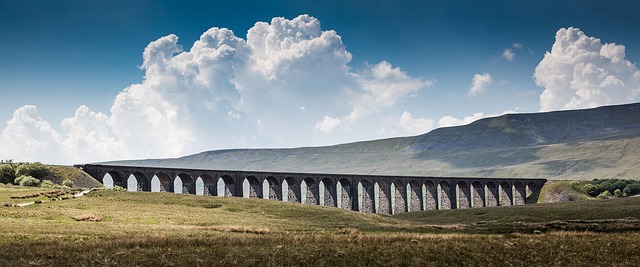
This viaduct is more impressive when you know what went into building it
Muslims visit the Al-Haram Mosque in Mecca, Catholics go to St Peter’s Basilica in the Vatican, Classicists go to the Colosseum in Rome, and British railway geeks go to Ribblehead on the Cumbrian/Yorkshire boarder to be awestruck by history.
The Ribblehead Viaduct has to be the most impressive viaduct in England. Opened in 1875 it spans Batty Moss, carrying the line that connects Carlisle to Settle. It has 24 massive stone arches that rise 32 meters (104 feet) above the moor. Take a second to look at the picture above and drink in vastness.
Ironically the viaduct is best approached on foot, not via the railway, to get the sense of its sheer scale. It dominates the landscape and symbolises humanity's domination over nature, a popular belief of the Victorian society that built it. When you approach the arches you are stuck by the sense that this structure has the proportions of natural feature, not a human building. It is built on the scale of the hills that surround it.
It is a scale that defies that sense as it is impossible to take in the entire structure in from one viewing point. At a distance, the craftsmanship is hard to appreciate. Up close, it is too big to be viewed by one individual. The same is true of monumental religious buildings, from St Peters to Borobudur.
The Ribblehead Viaduct is more humbling when you know the human cost that went into building it. So many navvies (manual labourers working on civil engineering projects) died in its construction that the railway paid for an expansion of the local graveyard. Shanty towns grew up around the viaduct, which took four years to build. There were smallpox outbreaks and industrial accidents that led to the death of more than 100 navvies.
British rail spent a substantial amount of money renovating the viaducts to keep it operational and it was listed in November 1988. Ribblehead might have been the vision of engineer John Sydney Crossley, but it was built by bloody hard graft from hundreds of ordinary Victorian workers.
Today when we think of the railways we think of big brands or the thrillionaire businessmen who own it, like Richard Branson. When we think about its history we think about Brunel or Stevenson, intelligent people of great vision, but we overlook the sheer volume of hard work that ordinary people did to make the railways.
This is why the railways belong to us all, regardless of how it is broken up into companies and bits of it are sold to different owners. The hard, dangerous work that our ancestors put into building the railways cannot be dismissed or forgotten. The sacrifices that the railways’ builders made (many with their lives) cannot be bought by private companies or traded on stock markets.
The only fitting tribute to the thousands of people who lost their lives building the Ribblehead Viaduct, or Box Tunnel, or many other Victorian civil engineering projects is to bring the railways back into public ownership. That way the benefits of the hard work of the ordinary people who build the railways can be shared by all of us, and not captured by a few ultra-rich individuals.
The monumental, awe inspiring scale of Ribblehead stands as a testament to what the hard work and sacrifices of ordinary people can achieve. It is part of us all and we should all own it.