Red Train Blog

Ramblings to the left

The Red Train Blog is a left leaning politics blog, which mainly focuses on British politics and is written by two socialists. We are Labour Party members, for now, and are concerned about issues such as inequality, nationalisation, housing, the NHS and peace. What you will find here is a discussion of issues that affect the Labour Party, the wider left and politics as a whole.

  • Home
  • Topics
    • Topics
    • EU referendum
    • The Crisis in the Labour Party
  • Art
  • Books
  • About us
  • Search

Murder is not the answer to America’s healthcare problems, but people are driven to extremes by politicians’ lack of action

December 17, 2024 by Alastair J R Ball in Trump

Let me begin with the same disclaimer I made in my post about the attempted assassination of Donald Trump: killing people is wrong. We should do politics with words and not guns. This applies to the several countries around the world currently trying to bring others to heel with military force as well as people killing awful CEOs. His death is a tragedy for Brian Thompson's friends and family. However, for the millions of people whose lives have been devastated by his industry’s actions, it feels like grim poetic justice. 

It’s tempting to focus on how this has become a chit in the discourse, the inevitable memes, the schadenfreude of a corporate titan cut down leaving an investors meeting. Beyond the viral glee lies a deeper, more urgent truth: acts like this, however misguided, are born of despair.

The American healthcare system isn’t just broken, it’s a morally bankrupt machine of profit extraction. Health insurance companies rake in billions while denying coverage for life-saving treatments. Families are bankrupted by medical bills for treatments that are free in many other countries. Companies like Thompson's UnitedHealthcare operate with impunity, shielded by politicians who pocket their donations, and a Supreme Court stacked to value corporate rights over human lives.

The system doesn’t work

This system isn’t just cruel; it’s absurdly inefficient. America spends more on healthcare than any other nation, yet its outcomes lag behind poorer countries like Cuba. No one, not even the staunchest defender of free markets, can seriously argue this system works.

So why don’t politicians fix it? Well, no one agrees on an alternative and no one in power is willing to risk the wrath of their donors to pursue one. Democrats acknowledge the problem but offer half-measures, hoping to appease their corporate sponsors while avoiding outright revolt from their base. Republicans, meanwhile, openly pledge to make things worse, treating the misery of ordinary people as collateral damage in their ideological crusades.

The killing of Thompson is a direct consequence of this paralysis. People feel abandoned by their leaders and hopeless about change. When a system produces nothing but suffering and indifference, some will resort to dramatic - and yes, regrettable - acts of protest.

Wall Street vs Main Street

These events also create a challenge for the newly re-elected President Trump. His supporters, like everyone else, suffer under the yoke of healthcare companies. They, too, watch their loved ones go without treatment, drown in debt, or die prematurely. Trump’s supporters want action from the man who has promised to take on the fat cats getting rich from “American carnage” and a victory for Main Street over Wall Street. Thompson is a symbol of the dominance of Wall Street; can Trump improve healthcare for the guy on Main Street?

Most likely, instead of addressing their pain, Trump will distract his supporters with more culture war antics and racist hot air. How much longer can he sustain this charade before his base demand real change? I’m sure many gun toting Trump supporters would like to see some more CEOs shot. Can Trump channel this anger? Or will this be the issue where blue-collar Americans finally wake up to the fact that this billionaire, like all billionaires, isn’t really on their side?

What is the electoral button we push to make things better?

The truth is, killing isn’t the answer. With my sensible middle-aged hat on, I have to say that murder is wrong even for people who have brought untold misery to millions. They should face justice from the law, not extrajudicial killings. This applies to people accused of committing crimes as well as the people who get rich off human suffering. Maybe I’m naive. I’m certainly not holding my breath for lawful justice for billionaires.

The deeper question remains: what is the electoral button we push to make things better? Without politicians offering real alternatives, this despair will only fester, and violent protests will follow.

The American healthcare crisis is a national humiliation, a source of misery, and an emblem of political failure. It cannot be ignored any longer. If this latest incident teaches us anything, it’s that people won’t stay silent forever. They need hope, they need alternatives, and most importantly, they need leaders brave enough to deliver both.

Related posts
Trump-rally.jpg
Trump
Dr. Strangelove goes to Tehran: The hottest new war nobody ordered
Trump
Trump
Trump-rally.jpg
Trump
Elon Musk and Donald Trump: The Beavis and Butt-Head of right-wing edge lords
Trump
Trump
Trump-rally.jpg
Trump
Trump is back in the White House and the billionaires are in the Rotunda
Trump
Trump
December 17, 2024 /Alastair J R Ball
Trump
Comment

Steve Rayson’s Collapse of the Conservatives shows how Labour benefited from voters’ volatility but may also suffer from it

December 03, 2024 by Alastair J R Ball in Political narratives

As the year draws to a close, we look back on a momentous UK general election that reshaped the political landscape. Labour achieved a historic landslide victory, reversing its fortunes less than five years after a crushing defeat, while the Conservatives suffered their worst loss since 1997. Now, as the dust settles, we can begin to comprehend the forces behind this political earthquake.

The most comprehensive exploration of the 2024 election’s outcome comes from Steve Rayson in his new book, Collapse of the Conservatives: Volatile Voters, Broken Britain, and a Punishment Election. This deeply researched account traces the roots of the Conservative Party’s collapse, beginning with Boris Johnson’s tumultuous tenure and the seismic challenges of the Covid-19 pandemic.

Rayson meticulously examines the past five years of political upheaval, detailing the factors that turned voters against the Tories and culminated in their catastrophic defeat.

Nothing works anymore

Central to the book is the emergence of a clear political narrative the spread of which led to the Tories’ downfall: “Nothing works anymore because the Conservatives are incompetent and should be punished.” Rayson identifies three core elements of this narrative:

  1. Nothing works anymore – the collapse in standards in key public services

  2. Conservatives are incompetent – the perception that recent Tory governments have been riddled with mismanagement.

  3. The Conservatives should be punished – a voter backlash fuelled by frustration and anger.

Drawing on an impressive array of focus group data, polling, and analytical studies, Rayson paints a comprehensive picture of how voter attitudes evolved. He charts the erosion of the Conservatives’ reputation for economic competence, the rise of Reform UK siphoning off traditional Tory voters, and the growing centrality of migration as a political issue.

Voter volatility

What makes this political moment unique, as Rayson argues, is the volatility of modern voter behaviour. Traditional coalitions no longer hold, with voters increasingly willing to switch allegiances. Rayson quotes pollster James Kanagasooriam’s apt summary of this development: “Political coalitions these days are more like sandcastles—impressive but liable to be swept away.”

From a left-wing perspective, my key takeaway is that Collapse of the Conservatives emphasises that the Tories lost this year’s election rather than Labour winning it. As Rayson notes, Keir Starmer benefited from an electorate overwhelmingly intent on punishing the Conservatives. However, this presents a precarious mandate for Labour. Starmer must now deliver on critical issues, such as NHS waiting times and economic growth, or risk losing support in an era of widespread political distrust.

Rayson underscores this fragility: “Despite its landslide victory in seats, the Labour Party’s vote share was still fragile and the fragmentation of its coalition was visible in the seats it lost to independent candidates and the Greens.” The decline in Starmer’s approval ratings post-election further highlights the challenges Labour faces in maintaining its coalition.

Jenga tower

The book’s final chapters look to the future, particularly the election of Kemi Badenoch as the new Conservative leader. Rayson argues that the Tories face a daunting task in rebuilding trust on economic issues, countering Reform’s rise, and navigating an electorate increasingly resistant to stable political loyalties.

He warns that Labour’s current majority could prove ephemeral: “The Labour government’s majority has been compared to a Jenga tower, which has been raised high by taking blocks out of the foundations. The result is a tall tower with a base full of holes that could collapse very quickly.”

Collapse of the Conservatives is essential reading for anyone seeking to understand the political landslide of 2024. However, my main take away from reading it is that despite the many political shocks of the last four years, the volatility of modern politics has not been resolved by this year’s general election and we could be in for many more political surprises in the future.

Collapse of the Conservatives: Volatile Voters, Broken Britain and a Punishment Election by Steve Rayson is out today and can be purchased from Amazon.

Polling station image taken by Rachel H and used under creative commons.

Related posts
Political narratives
The right finally discovers that life sucks for Millennials, but guess who they still blame
Political narratives
Union-Jack.jpg
Political narratives
Who really holds power? The cultural illusion of middle-class dominance
Political narratives
How should the left view the porn industry?
Political narratives
December 03, 2024 /Alastair J R Ball
Political narratives
Comment

What does the left do now that Trump will be President, again

November 11, 2024 by Alastair J R Ball in Trump

In the build up to the Presidential election I had heard a lot of talk that Kamala Harris was likely to win, and even win big. At first I was doubtful, as everyone seems to continually underestimate Donald Trump’s appeal, but as the message was repeated I allowed myself to be convinced. I should have trusted my cynicism. 

I won’t list the supposedly crucial factors that would have led to a Harris victory that never materialised. Needless to say, a lot of people now have egg on their face. The Democrats in particular, and liberals and lefties across the world in general, need to have a hard look at themselves.

How did a supremely well qualified and experienced candidate badly lose an election to a ridiculous clown, who is a convicted felon that frequently spouts gibberish and has an authoritarian streak a mile wide? The specifics will come out in the wash, but the left’s complacency has been revealed.

Big problems facing the left across the world

Lots of things have been blamed for Harris’s failure, from swing voters caring more about immigration and inflation than we thought, to the rising cost of living, to incumbents losing elections across the world, to the increasing radicalisation of young men.

All are important, but we can’t point to one issue and claim it alone explains why a dangerous authoritarian has taken control of the world’s largest government machine, army and second largest stockpile of nuclear weapons. No one factor can explain the reason for the avalanche of oppression likely to fall on migrants, people of colour and LGBTQ+ people.

Not just an American problem

Nor can we exclusively claim this is an American problem. The toxic mix of outright hatred, nationalism, anti-establishment bile, and conspiracy theories that Trump peddles also led to the election of five Reform MPs in this year’s UK general election, despite a sweeping victory from a centrist party. Labour’s wide but shallow support could mean that in the next election we see a huge victory for a right-wing Tory leader as well as continual growth in support for Reform.

Liberal and left-wing politics is not connecting with voters. What we’re selling, from tolerance towards migrants and trans people to respect for institutions such as universities or a culture that celebrates diversity, is being roundly rejected by swing voters who are delivering victories for increasingly right-wing leaders. Everything from gay rights, to environmental policy to even diversity and inclusion in the work place is under threat.

Harris owned a gun

We need to be clear about why this is happening. The explanation needs to go beyond whether Harris hugged the flag enough, or shaking our heads and saying that voters just don’t want immigration. Harris owned a gun and was as patriotic as the next American. Also, the point of left-wing politics is to encourage tolerance for people and not shrug when the tide of popular opinion turns against immigration and act as if nothing can be done while the concentration camps for migrants spring up all around us.

Yes, the cost of living and inflation has put a lot of pressure on many people’s livelihoods and they’re looking for a leader who will improve their situation. However, it doesn’t automatically follow that people will then want an authoritarian strongman to engage in mass deportations and military trials for his enemies. The question is not why did people want change? It’s, why do they want the change that a far-right thug is offering?

Tired of being lectured

One explanation is that the honest, god fearing, salt of the earth swing voters are fed up with being called racist, sexist and transphobic just for liking first-person shooters, enjoying Ricky Gervais’s latter day material and not knowing the proper pronouns to use for the young staff in their local TK Maxx. The left should get off its high horse about people who aren’t ultra-progressive and on Instagram. Let’s talk more about wages and less about Palestine.

Then again, what these honest, god fearing, salt of the earth swing voters are angry about - aside from low wage growth, which is as much a problem for New York and London’s young professional social media admins as it is for the manual labourers of Wisconsin and Workington - what really makes them resentful of modern society is that there are now women and people of colour in Star Wars.

The left is also not connecting with the swing voters who never, ever, even for one second, shut up about immigration. We are also struggling to win over the people who are opposed to any change to society, are hopping mad at the idea that people in a city miles away from them are living a life they don’t understand or approve of (and some of these people want to do sports) and boil with rage at the thought that somewhere someone is eating a burrito they didn’t earn.

Swing voters won’t support the woke or a woman

This isn’t 2012, 2016 or 2020. The “woke revolution,” whatever it was supposed to be, is dead and buried. Maybe there was a time when left-wing politicians were concerned with tackling micro-aggressions, maybe around the time of Jeremy Corbyn and Bernie Sanders, but those days are long gone. Even AOC talks about aspiration now, and the Labour Party prefers to pal around with big business instead of student activists. Voters might be put off by lefty politics, but the established parties of the left have got the memo and run in the opposite direction. Yet still it wasn’t enough for Harris to win.

Harris was a cop (well, a state prosecutor) who owned a gun and was a vocal supporter of Israel. She wasn’t a 2010s era Tumblr leftie. Yet still the swing voters, at least enough of them to throw the election to Trump the crooked authoritarian, took one look at a woman centrist, cop, patriot, who owns a gun and said that she is a woke extremist and won’t vote for her. Just being a woman is enough to be considered woke unless you act like Katie Hopkins.

Remember these aren’t people marching with torches chanting “Jews will not replace us.” We’re talking about the average swing voter. Will the world be a better place after the left becomes even more focused on pandering to the prejudices of angry Boomers? Even if the left can get into power, is it worth it if the cost is throwing ourselves wholeheartedly into the arms race of who can be the nastiest to migrants? My answer to both these questions is no, but I have no idea how we are supposed to change things for the better.

What the left is selling

Why didn’t people think that taxing the rich and reducing the huge expenditure of the American government on war was the solution? Why didn’t people in Britain feel that the solution to years of austerity and poor wage growth was some radical redistribution? Because the left hasn’t made an argument that really connects with people. That’s what stops us changing things for the better.

We blame the media, or the Democratic Party machine, or the age of the electorate, or voters being stupid for the fact that left wing policies aren’t seen as the solutions voters reach for in these times of crisis, but the simple truth is that people don’t want left-wing solutions to their problems. They want right-wing ones.

Maybe Keir Starmer is on to something and the only way for the left or liberals to win over swing voters is by putting forward a bland white man who promises no change, but offers to deliver better than the right on cutting immigration and maximising the gains to be rung from our crumbling economic system. Maybe we do win by ditching commitments on climate change and raising taxes, because people hate lefties and the woke so much that there is no alternative.

Continuing downward spiral

In Britain with a new and even more right-wing Tory leader we need to be wary of Trump’s unexpected victory as we could be looking at an unexpected Tory victory in four or five years. The left needs to get better at arguing our position and convincing people to vote for us. This won’t be easy, but the stakes couldn’t be higher.

Then again, I feel sceptical about my own words. I don’t want politics to become even more geared towards people who only believe in two immutable genders, despise any help going to the poor and will not tolerate any change to the ethnic makeup of their country. If we don’t win over these people then the far-right cleans up. However, the only way to win them over is by becoming right-wing. *Cough* Keir Starmer *Cough*.

An authoritarian thug has just been re-elected President of the United States in a result that will be terrible for democracy, the environment, people of colour, women, LGBTQ+ people and anyone opposed to our continuing civilisational downward spiral into oblivion. The left needs to get better at making our arguments or this disaster will only be the beginning of the nightmare we find ourselves in. The problem is, how do we convince the people who don’t want to wake up from the nightmare?

Donald Trump picture taken by Gage Skidmore and used under creative commons.

Related posts
Trump-rally.jpg
Sep 30, 2025
Trump
Dr. Strangelove goes to Tehran: The hottest new war nobody ordered
Sep 30, 2025
Trump
Sep 30, 2025
Trump
Trump-rally.jpg
Jun 20, 2025
Trump
Elon Musk and Donald Trump: The Beavis and Butt-Head of right-wing edge lords
Jun 20, 2025
Trump
Jun 20, 2025
Trump
Trump-rally.jpg
Feb 10, 2025
Trump
Trump is back in the White House and the billionaires are in the Rotunda
Feb 10, 2025
Trump
Feb 10, 2025
Trump
November 11, 2024 /Alastair J R Ball
Trump
Comment

Kemi Badenoch will take the Tories to the right, which might be bad news for Labour

November 05, 2024 by Alastair J R Ball in Badenoch

Well, well, well. After what feels like three centuries of musical chairs at Conservative HQ, the Tories have a new leader, and it’s none other than Kemi Badenoch. She’s stepping up to take on a task so unappealing it makes cleaning a festival porta-loo seem like a cushy gig: rescuing the party after a drubbing at the general election; and by "rescuing," I mean attempting to herd a party that’s simultaneously being gnawed at by Labour on one side, the Lib Dems on the other, and Reform snapping like a rabid terrier at its ankles.

Let’s be clear: Badenoch’s victory isn’t the result of a party engaged in a serious bout of post-defeat retrospection. Labour is gleefully occupying what used to be the Tories’ centre/centre-right turf, and Nigel Farage’s gang of merry contrarians are making serious overtures to the disillusioned right. Badenoch’s job is like being told to reassemble IKEA furniture after a herd of wildebeest has trampled through it, only to find the manual has been replaced by The Daily Telegraph’s culture war section.

Labour, meanwhile, is breathing a sigh of relief. Their worst nightmare wasn’t Badenoch; it was Robert Jenrick. Yes, that guy. No, I couldn’t pick him out of a line up either. Jenrick was the man who looked ready to try something radical: apologising for the mess, admitting mistakes, and pivoting back to the centre. Jenrick, to some, represented the chance for a more palatable, less shouty Tory brand. However, the party faithful decided they hadn’t gone far enough to the right, and Badenoch rode that sentiment all the way to the top.

Looking competent

This logic, baffling to most outside the Conservative echo chamber, is music to Labour ears. “Perfect,” they say, dusting off their 1997 playbook. “You go off and yell about ‘woke’ biscuits and declining birth rates while we get on with the serious business of governance, economic growth, and seducing sensible centrists.” Labour’s plan is to focus on looking calm, competent, and electable, because, as the centrists will tell you, "competence" is what wins elections.

That’s the narrative, anyway: a rerun of the Tories’ wilderness years post-1997. However, if Labour thinks this is a done deal, they might want to consider the unpredictability of politics for the last ten years. Labour assumes the Tories are doomed to repeat their post-1997 trajectory: splinter, squabble, and fade into irrelevance while the grown-ups in red get on with running the country. However, they might be underestimating the resilience of the right.

The key issue is immigration

Here’s the thing about centrist voters: they’re not as allergic to right-wing politics as some might hope. Immigration, for instance, remains a hot-button issue, and Badenoch knows it. Under Rishi Sunak, the Tories lost their edge on immigration, leaving swing voters disillusioned. If Badenoch makes immigration her rallying cry - and let’s be honest, she will - she could claw back support, even from those sensible centrists Labour is banking on.

Let’s not forget, plenty of people voted for Brexit in 2016 not because they thought it was sensible, but because it wasn’t. It was an anti-establishment cry, a collective “shove it” to the status quo. Labour, now looking increasingly like the establishment, risks underestimating how seductive Badenoch’s brand of cultural combativeness could be. There’s a reason Farage still commands attention at the bar of British politics.

Many swing voters defected to Labour not out of love for Sir Keir Starmer’s charming pragmatism, but simply to register dissatisfaction. If Badenoch can recapture their faith on immigration, it’s not inconceivable she could claw back a significant chunk of those swing voters.

Bellicose right-wing culture war rhetoric

This is where things get worrying. By dragging immigration and other far-right issues into the mainstream, Badenoch won’t just energise her base; she’ll legitimise Reform in ways that could seriously hurt Labour. Expect the Tories and Reform to start nibbling away at Labour’s flanks, particularly if Starmer’s government stumbles on delivering economic growth or keeping immigration numbers down.

Labour might console themselves with the thought that Badenoch’s bellicose right-wing culture war rhetoric will alienate sensible centrists, but they should remember how fluid the electorate is. Plenty of people oscillate between Labour, Lib Dems, Tories, and even Reform depending on the cultural winds. Badenoch doesn’t need to win everyone over; she just needs enough disaffected centrists who’d rather gripe about immigration than cheer for a competent but uninspiring Labour government.

I could end up eating my hat

Of course, I could be wrong. Maybe in five years, I’ll be eating my hat as Starmer coasts to a second term, having delivered a respectable 2% economic growth and convinced everyone that Badenoch is a swivel-eyed weirdo best left to the fringes. I’d toast to that with a pint of hoppy craft beer and a smug grin given the chance.

Labour would be foolish to bet the house on that. Badenoch’s victory could signal a new wave of right-wing populism that Labour is dangerously unprepared to counter. The Conservatives are down, but they’re far from out. Brace yourselves, Britain, the political turmoil isn’t over yet.

By Roger Harris, CC BY 3.0,

Related posts
Oct 31, 2025
Farage’s new immigration plan is cruelty as a governing principle
Oct 31, 2025
Oct 31, 2025
Trump-rally.jpg
Sep 30, 2025
Dr. Strangelove goes to Tehran: The hottest new war nobody ordered
Sep 30, 2025
Sep 30, 2025
Sep 16, 2025
The right finally discovers that life sucks for Millennials, but guess who they still blame
Sep 16, 2025
Sep 16, 2025
November 05, 2024 /Alastair J R Ball
Badenoch
Comment

The 2024 Labour Budget: A real left-wing budget? Or rearranging the deckchairs on the Titanic

October 31, 2024 by Alastair J R Ball in Starmer

This week, history was made, or at least gently nudged, as Rachel Reeves delivered the first Labour budget since 2010, and the first ever from a woman. Labour has spent years promising that when the time came, they’d show us exactly how they’d fix this nation’s problems. So, no more fence-sitting. No more ambiguity. Now is the moment for bold, specific action.

What did we get? A budget that was less “seizing the reins of power” and more “trying not to spill tea on the sofa while shuffling to the centre of the room.”

The good news. Such as it is

Let’s start with the positives, since I am told optimism is important. There are some good things in this budget, albeit of the “sensible shoes” variety. Workers’ rights have been improved, the minimum wage increased, and the NHS has received a funding boost that will probably keep it limping along for another couple of winters. Housing also got a nod, although probably not enough to make a substantial difference.

Tax rises? Barely. The only substantial increase was on capital gains tax. It was nice to see stamp duty on second homes go up from 3% to 5%, but it’s hardly a wealth redistribution masterstroke.

Meanwhile, corporation tax remains unchanged, presumably so Keir Starmer can keep receiving freebies. Defence spending went up, because of course it did, nothing says sensible centrist government like spending more money on more weapons, while quietly walking past starving children.

A revolution in name only

So, was it all worth it? All the saying that Labour won’t do this that and the other when in power. All the triangulation and the moving to the centre? The ditching of environmental commitments? Saying they’ll keep the two child benefit cap? Was it worth dumping all the left-wing commitments in favour of a budget that can best be described as inoffensively underwhelming? 

Apparently so, if you ask the New Statesman, which gushed that this budget was properly left-wing. Really? Maybe my memory has been scrambled by years of gaslighting by a media that thinks David Cameron is a progressive because he didn’t openly spit on immigrants and wanted to stay in the EU. If this budget is the new left-wing, I’m going to need a new thesaurus, because “radical” clearly doesn’t mean what it used to.

Fixing the nation’s crumbling Infrastructure?

For a country held together with duct tape and misplaced nostalgia, you might expect a bit more urgency from the new Labour government. Britain is still in the grip of social and economic crises: housing is unaffordable, inequality is grotesque, public services are falling apart and this budget does little to address any of it.

Yes, there’s more NHS funding and some increased workers’ rights, but where’s the grand vision? Where’s the bold plan to fix the social contract or rebalance the tax burden? Younger workers still shoulder the heaviest tax load, while wealthy pensioners gently applaud Labour from their second homes. The tax burden continues to favour capital over labour, ensuring that Britain remains a paradise for landlords and hedge funds, but a nightmare for anyone under 40 trying to buy a house.

The growth question

If Labour’s going to win re-election - and frankly, I’m not taking anything for granted at this point - it needs to deliver actual economic growth. Not growth that helps oligarchs add to their yacht collection. Labour needs to foster businesses that create wealth for everyone, not just a handful of hedge-funders laughing into their champagne.

This budget doesn’t even begin to do that. If there was a plan to turbocharge innovation or encourage investment in the businesses of the future, it’s hiding so well that I can’t find it.

The Starmer effect

In many ways, this budget sums up everything about Starmer’s Labour: all the buildup, all the promises, and then … a lot of hot air, leading to something deeply disappointing and almost aggressively dull.

So here we are, with Labour firmly planted in the centre, carefully avoiding upsetting anyone who might write op-eds about fiscal responsibility. Meanwhile, the problems facing the country remain stubbornly unsolved. If this is Labour’s idea of progress, we might as well invest in a good pair of walking boots, because the road ahead is looking long, bleak, and deeply uninspiring.

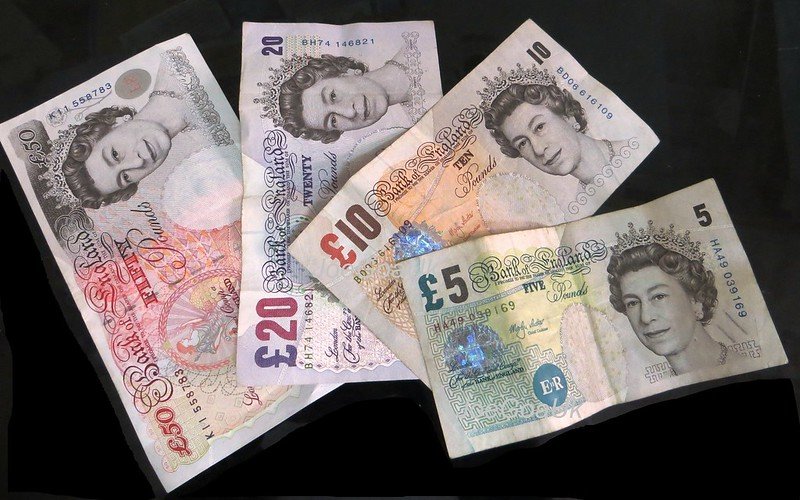
GBP image created by Joegoauk Goa and is used under creative commons.

Related posts
960px-Official_portrait_of_Angela_Rayner_MP_crop_2,_2024.jpg
Starmer
Starmer
Rayner’s resignation is another unforced error from Labour
Starmer
Starmer
Starmer
Starmer
Capitalism.jpg
Starmer
Starmer
“That’s Your GDP”: Labour’s big growth delusion
Starmer
Starmer
Starmer
Starmer
Keir_Starmer.jpg
Starmer
Starmer
Labour’s plan to defeat Farage by becoming him
Starmer
Starmer
Starmer
Starmer
October 31, 2024 /Alastair J R Ball
Starmer
Comment

With the Labour freebies scandal Starmer has wasted his opportunity to restore faith in politics

September 30, 2024 by Alastair J R Ball in Starmer

I’m not a fan of Keir Starmer, so you’ll forgive me for a little bit of schadenfreude at the scandal that he has found himself in. I’m mainly feeling smug because this is one blow to the Labour Party that cannot be blamed on the left. It happened because Starmer likes free gifts - who doesn’t? – but, apparently, he didn’t anticipate that voters would object to this.

Most people’s jobs come with travel paid for to attend meetings or a free lunch at Christmas - although lots of people earning less than MPs don’t even get these freebies - but Arsenal, Coldplay and Taylor Swift tickets are not the perks of a normal job. They also show that Starmer has terrible taste.

Wasting a once in a generation chance

The sad problem with all of this is it just further alienates voters. We’ve had years of Tory incompetence and corruption, and Starmer promised a fresh start. He had a once in a generation chance to wipe away people’s cynicism about politics by working hard to improve people’s lives. Y’know, the thing he said he would do.

Instead, he’s burned all his goodwill for free football tickets and clothes for his wife. This will make it so much easier for whichever right-wing nutter the Tories choose as their leader to convince voters that all politicians are the same, so they might as well vote for the corrupt toff who will shoot boats of migrants crossing the channel as that will at least make Cynical Chris from Nuneaton feel tough while he’s been ripped off.

Playing politics on easy mode

It’s often said that the Tories play politics on easy mode. That a right-leaning press and the general small C conservative sympathies of swing voters across the country mean that they can fuck up or announce ridiculous things without the same level of scrutiny that ruins the careers of even moderate Labour politicians.

Starmer has been playing politics on easy mode since Boris Johnson detonated his own premiership and everyone decided that they had had enough of the buffoons in blue. Playing on easy mode is what has allowed him to go back on every commitment he made to become Labour leader and face no consequences. This appears to have led to complacency about how all these freebies will be received by Daily Mail readers in Workington, i.e. the people whose opinions matter.

What did these gifts buy?

Starmer has received £107,145 worth of gifts, benefits, and hospitality since the 2019 general election. It’s worth pointing out that Ed Miliband and Jeremy Corbyn received very little, so this isn’t something that every leader of the Labour Party indulges in.

Look at that figure for a second. That is a staggering amount of money. It’s nearly three times what I get paid in a year for my very regular boring office job. It’s certainly way out of the reach of most people, so I can see why everyone is very angry.

Obviously, gifts of this size don’t come without strings attached or at least an audience with the giver. People are right to want to know what form of access or influence these gifts bought. Especially for a new government that has been less than clear about the difficult decisions it will have to make.

The shortest-lived huge majority in history

Starmer can’t keep being complacent and acting as if he’s playing politics on easy mode. The Tories will soon have a new leader, willing to take the fight to the incumbents who aren’t solving all the problems without the need for any sacrifices from anyone. At that point things will get much tougher for Starmer.

If Starmer wants to hang on to his massive majority, then he needs to start acting like everything he does will be used against him. Or else this will be the shortest-lived huge majority in history.

Related posts
960px-Official_portrait_of_Angela_Rayner_MP_crop_2,_2024.jpg
Starmer
Rayner’s resignation is another unforced error from Labour
Starmer
Starmer
Capitalism.jpg
Starmer
“That’s Your GDP”: Labour’s big growth delusion
Starmer
Starmer
Keir_Starmer.jpg
Starmer
Labour’s plan to defeat Farage by becoming him
Starmer
Starmer
September 30, 2024 /Alastair J R Ball
Starmer
Comment

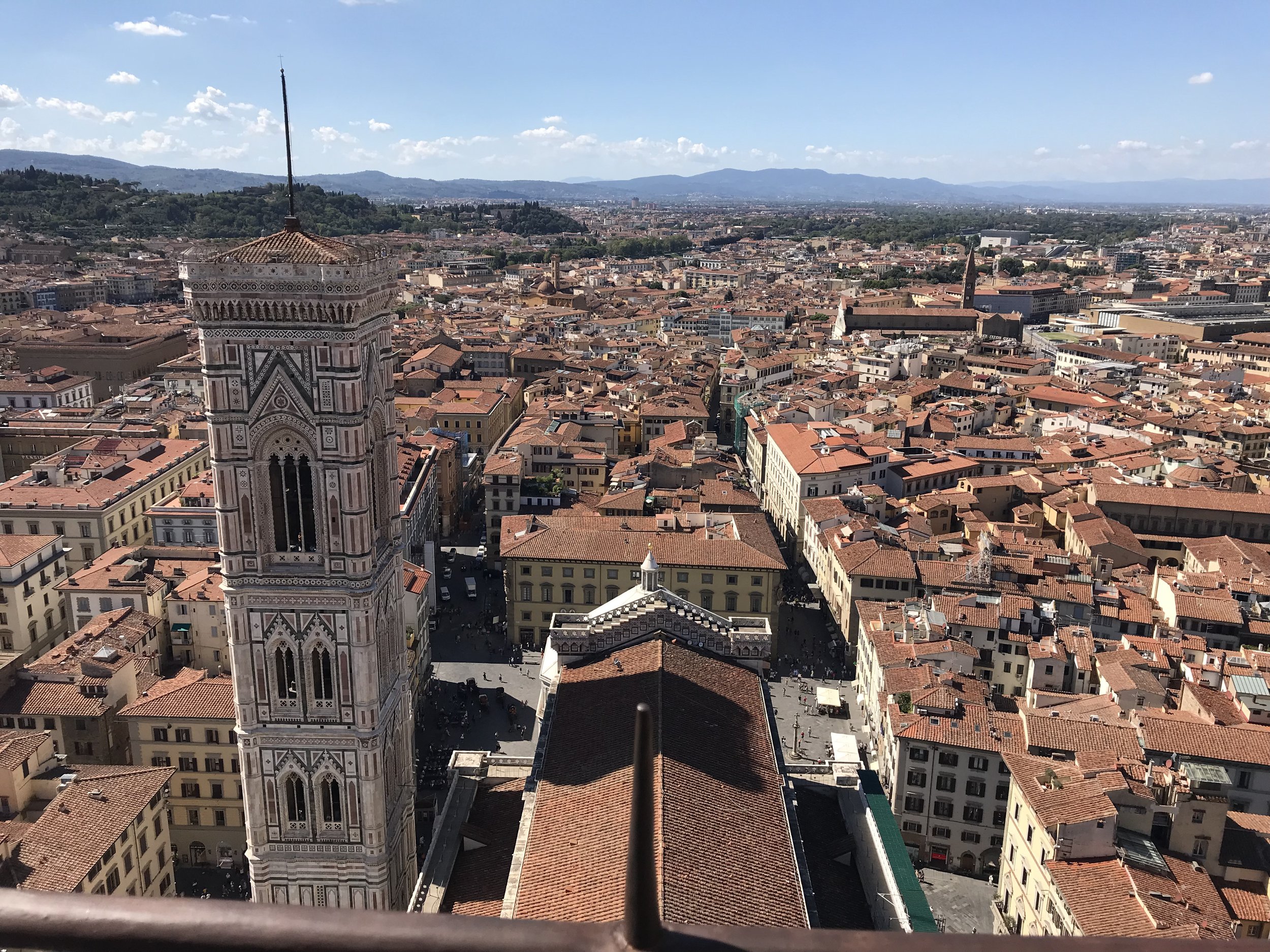
We are still in the Renaissance: How the art, culture and politics of Florence helps us understand how this city has shaped the West and what could come next

August 27, 2024 by Alastair J R Ball in Where In The World?

Europe, its ideals, its history, its culture and its politics is contained within Florence. There is a lot you can learn from visiting the city and learning about its past and present.

Florence is a European city with a population just shy of 400,000 in the centre of Italy. It’s a very popular travel destination and is known worldwide for its art, history, food, wine, architecture and leather. The word Florence is a placeholder for the city’s history and culture. Hearing or reading the name brings all this complexity to mind, but how do we unpack exactly what we think about when we think about Florence?

The best place to start is with what Florence is best known for: its Renaissance art history. Through these works of art, we can see how the city presented itself in the past and the present.

Art and Florence’s museums

There are some staggeringly famous paintings in the collections of the Uffizi Gallery in Florence. This includes works by Sandro Botticelli, such as The Birth of Venus and Spring. Botticelli had a very distinctive style. As well as embodying the emerging style of the Renaissance, his work draws on Mediaeval tapestries and the art of the ancient world.

His paintings convey a delicate beauty, seen most clearly in The Birth of Venus. Although this is a painting of a scene from Roman mythology, the fragile beauty with which Botticelli painted these figures was not a feature of ancient art. It was something introduced to Western art by Mediaeval paintings of the Madonna.

There are many other incredibly beautiful pieces of art that fill the halls of Florence’s museums, which have been made in the city over the years. This includes Venus of Urbino by Titian, a painting so sumptuous that you could almost step into the room it depicts, and Michelangelo’s sculpture of David, the perfect incarnation of Florentine confidence during the Renaissance. The key thing about all these famous works of art is that they show the beauty of the physical world, not the perfection of the spiritual world.

The architecture of Florence

The other aspect of Florence that both shows the beauty of the physical world and is a key element of the Renaissance is the city’s architecture. There are so many beautiful buildings in Florence, it’s hard to know where to start when looking at the city’s architecture. I would recommend beginning with one of the smaller buildings, although it’s no less interesting than the famous landmarks.

The Pazzi Chapel is a small chapel in the Basilica di Santa Croce designed by the iconic Renaissance architect Filippo Brunelleschi. Here is where Renaissance architecture began, as the chapel marks a break with the previously dominant gothic style of religious architecture. The art historian and broadcaster Kenneth Clark (not to be confused with the Tory politician, he spells Clarke with an “e”) described the Pazzi chapel as possessing the architecture of humanism, a building made in proportion to humans. This humanist approach is essential to understanding the art of Florence and the Renaissance.

Of course, the most famous and most striking building in Florence is the Duomo, Florence’s Cathedral; also designed by Brunelleschi, later in his career than the Pazzi chapel. This huge cathedral possessed at one point the tallest dome in the world and is both an artistic and engineering marvel. Its distinctive tall dome is a technical innovation that distinguishes it from the flatter domes of the ancient world, found on the Pantheon for example. The interior is decorated with beautiful frescoes, mainly on the inside of the huge dome.

New architecture drawing on the ancient world

Brunelleschi was the founding father of Renaissance architecture, and the Duomo is his masterpiece. Brunelleschi incorporated elements of Ancient Greek and Roman architecture into his designs. He used porticos, arches and domes, which are Roman, but added Greek columns making Renaissance architecture a fusion of both Ancient Greece and Rome.

This was a new style of architecture for a new Renaissance culture, incorporating elements of the past but to create something new. There was a harmony between the interior and exterior aspects of Brunelleschi's buildings. This was a break with gothic architecture where buildings were made on an inhuman scale, which made people feel small and insignificant next to the power of the divine. By contrast the Pazzi chapel is almost cosy. It’s reassuringly human and its human proportions reflect the dignity that humans are entitled to, which was emphasised in Renaissance philosophy.

Much of Renaissance architecture was inspired by Vitruvius's book on architecture, the only treatise on architecture to survive from the ancient world, where he emphasises that architecture should be based on the proportion of the human body. His views inspired many Renaissance buildings, as well as another iconic symbol of the Renaissance: Leonardo Da Vinci’s Vitruvian Man.

Humanism as the Renaissance knew it

Vitruvian Man is a drawing, but it unites both Renaissance art and architecture in that it contains the two key philosophical elements of Renaissance thinking: humanism and anthropocentrism.

Humanism, in this sense, is the idea that all human beings have dignity and the right to self-determination and happiness. Also, that there should be a striving for human excellence. It is a belief that the world was created for humans and the existence of humans adds beauty to the world; beauty not found in God’s creation. This isn’t humanism in the Richard Dawkins sense, a denial of God’s existence or his moral authority, but humanism as an emphasis on human exceptionalism.

The concept is best embodied by the Humanist hive in Ada Palmer’s Terra Ignota novels. The hive is a collection of individuals committed to human achievement in all fields, from the arts to science to sport, and the fact that the Humanists’ entire society is geared towards advancing human excellence in all fields is a perfect encapsulation of Renaissance humanism. Palmer herself is a historian of the Renaissance, when she is not writing science fiction novels.

What is anthropocentrism?

Anthropocentrism, the other crucial Renaissance value seen in the art of the period, is the idea that humans, and not God, are the philosophical centre of the universe. God is still the creator of the universe, but humans can change it to something that suits them. This is again reflected in Renaissance art’s focus on humans.

These two philosophical concepts are best summed up by Ancient Greek philosopher Protagoras saying that “man is the measure of all things,” which Kenneth Clarke used as the title for his film on the early Renaissance in his landmark art history TV series Civilisation.

These philosophical concepts are the foundation of our modern world. We still put humans at the centre of our culture and politics, despite attempts to suggest that putting the planet at the centre might be more sustainable in the long term. We believe that humans can remake the world and that humans bring beauty to the world.

We are still in the Renaissance

The humanist drive for excellence can be seen today in our attraction to great works of art, or in the hero worship of artists, sports people or scientists. Similarly, humanism’s emphasis on the dignity of people can be seen in our modern concepts of civil rights and social justice.

We are still in the Renaissance, on some level. It was a philosophical shift we have not escaped. Even modernism’s attempts to tear down all that came before to build something better, ultimately led to the concept being layered on top of Renaissance philosophy, rather than replacing it. Our thinking is still governed by humanism and anthropocentrism, which is the legacy that Florence has given to the world.

New writing and new ways of thinking

The stunning culture produced over the centuries in Florence also includes writing. Dante Alighieri lived here and wrote his Divine Comedy in the city. In doing so, he not only changed the Christian understanding of hell, purgatory and heaven, but also created his own world through the power of his writing.

Francesco Petrarch, an iconic thinker and writer of the Renaissance, was also from Florence. Petrarch is regarded as the first humanist and his work spans both the Middle Ages and the Renaissance. He was also the first person to read and understand ancient literature and led a revival of the Latin language. As Clarke said in Civilisation, Petrarch championed the idea of a “revival under the influence of classical [antique] culture.”

Renaissance philosophy began with Petrarch and Dante. They came up with new ways of thinking that reached back into the Ancient World, but also responded to the times they lived in. They created the literary and philosophical values of the Renaissance. Philosophy became related to humans rather than God.

Science and philosophy in a religious age

This was still a very religious time, but the achievements of people were seen as the greatest praise of humanity’s creator. Ancient Greek philosopher Protagoras’s pronouncement that “man is the measure of all things” became the phrase that summed up the time, just as Da Vinci’s Vitruvian Man was the image.

What we might describe as modern science began through the Renaissance’s philosophical investigations. During the Renaissance philosophers wanted to understand how the world worked. They became less interested in questions like "how many angels are there" and more interested in questions about the world around us.

There was also an increase in interest in ethics, as this was the dawn of the era of humanism. Renaissance values dominated writing and thinking. Even Dante’s writing is less focused on the Mediaeval glorification of God, and more focused on how human life can be better lived (within the context of a divine judgement).

Florence as a modern city

These key people, from Brunelleschi to Dante to Botticelli, helped create the modern world. They are all connected to Florence and all from the early Renaissance, a time where art, writing and thinking reconnected with the Ancient World. Florence was the centre of this movement, and it has left its mark on the city and the world.

Is Florence best summarised by its Renaissance history and the contribution it has made to our thinking? Florence is a modern city with modern amenities, not just old buildings and art. During a recent trip, I visited the area around the University of Florence’s School of Architecture. This is a Shoreditch-like area of the city complete with craft beer bars and casual dining restaurants.

The middle-class culture of places such as this is found all over the world, from Bed–Stuy to Budapest. It was once described as hipster, but it’s now mainstream. It both transcends and embraces local culture. I ate at Nugolo, whose sparse almost industrial interiors and menu featuring unusual modern takes on classic Italian dishes was reminiscent of places I have eaten in London, Berlin and San Francisco. You could pick up this part of Florence and drop it in East London and everyone would carry on as they were.

Hipster culture in Florence

Is this to say that this area of Florence is the same as everywhere else? At least in terms of contemporary culture? Partly, yes. The internet and globalisation have spread a standardised Western middle-class culture - let’s call it Hipster for want of a better word - all over the world and Florence is no exception.

Like most cultures, Hipster culture is not a monolith and in Florence, like everywhere else, it’s adapted to the local environment. It has grown into the city’s culture and not flattened it. Tuscan wines and the region's notoriously good meat are adapted to the modern Hipster tastes.

All this is to say that Florence is not just history, art and things that happened a long time ago. There is a vibrant modern culture to the city, which is more representative of how people live now and is thus a better way to understand Florence.

From culture to politics

Culture is merely one competing means to investigate the nature of Florence as a place. There are many others: sport, language and, of course, politics. I will focus on politics as I know next to nothing about sport.

Shortly after my visit to Florence, Italy had a general election where the far-right politician Giorgia Meloni became Prime Minister. Italian politics has been through a period of severe instability. The turmoil has been so extreme it makes British politics look positively dull. The country overall has become significantly poorer since the 2008 financial crash and people are increasingly angry about it.

All sorts of coalitions have been tried, from an alliance of the populist right with the populists centre (that was the League and Five Star government), to a government led by the self-styled Tony Blair of Italy Matteo Renzi, to one led by former President of the European Central Bank Mario Draghi and now this far-right government.

Italian politics is a microcosm of the problems of 21st century Europe. Low wage, low growth, low productivity, an ageing population (Italy has the highest median age in Europe and the second highest in the world, behind Japan), rising populism, extremes of all kinds and a lack of consensus as to how to tackle the problems. Italy has tried everything, but nothing makes a difference.

What can Machiavelli teach us?

When investigating politics, a famous Florentine provides some useful insights. Perhaps the most famous, or infamous, writer on politics was from Florence, Niccolo Machiavelli.

Machiavelli’s writing is foundational for many peoples’ thinking about politics. Rory Stewart quotes extensively from Machiavelli in his book, Occupational Hazards, about being a coalition governor in post invasion Iraq. Machiavelli has a lot to teach us about politics, but it’s worth remembering his writing comes from a world before our modern understanding of the state or our modern politics. The Florence where Machiavelli lived and was buried - I saw his tomb whilst I was there - is almost beyond our understanding today.

Machiavelli is often quoted and often misunderstood. His central point is that politicians should be effective, not nice, and defend the state from external and internal threats. People with a cynical view of politics often use Machiavelli as a justification for strongman rule or brute force. This is an oversimplification. Machiavelli did endorse the use of violence, but he thought a good leader shouldn’t use violence too much, or he will get a reputation for excessive cruelty.

An age of violence

Machiavelli thought a leader should be tough, but not too tough. He wrote that being a good politician is not the same as being a good person. Modern democratic politicians and voters can learn from this. Expecting our leaders to be perfect is too high a standard for them to live up to.

Above all, when looking at Machiavelli and what he can teach us, it should be remembered that he came from a very different time. The level of violence that Machiavelli was comfortable with would be considered extremely brutal by all except the most cruel and bloodthirsty of today’s rulers.

He lived in an age, despite the noble humanist views of the Renaissance, where the sort of violence that would make even the most gore loving horror movie fan vomit, was commonplace. Fear and brutal efficiency were a means to wield power in such a world, but the lessons from such a time should always be viewed in this context.

The dignity of humanism

The far-right is now in control of Italy. It’s worth remembering that the Renaissance, which made Italy prosperous and famous, emphasised humanism and the dignity of all people. How much dignity will the far-right give the people they don’t like? They could stand to learn something from the values that made Italy a leading philosophical and cultural light in the past.

Another way to understand Florence is through my own experience. The knowledge of firsthand experience can be more complex than what we learn at a distance from reading or other research.

Accessibility of art in modern bourgeois society

Renaissance Florence was the beginnings of a recognisably modern city. It was bourgeois and was filled with shops, which is what you find in Florence today. What we experience in our everyday lives in modern towns and cities, a bourgeois and commercial culture, brings us closer to what Florence in the Renaissance was like for the few who lived through the dawn of this new age.

By visiting Florence today, what you can experience of the Renaissance is much greater than what most people living in Renaissance Florence could experience at the time. Our museums make art and culture much more accessible to a wider range of people today than at any point in our past. The Renaissance was limited to wealthy merchants and courtiers, it was not something experienced by the everyday Florentines, but you CAN experience the beautiful art it left behind (for an admission fee).

The glories of the past and the challenges of the present

A place with a history as long and complicated as Florence is difficult to unpack even with a series of tools, including art history and politics, at our disposal. The complexity of such a place defies easy explanation, however, if I were to condense all I have learned down to a hot take, then it is that we should not be so distracted by the glory of the past that we overlook the challenges of the present.

Our liberal humanist civilisation, which was shaped in many ways by the art and politics of Renaissance Florence, is not as permanent as the marble and stone of Brunelleschi’s buildings. It can be broken down and replaced with the type of naked brutality that was the backdrop of Machiavelli’s life.

The election of people like Meloni is a step down the road that leads to destroying the humanism that Florence is famous for, a humanism that gave the world great art as well as the concept of universal human dignity. We tear all this down at our peril.

Defending it or tearing it all down

Let the past of Florence serve as an example of what can be done and let the present serve as an example of how this can all be lost and replaced with something much darker. Italy’s problems aren’t unique to that country; an ageing population, low wages, ineffective governments that don’t solve people’s problems exist all over Europe and the world. We need radical change to address these issues.

At the end of this journey, I’m left thinking of a famous German and not an Italian. Rosa Luxemburg said society faces a choice between socialism or barbarism and this is nowhere more apparent than in Italy. If socialists defend the humanism and dignity of the Renaissance and the far-right is against it, then they are the forces of violent barbarism; the leaders that Machiavelli warned us against.

Civilisation in all its glory existed in Florence, but Italy warns us that if we’re not careful it can all be torn down and replaced with barbarism.

Related posts
Florence.jpg
Aug 27, 2024
We are still in the Renaissance: How the art, culture and politics of Florence helps us understand how this city has shaped the West and what could come next
Aug 27, 2024
Aug 27, 2024
Derry.jpg
Dec 6, 2022
What do we think about when we think about Derry?
Dec 6, 2022
Dec 6, 2022
Shopping-centre.jpg
May 18, 2021
The pandemic has shown what’s wrong with our urban environment
May 18, 2021
May 18, 2021
August 27, 2024 /Alastair J R Ball
Where In The World?
Comment

The rhetoric from mainstream politicians on migration caused these riots

August 13, 2024 by Alastair J R Ball in Political narratives

I’m actually a little surprised that it took this long for the far-right to start race riots fuelled by social media, considering how much outrage exists on the right and how mainstream politicians have mercilessly stoked this rage. With Daily Mail front pages decrying immigration, Tory Prime Ministers pledging to stop the boats and Nigel Farage and Tommy Robison becoming accepted figures of discourse on the right, it was only a matter of time.

Throw into the mix social media platforms that seem to take as their maxim Mark Twain’s statement that: “A lie can travel halfway around the world while the truth is still putting on its shoe.” (Although he probably never said that quote.) Then add in horrendous attacks on children, and we have the ideal circumstances for the kind of destruction that has been filling the headlines. 

These riots are a direct result of the increasingly angry rhetoric on the right about immigration, multiculturalism and wokeness. Continually stoking anger plays into the hands of the most violent members of the political fringes. Now the mainstream right has discovered the perils of flirting with the far-right and are quick to distance themselves. This is despite years of them deploying angry rhetoric at migrants, woke snowflakes (by which they mean immigration lawyers) and elites (by which they mean people who read books, not billionaires or Westminster politicians).

The result of stoking white racial anger

Mainstream politicians of the right, and at times the centre, feel that they can stoke this anger to mobilise people to vote for them when they want, before putting the anger back in a box and forgetting about it when they are safely in power. Boris Johnson did this to make himself Prime Minister. There is also an entire ecosystem of right-wing talking heads adding to the fires to get social media attention and have journalists write about them. Witness Farage’s gig on GB News or Robinson turning himself into a social media personality.

Well, you can’t raise the pressure of white racial anger, use it to drive you forwards when you want, and then vent it safely when it gets too much. Racial hatred is not like a steam engine. It tends to explode in unexpected ways, like a homemade bomb. These riots are the result. Solicitors offices set on fire. Migrants attacked. The residents of asylum seeker hotels terrorised. Not to mention police attacked, destruction rained on town centres and people scared.

The tide of people angry about immigration and people of colour has gotten so extreme that even mainstream centre-left or centrist politicians indulge it. Keir Starmer has talked about the need to cut immigration. Ed Miliband had his controls on immigration mugs, Gordon Brown had ‘British jobs for British workers’ and Tony Blair had the rhetoric around bogus asylum seekers. Even Jeremy Corbyn was more interested in talking about NHS privatisation than he was about strongly challenging the discourse around migration.

Standing up to the tide

I guess centre-left or centrist politicians feel that they cannot argue back to this tide. Or they feel it’s elitist to walk into a Wetherspoons in Workington and tell people that they should be happy that people want to flee Syria and come here, it shows this is a great nation, and they will enrich our culture. Freddie Mercury, Mo Farah and all that.

So instead of arguing with these people’s views on race and migration, they pander to it as much as they can stomach and then change the subject. Starmer can crack heads all he wants to show that he’s tough on violent disorder, but without challenging the narrative that led to these riots, nothing will change.

At least we now know where the line is drawn for right-wing anti-immigration shit heads. It’s when you throw bricks at the police. That, mainstream politicians won’t allow. That, they will stand up to.

“Legitimate concerns”

Everyone is acting like a load of people lost their minds this summer, and I have seen these riots blamed on everything from warm weather to not enough football on TV. Almost no one is acknowledging where this anger came from. People didn’t take up race rioting to fill the gap between the Euros finishing and the Premier League resuming - these far-right thugs have been organising along racial lines for years.

They have been exploiting the cover given to them by mainstream politicians and the right-wing press to amplify the “legitimate concerns” about immigration into a movement that wants to make Britain a white nation; aided by social media platforms that give oxygen to extreme attention grabbing content, and easy access to audiences for the type of people who will stoke racial hatred and white resentment to get a following (Katie Hopkins, Tommy Robinson, etc).

Make no mistake: this isn’t about people concerned about migration figures, or migrant’s effects on wages, or Polish corner shops appearing in their communities or grooming gangs, or values, or whatever other reasonable sounding thing they claim their dislike of migrants is about. These riots (and the wider anti-migrant discourse) is about keeping Britain as white as possible in this era of globalisation. The whiteness of the country is not a legitimate concern. The rest is cover for this white racial agenda, or being a useful idiot for it.

Making sure this doesn’t happen again

If Starmer, Labour and those on the right who have condemned these riots want to stop them happening again then they need to stop adding to the pressure that recently exploded by challenging the narrative that migration is always bad and that we should seek to reduce it.

This will be uncomfortable for politicians not used to taking a moral stand (or at least one that they’re sure that the small C conservatives swing voters will support) but it needs to be done to prevent further violence. It’s easy for politicians to stand up to Just Stop Oil, it’s harder to stand up to that guy in Wetherspoons with his “legitimate concerns.” However, that guy is spreading fake news about migrants on Facebook today and might try and burn down a hotel full of people tomorrow.

If we want to stop these riots from ever happening again then we need to stop fanning the flames of racial hatred and white grievance, which is where anti-migrant rhetoric and policies - from the left, right and centre - is heading. The alternative is to see violence like this again. Soon. And worse than now.

Related posts
Political narratives
The right finally discovers that life sucks for Millennials, but guess who they still blame
Political narratives
Union-Jack.jpg
Political narratives
Who really holds power? The cultural illusion of middle-class dominance
Political narratives
How should the left view the porn industry?
Political narratives
August 13, 2024 /Alastair J R Ball
Political narratives
Comment

Violence, hypocrisy and assassinations. Oh, what a mess we are in

July 23, 2024 by Alastair J R Ball in Trump

Yet again I find myself watching history unfold on my phone screen on a Saturday night whilst in one of East London’s craft beer bars. This time I am looking at blood pouring from Donald Trump’s head as the Secret Service desperately try to bundle him off stage. He has his fist raised in defiance at the person who took a pot shot at him and the American flag flies above him. It is quite the image. 

My first, slightly drunken, thought is that this is going to lead to an even more severe clamp down on the people who don’t hold the increasingly narrow spectrum of beliefs that the establishment allows. There will be far more scrutiny from police and mainstream media of the views of protesters, Muslims or anyone to the left of Kamala Harris.

Let me be clear: I do not condone someone trying to murder Donald Trump. He’s towards the top of the list of worst people in the world and his toxic effect on politics could be the beginning of humanity’s final tailspin down into fascism or oblivion. We would be better off if he shuffled off the political stage and never appeared in public again. Preferably to count his money and have sex with porn stars, not because he has been shot in the head. I don’t think anyone should be murdered. Not even Trump. 

Violence is everywhere in politics

I could say something obvious, such as “violence has no place in politics” but this would be hypocritical because there is a lot of violence in politics. From the brutal policing of ethnic minorities, in both Britain and the US, to the steep rise in evictions, to war. Violence is everywhere in politics.

That violence is closely entwined with politics is naked in war. The recent war in Gaza and the sensible moderates in the West’s complete inability to restrain the Israeli state in any way, shows that war is unrestrained violence, free of the moderating influences the UN and Geneva convention were supposed to place on it. The idea of a humane and controlled war was a liberal fantasy. War is unrestrained violence of the strong against the week.

This is not to condone any acts of violence. I don’t think we should do politics by shooting each other. I want to get the violence out of politics, by reducing the amount of war, evictions and aggressive policing. Ideally to zero. I’m not condoning violence directed at the people I don’t like. That would be hypocritical. But do you know what’s worse than being a hypocrite? (According to Judith N. Shklar amongst others.) It’s being cruel towards other people, which is what violence is.

Threatening students

Here’s an example of the establishment legitimating violence against people they don’t like. In 1986 it was considered acceptable to threaten students with violence for their planned political action. Warden and Fellows of Wadham College wrote a letter to students planning political action. It stated:

“Dear Gentlemen: We note your threat to take what you call ‘direct action’ unless your demands are immediately met. We feel it is only sporting to remind you that our governing body includes three experts in chemical warfare, two ex-commandos skilled with dynamite and torturing prisoners, four qualified marksmen in both small arms and rifles, two ex-artillerymen, one holder of the Victoria Cross, four karate experts and a chaplain. The governing body has authorised me to tell you that we look forward with confidence to what you call a ‘confrontation’, and I may say, with anticipation.”

If this isn’t a threat of violence, then what is? This is just one example of when it was fine for the establishment to openly threaten people it didn’t like with naked violence of an extreme kind. The type you would find in a war. 

Contemporary relevance

This letter was reproduced in The Knowledge recently (for the uninitiated, The Knowledge is a news email from The Week, which claims to be politically neutral but spends more time praising Trump than Keir Starmer). Presumably reprinting it means the letter has some relation to current events.

How do we interpret this? It’s either a joke or a real suggestion as to how rebellious students should be treated. It’s probably intended to be funny by implying that lefty students (of both today and 1986) aren’t tough enough to fight actual soldiers, so they should just shut up and go back to their books and racking up huge debts that they will never be able to pay back. At this point it’s worth remembering most of The Knowledge’s readers went to uni for free, but enjoy sniggering at students. This is probably why the letter was reprinted.

If we are taking this seriously on any level, it’s worth noting that chemical warfare and torturing prisoners are war crimes in an actual war, which protesting is not. Did they really plan to release sarin gas in the middle of Oxford? Or use artillery for that matter? It seems like a dumb, empty threat to me. Not worthy of reprinting. Also, I don’t think “we have people who can and will commit war crimes on our staff” is the boast Wadham College think it is.

Trumps’ violence

The point is that it was considered acceptable to at least joke about using “qualified marksmen” against student protesters in 1986 (or today, judging by the reprinting of this in a supposedly politically neutral newsletter) but it’s not acceptable to use marksmen against Trump. I don’t think it’s acceptable to shoot Trump, but neither is it acceptable to threaten students with chemical weapons, artillery and torture. Or to imply that all young people are softies because they wouldn’t face down such a threat.

Trump is also an extraordinarily violent politician. He has joked about shooting someone on 5th Avenue. He has used dehumanising language, describing undocumented migrants as “animals,” which is likely to lead to violence. He talks about a “bloodbath” if he doesn’t get elected. He fermented a riot that tried to violently overthrow the government; although we all pretend that didn’t happen and that Trump is just a normal right-wing politician.

One of his white supremacist supporters also killed a woman protesting against white supremacy with his car, another thing we pretend didn’t happen. Trump is not a stranger to political violence, just to receiving it. I’m sure that Trump and his supporters feel that it is acceptable to mete out violence to people they don’t like (from protesters to migrants) and that it’s not acceptable to be violent towards them. Any centrists, or anyone of any political persuasion, condemning the Trump assassination attempt must acknowledge his violence. As this article does.

The people it’s acceptable to be violent towards

Owen Jones is the only British journalist I can think of who has been beaten up. Boris Johnson also once conspired to have a different journalist beaten up and it didn’t stop him getting elected Prime Minister. This shows who is allowed to mete out violence and who should receive violence. As always, the politicians advocating for violence, from Trump to the uncritical supporters of Israel, don’t think they should receive violence but that other people should.

There has always been people it’s acceptable to do violence to and people it’s not acceptable to do violence to. Oil companies do huge damage to the natural world, but when there’s a march the police line up to protect their buildings. I know this from experience. Social media is full of threats to Just Stop Oil activists for daring to inconvenience people and for pointing out that we’re killing the whole world.

Good to know that it is acceptable for Trump to encourage violence but not receive violence. It’s nice to make all this official. For the historians. Assuming humanity continues long enough for people to write history about 2024.

What comes next

If anything, his attempted murder will help Trump win the election. He’s just been officially nominated by the Republicans and chosen JD Vance as his running mate (a man who once described Trump as “America’s Hitler” and will now parrot anything Trump says, no matter how deranged).

At least Joe Biden has done the right thing and decided not to run again. He was too old and would only have thrown the election to Trump. If there is any hope in stopping Trump (and all methods short of assassination need to be deployed to stop him) then it lies in the Democrats, and all Americans who don’t want a dictator, rallying around someone (anyone) capable of stopping Trump winning in November.

Oh, what a mess we are in. American democracy is on the line. Most likely this is just the beginning of more violence to come. Most likely that violence will come from Trump and his supporters. Then it will be politely explained away by centrists as normal politics, while anyone who tries to oppose Trump, and his rising tide of violence, is chastised as the real extremist.

Donald Trump picture taken by Gage Skidmore and used under creative commons.

Related posts
Trump-rally.jpg
Trump
Dr. Strangelove goes to Tehran: The hottest new war nobody ordered
Trump
Trump
Trump-rally.jpg
Trump
Elon Musk and Donald Trump: The Beavis and Butt-Head of right-wing edge lords
Trump
Trump
Trump-rally.jpg
Trump
Trump is back in the White House and the billionaires are in the Rotunda
Trump
Trump
July 23, 2024 /Alastair J R Ball
Trump
Comment

Starmer has won big. Now what?

July 06, 2024 by Alastair J R Ball in 2024 election

Right, I am doing it. I said I would. I’m raising a glass of hoppy craft beer to Keir Starmer for dragging Labour into power and ending 14 years of Tory nightmare. It was certainly gratifying to sit up on election night and watch the Labour results roll in (even though I didn’t vote for them) and see the Tories get a justly deserved kicking. It was especially cathartic to see Jacob Rees-Mogg, Liz Truss, Penny Mordaunt and Grant Shapps lose their seats.

Starmer firmly has his hands on the wheel of power, so now he must use it to improve the lot of people in this country. Especially the homeless, starving children, disabled people unable to access essential benefits, migrants trapped by the hostile environment and people with insecure housing. It would also be good if he did something about low wages, high cost of living, the nation’s crumbling infrastructure and the climate disaster we are speeding towards like a suicidal lemming. With a majority of this size there can’t be any excuses.

Still, hats off to Starmer for winning that big majority. It gives him the power to enact his program, the success of which will be his legacy. There’s no point in there being 400 plus Labour MPs if they don’t use the huge power of the British state to improve the lives of people who have been suffering under 14 years of Tory rule (that’s everyone apart from the very rich). If they do nothing, behave timidly and make excuses, then that huge majority will disappear at the next election.

1997 redux

It is telling that Starmer managed to rack up fewer MPs and a smaller share of the vote then Tony Blair did in 1997. That’s with the Tories detonating the economy, driving up mortgage rates, partying during lockdown, launching the election in the pouring rain, disrespecting D-Day and getting caught up in an election betting scandal. Truly, there has never been an easier election for Labour to win.

What happened was that the Tories lost. And lost badly. Rishi Sunak performed a lot worse than John Major did in 1997, finishing with 44 fewer MPs and a much smaller share of the vote. The voters weren’t as certain that they wanted Starmer as Prime Minister as they were that they wanted Blair in ’97. This is clear from Starmer only getting 1.7% more of the vote than Jeremy Corbyn did in 2019 and on a lower turnout. The only thing that the voters were certain about was that they didn’t want the Tories in power one second longer.

Enthusiasm or lack therefore of

There was little enthusiasm for Starmer during this campaign and most of the passion that did exist was excitement at kicking the Tories out translating into a burning desire to hammer on the button that would most likely eject them from power, i.e. voting Labour.

I don’t know who is excited for a government that will prioritise fiscal prudence, technocratic decision-making and sound management (apart from the people who will work in the new Labour government). If these people do exist, they’re the sort of people who get excited that there is a new U2 album coming out.

Change is needed

Whether we are enthusiastic for him or not, it’s up to Starmer to sort out the state the Tories have left the country in. With his big majority now is the time to make radical reforms. I sincerely hope that the people who have said that Starmer is a secret radical, and is lying his way to power, are right. If that is the case, the evidence should emerge soon.

Starmer could have stood on a platform of action to tackle the country’s problems, rather than promising as little as possible. There has never been a better time to be honest with the electorate about the challenges the country faces and the changes that are needed. Labour were certain to win this election. By how much is what was up for debate. They should have laid out a comprehensive plan to fix the problems of Great Britain.

That’s how Labour are going to win the election after this one. This one they won on “change” and “everyone hates the Tories.” The next one Labour can only win because they made a material difference to people’s lives. This can’t be done easily, so we need to know what the plan is now.

The plan should be socialism

I think the plan should be socialism. In other words, taxing the rich, private companies and assets and using this money to build social housing, create green jobs and rebuild our schools and hospitals. We also need to take bold moves to tackle climate change and inequality, or else all the benefits of economic growth will be swallowed up in mitigating extreme climate events or won’t benefit most people, i.e. those who will vote in the next election.

Starmer is obviously no socialist (despite the right-wing press trying to brand him as one) but he hasn’t even laid out a plan for grand centrist reforms. Even if he doesn’t care about the climate, which he most likely does (Starmer is many things, but he is not an American Republican-esq climate denier, he’s not that dumb) then he knows he needs to raise wages and improve housing, or he will be more of a Gordon Brown than the new Blair.

My centrist three point plan

As Starmer is no socialist here is a centrist take on what comes next that I offer for free to the new Labour government. Point 1: we need high-tech companies to locate or be created in the UK to facilitate the jobs and industries of the future; so that the economy can grow, wages can go up and the state's coffers can swell to spend money on fixing all the other problems from arming Ukraine to rebuilding hospitals.

Point 2: we need to spend the money on the necessary infrastructure and education (especially higher education) to make this happen. This needs to be across the country to address regional inequalities, aka levelling up. Point 3: we need to either raise taxes or borrow money or cut elsewhere to do this. Starmer has ruled out tax and borrowing, and public services can’t take any more cuts.

Starmer should make the argument about raising taxes and borrowing, point 3, to do point 2 so that point 1 can happen. Instead, he’s hoping to do point 2 with tweaks around the edges, so that he doesn’t have to have difficult conversations about point 3 and then hoping that point 1 happens so that we get the growth to do point 2 properly. This seems like a long shot to me.

Honesty with the electorate

To get this done he should have been honest with the electorate before the election, laying out the above (if he isn’t prepared to be more radically left-wing). He chose not to, and he did end up with a big majority, winning places like Lichfield that have been Tory since the constituency was created in 1997.

My preferred outcome is socialism, or using the wealth that we already have to fix the problems of the country. Starmer wants to create new wealth, absorb some of that into the state and then fix the big problems facing the UK.

Pressing the green button

It was hearty to see the Greens do better than I expected. Four Green MPs is massive and, with all the seats they came second, this could be the beginning of a much bigger change. Watch this space to see what happens. Many people on the left were not in favour of what Starmer was selling and wanted something more radical, me amongst them, so they pressed that green button.

Maybe this was because they were confident that Starmer would oust the Tories whatever they did. I think it’s mainly because it's becoming more apparent that the problems of this country need radical left-wing solutions and Labour cannot deliver this.

The rise of Reform

Of course, there are those who want radical right-wing solutions. Nigel Farage and his band of Reform orcs winning a handful of seats is an alarming sign, especially when you see how many votes they got. Many people on the right have lost all patience with the Tories and want a much more aggressively nationalistic right-wing politics to really punish immigrants and other people they despise. This was as much Sunak’s problem as people switching to Labour or the Lib Dems over the Tories’ economic record.

It’s not just far-right knuckle draggers who are hearing the siren call of Reform. There are many people who voted Tory, Labour or even Lib Dem who have strong views on immigration, hate “the woke” and want to angrily hoard the wealth the country has left for “people like them” as the rising tide of global chaos consumes us all.

In a few years’ time a lot of people who just voted for the charming silliness of Ed Davey, or the competent management of Starmer, or the Tory sensibilities of Sunak might be voting for the big angry nationalist Reform party. Or even a Farage led Tory party. Starmer should take heed.

Starmerism or barbarism

Starmer has lots of power but if he wants to see off the challenges of Reform and whatever even more awful thing the rump of the Tory party mutates into, then he needs to get cracking on making people feel better off, whilst also tackling the deep structural issues in this country. Whatever Starmerism is remains undefined, let’s hope it turns out to be the radical change we need or things are about to get very ugly.

Yeah, it won’t be easy, but this election has gifted Labour massive power, whilst also showing that a very dark future might only be just around the corner.

Polling station image taken by Rachel H and used under creative commons.

Related posts
polling-station.jpg
Jul 6, 2024
2024 election
Starmer has won big. Now what?
Jul 6, 2024
2024 election
Jul 6, 2024
2024 election
Extinction-Rebellion.jpg
Jul 4, 2024
2024 election
Why I am voting for the Greens
Jul 4, 2024
2024 election
Jul 4, 2024
2024 election
Keir_Starmer.jpg
Jun 27, 2024
2024 election
Lack of enthusiasm, forgone conclusions and stirrings on the right: this could be the strangest election of my life
Jun 27, 2024
2024 election
Jun 27, 2024
2024 election
July 06, 2024 /Alastair J R Ball
2024 election
Comment

Why I am voting for the Greens

July 04, 2024 by Alastair J R Ball in 2024 election

In 2019 the New Statesman didn’t endorse any party during the December election. They announced this under the headline “Britain deserves better.” Well, nearly five years later I’m here to say something similar, but crucially different.

I’ll come to the bit where I say Keir Starmer and the Tories are basically the same. Don’t worry. First, I want to say something else. Something I believe more strongly.

This parliament, the one since the 2019 election, has been unlike any I have experienced before. Brexit finally happened, then we were hit with a pandemic, the Queen dying, Liz Truss’s five minutes in power, Donald Trump’s capital riots, Putin invading the Ukraine and a whole host of other things. It’s been a whirlwind.

All the beauty and all the terror

Since the pandemic ended and we have come back into the world, I have experienced more beauty than I could have ever imagined when we were locked inside. The collective joy of live music, the intensity of theatre, the communal pleasure of sharing a horror or comedy film with a room full of strangers, all these things I had forgotten. I had forgotten what it was like to sit in the pub with friends or take a train to somewhere new. There are so many beautiful things in the world that my heart swells with joy to think of it.

There is also so much terror. From mass death in Gaza, where civilians are killed in horrific numbers, to rockets raining down on Ukrainian cities, to lives forever ruined by the aftermath of the pandemic, to victims of an ever-worsening climate and ever-increasing racism towards people from outside Europe, this is an age where living can be a terrifying ordeal.

Sometimes I feel like these moments of beauty - finding something genuinely funny or beautiful on Instagram, eating something sweet, or singing along to a song with friends - are amongst the last we will experience as humanity hurtles towards oblivion. I want to treasure every single second of them.

Shared values

Injected into this mix of fear and elation is this year’s general election. Putting an X on a ballot paper once every four or five years shouldn’t be the end of our political engagement. The world is too complex for that. However, everything has been focused down to this one moment and we need to make a choice from a range of parties.

I simply don’t feel that Starmer shares my values. Not socialism - I am a socialist, and he obviously is not - but valuing these moments of heartbreaking beauty in a world of terror. Sometimes I don’t know if I want to cry or sing, sitting on a late-night Overground train. I don’t believe anyone who sees the fragile beauty of this world, and how it is assailed by soul crushing terror, could stand on the platform of minor change and not rocking the boat.

We live on a knife edge. Terror or beauty. Sometimes a better world is so close that I can almost smell it. I see people organising fundraising drives for refugees thousands of miles away that they will never meet because it is self-evidently the right thing to do. I see people striving hard against the cost of living, a government that makes everything difficult for regular (i.e. non-rich) people and indifference to bring a little more joy to their communities, such as by keeping a much-loved bookshop or cafe open. Every day so many people choose beauty, but a few powerful people choose terror and the bookshops close and death reigns from the sky.

Maybe I am wrong

Against this backdrop Starmer chooses indifference. I don’t understand it. We need a rallying cry for a better, more beautiful, world. If not now, then when? All Starmer gives is indifference to terror dressed up as pragmatism.

Maybe I’m wrong about Starmer. Maybe this is all a clever plan to win the necessary support of the angry boomer swing voters, so that Labour can get into power and then radical reform can follow. If this is what happens then I owe Starmer an apology and a vote. As well as an apology to all the people, friends and writers, who say this is the case. I don’t believe it. I may be wrong.

This brings us to the Starmer is just like the Tories bit. From dropping the £28bn green investment pledge, to saying Israel has the right to cut off water and power to Gaza (they don’t), to pandering to widespread hysteria about trans rights, Starmer is so determined to win the support of a pathologically angry boomer in Nuneaton called Steve -  who hates young people, hates migrants, hates trans people, hates ULEZ, hates spending money on making things better and above all hates people who go on protests - that Labour looks a lot like the Tories. It’s just so depressing.

Getting over the line

For what it’s worth, I do think Starmer will be a better Prime Minister than Rishi Sunak or any other Tory. If he drags the Labour Party over the line and into power then I will raise a hoppy craft beer to him and say, “good job, you did it where Gordon Brown, Ed Miliband and Jeremy Corbyn failed.” Doubly so if the Tories get a massive and justly deserved kicking. In that case it will be a double hopped IPA.

Hopefully Starmer with his massive majority can use the huge power of the British state (whatever the condition of the economy) to alleviate the worst problems caused by the Tories over the last 14 years, from the huge rise in homelessness, to the inhuman levels of child poverty, to the dire shape of the NHS. Then again, without wanting to turn on the spending taps, remove the two child benefit cap or do anything to worry landlords, improvements might not happen.

The issue of the climate

My main issue with Starmer is on environmental policy. This is the biggest challenge humanity has ever faced and is the defining issue of the present. The time for radical action has passed and we need very radical action to avert the worst of the climate disaster we are racing towards.

There is a beautiful sustainable world within our reach, where we work less and enjoy life more, but again our leaders in politics and business are choosing climate terror. Starmer needs to be bolder on this issue, which is why I am voting Green: to send a clear message to Labour that more needs to be done and soon.

Getting the Tories out

I have no problem with anyone who wants to vote Labour to get the Tories out. In fact, I salute you for using the choice you have today to make this country a better place. The Tories are awful and they have to go. Voting Labour is the most expedient button to press to achieve this.

My beef is not with Labour voters, or Labour Party members, or even many Labour MPs. It’s with a small group at the top of the party whose view of humanity is so cynical that they cannot make a case for something better, so instead move to the position that will get them into power; even if that involves pandering to prejudice on migration or trans rights.

I am aware of the irony of not voting Labour in an election where Labour is about to win very big. Through backing Corbyn and Miliband, and not Starmer, it’s clear I cannot choose a winning horse. I have voted Labour in only one general election that the party won (2005) and even then, the candidate I voted for lost out to a Tory.

I do like my local Labour MP, Stella Creasy, who has been very good on several key issues, from feminism to the war in Gaza. Her office was vandalised recently, which is a disgusting act of intimidation aimed at someone who is genuinely striving to make the lives of people in Walthamstow better. I’m sorry not to be able to vote for Creasy this time, but it makes little difference as she’s likely to win the seat by about 20,000 votes.

Labour winning without my support

I’m not going to vote Labour and Labour are going to do very well tonight. I guess that means Labour was right to alienate people like me. So be it. Perhaps this justifies everything Starmer, and his pals, have done to drive out people like me and win the vote of Steve from Nuneaton (or at least make him stay home on election day). This is even more the case if Starmer does some good with power.

In my darker moments, I wonder if I am the problem for Labour. Maybe my values - improving the environment, equal rights for trans people, welcoming migrants and wanting a world full of beauty and not that of terror - are so wildly out of step with the average person in the street, who has their own struggles and dreams, that I must be driven from mainstream politics as an extremist. Certainly, lots of people I meet disagree with me and feel the need to tell me I am wrong.

Am I an extremist for wanting things to be different? I still want a world filled with beauty for everyone, and around me I see a lot of people who want terror for people who are different to them. You might say that no one wants terror, but with the glee that people, from friends to writers, have endorsed military actions with massive civilian casualties in Gaza and a hostile environment for migrants trying to find a better life in the UK, I feel confident in saying that some people do want terror. I won’t change or compromise in my love of beauty.

Labour needs to do better

I want to send a message to Labour that they need to do better. There will never be a better chance to be honest with the electorate about what needs to be done to improve the country, now the Tories have completely self-destructed, but there has also never been a better time to make a case for why we can build a more beautiful world, while so many people are suffering and crying out for something better.

It’s not just on the climate, Labour needs to do more in so many areas to help those suffering right now. More than just pointing to growth and hoping that sorts things out. The Greens have some good ideas in their manifesto, such as a no-fault eviction ban, free personal care and cancelling trident. I am voting Green because I want these things and because I want to send a message to Labour that this slide to the right is against my values as a long-time supporter of the Labour Party. Labour needs to do better than its current festival of political cynicism.

I’m tired of being told that we need to be pragmatic by cynical people when the whole world is dying. If anything, the pragmatic thing to do is something bold, something inspirational, something beautiful. Not to just shrug our shoulders and say this is the best we can do.

"Extinction Rebellion-11" by juliahawkins123 is licensed under CC BY 2.0 

Related posts
polling-station.jpg
Jul 6, 2024
2024 election
Starmer has won big. Now what?
Jul 6, 2024
2024 election
Jul 6, 2024
2024 election
Extinction-Rebellion.jpg
Jul 4, 2024
2024 election
Why I am voting for the Greens
Jul 4, 2024
2024 election
Jul 4, 2024
2024 election
Keir_Starmer.jpg
Jun 27, 2024
2024 election
Lack of enthusiasm, forgone conclusions and stirrings on the right: this could be the strangest election of my life
Jun 27, 2024
2024 election
Jun 27, 2024
2024 election
July 04, 2024 /Alastair J R Ball
2024 election
Comment

Lack of enthusiasm, forgone conclusions and stirrings on the right: this could be the strangest election of my life

June 27, 2024 by Alastair J R Ball in 2024 election

I can honestly say that this is the least discussed general election of any general election of my life. The campaign is nearly done and outside of the major news publishers practically no one is talking about it. I have seen very few people out canvassing and far fewer than normal signs in gardens. I’ve seen the country get more excited about local elections than they are about the first opportunity in nearly five years to kick out the government.

The main reason for this is that everyone thinks this election is a foregone conclusion. Labour were way ahead in the polls from the start of the campaign and the Tories dismal performance so far - starting with Rishi Sunak getting soaked when announcing the election, moving onto his tax claims collapsing, before he offended everyone by leaving a D-Day commemoration event early and finally having loads of Tories caught up in the election betting scandal - has not changed anyone's mind about who to vote for or who will win.

The most interesting thing about this dull campaign, so far, is Nigel Farage unexpectedly standing to be an MP and taking over Reform. People are talking about who will represent one seat, Clacton, after the election more than they’re talking about who will be in Number 10. Everything else has been a walk for Labour, so there is absolutely no suspense at all about the outcome of this election.

“Starmer, I guess.”

Coupled to this is a complete lack of enthusiasm for Keir Starmer. He’s riding high in the polls because dissatisfaction with the Tories has reached epic proportions and the SNP collapsed at the same time. Sunak has done nothing to improve the Tory’s image or dismal record in government and people want them gone. It’s as if the whole country has shrugged it’s shoulders, sighed and said “Starmer, I guess.”

People want change and Starmer is offering as little of it as possible, because a few thousand easily spooked swing-voter Boomers could curb his majority if they think he'll do something crazy like spend money on schools or be nice to immigrants. “Starmer, I guess,” is the best possible result that Labour can get from these people.

The rest of the country has buckled up for the thrilling ride of “more of the same,” with the added bonus of the government being less nakedly corrupt and awful. It’s not exactly the sort of campaign that songs will be written about. It’s not Barack Obama’s hope and change. It’s continuity with minor tweaking around the edges in the hope that this makes things better for everyone. I guess it’s better than the Tories not caring about anyone at all.

Things can only get a bit better

Even the music that we have had during this campaign - “Things can only get better” being blasted at Sunak when he made his electoral announcement - is just recycled Blair optimism and has nothing to do with Starmer.

The most radical moment of the campaign has been Abigail Morris from The Last Dinner Party telling people on stage at Glastonbury that the election is not the end of the struggle if the Tories lose and that we need to keep protesting, signing petitions and boycotting after the election. I wish the Baroque hyper-femme rock band were the leaders of the opposition, instead of Starmer. He probably likes Coldplay.

All this might produce an odd result. Low enthusiasm for Starmer and a general feeling that the election is a foregone conclusion might mean low voter turnout for Labour. Whereas the Tories that are still voting for Sunak are very passionate about the party, and really hate Labour, and will turn out. Plus, they have the motivation that if they don’t vote it will be a huge Labour landslide.

Strange times. Or maybe not

Farage and Reform are also adding to the complications. Reform are a new party, so it’s difficult to judge how well they will do. Sure, UKIP and The Brexit Party, both previously led by Farage, didn’t get many candidates elected outside of European Elections and Farage himself has failed to become an MP seven times.

That said, these are strange times. Anger on the right about immigration, net zero targets, ULEZ and “the woke” has never been higher and support for the Tories from the right has never been lower. A huge number of people might be about to vote Reform, which will happen at the same time as a record low Tory vote and possibly a low Labour vote, driven by either complacency about Labour’s poll lead or lack of enthusiasm for Starmer.

I think polls predicting the Tories being knocked back to 50 seats and the Lib Dems or Reform becoming the official opposition are over excited. There are a lot of shy Tories out there who will be voting. Lib Dems will likely have their best performance since 2010 and Reform might get one to two MPs, but the first-past-the-post system means that these two parties can get record high numbers of votes and will it translate into very few seats, while Labour and the Tories gain from their built in advantages (especially the Tories).

Dark times to come. Most likely

A big Reform vote will hurt the Tories and help Labour in a number of Red Wall seats that Starmer has his eye on. Also, a strong Reform vote and Farage getting into parliament will have a big impact on the Conservative leadership election that will likely take place this summer in a state of despair and panic.

Farage is more likely to get serious power by being welcomed into the Tory Party post election than by his party replacing the Tories as the dominant party of the right. He might even end up being Tory leader by the next election. That’s more likely than 150 Reform MPs being returned on July 4th.

Then again we live in dark times, so I’m not offering to eat my hat on any account as there is a good chance that I end up chowing down on a piece of cheap canvas I bought from a tourist vendor near the Brandenburg Gate.

Radioactive zombie Tories

Strange things are occurring in this election. Starmer is less popular than Ed Miliband was at this point (although, it must be noted he is way more popular than Sunak, and voters preferred Cameron in 2015). Also, Reform voters are especially angry about Starmer and Labour, hating them more than the Tories, which is not good news for Starmer’s program to rebrand Labour as not a Corbyny woke party by plastering the flag over every single election leaflet. The best Starmer can hope from these human stains is that they stay home with Euro hangovers on Thursday. 

Most likely Starmer will win big - although I doubt he will get a 200 seat majority, as some polls are saying, or even a 100 seat majority. Starmer will win, but it will be off the back of a divided right, huge Tory resentment, the belief that his victory is inevitable and little enthusiasm for what Starmer is offering.

He’ll then have to tackle the huge problems of the country to defend his electoral gains, whilst facing a challenge from the right (possibly led by Farage) and the twisted rump of the Tory party that survives this election who, like zombies a nuke has been dropped on, will stumble on with horrible intent made more ugly and more dangerous by the blow that was supposed to kill them. If Starmer can’t summon some enthusiasm from the public to face this threat, then his government won’t last long.

Related posts
Farage’s new immigration plan is cruelty as a governing principle
Trump-rally.jpg
Dr. Strangelove goes to Tehran: The hottest new war nobody ordered
The right finally discovers that life sucks for Millennials, but guess who they still blame
June 27, 2024 /Alastair J R Ball
2024 election
Comment

The general election is coming and everything is at stake

May 23, 2024 by Alastair J R Ball in 2024 election

So, it’s finally happening. Election time. We knew it was coming this year and now we have a date. Honestly, it’s a relief.

Part of me expected Rishi Sunak to hold out until January next year. He’s really likely to lose this election, so why not be Prime Minister as long as he can? There’s always the hope that a miracle will save him.

Between some better-than-expected economic figures and rising speculation about a leadership challenge, the pressure has mounted on Sunak enough to call an election. Like a man dangling from a footbridge over a motorway, he’s had a tense few moments but has finally decided to take the plunge.

Election predictions

Now the intros are out of the way, let’s move onto the good stuff: election predictions. Keir Starmer is going to be Prime Minister after this election. As a prediction, it’s not as certain as “the sun will rise tomorrow” but it’s about as certain as “I will have a pint of strong hazy craft beer on Saturday.” It’s going to happen, unless an unprecedented disaster occurs.

There are a few big questions unanswered. How big will the majority be? It could be anything from historically massive to merely comfortable enough that Labour doesn’t have to worry about passing its legislative agenda for a while. The answer to the “how big will the majority be?” question is linked to a host of other key questions. How well will Labour do in Scotland? How well will the Lib Dems do? What about Reform and the Greens?

I see big gains for Labour in Scotland at the expense of the SNP, due to their internal turmoil and Labour leading on issues like the economy and health that are top of voters’ minds everywhere, including in Scotland. The Lib Dems are likely to do well in the southwestern Blue Wall, winning seats from the Tories and we’re likely to see the most Lib Dem MPs returned since 2010. Reform will steal votes from the Tories everywhere, but this will mainly benefit Labour and they won’t get any MPs.

Disgruntled lefties

Many disgruntled lefties will vote for the Greens (although I can’t blame anyone for voting Labour just to make sure the Tories definitely go) but I think they’ll only get one MP from this (Bristol not Brighton). It’s a shame as a lot of left-wing voters, myself included, are annoyed at Starmer for how far he has moved Labour to the right (compared to his leadership bid, or Jeremy Corbyn’s platform, or even Ed Miliband’s time as leader) and want to vote for a party to take serious action on the environment, child poverty, housing, etc.

The first past the post system means that the Greens might get more votes than ever, but they’ll end up with fewer MPs than the DUP. George Galloway’s Workers Party of Britian will do very little of anything. The best thing to be said for the left in this election is the Tories are on the way out. Beyond that, well, we’ll see.

Government by over promoted management consultants

Starmer doesn’t deserve the huge majority that is, most likely, about to be delivered to him. The Tories have lost this election; between Boris Johnson partying while we said goodbye to our Nans on Zoom and Liz Truss crashing the economy and whacking up everyone’s mortgages (particularly swing voters’).

Sunak has been blown around by economic headwinds and spent the little political capital and room to manoeuvre that he has doing very little of anything. At least Johnson could effectively bang the drum for Ukraine. Sunak is government by over-promoted management consultant.

The Tories deserve to lose this election

The Tories deserve to lose this election. They deserve the massive kicking they’re about to get. Since David Cameron started rolling out his austerity programme, they have been making this country worse in every way for everyone, (especially for the poor and vulnerable) apart from their rich mates. Even when the economy grew, real wages fell and life got harder for everyone (especially for the poor and vulnerable).

Since the 2010 election the Tories have consistently plunged new lows of vindictive cruelty (the two-child benefit cap, the Windrush Scandal, etc) economic mismanagement (take a look at your gas bill) and political dysfunction (Brexit, Covid-19, etc) and it’s all at yours and mine expense (I assume you’re not a rich pensioner or owner of a FTSE 100 company).

The day after victory

If Starmer can drag the creaking mess of the Labour Party over the line and into government then on July the 5th (the NHS’s 76th birthday) I will pop open a can of hoppy craft beer and raise it to him and say: “Good on you, you kicked the bastards out of power.” Then I will indulge in some very pleasant Tory schadenfreude.

The day after I will be asking one question: what are you doing, Starmer, to fix the huge list of problems facing this country? Yes, the list is long. Yes, there will be multiple conflicting crises. Yes, the money and political room to manoeuvre will be tight. Doesn’t matter. History has conspired to give you the vast power of being Prime Minister and (most likely) a big enough parliamentary majority to make your vision a reality.

Wield power for our benefit. Wield power to help the single mum working two jobs who can’t afford to eat, pay rent and heat her flat. Wield power to help the pensioner on an NHS waiting list waiting for a vital treatment. Wield power to help the people sleeping rough under the Finsbury Park railway bridge or the families stuck in temporary accommodation. Wield power to help the migrant stuck in administrative limbo unable to access housing or health. Wield power to help debt burdened millennials who can’t afford a home, to start a family or to save for a pension. I could go on.

Starmer stress test time

Of course, there is the chance that Starmer will lose (or not have a majority). Things looked pretty good for Theresa May in 2017 and we all know how that worked out. There are elements of the Starmer programme that haven’t been stress tested.

He hasn’t published a manifesto. How will it be costed? Will there be debates? Tory/Labour/Reform swing voters are very angry about immigration and Labour is weak on this issue (from their point of view). There is a chance that Starmer might come unstuck when he gets asked serious questions, or stupid ones (like “can a woman have a penis?” - asked only by people with a weird obsession with what other people have in their underwear).

Who knows what will happen. There might even be an explosion of concern about the climate or for people in Gaza. Starmer’s approach of saying and promising as little as possible might come undone when faced with election media frenzy. Yes, he’s likely to win, but it’s not certain.

Reshape this country for the better

We’re about to have an election. The outcome is the most certain in advance since 2001, if not ever. What I want to see is a debate about what will happen on July the 6th; as what will happen on July the 4th is pretty obvious (the 5th is for counting votes and sleeping). Let’s talk about what Labour can do to reshape this country for the better.

I’m not hugely excited for a Starmer victory in July. If you read this blog, you’ll know that. I haven’t decided yet if I will vote for him or not. So, I will say this: convince me Starmer, like I’m the dude from that meme looking smug behind his table. Show me how this country will be better when you’re in charge with a big majority.

Give me a reason

Go beyond competence and economic growth. Give me a reason to think that the pain that I read about every day, from homelessness to energy bills, can be alleviated by sensible Labour politicians deploying well debated policy.

My vote is right here. Take it. Make me believe that things can only get better. I’ll be watching (and writing here).

Polling station image taken by Rachel H and used under creative commons.

Related posts
Oct 31, 2025
Farage’s new immigration plan is cruelty as a governing principle
Oct 31, 2025
Oct 31, 2025
Trump-rally.jpg
Sep 30, 2025
Dr. Strangelove goes to Tehran: The hottest new war nobody ordered
Sep 30, 2025
Sep 30, 2025
Sep 16, 2025
The right finally discovers that life sucks for Millennials, but guess who they still blame
Sep 16, 2025
Sep 16, 2025
May 23, 2024 /Alastair J R Ball
2024 election
Comment

Disgruntled, ignored, demonised: the voters switching from Labour to the Greens

May 07, 2024 by Alastair J R Ball in Starmer

The local election results provided the satisfying sight of seeing the Tories getting a drubbing. It appears that the entire country is fed up with them. The Blackpool North by-election delivered a 26% swing to Labour, the third highest swing from Conservative to Labour ever and Labour won Rushmoor Borough Council, which controls the area that is the home of the British army. 

Sadiq Khan was also re-elected in London. He won in the face of the blatant Islamophobia of some opposition candidates. Many on the right implied that it was illegitimate for a Muslim to be mayor of London, which is a textbook definition of Islamophobia. The right also ran a vice signalling “we hate London campaign” which Londoners predictably rejected.

Still, all is not happy in the Labour camp. They have won huge amounts of councillors and every metro-mayor election apart from one. Despite this, Labour are worried about the rising number of green and independent pro-Palestine councillors elected. Truly Labour can never be happy.

“The words of a Conservative minister”

It should be no surprise that people are voting Green or independent. Kier Starmer has been courting Tory voters so hard he is alienating anyone to the left of Tony Blair. Recently, Guardian columnist Frances Ryan wrote that: “Labour leadership give soundbites that could easily be mistaken for the words of a Conservative minister.” She went on to say:

‘Recent weeks have seen the Labour leadership give soundbites that could easily be mistaken for the words of a Conservative minister, most notably when discussing the social security system. In a speech to the centre-left Demos thinktank last week, the shadow work and pensions secretary, Liz Kendall, stressed “a life on benefits” would not be an option under her party. It is not simply that such a statement is clearly nonsense – if “a life on benefits” is even possible, it is less a life of luxury and more one where claimants can’t afford toilet roll – but that it is not even original. Kendall’s phrasing was almost identical to the words of the work and pensions secretary, Mel Stride, who, in November, said, “Benefits shouldn’t be there for ever if they’re not required.”’

It’s no surprise that after being repeatedly told that the left are not wanted by Labour they are taking their votes elsewhere.

“Cranks, the bigots, the disgruntled, the lost and the angry”

Peter Mandelson - whose role in the Starmer shadow cabinet is … er … we don’t know but he’s always around - has been deployed to discredit the Greens, presumably to shore up Labour support amongst people who hate the Greens. In an interview for Times Radio he said the Greens were: “Becoming a dustbin, a repository not only for climate activists, but for disgruntled hard leftists.” This shows you exactly what Labour think of the Greens and the people who dare to want something better than a Labour Party that bows to every whim of socially conservative baby boomer homeowners who voted Tory in 2019.

It wasn’t just Mandelson, a recent edition of the New Statesman's Morning Call newsletter opened with the words: “Dismiss the cranks, the bigots, the disgruntled, the lost and the angry at your peril.” The comment was specifically about David Cameron dismissing UKIP as “fruitcakes, loonies and closet racists” in 2006 and how that came back to haunt him, but the inference is clear: people to the left of Starmer’s Labour are cranks or bigots.

There is also the inference in the same newsletter from Labour MPs that more media scrutiny will undo the Greens (some media scrutiny of Labour policies, or lack thereof, would be nice) presumably unmasking them as a party of fringe conspiracy theorists, crazy hippies and people who support any foreign anti-Western power, no matter how dodgy.

Sensible politics

I am tired of being called a crank and a loon for wanting politics to be a little more left-wing. I’m not calling for a revolution, but just for there to be one party that is on the side of renters in poor quality accommodation, people struggling with low wages and debt, and immigrants. Not two main parties that love landlords, big business, and wealthy home owning socially conservative swing voters. I just don’t want there to be two parties that are strongly anti-immigrant, anti-protest and pro-bombing the shit out of poor countries.

Apparently the sensible grown up approach to politics is not to promise to make anything better (apart from delivering growth as a vague panacea) and to care more about fiscal rules than starving children or homelessness.

The sensible thing is also not to do anything to improve the environment so that you don’t have to have any confrontations with angry motorists. Angry students can be confronted, dismissed and, if necessary, given the sharp end of the police baton. Angry motorists from small towns must have their every whim pandered too and under no circumstances be confronted with the problems of the world that involve them making any sacrifices. Anyone who disagrees with this must be ignored or labelled an extremist.

Voting for other parties

Tired of being ignored by Labour, people who are not angry motorists in small towns have decided to vote green after being repeatedly told by Labour that the party doesn’t value their priorities or want their vote. Now, in a fit of worry, Labour are concerned that the people who have been told that Labour don’t want their vote are voting for other parties.

You probably have an image of these new Green voters as hardened activists who are vegan, attend every social justice rally and agitate on every political issue. Well, the few people like this aren’t voting Labour, and certainly a lot of Muslim voters are annoyed at Labour’s stance on Gaza, but most of these people are switching to the Greens (like myself, I voted Green in the London Assembly elections) because they want something done on the climate and child poverty.

“An age of fools”

It’s worth noting that the Guardian recently reported a leading climate scientist as saying: “I expect a semi-dystopian future with substantial pain and suffering for the people of the global south.” Another scientist was reported in the same article as saying. “The world’s response to date is reprehensible – we live in an age of fools.”

This is what voters switching to the Greens are opposed to: our leaders not being fools on the biggest issue facing the planet. Still Labour doesn’t care. It’s easier just to demonise Green voters.

No interest in Maddy

As usual there is no interest from pundits or journalists as to why this is happening. Whenever there is a surge in support for some new right-wing entity, from the BNP to UKIP to Lawrence Gobshite Fox, there is a rush of journalists shoving their notebooks and microphones in the face of the terminally grumpy and nationalistic to find out why they are so annoyed with the centrists in suits that they’re now voting for an unhinged nationalist.

The same curiosity is never extended to the left. No one appears to be heading down to Bristol to ask a social media manager - let’s call her Maddy - in her 30s who is working full time in a growth industry, is married to someone working full time in a growth industry - Maddy met her husband through work - and went to university to get a well paid job, how she feels about the fact that she can only afford to rent a shoebox in a cramped dangerously clad new build and will never be able to afford to buy a home, save for a pension or start a family. And then asking Maddy what she thinks of Starmer’s Labour.

No one is asking Maddy how she feels about Starmer pandering to angry boomers with mortgages who have a pathological rage at the idea that somewhere a young person is eating a tuna sandwich they don’t deserve. No one is asking Maddy why she’s voting Green when Labour will do nothing to make sure Maddy has a liveable environment when she’s old. No one is asking how Maddy feels about Labour not representing her values, from trans-rights to immigration (where Labour is too keen to signal its values align with Tory voters). No one cares.

Welcoming a Tory MP

While Labour is busy accusing Maddy of flirting with extremism, the party has also been welcoming with open arms a Tory MP who wants to send vulnerable people to Rwanda. Natalie Elphicke, MP for Dover, crossed the floor to join Labour on the 8th of May causing maximum embarrassment to Rishi Sunak. So, people who want food for starving children and the government to do something serious about the environment aren’t welcome in Labour, but someone who supports anti-strike laws is welcome.

Labour chair Anneliese Dodds said that Elphicke was a "good, natural fit" for the party. This is someone who was a Tory five minutes ago. Someone who supported Sunak’s Rwanda plan, which Labour opposes. It’s one of the decent stands that Starmer has made. If you wrote this in a satirical political satire novel no one would believe it.

This is why people are voting Green, because Labour is another Tory Party. Tory MPs are now joining. Of course, voters who want crazy things like homes, food and air that can be breathed are looking elsewhere, and of course Labour doesn’t care and thinks these people are crazy. Whereas they will do anything to win back voters who left in 2019. Maybe Starmer’s Labour should look at itself before accusing its former voters of being extremists.

Labour Party picture taken by Andrew Skudder and used under creative commons.

Related content
960px-Official_portrait_of_Angela_Rayner_MP_crop_2,_2024.jpg
Starmer
Rayner’s resignation is another unforced error from Labour
Starmer
Starmer
Capitalism.jpg
Starmer
“That’s Your GDP”: Labour’s big growth delusion
Starmer
Starmer
Keir_Starmer.jpg
Starmer
Labour’s plan to defeat Farage by becoming him
Starmer
Starmer
May 07, 2024 /Alastair J R Ball
Starmer
Comment

TikTok has many problems, but the hysteria around this app distracts us from the larger problem of unregulated tech companies

April 24, 2024 by Alastair J R Ball in Technology

As a society, our distrust of social media has never been higher, but right now most of the ire is directed at one app: TikTok. Last month, the US House of Representatives passed a bill to force ByteDance, the Chinese company that owns TikTok, to sell the platform to a non-Chinese company or be banned in America. This is the latest round of moral panic about TikTok, where everyone from Donald Trump to Real Clear Policy has criticised the app.

The Chinese social media video sharing app is under the US legislator’s spotlight as suspicions over its effects on users mounts. In the UK, government employees are banned from having TikTok on their work phones by order of the Cabinet Office.

This fresh round of TikTok discourse reminded me of this article by G_S_Bhogal, aka Gurwinder, writer of The Prism on Substack. In this blog post, he explores the often repeated idea that TikTok has been designed by the Chinese as a means to undermine the West by destroying the attention span of the youth and spreading mental health problems amongst them.

Fast food, smoking and short videos

Gurwinder’s article makes a compelling case, but I am not convinced that TikTok has been designed to damage the West or is more dangerous than other social media apps, especially short video apps like YouTube Shorts or Instagram Reels. It’s more accurate to say that TikTok is bad for you, like fast food or smoking. Unlike fast food or smoking, TikTok (and other social media apps) can learn about you to make the product more perfectly tailored to what you will find addictive.

In Gurwinder’s article he said: "Since a TikTok video is generally much shorter than, say, a YouTube video, the algorithm acquires training data from you at a much faster rate, allowing it to quickly zero in on you.” This rapid absorption of users’ data contributes to the platform's addictive qualities.

TikTok (and other short video social media apps) are also on your phone, something you take everywhere with you, check constantly and is essential for modern life. TikTok might break new ground in how to make addictive products, but it’s still just a product that has negative side effects (like alcohol, fast food or cigarettes), not a conspiracy.

Is vodka a bioweapon?

Labelling TikTok a weapon seems akin to claiming vodka was invented by Russia and sent to Britain to poison our livers and cause anti-social behaviour. British people drink too much, especially strong spirits, and this has problems for public health and anti-social behaviour.

Vodka, or any other alcoholic drink, wasn’t invented by anyone to do this. We did it to ourselves because of our own human flaws and a free market that allows dangerous products to be sold (more on that later).

The same can be said of the effect that TikTok has on our attention span and mental health. The reality is, we've known for some time that TikTok, like many other social media platforms, can have negative impacts on users’ mental health. Whistleblower Frances Haugen revealed the harmful effects Instagram has on teenage girls in 2021. TikTok is bad for us, but it’s not been deliberately made to damage Britain or America.

The evidence social media is addictive

A Guardian article by Richard Seymour from 2019 highlighted the addictive nature of social media, drawing parallels to gambling addiction. Seymour referenced the Skinner box, an experiment to control pigeons and rats based on a variable reward mechanism that demonstrates how these mechanisms can lead to addictive behaviours. This is the same mechanism that makes scrolling any social media platform (or flicking through photos on a dating app) addictive, so that we keep coming back for more.

The Netflix 2020 documentary The Social Dilemma also exposed the dark side of social media, revealing how these platforms exploit human psychology to keep users hooked and get us angrier and angrier about politics.

In essence, social media addiction can be seen as a form of gambling, where users chase the elusive reward of virality or validation. Your next tweet could make you famous. The next swipe could be your future wife or the best fuck of your life. The next refresh of the feed could contain anything, something amazing, something that will change your life, or the funniest joke you’ll read today. Keep scrolling. Keep swiping. Keep posting.

The safe amount to consume

I’m not saying that social media is as bad for you as injecting heroin into your eye-balls. There are safe (or at least safer) amounts of vodka or any other amount of alcohol to consume. Anything is poison given the incorrect dosage, even essentials like water and oxygen. There is a perfectly fine amount of social media to consume, depending on who you are. I wouldn’t give vodka or TikTok to an eight-year-old, or someone who struggles with addiction.

Every boozy Brit (and I speak from experience here as I do love a craft beer to go alongside a bowl of Raman at the end of the week) knows someone who has an unhealthy relationship with alcohol, if they don’t know an alcoholic. Some things are bad for you. Some things are addictive, which makes it easy to consume too much of a bad thing. Social media is one of these bad things.

There are also concerns about the effects of social media on children, just like there are concerns about underage drinking. Certain products should not be available to children and their use should be restricted for teenagers, whose bodies and minds are still growing. Even industry insiders have criticised the addictive nature of smartphones and social media platforms. Steve Jobs never intended for iPhones to be used in the way that we use them.

The problem is the entire business model

We have known for a while that smartphones and social media are bad for us. They are also addictive, which can make their negative effects worse as users get trapped in a cycle of addiction. They also hook respectable middle-class people, who think that addicts are people drinking in Wetherspoons at 9am or spending all day in betting shops. Not them. Even though they’ve read a thousand tweets using #FBPE today and post a huge overshare on Facebook every day just to see the likes roll in.

Getting concerned about TikTok now is not really concern about the danger of these products, especially for children. It’s concern about China’s growing economic, political and cultural power.

It's not just TikTok that is a problem. American social media platforms like Instagram, Twitter (or X) or Facebook face similar criticisms for their impact on mental health and well-being, especially for young people. The issue extends beyond individual platforms; it's about the entire business model of using addictive products to monopolise our attention to sell us more ads.

Misaligned goals

"We need to have a conversation about what business practices are allowed, like we did with alcohol and cigarettes," said James Williams, author of Stand out of our Light: Freedom and Resistance in the Attention Economy.

Williams argues that the goals of social media platforms often clash with users' well-being and our own personal goals. While social media companies aim to maximise time spent on the platform, to serve users more ads, users want meaningful connections and genuine experiences. The two are not the same. We seek one but are offered the other.

Supermarkets don’t try to keep us trapped in their stores. Our goals are aligned: we want to buy and they want to sell. Sometimes they sell us extra stuff we don’t need, but generally the experience of visiting a supermarket is a partnership that benefits both sides. The same is not true for social media. No one’s plan for the day is to spend all day staring at algorithmically selected content. We want to connect with our friends, family and community. The platforms want to keep us hooked.

Chinese vs Western markets

The strongest evidence for the negative effects of TikTok lies in different content that is available when using the app in China, where it operates under a different set of regulations and cultural norms. The content is a lot more restricted and a lot less addictive. The reason for this is not that China is protecting its citizens from a weapon it made, it’s that the Chinese government restricts its citizens’ exposure to dangerous products. This is mainly because it wants its citizens to compete with America, but the point about government restrictions stands.

I said above that Brits drink too much. I’m not trying to shame anyone into drinking less. We partly drink too much because of our culture, but also because of our free-market economies overseen by neoliberal policy makers. Products that are dangerous are allowed by free markets as they’re making money for someone, which is considered a higher goal than public safety. 

Thus we get cigarettes, high alcohol drinks, fatty fast foods and addictive attention damaging social media platforms. This is especially true of tech products that are less regulated than food and drink.

 Restrict products that are dangerous

Personal freedom and economic freedom are linked (although they are not exactly the same thing as neoliberals would argue) and people should be given the choice about what they consume. If you want to eat McDonalds for every meal of every day, then you should be able to do so free from interference of the state (although I would recommend against it). I feel the same about injecting heroin into your eye-balls, if you really want to do it then go for it (although I certainly wouldn’t recommend it). 

The state does restrict products that are dangerous. You can’t make cigarettes for children any more or sell alcohol to anyone despite their age. The state has the power to intervene to protect public health, whether that's banning cars that pollute too much or social media products that damage our mental health by monopolising our attention. The state just chooses to exercise that power in some areas and not others due to corporate pressure and ideology.

A moral panic about TikTok being a Chinese weapon is not helping tackle the real issue. What we need is to recognise that many social media platforms create products that are dangerous and then use the power of the state to restrict products that are dangerous, especially for young people.

The youth has bigger problems than TikTok

Also, while we’re having a moral panic about TikTok’s effect on the youth, it's essential to remember the real issues affecting young people today (and by this I mean people under 45), such as a lack of affordable housing, poor rights for renters (and bad conditions in a lot of rentals), high levels of student debt, low wage growth and not enough savings to name a few.

Blaming TikTok for societal ills seems misplaced when larger systemic issues are causing problems for young people. There’s no moral panic to fix the housing crisis to protect future generations. That would involve rolling back neoliberal policies that make money for powerful people.

Trump didn’t get started on TikTok

In the end, the problem isn't that TikTok is a weapon; it's that the under-regulated tech industry churns out products that can harm us. As we navigate this brave new world of social media, it's crucial to remain vigilant and advocate for regulations that prioritise user well-being over profit.

After all, in the age of Trump grabbing attention and power via Twitter, perhaps the biggest threat to the West isn't TikTok or China, but the unchecked power of tech giants.

Related posts
Technology
Why social media platforms spread the worst political messages
Technology
Technology
Technology
TikTok has many problems, but the hysteria around this app distracts us from the larger problem of unregulated tech companies
Technology
Technology
Prince-Harry.jpg
Technology
Yet another tedious Prince Harry hot take shamelessly written to get clicks
Technology
Technology
April 24, 2024 /Alastair J R Ball
Technology
Comment

My uncontroversial take on the Israel-Hamas War that will piss everyone off

April 09, 2024 by Alastair J R Ball in Gaza war

The eagle eyed amongst you, the ones who really keep their nose to the ground and their attention focused on politics, will have picked up that there is a war going on between Israel and Palestine, or more specifically Israel and Hamas, in the Gaza Strip since October last year. The ones of you who follow this blog will also have noticed that since then I have posted a lot of grumblings about Keir Starmer and nothing on this war. 

It’s taken me a while to put together what I think on this issue. To be honest, I’ve had a little performance anxiety, not something I usually experience when it comes time to share my opinion. I’m sure some people, perhaps everyone, will be upset by what follows. All I can say is that none of this is written to deliberately offend.

So, this is what I have to say: the mass murder committed by Hamas last October - where they deliberately targeted civilians, including children - is completely abhorrent, disgusting and brutal. At the same time, the response from Israel has been excessively brutal and has shown a horrific callousness for the value of human life, with civilians being targeted and hospitals destroyed. In war we should seek to minimise civilian casualties, but from my perspective Hamas and the IDF try to maximise them.

Ceasefire now. Stop killing civilians

This isn’t a particularly exciting take, but deliberately targeting civilians and killing indiscriminately is wrong. I can’t bring myself to justify it from either side. There should be an immediate ceasefire now to stop the killing. Then serious efforts to negotiate a lasting two-state solution to the long-term Israeli-Palestinian conflict.

I’m sure that some will feel that the conditions in Gaza (described as an open-air prison) justify war. I’m also sure that many people believe that the attacks on the 7th of October also justify war. In war (either side argue), civilians are killed and hospitals and schools are destroyed. Britain deliberately targeted these things during the bombing campaigns of World War 2. I don’t think killing civilians is justified. Not in this war or any other.

Not an exciting take

It’s not a particularly spicy or attention-grabbing take to say that killing civilians is wrong. You might think I’m a centrist, refusing to take a side or arguing that both sides are equally wrong. This is not my intention. Yes, one side has done a lot more killing than the other. Despite this, or any other arguments, I will not justify deliberately targeting civilians or civilian deaths.

The actions of the IDF - indiscriminately bombing Gaza, displacing people, killing civilians - only plays into Hamas’s hands and makes them stronger. Western governments’ failure to prevent this, or to get the IDF to show any restraint, or even to condemn the IDF’s actions is a moral stain on our consciences and has destroyed what little credibility we still have with the rest of the world.

The IDF are inflicting punishment on all Palestinians for the actions of Hamas, as if they were one in the same. This is not justifiable, even despite Hamas winning elections in Gaza. Hamas has support in Gaza because of the way that Israel behaved in the past. Israel’s actions now – killing civilians, cutting off power and water, laying siege to an area of land where 50% of the population are children - works against their stated goal of destroying Hamas. Collective punishment of civilians for the actions of their government is wrong.

No collective responsibility

Hamas’s killing of Israeli civilians, including children, and kidnapping civilians, including children, is also injuring the Palestinian cause and is leading to only more suffering. Hamas is an antisemitic military force that deliberately targets civilians, and I will not justify their actions anymore than I will justify the actions of the IDF. The world is better off without Hamas, but that doesn’t justify the deaths of tens of thousands of Palestinian civilians.

In the wave of discourse the war has triggered, invariably Palestinians are being held responsible for the actions of Hamas, or ordinary Israelis are being held responsible for the actions of the IDF. The political supporters of both sides (inside and outside the Middle East) like to blame a whole people for the actions of a few. At the same time, we don’t hold all Americans responsible for what Donald Trump does or hold every Russian we meet responsible for Vladimir Putin’s war in Ukraine.

I would hate to be held personally responsible for all the shitty things that the British government does or has done; from the Invasion of Iraq, to benefit cuts that have created an explosion in child poverty. We need to stop blaming all Palestinians or all Israelis for all the death in this war or the violence will never end.

Hatred in Britain

I have spoken to British Jewish friends who are frightened by the level of hatred directed at Jews this war has provoked. There has been an increase in antisemitic attacks in Britain. This is shameful. The Jews are a people who have been historically oppressed, denied a voice, driven out of many countries and faced mass extermination. You’re not living in a liberal, tolerant country when Jews are feeling threatened. This hatred must end.

I have also spoken to British Muslims who feel that this war shows that the lives of Muslims or people of colour are worth less than white people. We would never allow over 30,000 (as of February, finding reliably figures is hard) white European civilians to be killed by any country for any reason; yet when it’s Muslims in the Middle East, an army of talking heads springs up to argue that actually the best thing is to kill tens of thousands of Muslims and destroy their homes and communities, and anyone who thinks otherwise is being naive.

British Muslims are also worried that if you point this out you’ll be accused of justifying terrorism or being an Islamic extremist (or at least part of a community that shelters terrorists and extremists). There has also been an increase in anti-Muslim hatred in Britain since the war began. Time and again with this conflict, we are forcing everyone into narrow brackets, assuming what they believe and justifying hatred against them. This has to stop.

Moral horrors

Every time I see a news article or opinion piece about this war I see the civilian death toll climbing, or read about something else that crosses a moral line. From journalists being killed, to hospitals devastated, to universities destroyed, to starvation, to aid being cut off, to aid workers being killed, to safe areas for refugees being bombed, to talk from members of Israel's government about clearing out the entire Gaza Strip and driving its population into Egypt, to politicians in Britain (especially the Labour Party) refusing to condemn actions even a child knows is wrong.

The war needs to stop. The killing of civilians needs to stop. Food needs to be allowed into the affected areas. Palestinians must be allowed to return to their homes. Their communities must be rebuilt.

Israeli civilians must be able to live free and without fear of being killed, like music festival goers were on October the 7th. This can only come about through a negotiated piece, like what happened eventually in Northern Ireland. The thing is, no one thinks that by the end of all this Israel will be less secure; however, there is a chance Gazans will all be driven out of the Gaza Strip, or that they will be allowed to stay but with a severely reduced standard of living and having to live under the constant watchful gaze of the IDF creating a climate of fear no one would want to live under.

Not justifying death

You might feel that saying that the war must stop now is taking one side. So be it. If you feel this view is antisemitic, or that anything I have written here is antisemitic or gives cover to antisemites, then please let me know. I don’t want to add to the fear that Jews live with. I want to see less death in the world, and I don’t believe this huge amount of killing will lead to less death.

I know this isn’t bold, but it’s better than the talking heads who seem to wake up each day to think of new ways to justify the deaths of huge numbers of people who belong to a different culture and religion.

How could this happen?

I am left wondering how could this happen? So much death. So many lives destroyed. The products of civilisation laid waste. Things that are supposed to be sacred and protected, from hospitals to universities, destroyed. Have we entered a phase in history where might makes right and if you want to destroy your neighbour then you can, because the West can’t think of a way to say to Benjamin Netanyahu and his government that it’s wrong to kill so many people? After asking nicely, we’re powerless to stop the killing.

There is more than enough blame and hypocrisy to go around. Many people have shown solidarity with Ukraine when they came under a brutal attack from Russia, and rightly strongly objected to Russia for laying waste to Ukraine, yet they remain silent when Israel lays waste to Gaza. Is this because Israel is in the club of powerful Western allies that get to do what they want to poorer countries? Or is it because we in the West also collectively blame the Gazans for what Hamas did?

Maybe it’s because we tried asking the Israeli government nicely to not kill quite so many civilians and they didn’t listen. If we were to go further and say, stop sending weapons to the IDF, then this would involve admitting that all those people who bang on about the rights of Palestinians have a point, and Western governments cannot allow a sudden outbreak of caring about people in non-Western countries.

Starmer and his reasons

The Labour Party is one part of the British political establishment that has worked hard to prevent there being a sudden outbreak of concern for dead civilians who are Muslims. Since the beginning of this war, they have pretty much explicitly made the point that Israel can do whatever it wants to its Palestinian neighbours. Keir Starmer appeared to say in an LBC interview that Israel has the right to cut off water and power to Gaza, which is a war crime. Later he tried to row back on that, after his subordinates defended what he said.

Starmer was a human rights lawyer, so he knows that this is a war crime. Why has he and many senior Labour politicians (aside from a few notable exceptions such as Sadiq Khan) refused to condemn the mass killing of Palestinian civilians? I guess its for the same reason Labour does anything else: they are completely committed to winning the vote of an angry Boomer Tory/Labour swing voter called Neil from Nuneaton who hates lefties, young people, people who march and probably Muslims as well.

I guess tens of thousands of Palestinian civilians have to die so that Labour can avoid having an awkward conversation with Neil about the fact that he can’t have his every angry whim indulged in a world filled with so many problems. Then again, if Starmer were not going to tell Neil he’s wrong about child poverty in the UK or the environment, then he’s not going to risk enraging Neil by challenging his view that all Palestinians are bad and deserve what happens to them.

Cynicism about politics

Refusing to condemn (and even giving his blessing to) war crimes is a disgusting moral failing from Starmer. There have been many war crimes and moral failings in this war from the IDF and Labour has not condemned them. It’s yet another sign that Starmer doesn’t care about anything other than moving counters from the blue column to the red so that he can become Prime Minister without offering any change to the status quo.

I had hoped that having a human rights lawyer as Labour leader would mean that human rights (such as the right not to wake up to a guided bomb for breakfast) were respected, but I guess I’m just a naive fool for believing that politicians would care about Muslim civilians in a country outside Europe. This is just another step on my road to complete cynicism.

Living free from the horror of war

There will be those on the left who think that I don’t go far enough, or even that my measured comments are covert support for Israel. If you draw that conclusion from my honest words then I have failed. I am working on a longer article about this war and the left’s response to it. Who knows when I will be happy that my thoughts are clear enough to post it, but I continue to think and to read and try to empathise with people who are suffering.

I can imagine that the uncontroversial take outlined above will piss everyone off because I’m not coming hard enough down on one side or signing up to someone else’s take. I’m okay with that. Being angry right now in the face of so much death is fine.

All I have to say is that there should be a ceasefire now to stop the killing and then we need to move towards a two-state solution and a lasting peace. No more killing now so that there can be peace later. That plan has failed. We need to stop killing now so that everyone can live free from the horror of war.

Image of the Gaza War taken by Hosnysalah and used under Pixabay Content License.

Related content
Far right
Far right
Farage’s new immigration plan is cruelty as a governing principle
Far right
Far right
Far right
Far right
Trump-rally.jpg
Trump
Trump
Dr. Strangelove goes to Tehran: The hottest new war nobody ordered
Trump
Trump
Trump
Trump
Political narratives
The right finally discovers that life sucks for Millennials, but guess who they still blame
Political narratives
April 09, 2024 /Alastair J R Ball
Gaza war
Comment

The discourse around extremism is based on hand waving at best and Islamophobia at worst

March 19, 2024 by Alastair J R Ball in Political narratives

What is an extremist? It’s hard to find an answer that we all agree on. The only thing we can all agree on is that extremists are bad. Whatever you believe, regardless of political ideology or religious belief, everyone thinks that being extreme is a bad thing. 

In Britain, the issue has come to a head recently as the government, flayling around to find someone to demonise as it becomes increasingly unpopular, has unveiled a new definition of extremism. Ostensibly this is to tackle rising levels of hatred and the growing threat of violence, but more likely it's to make it legal to lock up Palestinian solidarity protesters and climate activists.

The new definition

The new definition is long and complex. It will be used for legal and policy making purposes, mainly to prevent extremists getting access to state funds. It won’t be used in political arguments or general discussion, but its unveiling has led to more discourse around the problems of extremism and accusations that some people tolerate extremism.

The question I want to ask is: who is an extremist? Everyone knows who they think are extremists, the people whose views are too different to their own; however, no one can put forward an accepted definition of what an extremist is. If some communities or ideologies tolerate extremism, then we need to know what an extremist is to deal with the problem. As we all agree extremism is a bad thing.

Focus on Islamic extremism

Let’s be honest, the recent discourse around extremism is mainly focused on Islamic extremism, the favourite bogeyman of Western governments wanting to make a power grab at the expense of our civil rights. This time there’s a side order of rage aimed at Just Stop Oil and the like, who do annoying things like closing bridges and reminding us that we’re hurtling towards a climate catastrophe.

Let’s return to the question I want to answer: what is an extremist, Islamic or otherwise? What makes someone extreme, compared to passionate or devout? Recently, Tim Stanley wrote in The Daily Telegraph that Baroness Warsi asked him to define what an Islamist was. His response was “I know perfectly well what it is.”

Not good enough

This doesn’t fill me with confidence. We need a better definition. Even extremists think extremism is bad, as no one thinks they are an extremist. They might think that people they agree with are unfairly considered to be extremists, such as those on the left who are accused of being Communists for saying we should have a wealth tax to fund more healthcare provision (especially in America), but we all agree that the real extremists are too extreme to be allowed a voice in public debates.

If we all agree that extremists are so bad they must be ostracised, then we need to know exactly what an extremist is and which views are not allowed. Stanley’s internal compass, or anyone else’s, isn’t good enough. The definition also needs be fair, and not deliberately constructed to clamp down on one religion or political belief’s activities as that would be prejudiced.

Different religions and football teams

An Islamic extremist can’t be someone whose views become completely fine (or silly) if you substitute “Islamic” for “Christian” (or “Arsenal fan”).

Take this for example: “An Islamic extremist is someone who thinks that society would be better if everyone in Britain was a practising Muslim.” On paper that sounds like a workable definition of Islamic extremism. Certainly, someone who wants to make everyone think like they do is opposed to freedom of thought, tolerance and diversity.

Okay then, what about this: “A Christian extremist is someone who thinks that society would be better off if everyone in Britain was a practising Christian.” This definition would cover several writers at national broadsheets or political magazines, thus meaning Christian extremists have a powerful position in the media. This must mean that wanting everyone to be a practising Christian is fine, as the one thing we all agree on about extremists is that they are bad and should be purged from public life.

Finding a definition that works

Therefore, the definition of “A [blank] extremist is someone who thinks that society would be better off if everyone in Britain was a practising [blank]” cannot stand. It also doesn’t stand up to being made fun of. Consider: “An Arsenal extremist is someone who thinks that society would be better off if everyone in Britain was an Arsenal fan.” This is clearly silly, but someone with this view wouldn’t be chased out of public life.

The problem might be that the definition of “A [blank] extremist is someone who thinks that society would be better off if everyone in Britain was a [blank]”. It’s too restrictive. However, I can’t think of any definition of Islamic extremism that doesn’t become fine if you substitute “Islamic” for “Christian” or silly if you substitute “Islamic” for “Arsenal fan.”

A problem in itself

The definition can be made to work if we add violence into the mix. However, the way we talk about extremism makes it sound like a problem in itself, not a symptom of a different problem (i.e. people being violent). For example when Prime Minister David Cameron said that he wanted to crack down on non-violent extremism, which made it sound like extremism is the problem, whether violent or not, and the violence flows from extremism, not the other way around.

If an Arsenal fan killed a Spurs fan over their team allegiance, we would say that is extreme and thus bad. If this did happen, we would blame said Arsenal fan’s mental health or something similar. The same if a Christian shot someone because of their religious beliefs.

Extremism is not talked about as if it is the product of bad mental health or people who are violent looking for an outlet. Non-violent extremists are still bad. If extremism was a problem caused by something else, then we wouldn’t need to tackle extremism; or come up with a new definition of it. We would just need to tackle whatever the root cause was. It would also mean that we wouldn’t need to understand the different flavours of extremism as that would be irrelevant if the problem is bad mental health or a predilection towards violence.

Don’t be Islamophobic

So, extremism is a problem in itself, but we don’t know what makes someone an Islamic extremist and not a Christian extremist. Islamic extremism cannot be defined as different and worse than extremism of another religion, as that is Islamophobia or anti-Muslim hate; saying that Islam is more dangerous or violent than other religions.

Look back at the statement above or read this: “A Buddhist extremist is someone who thinks that society would be better off if everyone in Britain was a practising Buddhist.” This sounds like someone who has strong opinions on how we achieve inner peace, not a dangerous person who should be purged from public life. If the sentence becomes scary when you take out Buddhist and put in Muslim, then you’re being Islamophobic.

A cover for Islamophobia

Of course, most people with their knickers in a twist don’t want (or feel that they need) a watertight definition of Islamic extremism because “they know it when they see it” or “they know what they mean.” This is the sort of vague obfuscation that allows people to mask bigotry directed at Islam.

What people like Stanley mean when they say they know what an Islamic extremist is elaborated in more detail in his Telegraph article above, where he writes: ‘“Were I to call Jesus a fraud,” I said, “I’d get a few angry letters. If I said something analogous about Islam, I’d get threats of violence.”’

Most of these people who “know an Islamist when they see one” are like Stanley and his religious leaders' fraud comments. Their defence is that they are “criticising Islam” as if they are Martin Luther writing his 95 Theses. What many of them want is the freedom to say anything they like to brown people and not face any consequences.

Fear largely in their heads

I want to be clear about one thing: people shouldn’t get death threats for their opinions and I strongly condemn events such as the attacks on Charlie Hebdo in France. That said, the climate of fear that most “critics of Islam'' like Stanley feel that they live under is largely in their head.

I don’t believe any right-wing commentator has been beaten up, or anything like that, for expressing their views that there is something wrong with Islam and it's worse than the other religions. The reason why I know this hasn’t happened is because if it had then we would never hear the end of it. They might have been called rude names on Twitter, which is hardly a sign of the dangerous climate of extremism that Stanley claims we are living under.

The only journalist in Britain I can think of who has been beaten up is Owen Jones who was deliberately targeted in 2019. These right-wing columnists with huge platforms, regular media appearances and the ear of the powerful like to think they are free speech rebels, and are as brave as Voltaire or Germaine de Stael, for penning angry articles about Muslims and multiculturalism from their Islington town houses. They are not under any threat for their beliefs, and they can say anything they like and face no repercussions.

One flavour of extremism is much more dangerous to society than others

Any ideology or religion can produce extremists, whatever way you define extremism, but they don’t all produce them in the same number. I have met a few left-wing people who defend Joesph Stalin or North Korea, positions I consider to be extreme, but they are vanishingly rare.

On the far-right, we see extremists influencing governments across the West, gaining huge followings and instigating mass shootings. One flavour of extremism is much more dangerous to society than others.

Handwaving the other’s bigotry and opposition crackdowns

As well as there being problems defining an extremist, I don’t trust this government to fairly implement any definition of extremism. You could argue that trashing ULEZ cameras and Welsh farmers protesting in Cardiff over environmental legislation is as disruptive as what Just Stop Oil does, however, we all know that this new definition won’t be used against farmers or drivers. They will be used against climate activists, students and Muslims.

This new definition of extremism seems like another expansion of state power directed against those who oppose the government, such as the crack down on climate protests that the United Nations objected to or calls to ban the Palestine Solidarity Campaign or others.

Without a definition of extremism that is logical and is universally applicable to tell us what the extreme views are (separate from those who promote violence) then we are no closer to understanding what society should accept and it shouldn’t. If we’re going by hand waving about who sends death threats, then all this talk of extremism is just a cover for Islamophobia or a desire to stop annoying climate protesters.

Related posts
Political narratives
The right finally discovers that life sucks for Millennials, but guess who they still blame
Political narratives
Union-Jack.jpg
Political narratives
Who really holds power? The cultural illusion of middle-class dominance
Political narratives
How should the left view the porn industry?
Political narratives
March 19, 2024 /Alastair J R Ball
Political narratives
Comment

By dropping the £28bn green pledge Labour are saying it doesn’t want the support of people like me

February 13, 2024 by Alastair J R Ball in Environment

Part of me is surprised that it took Labour this long to walk away from their £28bn a year green investment pledge. By this point it’s clear that they are committed to running on the platform of “we cannot afford to do anything nice,” which they think is the sensible, grown-up thing to do. This is why Keir Starmer committed to keeping the two child benefit cap despite the fact that it’s driving families into poverty. If Labour won’t help starving children, then what chance does the environment have?

I guess protecting us all from the looming environmental disaster and making sure that the natural world is not irreversibly damaged, is the sort of thing that craft beer drinking metropolitan lefties like and is not a priority for the real people that Labour cares about. That is, people from Nuneaton who want to drive a 4x4 a hundred yards down the road to get milk six times a day and have a diet consisting entirely of meat, and will be damned if anyone wants to tell them this is a bad idea.

Labour would rather be on the side of the people who eat raw steak outside vegan food festivals instead of telling anyone who voted Conservative in 2019 that they might want to change their minds about a few things (apart from who they will vote for). At this point, Starmer’s plan might be to change the Labour party’s logo to a tree and see if they can confuse 2019 Tory voters into voting Labour by accident.

Investing in left behind regions

The Guardian called dropping the pledge “wrong, wrong, wrong” but swing voters don’t read the Guardian so that’s fine. Hopefully, The Daily Mail and The Sun have run stories about how this shows that Labour are sensible, grown-up politicians and now that they have dropped the £28bn a year pledge their readers should switch to voting Labour. Although, I have had a quick Google and the coverage hasn’t been great.

There is more going on here beyond the old divide between city dwelling lefties with blue hair who like nice things - like not dying - and the people who Labour really care about - who are presumably pro-hungry children and anti-clean air (if the backlash to the ULEZ is to be believed). There is a strong economic argument for investing this £28bn. It would create jobs in areas of the country that have suffered from post-Thatcher deindustrialization and have lower levels of economic growth, lower wages and lower living standards.

The industries of the future

This sensible economic policy was also about making Britain a world leader in green technology, a key industry now and in the future. This is about protecting the future from more than rising sea levels, it’s about protecting the economy from falling behind other nations and making sure we all have jobs and growth industries after we stop using oil for everything. America and the EU, not known for their radical left policies, are both investing heavily in green industries.

Even China is pumping money into solar and other green technologies (as well as burning vast amounts of fossil fuels). Surely, everyone from Workington to Walthamstow can agree this pledge was a sound economic plan?

A tactical error

Of course, all of this is to stave off Tory attack lines aimed at the policy. Now, so the thinking goes, Labour MPs won’t have to answer difficult questions, such as how will the £28bn be paid for: tax raises, borrowing or cuts elsewhere? The problem is dropping the pledge has now opened up the same Tory attack line on any number of other policies.

Now every time Labour MPs are asked about plans to make it easier for people to better insulate their homes or to set up a green energy supplier, (both good ideas) instead of being able to say the funding for this will come out of the £28bn they will now have to answer the awkward tax, borrow, or cut question on every single policy.

Strong arguments

There is tactically a case that this is the wrong decision. You can also defend the pledge on the basis that it makes economic sense to use the power of the state (who can borrow at low interest rates) to invest in the industries of the future and to try to locate these in parts of the country that suffer from the lack of jobs and lower standards of living. This is better than leaving it to the free market, which will inevitably locate more jobs where it is most efficient: in London, the South East and other large cities.

There is also the case that with the world facing dangerously high temperature rises, and other alarming environmental warnings, then we need to start acting now and drastically to protect the future of life on Earth.

Anti-saving the environment. Pro-cheap mortgages

Starmer is unmoved by all this. I’m sure it’s been pointed out to the people at the top of the party. Labour are mainly concerned about winning the support of the people who don’t care about the future of the planet or the British economy. Or at least, don’t want a government that makes it a priority. Y’know, Tory voters.

These are the people who want everything to stay pretty much as it is even after years of Tory ruin; rising homelessness and child poverty, economic stagnation and crumbling schools, the NHS on its knees, etc. etc. These people are only switching to Labour because Liz Truss pushed up the cost of their mortgages.

People like me

This is the last, of many signs, that Labour doesn’t care about people like me. I don’t mean people like me who voted for Jeremy Corbyn and support socialism - both of which I did/do - I mean people who want a Labour government that will change people’s lives for the better.

If Labour doesn’t want the support of people who want to improve society, clean up the environment and feed hungry children then Labour doesn’t want my support and I don’t want to support it.

Related posts
Powerplant.jpg
Environment
Environment
By dropping the £28bn green pledge Labour are saying it doesn’t want the support of people like me
Environment
Environment
Environment
Environment
Extinction-Rebellion.jpg
Environment, Political narratives
The left needs to acknowledge the problem with the Green New Deal narrative, but it’s still our best hope against climate disaster
Environment, Political narratives
Extinction-Rebellion.jpg
Environment
Environment
The choice facing the Green Party
Environment
Environment
Environment
Environment
February 13, 2024 /Alastair J R Ball
Environment
Comment

Is voter apathy a problem for Labour?

January 23, 2024 by Alastair J R Ball in Starmer

Labour are way ahead in the polls thanks to their daring political strategy of saying as little as possible, promising nothing, ruling out anything that will make the country better and generally pandering to anything small “c” conservative swing voters want. Now, this brilliant plan might be coming unstuck as it turns out people aren’t moved by the position of “vote for things to stay pretty much as they are.” 

I might be being a bit unfair to Labour here. They are saying that some things will be different under a Labour government. Namely that the useless Tories will no longer be in charge and everything will work better under sensible and moderate Labour management, thus the economy will grow and we’ll all be better off. The problem is, where is the enthusiasm for this change?

Have you ever met someone who is a fan of Keir Starmer? I don’t mean someone who will vote for him, or thinks he would make a competent Prime Minister to efficiently oversee our continuing national decline, but someone who really digs Starmer? Saying you're a fan of Starmer is like saying you’re a fan of Sainsburys supermarkets. Fine on a Sunday to get some reasonable quality chicken breasts, but my god sir, dream a little bigger. You can aim to go to M&S.

Depressing effect on election day turnout

Maybe I tortured that particular metaphor to death, but my point is that this is not 1997. Rock stars and footballers don’t want to hang out with the next Prime Minister. He’s not a celebrity or riding a wave of positivity about the future. Most people are thinking: “I’ll vote for the guy with a polo shirt, I guess. What alternative is there?”

Labour are worried that this might have a depressing effect on turnout on election day. Whereas anyone stupid enough to still want the Tories in power will certainly be out voting, whatever the weather, as you must really love incompetent, cruel toffs if you’re going to vote Conservative this year (or really hate Labour).

If Labour are concerned about voter apathy, especially from anyone to the left of Peter Mandelson, then maybe they should look at what they’re offering. The reason why no one is inspired by Starmer’s Labour is that he is so uninspiring. This isn't as complicated as reading Immanuel Kant’s philosophy.

Take doctor’s strikes, as an example

Starmer was asked about the doctor’s strike on a recent LBC phone-in and he urged the government to “get in the room and get on with” negotiations. However, he wouldn’t say if Labour would end the strikes by offering junior doctors more money. “What I’m not going to do is hypothetically say what we might do,” he said.

So, he won’t confirm that he will give more money to doctors who work hard saving lives. Y’know, the people we were clapping for during the pandemic? No wonder people aren’t inspired. No one is out in the streets, waving banners saying: “Possibly more pay or possibly no more pay for doctors.”

The first Labour government

One hundred years ago, on January 22 1924, the first ever Labour government came to power. That was a huge achievement, filled with hope and optimism for the future. It began a process that led to future Labour governments who introduced the NHS and the welfare state, built social housing, reduced homelessness and introduced the minimum wage (yeah, even credit where credit’s due to Tony Blair). Sadly, in 100 years since that first Labour government, only three Labour leaders have won a majority at a general election.

Labour always has an uphill battle to get into power. However, when it does, it achieves this via a burning ambition to improve the lives of working people. Labour wins when it offers voters meaningful change; whether that be a new social contract after the devastation of the Second World War, unleashing the “white heat of technology” for the benefits of all or ushering in an era of youthful, forward-looking politics to sweep out the fusty, old and small-minded Conservatives. Where is Starmer’s burning ambition to match that of his predecessors?

If Labour voters from 100 years ago were around today, they would probably agree with most of us that any Labour government is better than a Tory one, especially this useless, corrupt government that delights in inflicting suffering on people it deems to be beneath them, from migrants to benefit claimants.

A century of struggle

Would they also ask: how did a century of struggle come to this? Promising not to rock the boat too much to win the votes of homeowners with middle-management jobs? No plans for fighting poverty or improving public services; despite levels of poverty and the public realm being overburdened to the same degree as it was in 1922.

Has a century of Labour struggle come to a leader who won’t help starving children or guarantee doctors a decent wage? 100 years on from the first Labour government, Labour is good at blaming the Tories for the state of the nation, rightly so, but shows none of the desire to change the country that previous Labour governments had.

The Guardian said Starmer “powerfully diagnosed the ailing state of the nation” but argues that Labour “continues to exhibit extreme caution regarding the detail of proposed cures.” They go on to say that “there are also risks attached to not taking any risks” and says that Labour should “boldly make the case for public investment as a catalyst for economic revival.” This last bit sounds like previous Labour governments, but not Starmer.

An inspiring vision for the future

Starmer might be the first Labour leader to win a majority by being the default opposition, rather than because he offered the voters something they wanted. If he succeeds in kicking out these awful Tories, maybe we won’t mind. We’re all pretty pissed at them - for good reason, look at the country after 14 years of Tory rule - and I will be one of many to be pleased to see the back of them.

Maybe Labour doesn’t need enthusiasm to win? Perhaps apathy is okay and I’m out of step with the country by wanting an inspiring vision from Labour. I don’t decide on strategy for Labour, which is probably for the best, but I can speak for myself, and I feel that the burning ambitions of the past and the challenges of the present require an inspiring vision for the future.

Labour need to be more than the default other guys for when the Tories piss everyone off enough that people want to vote for something else. They need to offer an alternative that will inspire people, and then they need to build a better country for everyone.

Labour Party picture taken by Andrew Skudder and used under creative commons.

Related posts
960px-Official_portrait_of_Angela_Rayner_MP_crop_2,_2024.jpg
Starmer
Rayner’s resignation is another unforced error from Labour
Starmer
Starmer
Capitalism.jpg
Starmer
“That’s Your GDP”: Labour’s big growth delusion
Starmer
Starmer
Keir_Starmer.jpg
Starmer
Labour’s plan to defeat Farage by becoming him
Starmer
Starmer
January 23, 2024 /Alastair J R Ball
Starmer
Comment

2023: The year nothing got better

December 31, 2023 by Alastair J R Ball in Year in review

A year ago, when I wrote my summary of politics in 2022, I was feeling very depressed about the state of the world. A year later I’m not much more optimistic, if anything I feel worse.

Global temperatures have continued to rise, the weather has become more extreme and warnings from climate scientists have become increasingly panicked. They’re now publishing academic papers that are the equivalent of jumping on a desk, firing off an air horn and shouting “do something you fucking morons before we all die.” Still the wise and mighty leaders of the world twiddle their thumbs and focus their efforts on wringing more economic activity out of ever depleting resources for billionaires.

Where is the opposition?

Once again, I find myself asking: where is the opposition to this? What democratic button do I press for things to be different? I’m not asking for a revolution, red flags to be flying over Westminster, the British military and police to be abolished and for Nigella Lawson to be declared Eternal President of the UK. Although, all of that would be great.

I want a government that will take serious action on climate change, invest in infrastructure, make sure that children don’t starve, work to make sure food banks aren’t needed anymore, help people with the cost of living crisis and help people who are forced to sleep on the street. Apparently, this is extremist nonsense that should be suppressed.

Hot takes and woke royals

The year began with a media pile on after Prince Harry published his book Spare. I dislike the Royal Family in general and Prince Harry’s push for woke royalty is as much an oxymoron as fighting for peace (I say this as someone who identifies as woke), but if we’re going to have a royal family they shouldn’t be racist to the one person of colour in it. After all, they’re the royal family of everyone in Britain, including the people of colour.

This was the first event of 2023 that triggered an endless barrage of angry hot takes as everyone got in their two cents on Twitter and in the press. This wasn’t the last or the worst case of this in 2023, sadly. It was another year where we nearly drowned in pointless bile because it makes money for tech companies.

Tory schadenfreude

Things continued to go badly for the Tories, which was at least pleasing to watch. Kinda like the powerful sense of catharsis in watching your annoying neighbour’s house burn down. The only problem is that we all live in the Tories’ house.

Prime Minister Rishi Sunak continues to do this whole ‘I’m a sensible, moderate, safe pair of hands, centrist politician’, whilst making populist outbursts that make even the most beetroot-faced Red Wall Tory/Labour swing voters cringe. His biggest “I’m a tough, nasty, politician who picks on the less fortunate” policy is sending asylum seekers to Rwanda, which so far he’s been unable to do due to little inconvenient things like human rights. I’m sure he’ll be ripping those up soon.

Sunak is unable to hang onto cabinet ministers or get his MPs to vote the way he wants. His Home Secretary, Suella Braverman, quit as she wants more time to devote to far-right politics. His MPs are up in arms about everything because his government’s massive unpopularity is likely to mean many of them lose their jobs and will have to beg their rich mates in the private sector for well paid lobbying positions so that their children can stay in expensive private schools.

All this ineptitude and looming electoral disaster would be fun, apart from the fact that I wouldn’t put it past the Tory party to start a war with France to hold onto power. The outcome of the next election could be a surprise. Especially after months of the Tories accusing Labour of being woke. That will be fun to watch.

Worse things waiting in the wings

I’m pleased that the Tories are likely to get the electoral kicking they so rightly deserve, apart from the fact that they will then mutate into something worse. As well as Braverman waiting in the wings to take over, Liz Truss is doing the rounds, blaming the shit show of her 45 days as PM on the woke metropolitan liberals; confirming that there is literally nothing that cannot be blamed on woke metropolitan liberals as a means of distracting attention from how awful the dominance of right-wing politics over our political class has been for everyone.

Watching Braverman and Truss rip the Tory Party apart as they try to yank it in different directions of awfulness would be satisfying to watch, if I wasn’t so scared that whichever bat-shit faction takes over was likely to win a future election. If you’re saying that having a right-wing idiot take over will be electoral suicide for the Tories, just look at the Republican Party.

Only nominally better

There’s also the problem that the other side is only nominally better. Labour leader Keir Starmer has distanced himself from plans to help starving children, invest in infrastructure, raise taxes on the wealthy and clean up the air. Labour are also down playing their plan to avoid a looming environmental apocalypse, because an angry man called Neil from Coventry hates Just Stop Oil and wants to drive his private tank to Sainsbury’s twice a week to buy vast quantities of meat with thousands of food miles on it and will literally vote for a fascist if anyone points out this is all a bad idea.

Labour’s plan is to pander to this as much as possible, whilst giving the Boomers the right to put non-binary London-based Millennials in the stocks if they like. Probably. It honestly sounds like something they would consider if the Daily Mail wanted it.

I have little hope that a Labour government can be much better than what we have right now. Especially one with no clearly stated plan to make the country a better place. A few more details of how Labour will end the nightmare we are unable to wake from, please Mr Starmer. More than just “more growth” as that wealth is likely to be gobbled up by greedy rich people; I’m sorry “honest wealth creators”.

Gary Lineker using his free speech

The problem with this country is that most of the people who will decide the outcome of the next election are cunts, which makes it hard for politicians to offer anything good. This is mainly because our unfair electoral system gives disproportionate power to grumpy socially conservative Boomers and angry middle-aged people with mortgages. You know, the sort of people driven to apoplectic rage by the thought that somewhere someone is eating a tuna-mayo sandwich they didn’t earn.

About half the country wanted Gary Lineker kicked off the TV for exercising his right to free speech on Twitter (I’m not calling it X) and criticising the government. If loads of people think that saying that we shouldn’t treat migrants horribly is a sackable offence, then what hope is there for this country? Again, it would be nice if Labour didn’t pander to this and offered some opposition.

Donald Trump might be heading back to the White House

At the same time Americans are about to have another of their increasingly frequent bouts of “let’s elect someone who might destroy the world.” The only thing that can stop Donald Trump from winning next year’s election is his own coronary arteries finally giving up.

I feel bad for President Joe Biden. He has achieved economic growth in difficult circumstances and has tried to tackle some of America's problems; from investing in new high-tech industries, to trying to tackle the climate and student debt. Although, most people aren’t feeling the benefit, certainly not the 100,000 or so people in swing states who will decide who the next President is, which is insane when you write that down.

Even being on trial for trying to overthrow the government and the chance that Trump will campaign for the next election from a prison cell is not denting his popularity. Certainly not with his base (all hope of them seeing sense died long ago). But worryingly, even sensible moderate conservatives are likely to vote for this guy, because they think all liberals are paedophiles or some shit.

Decomposing in public

Biden continues to decompose in public. I had the privilege of visiting the USA this year and talking to many lovely people there (that’s not sarcasm, Americans are lovely people let down by a horrible political class). My main takeaway was that even the Democrats I talked to said Biden is too old to stand again. He looks and behaves like a doddery old person and he’s likely to be an electoral liability.

The fact that the Democrats are too terrified to put anyone else forward for fear of Fox News destroying their chances with swing voters is both depressing and horrifying. Biden’s legacy should be that he was the person who brought everyone together to beat Trump. If he carries on like this, his legacy will be that he didn’t step aside and let Trump back in to be even worse.

Bloody conflicts around the world

There has also been an explosion of awful news from around the world this year. The War in Ukraine continues its bloody stalemate. Russian President Vladimir Putin shows no sign of seeing sense and stopping the carnage. The West remains unable to beat him or to help Ukraine out of this horrible situation, without dangerously escalating a conflict with a nuclear armed mad man. I’m sure before long the sensible moderates will be agitating for selling out Ukraine, because they can’t think of anything else to do.

The liberal world order has also been unable to stop Israel from killing, so far, over 20,000 Palestinians and laying waste to Gaza. If you look up indiscriminate slaughter in the dictionary the definition has now been replaced by the logo of the IDF. No amount of gentle cajoling from Israel’s allies has stopped them from deliberately killing children and journalists.

The liberal world order doesn’t really have tools it can use to stop states being incredibly violent. All they can offer is “sorry Palestine, we tried asking nicely but it didn’t work and we can’t think of anything else.” Yes, Hamas are a bunch of shits and they deliberately target civilians and kill children. They’re awful, but what has followed their attack on the 7th of October is a disproportionate collective punishment of all Palestinians, who have as much influence over their Hamas government as I do in stopping the Tories being corrupt hate mongers.

Tech companies and social problems

The War in Gaza also unleashed the worst hot take war of the year, with thousands of people dedicating themselves full time to online performative rudeness. As if this will help the civilians on either side who have died or will be killed. Then again, if you can fill Twitter with hatred directed at public figures for not saying exactly what you want, then you can feel like you have achieved something.

Speaking of tech, we managed to collectively lose our shit over AI this year. Looks like the tech companies aren’t done cooking up social problems. After turning us all into angry Fox News presenters with Twitter, then giving us platforms to find new ways to scam each other whilst wrecking the environment with crypto, tech is now all about taking away all the good jobs with AI.

Looks like AI will be writing all our songs and books in the future, leaving people free to spend more time pissing in bottles as we all try to make some money being Uber drivers. The prize for biggest lack of self-awareness of the year goes to our own PM, Sunak, for arguing, in front of five times billionaire-dumb-ass-of-the-year Elon Musk, that people should take more risks and start tech companies, whilst being part of a government that has slashed the social safety net.

I guess people who rely on food banks should start tech companies. That seems like a sensible suggestion. Of course, what we need is better regulation of AI and some economic redistribution to make sure there is wealth for people who aren’t tech billionaires in the future. Or maybe someone can invent that computer that destroys the world because it can’t stop making paper clips. The future will be one or the other.

Democracy year

Next year will be democracy year, with the US, UK, India and many other countries having elections. Something like two billion people will be eligible to vote, the most ever in human history. This would be a beautiful sign of how far humanity has come, if all this voting wasn’t likely to elect a series of authoritarian shits from Narendra Modi to Donald Trump. Still, in the UK, we might get a bland technocrat to protect the status quo and manage the nation’s decline, whilst food gets harder to come by.

It’s Christmas time, so I should think of something optimistic to say. The only thing that gives me hope is the kindness of ordinary people, like church groups and schools raising funds for food banks or for Palestinians or Ukrainians, or people doing small things to help their communities through these dark times.

I remain hopeful that the fundamental decentness of ordinary people (most Brits are actually nice, it’s just the swing voters who are likely to decide who the next government is who are cunts) will find some political outlet to make the world a better place. At times like these, I’m comforted by the words of David Graeber who said: “The ultimate, hidden truth of the world is that it is something that we make, and could just as easily make differently.” Let’s see if we can do that in 2024.

Related posts
Keir_Starmer.jpg
Year in review
2024: The year of volatility
Year in review
Year in review
Keir_Starmer.jpg
Year in review
2023: The year nothing got better
Year in review
Year in review
Liz-Truss.jpeg
Year in review
2022: The year everything got worse
Year in review
Year in review
December 31, 2023 /Alastair J R Ball
Year in review
Comment
  • Newer
  • Older

Powered by Squarespace

Related posts
Oct 31, 2025
Farage’s new immigration plan is cruelty as a governing principle
Oct 31, 2025
Oct 31, 2025
Trump-rally.jpg
Sep 30, 2025
Dr. Strangelove goes to Tehran: The hottest new war nobody ordered
Sep 30, 2025
Sep 30, 2025
Sep 16, 2025
The right finally discovers that life sucks for Millennials, but guess who they still blame
Sep 16, 2025
Sep 16, 2025
960px-Official_portrait_of_Angela_Rayner_MP_crop_2,_2024.jpg
Sep 9, 2025
Rayner’s resignation is another unforced error from Labour
Sep 9, 2025
Sep 9, 2025
Union-Jack.jpg
Aug 20, 2025
Who really holds power? The cultural illusion of middle-class dominance
Aug 20, 2025
Aug 20, 2025
Labour Party in parliament.jpg
Aug 2, 2025
What would Max Weber make of our politicians?
Aug 2, 2025
Aug 2, 2025
Jul 28, 2025
Why social media platforms spread the worst political messages
Jul 28, 2025
Jul 28, 2025
Trump-rally.jpg
Jun 20, 2025
Elon Musk and Donald Trump: The Beavis and Butt-Head of right-wing edge lords
Jun 20, 2025
Jun 20, 2025
Capitalism.jpg
May 27, 2025
“That’s Your GDP”: Labour’s big growth delusion
May 27, 2025
May 27, 2025
nigel farage.jpg
May 15, 2025
Nigel Farage is seriously uncool
May 15, 2025
May 15, 2025