Red Train Blog

Ramblings to the left

The Red Train Blog is a left leaning politics blog, which mainly focuses on British politics and is written by two socialists. We are Labour Party members, for now, and are concerned about issues such as inequality, nationalisation, housing, the NHS and peace. What you will find here is a discussion of issues that affect the Labour Party, the wider left and politics as a whole.

  • Home
  • Topics
    • Topics
    • EU referendum
    • The Crisis in the Labour Party
  • Art
  • Books
  • About us
  • Search

How we think about Brutalism and social housing is changing, but this isn’t helping the homeless

November 21, 2023 by Alastair J R Ball in Housing

Adverts at tube stations in London are promoting walking along the eastern section of the Thames as a fun family day out for middle-class Londoners. This only shows how much the area, or at least our perception of it, has changed. There was a time when walking near the estates of far East London would be described as the opposite of a fun, family day out. The place was thought of as more La Haine and less like the Cotswolds.

The area is dominated by the notorious Thamesmead estate. When people think of this vast area, which was mainly social housing when it was constructed, they’re probably thinking of the Thamesmead South terraces that formed the original development and consist mainly of Brutalist concrete buildings. These were constructed as part of the post-war social housing boom.

Fun, stimulating and culturally enriching

Thamesmead became a byword for all the problems associated with both Brutalism as an architectural style and post-war social housing development as a political project. The name is a synecdoche for alienation, deprivation, crime, bad design and remote overbearing local authorities filled with middle class do-gooders deciding what sort of dysfunctional but artistically innovative housing it’s best that poor people have, before retiring to their tasteful Georgian or Victorian townhouses.

Stanley Kubrick filmed A Clockwork Orange there, which encapsulates both how it was thought of in the 1970s and how it has been thought of ever since. When we say Brutalism, Thamesmead is often what we are thinking about.

Today, however, our perception of this much maligned architectural style is changing. Even to the point where middle-class people are being encouraged to take their family for a lovely walk down to one of the most famous - or infamous - Brutalist sites as part of a fun, stimulating and culturally enriching day out. Way better than plonking the kids in front of Amazon Prime all day.

A crime against art and heritage

The changing perception of this area of London is not the only example of how Brutalism’s status is changing. Balfron Tower in Poplar - that’s East London for those of you not fortunate enough to live in the world’s greatest city - is being redeveloped as luxury flats after the social housing tenants were moved out. This building, and its associated other buildings in London, was once so hated that Iain Fleming named the villain in his novel Goldfinger after its designer, Ernő Goldfinger.

It’s worthy of note that Goldfinger's house in Hampstead is now a museum containing his art collection and his other buildings, such as Trellick Tower North Kensington and Metro Central Heights (aka Alexander Fleming House) in Elephant and Castle, are now desirable places for the artistically enlightened and tasteful set to live in. Y’know, the set that has poured scorn on Brutalism as an architectural style for decades.

This is not the first time our perception of an architectural style has changed over time. Victorian Gothic Revival buildings such as The Palace of Westminster and St Pancras Hotel were disliked when they were built, but are now beloved national treasures and icons of London. The fact that many iconic Victorian Gothic buildings were pulled down is now seen as a crime against art and heritage.

From Ronan Point to Byker Grove

The mythical person in the street’s dislike of the aesthetics of Brutalism is difficult to disentangle from the public perception of the failures of the post-war social housing projects. A dislike of the avant-garde use of concrete is often combined with a negative perception of local authority housing, but this lazy stereotype overlooks the fact that many of the worst or most infamous failures of post-war social housing weren't Brutalist buildings.

Brutalism, where concrete is typically poured on site for a more sculptural effect, is often confused with system built buildings, where prefab panels are made in factories to be assembled on site. The two styles of construction are similar, but crucially different. Brutalist buildings are much rarer, but why should facts prevent the development of a popular prejudice?

Ronan Point wasn’t a Brutalist building, whereas the desirable and thoroughly middle-class Barbican is a Brutalist building(s) and doesn’t generate the same ire. The popular dislike of social housing also overlooks the fact that a lot of the surviving post-war social housing estates, most of them privatised in the 1980s, are now desirable places to live, like Byker Wall in Newcastle (yes, site of the infamous grove) or the Alexandra Road Estate in London.

An age of rising homelessness and increasing insecurity

We can also question the degree to which the post-war housing project was a failure. Everyone hates tower blocks, the symbols of deprivation and neglect, where councils moved all their problem tenants to be forgotten, but this was a side effect of an ambition to house everyone. There were notable failures, such as Thamesmead, but this ambition to provide everyone a home is better than the free market, let everyone fend for themselves, devil take the hindmost, attitude of the 1980s onwards.

In an age of rising homelessness and increasing insecurity for private renters, we are rethinking this noble project to make sure that everyone has a secure home if they can’t afford to buy a property. In this light, how we think about post-war social housing is changing, from thinking of it as authoritarian, disconnected from the needs of everyday people and poorly executed, to thinking of it as compassionate, paternalistic, grand in scale and optimistic in outlook.

Centre Point reborn

Thamesmead is becoming an increasingly desirable place to live, which might have astonished Stanley Kubrick, if he was alive today. The Peabody housing association is expanding the range of homes that are available there and the buildings added to the estate have been well received.

This is also true of another of London’s Brutalist icons, Centre Point. This huge sculpted concrete tower sits on top of Tottenham Court Road tube station and is a symbolic (although certainly not geographical) centrepiece for London. This former social housing tower block has been refurbished and turned into new luxury flats, which are being sold to overseas property investors for huge sums of money. As we rethink the merits of Brutalist architecture and social housing, housing for the poor is becoming an investment for the rich.

Although, it turns out these luxury flats aren’t selling well. They might be overpriced or the turmoil in the global financial market following the pandemic might be making the buyers, who have these vast sums of money, nervous. The poor selling hasn’t stopped the flats being marketed as a cool, modern, urban, desirable place to live, which is not something we typically associate with Brutalism.

From Victorian Gothic to Brutalism

A pattern has been established: a formerly hated Brutalist building has become an iconic part of London, which means it's being sold to foreign billionaires to bring in money. This has happened to Centre Point, Balfron Tower and is probably the future for Metro Central Heights at some point, as it’s in zone one. Ugly concrete is now trendy urban living.

This happened to the Victorian Gothic buildings before. Buildings like St Pancras Station or the revamped Palace of Westminster were hated when they were built and described as “Gothic monstrosities” but are now icons of London. The hotel on top of St Pancras Station, once slated for demolition, most likely to be replaced by something similar to the current Euston Station, is now a luxury hotel for the well to do. The building has gone from hated to loved; from eyesore to serious money maker.

Revaluating Brutalism

We are reevaluating how we see the political and architectural projects of the past, such as Brutalist post-war social housing. This reflects a broader psychological change in society. After years of austerity and now a cost-of-living crisis, the idea that the state should provide things like safe and affordable housing for all its citizens has new credence. What is needed is for politicians on the left to pick up the desire and turn it into action.

It’s good that we are re-considering these often maligned buildings, but it does mean that they have become desirable places for billionaires to park their wealth. Changes in opinion can drive a revaluation, which in turn can change tastes more widely, but this has so far only resulted in the architecture now being cool and thus increasing the value of the properties within these buildings.

We are living through an age where huge numbers of people are homeless, and many more are living in insecure substandard housing. If we are going to change how we think about architectural projects that were previously thought of as failures, then maybe we should look at the philosophy behind them and what their creators were hoping to achieve, i.e. a secure and affordable home for all. Better housing is needed by lots of people and if these people’s housing situation can be improved, then this is the best outcome of the ongoing shift in architectural taste.

"Balfron Tower" by LoopZilla is licensed under CC BY-SA 2.0.

Related posts
80992793_96ee52f4dd_c.jpg
Housing
How we think about Brutalism and social housing is changing, but this isn’t helping the homeless
Housing
Housing
Balfron-Tower.jpg
Housing
On the anniversary of the Addison Act it’s important to remember the origins of council housing
Housing
Housing
Aylesbury Estate 1.png
Housing, Film
Dispossession: The Great Social Housing Swindle
Housing, Film
Housing, Film
November 21, 2023 /Alastair J R Ball
Housing
Comment

If Starmer is the new Blair, then here are some things he can learn from Blair

October 24, 2023 by Alastair J R Ball in Starmer

Roy Jenkins said that Tony Blair was “a man carrying a priceless Ming vase across a highly polished floor” when describing Labour’s approach to the 1997 general election. That may have been the case, but Blair was shouting the whole time about his plans for the vase and why everything would be better when he finished his journey. Also, he only had the vase in the first place because he had said what he would do with it and people thought his plan was the best option.

This anecdote about election strategy is just one of the ways that Keir Starmer is compared to Blair. I’m not sure I agree with the metaphor, because Blair at least laid out his vision for a New Labour government; i.e. it would be a slightly kinder Thatcherism, have a bit more welfare and be a bit nicer to the minorities the Tories generally dislike. Starmer is keeping schtum about his plans with his priceless Ming vase.

That said, his strategy of saying and promising as little as possible is paying off. Labour are high in the polls and recent byelection victories (especially in Mid Bedfordshire, a seat Labour wouldn’t normally be expected to win) show that Labour *could* be on course for a huge election victory. On top of this, the recent Labour conference passed with almost no infighting and everyone staying on message. So, things are looking good for Labour.

Having a vision

Starmer’s caution is paying off for now, but there are challenges ahead that might require a bolder approach. Winning an election will require Starmer to set out how the country will be different under Labour. Keeping the fragile Labour electoral coalition together is a challenge akin to carrying a priceless Ming vase across a highly polished floor, but Blair achieved this by having a vision of what the country under New Labour will look like.

Like I said, Blair got the vase (being Labour leader) by having a vision for the party and the country. It was a daunting task to win power after four election defeats (although, he was helped by Black Wednesday and general Tory sleaze and incompetence) and to achieve this Blair presented New Labour to the country as a fully formed and articulated political project. It was a brand. You knew what you were getting.

Starmer, by contrast, got the vase by saying he would do something different with it than what he has done with it, and he’s trying to get it across the highly polished floor (getting Labour into government) whilst saying as little as possible about what he will do on the far side.

The economic status quo

This baffles me (perhaps even more than it disappoints me). There’s a lot that could be announced that would be popular. People are crying out for change after 13 years of incompetent Tory rule, but all that I can tell about a future Labour government is that things will be pretty much the same, only with more competent management.

Here’s something regular readers won’t expect from me: Why aren’t Labour being more pro-business? Jeremy Hunt has raised taxes on businesses, whilst high inflation and high interest rates are hitting their bottom lines. Surely more pro-business policies would be popular. Yet we get none.

Blair openly courted business by saying that New Labour would maintain the economic status quo, i.e. accepting the Thatcherite revolution. I have my criticism of this, previously expressed, but Blair was bold enough to say what he would do with power. Today, the economic status quo won’t help anyone. Change is needed and Starmer needs to be bolder, like Blair was.

An alternative vision of what Britain can be like

Starmer is often compared to Blair, but Blair had a vision that was clearly emblazoned across everything New Labour. Starmer just withdraws things he announced a few months ago. There’s no strategy to this. No vision. We don’t know what Starmer will do with power.

All that defines Starmer’s Labour is “we are not the Tories''. Labour will need more than that to win an election. The Tories are unpopular, and have done a lot of damage to the country, but an alternative vision of what Britain can be like is needed. The platform of “things will be more or less the same as they are, but with better management” does not rise to our current challenging economic and political times.

There are some glimmers of this. The housing announcements made at Labour Conference were very welcome, and the housing crisis is one of the big things Labour needs to tackle, as it affects people across the country of all ages and backgrounds. Cancelling the Rwanda plan is perhaps an attempt to push back at the climate of hostility towards migrants that blights this land. It could be a start, but it is a small start.

Something more radical

It’s funny how Starmer’s boosters have become quieter and quieter during the last three and a bit years. They’re either lying to themselves that he will be more radical in power than he claims (pull the other one, it plays Things Can Only Get Better) or they have totally given up on fixing the problems of the nation. They’re certainly not pushing for him to move to the left and they remain silent as Starmer moves further to the right.

There are many people to the left of Starmer who disagree with his views - such as tepid resistance to right-wing hysteria over immigration and his watering down of Labour’s environment policy - and would be happy with something more radical. I’m not talking about Jeremy Corbyn fans (although the above also applies to them), I’m talking about the many nurses and teachers struggling with low pay or young people locked out of the housing market.

People who don’t like how Starmer folds to any criticism from the Daily Mail and is determined to keep wealthy, Brexit voting, Boomers on side at all costs. And he means at all costs.

The Starmer they were sold

Many people want the Starmer they were sold, not the one they got. That’s why they voted for him. However, these people have gone completely silent. Through the Corbyn years there were repeated calls for Starmer to head up a soft left, Neil Kinnock style, moderate social democratic Labour Party, which would be anti-Brexit and reforming. Now Starmer is in charge and the difference between him and the Tories seems to be found in academic minutia.

The rage that animated anti-Corbynism has not translated into a desire to push Starmer back to the (soft) left or even hold him to account. No one wants to hold him to account for the things he promised in January and abandoned in June, yet alone things he promised in 2020 and has gone back on.

More than this is needed to win an election. The Tories have the incumbent factor and they are likely to play very dirty if they look like they are going to lose heavily. When the campaigning starts and Labour is accused of being a communist, woke and wanting to ban the flag or fish and chips, what will Starmer say? Will he have a vision to counter the negative campaigning? Something that will win people over?

Blair got people excited

I am concerned that there seems to be little enthusiasm for Starmer. His boosters have gone silent and can’t manage much excitement about him rolling over to socially conservative swing voters, giving them everything they want, whilst everything from the climate to the treatment of refugees gets worse. No one is excited about things staying pretty much as they are, but with a more competent set of suits with red ties in charge. Although, a lot of people are very keen to see the back of the Tories.

Again, Blair, for all his faults, did get people excited. Excited about him and the prospect of the new era he would usher in. This is the most striking difference between Starmer and Blair. Starmer is about as exciting as Gordon Brown, but with Blair’s substance. If we can’t have Corbyn’s integrity with Blair’s competence, can we at least have Brown’s substance with Blair’s excitement, and not the current inversion? (Although, I’m worried that we’ll end up with Corbyn’s competence and Blair’s integrity.)

The need for a vision

Starmer needs a vision of what the country will be like under him. Something that will get people excited. A vision for how the country would be different has never been more needed. This vision needs to be more than carrying on as things are, giving the angry conservative voters whatever they want and hoping that they don’t go and elect a literal fascist.

Surely Labour can do better than this? Starmer should take a leaf from Blair’s book, if he really is the new Blair, and have a vision for the country that gets people excited. There’s the chance to win people over to be genuinely enthusiastic about Starmer, with a tired and unpopular incumbent government and a bad economy.

This will win Labour real supporters, not just the tacit support of people who don’t want the Tories in power. However, Labour needs some sort of vision that can get people excited.

Related posts
960px-Official_portrait_of_Angela_Rayner_MP_crop_2,_2024.jpg
Starmer
Starmer
Rayner’s resignation is another unforced error from Labour
Starmer
Starmer
Starmer
Starmer
Capitalism.jpg
Starmer
Starmer
“That’s Your GDP”: Labour’s big growth delusion
Starmer
Starmer
Starmer
Starmer
Keir_Starmer.jpg
Starmer
Starmer
Labour’s plan to defeat Farage by becoming him
Starmer
Starmer
Starmer
Starmer
October 24, 2023 /Alastair J R Ball
Starmer
Comment

What does Tony! [The Tony Blair Rock Opera] tell us about how the Blair era is remembered?

September 26, 2023 by Alastair J R Ball in Theater, Political narratives

With talk of a huge Labour victory in the next general election, I’ve been thinking about the previous Labour Prime Minister to win a general election. Tony Blair won three elections for Labour, including a huge landslide, but left office with an overall satisfaction rate of below 30% according to Ipsos Mori.

Years later, views on Blair’s ten years as Prime Minister are nearly as diverse as there are people. Some argue everything he did was good for the country. Others argue that everything he did was good except for one huge mistake: the invasion of Iraq. Some claim there was some good, such as introducing the minimum wage and House of Lords reform, and some bad, such as PFI and getting close to President George Bush. Finally, there are those who claim that everything he did was bad.

Which do you agree with?

Which one of these you agree with pretty much depends on what period of Blair’s time as Labour leader you focus on. People who view Blair more positively tend to focus on the sense of rebellious cool he exhibited in the mid-90s, such as getting a shout out from Oasis at the Brit Awards and then winning that historic election victory.

Those who view Blair less favourably focus on the later period, the war in Iraq and cash for honours scandal, when Blair was synonymous with the establishment and only supported by relentless squares like Mark in Peep Show.

Into this debate I would like to inject a piece of culture that will inform our understanding of how the public views the Blair era: Tony! [The Tony Blair Rock Opera] at The Park Theatre in Finsbury Park, London.

The stuff of blockbuster rock operas

Blair’s life and his time as Prime Minister was very dramatic. He presided over huge election wins, the Foot and Mouth crisis, Princess Diana’s Death, 9/11 and the wars in Afghanistan and Iraq, as well as debates over Europe, public service reform and an epic rivalry with his Chancellor, Gordon Brown. This is the stuff of blockbuster rock operas.

What Tony! shows is how the person in the street remembers Blair and thinks of him now. It was written by Harry Hill, a veteran comedic writer and performer with his finger on the pulse of what the “average” Briton thinks, or at least finds funny.

Covering his ten years as Prime Minister, the show focuses on Blair’s 1997 landslide election victory, the death of Princess Diana and how he led the nation in mourning, his relationship with President Bush, 9/11 and the War in Iraq.

Illuminating what most people remember about the Blair years

What is left out is as interesting as what is included. There is little mention of Blair’s protracted fight with Gordon Brown over the former’s departure and nothing on House of Lords Reform, the minimum wage, PFI or Sure Start. Key debates on immigration and the Euro are glossed over. This is not a criticism of a play that is primarily a work of comedy not history, but it serves to illuminate what most people remember about the Blair years.

Tony! is structured around a rise and fall. It charts Blair’s rise to PM and his huge electoral success, followed by his fall through Bush dragging him into the invasion of Iraq, with an intermission between the two.

The overall tone of the play is cynical and biting, which is set by the opening number, “The Whole Wide World is Run by Assholes” and firmly points to Blair as one of these “assholes”. Blair is presented as a successful politician who is ensnared by Bush, leading to his downfall. However, he is also presented as greedy and self-enriching. When he retires as PM, it is with the line: “To spend more time with my property portfolio.”

Genuine seriousness

Although the show’s tone is mocking and cynical, genuine seriousness is deployed for sections towards the end covering those who died in the Iraq War, the disillusionment with politicians that followed and the rise of populism.

The comedic light-heartedness is offset with a serious message that the optimism for change that swept Blair into power led first to disillusionment with the debacle over Iraq, then cynicism with mainstream politicians and finally people turning to populist alternatives. The play implies that a line can be drawn from Blair to Nigel Farage and the Brexit vote. This message is crucial for the post-Blair world we live in.

We will probably be discussing Blair forever and arriving at a consensus may only happen long after we’re all dead and the historians can do their work uninhibited by hot takes. However, this play is important in focusing our assessment on Blair on what is widely remembered by the public, not ardent politicos.

Blair stands by his decision

In a 2020 interview with David Dimbleby, for The Fault Line podcast, Blair was directly asked if his actions in Iraq (an invasion on the pretense that there were WMDs that turned out to be false) led to the rise of populism. Blair said that if people are cynical about mainstream politicians because of Iraq, then they shouldn’t be because he made a difficult call based on the evidence he had at the time (which turned out to be greatly exaggerated, at least).

His argument is that it was a difficult decision to make and that we want politicians to be able to make difficult decisions. If people are angry or cynical about politics because he made the wrong decisions in challenging circumstances, then they shouldn’t be, because most of being a leader is difficult decisions in challenging circumstances and we need our leaders to be able to do the job of leading without being hated for doing it.

Blair’s legacy

Firstly, this pretty much accuses the great British public of being wrong for what they feel, which is not a good look for a politician. Secondly, there is a nuanced argument here about politicians making difficult decisions. Early 20th Century German philosopher Max Weber could have written a lecture on Blair’s answer, but this isn’t an essay on what Weber would have thought about modern politicians (although I’m working on one). 

There is also a debate to be had about whether the WMD intelligence was reviewed with due diligence by both the American and British governments. However, what is most important about this response is that Blair spectacularly ducks the issue of whether his actions created this age of political cynicism and populism.

Iraq is Blair’s legacy, at least for most people - Tony! shows this - whether Blair likes it or not and he needs to own the line drawn from the invasion to Brexit. Blair’s not wholly responsible for Brexit, but he is partly.

What most people remember of Blair

What Blair’s current supporters forget is the very ‘Mark from Peep Show’ place that he ended up. From being a rockstar, he became someone liked by those who prefer the status quo and are frightened by change or anything that isn’t boring or conformist. Blair’s supporters remember the cool, not the by-word for boring quasi-authoritarianism that he became.

Tony! captures what most people remember of Blair, i.e. mainly Diana and palling around with Bush. People remember the big election wins, but also how Blair got richer whilst he was PM. Most people don’t remember House of Lords reform, the minimum wage or the Millenium Dome.

Above all, what people remember is that Blair said we need to invade Iraq because Saddam Hussein had WMDs, which turned out to be wrong, and lots of people died. This marked the start of a long slide into cynicism and populism that gave us Brexit and Donald Trump. This is also Blair’s legacy.

"Tony Blair" by StefdeVries is licensed under CC BY-ND 2.0 

Related posts
Political narratives
The right finally discovers that life sucks for Millennials, but guess who they still blame
Political narratives
Union-Jack.jpg
Political narratives
Who really holds power? The cultural illusion of middle-class dominance
Political narratives
How should the left view the porn industry?
Political narratives
September 26, 2023 /Alastair J R Ball
Theater, Political narratives
Comment

The cost of living crisis isn’t recent and has deep roots in the economy

August 22, 2023 by Alastair J R Ball in Political narratives

If you’re anything like me then you will have seen your electricity, gas and food bills skyrocket over the last year or so, along with your rent or mortgage. There are many easy explanations offered for the economic mess we are in: it was caused by gas and grain shortages due to the war in Ukraine is the most commonly given; at least in my brief survey of people trying to explain the economic goings on. However, we were warned about inflation and the rising cost of living before 2022. Hell, Ed Miliband was talking about it in 2014. 

The cost of living is high because inflation is high, it is also said. This is so obvious that it is practically a tautology. High inflation raises the cost of living and cost of living rises are inflationary. However, staples like food are increasing in price faster than other goods and faster than inflation. This is especially true for cheaper food items and is part of the well documented problem that it costs more to be poor than to be rich.

There is also a strong argument that high inflation has been driven by all the money that was created through furlough schemes during the pandemic. We are now living with the consequences of that decision. Not that there were any alternatives at the time. We needed to lockdown to stop the NHS collapsing and people needed money to do that. This does imply that the inflationary wave will pass, which if it will, it’s not passing quickly.

High energy costs

Another explanation that is offered is that the cost of living is high because energy prices are high. Almost everything requires petrol or electricity to be made or delivered to consumers, so if the cost of energy rises then this is passed on to the consumer via higher prices for food or other essential goods. High energy costs are also directly driving up electricity bills.

One cause of high energy prices is the huge profits of energy companies. This is known as, greedflation, i.e. when the greed of companies leads to them putting up prices. Albert Edwards, an analyst at Société Générale, one of Europe’s oldest and biggest banks, has put forward evidence that this is a leading cause of inflation.

No simple explanation

The truth is that there are no simple explanations for what’s happening. The cost of living crisis has been caused by long term problems with our economic system, yes, exacerbated by recent events such as the pandemic and the war in the Ukraine, but the problems are deep and structural.

The Western world hasn’t seen real wage growth since the 2008 financial crash, which is a long term cause of current economic problems. Wages have not kept pace with prices for more than a decade and a half. Many people are poorer now in real terms than they were in 2007.

The 2008 crash is crucial. This was the point that capitalism stopped benefiting most people in the West and almost everyone got poorer as a few rich people got richer. Certainly, life wasn’t great for everyone before that. Lots of people had low wages, insecure housing or no prospects in a small, post-industrial town. However, since 2008 wages have not grown for the majority of people and the benefits of most economic activity has increasingly gone to a few wealthy people.

Bigger than problems in the past?

This prolonged lack of wage growth is behind many problems, from the cost of living crisis to the rise of Donald Trump and Brexit. People feel much poorer regardless of whether the economy is growing or not.

The problem is big, structural and long term, but it’s no bigger - although it is different - from the problems faced by the post-war Labour government or Franklin Roosevelt’s Democratic government after the Great Depression. So, what solutions are today’s politicians offering to fix this mess?

Labour wants growth

Labour’s offer is economic growth, like we had in the 90s and 00s. Yes, in the past we had economic growth AND wages rose, making people better off. Most people, that is. Again, there was still a lot of poverty, mainly in specific regions of the country and in communities that used to be based around employment in heavy industry.

Bringing back economic growth, even strong economic growth, without real wage growth won’t help. We had growth for periods under David Cameron and George Osborne’s administration, but wages didn’t rise and people felt worse off. Hence the Brexit vote, in part. Most of the benefit from the Cameron era growth went to a few wealthy people, because of how unequal this country is. Economic growth isn’t a panacea to deal with the problems of poverty and low wages.

Labour are also vague about how they will achieve this economic growth. How will the investment the economy needs be paid for without increases in taxes or borrowing (both ruled out by Labour)? How do they plan to address the low productivity of the British economy? How will we bring in people with the skills there’s a shortage of in the UK, whilst reducing immigration? These are questions Labour is keen to not answer.

The Tories offer no more details

The Tories also want to grow the economy, but offer even less insight than Labour into how they plan to do this and how this will lead to wage growth. They would prefer we talked about small boats instead.

No one is addressing the complex root problems of the cost of living crisis or offering anything that even smells like a real solution. Every political party claims to have a solution that will make everyone better off and no-one will lose out (apart from migrants) but no clue on how this will actually work.

The same old orthodoxies

An end to the war in Ukraine, no more pandemics and lower energy prices would certainly help with the cost of living crisis. Having less greedflation would definitely help, although that is a systemic issue, and I wouldn’t hold my breath for Labour or the Tories to tackle private companies’ greed.

Fixing the problem of high cost of living requires addressing the deep structural problems in our economy, which the 2008 crash laid bare and have plagued us ever since. We have been a low wage growth economy for too long and (nearly) everyone is feeling the pinch.

Bringing back economic growth won’t help if there isn’t wage growth and a redistribution of wealth. Systemic change is needed to create an economy that works for everyone, not just a wealthy few. Unfortunately, neither Labour or the Tories will tackle the underlying issues in the economy or make the bold reforms that are needed. They just offer the same panacea of economic growth and the same old orthodoxies that got us into this mess.

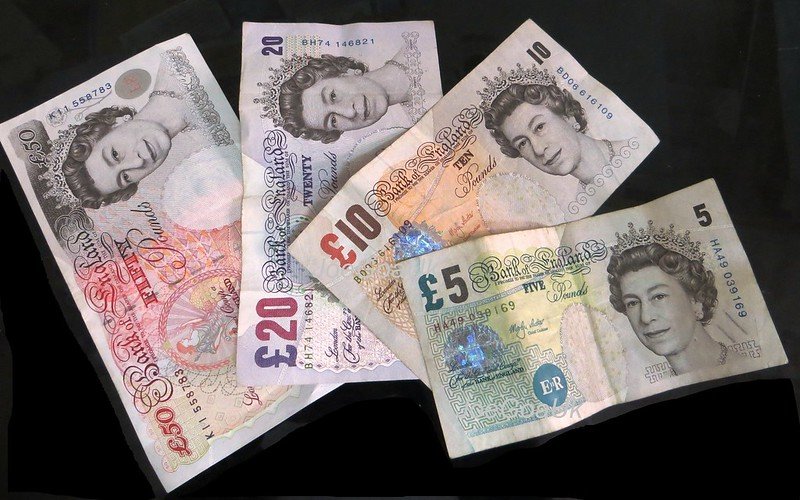
GBP image created by Joegoauk Goa and is used under creative commons.

Related posts
Political narratives
The right finally discovers that life sucks for Millennials, but guess who they still blame
Political narratives
Union-Jack.jpg
Political narratives
Who really holds power? The cultural illusion of middle-class dominance
Political narratives
How should the left view the porn industry?
Political narratives
August 22, 2023 /Alastair J R Ball
Political narratives
Comment

A hipster’s take on crime straight from the murder capital

July 25, 2023 by Alastair J R Ball in Crime

Good, honest, salt of the earth, working class, socially conservative people are being menaced by quad bikes and weed smoke, if you believe the champions of the soft-left, Paul Mason and Keir Starmer. If you think this sentence is ridiculous then you're a hipster metropolitan liberal, who lives in a cosy bubble of craft beer and Korean barbeque and has no connection to the plight of the honest man.

Being taken seriously on the issue of crime (which apparently involves saying silly things) is part of Labour leader Starmer’s march on the middle-aged homeowners in small towns. These are the people who voted for Brexit and the Tories in 2019. Doubling down on crime makes sense as a political strategy, as voters who want a tough stance on crime tend to vote Tory and flipping the perception in (some) voter's minds that Labour would be better at reducing crime could help the party win some marginal constituencies.

I’m not a fan of this tactic. But there is truth in the fact that the Tories’ austerity program has reduced police numbers and made it harder for them to manage their workload. Also, it’s worth noting that increasing the number of police was a policy in Jeremy Corbyn’s 2017 and 2019 Labour manifestos. The perception that crime has increased plays into the narrative outlined by both Corbyn and Starmer, that many years of Tory rule has led the nation into a state of decline and left the public realm devastated.

The tough decisions to tackle the problems with the police

Labour parking their tanks on the Torys’ lawn on the issue of crime makes me uneasy for several reasons. The first is that there are a lot of problems with our current police services, which go beyond their lack of funding. The Metropolitan Police have been found to be rampant with misogyny, homophobia and racism. Remember that a Met police officer was convicted of raping and murdering a woman recently, and his pattern of concerning behaviour prior to the murder was overlooked.

There are clearly institutional problems with the police in this country - not just the Met - and I want the largest party of the left to be getting stuck into tackling these problems; from sexual harassment, to the overuse of stop and search in ethnic minority communities, to spying on legitimate political organisations. Labour should be proposing that when in government they will make the tough political decisions to fix the problems with the police. I don’t want the party to be uncritically holding up the police as a solution to a range of social problems, when the police are the cause of some social problems.

The second area of concern is that more funding for the police will make existing problems larger. If new police officers are joining sexist and racist police forces then they’ll just be more people in a bad system, which means more people will be harassed or unfairly arrested or unfairly spied on. This means that reform of the police, not more money for the police, should be the priority of the Labour Party.

Yet again it’s socially conservative Boomers

The other thing that concerns me about this focus on crime is it once again shows whose opinion Labour is interested in; i.e., socially conservative Boomers, who voted for Brexit and feel threatened by kids hanging out in their local park. Great, let’s hire more police and sort that out. That is definitely the most important issue affecting communities across the country.

Do you live in a city and are concerned about police targeting racial minorities? Well then, get back to your craft beer you hipster. Can’t you see you live in a bubble and are completely disconnected from the views of ordinary, good, honest people?

Are you concerned that the reason why kids are hanging out in the park is because austerity has meant all the youth programmes have closed? Sorry, there’ll be no money for youth programs as Labour has to maintain a balanced budget because Steve in Nuneaton is worried about Labour turning on the spending taps and he really really really doesn’t want to pay more taxes (although he is very into more money for police and the army).

Tainted by association

Socialists, or anyone  concerned about uncritically expanding the reach of the police, are dismissed as being wishy-washy, bleeding heart, hipsters. We’re told that we’re out of touch because we live in a bubble called “London” or “Bristol” where people think and act differently to good, honest, salt of the earth types. The people who Labour want to win the votes of. The people Labour will listen to.

If Labour were to consider our views, then they would be tainted by association with such out of touch weirdos and the proper, decent, hard-working, everyday British families with their  semi-detached house in a small town and two cars would all vote Tory just so that London can get a kicking, even if the Tories’ main policy was to sacrifice all first born children in a ritual to resurrect Margaret Thatcher.

I admit that London is a bubble where people act in a certain way, but so is everywhere. Remember, there is a town where they roll cheese down a hill. Having a liking for pulled pork, craft beer, independent cinemas and restaurants you have to queue to get into isn’t that strange.

The dual nature of London

There is a strange dual nature to London. London is apparently insulated from all the harshness in the world that makes Boomers in small towns hate the young, immigrants, trans people and anyone without a double fronted house. The harsh realities of life outside the prosperous cities is always held up as an excuse for the reactionary views of people in towns, and city dwellers are told it’s wrong to lecture these people on not being bigots because they don’t have it as easy as people from places where there are more than two jobs in the museum sector.

We are told that the views of people in towns on crime, immigration or trans-rights cannot be challenged and are so deeply ingrained that Labour must pander to them to be elected. London is a strange place where people do odd things like not being racist or transphobic. We have that luxury because we live in a lovely comfortable bubble. However, London is also where a lot of the crime takes place.

I have lived in East London for nearly 15 years, and more than half a dozen murders have taken place on the streets I have lived on. Despite living in what could be considered a crime hot spot - a 15-year-old was stabbed to death outside my local gym the other month - I don’t want to see loads more funding for the police. I want to see Labour tackling the problems of misogyny and racism in the police force.

The people whose opinions matter

Apparently, that’s a hipster opinion and not to be considered by politicians. Also, before you ask, yes, I have been a victim of crime and, yes, I called the police when I was (not that it made any difference). I’m not saying no police at all. I’m saying tackle the problems of institutional racism and misogyny in the police. That should be clear from the above.

It’s strange that Londoners, Bristolians, Brummies, Mancunians, Nottinghamites, etc are considered too soft to have a valid opinion on crime (especially if you’re young) because, generally, we don’t want loads more police. What we need to do is listen to someone who doesn’t live in a hipster bubble. Someone from a small town where kids smoking weed and riding on quad bikes is a serious problem. These people really know what it’s like to live surrounded by crime. No, we don't want the opinion of people who live in the murder capital and/or are fans of The Murder Capital.

I would like someone to explain to me how I can both be living in a softy bubble and in a gritty urban area? Or is it that my opinion on crime, or any other issue, isn’t going to be taken seriously by Labour unless it chimes with what Daily Mail reading Boomers think? After all, they’re the people whose opinions matter.

Related posts
Oct 31, 2025
Farage’s new immigration plan is cruelty as a governing principle
Oct 31, 2025
Oct 31, 2025
Trump-rally.jpg
Sep 30, 2025
Dr. Strangelove goes to Tehran: The hottest new war nobody ordered
Sep 30, 2025
Sep 30, 2025
Sep 16, 2025
The right finally discovers that life sucks for Millennials, but guess who they still blame
Sep 16, 2025
Sep 16, 2025
July 25, 2023 /Alastair J R Ball
Crime
Comment

What do people mean when they say they’re “culturally Christian”?

June 20, 2023 by Alastair J R Ball

Predictably we’re having another culture war, this time over the census. Specifically, over the fact that now less than 50% of the country identify as Christian. This is most likely the census catching up with reality. Church attendance has been falling for years and parish churches are closing at record rates. Now the census is reflecting that, as people who don’t attend church stop ticking the Christian box. 

People declaring that they are Christian on the census despite not attending church or fasting during lent has several causes. One is that faith is a private matter, and many people might say that they have accepted Jesus Christ in their heart and feel no need to attend church. Fair enough. Although the point of a religion is the rules that govern life, such as keeping the Sabbath day holy, and ticking the Christian box on the census implies acceptance of the whole Christian package, not just the personal Jesus accepting bit.

It’s also likely to have been caused by a lot of people considering Christianity to be their cultural identity. This might involve attending carol services at Christmas, making December more meaningful than it only being the shopping and overeating month. It also involves people feeling a cultural connection to their parents and grandparents, who were more ostentatiously religious, or at least put more stock in sticking to the rules of Christianity even if it did mean losing your Sunday lie in.

“Culturally Christian”

Whatever the reason for the disconnect between church attendance and census data, the latest figures now reflect what everyone already knew was going on. That is apart from conservative loud mouths.

This change in the numbers has led right-wing political provocateur Tom Harwood to say that there should be an option on the census for “culturally Christian” which I guess is for people who like carols and Easter chocolates, but don’t believe in God or attend church.

The way that many people experience Christmas and Easter - including Christians, atheists and people of other faiths - has more to do with capitalism than religion. It’s more about shopping and time off work than a religious festival.

Still a Christian country

To what end would it be worth recording people who are “culturally Christian”? It appears to be a way to indicate that people aren’t either Muslims or liberal secular atheists, which is why it appeals to right-wing agitators.

What they want is a way to claim this is still a Christian country and not a secular multi-faith society, even though most people aren’t Christian or churchgoers. They’re trying to loop everyone who likes chocolate and days off work into a specific identity to make it look like the majority.

That is moving the goalposts to benefit the people who want to hold onto a 1950s vision of Britain as a Christian country and label all the changes that came after as unnatural and against our character.

The cloak of culture

Trying to create a cultural identity, let’s call it Culturally Christian, as a rallying point for political beliefs makes sense. Identity is bound up with politics in a way that goes beyond what’s labelled as “identity politics” such as Black Lives Matter or LGBTQ+ activism.

Everything from where you live to what you eat or what entertainment you enjoy is bound up in political beliefs. Witness the difference between the Workington estate pub, covered in flags and proudly advertising Sky Sports, to the East London craft beer co-op that only serves beer from independent breweries. Neither are overtly political, the way Liberal or Conservative Clubs are, but if you survey the politics of each’s customers the stark political divide in this country would emerge from behind the cloak of culture.

Culture makes politics more than abstract thought. It makes it tangible through the rituals of everyday life. What people like Harwood want is a way to claim that the rituals and values of small villages in Oxfordshire are that of a significant part of the country, to make a political argument about how this country should be run. Even though this is clearly not the values that most British people have. The future is urban, multicultural, young, and not Culturally Christian.

The will of the masses

That is the root of this argument over the census and what people put down as their religion. It is an attempt to argue that there are many millions of conservatives in the country because most people like presents at Christmas and chocolate at Easter, whatever their religion.

It is also an attempt to assert that Britain is still a Christian country, despite fewer and fewer people attending Church or identifying as Christian. A few conservative Christians want to claim that their agenda against multiculturalism, diversity and tolerance is the will of the masses.

Well, it isn’t. Most British people are happy that this is a diverse country with people practising many religions and many people without a faith. Yeah, there are a lot of people with strong views on immigration, but that’s not the same as being a conservative Christian of the flavour who reads the Spectator, joins the Tory Party and wants to hold onto a fading vision of 1950s Britain. The culture and values of conservative people in rural Oxfordshire are not the values of most people in modern Britain and I don’t need census data to know that.

Related posts
Sep 16, 2025
Political narratives
The right finally discovers that life sucks for Millennials, but guess who they still blame
Sep 16, 2025
Political narratives
Sep 16, 2025
Political narratives
Union-Jack.jpg
Aug 20, 2025
Political narratives
Who really holds power? The cultural illusion of middle-class dominance
Aug 20, 2025
Political narratives
Aug 20, 2025
Political narratives
Apr 12, 2025
Political narratives
How should the left view the porn industry?
Apr 12, 2025
Political narratives
Apr 12, 2025
Political narratives
June 20, 2023 /Alastair J R Ball
Comment

As the Tories and Labour become increasingly similar, many left-wing voters find themselves politically homeless

May 16, 2023 by Alastair J R Ball in Starmer

Pro- law and order, pro-landlord, anti-immigration, angling for the support of middle-aged homeowners. No, I’m not describing the Tory Party, this is Keir Starmer’s Labour Party. 

An illustrative case is the recent government announcement that it will be housing migrants in ex-military bases and is "exploring the possibility" of using ferries as floating detention centres. This comes after a furore in the right-wing press about how much it’s costing to house these vulnerable people in hotels.

Now people who are fleeing wars and oppression, and come to Britain in search of something better, will be housed out of sight as much as possible, less the sight of the needy upset some angry Boomers. This is the sort of outrage that the opposition should be opposing on moral grounds.

The Labour response, or lack of

Where is the Labour opposition to this? Shadow home secretary Yvette Cooper said the plan was "an admission of failure" on asylum policy, which is hardly a plea for better conditions for her fellow human beings. Kier “human rights lawyer” Starmer has not gone out of his way to make housing vulnerable migrants a Labour priority. He’s more interested in winning over the people who think shoving migrants out of sight and into poor quality accommodation is the best way to treat the needy.

Labour under Starmer has no interest in standing up to the ever-increasing anti-migrant sentiment in Britain. In fact, they pander to it as much as they can. What will happen when angry voters demand something even more dehumanising in the future (the likely outcome of the constantly rising hatred of migrants)? How far is too far for Labour?

Labour giving the government’s authoritarianism a free pass

The same can be said on crime, where Starmer has recently claimed that the smell of cannabis wafting through windows is “ruining lives”. This statement is daft because Starmer (who is many things, but not an idiot) must know that the war on drugs has failed and that an, at least, tacit acceptance of weed has worked well in countries like the US and Italy. It’s just further proof that Starmer doesn’t want to change anyone’s mind on these issues, only pander to their existing beliefs.

Meanwhile, Cooper isn’t causing much of a fuss outside parliament about the government’s increasingly authoritarian anti-crime policies, such as their new clamp down on anti-social behaviour. Kids who have had all their social clubs and after school activities cut now can’t hang out in parks without being hassled by the police. Where is Labour on this? On the side of the Boomers who want kids to get off the grass.

This is happening alongside new powers for landlords to evict tenants, at a time when renting for millions of people is already dangerously insecure and homelessness has risen dramatically since the Tories came to power. Again, where is Labour on this? On the side of landlords and not tenants, less they upset some middle-aged homeowners.

We don’t need two Tory parties

The thing is, we already have one party that is pro-law and order, pro-landlord, anti-immigration, angling for support of middle-aged homeowners and it’s the Tories.

We have a party that wants to turn every angry prejudice about the youth expressed in the Daily Mail into a brutally enforced ban on something. We have a party that wants to keep migrants out, landlords safe in their ability to exploit tenants, young people in their place and supports harsh policing of anyone who doesn't own a double fronted semi-detached house in a leafy suburb. Why do we need two?

Yeah, I get it

Yeah, I get that Labour is going after the voters it needs to flip to get into power and, y’know, do something to help the homeless and people on huge NHS waiting lists. The Climate Change Committee (CCC) recently warned of a ‘lost decade’ on working to avoid the worst aspects of climate change. We can’t afford to lose another and to do this we need Labour in power.

I get it that the first past the post voting system, tribal voting habits and low youth voting turnout means that some people’s votes are just more important than others. You must play the game as it is, not the one you want to play. You don’t win the FA Cup by turning up with a tennis racket.

I also get that Jeremy Corbyn, and socialists like myself, aren’t everyone’s cup of tea and Labour wants to do some things differently after losing four general elections. But there’s a huge gap between Corbyn and being so close to the Tories that it’s hard to tell the difference on many issues - other than climate change, I’ll give Labour that one.

People to the left of Starmer

It’s easy to dismiss everyone to the left of Starmer as blue-haired, craft beer drinking, very online, Novara Media subscribing, hardcore activists who only read tomes of Marxist theory or histories of how terrible the British Empire was, who attend meetings with bearded real ale drinkers still wearing the same Clash t-shirt from the late 70s who are still fighting the Miners’ Strike.

Most of that describes me (apart from the blue hair, my hair has thinned too much to dye), but that’s not everyone to the left of Starmer. There are many people I have spoken to, from teachers to millennial parents, from young professionals trapped in precarious rental accommodation to gay boomers worried about growing intolerance in public life, who are alienated by how little Labour cares about them and how much they care about the opinions of Tory voters.

These people disagree on many things, from tax to trans-rights, but they all want something a little more left-wing than what Starmer is offering. They all think it isn’t necessary to chase the socially conservative Daily Mail vote to the exclusion of all else. Who will speak for these people? The people who don’t want to build a wall around the country. The people who aren’t horrified by the smell of weed.

Politically homeless

Of course these people don’t matter to Labour, Starmer and his cheerleaders in the press, although even they can only manage tepid optimism. To them the only people that matter, the only real people, are socially conservative, middle-aged, home owning swing voters in marginal seats. Workington Man and Stevenage Woman. The sort of people who think Gary Lineker is a dangerous left-wing radical.

We now have two main parties representing these voters and if you want anything to the left of this then mainstream “sensible” politics doesn’t want to hear from you. The sad thing is that there are many people on the left who are completely unrepresented by the two parties that are likely to form the next government.

I’m further left than the average person looking at Starmer in dismay about how eager he is to pander to every right-wing prejudice, from immigration to benefits. However, there is a big audience to the right of me and to the left of Starmer who now find themselves politically homeless as the Tories and Labour become increasingly similar.

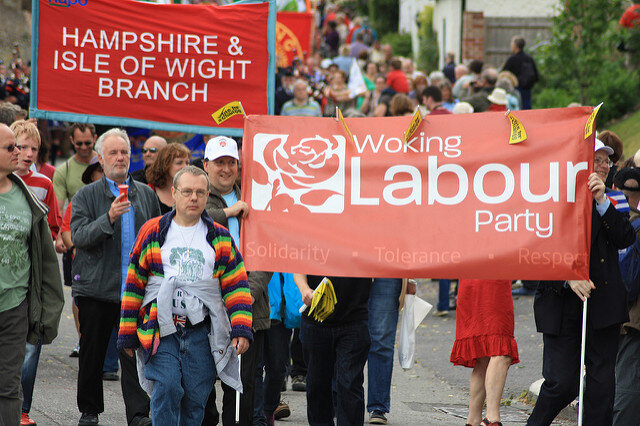
Labour Party picture taken by Andrew Skudder and used under creative commons.

Related posts
960px-Official_portrait_of_Angela_Rayner_MP_crop_2,_2024.jpg
Starmer
Rayner’s resignation is another unforced error from Labour
Starmer
Starmer
Capitalism.jpg
Starmer
“That’s Your GDP”: Labour’s big growth delusion
Starmer
Starmer
Keir_Starmer.jpg
Starmer
Labour’s plan to defeat Farage by becoming him
Starmer
Starmer
May 16, 2023 /Alastair J R Ball
Starmer
Comment

The 2024 election will be bitter and nasty

April 25, 2023 by Alastair J R Ball in Elections, Starmer

Now that 2023 is fully underway and turning out to be quite grim, let’s spend some time worrying about 2024? 

There will most likely be a general election next year. There must be one by January 2025 and the Tories will not want to have an election in January, when everyone is feeling cold, depressed and low on money, or an election at the last possible minute, when a surprise scandal can derail everything at the worst possible moment.

That means spring or summer next year is a good bet for the next election. Rishi Sunak must be hoping that inflation will subside, the strikers will either give up or he will find some legal way to force them back to work, and some form of economic growth will return. If he can sort these things out, he might think he has a shot at winning an election and call one.

A shield against being called woke

There’s a lot of ifs in the above, but quicker reversal of fortunes have happened in recent years. If Sunak can’t deliver at least a few modest accomplishments, then the only option will be to go full culture war and spend all day accusing Labour of being so woke they want to ban curtains or some bullshit.

If this cultural war tsunami bounces off Labour then maybe all of Keir Starmer’s pandering to the prejudices of angry, socially conservative Boomers will have achieved something. Maybe Starmer has come up with a winning strategy, that by saying that there’s little difference between Labour and the Tories on immigration he is building a shield against the electorally toxic accusation of wokeness.

Possibly. However, this shield will have to stand up to the strongest battering that the right-wing press can throw at it. When everyone from the Prime Minister to GB News is screaming that Labour is the vanguard of the woke Stasi, and that they will critical race theory your grandma, then whatever Starmer has done to purge left-wing people from Labour will make no difference. People will still think he is woke.

Keep the focus on the economy

There is another way that this can backfire, which is that the electorate may be unmoved by a culture war. Yes, Sunak might be gaining on Starmer in turns of personal popularity by making a strong stance against small boats, but most voters are still more concerned about their energy bills and mortgage payments.

All the time Starmer spends parking his tanks on the Tory’s lawn on issues such as immigration is time he’s not spending talking about the issues he’s most likely to win on: cost of living, inflation and the economy. If I were advising Starmer, I would recommend he keep the focus on the economy, instead of deliberately pissing off the people drinking artisan coffee at places overlooking the Regent's Canal because he thinks this will win some voters in a former mill town.

The rumble in Islington

Then there’s the situation in Islington. A large proportion of the election coverage will focus on Jeremy Corbyn’s run as an independent. Aside from formally testing the idea of whether people vote for parties or candidates, this race will profit no-one on the left.

It will be a huge distraction for Labour while they try to sell their program of government to the country. It’s a big tactical blunder on Starmer’s part to create the circumstances where a huge distraction will arise at the most crucial moment.

Corbyn should be pissed off at how he has been treated. He’s represented Islington for Labour for decades and having that taken away is nothing short of an outrageous slap in the face. Labour Party members should also be angry that the chance to choose their local MP has again been taken away from them.

Keep the focus on the Labour left

For socialists, this will once again mean spending huge amounts of energy defending Corbyn instead of building up a socialist movement that goes beyond the fanbase of one man. It also means that other decent left-wing Labour MPs, such as Clive Lewis or Zarah Sultana, could get chucked out of Labour for supporting Corbyn, which will only hurt the socialist movement more.

I find myself agreeing with veteran Labour left-winger Jon Lansman that Corbyn’s energy would be better spent leaving parliament to spend more time on politics, as Tony Benn said. Corbyn would be a great figurehead for a socialist movement outside parliament, which is where the momentum is at its strongest and is likely to make the biggest difference.

The socialist movement in parliament and communities

The socialist movement in parliament has faltered since Corbyn lost the 2019 election. This is largely because we thought that we were electing a left-wing leader in Starmer. We weren’t. He has used the power of party leader to push the left of the Labour Party as far out of view as possible. After setting the agenda for two general elections, socialists find ourselves marginalised again.

This is mainly because of Starmer’s lies, but it is partly because as socialists we made little effort to expand our movement beyond support for one man. As soon as a socialist stopped being leader of the Labour Party, socialist politics disappeared from the national stage.

There are movements in communities across the country, from Extinction Rebellion to ACORN via many local campaigns, which are making a difference and need a parliamentary voice. When the next election comes, we should spend our time getting sympathetic socialist Labour MPs elected to support the wider socialist movement in the country.

Past leaders stayed on

I also agree with Lansman that Michael Foot, Neil Kinnock and Ed Miliband were not forced out of the party after losing a bigger share of the electorate, and Corbyn’s loss is the reason the NEC is citing for not letting him stand again. It’s very unfair to push Corbyn out of the party for this reason when there is no precedent for this.

Labour should let Corbyn stand as an MP for the party, mainly so that this race doesn’t dominate the news during the election. It would be the sensible thing to do. Socialists should also not let our strong feelings about Corbyn give Starmer the excuse he’s looking for to get rid of other left-wing Labour MPs.

If you want to piss off Starmer, help get more left-wing Labour MPs elected. That will cause trouble for him and could be very effective for the left in the event of a hung parliament.

An ugly campaign

There are known unknowns in the next election as well. The SNP’s recent implosion could put Scotland back in play for Labour, but not if Starmer leans into the SNP’s narrative that the three UK wide parties are all regressive English social conservatives at odds with Scotland’s long history of progressive radicalism.

Tactical voting is likely to be bigger in this election than any previous one. This could lead to a coordinated exchanging of Labour and Lib Dem votes in an informal anti-Tory alliance to swing marginal seats. However, socially liberal Lib Dem voters might be put off by Starmer’s lines on drugs or anti-social behaviour. This is especially true of young voters, who find themselves politically homeless following Starmer’s lurch to the right.

An election is coming and it will be bitter and nasty. The Tories won’t give up power easily. They’re wounded, which is when they’re at their most dangerous. There’s no-one they won’t demonise or stir up hatred against to win this election. As socialists, we need to be ready to fight this ugly campaign when it comes.

Polling station image taken by Rachel H and used under creative commons.

Related posts
960px-Official_portrait_of_Angela_Rayner_MP_crop_2,_2024.jpg
Sep 9, 2025
Starmer
Rayner’s resignation is another unforced error from Labour
Sep 9, 2025
Starmer
Sep 9, 2025
Starmer
Capitalism.jpg
May 27, 2025
Starmer
“That’s Your GDP”: Labour’s big growth delusion
May 27, 2025
Starmer
May 27, 2025
Starmer
Keir_Starmer.jpg
May 13, 2025
Starmer
Labour’s plan to defeat Farage by becoming him
May 13, 2025
Starmer
May 13, 2025
Starmer
April 25, 2023 /Alastair J R Ball
Elections, Starmer
Comment

Ten Days at the Space attempts to be as radical as the Russian Revolution

March 28, 2023 by Alastair J R Ball in Revolution, Theater

We may be living in revolutionary times. Extinction Rebellion are taking to the streets to prevent a climate catastrophe and the amount of workers on strike has not been this great in 50 years. It’s only natural that this potentially revolutionary moment is reflected in art.

This is why I was excited to see Ten Days, which recently finished its run at The Space theatre in the Isle of Dogs, a play that shows the revolutionary possibilities of the present by connecting now with the most famous revolution of all: the Russian Revolution.

The play charts the ten days that led to the Bolshevik’s revolution in Russia in October 1917 (by the Julian Calendar used in Russia at the time). It’s based on the account written by American journalist John Reed, who had an astonishing level of access to the senior people behind the revolution at that crucial time. His account is the most compelling and comprehensive of those fateful days that shook the world.

A radical approach to theatre

This new stage adaption of Reed’s book was written and directed by Matthew Jameson and performed by BolshEpic Theatre. It attempts to be as radical in its approach to theatre as its subjects were in their approach to politics. This included pay-what-you-are-able pricing and means to draw the audience into the radical events of the play (more on that later).

At nearly three hours Ten Days is a long production, but it’s still a condensed version of the events leading up to the revolution. Jameson himself plays John Reed and moves through the action to narrate events. Jameson made the sensible decision to cut many of the long speeches that Reed reproduced in great detail, which gives the play a fast pace that helps offset its long running time.

Many short scenes keep the drama focused on the narrative of a country hurtling toward revolution and the small cast cope well switching between different characters and locations with minimal set and costume.

The appeal of the Bolsheviks

The production’s great strength is how it captures the rising tension as the situation escalated in St Petersburg in 1917. You feel the growing frustration as the unpopular provisional government continued to prosecute a disastrous war whilst failing to deliver meaningful improvements in living conditions. This caused the Russian people to look to Vladimir Ilyich Ulyanov - aka Lenin - and the more radical Bolsheviks - who offered peace, land and bread - as the solution to their problems.

The play captures the frantic feeling of those crucial days, as Reed does in his book. Ten Days is filled with the possibilities of radical change following the February Revolution that many felt had not changed Russian society enough. Frenetic uncertainty was seized by the Bolshevik’s to lead a second revolution in only a few months.

This is mainly achieved through a strong script and a series of great performances, notably Matthew John Wright as Lenin and Oyinka Yusuff as Leon Trotsky who form the core of the play. With many cast members assuming many different roles of both historic figures and representatives of broad social groups, it helps to have these two actors as anchor points portraying the two most important people in the story.

Bringing the history to life

As well as capturing the mood of the time in an entertaining way, there are lots of small details in the play that go beyond Reed’s book and show that Jameson knows his subject matter. All of the key factions and historical figures are included, which is a lot of people for a small cast to represent.

Many important historic details, which less well researched accounts overlook, are included; such as the February Revolution beginning with women marching on International Women’s Day, or the fact that the storming of the winter palace was more of a quite creeping in through a backdoor than the spectacle staged by Sergei Eisenstein in his film October: Ten Days That Shook the World.

The play also includes many of the comedic moments of the revolution; such as Lenin’s enthusiasm for disguises, the delay in beginning the October Revolution that was caused because a comrade at the Peter and Paul Fortress couldn’t find a red light to signal the Bolsheviks and Kitchkin declaring himself leader of all of Russia when he barely controlled the Winter Palace in St Petersburg.

Modern parallels and modern culture

The radical history is very entertaining, but to become a transcendent work of art this needs to connect with how the audience feels right now. Many modern parallels are drawn out; from strikes, a cold winter, inflation, a useless and unpopular government and above all a feeling that everything is getting worse, everyone has had enough and change is needed.

Modern language is used in the script to reinforce the point, such as references to “snowflakes” on the left or fighting in Ukraine. Recent dance music was played in the intermission, whilst a video was projected onto the stage approximating how cable news would cover the fateful ten days if they were happening right now. Following the climax, the cast exited to the sounds of Pig With The Face Of A Boy’s Complete History Of The Soviet Union, Arranged To The Melody Of Tetris, which ended proceedings on a humorous note.

Rising to the revolutionary moment

Not only did the play attempt to make its radical themes relevant to the modern day, it also attempted a radical use of the medium of theatre. Red flags were handed out to the audience, who were encouraged to wave them, participate in the chanting and to keep our phones on to take pictures during the performance.

The audience (at least at the performance I attended) didn’t rise to the revolutionary moment. We behaved like a traditional audience, watching events in silence and not participating. The fact that the people were hesitant to act when presented with something radical was itself a more powerful metaphor for the present political situation than the historic parallels that Ten Days drew out.

Are we ten days away from a revolution?

Despite the audience not embracing the more radical parts of the show, I was impressed by Jameson and BolshEpic Theatre wanting to create a piece of art that captured (the spirit at least) of the revolution in avant-garde art that was unleashed by the Russian Revolution. Their imagination and creative use of a small theatre, minimal set and props is inspiring. Revolutions, artistic and political, come about by radical ambition and it was great to see this alive in the 21st century.

Ten Days is a great dramatic play about a key moment in 20th century history. It is more than an entertaining retelling of historic events. This play is urgent, relevant and has something to say about contemporary politics: i.e. when people are suffering we may only be ten days away from a revolution.

Monument to Lenin image created by Watchsmart and used under creative commons.

Related posts
Russian-Revolution.jpg
Mar 28, 2023
Revolution, Theater
Ten Days at the Space attempts to be as radical as the Russian Revolution
Mar 28, 2023
Revolution, Theater
Mar 28, 2023
Revolution, Theater
Russian-Revolution.jpg
Nov 5, 2017
Revolution
100 years since the Russian Revolution: The legacy for the left
Nov 5, 2017
Revolution
Nov 5, 2017
Revolution
Russian-Revolution.jpg
Oct 29, 2017
Revolution
100 years since the Russian Revolution: What happened
Oct 29, 2017
Revolution
Oct 29, 2017
Revolution
March 28, 2023 /Alastair J R Ball
Revolution, Theater
Comment

Saying Gary Lineker should lose his job over a tweet is biased, after what Andrew Neil and Jeremy Clarkson got away with

March 14, 2023 by Alastair J R Ball in Political narratives

Conservatives are defending free speech. Gone are concerns about insulting god or Jesus.  The right is defending the freedom to scream abuse into someone’s face. Don’t like it? Then you must be a snowflake.

Of course, the right’s support of free speech is not universal. Toby Young and his Free Speech Union hasn’t rushed to the defence of Gary Lineker after he was cancelled by the BBC for expressing his opinion of the government. The Tory politicians and culture warriors, keen to accuse the left of being against free speech, were very keen to suppress Lineker’s free speech when he said something they didn’t like. 

Similarly, the brigade who defended peoples’ right to offend others, when those being offended were Muslims and trans people, get pretty offended when you criticise the government or soldiers or patriots. They then seek to cancel the offender as much as possible.

Moonlighting for the right

There is a clear hypocrisy in how Lineker has been treated. He tweeted his opinion from his own Twitter account and has faced consequences for it. These are now rescinded because these consequences detonated the sport of football for a weekend and people noticed.

Meanwhile, Andrew Neil was able to be chairman of the Spectator (a publication that positions itself slightly to the right of Ivan the Terrible) whilst working in BBC news, and this was considered fine. Jeremy Clarkson was allowed to write a column in The Sun at the same time as hosting Top Gear, which no one minded. Not even when he claimed on The One Show that striking workers should be shot in front of their families.

My view is that, when not on the BBC’s time, people should be allowed to say, write or tweet whatever they want. If Neil wants to moonlight for the Spectator that’s fine, but Lineker can tweet whatever he likes about the government. The problem with this position - or whatever the actual BBC position on impartiality is - is that it isn’t being consistently enforced. This is bias.

Soapboxing on how nasty the Tories are

The Clarkson case is worse. Not only was Clarkson able to voice his views on the BBC’s One Show, he was able to use his supposedly impartial BBC general car themed entertainment show to slam London Mayor Ken Livingston over bendy buses and whatever else was grinding Clarkson’s gears that week.

If this is allowed, then surely Lineker can tweet about politics on this private Twitter account. It’s not like he’s soapboxing on how nasty the Tories are in between the highlights of the Leicester/Arsenal match before turning to Ian Wright (or someone else I vaguely remember from collecting football stickers in the 90s) for his opinion.

Don’t listen to Joe Rogan

We should allow for as much freedom as possible in our laws, whilst using the power of the state to constrain speech only in the case where it is causing harm. That’s the legal argument for free speech, which I laid out in a previous post. However, the issue of free speech extends beyond what’s allowed under law.

I previously wrote that Joe Rogan shouldn’t face legal consequences for allowing Dr Robert Malone on his podcast and spreading anti-vaccine nonsense, but I wouldn’t recommend listening to his podcast where the ill-informed are allowed to say whatever they like, confidently and without push back.

Similarly, if you don’t like what Lineker said then don’t watch Match of the Day or follow him on Twitter. I hear there are other football shows and Twitter feeds out there.

Muzzling people you disagree with

What Lineker faced was clearly disproportionate and unfair. It’s not fair that conservatives get away with a lot more, especially when what they’re saying isn’t going out via the BBC itself (as in the case of Lineker’s tweet).

Also, if you think that Ricky Gervais or Dave Chappelle should be able to say whatever they want about trans people and face no push back, but Lineker should lose his job for exercising his free speech, then it’s time to admit you just want to muzzle people you disagree with.

That is also not defending free speech. The left are supposedly snowflakes and against free speech, but the right is pretty keen on shutting up anyone they disagree with. What happened to Lineker shows that there are many on the right who want to silence anyone who disagrees with them. Defenders of free speech my arse, is all I say to that.

Related posts
Political narratives
The right finally discovers that life sucks for Millennials, but guess who they still blame
Political narratives
Union-Jack.jpg
Political narratives
Who really holds power? The cultural illusion of middle-class dominance
Political narratives
How should the left view the porn industry?
Political narratives
March 14, 2023 /Alastair J R Ball
Political narratives
Comment

Populism isn’t popular but still politicians want the support of populist voters

February 21, 2023 by Alastair J R Ball in Political narratives

 We live in the age of populism, apparently. This is a time when politicians say what people are thinking and don’t follow mainstream orthodoxy set by the Economist and the Financial Times. Okay, so why are politicians so unpopular with everyone? Young or old, left and right, we all hate politicians. Is the populist message not getting through?

Of course, when we say populism, we mean a certain type of right-wing populism. The Donald Trump or Nigel Farage anti-immigration type. If this is populism, why does everyone I know hate it? From the Boomers to Zoomers, everyone I know, they all can’t stand Trump or Farage. How popular is populism? And more importantly, who is it popular with?

I probably do live in a bubble, along with all those Boomers and Zoomers that I know, but then again so does the person who gets all his politics from The Sun or Ben Shapiro, and his “populist” anger is validated by politicians on the left and the right who talk endlessly about the “legitimate concerns” of people who rage about immigration all the live long day. However, my, and my Boomer and Zoomer friends, concerns about the environment are not “legitimate”. 

Legitimate concerns about housing

Yes, most people (in Britain at least) are sceptical about immigration. However, housing consistently ranks amongst the most pressing issues in voter’s minds, yet our so-called populist politicians don’t speak on it. It’s not just the people of East London - who all work in social media and then chow down ramen and craft beer at the weekend, whilst living in tiny flat shares into their late 30s, (y’know, not real people who don’t have “legitimate concerns”) - who are concerned about housing. Still Generation Rent aren’t considered populists.

From Workington to Warwick, housing is too expensive, private renting is poorly regulated, conditions are bad and even people with really serious need can’t get social housing. Surely, this is a cause for populists to take up? Especially, considering how many MPs have second homes or are landlords.

As Samir Jeraj wrote in the New Statesman: “Ending no-fault evictions brought together an unlikely alliance, from Michael Gove and Shelter through to radical grassroots groups who physically block evictions.” Ending no-fault evictions would be popular, piss off “elites” - i.e. the wealthy property owners, wouldn’t cost much and would also land a blow for the ground down everyperson. Isn’t that supposed to be the point of populism?

Populism isn’t popular

Is populism, perhaps, not what we have been led to believe it is? Maybe it’s not the roar of resistance by the ground down many against the powerful few, but instead a policy and communications programme aimed at activating the support of a certain set of voters? Y’know, like everything else in politics?

Populism isn’t popular with everyone, just a small group of people. The Farages and Trumps of this world are popular with a certain section of society and are toxic to almost anyone else. Both of their big electoral accomplishments, Brexit and the 2016 US election, were only achieved because both Farage and Trump had oppositions that were broadly unpopular - the EU and Hilary Clinton.

Who are the populists?

Who are the people who love populists? They are typically white, usually (but not exclusively) male, live in small towns, are older and didn’t attend university. Those last two are certainly the most important. These people are anti-immigration, anti-London, anti-mainstream politicians, anti-woke, anti-young people. 

Despite the claims that they are the overlooked masses or members of the working class, (see the discussion on “what is the working class” in this essay) they are more likely to be home owners or even private landlords. The more you look at it, the more populism seems to be the whims of a certain section of society.

What is unpopulism?

It’s not just housing. The environment is a key issue where there is a lot of public agreement, but little action from Westminster. However, agitating against Net Zero Emissions and in favour of the “man in the street’s” God-given right to drive whatever car he wants as much as he wants is the next major front for the populists. 

As Adrian Wooldridge wrote in the Economist’s Bagehot column: “On environmental policy, increasing numbers of Conservative MPs, such as Steve Baker, an influential backbencher, worry that attempts to reach ‘net zero’ will go down badly with the red wall. A growing crowd of right-wing MPs, columnists and think-tanks, such as Net Zero Watch, are pressing for a referendum on the topic.” 

Wooldridge goes on to discuss what he calls “unpopulism”: the idea that populist policies are not broadly popular, but do appeal to a certain section of society. He wrote: “The first signs of unpopulism emerged during Britain’s departure from the European Union. Politicians of all stripes argued over minutiae such as data-protection rules and phytosanitary standards. Beyond broad principles, few ordinary people cared. Yet in that debate, proverbial voters with a striking tendency to repeat MPs’ own views on, say, membership of the customs union, kept cropping up.”

Not the will of the masses 

This is not an age where populists are fighting on behalf of the downtrodden many against the rich few. Campaigning on wages, health, housing and the environment would be more popular than the right-wing culture wars the populists are serving up. ‘Populism’ boils down to the whims of older, socially conservative, non-university educated older people in small towns. It is not the will of the masses.

Ironically this description overlaps with Essex Man, or Mondeo Man, who were personas targeted by Tony Blair and New Labour. Winning their support gave Blair huge majorities, but also meant that politics was geared towards the interests of a small section of society that had swung the 1997 election for New Labour. Rail nationalisation was out, as it didn’t appeal to the conservative leaning Essex Man, and rhetoric about bogus asylum seekers was in.

These people rewarded Blair for all the attention he gave them by voting for Brexit and then kicking Labour out of Blair’s old seat of Sedgefield. Blair could win the votes of Essex Man, by pandering to his prejudices, but he couldn’t convince him of the importance of EU membership for the nation’s prosperity.

What is popular? 

Now Keir Starmer is targeting the new persona of “middle-aged mortgage man” - who looks a lot like the old persona of Essex Man, except he lives in the North or Midlands. Again, these older, home owning, socially conservative voters are the only people whose opinions matter to Labour. Their every prejudice about the woke, the young or protestors must be pandered to and their views must not be challenged. 

These voters may be key for Labour winning the next election, but what they want isn’t necessarily popular with the whole nation. Furthermore, Labour has adopted the view that no one else’s views count. A radical programme of economic transformation would be popular across the whole country, but Labour is only interested in pandering to the small minded prejudices of people who own homes and have security. 

We would be better off if we didn’t focus so much on what so-called populists offer, or what the people susceptible to populism want. From Blair to Brexit and now Starmer, populist voters get what they want a lot of the time, but still see themselves as overlooked outsiders rallying against the mainstream. We should focus instead on what is popular: improving health, housing, wages and the environment.

Polling station image taken by Rachel H and used under creative commons.

Related posts
Sep 16, 2025
Political narratives
The right finally discovers that life sucks for Millennials, but guess who they still blame
Sep 16, 2025
Political narratives
Sep 16, 2025
Political narratives
Union-Jack.jpg
Aug 20, 2025
Political narratives
Who really holds power? The cultural illusion of middle-class dominance
Aug 20, 2025
Political narratives
Aug 20, 2025
Political narratives
Apr 12, 2025
Political narratives
How should the left view the porn industry?
Apr 12, 2025
Political narratives
Apr 12, 2025
Political narratives
February 21, 2023 /Alastair J R Ball
Political narratives
Comment

Yet another tedious Prince Harry hot take shamelessly written to get clicks

January 17, 2023 by Alastair J R Ball in Technology

The term ‘media circus’ seems like an understatement when applied to the week-long carnival of news stories, commentary and social media hot takes that have been unleashed by Prince Harry’s autobiography Spare. He’s up there in the big leagues of the hot air generators, sitting pretty alongside the Greggs vegan sausage roll. He could challenge the reigning champion: Brexit.

The rolling news coverage, digging into every aspect of the book and every anecdote about the Royal Family within it, means this book will be a big seller. It’s the first political/cultural phenomenon of 2023, and thus it is the latest battlefront in our never-ending culture war.

The dividing line of the latest hot take frenzy is simple: Harry is woke, liberal, left-wing, young, rebellious, feminist and post-colonial. The rest of the Royal Family is traditional, conservative, right-wing, old, establishment, manly, orderly. Choose your side, then spend all the hours of the day either praising Harry or damning him. Those are your only choices online this week.

Fanfare for the tedious culture warrior 

Of course, the tedious culture warriors are happy to oblige, especially on the right. There’s good money in being an anti-woke, conservative reactionary online. Like all internet money making hustles, from cryptocurrency to property speculation, there are many people willing to throw their lives into it in the hope of being super successful.

Could you be the next Piers Morgan? You could be. It only takes the right tenor of weariness, outrage and hostile sarcasm. Why not spend all your time performatively dunking on whatever the left-wing hate figure of this week is? Right now, it’s Prince Harry. Next week it will probably be Bluey. I don’t know. I don’t decide this shit.

Too silly to be believed

All this has produced a lot of breathless shouting, occasionally punctuated by moments of surrealism that, had been written as satire in an Adam McKay film, people would have said that’s too silly to be believed. Chief amongst these moments was when The Express praised the Taliban for their response to Prince Harry saying he killed 25 people in Afghanistan. Now that the right has decided Harry is the woke main character of the week, it means anyone who criticises him must be right. 

There is an entire cottage industry dedicated to dumping on Harry - and anyone else who becomes the lefty hate figure of the moment - generating clicks, retweets and shares from the perpetually outraged and perpetually online, all in the hope of one day having a show on GB News. 

This right wing media ecosystem (not too dissimilar from the ecosystem made of compressed vomit and spilt beer in a Wetherspoons carpet) consists of people like Darren Grimes (for those who don’t know, basically the Richard Hammond to Piers Morgan’s Jeremy Clarkson) who spend all day thinking of ways they can be performatively rude about the woke to get retweets from people with Union flags in their profiles and who take selfies wearing sunglasses in their car.

How did we get into this sorry state?

This isn’t the first time this bullshit has been spewed all over our collective consciousness, and the event/hot take process reached absurdity a long time ago, but it’s worth reflecting on why we mainly well--adjusted people have to suffer the Piers Morgans and Darren Grimes of the world. At least so this blog can have some intellectual credibility, and not just a series of rude comments about people with bigger followings than me.

At this point I should include my obligatory nod to James Williams and his amazing book Stand out of our Light: Freedom and Resistance in the Attention Economy, which really is the definitive text on everything that is wrong with social media and the internet. Seriously, if you read one book on this topic, read this. Williams, formerly of Google, details the different ways that social media alters our behaviour by distracting us. Crucial to the Harry hot take tsunami is Williams’s description of how social media obscures our starlight - aka our leading light or our higher goals and values. 

In a nutshell, social media changes our behaviour by altering our goals to be that of social media platform: i.e. time on site, likes, comments, engagements. We have all become convinced (and the very online more so) that loads of retweets or likes are advancing our political goals, which draws attention away from meaningful political action. 

The art of the dunk

This means politics for most people has become less marching and campaigns, and more online dunks on Prince Harry or Jacob Rees-Mogg. Or even dunks on Darren Grimes dunking on Prince Harry, or dunks on those dunking on Darren Grimes, etc. etc. until we are completely removed from the original cause of all this dunking and are lost somewhere in the warren of online discourse, like the people in The Machine Stops whose preferred interaction with the world is reading commentary on commentaries of mediated realities. 

Harry, and the hot take volcano that has erupted around him, is just this effect turned up to 11. It’s the combination of social media obscuring our starlight and our tribal online behaviour.

My hot take (as if we needed more)

For the record, my take in the whole thing is that, yes, the media was racist towards Meghan Markle and, yes, the Royal Family exploited Harry for their brand management, but the idea of a socially just royalty is a contradiction in terms.

Harry may want to reform the institution, but it would be better abolished. Especially, now that the Queen has died. Anyone calling themselves a socialist should think twice before advancing the agenda of someone with a royal title, who will never have to worry about his material needs, and whose stated goal is being accepted back into the world’s most unequal institution. An institution that has at its core the idea that some people, such as Princes, are born better than other people.

Ultimately, I want a world without people of colour being media main characters just for clicks and where families don’t do nasty things to each other, but I also want a world without people being given palaces because their family has an incredibly tenuous connection to Alfred the Great.

And in the end the dunks you take is equal to the dunks you make

It’s the right engaging in the media riot that Harry has unleashed that has made this book (and its likely follow up) a success. So, if the Darren Grimes of this world are really this angry with Harry for disrespecting the Royal Family, they should ignore him so he can’t make money doing what he currently does in books and on TV. I suspect they don’t really want him to go away or else they would struggle to find things to rail against for attention. They would have to go back to manufacturing outrage about vegan sausage rolls.

Certainly, we should all ask: what is the point of endless rounds of breathless hot takes about Prince Harry? What is this achieving and for whom? Is it just providing another Windsor with a new income stream via free publicity for his book? Is it just generating material that the Morgans and Grimes can use to make people even more outraged than they were before, to generate their own income streams? Personally, my politics aren’t a way for someone else to make money.

After we have thought about this, we should then think about what we want to do to make the world a better place. It’s probably not dunking on Darren Grimes, even if he is a dickhead, and making fun of him is fun and writing this has helped me past the time on this train ride to Nottingham. I would rather we all did something to improve this shopping trolley fire of a planet than yell at each other online. I really want people to stop thinking that yelling at each other online is how we make the world a better place.

"Prince Harry at Maxxi Museo announcing the winning design for the UK's Pavilion at Milan Expo 2015" by UKTI [closed account] is licensed under CC BY-NC-ND 2.0.

Related posts
Jul 28, 2025
Technology
Why social media platforms spread the worst political messages
Jul 28, 2025
Technology
Jul 28, 2025
Technology
Apr 24, 2024
Technology
TikTok has many problems, but the hysteria around this app distracts us from the larger problem of unregulated tech companies
Apr 24, 2024
Technology
Apr 24, 2024
Technology
Prince-Harry.jpg
Jan 17, 2023
Technology
Yet another tedious Prince Harry hot take shamelessly written to get clicks
Jan 17, 2023
Technology
Jan 17, 2023
Technology
January 17, 2023 /Alastair J R Ball
Technology
Comment

2022: The year everything got worse

December 30, 2022 by Alastair J R Ball in Year in review

I can’t remember a time when I finished a year feeling less optimistic about the future. During the last two Covid-19 ravaged years, I clung to hope that once we were out the other side of the pandemic things would be better. Oh, how foolishly naive I was. 

A year ago, the omicron variant made it looked like Covid-19 was planning a late pandemic comeback. One of the strange things about 2022 was how little the pandemic was in the news (or Brexit for that matter). The virus is still out there, killing people, but we have collectively decided to stop caring. Even the Queen managed to die of something normal, and dodged Covid-19. 

It was a year without Covid-19, but not a return to normality. The world has been rocked by economic shocks and military conflicts. We’re angrier, poorer and more ground down than ever. Each new headline only makes things worse. I just opened BBC news and read a story about child murder. 

The stupidest political misfire in history

Well, I may be tired and depressed, but one person who is having a merry Christmas is Keir Starmer. Labour is currently ahead in the polls, leading on the all-important economic competence metric, and looks likely to win big in the next election. Labour hasn’t done much to earn this lead. They sat back whilst the Tories repeatedly shat the bed and then smeared excrement everywhere whilst they were trying to clean it up. 

This year we’ve had three Prime Ministers. Boris Johnson finally faced consequences for something he had done and was booted out by his own panicked party, we then got to enjoy the spectacle of Liz Truss being PM for 45 minutes. In that time, she got to meet the Queen (who promptly died) and then detonated the economy by freaking out bankers with a bungled plan for rich people to pay less tax. Her budget may be the biggest political misfire in history, if not the stupidest. 

Now Rishi Sunak is Prime Minister and doing a Tory greatest hits show, featuring right-wing crowd pleasers such as sending migrants as far away as possible and austerity for everyone who doesn’t have a townhouse in Kensington.

The valid concerns of middle-aged mortgage men

After the populism of Johnson and the right-wing libertarianism of Truss, Sunak is styling himself as a sensible moderate. He and Starmer are busy wrestling over the same narrow band of centrist, wealthy, older voters who will decide the next election. Labour call this ideal voter, the only voter whose opinions matter and whose concerns are valid, middle-aged mortgage man. Be prepared for a lot of focus on what the Daily Mail is saying in the run-up to the next election. 

All this leaves me quite depressed. I’m pleased that Labour is ahead in the polls and there is a chance we might finally end the crippling nightmare of Tory rule, but I daren’t get my hopes up. Partly because of Labour’s ability to not only miss an open goal, but to somehow burn down the whole football stadium instead, but also partly because I’m not sure Starmer will be much better than Sunak.

Hopefully, he will reduce the staggering rates of homelessness, food poverty, fuel poverty and LabBaby Christmas numbers 1s. The most desperately needy need a government that will help them, instead of handing out lucrative public sector contracts to their rich mates. However, will Starmer do much for the millions of people who are not at the sharpest end of the sword, but are struggling after decades of below inflation pay rises? People such as young people in cities who don’t have mortgages? Probably not.

What about the people who want something different

Who will speak to the people who want things to be different? The people who want politics to not be entirely focused on what homeowning swing voters in Essex are angry about this week. The people who are sick of only hearing from people with a manic hatred of everything not British, and a vindictive desire to publish the poor, need a champion. 

Who in politics will speak for striking nurses and train drivers? Who will speak for the people whose work our society relies on and are being pushed into poverty by the rising cost of living, but aren’t middle-aged swing voters with a mortgage? The people who - whisper it - thought Jeremy Corbyn had some good ideas. Not Starmer's Labour party.

What does Labour stand for? I don’t know and I spend A LOT of time reading about politics. Labour conference this year was opened by the singing of the national anthem, producing pictures that made the party look like the villains in an unsubtle action film making a broad point about nationalism. Is this what middle-aged mortgage man wants? Frankly, it looks silly.  

We need an alternative to the alternative

Labour is for whatever the people who masturbate over the flag are for. They’re on the side of the people who post disgusting breakfasts on Twitter and claim it costs 33p to make before blaming the hungry for being hungry. This is the only alternative we have to the corrupt and heartless Tories? What is the alternative to the alternative?

Everyone from Workington to Walthamstow and Lerwick to Truro is having their livelihood assaulted by the rising cost of living, their retirement savings wiped out by inflation, their daily life ground down by low wages, whilst suffering from bad housing and worrying about the creeping march of the angry people who have very clear ideas about who isn’t British and what should be done about them.

This year we had a 40-degree day in London and arctic cold in December. Most of us want all this to stop, but what is the electoral button we press to make it happen? Vote Green? I don’t know. Have you seen Brighton Council lately?

The retro comeback we didn’t want

70s retro is back in. The energetic London punk scene is a good thing, but inflation, far-right marches and economic uncertainty aren’t good. Nurses, train drivers, tube drivers, postal workers and many more are downing tools as it’s the only way to stop all the terrible things I listed above from ruining their lives.

Of course, Labour won’t back working people organising for a fairer (read not punishing) deal. At least we now have Mike Lynch, a man who goes on TV and calmly points out the problems with this country. It’s good to see someone say: “We are all been ground down and people are right to stand up and ask for something better.” I wish Labour would do that, but I guess they’re too worried about what a 50-year-old cabbie from Hartlepool with a mortgage called Graham thinks about nurses. Everyone else likes nurses and is grateful for what they did during the pandemic, but Graham thinks strikes are the sort of thing people in London do and thus Labour won’t support them. 

Inflation and the cost of living might be bad, but they’re nothing compared to the looming climate disaster. Another year has ticked by, and we have once again failed to make the essential changes to our society and economy that are needed to stop the sea swallowing small island nations or deserts expanding, driving everyone into over-packed, poorly administered and conflict-riven cities. I’m sure only good things can come from that. 

Biden and Trump 

In the US there is at least a nominally left-wing government. Does this offer a vision for the future? Well, Joe Biden has been able to pass some legislation tackling issues from the climate to student debt. None of it goes as far as I, or many left-wing activists, would like, but it’s at least a step forwards. 

America is already gearing up for the 2024 Presidential election, with Florida governor Ron DeSantis being the latest terrifyingly right-wing person who wants to have a pop at being President. Can’t say I’m thrilled about the prospect of ten or so white male boomers spending two years arguing about who can be the worst to migrants, whilst accusing each other of being woke. At least Donald Trump is facing criminal charges for trying to overthrow the government. Well, if it isn’t the consequences of his own actions. 

Shits around the world

Speaking of angry pasty boomers who should never be allowed in charge of nuclear weapons but for some strange reason have loads of them, Vladimir Putin has won the much-contested biggest shit of the year award for invading Ukraine and unleashing the unending horror of war on the Ukrainian people, and the unending horror of war-based hot takes on everyone who does politics online.

As humans continue to flush the environment and our own civilization down the toilet, we’ll see more of the strongmen of the world throwing their weight around to enlarge their already gargantuan egos. This is likely to be a long and bloody conflict, setting the tone for many long and bloody conflicts to follow, unless we can find a democratic counterargument to the popularity of authoritarian strongmen. 

Emmanuel Macron won re-election in France, showing that the centre can prevail against the far-right. Borrowing heavily from the Starmer playbook of “offer little that is encouraging but point at how awful your opponent is,” Macron has earned himself another few years to not tackle the problems of France or the world. 

Rage against the woke

As the climate worsens there will be more waves of migration and more disruption that only fuel the fire of people like Marine Le Pen and Eric Zemmour, who seek to exploit fear and xenophobia to gain power. The left needs to be ready to argue for migration and for helping the less fortunate, not bow to popular prejudices that will only help those who seek to demonise people from other places who are in need.  

Whilst we’re starting arguments, let’s not forget the word of the year, “woke”. The beetroot-faced people of the world spent 2022 being angry at everything from pride flags to Dr Who casting, which they claim are attacks on Western civilisation. Being woke is apparently a dangerous ideology that's a threat to life, liberty and the pursuit of happiness, like Stalinism.

The march of dangerous woke young people who don’t want to be boiled alive by the climate can only be stopped by the vigilant efforts of boomers with large public profiles and lots of money leading a charge to slay the dragon of wokeness. I’m sure that Piers Morgan, Jordan Peterson and John Cleese want to do everything they can to make the world a better place. 

Tedious culture warriors 

Runners up in the hotly contested tedious right-wing bore of the year award included Darren Grimes, everyone who writes for the Spectator, everyone who has been on GB News and everyone pontificating about the woke or “snowflakes”. Bonus points if you do it whilst lifting weights, so that you look like a hybrid of a person and a sack of potatoes.

At least we can all enjoy Elon Musk ruining Twitter and himself. I can’t think of a better pairing than the world’s former richest man and dull culture warrior, and the hell-site plugged into the darkest part of our collective consciousness. They deserve each other and I hope that they make each other miserable. 

Musk is so thin skinned that he has to be on the side of the right-wing trolls as he can’t stand to be mocked by them. Now he owns the world’s most expensive midlife crisis Ferrari and is making his ineptness at business clear for all to see. Musk is final proof that capitalism isn’t meritocratic, but instead rewards rich pole climbers who are full of hot air.

We can but hope

Musk schadenfreude aside, it has been a pretty grim year. We’re all feeling the pinch of multiple economic and social crises, and I can only imagine how much worse it is for people not as privileged as me.

What is the alternative to this misery and how do we get it? Well, it’s not coming from the Labour Party, the Democrats, En Marche, or any of the global centre left establishment parties. They’re offering reheated old orthodoxies, like an attempt to make last night’s disappointing takeaway seem like something fresh and exciting by bunging it in the microwave for two minutes.

The world has changed a lot in 2022, mainly for the worse and I’m not optimistic about the future. The only option is to hope that all this misery will eventually breed the critical action needed to build something better. We can but hope. The only alternative is to descend into despair, which won’t help anyone. 

Photo of Liz Truss from Wikipedia and used under the United Kingdom Open Government Licence v3.0.

Related posts
Keir_Starmer.jpg
Dec 30, 2024
Year in review
2024: The year of volatility
Dec 30, 2024
Year in review
Dec 30, 2024
Year in review
Keir_Starmer.jpg
Dec 31, 2023
Year in review
2023: The year nothing got better
Dec 31, 2023
Year in review
Dec 31, 2023
Year in review
Liz-Truss.jpeg
Dec 30, 2022
Year in review
2022: The year everything got worse
Dec 30, 2022
Year in review
Dec 30, 2022
Year in review
December 30, 2022 /Alastair J R Ball
Year in review
Comment

Hannah Arendt would be worried about how information technology makes evil more likely

December 20, 2022 by Alastair J R Ball in Technology

If you looked up evil in the dictionary there would probably be a picture of Adolf Hitler or the Nazis, which is fair enough as they murdered over six million people. Many books have been written trying to understand the evil at the heart of the Nazi regime, but the definitive work was written by Hannah Arendt in her book Eichmann in Jerusalem: A Report on the Banality of Evil.

The book chronicles the life and trial of Adolf Eichmann who, amongst other things, planned the transportation of Jews during the Holocaust that allowed for millions to be moved to camps where they were murdered. Eichmann was not remarkable for a cold calculating intelligence. He wasn’t evil like Hannibal Lecter or Darth Vader. He wasn’t possessed by a fanatical hatred of Jews, beyond the antisemitism that was prevalent at the time. Eichmann wasn’t remarkable at all, really, apart from the remarkably appalling deeds he was a part of.

Arendt wanted to explain how someone so normal could be a key part of such massive evil. Her book also explores how we got to the point where great acts of evil weren’t conducted on the battlefield or in the sacking of cities, but by bureaucrats behind desks. Her book remains the best and most insightful exploration of human evil, and should be read by everyone.

The work of genocide involves a lot of bureaucracy

Eichmann’s job was a senior - but not quite at the top - bureaucratic position in the public sector, but he participated in one of (if not THE) most awful things that has ever happened. Arendt’s book shows that in modern industrial society, the everyday work of genocide is like that of any other office job, and the people most suited to it are the same office drones that are found all over the world.

The book shows how a totalitarian system like Nazi Germany became a part of normal life. The Holocaust needed paperwork. When we think of evil, we think of something abhorrent or something whose every part is disgusting to us as moral human beings. We don’t think of things that are dull, like paperwork. Arendt argues that under totalitarianism, evil becomes everyday. It no longer looks like evil. This allows for great evil to be committed.

Doing evil requires modern infrastructure. It means people doing the office work of evil, the logistics, the memo writing, the planning meetings, the quarterly reviews. Arendt argues most of the people involved in, and necessary for, the doing of great evil are separated from the actual acts of evil: killing people, brutalising them, taking away their homes, forcing them into camps, committing mass exterminations. Most people involved in the process that leads to great evil might not think what they are doing is evil.

One of the biggest changes that has taken place between when Arendt was writing and today is that the kind of office work that Eichmann did has now been digitised. Computers have removed the need for a dystopian society to have legions of people typing out arrest warrants, a la Terry Gillingham’s Brazil. The growth of information technology means that you need fewer Eichmanns, people willing to do great evil but at a distance from it, to do something really terrible today.

Turning people into machines

As much as needing fewer bureaucrats is useful if you want to do evil, there is a more significant change that information technology has brought about that makes totalitarianism more likely. For evil to occur, something needs to happen to turn ordinary people into people like Eichmann. That something is a process that occurs in totalitarian societies, like the ones that Arendt spent her life studying.

Arendt argued that a totalitarian political system, like the one in Nazi Germany, turned people into machines and this allowed them to do the extraordinarily evil things that the regime required. She called this The Banality of Evil. Arendt argued that Eichmann stopped thinking and thus was able to be a part of a genocide. She said we need to watch out for anything or anyone who seeks to subvert our capacity for critical thinking and turn us into machines.

Totalitarian societies turn people into machines and they don’t need machines to do it. However, our modern machines make it easier to turn people into the thoughtless drone that Eichmann became. To see why that is, we need to look at another work by Arendt, The Origins of Totalitarianism.

How social media isolates us

Social media isolates us from each other as relations through technology come to replace non-technology-based relations. James Williams explores this in his book Stand Out of Our Light: Freedom and Resistance in the Attention Economy, in which he discusses how social media and mobile technology change our behaviour. One of these changes is a process that Williams describes as interactions on social media replacing the things we are seeking to achieve by using social media. This means that over time our goals change to be what social media platforms want, instead of what we want.

We might join a social media platform, install it on our phone, take it everywhere with us and check it all day because we want to connect with friends and family, or network with colleagues, but social media platforms are incapable of measuring how many meaningful social interactions we have. What it can measure is our attention to the platform, likes, clicks, video watches, etc. and platforms attempt to monopolise our attention so they can sell adverts.

Eventually, the platforms train us to see a like or comment as a social interaction with a friend or family member when they’re not the same thing. The platforms change our behaviour so that we see what they want, our attention on the platform, as what we want, for meaningful social interactions with others. Williams calls this process tech obscuring our starlight or our guiding principles behind our actions.

Our starlight is obscured

As our starlight is obscured, interactions on technology platforms come to replace meaningful human interactions. This means we become more isolated from each other, which Arendt identified as a precursor to totalitarianism.

Totalitarianism requires people to be lonely in a mass society full of people who are disconnected from each other. When you are lonely in a mass society everyone constantly assumes the worst about each other and people stop trusting each other. This is further aided by social media showing the worst aspects of humanity, from online abuse to petty put-downs. When social media has replaced meaningful social interactions, it’s easy to stop trusting other people.

Arendt wrote that totalitarianism requires people to be isolated from each other, but also be able to connect to form mass movements like the Nazi Party or the Russian Communist Party. Being lonely in a mass society is, ironically, a shared experience. Recruits to the totalitarian movement are both lonely and connected via their loneliness. Social media provides the dual purpose of isolating us from each other by taking the place of human interactions, and by allowing members of a nascent totalitarian movement to connect.

Undermining objective truth

There are other ways that modern technology can aid totalitarian movements, which is that social media, and the filter bubbles they create, undermines our shared understanding of the truth.

Arendt wrote an essay called Truth and Politics, in which she argued that facts are fragile and that organised lying is a threat to facts. She said that we cannot allow those in power to undermine the belief in facts all together. Public institutions like libraries, universities, etc. keep records of facts that can be shared and help maintain the truth. Totalitarian movements seek to attack these institutions.

By now all this should be ringing alarm bells and reminding you of our post-truth social media world where Donald Trump and his supporters attack the idea of objective reality with “alternative facts”. Arendt would have recognised the attack on truth as that of an aspiring totalitarian.

How social media undermines truth

Social media filter bubbles mean people only interact with people who share the same values, which means that a lie that reflects those values can spread without ever being troubled by the truth. Especially if that truth conflicts with these values as it will never be shared into those social media communities, protected by filter bubbles.

Platforms like Facebook and Twitter either present all information as equally valid (regardless of its source or validity) or emphasise pieces of information, articles, opinions, posts, etc. based on how much interaction they have had (again regardless of how truthful or authoritative they are). There is no quality scoring based on how true or false information is. A complete lie that generates more interactions on the platforms - as emotionally charged lies are likely to do - will appear more prominently than a mundane fact.

Arendt argued that once the idea of objective truth breaks down, the world can be reshaped to what it needs to be. Anyone can become a criminal. It can be said that a fair election was actually rigged. Human life can be redefined as worthless. These are the tools that totalitarian movements use to turn people into machines. Events like the above made it possible for Eichmann to do terrible evil. Recent technological changes have only made this easier.

Attacks on authority

Adding to the problem is the totalitarian attack on authority. Totalitarians are a subspecies of authoritarians, but at the same time they erode the idea that authority can come from anywhere outside of their movement.

Arendt wrote an essay called What is Authority? In which she argued that we no longer respect authority and this causes problems as authority is necessary for society to function. Arendt says that authority is how we get things done without having to use reason or violence. Teachers and coaches have authority, which is why we obey them. Authority allows things to be done efficiently.

Totalitarians attack other sources of authority whilst making the real sources of authority within their movement opaque. Arendt describes this in detail in The Origins of Totalitarianism. This process keeps citizens in a perpetual state of uncertainty as to who exactly has authority over them and what their instructions are. This uncertainty over authority is the everyday experience of Totalitarianism.

Choose your own authority

One reason totalitarians do this is to remove our capacity for action. Without authority, we cannot act together. The primary motivation for following an instruction is not authority but fear of violence. Arendt says that violence is the opposite of authority. A constant fear of violence is also the everyday experience of life under totalitarianism. This was most memorably captured by George Orwell’s description of Room 101 in 1984.

Social media and modern technology platforms attack authority in the way that they present information, opinions, articles, etc. based on how much they have been interacted with, instead of based on the authority of the author. This is because they want to show you content to monopolise your attention and not authoritative content. This undermines the concept of authority.

Filter bubbles that undermine the concept of objective truth also attack authority. In a post-truth world, authority can be anything or anyone you want it to be. It could be Alex Jones or Trump or someone from your neighbourhood. Why not choose an authority that shares your values? If we all live in a bubble where authority is the people we agree with then our capacity for action is reduced.

The importance of action 

The idea of action is central to Arendt’s thinking and it comes up in several of her works. Arendt wrote about the importance of the Viva Activa or active life in her book The Human Condition. She said life had three elements: labour, which is the biological stuff people need to live, work, which is making things like tools that help us survive, and action, which is the social element of human life. Arendt argues that action is essential to political life. Totalitarianism prevents action.

Totalitarianism attacks action in many ways, which is enabled by modern technology. We have seen how it attacks authority which makes action possible, but tech also makes us isolated from each other. Furthermore, it obscures the starlight of our values changing the action we want to take into one that isn’t meaningful for us but benefits the technology platforms. On top of this, it attacks the concept of a shared truth, which is necessary for shared action.

Arendt’s warning

Action is the essential element of our meaningful social and political interaction with other people. The idea undermines a lot of Arendt’s other writing. Without our ability to create action, we are prey to totalitarian movements. Without action, totalitarian movements can turn us into unthinking machines, capable of doing great evil like Eichmann. 

Arendt described all this in an age before modern computers, technology platforms and social media. None of these processes that Arendt described are new in the Information Age, however, changes in information technology do make it more likely for the processes that Arendt described to arise.

Related posts
Technology
Why social media platforms spread the worst political messages
Technology
Technology
Technology
TikTok has many problems, but the hysteria around this app distracts us from the larger problem of unregulated tech companies
Technology
Technology
Prince-Harry.jpg
Technology
Yet another tedious Prince Harry hot take shamelessly written to get clicks
Technology
Technology
December 20, 2022 /Alastair J R Ball
Technology
Comment

What do we think about when we think about Derry?

December 06, 2022 by Alastair J R Ball in Where In The World?

What do you think of when someone says Derry? Most likely the excellent sit com Derry Girls, but try and think about the place not the show. Invoking the name of any place brings certain thoughts to mind. It’s worth taking some time to examine these thoughts to make sure that our thinking isn’t guided by stereotypes or outdated information. 

So how can we think about Derry? We can think of Derry as a historic British city. It has plenty of history and is in the United Kingdom of Great Britain and Northern Ireland. It has around the same population as Carlisle, a comparison that invokes a place of a certain size and character. Also, like Carlisle, Derry is a regional hub and the only large city in a large rural area. 

Other British cities around the same size as Derry are Gloucester, Winchester and Exeter. This company conveys a different image of a city. A place that is historic, metropolitan but not too metropolitan, picturesque, big enough to have more than one Tesco and several microbreweries. All these things are true about Derry, but the way we think about Derry is not the same as how we think about Carlisle, Gloucester, Winchester and Exeter. 

A historic British city 

So, why don’t we think about Derry in the same way that we think about other historic British cities? Derry has beautiful historic buildings such as the Guildhall and Medieval Town Walls. It dates to the Plantation of Ulster, when Protestants moved over from Scotland to Northern Ireland. 

Derry was originally a monastery in the Middle Ages, involved in the Tudor conquest of Ireland, the Siege of Derry took place here in 1689 and the city was important during the Second World War. During the war, Derry was the UK and the Allies’ most Westerly port and thus where American conveys would arrive. Derry was also key to the Northern Ireland civil rights movement.

A modern British city

When thinking about Derry we shouldn’t let it be defined by its history. We can think of Derry as a modern, urban hub in a largely rural part of the country. Here the comparison to Carlisle is apt. Derry has good restaurants, bars and nightlife. Craft beer has yet to take off, but a range of enjoyable local ales as well as an interesting selection of beers from the Republic of Ireland are available in most bars.

Like most regional centres, Derry has interesting pieces of public art and modern architecture. There is the Hands Across the Divide sculpture, by Maurice Harron, and three impressive bridges across the River Foyle. There’s the Craigavon Bridge the oldest, the Foyle Bridge, which looks majestic when viewed from the river bank, and the Peace Bridge a striking curved footbridge that neatly complements the city centre. There are also murals and other pieces of public art, including the Derry Girls mural, as well as a striking modern train station.

Culture and celebrations

As a regional centre of culture, Derry hosts festivals and celebrations. Halloween is enjoyed more enthusiastically in Derry than anywhere else in the UK. When I was there every single shop, pub and hotel foyer were meticulously decorated for the occasion.

Screens around the city projected videos of Halloween characters that also reflected Celtic mythology. These were pitched at the right level of creepiness so that they weren’t naff but also weren’t too scary for most children. Music was played in public squares, whilst Halloween markets and club nights took place over an entire weekend of celebration. There is even a skeleton on the city’s shield.

Recent history

Using these parameters, we can think about Derry in the same way as any other historic or modern British City. So why don’t we? When I first asked you to think about Derry, I doubt that historic buildings, modern bridges or festivals came to mind.

When thinking about Derry it feels like a mis-categorisation or unfair to the city to include it in the same bracket as Exeter, Gloucester or even Carlisle. True, all cities are unique, but Derry stands apart from its British counterparts.

The reason is simple, Derry’s recent history casts a long shadow over any thinking about it as a place. Its medieval history and modern architecture are equal to that of Exeter or Carlisle, but it seems to be a betrayal of its recent history to foreground these when discussing the city of Derry. 

The totality of history

When we think about Derry, do we think about the demonstrations of the Northern Ireland Civil Rights Association being first banned and then blocked by the force of the Royal Ulster Constabulary in 1968? Do we think about the 1969 Battle of the Bogside, between Catholic residents and the police, which according to some accounts was the start of the Troubles? Do we think about the shooting dead of 14 unarmed civilians by paratroopers on Bloody Sunday in 1972?

These events took place before I was born, but this is what first comes to mind when I think about Derry. Do population, historic buildings, landmarks and nightlife cease to be relevant when weighted against such events? No place should be defined by one aspect of its history.

I am not for a moment suggesting that we forget about the Troubles. What I’m asking is when we’re thinking about Derry, or are thinking about how we think about Derry, are such events to be the totality of what we consider? Should we focus on what makes Derry different, rather than what makes it like other British cities?

Wildfire

Derry’s recent past is never far away. Driving through the suburbs I spied graffiti saying “No Irish Sea Border” and “Fuck Boris” on suburban walls. Recent tensions lurk beneath the surface, like the painful collective memories of the sisters in 2020’s Wildfire (set in a community on the border between Northern Ireland and the Republic of Ireland).

In the film, the buried trauma of sisters Kelly and Lauren is stirred up by Kelly’s return from a period of vagrancy and her disruptive presence upsets the fragile stability of Lauren’s life. Set to a backdrop of news stories about Brexit possibly creating a hard border on the Ireland of Ireland and with flashbacks to the sister’s childhood during the Troubles, the trauma of the family’s past and the disruption that Kelly causes serve as a metaphor for Northern Ireland’s fragile peace and tested constitutional arrangements. It shows how this sits atop painful recent history that can be sent tumbling out of control by unexpected chaotic forces.

Different and the same

It’s easy to think of Derry as different to other British cities. In many ways it is. The cities I mentioned above, Carlisle, Exeter, etc., are different because – and you have probably been yelling this at the screen for a while - they’re English and not in Northern Ireland. However, in many ways, the city is the same as the rest of the country and other cities in the Western world. There’s still Guinness and chain supermarkets, which have touched every corner of the Earth.

A recent Unite Against Racism rally demanding open borders after the drowning of migrants shows that Derry is having the same debates as the rest of the Western world. What to do about refugees and borders in the age of looming climate disasters? How do we be less racist in the 21st century? The debate continues from Derry to Doncaster to Denver.

Everywhere has history 

Every city is full of contradictions, controversies and has a complex identity. In Derry they are closer to the surface as they draw on recent history. I’m from Leicester, where we never stop reminding visitors that a King was found in a car park here - apart from when we win the odd football tournament.

We forget that this event was the culmination of a traumatic and bloody civil war that divided communities and killed huge numbers of people. The pain has faded over the centuries to the point it has been buried, resurfaced, propagandised, memorialised, romanticised, debated and finally turned into a novelty mug sold in a gift shop. Is this the fate that eventually awaits Derry’s history? Maybe, if the way that every other city treats its own complex history is anything to go by.

How we think about a place when we think about a place

Derry is a more complex place to be characterised by its most famous sitcom or most well-known historic events. Is it important to acknowledge what makes every place special and not to forget the tragedies of recent history, but it’s also important to remember what we all have in common, which can easily be forgotten when considering the highly charged emotional events of living memory.

We should be conscious of how we think about a place when we think about a place so that we don’t get trapped into the same endless cycle of historic thinking, and never to open our minds to new possibilities or a place’s ever-evolving identity.

Related posts
Florence.jpg
Aug 27, 2024
Where In The World?
We are still in the Renaissance: How the art, culture and politics of Florence helps us understand how this city has shaped the West and what could come next
Aug 27, 2024
Where In The World?
Aug 27, 2024
Where In The World?
Derry.jpg
Dec 6, 2022
Where In The World?
What do we think about when we think about Derry?
Dec 6, 2022
Where In The World?
Dec 6, 2022
Where In The World?
Shopping-centre.jpg
May 18, 2021
Where In The World?
The pandemic has shown what’s wrong with our urban environment
May 18, 2021
Where In The World?
May 18, 2021
Where In The World?
December 06, 2022 /Alastair J R Ball
Where In The World?
Comment

What is the New Right’s narrative, and why does it appeal to some on the left?

November 28, 2022 by Alastair J R Ball in Far right

The “New Right” is having a moment. That cannot be denied. Neoconservatives - with their Christian moralising about The Simpsons or Desperate Housewives, love of globalisation and outsourcing, and desire to throw around American military might - are out of fashion on the right. Now the right is all about defending Western culture, economic and political nationalism, and fighting culture wars at home, not military wars overseas.

The “New Right” is not a political party or movement or philosophy. It’s not a group of people who think one thing or even share the same values beyond the broad description of being conservative. A few things can be said for certain about them: they are on the right, they are opposed to the left, they are most numerous in America (but have counterparts in the UK and the rest of the Western world) and, most importantly, they’re strongly against the establishment of liberals and big business. In other words, their main enemy is the Third Way of Bill Clinton and Tony Blair.

This new movement is best described in this article by James Pogue in Vanity Fair. To find out more about this movement read that article. It’s full of detailed reporting from years of studying the American right. What I want to talk about is the narrative that bands the diverse bits of New Right into this uneasy alliance. Their shared worldview. Most of my analysis draws heavily on Pogue’s article and I wouldn’t be able to write this if it wasn’t for his excellent reporting. 

The Cathedral

The narrative that (broadly) unites the New Right is called “the Cathedral”, which is a term to describe the liberal (both small and big “L”) institutions in democratic society. The Cathedral was coined by blogger Curtis Yarvin (aka Mencius Moldbug) who is a known “intellect” popular with the New Right. The Cathedral narrative is difficult to define exactly, but it loosely describes a series of political, cultural and civil society institutions that create the cultural and political power nexus at the heart of America. The Cathedral extends from universities to the White House, via newspapers and business board rooms. It has power and protects its hold on power. The New Right are against The Cathedral. 

The New Right’s war against The Cathedral is mainly a culture war. The political theories behind the idea of The Cathedral are complex (although, at times, they’re conspiratorial and outright terrifying) however, on the surface the New Right are engaging in the standard anti-liberal, anti-woke, culture war that has gripped the right globally. At first appearance, it’s all very normal. They are opposed to left-wing institutions, like universities, and support right-wing institutions, like the police. However, there is something else going on here.

The New Right take the culture war to extreme ends. J. D Vance - author of Hillbilly Elegy, the Republican Party nominee in the 2022 Senate election in Ohio and member of the New Right - said to Pogue in the Vanity Fair piece linked above: “I tend to think that we should seize the institutions of the left and turn them against the left. We need like a de-Baathification program, a de-woke-ification program.” Banning everyone considered “woke” from government and cultural institutions is extreme, even by the standard of grumpy online conservatives, but what makes this different enough from the rest of the right to earn the moniker “New Right”?

Young, energetic and cool 

What makes the New Right different is that they have a cool edge that people like Piers Morgan and Nigel Farage can only dream of. They might be fighting the same culture war, but the above mentioned perpetually peeved press provocateurs aren’t the vanguard of a new culture, they're the reactionary end of an old, dying one.

The New Right has a punk edge to it. I have been kicked in the head at punk shows more times than I can count, and I’ll say that these suit-wearing nationalists are not punk, but they have, consciously or unconsciously, appropriated the aura of punk. They’re not standing up for the poor and marginalised as bands from The Clash to Dream Nails have done. They’re also not the shout of pain from a downtrodden underclass like the Sex Pistols were. However, they do have the youthful rebelliousness of punk

What they also have is the claim they are fighting a dominant, puritanical culture and that they are smashing up the neatly ordered world of the establishment by not giving a fuck. This cool edge means the scene has on its fringes trendy figures like podcaster, actress, filmmaker, model and Instagram personality Dasha Nekrasova, mentioned in Pogue’s piece, who most people know for playing Comfrey in Succession.

The New Right and the disaffected left

The presence of people like Nekrasova indicates that the New Right is a countercultural scene with youth and energy behind it. It also highlights how many disaffected members of the left are flirting with this scene. Nekrasova and her co-host, Anna Khachiyan, talk on their podcast Red Scare about how they supported Bernie Sanders and Nekrasova has been described as Sailor Socialism, after a clip of her being questioned by an InfoWars reporter dressed as a an anime character went viral. Yes, I know. Internet.

Recently, Nekrasova has been photographed with Alex Jones and has shared memes on Instagram with statements along the lines of “the far-left and the far-right should unite to destroy capitalism”. It’s all very horse-shoe politics.

As these are New York scenesters we’re talking about, all of this is laced in about ten levels of irony, making it impossible to know how much of this is genuine and how much is for the lols. Has the cool thing for it-girl New Yorkers to do switched from socialism to nationalism? Maybe. I’m not cool enough to know.

Cool world 

Nekrasova is not the only instance of someone who used to be on the left being in the New Right. Notably Lydia Laurenson, Yarvin’s fiancé, who describes herself in Pogue’s article as having “a background in social justice”, is part of the scene. Pogue writes that Laurenson “was ‘horrified’ by ‘how the mainstream media covered the [2020 BLM] riots.… It was just such a violation of all of my values.’”

Tellingly Pogue adds: “She’d had a strange realization after she and Yarvin started dating, discovering that some of her friends had been reading him for years. ‘I found out that all these people had been reading NRx stuff just like me. They just never told anyone about it,’ she said. ‘It has been very striking to me,’ she said, ‘how cool this world is becoming.’”

There seems to be a mix of disaffected left-wing people in amongst the right-wing culture warriors. There is likely to be a mix of reasons for this. Some are people who may think the left has become too extreme. Some are people who supported Bernie and his plans for radical change, and now that this has failed, they’re looking for another radical programme that might succeed in bringing down corporate America. Some people just want to see stuff burn. Some have always been drawn to fringe ideas that are common to the left and the right. 

Families and meaningful work 

The fact that the New Right has picked up some support from disaffected members on the left isn’t surprising. The New Right is opposed to Reaganomics and the Third Way, neither of which is loved by the left. Pogue wrote: “They share a the [sic] basic worldview: that individualist liberal ideology, increasingly bureaucratic governments, and big tech are all combining into a world that is at once tyrannical, chaotic, and devoid of the systems of value and morality that give human life richness and meaning.” This is something most people on the left can largely agree with.

At one point Pogue asks Blake Masters - a venture capitalist, a Republican nominee for the Senate in Arizona, close associate Peter Thiel and one of the most public figures in the New Right - what victory would look like to him, and he said: “It’s just families and meaningful work.” He added: “So that you can raise your kids and worship and pursue your hobbies and figure out what the meaning of it all is.” 

Pogue writes that “pretty much anyone could agree with this” and certainly lots of people on the left do. You would struggle to find someone who doesn’t believe in families and meaningful work on the left. What the left and the New Right have in common is that they believe that our current economic system - created through years of Reaganomics, globalisation, Third Way politics and neo-liberal economics - actively prevents this. 

Culture war grand standing on Fox News

The narrative of the New Right includes elements of left-wing politics, which is why it appeals to disaffected people on the left. The cool edginess of the scene, and the fact that it might have a tangible impact, also attracts people who are dissatisfied with the current system.

It’s interesting to note that when figures from the New Right are in private talking one-on-one to Pogue, they say things that could, at least, be sympathetic to left-wing arguments. When they are on TV, they resort to banging the culture war drum and liberal/leftie bashing.

There is more to the narrative and political project of the New Right than just culture war grand standing on Fox News. Even when they are doing culture war bits, they aren’t doing standard right-wing culture war talking points. Yes, they are socially conservative and opposed to social justice, but the New Right is big enough to include people from the so-called manosphere who give tips on how men can pick up women for casual sex. The New Right isn’t down with Christian moralising, they claim to be more accepting than the totalitarian and puritan liberals/left.

Like British nationalists

It’s hard to get to the bottom of exactly what the political philosophy behind the New Right narrative is, or what these people believe. Partly because it’s a large scene with lots of different people in it. What links them together is a narrative about society, where it’s gone wrong and what needs to be done to fix it.

As this is an anti-free market right-wing narrative, British readers will assume this movement is like the BNP and other British nationalist parties, who are also known for their right-wing social policies and opposition to globalisation. (Mainly the immigration side, but they have a side order of class war and protect the NHS from privatisation to go with it.) 

Late Republican period

There is something to this comparison. The New Right’s flirtation with conspiracy theories and their love of authoritarianism is certainly something they have in common with British nationalists. Vance talks in Pogue’s article about America being in a “late republican period”; referring to when Julius Caesar seized power from the Roman Republic. For a candidate for public office in November’s election, Vance is terrifyingly relaxed about the idea of a military strongman sweeping away democracy. 

Mentioning Caesar an Ancient Rome makes the whole thing sound classy. If Vance talked about Benito Mussolini’s March on Rome or Adolf Hitler’s Beer Hall Putsch it would make him sound more frightening, but it’s probably closer to what the New Right has in mind when people throw around phrases like late republican period.

This is an intellectualised Trumpism. It takes blustering about elections being stolen and turns it into a narrative that encompasses ideas about how the state works, how culture is controlled and how political consensus is made (and broken). This may be an intellectual movement, but it can’t be overstated how anti-democratic this scene is. One particular exchange with Vance from Pogue’s article is worth quoting at length:

“I think Trump is going to run again in 2024,” he said. “I think that what Trump should do, if I was giving him one piece of advice: Fire every single midlevel bureaucrat, every civil servant in the administrative state, replace them with our people.”

“And when the courts stop you,” he went on, “stand before the country, and say—“he quoted Andrew Jackson, giving a challenge to the entire constitutional order—“the chief justice has made his ruling. Now let him enforce it.”

”This is a description, essentially, of a coup.”

An elected Emperor

Most alarmingly, the New Right is opposed to liberal democracy or the checks on absolute power that have been slowly built up from the English Civil war onwards. America elects a president not an Emperor, which is what you would have if the checks of the liberal democratic system were removed.

The New Right appears to argue that winning an election gives you absolute power. Maybe they think electing someone to absolute power is a truer form of democracy than a system that has a legislature and courts to check the use of the leader’s power. If someone wins power in an election then they should wield it, they seem to say. The main, but not the only, problem with this is that people from Caesar’s days onwards have known that if someone is given absolute power, after winning an election or otherwise, before long you don’t have elections anymore. 

Warnings from women, LGBTQ+ and people of colour

Another thing worth pointing out about the New Right and their narrative is how many women, LGBTQ+ and people of colour are really scared by this predominantly male, white and heterosexual scene. Women, LGBTQ+ and people of colour are the ones who have had to fight for rights and protection under the current liberal (both small and big “L”) democratic system that the New Right rallies against. 

There are a lot of problems with liberal democracy; between the abolition of Roe vs Wade and police violence against people of colour, it's hard to argue that American liberal democracy provides equality and protection under the law. However, once this system is torn down by the New Right, the people who will be most vulnerable will be women, LGBTQ+ and people of colour who will have lost the (at least theoretical) protection offered by liberal democracy.

Pogue asked Yarvin why so many people were afraid of his movement and Yarvin’s argument is not convincing. He said that opposition to the New Right “is fundamentally in service of something that is far worse than anything, in your wildest nightmares”. In their words: you shouldn’t be worried about what we want to do with absolute power because the current system is worse. This is misdirection and deliberately avoiding the question. 

The price of getting attention 

One of the most telling parts of Pogue’s article is when he follows Masters on the campaign trail. Masters attends a gathering of non-city dwelling retirees, i.e. the principal Republican party members and voters, who aren’t particularly moved by his ideas on how we regulate tech companies and create more meaningful work. When the Q&A comes around, the Boomers only want to ask about how the Democrats stole the 2020 election from Trump, which Masters doesn’t deny. He then indulges their delusional fantasies further (if he doesn’t believe them himself). 

Whatever the New Right’s views on how the hegemony of Liberal culture, globalisation and big tech are sucking the meaning out of work and life, what’s cutting through is when they spread dangerous conspiracy theories about a stolen election and vaccines. Spreading these narratives is the price of getting attention in conservative America and the New Right are more than happy to pay it. The simple narrative of the Big Lie (Trump’s stolen election) drowns out any more nuanced or complex discussion.

In this way, the New Right is helping Trump and other much more thuggish authoritarians. If the New Right gets their American Empire (or whatever comes after the late republican period) I wonder how much the knuckle dragging authoritarians and Trump supporters will tolerate right-wing intellectuals. I am reminded of Winston Smith’s colleague at the Ministry of Truth, in 1984, who loves Big Brother too much and will likely get purged faster than someone who makes a minor slip up. Authoritarians want glum acceptance, not zealots.

Philosophically well-read useful idiots

The New Right has a well developed and complex narrative, which is also really scary when you look closely at their disdain for liberal democracy. They might be against globalisation, Reaganomics and the runaway power of big tech, and picking up support from disaffected lefties, but this makes them a better-read BNP and not a movement that will improve the world. 

What is most significant is that their narrative is spreading in American conservative circles and may well replace the Reagan era neo-liberal narrative as the dominant one on the right. Those of us on the left should be wary of this and be aware of how dangerous these people are in their quest for absolute power.

Despite their well developed and complex narrative, their professional appearance, air of cool and philosophical insight, they are often useful idiots for Trump and his simple right-wing conspiracy theories about stolen elections. They indulge this and other culture war bullshit to get attention. Ultimately it may destroy them, but they may destroy liberal democracy first.

Donald Trump picture taken by Gage Skidmore and used under creative commons.

Related posts
Oct 31, 2025
Farage’s new immigration plan is cruelty as a governing principle
Oct 31, 2025
Oct 31, 2025
nigel farage.jpg
May 15, 2025
Nigel Farage is seriously uncool
May 15, 2025
May 15, 2025
nigel farage.jpg
Jan 29, 2025
Another nail in the coffin of democracy as Musk and Farage cosy up
Jan 29, 2025
Jan 29, 2025
November 28, 2022 /Alastair J R Ball
Far right
Comment

The left needs to acknowledge the problem with the Green New Deal narrative, but it’s still our best hope against climate disaster

November 14, 2022 by Alastair J R Ball in Environment, Political narratives

Support for the Green New Deal has become a shibboleth on the left. We’re very much in favour of it, but what exactly is it? Most people encounter it through frantic online discourse or tweets like this, which are quite abstract and are light on details of what the GND (Green New Deal) actually involves.

Underneath the discourse about the GND is a simple and effective narrative: if we do the GND, we can sort out the environment and get a more socially just society. This is a great bit of political communication. It bundles a lot of complexity up in one simple narrative that is hard to oppose. You would have to be a very swivel-eyed right-winger to be opposed to avoiding an environmental catastrophe.

Once you get into the weeds of the GND narrative it gets more complicated. There is a simple narrative for it: we need to stop the looming climate disaster, and a series of simple narratives against it: this is socialism by stealth, it will destroy the economy, it means we can’t eat meat anymore.

 Simple narratives

All these simple narratives overlook the complexity of the GND and what it involves. The focus on simple narratives has led to the GND coming to mean whatever you want it to mean, whether you’re for or against it. The repeating of these simple narratives has led to the GND being criticised from the left, including by Aditya Chakrabortty who wrote in the Guardian:

“Depending on which specs you had on, the green new deal either looked all-American and utterly painless – or it was internationalist and out for bankers’ blood. And down the years, the contradictions have only multiplied.”

The narrative in favour of the GND overlooks the inconsistencies in the GND itself. What will it cost? Who is the opposition to it, beyond the people who love oil companies so much they want to see the whole world burn?

The different flavours of Green New Deal

The reality of the GND is more complicated, and varies more internationally, than the simple narratives about it would have you believe. In the US, the GND is both a vague commitment passed by Congress and a more detailed plan (that Congress has not been presented in bill form, let alone passed) to fix the problems with the American environment and the economy.

In the UK and Europe, the GND is more about the transition to a green economy in a socially just way, closer to the plan in the US that is supposed to make good Congress’s commitment.

Chakrabortty wrote on the different flavours of GND: “For AOC and today’s US left, it is about jobs (albeit ‘green’ ones, a term far easier to deploy than to define) and infrastructure; for Lucas, Labour’s Clive Lewis and others currently pushing a green new deal through parliament, it includes citizens’ assemblies and a shorter working week. It is both ‘a green industrial revolution’ in the north of England and debt cancellation for the global south; both low-carbon Keynesianism and nationalisation of the energy industry.”

Embracing the complexity 

As well as the different meanings in different countries, the different flavours of GND contain lots of policies that are complex and distinct from each other. It’s easy to get lost in the policy details, which don’t communicate well and aren’t easily understood even by people who follow politics in detail. How much do we have to cut down meat consumption by? Is nuclear power part of the solution? These are big debates in themselves within the GND.

It is possible to talk about the GND and embrace its complexity, whilst keeping the focus on the narrative of “if we do a GND then we can sort out the environment and get social justice”.

John Oliver discussed the GND on his show, Last Week Tonight, in 2019. Oliver gets into the details in a funny and engaging way, as is his USP as both a comedian and a political commentator. This shows it is possible to engage with the complexities behind the GND narrative and keep your discussion accessible.

Policy suggestions

In under 20 minutes, Oliver covers the most important points. The right exaggerates what’s in the GND and how it will restrict our lives. The actual resolution passed by Congress doesn’t ban cars or meat. He says that the resolution contains: “No detailed specifics on how it will achieve its goals.” This is true and is one of the major flaws with the GND in America. He includes Congresswoman Alexandria Ocasio-Cortez saying that the resolution passed by Congress is supposed to start a conversation about what will be in the final plan.

Oliver goes on to suggest policies that could be part of the plan to achieve the GND commitment passed by Congress. These include more nuclear power, better public transport, carbon dioxide pricing and carbon dividends. All good things, but the cases for them needs to be made strongly to convince the public to embrace these changes as they haven’t been passed by representatives in Britain or America.

Whilst discussing the details, he sticks to the simple narrative of why the GND is good and necessary. Oliver said “the planet is on fire” but he also addressed the vagueness of what the GND has committed the government to actually doing.

Passing the Green New Deal into law 

What Oliver doesn’t discuss, and what those advocating for a GND frequently miss out, is what it will cost. He also doesn’t address the related and frequently overlooked problem of how the GND is supposed to be passed into law by countries, such as the US and UK, whose electoral politics have become bitterly divided over everything. Chakrabortty wrote in the Guardian article above:

“This isn’t just a debate over words; it is a battle between rival visions of the future. When Ed Miliband enthuses in his recent (and good) book, Go Big, about moving to a wartime economy with a vast ‘carbon army’ retrofitting draughty homes, he is talking about a green transition that is done to people rather than with them. And it turns voters off.” 

Even detailed discussion of the GND, like Oliver did on his show, overlooks these details because their complexity is too much for anyone who isn’t a professional GND advocate to embrace.

A simple and effective narrative

I can understand why GND advocates don’t address these complexities; a simple narrative will connect with people better. “Take back control” massively oversimplified the complexities of Brexit, but it was something people understood and could get behind. “Take back control” could mean whatever you want it to mean, so long as you voted for Brexit. Perhaps the same can be true of the GND. The narrative is simple so that it can be whatever you want it to be.

There is energy and momentum behind the left-wing movement for a GND and its support goes beyond the left. This is partly because the GND is underpinned by a simple and effective narrative of “if we do a GND then we can sort out the environment and get social justice”.

 For positive change

If we can get the narrative to spread further, then it will be an effective way of mobilising support behind a program to sort out the problems with the environment, our economy and society. However, it can only achieve this when it’s combined with policy specifics that address the inconsistencies in the different flavours of GND. 

The first stage of spreading a simple narrative about positive change is working well. Now, we need more consistency behind the GND and a way to explain the complexities of the policies contained within it in a way that highlights how they will improve all our lives.

All this is needed to turn support for a narrative into a program for political change. If we can do this, then the potential for the GND is massive. It could be the point where we start to reverse the hurtle towards a climate disaster. 

"Extinction Rebellion-11" by juliahawkins123 is licensed under CC BY 2.0 

Related posts
Powerplant.jpg
Feb 13, 2024
Environment
By dropping the £28bn green pledge Labour are saying it doesn’t want the support of people like me
Feb 13, 2024
Environment
Feb 13, 2024
Environment
Extinction-Rebellion.jpg
Nov 14, 2022
Environment, Political narratives
The left needs to acknowledge the problem with the Green New Deal narrative, but it’s still our best hope against climate disaster
Nov 14, 2022
Environment, Political narratives
Nov 14, 2022
Environment, Political narratives
Extinction-Rebellion.jpg
Jul 27, 2021
Environment
The choice facing the Green Party
Jul 27, 2021
Environment
Jul 27, 2021
Environment
November 14, 2022 /Alastair J R Ball
Environment, Political narratives
Comment

Against the odds and my expectations, Joe Biden did okay in the midterms

November 09, 2022 by Alastair J R Ball in Biden

When Joe Biden emerged as the front runner in the Presidential Election, way back in March 2020 - remember then? Oh, how little we knew - I’ll be the first to admit that I was sceptical. Biden has been a Washington insider for decades, meaning that he is old and that he is firmly part of the establishment, so he was unlikely to bring about radical change. Despite the many reasons to choose someone else, anyone else, to lead the Democrats he seems to be doing okay.

Even the Democrats were predicting that a red wave would roll across America in the recent midterm elections, but today it looks like the Democrats might even gain strength in the Senate. Holding ground in a midterm election is unusual, where disappointed voters kick against the government, but Biden appears to have fought off the best efforts of Republicans to deal him a body blow.

Perhaps after years of Donald Trump’s chaotic and ineffective leadership Americans are more ready to turn to establishment insiders who know how to get things done. Trump’s complete ineffectiveness at being President led to millions of deaths from Covid-19, whereas Biden has managed to pass through Congress climate change legislation, student debt relief and a bill to improve the competitiveness of American industry.

Modest achievements

Yeah, I agree, this is not an epic accomplishment and much of the legislation passed falls short of the huge efforts that are needed to tackle the biggest issues affecting America, and the world, from climate change to inequality. On the other hand, getting anything approved by Congress in the hugely divided and bitterly hostile American political system is an achievement. Trump couldn’t pass his healthcare bill, even with control of the House and Senate. 

The route to Biden’s popularity, or at least his lack of crashing and burning so far, might be down to low expectations. People no longer believe their government can do anything and only expect their politicians to hurl insults at each other. Biden is exceeding low expectations with modest achievements, but he is getting the government to do something, anything, whilst not taking every opportunity to worsen the political discourse. It doesn’t sound like much, but if you’re expecting a shit sandwich and get watery ham then you’re inclined to feel good about it.

Lessons for Labour 

Keir Starmer could learn from this. As the Tories appear to be doing everything to make the cost-of-living crisis and the economic situation worse, doing something, anything, would be an improvement. In the UK, we are also pretty cynical about government and politicians, so if Starmer can do anything, no matter how modest, to make the situation better he will exceed expectations. 

The lesson Starmer is taking from the States is that clinging to centrist policies, chasing middle of the road, socially conservative, voters who have moved right recently is the way to win. This strategy involves driving anything that even smells left-wing out of your party, which is apparently toxic to all voters. 

If that’s the lesson Labour wants to take from Biden, then its worth remembering that Biden did pass a large packet of climate change legislation and made progress on the key left-wing issue of student debt. Meanwhile this week Starmer took time out to say he was opposed to climate protestors.

Some small amount of progress

Biden has turned moderation and moderate expectations into moderate achievement, and because of this he’s not been crushed under a wave of Republican indignation. This is despite Republican efforts to paint him as a woke Josef Stalin. I’m pleased to see some hope and some small amount of progress on the big questions, like climate change and inequality, from America. This is very welcome after years of nothing but venomous rhetoric from authoritarian blowhards.

I do worry that this may be too little, too late. We need far reaching and radical change if we’re going to divert the tide of misery that is already rising all around us. It doesn’t look like mainstream left-wing politicians can provide this radical change, but it is, at least for now, not causing the tide to rise faster. I guess that’s something.

"Joe Biden" by Gage Skidmore is licensed under CC BY-SA 2.0

Related posts
Oct 31, 2025
Far right
Farage’s new immigration plan is cruelty as a governing principle
Oct 31, 2025
Far right
Oct 31, 2025
Far right
Trump-rally.jpg
Sep 30, 2025
Trump
Dr. Strangelove goes to Tehran: The hottest new war nobody ordered
Sep 30, 2025
Trump
Sep 30, 2025
Trump
Sep 16, 2025
Political narratives
The right finally discovers that life sucks for Millennials, but guess who they still blame
Sep 16, 2025
Political narratives
Sep 16, 2025
Political narratives
November 09, 2022 /Alastair J R Ball
Biden
Comment

Well that was fast. Hi and bye to Liz Truss. What new terror can we expect next?

October 24, 2022 by Alastair J R Ball in Politics

I promised myself I would never start a blog with the cliche “so I haven’t blogged in a while”. It’s overused and everyone can look at the post frequency on your blog. However, when I sat down to write this blog, I did ask myself: what is “a while?” In blogging, a while is a few weeks. Turns out, at the breakneck pace of modern politics that’s enough time for a Prime Minister to come and go.

So, I must apologise. Partly for having my cake and eating it with that opening, but also for neglecting to write a post on Liz Truss as our new Prime Minister before her premiership is over. This post will have to serve as both her hi and bye, as let’s be frank, there isn’t enough to say about her to fill two posts.

The Truss debacle would be funny if it didn’t lay bare how fucked British politics is. Scratch that, it is funny as well as being terrifying; like a Jordan Peele film. Truss romped to power promising that everything will be sunshine and roses because she said it will be. If Labour ever tried anything so bold, they would be required to justify such a claim with the sort of peer reviewed evidence that no one understands 80 times before breakfast. If you’re a Tory, you can promise unicorns for everyone and no-one bats an eye lid.

Hiding under a desk

That is until the markets - the only god that the Tories still fear even if they no longer love or believe in anything moral or metaphysical - said no to huge unfunded tax cuts, and Truss was ruined faster than the interior decor of a London restaurant with a booking from a certain Oxford students’ club.

There is something deeply ironic about financial institutions, staffed largely by the people benefiting from the tax cuts Truss was trying to ram through, reacting so badly to her programme that Tower 42 nearly shot off into space. Is that where banks are based? I don’t know. I don’t go into the City, if I can avoid it.

The reaction was so severe that when Penny Mordaunt said Truss wasn’t hiding under a desk, everyone knew she probably was. Looks like we have found the point where bankers put the national interest above their own: it’s to bring down Liz Truss.

No one will miss her

Truss engaged in the fastest and most epic bout of bed shitting in British political history. I said a while back that this was terrifying. The terrifying part is that the Tories are still in power, and their MPs get to choose the person with the unenviable responsibility of sorting all this out. I’m sure that whoever the next Tory leader is, they’ll bear all our best interests in mind.

Still, you have to laugh. I have never seen anything fall apart as quickly as Truss’s premiership. Even with the relentless speed of modern politics, this has all been head-spinningly fast. I don’t think anyone will miss her. Most people didn’t even notice she was in Number 10.

The threat to Labour

Perhaps more significant than Truss’s departure is what goes with her, which is the vision of a low-tax, low-regulation, Brexit Britain. Brexit continues to cause economic chaos, but no workable way forward presents itself. Turning the UK (or London) into Singapore-on-Thames didn’t even get off the launch pad.

So, what’s next? Are the Tories going to give levelling up another go? Or will they start a huge culture war over immigration or cars to try and close the gap in the polls. Who knows, but whatever they try it will be dreadful for the 90% of us who are more worried about heating our homes and doing the weekly shop, than which bundle of class privilege shoved into a suit the Tories choose as the next PM.

The biggest threat to Labour, looking pretty content right now with their massive poll lead, is that the Tories dig up austerity as their key narrative. As I write this morning, we may be hours away from fiscal conservative Rishi Sunak becoming PM, which makes this look even more likely.

Re-running the 2015 election

The Tories may be unable to re-run the 2019 election, with Boris Johnson doing his usual routine and Keir Starmer cast in the role of Jeremy Corbyn, but they may be able to re-run the 2015 election with Sunak saying that there’s no money for all this nice Labour stuff and that he’s the man to make tough decisions about the nation’s finances, whilst Starmer performs an Ed Miliband tribute act of not challenging austerity but pointing out the Tories are mean and that the economy is weak.

It didn’t work in the considerably more stable 2015 and it won’t work against the unfolding economic disaster of the present.

I wonder if we will ever be nostalgic for Liz Truss, the way some terminally short minded people are about David Cameron and Theresa May? Or is this really the low point for British politics? We’ve had a PM so incompetent that they managed to fuck up giving banks tax cuts to the point where banks destroyed her. I guess this is the point to make a joke about chaos with Ed Miliband, but that’s one cliche I won’t touch.

“I've seen things... seen things you little people wouldn't believe”

I will leave you with his sobering thought: there’s a bit of cheese in my fridge that has seen three Prime Ministers and two monarchs. I’m not in the habit of asking dairy products for wisdom, but what this chunk of cheddar can teach us is that things can change quickly in politics. We’ve had three PMs whose terms have been shorter lived than Roy Batty.

My advice to Labour is that the polls look good now, but the Tories are about to do one of their reinventions they do whenever they are threatened. Be prepared for the political terrain to become considerably less favourable.

Photo of Liz Truss from Wikipedia and used under the United Kingdom Open Government Licence v3.0.

Related post
Oct 31, 2025
Farage’s new immigration plan is cruelty as a governing principle
Oct 31, 2025
Oct 31, 2025
Trump-rally.jpg
Sep 30, 2025
Dr. Strangelove goes to Tehran: The hottest new war nobody ordered
Sep 30, 2025
Sep 30, 2025
Sep 16, 2025
The right finally discovers that life sucks for Millennials, but guess who they still blame
Sep 16, 2025
Sep 16, 2025
October 24, 2022 /Alastair J R Ball
Politics
Comment

It’s nice to feel good about Labour, for once

October 11, 2022 by Alastair J R Ball in Starmer

It’s odd to feel optimistic about the Labour Party after the spectacle of Labour conference. Especially a Labour conference that began with enforced singing of the national anthem underneath a giant union flag.

It was a bizarre sight, which resembled a scene featuring the villains in a particularly unsubtle action film, trying to make a heavy-handed point about nationalism written by someone who has only read the crib notes on It Can’t Happen Here. How do you know they’re the bad guys? Forced prostration in front of a giant flag.

Labour are clearly worried about being seen as unpatriotic, a slight that hung around Jeremy Corbyn’s 2019 election campaign like a concrete breeze block. More accurately, they’re worried about being seen as unpatriotic by a specific group of socially conservative, economically centrist Tory/Labour swing voters in Labour target seats. Everyone else who is alarmed by the increasingly absurd patriotism arms race is supposed to suck it up or vote Green. I guess. If you want to. I mean, look at Brighton Council.

Actual policy proposals

What is all this for? To get Labour into power? Well, that’s a means to something else and not an end in itself. Unless your view of politics is “go red team, boo blue team”. Don’t get me wrong, I’ll boo blue team at any opportunity, but I want Labour to do something with power and not just have power for the sake of it.

Which is where, bizarrely, I end up being optimistic. Labour did actually announce some stuff they would do with the awesome power of the state, which … deep breath … sounded good.

Like building a green power supplier to provide cheap, environmentally friendly electricity, which will tackle the climate crisis and the cost of living crisis. Or re-introducing the 45p tax band (if the Tories ever get around to abolishing it). Or building more social homes to help tackle the housing crisis. All this stuff is good. I can’t complain.

Will it happen?

A question lingers over whether this will happen. Keir Starmer has promised left-wing policy before and gone back on it. Looking around, we can see that if he does win the next general election, the nation’s finances will be in tatters and spending increases will be limited. Starmer may also be in coalition with another party with their own ideas.

Despite this, I do feel optimistic about Labour for the first time in a long time. The poll lead is good and there is a policy offer I can support. Yes, I would prefer something more radical, but this package is hard to oppose on its own terms. 

Don’t be complacent

As socialists, we shouldn’t be complacent. The Tories are wounded, but that’s when they’re at their most dangerous and their most unpredictable. Polls can change quickly, especially in an election when the disinterested masses make their voices heard. When the fever of campaigning begins and the insults start flying, poll leads can disappear. When this election comes it will be a nasty one. I’m not looking forward to it.  

For now, it’s nice to feel good about Labour for once. We’ll see how long this lasts.

Labour Party picture taken by Andrew Skudder and used under creative commons.

Related posts
960px-Official_portrait_of_Angela_Rayner_MP_crop_2,_2024.jpg
Starmer
Rayner’s resignation is another unforced error from Labour
Starmer
Starmer
Capitalism.jpg
Starmer
“That’s Your GDP”: Labour’s big growth delusion
Starmer
Starmer
Keir_Starmer.jpg
Starmer
Labour’s plan to defeat Farage by becoming him
Starmer
Starmer
October 11, 2022 /Alastair J R Ball
Starmer
Comment
  • Newer
  • Older

Powered by Squarespace

Related posts
Oct 31, 2025
Farage’s new immigration plan is cruelty as a governing principle
Oct 31, 2025
Oct 31, 2025
Trump-rally.jpg
Sep 30, 2025
Dr. Strangelove goes to Tehran: The hottest new war nobody ordered
Sep 30, 2025
Sep 30, 2025
Sep 16, 2025
The right finally discovers that life sucks for Millennials, but guess who they still blame
Sep 16, 2025
Sep 16, 2025
960px-Official_portrait_of_Angela_Rayner_MP_crop_2,_2024.jpg
Sep 9, 2025
Rayner’s resignation is another unforced error from Labour
Sep 9, 2025
Sep 9, 2025
Union-Jack.jpg
Aug 20, 2025
Who really holds power? The cultural illusion of middle-class dominance
Aug 20, 2025
Aug 20, 2025
Labour Party in parliament.jpg
Aug 2, 2025
What would Max Weber make of our politicians?
Aug 2, 2025
Aug 2, 2025
Jul 28, 2025
Why social media platforms spread the worst political messages
Jul 28, 2025
Jul 28, 2025
Trump-rally.jpg
Jun 20, 2025
Elon Musk and Donald Trump: The Beavis and Butt-Head of right-wing edge lords
Jun 20, 2025
Jun 20, 2025
Capitalism.jpg
May 27, 2025
“That’s Your GDP”: Labour’s big growth delusion
May 27, 2025
May 27, 2025
nigel farage.jpg
May 15, 2025
Nigel Farage is seriously uncool
May 15, 2025
May 15, 2025