How Hobbes shaped our world and the world of Terra Ignota
In my previous blog post, I explored how Ada Palmer’s Terra Ignota novels show a future shaped by Enlightenment thinker Voltaire, however, there is another figure who casts a long shadow over the world of Terra Ignota. A more controversial figure and someone whose ideas had an even bigger influence on the world we live in. This figure is Thomas Hobbes.
Hobbes (or his ghost/one of the phantoms that haunts protagonist Mycroft Canner’s mind) is a character in the novels and his ideas (such as the state being a Leviathan) are directly explored in the novels. The third novel in the series, The Will To Battle, has a title that is paraphrased from Hobbes’s writing, specifically his quote: “For war, consisteth not in Battle only, or the act of fighting; but in a tract of time, wherein the Will to content by Battle is sufficiently known.”
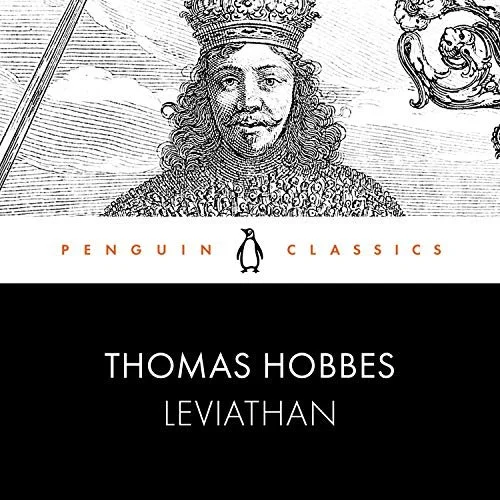
Hobbes’s influence on the world of Terra Ignota is significant. The seven hives of Terra Ignota are described as being like Leviathans, which references the metaphor that Hobbes used in his seminal work - Leviathan or The Matter, Forme and Power of a Commonwealth Ecclesiasticall and Civil (they went in for subtitles in the 17th century in a big way) - that described the modern nation-state.
Hives and sovereigns
This overt reference is not the only way that the hives bear similarities to the Leviathans of Hobbes’s writing. Palmer uses poetic language to describe the hives of her novels as great powerful beasts that are also automata made of people coming together to create a larger figure. This reflects the feverish prose used by Hobbes himself.
Six of the seven hives are also led by one individual, which corresponds to Hobbes’s idea of a sovereign who has the power to decide on what peace is for his or her subjects and use the power of the Leviathan to enforce this. For Hobbes, the sovereign could be one person or a group (he was writing during the English Civil War and needed to hedge his bets) but he said it works better as one person.
Some of the sovereign characters are literal monarchs, such as the King of Spain, a recurring character in the novels, or Cornel MASON, who wields supreme authority over his hive, The Masonic Empire. There are sovereigns who have been elected, such as Cousin Chair Bryar Kosala or Humanist president Ganymede Jean-Louis de la Trémoïlle. There are also characters whose influence is subtle and their power secret but still can decide on the fate of billions of people, like the mysterious J. E. D. D. Mason, who can also be considered sovereigns.
What makes a good government?
By having main characters who are sovereigns and setting the story in the homes or offices of the most powerful people in the world, Terra Ignota directly explores how power is used and what makes good government. This is the topic that Hobbes wrote about. The seven hives of Terra Ignota each have very different governments, which work in different ways, and the novels show their strengths and weaknesses, as well as how they suit the character of each hive.
For example, the Masons can channel huge amounts of effort into the war that breaks out because it is the will of their emperor, whereas the Mitsubishi splinter into subfactions. The Cousins work in their communities to create hospitals and replace weapons with tiring guns, whilst the Humanist’s flexible constitution allows them to marshal around their leader.
This relates back to Voltaire who believed in enlightened government and was a critic of the corrupt governments of his day. Voltaire believed that the British constitutional monarchy was better than France’s absolute monarchy. These different types of government are shown in Terra Ignota. The Masonic Empire has an absolute monarch and the European Hive has a constitutional monarchy. The Humanist government changes in composition with each election and the Utopians have no leader.
Checks on the power of the sovereign
This range of constitutional setups is in contrast to what Hobbes thought, i.e. that the sovereign had absolute and complete authority over his, her or its subjects. Hobbes would have thought that a Masonic Emperor is better than a constitutional European monarch or a President/Chair constrained by a constitution. This is one of Hobbes’s more controversial ideas and has led to him being called an apologist for authoritarianism.
Hobbes believed the sovereign could decide on what was peace for their subjects and then use the power of the Leviathan to pull anyone who steps out of line with this definition, back into alignment. Hobbes said that our collective agreement to do this as society ended nature’s state of endless war of all against all. As he lived through the bloodshed of the English Civil War, it’s easy to see why he preferred strong order to chaos.
Many scholars who came after Hobbes have critiqued his view of the nation-state, arguing that we need checks and balances to prevent sovereigns from abusing their power. The hives of Terra Ignota show the different ways that the power of the sovereign can be checked, from the Humanists’ flexible constitution to the Utopian’s lack of a sovereign. Even the absolute power of the Masonic Emperor is constrained by the fact that people are free to leave his hive.
Hobbes shaped our world and the future
Hobbes was the first to describe the modern state, where we were not ruled over by God-appointed kings but by sovereigns who were invested with power to protect the wellbeing of their subjects. Our views of the state have evolved since then and the hives of Terra Ignota show the different views that have emerged since the 17th century.
Hobbes’s ideas have shaped our world, but they have also shaped the future world of Terra Ignota. The states of the future maybe hives, and not geographical nations, but they are still the Leviathans that Hobbes described. Despite this, they are also shaped by critiques of Hobbes by thinkers who came afterward.