Red Train Blog

Ramblings to the left

The Red Train Blog is a left leaning politics blog, which mainly focuses on British politics and is written by two socialists. We are Labour Party members, for now, and are concerned about issues such as inequality, nationalisation, housing, the NHS and peace. What you will find here is a discussion of issues that affect the Labour Party, the wider left and politics as a whole.

  • Home
  • Topics
    • Topics
    • EU referendum
    • The Crisis in the Labour Party
  • Art
  • Books
  • About us
  • Search

What happened to Starmer the Remainer?

September 20, 2022 by Alastair J R Ball in Starmer

In July, Labour leader Keir Starmer told Cit AM that the UK can I have a better economic future outside the EU than inside it. We’ve come a long way from the former Shadow Brexit Secretary who was seen as the anti-Brexit bastion in Jeremy Corbyn’s shadow cabinet, the man who was pushing for a second referendum and frustrated all of Corbyn’s efforts to find a compromise between Labour’s Leave and Remain supporters by reminding everyone of the perils of Brexit.

During the 2020 Labour leadership race one Starmer supporter and Labour Party member told me that “Starmer is not a Remainer, he’s a Rejoiner”. Two years on this statement is laughable.

What happened?

Since Starmer became Labour leader, he has whipped the party to vote through a Tory hard Brexit that is causing misery and economic damage from Lisburn to Dover. It’s worth remembering that Corbyn (the secret Brexiteer, supposedly) successfully blocked the hard Tory Brexit, whereas Rejoiner Starmer nodded it through without so much as a whimper.

What happened to Starmer the Remainer? The easy explanation is that Starmer the Remainer has gone the same way as everything else Starmer once stood for.

Before becoming Labour leader, Starmer made a series of explicit pledges and implicit promises that he has boldly gone back on now he is leader. He told Labour Party members what they wanted to hear to get elected. Be that those on the left of the party who wanted continuity with Corbyn on nationalisation, social justice and the environment; or soft left Remainers who wanted Britain to stay in the EU.

The leopard has changed his spots

Now he’s safely in power the leopard has changed his spots to win over socially conservative Brexit and 2019 Tory voters who aren’t keen on nationalisation, social justice, environmental policies or Remain.

More fool us for believing a politician would stick to his word, but how has he gotten away with this? Labour Party members from Corbyn supporters to Remainers (sometimes the same people, sometimes not) seem pretty placid, considering we’ve all failed to get what we ordered - regardless of what we thought we were ordering.

Part of it has to do with this new Starmer’s desire to not rock the boat and say things broadly popular with the establishment. The right-wing media are less likely to attack him now that he’s on the terrain they’re happy with. Also, the lack of mainstream left-wing news reporting means this isn’t getting much coverage beyond Novara Media and these august web pages.

The evidence on Brexit mounts up 

It’s worth noting that when a general election rolls around, and if Labour are polling strongly against the Tories, the right-wing press may well use Starmer’s duplicity against him. Not out of any love of scorned Corbynistas or Remainers, but to make Starmer look like any other lying politician. No better than Liz Trust.

I find it incredibly surprising that Starmer has got away with all this (so far). I’m more surprised that he got away with the transformation from ‘Mr Brexit Is Bad And We Shouldn’t Do It’ to ‘Mr We Must Nod Through A Very Tough Tory Brexit Because Of Daily Mail Reading Boomers’, than I am about how much he fucked over the socialists in the Labour Party.

As a Labour socialist I’m used to people being unkind to us, butt I’m genuinely really surprised by how fast the liberal establishment has forgotten how awful Brexit is, even as the evidence of how bad Brexit is mounts up.

False pretences

There are many arguments in favour of Starmer’s lies on the grounds that they are strategically sound. However, if you care about the public perception of politicians, you should care about Starmer’s lies. No politician should be in office on false pretences.

I believe that Starmer’s lies will catch up to him one way or another. Then again, I keep expecting the best from politics and getting the worst. I do strongly believe that the left, be you a socialist, a Remainer, or both (like me), you should expect better than we have with Starmer and not settle for being played for fools by the Labour leadership. One thing we all have in common is that Starmer lied to us.

"File:Official portrait of Keir Starmer crop 1.jpg" by Chris McAndrew is licensed under CC BY 3.0

Related posts
960px-Official_portrait_of_Angela_Rayner_MP_crop_2,_2024.jpg
Sep 9, 2025
Starmer
Rayner’s resignation is another unforced error from Labour
Sep 9, 2025
Starmer
Sep 9, 2025
Starmer
Capitalism.jpg
May 27, 2025
Starmer
“That’s Your GDP”: Labour’s big growth delusion
May 27, 2025
Starmer
May 27, 2025
Starmer
Keir_Starmer.jpg
May 13, 2025
Starmer
Labour’s plan to defeat Farage by becoming him
May 13, 2025
Starmer
May 13, 2025
Starmer
September 20, 2022 /Alastair J R Ball
Starmer
Comment

Two years into Starmer’s leadership we can see that he is not the leader we voted for

August 16, 2022 by Alastair J R Ball in Starmer

We’ve had over two years of Keir Starmer’s leadership of the Labour Party and what do we have to show for it? Not much of what was promised when he stood for leader. And a lot of stuff that wasn’t promised. That’s what. 

Starmer’s pledges to Labour members are not what we have now. There was nothing about throwing out party members for meeting with proscribed organizations before they were proscribed. Nothing about not supporting striking workers during a cost-of-living crisis. Nothing about working with Peter Mandelson.

I’ve been had

I’m sorry to say that I chose Starmer as my second preference candidate. I did this largely because of his 10 pledges that contain reasonable centre-left Labour priorities, from social justice to tackling the looming environmental disaster. I must admit that I have been had. Starmer won’t nationalise industries in line with his pledge, which I foolishly believed he would stick to.

When the leader of the opposition won’t criticise the government’s repugnant scheme of sending asylum seekers to Rwanda on the grounds that it’s a violation of their human rights and it’s completely immoral to do this to vulnerable people, you have to ask yourself: what is the point in this leader of the opposition? Remember, Starmer stood to be leader of the opposition on his record as a human rights lawyer. 

False premises 

I feel like a trick has been played on me. I thought I was getting the moderate left, not a Labour Party determined to chase the votes of angry boomers in former Red Wall seats and sees no popular prejudice it’s not willing to pander to. We have a Labour Party that wants to win over the public, but so long as the public doesn’t include striking workers or left-wing activists.

Starmer became Labour leader under false premises. He has gone back on so much of what he promised that I feel confident saying this is a different leadership from the one that was voted for. What we have is like ordering a gourmet beef burger in your local gastro pub and then being served a deep-fried turd covered in puke. Then, when you complain, you’re told: “that’s politics” and “you didn’t take the commitments made in the menu seriously, did you? Don’t be so naive.”

More competent management

Will any of this make a difference? Well, you can already hear rumbles in the Starmer-sympathetic press that he needs to stand for something to win. The fact that Labour is outpolling the Tories is largely because Johnson self-destructed and this leadership race is making them all look awful, not because of anything Starmer has done.

William Hague said: that Labour wins when it owns the future, so, what is Starmer’s vision for the future if it’s not going to be those 10 promises? Is it that a man with a sensible haircut who isn’t massively incompetent will be in charge? Don’t get me wrong, the Tories corruption is utterly shameless, and needs to stop. I’m sure Starmer will be less of a train wreck than the Tories, but that’s hardly a future to get excited about. A more competent management of the slow decline of human civilisation into the inferno of climate change isn’t an appealing vision of the future.

I have written before about how Labour needs ideas to tackle the huge issues facing British society, from the cost-of-living crisis to the looming environmental disaster, and they need a narrative beyond basic competence if they’re going to inspire enough people to win an election.

Untrustworthy

Can we trust someone who went back on the commitments they made to be Labour leader? The most recent of which is Labour announcing that they will not renationalise the railways, energy and water companies, despite this being one of Starmer’s pledges. What commitments will he make to become Prime Minister, and will he fulfil them?

Starmer shouldn’t be leader if he can’t be held to what he said. He also shouldn’t be leader if he cannot support striking workers. The clue is in the name: the Labour Party. 

This does beg the question: who should take over? Andy Burnham is popular but he’s off being mayor of Manchester. Wes Streeting would jump at the chance to pander to as many socially conservative sympathies as possible as a way out of the culture war.

The left’s candidate

Who would the left’s candidate be? There’s no clear front runner. The Corbyn project appears to have died with Corbyn’s chances of becoming PM. Through a combination of a lack of planning and unwillingness of left Labour MPs to seize the crown, there is currently no successor to the Corbyn project.

When coupled with Starmer’s changes to the party’s rules for leadership elections, it looks increasingly unlikely that any left candidate would even make it on to the ballot paper. 

So, we have an illegitimate and ineffective leader with no clear successor. Labour has a lack of talent, partly because most people don’t believe that politics can change anything and don’t bother entering the field. Couple that with the abuse you get, why bother?

Front bench failure

Starmer may be in office on false pretences, but I don’t see a way forward. Labour clearly has no interest in being a socialist party or representing the views of young or left-wing people. Unless these young people agree with everything some mythical Red Wall ex-Labour voter thinks about strikes, the EU and Corbyn.

I don’t see any of the other front bench MPs behaving differently if they were leader. Labour has become another party chasing the votes of reactionary, socially conservative, angry about young woke people, anti-strike boomers. Changing the leader won’t fix Labour. Maybe it’s time we looked elsewhere. 

"File:Official portrait of Keir Starmer crop 1.jpg" by Chris McAndrew is licensed under CC BY 3.0

Related posts
960px-Official_portrait_of_Angela_Rayner_MP_crop_2,_2024.jpg
Sep 9, 2025
Starmer
Rayner’s resignation is another unforced error from Labour
Sep 9, 2025
Starmer
Sep 9, 2025
Starmer
Capitalism.jpg
May 27, 2025
Starmer
“That’s Your GDP”: Labour’s big growth delusion
May 27, 2025
Starmer
May 27, 2025
Starmer
Keir_Starmer.jpg
May 13, 2025
Starmer
Labour’s plan to defeat Farage by becoming him
May 13, 2025
Starmer
May 13, 2025
Starmer
August 16, 2022 /Alastair J R Ball
Starmer
Comment

What are the limits on free speech and how are they being tested?

August 08, 2022 by Alastair J R Ball in Political narratives

What are the limits of free speech? I know, I already sound like a closet Stalinist just for asking that, but the question should be considered. There are a lot of “free speech absolutists” about, (mainly on Twitter) but even though many people claim “there should be no restrictions on speech,” they don’t mean that absolutely 100,000,000%.

What about child pornography - should that be allowed on free speech grounds? Or counterfeit money? Is my right to free expression being suppressed because I cannot create an artwork that looks exactly like legal tender and then engage in a “performance” where I hand over this artwork to an unsuspecting barman in exchange for large quantities of craft beer from a local micro-brewery?

You might think I am being facetious, and that’s because I am. There are many who claim they oppose all limits on free speech, no matter how offensive the speech is, but still oppose my performance art. People saying “I disapprove of what you say, but I will defend to the death your right to say it,” (and incorrectly attributing this to Voltaire) in reality don’t die so that I can use speech to get free beer. So, the answer to the questions raised above is technically yes, but practically we cannot allow counterfeiting even if it restricts some freedom of expression.

You’re not entitled to a platform 

My point is that almost no-one believes that all speech and expression should be allowed, or that ANYTHING can be defined as free expression. Once you accept that, the debate is all a matter of the degree that we apply limits to speech.

Related to this is the point that you can have the freedom to say whatever you want, but you don’t have a right to a platform. Can I make a speech entitled “Why I hate Margaret Thatcher” to my local East London Conservative Club and demand that all members be present? Of course not, that’s pointlessly antagonistic and obnoxious. Are they suppressing my free speech by not allowing me to do my talk and insisting that people turn up? Again, of course not. I can say whatever I like about Thatcher, but no one has to listen.

This applies to tech platforms, which are a form of private space. They get to decide what we can say on them, within existing laws on discrimination, fraud, etc. If you tweet an opinion and people tell you you’re wrong, that’s not a threat to your freedom of speech. Threats to freedom of speech are when you get fined or thrown in jail for expressing an opinion.

The bull in a china shop experience

Earlier this year, podcaster and internet personality Joe Rogan was thrown headlong into the debate like an angry bull hopped up on testosterone injections jumping with complete abandoned into a convention of extremely delicate china retail. His case is illustrative of the limits of free speech and what the consequences of crossing those limits should be.

Rogan, for the lucky people who haven’t heard of him, is a comedian, MMA commentator and host of the world’s most listened to podcast. In the show, he sits down with people and shoots the shit on everything from wrestling to politics. He has a huge platform and famous people are keen to reach his highly engaged, largely (or exclusively) male fan base. Past guests have included a who’s-who of people you want on your podcast including Kanye West, Elon Musk, Jordan Peterson and Bernie Sanders.

Criticism of Rogan 

Rogan is a divisive figure on the left, although he has his fans. He has also had some unpleasant, less famous, people on his show, including Ben Shapiro and Carl Benjamin (aka Sargon of Akkad - the anti-feminist YouTuber and not the Akkadian Emperor from the 23rd century BCE, although the latter would be a more impressive podcast guest). There are people on the left who hate him in a knee-jerk way and say he’s as right-wing as Peterson, Shapiro and Benjamin because he’s had them on the show.

I’m not a fan of Rogan, although I haven’t listened to loads of episodes of his podcast. It’s worth noting Rogan endorsed Sanders in the 2020 Democratic Party primaries and does have left-wing guests on his show. I don’t think Rogan is as right-wing as Peterson, Shapiro and Benjamin, but he has given them a big platform to spread their views.

Some have argued that the left doesn’t like Rogan because he sends out the wrong cultural signals by not dressing like a cool liberal type (whatever that is supposed to be), being a blokey-bloke, talking about MMA and having insufficient quantities of beard-scratching academic talk on his show. There is probably some truth to this, and like/hating Rogan has certainly become a shibboleth in some political circles. Rogan certainly shouldn’t be pelted with milkshakes for talking about MMA and doing monkey impressions on his show, although these things don’t make me like him more.

Rogan, vaccines and free speech

I do think there is a problem with Rogan, and it’s not just his choice of guests (although the world would be a better place if we fired Benjamin into space aboard one of Elon Musk’s rockets). The problem is that he doesn’t challenge his guests' opinions, so whenever Benjamin says that feminism is poison, Rogan nods thoughtfully and asks him to elaborate further. He’s no Jeremy Paxman. He’s not even Andrew Neil. But he does have more influence over how people think than anyone other than Rupert Murdoch or Mark Zuckerberg.

Rogan’s misadventure with freedom of speech is that he had Dr Robert Malone on his show who said Americans were “hypnotised” into wearing masks and taking the vaccine. During the discussion, Rogan also said that if you’re young and healthy you don’t need to get the Covid-19 vaccine.

It’s irresponsible at best for Malone to be given Rogan’s platform during a pandemic. Having a platform the size of Rogan’s means his words and his guests' opinions can cost lives, especially when discussing vaccines that are (I can’t believe I am writing this) already controversial in America. You might think differently. Let a thousand think pieces bloom.

Consequences

Rogan faced little if any consequences for this, but what did happen is illustrative of the debate around freedom of speech. He hasn’t faced arrest, a fine or persecution from the state. There has been a lot of online outrage, but his show is still as popular as ever and still books high-profile guests, so it’s hard to argue that the online outrage is a threat to his freedom of speech.

Use your speech to criticise others’ use of speech

Rogan’s podcast is hosted on Spotify, a tech platform, which as discussed, can choose who it wants to give a platform to. It’s worth pointing out that Rogan is far from the worst person on Spotify. Neo-Nazi punk band Skinful’s music is available there (no, don’t listen to the racist skinheads) and podcasts with a much smaller following than Rogan’s spread much more conspiracy theories and disinformation than his does. No-one notices, because it’s the internet. If Spotify dropped Rogan over what he said (which they won’t), they would be at best inconsistently enforcing whatever rules they have.

Rogan did, and should, face criticism for what he said and for allowing guests who have anti-vax views on his show during a pandemic. I don’t think what he did deserves the state to intervene, such would be warranted in the case of child pornography or the counterfeiting beer-buying performance art mentioned above. If it could be shown that a specific individual didn’t get vaccinated because of the podcast and died, this would be closer to shouting “fire” in a crowded theatre and might warrant state intervention, but proving it beyond all reasonable doubt would be difficult.

So, use your speech to criticise others’ use of speech is the place we ended up. Only get the state involved when there is a clear case for harm being done. This doesn’t account for the huge power imbalance caused by Rogan having a much bigger platform than the people criticising him. Although, artists such as Neil Young and Joni Mitchell used their freedom to do business however they want to withdraw their music from Spotify over Rogan’s episode. (For the record, Neil Young and Joni Mitchell are cooler than Rogan, and I don’t care what you think.)

Political speech as entertainment

There are those who will defend what Rogan said on the basis that you’re allowed to say anything you want, free speech and all that. However, as discussed above, everyone believes that there should be some limits to your freedom of speech. So, if we all agreed that restricting some speech is necessary then maybe start with the “comedian” who brings anti-vaxxers onto his hugely popular podcast during a pandemic.

The Rogan debacle speaks to a deeper trend, which also touches on the limits of speech. It’s a trend that has arisen as comedy (Rogan is notionally a comedian) and other forms of entertainment get more political in these exceedingly dark, dangerous and more serious times. It’s a trend that has come about through the growth of social media, podcasts and other new ways to get your speech out there via new technology.

Entertainment has become more political, both in terms of what is said and who makes it (i.e. who has access to the vast platforms provided by the BBC or Twitter). The problem is some comedians (and I use the term loosely when applied to Rogan) are engaged in a double standard: they want all the rights associated with free speech that everyone has but none of the responsibilities.

Rights and responsibilities 

Politicians, campaigners, political journalists, etc. have special responsibilities when it comes to their speech. The things they say matter. They affect how other people understand politics and take political actions, from voting to protesting. This responsibility is not to spread misinformation, conspiracy theories or narratives that damage people’s faith in our democratic system.

This doesn’t mean that the state should get involved with their speech (unless it can be shown they have used speech directly to hurt someone, e.g. shouting “fire” in a crowded theatre). It does mean those engaged in political speech should respect the responsibilities outlined above. 

Abdicating your responsibilities

Many podcasters, comedians, YouTubers, social media personalities, etc. do not exercise this responsibility. They use the fact that they’re entertainers as an excuse for why they don’t need to think about what they say or who they have on their show. They argue that we're not meant to take what they say seriously. Rogan himself said: “I’m not a doctor, I’m a fucking moron and I’m a cage fighting commentator who’s a dirty stand-up comedian who just told you I’m drunk most of the time and I do testosterone and I smoke a lot of weed. I’m not a respected source of information, even for me.”

Although this line is quite funny in a self-deprecating way, it does neatly remove all responsibilities from Rogan for broadcasting (potentially life-threatening) disinformation. Rogan may be a self-declared moron, but people still take what is said on his show seriously. When Rogan invites someone like Benjamin on his show and doesn’t tell jokes, but does ask political questions about the big issues facing society, then they are engaging in a political act, and as the host he has responsibilities.

Serious business

Rogan and other shows that mix politics and entertainment are clearly not just entertainment. Many have all the iconography of serious debate. These shows can’t be both light entertainment and serious discussions. If it’s a debate, then people like Rogan have a responsibility to make sure our political discourse is not damaged by letting anti-vax doctors or people like Benjamin say whatever they like. If they are light entertainment, then they shouldn’t address serious subjects in this way.

I am not saying comedians can’t be political or that politics can’t be funny. Good satire is an important part of our political discourse. This is why it’s painful when the BBC brings back Spitting Image and it’s awful. What I am saying is that if you are a comedian saying something political or trying to be funny and political, then you need to recognise your responsibilities and not hide behind being a comedian when you get criticised for abdicating your responsibilities, like Rogan does.

Lack of oversight 

What I’m allowed to say in the pub is different from what I’m allowed to say on a televised political debate going out to millions (even if we are addressing the same topic) as the discussion in the pub will not have the same effect as a discussion on TV - or on Rogan’s show with his millions of listeners. The audience is different, which means the responsibilities are different, which affects your free speech rights. You have different responsibilities when you handle a toy gun and a real one as the effect can be very different.

Anyone can set up a podcast or YouTube channel or twitter account and say whatever they want to potentially an audience of millions. Obviously, not all YouTube channels or Twitter accounts have the same reach, but they all have the same level of oversight - i.e., almost none.

Rogan has built an audience for his podcast, starting from being not a particularly well-known comedian to becoming one of the most famous media personalities on the planet. He’s not a journalist and doesn't have the skills to cross-examine his guests or deconstruct their arguments. Usually, he barely challenges them at all. He doesn’t challenge people like Benjamin as much as I would challenge a friend during a discussion in the pub. He also doesn’t have any editor (journalism editor, not a sound or video editor) thinking about the news quality of what is being put out.

The citizen-creator-political-journalists media

Rogan isn’t the only interviewer who doesn’t challenge his guests enough. I have listened to podcasts, watched TV interviews and read profiles in news organisations, from the very new to ones centuries old, and I have noticed many professional and experienced journalists allowing their subjects to say outrageous, inaccurate or downright false things unchallenged. Poor quality editorial standards are not unique to YouTube channels and podcasts, but at least having an editorial process is a good start.

We didn’t need to invent indie media to have bad editorial standards, but now that the reach of indie media is enormous and the power of what you say (on a topic like Covid-19 vaccinations) can costs potentially thousands of lives, maybe it’s time to think about how we ensure quality in what is put out there. Hopefully, exposing the problems with Rogan and his lack of editorial oversight will give everyone pause to think about the standards of their content. Although, I won’t hold my breath.

If we’re going to have citizen-creator-political-journalists, where anyone can create a piece of content on politics (or any other subject) put it out there and get a huge audience then we all need to understand our responsibilities, as well as our rights. Free speech is a good thing. Having citizen-creator-political-journalists is a good thing. They mean that voices outside the mainstream, the large publications and big broadcasters get heard. However, we do need to remember our responsibilities and act accordingly.

Tackling the problem

We shouldn’t reach for state involvement in speech as the means to solve the problem of journalists/podcasters/YouTubers/internet personalities (whether they started putting out content today or are working for a centuries old newspaper) not acting responsibly with their speech. Using the state to heavily monitor journalists is a bad idea.

The state shouldn’t police the people who criticise and expose the wrongdoings of the state more than is absolutely necessary. You’re free to say what you want and not get banged up in jail, but we need to exercise some judgment in whose free speech we listen to.

Just a guy chasing downloads

Free speech improves our democracy and politics, but we can’t have free speech without the responsibility to not spread disinformation and to challenge an interviewee. We need to be more grown-up than Rogan has been over this and stop trying to abdicate the responsibilities that come with having a huge audience because he’s a comedian on Spotify and not an analyst on CNN.

Rogan won’t face any consequences for spreading misinformation about vaccines. He shouldn’t go to jail over what he said, but maybe his star should be taken down a peg or two. I wouldn’t recommend his podcast because he’s not a deep thinker or someone who engages with issues in a substantive way. He’s Just a guy chasing downloads and social shares. He’s allowed to do that, but don’t indulge him.

A better conversation about politics

Would the world be a little less right-wing without Rogan and the platform he has given to people like Peterson, Shapiro or Benjamin? Yes, probably, but he’s not the biggest issue facing the left. He also gets credit for endorsing Sanders.

There are limits to what you are allowed to say because your words can hurt people. The state should react to the clear-cut cases of harm (child pornography, shouting “fire” and then creating a stampede that kills, etc.) but we need to exercise good judgment to keep the state’s role to a minimum. That said, we all do believe in some restrictions on speech (again child pornography) so political actors pretending to be comedians like Rogan shouldn’t hide behind either free speech absolutism or the double standard that they are a comedian and not a political actor.

We need more responsible content creators, not people like Rogan who hide behind double standards. Although whilst it remains free to start a podcast or a YouTube channel there will still be bad editorial standards. We shouldn’t get rid of podcasts that are free to set up, we should be savvy information consumers and not indulge people who say anything for attention. Even if we agree, on some level, with the bullshit they are spreading. This is the way to get to a better conversation about politics where more voices can be heard.


Related posts
Sep 16, 2025
Political narratives
The right finally discovers that life sucks for Millennials, but guess who they still blame
Sep 16, 2025
Political narratives
Sep 16, 2025
Political narratives
Union-Jack.jpg
Aug 20, 2025
Political narratives
Who really holds power? The cultural illusion of middle-class dominance
Aug 20, 2025
Political narratives
Aug 20, 2025
Political narratives
Apr 12, 2025
Political narratives
How should the left view the porn industry?
Apr 12, 2025
Political narratives
Apr 12, 2025
Political narratives
August 08, 2022 /Alastair J R Ball
Political narratives
Comment

How George Orwell predicted our very online political discourse

July 31, 2022 by Alastair J R Ball in Technology

In 1945 George Orwell wrote Notes On Nationalism, which describes how “nationalism” makes people impervious to facts. Reading it recently, I was astonished by how little had changed. Memes and Twitter flame wars might be incomprehensible to Orwell, if he were alive today, but the basic way we argue about politics has hardly changed.

In the essay, Orwell describes how nationalism warps people’s thinking. Nationalism was as serious a political problem in 1945 as it is now, but what Orwell described as nationalism is not the belligerent belief in a nation-state to exclusion of all others. What Orwell examines in the essay is better understood as ideology.

Orwell defines nationalism as “identifying oneself with a single nation or other unit, placing it beyond good and evil and recognising no other duty than that of advancing its interests.” He goes on to say: “Nationalism in the extended sense in which I am using the word, included such movements and tendencies as Communism, political-Catholicism, Zionism, Antisemitism, Trotskyism and Pacificism.”

Competing ideologies

Why he didn’t say ideology and used the word nationalism instead I don’t know, but his use of nationalism fits the term ideology. Most people think an ideology is having an ‘ism’, such as feminism, socialism, etc. People typically associate isms with the left or the extreme right, although they can be many ideologies that don’t have a handy one-word phrase to sum them up. They can be as all-encompassing as any ism, but are also more difficult to describe, more opaque and correspondingly more difficult to convince someone that they have an ideology. Yet, nonetheless, they are ideologies.

One of the key aspects of nationalism that still applies today as much as it did in the 40s, is that for a nationalist, everything is about the competition of your ideology against others. Orwell wrote: “A nationalist is one who thinks solely, or mainly, in terms of competitive prestige. He may be a positive or a negative nationalist - that is, he may use his mental energy either in boosting or in denigrating - but at any rate his thoughts always turn on victories, defeats, triumphs, and humiliations.”

This perfectly sums up the world of 24/7 news and social media discourse, where those who follow politics like it’s a sport constantly keep track of the scores, the owns, the dumps, the who-is-ups and the who-is-downs of it all. Politics isn’t a debate about competing ideas, but about competing scores on who has delivered the most public humiliations to the other side.

Focusing on the dunk

Related to this is that the very online discourse focuses on minor political exchanges, rather than the big issues facing the world. A dunk on an unpopular MP or commentator will be shared more widely than actual news (sometimes even making it to the front page of newspapers). The discourse favours witty putdowns or dumps over what’s happening in terms of legislation, the economy, debates, etc.

The same was true in 1945 when Orwell wrote: “Moreover, although endlessly brooding on power, victory, defeat, revenge, the nationalist is often somewhat uninterested in what happens in the real world. What he wants is to feel that his own unit is getting the better of some other unit, and he can more easily do this by scoring off an adversary than by examining the facts to see whether they support him. All nationalist controversy is at the debating-society level. It is always entirely inconclusive, since each contestant invariably believes himself to have won the victory.”

A small victory in Twitter discourse is of much more interest to a nationalist than a substantial news story about rising costs of living or health policy. Also, to nationalists any exchange can be a victory. Hence you can see two different stripes of nationalists tweet the same clip of two people shouting incomprehensible things at each other and both claiming the unintelligible noise is their side is owning the other. As there are a lot of nationalists on social media, our discussion is not engaging in substantive issues.

Double standards

Following on from that, Orwell wrote about something I had assumed was an entirely modern phenomenon: the bold-faced claim that when our side does something (usually bad) it’s okay, but when the other side does the same thing it’s beyond the pale. Orwell wrote: “A British Tory will defend self-determination in Europe and oppose it in India with no feeling of inconsistency. Actions are held to be good or bad, not on their own merits but according to who does them, and there is almost no kind of outrage – torture, the use of hostages, forced labour, mass deportations, imprisonment without trial, forgery, assassination, the bombing of civilians - which does not change its moral colour when it is committed by our side.”

This double standard appears to be eternal. Witness Remainers deploring the Leave campaign’s underhand attempts to influence the Brexit referendum’s outcome with lies, dodgy Facebook ads and possible Russian interference - whilst also saying without a hint of self-awareness that if there were a second referendum the elderly shouldn’t be allowed to vote, as they won’t experience the long-term consequences of Brexit.

These are both slightly different attempts to influence the outcome of a vote and can be summed up by Orwell saying: “The sense of right and wrong becomes unhinged also. There is no crime, absolutely none, that cannot be condoned when our side commits it.”

Commentators are like astrologers

Orwell also described the modern social media political talking heads. “Political or military commentators, like astrologers, can survive almost any mistake, because their more devoted followers do not look to them for an appraisal of the facts but for the stimulation of nationalistic loyalties,” he said. Commentators can make any number of ludicrous or inaccurate statements on social media and never lose their following of people who agree with them.

From backers of the Iraq war to people who called the Brexit referendum wrong, or who claimed Brexit would be easy, to the million online talking heads who said that all Labour needed to do was get rid of Jeremy Corbyn and put a sensible Remainer with a neat suit in his place and they’ll be 20 points ahead, for a commentator who shares your nationalism there is no amount of mistakes that cannot be forgiven.

People who claimed that Saddam Hussein definitely had WMD and this was a fact, are still political commentators favoured by those who share the New Labour ideology. Have they admitted they got the biggest call of the 2000s wrong? Of course not. There’s no need to. Just keep posting to those who share your ideology, and no amount of mistakes will tarnish your reputation in your follower’s eyes.

The truth is out there, but we don’t care

Related to the endless rounds of ideological dumping is the process of how rhetoric takes the place of truth. Orwell wrote: “What were the rights and wrongs of the Warsaw rising of August 1944? Is it true about the German gas ovens in Poland? Who was really to blame for the Bengal famine? Probably the truth is discoverable, but the facts will be so dishonestly set forth in almost any newspaper that the ordinary reader can be forgiven either for swallowing lies or for failing to form an opinion. The general uncertainty as to what is really happening makes it easier to cling to lunatic beliefs. Since nothing is ever quite proved or disproved, the most unmistakable fact can be impudently denied.”

Did Boris Johnson lie about the benefits of Brexit? Was Jeremy Corbyn in league with the IRA or the SWP? Was Clinton’s email server illegal? What happened when Narendra Modi

was governor of Uttar Pradesh? Was austerity a means to transfer wealth to the rich? The truth of these things are discoverable and many talented journalists spend years writing on these topics, publishing detailed long reads breaking down the facts, and they reach fewer people than a post in a Facebook group or a viral tweet. Posts that are high in rhetoric will be lapped up by the nationalistic supporters of a side over a detailed investigation any day.

Nationalism is escapable

We think that modern politics is conducted differently than it was in the 1940s. We have created 24/7 news, legions of political commentators, the social media dunk, and the viral tweet, but the way we do politics for the nationalists haven’t changed much in the intervening 77 years. What has changed is that all this is inescapable because social media is in everyone’s pocket and the latest bad take is only a twitch away.

There is some hope as not everyone is a nationalist. Even people who are nationalists aren’t nationalists all the time. Orwell wrote: “One has no right to assume that everyone, or even every intellectual, is infected by nationalism. Secondly, nationalism can be intermittent and limited. An intelligent man may half-succumb to a belief which attracts him but which he knows to be absurd, and he may keep it out of his mind for long periods, only reverting to it in moments of anger or sentimentality, or when he is certain that no important issue is involved.”

So we’re not doomed to forever comment wars and cycles of takes and dunks, but as communication technology brings political debates more constantly into our lives, the problems that Orwell identified have got worse. It’s a shame to think that these problems are worse now than in Orwell’s time, but at least we are aware of these problems. If we can summon the will to change how we do politics, we can make things better.

Branch of the National Union of Journalists (BNUJ)., Public domain, via Wikimedia Commons

Related post
Oct 31, 2025
Farage’s new immigration plan is cruelty as a governing principle
Oct 31, 2025
Oct 31, 2025
Trump-rally.jpg
Sep 30, 2025
Dr. Strangelove goes to Tehran: The hottest new war nobody ordered
Sep 30, 2025
Sep 30, 2025
Sep 16, 2025
The right finally discovers that life sucks for Millennials, but guess who they still blame
Sep 16, 2025
Sep 16, 2025
July 31, 2022 /Alastair J R Ball
Technology
Comment

It’s Johnson’s success and not his downfall that shows the way forward for Labour

July 08, 2022 by Alastair J R Ball in Boris Johnson

Boris Johnson, the worst Prime Minister of my entire life - as I was born in 1985, that’s really saying something - is finally shuffling off the stage in utter disgrace. Like an unwanted party guest - who shat on your sofa and then out of sheer brass insisted he stay for one more spliff and another bit of Karaoke - has finally realised that literally everyone wants him gone so he is finally going. Maybe now we can clean the shit stain off our democracy and try and save something of the evening.

It’s either the most ironic or unironic piece of Westminster history that Johnson was ultimately undone by his lying. He has lied his way through several careers, but finally his lies over the appointment of Christopher Pincher as chief whip have brought the whole house of cards down in a huge, undignified tumble. Now he’s a disgrace and the whole nation sees him for who he is: an inadequate chancer out of his depth and only worthy of derision.

I watched his embarrassing resignation live on air. In just over six years I have seen three Tory PMs stand humiliated on the steps of 10 Downing Street and offer a bitter resignation. First David Cameron, after gambling it all on a referendum he lost. Then Teresa May, brought down by the Brexit deal she once hoped would make her more popular than Margaret Thatcher at her height but ultimately couldn’t pass. Now Johnson, undone by his own worst instincts. Despite all of this, the Tory party is still in power.

More free market fundamentalism

Good riddance to bad rubbish as far as Johnson is concerned. The next question is: which of the various flavours of awful will be the next Tory leader? There’s a whole range to choose from, from the terrifyingly posh to the terrifyingly right-wing. There’s those who want to cut the state back to the size it was in 1935 and those who want to cut it back to the size it was in 1855. There’s those who want stupidly low taxes and those who want dangerously low taxes. There’s those who want to start a culture war over trans rights and those who want to start a culture war over immigration. A real diversity of candidates.

My instinct is that the Tories will go in a different direction from Johnson for the next leader. Someone not quite so comfortable with lying and being so boldly corrupt. Most likely, the Tories will choose someone more into the free market. Tory MPs weren’t keen on how much Johnson was up for using the state to tackle the problems of the country. They prefer the unfettered forces of capitalism to sort things out. That hasn’t worked in more than 40 years of neoliberalism, but that hasn’t dampened the Tories enthusiasm for it.

The lesson for Labour

Johnson’s humiliation has left Labour riding high in the polls. However, a new leader could change all of that. The biggest risk to Labour is from a Johnson-esque populist. Someone keen on divisive culture wars, which cut across the coalition that Labour needs to win over. However, for such a populist to be a success they need to offer more. They need to offer ‘levelling up’, i.e. using the state to address the economic, cultural and political inequalities in this country by investing in places that have suffered in the last 40 years. Johnson talked this up (although he did little) and it won him popularity. There’s a lesson in this for Labour.

The Tories will be lining up more rounds of austerity, with some tax cuts for the people they like thrown in (that’s pensioners, corporations and the wealthy for those who haven’t been paying attention). Austerity will be bad for all the voters Labour needs to win over, from young Remainers living in cities to retired Leavers living in small towns. Johnson won by running against the previous nine years of Tory austerity. Labour should run against it too.

Labour should avoid being drawn into arguments about the deficit and tax levels. They shouldn’t be drawn into a debate about whether the state can fix the problems of the country. Five minutes ago, the Tories were all up for fixing the problems of the country (largely created by them) with state power. It was popular. Labour should make a pro-state, pro-levelling up argument. The way to beat the next Tory leader is to learn from Johnson’s success and not rely on his ignominious downfall to win Labour the next election.

"Boris Johnson at Conservative Party Conference" by conservativeparty is licensed under CC BY-NC-ND 2.0

Related post
Boris-Johnson.jpg
Jul 8, 2022
Boris Johnson
It’s Johnson’s success and not his downfall that shows the way forward for Labour
Jul 8, 2022
Boris Johnson
Jul 8, 2022
Boris Johnson
Boris-Johnson.jpg
Oct 10, 2020
Boris Johnson
I have nothing to offer except my bafflement
Oct 10, 2020
Boris Johnson
Oct 10, 2020
Boris Johnson
Boris-Johnson.jpg
Aug 25, 2020
Boris Johnson
Why incompetence isn’t damaging the Tory brand
Aug 25, 2020
Boris Johnson
Aug 25, 2020
Boris Johnson
July 08, 2022 /Alastair J R Ball
Boris Johnson
Comment

What should the left do (and stop doing) to help the situation in Ukraine

June 28, 2022 by Alastair J R Ball in Ukraine invasion

Before we start, I want to say that the best thing you can do to help the people of the Ukraine is to donate to appeals that aid Ukrainian refugees or, if you can, volunteer to take in a refugee, or to support groups trying to help civilians inside the Ukraine. These are simple things that can make a much bigger difference than any amount of tweeting, arguing back with talking heads or writing long rambling blog posts. 

There are left-wing policies, which comrades have been pushing for years, which will help the situation, such as not allowing Russian oligarchs to launder their money through London or making it easier for refugees to live in the UK. The Tories are finally doing the latter, better late than never, and making it easier for Ukrainian refugees to come to the UK, but this hasn’t translated into more solidarity to refugees from elsewhere. Now the government has announced plans to send some refugees to Rwanda.

Another thing is to remember arguments we made during previous wars, such as The War on Terror, about all Muslims not being responsible for the actions of a few, or that we should be wary of a wave of Islamophobia caused by the conflict. Now, we need to be wary of Russophobia; a Russian person working in a bar in East London has no say over the action of their country. They shouldn’t be held responsible for it, and they don’t need anyone’s earful about the actions of the Russian military.

Stalinist eye roll

Another thing is to make sure you aren’t inadvertently sharing Russian propaganda online. And no, this isn’t becoming a vague rant about ‘Stalinists’ amongst the online left. There must be almost no-one in the UK who thinks that Stalin was a good idea and implying that there are many leftists who think so is just silly.

I guess the accusation of Stalinism implies that the person is a Tankie or, more accurately, an authoritarian Marxist-Leninist. I’m opposed to authoritarian Marxist-Leninism, but again, no-one thinks that Vladimir Putin is a Marxist-Leninist (unless you just assume he is because he’s Russian and so was Lenin).

If you are far-left enough to call yourself a Marxist-Leninist specifically, or a communist more generally, and you think that Putin’s invasion of Ukraine is a step towards the worldwide proletarian communist revolution, then you need your head examined. However, this probably only applies to about three people in a pub in Clapham. All this is to say I’m not sure what it really means to call someone a Stalinist today, so let’s park all the accusations of Stalinism.

More disclaimers

Real talk for a second: it is possible to share pro-Putin or Putin adjacent narratives, usually inadvertently, without having to tweet: “Go Putin! Russia is da bomb!” I want to have a talk about how this can happen and what to look out for. If you think I am joining some kind of mainstream media pile-on against lefties for not being sufficiently pro-war with Russia or anything like that then you can stop reading now. I want to have an honest chat about the effects of the stories and content we share online.

Whilst we’re doing the disclaimers, just so that you don’t think that I am joining the chorus of people accusing anyone who disagrees with the Labour Party line on NATO as being pro-Putin, I am aware that some have taken this as opportunity to accuse the left - or anyone even remotely critical of NATO or Western foreign policy – of being one of Putin’s useful idiots. This is an oversimplification. However, I have seen lefties - many inadvertently - sharing Putin propaganda online.

Right, with all that said, let’s get to it.

Pro-Putin narratives

There’s a range of narrative that you can share that supports Putin. Yeah, there are some people who are spreading Putin’s message because they believe it, but these are very rare. Only an idiot can look at Putin - a regressive, conservative Christian, nationalist - and think there is anything remotely left-wing about him.

More worryingly, there are those on the left who are inadvertently spreading Putin’s narrative that Volodymyr Zelenskyy and his government are a neo-Nazi regime or have links to Nazi groups. Some on the left are sharing these narratives because they hate what liberals like, which right now is Zelenskyy.

Centrist cringe

Yes certainly, the love for Zelenskyy has taken on a weird edge in some outlets. I find articles like this one as cringe as the next guy does. It’s very strange that he is being treated like he’s a plucky, loveable underdog in a sitcom, not a man involved in an actual war. He’s not Ted Lasso and this war isn’t something to entertain people in between seasons of Love Island.

The centrist liberal stanning of Zelenskyy is more than a little detached from the reality of the war and is not much help to Ukrainian civilians. Yet, that doesn’t mean the people who hate the very online centrists should start hating Zelenskyy, or spread misinformation that he has links to neo-Nazis. Ukraine’s history with Nazism is too long and complicated to get into here, but I do feel some of this is fed by stereotypes of Eastern European people being on the far-right.

We’re all as bad as each other

Then there’s the people who say they’re all as bad as each other: West, East, US, UK, Russia, Ukraine - they’re all just as flawed as each other. This is a Putin narrative as it is something he says himself. He promotes the view that all nations are equally morally flawed to justify his repression of his own people. Don’t share these types of posts. Saying that the West and Putin’s Russia are the same is a massive oversimplification not worthy of any thinking person on the left.

Putin’s Russia is a much worse place to be than Britain or America, which are deeply flawed societies. Putin murders opposition politicians and represses free speech far beyond what happens in the West. At least 8,000 people have been arrested for protesting the Russian invasion of Ukraine. There are eight letters in the Russian phrase for “no war” and even holding up a piece of paper with eight asterisks on it can get you arrested.

I am opposed to how our class of political and economic elites re-create their own power and use tools, nefarious and otherwise, to influence people to support them. I don’t like how much power muckraking tabloid newspapers, incendiary TV news channels and attention hording social media platforms - all owned by billionaires – have over the range of political views that are considered allowed by polite society. All this is bad, but it’s not as bad as what Putin does in Russia.

A list of war mongers

Saying that Putin’s Russia is a worse place than Boris Johnson’s Britain doesn’t undermine us criticising our own government and society for its many flaws. You can say that you’d rather live in the UK than Russia, but the UK is still rubbish.

Of all the shitty things about the US and the UK, the most relevant to this discussion is that we invaded Iraq on a flimsy pretext, and that those responsible for many thousands of deaths and the collapse of a country have faced no consequences. This is terrible and should not be forgotten. George Bush, Tony Blair and Putin are all war mongers with blood on their hands but that doesn’t make them interchangeable.

Saying Putin is a worse authoritarian and a worse war criminal is not to diminish how bad the invasion of Iraq was and the effect it has had on that country and the entire region: creating instability and misery for millions. The people responsible for this disaster are still part of the legitimate political discourse, a fact which blows my mind on a regular basis.

Enraging and deeply stupid 

Some of these Bush and Blair era politicians show no self-awareness of what they did and the role they had in it. Condoleezza Rice recently said on Fox News: “When you invade a sovereign nation, that is a war crime.” She also added: “It is certainly against every principle of international law and international order.” This level of hypocrisy is both enraging and deeply stupid.

At least George Bush Jr had the decency to condemn his own invasion of Iraq when he said: “the decision of one man to launch a wholly unjustified and brutal invasion of Iraq.” The only issue with this is that he was trying to condemn Putin and not make amends for himself.

Criticising NATO and Western governments

The left should be critical of NATO and its long-term strategy. Keir Starmer’s hard-line on NATO criticism isn’t in the spirit of free debate and it doesn’t help us understand how this conflict came about. Besides, you can criticise NATO and still say that Britain should be in it. My view is that it was a mistake to try and expand NATO closer and closer to Russia, but that doesn’t mean we should now abandon Ukraine to be destroyed by Russia.

Criticising NATO is not just a far-left idea. Henry Kissinger said Ukraine shouldn’t join NATO and the Pope has been critical of NATO. People from across the political spectrum have said that enlarging NATO would be seen as a threat by Russia. Starmer would consider the Pope’s and Kissinger’s view too left-wing to be allowed in the Labour Party.

We should also be critical of Western governments’ role in Putin’s gaining his stranglehold on power. He was considered an ally in the War On Terror and we turned a blind eye to his activities in Chechnya, then Georgia, then Syria because we didn’t want to get involved or run the risk of triggering a larger conflict. The British and American governments hold some responsibility for what has happened and the left mustn’t let this be forgotten.

Blaming the left

It’s possible to advance left-wing narratives and not fall into the trap of spreading Putin’s propaganda. It just requires some thought before posting. What the left also needs to be wary of is those taking this as an opportunity to blame the left for the conflict. Apparently, everything from trans-rights to “cancel culture” is responsible for Putin feeling confident enough to invade Ukraine, or has taken the machismo out of the West’s response. As if Joe Biden was thinking of cancel culture when he decided not to fire American missiles at targets in Russia as soon as Putin’s army crossed the border.

You can’t move for some right-wing hack saying that students with purple hair creating safe spaces on campuses, or people in London drinking craft beer and wanting housing to be slightly more affordable and jobs to be slightly better, are the ones responsible for Russian tanks rolling through Ukraine.

I’m not sure what the left is supposed to have done. Neutered the West’s resolve by not loving soldiers so much they want to throw hundreds of thousands of them into the jaws of the mechanised death machine? Apparently, any deviation from right-wing politics makes us militarily weak, so debates about colonialism must be forever silenced so that more space can be created for loving war so much that every country in the world quakes in fear of the West.

A love of war and Putin

Behind all this admonishing the left for the wussification of the West is a disturbing right-wing streak of thinly disguised praise for Putin. “He’s a real man,” they seem to say, when claiming that the problem with the West is that we care about things other than the problems that can be tackled with huge armies and an obsessive, uncritical worship of the military. Putin doesn’t care about toilets for non-binary people, or making universities more open to poor or BAME people, or climate change, they say. That’s what makes him strong and able to invade other countries. How this isn’t praise for Putin and saying we should be like him, is beyond me.

There’s also those on the right that give Putin cover. From Nigel Farage to Tucker Carlson, there is an entire ecosystem of right-wing shock jocks and nationalist politicians eager to praise Putin openly and spread his narratives. These people have big audiences, and they use them to spread disinformation about the invasion. We should make sure that no one ever forgets these people’s support for Putin.

My main response to this conflict is that I don’t want a war that could easily turn nuclear and even if didn’t could leave Europe devastated. Sorry if that makes me a soy boy cuck for not being really up for mass death of a hitherto unimagined scale? Is that really what the right wants? A huge war? And if the so-called man in the street isn’t so keen on massive wars as he used to be, isn’t that because the recent big wars, like the War in Iraq, were started on flimsy pretexts, were badly managed and generally made the whole situation worse?

Condemn Putin and help refugees

The left should condemn Putin wherever possible. He’s a belligerent right-wing nationalist who abuses democracy, represses his own citizens and now is inflicting enormous amounts of destruction on the people of the Ukraine.

We should be vigilant, criticise those who need criticism and do whatever we can, big or small, to help the people of the Ukraine. Remember that anything you can send or give, financially or in goods or services, to help a refugee or a person in a conflict zone will do more to make this terrible situation better than a billion tweets or Facebook updates.

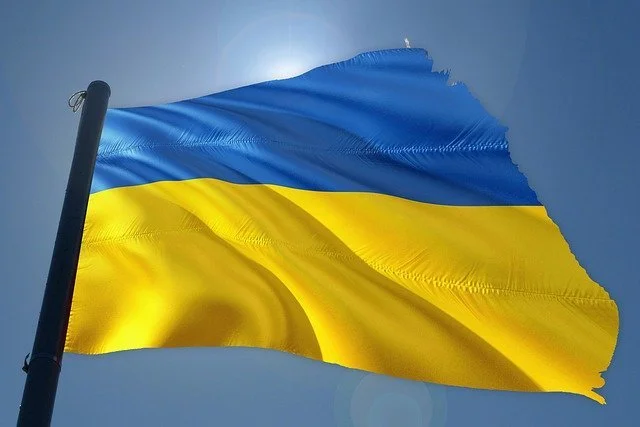
Image by Gerd Altmann from Pixabay

Related posts
Far right
Farage’s new immigration plan is cruelty as a governing principle
Far right
Far right
Trump-rally.jpg
Trump
Dr. Strangelove goes to Tehran: The hottest new war nobody ordered
Trump
Trump
Political narratives
The right finally discovers that life sucks for Millennials, but guess who they still blame
Political narratives
June 28, 2022 /Alastair J R Ball
Ukraine invasion
Comment

Even if Johnson resigns, Labour still needs a strong narrative

June 08, 2022 by Alastair J R Ball in Starmer

Is Boris Johnson’s goose finally cooked? The man who seems impervious to scandal and shame faced a no-confidence vote this week. Maybe there is a limit to what you can get away with in politics.  

What can we learn from this? Is it that eventually your misdeeds will catch up with you? You can only be shameless and slide out of any scandal for so long? Or is it that this scandal, Partygate, is one that people outside the circles who follow politics like it’s a sport care about?

Most people don’t care that Johnson lied about the benefits of leaving the EU. They think all politicians lie and people don’t mind the lies they like. Partygate is different, as we all went through the pandemic and made sacrifices, whilst in Number 10 people were partying like it was 1979. It also plays into the public perception of the Tories that they look down on the little people.

What should Labour do?

The vote on Monday has fatally wounded Johnson. He’s now a dead man walking. This poses a tricky problem for Labour. What to do when there’s a change of Prime Minister? Most likely there will be another leader from the right of the Tory party, as that’s what the membership will opt for in the final round of voting. Perhaps someone keener on culture wars and cutting taxes than Johnson, with less of a need to be liked by everyone.

Jeremy Hunt is on manoeuvres and it’s my belief that he poses the greatest threat to Labour. He’s standing on competent leadership, better morals and being opposed to corruption. In other words: everything that Keir Starmer uses to differentiate himself from the Tories.

With Hunt in charge, what would be the difference between Labour and the Tories? Well, the Tories would be in government so their announcements would matter.

Saying and doing nothing

The Tories stole Labour’s policy of a windfall tax on energy companies, and Labour somehow managed to not turn this into a political victory. The Tories are raising taxes and planning large scale state intervention in markets, and Labour aren’t using this as an argument for their policies or as an opportunity to make them look more reasonable to the voters. 

I guess this would involve saying something or doing something, which is against the Labour strategy of being quiet until the voters decide they have waited patiently long enough and it’s their turn for power.

If Labour cannot score with such an open goal, then what chance do they have of winning a general election? None. If they can’t find something to say as inflation soars and people across the country, across age groups and across the political divide are driven into poverty by the cost-of-living crisis, then when will Labour have something to say? 

Think Big

It’s said that in a time of crisis, when the old ideologies collapse, political parties reach for whatever is lying around. This is how neoliberalism or Chicago School economics seized the Tory party in the 80s. It’s how state interventionism seizedthe Democrats in the 1930s. There’s plenty of good ideas lying around. Labour need look no further than the book Think Big, written by former Labour leader Ed Miliband, to find some good left-wing policy ideas.

From the Green New Deal, to citizen assemblies, to universal basic income, via ways to revitalise trade unions in the gig economy and ways to get young people more involved in politics, the book is full of ready-made policy proposals that could be the basis for a narrative of how Labour is changing the country. Just open the book, flip through, and choose a page at random.

Labour needs something to say

Yet, Labour doesn’t do this. Most likely out of fear of being monstered by the press - which will happen anyway - and a need to seem non-threatening, like the guy sitting quietly in the corner of a rowdy pub. He may seem non-threatening, but he’s unlikely to be elected Prime Minister.

If Labour can’t think of anything to say, or a narrative about how they will improve Britain, at times like this, then it doesn’t matter if Johnson stays or goes. Another Tory, centre or far-right, will win an election if they have something, anything, to say to the people.

"Boris Johnson at Conservative Party Conference" by conservativeparty is licensed under CC BY-NC-ND 2.0

Related posts
960px-Official_portrait_of_Angela_Rayner_MP_crop_2,_2024.jpg
Starmer
Rayner’s resignation is another unforced error from Labour
Starmer
Starmer
Capitalism.jpg
Starmer
“That’s Your GDP”: Labour’s big growth delusion
Starmer
Starmer
Keir_Starmer.jpg
Starmer
Labour’s plan to defeat Farage by becoming him
Starmer
Starmer
June 08, 2022 /Alastair J R Ball
Starmer
Comment

Let’s not fall for the false divide over fuel protests

May 28, 2022 by Alastair J R Ball in Starmer

A few weeks ago The Labour Party, in I guess what is called a fit of pique, called on Twitter for a ban on people protesting at petrol stations. This was after a group called Just Stop Oil blocked motorists from filling up. This heavy-handed response from Labour is somehow both surprising and completely unsurprising. 

It’s unsurprising because Labour clearly wants the votes of Boomers, who will only give up their car keys from their cold dead hands, over the votes of young people, who think we need to phase out fossil fuels, to, y’know, save the lives of every living thing on the planet.

A lot of ink has been spilled over the fact that we are a divided society. You could be forgiven for imagining the UK is split between people blocking tankers from delivering fuel to petrol stations, and people gladly running over these protestors so that they can get a full tank and then complete the school run. In this lazy comedy sketch, not even good enough for the terrible Spitting Image revival, the protestor is wearing tie-dyed homemade clothes and the motorist is driving an SUV.

An absurd divide

In this analogy, Labour is on the side of the homicidal motorist and determined to push away the planet-loving hippy. This is because … well why? A hatred of protestors who disrupt the lives of ordinary salt-of-the-earth types? A desire to crush the radical left? A need to win the support of working-class, no-nonsense, socially conservative Red Wall voters? A desire to distance the party from Jeremy Corbyn’s leadership? (We assume the hippy is a Corbyn loving Remainer and the motorist is a Brexit supporter who used to vote Labour under Tony Blair, but voted Tory in 2019.)

Does it come from a desire to represent decent, hard-working ordinary people who haven’t had a proper pay rise in years, who rely on public services that have been slashed by austerity, and are now having their quality of life eviscerated by the twin dragons of inflation and rising costs of living? These people are too busy trying to feed their families, pay their spiralling household bills and make it to the end of the week without collapsing into depression. These people don’t have the bandwidth to worry about next month, let alone decarbonising by 2050.

Maybe Labour shouldn’t be the party of the hyper-online, comfortably middle-class activist set who have the free time to block petrol stations because someone else is paying for their room and board. Or maybe they should, these actions might be the last chance to stop environmental devastation, and these activists are focusing on the big picture, while the rest of us are worrying about whether we have enough Tesco Clubcard points. Pick a side Labour! Goodie or baddie? Which one is which?
Twitter and elections

This division is, of course, absurd. Not everyone who drives hates the planet or is so focused on their own woes that they don’t care about the world their children will be adults in. Most activists aren’t a caricature of middle-class school student politicos, a latter-day Rick from the Young Ones, come to life to bore us to death. Society isn’t so starkly divided. Only on Twitter and at elections, where we force everyone into one or two camps for one day and use that to decide what will happen for four years.
So why choose one side or the other, Labour? Well, this announcement was made over Twitter where it pays to be single-minded. Twitter is not the place for nuance.

Big and small pictures

The tweet does indicate a preference about the type of voters that Labour wants to win over, and they’re more likely to be motorists than environmentalists. I’m sure Kier Starmer and Labour care about the environment and want to do something to avert the looming climate catastrophe. They also want to help people struggling through the week. People for whom not being able to fill up their car might mean they can’t take their kids to school or go to work. It’s possible to be on both sides.

We should reject the binary of the short-sighted motorist and the class-privileged ignorant activist. It’s good that Labour wants to use politics to improve the lot of the struggling ordinary families, who maybe haven’t read the latest ICCP report but do care about the wider world and the future.

On top of this, sometimes we need activists at a petrol station to remind us all of the bigger issues that will affect us all sooner or later, and these activists need the support of the party from the part of the political spectrum that isn’t in bed with those profiting from making the world worse and destroying the climate. Labour has responsibilities to both ordinary people and activists. It shouldn’t jettison one over the other because of a false binary created by angry discourse.

Being on both sides 

I get it, if for one day, Labour needed to be unnuanced on Twitter to not get monstered by the right-wing press. Although, that will happen anyway, so let’s not compromise too much to avert what’s definitely going to happen.

The rest of the time we need to remember that these discourse battle lines bear no relation to how most people live their lives, and the struggles they face. Struggles that Labour could help with if it gains power. Poverty and cost of living pressures need to be addressed, but so does the environment or it will make everyone’s lives worse.

Labour needs to be on both sides of these false divides. Helping ordinary people and saving the environment should both be crucial priorities for the next Labour government.

"Extinction Rebellion-11" by juliahawkins123 is licensed under CC BY 2.0 

Related posts
960px-Official_portrait_of_Angela_Rayner_MP_crop_2,_2024.jpg
Sep 9, 2025
Starmer
Rayner’s resignation is another unforced error from Labour
Sep 9, 2025
Starmer
Sep 9, 2025
Starmer
Capitalism.jpg
May 27, 2025
Starmer
“That’s Your GDP”: Labour’s big growth delusion
May 27, 2025
Starmer
May 27, 2025
Starmer
Keir_Starmer.jpg
May 13, 2025
Starmer
Labour’s plan to defeat Farage by becoming him
May 13, 2025
Starmer
May 13, 2025
Starmer
May 28, 2022 /Alastair J R Ball
Starmer
Comment

Tory Brexiters are ignoring Northern Ireland because it’s inconvenient

May 19, 2022 by Alastair J R Ball in Brexit

Last week Boris Johnson was in Northern Ireland, attempting to renegotiate his own protocol that has given his party so much of a headache that you do have to wonder what he was thinking when he signed it. That’s a joke. He never thinks. 

Johnson agreed to this protocol way back in 2019 (remember then? Oh, how innocent we all were). The thing about this protocol, and the larger Brexit agreement it’s a part of, is that there are no new options that have appeared between 2019 and now - and there never will be.

The Three Brexit problems

The three issues Johnson faces now are the same as the three he faced back then. One: the Tories want to set their own (read lower) standards than the EU so they can’t have a customs Union with the EU. This means we need checks on goods moving between the UK and the EU. This creates a problem for the UK’s only land border with the EU in Northern Ireland.

This brings us to two: as Northern Ireland has been a site of conflict within living memory, and the border is largely arbitrary - cutting through communities and in some places people’s homes - the idea of making this a big deal border with loads of checkpoints and guards is a really bad idea. An even worse idea than Brexit.

This leads us to problem three, the one that Johnson chose to ignore and has been a pain in his ass ever since: an open border between the UK and the EU in Northern Ireland means there must be checks on goods moving between Northern Ireland and the mainland if the UK wants to set its own standards on what’s allowed.

Northern Ireland drama

By ignoring problem three, Johnson created an Irish Sea border between one part of the UK and the rest, which has upset the DUP who are now refusing to join a new government in Northern Ireland until this barrier is gone. As far as they’re concerned, Northern Ireland is as much a part of the UK as Somerset, and it shouldn’t have a border or different trade agreements.

Last week was also the next (and final) chapter of a different Northern Ireland drama, but this one was a much funnier one: the Channel 4 sitcom Derry Girls. The final episode dealt with the referendum on The Good Friday agreement and the protagonist’s 18th birthday. The two tie together into a message about stepping forward into the future.

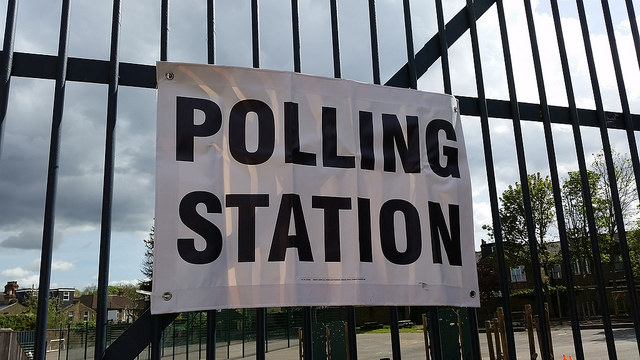
One character, Granda Joe (Ian McElhinney), whose life would have covered the entirety of The Troubles, gives a passionate monologue about how the violence and fear of The Troubles could become a thing of the past, with his infant granddaughter perched on his knee for a neat visual metaphor. The episode ends with the characters voting for The Good Friday agreement before heading home. The final shot shows Granda Joe leading the polling station holding the hand of his granddaughter who can grow up in a world without fear of bombs and soldiers on the street.

Lack of thought

The finale is a touching reminder that peace has to be strived for and compromises need to be made, but if we’re willing to work hard and with a little faith in each other we can leave behind for our children and grandchildren a better, less violent, world than the one we inherited.

I don’t know if Johnson or anyone on his staff watched the finale of Derry Girls before going to Northern Ireland, but they should have. Pro-Brexit politicians have paid little heed to Northern Ireland as they pushed for the most severe exit from the EU they could get. During the campaign, between trading blows on the economy and hollering about immigration, Northern Ireland was hardly mentioned.

Whilst Theresa May’s government was melting down over Brexit we didn’t pay enough attention to how the Brexit the Tories were pushing for would undermine The Good Friday agreement. When Johnson was barking about getting Brexit done, did we think what the implications for peace were?

Northern Ireland is far away

Brexiteers have pretended Northern Ireland doesn’t exist for too long because it makes their ideal, low-regulation Brexit more difficult. To be honest, most Remainers only care about Northern Ireland when they can use it as a stick to beat Brexiteers with.

Brexit is pushing Northern Ireland closer to joining the Republic of Ireland, which I assume the Tories don’t want. They are the Conservative and Unionist party after all, and the ‘Unionist’ part was about Ireland before it was about Scotland. I’m sure they don’t want to see a United Ireland. So why does everything they do make it more likely?

Well, they care about other things more. Managing rebellious backbenchers or getting more trade freedom out of Brexit is much more important to the Tories than whatever happens in Northern Ireland. Northern Ireland is far away, and unhappy backbenchers crowing about trade policy are in Westminster. Besides, the Tory Party doesn’t even field candidates in Northern Ireland.

Sleep running into danger

We’re sleep-running into political upheaval in Northern Ireland and maybe even a return of violence to the region, which was a common occurrence as recently as Live Forever by Oasis being in the charts. Not exactly ancient history.

The pressure on Northern Ireland will only get worse until this government makes Northern Ireland a priority, or we get one that does. We cannot keep ignoring the effects of Brexit on Northern Ireland and hoping that another round of Tory led negotiations will solve them. It won’t.

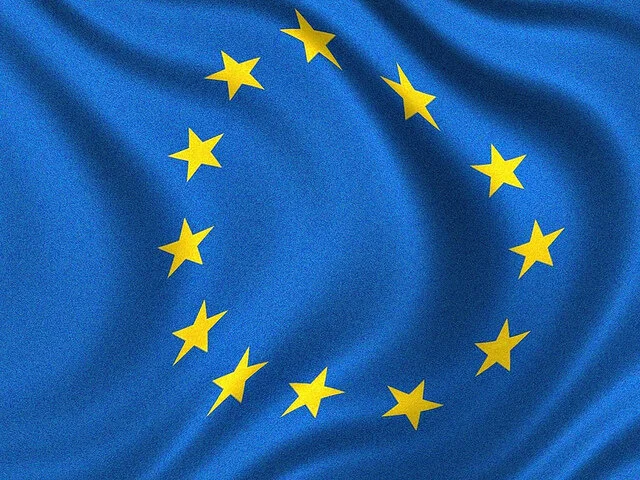
EU flag image created by Yanni Koutsomitis and used under creative commons.

Related posts
EU flag.jpg
Brexit
Tory Brexiters are ignoring Northern Ireland because it’s inconvenient
Brexit
Brexit
EU flag.jpg
Brexit
As Britain leaves the EU I am left disappointed in my county
Brexit
Brexit
EU flag.jpg
2019 election, Brexit
Is this election the last opportunity to stop Brexit?
2019 election, Brexit
May 19, 2022 /Alastair J R Ball
Brexit
Comment

What Labour should not learn from the French election

April 29, 2022 by Alastair J R Ball in Starmer

I have to say that I breathed a huge sigh of relief when Emmanuel Macron was re-elected as President of France last week. Not that I harbour any love for the centrist French premier, who has spent his first five years in office drifting to the right on social issues (particularly around immigration and Islam), picking fights with France’s unions and trying to cut back the country’s social security safety net. 

There isn’t much to love about Macron, between describing himself as the Roman god Jupiter - no really - and trying to do Thatcherite reforms to the French economy, just at the time when even the centrists in Britain and the US are realising that cutting back the state with a devil take the hindmost attitude isn’t a good idea.

Whatever your criticism of Macron, I think we can all agree that Marine Le Pen is much worse. She’s the type of far-right to make Nigel Farage look positively tepid. I would fear for non-white French people and immigrants (much more than I do already) if she was elected. So last week I breathed a sigh of relief and opened a bottle of Chambolle-Musigny to toast the centrist dad’s favourite politician's re-election.

We demand something slightly better than the authoritarian far-right

Macron won easily, although not as easily as last time, because his opponent was so awful. This is a damning indictment of centrism. The only argument for what Macron offers is that it’s better than an objectively awful alternative. It’s hardly a banner to rally around or a shout that will echo through the ages. “We demand something slightly better than the authoritarian far right.”

What will Labour leader Keir Starmer learn from this? That it’s possible to win by appearing like the much-hated “establishment politician” when your enemy appears to be much worse, most likely.

This is the argument that British voters want a competent bank manager type politician as Prime Minister. This is how David Cameron beat Ed Miliband, the argument goes, and how Boris Johnson (looking a lot less like a competent bank manager than Cameron) beat Jeremy Corbyn (who looked even less like a competent bank manager).

An establishment political tradition

If Starmer is betting on Johnson/The Tories looking as off-putting as Le Pen and her National Rally, so that he can win the same way as Macron did, he’s in for a rude awakening. Le Pen carries more baggage going into an election, not the least her father’s name that is inescapably associated with the extreme right. As such, the French media and voters show her less deference than the Tories get.

Also, Johnson and The Tories are the government, so the argument of “you must not let this dangerous person near power or they will destroy everything” doesn’t work when Johnson is already PM. Even if Johnson’s time as PM has been a disaster and he shouldn’t be given more power or allowed to stay in power, past disasters don’t have the same scary quality as possible future disasters.

Finally, Johnson is not Le Pen. He’s part of an established and well-known political tradition and falls within The Overton Window or bounds of “normal politics”. The Tory party has moved to the right substantially in the last six years, but many people still associate it with great leaders like Winston Churchill or moderate, centre-right figures like Ted Heath.

Le Pen and the National Rally doesn’t have that history making her seem more reasonable. She is clearly outside what most French voters see as acceptable, despite her attempts over the last five years to look more like a normal politician. Politicians from establishment traditions, from the Tories to the Republicans (both US and French Republicans) are acting more and more like the far-right, but the successes of far-right figures like Le Pen has been making mainstream parties adopt her fringe views, and not stopping herself been seen as a fringe politician.

Uninspiring continuity

One takeaway from all this is that it’s possible to win without offering the electorate any substantial possibility of change. Even in the angry, constantly upheaving, “things cannot go on like they are” 2020s - where the only roar is the roar of protests demanding things be different - it’s possible to win by offering centrism, continuity and establishment values.

Again, I feel this doesn’t apply to Starmer’s Labour as Johnson isn’t seen in the same light as Le Pen. Also, Starmer isn’t offering continuity because he’s not in government. Still, all this does demonstrate you don’t have to be particularly inspiring to win. Starmer can take some comfort in that.

The other takeaway that Labour is likely to embrace wholeheartedly is that it’s possible to win by completely ignoring left-wing voters. Macron has talked about how he’s listening to the anger of right-wing voters, giving more justification for them to at least flirt with voting far-right in the future to get what they want.

Listening to the left

Macron has said: “I know that many of my compatriots voted for me not to back my ideas, but to keep out those of the far-right,” but during the campaign he didn’t say much about reaching out to left-wing voters who supported Jean-Luc Mélenchon in the first round. Despite his economics being “Oh Jeremy Corbyn” I’m not wild about a man who wants to ban the veil. Let’s just say that Mélenchon’s social views aren’t in line with what I consider to be the modern left.

Macron also seems to have little interest in those who voted for the centre-left Socialist Party, led by Anne Hidalgo who, as mayor, has put making Paris a modern green city at the heart of her agenda. Hopefully, Macron is aware that he won this second term because of left-wing sufferance and his statement about people not backing him for his ideas is more than words, i.e. a genuine desire to listen to people who objected to his policies in his first term as president.

Too close for comfort

I don’t think there is much that British left-wing politicians can learn directly from this French election. The Le Pen factor is crucial. Johnson and his government are in the same plane of awfulness as Le Pen, but they cling to the “legitimate” side of the right/far-right split in the minds of many UK voters. They have the veneer of acceptability that comes from being in a party that has been in and out of power for centuries.

It’s good that a dangerous far-right politician didn’t become the leader of the world’s sixth-largest economy, with a huge military and a massive civil infrastructure to bend to their will. Although, I’m not too hopeful about the future, in France and elsewhere, as this election was too close for comfort.

Realted posts
960px-Official_portrait_of_Angela_Rayner_MP_crop_2,_2024.jpg
Starmer
Rayner’s resignation is another unforced error from Labour
Starmer
Starmer
Capitalism.jpg
Starmer
“That’s Your GDP”: Labour’s big growth delusion
Starmer
Starmer
Keir_Starmer.jpg
Starmer
Labour’s plan to defeat Farage by becoming him
Starmer
Starmer
April 29, 2022 /Alastair J R Ball
Starmer
Comment

Everyone’s hot takes on the Ukraine invasion are causing me to lose the will to live

March 10, 2022 by Alastair J R Ball in Ukraine invasion

What could be the greatest tragedy of my life so far is currently unfolding in Ukraine. Although, pitching the genocide of the Rohingyas in Myanmar, the Syrian Civil War and other untold tragedies against each other in the worst bracket of all time seems in especially bad taste.

Yet there is plenty of bad taste to go around. From commentators stating that war has returned to Europe for the first time since 1945 - as if the Yugoslav wars and the Kosovo crisis didn’t happen - to war reporters saying this feels different because the war is in a country of white people, sorry I meant a “civilised” country.

From surfing the never-ending hot take machine that is the Internet, I can see that as well as all the bad taste, we have people stupendously missing the point. This includes everyone trying to make the invasion about themselves. As if you, sitting in a Victorian townhouse in Hackney reading about the invasion via the Guardian app on your iPad, can imagine one-tenth of what it is like to live with the possibility of having a Russian missile crash through your apartment block at any moment.

The lowest point for Europe

I don’t have much to add on a geopolitical level, other than this is terrible and breaks my heart every time I look at the news. So, I will reserve the rest of this article for sniping at people on the internet who are taking the lowest moment for Europe – at least since I first got a passport and started taking boozy holidays in Germany - as an excuse to fill the internet with absolute drivel.

This includes, and is not limited to: the people who think that this has been caused by Brexit; the people taking this as an excuse to blame everyone for everything; the centrists calling everyone to their left a Putin apologist; and the armchair military commanders who accuse anyone questioning anything NATO ever did as somehow being part of a plot to bring down the beloved international order so that a self-obsessed, murdering authoritarian can roll tanks across the UK.

On the other hand, there are those laying the blame at the feet of NATO with massive enthusiasm for online finger-wagging, acting as if a perfectly constructed witty Twitter put-down will make a difference to people suffering on the ground in Ukraine. My advice to the energetic liberal owners of social media is to take ten minutes off from dunking on internet loudmouths to donate to the causes collecting goods for refugees. That will make a difference. Being a keyboard hack won’t.

All imperialism is bad

There are also the rare, but annoyingly vocal, pro-Putin lefties. This tendency has been greatly exaggerated for the purposes of meme wars, but it’s still irksome to come across useful idiots mainlining Russian propaganda, ‘because BBC’, and spending all the livelong day accusing everyone except Putin of being responsible for the war that Putin *checks notes* started.

As George Monbiot put it: “The people who have amplified these excuses are not, as they claim, anti-imperialists. They are rightly opposed to western imperialism, but will bend over backwards to accommodate Russian imperialism. Some are paid stooges. For others it’s ‘my enemy's enemy is my friend’.”

Trust me when I say that even if the US or NATO is your enemy, Putin is not your friend. Also, if you have gone past “all imperialism bad”, through “American imperialism is the worst”, and ended up at “therefore Russian imperialism good” then there really is no helping you. Allow me to bastardise the Dead Kennedys and say: “Putin lefties fuck off!”

Do something

Then there are the ceaseless centrist soldier-hugging “do somethings” who, as usual, are spending a lot of time on Twitter after the divorce. I understand this desire to use the power that the West has to improve the situation, but I am not sure what we can do, apart from what we are doing. Even the Tories are trying to get Russian money out of the City of London, which is surprising, although, of course, we should have done it years ago.

Closely allied to the “do somethings” are the beard-scratching liberal intellectuals who have lots to say on this (columns to file and all that) but not a lot to offer. You don’t need a degree from Oxford to notice that the invasion is awful, but if NATO does anything that even smells like attacking the Russian army, that will lead to a (likely nuclear) war with Russia. It’s painful to realise that there is very little of immediate practical effect that the West can do without risking the life of every living thing on the planet. Countries with nukes get to act awfully. I don’t know, maybe we should have gotten rid of the nukes in the 60s.

The sensibles weigh in

King of the Sensibles, Jonathan Freedland, summed it up when he said: “This then, is the choice. Do we want to live in the world described by Zelensky, where democratic states are protected by an international system of rules, however flawed and inconsistent that system might be? Or do we want to live in Putin’s world, governed by the law of the jungle and where the only right is might?”

As a weedy, pathetic, unconfident and awkward man who resorts to saying all my mean things online, I don’t want to live by Putin’s law of the jungle. It sounds awful. But how do we stand up to ‘might makes right’ without getting into a fight with a nuclear-armed, trigger-happy thug? I don’t think appealing to Putin’s sense of justice and fair play will work. I want the sensibles to tell me how we make the nuclear gangster stick to the international system of rules, however flawed and inconsistent that system might be, in a sensible way. I have been thinking on this all week and can’t work it out.

Freedland went onto say: “Putin does not care if his people suffer. He’s priced in the hit to his oligarch pals, just as he’s priced in the loss of Russian military lives. For him, conquering Ukraine – and removing the example of a democratic neighbour that might show Russians a different life is possible – is worth it.” Freedland is making the point better than I am that all this crying of “do something” is pointless.

The view from the right-wing bellends

Then, of course, there are those who have taken this as an opportunity to swipe at the left, because why break the habit of a lifetime? This includes the Telegraph, who said that an RMT tube strike was in sympathy with Putin. I guess we’re at the point where we can say anything in print, no matter how deranged, and if it vibes with our readers then it’s okay. I’m not going to stoop to the Telegraph’s level for a joke. I’m going to say that anyone who believes that headline needs to stop sniffing glue as it’s fucking up their brain.

Then there are those who blame ‘the woke’ for this. On some level, you have to admire their enthusiasm for culture wars in a month most people took off from flogging their hobby horse out of respect for the dead. Then again, you don’t get to be Ben “King of right-wing Internet bellends” Shapiro by taking a break from blaming the woke for everything that’s wrong with the world.

Although, he’s really outdone himself this time: claiming that the West having a greater range of pronouns available (read being accepting of trans people or non-binary people) makes us look weak and thus has emboldened Putin. I guess you could blame peace-loving, tolerant, accepting social justice warriors for a violent conflict triggered by a homophobic, belligerent nationalist. That makes perfect sense. The only alternative is that the conservative patriotism that Shapiro and his ilk spouts is really to blame and that the Republicans he shills for are just a less effective version of Putin.

Belligerent conservative nationalists

Conservative nationalism is rotten all the way down. Whether you are policing people’s bathrooms or invading your neighbours, the belief that there is a God-given traditional order to the world - and that all these young people with their pronouns, dyed hair, respecting people of different colours, identities & faiths, and Tiktok accounts are debasing this natural order - is causing most of the misery in the world.

Remember, Steve Bannon took time out from being a throbbing caldron of online hate to back Putin for being anti-woke. But expressing that doesn’t get Shapiro retweets from people who follow MMA, so, as usual, everyone must be whipped up into a fury at vulnerable minorities whilst Putin, a belligerent conservative nationalist himself, is laughing all the way to his ammo store.

Nukes are bad

Whilst all this is going on, Putin and the self-important hardmen who claim to be the leaders of the free world are hurtling us ever closer to a nuclear war. Maybe we shouldn’t have a global political system that encourages the most venial, pole-climbing, ambitious, selfish and self-important people to struggle to the top, and then give them the power to destroy the world.

We might be about to find out that nuclear dick swinging is more than just a disturbing way that world leaders decide who’s the alpha dog in the military-industrial kennel and has real world risks. Of course, saying nukes are bad is about the same as being a Communist, despite Joseph Stalin’s love of the bomb. We did have a political leader in the UK who said nukes were bad and he wouldn’t use them, and everyone thought this was the same as surrendering to Putin.

So, the free world is led by big tough men who will use nukes and won’t be pushed around by, er, big tough men with nukes like Putin. Apparently, this is all in our best interest as we were all told when politicians of the left and the right voted for more nukes at a time when millions relied on food banks. Special mention must go to the liberals auditioning for a role in Dr Strangelove who said that nukes were bad, but we need them, although we should never use them. Peter Sellers turned over in his grave at that one.

Get off Twitter

So now we have political leaders, left and right, falling over each other to say they will use nukes against Putin. This race will continue right up until the moment where they do use nukes against Putin and everyone and everything dies. At least then they will have finally achieved the long sort after end of history.

Yeah, you can tell I’m really angry at everyone right now. Because you’re all obsessed with your hobby horses and not helping anyone. Maybe I should just get off Twitter and go for a walk, whilst I still can.

Image by Gerd Altmann from Pixabay
Related posts
Oct 31, 2025
Farage’s new immigration plan is cruelty as a governing principle
Oct 31, 2025
Oct 31, 2025
Trump-rally.jpg
Sep 30, 2025
Dr. Strangelove goes to Tehran: The hottest new war nobody ordered
Sep 30, 2025
Sep 30, 2025
Sep 16, 2025
The right finally discovers that life sucks for Millennials, but guess who they still blame
Sep 16, 2025
Sep 16, 2025
March 10, 2022 /Alastair J R Ball
Ukraine invasion
Comment

There is no challenge to the narrative that the Covid-19 emergency has passed

February 15, 2022 by Alastair J R Ball in Covid-19, Political narratives, Starmer

The response to Covid-19 transformed politics, but now we’re sliding back into regular politics. Covid-19 hasn’t gone away, even if the new Omicron variant is less deadly. But the emergency politics of Covid-19 is going away. 

This is because the narrative that Covid-19 is extraordinarily dangerous and requires an emergency response from all of society is being replaced by a narrative that the extraordinary danger has passed, even if Covid-19 itself hasn’t passed. No leading political figures, both politicians and press, are challenging this shift or presenting an alternative to it.

It’s worth taking a look at how this has happened over the last few months.

The end of Plan B restrictions

A few weeks ago, Boris Johnson announced the end to all Plan B Covid-19 restrictions as part of his attempt to save his premiership. Not that many new restrictions were brought in during the pre-Christmas Omicron surge. Here in England, things were considerably more relaxed than in Scotland and Wales. The reason why we didn’t have many new restrictions imposed on us (even after the end of the Christmas period) is that Johnson couldn’t get his cabinet, his MPs, or his party to support them.

To get the restrictions that were passed through parliament, Johnson relied on Labour. Being a Prime Minister with a sizable majority and needing the opposition to pass key votes is humiliating for any Prime Minister and maybe one embarrassment that Teflon Boris is unable to shrug off. Johnson looks weak, vulnerable and likely to fall at any moment.

By supporting Johnson’s restrictions before Christmas, Labour was propping up a Prime Minister they could let die the death of a thousand cuts. I can see why Keir Starmer doesn’t want restrictions, which he views as vital to saving lives, to fail. Although, turning his support for the ailing Prime Minister into a sermon on how Labour is a patriotic party seemed a little heavy-handed.

Johnson clings to power

Allowing Johnson to cling to power to get Covid-19 restrictions passed and claiming this is all for the good of the country is just another example of how Starmer is out of touch with most voters. Yes, lots of voters (especially those Labour needs to win over) consider themselves patriotic, but a public address that resembles a Command and Conquer briefing isn’t what they had in mind.

Starmer’s enthusiasm for lockdowns is another way he is out of step with the country. He is attempting to look like a decisive leader who cares about the health of the people, in contrast to Johnson who dithers and then reluctantly decides to act when the hospitalisation numbers go from alarming to critical.

Everyone dislikes lockdowns and the public distrusts a leader who is very enthusiastic for them, even if it’s for the right reasons. The fact that Johnson had to be dragged by overwhelming evidence into lockdowns is in line with most people's attitudes, i.e. I’ll do it if I must.

Arguing with people in their head

A lot of the public discourse around lockdowns does appear to be people arguing with opponents who only exist in their heads. People reluctant to enter another lockdown are arguing with the mythical very pro-lockdown person; as if there are many people excited to stay home all the time and not see their friends or family.

Meanwhile, those concerned about the rising number of cases are arguing against the vanishingly few people who think Covid-19 should be allowed to let rip, the healthcare system, the disabled and the elderly be damned.

Almost everyone sits somewhere in between these extremes, willing to lock down to prevent a huge spike in Covid-19 fatalities but finding the mental health or financial effects of lockdown hard to bear. They don’t want people to die, but don’t want to be indefinitely entombed in their homes either.

Everyday politics

The political situation is changing as the disease becomes a part of everyday life, not something strange and alarming that requires special emergency measures. Covid-19 is still scary but, like a looming climate disaster or a war with one of the world’s authoritarian nuclear armed regimes, it’s a terror that is now a part of normal politics.

People are being forced by their employers to work, even if they’re sick with Covid-19. That’s normal for the flu and other infectious diseases. People are working from home if they’re sick and have a job in the knowledge economy, which is also normal. A disease is killing lots of old people and putting massive pressure on the NHS in the winter, but this is largely being shrugged off by the Conservative government as something that happens and not something that needs a political solution. All very normal.

At this point you’re probably screaming into your pillow about how we have ended up with the worst parts of Terry Giliam’s Brazil and Terry Giliam’s 12 Monkeys. Shifting the burden of preventing the spread of a disease that kills thousands of people a year onto low paid, poor and insecure workers is not something that Covid-19 invented. Neither is shrugging and hoping that the problem goes away every time the NHS lets out a desperate scream of agony in the run up to Christmas. Catching Covid-19 might be worse than catching the flu, but in many ways our political system is treating Covid-19 very much like the flu.

Becoming endemic

The pandemic produced an emergency response. Two years of restrictions, three lockdowns and two Christmas panics later we’ve managed to jab almost everyone and found out that Covid-19 is not like measles, where one jab gives you all the protection you need. Covid-19 is more like the flu where jabs are helpful, as is good hygiene and wearing masks on public transport if you think you have it, but not something that’s going away anytime soon.

Covid-19 is becoming endemic and is thus colliding with normal politics. The public and politicians will no longer accept emergency response measures. We need to shift to a long-term response. Endemic doesn’t mean Covid-19 is going away and saying it’s becoming like the flu is saying that it will kill lots of people each year and put huge pressure on our health system, but people will largely ignore this.

We will feel the impact of Covid for years to come - there will still be deaths, illness and other losses - but fewer and fewer political ramifications. Unless one political party or politician can find a way to tell a story that weaves Covid-19 in with other political debates to present a vision of the past and future that motivates voters at an election, we will carry on much as we are.

Conversations about death

On Twitter some are saying things along the lines of: “We need to have a conversation about how much death (mainly old and disabled people) is acceptable to get back to normal.” This is to remind us that many thousands of people (mainly old and disabled people) will die if we exit the emergency politics phase of Covid-19 and allow it to become a part of regular politics.

Although shocking, these statements are not having a political impact because they are not creating an alternative narrative to “the emergency has passed and thus Covid-19 is becoming part of normal politics”. If we don’t want Covid-19 to become like the flu (deadly to many but without political consequences) then we need to tell a story about what society will be like when we seek to minimise Covid-19 deaths.

No alternative to the status quo

I don’t know what this society will be like and I’m not hearing much about it. There are no answers to Covid-19, only questions. There are no suggestions, only angry shouts. This isn’t an alternative to the status quo.

There is no coherent alternative to Covid-19 becoming part of normal politics and normal life. No clear call to what we should be doing differently. This means the era of extraordinary measures will end and it will be back to normality, with Covid-19.

Related posts
Oct 31, 2025
Farage’s new immigration plan is cruelty as a governing principle
Oct 31, 2025
Oct 31, 2025
Trump-rally.jpg
Sep 30, 2025
Dr. Strangelove goes to Tehran: The hottest new war nobody ordered
Sep 30, 2025
Sep 30, 2025
Sep 16, 2025
The right finally discovers that life sucks for Millennials, but guess who they still blame
Sep 16, 2025
Sep 16, 2025
960px-Official_portrait_of_Angela_Rayner_MP_crop_2,_2024.jpg
Sep 9, 2025
Rayner’s resignation is another unforced error from Labour
Sep 9, 2025
Sep 9, 2025
Union-Jack.jpg
Aug 20, 2025
Who really holds power? The cultural illusion of middle-class dominance
Aug 20, 2025
Aug 20, 2025
Labour Party in parliament.jpg
Aug 2, 2025
What would Max Weber make of our politicians?
Aug 2, 2025
Aug 2, 2025
Jul 28, 2025
Why social media platforms spread the worst political messages
Jul 28, 2025
Jul 28, 2025
Trump-rally.jpg
Jun 20, 2025
Elon Musk and Donald Trump: The Beavis and Butt-Head of right-wing edge lords
Jun 20, 2025
Jun 20, 2025
Capitalism.jpg
May 27, 2025
“That’s Your GDP”: Labour’s big growth delusion
May 27, 2025
May 27, 2025
nigel farage.jpg
May 15, 2025
Nigel Farage is seriously uncool
May 15, 2025
May 15, 2025
February 15, 2022 /Alastair J R Ball
Covid-19, Political narratives, Starmer
Comment

2021: The year we failed to rebuild

December 31, 2021 by Alastair J R Ball in Year in review, Covid-19

2020 was one of the most eventful years of my life, as every aspect of my existence was turned on its head. By contrast, 2021 was a diminishing returns sequel. A lot of the plot was repeated, but in a tired and boring way. 

At the end of 2021, we haven’t moved much from where we were a year ago. A new Covid-19 variant is causing a surge in cases, further restrictions look imminent and the NHS is under massive strain. At least the government didn’t screw up the vaccine role out and we got to have some fun over the summer.

Politically, it appears that very little has changed either. The Tories still have a stranglehold on power that isn’t letting up anytime soon. Labour are still nowhere close to an electoral breakthrough, even after the Tories have spent another year presiding over chaos, mass death, and scandal after scandal.

Johnson’s goose is cooked

One thing that has changed is that Boris Johnson is no longer sitting pretty in Downing Street. He will most likely finish out the year in Number 10, but it looks unlikely he will be living there next Christmas.

A succession of scandals has meant that, finally, both his party and the public have turned against him. The rank hypocrisy at the heart of Tory rule has been exposed to the nation. Whilst we were all dutifully staying in, and not attending our loved ones’ funerals, Number 10 was enjoying Christmas parties or cheese and wine in the garden.

Johnson is a serial liar and has long been the slipperiest person in British politics. Journalists, campaigners and opposition politicians have tried to hold him accountable for his actions, but he always greases his way out of actual consequences for the things he says and does. Now, this particular greased-up goose appears to be cooked. We have finally found a line of moral reprehensibility that the public (and Tory voters) do care that he crosses.

No thanks to Labour

Johnson appears to have lost his election-winning mojo and the Lib Dems have taken a safe Tory seat in North Shropshire. How long can a party, where a lot of people despise Johnson, keep him around now that he is a drag on their electoral performance and not a boost? Well, Boris, if it isn’t the consequences of your own actions.

None of Johnson’s newfound unpopularity is due to the opposition. In a year where Covid deaths have soared, inflation looks set to spiral and the government is beset by scandal, the Labour Party has taken this opportunity to do nothing.

We’ve had the first full year of Keir Starmer’s leadership and it has been so full of nothing that it’s hardly worth writing about. The only thing that Starmer has shown any effectiveness in doing is organising against the left of his own party. Other than that, Labour lost the by-election in Hartlepool and even I, someone who follows politics closely, cannot tell you what Labour stands for.

What does Labour stand for?

Under Jeremy Corbyn’s leadership, Labour stood for socialism, the end of neoliberalism and a politics based on using the government to help address the country’s deep structural issues, from inequality to the environment. When Corbyn left, there was a lot of noise about how the serious grown-ups were back and the grubby socialists with their wild, unworkable ideas about reducing inequality and helping poor people were gone. Now, after a year of the grown-ups being back in charge, we can see that their clever plan to win back power was to do nothing. Well, I am impressed. Never has so much noise been made by so many about so little. It’s truly remarkable.

Starmer himself has broken many of the pledges that allowed him to win last year’s Labour leadership contest by a large margin. We were reassured that he was Ed Miliband, but with a little more polish, and many Labour members were happy with that. Mentioning patriotism 69 times in every communication wasn’t what we had in mind. Whatever the thinking behind Starmer’s lack of action, it doesn’t appear to be working. At the end of another terrible year for the government, the way forward for Labour doesn’t appear to be any clearer.

Democrats and reality against Republicans

Across the pond, we see a bigger and louder version of the same problem. Joe Biden was the great hope of the left a year ago. The Democrats offered a model of moderation, avoiding divisive social issues and focusing on competence and the economy as a way to beat populism. One year later, the great hope appears to be more of a damp squib. The Democrats’ Build Back Better program looks unlikely to pass Congress and Biden has not bridged America’s political divide.

The strategy of compromise to produce change has led to compromises on the plans for change and ultimately a compromise on nothing. America is as rabid as ever, and over a year on from the 2020 election, a staggering number of Americans still believe the complete bullshit that Donald Trump actually won. Even to the point of invading the Capitol building earlier this year and killing five people. If the Dems can’t win with reality on their side, then there really is no hope for them.

Meanwhile, China wants to invade Taiwan, Russia wants to invade Ukraine, Ethiopia is invading itself, the sea is trying to invade the land and Omicron wants to invade my body. If we really are planning on using Covid-19 as a chance to build a better society we had better get going on that. Because everyone with authority is at best doing nothing and at worst making everything, well, worse.

The dominance of the right

Globally the left appears in dire straits. The Danish Labour Party won an election by offering radical left-wing economic policies (yay) but also, er, rallying against refugees. I would be worried that Starmer would get some bad ideas from this, but that would require him to express an opinion. The right has seized the initiative by blustering about many voters’ problems with the neoliberal economic order. By promising to ‘level up’ or take on Wall Street, many former left-wing voters have switched to the right. 2021 was not the year they came home.

It has to be said that much of this switching has been caused by fears (stoked by the right) of immigration, trans people and young lefties with dangerous, radical ideas like treating people fairly and not dying in one of those tornadoes made of fire they now have in Australia. If you’re voting for Johnson or Trump because you hate trans people having the freedom to be themselves, or refugees looking for a place to call home, then you have no right to call yourself left-wing no matter who you voted for in the past, what union you’re in, or whether you hate people who went to Eton as much as the next person.

A dangerously radical platform

It’s easy to say that the left should run away from the debates that turn boomers the colour of Abbot Ale at their mere mention, in the hope of winning these boomers’ votes to do something as yet undefined about all the terrible things happening in the world. That plan isn’t going well in Britain or America, and it also involves shafting the young, ethnic minorities and everyone whose ideas about sexuality are more complex than whatever passed for sex education in 1963. That’s not a left I want to be a part of.

We can see where the Tories’ levelling up agenda has got us. The Northern leg of HS2 has been scrapped. So, the plan to level up the North is to build trains in the South. Remember, you can’t trust the Tories to sort out regional or any other kind of inequality. The left could be making hay from all this. Labour can rebalance the economy and make sure that women and people of colour don’t have to fear the police, all whilst not having illegal parties when people are dying. That shouldn’t be a dangerously radical platform. That should be common sense.

Time is running out

There was a part of the year where it looked like the pandemic was over and we might get some normality back. Now, that seems like a beautiful dream that we had to wake up from and smell the omicron-flavoured cheese. The sense of politics returning to normal was short-lived and everything, politics included, seems to be back where it was at the start of the year.

In 2021 we failed to rebuild or make anything better for the world. Now we are 20% through the crucial decade to avert the looming environmental disaster, and the best we have to show for it is a lukewarm commitment from COP26 this year. The left needs to get serious about the change we can and should offer the world. The established organs of Labour and the Democrats aren’t going to do it, so we have to do it ourselves. And do it now. Time is running out.

Related posts
Keir_Starmer.jpg
Dec 30, 2024
Year in review
2024: The year of volatility
Dec 30, 2024
Year in review
Dec 30, 2024
Year in review
Keir_Starmer.jpg
Dec 31, 2023
Year in review
2023: The year nothing got better
Dec 31, 2023
Year in review
Dec 31, 2023
Year in review
Liz-Truss.jpeg
Dec 30, 2022
Year in review
2022: The year everything got worse
Dec 30, 2022
Year in review
Dec 30, 2022
Year in review
Dec 31, 2021
Year in review, Covid-19
2021: The year we failed to rebuild
Dec 31, 2021
Year in review, Covid-19
Dec 31, 2021
Year in review, Covid-19
Jul 31, 2021
Year in review, Politics
7 lessons from 10 years of the Red Train Blog
Jul 31, 2021
Year in review, Politics
Jul 31, 2021
Year in review, Politics
Dec 30, 2020
Year in review, Covid-19
2020: The year that things fell apart
Dec 30, 2020
Year in review, Covid-19
Dec 30, 2020
Year in review, Covid-19
Corbyn.jpg
Dec 30, 2019
Year in review
2019: The year of rapid motion
Dec 30, 2019
Year in review
Dec 30, 2019
Year in review
polling-station.jpg
Dec 30, 2018
Year in review
2018: The year of stagnation
Dec 30, 2018
Year in review
Dec 30, 2018
Year in review
polling-station.jpg
Dec 31, 2017
Year in review
2017: The year normality returned
Dec 31, 2017
Year in review
Dec 31, 2017
Year in review
Dec 31, 2016
Trump, Year in review, Brexit
2016: the year everything stopped making sense
Dec 31, 2016
Trump, Year in review, Brexit
Dec 31, 2016
Trump, Year in review, Brexit
December 31, 2021 /Alastair J R Ball
Year in review, Covid-19
Comment

Why the left should be wary of the New Cold War on China

November 16, 2021 by Alastair J R Ball in Political narratives

There’s a New Cold War brewing. Once again, the world is being divided into West vs East and nations are being asked to choose a side. This time, however, the enemy of the West isn’t Russia, but China.

I am not looking forward to this New Cold War and the moral superiority that having a clearly defined enemy brings to the people who like to bellow their political opinions on TV or on social media. I am not looking forward to being repeatedly told that China is the biggest threat to Western Civilization since The Great Turkish War in the 17th Century, with the same sense of immovable certainty that was used to tell me that Saddam Hussein definitely had WMDs and that there was no alternative to austerity.

We should resist the simplistic, demonising arguments about how awful China is. This kind of rhetoric easily spills over into outright hatred, and is often a cover for the people gagging for a “legitimate” reason to hate people who look different to them. Everyone remembers the War On Terror, right?

Not a remorseless enemy

On the left, we need to be ready to counter a tide of people, from a loud man in a pub, to a Tory MP on Question Time, to a conflict-stirring opinion columnist, terrifying people into hatred by endlessly saying how dangerous China is.

To whip up as much hysteria as possible about this new Red Peril, China is often described as remorseless and impervious to reason. As if China is the Borg, or the Reapers from Mass Effect, not a nation of 1.4 billion people that has all the diversity of human character that any other nation has. The point of this rhetoric is to dehumanise China so that any measure will be accepted in the New Cold War.

Lessons from the Old Cold War

There is something almost funny about watching some of the people most responsible for pushing the “globalisation is inevitable” narrative now earnestly insisting we must undo globalisation to stop the spread of a nefarious web of Chinese influence. If the age of globalisation is over and we’re going back to the age of Cold Wars, then those of us on the left must learn a crucial lesson from the previous Cold War.

There were many on the left who saw the Soviet Union as anti-capitalist and anti-imperialist and thus inherently good. Viewed through modern eyes, Jean-Paul Sartre’s praising of Joseph Stalin is beyond cringe. Although never a majority, some on the left were willing to overlook the Soviet Union's authoritarian government, the secret police, disappearances of dissidents, mass starvation and abandonment of Marxism in all but name, simply because the Soviet Union was the enemy of the capitalist West. We cannot afford to be so simplistic in the 21st Century.

Against demonisation

Critiquing the Chinese government and the Chinese Communist Party’s authoritarianism, their treatment of the Uyghurs minority, their treatment of Hong Kong protesters, the conditions that are allowed in many Chinese factories (conditions that Western company’s exploit to provide us with cheap goods or even expensive goods - hello Apple) and the destruction of the environment are all valid.

Criticising China, specifically the Chinese government, doesn’t make you Donald Trump. It can be done without frothing at the mouth about people from another country who are a remorseless danger, in a way that is both deranged and fills people with fear.

We mustn’t demonise China the way Trump and his ilk do. The very notion that China is so culturally different to us that we cannot peacefully coexist is already alarmingly common. There is real danger in this becoming mainstream. It will spread racism if frightened, angry and stupid people assume that everyone Chinese is a 5th column for a hostile foreign power. Just look at the rage targeted at all Asians because of the pandemic.

Priorities for the 2020s

Whipping up hatred for another country is also a great way for our leaders to distract us from the problems we have at home. Tories and Republicans would much rather we worry about China than about our own government's destruction of the environment and the terrible economic and social conditions in Britain or the US. The West can spend the 2020s fighting China, or fighting climate change.

Our leaders would rather we were frightened and angry at China, rather than focused on the far reaching social and economic changes needed to avoid a climate catastrophe. They would rather the West’s energy be poured into fighting endless proxy wars, instead of cooperating to build the green infrastructure that the planet needs.

Be wary of hatred

The issue of China requires some nuance. There is a lot to criticize about the Chinese government. On the left we must not fall into the trap of simply saying Tories/capitalists are bad, therefore China is good. This overlooks the terrible things going on in China right now. We must also be aware of the dangers of whipping up hatred, and be on the lookout for those looking to profit from a rising atmosphere of suspicion of people with a certain ethnicity.

There is more to be gained from a world where we cooperate instead of hating each other. Cowardly leaders would rather their peoples hate each other. The greatest threat to our leaders is that we rise above their base propaganda. We mustn’t be tricked into hating people who are different from us.

The peoples of the world have more in common than we know, and this idea frightens the powerful of the world more than hot or cold wars. Let us not be tricked into hating people because it serves those who want us distracted from the real issues. Let the people of the world decide they would rather have peace and cooperation than a New Cold War that serves the interest of the powerful.

"The Bund , Shanghai , China" by MNmagic is marked with CC PDM 1.0

Related posts
Sep 16, 2025
Political narratives
The right finally discovers that life sucks for Millennials, but guess who they still blame
Sep 16, 2025
Political narratives
Sep 16, 2025
Political narratives
Union-Jack.jpg
Aug 20, 2025
Political narratives
Who really holds power? The cultural illusion of middle-class dominance
Aug 20, 2025
Political narratives
Aug 20, 2025
Political narratives
Apr 12, 2025
Political narratives
How should the left view the porn industry?
Apr 12, 2025
Political narratives
Apr 12, 2025
Political narratives
Books.jpg
Mar 28, 2025
Political narratives
Behold the smartest people in the room: The Waterstones Dads
Mar 28, 2025
Political narratives
Mar 28, 2025
Political narratives
Feb 18, 2025
Political narratives
Russell Brand isn’t the only person on the hippy to alt-right pipeline and the left should be aware of this
Feb 18, 2025
Political narratives
Feb 18, 2025
Political narratives
polling-station.jpg
Dec 3, 2024
Political narratives
Steve Rayson’s Collapse of the Conservatives shows how Labour benefited from voters’ volatility but may also suffer from it
Dec 3, 2024
Political narratives
Dec 3, 2024
Political narratives
nigel farage.jpg
Aug 13, 2024
Political narratives
The rhetoric from mainstream politicians on migration caused these riots
Aug 13, 2024
Political narratives
Aug 13, 2024
Political narratives
IMG_4111.JPG
Mar 19, 2024
Political narratives
The discourse around extremism is based on hand waving at best and Islamophobia at worst
Mar 19, 2024
Political narratives
Mar 19, 2024
Political narratives
Tony-Blair.jpg
Sep 26, 2023
Theater, Political narratives
What does Tony! [The Tony Blair Rock Opera] tell us about how the Blair era is remembered?
Sep 26, 2023
Theater, Political narratives
Sep 26, 2023
Theater, Political narratives
8644221853_6af3ffe732_c.jpg
Aug 22, 2023
Political narratives
The cost of living crisis isn’t recent and has deep roots in the economy
Aug 22, 2023
Political narratives
Aug 22, 2023
Political narratives
November 16, 2021 /Alastair J R Ball
Political narratives
Comment

Is Wetherspoons’ boss Tim Martin the UK’s highest-profile Libertarian?

October 25, 2021 by Alastair J R Ball in Pubs

What you are about to witness is the first of a series of articles looking at that most bizarrely British of phenomena, the pub chain JD Wetherspoons. 

For the uninitiated, or the unBritish, JD Wetherspoons - or Wetherspoons or Spoons - is a chain of pubs with at least one in every decent sized town in the UK. They’re known for their cheap drinks, meals cooked a-la ping (in a microwave), uniformity of design and toleration of drunkenness.

British people absolutely love Wetherspoons. It’s one of the few things that still binds our increasingly divided island together. Whether you are a banker or an unemployed steelworker, you’re probably only a few days away from your next visit to Spoons.

A product of capitalism

At first glance Spoons is the epitome of the globalised capitalist world that created it. The chain was founded in 1979, the year of Margaret Thatcher’s general election victory that hailed the beginning of the age of neoliberalism. It’s the McDonalds or Starbucks of pub companies: they all look the same, they all stock the same range of products (mostly), they’re everywhere, you know what you’re getting from them in a reassuring way. As a text or work of art, Spoons is an expression of 20th century capitalism.

There is something charmingly British about Spoons. It’s a slightly less sincere, more cheap and cheerful, almost ironic, take on the identikit chain restaurant model perfected by American big business. Each Spoons has its own identity and its own charm. They all have names, which usually reflect the area where the pub is based. Somewhere in every Spoons is a board with old photographs of the local area and a few titbits of local history.

Each Spoons also sells a good range of real ale, and did so before it was cool. They don’t build their own buildings and often preserve an interesting piece of historic architecture. Spoons can be found in former cinemas, car showrooms, station cellars, theatres and banks.

Spoons’ charm

There’s an unpretentiousness to Spoons that is a welcome offset to the self-consciously modern aesthetic of many craft beer pubs and beer brands (although there are many places that excel at using this aesthetic). In an age where most pints (especially in London) cost more than £6 and the cost of meals out is forever spiralling, Spoons food and drink is always reasonably priced, usually tastes good and arrives at your table quickly.

There are little things that make Spoons charming, such as the fact that each one has an individual, brightly coloured carpet. This has prompted a blog and a book documenting them. Some Spoons are spectacular. Stand out examples are The Knights Templar in Holborn, London (a former bank), The Caley Picture House in Edinburg (a former art deco cinema) and The Palladium in Llandudno (a former theatre).

It should be said that some are not so pleasant - avoid the Surrey Docks at all costs - they can be dark, grotty and filled with alcoholics that have been barred from every other pub. Despite their surface similarities, entering an unfamiliar Spoons can be a gamble. Somehow this adds to their charm.

The politics of Tim Martin

The Wetherspoons chain is also an expression of the politics of its chairman, Tim Martin. Via the medium of op-eds in Spoon’s slightly eccentric magazine, beer mats and sometimes posters, Martin communicates his political views to a surprisingly large and captive audience. In 2017 Spoons claimed its magazine had a readership of two million, although I take that with a pinch of salt.

Martin has many opinions (a lot of them relate to how his industry should be given tax breaks and what he thinks of government health advice on alcohol consumption) but he is most well known as being a prominent supporter of Brexit. He has been photographed with both Nigel Farage and Boris Johnson, he has been name dropped by Farage as a Brexit supporter and spoke before Farage at an event in Parliament Square on the night when Britain finally left the EU.

Martin is not alone in being a pro-Leave celebrity. There were a lot of famous people who backed Brexit from Michael Caine to high profile MPs like Boris Johnson and Michael Gove who have used Brexit to revive their atrophying political careers. However, Martin was different, he served a very specific purpose for the Leave campaign and it has everything to do with the pub chain he runs.

Wetherspoons is in our communities

Martin’s boon to the Leave campaign was not the people he could convince to vote for Brexit via his magazines and beer mats, but as a well-known business leader who was vocally pro-Brexit. The business community was strongly pro-Remain, as businesses prefer regulatory continuity and Britain’s EU membership gave them tariff and bureaucracy free access to the European market, so Martin was invaluable to Leave as a business leader bucking the trend by pushing back against fears of economic woes post Brexit.

As well as showing that business was not 100% united against Brexit, what made Martin helpful for the Leave was the type of business he runs. Martin runs a pub chain, a business that people across the country understood and could see how it benefited their lives. Wetherspoons is in voters’ communities, employing people, providing a space for relaxation and meeting friends. It is a vital part of modern British life and the man in charge of it said that Brexit wasn’t going to wreck all these things.

Bankers and tech companies could come out against Brexit, but this could be shrugged off as they’re all based in London, draw their employees from a small section of society, work across national boundaries in a way that could be described as footloose and do technical things most people don’t understand or see the benefit of. I’m not saying these businesses don’t matter to the UK economy, I’m saying a lot of people don’t know that they matter.

Libertarian Brexit

The reactionary, nostalgic, nationalistic politics of Brexit don’t fit so comfortably with the image of Martin as a man who runs a business that employs a lot of immigrants. It appears that Martin is at heart a libertarian.

The Libertarians (by which I mean the right-wing Libertarians, who love to quote Ayn Rand) most people meet tend to be wealthy and work in industries such as finance and tech (ones that also tended to support Remain). Martin projects the image of a man who is more at home with the left-behinds of the small-town boozer than the jet setters of the international finance and tech world, but his politics have more in common with Ancaps  than provincial Tories.

Lots of Libertarians also supported Brexit on the basis that Brexit was a campaign for less government. However, Brexit was only partly sold to the public as a way to get rid of paper pushing civil servants interfering in the world of business. It was mainly sold as a way to kick out immigrants, give the Europeans a black eye and restore the pride of Britain. “Take back control” could mean taking back control from Eurocrats creating regulations holding back the lion of British industry, or it could mean taking back control of our borders.

Libertarians and social conservatives

Martin was willing to link his Libertarian anti-Brexit stance with social conservatives such as Farage. Farage may be a Libertarian himself - his earlier UKIP manifestos contain the Libertarian dream of privatizing the NHS - but any Libertarian pretensions he had have long since faded to be replaced by a man who spreads misinformation about migrants with HIV and pals up with Donald Trump.

Martin has certainly flirted with the bellicose anti-European rhetoric of the socially conservative Brexiteer, including attention grabbing stunts such as not selling products from the EU in his pubs. However, Martin himself doesn’t come across as very socially conservative. He made pro-immigration comments in a speech he gave in Parliament Square on the night Britain left the EU, which were received poorly by the pro-Brexit audience waiting in the rain for a speech from Farage.

His business employs, especially in London, many immigrants. I’m sure he doesn’t have a BLM poster in his window and he hasn’t pre-ordered Shon Faye’s The Transgender Issue, but I can’t imagine him frothing at the mouth about how awful young people are, as the Spectator does. Mainly because young people are buying Jager-Bombs in his pubs. Maybe he does hate the woke-left, I don’t know him personally, but his Brexityness seems to come from a place of wanting less government, not hating foreigners.

Martin, Carswell and Farage

The politician Martin most reminds me of is Douglas Carswell, the former Tory MP and then UKIP defector who ultimately fell out of favour with his new party. Carswell, like Martin, seemed to be looking for a British Libertarian Party and, finding none, chose one leading the charge to reduce the amount of government in the UK.

The Carswells and Martins of this world could have had their referendum and made a purely Libertarian, anti-government argument, but this would not have won over the majority of the population without the need to link Brexit to stopping immigration and some people’s need to show Johnny Foreigner the middle finger. Farage himself said that linking Brexit to reducing immigration is when the Brexit campaign gained momentum.

Not being a Richard Littlejohn-esque social conservative shouldn’t excuse Martin for all the bad things he has done. Like a lot of Libertarians he treats people with less money (i.e. his staff) badly and would treat them worse if the law allowed it. His comments that his employees should get a job at Tesco’s, when his pubs closed (instead of him paying furlough) during the pandemic, shows a basic callousness to people he is responsible for who were losing their livelihoods. Similarly his angling for his pubs to stay open during the pandemic would have put his employees at risk.

The weakness of Libertarianism

The interesting thing about Martin’s politics is that it shows that, in the UK at least, for a Libertarian campaign to be successful it needs to align itself with a larger socially conservative movement. There isn’t enough support for Libertarian policies simply by themselves. Having less government wasn’t enough to get us out of the EU, but arguments for “taking back control” and against immigration were.

The weakness of Libertarianism in the UK can be seen in the failure of Martin’s other political campaigns. Mainly to secure a VAT reduction for the hospitality sector, a campaign that is so nakedly self-serving you must admire the fact that he argues for it with a straight face. It’s ironic that Martin’s biggest political success will probably hurt his business by making it harder to find staff and source products at the low prices his customers expect. Recently Spoons posted a loss.

The losers from Brexit

I have no sympathy for Martin because of how he treated his staff during the pandemic. It was this, more than his views on Brexit, that has moved him from the silly political eccentric to dangerous ideologue.

Like a lot of people who voted Leave, Martin will ultimately be the victim of Brexit. Whereas the people who used Martin to advance their own political standing, the Johnsons and Farages of the world, will do all right out of all of this. We are no closer to the Libertarian dream of getting rid of the government, and Martin’s tax cut for the hospitality sector isn’t going to happen either, but it will be harder for him to find staff and stock for his pubs.

"80 - Natural Copper Bar Top, Wetherspoons, Brigg" by Metal Sheets Limited is licensed under CC BY-NC-SA 2.0

Featured
Wetherspoons.jpg
Oct 25, 2021
Pubs
Is Wetherspoons’ boss Tim Martin the UK’s highest-profile Libertarian?
Oct 25, 2021
Pubs
Oct 25, 2021
Pubs
The-Moon-Under-Water.jpg
Nov 3, 2020
Pubs
The Zoom Under Water
Nov 3, 2020
Pubs
Nov 3, 2020
Pubs
Pub.jpg
Jan 20, 2019
Pubs
In defence of rainy weekend days in January
Jan 20, 2019
Pubs
Jan 20, 2019
Pubs
The-Green-Rooms.jpg
Aug 26, 2018
Pubs
Haringey: A borough of two halves
Aug 26, 2018
Pubs
Aug 26, 2018
Pubs
the_royal_pavilion_ramsgate.jpg
Jul 1, 2018
Pubs
Between the Mega Spoons and the Brown Jug: A tale of the Kent coast
Jul 1, 2018
Pubs
Jul 1, 2018
Pubs
Pub.jpg
Sep 17, 2013
Economics, Pubs
Calling Time on Alcohol Policy
Sep 17, 2013
Economics, Pubs
Sep 17, 2013
Economics, Pubs
October 25, 2021 /Alastair J R Ball
Pubs
Comment
Keir_Starmer.jpg

Where is Labour going?

September 30, 2021 by Alastair J R Ball in The crisis in Labour

A barman recently asked me, whilst I was waiting for my pint of locally sourced artisanal craft beer, to name an aspect of politics where Labour have a policy and the Tories don’t have a vaguely similar one.

‘There must be loads,’ I said and then struggled to name one.

Spending more on the police? Both sides want to do that. Tackling regional inequality? Everyone is into levelling up. Averting an environmental disaster? Although the parties differ on the details, their positions are superficially the same. Fixing the housing crisis so that young people can afford somewhere to live? ‘Nobody wants to do that,’ the barman said, shaking his head.

So, what does Labour stand for now that the Tories are for spending money and creating jobs north of the Watford Gap? As we just had Labour conference it’s worth reflecting on this. The answer is that no one knows. This is one reason why Labour is too busy fighting itself. The conflict, or High Conflict as I dubbed it recently, is over what the party should stand for. This is a crucial and necessary debate. It’s how we escape the quagmire of no one really knowing what the point in Labour is.

Starmer’s values 

Sir Keith “any other leader would be 20 points ahead” Starmer (he’s currently eight points behind) became Labour leader because the members liked what he was selling. His pitch was Jeremy Corbyn’s values with the competence and polish of someone who’s run an important, prestigious government agency in the past. This was backed up with 10 pledges, which prompted me to choose Starmer as my second choice leadership candidate.

Starmer wasn’t my first choice, but I was willing to accept some moderation, mainly in tone, to achieve electoral breakthrough and a government with core-principals I could get behind.

I now see that I have been thoroughly wallet inspected and feel a complete fool when I look at Labour and see very little of the competence that we were promised. The values behind this opposition are murky at best. They can’t even do a convincing job of being outraged at this government’s massive corruption. Starmer has also gone back on several of the ten pledges - this week he said he didn’t support common ownership of energy utilities - so there goes those values that people were voting for.

The return of the Prince of Darkness

“Do you know who I think of when someone says Labour values? Peter Mandelson,” said no one ever. Despite this, disgraced former cabinet member Peter Mandelson, a person some people unironically refer to as the “Prince of Darkness,” has found himself at the heart of this opposition.

New Labour’s heyday was 20 years ago and I can’t think what he has to offer now beyond 90s nostalgia, the vague sheen of electability (that will fool absolutely no one) and a less than confident sign that “serious” Labour is back, because nothing says serious like digging up someone from the New Labour era and then standing next to them in the hope that if the voters squint in just the right way Starmer will look like a young Tony Blair.

It shows Starmer’s desperation and lack of ideas if he’s turning to people who were, whatever your view of their politics, doing successful opposition politics the better part of 30 years ago. Can you imagine another industry where you would hire a consultant whose frame of reference is this far out of date?

“Nowhere to go”

It’s worth remembering that the seat that Mandelson once held, Hartlepool, is now a Tory seat. Mandelson once said that the working-class vote have “got nowhere to go” when asked about New Labour chasing middle-class Labour/Tory swing voters and saying little or nothing to the communities that had been voting Labour for years. Well, they found somewhere else to go.

Mandelson and Starmer clearly don’t have a vision that can win these voters back and they have no idea of how to find new voters. Instead, they would rather continue the Labour naval gazing by having a fight over how the leader is chosen, instead of engaging with literally any voters.

The party could take up the environment as a cause, which might convince younger voters (aka the future of the party) who are considering supporting the Greens to give Labour another chance, but to do this Starmer needs to find credibility or conviction. The only thing he says with any real conviction is that no one likes Labour; which he says over and over, thus making it more true.

Negative vision

The most concrete thing that can be said about Starmer’s vision for Labour is that he thinks that Labour is not a party for socialists, radicals, environmentalists or BLM supporters; unless they are very quiet and don’t ask for things that might upset little Englanders who voted for Brexit and Boris Johnson.

The Labour leadership have shown complete contempt for, and an unwillingness to engage with, those on the left of the party, which means the conflict/High Conflict will rumble on. This vision of Labour is a negative vision, defining Labour by what it’s not rather than what it is. A negative vision is all that the current leadership has. They have no answer to who Labour is for.

Saying Labour is not for the sort of people who voted for us in the last election, it’s for the people who didn’t, does make some sense. Labour is a party that needs to win more votes to be in government. However, when you look at how Labour is polling amongst the people who didn’t vote for it you have to ask yourself: what is going on? This brings me back to the barman in the craft beer micropub, pointing out that the Tories are offering these voters what they want and Labour has nothing special to offer them.

Hollow platitudes and bad vibes

If you asked Starmer “who is Labour for?” he would probably say “everyone”. Almost everyone would agree that Labour being a big broad tent is good and the party should welcome everyone and look out for everyone. However, this is how most parties describe themselves. The Tories say they’re looking out for everyone’s best interest, then raise taxes on working age people to protect the property wealth of and pay for the social care of Boomers. The Labour leadership’s vision needs to be more than hollow platitudes and giving off bad vibes to the people who have kept voting for them during these wilderness years.

At the rate the party is going we won’t put a dent in the Tory’s majority. Everyone knows this. But still we go through the motions, hoping the Tories will finally do something so bad that the voters decide they don’t want them in power. Although they’re sitting pretty after over 120,000 died from a disease that the Tories did too little too late to contain, so I’m not sure what else it will take.

Starmer doesn’t have an answer to “what is Labour for?” beyond “it’s not for socialists”. Labour also doesn’t have a policy that the Tories don’t also have a similar policy on and thus the party is completely without vision. Conflict within the Party is inevitable unless Labour has a vision for its future that all its members can believe in. Defeat at the next election is certain unless Labour can do better.

"File:Official portrait of Keir Starmer crop 1.jpg" by Chris McAndrew is licensed under CC BY 3.0

Related posts
Keir_Starmer.jpg
The crisis in Labour
Where is Labour going?
The crisis in Labour
High-Conflict-Amanda-Ripley.jpg
The crisis in Labour
The civil war in Labour has become a High Conflict. How do we get out of it?
The crisis in Labour
Union-Jack.jpg
Political narratives, The crisis in Labour
I don’t feel patriotic, but Labour needs to appeal to more than just people like me
Political narratives, The crisis in Labour
polling-station.jpg
Political narratives, Starmer, The crisis in Labour
Labour can be the party for Walthamstow and Workington, but it needs a vision first
Political narratives, Starmer, The crisis in Labour
polling-station.jpg
Political narratives, The crisis in Labour
How Labour lost the working-class
Political narratives, The crisis in Labour
Labour Party.jpg
The crisis in Labour, Political narratives
The Fall of the Red Wall by Steve Rayson shows the role that narrative played in Labour’s defeat
The crisis in Labour, Political narratives
social-media.jpg
The crisis in Labour, Technology, Political narratives
Does the left live in a bubble?
The crisis in Labour, Technology, Political narratives
Labour Party.jpg
Political narratives, The crisis in Labour
The Labour needs an effective story to start winning again
Political narratives, The crisis in Labour
Scotland-flag.jpg
The crisis in Labour
Labour is trapped by the split over Scottish independence in Scotland and England
The crisis in Labour
Rebecca_Long_Bailey.jpg
The crisis in Labour
Who should be the next Labour leader?
The crisis in Labour
September 30, 2021 /Alastair J R Ball
The crisis in Labour
Comment

A simple narrative about bad people doesn’t justify a forever war in Afghanistan

August 31, 2021 by Alastair J R Ball in Political narratives

In the chaos following the collapse of the Western-backed Afghanistan government and the sudden seizure of the country by the Taliban, another battle was taking place. It was a battle between competing narratives of what happened, why it had happened and what would happen next. These narratives vied for supremacy across the airwaves, in newspapers and on social media. 

One narrative was that the Western presence in Afghanistan was a forever war. This story explains the past 20 years as a bottomless pit that money and human life has been poured into. It argues that no amount of soldiers or bombs could have brought peace to Afghanistan. The Taliban would takeover whenever the US left, whether that is now, in another 20 years, or in 100.

This story has its counter-narrative: that the West didn’t have the will to defeat the Taliban. This narrative argues that our military was held back by not having enough troops or enough of a free reign to root out the Taliban in Pakistan. Or it argues that we didn’t spend enough, or have enough of a plan, to rebuild Afghanistan as a modern democracy. It draws on the historical parallel that America paid to rebuild Germany and much of Europe after the Second World War and argues they should have done the same here.

It’s the 2000s all over again

Each narrative about the war warrants a blog post of their own, digging into precisely what they say about Afghanistan and the war the West fought there. As time is limited, I want to zoom in on one narrative, which was an argument for the war continuing.

This narrative argues that there are bad people in the world and you just have to kill them. One version of this narrative was put forward by Anne Applebaum in The Atlantic and another was advocated by everyone’s favourite frontman for Western countries doing a war in another part of the world, Tony Blair, in (no prizes for guessing) The New Statesman.

They say the classics never go out of style and the early 00s is about old enough for a retro revival, so why shouldn’t Blair dig up some of his greatest hits, such as “radical Islam is really bad and a threat to the west” - banging that drum definitely isn’t responsible for Brexit on any level, no not at all - and his unending hunt for a big idea that unites everything together. Considering we are supposed to live in the post-ideological age, Blair has spent most of his career in search of an ideology to either embrace or destroy. 

The graveyard of Empires

These articles and the discourse that follows them, like an echo that diminishes in intelligence but somehow manages to get louder, contains a subtext of “we are for whatever the anti-war movement is against because we hate those stupid hippies with their idea that maybe tonnes and tonnes of explosives isn’t the solution to every problem.” The “whatever” in this case appears to be more war in Afghanistan, the graveyard of empires.

Presumably, all this is so that a new adaption of Sherlock Holmes set in 2110 can still start with Dr Watson being wounded serving with the British army in Afghanistan, just as the character was in the original Arthur Conan Doyle stories and Martin Freeman’s incarnation was in the recent BBC adaptation. As much as I love symmetry, this commitment to accurate adaptions of Victorian literature seems excessive.

Of course, it wasn’t just hippies who wanted the war to end. It was 44% of British people. Unless 44% of British people are hippies now and I wasn’t informed. If that’s so, then I need to break out the tie-dye and the Creedence tapes.

This narrative excludes the nuance between the Taliban on one hand and ISIS or Al-Qaeda on the other. I’m not a fan of either, but the Taliban are now the de facto government of Afghanistan, whereas ISIS is a death cult. Making the Taliban international pariahs reduces our ability to influence what goes on in Afghanistan and thus helping people who live there.

A narrative about women and religious minorities

Another argument inherent to this narrative was that the Taliban victory would be awful for women and religious minorities in Afghanistan. Historic evidence and a lot of what has happened since the Taliban took over the country indicates that life will be oppressive for women and religious minorities in the fundamentalist Islamic state that the Taliban are creating.

The plight of women and religious minorities is frequently drawn on when making an argument for continuing the war, but its supporters never argue that we should relax our immigration policies and allow the people who flee the awful regime into our country. The Taliban are awful enough that we should kill them, and any civilians who happen to be in the wrong place at the wrong time, but not awful enough that their victims should be allowed to come to the UK.

An unlimited capacity to create war

The Venn Diagram of people who use this narrative to justify endless war and people who believe that the state should be rolled back through punitive austerity programmes is almost a circle. The Taliban visit such suffering on people that they need to be crushed with overwhelming military force, however homelessness, fuel poverty or families unable to feed themselves are acceptable sufferings. Fixing them would be a waste of taxpayers’ money.

How would you describe a society that has a seemingly unlimited capacity to create war, but haggles intensely over the cost of any minor improvement to the conditions in which its own citizens live? Militaristic? Miserly? Bloodthirsty? Callous?

The smart people vs the dumb people

There is an element of what could be described as technocracy to this. According to YouGov, 44% of British people either strongly supported or tended to support the withdrawal of troops from Afghanistan and only 8% strongly opposed it. However, a certain group of Very Smart™ people think that it should continue and they know best, so all the stupid people need to shut up.

Even the stupid people whose family members are being killed, or whose taxes are funding the endless war, need to shut up. Because even though their money and family members are good enough to be fed into the inferno of war at a terrifying rate, they are too stupid to decide when this should stop. 

Too many deaths

If your argument is “there are bad people in the world and you just have to kill them” then my point is that we have been killing a lot of these bad people (and many not-so-bad people who just happened to be around) for a long time and there’s still many to kill.

At what point do you stop killing for a better world? When a million people have died? Surely a billion is too many? Right? What we were doing in Afghanistan wasn’t working so we shouldn’t just keep doing it in the hope it will start working at some point.

Yes, the Taliban are terrible, but we can’t kill our way to defeating them. We tried that for 20 years and it didn’t work. So, what’s to be done? I don’t know. I do know that the simplistic narrative of “there are bad people in the world and you just have to kill them” is too simple for a place as complex as Afghanistan. If we are going to fight a forever war, we need a better justification.

Afghanistan flag image created by DQttwo and used under creative commons.

Related posts
Sep 16, 2025
The right finally discovers that life sucks for Millennials, but guess who they still blame
Sep 16, 2025
Sep 16, 2025
Union-Jack.jpg
Aug 20, 2025
Who really holds power? The cultural illusion of middle-class dominance
Aug 20, 2025
Aug 20, 2025
Apr 12, 2025
How should the left view the porn industry?
Apr 12, 2025
Apr 12, 2025
Books.jpg
Mar 28, 2025
Behold the smartest people in the room: The Waterstones Dads
Mar 28, 2025
Mar 28, 2025
Feb 18, 2025
Russell Brand isn’t the only person on the hippy to alt-right pipeline and the left should be aware of this
Feb 18, 2025
Feb 18, 2025
polling-station.jpg
Dec 3, 2024
Steve Rayson’s Collapse of the Conservatives shows how Labour benefited from voters’ volatility but may also suffer from it
Dec 3, 2024
Dec 3, 2024
nigel farage.jpg
Aug 13, 2024
The rhetoric from mainstream politicians on migration caused these riots
Aug 13, 2024
Aug 13, 2024
IMG_4111.JPG
Mar 19, 2024
The discourse around extremism is based on hand waving at best and Islamophobia at worst
Mar 19, 2024
Mar 19, 2024
Tony-Blair.jpg
Sep 26, 2023
What does Tony! [The Tony Blair Rock Opera] tell us about how the Blair era is remembered?
Sep 26, 2023
Sep 26, 2023
8644221853_6af3ffe732_c.jpg
Aug 22, 2023
The cost of living crisis isn’t recent and has deep roots in the economy
Aug 22, 2023
Aug 22, 2023
August 31, 2021 /Alastair J R Ball
Political narratives
Comment
High-Conflict-Amanda-Ripley.jpg

The civil war in Labour has become a High Conflict. How do we get out of it?

August 17, 2021 by Alastair J R Ball in The crisis in Labour

It will be news to exactly no-one that there is a conflict within the Labour Party. However, I believe it would be better described as a High Conflict. What does that mean, I hear you ask? Well dear reader, a High Conflict is where the conflict itself is the reason why two groups are fighting. Sound familiar?

Conflict is when you fight to achieve something. Better rights for women or ethnic minorities, a shorter working week, the return of looted artwork, or an end to the use of fossil fuels. High Conflict is conflict for the sake of conflict. It’s not when you’re fighting to achieve something, it’s when you’re fighting to stop the other side winning. This is what the Labour Party has become. It’s like a dysfunctional marriage, where the couple is only together because they can’t afford to move out (that’s the electoral system in this tortured analogy).

The book

High Conflict is the subject of Amanda Ripley’s book High Conflict: Why We Get Trapped and How We Get Out. Her book focuses on America, but it perfectly sums up the sorry state of the Labour Party.

Ripley describes many different High Conflicts: in non-partisan local politics, between liberals and conservatives, in marriages, families, companies, religious communities and even between gangs. High Conflict can trap anyone or any group. It’s destructive, achieves little and is difficult to escape.

From reading Ripley’s book, I saw that the factions within Labour exhibit many of the signs of High Conflict. Ripley uses the metaphor of a tarpit to show how difficult it is to escape High Conflict and how fighting just makes it worse. Labour is stuck in a tarpit right now and it won’t stand a chance of getting into government unless it can find a way out.

Fire starters

There are several fire starters for High Conflict that Ripley identifies in her book, three of which are present in the Labour Party. They are group identities, humiliation and conflict entrepreneurs.

Group identities are the easiest to spot. The ongoing civil war doesn’t neatly break into two camps, but there are plenty of polarising divisions around which group identities are built, such as pro-Corbyn vs Corbyn-skeptic, socialist vs social democrat, centrist vs left or Momentum vs Progress. The presence of group identities gives people a flag to rally around for the High Conflict and prevents individuals from empathising with their opponents.

Humiliation is also easy to spot. Almost everyone in Labour believes that their faction is being ignored or shut out. Some feel humiliated because Jeremy Corbyn was chucked out, or because Peter Mandelson was brought in, or because Angela Rayner was demoted, or because Jess Phillips isn’t in the cabinet, or because the leadership isn’t sufficiently pro-EU, or because the leadership isn’t talking enough about “traditional Labour voters” or … you get the idea. I could keep writing this list until the next election.

Conflict entrepreneurs

Another important fact that Ripley identifies in starting and prolonging High Conflict are conflict entrepreneurs. Conflict entrepreneurs are people who create High Conflict because it benefits themselves. See the film Marriage Story for examples of how the American divorce-industrial complex is filled with conflict entrepreneurs who turn simple resolvable conflicts into High Conflicts at great financial gain to themselves.

The conflict entrepreneurs in Labour are the people who get attention, social media followers, blog views and, ultimately, power and money from intensifying the High Conflict in Labour. Politics is a field that’s rife with conflict entrepreneurs; that politician you hate who you’re thinking of right now is probably one. Conflict entrepreneurs don’t campaign to win anything, they just stir up conflict so that people pay attention to them (and in the attention economy, attention is money and power).

I’m not going to use this space to accuse anyone from profiting from the High Conflict that has engulfed Labour. Conflict entrepreneurs may not even know they are conflict entrepreneurs, and their followers certainly don’t believe they are; unless they find all this internecine fighting entertaining, like the world’s most bureaucratic soap opera. What I am asking you to do is to think about a politician or journalist’s motivation. Ask yourself: would this person’s livelihood be destroyed if they got what they claim they want?

American hyper-partisan conflict entrepreneurs

For a concrete example of a conflict entrepreneur, we will travel across the pond to America where the political High Conflict is worse than here and there’s big money to be made from being a conflict entrepreneur. Ben Shapiro - a man whose purpose in life is to whip up conservative hatred for liberals and is beloved by the people who confuse the ability to be rude to college students as being a good orator - is an obvious example of an American hyper-partisan conflict entrepreneur.

Shapiro is a frequent face on many conservative media outlets and makes money writing books with titles such as (deep breath for these) Bullies: How the Left's Culture of Fear and Intimidation Silences Americans and How to Debate Leftists and Destroy Them: 11 Rules for Winning the Argument. The worst thing that could happen to Shapiro is for him to get what he wants: the destruction of liberalism and the total domination of conservatives. This is a clear sign of a conflict entrepreneur.

The disaster of getting what you want

If everyone in the USA became a conservative, Shapiro would have nothing to rail against and have no means of getting attention or selling books and tickets to his campus speaking tours, where the terminally self-satisfied can watch a professional pundit and trained media personality be publicly rude to teenaged college students and then tell themselves that this makes conservatives right and liberals dumb.

All Shapiro does is make Americans hate each other more and further their High Conflict, whilst getting fame, money and the respect of angry people who like to take selfies in their car wearing trucker hats. When looking at Labour figures, and this is especially important for Labour figures you agree with, ask yourself: what would happen if they won? Would the end of Labour’s forever war mean they had no platform anymore? Are they fighting for a principal or just stirring up conflict to get attention?

The route out of High Conflict

Okay, so Labour is stuck in High Conflict. How do we get out of it? To escape from High Conflict, Ripley says, a route out is essential. So, if Labour wants to escape the tarpit of High Conflict then the various factions will need to start engaging with each other instead of fighting each other.

Ripley’s book offers many examples of how people have exited High Conflict, from violent gang feuds to America’s unending culture war. Most of them involve having some perspective on a High Conflict, taking a step back, engaging with the other side and asking difficult questions of yourself. Not easy when you’re in the middle of a conflict, but it's essential to stop the endless cycles of High Conflict.

The end of the Labour forever war

If Labour cannot end the High Conflict that has engulfed the party, then it won’t be able to win an election again. High Conflict ensures that Labour is only talking to Labour, and this puts voters off. Labour needs to engage with the electorate - what do they want? what does Labour want to offer them? - but Labour can only do that when it’s not endlessly talking to itself about itself.

Recognising that Labour has become engulfed in High Conflict is the first step to escaping from High Conflict. The route out of the tarpit is long, difficult and probably painful, but what is the alternative? Does anyone really think they can win the Labour civil war? Surely, it’s better to see it as what it is, a forever war that cannot be won and will ultimately destroy the party.

However, there is an added complication to all this. Ripley says in her book that conflict, as opposed to High Conflict, is good and healthy. It’s how we resolve problems and make progress. The divisions in the Labour Party are not all High Conflict, there is conflict mixed up with the High Conflict. There’s lot of problems Labour is facing, and both the conflict and High Conflict is over the solution to these issues. The conflict over what the Labour Party should be or do, is one I will explore in the next blog post.

Featured
Keir_Starmer.jpg
Sep 30, 2021
The crisis in Labour
Where is Labour going?
Sep 30, 2021
The crisis in Labour
Sep 30, 2021
The crisis in Labour
High-Conflict-Amanda-Ripley.jpg
Aug 17, 2021
The crisis in Labour
The civil war in Labour has become a High Conflict. How do we get out of it?
Aug 17, 2021
The crisis in Labour
Aug 17, 2021
The crisis in Labour
Union-Jack.jpg
Jun 15, 2021
Political narratives, The crisis in Labour
I don’t feel patriotic, but Labour needs to appeal to more than just people like me
Jun 15, 2021
Political narratives, The crisis in Labour
Jun 15, 2021
Political narratives, The crisis in Labour
polling-station.jpg
May 10, 2021
Political narratives, Starmer, The crisis in Labour
Labour can be the party for Walthamstow and Workington, but it needs a vision first
May 10, 2021
Political narratives, Starmer, The crisis in Labour
May 10, 2021
Political narratives, Starmer, The crisis in Labour
polling-station.jpg
Apr 16, 2021
Political narratives, The crisis in Labour
How Labour lost the working-class
Apr 16, 2021
Political narratives, The crisis in Labour
Apr 16, 2021
Political narratives, The crisis in Labour
Labour Party.jpg
Jul 20, 2020
The crisis in Labour, Political narratives
The Fall of the Red Wall by Steve Rayson shows the role that narrative played in Labour’s defeat
Jul 20, 2020
The crisis in Labour, Political narratives
Jul 20, 2020
The crisis in Labour, Political narratives
social-media.jpg
May 26, 2020
The crisis in Labour, Technology, Political narratives
Does the left live in a bubble?
May 26, 2020
The crisis in Labour, Technology, Political narratives
May 26, 2020
The crisis in Labour, Technology, Political narratives
Labour Party.jpg
May 12, 2020
Political narratives, The crisis in Labour
The Labour needs an effective story to start winning again
May 12, 2020
Political narratives, The crisis in Labour
May 12, 2020
Political narratives, The crisis in Labour
Scotland-flag.jpg
Apr 14, 2020
The crisis in Labour
Labour is trapped by the split over Scottish independence in Scotland and England
Apr 14, 2020
The crisis in Labour
Apr 14, 2020
The crisis in Labour
Rebecca_Long_Bailey.jpg
Mar 31, 2020
The crisis in Labour
Who should be the next Labour leader?
Mar 31, 2020
The crisis in Labour
Mar 31, 2020
The crisis in Labour
August 17, 2021 /Alastair J R Ball
The crisis in Labour
Comment

7 lessons from 10 years of the Red Train Blog

July 31, 2021 by Alastair J R Ball in Year in review, Politics

Today this blog turns ten years old. Whoo! Happy birthday. This blog has lived for ten times longer than the period where we took Nick Clegg seriously.  

It’s been exciting (and quite emotionally draining) to write about politics for the last ten years. I have a new appreciation for why “may you live through interesting times” is a curse. 

In the ten years of this blog’s existence we have had the London riots, austerity, the student protest movement, the 2015 election, the referendum, the 2017 election, Brexit, the 2019 election, Donald Trump and now the Covid-19 pandemic. Plus hundreds of things that seemed like the biggest thing in the world for one week. Remember Change UK? No, me neither. 

Oh, Jeremy Corbyn

To stop this ten years anniversary post being so long that it takes ten years to read, I decided to focus on one thing. From the perspective of a British left-wing politics blog the most significant thing that has happened in the last ten years was Jeremy Corbyn’s time as leader of the Labour Party. 

For a little over four years the radical left took over the Labour Party and fought two general elections where, theoretically, the public could have elected a left-wing government. In May 2015 this seemed impossible, but by June 2017 it seemed tantalisingly close.

Ultimately the Corbyn project failed, and I don’t want to relitigate the Corbyn era as a lot of ink has already been spilled about this recent chapter of history (some of it by me). Instead, I want to use this ten year anniversary post to outline seven lessons from the Corbyn years that the left can use going forwards. So, sit back, put some Billy Bragg on the stereo and prepare to reflect. 

We cannot fight everyone at once

If we can learn anything from the Corbyn years it’s that the left cannot fight everyone from the soft-left to the far-right at once and win. Corbyn’s constant internal battles in the Labour Party made him look ineffectual and that put off voters (probably more than anything else). One of the strengths of the right is that they band together behind whichever candidate is likely to take down the left (from Trump to Boris Johnson). The left takes any opportunity to fight itself. 

This is partly because there are people on the centre left who believe that the radical left must be stopped at all costs (even if that cost is perpetual right-wing rule). I guess you have to admire the conviction of someone who will sacrifice their entire movement for their principled belief that socialism is awful.

I’m not sure what can be done about the fact that most of the people on the left will self-destruct our half of the political spectrum at the slightest hint of the radical left getting near power. All I can say is that the left needs to fight amongst itself less and the radical left needs to remember that it cannot fight everyone and win. Maybe the left needs to collectively go to mediation? It would be better than what we’ve been through. 

We need to work on our credibility

Many of the policy ideas that Corbyn included in his manifestos (that the left has been campaigning for for years) are popular. From free broadband, to nationalising the railways, to more taxes on the wealthiest, proper left-wing policies have more support than many on the centre left care to admit. The problem? Voters don’t want these things if they’re offered by Labour.

The Labour brand and (and Corbyn when he was Labour leader) became a spray varnish you could apply to anything to make it less popular. If Labour offered it, voters either didn’t want it or thought that Labour couldn’t deliver it.

Although focus groups showed, if isolated from the Labour brand, these policies were popular. This is why Keir Starmer has focused on improving the Labour brand - although he’s going about it in a completely cack-handed way. Labour and the left have a credibility issue we urgently need to overcome. The left needs to convince the electorate that the things we are offering are possible and that we can be trusted to deliver them.

We need to build up a better pool of talent

Corbyn was a sweet old man who campaigned for social justice his whole life, but he also practiced being disengaged from the work that needed to be done to get a radical left Labour government into power at an Olympic level. If we want power then the left needs to rely on more than a few people who have been on the back benches for 30 years and haven’t run anything more complicated than a Marxist discussion group. 

The greatest long term impact of Corbyn might be expanding the left’s pool of talent. The ranks of the left in parliament are stronger now than when Corbyn became Labour leader. There are many promising left-wing MPs from Rebecca Long-Bailey to Dawn Butler.

This also applies to the media as well. Owen Jones can’t be a one man broadcasting system for the left (regardless of how much he’s killing it on YouTube right now). To win power, the left needs people on the insides of key institutions, from parliament to the media. We can’t just sit outside the corridors of power complaining it’s all stacked against us and expect things to change.

We need to talk about the media less

This brings me to another - likely to be unpopular - point: the left needs to complain about the media less. I’m not saying that the huge reach of the right-wing press isn’t a problem for the left, or that the BBC has lived up to its values of being impartial. I am worried that a sense of defeatism is creeping into the left.

People say that we cannot win while the media is against us. Therefore we will never win and we should all go back to our townhouses in Hackney and wait for the end. We need power to change the media. Breaking up the right-wing press barons’ stranglehold on the truth won’t be possible without the power of the state. The left needs to work with the media we have now to get the media we want.

We have done great work building up blogs, YouTube channels, Twitter communities and alternative news sources that inform and educate comrades (and these give me strength in the dark moments where I’m thinking of ending it all and becoming a millennial personal finance YouTuber) however, without using the mainstream media we risk creating a parallel eco-system that doesn’t spread our ideas, is too insular, spreads conspiracy theories and only appeals to people who already share our politics. Yeah the media is a problem. We need to change this and not sulk.

We need to fight the culture war and win

While we’re on the subject of media fights: the left shouldn't be shy about the things we believe, even if they piss people off. We need to be unapologetic in our support of trans rights, better treatment of migrants and equality of all people regardless of race, class, gender identity or anything else. 

Starmer’s attempts to avoid Labour being dragged into the culture wars are going about as well as everything else he does. There’s no way around the culture wars to power, only through. Also, perish the thought of the left standing against racial equality or trans rights and winning. We’ll never out-social conservative the Tories, and I wouldn’t want us to. 

The right will call us “woke” or “out of touch” but with courage we can make arguments for a more socially just world. The huge change in the status of gay-rights in my life time shows that consensuses can change. What’s unacceptable to one generation is common sense to the next. The culture war is a way to show that the left stands for equality and that everyone else is against it.

We need to get serious about the environment

This is the biggest issue facing the left-right now as it contains all other issues. From the power of big corporations to racial inequality, there is nothing that is not connected to the oncoming environmental catastrophe. The way the climate is changing will make all social and economic problems in our society worse, but the left can lead the charge for a better, greener future.

Young people, i.e. the future of our movement, are not only strongly motivated by this issue but understand how it relates to everything else they care about, from racial equality to global development, to ethical eating. Corbyn’s greatest success was drawing energetic young people into Labour by showing them that radical change is possible. The environment is where this radical change needs to be. The youth know it. The left knows it. Everyone needs to know it. 

It’s not too late to save the world from the damage that hundreds of years of greed and ignorance has caused. The left needs to put this issue front and centre to show that left-wing policies are the solutions that the world needs.

We need to talk about how we can make the future better

Related to this is the idea that the left needs to have a positive vision of what the future will be like. What we need to do is show how the world can be greener, fairer, more just, and generally a better place to live, if we enact left-wing policies. Fear is seductive, especially the way the right uses it, but a positive story about a better future will win out.

Corbyn won massively in his two leadership elections not because people thought he was electoral dynamite, the 2010s Tony Blair, but because he embodied the idea that the future could be better than the present. Whereas everyone who stood against him embodied the idea that managed decline was the best Labour could realistically offer. What is Labour’s story about the future now? Buggered if I know. 

A positive vision of a better future can convince people. People, young and old, suffering under late capitalism need hope of how the world can be better before they act. Let’s give it to them.

 The next ten years

The left came closer to power in 2017 (and in 2019) than I thought possible in early 2015. Millions of people voted for a radical left platform led by an outspoken socialist Labour leader. If you told me this would happen when I started this blog ten years ago, I wouldn’t have believed you.

When I started this blog it was to critique capitalism and outline arguments for socialism and social justice. These critiques and arguments have moved from the fringes to being central to our political discourse in the last ten years. This is an astonishing change that happened very quickly. I can’t begin to imagine what the next ten years will bring.

Things look dark now. Between a global pandemic, resurgent far-right nationalism and a looming climate disaster, the future looks pretty bleak. However, there is also a lot to be hopeful for in the next ten years, from the radicalism of young people, to the spread of left-wing ideas, to the outpouring of collective kindness that the pandemic has brought. 

There’s a lot of work to be done, lessons to be learned and campaigning to do, but I believe that a vision of a better, fairer future will win out. It’s been an unbelievable ten years writing this blog. I’m excited (and a little scared) about what the next ten years will bring.

Related posts
Farage’s new immigration plan is cruelty as a governing principle
Trump-rally.jpg
Dr. Strangelove goes to Tehran: The hottest new war nobody ordered
The right finally discovers that life sucks for Millennials, but guess who they still blame
960px-Official_portrait_of_Angela_Rayner_MP_crop_2,_2024.jpg
Rayner’s resignation is another unforced error from Labour
Union-Jack.jpg
Who really holds power? The cultural illusion of middle-class dominance
Labour Party in parliament.jpg
What would Max Weber make of our politicians?
Why social media platforms spread the worst political messages
Trump-rally.jpg
Elon Musk and Donald Trump: The Beavis and Butt-Head of right-wing edge lords
Capitalism.jpg
“That’s Your GDP”: Labour’s big growth delusion
nigel farage.jpg
Nigel Farage is seriously uncool
July 31, 2021 /Alastair J R Ball
Year in review, Politics
Comment
Extinction-Rebellion.jpg

The choice facing the Green Party

July 27, 2021 by Alastair J R Ball in Environment

One of (many) endless debates on the left is the Maximalist vs Minimalist solution. If you don’t know what this is, don’t worry. It means you haven’t spent hours of your life debating politics in damp rooms above real ale pubs with lots of bearded Marxists. There are many ways to do politics on the left and that is just one of them. 

The Maximalist vs Minimalist debate comes in many forms, but it essentially boils down to: should we use democratic means to take control of some aspects of the state and use these to build power for a wider revolution, or push for a revolution that will change everything? Some change now, or lots of change later?

Minimalists argue that if the left gains some power and legislates for some change - say a shorter working week or better working conditions or better housing - then the people are more likely to support a revolution, as they have seen the benefits of radical left changes. Maximalists argue this is compromising with institutions that will never bring about real change, and that only a full revolution can improve the lot of the people. Lenin was a Maximalist. Rosa Luxemburg was a Minimalist.

A more modern debate

This debate might seem quite 1910s and that’s because it is. A more contemporary version of this argument is: should the left moderate it’s policies or language to win some power and deliver some change then use this as a base to win democratic support for wider change, or should the left argue for a total transformation for society?

This debate has divided social democrats from socialists, socialists from other socialists, the people who think Ed Miliband was on the right track from the people who think that Jeremy Corbyn was on the right track, and generally been an excuse for people on the left to hate each other instead of getting things done. The debate has divided the Labour Party, but soon, this issue will be dividing the Green Party.

The Green Party

As the Greens become more successful, they will be faced with a dilemma: do they stick to a radical plan to change all of society to be greener and fairer, or do they moderate their ambitions to take control of the state, use its power to change society somewhat and then build a consensus for greater change later?

Once a party starts down the path of moderation it becomes easier to compromise values or policies to win the support of the electorate as it is. It’s easy to say: “We’ll make some noise on topics such as immigration, house building or the culture war to win more votes and gain power, then we can use this power to affect positive environmental change.”

Power, even a small amount of it, is a useful thing for any radical organisation to have. Once you have power, over a council or national assembly or in Westminster, then you get access to a range of tools to effect the change you want to see in society. You can use power to help people who need help and to build a consensus for greater change. However, to win power, compromises might have to be made with many voters' intransigent conservative views.

Will the Greens compromise?

You can stay committed to your full vision and fight for a revolution, but this is challenging. Convincing every one of the need for revolution is harder than triangulating on what voters already think to get some power from the current system. Also, it’s easy to have transformative goals when you are far from power and there’s nothing to gain from compromise.

The Greens have been good at picking up the votes of left-wing Labour supporters who are dissatisfied with the current Labour leadership. A leadership who are willing to compromise several values important to left-wing Labour members, so that the party can win over more voters and take power. I voted Green in the London Assembly election this year because I was so disappointed with the compromises Keir Starmer is making. This is fertile terrain for the Greens, but how far will it take them?

As they pick up more voters, from Labour or previous non-voters, and get closer to taking over councils or winning seats, the temptation to moderate the Green vision to win power will grow stronger. For example, the Greens now control Lancaster City Council through an alliance with the Tories. Will this cost them left-wing votes in the future? If I lived in Lancaster, I would see this as a compromise too far and not vote Green again. Will this compromise to gain power increase or decrease Green support? We’ll have to wait and see.

Ineffective compromise

This is just one council, but it shows the dilemma facing the Greens. Many younger, more left-wing voters, which Labour are losing to the Greens, are dissatisfied with how Labour has compromised to gain (or try to gain) power in the past. From Tony Blair abandoning the commitment to Clause IV, to Ed Miliband’s control on immigration mugs, to Starmer’s praise for the troops.

It’s worth noting that although Labour is trying to compromise on its radical vision to win power, the party is going about this in a ham-fisted way that is losing them the support of the voters that Labour won during the Corbyn years, without winning back the voters they lost. Ineffective compromising can be as bad for the party as ineffective radicalism.

The Green dilemma

It’s easy for the Greens to win voters from Labour’s left when there is nothing to be gained from compromising on their radical vision. Can the Greens hang onto this radical support when faced with the chance to moderate their message or policies to win power? How will the party react?

A well-timed compromise could win them power to start the process of changing this country. Or it could cost them all the support they have. Or it could win them power then bind their hands in a way that makes power meaningless. Labour has had all these fates at different points, which will be the Greens?

"Extinction Rebellion-11" by juliahawkins123 is licensed under CC BY 2.0 

Related posts
Powerplant.jpg
Feb 13, 2024
Environment
By dropping the £28bn green pledge Labour are saying it doesn’t want the support of people like me
Feb 13, 2024
Environment
Feb 13, 2024
Environment
Extinction-Rebellion.jpg
Nov 14, 2022
Environment, Political narratives
The left needs to acknowledge the problem with the Green New Deal narrative, but it’s still our best hope against climate disaster
Nov 14, 2022
Environment, Political narratives
Nov 14, 2022
Environment, Political narratives
Extinction-Rebellion.jpg
Jul 27, 2021
Environment
The choice facing the Green Party
Jul 27, 2021
Environment
Jul 27, 2021
Environment
Seaspiracy.png
Apr 27, 2021
Film, Environment, Political narratives
Seaspiracy is weakened by framing the environment as a consumer issue
Apr 27, 2021
Film, Environment, Political narratives
Apr 27, 2021
Film, Environment, Political narratives
British-Rail.jpg
Mar 16, 2021
Environment, Transport
How can British Rail’s failed Modernisation Plan teach us to ‘build back better’?
Mar 16, 2021
Environment, Transport
Mar 16, 2021
Environment, Transport
Extinction-Rebellion.jpg
Nov 24, 2020
Political narratives, Environment
Why the environmental movement needs mindbombs and critiques of capitalism
Nov 24, 2020
Political narratives, Environment
Nov 24, 2020
Political narratives, Environment
Extinction-Rebellion.jpg
Jul 14, 2020
Far right, Environment, Political narratives
Ecofascism, Malthusian economists and why we need less fearful stories about the environment
Jul 14, 2020
Far right, Environment, Political narratives
Jul 14, 2020
Far right, Environment, Political narratives
Jun 9, 2020
Political narratives, Environment, Starmer, Covid-19
Why Labour needs a narrative about how the country can rebuild better after lockdown
Jun 9, 2020
Political narratives, Environment, Starmer, Covid-19
Jun 9, 2020
Political narratives, Environment, Starmer, Covid-19
Extinction-Rebellion.jpg
Nov 12, 2019
2019 election, Environment
Why this should be the environment election
Nov 12, 2019
2019 election, Environment
Nov 12, 2019
2019 election, Environment
Powerplant.jpg
Nov 5, 2019
Environment
Will there be a technology fix to the climate emergency?
Nov 5, 2019
Environment
Nov 5, 2019
Environment
July 27, 2021 /Alastair J R Ball
Environment
Comment
  • Newer
  • Older

Powered by Squarespace

Related posts
Oct 31, 2025
Farage’s new immigration plan is cruelty as a governing principle
Oct 31, 2025
Oct 31, 2025
Trump-rally.jpg
Sep 30, 2025
Dr. Strangelove goes to Tehran: The hottest new war nobody ordered
Sep 30, 2025
Sep 30, 2025
Sep 16, 2025
The right finally discovers that life sucks for Millennials, but guess who they still blame
Sep 16, 2025
Sep 16, 2025
960px-Official_portrait_of_Angela_Rayner_MP_crop_2,_2024.jpg
Sep 9, 2025
Rayner’s resignation is another unforced error from Labour
Sep 9, 2025
Sep 9, 2025
Union-Jack.jpg
Aug 20, 2025
Who really holds power? The cultural illusion of middle-class dominance
Aug 20, 2025
Aug 20, 2025
Labour Party in parliament.jpg
Aug 2, 2025
What would Max Weber make of our politicians?
Aug 2, 2025
Aug 2, 2025
Jul 28, 2025
Why social media platforms spread the worst political messages
Jul 28, 2025
Jul 28, 2025
Trump-rally.jpg
Jun 20, 2025
Elon Musk and Donald Trump: The Beavis and Butt-Head of right-wing edge lords
Jun 20, 2025
Jun 20, 2025
Capitalism.jpg
May 27, 2025
“That’s Your GDP”: Labour’s big growth delusion
May 27, 2025
May 27, 2025
nigel farage.jpg
May 15, 2025
Nigel Farage is seriously uncool
May 15, 2025
May 15, 2025