The engineer’s world view won't save the Seveneves
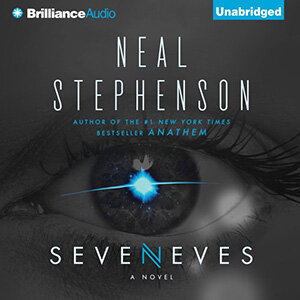
Without warning the moon explodes into seven fragments. After a few days of admiring the novelty of this, the human race realises that the fragments will collide with each other and break apart into smaller fragments, which will eventually rain down on the Earth. This Hard Rain will last for 5,000 years, killing every living creature and boiling the sea. Thus, humanity has approximately two years to come up with a plan to save all life on Earth.
This is the setup of Neil Stephenson’s novel Seveneves. It’s an excellent premise to build a novel on. It has a race against time, a struggle against nature to save humanity and a high-risk venture into space. The book is a gripping read that follows the plan to put as many people as possible onto the International Space Station or onto craft in a similar low Earth, so that some people survive the end of the world. There are double-crosses, near misses and disasters along the way, which make this a gripping page-turner.
Stephenson has done a lot of research into what would be involved in executing this plan. The book is peppered with a lot of details about the physics of low Earth orbits or asteroid mining that bring the story to life. However, my main criticism of the book is that it presents the end of the world as an engineering problem to solved and neglects the social implications of the end of the world.
In the novel most of the human race just accept that they, their families, communities and nations will die and focus their efforts on the Cloud Ark scheme, a plan to save a tiny fraction of 1% of the human race (and the genetic information of the Earth’s plants and animals). This to me seems unlikely. Surely there would be rioting, suspicion that this is an elite trick, or death cults springing up everywhere. The world would go mad, faced with this knowledge.
People would stop coming to work, which would have implications for the Cloud Ark. Even if NASA employees remain focused on the plan to save humanity, their supply chain would break down as manufacturers and logistics people decide they didn’t want to spend their last two years of life doing the 9 to 5. At one point in the novel it mentions that the Stock Market has ceased to operate, but the implications for global economic system (that has its resources geared towards making the Cloud Ark) are underexplored.
I accept this is already a long book and throwing in more details about how the human race psychologically or politically reacts to its impending destruction would only make it longer. The story of this novel is the people at the centre of the plan to save the human race, and it’s good that it sticks to that. There are a few chapters where these ideas are engaged with, such as a trip to Bhutan to collect prospective candidates for survival or the description of the public information campaign designed to inspire the people about the Cloud Ark and the future of the human race. Still, I feel this book lacks a wider perspective on the effects of its premise.
All of the nations of the Earth work together on a single project to save humanity. This also seems unlikely as the Cloud Ark plan is led by NASA and ultimately more Americans than any other nation survive the end of the world. Countries such as China and Russia, with proud cultures and nationalistic beliefs, would not just submit to be a part of the American plan. Only tiny Venezuela breaks with the American hegemony. There is no thought to the effects of the end of the world on its geo-politics.
When politics is discussed in the novel, it is always in a negative light. One of the book’s antagonists is the President of the United States who destabilases the Cloud Ark by injecting politics into its population. At several points in the novel politics is used a by-world is everything that is getting in the way of the engineers fixing the problem of the end of the word. The Cloud Ark is led by the smart people who, generally, make the right calls, but politics threatens their order.
When it becomes independent from Earth, the Cloud Ark is led by an unelected commander who is accountable to no one. The book attempts to engage with the anti-democratic implications of this, but seems reluctant to accept that the smart, heroic people in charge should be held accountable by the less smart, quivering masses they are in charge of.
The smart, competent NASA people in charge of the Cloud Ark don’t abuse their absolute authority and are always looking out for the future of humanity. The democratically elected politicians are self-serving and short sighted. In many ways this novel is a manifesto for, at best, technocratic government, and at worst, enlightened dictatorship. It supports the idea that the smartest and most capable should rule over everyone else and not be questioned by the less intelligent, less they damage society through their ignorance.
Hostility towards ordinary people’s ability to engage with the problems of the world is an ideology held by many people who work in engineering or tech companies. It manifests as a suspicion of politics in general (as the means of giving power to ordinary people who might not understand something) and politicians in particular (as those chosen to enact the wrong-headed whims of the ignorant masses). The way that politics is treated in Seveneves is a prime example of this.
The idea that the world should be led by smart people who shouldn’t have to answer to the wishes of less smart people is popular in Silicon Valley. It is an engineer’s world view, where you do not consult the ignorant masses about a problem, but only the most informed person. You wouldn’t elect a mechanic to fix your car, you’d find someone who knows about cars. So, you shouldn’t elect someone to handle the economy or the plan to save humanity, this power should only be given to those who know what they’re doing. Giving this power to elected politicians who are slaves to the will of the ignorant will only lead to things being screwed up.
This view leads to the idea that the problems of the world need engineering solutions. Issues such as climate change or world hunger need technical fixes and not engagement with the politics of these issues. Engineering will play a role in solving the climate crisis, but it will be ineffectual unless we engage with the politics of climate change. Such as how wealthy, powerful nations pollute a lot more than poorer nations or that 100 companies contribute 71% of global emissions. We need to engage with the politics behind this to fix climate change. Politics is not a distraction or a means to give power to the ignorant so that they can make the situation worse.
The engineer’s worldview leads to a few people having a lot of power and no accountability. Mark Zuckerberg could be the most powerful person in the world, King of a kingdom of over 2 billion people and possessing absolute authority over it. The enlightened dictatorship of Mark Zuckerberg has allowed the far-right to overrun his kingdom, but he and his Silicon Valley friends approach this issue as an engineering problem to be fixed and not political issues to be engaged with.
Despite the reluctance to engage with politics and a premiant engineer’s world view, Seveneves is a moving description of how humanity would face the end of the world. There are many sections of powerful, emotive prose that brought a tear to my eye. It is certainly a well researched, well written novel that I would recommend reading. I hope that this is how humanity would react to the end of the world: calmly finding a way to save humanity the problem as best as possible. Although looking at how humanity has handled climate change so far, I think this is a vain hope.
When we fail to engage with the political nature of these enormous issues and see the world as an engineering problem we fail to fully engage with the problem. Not all problems have a solely technical fix and a range of policies is needed to address them. If we want to save our world (which is threatened by the slow-motion apocalypse of climate change, not the sudden destruction of the hard rain) then politics will be as important as engineering in our salvation.