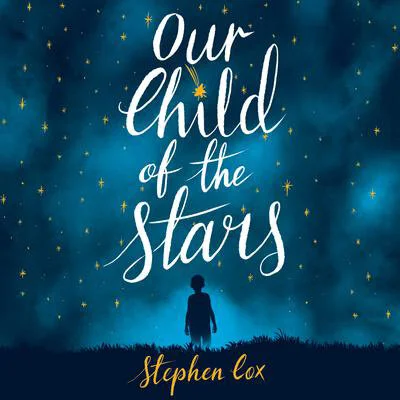
Our Child of the Stars
Space can be a frightening place. It is the great unknown and as such it inspires fear in us. Films from Alien to 2001: A Space Odyssey and novels such as Dan Simmons’s Hyperion have captured our fear that the darkness of space holds things that are terrifying as they are beyond our ability to understand them.
We are used to being frightened of space, which is why it was so refreshing to read a science fiction novel with a different take. Stephen Cox’s Our Child of the Stars has at its core a fundamental optimism about space. The book follows Molly and Gene Myers, a childless couple in 1960s America who adopt and raise the only survivor from a crashed alien spaceship. They name him Cory and try to keep him a secret from the government. Thus the central premise of this book is that love, not horror, can come from the great unknown.
Throughout the book, the central threat to the Myers’s family is not strange creatures from outer space but other humans who work for the government and want to exploit Cory. In this novel, it is people who are familiar to us that are frightening and dangerous, not the unknown of space or people who look different to us.
This tallies with my experience of the world, which is one reason that I related to this book. Many human characters are dangerous and can cause pain to the Molly, where the alien character, Cory, provides her with love and completes her family. I can relate to this in a world where the greatest dangers come from authoritarian strongmen or raving populists - who are generally heterosexual men like myself - who tell us to be frightened of refugees, migrants or members of ethnic minorities - who are different. It's easy to be frightened of the unknown but the real threats may wear a familiar face.
Our Child of the Stars 1960s setting is connected to this. In the 60s many people, like Molly and Gene, realised that they had more in common with people who were different to them (both in America and overseas) than they did with their leaders who bombed villages in Vietnam and sent young people off to be killed in the war.
The 60s was a time of great change when old values were questioned and there were existential threats to the human race. This reminds me of the time we live in now, however, the 60s also had a current of optimism about people's ability to overcome these problems. This optimism is summed up in the novel by the way that Gene talks about people living in the moon in a UN run city of all nations that has no violence and weapons, one year before Neil Armstrong first ventures there. Today we are faced with threats on a similar scale, but we seem more pessimistic about our abilities to face them and could do with a dose of Gene’s optimism.
Reading a book that has tinged with hope for a better tomorrow, that people like Molly and Gene fought for in their activism, was a welcome change from cynicism. The book is also about being a parent, which is a statement of optimism about the future. People need a belief that tomorrow can be better and children offer this. When Molly loses a pregnancy early on in the novel her belief in the future is lost as well and through finding Cory she is able to find it again.
There is a lot to praise about the novel, it is well written and Cox has distinctive prose style that draws you into the head of the characters who feel like a family from our world, despite one of them having tentacles. Yeah, their family is a little strange, but isn't every family? The Myers are a relatable family, despite their difference, and we need to relate to families that are different to ours if we have any chance of saving our world.
What I liked the most about this book is that it sums up the best in humanity. It is a book about flawed, complex people who can do good things. This is what the science fiction genre needs right now. At WorldCon 75 in Helsinki, I attended talks from both Cyberpunk and Weird Fiction writers who said that they were tired of stories in these genres about people broken down and crushed by society. They wanted stories about resistance and hope. In dark times we can't afford to be pessimistic, which is why it was great to read a book that shows that humanity can transcend petty hatred and selfishness to care for people who are different.
We need radical hope in a dangerous and threatening world. We don't need fear of the unknown. We need to be reminded that what comes out of the darkness can offer hope, love and healing as Cory does for Molly. We need positive messages right now and Our Child of the Stars does this. If you need some positive science fiction in your life to make you feel less hopeless about the fate of humanity then go read this book.