Red Train Blog

Ramblings to the left

The Red Train Blog is a left leaning politics blog, which mainly focuses on British politics and is written by two socialists. We are Labour Party members, for now, and are concerned about issues such as inequality, nationalisation, housing, the NHS and peace. What you will find here is a discussion of issues that affect the Labour Party, the wider left and politics as a whole.

  • Home
  • Topics
    • Topics
    • EU referendum
    • The Crisis in the Labour Party
  • Art
  • Books
  • About us
  • Search

Farage’s new immigration plan is cruelty as a governing principle

October 31, 2025 by Alastair J R Ball in Far right

Ah, Nigel Farage is back, like athlete’s foot for the body politic. Just when you thought we’d scraped him off the heel of national life, he reappears to announce that, if elected, he’ll remove the right to remain from migrants, because nothing says “taking back control” like taking away the basic human rights of people who already live, work, and pay taxes here.

It’s not even policy, really. It’s performative sadism with a filing fee. Imagine the red tape. Entire new departments of grim bureaucrats hired to unpick paperwork, deport breadwinners, and send “Sorry, you no longer exist” letters to NHS nurses.

It would cost billions, cause chaos, and leave migrants in constant fear that tomorrow might be the day they’re told to pack up their lives and go. Which, incidentally, is already happening, the fear bit, not the efficient paperwork bit. Britain hasn’t done efficiency since about 2010. I guess the fear is the point of it all.

 Migrants not ex-pats

It’s the Donald Trump playbook, of course: create a crisis, hurt vulnerable people, call it strength. Tough on the people who aren’t British. Bind a flailing nation together by hating the guy who delivers your Deliveroo. The irony is, Farage’s own French girlfriend will probably be exempt, white migrants, after all, are always “expats.”

At its core, this isn’t policy. It’s philosophy, the kind that belongs in the school of “might makes right.” The powerful can do what they like to the powerless, and if you object, you’re a woke snowflake who hates the flag. It’s the worldview of the pub bore who thinks “bullying” is just another word for “leadership”. Thanks to years of the mainstream press presenting Farage as a lovable rogue rather than the political equivalent of a wasp in your pint, this outlook has gone national.

Double standards

Of course, the press has thoroughly laundered Farage’s far-right views into common sense. Remember when Simon Jenkins called Farage’s opinions on Russia “not outlandish”? Or when The Spectator published a soft-focus ode to his “red-blooded romantic charm”? A certain section of society finds Farage endlessly appealing, partly because he won’t turn on them until it’s far too late, partly because they hate the people he hates, and partly because they like the idea that their rage hardon has come to life and is polling well to be the next Prime Minister.

Imagine a journalist writing something like the above about Jeremy Corbyn or Zack Polanski’s love life. There’d be rolling news coverage, three emergency COBRA meetings, and Piers Morgan live-tweeting his aneurysm. Or it would simply never get published.

Yet here we are, with Farage, the eternal pub bellend of British politics, shaping the national agenda. He’s been normalised by columnists who mistake cruelty for leadership and “plain speaking” for being prejudiced. His brand of politics has always been about punching down and calling it patriotism.

A playground ruled by bullies

Keir Starmer, bless him, did call Reform’s plan “racist and immoral”, which it absolutely is, but then Labour goes and tweets about how many people they’re deporting, hoping that cruelty is a vote winner in Nuneaton. You can’t out-tough Farage on immigration. You can only dignify his game by playing it. This is both morally and tactically the wrong call from Labour.

If you think this ends with migrants, think again. Authoritarianism never does. Today it’s your neighbour from Poland. Tomorrow it’s your teacher, your nurse, your journalist, or you, when you post something Nigel doesn’t like. The day after that its newspapers printing the government line and universities being shut down. Just look at Hungary.

Farage’s Britain isn’t a country. It’s a playground ruled by bullies, where decency is weakness and empathy is for losers. The only thing more terrifying than that vision is how many people seem ready to cheer it on.

Related posts
Far right
Farage’s new immigration plan is cruelty as a governing principle
Far right
Far right
nigel farage.jpg
Far right
Nigel Farage is seriously uncool
Far right
Far right
nigel farage.jpg
Far right
Another nail in the coffin of democracy as Musk and Farage cosy up
Far right
Far right
October 31, 2025 /Alastair J R Ball
Far right
Comment

Dr. Strangelove goes to Tehran: The hottest new war nobody ordered

September 30, 2025 by Alastair J R Ball in Trump

You’d be forgiven for thinking the last 20 years didn’t happen. That the Iraq War wasn’t a billion-dollar choose-your-own-disaster. That hundreds of thousands didn’t die. That we didn’t smear dissenters as Ba’athist fanboys before the whole thing exploded into a yeas-long reminder that maybe, just maybe, shock and awe is a terrible way to do diplomacy.

Yet here we are again. Middle East on fire? Check. Benjamin Netanyahu cracking on like the villain of a Bond film no one asked for? Check. Hawkish consensus being manufactured faster than you can say “weapons of mass destruction that may or may not exist in a theoretical future in a country we’re not currently at war with”? Check.

The West, apparently suffering from a terminal case of “just one more war, I swear it’ll be different this time,” is now flirting with the idea of war with Iran. A country with a population of 88 million and a military that doesn’t need to be bribed to show up.

Feeling extremely 2003

It’s all feeling extremely 2003, except this time we’ve replaced the PowerPoint slides with grim, unsourced Twitter threads and the sense of unease is accompanied by the chilling knowledge that Donald Trump, that great statesman, has reportedly bombed nuclear sites in Iran like a man trying to fast-track the Book of Revelation for a live-action reboot.

Naturally, opposition voices are already being handily framed as stooges of Tehran. “Why do you support the mullahs?” people ask, as if the only possible reason you might not want to flatten another sovereign nation is because you personally long to be Ayatollah Khamenei’s little spoon.

Owen Jones made a fair point this week: there’s been a lot of talk about Israel’s security, but not nearly enough about the Palestinians still being airstriked into dust. He neglected to mention Hezbollah, true, and yes, Iran has its tentacles in the chaos of the region, but let’s be clear: that doesn’t make pre-emptive war any less catastrophically stupid.

Lobbing missiles at nuclear infrastructure

Do I want Iran to have nukes? No. Of course not. I don’t want anyone to have them. Am I meant to pretend Israel doesn’t already have them? That the Netanyahu government, seemingly on a speedrun to global oblivion, isn’t doing its level best to drag the world into a three-front war to save his own skin.

Centrists are starting to warm up their “it’s complicated” takes. Any day now, I fully expect a breathless Atlantic cover story titled “Why Bombing Iran is the Only Way to Save Peace”. Maybe there’ll be a podcast. Maybe Tony Blair will emerge from whatever billionaire’s dungeon he’s been hiding in to gently suggest that a war might be a “difficult but necessary intervention.”

Here’s the one big difference between now and Iraq: Iran won’t be the pushover Iraq was. Iran is larger, more militarised, more unified by external threats. Invading Iran would make Iraq look like a minor bar brawl. Trump is already lobbing missiles at nuclear infrastructure without any regard for what happens next.

The lesson we never seem to learn

The lesson of Iraq, which we never seem to learn, is that pre-emptive war is a crime. It’s a crime when Russia does it. It’s a crime when we do it. It’s a crime when Israel does it. The only thing we’re pre-empting here is reason; and maybe survival.

So let’s all take a deep breath. A war with Iran isn’t foreign policy. It’s a disaster waiting to happen.

Donald Trump picture taken by Gage Skidmore and used under creative commons.

Related posts
Trump-rally.jpg
Sep 30, 2025
Trump
Dr. Strangelove goes to Tehran: The hottest new war nobody ordered
Sep 30, 2025
Trump
Sep 30, 2025
Trump
Trump-rally.jpg
Jun 20, 2025
Trump
Elon Musk and Donald Trump: The Beavis and Butt-Head of right-wing edge lords
Jun 20, 2025
Trump
Jun 20, 2025
Trump
Trump-rally.jpg
Feb 10, 2025
Trump
Trump is back in the White House and the billionaires are in the Rotunda
Feb 10, 2025
Trump
Feb 10, 2025
Trump
September 30, 2025 /Alastair J R Ball
Trump
Comment

The right finally discovers that life sucks for Millennials, but guess who they still blame

September 16, 2025 by Alastair J R Ball in Political narratives

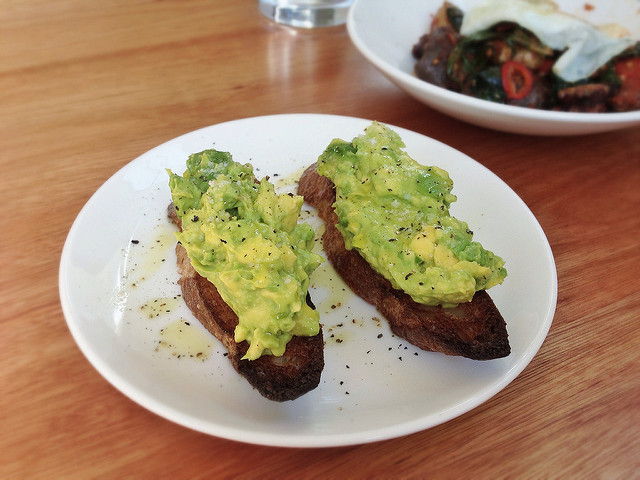
Well, well, well, if it isn’t The Right suddenly noticing that millennials aren’t all avocado-stuffed snowflakes swanning about in oat flat whites and moral certainties. According to The Critic – a publication so right-wing it makes Jacob Rees-Mogg look like a performance artist in drag – young people are struggling. Struggling, I tell you. Nicolas, 30 ans, is in a flatshare. Drinking tepid £7 IPAs. Paying taxes and not seeing the benefit. Who could have caused such a tragedy?

In a piece that reads like Domminic Cummings doing stand-up at a Clerkenwell supper club, The Critic introduces us to poor Nick, a white-collar London professional earning just enough to pay for everyone else’s lifestyles.

This includes Karim, the Somali drug-dealing rapper (yes, really, they went there, with the heavily racially coded name and all); Simon and Linda, those parasitic pensioners with triple-locked cruises and four BTLs in Tooting; and, naturally, the Great British Aid Budget, which apparently is single-handedly hoovering up Nick’s salary and funnelling it to interpretive dance workshops in Mogadishu.

Empathy for millennials

Now, let’s be fair: the piece does at least acknowledge that Nick’s woes are not the result of laziness, fecklessness, or spending too much time making beaded bracelets in Ibiza. No, the article actually suggests he’s being shafted. Not by bad decisions or excessive brunch, but by a rigged social contract that’s got him trapped between spiralling rent, student loan repayments, and high marginal taxes.

This, from The Critic! A magazine that usually reacts to empathy for millennials like Dracula to garlic bread.

This being The Critic, once the violin solo ends, the real agenda kicks in. The villains of the piece aren’t just Simon and Linda, whose decade-long property binge now entitles them to life off the wages of others whilst calling them lazy. No – the real enemy is Karim, who smokes weed, sends money to Somalia, and – worst of all – has not read Jordan Peterson.

Is a shift coming?

It’s all very neat. The narrative, not unlike the inside of Simon and Linda’s rental property, is carefully staged: boomers are gently chided, but never truly blamed. Immigrants, benefit claimants and the international development budget are trotted out as easy scapegoats. You know, the usual suspects. It’s less Rawlsian philosophy and more a Daily Mail comments section pretending to be a hard look at the problems facing young people.

Still, this sort of article is interesting, not because it’s right (it isn’t right about aid and benefits being the source of Nick’s problems, although it has some surprisingly valid points about buy to let landlords), but because it shows something is shifting.

The right is waking up to the fact that their future electoral prospects die with the next hip replacement. They’re starting to realise they’ve spent a decade alienating the very generations who, one day, will hold the balance of power.

Who is to blame?

That should be ringing alarm bells over at Labour HQ. Assuming anyone can hear them over the sound of Keir Starmer earnestly repeating “economic stability” and “tough choices” into a mirror.

While the left dithers, the right is laying the groundwork for a new, seductive narrative: Yes, young person, you are screwed, but don’t worry, we know exactly who to blame. Immigrants. Wokery. Overseas aid. Never, ever Simon and Linda’s untaxed housing empire.

It’s emotionally satisfying, narratively clean, and politically potent. In other words, it’s the Reform Party’s raison d’être.

The left’s natural ally

Meanwhile, Labour continues to court the ghost of Peter Mandelson’s swing voter: a mythical 68-year-old homeowner in Nuneaton who’s worried about Labour hiking his taxes and still undecided on Brexit. In doing so, they’re leaving behind people like Nick or Maddy (someone I have written about before). Maddy is young, educated, working hard in the capital, and still one bad paycheque away from having to move back in with her parents in Market Harborough.

Maddy isn’t on benefits. She isn’t a landlord. She’s not asking for much. But her rent is 65% of her salary, her pension is a joke, and her Hinge date last week ended with a £58 tab and the realisation she’ll never afford a one-bed flat.

She’s the left’s natural ally, socially liberal and economically left, and they’re ignoring her. Labour would rather win the votes of angry former Tory voters in Essex than young people (by which I mean anyone under 45) in London.

A new social contract

The right has started to notice and if the Tories or Reform ever work out how to weaponise Nick’s discontent without touching Simon and Linda’s cruise fund, then the left is in for a very rude awakening.

The social contract is breaking and the only ones writing new terms are the people who lit the match in the first place, but sure, tell us again how tuition fees are a distraction.

Related posts
Sep 16, 2025
Political narratives
The right finally discovers that life sucks for Millennials, but guess who they still blame
Sep 16, 2025
Political narratives
Sep 16, 2025
Political narratives
Union-Jack.jpg
Aug 20, 2025
Political narratives
Who really holds power? The cultural illusion of middle-class dominance
Aug 20, 2025
Political narratives
Aug 20, 2025
Political narratives
Apr 12, 2025
Political narratives
How should the left view the porn industry?
Apr 12, 2025
Political narratives
Apr 12, 2025
Political narratives
September 16, 2025 /Alastair J R Ball
Political narratives
Comment

Rayner’s resignation is another unforced error from Labour

September 09, 2025 by Alastair J R Ball in Starmer

Ah, so Angela Rayner’s gone. Resigned. Over her tax affairs. A pity, really; I always liked her more than most of the government, although that’s the political equivalent of saying you prefer the taste of cardboard to asbestos. 

Still, she had that blunt, straight-talking thing going on, which made her one of the few who occasionally sounded like a real human being rather than a malfunctioning Siri. If I’m honest, I can’t quite square the image of Rayner as the People’s Champ with the reality of Rayner as Landlord #2, enjoying the spoils of a second home while presiding over a country in the grip of a housing crisis. Then, tax-dodging on top of it? Sorry love, that’s Tory cosplay.

The most frustrating part

Which is the most frustrating part: she was one of the alright ones. Yet here we are, watching Labour torch themselves with what is surely the most unforced error since Liz Truss asked if she could be trusted with the economy. I thought Starmer’s New Improved Labour™ was supposed to be boringly professional, a sort of human beige wall whose only point was that they wouldn’t spectacularly immolate themselves. Apparently not. Turns out beige burns.

Now, let’s not pretend sexism hasn’t played its predictable cameo. Spray-painting “bitch” across her home is hardly a nuanced critique of capital gains. When Tory grandees play property Jenga with their taxes, most of the outrage is confined to a stiff tut in the New Statesman letters page. But Labour keep insisting they’re different. They say, with the straight face of a man trying to sell you an “ethical vape,” that they’re held to a higher moral standard. Then they immediately trip on the shoelaces of their own hypocrisy.

Rising cynicism

This isn’t just about Rayner. It’s about what this does to the voters Labour spent the last few years desperately wooing with their centrist chardonnay-and-church-hall routine. People already think politics is a con; this just sprinkles artisanal sea salt on the cynicism. Why bother voting for Labour-lite when you can get the full-fat corruption experience from the Tories, or, for the really disillusioned, a pint of bitter and Nigel Farage’s “common sense” at Reform?

It’s not unthinkable that Labour could be cooked. History has form here: remember the French Socialists? No? Exactly. They managed to implode so completely they made Blockbuster Video look like a resilient business model. Labour could go the same way, losing votes to the left, centre, and far-right until the only people left are the ones who show up for constituency evenings where Stephen Bush addresses the members.

If that happens, I honestly think Rayner’s tax avoidance and Starmer’s freebie scandals will be part of the wreckage. People really, really hate this stuff. They smell hypocrisy faster than you can say “expenses claim,” and they’re not wrong. It’s precisely the fuel that keeps Reform ticking along nicely, rebranded racism in a Union Jack tie.

Playing into the hands of Reform

Which brings us to Starmer, who, according to senior Labour figures, has now been told to “stop making mistakes.” That’s right. After five years of leading the opposition, someone has finally cracked the code: maybe don’t deliberately set your own shoes on fire. One wonders what he was being told before this: “lean into the pratfalls, Keir, pratfalls poll well”?

The bigger truth here is that Starmer’s Labour isn’t offering anything to fix this country. No big ideas, no transformative vision. Just empty posturing with all the sincerity of a LinkedIn influencer telling you to “embrace your morning routine.” And now they can’t even manage competence or the moral high ground. It’s all farce and no future.

So yes, I’ll laugh at the shitshow. It is funny, in that bleak, end-of-empire kind of way. But while Labour are busy performing self-immolation-as-performance-art, Reform are quietly setting up the buffet for the truly disenchanted. And that’s the part where the laughter dies.

Related posts
960px-Official_portrait_of_Angela_Rayner_MP_crop_2,_2024.jpg
Starmer
Rayner’s resignation is another unforced error from Labour
Starmer
Starmer
Capitalism.jpg
Starmer
“That’s Your GDP”: Labour’s big growth delusion
Starmer
Starmer
Keir_Starmer.jpg
Starmer
Labour’s plan to defeat Farage by becoming him
Starmer
Starmer
September 09, 2025 /Alastair J R Ball
Starmer
Comment

Who really holds power? The cultural illusion of middle-class dominance

August 20, 2025 by Alastair J R Ball in Political narratives

Class conflict is back on the agenda. Not that it ever really went away, but now it’s front and centre in polite political discourse again, thanks in part to rising inequality, the housing crisis, and the ongoing aftershocks of Brexit and 14 years of Tory rule.

Yet the conversation has taken a turn: we are no longer just talking about the economic elite versus the rest, but about a supposed cultural dominance by the metropolitan, liberal middle-class, a managerial overclass who sip flat whites, tweet their outrage, and supposedly set the boundaries of public debate.

Here’s the thing: when we talk about the “upper class” today, what do we actually mean? Dukes and Duchesses are no longer running the show, at least not explicitly. Nor are they the target of most contemporary political ire. The cultural anxiety and political anger that defines our moment is aimed squarely at the so-called “liberal elite”, aka middle-class professionals with degrees, living in “hub cities” like London, New York or Paris.

A wide spectrum of values

Of course, the large buckets we dub “working-class” or “middle-class” aren’t monolithic. There are plenty of middle-class people who share the supposedly working-class values of being opposed to immigration or ideas like critical race theory. Some of them I went to university with and live in big cities.

The values gap between these two broad archetypes of middle-class people can be described as the difference between young and old, or centrists and lefties, or liberals and socialists. Let’s go with liberals and socialists so that we don’t get bogged down in political science definitions.

Liberals vs socialists

The socialists are more likely to have supported Jeremy Corbyn, be more vocal about migrants and trans rights, and have strong views on Gaza. The liberals are more likely to be hostile to the above and prefer technocratic solutions based around public private partnerships. Probably the biggest divide between the two is what they think of Keir Starmer.

Both groups are opposed to the Donald Trumps and Nigel Farages of the world. Both tend to be Remainers and live in cities. The middle-class values that are supposedly dominant in culture and public institutions are more likely to come from the liberal side of the divide. Yes, there was a trans character playing a limited role in Dr Who, and yes, fringe theatres in London are making noise about Palestinian rights, but this is not the cultural mainstream that’s supposedly dominated by the woke. That’s the domain of the liberals.

Old and young working-class

The working-class also varies a lot. There’s the young Amazon worker in Bradford struggling on a zero hours contract and living in a damp infested flat, and there’s the retired Boomer who bought a council house with right-to-buy in the 80s, sold it on and now lives in a leafy suburb. Neither went to university or lives in a big city.

These two people live very different lives and have very different values. There’s also a wide spectrum of different circumstances and values in between them.

When we talk about working-class values (or middle-class values) they can’t possibly capture these huge differences. To avoid confusing definitions, like ‘Instagram Progressives’, which require a lot of describing and only make sense if you want to target precise political messages at precise groups of voters, we use middle-class and working-class values as shorthand for certain political beliefs. However, what are those beliefs?

Championing “working-class values”

The middle-class values self-actualisation, liberalism, progress, multiculturalism, and globalism. The working-class often values community, stability, belonging, and a strong national identity. These are not inherently better or worse, they are just different.

This creates strange political contortions. Many politicians now compete to champion “working-class values”, whether said politician grew up in a council flat or went to private school. By championing “working-class values” they mean being patriotic, hating immigrants and trans people and slamming the middle-class left. Except, some middle-class and quite well-off people hold these exact same values.

Problems with political solutions

Who speaks for the metropolitan liberals who are suffering? They’re dealing with low wage growth, spiralling rent, raising children when childcare is astronomically expensive, while watching their jobs become more precarious by the year.

They moved to cities for work and, yes, like an occasional craft beer and for migrants to have dignity. These people are not working-class enough for right-wing columnists to stand up for.

In the scramble to represent “real” Britain, whatever that is, we risk leaving behind people who are struggling. They’re not struggling as much as an unemployed single parent in a cockroach infested flat in Whitehaven, obviously, but they’re still struggling with problems that have political solutions. If someone will act.

Class conflict

This is where the whole “debate” starts to unravel. Class conflict isn’t just a naturally occurring phenomenon. It’s structured. Designed. Encouraged. It serves a purpose; and that purpose is division.

When working-class voters are told the middle-class is sneering at them, and when middle-class liberals are told the working-class is reactionary and dangerous, we all forget who actually has the real power: the ultra-wealthy. The asset-owning, hedge-funding, landlord elite. The people who don’t just own property, but shape policy. The ones who benefit when we fight over culture while they offshore their wealth.

This is not to say class doesn’t matter, but we must be precise. Today, class is less about income and more about education, values, and where you live. A system that allows wealthy small business owners to be called “authentic” and struggling graduates to be labelled “elite” is not a system designed for justice. It’s a system designed for distraction.

Vibes based social class

We must also make sure that the arbiters of class are not conservative political commentators who will define working-class as people who hold a set of right-wing values, such as an opposition to immigration, net zero, anything considered “woke” and being nice to anyone at all. Funnily enough these commentators don’t consider raising taxes on the wealthy to improve public services a working-class value, despite the polling showing that it is.

Given half the chance these commentators will define working-class as a general conservative vibe that has nothing to do with wealth, property ownership or political influence. Alan Sugar is working-class because he didn’t go to uni and doesn’t like Corbyn. A graduate on minimum wage in a Shoreditch coffee shop isn’t because they have a friend from Poland who once visited an art gallery, which makes them part of the cosmopolitan global elite.

Whose views get listened to?

The debate over class is important because it determines whose views are listened to or get coverage in news or political debates. It’s easy to dismiss someone as out of touch when they say they’re in favour of open borders and easy to say someone should be listened to due to their humble life experience when they oppose immigration.

That isn’t to say that working-class views are well represented in political debates and the news. Certainly, working-class people are not represented well in politics or the news. Their views are only aired when they agree with the right-wing establishment, from Brexit to trans rights to the environment. When a working-class person calls for higher taxes to pay for better public services, that is dismissed as not practical. The right-wing media is good at elevating stories and voices that represent the working-class only when they’re making traditionally right-wing arguments.

The people who get listened to the most are swing voters in the seats that change hands from Tories to Labour at a general election. These are the people who Starmer has staked everything on appealing to. These were the people alienated by Corbyn. They tend to be socially conservative, homeowning, relatively comfortable, non-university educated and many claim to be working-class. Whether you are working-class if you own a four-bedroom detached house, have a management level job (or run your own business) and don’t live pay cheque to pay cheque is a big question, but defining these people as working-class based on their socially conservative views is vibes-based class.

Who has power?

So no, the middle-class isn’t the dominant class. No, having a Black, gay Doctor Who doesn’t mean liberal values are hegemonic. Not when the government is throwing trans people under the bus to win tabloid headlines to get the votes of people who didn’t go to uni but do own their own home.

We don’t need to play the game of “who is the most oppressed.” We need to remember that class conflict, at its heart, is about power; and the biggest divide remains between those who have it, and those who don’t. For almost all of us, middle-class or working-class, we don’t have power. The billionaire class does.

Related posts
Sep 16, 2025
Political narratives
The right finally discovers that life sucks for Millennials, but guess who they still blame
Sep 16, 2025
Political narratives
Sep 16, 2025
Political narratives
Union-Jack.jpg
Aug 20, 2025
Political narratives
Who really holds power? The cultural illusion of middle-class dominance
Aug 20, 2025
Political narratives
Aug 20, 2025
Political narratives
Apr 12, 2025
Political narratives
How should the left view the porn industry?
Apr 12, 2025
Political narratives
Apr 12, 2025
Political narratives
August 20, 2025 /Alastair J R Ball
Political narratives
Comment

What would Max Weber make of our politicians?

August 02, 2025 by Alastair J R Ball in Philosophy and politics

Max Weber, that stern-browed German sociologist with a moustache worthy of Nietzsche and a mind like a surgical scalpel, once gave a lecture called Politics as a Vocation. It is one of those pieces of political writing, like The Communist Manifesto or Democracy in America, that seems to understand its moment even better than the moment understood itself.

Delivered originally as a lecture in 1919, in the stunned and shell-shocked aftermath of the First World War, then later published, it isn’t about how to fix the world. It’s about what politics is, what it demands, and why it is, when done properly, so crushingly difficult.

Weber was trying to understand how modern politics works: not as a spectacle, not as an ideology, but as a profession. A thing people do, with rules and consequences. His argument (and probably the most famous point in the lecture) was that the state, in its modern form, was defined by its monopoly on legitimate violence, and politics, therefore, was the slow, grubby, bureaucratic, and often soul-destroying work of deciding how that power should be used. That work, he thought, was best done by professionals.

The machinery of politics

Weber saw clearly how politics had become institutionalised. The era of the noble landowner dabbling in Westminster was over. The rise of political parties, what Weber called “machines,” had changed the game. These machines were not sentimental. They produced candidates the way factories produce cars. However, occasionally, out of the grinding metal and belching smoke, one of them spat out a genuine leader.

A democratic dictator, Weber called them. Men like William Gladstone, who came from inside the machine but used its power to project a political vision onto the nation. The charisma of the outsider, wielded by the insider.

Insiders and outsiders

That distinction, between insiders and outsiders, is the key to understanding Weber’s model. He believed great politicians came from inside the system but stood apart from it.

Abraham Lincoln. Otto von Bismarck. Gladstone. They knew how to work the levers of power, but they also had vision, and the psychological strength to live with contradiction. Not just contradictions between ideals and reality, but contradictions within themselves. Lincoln, he wrote, was “haunted” by the burden of leadership, but he did it anyway.

Trump, Truss and the fantasy of the outsider

By these standards, modern politics is a nightmare. Weber would have loathed Donald Trump, not because of his policies but because of his origin story. Trump didn’t emerge from a party machine; he broke in with a crowbar. He wasn’t shaped by the system. He hijacked it. For Weber, that made him dangerous, not just in a moral sense, but in a functional one. Outsiders don’t know how the machine works. So, when they start pushing buttons and pulling levers, things go bang. Usually, in the worst way.

The British conundrum

Britain offers a different conundrum. Here we have insiders, products of the machine, who behave like outsiders. Boris Johnson and Liz Truss are not anti-establishment. They are the establishment. Johnson has been a Tory for decades; Truss worked her way up through student politics and the wonk-industrial complex. Yet, when power came, they governed like amateurs.

So, what went wrong? Why, if Weber was right that party machines produce capable leaders, do our party machines keep producing duds?

The professional without substance

The answer may be that the machine itself is broken. Weber thought parties could still generate greatness, but only if they were places where political skill, compromise, and endurance were developed over time. The grind mattered. Parliament mattered. The whole dreary, infuriating business of legislating and coalition-building mattered.

What happens when Parliament becomes a theatre? A place that only boosts politicians standing as media personalities and not the place where the messy compromise of governing is worked out? When MPs are selected for loyalty, not talent? When ambition is rewarded more than ideas?

Well, you get people who’ve clocked the hours, worn the rosettes, climbed the ladder, but don’t know how to govern. They know how to win, but not how to do it. You get Johnson.

A modern paradox

Weber would have recognised this mutation. He wrote that politicians must be able to hold “the strong and slow boring of hard boards” not flashy slogans or viral speeches, but patient compromise.

Here we hit a modern paradox: we demand authenticity from our politicians, but we punish them for honesty. We demand conviction, but not contradiction. We want them to be brave, but also bland. Social media has intensified this tension: every vote, every hesitation, every fudge is recorded, memed, and weaponised. So politicians retreat into performance.

Why we don’t want what Weber wanted

Maybe, deep down, we don’t even want what Weber wanted. He believed in the professionalisation of politics, but modern voters don’t. They want disruption. They want mavericks. They’ve seen what the professionals have delivered: a financial crash, a lost decade of wage growth, creaking public services, housing crises, climate drift. They’ve seen how insulated those professionals are from the consequences.

So we get the politics of rage. Of spectacle. Of nihilistic hope. A rolling carousel of outsider messiahs and insider clowns. Still, the machine keeps churning.

Would Weber like Starmer?

This brings us to Keir Starmer. On paper, he’s Weber’s ideal: an insider with competence, caution, and a very serious haircut. He’s spent his life inside institutions, legal ones, political ones, party ones. He believes in rules, in process, in making things work. However, where’s the vision? Where’s the haunted inner struggle? Where’s the Gladstone?

Starmer won a big majority, he may even hold on to some of it, but where is greatness in government? That seems off the table. Weber wanted politicians to combine the vocation of responsibility with the spirit of vision. Starmer, like so many of today’s leaders, offers only management.

The final puzzle

Here’s one final question: if Weber thought Parliament could produce great leaders, why does it now produce mediocrities?

Well, because Parliament has changed. Once, it was a proving ground. Now it’s a theatre for politicians to elevate their status as a celebrity or media personality, a prelude to them going on Strictly (or starting a podcast if they have intellectual pretensions).

Weber believed politics was the calling of those who could carry the weight of the world, who could live with contradiction, who could endure failure and persist. In our time, politics has become the calling of those who can weaponise Twitter rage, and the House of Commons is just a platform to get their angry message onto TV. A tool for those who want to monopolise our attention.

The machine still runs, but it no longer builds leaders, it builds celebrities, and that, Max Weber would say, is not the same thing at all.

Related posts
Oct 31, 2025
Farage’s new immigration plan is cruelty as a governing principle
Oct 31, 2025
Oct 31, 2025
Trump-rally.jpg
Sep 30, 2025
Dr. Strangelove goes to Tehran: The hottest new war nobody ordered
Sep 30, 2025
Sep 30, 2025
Sep 16, 2025
The right finally discovers that life sucks for Millennials, but guess who they still blame
Sep 16, 2025
Sep 16, 2025
August 02, 2025 /Alastair J R Ball
Philosophy and politics
Comment

Why social media platforms spread the worst political messages

July 28, 2025 by Alastair J R Ball in Technology

There’s a quote I keep coming back to whenever I think about online political discourse: “All the world’s a stage,” wrote William Shakespeare. What the Bard didn’t foresee is that the stage would one day be run by venture capitalists in Silicon Valley and littered with algorithmically selected hot takes, clickbait headlines, and QAnon memes.

Today the theatre of politics isn't Westminster or Washington, it’s TikTok, YouTube, and X (formerly Twitter, still tragically named). This is where the stories get told and politicians’ actions in legislators exist only to trend on social media platforms and raise their profile. This is where most of our attention is focused, however “focused” we are when we doom scroll.

Theatre of retention

Technology platforms don’t just facilitate the spread of political narratives; they shape them. These are not neutral tools. The medium is not just the message, it’s the producer, the casting director, and the lighting technician. When we debate policy, news or conspiracy online, we are performing inside a theatre whose architecture was built not for reasoned argument, but for retention metrics.

If you’re crafting a narrative in 2025 and you’re not thinking about how it will play - how it will be clipped, quoted, memed, dunked on, or algorithmically elevated - then you’re not in the political conversation. This leads me to ask: is the way we consume politics shaping the politics we get? Also, are the wrong narratives winning?

Take QAnon. Or the idea that vaccines are a secret form of population control. Or the increasingly popular belief that central banks are a satanic cabal in disguise. Or scepticism about climate change. These narratives didn’t go mainstream because they were true. They went viral because they were sticky. Catchy. Shareable. Especially amongst bored Boomers spending hours on Facebook on their smartphones. Facebook, and other social media platforms elevate the sticky over the true.

Down the rabbit hole

We’re all living on the timeline now, and most of us aren’t choosing the stories we see. We’re being fed them, passively, in the gaps between emails, while queuing for coffee, or waiting for sleep to arrive. The hardware and software feeding them to us are not neutral broadcasters either. They are dopamine slot machines, calibrated to hijack attention and convert it into advertising gold. They’re not here to inform you. They’re here to keep you looking.

So, what happens when these systems encounter politics? You go down a rabbit hole without much of a say in where you end up.

Recommendation engines, particularly YouTube’s, don’t just give you what you asked for. They give you what will keep you watching. Sometimes, that’s another Mitchel and Webb Look sketch, sometimes it’s a video about distant galaxies, sometimes an interview with Florence Pugh. However, sometimes it’s “The TRUTH About the Deep State (They Don’t Want You to Know)” given the same level of prominence as legit news reporting and trailers for Marvel films. From there, it’s just a few clicks to flat Earth, climate change denial, or white genocide.

Fear works

The kicker? You didn’t even search for this stuff. You didn’t have to. The system knew you’d bite, because someone like you - same age, same job, same fears - already did.

This isn’t a system that pushes everyone into their own bespoke dystopia. It’s worse. It amplifies the most engaging narratives - the ones with moral panic, emotional simplicity, and good enemies - and after the most attention grabbing narrative of all has been found it’s fired at everyone. It turns out the same things hold most people’s attention, and that’s fascism. It turns out fear works. Anger works. “They’re coming for your kids” always works.

It’s bad for business

So, if narratives shape politics, and platforms shape narratives, then who shapes the platforms? Capital. That’s who.

These systems are designed to maximise ad revenue. That’s the logic of surveillance capitalism: capture attention, model behaviour, feed stimuli, and then sell that attention - that’s your attention - to advertisers.

Truth, nuance, and boring-but-important policy details don’t trend, so they don’t get a look in. It’s bad for business. The tech billionaires and the Wall Street types who fund their projects might nominally care about abstract things like truth and democracy, but they care about concrete things like revenue, market share and time on site much more. This means they will continue to aid the spread of narratives that are false or enrage people until they vote for reactionary politicians. Now tech billionaires must bend the knee to the monster they created.

Changing the record

Can we change this?

Yes, but that’s political. It would take a movement, an electoral coalition, which is hard to assemble. The people most harmed by this system are too fragmented, too polarised, or too doom-scrolled to organise. Real change would mean confronting the wealth and power of tech billionaires.

We have done it before. We regulated cigarettes. We demanded seatbelts. We could ban certain algorithmic features, restrict attention-hacking designs, or break up tech monopolies. We could treat tech platforms like we once treated cars: useful, but too dangerous to go unregulated.

There is still time

To do this we have to be honest. Social media didn’t invent the business model of using outrage to get attention and then selling that attention to advertisers. Fox News and tabloids like The Sun have been at it for years. The difference is now it’s in your pocket, and it never turns off.

So yes, technology matters. Yes, narrative matters. However, it’s the design of technology platforms, optimised for surveillance capitalism, which determines the political narratives we are exposed to. If democracy is a battle of stories, then it matters who controls the stage of this world. The good news is that there is still time to change it.

Related posts
Jul 28, 2025
Why social media platforms spread the worst political messages
Jul 28, 2025
Jul 28, 2025
Apr 24, 2024
TikTok has many problems, but the hysteria around this app distracts us from the larger problem of unregulated tech companies
Apr 24, 2024
Apr 24, 2024
Prince-Harry.jpg
Jan 17, 2023
Yet another tedious Prince Harry hot take shamelessly written to get clicks
Jan 17, 2023
Jan 17, 2023
July 28, 2025 /Alastair J R Ball
Technology
Comment

Elon Musk and Donald Trump: The Beavis and Butt-Head of right-wing edge lords

June 20, 2025 by Alastair J R Ball in Trump

Well, well, well. Look who’s not besties anymore. Elon and Don, two of the world’s richest, loudest, and least self-aware men, have had a bit of a tiff. Or in the words of AOC: “The girls are fighting.”

It was always going to end like this. The tech libertarian and the tangerine authoritarian, two egos orbiting the same black hole of delusion, finally collided in what can only be described as a the pettiest falling out ever that might lead to the start of an actual war as a means of blowing off frustration.

Trump the chaos agent

Trump, ever the chaos agent, has been busy doing what he does best: acting on whatever errant neuron fires off in his skull at 3am while he’s trying to force out a turd and letting the rest of the world deal with the fallout.

Recent hits include banning asylum seekers at the southern border with the nuance of a boot stamping on a human face, picking a fight with Harvard like it’s a local Starbucks that got his coffee order wrong, and floating plans to ban citizens from a dozen countries because he doesn’t like their vibes. Classic strongman cosplay, straight from the Viktor Orbán playbook.

Trump can’t be trusted to look after his pals

Enter Elon, fresh from tweeting ketamine-fuelled memes on a platform he accidentally purchased for the price of a mid-sized European country. Musk’s latest drama? Realising that the man he has been following around like a groupie is now threatening the very subsidies his electric car empire depends on. Turns out, Trump can’t be trusted to look after his pals. Who knew?

Elon has discovered that his particular brand of performative right-wing edge lordism won’t help him when an aspiring dictator wants to bulldoze his industry because he’s in a mood. These two aren’t falling out over principle. They don’t have principles. They’re falling out because they can’t both be the main guy in the executive booth for the apocalypse show.

Musk tried to come for Trump with that Epstein jab, which is rich coming from a man whose idea of social responsibility is letting fascist meme accounts run wild on Twitter (sorry, X, a name that sounds like a porn site from 2003 and functions like one designed for neo-Nazis where the people getting fucked are minorities, people who like democracy and anyone with a sense of decency). The Epstein jab is doubly stupid when you remember Musk spent a fortune getting a supposed paedophile elected.

A wrecking ball dipped in gold paint

Trump, in return, has all the subtlety of a wrecking ball dipped in gold paint, and is spouting bile about Musk on his own social media platform Truth Social. Trump doesn’t forget slights, and if he can’t take down Musk’s businesses, he’ll happily take down the entire EV sector. Nothing screams “America First” like handing the car industry to China due to a personal vendetta. Considering electric vehicles is an industry America is actually good at. That and toxic political discourse, which the country is a net exporter of.

Meanwhile, the Venn diagram between Elon’s cult of tech bros - with weird views about women - and Trump’s angry flag-humping base - who are seconds away from burning down their local Taco Bell for being insufficiently American - is now just two circles slowly edging away from each other, to be two entirely distinct types of weirdos you don’t want in your mentions or cornering you in the supermarket.

Libertarians and authoritarian nationalists are natural enemies, like a hedge fund and the band of feral ferrets living in the walls of their Mayfair building. Both consider the other a pest to exterminate but due to the insanity of the modern age, end up cohabiting. Or like the foxes living on the roof of Google’s new £1bn building in King’s Cross: no one wanted any of this, but it’s somehow taken over everything because no one can come up with an alternative.

Terrifying power

The libertarians want to be left alone to invent new ways to avoid paying tax; the latter want to force you to say the Pledge of Allegiance before brushing your teeth. The only thing they agree on is that women have too many opinions.

It would be hilarious if it weren’t also terrifying. The sheer amount of power these two men wield - over infrastructure, over platforms, over minds - is staggering. When they fall out, it’s not just a Twitter spat. It’s markets shaking, civil rights eroding, and the vague threat of military deployment hanging in the air like a fart in a press conference. Just ask the people of California, how funny all this is.

It blows my mind that a certain number of supposedly sane people wanted all this - which was inevitably going to happen - over having Kamala Harris in The White House. I’m no Harris stan, but choosing Trump and Musk over her is like rejecting a slightly overcooked meal in favour of setting your kitchen on fire because you like the colour orange.

You’re next

You can say it doesn’t matter. You can say it’s an American problem. However, when the US has the nukes, the platforms, and the global reserve currency, their chaos is your chaos. The same way a butterfly flapping its wings in Florida might cause a hurricane in Essex, except the butterfly is a bloated narcissist and the hurricane is fascism.

What starts in LA - censorship, book bans, National Guard deployments - does not stay in LA. These people test their authoritarian wet dreams on the marginalised first, but you in Lincolnshire with your pension in S&P 500 ETFs? You’re next. Like I said, America is a net exporter of right-wing authoritarianism, and don’t think you’re safe because you also hate young lefties with blue hair protesting about Gaza.

The left needs to seize this moment

Trump and Musk are not outliers. They are the logical endpoint of a system that lets egomaniacs buy their way into control. They are the best argument we’ve ever had for taking power away from billionaires, expropriating their wealth, not giving them cabinet positions or letting them rebrand social collapse as “innovation.”

The left needs to seize this moment, not with sanctimony, but with strategy. These men are not gods. They are profoundly unserious people playing with serious things. They cannot be trusted with a spoon, let alone nukes, data, or democracy.

So yes, watch them fight. Enjoy it. Popcorn is fine. Just remember: the house is still on fire, and these two are pissing on it, then selling the livestream as an NFT.

Donald Trump picture taken by Gage Skidmore and used under creative commons.

Related posts
Trump-rally.jpg
Trump
Dr. Strangelove goes to Tehran: The hottest new war nobody ordered
Trump
Trump
Trump-rally.jpg
Trump
Elon Musk and Donald Trump: The Beavis and Butt-Head of right-wing edge lords
Trump
Trump
Trump-rally.jpg
Trump
Trump is back in the White House and the billionaires are in the Rotunda
Trump
Trump
June 20, 2025 /Alastair J R Ball
Trump
Comment

“That’s Your GDP”: Labour’s big growth delusion

May 27, 2025 by Alastair J R Ball in Starmer

By now, you’ve probably heard the rumour that Labour has a plan. I know. It shocked me too. The plan in question is to ride a noble steed named economic growth to the top of the polls and then use it to magically fix everything from NHS waiting lists to sprucing up the haunted remnants of our school buildings. It’s a beguiling fantasy: we don’t need to tax the rich, we don’t need to challenge inequality, we don’t even need to argue about Europe anymore, we just need growth.

Growth is the one thing Labour’s broad - and increasingly divided - electoral coalition can agree on. Wealthy centrists love growth because it makes them feel grown-up and serious in front of their hedge fund mates. Trade unionists want growth because maybe it means a pay rise that isn’t immediately outpaced by the price of a multipack of crisps. Voters across the spectrum want more jobs, higher wages, better services, stuff that economic growth theoretically delivers.

The benefits of growth

To be fair, if the economy ever decided to get off its arse and grow, it would help. Growth increases tax revenue without having to actually raise taxes - which is, partly, how Tony Blair improved the public realm after the miserable state the Tories left it in. This is politically convenient for a party desperately clinging to the idea that it can achieve its political goals without social conservative swing voters making any of the sacrifices that will send them running into the arms of Nigel Farage and Reform.

More money sloshing around could theoretically fund all the nice things politicians take photos with when they’re trying to look like they care: nurses, teachers, maybe even a railway that gets you from Manchester to London in less than a week.

Punching the country in the kidneys

The problem is: if growing the economy was easy, the last lot would have done it. The Tories have spent the last 14 years trying to make GDP rise by repeatedly punching the country in the kidneys and hoping the pain would build character. What we got instead was austerity, collapsing infrastructure, and a workforce so demoralised you can practically see their productivity curve spiralling into a sinkhole.

Austerity turned Britain into a country that can’t even patch potholes without crowdfunding, and now Labour wants to dig us out of the hole without, crucially, spending any actual money or annoying any Daily Mail readers. Keir Starmer’s bold plan to reignite the economy includes deregulating the planning system. That’s right folks, the future belongs to whoever builds the most chicken coop size flats on the site of a former garage in East London.

Even if Labour somehow summons growth through the sheer power of committee meetings, it’ll take time. Years, probably. Long enough that it might be the next government, possibly Kemi Badenoch, who gets to claim credit. In the meantime, we’re left squinting at PowerPoint slides while the current Labour front bench insists that growth is basically the cure for cancer, climate change and bad vibes.

Growth isn’t a panacea

Here’s the catch, and it’s a big one: growth isn’t a panacea. Growth can happen while people get poorer. It can happen while wages stagnate, while rents soar, and while billionaires guzzle the GDP gains like it’s a Disney themed bottomless prosecco brunch (don’t ask).

This isn’t a hypothetical. It literally happened. In 2016, the British economy was growing. It was growing anaemically but even that tepid growth would be manna from heaven in today’s economy. However, real wages were falling, inequality was rising, and communities were told to be grateful that the City of London was doing great, thanks, despite local high streets being devastated like Chernobyl had just happened two postcodes over.

The halcyon days of growth

Then 52% of the country voted for Brexit, while the Remain camp said: “But GDP! Think of the GDP!” To which one Brexiteer in a focus group quite famously replied: “That’s your GDP.”

Okay, the focus group was before the referendum. I moved my timelines around for the sake of a good sentence. The point being that growth doesn’t automatically make people feel better off or vote against dodgy nationalist politicians and their ill-conceived pet projects, even though the early 2000s had growth and we now look back on that time as halcyon days. Turn up Mr Brightside.

So many inequalities to tackle

The comment about “your GDP” might be the most cutting piece of political analysis in modern British history. It captures something most politicians refuse to grasp, when ordinary people don’t feel the benefits of growth, they start voting like it’s all a joke; because to them, it is.

If Labour genuinely wants its growth agenda to succeed, it needs to deal with inequality. Not in a mealy-mouthed, “we’ll look at regional investment zones” way. Properly. Inequality isn’t just a line on a graph; it’s the thing that makes you work harder every year and still feel like you’re falling behind. Then you start hearing the siren call of the far-right.

There are so many inequalities to tackle, it’s like a greatest hits album of bad policy: the gap between rich and poor, the North-South divide, London and everywhere else, young and old. Particularly that last one. My generation gets blamed for everything - from economic stagnation to the decline of the handshake - and now, apparently, we’re not working hard enough.

A convenient excuse

That’s why Labour is tightening benefits. To flush out supposedly the lazy young people claiming mental illness incapacity. The ones who’ve been softened by participation trophies, avocado toast, talking about feelings and the idea that maybe work shouldn’t destroy your soul.

Boomers, especially the media commentators, love to blame my generation and younger people for being coddled. They claim this is the source of our economic malaise.

It’s a convenient excuse, so that they don’t have to think too hard about how the austerity, inequality and neoliberalism that they preach has failed to make us all wealthy and happy. Instead, it blighted us with poor growth, high cost of living, a ravaged environment, disease, a mental health crisis, a care crisis, a public services crisis and a lack of grandchildren for Boomers to play with.

Work doesn’t pay

Here’s the thing: I am working hard. I have two jobs, and neither of them are writing this blog. That’s a public service I provide for free. I’m not alone in this. Most of us are working to the point of exhaustion. Millennials and Gen Zs are grinding in a system designed by people who still think that working a 9 to 5 is all that’s needed to afford a home. Boomers didn’t have side hustles, because they didn’t need them. Millennials don’t have side hustles because we can’t concentrate on our jobs due to ADHD, but because we need them to survive.

On top of this hard work is the fact that every gain we make is devoured by a cost-of-living crisis, rising rents, and the recent torrent of inflation. There is no point flogging us with productivity mantras if the whole system is designed to funnel our effort upwards into shareholder dividends. Millennials and Zoomers see all our hard work enriching the already extremely wealthy where we’re left to snap up the crumbs. Then older people accuse us of being lazy and entitled because we don’t want our working lives to be one endless slog that leaves us too poor to retire at the end.

If Labour wants our support, it needs to talk about fairness, not just growth. A fair shake for Millennials and Zoomers would mean housing that isn’t a Hunger Games arena, jobs that pay more than survival wages, and a government that doesn’t ignore us at best and performatively flog us for the approval of Daily Mail reading Boomers at worse.

Big on buzzwords

Unfortunately for us, that’s not what Labour wants to talk about. It wants to win over conservative Boomers who think rising inequality is fine if they can still park for free at B&Q. So, we’re stuck with a Labour Party that wants our votes, but not our future.

In the end, Labour’s growth agenda feels a lot like a startup pitch from someone who’s never actually run a business. Big on buzzwords, light on results, and when it inevitably flops, the people who sold us the dream will already have moved on, leaving us to clean up the mess.

Again.

Related posts
960px-Official_portrait_of_Angela_Rayner_MP_crop_2,_2024.jpg
Starmer
Rayner’s resignation is another unforced error from Labour
Starmer
Starmer
Capitalism.jpg
Starmer
“That’s Your GDP”: Labour’s big growth delusion
Starmer
Starmer
Keir_Starmer.jpg
Starmer
Labour’s plan to defeat Farage by becoming him
Starmer
Starmer
May 27, 2025 /Alastair J R Ball
Starmer
Comment

Nigel Farage is seriously uncool

May 15, 2025 by Alastair J R Ball in Far right

We need to talk about Nigel Farage being seriously uncool. No, this isn’t the most pressing issue in British politics, but it is important. The man is a political fixture, we’ve ended up in a bizarre world where he’s on TV constantly and somehow supposedly respectable outlets publish fawning articles about how great he is. Yet he’s less cool than my gran. This situation is unacceptable. 

Now, you might think this is just my left-wing bias speaking. Of course I think Farage is uncool, he’s a right-wing nationalist, a flag-waving Brexit-obsessed conservative outrage generator that is impossible to shut up. However, his uncoolness is deeper than politics. This is about the fact that, at a fundamental level, Nigel Farage is the human embodiment of a wet Monday afternoon at a service station Wetherspoons.

Entitled rudeness

First, let’s talk about his aesthetic. He wears suits and ties, but not in a suave, Bond villain kinda way. Not even in a nostalgic, well-tailored, Peaky Blinders kind of way. No, Nigel Farage wears a suit like a man who also wears that same suit to eat a fry-up in the morning. You just know he drinks tea by slurping it and aggressively clears his throat before speaking. 

Then there’s his general demeanour. Farage has the energy of a man who gets impatient at a bar when the staff are dealing with another customer. The kind of bloke who taps his watch while muttering about how things used to be better. The sort of person you’re embarrassed to stand next to because you know his entitled rudeness will mean you all get served last.

Being impatient with bar staff

Despite all this, certain media circles remain infatuated with him. The Knowledge, The Spectator, and other bastions of tweed-clad “sensibles” breathlessly report on him as though he’s some kind of rakish anti-hero. We’re constantly told he’s an outsider kicking against the establishment, this despite the fact that he went to Dulwich College - an expensive private school - has more access to the media than most sitting MPs and has spent years playing footsie with powerful press barons. He couldn’t be more inside the establishment club if he crawled up their collective bum-holes.

He tries so hard to project the boring, snobby, conventional, tasteless type of wealth that is endearing to people who have (or aspire to have) a “country pile” but who haven’t encountered popular culture since the late 70s.

Man of the people, my arse

He swannes around in tweed like a rejected character from a PG Wodehouse novel, whilst giving off the air that he was pleased that he got a waitress fired for getting his wine order wrong. He has the grumpy, entitled, “call the manager” vibe, and by “manager” he means his mates in the right-wing press; such as when he started a political forumpf when it was revealed that he wasn’t actually wealthy enough to have an account at the elite bank where his oligarch pals park their ill gotten gains. Man of the people, my arse.

Then there’s his attitude towards young people. If something is popular with anyone under 40, you can bet your life savings that Farage hates it. He’s against immigration, against climate action, against progressive social change. Essentially, if young people support something, he wants it gone.

This is a man who looks like he calls the police on teenagers for playing music too loudly, and yet we’re supposed to believe he’s a maverick. What makes him a maverick is that he flies in the face of the soft liberal consensus that we should at least pretend to be nice to people. If wanting to be openly cruel to people less fortunate, less British and less white then himself makes Farage a man of the people, then “the people” should be offended by association.

What Boomers think is cool

Brexit was, among other things, a generational wedge issue, and Farage led the charge in telling young people that their future was less important than pensioners’ getting their empire nostalgia fix. Boomers may think Farage is cool, but that’s because their sense of cool as well as their sense of social responsibility died at whatever point after 1979 that they started voting Tory.

Farage’s politics appeal to the kind of people who think pop culture peaked in the 70s, worry incessantly about house prices, and have a visceral hatred of wind farms. The sort of people who get irrationally angry at the mere concept of an electric car (that isn’t a Tessler). These are people who live in a state of perpetual grievance, furiously opposed to progress in any form, and their bitterness needs an outlet, Farage is more than happy to provide one. In a word: Boomers.

His cultural taste must be diabolical. If Keir Starmer, perhaps the second least cool man in Britain, likes Coldplay, then what does Farage listen to? You just know it’s some dreary, middle-of-the-road, blues-rock nonsense, the kind of music that plays over the PA in a garden centre. Either that or he listens to the Zulu soundtrack on repeat while wanking over a picture of himself.

Smelling faintly of cigars and damp upholstery

Somehow, none of this stops certain publications from fawning over him. Take, for instance, the from The Guardian, where they actually tried to paint Farage as in touch with the common man on foreign policy. Never mind that when Jeremy Corbyn said similar things, he was branded a traitorous Vladmir Putin sympathiser. When Farage does it, it’s merely a robust debate.

Let’s not forget the absolutely deranged attempt to paint him as some sort of roguish sex symbol. The Spectator ran a piece on his supposed “rip-roaring romantic success,” breathlessly detailing his various affairs as though he were a protagonist in a 1950s spy novel, rather than a bloke who looks like he smells faintly of cigars and damp upholstery.

Our more tolerant reality

The right-wing - and a good proportion of the centrist - media still fawns over Farage like he is the Sex Pistols freaking out the establishment with swearing and nihilism. Worshipping Farage shows how uncool and out of touch the mainstream media is. I have tattered underwear that is more appealing than he is, yet he’s still found in newspapers and on panel shows. This shows how we’ve lost our collective minds.

How have we gotten to the point where people who like The Last Dinner Party or Fontains DC are in an out-of-touch bubble, but people spitting blood about small boats are in touch with reality? Mainlining right-wing bullshit all day on Facebook, instead of going to a gig or the theatre is apparently how to stay in touch with the national zeitgeist. At least, according to the people who generate the Facebook bullshit everyone is mainlining. Well, loving Farage and the rubbish he’s selling doesn’t put you in touch with reality. It puts you in a bubble being left behind by our more tolerant reality.

A figurehead for the people who enjoy yelling at cyclists

There’s a desperate nostalgia at play here. A longing for the days when men could down a pint, say something vaguely racist, and still be considered charming rather than insufferable. The media’s treatment of Farage is the political equivalent of people who think #MeToo has gone too far because they miss the days when being a lecherous old man was seen as an endearing quirk rather than a social liability.

So no, Nigel Farage is not cool. He is, at best, a pub bore who lucked into political relevance by stoking the worst instincts of the electorate. Yet, against all logic and reason, sections of the British press continue to treat him like he’s some kind of folk hero.

It’s time we put an end to this nonsense. Farage is not a rockstar, he's a figurehead for the people who enjoy yelling at cyclists and complaining about vegans. By picking on what young people like, he may think he’s kicking against the liberal establishment, but he’s just a stool of the conservative hegemony and really quite pathetic.

Related posts
Oct 31, 2025
Farage’s new immigration plan is cruelty as a governing principle
Oct 31, 2025
Oct 31, 2025
Trump-rally.jpg
Sep 30, 2025
Dr. Strangelove goes to Tehran: The hottest new war nobody ordered
Sep 30, 2025
Sep 30, 2025
Sep 16, 2025
The right finally discovers that life sucks for Millennials, but guess who they still blame
Sep 16, 2025
Sep 16, 2025
May 15, 2025 /Alastair J R Ball
Far right
Comment

Labour’s plan to defeat Farage by becoming him

May 13, 2025 by Alastair J R Ball in Starmer

I can’t believe I’m writing this again, and not just because this piece is, spiritually, the 73rd draft of the same post I’ve written every six months since the ghost of Enoch Powell first slithered back into Westminster in a Nigel Farage mask and Union Jack socks. I am writing this again because here we are, a Labour government - a LABOUR government - has decided that what this country really needs is fewer migrants. Apparently, we’ve just got too many carers. 

Yes, carers. Those shift-working, underpaid saints of the adult social care sector. The ones who keep your nan alive through a combination of Lidl shortbread and sheer moral force. Keir Starmer has looked at them and thought, “Bit much, actually. Let’s trim the fat.”

At last, a bold vision of post-Brexit Britain: a land of proudly neglected pensioners and heroic bed sores. You’ll be wheeled into the great hereafter by a polite note taped to a mobility scooter that says, “Sorry, we couldn’t get the staff.”

Migration is actually good

Why is Starmer doing this? Well, because Farage did well in the local elections. A couple of pensioners in Staines waved their walking sticks at a Reform UK leaflet, and the Labour Party lost its nerve like a fainting goat at a fireworks display. In response, Starmer has bravely announced that he will be ending Britain’s oppressive reign as a tolerant society and joining the global vanguard of countries that mistake being nasty to foreigners for national pride.

Let’s pause, briefly, to remember that migration is actually good. I know it’s gauche to cite facts in British political commentary, but here we are.

Migrants contribute more to the economy than they take out. They support an aging population. They enrich our culture. They serve our food, drive our buses, clean our hospitals, teach our children, build our buildings, perform surgery and vital research. You get the idea.

What happened to Remainer Starmer?

Yet Labour’s big idea seems to be: what if we just stopped all that and instead doubled down on the dream of an all-native workforce of beetroot-faced Abbot Ale drinkers nostalgically reminiscing about the days when they could shout at women in the street without getting their Deliveroo account suspended.

What happened to Starmer the pro-European, pro-fact, pro-sanity politician? The one who thought aligning with liberal values was something other than an electoral death wish? The one who, once upon a Remoaner time, might have said something like “we’re better when we’re open”?

Now he’s one Reform UK polling bump away from rebranding himself as Sir Keir of Kent, Defender of the Border, enemy of the sandwich shop that uses too much coriander.

The battle over the question

Here’s the thing about politics, Keir, if you’re still taking notes: it’s not just about giving the right answers, it’s about the voters choosing the right question. Or more accurately, politics is about what politicians do to make sure voters choose the question that benefits them. Politics is a battle over which question voters ask.

If you let Farage and Reform make the question “how do we stop immigration?” then congratulations, Kier, you’ve already lost. Reform will always answer it with more bile, more conviction, and more Union Jack waistcoats than you ever could. You’re not going to out-patriot a man who could launch a pub chain called “Brexit Bar” (now available in your nightmares and select Essex industrial estates).

Labour used to know this. Or at least they pretended to. Now they’re playing the right’s tune note for note, like a wedding band covering “Angry White Man in D Minor” and wondering why no one’s dancing. It’s the same old song, and it’s got a hell of a chorus: “Cut immigration, flog hope, and blame the Romanians.”

The same old scapegoats

Here’s the kicker. Starmer’s Labour doesn’t have any other ideas. That’s the tragedy. There’s no New Deal. No sweeping plan for public housing. No redistributive economic miracle, just a vague hope that if they hum the same tune as Farage quietly enough, no one will notice that the orchestra’s on fire. The problem with stealing the right’s playlist is that eventually the right headlines Glastonbury, and all Labour gets is a slot at 10am on the Kidz Bop stage. Just look at the French Socialist Party.

So, here we are again, friends. The same old scapegoats, the same old cowardice, and me, your faithful blogger, having to write the same bloody defence of migration like it’s Groundhog Day but with more dog-whistle politics and less Bill Murray.

Welcome to Starmer’s Britain. Bring your own carer. Or don’t. We’re phasing them out.

Related posts
960px-Official_portrait_of_Angela_Rayner_MP_crop_2,_2024.jpg
Starmer
Rayner’s resignation is another unforced error from Labour
Starmer
Starmer
Capitalism.jpg
Starmer
“That’s Your GDP”: Labour’s big growth delusion
Starmer
Starmer
Keir_Starmer.jpg
Starmer
Labour’s plan to defeat Farage by becoming him
Starmer
Starmer
May 13, 2025 /Alastair J R Ball
Starmer
Comment

How should the left view the porn industry?

April 12, 2025 by Alastair J R Ball in Political narratives

Can I start with an overshare? I like porn. There, I said it. Now, before you clutch your pearls, let’s acknowledge something: porn, like bars, restaurants, and the music industry, can be an exploitative business. Yet, I frequent all of the above. As do most of us. The world runs on industries that are often deeply problematic, and my moral purity would be far better preserved if I lived in a yurt off the grid. But I don’t. And neither do you.

You’re not the worst person on the left ever if you listen to music from a major label, or occasionally eat at a chain restaurant, or once in a while fire up a tube site to release some tension. However, you should be aware of the practices of the most exploitative companies, such as Tim Martin from Wetherspoon telling all his employees to get jobs at Tesco during the pandemic.

The same applies to porn, an industry that used to have many small publishers but has been taken over by big tech companies and big brands. This has created a power relationship between (sex) workers and employers that anyone who knows anything about neoliberalism will be familiar with.

Critiquing the power of big business

On the left we critique the power of big business. We critique banks, we critique Amazon, we critique Uber. But PornHub? Not so much. Why?

Maybe, it’s because many fear that criticising the porn industry makes them sound like a conservative prude. The left has long prided itself on being the defenders of sexual freedom, the crusaders against repression, the champions of liberal expression. This is all well and good, but does our laissez-faire attitude extend to giant corporations profiting from our collective horniness?

Big tech’s long tentacles

The rise of massive tech platforms has fundamentally reshaped the porn industry, just as it has reshaped journalism, music, and, if you listen to any Millennial or Zoomer, the ability to afford a home. Gone are the days of furtively finding a magazine in a disused railway siding and stuffing it under your mattress.

Now, it’s an all-you-can-stream buffet, algorithmically tailored to your desires (or, more accurately, the desires it has cultivated in you). However, just like Facebook radicalizing your uncle into believing that trans people are coming to abuse the kids his ex-wife won’t let him see, porn platforms use the attention economy to keep users engaged for longer. The results? Extreme or illegal content getting pushed to the forefront.

Shaping desires

PornHub, and other tube sites, don’t just reflect people’s desires; they shape them. As feminist writer Helen Lewis put it:

“Pornhub pushes featured videos and recommendations, optimized to build user loyalty and increase revenue, which carry the implicit message that this is what everyone else finds arousing—that this is the norm. Compare porn with polarized journalism, or even fast food: How can we untangle what people ‘really want’ from what they are offered, over and over, and from what everyone else is being offered too? No one’s sexual desires exist in a vacuum, immune to outside pressures driven by capitalism. (Call it the invisible hand job of the market.)”

So when PornHub’s algorithms nudge users toward extreme or illegal content, it isn’t just fulfilling a demand, it’s manufacturing one. This raises the question: are we defending people’s sexual freedoms, or are we defending the right of surveillance-capitalist platforms to dictate what our desires should be?

 Porn’s not special, it’s just another exploitative industry

Here’s a fun game: take any of the following problems: lack of job security, overpowered big business and the rise of unregulated gig work, and apply them to any other industry. Sounds familiar, right? That’s because these are the exact same problems the left rages against in every other sector. The fact that porn involves sex shouldn’t distract us from the fact that it’s, fundamentally, another industry being warped by the pressures of unchecked capitalism. 

We do hold other tech platforms to account. Facebook and YouTube have faced serious scrutiny over their role in radicalization, misinformation, and content moderation failures. Or they did until they decided they didn’t like this scrutiny and got rid of it by buying a nationalist former president turned presidential candidate. All it cost was allowing the far-right free reign over these company’s ability to shape public discourse, bending the knee to an authoritarian bully and boatloads of cash.

PornHub has somehow escaped the same level of criticism, despite running on the same exploitative business model. It’s almost as if the left, in its eagerness to defend sexual freedom, has forgotten to apply the same scrutiny to the corporations profiting from it.

The PornHub problem

Enter The Children of PornHub, written by Nicholas Kristof and published by the New York Times. It’s a piece of investigative journalism that sparked a moral panic. The article detailed harrowing cases of underage and non-consensual videos being uploaded and monetized on the platform.

No one, absolutely no one, would argue that this is acceptable and certainly PornHub, like most big businesses, have been slow to respond to problems that could hit their bottom line. Increased scrutiny of the vast amount of content that gets uploaded is just not cost-effective. Facebook and Twitter had the same issues, before they decided to embrace far-right propaganda.

However, the problem of these images isn’t just limited to PornHub. In Sheelah Kolhatkar’s article, The Fight to Hold PornHub Accountable, following up on Kristof’s, Mike Stabile, of the Free Speech Coalition, said: “This isn’t a Pornhub-specific problem or an issue where Pornhub is particularly negligent. If you look at the vast majority of child-sex-abuse material being shared, it is not on porn sites, it’s on sites like Snapchat and Facebook. This is about stopping pornography.” Yet so far the outrage has focused on PornHub and not bigger tech platforms whose main stock in trade isn’t sex videos.

Is the problem the internet?

This does raise a thorny question: is this a problem with PornHub, or a problem with the internet? After all, revenge porn circulates on WhatsApp. Crimes happen on platforms across the web, from copyright infringement to drug dealing. Hell, you can order a hitman to kill someone on the dark web. Allegedly. I didn’t look.

So, is the issue here the medium, or the crime itself? PornHub, like YouTube, makes money off its content, and in the attention economy anything that keeps users watching is good for business. Including, as we’ve seen, horrific racism, violence and illegal content.

The same logic that leads YouTube’s algorithm to push people toward far-right conspiracy theories is what drives PornHub’s algorithm to push porn that contains images of underaged girls or content that was ascertained or shared non-consensually. Platforms don’t care about ethics; they care about engagement.

Is this a political issue or a criminal issue?

No one - not even the most sex-postive feminist or pro big business doing whatever the fuck it wants libertarian - would argue that what happened to these women and girls is fine. This one some level means this isn’t a political issue.

I don’t want to dismiss or trivialise the abuse these women and girls suffered by saying there isn’t a power dynamic at work, but everyone is anti-rape and child sex videos. The faults highlighted in Kristof’s article are the result of criminals breaking PornHub’s rules. Surely, this is a matter for the police, not the platform. A crime has been committed.

The worse stories in Kristof’s article are about suicides due to people sharing videos without consent. This could be done on any platform, WhatsApp or SnapChat or PornHub. These are of course tragedies, but is this a problem that PornHub is wholly responsible for?

Making it easier

Yes, on some level. PornHub is responsible because the platform does make it easy (or easier) to commit these crimes due to allowing vast quantities of unmoderated content from unverified users onto the platform. I suppose owning a car makes it easier to commit some crimes, such as bank robbery, but we do make cars harder to access than adding content to a tube site.

PornHub also makes money off these videos, so it has an incentive to keep them out there. In the attention economy, platforms need content that holds users' attention. If extreme or illegal content does this better than normal porn, then the platforms need it to keep people watching the ads they make money from. This is the same problem that YouTube has with the far-right.

Although these are people abusing the system and breaking the platform/company rules, the business models (and power) of big companies and tech platforms make the problem worse. This is what makes this a left-wing political issue.

The moral panic machine

Of course, once a scandal like the one that Kristof’s article caused breaks, it’s immediately co-opted by the usual suspects, groups that have been anti-porn from the get-go. For example, Exodus Cry, who helped Kristof meet some of the sources in his Children of PornHub article. Kolhatkar wrote a detail description of Exodus Cry in the follow-up to Kristof’s article:

“Exodus Cry was founded around 2008 by Benjamin Nolot, a filmmaker and an activist who grew up in Southern California … Exodus Cry has taken aim not only at nonconsensual pornography but more broadly at what it calls ‘porn culture,’ which, it argues, leads to the hypersexualization and objectification of women and makes sex trafficking and other crimes more likely to occur. The group’s tax filings state that it is ‘committed to abolishing sex trafficking and the commercial sex industry,’ which would include legal activities such as producing pornography and performing in strip clubs.”

Exodus Cry wants to abolish the porn industry in its entirety. That includes those nice independent producers of sex-positive and kinky porn that I like. The small batch craft brewery of the sex streaming world. Also, as the name suggests, they're religiously motivated to do this. This suggests that their interest in the victims is more a tool to achieve their goals of censoring the porn industry.

Anti-liberal narrative

Exodus Cry, and other groups like it, are not only against the non-consensual and underaged content highlighted in Kristof’’s article, which PornHub has been slow to take down. They claim that all porn is coercive, objectifies women, and normalises misogyny. These arguments have been echoed by anti-porn feminists like Andrea Dworkin and Catharine MacKinnon for decades.

Exodus Cry isn’t the only Christian right-wing organisation using this narrative to attack the porn industry and get attention in the attention economy via “think of the children” outrage. These groups are using this case to advance their anti-liberal narrative that is anti-LGBTQ+ rights, anti-sex work and anti-porn. That’s all porn.

Again, a problem with big business

While it’s easy to dismiss these groups as pearl-clutching reactionaries, they do muddy the waters of this debate. If you frame the issue as “PornHub is bad,” suddenly you’re playing into the hands of people who want to shut down all porn. That’s not what most of us on the left want. Even the survivors of PornHub’s worst failures aren’t anti-porn. As one survivor told Kristof in his article: “I don’t want people to hear ‘No porn!’ It’s more like, ‘Stop hurting kids.’”

My counter is that mainstream porn does the bad things highlighted in Kristof’s article, just like Stella tastes like shit and makes people violent and the MCU is thinly veiled propaganda for the US military. That doesn’t mean all film and beer is bad. Just the stuff made by big business to cater to the whims of normies.

The uncomfortable middle ground

So, where does that leave us? In a deeply unsatisfying place, frankly. Like your WiFi giving out as soon as you fire up a tube site. Porn, like all industries, can be good and bad. We should absolutely defend people’s right to explore their sexuality or to monetize it.

There’s a right to be a sex worker if you want to. No one should be forced into sex work, obviously, but no one should be forced to work in an Amazon warehouse either. If someone does choose to do sex work, or warehouse work, then they are entitled to the same rights and guarantees of a decent wage and conditions as any other worker. Sex work is work.

The left should recognize that massive corporations are exploiting sexy freedom for profit, often at great cost. The reality is, PornHub isn’t incentivised to protect its workers or its users, it’s incentivised to make money: even if that means looking the other way when illegal content spreads on its platform. 

Sex is good, but unchecked capitalism is bad

Personally, as a porn-consuming denizen of the internet, I feel the left should support the right to make porn as people are allowed to be free and explore their sexuality, but we need to remember these platforms and big businesses are not incentivised to look after their workers or protect the public from dangerous content.

The pressures of big tech, surveillance capitalism, algorithms deciding what we see and aggressive market competition is distorting what is seen as natural sexuality and is creating a situation where large companies are exploiting people.

There were some suggestions to improve PornHub and the industry in Kristof’s article. He wrote: “I don’t see any neat solution. But aside from limiting immunity so that companies are incentivized to behave better, here are three steps that would help: 1.) Allow only verified users to post videos. 2.) Prohibit downloads. 3.) Increase moderation.” None of these will fix everything, but they’d be a start. The problem isn’t porn. The problem is big business, and the solution isn’t to abolish porn it’s to hold it to the same standards we demand from every other industry.

So let’s have some nuance. Let’s criticize exploitative business practices without feeding into anti-sex narratives. Let’s acknowledge that sex is good, but unchecked capitalism is bad. Most of all, let’s remember: just because we like something doesn’t mean we shouldn’t critique it.

Related posts
Political narratives
The right finally discovers that life sucks for Millennials, but guess who they still blame
Political narratives
Union-Jack.jpg
Political narratives
Who really holds power? The cultural illusion of middle-class dominance
Political narratives
How should the left view the porn industry?
Political narratives
April 12, 2025 /Alastair J R Ball
Political narratives
Comment

With welfare cuts Starmer’s Labour is grabbing the Tory spade and digging deeper

April 06, 2025 by Alastair J R Ball in Starmer

Ah, spring. A time for daffodils, delusion, and yet another chancellor trying to sell austerity with a smile. Yes, it’s the week of the Spring Statement, where the government takes a long, hard look at the state of the nation and decides, with trademark compassion, that the real problem is disabled people getting £8.25 a day to survive.

This time, the cruelty isn't coming from the usual suspects. It's not the Tories sharpening their budget axe, it’s Keir Starmer’s Labour. The "not-as-bad-as-the-Tories-but-still-weirdly-keen-on-acting-like-them" Labour. The party formerly known for representing workers and the vulnerable is now laser-focused on freezing Personal Independence Payments (PIP). Presumably because the real crisis is that people who rely on the state for support aren’t suffering enough.

The Prime Minister, still clinging to the idea that he’s a centrist technocrat and not just a cut-price David Cameron tribute act, has declared that welfare costs are “unsustainable, indefensible and unfair.” Spoken like a man whose entire understanding of fairness begins and ends with a balance sheet.

Doing what the Tories only dreamed of

Yes, Labour. The same Labour that once gave us the NHS, the minimum wage, and child poverty reduction is now delivering soundbites so Thatcherite they may as well be scratched into a bust of Ayn Rand. Rachel Reeves, whose economic strategy appears to be “whatever Tory swing voters in Nuneaton would like,” has declared that it "can’t be right" to write off a generation who are out of work and gasp using PIP. She claims they are using it improperly. Not unlike the way MPs improperly use second home allowances to buy duck ponds and Louis Vuitton laundry baskets.

Then there’s Wes Streeting, seemingly auditioning to win the award of least caring frontline politician - a competitive field - who recently said to Tory MPs that Labour was “doing the things they only ever talked about.” One shudders to imagine what he’ll do next. Deportations by catapult? Means-testing air?

Politically, this isn’t “sensible centrism.” This is George Osborne in a Keir Starmer mask. Osborne once invoked the image of a hard-working person waking up at dawn while their scrounging neighbour slept in and enjoyed lounging on benefits. Starmer’s Labour have taken that metaphor, added a few more contemptuous flourishes, and started broadcasting it on every available frequency.

Speeding up the burying of our collective morality

It’s not just the rhetoric, it’s the policy. Making PIP harder to claim? Even after years of Tory rule have already turned the benefit system into a bureaucratic maze of medical assessments designed to stop help getting to the needy? At this point, Labour isn’t just digging the same hole as the Tories, they’ve brought in an industrial drill and hired contractors to speed up the burying of our collective morality.

Here’s a thought: most people claiming benefits are in work. Most people who are homeless also have jobs. The problem isn’t laziness or fraud, it’s that our economy is a dystopian farce where work doesn’t pay, rent is daylight robbery, and a food shop requires the tactical precision of a military operation.

Yet here comes Labour, crowing about benefit cuts to show they’re tough, and hopefully salvage their plunging poll ratings. Have they noticed that food bank usage has exploded? That scurvy, actual Dickensian scurvy, is back? That people are choosing between heating and eating, and increasingly achieving neither?

Reheated austerity

This is what so many warned about during last year’s election campaign. That behind the fluff of “change” and “renewal,” Starmer’s Labour was quietly committed to a reheated version of austerity. They refused to commit to scrapping the two-child benefit cap. They mumbled sweet nothings about fiscal responsibility. Meanwhile liberal commentators beamed approvingly, reassuring us that this was all just pragmatic politics.

Remember this Polly Toynbee article? The one from last summer, confidently asserting that Starmer’s Labour would lift the two-child cap and rescue the poor from the Tories’ cruelty? A comforting bedtime story for people who think "radical" means a new white paper looking at the issue. Yet here we are: benefits slashed, defence spending up, and not a crumb of radicalism to be found; unless you count radical indifference.

Labour members aren’t happy

The party faithful? Not so faithful anymore. Nearly half of Labour members - Labour members who haven’t quit yet - think the party’s heading in the wrong direction. Which is frankly optimistic, because it assumes the party is heading anywhere at all. They’re just following Tory voters around with a clipboard, asking what they’d like to see next.

Labour isn’t for Labour members. It’s not for liberals. It’s not for the poor. It’s not for people who believe in social justice, dignity, or the wild notion that disabled people shouldn’t have to prove they’re not faking it every six months. It’s for the mythical swing voter in a Home Counties semi who gets a little red-faced when someone mentions trans rights and thinks anyone on benefits should be forced to clean motorway laybys with a toothbrush.

Labour don’t care

That’s the only plan Starmer’s Labour has: be Tory, but with better diction. Pretend there's no alternative. Hope everyone on the left just holds their nose and votes for them anyway.

The truth is, poverty got worse under the Tories because they didn’t care. Now it’s going to get worse under Labour because they don’t either. That’s not pragmatism. That’s moral cowardice, dressed up in a red rosette.

GBP image created by Joegoauk Goa and is used under creative commons.

Related posts
Oct 31, 2025
Farage’s new immigration plan is cruelty as a governing principle
Oct 31, 2025
Oct 31, 2025
Trump-rally.jpg
Sep 30, 2025
Dr. Strangelove goes to Tehran: The hottest new war nobody ordered
Sep 30, 2025
Sep 30, 2025
Sep 16, 2025
The right finally discovers that life sucks for Millennials, but guess who they still blame
Sep 16, 2025
Sep 16, 2025
April 06, 2025 /Alastair J R Ball
Starmer
Comment

Behold the smartest people in the room: The Waterstones Dads

March 28, 2025 by Alastair J R Ball in Political narratives

Oh, Waterstones Dads. The khaki-clad infantry of intellectual self-satisfaction. You know the type: armed with a stack of Very Serious Non-Fiction about geopolitics, economics, and, naturally, the failures of socialism, they march into pub chats and social media threads alike, convinced that they’re the only ones who see the world as it truly is, because if there’s one thing these midlife epistemic warriors hate more than emotional arguments, it’s fiction.

To be clear, there’s nothing inherently wrong with reading non-fiction. In fact, it’s quite useful if you’re interested in learning about the world. Some of my favourite books are non-fiction. I can strongly recommend Leon Neyfakh’s The Next Next Level, or No Less Than Mystic by John Medhurst, or Dictatorland by Paul Kenyon. They’re great reads and opened my mind in one way or another. 

The problem is that Waterstones Dads don’t just read non-fiction; they treat it like a divine revelation. To them, the truth is simple, obvious, and discernible by anyone willing to sit down with the right books (usually written by authors who are from some kind of think tank who have absorbed the entire cannon of conventional wisdom and have no flair to their prose).

Who are Waterstones Dads?

So, you may be wondering what a Waterstones Dad is. The thing is, you already know. They’re the sort of guy who reads a lot of books with names like The Rise of China and then feels like they are an expert on all things related to the rising superpower, because they have the facts. They are quick to criticise others for having an ideological worldview because what they believe doesn’t end with an ism, but are completely blind to the fact that they are as doctrinal - in a neoliberal way - as an angry early twenty something on campus cosplaying Citizen Smith.

This mindset, that they alone are armed with unfiltered reality while others are blinded by ideology, is one of the most subtly dangerous forces in politics. It leads to easily dismissing anyone who disagrees with you. Why engage with those pesky lefties who want to discuss inequality, capitalism, gender equality, or anything more emotional than interest rates? They’re just *feeling* their way through the world, after all. Unlike you, the intellectual who sees reality for what it really is.

The thing is, everyone thinks they see the world clearly. It’s a comforting delusion shared by conspiracy theorists who believe the Queen is/was an alien lizard and by smug centrists who believe that anyone to the left of Keir Starmer is a Marxist. The difference is that the Queen-is-a-lizard crowd can usually be found ranting on obscure forums, whereas Waterstones Dads are often found in board rooms, current events panel discussion shows and in the profile of “hero voters” who politicians are desperate to pander to.

Open to ideas

Speaking of debate, isn’t it funny how these self-proclaimed champions of open-mindedness are always more open to ideas from the right than from the left? They’ll gladly entertain a nuanced discussion about, say, the merits of free-market deregulation, or why we can’t do anything about climate change (or occasionally why the gender pay gap isn’t real) but suggest that perhaps capitalism has some inherent flaws, and suddenly they’re less open-minded. “Let’s have a debate”, they say, but they don’t listen and never change their minds. Why would they? They already know all the facts.

Their disdain for fiction is where things get truly fascinating. Fiction, to the Waterstones Dad, is nothing more than emotional nonsense. Real learning, they believe, comes from non-fiction, or more accurately the specific type of non-fiction they read. It’s easy to dismiss novels when your bedside table is stacked with titles like The Economist’s Guide to Saving the World with Graphs, or How to Think Like a Very Clever Person Without Actually Trying, or Sapiens, but here’s the thing: fiction teaches you to connect with other people. Whether from the past, the future, or other cultures. It helps you realise that there are more perspectives than just your own.

Empathy isn’t emotional fluff

In a world increasingly defined by division and misunderstanding, empathy isn’t emotional fluff, it's a survival skill. Reading non-fiction might teach you about the mechanics of the economy, but fiction helps you understand the lived experience of what a 9% rise in inflation is like.

It’s one thing to know the statistics about refugee crises; it’s another to read a novel that brings you into the life of someone fleeing their home and facing hostility everywhere they go, like Exit West by Mohsin Hamid. Waterstones dads could use a little more of that perspective. Less Why Nations Fail, more How People Feel.

The smartest guys in the room

Let me be serious for a moment. The title above references the film Enron: The Smartest Guys in the Room. It’s a great, non-fiction, film that is really worth a watch. There are two main things that stand out to me about the film.

First, all these people who thought they were smarter than everyone else - and they had a lot of credentials to prove it, Princeton and all that - made a company that collapsed in contact with reality. Secondly, although many of them made huge amounts of money out of being the smartest men in the room, they were ultimately the stooges of capitalism in that all their efforts made more money for people with even more wealth and power than them.

Understanding the world

Waterstones Dads may think that they’re super smart because they know that if we tax the wealth on billionaires we might also tax the pensions of ordinary workers saving for their retirement - valid point that bears more debate - but ultimately Waterstones Dads, in their semi-detached houses in Leicester, full of books, are far closer in terms of power to students marching for a free Palestine than they are to billionaires like Elon Musk - whose politics they claim to detest but who they ultimately end up on the same side of against the woke socialists.

So, dear Waterstones dads, by all means, keep reading your Very Important Books, but maybe slip a novel in there once in a while, because if there’s one truth worth embracing, it’s that understanding the world requires more than just knowing how it works. It requires knowing how it feels, and for that, you’ll need more than just facts, you’ll need a little bit of fiction.

Related posts
Political narratives
The right finally discovers that life sucks for Millennials, but guess who they still blame
Political narratives
Union-Jack.jpg
Political narratives
Who really holds power? The cultural illusion of middle-class dominance
Political narratives
How should the left view the porn industry?
Political narratives
March 28, 2025 /Alastair J R Ball
Political narratives
Comment

Austerity, military spending and Trump’s temper: the war in Ukraine continues

March 13, 2025 by Alastair Ball in Ukraine invasion

After months of the West distracting itself with elections, Ukraine is back in the headlines. Three years of fighting, tens of thousands dead, and Donald Trump insists he can end it all. So long as he doesn’t completely fall out with Ukrainian President Volodymyr Zelensky, storm off in a huff and leave all of Europe to Russia. 

The great dealmaker will strike again, he says, if only the world will listen and give America access to Ukraine’s mineral resources, and show appropriate gratitude for being treated like a piece in Trump’s Make America Great Again game.

We’re on our own

Ukraine’s independence or territorial integrity doesn’t matter to Trump. Already, he has begun laying the groundwork for a potential sellout. He accused Zelenskyy of being a dictator, echoing the talking points of those who see Ukraine’s resistance as an inconvenience rather than a cause worth defending, and then had a very public falling out with Zelenskyy on TV.

Trump and the MAGA crowd at best don’t really care what happens in Ukraine and at worst are selling Ukraine out to Vladimir Putin because Trump never could resist the charms of a strongman. Trump’s willingness to undercut Ukraine is an alarming sign of what could come next for the rest of Europe. We’re on our own against Putin’s violent imperialism. 

Justice for Ukraine

In Britain, the establishment line remains firm: support Ukraine, back NATO, stand against Russian aggression. It’s easy to claim that Trump is disrupting that consensus. He may present his approach as the populist will of the people, like his stances on immigration or trans rights, but this time, I don't think he’s channelling a popular sentiment. Certainly not in the UK. I want justice for Ukraine, and I believe most people do too. I see Putin as the aggressor and so do most other Brits.

Although Britain and Europe’s support for Ukraine comes at a cost. Not as high as the cost to Ukraine itself for fighting the war, but in these lean times the cost to Britain cannot be dismissed out of hand. Even by those of us who believe Ukraine has a right to self-determination.

Austerity is the order of the day 

As Keir Starmer’s Labour government scramble to fund military aid, austerity is the order of the day. Especially as tax rises and borrowing are still off the table. I don't agree with increasing defence spending while public services suffer. The UK is now cutting foreign aid to redirect funds to the military, a move that former Development Secretary Clare Short did not hesitate to criticise.

What annoys me more is the suggestion from a Labour aide that only the “middle-class, educated London-type voter” would care about such cuts. As if the working class people of Middlesbrough are really pleased that their local schools and hospitals are being sacrificed so that we can have a bigger army. How blatant does Starmer’s Labour have to be that they don’t want my vote?

An impossible situation

I am deeply sceptical of how much we are spending on this war and whether increasing defence budgets is the right answer. I’m not the only one. Scottish Labour MP Brian Leishman, has circulated a letter that calls for defence budget increases to be funded by a wealth tax instead of Labour “turning its back on communities facing poverty, conflict and insecurity".

However, I also want Ukraine to survive this conflict and not lose its identity or a chunk of itself to an invading army. I know that the war should end with a negotiated settlement, not violence, but how do you negotiate with Putin; a war criminal who cannot be trusted for a second. It’s an impossible situation.

I understand that there is a contradiction here. I want Ukraine to be a free and independent state, but I am hesitant about sending British troops and weapons to Ukraine. I don’t have a problem with arming Ukraine, I just don’t want more austerity in the UK to pay for it when taxes could be raised. Supporting Ukraine is popular in Britain. I find it hard to believe that people, especially the wealthy, would be mortally opposed to paying more tax to help Ukraine. More austerity for more defence spending is not in our best interests

Hypocrisy and cruelty

Everyone has an opinion on the war in Ukraine, and most reveal glaring hypocrisy. The establishment preaches about sovereignty and war crimes in Ukraine, but turns a blind eye when it comes to Israel and Gaza. Another country lies in ruins, more collective punishment is meted out. Yet the outrage is selective.

I agree with Judith N. Shklar that hypocrisy is overly criticised amongst politicians and that cruelty is much worse. Trump is cruel, but he’s let off because he’s no hypocrite. Well, there’s enough cruelty to go around right now. The attacks on Ukraine and Gaza are both cruel, and I oppose them both.

Why Ukraine matters

I don’t believe that Putin wants to conquer all of Europe, like a modern Napoleon, but he should still be opposed. If Putin is allowed to succeed in Ukraine he will next turn to states like Poland and Hungary, bullying them out of NATO and the EU, and under closer Russian control. Putin will then be in a stronger position to further destabilise liberal democracies all around the world by pushing disinformation online and supporting far-right parties in the West.

Putin’s victory would also embolden any other state that wants to use military power to achieve political ends. China would invade Taiwan. Israel would be even more willing to attack its neighbours. All because the idea that every state, no matter its size or strength, has the right to self-determination would have been thrown in the dust bin of history.

This is why it’s important that Ukraine triumphs over Russia. Not just for the future of Ukraine, but for the ongoing fight against authoritarianism that will define the 21st century.

Flirting with Putin

Meanwhile, the right flirts with Putin, drawn to his hardline stance against the so-called “woke agenda” and the fact that he is the toughest chimp in the cage and the right can’t resist the appeal of a big tough might-makes-right-guy.

Then there’s the centrists, who never met a foreign conflict they didn’t want to throw our army and someone else’s children into. Their rush to escalate is concerning, and Starmer’s suggestion that British troops could be sent to Ukraine is mainly his chance to look tougher on the world stage, recently convening world leaders in London to show support for Ukraine.

Then again, supporting Ukraine seems to be something that Starmer actually believes in. It’s the one issue where he doesn’t flip-flop to the opinion that tests best in focus groups. Ironically, this show of passion is actually fixing the death spiral in his poll ratings. Will he break his tax pledges over Ukraine, but not for the NHS, the economy, or the environment? It could happen.

Morally wrong and ineffective

I don't like Trump’s willingness to sell out Ukraine because he can’t magically resolve the conflict in 5 minutes; the length of Trump’s attention span. Not only because it’s morally wrong, but because it won’t work.

If Putin is allowed to consolidate his gains, he will simply regroup and attack again when it suits him. Putin held to the 30-day ceasefire agreed recently for only a few hours. Ukraine knows that Putin can’t be trusted, which is why they won’t accept peace on unfavourable terms. Trump doesn’t care about justice, only about ending the war and taking credit, regardless of the long-term consequences.

So the war will continue. Costs will mount. Trump may disrupt the status quo, and even pull American support for Ukraine, but Europe will press on without him, justifying ever more spending and sacrifice. However, how can I say I support Ukraine, without being willing to do anything? This is why I feel weapons should be sent to the fight, but that austerity isn’t the way to pay for it.

Image by Gerd Altmann from Pixabay

Related posts
Oct 31, 2025
Farage’s new immigration plan is cruelty as a governing principle
Oct 31, 2025
Oct 31, 2025
Trump-rally.jpg
Sep 30, 2025
Dr. Strangelove goes to Tehran: The hottest new war nobody ordered
Sep 30, 2025
Sep 30, 2025
Sep 16, 2025
The right finally discovers that life sucks for Millennials, but guess who they still blame
Sep 16, 2025
Sep 16, 2025
March 13, 2025 /Alastair Ball
Ukraine invasion
Comment

Has cool really abandoned Left Britannia?

February 23, 2025 by Alastair J R Ball in Music

Last year, as Labour basked in the glorious afterglow of a substantial electoral victory, you could almost hear the echoes of 1997. You know, the year when Tony Blair didn’t just win; he practically pirouetted into power, champagne in hand while a Britpop soundtrack thundered in the background.

Back then, the air was thick with the scent of youthful national renewal. Oasis were blasting through the charts and Damien Hirst was busy unsettling the art world with his formaldehyde-filled shenanigans. Out with the old, stuffy, formal, posh, Tory Britain and in with the new, young, cool, working-class Cool Britannia.

Shout out at the Brit awards

Tony Blair even got a shout-out from Noel Gallagher at the Brits, immortalised forever in our collective memory: “There are seven people in this room who are giving a little bit of hope to young people in this country,” Noel proclaimed, before praising his band, Alan McGee and Blair. The strange thing is that this didn’t seem cringe at the time.

Fast forward to today, and what do we have? A political landscape where the only thing remotely “cool” about Keir Starmer is his ability to blend into the wallpaper of a windowless conference room. There’s no sense of a youthful culture sweeping through the land with Labour as its political vanguard.

“Cool has abandoned Left Britannia”

Finn McRedmond lamented in the New Statesman: “Cool has abandoned Left Britannia.” Starmer, with his serious analytical approach and affinity for policy wonkery, is about as rock ‘n’ roll as a PowerPoint presentation on an annual report.

McRedmond describes in his article the lack of powerful cultural voices backing Labour, the way Oasis did in the 90s. The world has changed. Today’s artists are more likely to be found navigating the high rents of London – more akin to a game of Monopoly gone wrong than the bohemian utopia of yesteryear. Trying to be an artist today isn’t like the 90s, where Oasis snagged their record deal after a brief pub opening slot witnessed by McGee. Today aspiring musicians must prove they’ve built a social media following before a label will even glance their way.

Radical art is alive and well

Yet, despite the uphill battle, the artistic spirit is alive and kicking. There are plenty of left-leaning bands like Idles, Sleaford Mods (pictured above), Problem Patterns, and She Drew the Gun making waves, even if they’re not exactly headlining Glastonbury. Fontaines DC and The Last Dinner Party are huge and might not be spouting political anthems, but they’ve made their voices heard on pressing issues like Gaza.

On the big screen there are films like last year’s Kneecap, an angry, raw and politically charged drama about an Irish language hip hop act from Belfast. On the small screen in 2024 we had We Are Lady Parts, which tackles the intersection of homophobia and Islamophobia. I’m sure that there is also radical art being made in the hip hop and folk scenes as well, although I don’t know these genres well.

These people aren’t boosting Starmer. This is a big change for the generally left leaning youth culture set. Jeremy Corbyn had the backing of Stormzy and appeared on stage at Glastonbury. Even Neil Kinnock, hardly the coolest person to walk the corridors of Westminster, had Billy Bragg and the Red Wedge collective.

A “Who’s Who” of the least cool people on the planet

McRedmond, in his article mentioned above, consults the New Statesman’s 2024 left power list and finds it lacking Starmer boosters, which reads like a “Who’s Who” of the least cool people on the planet: JK Rowling, Gary Lineker, and a few others who might as well be auditioning for the role of middle-aged dad in a sitcom.

He writes: “Who are the cultural figures who made the cut? Among those who wield genuine influence on the left, there is JK Rowling – powerful, but hardly an ally of Starmer. Then there’s Gary Lineker, a bleeding-heart liberal who appeals to the centrist dad but is, ultimately, a podcasting baron.” His article mentions: Adele, Ed Sheeran and Harry Styles. No mention of Idles, Fontaines DC or The Last Dinner Party, or anyone less popular than acts that can fill Hammersmith Apollo.

He goes on to say: “The 2020s will be remembered as an era of the apolitical pop star.” This overlooks a lot of the great art, political and otherwise, that is made now. Possibly it’s all too pro-Palestine, pro-Trans rights and anti-Starmer for Labour to embrace or for the New Statesman to cover, so they ignore it.

The key grumpy boomer vote

The problem lies in Starmer’s own choices. He’s appealing to the people who find “woke” a dirty word, cozying up to Daily Mail-reading culture warriors who’d rather complain about Just Stop Oil than actually listen to some music released after 1992. Starmer’s attempt to win over swing voters seems to have come at the expense of the young people who set the cultural zeitgeist.

It’s not that cool has abandoned Left Britannia; it’s that Left Britannia has abandoned cool. This was done to woo the key grumpy boomer vote.

National renewal needs cultural backing, and young people

Or more accurately, the parliamentary and commentary centre-left has abandoned the cultural left because they once told them on Twitter that they should “check their privilege”. The parliamentary and commentary centre-left responded to receiving a minor complaint by accusing all their critics of being the modern Stasi, endorsing more funding cuts for cultural programmes as “fiscally prudent” and cosying up to landlords who are making it harder to be an artist in London.

Starmer is offering a change of management rather than a genuine cultural renaissance. National renewal doesn’t just require competent management; it requires an embrace of culture, a celebration of the arts, and a willingness to engage with the very heart of what makes Britain cool, the culture and politics of its young people.

National renewal requires embracing young people, as Blair did, and not running away from them, as Starmer is doing.

Related posts
Oct 31, 2025
Farage’s new immigration plan is cruelty as a governing principle
Oct 31, 2025
Oct 31, 2025
Trump-rally.jpg
Sep 30, 2025
Dr. Strangelove goes to Tehran: The hottest new war nobody ordered
Sep 30, 2025
Sep 30, 2025
Sep 16, 2025
The right finally discovers that life sucks for Millennials, but guess who they still blame
Sep 16, 2025
Sep 16, 2025
February 23, 2025 /Alastair J R Ball
Music
Comment

Russell Brand isn’t the only person on the hippy to alt-right pipeline and the left should be aware of this

February 18, 2025 by Alastair J R Ball in Political narratives

Ah, Russell Brand. Once a left-wing celebrity, cheeky chappie comedian and new age guru, who edited an issue of the New Statesman. Now he’s a cautionary tale of what happens when fame, conspiracy theories, and a desire to hold onto an online following collide in a perfect storm of social media madness.

In 2023, very serious allegations emerged about the erstwhile spiritual revolutionary as many women accused him of sexual assault and rape. This burned any credibility he had left, but before that he had already dived down a very dark rabbit hole. How did he get from interviews with Jeremy Paxman to being too edgy for YouTube?

The brand we knew

Let’s take a stroll down memory lane, shall we? Back in the heady days of 2013 Brand was an icon for those positioned somewhere to the left of Labour. In the Ed Miliband era - remember those halcyon times - when Labour flittered between attacking the effects of austerity, insisting it was necessary and denigrating student protesters, Brand was a charismatic voice shaking up the Labour-Liberal-Conservative consensus.

He made people on the left think that politics could be radical again; until it became clear that all his revolutionary musings were about as shallow as a puddle of spilt beer, and all this was just the warm-up act for his grand performance as an internet sensation.

Middle-class new age hippyism with a tinge of the paranoid

I’ll admit, I was never a fan of Brand’s particular brand of cynicism mixed with spiritual hand waving, which sounded like it was cribbed from the back of a book called “Pagan Meditations.” His approach always struck me as middle-class new age hippyism with a tinge of the paranoid - “They’re trying to control your minds!” - than a program for social change. He talked as if all it took to topple neoliberalism was for us all to align our chakras.

It’s all well and good to meditate on the state of the world, but I’d rather be wielding a picket sign than chanting about the cosmos at a psychedelic retreat. My previous critiques of Brand are well documented.

The oddly neoliberal politics of spiritualism

It quickly became apparent that Brand was less interested in changing the world and more interested in getting attention. He is, at heart, a tabloid celebrity.

Remember when he was a mainstream comedian and actor, in films such as Get Him To The Greek? Those days seem so far away now. His infamous “I've never voted, never will” quip was nothing more than a cynical, defeatist ploy to be a rebellious enfant terrible, rather than a serious critique of the system. Spoiler alert: it didn’t change anything.

I can understand the appeal of not voting for the identikit mainstream parties, but Brand’s wholesale rejection of everything ended up endorsing nothing. It was oddly neoliberal in the end. Collapse into yourself, disconnect from wider social movements and focus on your spiritual awakening rather than pursuing change. At least Jeremy Corbyn articulated how society could be different, and he ended up inspiring more people.

Going down the alt-right rabbit hole

Brand’s desire for attention made him a tabloid sensation, then a comedian come TV presenter come radio host - remember the whole Sachsgate thing - then a lightweight political thinker, and finally a conspiracy spreading social media personality. For Brand, this journey has led him to the murky waters of the alt-right.

How did we get here? Well, he used his old-fashioned TV and tabloid fame as a springboard to internet stardom, but fame on social media is a different beast to the type of fame you get from shagging models and being publicly on drugs.

To maintain his online reach, Brand must pander to the algorithms that rule our digital lives and control our information diet, feeding them outrageous content like a barman furiously pouring beer at a pound-a-pint night. He’s caught in an arms race with platforms designed to find the most extreme thing that will hold our attention. Be nice to each other and make the rich pay their taxes won’t cut it. Casting doubt on vaccines will.

From pagans to Cottagecore

And here’s where it gets truly murky. In the quest for clicks and likes, Brand has become a veritable buffet of attention-grabbing conspiracy theories. Whether he believes these wild tales or is merely using them to get views is up for debate, but one thing is clear: he’s committed to feeding the social media algorithm demon like a starved gremlin.

The place his politics have ended up reminds me of the toxic blend of ludditeism, belief in magic and anarcho-primitivism of some of the hippy-pagan types I met at university. They distrusted modernity so much they’d have traded their smartphones for a life in a yurt, celebrating the noble savage while ignoring all the conveniences of the 21st century. Conveniences such as modern medicine, sanitation, time saving devices and notions of equality.

This has its very online counterpart in the Cottagecore movement that celebrates the romantic ideal of living in nature and being self-sufficient, whilst ignoring how much back breaking labour is needed to grow enough calories to keep a person alive. When combined with the radicalising attention arms race of social media, this back-to-nature rebellion has been extremified online, creating a strange breed of left disillusionment that’s now playing footsie with the far-right.

When it’s not okay to be contrarian

They’re the type of lefties who doubt vaccines because they’re made by big pharma, think Vladimir Putin is standing up to Western Imperialism, RFK Jr is just asking questions, and that Jordan Peterson is just giving smug liberals a slap in the face.

Obviously, there are important critiques of how big pharma distributes the vaccines it makes, and Western Imperialism wasn’t consigned to the dustbin of history in the 19th century. There is also nothing wrong with following any religion - from Christianity to something new age or pagan - or longing for the romantic ideal of living off grid in a cottage. But a lot of well-meaning lefties have gone from being sceptical of the mainstream media to wholeheartedly and uncritically swallowing whatever the furthest thing from the mainstream media says. Brand is just a high-profile example of this.

For Brand, it’s been a slippery slope from speaking on spiritual matters to cozying up with alt-right ideologies. He’s followed his audience down this rabbit hole, and here we are, left with an online alt-weirdo who seems to thrive on being a contrarian. It’s fine to be a contrarian when you’re winding up an old TV celebrity - although when I heard the Sachsgate clip I thought it was more mean than funny - but it’s not okay when you’re spreading doubt about vaccines.

Riding the algorithm tiger

While I can’t say I ever bought into Brand’s blend of spiritualism and politics, the whole meditate your way to class consciousness thing, I can say it pales in comparison to the darker truth: the allegations of abuse.

Therein lies the crux of the matter. While I may not agree with his philosophical meanderings, it’s far worse to be an abuser. His doubling down and denial are textbook moves for an alt-right celebrity who needs the spotlight, regardless of the cost. Never apologise. Never admit you are wrong. Deflect all accusations as the establishment trying to destroy you. Brand is acting no different to Trump when the allegations about the current president surfaced in 2016.

Why now?

Why bring this all up now? Well, it’s partly because I didn’t get around to writing this in 2023 when the allegations first surfaced. However, it’s mainly because this slightly hippy left to alt-right pipeline is still very much a thing. These allegations might have finally killed Brand’s career, and shredded the last tattered remains of his credibility, but there are still many people riding the algorithmic train, farming radicalising content to the hippy leftie set. They’re just less well known because they didn’t used to be on TV.

I encourage everyone to be sceptical of what the mainstream media says, and what centrist politicians and big business pushes. That includes Meta and Alphabet, via their Facebook and YouTube products, even if you agree with the message someone is spreading via these tech platforms. However, just because someone is criticising your enemy doesn’t mean they’re your friend.

There’s a short walk from ‘maybe alternative medicine has some positive effects, meditation is good for you and my spiritual beliefs aren’t a mainstream religion or mercilessly materialistic atheism’ - shout out to my mercilessly materialistic atheist buddies - to making videos about how Putin is fighting the New World Order.

Keep your wits about you

Keep your wits about you and remember that Putin is still an Imperialist, modern medicine does work, and we would not be better off living a hunter gatherer existence even if it would solve the climate crisis. I shouldn’t have to say this, but I didn’t think people would believe Brand’s “don’t vote for anyone schtick” was anything more than attention grabbing cynicism. Including the New Statesman.

When in doubt, remember to log off occasionally. Celebrities and tech companies are united in their desire to push anything that will hold your attention. Your attention is all they care about. Not whatever it is YOU care about, from the benefits of a vegan diet to the victims of Western Imperialism. Now I’m going to take my own advice and back away from the computer.

Related posts
Political narratives
The right finally discovers that life sucks for Millennials, but guess who they still blame
Political narratives
Union-Jack.jpg
Political narratives
Who really holds power? The cultural illusion of middle-class dominance
Political narratives
How should the left view the porn industry?
Political narratives
February 18, 2025 /Alastair J R Ball
Political narratives
Comment

Trump is back in the White House and the billionaires are in the Rotunda

February 10, 2025 by Alastair J R Ball in Trump

Well, folks, it’s happened. Donald Trump’s second inauguration week has passed, and in true Trumpian style, the occasion was as fascinating as it was bizarre.

If the first inauguration was a cacophony of misplaced grandeur, overblown self-congratulation, and a speech about "American carnage," the second is like a reboot of a terrible movie: somehow shinier, with even more dystopian undertones, but soulless.

Let’s start with the surface similarities. The self-aggrandisement remains intact. Trump proclaimed that he’d been divinely saved to “Make America great again.” The far-right weirdos are still buzzing around like moths to a particularly loud and orange flame, hoping to bask in his reflected power. There were industrial qualities of bullshit spouted that went largely unchallenged by journalists. On this level, everything feels oddly familiar.

Billionaires in the Rotunda. MAGA in the cold

But scratch a little deeper, and you’ll see that Trump 2.0 isn’t quite the sequel MAGA diehards were hoping for. There is less talk about reclaiming America from the billionaire class and more talk about making the whole country powerful and respected, which means its billionaires - Trump amongst them - will also be respected.

Back in 2017, there were at least murmurs of reclaiming America from the grip of the uber-wealthy. This time, the uber-wealthy are in the building. In fact, they’re in the Rotunda. Elon Musk, Mark Zuckerberg, Jeff Bezos, and Vivek Ramaswamy all cozied up for front-row seats, rubbing shoulders with their favorite populist-in-chief. Meanwhile, the MAGA faithful, those blue-collar champions of Trump’s “forgotten America” were outside, freezing in the January cold, unable to even glimpse their man speaking.

This isn’t the “American carnage” Trump decried eight years ago; it’s American collusion. The billionaires have swapped their high-tech thrones for something more traditional: a cozy seat of power right next to the president.

The tech bros’ new masculine energy

Let’s be clear, this isn’t just Trump embracing tech billionaires. It’s the billionaires embracing Trump, and more importantly, what Trump can do for them. Take Musk. He’s not just here to throw Twitter tantrums about free speech anymore. He’s here to ensure the government clears the way for his companies to blast through red tape.

Zuckerberg, meanwhile, has been undergoing a transformation so dramatic it deserves its own “Rocky” montage. He’s taken up martial arts, dropped the awkward tech-nerd vibe, and rebranded himself as a right-friendly, bro type.

Zuck even appeared on Joe Rogan’s podcast to champion the need for more “masculine energy” in American business, which is playing into the right-wing narrative that the world, and the workplace, has become feminised through the dark alliance of cultural studies academics and middle-aged women who work in HR. This is holding back the men of the world from reaching their potential.

Burning down the longhouse

Just Google “longhouse” if you want to see for yourself. On second thoughts, save yourself the pain of reading the torrent of pseudo-social science bullshit masking a thin veneer of grumpy-man rage at the modern world, masking a thin veneer of misogyny, and take my word for it.

Well, fear not, because Musk and Zuckerberg are here to burn down the longhouse and unleash the free market masculine power to make America great again, and themselves even richer now that they have their man in the White House. Or more accurately, the man in the White House has become their man.

Here’s the kicker: these tech bros don’t just want to join the MAGA party. They want to trash what remains of the system while profiting handsomely. Zuckerberg’s Meta, for instance, has announced it’s scrapping diversity programs and relaxing hate-speech restrictions, because what Facebook really needed was more unhinged arguments in comment sections, now with added slurs and conspiracy theories.

Bro-podcast rage

If all this sounds insane, that’s because it is. The new-right, which is now just the right, is obsessed with women controlling the world when a self-confessed sexual predator - who also tried to overthrow the government - just waltzed into power off the back of bro-podcast rage and no one cares about the things he has said or done, especially to women.

If this is not proof of the fact that men run the world, or at least the wrong sort of men, then I don’t know what is. I’m sorry that you don’t like Karen from HR saying that you can’t use that language in the office, but it’s not the same as living in an inverted version of the Handmaid’s Tale, whatever that weightlifting guy on YouTube keeps telling you, in between trying to sell you supplements and insisting that you read Sapiens.

The forgotten people? Forgotten again

For the MAGA faithful, the shift is … awkward. The billionaires get champagne in the Rotunda while the “forgotten Americans” get cold toes on the Mall. What do they get in exchange? A few juicy pieces of red meat, of course. Trump is all-in on culture wars: he declared there are officially only two genders, renamed the Gulf of Mexico the “Gulf of America,” and promised to declare an emergency at the southern border. Practical solutions? None. Symbolic posturing? Plentiful.

It’s a neat encapsulation of Trump’s America: the billionaires get richer, and the average Trump voter gets the satisfaction of knowing that non-binary people are suffering more than they are. It’s patriotism by proxy, making America “great” by renaming bodies of water.

Grumbling while LA burns

The right has totally lost it. Take for example the recent fires in LA. As the effects of climate change are getting harder to ignore, conservatives are still whining that the real problems are Democrats spending money on clean energy - How else are we supposed to stop climate change? - with an added side of "climate change is not really a problem".

For example, this recent bit in The Knowledge, repackaging The Wall Street Journal, said:

“If Democrats ‘believe their own advertising’ about the dangers of climate change .. why haven’t they done more to protect against it? … Yet rather than investing in improvements, California’s liberal politicians prefer to spend cash on the likes of green energy subsidies. Last year, the governor’s budget included only $2.6bn for ‘forest and wildfire resilience’, compared to $14.7bn for zero-emission vehicles and the ‘clean energy’ transition. What gives? ‘Rooftop solar subsidies are no consolation for people who lose their homes.’ California’s virtue-signalling green policies won’t make the slightest bit of difference to global temperatures, because their CO2 emissions reductions are ‘dwarfed by increases elsewhere’. It’s time for Democrats to choose which is more important: ‘their climate obsessions or citizens’.”

What’s wrong with these people?

Okay. How are we supposed to stop these fires from happening again without green policies? It’s a microcosm of the right’s lunacy: they’ve won every major economic argument of the past four decades and now rage against the consequences of their own policies. Who needs forests when you’ve got tax cuts for billionaires?

What is wrong with these people? They are filled with hatred for some small green subsidies (and the liberal politicians who pass them) that they must rail against them while homes are being destroyed. Get ready for more of this under the new Trump regime.

A new low for the MAGA show

Detours about the climate aside, where does this leave Trump’s base? Well, they’ll cheer the culture war victories, feel a little tougher because the Gulf of America now exists, and conveniently ignore the fact that their man in the White House is now the billionaire’s man.

Trump hasn’t just forgotten the forgotten people. He handed them a participation trophy and ushered the billionaires into the winner’s circle. The tech billionaires are in charge now, and they’re not here to save America. They’re here to help themselves.

Welcome to the new MAGA era: same circus, shinier tent, and a tech bro at every table. What was that about Trump being the voice of the forgotten people again?

Donald Trump picture taken by Gage Skidmore and used under creative commons.

Related posts
Trump-rally.jpg
Trump
Dr. Strangelove goes to Tehran: The hottest new war nobody ordered
Trump
Trump
Trump-rally.jpg
Trump
Elon Musk and Donald Trump: The Beavis and Butt-Head of right-wing edge lords
Trump
Trump
Trump-rally.jpg
Trump
Trump is back in the White House and the billionaires are in the Rotunda
Trump
Trump
February 10, 2025 /Alastair J R Ball
Trump
Comment

Another nail in the coffin of democracy as Musk and Farage cosy up

January 29, 2025 by Alastair J R Ball in Far right

Elon Musk is throwing the geo-political equivalent of a toddler tantrum at the British government and the beneficiaries of this seem to be the far-right. This would be funny, if it wasn’t another depressing nail in the coffin of democracy. There doesn't seem to be anything we can do to stop Musk running Britain’s fragile democracy over with one of his cybertrucks, which will probably catch fire afterwards. 

The world’s richest man is apparently feeling a bit miffed over something the Labour government did - perhaps they didn’t return his DM on Twitter, sorry X - and has turned his attention to UK politics. The idea of a Labour government has sent him into a frenzy. He probably thinks Keir Starmer is woke because he believes poor people should get free healthcare.

The uneasy marriage of Musk and Farage

It seems Musk’s latest hobby is to play superhero for the self-proclaimed champions of “Western values” who want to save Britain from the craft beer drinking, vegan food eating, Guardian reading, woke dweebs. He’s doing this by boosting the people who want to put migrants in concentration camps and bring back hanging. Y’know, the posh lot who claim to be men of the people because they hate trans-people and obsess over the birth rates of different ethnic groups. If I was “the people” I would be insulted by this association.

For those who have been living under a rock (how nice that must be), Musk has been using his control of the discourse, via owning Twitter, and his vast sums of money to big up Reform and Nigel Farage, so that Farage can do to the UK what Donald Trump has done to the states and trigger all the libs in the process.

This plan lasted for all of five minutes, as Musk and Farage fell out after Musk found an even more dangerous far-right figure, one Tommy Robinson, to hand a giant platform to so that he can demonise ethnic minorities. Farage, sensing Robinson’s toxicity to the crucial “racists who don’t think they’re racist” voter demographic, who he hopes to flip from being Tory (or Starmer’s Labour) backers to being Reform backers, engaged in mild criticism of Musk. Farage should have known better, as Musk’s famously fragile ego shattered. The uneasy marriage of Musk and Farage seems to be over before it started.

The fig leaf of concern

All this hot air was in the service of getting more attention for the far-right and internet billionaire edge lords - it’s so hard to tell the difference between them - and increase the strangle hold both have on ailing Western democracy. However, because they can’t say this out loud, they needed an issue to get angry about and this is where the whole thing stops being funny and starts feeling hopeless.

What was the fig leaf of concern they hid their rage hard on behind? Ah, yes, the ever-delicate topic of “grooming gangs” or “rape gangs”.

Now, before we dive into the murky waters of politicised outrage, let’s clear up a few things: there was indeed an inquiry into the infamous gangs that operated in places like Rotherham and Oldham. An inquiry that the previous government chose to ignore the recommendations of faster than a child dismissing peas at dinner time. This government should surely pick up the baton, but that would require something akin to political responsibility, a rare breed these days.

The perfect stick to beat Labour with

Musk and his new pals don’t care about the victims. Not in the slightest. This isn’t a heartfelt crusade for justice; it’s a stick to whack the Labour government with, which is why rape gangs are back in the discourse five minutes after Labour took office. It’s the perfect weapon, as it plays into everyone’s preconception that woke or political correctness is responsible for brown men raping white girls, and after that’s said everyone hits the roof and debate stops. It’s also the perfect tool for claiming all those people who make you feel bad for pointing out the privileges of being white are the real monsters. So, we don’t have to listen to them at all.

The sensible lefties are unable to stop the legions of cynical boomers across the country blaming the presence of plays exploring race in fringe theatres and the use of the phrase “settler-colonial” on BlueSky for all the pain these girls were caused.

Pointing out that this is a conspiracy theory aimed at making beetroot faced Abbot Ale drinkers even more angry at something they already hate anyway to get attention for the far-right just leads to you being called an elitist who doesn’t understand the plight of the people of Oldham, who are currently besieged in Wetherspoons by a Jihadi mob and if you think otherwise then go back to Walthamstow you posh, woke, idiot. This accusation is of course levelled by someone who went to Dulwich Colleg.

The useful idiots of fascists

Well, it’s not true and most people angry about political correctness and rape gangs care nothing for the victims of white rape gangs; that is if they care for any victims. Will you pay more tax for better services to help abuse victims? Will you vote for a party that promises this? I thought not. This is why Starmer couldn’t promise to make anything better, as swing voters would vote Tory to keep their taxes down. These same swing voters are now busy being the useful idiots of fascists. Emphasis on the idiots.

For Musk, Farage and Robinson this is a classic case of political opportunism, dressed up as concern for women and girls. Ironically, Musk, who allows misogyny to flourish on Twitter like a weed in a neglected garden, seems to think he’s the knight in shining armour here. Remember that what Musk want from women is to pop out good white babies while being the perfect victims so that all of society’s problems can be scape-goated on migrants.

There’s a special place in hell for those who feign concern for women only to wield it like a weapon against their favourite targets, especially when their favourite targets are people of colour. Musk, Farage, and Robinson have jumped on the bandwagon of outrage, claiming that the police were too scared to investigate Pakistani men for fear of being seen as racist. This, of course, is a narrative that caters to the perpetually aggrieved; those who can’t seem to differentiate between common decency and “wokeness.”

A weak bully

Their argument goes something like this: “If I can’t yell abuse at someone in a burka, then white children will be raped.” It’s a charming bit of logic that suggests that the only way to protect children is to unleash a torrent of vitriol in the name of protecting Western values from horrible brown people. When sexual violence comes up, it’s as if everyone suddenly forgets the actual victims. Instead, it’s all about blaming political correctness, feminism, and anything else that fits their pet hate.

Musk seems to think he can get what he wants – which appears to be the downfall of the woke Starmer - by aligning with the very arsonists who only like democracy when it serves their agenda. From Trump to Farage, it’s a veritable bully club, with democracy and vulnerable minorities as the victims.

Musk is eager to join them, so that he can be the weak bully who laughs at you when the tough bully pushes you over and makes you eat mud. The Richard Hammond of the group. Musk’s ego is so thin that he must be on the side of far-right rage fiends, as he can’t stand being their target. He probably thinks the far-right is the authentic voice of the people, a thought you can only have by spending too much time online hating on progressives who want billionaires to pay their taxes. This notion is also as stupid as the idea of rebranding Twitter as X.

Another painful tragedy in this long list of misery

So here we are, on the precipice of the end of democracy as the billionaires big up the far-right because they hate the left and fear the right-wing juggernaut they can’t stop or control. It’s sad, really, that the fate of democracy could end because Musk can’t handle a bit of online criticism.

The really depressing part is that the left can’t explain to the man in the street that the Musks of the world really are awful, and they should be nice to people who are different from them, without being accused of being elitist. Maybe I am elitist, he writes in his iPhone on the tube home from a London fringe theatre.

The sad thing is we’re staring into a future world shaped not by the voices that care for the victims, but by those who simply want to beat the angry drum to get more power for themselves. Another painful tragedy in this long list of misery is that it’s working.

Related posts
Far right
Farage’s new immigration plan is cruelty as a governing principle
Far right
Far right
nigel farage.jpg
Far right
Nigel Farage is seriously uncool
Far right
Far right
nigel farage.jpg
Far right
Another nail in the coffin of democracy as Musk and Farage cosy up
Far right
Far right
January 29, 2025 /Alastair J R Ball
Far right
Comment

2024: The year of volatility

December 30, 2024 by Alastair J R Ball in Year in review

And thus, democracy year comes to a close. What a year it has been. Nearly half the world’s population was eligible to vote, and more than 100 elections took place worldwide. This included elections in eight of the world's 10 most populous nations; Bangladesh, Brazil, India, Indonesia, Mexico, Pakistan, Russia and the United States, for those who want to know. 

All this is a tribute to how far we have come as a civilisation in bringing basic rights to the people of the world. The only problem is that the world doesn’t feel like a better place after all this voting.

From Vladimir Putin to Narendra Modi and Donald Trump, the beneficiaries of all this democracy are at best ambivalent about it. The far-right is on the war path across Europe and the centrist governments of France and Germany look likely to topple. There’s a strong chance of the far-right taking control of the political, economic and cultural powerhouses of the Western World. Sometimes I feel that all we can do is watch it happen.

A nominally centre left government

Still, at least the UK elected a nominally centre left government this year. I’m heavily stretching the meaning of “nominally” in that sentence, as Kier Starmer won his huge majority by pandering to the grouchiness of centre right voters on everything from immigration to tax rises. They rewarded him by ditching the Conservatives and giving Starmer a thumping majority. Now he needs to prove that all this pandering was worth it.

Still, the commentators are happy. Tom McTague wrote in UnHerd, that Starmer’s serious-minded Labour will now ditch all that student politics virtue signalling of the Jeremy Corbyn era and get on with helping people. I await with bated breath for evidence of Starmer helping anyone other than himself to a corporate freebie. He had better get on it fast, as his poll rating is falling and his support is thin. Turnout was low in the election, as was his share of the vote. All this is just one of the signs that politics got even more volatile this year.

Starmer’s victory was the least surprising event of the year. After a local election drubbing for the Tories and the Blackpool North by-election delivering a 26% swing to Labour, the third highest swing from Conservative to Labour ever, it was clear that Starmer was going to win big in the inevitable general election. I guess he wanted to get the pain out of the way, so Rishi Sunak announced the election in the pouring rain and barely campaigned as his colleagues slowly declined to stand for re-election.

Voter volatility

It was at least satisfying to see the Tories get a kicking. I stayed up all night to watch them fall to a low of 121 seats, even more humiliating than their 1997 defeat. I enjoyed watching high profile arseholes like Liz Truss and Jacob Rees-Mogg lose their seats and look chagrined. It was also great to see four Green MPs elected. I voted Green after Labour made it clear that they didn’t want my vote or the votes of people who share my extremist values, like feeding children and not dying in a climate disaster.

Unfortunately, five Reform MPs were also elected in a worrying sign of the way things are going. This year’s election showed that voter volatility is higher than ever and that faith in politicians is lower than ever. As voters shop around more and more, we could easily see a big swing from Labour to Conservative or Labour to Reform or maybe even Labour to Greens (hopefully) in the next election.

Meet the new boss. Worse than the old boss

The Tory post-election introspection was about as deep as you would expect from a party of whom many people would be happy if Nigel Farage became a member. They decided that the reason they lost the election is that they weren’t insanely right-wing enough and duly elected a right-wing headbanger as their new leader, who promised to spray migrants with a fire hose of shit. Or something like that.

The Tories appear to be targeting the all-important swing voters who are cunts demographic and want to make no apology or concede any points on the mess they made of the economy, public services and their own reputation. Kemi Badenoch’s vibe is very much: meet the new boss. Worse than the old boss.

Agreeing and then changing the subject

Although, with immigration rapidly becoming the most saliant political issue and high inflation turning voters against incumbents worldwide, there is a good chance that the Tories are not running away to the right and leaving the centre ground to Labour (as Labour hope they are) but are perhaps finding a way to flip swing voters by focusing on socially conservative issues that matter to them.

All this right-wing rage will of course play into the hands of Farage and Reform. With them insurgent across many seats, we might discover quickly that many of the sensible centrist swing voters that Starmer won, and Corbyn lost, can be persuaded to vote for the far-right. Labour must work hard to counter this insurgency, although I don’t think Starmer can stand up to the right beyond agreeing with them and then trying to awkwardly change the subject.

Another win for democracy year

Speaking of electoral gains by the far-right this year, America managed to once again elect a fraudster, sexual predator and fascist. Truly this was another win for democracy year. Let this be a lesson to anyone who thinks that the most sensible approach to politics is to occupy the centre while the other party disappears to the right-wing fringes to scream about birth rates and globalists.

This year, we got to watch Joe Biden decomposing in public, Weekend at Bernie’s style, before eventually he got so bad that even the Democrats decided enough was enough and engaged in a quick bout of regicide. To be fair, Kamala Harris was a stronger presidential candidate, in that she could get through a whole sentence without needing a toilet break.

Borrowing from the Starmer playbook, the Democrats tried to make their ticket as comfortable as possible to moderate Republicans by banging on about Trump being obviously mendacious and playing up that Harris owned a gun and took the border seriously. Still, everyone thought she was woke, because she is a woman of colour from California, and decided that voting for her was the equivalent of a far-left transgender coupe, and voted for someone who previously tried to overthrow the government when he lost an election.

The sensible liberals who lost this election

Despite all the handwringing about wokeness and identity politics losing the election - mainly from the sort of people who would blame a bad snowstorm on the woke agenda - it was clearly the sensible liberals who lost this election. Harris got the endorsement of Dick Cheney, but still suburban Republicans voted for Trump. Maybe some real economic radicalism could have won this election. It certainly couldn’t have done any worse.

This year was also a year of increasing political violence; from several assassination attempts against Trump to a successful attempt on the life of UnitedHealthcare CEO Brian Thompson. As much as I think both people are high profile shits who have brought untold misery to the world, and if there was any justice they would spend the rest of their lives in prison rather than enjoying the lifestyle of the ultra-wealthy, I don’t think political disputes should be resolved with guns.

Extreme measures

This is despite these two high profile awful people meting out a huge amount of institutional violence to millions of people, which is apparently completely fine. Trump tried to overthrow the government, and that’s fine. Thompson denied life-saving treatments to millions of people, and that’s fine. However, organise a protest camp against the war in Gaza on your campus, then you get fireworks thrown at you before the police storm your tent.

At the same time, the nominal party of the American left shrugs at all this pain, passingly acknowledges it, then pals around with Dick Cheney and tech billionaires. Meanwhile the other party screams about Muslims and childless feminist cat ladies destroying Western civilisation, while doing their best to make everything worse. No wonder people are taking extreme measures. There’s literally no chance of anything else making a difference.

Hard to justify

Speaking of extreme acts of violence that are apparently okay, the war in Gaza has entered its second year and shows no signs of stopping. Israel continues to bomb the shit out of Gaza on the pretence that killing huge numbers of children and destroying schools and hospitals is needed to keep their citizens safe. This line is repeated over and over in Western media, as the images of dead bodies pile up on social media.

We tried asking Israel nicely to not show that behind the veneer of Western democracy lurks the cold dark hand of brutal oppression and that given the chance the so-called small “L” liberal states of the world will just kill huge numbers of people if they find it politically useful to do so. However, Israel isn’t listening and there is nothing else we can think to do.

Even the sensible centrists are holding their heads in their hands and saying that all this mass death without an end - now expanded into Lebanon - is getting a little hard to justify at their corporate after dinner speaking engagements, and maybe we should find a way to turn off the murder machine. Although, there are no attempts to actually do something. At this rate Britain and America will be fighting in the Middle East alongside Israel because it’s too awkward to tell them not to start World War 3.

Everything getting worse

Meanwhile the war in Ukraine also shows no sign of ending. This year there were several alarming escalations, including firing missiles into Russia itself. Between this irresolvable conflict and a recent revolution in Syria, the world in 2024 took another step into this new age of global conflict. Maybe 2025 will bring some resolution to these long running conflicts and a little peace to the war weary people of the world, but if I was a betting man, I would put money on everything getting worse.

On the digital front everything also got worse. Elon Musk continued to slide into right-wing extremism, backing Trump and starting fights with Labour MPs because they hurt his feelings and didn’t like the hate party he was at best allowing to happen on X, formally Twitter, currently the biggest smoking shit hole on the internet (which really is a big but awful accomplishment beating out some stiff competition).

The ultra libertarian free speech brigade continues to create spaces for right-wing extremists to radicalise lonely teenage boys by telling them that all girls have become evil so they should join the online Hitler Youth to save Western Civilisation from people who have read a book by Jeanette Winterson.

The worse people on the internet

There is apparently no way of stopping this. Calling people who mainline Andrew Tate content and spend all their time writing angry posts directed at Taylor Swift because she’s not a mum “stupid hate mongers” only makes the problem worse, as the followers of the Führer-elect who are supported by the world’s richest man claim they are the victims of the left-wing hegemony and scrappy underdogs in the fight against it, because Disney made a Star Wars show that had a black woman in it.

Listening to these people’s “concerns” is both deeply tedious and creates the sense of your brain rapidly dying. Pointing out that the worse people on the internet are wrong leads to a tide of hatred coming your way and more claims that head banging right-wing keyboard warriors are the real victims. The tech platforms have done everything they can to amplify these voices to keep everyone glued to their phones to sell more adverts. In 2025 these people will have real power but will still claim that they are oppressed by people who go to museums.

Musk and JD Vance want to be the kings of the people who yell at supermarket employees because they can’t find their favourite brand of all American beer-energy drink, and this is all the fault of a transgender teen in New York - they know because Joe Rogan told them so - and the left is helpless as the richest man in the world and the guy who is the heart beat of a very unhealthy 78-year-old man away from being the most powerful person in the world make all this possible to feed their own already planet size but weirdly fragile egos.

Things can only get better

Oh, and while they’re not doing this, the tech industry is finding ways to hand everyone’s jobs over to AI, because the last round of mass unemployment and deindustrialisation only made Western politics and economics more stable, and everyone happier. Hopefully, a super intelligent AI god will save us from the reign of tech bros because their own conscience and sense of social obligation won’t.

Next year, I will be sitting back and watching with a permanent expression of horror as Trump becomes president again, surrounded by the worst sycophants and enablers he can find. Meanwhile Labour continues to find creative ways to say that now is not the time to make things better, while their poll rating falls and Reform’s rises, all while the climate continues to get worse and worse until we are all drowning under storm surges.

I look forward to the tons of op-eds in 2025 from centrist publications explaining that this is actually a good thing, and that the early 00s good times are just around the corner again. See, Oasis is touring again, and Wallace and Gromit are on TV at Christmas. Things can only get better, right? Right?

The strength to endure another year

I guess I should end by saying something optimistic. What does give me hope is the ordinary people doing what they can with their free time - between handling the social care the state should provide, coping with the cost-of-living crisis and screaming into the void - to make the world a better place.

From organising local community centres for people who can’t afford to keep the heating on, to churches and mosques and temples running food banks, to people protesting about Gaza and keeping the world’s attention focused on the mass murder there, to people organising to protect abortion rights in America or trans-rights here, everything you do, big and small, makes this world a better place. This gives me the strength to endure another year.

Related posts
Keir_Starmer.jpg
Year in review
2024: The year of volatility
Year in review
Year in review
Keir_Starmer.jpg
Year in review
2023: The year nothing got better
Year in review
Year in review
Liz-Truss.jpeg
Year in review
2022: The year everything got worse
Year in review
Year in review
December 30, 2024 /Alastair J R Ball
Year in review
Comment
  • Newer
  • Older

Powered by Squarespace

Related posts
Oct 31, 2025
Farage’s new immigration plan is cruelty as a governing principle
Oct 31, 2025
Oct 31, 2025
Trump-rally.jpg
Sep 30, 2025
Dr. Strangelove goes to Tehran: The hottest new war nobody ordered
Sep 30, 2025
Sep 30, 2025
Sep 16, 2025
The right finally discovers that life sucks for Millennials, but guess who they still blame
Sep 16, 2025
Sep 16, 2025
960px-Official_portrait_of_Angela_Rayner_MP_crop_2,_2024.jpg
Sep 9, 2025
Rayner’s resignation is another unforced error from Labour
Sep 9, 2025
Sep 9, 2025
Union-Jack.jpg
Aug 20, 2025
Who really holds power? The cultural illusion of middle-class dominance
Aug 20, 2025
Aug 20, 2025
Labour Party in parliament.jpg
Aug 2, 2025
What would Max Weber make of our politicians?
Aug 2, 2025
Aug 2, 2025
Jul 28, 2025
Why social media platforms spread the worst political messages
Jul 28, 2025
Jul 28, 2025
Trump-rally.jpg
Jun 20, 2025
Elon Musk and Donald Trump: The Beavis and Butt-Head of right-wing edge lords
Jun 20, 2025
Jun 20, 2025
Capitalism.jpg
May 27, 2025
“That’s Your GDP”: Labour’s big growth delusion
May 27, 2025
May 27, 2025
nigel farage.jpg
May 15, 2025
Nigel Farage is seriously uncool
May 15, 2025
May 15, 2025