Red Train Blog

Ramblings to the left

The Red Train Blog is a left leaning politics blog, which mainly focuses on British politics and is written by two socialists. We are Labour Party members, for now, and are concerned about issues such as inequality, nationalisation, housing, the NHS and peace. What you will find here is a discussion of issues that affect the Labour Party, the wider left and politics as a whole.

  • Home
  • Topics
    • Topics
    • EU referendum
    • The Crisis in the Labour Party
  • Art
  • Books
  • About us
  • Search
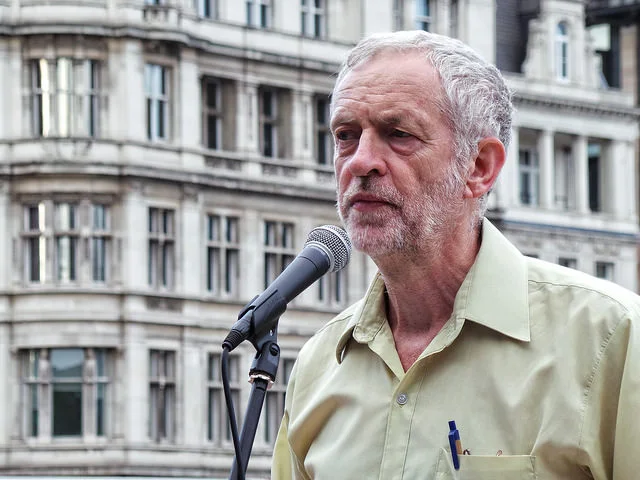
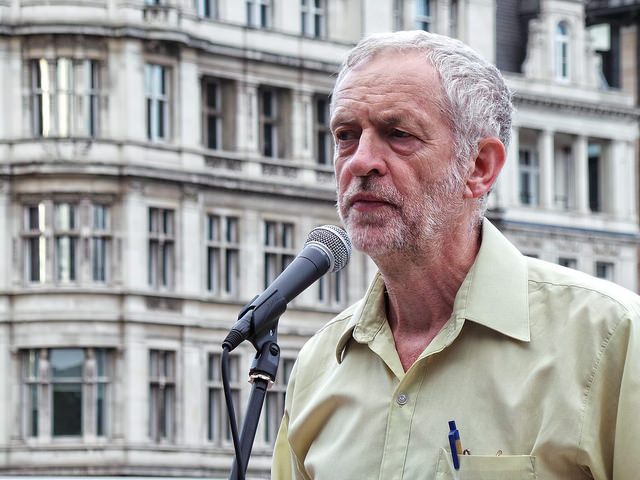
Corbyn.jpg

The Corbyn spy story is typical fake news

February 25, 2018 by Alastair J R Ball in Corbyn

As a writer and reader of politics blogs whose views are somewhat outside the mainstream, I am always depressed by the prevalence of conspiracy theories or blatant untruths that can be found on independent news sites (sorry pals, please continue to invite me to the monthly craft beer and pulled pork meet ups). Sometimes I worry that those of us on the radical left have watched too many seasons of 24 and believe that the world is controlled by a shadowy group whose existence can be exposed in a day with a bit of gumption.

Imagine my surprise this week when I saw that the mainstream media had just as much of an appetite for silly spy stories and secret conspiracies. The accusation that Jeremy Corbyn “gave information to a communist spy during the cold war” is just as crazy as the notion that the moon landing was faked or that Portland Communications had a role in the revolt of Labour MPs against Corbyn in 2016. I expected conspiracy theories from blogs written in bedrooms by hobbyists, not from national newspapers.

As the mainstream media is moving in on the crazy conspiracy theory space, on behalf of independent blogs I am moving into the serious analysis space with a few thoughts. First of all, the spreading of this story looks a lot like the spreading of the fake news that played a role in the Brexit vote and the election of Donald Trump.

This story has been shared on social media platforms by people who instinctively believe that it has to be true. The accusation that Corbyn was passing information to a Communist government fits so naturally with certain people’s worldview that they don’t check if this story is complete horseshit before hitting the share button. This is no different from sharing stories about Hillary Clinton secretly having cancer or the Pope endorsing Trump.

This story really matters to a group of people who really hate Corbyn and not only will they believe anything bad about him, but the more outlandish the accusation, the more likely they are to believe it. The spreading of this story has been helped by the filter bubbles of social media platforms that create an information space isolated from content that challenges their views.

All this allows a story that is obviously stupid to spread as the algorithms that run social media platforms show the story to people who are likely to be believe it without question. If the filter bubble means that you are never shown a challenging opinion about the Labour leader then you can believe anything you want, including that he played a minor role in a James Bond film.

It goes without saying that in the real world (not the fantasy land of anti-Corbyn fake news) this story is completely untrue, has been wildly debunked and a Tory MP who accused Corbyn of “selling British secrets to communist spies” has had been forced to apologise. However, many of the people who have a high propensity to consume anti-Corbyn fake news won’t see the retractions, or if they do will choose to ignore them. Probably blaming an independent media establishment that is hushing up the truth.

If the mainstream media is going to undermine the value of objective truth, to exploit people’s willingness to believe stories that aren’t true, but fit their worldview, and to use the design flaws of social media platforms to spread disinformation, then it’s up to the independent media to address this. We simply cannot allow the good name of stories posted on Facebook to be dragged through the mud by large news organisations.

It’s telling that Corbyn used a YouTube video shared on Twitter to debunk this bollocks instead of an editorial in a national newspaper. The system that spread the fake news is now being used to counter it.

I am aware that I sound a little like Trump, denouncing the lies of the mainstream media, but this story has been shown to be false and when the mainstream media plays fast and lose with the truth, whether to score political points or to get social media clicks and sell advertising, then it is the concept of democracy driven by an informed electorate that ultimately suffers.

Labour has moved ahead in the polls following this pantomime, which shows that the average voter is not someone who so unthinkingly hates Corbyn that they will believe any rubbish written about him even if it sounds like the rejected plot of a shit British remake of Homeland (this time with an American as the leading man, putting on a British accent).

People care more about the issues they are facing in their lives - such as the rising cost of living, the public sector pay freeze, the increased reliance on food banks or being unable to afford a home - than who said what to a Communist spy 30 years ago. The average voter has bigger things to worry about than conspiracy theories about Corbyn.

If the right wing portion of the mainstream media thinks they can distract voters from the problems of their lives with third-rate spy stories and fake news then they have completely lost touch with the concerns of ordinary people. The people hate-sharing Corbyn spy stories are not representative of the average voter, whose concerns are being spoken to by Corbyn.

Picture of Jeremy Corbyn taken by Garry Knight and used under creative commons.

Related posts
Karl-marx.jpg
Mar 18, 2018
Marx was right about capitalism today
Mar 18, 2018
Mar 18, 2018
Crowd.jpg
Mar 11, 2018
The rest of Europe should be very worried about the far right’s success in Italy
Mar 11, 2018
Mar 11, 2018
British-rail.jpg
Mar 4, 2018
Labour’s history of nationalisation gives us hope for the future
Mar 4, 2018
Mar 4, 2018
red-flag.jpg
Feb 18, 2018
What makes a good Socialist blog?
Feb 18, 2018
Feb 18, 2018
Jan 8, 2017
Brexit must not distract us from poverty
Jan 8, 2017
Jan 8, 2017
February 25, 2018 /Alastair J R Ball
socialism
Corbyn
Comment
red-flag.jpg

What makes a good Socialist blog?

February 18, 2018 by Alastair J R Ball in Socialism

As capitalism slowly collapses, the flaws of a system that worships money and creates massive inequality are becoming apparent. This has led to a surge in popularity for the far left and many more people reading Socialist blogs.

Left wing politics has always had a healthy ecosystem of independent media, but recently there has been an explosion of new blogs, podcasts, Twitter feeds and zines exploring issues related to the far left.

With all these sources to choose from, how do you know which ones are good? What makes a quality Socialist blog? After writing this blog for seven years, below is what I think makes a good quality left wing blog.

Being against capitalism

Let's start with the basics: capitalism is the root cause of a lot of society’s current problems, from rising food bank dependence to job loss from deindustrialisation. A good Socialist blog recognises the problems of capitalism, explores these and thinks about what economic system could replace capitalism.

There is a divide on the left between those who want to abolish capitalism and those who just want to make it more humane. A good Socialist blog should be on the abolish side. There is also a divide between Socialists who want to smash capitalism or get rid of it gradually. There are strong cases either way, and this should form the substance of a Socialist blog.

Being in favour of greater equality

It's not enough just to be against capitalism, you need to be in favour of an alternative. Again there is a lot of debate about what form this alternative should take, which is what left wing blogs exist to explore. Socialists should be in favour of an economic system that delivers more equality rather than one that moves vast amounts of wealth into the pockets of a few people.

Being in favour of radical change

What separates Socialists from Liberals is a belief in radical change. This change could come quickly or slowly over time, but the end result is a radically different society. Liberals want to make small changes around the edges, not great reforms.

Some problems can be tackled by small reforms around the edge. The lack of accessible public transport in many cities can be solved by our existing political and economic systems. However, the Liberal approach comes unstuck when faced with the larger problems of society. Climate change cannot be fixed by tinkering around the edge, only by radically rethinking our society.

Recognising that power structures go beyond class and wealth

There's a stereotype of Socialists being old, bearded, white men sitting in the back rooms of community centres, drinking real ale and having rambling discussions about the relationship between capital and the proletariat in Victorian London. Although this certainly does happen, most Socialists I know have a broader interest in the many different power structures and types of inequality in our society, not just economic ones.

Material inequality is a big problem, but so is racial and gender inequality. There are a lot of different types of oppression in society and even if you're not wealthy, but are white and male, you might be less oppressed than other people. It's important to understand this. It's also important to explore not only how economic exploitation happens, but also how gender or racial exploitation happens.

Being willing to challenge your own thinking

Socialist blogs shouldn't be Bible blogs with Das Capital as the holy text. There are no thinkers or ideas that are beyond criticism. As a Socialist it is important to be open to different ideas and different people's opinion. Being a Socialist is about being constantly open to learning more about society.

Socialists and socialist ideas get attacked frequently online or in personal debates, so it can be easy to fall into a bunker mentality where everyone in the bunker is on your side and cannot be wrong. If someone disagrees with you, it doesn't make them a traitor to the cause.

Being accessible

Not everyone has read Das Capital or volumes of Gramsci’s writings. Not everyone is intimately familiar with the concept of worker alienation. Far left politics can be seem strange to people, as if we have our own language. A good Socialist blog should recognise that we all have different levels of technical or theoretical understanding. Socialism is for everyone and it should be accessible.

Many of the people I have met on the far left don't necessarily identify with theory or what is written in books. Their politics is something they feel and experience in their everyday lives. A lot of people who I have met don't haven't the technical language to explain the ideas behind what they feel, but that doesn't make them any less intelligent, thoughtful or compassionate a person and it doesn't make them any less of a Socialist.

That's what I think makes a good socialist blog. I'd be interested which blogs my readers would recommend that meets these requirements. Please post them below so that we can all find new, interesting reading material.

Red flag image used under public domain dedication.

Related posts
Karl-marx.jpg
Mar 18, 2018
Marx was right about capitalism today
Mar 18, 2018
Mar 18, 2018
Crowd.jpg
Mar 11, 2018
The rest of Europe should be very worried about the far right’s success in Italy
Mar 11, 2018
Mar 11, 2018
British-rail.jpg
Mar 4, 2018
Labour’s history of nationalisation gives us hope for the future
Mar 4, 2018
Mar 4, 2018
red-flag.jpg
Feb 18, 2018
What makes a good Socialist blog?
Feb 18, 2018
Feb 18, 2018
Jan 8, 2017
Brexit must not distract us from poverty
Jan 8, 2017
Jan 8, 2017
February 18, 2018 /Alastair J R Ball
Socialism
Comment
Carillion.jpg

It’s ordinary people who will suffer from the collapse of Carillion

February 11, 2018 by Alastair J R Ball in Economics

The collapse of Carillion would be funny if it wasn't so tragic. It would be funny because Carillion collapsed under a debt mountain of £1.5 billion, after issuing several profit warnings, and despite having a portfolio of construction projects (such as the rebuilding of Battersea Power Station) and outsourced UK government contracts (such as managing 50,000 homes for the MOD and nearly 900 schools).

This is funny because Carillion exists only to make money, and yet failed because it couldn't make money. Carillion held so many public sector contracts (not just what I’ve mentioned above but also prisons, highways, the construction of Crossrail and a stake in HS2) because it was supposed to be better than the public sector. Well, it wasn’t.

The need to make a profit, which drives private companies like Carillion, is supposed to make them more efficient at delivering these projects than the public sector. At least, that is what neoliberals from Thatcher to May, via Blair and Brown, would have us believe.

The efficiency of these private companies, pumped full of public money, was supposed to make the provision of infrastructure and government services better for everyone. Now we’re left with a huge pile of debt and more than a few holes in the ground.

Outsourcing failure

Instead, Carillion turned out to be very inefficient at making profits and delivering infrastructure projects. Projects overran from Liverpool to Sandwell. The company fell into debt and ultimately failed. If you can't make profit, Carillion, then what is the point of you?

The craze for outsourcing still has its defenders despite three decades of failure. The railways aren't the paragon of cheap, sleek and well-invested services, like their state-owned counterparts in other European countries. Electricity and water are more expensive and invest less than they did when they were state owned. Even so, outsourcing fundamentalists insist that this is what’s best for all of us.

It's laughable that anyone still thinks that outsourcing and privatisation are efficient ways to run any kind of public works program, or indeed anything at all following the catalogue of failures of these policies. We aren't living in the shareholder democracy we were promised by Margaret Thatcher's government.

Human cost

Of course, this actually isn't funny. Carillion employs 43,000 people worldwide, with 20,000 in the UK. These people rely on their employer not just for their income, but for stability in their lives. So far it has been announced that 377 people have been made redundant, and 919 jobs have been saved by transferring them to other employers. However, over 18,000 jobs are still on the line. There is also a range of other companies, large and small, that supply Carillion and rely upon it to stay afloat. There will be job losses up and down the country because of this.

The Carillon story is made up of so many large things - £1.5 billion in debt, huge construction projects like the Aberdeen bypass - that it's easy to forget at the heart of it is ordinary people's lives. People who work, earn money, pay their rent, and save for their children's future. The world is filled with enough uncertainty and fear without your employer suddenly collapsing. We need to remember that ordinary people are suffering because of this huge fuck up.

Ordinary people who live paycheck to paycheck - no different from you or me. They don't have the resources to draw on that directors of multinational construction companies have or those who created this culture of outsourcing. Many Britons live a precarious existence, with 8 million people just one paycheck away from homelessness. This will cause massive suffering for individuals that will be overlooked in story about massive debt and huge construction projects.

The human cost of the Carillion fuck up is depressing. We need to remember that it's ordinary people who suffer when large companies fail. Outsourcing maybe be comically bad, but what's happening for the many people who depended on Carillion for their livelihood isn't funny.

Crane image created by Veggiefrog and used under creative commons.

Related posts
Karl-marx.jpg
Mar 18, 2018
Marx was right about capitalism today
Mar 18, 2018
Mar 18, 2018
Crowd.jpg
Mar 11, 2018
The rest of Europe should be very worried about the far right’s success in Italy
Mar 11, 2018
Mar 11, 2018
British-rail.jpg
Mar 4, 2018
Labour’s history of nationalisation gives us hope for the future
Mar 4, 2018
Mar 4, 2018
red-flag.jpg
Feb 18, 2018
What makes a good Socialist blog?
Feb 18, 2018
Feb 18, 2018
Jan 8, 2017
Brexit must not distract us from poverty
Jan 8, 2017
Jan 8, 2017
February 11, 2018 /Alastair J R Ball
Economics
Comment
angry-man.jpg

How to not be an angry man on the Internet

February 04, 2018 by Alastair J R Ball in Identity politics, Feminism

There are LOTS of angry men on the Internet. They’re angry about everything from judges blocking Trump's Muslim ban, to MPs asking for a final say on the Brexit deal, to people objecting to how frequently police officers shoot unarmed people of colour. They include centrists who want everyone to stop making such a fuss about safe spaces to the alt-right actively seeking to defence white privilege.

What if you have seen the angry-sharing of Fox News or Daily Mail content along with screams of fury about what the "liberal feminazis" have done now and you don't want to be one of those people? Well, here are a few simple tips as to how you can avoid being an angry man on the Internet.

Get the basics right

First of all don't be a racist or a misogynist or spout bile about people different to you. I know this sounds simple, and I am bagging my head against the keyboard at the fact this needs to be said 2018, but don't share a Britain First meme even if you really do "support our boys" or are apoplectic about Halal meat being served in schools. Take a second to think: is the person who wrote this someone who sits by themselves in the pub muttering into their pint of Carling about how Muslamists have taken over?

Calm down

When you read something online that you don't agree with, try not to hit the "go nuclear" button as your first response. Don't see red and then decide that you must inform this young woman on Twitter of some hard truths in words that she's going to remember. Don't fly off the handle just because someone isn't overflowing with excitement at all that regained sovereignty Britain has now we voted to leave the EU.

Maybe they have a perspective that is different to yours, one that could be as valid as yours. Don't assume that the reason someone didn't find your rape joke funny is because they’re a dried up humourless bitch husk in need of a good fuck. Maybe it just wasn't funny.

It's not all about you

While we're on the subject of not finding things funny, try not to feel personally attacked by other people's opinions. If someone says "in my experience men generally do this which is thoughtless and annoying" try not to fly into a whirlwind of fury as if someone had just thrown a fresh turd in your face. People don't have opinions to make you feel personally aggrieved.

Other people's opinions are also not signs that the entire world is against you. No one is trying to put you in a gulag or create a gender inverse Handmaid's Tale. If someone makes a comment about "white people" or "men on the Internet" don't be filled with fear that you're only days away from finding out that the government has frozen your bank account.

Don't accuse everyone else of being Hitler

Speaking of dystopian societies, people who have different opinions to you aren’t Nazis intent of "shutting down discussion" so that they can blast propaganda directly onto the back of your eyeballs. Even if someone rudely disagrees with you it is probably because that person is having a bad day, or is a bit rude, or misunderstood what you said. It’s not evidence of a conspiracy of Internet liberals trying to kill free speech.

Also, don't accuse people with different opinions about gender or racial politics of creating the alt-right. Women pointing out sexual harassment or people of colour talking about police harassment didn't get Donald Trump elected or create the global resurgence of ethno-nationalism. There were a whole range of complicated economic, political and cultural factors that led to the rise of the alt-right and the person on Twitter talking about gender neutral bathrooms isn't solely responsible.

Don't use projoritives

Try not to say "all women..." Or "all African Americans..." because the end of the sentence is probably not true. Just because someone you were matched with on Tinder didn't want to have sex with you doesn't give you some great insight into all women-kind that you need to explain to feminists on the Internet. See getting the basics right above.

Listen to people

Remember that we're all human beings and we find the enormity and complexity of the world frightening. Listening to other people's points of view can help us all face this fear. If you want to be heard yourself, then listening to others is a good place to start. Few productive conversions begin with anger.

There is a person on the other end of that Twitter account or Facebook update or YouTube video, do you really want them to suffer for their thoughts? At least remember that shouting at people rarely changes their minds. If you really disagree with someone then a productive conversion is better than the online equivalent of jumping up and down on your chair, screaming at the top of your voice and then throwing your shit at someone who thinks differently to you.

“Angry old man” by Arend is licensed under CC BY 2.0


February 04, 2018 /Alastair J R Ball
Identity politics, Feminism
Comment
Corbyn.jpg

Don't dismiss the concerns of Corbyn supporters

January 28, 2018 by Alastair J R Ball in Corbyn

This is a meme:

Amongst UK 16-24 year olds:

50% have never heard of Lenin.
70% have never heard of Mao.
72% have never heard of Pol Pot.

I think this helps explain why so many are prepared to back those (including Corbyn) who have flirted with the totalitarian far-left.

— James Bickerton (@JBickertonUK) November 23, 2017

This isn’t the only place online it appears. By a meme, I mean it’s an idea. An idea that says the reason why young people are supporting Jeremy Corbyn is because they don’t know how bad Chairman Mao or Pol Pot were.

It leads to ridiculous suggestions, like Britain should open a museum of Communist Terror, which was floated in the Spectator. Presumably to stop young people voting Labour, which I guess is what Tories think museums are for. That and recasting Britain’s colonial history as glorious.

That was a meme, but here are some truths: wages are stagnant, young people can’t afford to get on the housing ladder, nurses and teachers are using food banks to survive, the sick and injured are waiting hours for treatment in A&E. The only party leader who had serious suggestions for tackling these problems in the 2017 election was Corbyn. He wasn’t saying he wanted to seize the means of production and hand them over to worker controlled Soviets.

Let’s not forget that 40-45 year olds mainly voted Labour last year. These are people who grew up during the Cold War and voted for Tony Blair in 1997, 2001 and 2005 before supporting Corbyn now.

SnapChat socialists

Of course the writers above didn’t mean people in their 40s. They mean young people sharing Sassy Socialist Memes on Facebook. People too young to remember the Cold War. The entire implication is these SnapChat socialists don’t understand what they are supporting.

The economy right now really isn’t working for young people. Houses are too expensive. Rented homes are too expensive, insecure and are frequently in poor condition. Work is also insecure and poorly paid. Costs of living are rising while wages are stagnant. This is what a lot of young people want to change and they have found the symbol of that change in Corbyn. They don’t support him because they don’t know what the Killing Fields were.

Opponents of Corbyn are quick to say that they have sympathy with his supporters’ problems, but their proposals are that they should support politicians who are not offering solutions to them, and in some cases were in power for years whilst these problems got worse. What they are certain about is that what young people really mustn't do is vote for politicians who are offering solutions to these problems.

Dismissing concerns

It’s not a good long term strategy for centrists or conservatives to dismiss the concerns of young people like this. It shows how out of touch they are when they say that the reason for Corbyn’s surge in the polls is that young people don’t know about Stalin’s purges or his collectivisation of the farms.

Communism is not suddenly about to break out in the UK. Support for paying nurses and teachers more, building more affordable homes and bringing the railways into public ownership (as they are in almost every other European country - Germany is hardly a Communist country) were not policies of The Khmer Rouge.

Being out of touch with the pressures on young people and dismissing their concerns is what has led to the rise of politicians such as Corbyn and, in America, Sanders. If centrists or conservatives want to win back the support of the young (young people voted overwhelmingly for Thatcher in 1983) then not dismissing their concerns as the product of ignorance is a good place to start.

It is simply not true to compare raising taxes on the richest 5%, or wanting to tackle the rise in child poverty, or the growing dependency on food banks to Communism. Corbyn is not going to be a British Pol Pot and his opponents should stop sharing daft memes that imply that he is.

Picture of Jeremy Corbyn taken by Garry Knight and used under creative commons.

Related posts
Karl-marx.jpg
Mar 18, 2018
Marx was right about capitalism today
Mar 18, 2018
Mar 18, 2018
Crowd.jpg
Mar 11, 2018
The rest of Europe should be very worried about the far right’s success in Italy
Mar 11, 2018
Mar 11, 2018
British-rail.jpg
Mar 4, 2018
Labour’s history of nationalisation gives us hope for the future
Mar 4, 2018
Mar 4, 2018
red-flag.jpg
Feb 18, 2018
What makes a good Socialist blog?
Feb 18, 2018
Feb 18, 2018
Jan 8, 2017
Brexit must not distract us from poverty
Jan 8, 2017
Jan 8, 2017
January 28, 2018 /Alastair J R Ball
Corbyn
Comment
British-leyland.jpg

Did politics kill British Leyland?

January 21, 2018 by Alastair J R Ball in Industry, Transport

January 2018 marks fifty years since the formation of British Leyland Motor Corporation, a company (latterly a publicly owned one) synonymous with failed industrial policy. Whilst the disastrous history of what had been hoped would be Britain’s ‘national champion’ is hard to dispute, the question remains: did politics kill British Leyland?

The decision to form BL in the first place via the government’s Industrial Reorganisation Committee was an inherently political one. Harold Wilson’s Labour government was deeply interventionist by today’s standards. It all fitted in with the Wilson administration’s ‘white heat of technology’ rhetoric: Britain’s car industry would be a dynamic part of high-tech, forward-looking nation of the future.  In the deal brokered by politicians, Britain’s two biggest motor manufacturers, BMC (who made Austin and Morris cars) and Leyland (Triumph and Rover cars, plus trucks and buses) would merge to create the fifth-largest vehicle maker in the world.

The Industrial Reorganisation Committee was a tool of a government that believed intervention in the economy was not only necessary, but desirable. This is the first way in which government policy has been accused of killing BL – by enforcing an unworkable merger. The desire to form such a huge company was not an ideological socialist one; the aim was not to take the car industry into public ownership. The theory was that if the two manufacturers joined forces, they could benefit from economies of scale, on costs like research and development, and sharing components. In doing so, they’d be more focussed on fighting foreign competition, rather than each other, and assisting Britain’s balance of payments.

None of this was an inherently bad idea. The decades since 1968 have seen a consolidation of the car industry globally. BL was the right size, had some strong products, and should have been well positioned to benefit from combining the abilities and capacity of both companies – this is, after all, what VW has done in recent decades to great success. In retrospect, it is easy to say the merger shouldn’t have happened, that Leyland (the structurally stronger of the two) would have been better off alone. It was equally reasonable to assume that the newly merged company would get its act together.

The merger was far from a myopic, ideologically-driven scheme, ploughed ahead with by a bluntly technocratic government, as it is sometimes portrayed. It was a pragmatic plan, and it was met with huge optimism at the time. Yet, by the end of the ‘70s, BL was in a state of near-constant crisis and had ceased to be a serious global player.

Even so, one political failure did massively affect the fortunes of Britain’s car industry - France’s veto on Britain’s EEC membership application in 1963. This mattered because steep import duties were charged on cars from outside the Community, whilst a free market existed within it. Fiat, VW, Renault and the rest benefited from this, whilst Britain – the only significant Western European car manufacturing nation outside of the EEC – lost out.

It would have been the optimal time to join, too. At the time, BMC made a range of cars that appealed to European drivers – especially the Mini, and its larger brother, the 1100 series. Both were smart, well-designed cars, and already big sellers in the UK. They were sold at a significant premium over comparable European cars within the Community.

BMC, instead, concentrated their export efforts on the old Commonwealth countries, but cars designed for Britain’s well-maintained roads were never going to be ideal for South Africa or Australia, and it was these markets that the emerging Japanese car industry first conclusively conquered a few years later. All this meant BMC was in a weak position by the time of the ’68 merger.

Of course, Britain did eventually join the EEC in 1973. BL strongly supported the campaign. But by then – perhaps due to lack of understanding of the European market – it wasn’t in as strong a position to compete. Yes, the Mini’s sales increased – but what was really needed was a mid-size model that would be as strong a contender on the continent as BMC’s 1100 could have been in the ‘60s. But instead, they produced this.

The Austin Allegro was not the car Europe wanted. It was hardly even the car that Britain wanted. It never met the sales precedent set by the model it replaced, the 1100. There’s so much to say about what was wrong with the Allegro. It was not the VW Golf, a car launched the following year, and exactly the car Europe wanted.  

The Allegro is symptomatic of how capable BL was of sabotaging itself, regardless of the political context. All that capacity for market research, development and innovation somehow resulted in a car slower, heavier, uglier and with much less export appeal than the 10 year old design it replaced.

What about the other kind of politics – the kind that no conversation about BL is complete without? Industrial relations at the company were increasingly terrible as the ‘70s wore on. BL was hardly unique; the root cause being, to a great extent, that wages were not keeping up with inflation by the late ‘70s.

To me, that makes the grievances of those striking in the run up to the ‘Winter of Discontent’ far more sympathetic, despite the Thatcherite narrative through which the period is often recounted. Greater prominence has always been given to the – admittedly damaging – strikes over getting an extra five minutes on tea breaks and the like. Besides, even accepting the destructive behaviour of some shop stewards, poor industrial relations ought to be seen as a symptom of a structurally unsound company rather than the cause.

BL became a political football in 1975, when its precipitous decline reached the point where the government had to save it through nationalisation. The formation of BL in 1968 had been part of a political strategy, its nationalisation was reactive. Letting BL go to the wall, as some members of the Thatcher administration would later argue should happen, would have meant mass unemployment in the Midlands.

From then on, politics did kill BL, essentially. The Wilson, Callaghan and – interestingly – Thatcher administrations gave it sufficient bailouts to keep it going, but never enough to undo the strategic mistakes of 1968 – 1975. Thatcher’s solution was to break it up and sell it off in the late 1980s. That was, undisputedly, an ideological decision. The slimmed down group was beginning to turn itself around by then – and one of its privatised successors, the Rover Group, went on to have an (admittedly temporary) renaissance in the ‘90s, making re-badged Honda models. Dismantling BL was not the only option. In France, Renault went through a period of state ownership and emerged intact into the private sector.

Today’s economic and political climate has changed vastly since 1968. No longer is Britain a primarily industrial country, a land of trade union policy and Industrial Reorganisation Committees. No-one seriously suggests the kind of intervention that led to the creation of BL nowadays. However, the car industry is as hot a political potato as ever.

Car makers are footloose transnational corporations; the Japanese owned car factories in the UK are here because of Britain’s openness to trade, especially within the EU. What’s the government’s strategy for keeping them here after Brexit? Meanwhile, intervention is once again being seriously discussed to cajole the industry. Only when legislation began to be implemented by national and local governments to restrict fossil-fuel powered cars did the manufactures start to take electric vehicle development seriously. Last year’s VW emissions-test scandal suggests that, without insufficient oversight, corporations often don’t act in society’s best interests. The cars, and the people making them have changed, but political intervention in the car industry is here to stay.

Austin Allegro image created by Thomas Pics and used under creative commons.

Featured
British-Rail.jpg
Mar 16, 2021
How can British Rail’s failed Modernisation Plan teach us to ‘build back better’?
Mar 16, 2021
Mar 16, 2021
Ribblehead.jpg
Apr 29, 2018
This viaduct is more impressive when you know what went into building it
Apr 29, 2018
Apr 29, 2018
British-leyland.jpg
Jan 21, 2018
Did politics kill British Leyland?
Jan 21, 2018
Jan 21, 2018
Apr 25, 2014
The Left’s Elephant in the Room
Apr 25, 2014
Apr 25, 2014
British-rail.jpg
Apr 1, 2013
HS2: On the Right Track?
Apr 1, 2013
Apr 1, 2013
January 21, 2018 /Alastair J R Ball
Industry, Transport
Comment
Tim-Farron.jpg

Are liberals liberal when they’re being liberal?

January 07, 2018 by Alastair J R Ball in Liberal Democrats

Are liberals really liberal? Are the tolerant so tolerant that they are intolerant of the intolerant? What does liberal even mean? It’s become a catch-all term for everyone on the left side of the political culture war. It covers everyone from John Loch to Hillary Clinton. Even a socialist like Jeremy Corbyn is simultaneously criticised for being far left and only appealing to metropolitan liberals. We’re all obsessed with liberals, but what even is liberalism?

Tim Farron might know, he led the Liberal Democrats, and he thinks that liberals aren’t very liberal anymore. His evidence is that liberals have “discarded” Christianity and “kick away the foundations of liberalism,” but have liberals really become so illiberal?

It is true that the Liberal Democrats didn’t do as well in the 2017 election has you might have expected. A significant proportion of the 48% remain vote went to Labour, whose stance on Brexit (although vague) is that it should proceed. Why didn’t these voters all go to the Lib Dems as the most pro-EU party? Is it because these liberal Remainers couldn’t stomach voting for a party led by an evangelical Christian? Did pro-leave Corbyn appeal more liberal remain voters?

I don’t want to be drawn into the debate on what Tim Farron thinks about gay marriage. What does appear to be the case is that, in choosing an evangelical Christian as their leader, the Lib Dems sent a signal that metropolitan liberal voters didn’t like and this partly the reason for Lib Dems poor performance. Politics is about tribal identity and evangelical Christianity doesn’t seem to be compatible with the metropolitan liberal identity. On some level I feel sorry for Tim Farron as none of this is his fault and is partly based on a stereotype that evangelicals are illiberal.

In Farron’s Guardian article there are moments when he does send signals that are clearly off-putting to metropolitan liberals and they are nothing to do with his views on same-sex marriage. Speaking as a metropolitan liberal (London-living, pro-EU, pro-immigration, etc) a key part of the liberal identify is defending 21st century modernity. In his article he says: “five minutes on social media will give you a window into a society that condemns and judge” and “five minutes in the high street, now in the run-up to Christmas, will show you a society hooked on materialism.”

This sounds like a criticism of modernity. Does Farron think that we were better off in the past where also everyone was Christian by default? If you judge modern society via what you see on social media you’d think everyone’s life is a well-lit romp through artisan coffee shops, eating avocado on toast, before cuddling kittens and trying on new hats. When actually really life is a washed-out grey, spirit crushing, grind.

What Farron describes above is how most metropolitan liberals live. We’re social media obsessed, materialistic and happy with it. Even I couldn't resist getting a Google home. It sounds like Farron wants things to change. People to the left of liberals want it to change too, and they have their symbol of change in Jeremy Corbyn. Conservatives to the right of liberals also want to this to change. But liberals are comfortable with 21st century modernity even if Farron isn’t.

Being a liberal is more than being a “metropolitan liberal”. The Encyclopedia Britannica defines liberalism as: “political doctrine that takes protecting and enhancing the freedom of the individual to be the central problem of politics”. By this definition have liberals stopped being liberal? Have any of Farron’s rights been taken away? Is anyone stopping him from being a Christian or practicing his religion in anyway?

Farron’s faith didn’t stop him becoming the leader of a major political party. He claims to not be part of the establishment, saying: “whereas I am a liberal, but do not feel part of the elite,” but he was part of the elite as a major party leader and his faith didn’t prevent this.

Is Farron complaining about the fact that Christiny isn’t as popular as it once was? The number of people who are Christian has been decreasing for a while, the proportion of people who describe themselves as Anglican has halved since 1983. I would like to remind Farron that there is no right to be popular.

The fact that your religion and your party is not popular is not an infringement of your rights. Being a Christian or being a Lib Dem is a minority opinion, and the right to minority opinions should be protected, but you have no right to demand that your opinion be that of the majority. Even if you think everyone would better off.

I don’t think Farron’s rights are being oppressed. I don’t think being a Christian or being a Lib Dem makes you a victimised minority, despite the fact that people feel more comfortable making fun of Christianity now than they did in the past. The odd sausage roll joke isn’t the same as having your rights taken away. It’s just not being held in the same reverence that you once were.

If any faith has a fair claim that it is stigmatised or treated with hostility, then it is Islam. Even from people who consider themselves to be liberals, I have heard blanket statements of suspicion about Muslim communities or objections to the number of Muslim refugees allowed into Europe. Five minutes on social media will give you a window into a society that is angry at and frightened of Islam. A 2016 ComRes report found that 43% of people surveyed agreed with the statement “Islam is a negative force in the UK”. 

Liberals don’t talk about Christianity the way they talk about Muslims. Farron is fostering a sense of grievance amongst Christians that has little basis in fact. Christians are not treated with hostility and suspicion. The Prime Minister is a Christian. Christians are not oppressed in this country. Not by liberals or anyone else. Farron also shows no concern about prejudice against other people’s faiths, such as Islamophobia or rising anti-semitism.

If you are worried about how liberal or tolerant a society we are, worry about how we treat people who look different to the majority. Not how we treat people who look like the majority of people, get to lead major political parties and get to publish articles in national newspapers.

Tim Farron image taken by David Spender and used under creative commons.

January 07, 2018 /Alastair J R Ball
Liberal Democrats
Comment
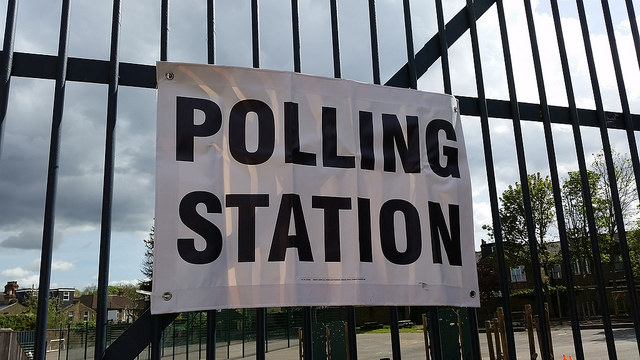
polling-station.jpg

2017: The year normality returned

December 31, 2017 by Alastair J R Ball in Year in review

One year ago, I excitedly declared that 2016 had changed everything in politics. There were a lot surprises last year and it looked like 2017 would also be a year of upheaval. But generally, it wasn't. The most surprising thing about 2017 was that it was quite unsurprising.

2017 was the year that the vague promises of a resurgent Britain post-Brexit had to become some kind of reality. It was of no surprise that this process revealed that the government had no idea what it wanted from Brexit, had a weak negotiating hand and was more interesting in keeping the Tory party together than in the best interests of the country. What hasn't happened is a grand re-organisation of British politics around a nativist/globalist axis. This is mainly because there is no serious energy behind overturning or ignoring the result of the referendum.

Unsurprisingly, the Brexit program became unstuck when it met the political reality of the EU. The government has no solution to the problems raised by the Irish border and no leverage to reduce the divorce bill, as no deal is far worse for Britain than the EU. The referendum didn't deliver any idea of what the country specifically wanted from Brexit (EEA, customs union, Canada plus, Norway minus) so the government, not having an easy option available, is handling Brexit the same way as everything else: badly.

Leaving the EU is progressing in a fairly normal way. The government is trying to keep all its various factions on side, whilst trying not to do anything that would devastate the British economy and leave the Tories unelectable for a generation. This is, in essence, what every government does all the time. This is normal. It doesn't mean that Brexit won't be a disaster - it could well be - but it is progressing exactly as we expected.

One of last year's biggest shocks was Donald Trump's surprise victory in the US Presidential Election. Much like Brexit, Trump's programme has come unstuck when faced with political reality, despite his claims to be a brilliant deal maker. Trump has done little in his first year, save annoy liberals and shout at the media. His healthcare reforms have failed, the wall remains unstarted, his infrastructure program is nowhere to be seen. This administration has been characterised by incompetence and scandal. This is what happens when you elect an anti-system populist with no experience. Unsurprisingly, he does badly in a job he is not prepared for.

The biggest surprise of this year was firstly that Prime Minister Theresa May called a general election, after saying that she wouldn't, and then that Labour did so well. In April the polls indicated that Labour were headed for a massive defeat, but Jeremy Corbyn was able to do the unprecedented and close a 24 point poll gap in six weeks. This showed that politicians do get second chances at a first impression, as May was able to fall so far in the estimation of the electorate and Corbyn was able to rise so much. I am glad that the biggest surprise of this unsurprising year was a good one.

Neither Brexit nor the general election changed the alignment of British politics. The broadly left and broadly right camps are stronger than ever. The two main parties received 82% of the vote between them their largest share of the vote since 1970. Corbyn didn't run on a populist anti-globalist platform and May didn't make defending neo-liberal globalisation the central message of her campaign. Labour ran on building houses, protecting the NHS, lifting the public sector wage gap, abolishing student fees and renationalising the railways. May tried to run on the economy and her record in government. These are standard centre left and centre right platforms.

Despite sometimes hinting that more radical ideas were being considered, there was no mention of breaking up the banks (or even separating the high street and investment banks), abolishing the GDP growth targets, making a big investment in green energy or introducing universal basic income. The Corbyn campaign was successful in moving the Overton Window to the left on issues such as rail nationalisation and tuition fees. It also proved that young people will vote if they offered a platform that appeals to them.

Corbyn's manifesto is standard social democratic politics in a lot of our European neighbours. Despite the backdrop of Brexit and Corbyn's past being very different to a standard Labour Party leader, this election didn't signal a titanic shift in politics. Corbyn was able to defy all expectations and Labour are now in a much stronger position to win the next general election. But he did this by rallying the liberal sections of society around a social democratic platform not by proposing to overthrow the system.

On the international stage there were few surprises. IS were driven out of Mosul and are likely to be completely defeated soon. This shows that when the world's most powerful countries collectively decide that they want to destroy something, they can. Whether they can build a lasting peace is another question.

North Korea did exactly what we expected and tested more ballistic missiles. The rest of the world is paralysed when faced with the option of a nuclear missile armed North Korea or a war that could cost the lives of millions. None of this is shocking. The problem is that we are only faced with bad options.

This year saw an explosion in allegations of sexual harassment against prominent politicians and members of the media. Sadly, I was not surprised that men in positions of power had been abusing female colleagues for years. The scale of the accusations indicates that a change of some sort is likely to follow. The hushing up of such cases cannot be allowed to continue. These revelations could be the event of 2017 that has the biggest long-term impact. Although at the time of writing, a lot has been said, but wide sweeping change is yet to come.

Next year Brexit, the Trump administration and the North Korean problem will continue as we expect. On Brexit, a deal that makes no one happy, but avoids a disaster, will most likely be struck. The world will still not know what to do about North Korea. The American midterm elections have the greatest potential to be surprising. Will Trump's poor performance see a massive defeat for the Republicans and the effective (or literal) end of his presidency? Will right-wing populism be shown as ineffective and doomed to failure? Will Trump surprise us again and defy the odds to win? There may be some surprises (good or bad) next year.

In 2017 politics feels as if it has settled down (as much as it ever does) after a tumultuous 2016. There are still issues to be addressed. Anti-politics remains a potent force. The culture war exemplified by Brexit has not gone away. America remains a divided country. The problems with our economy, the environment and global-political structures haven't been resolved. However, these are not causing dramatic changes to how we do politics.

I have some hopes for next year, mainly that the Labour Party will build on the gains of this year. There might be a general election next year and power is within reach for Labour. Other hopes I have is that a Brexit deal is reached that won’t destabilise Northern Ireland, guarantee the rights of the EU citizens living in the UK and will prevent an economic meltdown. On the Trump and North Korea issues, I simply hope that they don’t destroy the world.

2018 could well be a surprising year. The financial crisis will be ten years old and it's most powerful effects may be still to come. The global economy remains weak, growth is anaemic across the West and a recession is likely. The spectre of war is stalking the edge of the West and are we incapable of tackling authoritarian strongmen. We have had a calmer year, but I don't think normality is back for good.

Polling station image taken by Rachel H and used under creative commons.

December 31, 2017 /Alastair J R Ball
Year in review
Comment
fake_news.jpg

Top 5 best satirical pieces of 2017

December 24, 2017 by Alastair J R Ball in Satire

A good piece of political satire can quickly illuminate a truth or make a point that can take thousands of words of straight up reporting. Satire is also capable of bringing information outside the current context to a story or it can use humour to take an important story to a wider audience. I enjoy political satire, and 2017 has been a great year for satirists with lots of events ripe for satirisation, so I have chosen five of my favourite examples from this year.


5. London is lost claims alt-right snowflake doing literally everything ISIS want from him

No list of the best political satire of the year would be complete without something from NewsThump.com and this article is one of their best. Like all good satire it is both funny and makes an important point. The article mocks British alt-right YouTube personality and general purveyor of hatred Paul Joseph Watson, while making the important point that by blaming all Muslims for every terrorist attack he is creating just the culture of fear and hatred that extremists use to recruit more terrorists.

It is the goal ISIS and their ilk to convince Muslims that they cannot live in the West and practice their religion without being the subject of suspicion and hostility. Whereas most British people can generally see the difference between a few extremists and a peaceful majority, it is self-important alt-right hate mongers with a vision of apocalyptic culture war who are feeding a climate of suspicion of all Muslims that allows ISIS to flourish. This piece gets bonus points for finding a model who looks as punchable as Watson for their cover photo.


4. It’s not our fault they don’t take black kids at Eton says Oxford

Like NewsThump.com above, no list of British satire would be complete without the Daily Mash. Oxford and Cambridge Universities came under criticism this year for classism in admissions. It was revealed that twenty-one Oxbridge colleges didn’t accept a single student of colour from the UK. This article makes the point that it is not just Britain's top universities that are riddled with classism, but the entire education system and our entire society.

In 21st century Britain your lot in life is decided by your class and racial background. Why? Because we are very unequal society and the advantages your parents can give you matter more than your talent or hard work. Even institutions created to be social levellers, like grammar schools, have been colonized by middle class parents with sharp elbows. The classism in the admissions policy of Oxford and Cambridge is just a very visible example of this. The scandal goes beyond Oxbridge and Eton, and effects the entire country.


3. I’m a Google  manufacturing robot and I believe humans are biologically unfit to have jobs in tech

We cross the pond now to look at a depressing news story that was too ripe for satire. A grumpy Google employee (now ex-employee) decided that because he was a conservative, he was actually the most discriminated against person in the world, and to prove this, he wrote a memo claiming that women can’t work in tech because their brains don’t work that way.

This article, written from the point of a view of a robot manufacturing products for Google, artfully parodies some of said grumpy Google employee’s own arguments through exaggeration. For example, the robot’s claim that humans and machines “inherently differ” takes aim at the tired trope that women’s brains aren’t set up right for jobs in the tech industry. This article also make the point that robots are much better suited for the world of work than humans, so maybe we should think about all jobs they’ll be doing in the future before we all wake up to a world where there is no work and no one can earn any money.


2. The Malt-right/Is genocide the new counter-culture?

A truly brilliant piece of satire should be easily confused with what it is mocking, yet at the same time be a clear parody of it. This satirical piece of podcasting was so subtly done that I have to admit that at first I was taken in. Joel, Marsin, Iain and Craig run their podcast Kraken where they take a funny and irreverent look at anything from politics to Punisher comics. They often have guests and in this episode they invited on Alliot, who is a fictional far right activist whose analogies about racial purity always come back to single malt whiskey.

Alliot’s impression of a softly spoken, reasonable sounding, deeply racist alt-right nut job is note perfect. Depressingly believable moments include when he accuses Theresa May of being on the left (because she doesn’t support his vision of a racially segregated society and wants people to mix like blended whiskies) or when he claims that he disliked how a group of vagabonds stole from a cohesive, harmonious society of beautiful formed beings in in Guardian of the Galaxy Volume 2 (siding with the villains over the heroes).

As a character Alliot is just crazy enough and just real enough that I could believe that really are alt-right activists who believe that single malt whisky is the basis for a perfect society. This satire is so on the nose that I was actually left fuming that one of my favourite podcasts had given a platform to such an awful person.


1. Deep In Macron Country

The best piece of satire I read all year was written by a serious political journalist, not a professional satirist, and it is a perfect humorous parody of a lot of articles I have read. Like the Malt-right above, I was at first taken in that this was a serious piece of on-the-scene reporting from a town in France that had voted overwhelmingly for Emmanuel Macron. As the piece progresses, the French stereotypes subtly become more obvious until the basis in satire becomes evident.

What makes this piece so brilliant is that there are two interesting points being made here. The first is making fun of all the metropolitan journalists who dashed to forgotten post-industrial towns to grab a few quick insights in the wake of the Brexit vote or Trump’s election. The article parodies journalists were keen to seek out an archetypical member of the left-behind to grab a few quick quotes from about what madness had driven them to ruin the country for everyone.

As well as this, the article shows how Macron was able to easily defeat the far right candidate Marine Le Pen for president, by contrasting the French presidential election with the American one. Points such as how other right wing French politicians threw their “weight behind a centrist in the final round” instead of “pander[ing] to her more in order to prop up their own base”. This shows a country less politically fraught than America, where a conventional politician was able to defeat populists. Like all good satire, this article is witty and has a real insight.

These are my favourite pieces of satire from this year. What are yours? Let me know in the comments below.

Related posts
Labour Party.jpg
Dec 26, 2019
What should Labour do next?
Dec 26, 2019
Dec 26, 2019
satire-books-examples.jpg
Mar 3, 2019
5 examples of political satire books
Mar 3, 2019
Mar 3, 2019
fake_news.jpg
Dec 24, 2017
Top 5 best satirical pieces of 2017
Dec 24, 2017
Dec 24, 2017
Jul 30, 2017
Inside the Church of Momentum
Jul 30, 2017
Jul 30, 2017
Mar 20, 2017
We are all cool with this, right?
Mar 20, 2017
Mar 20, 2017
Mar 6, 2017
Brexit offers many opportunities for the Labour Party
Mar 6, 2017
Mar 6, 2017
British-leyland.jpg
Oct 22, 2012
Why you should not lend Ayn Rand your car
Oct 22, 2012
Oct 22, 2012


December 24, 2017 /Alastair J R Ball
Satire
Comment
Great-Britain.jpg

Britain is not Great

December 03, 2017 by Alastair J R Ball in Brexit

The Telegraph wants us to stop talking Britain down, as if the only thing stopping the UK from landing a great Brexit deal is lack of faith. It’s not really a surprise. Brexiteers really believe in Britain. Nothing gets them hard faster than the Union Jack rippling majestically in the wind. Nothing makes them happy like the idea of Britain negotiating our own trade deals free from EU inconveniences like environmental safety. Nothing makes them more nostalgic than the pomp and ceremonial hangovers from the British Empire.

Brexiteers believe Britain is great country and we can achieve great things. We have a huge economy and a dynamic workforce. This confidence is characterised by the view that the EU needs us as much as we need them. They believe that Britain is so rich that it would be a mark of idiotic, economic self-harm not to give the UK an amazingly accommodating trade deal.

It is this confidence in Britain that got us into the Brexit mess. Pro-Brexit MPs managed to convince enough of the country that Britain is so bloody good it can rip up its trading relationship with its biggest trade partner and be better off. Liam Fox claimed striking a trade deal with the EU would be one of the “easiest in human history”. Now that this has proved more difficult than anticipated, Brexiteers believe that confidence in Britain will get us out of the mess it got us into.

For many Brexiteers, belief in Britain is like a religion and don't you dare question it. Britain won two world wars and conquered half the globe, but are we are great country today? Britain is the world’s fifth large economy and has a history of being a great merchant power, but having a high GDP and a history best viewed through rose tinted glasses is not the same as being a great country. Whatever Brexiteers believe.

A few facts about the British economy: real incomes are falling for most people, which means almost everyone is getting poorer despite working more hours than our European neighbours. The average British worker earns 10.4% less now than they did I in 2017. Real income is down because wages are stagnant. Britain has had the biggest fall in wages of any advanced country apart from Greece. In short, those dynamic workers need a pay rise.

The country as a whole is getting richer, GDP has grown by just under 2% in 2016, but ordinary people aren't benefiting. The economy gets larger, but the real income of the people doing the work is going down. I wonder where this extra wealth is going?

Take a look at the Paradise Papers, which show that the wealthy are avoiding taxes on an industrial scale. Economic growth is benefiting the rich and they are getting out of paying taxes through some very creative accounting. In Brexit Britain, the rich are getting richer while low wage growth and high costs of living are eating away at the income of everyone else. Does this sound like a great country?

On top of all this, Brexit is a real problem. If mishandled - and by mishandled, I mean conducted in the manner that reflects an idea that is poorly convinced, fuelled by nostalgia for a time when Britain could point at the property of non-white people and claim it’s theirs and is currently being excited by a group of people who think that the best way to solve a problem is to thump their chest and bellow about how amazing Britain is - it could cause huge damage to our economy. To say that Brexit is being mishandled is an understatement akin to saying that Donald Trump could do with spending less time on Twitter.

Britain needs a deal with the European Union to avoid an economic shock that could trip the country that is already poised on the edge of recession back into it. Brexiteers don't want to take what the EU is offering, so they might do the only thing stupider than leaving the EU: leaving the EU without a trade deal. Brexiteers would rather do this than admit that belief in Britain is insufficient to tackle this problem.

It is mainly because their belief in Britain is so strong they think that we can walk away with no deal and it not be suicide. Their belief in Britain doesn't extend to gambling with their own money, as evidenced by arch-Brexiteer John Redwood advising investors to take their money out of the UK. Ordinary people will have to suffer the consequences of Brexit. The rich are advised to avoid it where possible. No mention is made of talking Britain down.

Redwood knows this is all crap and it’ll get worse, a lot worse, and people are likely to lose a lot of money. Of course he doesn’t mind if those people are his constituents, but he does mind if it’s wealthy people. Everyone is supposed to believe in Britain, but rich people taking their money out of Britain is not talking Britain down. If you talk to Redwood then a few Remoaners complaining about how badly is being handled over pulled pork and craft beer in a pop-up pub is more of threat to the British economy than wealthy people taking their money elsewhere because we’ve fucked over our financial stability to appease a few old people who don’t like hearing Polish being spoken on the bus.

We are approaching an “the Emperor has no clothes” moment for belief in Britain. The economy is not strong and ordinary people's material circumstances are getting worse. We can’t eat the concept of freedom from EU red tape. We can’t live in the idea of sovereignty or control of our immigration.

Brexit is a shambles that will be visited on the ordinary people not the Brexiteers who pushed for it and then pushed for no deal because they believe in Britain so much. Brexiteers can't stand anything that threatens their idea of Britain being amazing - even if it’s an idea that’s good for our economy, or, you know, sane - and because of this they're going to wreck this country. Of course they won't go so far as to gamble with the money of wealthy people, but the rest of can live on confidence in Britain.

One Brexit outcome for the rich and another for everyone else, clearly isn't fair for the majority of people. If you point this out, or the fact that Brexit could be managed better by a group of five-year-olds, then you are talking Britain down. Well this situation can’t last much longer. Religious belief in Britain is about to collide with reality.


December 03, 2017 /Alastair J R Ball
Brexit
Comment
Russian-Revolution.jpg

100 years since the Russian Revolution: The legacy for the left

November 05, 2017 by Alastair J R Ball in Revolution

This is my second post the 100th anniversary of the Russian Revolution. The first can be found here.

Left wing journalist and commentator James Butler said that the legacy of the Russian Revolution was that it shows that revolution is possible. Although, he did add that it's unlikely that we would see one in Britain any time soon. The other legacy of the Russian Revolution is that it shows how revolutions can go wrong. It shows how hope for a better world can turn into brutal oppression.

One thing that made Revolution possible in Russia, when it had not occurred in the other industrial nations of Europe, was the ease with which the ideas of Marxist class struggle were adopted into politics of Russia. There was already an idea of “us” and “them” in Russian politics that came from the division throughout most of Russian history between a large class peasants and a few wealthy landowners; a division that carried over into industrial relations as Russia urbanised and led to Russia being the most strike prone nation in Europe in the early part of the Twentieth Century.

When factory owners called the police or sent in Cossacks to break up strikes (by killing and maiming strikers), the result was that workers saw bosses and the apparatus of the state as different arms of the same system of oppression. This further spread Marxist ideas about class struggle. The Revolution was possible in Russia because of the belief in Marxist ideas that were widely adopted in Russia, more so than elsewhere in Europe. The lessons for the left here is to work with existing struggles to spread Marxist ideas.

The revolution fundamentally changed how Bolsheviks saw the state as the means to achieve their goals. Before the October Revolution, it was believed by Lenin and the Bolsheviks, in alignment with Marxist doctrine, that the state was something that would wither away under socialism. After the Russian Civil War, they believed they could use the state to create socialism. This has led to a lot of radical left regimes, from China to Venezuela, being infatuated with state power and attempting to create a top down model of socialism.

Radically democratic

A revolution needs to be radically democratic as well as socially and economically radical. It should bring more power to people, not just change who is at the top of an oppressive regime of state terror, as the Russian Revolution did. If the left wants to achieve anything then it must break up centres of power and to give people more control over their lives. The state as it is currently constructed is not the means to achieve socialism. We need to make it more democratic first

The relationship between the Bolsheviks and the different nationalities that made up Imperial Russia is complicated. In some cases the struggle for national autonomy dovetailed with the struggle against the Tsar; in other places Bolsheviks and nationalists were bitterly opposed.

The left has a complex relationship with other causes and sometimes shows outright hostility to other causes or considers them a distraction to the "real" fight. The left works best when we are united with others fighting injustice. They left needs to take on other causes of people who want to change the world for the better and are fighting oppression, from feminists to environmentalist, as the Bolsheviks failed to do with the nationalists of the Russian Empire.

The American politician Mario Cuomo said: “You campaign in poetry. You govern in prose.” Although most people know that line from The West Wing. It is even more true for revolutions, as it is for peaceful transfers of power. It is the poetry of the revolution that moves people to overthrow an old regime, however, once the new regime is established idealism often gives way to practicality. After the American Revolution the Founding Fathers argued about a debut union between the states. After the Russian Revolution, the Bolsheviks established War Communism to fight the Russian Civil War.

War Communism

War Communism imposed a huge cost on the Russian people. Many died fighting the war, but many more died of disease and starvation. Political terror was used as an instrument of the state and many were violently oppressed. The Kronstadt sailors, who were amongst the most radical of the military units that supported the Revolution, rebelled against it. The garrison of the small naval training fort near St Petersburg had thrown off its oppressive officers and mutinied at the outbreak of the February Revolution. The Kronstadt War Communism rebellion was crushed by Lenin and the Red Army. With the Kronstadt died the utopian hopes of the Revolution, as the Bolsheviks turned against some of their most idealistic early supporters.

Was it necessary to impose War Communism and terror to defeat the White Army and protect the Revolution? It would take a whole book to answer that question fully, but what I will say is that being in power is different to leading a revolution. When you enter power the complexities of the world have to be reckoned with. They are rarely as simple as the poetry of campaigning and this is something the left continues to struggle with.

The Bolsheviks had an idealistic vision of transforming Russia not only into a modern industrial power, but also into a state run for the benefit of all, not just the rich and powerful. They wanted to throw of Russia’s Russianness (the problems of huge distances, harsh climates, scarcity, different cultures in the same nation) as they felt it was holding them back. Over time these factors made themselves more felt and the Bolsheviks couldn’t change the Russianess of Russia. In the end, rather than changing Russia with Communism, Communism and Russia melded into a synthesis of the two and the ideal of transforming society was completely lost.

Between 1917 and 1991 many millions of people were killed by the Russian state, either through its many waves of political terror or mismanagement that lead to starvation and disease. It cannot be understated how many people died and there is no justifying death on such a scale.

No amount of difficult circumstances or complicating factors can excuse what happened. The particular authoritarian strain of Communism created by Lenin - which is for most people (bar a very few geeky, bookish far left types like myself) synonymous with Communism - has coloured left wing revolutions since and underpinned tyrannies from Poland to Cambodia.

We need to make sure this doesn’t happen again and the way to do this to understand what happened. Every socialist should read about the history of the Russian Revolution and try to reach their own opinions about what happened and its legacy. What I have offered here is my opinion.

It is the work of every socialist to try to understand and learn from our own history. That way we can, hopefully, one day realise the idealistic dreams that our movement is built on.

Related posts
Karl-marx.jpg
Mar 18, 2018
Marx was right about capitalism today
Mar 18, 2018
Mar 18, 2018
Crowd.jpg
Mar 11, 2018
The rest of Europe should be very worried about the far right’s success in Italy
Mar 11, 2018
Mar 11, 2018
British-rail.jpg
Mar 4, 2018
Labour’s history of nationalisation gives us hope for the future
Mar 4, 2018
Mar 4, 2018
red-flag.jpg
Feb 18, 2018
What makes a good Socialist blog?
Feb 18, 2018
Feb 18, 2018
Jan 8, 2017
Brexit must not distract us from poverty
Jan 8, 2017
Jan 8, 2017
November 05, 2017 /Alastair J R Ball
Revolution
Comment
Russian-Revolution.jpg

100 years since the Russian Revolution: What happened

October 29, 2017 by Alastair J R Ball in Revolution

The Russian Revolution could be the most significant event in the history of left wing politics. During the course of 1917 a group of radical left wingers overthrew an authoritarian government and then tried to do something that had never been done before: create a state that exists for the benefit of everyone and not just the few in power. Any hope of this ended with the terror of Joseph Stalin and his purges. Mass death on a scale never seen before.

What went wrong? is the question I ask myself over and over. When did the noble idea of equality and emancipation from toil give way to violent oppression? The answer depends on what you want the “lesson” of the revolution to be.

What happened?

Some say that it was always doomed to end in terror: these are the people who cannot imagine a better world. Some say that the February Revolution was a flowering of liberal democracy and the October Revolution was an authoritarian coup: this is a simplistic reading of history. Some say that liberty won in 1917 was crushed by Stalin; this overlooks Lenin’s authoritarian streak.

Some say that it was Russia itself that corrupted the revolution. These people want to try again somewhere else without learning anything. Some praise the hope and mourn the loss of opportunity. These are the people who dwell endlessly on counterfactuals.

What you need to know

All of the above have some truth to them, but none are a complete explanation. After researching this question, I can say that I don’t know what exactly went wrong. To find out, I would need to read many more books and probably write one of my own to cover all the details. What follows is what all of us on the left need to know about 1917 and the Russian Revolution.

Russia in 1917

It cannot be understated how terrible Tsar Nicholas II was as ruler. Even amongst the royal families of Europe, he was especially authoritarian. He tolerated no opposition to his authority and believed he had a divine right to rule over all of Russia. He executed dissidents and suppressed newspapers that were critical of him. At several points the revolution (and ultimately his death and that of his children) could have been prevented if the Tsar had allowed a few modest, liberal reforms. He refused, and when reform fails, revolutionary sentiment will grow.

At the start of 1917 almost all Russian Marxists believed that Russia was not ready for a socialist revolution. The country was too backwards, there was too little industry, too many peasants and not enough industrial workers. Orthodox Marxism stated that a bourgeoisie revolution was needed to create a capitalist economy in Russia, which could then be overthrown by a socialist uprising. Many thought Britain in 1917 would be the better site for a socialist revolution than Russia.

The February Revolution

The February Revolution was a spontaneous uprising that took revolutionaries and reformers by surprise. Due to this, the February Revolution was many things and it cannot be said what it was for and what its trajectory was. It was not necessarily a liberal, democratic revolution like the American Revolution or the revolutions of 1848. The Provisional Government it created had many flaws, which led to the October Revolution.

The Provisional Government was weak. There were many far right and proto-fascist groups, such as the Black Hundreds, which talked openly about a military coup and creating an authoritarian government. Between February and October there were pogroms against Jews. Fascism could have easily been born in Russia and not in Italy.

The Provisional Government

The Provisional Government was not like the liberal, bourgeoisie governments of Britain or America at the time. It suppressed critical newspapers and jailed dissidents. It also didn’t do enough to satisfy the peasants on the key issue of land reform or improve the lot industrial workers. Strikes and unrest continued under the Provisional Government as it had under the Tsar.

The Provisional Government lost the support of the people and the army. This was mainly because it continued support for Russia’s involvement in the first world war. The war was unpopular and went badly for Provisional Government, as it had for the Tsar. Opposition to the war united disparate socialist groups that would have argued between themselves. Lenin adopted popular positions against the war and in favour of land reform. Ultimately, the October Revolution happened because the Provisional Government failed to effectively govern.

War Communism

After seizing power the Lenin and the Bolsheviks were thrown into the struggle against military counter-revolution and then the Russian Civil War. Millions died from the disease and starvation during the war. Both sides showed a terrifying degrees of cruelty against civilian supporters of their enemies. The War Communism that the Bolsheviks imposed on Russia was authoritarian in nature and put huge pressure on Russian society.

The task of managing and feeding the Red Army lead to increased centralisation of power, which was necessary to fight the war. The Red Army became the main engine of the Bolsheviks state and all talk about decentralisation and a workers’ run state were dropped under War Communism.

NEP and Stalin

After the Civil War, Lenin’s New Economic Policy (NEP) brought a degree of liberalisation. NEP was also a move away from economic policies of equality and towards policies focused around industrialisation. The Bolsheviks’ control was total, but all the idealism and potential of Revolution, and a government for the benefit of all, had been replaced by a one party authoritarian state.

Stalin increased centralisation and the authoritarian powers of the government. But Lenin had already created a state that was effective at crushing individual freedom and equality, a state where power was hoarded centrally and opposition was suppressed as it had been under the Tsar. The Bolsheviks’ state was already a dark place when Stalin began his blood soaked rule.

Overall

Despite the terror and blood shed there was progress after the October Revolution. There were advances in economic development, healthcare and literacy as well as women’s rights and a degree of autonomy for the separate nations that had made up the Russian Empire and now made up the USSR (such as Ukraine and Finland). Despite this, it was clear by the early 1920s that Lenin’s Russia was not a country moving towards equality of workers and emancipation from toil.

You can use the above as colours to paint any picture of the Russian Revolution you like. Was it doomed to failure because of Russia was not ready for a socialist revolution? Or was the flowing of freedom of February crushed by October? Or was the radical hope of October eradicated by the Civil War? Or was it Lenin’s thrust for power and refusal to accept opposition that killed the hope of a better form of government?

The Russian Revolution was many things in many different ways. There is no one truth of what it was or what it meant. Everyone on the left needs to take some time to understand it and find out what they think for themselves. The Revolution also has a long legacy for the left, which I will explore in my next article.

Monument to Lenin image created by Watchsmart and used under creative commons.

Related posts
Karl-marx.jpg
Mar 18, 2018
Marx was right about capitalism today
Mar 18, 2018
Mar 18, 2018
Crowd.jpg
Mar 11, 2018
The rest of Europe should be very worried about the far right’s success in Italy
Mar 11, 2018
Mar 11, 2018
British-rail.jpg
Mar 4, 2018
Labour’s history of nationalisation gives us hope for the future
Mar 4, 2018
Mar 4, 2018
red-flag.jpg
Feb 18, 2018
What makes a good Socialist blog?
Feb 18, 2018
Feb 18, 2018
Jan 8, 2017
Brexit must not distract us from poverty
Jan 8, 2017
Jan 8, 2017
October 29, 2017 /Alastair J R Ball
Revolution
Comment
the-death-of-stalin.jpg

The Death of Stalin

October 22, 2017 by Alastair J R Ball in Film

A lot of people have been down to the cinema to have a chuckle at some Communists in the middle of a panic. So far, so unremarkable - but some people don’t like that we’re having a laugh. Specifically, some people don’t like that we’re having a laugh about Joseph Stalin. Peter Hitchens wrote a piece about why our enjoyment of Armando Iannucci’s The Death of Stalin is in terribly bad taste and that we should read Billy Liar instead.

The core of Hitchens’s argument is that Stalin was a mass murderer and so shouldn’t be made fun of. The fact that Stalin’s brutal reign of terror was soaked in the blood of innocent people is not in doubt. Neither is the fact that he is one of biggest monsters of the 20th century’s, if not of all time.

A comedy about the Rwandan genocide or the Ethiopian famine would be in poor taste, even if it was written by one of the greatest living satirists. On the other hand, a film making fun of Napoleon or Vlad the Impaler would be fine - so long as it was actually funny. I can’t imagine people protesting outside London’s art house cinemas or writing huffy Mail Online columns about violent despots from centuries ago.

Where do you draw the line as to what history is too recent or too tragic to be made fun of? Everyone’s answer will be different, and so there will be disagreements about whether a particular film, book or TV show is in bad taste. Where there are disagreements, it’s worth us having a conversation.

In the spirt of having a conversation about The Death of Stalin, I would like to say that this film is not only very funny, but also it will open peoples’ eyes to what life was like in the USSR under Stalin. No one can watch this film and think that Stalinism or the Soviet Union’s particular take on Marxism was good. The real-life characters in this film are motivated by greed and paranoia, and they show a casual disregard for life that is chilling.

These people were so focused on their own survival and thirst for power that they allowed huge numbers of people to be beaten, raped, tortured and killed. This film exposes the terror of Stalin and the complacency of those in his inner circle. It is good that it was made and that lots of people are going to see it so that we can remember Stalin’s crimes and thereby prevent such a thing from ever happening again.

This film is clearly good entertainment and it is making history more accessible to a mass audience. So why is Hitchens so upset about it? There is something else going on in the words of Hitchens. There is a dog-whistle being blown here. It is found in Hitchens’s assertion that there hasn’t been a tragic film about how awful life under Stalin was. He laments that “Hitler’s crimes have been repeatedly explored in mass-market TV series, and major fictional films without number. But the equivalent documentaries and dramas about Stalin have yet to be made.”

Hitchens is suggesting that it is because of the left/liberal dominance in the media and arts that we don’t have a Schindler’s List for Stalin’s terror. Hitchens states: “fashionable showbiz persons [read: lefties] still can’t grasp that Stalin (Left-wing) was just as evil as Hitler (Right-wing).”

His implication is that the crimes of Stalin have been ignored by lefties because they don’t want to criticise him too much as they feel some sympathy with his cause and, on some level, justify his terror. Hitchens wants us to think that there are scripts about how awful Stalin was that are being passed over for production because lefties in the media are worried that if we start criticising Stalin then the unthinking masses will see what’s wrong with the entire left from Hillary Clinton to Slavoj Zizek, and go rushing into the arms of the Mail on Sunday.

Think for a second about all the Schindler’s Lists about Stalin that have been strangled in their cribs because lefty sensibilities don’t want to hear criticism of the Soviet Union, a criticism we can’t bear because at the end of the day Communism was a good idea even if it was terribly executed. In Hitchens’s view, lefties think mass murder must be excused so that they can feel smugly superior to Christians when they are homophobic.

Hitchens says that Hollywood has always been ambivalent towards Stalin and “that ambivalence goes back to Hollywood’s flirtation with Communism in the wartime 1940s,” when “Hollywood was soft on Stalin”. Maybe it was back in the 1940s, when Stalin was in our good books after helping us defeat Hitler. It wasn’t just the left that was “soft of Stalin” immediately post World War Two. 

Off the top of my head, I can think of films such as the Enemy at the Gates, which does show how bad Stalingrad was and how little the Red Army cared for its conscripts. This film starring Jude Law, Rachel Weisz and Ed Harris is not better known because, in short, it’s not very good.

Hitchens is right that there’s no Schindler’s List for Stalin and his victims. There’s also no Schindler’s List about the Indonesian mass killings. The fact that this piece of history doesn’t even have a proper noun, let alone a heart-wrenching slice of Hollywood Oscar-bait perhaps could be because the victims were Communists, or because in the West we don’t care about what happens in Indonesia?

A lot of history’s tragedies (recent and past) have not had the mainstream Hollywood treatment. The fact that Hollywood thinks there is money and Oscars (and Oscars just mean more money from DVD sales as you can put “winner of 5 Oscars on the box”) in a particular historic tragedy does not make it more or less of tragic than any other piece of history, and commentators obsessed with the masonic control that liberal Hollywood has over popular culture would do well to remember this.

I don’t know whether the general liberal persuasion of Hollywood has prevented there being a Schindler’s List for Stalin. My suspicion is that if Hollywood thought there would be money in it, their political beliefs wouldn’t stop them from making a film about it.

What is certain is that many people on the left, including the far left, deplore Stalinism and the terror of his bloody regime. In all my years on the political left, I have never heard anyone trying to defend Stalin or justify what he did. To imply that all liberals are secret apologists for Stalin is to twist reality to the perspective of paranoid conspiracy.

Hitchens is telling us that we shouldn’t have a chuckle in the cinema because “laughter is not necessarily an expression of happiness or delight. It is often an expression of conformism and almost invariably an attempt to identify with others.” Laughter can be an expression of astonishment or disbelief at the absurd actions of others, which has been the basis of satire and farce for centuries, and is the basis of much of the humour in The Death of Stalin.

Stop your virtue signalling conformity and read Court of the Red Tsar by Simon Sebag Montefiore instead. Then read Margaret Thatcher’s memoirs to divest yourself of any silly liberal ideas. Stop laughing at the back. Don’t you know what’s good for you?


October 22, 2017 /Alastair J R Ball
Film
Comment
Trump-rally.jpg

American cannot ignore the problems of its history

October 15, 2017 by Alastair J R Ball in Trump

American history is full of chapters many Americans would rather forget. The theft of land from the Native Americans, followed by introducing them to smallpox and whiskey for example. Writing slavery into the constitution and then suppressing African Americans via Jim Crow laws is another. There’s also the wars, started ostensibly to spread democracy, but actually to spread America’s power. There is also, the propping up of oppressive regimes sympathetic to America, or encouraging anti-democratic rebellions against democratically elected left wing governments.

How any country engages with the darker aspects of its own history is a fraught topic for its citizens. For America, which prides itself on being not just another country but a land of justice and liberty, it’s an even more emotionally explosive process. Americans can be quite sensitive about the times their country has failed to live up to the shining city on the hill it was supposed to be.

This is why I have a lot of respect for President Barack Obama who tried, to some degree, to atone for the terrible episodes of American history. As well as being the first black President and trying to heal America's racial wounds, he visited Laos and acknowledging that they are the most bombed country in history, thanks mainly to America, still dealing with problems today involving unexploded but still very dangerous ordnance. He was the first sitting US President to visit Hiroshima during the anniversary of the dropping of the atomic bomb on Japan and embraced Shigeaki Mori, a survivor of the bombing.

These were the right things to do. Obama was able to show remorse for the terrible parts of American history with a dignity that meant that the country was not brought low by this acknowledgement. He showed that America could engage with its past while trying to live up to what it promised. It was right for Obama to attempt address these historical injustices, not the least because the more America acknowledges its past tragedies, the more likely it is to avoid future tragedies.

It has become clear that many Americans don’t want to acknowledge the troubling episodes in their country’s history. They don’t want to engage with the systemic racial violence that is most of American history, and they certainly don’t want to atone for it. Many Americans are not happy about the spread of liberal ideas, such as: “it’s good that America show some humility towards countries like Laos and Japan that it has treated terribly”. They are also not happy about liberals asking why so many statues were put up to honour Confederate leaders during the Jim Crow era. There has been a cultural backlash against the idea that America has anything to be ashamed of.

America is currently embroiled in a liberal vs. conservative culture war that has dragged in everything from football to Rosie O'Donnell. Even supposedly independent institutions like the US military have been appropriated for this conflict. Part of this culture war is a fight over what America should say about itself. Should it be unashamedly proud of its own history or should it attempt to address historical injustices and atone for its past?

One side of this great divide had their man in the White House, so America briefly showed some shame about all the people it had killed and how it failed to be a shining city on the hill. Now the other side has its man in the White House and America will not admit that it has any flaws. Salute the flag or take a hike. Those are your only choices.

Donald Trump’s unselfconscious patriotism is so uncritical of American history that it goes out of its way to encourage the worst aspects of America: white nationalism. No matter how many Nazis or Ku Klux Klan members claim that they feel emboldened by Trump’s election, Trump still cannot bring himself to criticise anyone who assembles under the Stars and Stripes. He cannot conceive of any flaw with patriotism even when it is emboldening Nazis and thus he cannot believably condemn them.

For Trump, the flag and American history is something to be proud of and not apologise for in any way. He represents an America that is not ashamed of anything it has done, no matter how cruel, bloody, or a betrayal of the values America is supposed to stand for. Trump’s America does not need to show remorse.

This may sound very academic, but if America cannot acknowledge the problems of its past, or what people have done under the name of protecting or loving America, then it cannot avoid problems in the present. If American has done nothing wrong then it can do no wrong, especially when it is looking after its national interests. Trump has also gone out of his way to encourage the worst aspect of other countries. He has praised strongmen like Vladimir Putin and Recep Tayyip Erdogan. Trump is creating the associations that future liberal Presidents will have to apologise for and future Conservative Presidents will ignore as they continue the cycle of violence and oppression.

Ignoring the worst aspects of American history won’t make them go away. In fact it will lead to America doing terrible (and avoidable) things in the present. There are many tragedies in America’s history and they need to engage with. Otherwise they will only fester.

Trump can undo a lot of Obama’s work. He is trying his best to do exactly that, but he can’t get rid of America’s past and cannot extinguish the hope that Obama gave us. The hope that America can engage with its past and atone for the terrible things it has done.

Donald Trump picture taken by Gage Skidmore and used under creative commons.

October 15, 2017 /Alastair J R Ball
Trump
Comment
Capitalism.jpg

What voters want is healthy capitalism

October 08, 2017 by Alastair J R Ball in Economics

The public have spoken. Faith in capitalism has collapsed. What they want is a Stalinist super-state that owns all private property, represses all private business and controls every aspect of their existence. The only hope for free enterprise is a plucky band of conservative ministers.

At least that’s what you would think after Prime Minister Theresa May’s conference speech in which she “defended capitalism” from the an onslaught of mad Bolsheviks concerned about how much rail fares have risen over the last 25 years.

The reason why capitalism, the great creator of wealth and prosperity for everyone, is under threat is a recent study from the Legatum Institute, claiming that 83% of the public want nationalised water companies, 77% want to re-nationalise electricity and gas companies and 76% want to re-nationalise the railways.

Not to mention the Labour leader, Jeremy Corbyn, stating in his party conference speech say to that capitalism faced “a crisis of legitimacy”. All this prompted May to remark that capitalism “is unquestionably the best, and indeed the only, sustainable means of increasing the living standards of everyone in a country.” The fact that a Tory Prime Minister feels the need to make this point is remarkable.

I am going to take this opportunity to disagree with the Prime Minister (shocking I know) and say that I don't think that people are ready for Full Communism just yet. What this study show is that the public is against cartels and natural monopolies. Dig a bit deeper and you’ll find that they don’t like the excesses of City bankers or exploitative practices of companies like Sports Direct. They also don’t like the huge profits and huge price rises of private energy companies as well as the expensive and bad service delivered by private train operators.

What this report shows is that people are against “neo-liberalism” or as I prefer to say, “anything goes capitalism". The idea that it’s okay as long as it’s for business. Getting your t-shirts made in Vietnam by a child paid 3 cents a day and forced to work at gunpoint - that’s just business. Undercut small independent firms until they close and then jack up the price - that’s just business. Punch someone in the face, that’s wrong, but drop toxic waste in a lake and poison a town - that’s just business.

What people want is healthy capitalism. Capitalism as advertised, with competitive markets and innovative firms. Not natural monopolies that make huge amounts of money while the service gets steadily worse. If the public can’t have the capitalism that they were promised, the public wants that capitalism that they had before Margaret Thatcher took off all the restraints. If it takes state intervention in the markets to make capitalism healthy then the public is willing to accept this.

As well as being what the public wants, healthy capitalism is good for our economy. BHS was a perfectly viable business not long ago. Other European Countries have much better rail services and lower utility prices. The broader problem is that anything goes capitalism is not delivering on the promises of its proponents. Instead what has happened is that the value produced by our economy has been captured the owners of the large firms, natural monopolies and cartels. At the same real time wages have declined, jobs have become more insecure and many people can’t afford to a place to live.

The problem with anything goes capitalism is that it has made the British economy less inclusive. Free markets are not necessarily inclusive ones as Daron Acemoglu and James Robinson point out in their book Why Nations Fail. Their work explains how the inclusivity of a country’s economy determines its economic development. They state that the process to make the British economy and politics more inclusive from the 15th to 20th centuries is what has led to our great wealth.

The pursuit of anything goes capitalism has brought the British economy out the other side of Acemoglu and Robinson’s theory. We have given too much freedom to private firms, which has created vast inequalities and made our economy less inclusive. Tony Judt, in his book Ill Fares The Land, points out that during the years of the post-war consensus the economy grew faster and was more stable than it has been since the government began privatise, deregulate and shrink the state. Not for nothing was this period called “the golden age of capitalism”. The reason for this change in the stability economy is that prior to the reforms of the Thatcher government, our economy was more inclusive.

Today our economy is stagnating, wages are low, costs of living are high and workers have been seen real income fall by 10% between 2007 and 2015, making Britain the lowest advanced economy for wage growth. The inclusivity that built the great wealth of the British economy is being eroded by too much market freedom. We need a state hand on the rudder to steer our economy out of the economic problems created by anything goes capitalism.

These policies of reducing excessive corporate greed, reigning in cartels and taking natural monopolies into public ownership are roughly where the most voters are. These policies will be better for our economy than policies that create greater inequality and make our markets less inclusive.

This is, broadly, what Labour are offering. Nothing like this is being offered by the Tories or the Lib Dems. The question is, do the voters see it this way? The public is probably more Miliband than Corbyn, but it’s Corbyn that’s offering reform to them.

There is a danger that voters assume that Corbyn is offering something more radical because of the politician he is seen as. May, in her speech, was trying to exploit this weakness, by implying that Corbyn wanted to Britain more like Soviet Russia in the 1920s, where as he wants to make it more like it was in the 1950s - only less racist.

Labour has a chance to move to a position most of the electorate support by promoting healthy capitalism instead of naked greed and exploitation. This can be done by embracing the public’s dislike for cartels and corporate excesses. The policies of healthy capitalism offer a chance to fix some of problems with our economy by making it more inclusive.

This is not the end of capitalism, it is just capitalism changing, and to suggest that a criticism of cartels and corporate excess is an attempt to impose Communism on Britain is not only disingenuous, but it fundamentally misreads what voters want.

Money image created by Thomas's Pics and used under creative commons.

October 08, 2017 /Alastair J R Ball
Economics
Comment
automation.jpg

Why Corbyn is right about the future of work

October 01, 2017 by Alastair J R Ball in Corbyn

Why don’t we strive for more free time? Free time is great. You can watch the latest bleak Nordic crime thriller on Walter Presents or you can head to your local bookshop/café/art gallery for a gingerbread latte, a look at a 21st century take on surrealist painting and a copy of Kazuo Ishiguro’s Never Let Me Go or head to a pub for what I assume is everyone’s favourite past time: a pint of locally brewed craft beer and a pulled pork sandwich made with sourdough bread. Why wouldn’t you strive for life to be like this all the time?

Most people don’t strive for more free time to do these things. We strike for more money. Money helps you do these things and having more of it means you can do them more often, so we work harder and try to get promoted so that we have more money and can do more of the things we like. This ignores the fact that more work means less time for the things we like. That doesn’t matter. More money, not more free time, is the route to happiness.

How we get our money is fundamental to how we construct our identity. When someone asks me: “what do you do?” I don’t say: “I lie away at night worrying about the future of an internationalist left-wing movement in an age of increasing nationalism”. I say that I work in marketing, but both are true.

Our jobs, or where we get our money from, define us. We spend more waking time with our colleagues than with our loved ones. Many people spend more time at work than with their children. Much has been made of the social and personal value of work and that it provides dignity. There are certainly powerful political implications of people losing their jobs. The economic impact on places where there is less work is also self-evident. Work is important.

The nature of work in the West has changed dramatically over the last few decades. Manufacturing industries have declined and have been replaced by call centres and warehouses that pay less. Many industries have moved production overseas where costs are lower. Stripping away workers’ rights and crushing the power of trade unions (coupled with inflation) has put downward pressure on wages. It has also meant that the jobs that are available are less secure.

Automation is partly responsible for this. Jobs that used to be done by hand can now be done more efficiently by machines. The machines are also getting smarter, which means that they can do more jobs. Automation has taken the jobs of those making cars or staffing checkouts, but it is entirely possible that before long automation can be taking the jobs of translators or accountants. How long before it takes the jobs of doctors or copywriters? (okay, that last one is just my anxiety).

Last year the Bank of England said that as many as 15 million British jobs could be lost to machines. The growth in online shopping has already caused the loss of 62,000 job losses in the retail sector. The situation calls for radical thinking now - and not when all the jobs are gone, the tax base has collapsed and a few corporations who make the machines have all the money.

If automation continues at the predicted rate it will fundamentally change our society, because it will break the link between work and reward that has dominated the West since the industrial revolution. In the future, there will be no reward for work as there won’t be any work. All the reward will go to a few rentiers (please note that rentiers are different to renters as the former makes money off the later, usually without doing much).

There are policy proposals that could tackle this looming crisis. There is basic income, which should be explored vigorously. At the recent Labour conference, Jeremy Corbyn made it clear that Labour will be devising policy to tackle the problems of jobs lost to automation. It is certainly encouraging to see radical thinking on this issue from a party that could be in power soon. However, even a policy as radical as basic income does not go far enough in tackling the challenge of a fully automated world.

If money is the only thing we value and work is the only way most can attain money (this is a good 18-word summary of human civilian, apart from Bhutan, maybe, where they really like happiness) then when there is no work no one will create anything of value. There will be a lot of free time, but we don’t value free time. We value work. Basic income removes the need for work, which will be useful if there is no work, but it doesn’t tackle the fact everything of value comes from work. It doesn’t solve the problem of how do you have dignify in a world without work?

To tackle this, we need to get dignity from sources other than work. We need to find value in all the things we do when we’re not working. We need to find a way to explain the value of free time or creativity as self-evidently as the value of money. We need a system that rewards people (not necessarily financially) for painting or writing or playing with their children or going to a café or drinking pint of salted caramel stout.

The changes our society faces as machines do more and more of the work are beyond our ability to understand them if the only lense through which we can see the world is one of jobs, work and wages. Tony Judt wrote in his book Ill Fairs The Land about the need to think about cost and benefit of actions or policies not just in money terms but in social, moral and artistic terms. This is broad outline of the challenge we need to confront.

A simple wage economy and profit motive won't explain the world of the future. We need to think about other things we value. We need change how we think about jobs and money. Then maybe we can get to a place where we strive for more free time and not more money.

Robot arm image from Pixabay

October 01, 2017 /Alastair J R Ball
Corbyn
Comment
Corbyn.jpg

Doubt and politics

September 24, 2017 by Alastair J R Ball in Corbyn

Politics has always been an emotional subject for me. Some people view politics through a logical prism. My politics has always been about a yearning for things to be better than they are. This is reflected in the blogs I write and the campaigns I support. Those who know me might be surprised to know that I spend a lot of time doubting my beliefs. That’s because I believe it is important to be self-critical. Even if my feelings about politics are emotional, it’s important to re-examine your thinking every so often.

I was busy re-examining my thinking around at about 7am on Friday the 8th of May 2015. Some of this was fuelled by being awake for more than 24 hours staying up all night to watch the election results. The night had started badly with the exit polls and had gone downhill from there. I was worried about the future and what the first Tory majority budget in 18 years would mean for friends who were disabled, unemployed or needed care.

Beyond this worry was an anxiety that the way I saw the world was fundamentally different from the majority of people. I had thought that the electorate would take a look at the pain that five years of coalition austerity had caused and would vote David Cameron out of office. The opposite was true. The voters had taken a look at five years of cuts to essential services that people relied on and decided we needed more of the same.

Plagued by the doubt that what I wanted from politics was radically different to what most people wanted, I was in need of some hope. This hope arrived in the form of Jeremy Corbyn running for Labour leader. I had a strong feeling that the Corbyn was the change the Labour Party needed. I joined Facebook groups that were passionately pro-Corbyn and followed Corbyn-supporting Twitter feeds. Ordinary people were connecting online, drawn together by someone that they felt could change politics for the better. I wasn’t out of touch with people at all.

There are few news publications I read regularly (the Guardian, New Statesman, BBC – metropolitan, lefty stuff), but generally when I have a free moment I go to Twitter or Facebook. Soon I was regularly checking these pro-Corbyn Facebook and Twitter pages as it helped with the worry that my views were out touch with regular people. It’s worth noting that most of what I was reading didn’t come from people I knew personally, but from like pages, groups and feeds that social media sites suggested to me based on my politics. These sites convinced me I was connecting with ordinary people

Expect I wasn’t connecting with them, I was lurking. I was inhaling the interactions of others without leaving any mark on these pages. At the time I was fine with this, it was exhilarating to find people who felt about Corbyn as I did. Lurking or passive usage of social media sites can “can harm your emotional well-being” according to a story on Mashable.com that sites a study from the University of Copenhagen. According to Mashable the study stated that: “if one uses Facebook passively, one should reduce this kind of behaviour.” So it wasn’t good for my sense of certainty.

I’ll spare you the recent history recap, but 2016 was not a good year for the politics I support. The EU referendum, the unstoppable rise of Donald Trump, the Labour leadership election, all revived my doubt that the political changes I yearned for were not what other people wanted.

The political upsets of last year caused huge division on the social networking sites that I lurked on. The memes and new items posted by in Facebook became accusatory, the comments deseeded into harsh exchanges. Twitter users compressed as much rage as they could into 140 characters and fired them at their political enemies.

I felt that the collapse of Labour was my fault for wanting politics to change. My doubt in my beliefs, led me to try seek out different Facebook groups to lurk in. Ones where people were angry about Brexit and blamed Corbyn for his lack of an enthusiastic defence of the EU. I consumed angry tirades on how Brexit was Corbyn’s fault and how the Tories would be in power for decades. I also lurked in groups that continually denounced “Blairites” and those trying to sabotage the Labour leader. It was a vicious time in Labour social spaces and I drank it all in, trying to figure out what was right.

I couldn’t escape the fear that the problem was that I doubted. I doubted that Corbyn was the right man for the job. I doubted that Owen Smith would do any better. Everyone online seemed so certain, but I didn’t know what to do, so I voted for neither candidate in the leadership election.

The decisions facing the Labour Party and every party member had huge implications, which made my worry that I didn’t know what was right worse. Should Brexit be accepted as a democratic result or fought as economic folly? Was Corbyn taking Labour away from the centre ground and leading the party into the electoral wilderness? Or was he changing Labour to avoid the defeats suffered by Hillary Clinton, Benoît Hamon and Labour Party in the Netherlands? The centre-left didn’t have a solution to the crisis other than getting rid of Corbyn, but Corbyn himself was polling terribly and looked unlikely to be able to implement any policies.

There was so much certainty on each side, but all I had were doubts. Was there something wrong with me? Why couldn’t I see the way out of this mess as clearly as everyone else?

Fortunately, 2017 has been a better year. The predicted huge Tory majority failed to materialise in the general election. The future is still very uncertain and I still have doubts about what is right, but I have learned to accept these doubts. It may sound strange for someone who runs a political blog to say that they have doubts, but having an open mind is important as is caring about finding the right answers to the problems we face collectively.

Politics will always have a degree of subjectivity. Those who know what they believe and never doubt have a religious belief that can lead to serious errors.

This is not argument against belief, weak or strong, radical or conservative. This is not an argument for or against Corbyn, or Brexit, or anything else that has happened recently. This is an argument that politics is emotional. It is subjective and there is room for doubt along with belief. Your doubts don't have to lead to an existential crisis and the conviction of others is not weakness on your part. There's a place in politics for those who question.

Picture of Jeremy Corbyn taken by Garry Knight and used under creative commons.

September 24, 2017 /Alastair J R Ball
Corbyn
Comment
alt-left-news-website.jpg

The rise of alt-left news sites

September 17, 2017 by Alastair J R Ball in Technology

The business model for news organisations is fundamentally broken. Sales of paper newspapers and magazines are collapsing. Every week there is another story about an established (usually local) newspaper going out of business. Now that our news reading has shifted online, there is simply less money in news than there used to be.

A business model based on online advertising does not provide enough income to sustain large news organisations such as the Independent, which ceased its paper copy last year. This business model does favour smaller, online-only organisations that have lower overheads and don’t mind putting large amounts of adverts on their sites. They get most of their traffic from social media sites and write for this audience. Their output covers a broad spectrum. At one end are important stories that would not find a place in a traditional newspaper, but do have an audience online. At the other end are clickbait stories that demand the user’s attention but provide little of value to them.

Recently, I have written about the deficit in self-criticism on the far left. This, combined with the fact that social media sites filter back to users more of what they like (and don’t challenge them), and the collapse of the business models of the established bugles of the left, has created a space for smaller, leaner, less critical left wing news sites. These sites take advantage of social media’s algorithms to drive traffic to them, where they sell adverts. All this means that left wing click bait has become the order of the day.

What does all this mean for the left, the far left and media in general? Firstly, it has meant a growth in websites that are very pro-Corbyn. Sometimes embarrassingly so. I am pretty sure that is not the cutest video of the summer as I found this after about 30 seconds on YouTube. Even so, a news site fawning over a politician is not new, and unless you think that Corbyn is as bad as Stalin, then this sort of thing is just a little silly.

It should also be said that some of these sites do write good content aimed at informing people who don't like the way things are going and think that Corbyn is the person to sort it out. This is a general feeling a lot of people have and educating these people about the social problems in Britain faces can only make the left stronger. Novara Media is a website that I would put into this category. It has interesting articles on diverse topics on the far left or about politics such as this one about cuts to BME refuges.

Some of these sites are bad for the left in general. They spread conspiracy theories (such as the idea that Portland Communications had a role in the resignations of Corbyn’s cabinet in 2016) and outright lies - such as one website accusing Owen Smith of beating his wife. Sites such as Squawk Box have made up stories about gag orders and spread paranoia on the far left. A lot of their content is read very uncritically.

Worse still are news organisations directly aligned to totalitarian regimes, such as Russia Today (a pro-Putin news source) and Press TV (owned by the Iranian government, fined for broadcasting an interview with a journalist conducted "under duress" and banned in the UK for breaching the Communications Act). These sites distribute their content to far left or pro-Corbyn audiences on Facebook or Twitter (sometimes using the cover of social media accounts supposedly affiliated with the hacker group Anonymous - remember, anyone can claim to be in Anonymous as no one knows who they are really are).

These arms of totalitarian regimes intend to undermine western governments by seeding content that paints them in a positive light and is critical of our governments (usually our government's policies towards said regimes) through social media to audiences that are pro-Corbyn or on the far left. Many people in these audiences are not critical of a news source that supports their beliefs and backs up their emotional view of what is wrong with the world.

Aside from the sites that are actively pro-Russia or pro-Iran (I hope that we can all agree that those are bad) what is wrong with all this? Isn't this just another echo chamber, a left wing Daily Express or Daily Mail? Yes, the right does this at least as badly, but I had hoped that on the left we would be better. I had hoped that we would be interested in serious debate and not just want propaganda that backs up our worldview uncritically.

This hyper-partisan content is also contributing to the divide on the left. We have enough splits between pro or anti-Corbyn, town and country, etc. This echo chamber, only reflecting a narrow sub-section of the left that we already agree with back at us encourages us to be suspicious of people who think differently and divides us off into our own little cells.

Above all, the spread of lies and conspiracy theories will undermine us in the long run. I have no interest in reading propaganda. We’re not children who cannot handle an opinion that is critical of our worldview. I expect better than this.

It's good to read a wide variety of different news sources and not always rely on the output of a few well-established media brands. It is also good to be critical of the media you consume and think about its biases. However, I feel that on the left we fail to consider the biases or flaws in stories that broadly agree with our worldview. There are plenty of news organisation out there that are willing to exploit this. Some simply to take financial advantage of the changes to the media industry from digitisation. Others have much more sinister motives.

I am not trying to say that we shouldn't read alt-left or new independent news sites. I am just concerned about how uncritically this media is consumed. We can be better than this. We can engage with complex problems and political debates, not just have what we believe filtered back to us. It is important to always be open minded and to always read from a variety of sources that get every side of a story.

“Launching the new Geoloqi website” by Aaron Parecki is licensed under CC BY 2.0

September 17, 2017 /Alastair J R Ball
Technology
Comment
Corbyn CND.jpg

The fall of debate on the far left

September 10, 2017 by Alastair J R Ball in Corbyn

In political terms 2007 feels like eons ago. Tony Blair was still Prime Minister and the financial crash just the crazy predictions of a few anti-free market reactionaries. At the time I was still a student and one of the things I did with myself (aside from a pub crawl Lancaster’s twelve best pubs, which was overly ambitious to say the least) was join a Marxist discussion group.

In this group I learned a lot about radical left wing politics. I also saw first-hand the left’s Judean People’s Front-like tendencies, as SWP and SPGB members argued passionately about the finer points of exactly what Trotsky did when. I have affection for these men - and they were all men, all over 50, all with bushy grey beards, all drinking real ale in a tiny room above a community theatre - who seemed to genuinely believe that the world would be a better place if everyone memorised Das Kapital. Despite this affection, I knew they were not the radical left I wanted to see.

I felt you could be to the left of everyone in Tony Blair’s or Gordon Brown’s cabinet, but you didn’t have to join the SWP and read the Morning Star. I had the powerful feeling that there was an ideology out there, in the space to the left of mainstream politics. One that did not require encyclopaedic knowledge of the Russian Revolution; that spoke to the experiences of more than just handful of old men. This is still something that I am trying to articulate today.

In 2007 I felt that being left wing meant being as suspicious of the Socialist Worker as of the mainstream media. It was important to be critical of fellow travellers on the far left and open debate was an essential part of this. Ours was an ideology that involved reading a lot of books, so discussion was key to what we believed.

There were big issues that we engaged with, both in the aforementioned discussion group and out of it. If I can achieve one thing, then it would be encourage more serious debate on the left. The world faces huge challenges and we need to grapple with these big questions. How are we to plug the NHS funding gap? What do we do about the refugee crisis? What do we do about climate change? These issues require serious thoughts and an open mind.

In the ten years that have passed since 2007 I feel that the far left as a movement has lost the desire to debate the big questions. The 2017 Labour Manifesto offered little on the issue of tackling an imminent global climate based apocalypse. Debate should not conducted only by those who have memorised the Communist Manifesto, but we could talk more about what we want to achieve now that we are closer to power.

There has also been an increase in unquestioning support for anyone else on the far left or anyone who offers a narrative that the far left supports. In pro-Corbyn, or anti-Tory, Facebook groups I have seen people sharing articles from such dubious sources such as Russia Today, Iran’s Press TV and even David Icke. As well as a rise in coded anti-semitism through the use of terms such as “Zio”. This material is shared enthusiastically if it’s critical of our enemies.

This change amongst those outside the mainstream left has several causes, many of which can be traced the first time Jeremy Corbyn stood for Labour leader. Corbyn offered something different to the other candidates. Not only did his campaign bring new people into the Labour Party, it also brought many new people into the broader spectrum of the far left. These were people who are generally dissatisfied with the direction of politics. They knew that things were wrong, that things were getting worse - and that Corbyn was the person to do something about it.

Related to this was the very hostile reaction to Corbyn from many of the established bugles of the left. This hostility went deeper than the centre left reaction against the surge in popularity for its long term opponent. Even writers whose opinions are generally outside that centre left reacted negatively to Corbyn. Or, at least, showed a stunning lack of curiosity in what motivated his supporters, coupled with an easy of dismissal of them as the dangerous indulgences of a child. Their curiosity extended to supporters of the far right, but not to the far left. Had the emotional concerns that many people had about society at least been acknowledged, then we could have avoided the divisions on the left we have today.

It is easy to mistake this lack of curiosity for a coordinated campaign to stamp out opinions that differ from the narrow band of centrism approved by the establishment. The Guardian, for example, publish a huge range of different opinions. Jonathan Freeland, Gary Young, Polly Toynbee, Simon Jenkins, Dawn Foster, Aditya Chakrabortty, Nick Cohen, Frances Ryan and George Monbiot don’t all have the same opinions. They cover a huge range of opinion, pro and anti-Corbyn, subtle and overt. What we saw was a difference of opinion, not the targeted oppression of one side or the other.

Unfortunately, most people with a general dissatisfaction with the way the country is heading are not strange people like me to who make sure to read a wide variety of the different opinions published by left wing writers. They focus in on the pieces critical of what they believe and extrapolate from there.

A lot of political debate is engaged with in peer to peer discussions inside Facebook groups and on Twitter, which have a bubble effect. People join the groups or follow the feed that reinforce their opinions and ignore ones critical of their principals. Facebook and Twitter are designed to accelerate this process by using algorithms to filter back to you what you like and filter out things you don’t.

The effect of this is to push together those who believe something passionate (such as Corbyn is not being given a fair hearing) into a tightly knit tribe of homogeneous opinion. It stifles debate, and encourages and seals off the tribe from the rest of the broader movement. Corbyn supporters feel they have more in common with other Corbyn supporters (whatever else they believe) than the rest of the left. This has prevented Corbyn supporters of being critical of each other.

Ten years ago we didn’t accuse someone on the left of being a centrist or Blairite because they were critical of the SWP. You could be critical of Blair and the SWP at the same time. We could engage with someone from outside our narrow tribe and discuss the bigger ideas that affect society.

This has changed. Now we look at anyone with similar opinions our as our friend - regardless of what other opinions they hold. We have lost our ability to be critical of ourselves, and to paraphrase RuPaul: “If you don’t criticise yourself, how the hell are going to criticise somebody else? Can I get an amen?

The photo of Corbyn at a CND event was taken by Garry Knight and is used under creative commons.
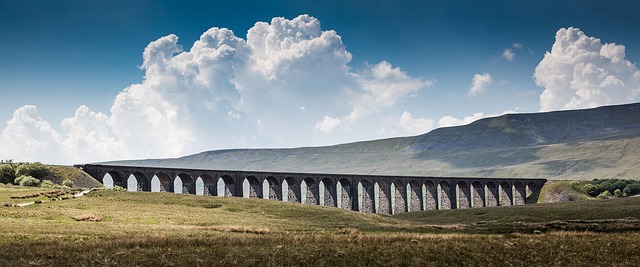
September 10, 2017 /Alastair J R Ball
Corbyn
Comment

Inside the Church of Momentum

July 30, 2017 by Alastair J R Ball in Satire

I am very worried about the state of the Labour Party. Only a few years ago we were a friendly broad church that tolerated differences of opinion. Sure, there were disagreements between Blairites and Brownites or between supporters of Ed Balls and Ed Miliband, but generally we all got along. That changed when Jeremy Corbyn announced he was standing for Labour leader and thousands of hard left activists flooded into the Labour Party. The hostility of these Johnny-come-latelys to proper party members is palpable. They should remember they are guests at this party and not be so rude to the hosts.

You cannot even point out how fundamentally misguided these people are without being labelled a “neoliberal”, “Red Tory” or simply “scum”. In order to complete their takeover of the party and crush all dissenting opinion, this gaggle of former SWP members have banded together to form a clandestine party-within-a-party called Momentum.

Anyone with sensible, centre-left opinions views Monument as a dangerous cult. The fact that Momentum is responsible for all the party’s current woes is frequently discussed at Progress meetings. Many proper party members are worried about how this rabble of Trotskyists are dragging that party away from the values of Chuka Umunna and Yvette Cooper.

I wanted to learn more about the hostile force that has invaded my political home. So I went down to a local Momentum meeting to see what these belligerent worshipers of Jeremy Corbyn were like. The experience was harrowing and confirmed all of my suspicions.

The email I received said the meeting would take place on Sunday at Leytonstone High Road Methodist Church. I went down on Sunday morning and the first thing I noticed was that Leytonstone High Road Methodist Church was the sort of Modernist, concrete box that that only a metropolitan, liberal who was completely out of touch with reality could like.

The meeting was well attended (it’s East London, Corbyn Central), but I was surprised to see so many students and young people out of bed early on a Sunday morning. I thought they would all be sleeping off craft beer induced hangovers and telling each other on SnapChat that Taylor Swift's new video was “problematic” before then heading down to Sodo Pizza Cafe for smashed avocado on toast.

It must have been passion for Corbyn that got so many young people up early. Momentum members behave in irrational ways, even for Millennials, who don’t vote and shouldn't be listened to. There were some older members, clearly Trotskyist infiltrators we kicked out of the party in the 1980s, still hell-bent on destroying Labour to prove some point about Communism being the future. They all had the Karl Marx beards and some had leather bound copies of Das Kapital with them.

I slipped in at the back, careful not to draw attention to myself. These people can smell a political activist with a firm understanding of what the electorate want a mile off and they don’t like it. I was ready for some unreconstructed old-school leftyness, but I was surprised that the meeting actually began with the singing of socialist anthems. I half expected Billy Bragg to appear with his guitar to lead everyone in in a chorus of the Red Flag. Instead, it was Jerusalem on an organ (I guess Mr Bragg was too busy at his mansion in Surrey).

Singing this song is clearly virtue-signalling of the highest order. A calling card marking out who is in the group designed to exclude people who aren't red flag waving nutters. They didn't sing Things Can Only Get Better because they secretly know that, under Corbyn, they can only get worse.

When the singing was over we moved on to the main subject of the meeting. I braced myself for a wave of hatred directed at Blairites and Red Tories, but the local chapter leader (I assume that’s what they are called) was a calm and soft-spoken young man who (credit where credit is due) had a real knack for talking to people on their level. At first I listened to him exalt the virtues of Corbyn or (JC as he called him) in his calm and reasonable voice. Then I remembered not to be taken in. Cult leaders don’t look like raving nutters at first. I needed to keep my wits about me during this meeting.

What was most striking about the meeting was that there is was no discussion of policy. At Progress meetings we all read from Policy Review and discuss what opportunities the gig economy presents for the future of work. At Momentum, everyone sits in silence and listens to the chapter leader. There is only one word for this: cult-like. What myself and my friends from the Liz Kendall For Leader campaign thought about Momentum was true.

Momentum members are not interested in listening to other people's views, only how great JC is and how he saved the party from awful Blairites. I heard about how JC died and came back to life - a reference to his poll ratings that have improved recently, but everyone knows this is only temporary, Corbyn has none of the sticking power of politician like Tristram Hunt

I was told how JC is both the son of the party and the party itself, a statement so contradictory and threateningly Orwellian that it could come from Chairman Mao himself. I heard about how JC suffered for our sins (clearly an attack on proper party members who supported Blair or read the fair and balanced debate in the mainstream media). The propaganda was dispensed in a reasonable way by a charming young man and these dulled fools lapped up every word of it, and to think that these closeted Communists have a go at religious people for being gullible.

Then came the most horrifying part. These delusional cultists practiced a ritual where they drank the blood of the Labour Party leader. Not literally. Symbolically using wine as a proxy, but I was still disturbed. The chapter leader poured the wine and invited the Corbnyistas to receive the blood of JC as a token of the suffering he endured (a clear reference to the PLP’s vote of non-confidence in Corbyn last summer).

I was worried what these lunatics might do to a non-believer. The walls of the meeting room were covered in pictures of a man going through some sort of wood and nails based torture, presumably to scare members into obedience. Things looked dark. I was about to be forced to symbolically drink the blood of a man who defied the Labour whip 617 times. This was unthinkable. I turned and ran screaming out of the meeting. I'm sorry to say that I shat myself a bit on the way.

Seeing inside the hard left cult of Momentum was the most disturbing experience of my life. These invaders have only one interest: driving out everyone who won’t take part in their righteous worship of JC. I was left believing that I was right about them all along and shouldn't have bothered to find out first hand.

Related posts
Labour Party.jpg
Dec 26, 2019
What should Labour do next?
Dec 26, 2019
Dec 26, 2019
satire-books-examples.jpg
Mar 3, 2019
5 examples of political satire books
Mar 3, 2019
Mar 3, 2019
fake_news.jpg
Dec 24, 2017
Top 5 best satirical pieces of 2017
Dec 24, 2017
Dec 24, 2017
Jul 30, 2017
Inside the Church of Momentum
Jul 30, 2017
Jul 30, 2017
Mar 20, 2017
We are all cool with this, right?
Mar 20, 2017
Mar 20, 2017
Mar 6, 2017
Brexit offers many opportunities for the Labour Party
Mar 6, 2017
Mar 6, 2017
British-leyland.jpg
Oct 22, 2012
Why you should not lend Ayn Rand your car
Oct 22, 2012
Oct 22, 2012


July 30, 2017 /Alastair J R Ball
Satire
Comment
  • Newer
  • Older

Powered by Squarespace

Related posts
Oct 31, 2025
Farage’s new immigration plan is cruelty as a governing principle
Oct 31, 2025
Oct 31, 2025
Trump-rally.jpg
Sep 30, 2025
Dr. Strangelove goes to Tehran: The hottest new war nobody ordered
Sep 30, 2025
Sep 30, 2025
Sep 16, 2025
The right finally discovers that life sucks for Millennials, but guess who they still blame
Sep 16, 2025
Sep 16, 2025
960px-Official_portrait_of_Angela_Rayner_MP_crop_2,_2024.jpg
Sep 9, 2025
Rayner’s resignation is another unforced error from Labour
Sep 9, 2025
Sep 9, 2025
Union-Jack.jpg
Aug 20, 2025
Who really holds power? The cultural illusion of middle-class dominance
Aug 20, 2025
Aug 20, 2025
Labour Party in parliament.jpg
Aug 2, 2025
What would Max Weber make of our politicians?
Aug 2, 2025
Aug 2, 2025
Jul 28, 2025
Why social media platforms spread the worst political messages
Jul 28, 2025
Jul 28, 2025
Trump-rally.jpg
Jun 20, 2025
Elon Musk and Donald Trump: The Beavis and Butt-Head of right-wing edge lords
Jun 20, 2025
Jun 20, 2025
Capitalism.jpg
May 27, 2025
“That’s Your GDP”: Labour’s big growth delusion
May 27, 2025
May 27, 2025
nigel farage.jpg
May 15, 2025
Nigel Farage is seriously uncool
May 15, 2025
May 15, 2025