Red Train Blog

Ramblings to the left

The Red Train Blog is a left leaning politics blog, which mainly focuses on British politics and is written by two socialists. We are Labour Party members, for now, and are concerned about issues such as inequality, nationalisation, housing, the NHS and peace. What you will find here is a discussion of issues that affect the Labour Party, the wider left and politics as a whole.

  • Home
  • Topics
    • Topics
    • EU referendum
    • The Crisis in the Labour Party
  • Art
  • Books
  • About us
  • Search
Migration.jpg

“We really believe in theatre that has a social value and brings communities together.”

May 05, 2019 by Alastair J R Ball in Migration

Theatre can be a powerful tool for communication, artistic expression and creating empathy. It can open the watcher to new experiences and make you understand what it is like to be someone else. This can help bring communities together, which is why LegalAliens Theatre, in conjunction with Haringey Welcome, have been running theatre workshops for migrants at the Migrants Resource Centre.

The reasons for attending the workshops are diverse. One attendee said: “It was a dream of mine to attend theatre workshops and try acting.” Adding that the workshops had: “Boosted my creativity.” Another attendee said: “It was a fantastic opportunity to explore yourself. Absolutely positive experience which I will never forget.”

The attendees have come for a wide range of backgrounds, including people from Italy, Latvia, Turkey, Syria and Bulgaria. The length of time they have been in the UK also varies, from three months to three years. One attendee said that they had joined the workshop because they were: “Interested in acting and performing,” and “I wanted to meet new people and challenge myself.”

The workshops are also attempting to address some of the stereotypes about migrants. Lara Parmiani, artistic director of LegalAliens, said: “We’re trying to get rid of the label migrant. They are just people living here.” She added: “[Participants] want to be themselves and assert their identities.”

These workshops have changed how some participants think of themselves as migrants. “Day after day something has changed and continues to change. Day after day I feel less migrant,” one attendee said. “I feel as part of the community,” another said. 

Another attendee added: “I obviously still perceive myself as a migrant, as someone different from the others but in the several contexts where I found myself, me being of another nationality was something enriching, an added value somehow.”

The workshops culminated in a short performance on the 26th of March at All Welcome!, an event organised by the local campaign group, Haringey Welcome, to fight against the anti-migrant, hostile environment. Lara said: “We really believe in theatre that has a social value and brings communities together.” She said that this was the origins of theatre: “Communities coming together and telling stories.”

The workshops have encouraged several participants to continue with acting. One said: “I would like to do more acting in the future because thanks to this theatre workshop I discovered that I like and enjoy it.”

LegalAliens are continuing to run their weekly theatre workshops until June. Migrants looking to improve their English and express themselves are welcome to join. The atmosphere is friendly and fun. Lara said that participants have enjoyed meeting other people who are new to the UK, saying they like: “Having a place to come where everyone is in the same boat.”

One attendee said: “I met like minded people from all over the world.” Another agreed: “It was a fantastic opportunity to explore yourself.”

Image provided by the Minnesota Historical Society and used under Creative Commons.

Related posts
Oct 31, 2025
Farage’s new immigration plan is cruelty as a governing principle
Oct 31, 2025
Oct 31, 2025
Trump-rally.jpg
Sep 30, 2025
Dr. Strangelove goes to Tehran: The hottest new war nobody ordered
Sep 30, 2025
Sep 30, 2025
Sep 16, 2025
The right finally discovers that life sucks for Millennials, but guess who they still blame
Sep 16, 2025
Sep 16, 2025
960px-Official_portrait_of_Angela_Rayner_MP_crop_2,_2024.jpg
Sep 9, 2025
Rayner’s resignation is another unforced error from Labour
Sep 9, 2025
Sep 9, 2025
Union-Jack.jpg
Aug 20, 2025
Who really holds power? The cultural illusion of middle-class dominance
Aug 20, 2025
Aug 20, 2025
Labour Party in parliament.jpg
Aug 2, 2025
What would Max Weber make of our politicians?
Aug 2, 2025
Aug 2, 2025
Jul 28, 2025
Why social media platforms spread the worst political messages
Jul 28, 2025
Jul 28, 2025
Trump-rally.jpg
Jun 20, 2025
Elon Musk and Donald Trump: The Beavis and Butt-Head of right-wing edge lords
Jun 20, 2025
Jun 20, 2025
Capitalism.jpg
May 27, 2025
“That’s Your GDP”: Labour’s big growth delusion
May 27, 2025
May 27, 2025
nigel farage.jpg
May 15, 2025
Nigel Farage is seriously uncool
May 15, 2025
May 15, 2025
May 05, 2019 /Alastair J R Ball
Journalism
Migration
Comment
Notre-Dame.jpg

The Notre-Dame fire is a tragedy, but so was Grenfell

April 28, 2019 by Alastair J R Ball in Where In The World?

The cathedral of Notre-Dame de Paris is a wonder to behold. Paris is a city with arguably the most famous landmark in the world, but Notre-Dame offers some strong competition to the global icon of Frenches. Situated on Île de la Cité in the Seine, the 12th-century Gothic cathedral shows Medieval architecture at its finest. The building is covered in sculptures, arches, spires and buttresses; everything you could want for a building to mentally transport you back to a time when people marveled at stain glass and colonnades. To stand inside Notre-Dame is to be joined to an artistic continuum that stretches back from today to medieval Europe. 

The fact that such a beautiful building, that has been an integral part of what must have been thousands of peoples’ lives over the centuries, has been damaged is a tragedy. Notre-Dame is a beautiful work of art and as it’s a building, it’s a work of art that we can all enjoy unlike a painting locked away in a vault somewhere to appreciate in value. When a historic building burns we not only lose the building, but we lose our connection to the people who lived and died in its shadow. The countless dead who lives have been shaped by Notre-Dame, never really die while it endures as a permanent connection to their collective memory. When something old is lost, many people are lost with it.

This is a tragedy, but it is a tragedy that has to be put into a political context. No art exists in a political vacuum. In art and architecture, as in all other things in life, systems of power and privilege come into play around Notre-Dame. 

Grenfell Tower

When Grenfell Tower burned in 2017 more people died, but so far more money has been raised to restore Notre-Dame then to help the victims of the fire. The French government has pledged to rebuild Notre-Dame (as they should; to preserve our connection to history) but many former Grenfell Tower residents remain living in temporary accommodation and it is within the power of the British government to find them a home. Is this because these people were poor, generally not white and many of them born overseas? The Grenfell Fire is the greater tragedy, but it has not produced the same reaction.

In America, three historically black churches in Louisiana were burned by arson attacks recently. These churches are much poorer than the Catholic Church and don’t receive the same level of funding from the state, but there has been no pledge to rebuild these. Is this because their congregations were black and poor?

Already the wealthy are volunteering their money to save a great work of art and a national symbol of France. The support of the uber-wealthy is appreciated, so that the burden of restoring this monument doesn't completely fall on the French taxpayer, but surely it would be better if they paid their taxes in the first place so that the state can be well funded and there is enough for welfare and to protect important pieces of history.

The NHS

In Britain, the NHS is on its knees and an injection of money (or properly paid taxes) would be very helpful in saving this national symbol of Britishness. If it’s a building the super-rich want to save, then the neo-Gothic British icon of the Palace of Westminster is in danger of falling down, and will need a huge quantity of public money that it will have to compete for against the NHS. Why can’t the uber wealthy pay for that?

Injustice and inequalities are also tragedies, but they are frequently unacknowledged. They happen every day, big and small, while no one notices. Social forces such as race, immigration status and wealth prevent millions of people from reaching their potential or from living fulfilling lives but there is no major energy to tackle these problems. There has been an explosion of energy to restore a historic building and this cannot be separated from these big social forces.

Louisiana churches

There is some good news to come out of all these tragedies. Enough people online pointed out the double standard of people being willing to donate to rebuild Notre-Dame, despite the wealth of the Catholic Chruch, but not to poor historically black churches in Louisiana that the GoFundMe page for the three Louisiana went viral. This led to $1.9 million in donations to these churches. Internet whataboutery finally did some good, and many people did acknowledge the inequality of wealth and power in this situation and then decided to do something about it.

We should be angry over what happened with Grenfell. We should be angry about the injustice, the inequality and loss of life. Something should be done to make Grenfell never happens again and also something needs to be done for the millions of people living in dangerous and substandard accommodation.

The fire that burned Notre-Dame is still a tragedy as something that was beautiful and meant a lot to a lot of people over a lot of years was damaged. But we should still care about the Grenfell survivors. We should look after both our history and the poor. The two are not mutually exclusive for a caring society.

 "Notre Dame" by thinkrorbot is licensed under CC PDM 1.0 

Related post
Karl-marx.jpg
Mar 18, 2018
Marx was right about capitalism today
Mar 18, 2018
Mar 18, 2018
Crowd.jpg
Mar 11, 2018
The rest of Europe should be very worried about the far right’s success in Italy
Mar 11, 2018
Mar 11, 2018
British-rail.jpg
Mar 4, 2018
Labour’s history of nationalisation gives us hope for the future
Mar 4, 2018
Mar 4, 2018
red-flag.jpg
Feb 18, 2018
What makes a good Socialist blog?
Feb 18, 2018
Feb 18, 2018
Jan 8, 2017
Brexit must not distract us from poverty
Jan 8, 2017
Jan 8, 2017
April 28, 2019 /Alastair J R Ball
Where In The World?
Comment
Trump-rally.jpg

The Mueller Report is the end of the beginning of the Trump Presidency

April 21, 2019 by Alastair J R Ball in Trump

Liberals, leftists and anyone who doesn't want the world to end in the next few years have been waiting with baited breath for the release of the Mueller Report. For those lucky people who have been living under a rock, the Mueller Report is the final report from the investigation into Donald Trump’s presidential campaign’s possible connections to Russia conducted by Robert Swan Mueller (yes that is his real middle name). The idea was to answer the question of whether the current President of the United States colluded with a hostile power to cheat his way into the White House. Writing that sort of unbelievable sentence is the new normal. 

Anyone who hasn't gone that peculiar type of mad that the American Right has gone have been hoping that the Mueller Report would be the end of the Trump Presidency. Or, hopefully, the end of Trump as a public entity, after he had been thrown in prison for a long time for conspiring with the enemies of the country he professes to love so much.

Sadly, the Mueller Report doesn't look like it will be the end of Trump. It didn't lead to the Republican Party finally turning on him and holding him accountable for all the ways he has threatened the democracy they claim to love so much. (There is more than enough hypocrisy to go around when it comes to Trump.)

The Mueller Report doesn't appear to be the beginning of the process to get rid of Trump. Even if the Democrats in the House of Representatives start impeachment proceedings, there is not enough in the report to have him convicted in the Senate or forced from office. The Mueller Report seems more like the end of the story of Trump impeachment than the beginning.

When thinking about the sorry state of US politics (summed up by the fact that their President is a reality TV star who lost money opening a casino) I am reminded of a Winston Churchill quote: "Now this is not the end. It is not even the beginning of the end. But it is, perhaps, the end of the beginning.”

This is the end of the beginning of the Trump Presidency as it ends the questions raised by the campaign. The Mueller Report settles the issue of whether the way that Trump became the President means that he is not legally allowed to be President. It reminds me of when the Supreme Court ruled on the election of President Bush in 2000; it means that a legal process won't end the nightmare the world has found itself him.

I think that Trump is completely unfit to be president because of his character, the fact that he is a bully, he mocked the disabled, he stirred up racial tension, attacked the institutions of democracy, lied a lot, refused to condemn Nazis, was endorsed by the KKK, is a failed businessman, is an idiot and for many more reasons than I can think of right now. He doesn't need to break election law to be bad for the whole world. However, the Mueller Report shows he hasn't invalided his Presidency by his own actions.

The Mueller Report is not a complete exoneration of Trump, whatever he claims. There are many wrongdoings highlighted by the investigation and many senior people from the campaign, including the man who ran it, are in prison. The problem is that the Mueller Report isn't going to be the impeachment ejector seat that many people, myself included, hoped it would be.

The struggle against Trump and the ethnonationalism he exploits continues. It will be a long struggle and there will be many painful defeats along the way. However, we must continue to fight Trump and his ilk with everything we have. The far-right won't be beaten by a legal technicality.

We need to defeat the far-right at the ballot box, in culture, online and in the streets. This fight is bigger than one report or even the Trump Presidency. It is a struggle against authoritarian and ethnonationalist ideas that we can see in Brazil, in Poland, in Austria, Germany, France, Italy, Russia and elsewhere. We can see it in the UK with the rise of Tommy Robinson and UKIP's change into being an openly xenophobic party. The tolerant people of the world need to repudiate intolerant.

The hope that the Mueller Report would neatly remove Trump without the need for a messy election is similar to those in the UK who think that if we can just revoke Article 50, and stop Brexit, then everything will go back to pre-2016 automatically. Even if Remain can win a second referendum, Tommy Robinson will still be a blight on our politics. We need to organise against everything that is wrong with Britain, not just Brexit.

Everyone needs to get involved. You can contribute in big and small ways. You can vote, volunteer, march or join a group. What you do doesn't have to be party political. You can volunteer at a woman's Shelter or with a group who support migrants or stand up to Uncle when he says “that Gerard Batten chap makes some points.”

The lesson here is the way to defeat Trump and the far-right is not to claim that there has been an administrative mistake, like someone who has been served the wrong thing in a restaurant, but take to the streets.

2020 is when we end Trump. George Bush won a second term, we can’t let Trump win again. The Mueller Report shows that the origins of Trump won’t be his undoing; only a movement of resistance will be.

This is the end of the beginning of the Trump Presidency and now the real the fight begins.

Donald Trump picture taken by Gage Skidmore and used under creative commons.

Related posts
Trump-rally.jpg
Sep 30, 2025
Dr. Strangelove goes to Tehran: The hottest new war nobody ordered
Sep 30, 2025
Sep 30, 2025
Trump-rally.jpg
Jun 20, 2025
Elon Musk and Donald Trump: The Beavis and Butt-Head of right-wing edge lords
Jun 20, 2025
Jun 20, 2025
Trump-rally.jpg
Feb 10, 2025
Trump is back in the White House and the billionaires are in the Rotunda
Feb 10, 2025
Feb 10, 2025
USA-flag.jpg
Dec 17, 2024
Murder is not the answer to America’s healthcare problems, but people are driven to extremes by politicians’ lack of action
Dec 17, 2024
Dec 17, 2024
Trump-rally.jpg
Nov 11, 2024
What does the left do now that Trump will be President, again
Nov 11, 2024
Nov 11, 2024
Trump-rally.jpg
Jul 23, 2024
Violence, hypocrisy and assassinations. Oh, what a mess we are in
Jul 23, 2024
Jul 23, 2024
Trump-rally.jpg
Oct 27, 2020
Will Trumpism continue without Trump?
Oct 27, 2020
Oct 27, 2020
Trump-rally.jpg
Apr 21, 2019
The Mueller Report is the end of the beginning of the Trump Presidency
Apr 21, 2019
Apr 21, 2019
Trump-rally.jpg
Oct 15, 2017
American cannot ignore the problems of its history
Oct 15, 2017
Oct 15, 2017
Feb 11, 2017
Why are we surprised when Trump does what he said he would do?
Feb 11, 2017
Feb 11, 2017
April 21, 2019 /Alastair J R Ball
Trump
Comment
EU flag.jpg

Brexit has broken our politics

April 06, 2019 by Alastair J R Ball in Brexit

Brexit is getting worse and not better. The longer we delay in either doing it or canceling it, the angrier everyone gets. The indecision that has gripped parliament is causing tensions to rise. At this point, having an election or another referendum will only make people madder as they are both different forms of Parliament not making a decision and opting for further delays.

Brexit has broken our politics because it has created a problem that cannot be resolved as no option commands popular support. The parties are split on Brexit; it cuts across the traditional left/right divide. This new political axis combined with the old is tearing out politics apart.

Parliament refuses to pass Theresa May’s Brexit deal and has instead been holding a series of indicative votes on what they want instead. Although, none of these are supported by a majority of MPs. Both a customs union and a second referendum came close to passing, but not close enough to be the unambiguous will of the house.

No one can agree on what Brexit should be, which is the essence of Brexit itself. It’s not one thing, but a collection of loose ideas, values, aspirations and fears that have merged into a single political project. Nothing tangible can satisfy these feelings. The debate we are currently having, about what real-world form the bundle of dissatisfactions that are Brexit should take, is one that we should have had during the referendum or immediately afterward. We have left this terrifyingly late.

There is no consensus in Parliament because there is no consensus in the country. There is no majority in Parliament for what the majority of the people in the country will hate, which is currently everything. Everyone is waiting for some group to jump first in some direction, be it the DUP, ERG, Labour or Tory Remainers, and no one is willing to take the damage of sticking their neck out first. So it looks like everyone is going to stay hunkered down in their fox-holes until we crash out of the EU without a deal.

As no one is willing to compromise, delay is the only viable option. Although the continual delay is only making everyone angrier. We cannot escape from this cycle of delay and rising exasperation without a viable solution, which is the one thing we don’t have.

The more time goes by, the more I am convinced that Brexit is something that needs to be stopped. It will do huge economic and culture damage to our country, which will be felt by the poorest hardest. Even with May’s deal, that is a lot worse than the deal Britain has as an EU member. The left must oppose the regressive, nationalistic, anti-immigration, hyper-neoliberal Tory Brexit that the Boris Johnson or any other of May’s likely successors will visit upon the country.

At the same time, I am worried about how angry people could get if Brexit is canceled (or even if a second referendum is held). On 29th of March, the supposed Brexit day, the atmosphere in Westminster took on a new, frightening character. This was not a few old people with “Leave Means Leave” signs in Parliament Square. This was Tommy Robinson and Nigel Farage speaking, people drinking and marching wearing St George’s crosses, journalists being verbally abused and fights with the police being started. This was angrier, nastier and more energetic than anything we had seen before and it’s a taste of what’s to come.

I find myself with unhelpful opinions. I have lots of detailed criticisms of the mistakes that got us into this mess - such as no Brexit white paper, the media not adequately scrutinizing Leave’s claims, a social media Wild West, dodgy campaign money sloshing about and no ownership of the outcome – all of which would be helpful if I could just find my time machine.

I think that we should have some kind of public vote if the deadlock in Parliament isn’t resolved soon. However, I must highlight that I disagree with, and am not associated in any way with, those who think that Remain could easily win a second vote or that revoking Article 50 would be universally welcomed. Anyone who believes that is crushingly naive.

Farage and Robinson are already whipping people up. It will get a lot worse if their message of Brexit betrayal is given legitimacy by the right leaning press or bunch of self-serving jingoistic clowns that are the Brexit wing of the Tory Party. This could get very ugly indeed.

It won’t be white, craft beer drinking, liberal, Remainers in Dulwich whose doors are kicked down by the Brexit mob. It will be poor people of colour in forgotten corners of the country, in small towns most people don’t know the names of. It’s these peoples’ lives we gamble with if we roll the dice on a second referendum. That’s if Remain wins that vote. Imagine the state of British politics if Leave wins for a second time.

My lack of useful suggestions mirrors all politicians’ lack of solutions. We are stuck and I don’t see a way out. Delay and indecision are making things worse. Now there is talk of holding EU elections, which may be the flare that the “Brexit is being stolen by the establishment” mob needs to really get going. If these elections return a horrendous group of right-wing, pro-Brexit reactionaries then this will demonstrate how bad a public vote could be. Either a second referendum or general election. However, a set of disastrous EU election results may be the catalyst Parliament needs to stop delaying and to do something, even if that something is putting this back to the people. I guess if we’re going to tear ourselves apart over Brexit we should get on with it.

Until Parliament makes a decision there will be delay followed by further delay, which will make everyone angrier. Brexit has already broken out politics to the point where it cannot function. That doesn’t mean that things can’t get much worse. 

 EU flag image created by Yanni Koutsomitis and used under creative commons.

Related posts
EU flag.jpg
May 19, 2022
Tory Brexiters are ignoring Northern Ireland because it’s inconvenient
May 19, 2022
May 19, 2022
EU flag.jpg
Feb 1, 2020
As Britain leaves the EU I am left disappointed in my county
Feb 1, 2020
Feb 1, 2020
EU flag.jpg
Dec 3, 2019
Is this election the last opportunity to stop Brexit?
Dec 3, 2019
Dec 3, 2019
EU flag.jpg
Sep 8, 2019
The anti-no deal side need to come up with something better than further delays
Sep 8, 2019
Sep 8, 2019
nigel farage.jpg
Jun 2, 2019
The sudden success of the Brexit Party should make everyone on the left very worried
Jun 2, 2019
Jun 2, 2019
Theresa May.jpg
May 26, 2019
The end of a career that no one will mourn
May 26, 2019
May 26, 2019
EU flag.jpg
Apr 6, 2019
Brexit has broken our politics
Apr 6, 2019
Apr 6, 2019
IMG_4111.JPG
Mar 31, 2019
Should the radical left support a People’s Vote?
Mar 31, 2019
Mar 31, 2019
Brexit-grenade.jpg
Mar 24, 2019
Brexit is eating a shit-sandwich, but No Deal is eating a grenade
Mar 24, 2019
Mar 24, 2019
EU flag.jpg
Jan 27, 2019
Labour must force May to drop her Brexit red lines
Jan 27, 2019
Jan 27, 2019
April 06, 2019 /Alastair J R Ball
Brexit
Comment
IMG_4111.JPG

Should the radical left support a People’s Vote?

March 31, 2019 by Alastair J R Ball in Brexit

The radical left doesn’t have a moral or philosophical position on Brexit. There are arguments for both Leave and Remain from a radical left-wing perspective, but there is no consensus. Take the figurehead of the radical left, Jeremy Corbyn. He doesn’t have a principled position on Brexit, which is odd for a man who has strong principals on everything else. He prefers the position that will make him Prime Minister. Brexit is making Corbyn act like a regular politician, where his great strength is how unlike a regular politician he is.

The radical left finds itself in the difficult position of thinking tactically about Brexit and not leading from our core principles. Our principles of Internationalism favours Remain, but the nature of the EU as a hyper-neoliberal, technocratic institution favours Leave. The memory of how the EU treated the economically ravaged Greece doesn’t inspire good feeling from the radical left, but then neither does the nationalistic and right-libertarian tones of the Brexit movement.

Many people I know strongly support the idea of having a second referendum as a means to kill Brexit once and for all. This has led me to think about whether, as a member of the radical left, it’s the right thing to do.

Giving people more of say over their lives is something I strongly believe in, which is why as a member of the radical left I support more localism and democracy being more than just people putting an X next to a name on a ballot paper every five years. A citizen’s assembly would be a good way to address Brexit, but neither the government nor Parliament is considering this.

A People’s Vote would give people another chance to express what they want and it could break the deadlock in Parliament. It might also be a way to avert a No Deal Brexit, the economic fallout of which would be felt by the poorest hardest. You can bet that Boris Johnson is financially protected from the No Deal he advocates.

If Remain were to decisively win another referendum it could end the nationalism, racism and anti-immigrant rhetoric that has come to dominate the country since the referendum campaign began. It would be a chance to revoke the language of hatred that has infected our political discourse.

Whatever Brexit was supposed to be, it has become an attack on all the positive functions of the state (such as linking disparate people together into a common web to achieve things together and provide protections for labour and the environment) by attacking the EU from a right-wing free-market position and focusing anti-government rage against it, whilst simultaneously seeking to enhance all the negative functions of a state (such as heavy-handed policing, mass surveillance, data collection on an industrial scale and a mechanism for perpetuating inequality and plutocratic rule) through a sovereignty oriented appeal to give more power to the British government. All this must be opposed and a People’s Vote would give us the opportunity to stop it.

Despite this, I have my doubts about a second referendum. My main concern is the anger unleashed by any attempt to stop Brexit. Certainly, a People’s Vote could be sold by any unscrupulous politician wishing to whip up support for themselves as a betrayal of the first vote. Do we know anyone who might be tempted to act like that? There are certainly elements of the pro-Brexit press and Conservative Party that are itching to splash “Brexit Betrayal!” across newspapers and internet. Already Donald Trump Jr is talking about Brexit betrayal and that democracy is dead in Britain.

Satirist and host of The Bugle podcast, Andy Zaltsman, described the first EU referendum as like the nation sticking it’s penis in a plug socket. This seems like an apt description as, like walking in on man with his penis in a plug socket, I have no idea how we got into his situation but everything about it is simultaneously incredibly stupid and incredibly degrading. I’m not sure what can be gained from sticking the nation’s penis in the plug socket for a second time.

Emotions ran high over the last referendum and they will run higher over another one. The last one pushed the country apart and ripped open a new political fracture. Another EU referendum could shatter us entirely. One MP was killed in the last referendum campaign. How much violence could be unleashed by another?

There are many other ways a second referendum could go wrong. What happens if Remain wins, but by less than 52%? What happens if Remain wins on a lower turnout, or wins but with fewer votes than the 17.4 million who voted Leave last time? All of these outcomes will resolve nothing and make us a more divided and bitter nation.

I am not sure if it’s even possible for Remain to reach the dizzying heights of 52% in a People’s Vote. It’s hard to gauge which way opinion will jump after the campaigns gets going. Supporters of a second referendum have highlighted how demographic churn could benefit Remain in a People’s Vote - it’s always the sign of a decent political movement that it’s celebrating the deaths of people who think differently to them – but Remain started with a larger lead last time and went on to lose.

I also don’t think that we have a convincing argument for Remain beyond “make this shitshow stop”. I’m sure many people wish this nightmare was over, but do they really want the pre-2016 status quo back enough to vote for it? I don’t think this is what most people in the country want and I don’t see Remain providing any other arguments beyond the raw of indignation of a middle class person in a slightly posh restaurant when something hasn’t gone their way.

Recent voting has also shown that there is no majority in Parliament for a People’s Vote. Many strong Remain supporting MPs, like Caroline Flint, have changed to supporting Brexit as that’s what their constituents voted for. Is there an argument that can win other these MPs? The most obvious one is that Brexit won’t fix their constituents’ problems and will most likely make them worse.

Herein lies the core of the problem with the case for the EU. The best way to argue for it is convincing an elected leader that what’s in the best interest of their constituents is the exact opposite of what they want. Their views don’t matter, only some other greater good whose benefits are intangible. Meanwhile their lives get worse, they feel they have less control and become more culturally alienated from everyone else. The arguments for the EU have contained within them their own undoing.

If we had a People’s Vote, we will need to learn from the last referendum. We haven’t got any better at selling the EU. In the last three years, no new arguments have risen for Remain that can convince people this time. The only new development is now that we see how complex Brexit is.

Politics right now is too unpredictable to call another referendum. The outcome is almost impossible to predict and with the likes of Nigel Farage and Tommy Robinson having a larger platform than they did three years ago, a second vote could turn very nasty.

Despite this, a No Deal Brexit would be so disastrous that I cannot support the idea in any circumstances. It must be prevented at all cost. The wealthy won’t suffer under a No Deal, but everyone else will. It will be like the 2008 financial crash all over again, but much worse. However, if we do nothing then a No Deal will happen. A second referendum would be accepted to stop a No Deal Brexit. The possibility of something terrible happening is preferable to the certainty of something terrible happening.

All of this is tactical thinking. I have not managed to find a moral answer to the question of whether the radical left should oppose or support a People’s Vote. Brexit is dividing our movement, cutting across the political spectrum and creating new divisions. This is the effect of the great wound that Brexit has opened up in our politics.

Related posts
EU flag.jpg
May 19, 2022
Tory Brexiters are ignoring Northern Ireland because it’s inconvenient
May 19, 2022
May 19, 2022
EU flag.jpg
Feb 1, 2020
As Britain leaves the EU I am left disappointed in my county
Feb 1, 2020
Feb 1, 2020
EU flag.jpg
Dec 3, 2019
Is this election the last opportunity to stop Brexit?
Dec 3, 2019
Dec 3, 2019
EU flag.jpg
Sep 8, 2019
The anti-no deal side need to come up with something better than further delays
Sep 8, 2019
Sep 8, 2019
nigel farage.jpg
Jun 2, 2019
The sudden success of the Brexit Party should make everyone on the left very worried
Jun 2, 2019
Jun 2, 2019
Theresa May.jpg
May 26, 2019
The end of a career that no one will mourn
May 26, 2019
May 26, 2019
EU flag.jpg
Apr 6, 2019
Brexit has broken our politics
Apr 6, 2019
Apr 6, 2019
IMG_4111.JPG
Mar 31, 2019
Should the radical left support a People’s Vote?
Mar 31, 2019
Mar 31, 2019
Brexit-grenade.jpg
Mar 24, 2019
Brexit is eating a shit-sandwich, but No Deal is eating a grenade
Mar 24, 2019
Mar 24, 2019
EU flag.jpg
Jan 27, 2019
Labour must force May to drop her Brexit red lines
Jan 27, 2019
Jan 27, 2019
March 31, 2019 /Alastair J R Ball
Brexit
Comment
Brexit-grenade.jpg

Brexit is eating a shit-sandwich, but No Deal is eating a grenade

March 24, 2019 by Alastair J R Ball in Brexit

I am at my wits end over Brexit. As I write, the only certainty is that Britain will leave the EU next Friday unless an extension to the Article 50 period is agreed. Currently, there is no agreement. This gives us five days to sort something out or face the national catastrophe of a No Deal Brexit. 

Even if the Article 50 period is extended, what happens then? MPs clearly don’t want the deal that is on the table as they have already voted it down twice, and now Speaker of the House of Commons John Bercow has said it cannot be tabled a third time. MPs have also voted against a No Deal Brexit - or a momentary outbreak of sanity has occurred, whatever description you prefer - but without MPs deciding on what alternative they want to a No Deal exit, No Deal remains the default position.

So, nothing has changed and we’re dangerously close to throwing the country off a cliff because parliament cannot agree on which of a series of shit-sandwiches it wants to eat.

If there is an extension, will it be just another in a long line of kicks to the proverbial can as it travels down the road towards the cliff edge of a No Deal Brexit? If so, we are rapidly running out of road to kick the can down. What will be done with this extension? More arguments that produce no solutions? More votes that don’t provide resolutions? More time wasted chasing the Brexit mirage that is constantly on the horizon but forever out of reach?

Brexit was never something I desired. I never found it appetising, but it has certainly now become the political equivalent of freshly battered faeces served in bread in a cafe with very poor health standards. Parliament is presented with a series of bad options, from May’s deal to Norway+++, or whatever they’re calling it this month, to the Malthouse compromise, a compromise that is already compromised as it won’t work. So, we now have a whole menu of shit-sandwiches that no one wants to eat.

It looks increasingly likely that Parliament cannot decide on which flavour of cack-bread it's going to chow down on. Which is understandable as no one wants to eat poo, no matter how nice the bread is. The hitch is that MPs were able to pass the triggering of Article 50 into law and fix the leave date of 29th March 2019, which means that if Parliament doesn’t eat one of the shit-sandwiches by that point the whole country will be forced to eat a grenade. I assume I don’t have to tell you why that is a bad idea.

If Parliament cannot decide what to do, then it needs to either call an election, so that we can get a parliament that can agree on which flavour of disgusting excrement it’s are going to eat, or have a referendum in an attempt to call this entire stomach churning dinner party off. It’s that or eat the grenade.

Someone at the back is screaming: “Don’t eat any turds at all! Just hold a second referendum and the smell of all this will be so bad it will put everyone off!” The issue with this is that some people are really into this whole eating already digested and excreted food and they’ll be pretty angry if their dinner party is called off.

We may not understand these people and their weird ways, their culture may be unfamiliar to us, but does that mean we should ignore the outcome of a referendum? They might have different views from us, but one man’s shit is another’s delicious bowl of organic, locally-sourced muesli washed down with a lovely hoppy IPA from an East London microbrewery.

Again, I can hear the call of: “Yes! We should hold these people and their weird different views in contempt! Fuck Brexit!” At the risk of being unpopular, I’m not sure it’s as simple as just stopping Brexit, or even calling a second referendum, winning it by a huge margin and then stopping Brexit. Doing this won’t be the cakewalk some claim it would be.

Let me be absolutely clear that I don’t want Brexit to happen. I voted against it. I think it’s a bad idea. I just wrote over 500 words about how Brexit is a shit-sandwich because I believe it is. I’m not in the pay of the mainstream media or the EU. I do this on my own time.

I think Brexit is an awful idea, but I know that many people disagree with me and would dispute this whole shit-sandwich analogy. For them, Brexit is not so much a turd-filled piece of bread, but a cool glass of water for someone who has crawled through a desert. Just because everyone I know is against Brexit doesn’t mean that stopping it would be easy. Over the last three years I have become painfully aware of the bubble I live in.

Around a million people marched for a second referendum this weekend and an online petition requesting the revoking of Article 50 currently has over four million signatures, so I’m not alone in wanting to stop Brexit. The question is: does the majority of people in the country want to stop Brexit or is this just a very large bubble with several million people in it? Demographic churn suggests that Remain could win a second time, but the campaign hasn’t begun yet and last time Remain started way ahead and went on to lose. Also, it’s always the sign of a decent political movement when it’s celebrating the deaths of people who think differently.

I’m worried about what could happen with a second referendum. Last time there was an increase in racial violence and an MP was killed. Emotions are running higher now. I’m frightened of the rage a second referendum could unleash and what it’s political outlet could be. The SNP now dominate in Scotland following losing in the Scottish independence referendum, a second EU referendum could be the fuel that English Nationalism needs to get going in a big way. Also, has anyone thought about how awful the Brexit situation will be if Leave wins for a second time? Surely, that will mean a No Deal Exit.

I’m worried that we’re being complacent like we were in 2016. A second referendum is not so much playing with fire, but playing with fireworks on top of a huge pile of TNT. Bad things could happen in another referendum and anyone who says otherwise is naive. There’s a risk, so a second referendum is another shit-sandwich on the buffet of foul poo-filled food that no one wants to touch.

Despite all of this indecision, something has to happen. We cannot continue to defer the moment when something awful finally gets eaten. I am terrified that the decision has been deferred for this long, but we cannot carry on for much longer like this. There’s been a lot of huffing and objecting, but now it looks like someone is going to have to eat something rank. Brexit maybe a shit-sandwich, but Parliament may have to eat it to avoid eating a grenade.

Related posts
EU flag.jpg
May 19, 2022
Tory Brexiters are ignoring Northern Ireland because it’s inconvenient
May 19, 2022
May 19, 2022
EU flag.jpg
Feb 1, 2020
As Britain leaves the EU I am left disappointed in my county
Feb 1, 2020
Feb 1, 2020
EU flag.jpg
Dec 3, 2019
Is this election the last opportunity to stop Brexit?
Dec 3, 2019
Dec 3, 2019
EU flag.jpg
Sep 8, 2019
The anti-no deal side need to come up with something better than further delays
Sep 8, 2019
Sep 8, 2019
nigel farage.jpg
Jun 2, 2019
The sudden success of the Brexit Party should make everyone on the left very worried
Jun 2, 2019
Jun 2, 2019
Theresa May.jpg
May 26, 2019
The end of a career that no one will mourn
May 26, 2019
May 26, 2019
EU flag.jpg
Apr 6, 2019
Brexit has broken our politics
Apr 6, 2019
Apr 6, 2019
IMG_4111.JPG
Mar 31, 2019
Should the radical left support a People’s Vote?
Mar 31, 2019
Mar 31, 2019
Brexit-grenade.jpg
Mar 24, 2019
Brexit is eating a shit-sandwich, but No Deal is eating a grenade
Mar 24, 2019
Mar 24, 2019
EU flag.jpg
Jan 27, 2019
Labour must force May to drop her Brexit red lines
Jan 27, 2019
Jan 27, 2019
March 24, 2019 /Alastair J R Ball
Brexit
Comment
knife-crime.png

The left’s answer to rising knife crime needs to be more than just spending money

March 10, 2019 by Alastair J R Ball in Economics

A terrible tragedy has struck two separate families on the same day. 17-year-olds Yousef Makki and Jodie Chesney were both murdered on the same evening in different cities, Manchester and London. Knife crime now dominates the front pages of the papers as much as Brexit does.

Knife crime has been increasing steadily over the last five years. A year ago I volunteered at a community centre in Tottenham, North London. In the two weeks I was there, a teenage boy was stabbed in our car park, another was shot outside a nearby tube station and another was stabbed outside a local cinema. It was unclear whether these were related attacks, part of a conflict between local gangs, or isolated incidents.

Knife crime has been in the news, but it has taken on a new political salience now that the victims are white, well-educated and suburban. Stabbings and other knife crimes have long been a feature of life in inner cities and poor estates, but neither the government nor media cared when the victims weren’t white. While I lived in Tottenham from 2010 to 2012, there were three stabbings in our quiet, side street alone, but none of these attracted national attention.

One reason why these stabbings have attracted a lot of attention is that they have occurred at a time when the damaging effects of Tory austerity can no longer be denied. Theresa May denied that there was a link between cuts in police numbers and rising knife crime, but the evidence shows that crime has risen over the last five years while police numbers have declined.

May’s premiership is a disaster. Whatever Brexit we ultimately get will be unpopular with huge swathes of the public and we may yet end up with a disastrous No Deal exit. Now May’s legacy at the Home Office is unraveling. Her draconian hostile environment policy to bring down immigration resulted in the Windrush scandal. Now the cuts she oversaw are resulting in blood on the streets.

Of course, the rise in knife crime is not just due to the cuts to the police. Social service, community centres, educational programs, employment programs, even after school services and youth clubs have been decimated by austerity. The willful neglect of huge areas of the public realm collectively impacts on crime on our streets.

The fabric of British life has been ripped apart by the cuts. We can see this in rising numbers of people sleeping rough. We can see it in schools that have to ask students to bring in their own toilet paper. We can see it in the return of Victorian diseases such as Rickets and TB. We can see it in rising knife crime.

In all these instances it is the most vulnerable who are hit the hardest. The poor, those with insecure accommodation, children and the people who have been so massively failed by society that they have turned to knife crime. Austerity was a policy designed to an advance the political goal of a smaller state and larger private sector that was achieved by making life worse for the people who would never vote Tory.

The impact to cuts across a whole range of public services are felt most acutely by those who have multiple social problems. This may seem like academic jargon, but consider the following. People with low paying jobs and insecure accommodation are most at risk of homelessness. Children in families whose benefits have been slashed and who attend schools that are underfunded are the most at risk of malnutrition. Many repeat offenders grew up in care. Communities hit by the closure of youth and social services and cuts in police numbers are seeing rises in knife crime. This is not just about cuts to the police. This is about the complete failure of society to look after vulnerable people, because of a callous political project.

The question I ask myself is: what would the radical left do differently, given the huge power that comes with being in charge of the British state? Our solution to complex social problems needs to be more nuanced than just spending lots of money. Austerity is a cause of many of these problems and I am not opposed to state spending, but we need to do more to tackle the effects of austerity.

The left also needs to do more than just beef up the police. Heavy-handed policing is another cause of the breakdown in trust between communities and the police that has led to the rise in crime. Although the police need more money to do their jobs, we won’t make people’s lives measurably better by turning disadvantaged communities into police states.

I am not an expert on crime or in gangs, but whilst volunteering in Tottenham I attended a gang training day, run by a charity that works helping people out of gangs. The key thing I learned is that there is no single cause of gangs, or of activities often (but not always) associated with gangs such as knife crime. Gangs grow when the soil is fertile for them to grow in and what makes the soil of society fertile for gangs brings in issues to do with racism, poverty, culture, gender, economics and localism. There is no magic bullet for this that the radical left can purchase once we have control of the state’s coffers.

Our response to knife crime must be varied and complex. It will involve listening to communities that have suffered from heavy-handed policing. It will involve giving the initiative to teachers, social workers, community organisers and a whole host of other people. It will also involve giving these people the money they need to do their jobs, that will be an important part of this, but the money must be spent on the people who are already working hard to make a difference in communities ravished by austerity. The money must not be spent on increasing the power of the police or reach of the state.

The radical left needs to recognise the deep and complex causes of knife crime and have a sophisticated response to it. Austerity is a huge factor in the rise in knife crime and we must work to undo the damage done by the Tories. We need to remember that every victim of knife crime is a tragedy, not just the white and suburban ones. Above all, we need to offer hope that the future can be better than the despair of the present.

Related posts
Oct 31, 2025
Farage’s new immigration plan is cruelty as a governing principle
Oct 31, 2025
Oct 31, 2025
Trump-rally.jpg
Sep 30, 2025
Dr. Strangelove goes to Tehran: The hottest new war nobody ordered
Sep 30, 2025
Sep 30, 2025
Sep 16, 2025
The right finally discovers that life sucks for Millennials, but guess who they still blame
Sep 16, 2025
Sep 16, 2025
960px-Official_portrait_of_Angela_Rayner_MP_crop_2,_2024.jpg
Sep 9, 2025
Rayner’s resignation is another unforced error from Labour
Sep 9, 2025
Sep 9, 2025
Union-Jack.jpg
Aug 20, 2025
Who really holds power? The cultural illusion of middle-class dominance
Aug 20, 2025
Aug 20, 2025
Labour Party in parliament.jpg
Aug 2, 2025
What would Max Weber make of our politicians?
Aug 2, 2025
Aug 2, 2025
Jul 28, 2025
Why social media platforms spread the worst political messages
Jul 28, 2025
Jul 28, 2025
Trump-rally.jpg
Jun 20, 2025
Elon Musk and Donald Trump: The Beavis and Butt-Head of right-wing edge lords
Jun 20, 2025
Jun 20, 2025
Capitalism.jpg
May 27, 2025
“That’s Your GDP”: Labour’s big growth delusion
May 27, 2025
May 27, 2025
nigel farage.jpg
May 15, 2025
Nigel Farage is seriously uncool
May 15, 2025
May 15, 2025
March 10, 2019 /Alastair J R Ball
Economics
Comment
satire-books-examples.jpg

5 examples of political satire books

March 03, 2019 by Alastair J R Ball in Satire

Some great works of political satire have been written over the years. So many that it is hard to know which ones to read first. To help you in your reading I have included 5 examples of political satire books that everyone should read. 

Animal Farm by George Orwell (1945)

The farmyard fable is a tradition of English literature, which George Orwell employed for his satire of the Stalinism, Animal Farm. The book uses satire to tell the story of the Russian Revolution through the lens of a farm where the animals have risen up against the humans and taken over. The revolution then falls to tyranny as a Pig named Napoleon’s lust for power destroys all the principals of equality it was built on.

 Such was the impact of this novel that in the USSR it was illegal to name a pig Napoleon and phrases coined in the novel, such as “we are all equal but some of us are more equal than others” have become shorthand for when a revolution aimed to bringing freedom descends into tyranny.

 Orwell was a lifelong socialist, but he wanted to warn the British left of the dangers of authoritarian socialism. In Animal Farm he uses satire effectively to take the complexities of the Russian Revolution and the rise of Stalinism, to paint a stark picture of how revolutions can go wrong.

Catch 22 by Joseph Heller (1961)

Joseph Heller’s novel takes aim at the pointless waste of life that is war and the bureaucracy of military-industrial complex. The novel follows Yossarian, a World War 2 bomber pilot stationed on an island called Pianosa. It dramatizes several events where Yossarian is caught between bureaucratic processes in a Catch 22. When we first meet Yossarian, he is in the hospital for jaundice, but the doctors are refusing to treat him until the jaundice fully sets in, but they won’t release him because he has jaundice. Yossarian is stuck as his life is ruled over by processes beyond his control.

Heller uses humour to expose what is wrong with war, religion and bureaucracy in America. He exaggerates the convoluted, contradictory and self-defeating aspects of the American military to make a point about the futility of war and how it ultimately adds up to the waste of human life. This is one of those novels when you have to laugh so that you don’t cry.

I Am America (And So Can You!) by Stephen Colbert (2007)

Stephen Colbert is a master at sending up conservatives via his comedy personality as a right-wing pundit. His show, the Colbert Report, was a mainstay of Comedy Central between 2005 and 2014, and in 2007 he put the character’s take on what was wrong with America (mainly liberals) into book form. Covering topics such as the homosexual agenda, race and immigration, Colbert satirises the hysterical tone of right-wing American politics. 

Colbert’s right-wing pundit character was a parody of American conservatives before they became a self-parody. Recently, Fox and Friend’s host Pete Hegseth denied the existence of germs saying: “I can’t see them, therefore they’re not real.”

The right in America have become some kind of scary, crazy joke, led by a reality TV version of Mussolini. The crazy pronouncements of Colbert now look tame and moderate next to a right that has openly embraced conspiracy theories and fake news. It’s terrifying that the world has become madder than the mad world of Stephen Colbert.

It Can’t Happen Here by Sinclair Lewis (1935)

The idea of a US demagogue is powerful and scary. America has always thought of itself as a freedom loving nation, immune from the lure of authoritarianism. Yet there is a streak in American culture that is fanatical in its worship of flag, military and Americana. Could support for a dictator lurk beneath the surface that prides itself in its liberty?

That’s the idea behind Sinclair Lewis’s novel It Can’t Happen Here. The novel follows the rise of Berzelius "Buzz" Windrip an authoritarian who becomes President of the United States by appealing to patriotism and a return to traditional values. To say that this book is relevant in the age of Donald Trump is an understatement.

The novel was mainly aimed at satirising Louisiana governor Huey Long, who was preparing a run for president before he was assassinated in 1935. Although it’s satire of the weaknesses of American democracy are still relevant today.

The character of Buzz has a few crucial differences to Trump, he has a street protest movement similar to Hitler and the SS, which Trump doesn’t have. However, other parallels exist, such as the main character being a journalist, a profession that Trump hates. I hope that Lewis’s fiction is not America’s future.

 Look Who's Back by Timur Vermes (2012)

Would we recognise Hitler for what he is if he walked amongst us? That’s the premise of German satirical novel Look Who’s Back. Hitler wakes up in modern Berlin, unaware of anything that has happened since 1945. As he continues to spout his Nazi views, he is mistaken for a method actor or comedy character, eventually finding success on YouTube and re-entering politics.

The novel pokes fun at contemporary alt-right extremists who are able to find an audience for their hateful views via social media. It also satirises our inability to see the true awfulness of extreme right politics and our mistake in assuming what we are seeing is an attempt at humour. Hiding behind a Family Guy-esque shock humour is a known tactic of the far-right. It’s sad to say that if Hitler was alive today, most people probably would dismiss him as a social media provocateur and not see the threat he poses to the world.

Conclusion

The list above covers a wide range of novels from different countries and periods in history. They all have something to say about today as well as the time they were written in. Even the old books have contemporary relevance as we can learn from the past to avoid repeating their mistakes. 

Satire is an effective way of communicating complex political ideas in an accessible and impactful way. What I have included above are a few examples of books that I think are excellent. Let me know which political satire novels you enjoy in the comments below.

Related posts
Labour Party.jpg
Dec 26, 2019
What should Labour do next?
Dec 26, 2019
Dec 26, 2019
satire-books-examples.jpg
Mar 3, 2019
5 examples of political satire books
Mar 3, 2019
Mar 3, 2019
fake_news.jpg
Dec 24, 2017
Top 5 best satirical pieces of 2017
Dec 24, 2017
Dec 24, 2017
Jul 30, 2017
Inside the Church of Momentum
Jul 30, 2017
Jul 30, 2017
Mar 20, 2017
We are all cool with this, right?
Mar 20, 2017
Mar 20, 2017
Mar 6, 2017
Brexit offers many opportunities for the Labour Party
Mar 6, 2017
Mar 6, 2017
British-leyland.jpg
Oct 22, 2012
Why you should not lend Ayn Rand your car
Oct 22, 2012
Oct 22, 2012
March 03, 2019 /Alastair J R Ball
Satire
Comment
Corbyn.jpg

A Corbyn government will end the misery of austerity

February 24, 2019 by Alastair J R Ball in Corbyn

Eight MPs have left the Labour Party (at time of writing) and joined with 3 Conservative MPs to form a new party. This is clearly a rejection of Jeremy Corbyn and left-wing direction he has taken the party in. With the party splitting, it’s more important than ever to remind ourselves of why it is important to support Labour.

In my view, this can be summed up in one word: change.

It’s obvious that things aren’t going well for many people in Britain right now. This isn’t a flux of nature or a product of global economics beyond our control. It’s because of the deliberate policies of the Tory government. We Labour supporters know that things can be better if the government enacted some genuine left-wing policies.

There are awful tragedies that we see unfolding every day in Britain that the government can do something about. Homelessness has exploded since the Tories came to power and the number of people sleeping rough has increased every year for the last seven years. We can see the effects of austerity in every town and high street across the country as people are denied basic human dignities like a roof over their head.

Food banks and Victorian diseases

Even if people have a home, many of them can’t afford to heat it or eat. Around 560,000 people used a Food Bank each year and one in four parents have had to skip meals as they prioritise giving what little food they have to their children. A Corbyn government can help the poorest and most in need people in the country. People who have been abandoned by a Tory government that doesn’t care for them.

A Corbyn government can make a real difference to children who are being failed by society. Victorian diseases that we thought had been eradicated over a century ago are back, such as Rickets and TB. Schools are in such bad condition that in some parts of the country pupils are forced to bring in their own toilet paper. 128,000 children are living in temporary accommodation, where entire families are forced to share a single room and the facilities are not fit for animals, let alone during childrens’ important formative years. In one of the richest countries in the world, this is an outrage.

The NHS must be a priority for the next Labour government. Our national health system is groaning under the pressures of an aging society and years of under-investment by the Tories. Protecting the NHS and making sure our health service is fit for the 21st century must be a top priority for Corbyn when he is Prime Minister.

Britain is falling apart around us. The welfare of ordinary people has been neglected over the last nine years as the Tories have priorities tax cuts to the rich. Our high streets are full of boarded-up shops, our schools are crumbling and children are growing up in shoebox-sized temporary accommodation.

Corbyn can change this

Corbyn can change this. Splitting off to form a new centrist party will not help the millions of people suffering under a Tory government. We need to remember what Labour stands for right now - a helping hand to poor and the needy.

A general election could happen at any minute. With the government in chaos and the public fed up with the state of the country, Labour has a real shot at winning. We could be a matter of weeks away from Jeremy Corbyn becoming the next Prime Minister. We could finally get a government that cares about the welfare of everyone. 

Our country is crumbling under a neglectful Tory government. A new party will only split the left vote and allow the Tories to continue in power. The neediest, the most vulnerable, the poorest and children are suffering under this heartless government. We need a Corbyn government to help those who need it the most.

Picture of Jeremy Corbyn taken by Garry Knight and used under creative commons.

Related posts
Karl-marx.jpg
Mar 18, 2018
Marx was right about capitalism today
Mar 18, 2018
Mar 18, 2018
Crowd.jpg
Mar 11, 2018
The rest of Europe should be very worried about the far right’s success in Italy
Mar 11, 2018
Mar 11, 2018
British-rail.jpg
Mar 4, 2018
Labour’s history of nationalisation gives us hope for the future
Mar 4, 2018
Mar 4, 2018
red-flag.jpg
Feb 18, 2018
What makes a good Socialist blog?
Feb 18, 2018
Feb 18, 2018
Jan 8, 2017
Brexit must not distract us from poverty
Jan 8, 2017
Jan 8, 2017
February 24, 2019 /Alastair J R Ball
Corbyn
Comment
Brexit.jpg

A Labour split is good news for the Tories

February 18, 2019 by Alastair J R Ball in The crisis in Labour

So it finally happened. After all the talk, it’s shit or get off the pot time. In this case the pot is the Labour Party and 7 MPs have decided to shit on it or get off it. At this point the metaphor breaks down.

To tell the truth, I’m not sad, surprised or angry. Some MPs have clearly been apoplectic with rage since Jeremy Corbyn became Labour leader. This is partly because he changed the party’s direction and partly because his election stopped the rise of some MPs through the party’s ranks. 

As a socialist, I want a left-wing Labour Party that will raise taxes on the rich, stop NHS privatisation, nationalise the railways, spend more on benefits and build more council houses. If some centrist MPs don’t want this and would prefer to be in a party that Alan Sugar wants to belong to, then I can show them where the exit is.

I wish Chuka Umunna and his pals all the best for his future. There’s no need to yell traitor or splitter or turn into the Judean People’s Front over this. I hope this will be an amicable break up. A conscious uncoupling. The electorate will settle this, one way or the other.

It’s too early to tell what will happen. Will this be an SDP version two? Something more? Or as much of a wet fish as when two Conservative MPs defected to UKIP and promptly lost their seats? The SDP managed to get 35 MPs to come with them over a period of months, and the number of MPs that join this Independent Group will depend on how many current Labour MPs feel threatened by deselection. That will all depend on how the Labour leadership handles this.

The odds aren’t good that this break away will work. The First Past The Post electoral system means even if the Independent Group get lots of votes, it might not translate into many seats. The SDP won 7,780,949 votes to Labour’s 8,456,934 in 1983 and ended up with 23 seats against Labour’s 209. The SDP also had two years to prepare for an election. If Brexit causes an election in March, will this new party, that doesn’t have a name yet, be ready for it?

Have they thought through all the implications of this break away? For example, what policy platform will they stand on? I guess it will be anti-Brexit, but Umunna, for example, has made comments about immigration that are unlikely to appeal to Europhiles. Will they be pro-austerity? What will their position on gender recognition be? I don’t think there is a huge constituency for a socially liberal, economically neo-liberal party. Outside the few people who read the Economist, but also think that Apu in the Simpsons is problematic.

Another question is: will they join with other Labour castaways? Will they admit the pro-Brexit Frank Field? Or John Woodcock who is accused of sexual harassment? Or Jared O’Mara who is accused of making misogynist and homophonic comments?

Will they join up with the Lib Dems? As Umunna and friends weren’t happy in Corbyn’s choir, will they want to be backing singers for Vince Cable? Why would Cable, who already runs a party, want to play second fiddle in Chuka Umunna’s Tony Blair cover band? The sort of person who launched a new party, rather than standing for Labour leader, doesn’t strike me as the sort of person who would stand quietly at the back while someone else set the tune. 

There’s also the fact that this new party managed to launch with a broken website, so I’m not putting much faith in their organisation skills. There was a brief time when users could choose to agree or do nothing to the suggested principles on the Independent Group’s website. As there was no submit button on page, that error didn’t matter anyway. Then there was Angela Smith describing BAME people as “a funny tinge”.

I don’t doubt that their objections to Corbyn and the direction he has taken Labour in are genuine. I’m sure they see Corbyn’s economic and foreign policy as bad tactically and not in the UK’s interest. I don’t doubt that these MPs are opposed to anti-semitism in Labour either, something Corbyn clearly has a blind spot on. However, you can’t dismiss that disliking the left, and being unable stand the fact that we are in charge, were a factor in the split.

As they’re unlikely to win power, a vote for this Independent Group will only be a protest vote at best. Corbyn has a serious chance of winning the PM and stopping the damage the Tories are doing. This is ironic for a group who called Corbyn’s Labour a protest vote.

Personally, after sticking with the party through Blair’s embrace of Thatcherism, the Iraq War, and everything else, I can’t help but felt let down that they couldn’t handle a few years under Corbyn. I guess they felt that even if Corbyn went, Labour members were too stupid to embrace Umunna and Co’s clearly superior ideas so they have to go directly to the electorate. Again, I wish them well with this. We’ll see how it all pans out.

The most likely outcome of this is splitting the left vote and helping the Tories stay in power. Some people will think that is an acceptable cost to stop Corbyn becoming prime minister. I guess we’ll see how many people really want a government that isn’t Labour, Tory or Lib Dem, far-left or far-right.  

I wouldn’t split Labour to stop another Blaire becoming Prime Minister, as much as my views are to the left of his. The worst Labour government is preferable to the best Tory government. What this shows is that some Labour MPs believe that there are some Tory governments that are preferable to some Labour governments. If you believe that, then maybe you shouldn’t be in the Labour Party. So best of luck to them.

Exit sign picture taken by Paul Wilkinson and used under creative commons.

Related posts
Karl-marx.jpg
Mar 18, 2018
Marx was right about capitalism today
Mar 18, 2018
Mar 18, 2018
Crowd.jpg
Mar 11, 2018
The rest of Europe should be very worried about the far right’s success in Italy
Mar 11, 2018
Mar 11, 2018
British-rail.jpg
Mar 4, 2018
Labour’s history of nationalisation gives us hope for the future
Mar 4, 2018
Mar 4, 2018
red-flag.jpg
Feb 18, 2018
What makes a good Socialist blog?
Feb 18, 2018
Feb 18, 2018
Jan 8, 2017
Brexit must not distract us from poverty
Jan 8, 2017
Jan 8, 2017
February 18, 2019 /Alastair J R Ball
The crisis in Labour
Comment
Venezuela.jpg

Western military intervention in Venezuela would be a disaster

February 03, 2019 by Alastair J R Ball in Foreign policy

The people of Venezuela have taken to the streets and the situation is spiraling out of control. The leader of the National Assembly, Juan Guaidó is claiming he is the rightful president and that sitting president, Nicolás Maduro, is a "usurper". This is set against a backdrop of economic hyperinflation, food shortages and a mass exodus. Above all of this is America’s itchy trigger finger.

Selections of the left have leapt to Maduro’s defense. I understand why this is. He is running a socialist government, that has nationalised the country’s oil and is opposed to American foreign policy in Latin America. Maduro and his predecessor, Hugo Chávez, attempted to build an economy that looks beyond capitalism to something fairer.

Venezuela offered some hope of an economic system that was different western neo-liberal capitalism (with its staggering inequality), Russian crony-capitalism (with its staggering corruption) or Chinese authoritarian capitalism (with its staggering lack of liberty). Venezuela, especially the Chávez government, had some interesting ideas about how to organise an economy differently, which drew the interest of the international left.

When Chávez died in 2013, I wrote an obituary that drew on my experience of meeting a Venezuelan woman in New York. She had an interesting perspective on the country. She said the poor in Venezuela where glad to have a socialist government, which provided more for them than many other poor countries.

However, she said what most people in Venezuela wanted was Western liberal democracy. I have my criticisms of Western liberal democracy, especially the economic system it rests on, but I believe strongly that people worldwide deserve the personal freedom that western liberal societies offer (at least in principle). I wasn’t about to tell this woman she was wrong about what Venezuelans wanted.

The Maduro regime is not a regime that I want to live under. It was repressed or jailed opposition candidates in the run to the recent presidential election, which is what led to calls that Maduro is usurping the presidency. There has been hyperinflation and food shortages caused by government mismanagement of the economy that has caused a lot of hardship for the poorest members of society.

That said, I am strongly opposed to the idea of Western military intervention in Venezuela. It will only make things worse and risk huge numbers of people being killed in a war that could last for years, if not decades. America - and the few countries that are deluded enough to still look up to America or desperate enough to depend on American’s good graces – cannot go around being the world’s policeman. The lessons of Iraq and Afghanistan are that this doesn’t work.

The West is also very selective in how we enforce international law or the standard of democracy we are supposed to be supporting when we invade another country. The Democratic Republic of the Congo recently had an election where most of the independent monitors claimed that proclaimed winner, Union for Democracy and Social Progress candidate Félix Tshisekedi, committed electoral fraud. The African Union and Catholic Church reported that the Engagement for Citizenship and Development party’s candidate, Martin Fayulu, is the real winner. In Nigeria, Chief Justice Walter Samuel Nkanu Onnoghen has been arrested suspiciously close to the upcoming election he was supposed to be the adjudicator for.

Invading Venezuela, using the excuse that an election was unfair, is wrong unless the West is willing to invade Nigeria and The Democratic Republic of the Congo as well. There have been unfair elections in Russia and China, but we do nothing about them. The Yemenis and Syrian governments are inflicting terrible hardships on their citizens, but we are not invading those countries. Policemen aren’t supposed to be selective about how they enforce the law.

Military action would be a bad idea, but the left needs to acknowledge that something has gone wrong in Venezuela. The government is authoritarian and represses the freedom the left defends. It has brought economic hardship upon its poorest citizens, the people socialism is supposed to offer something better than harsh capitalism.

Venezuela doesn’t show that socialism doesn’t work. It shows that this variety of authoritarian socialism as practiced by Venezuela and in the USSR doesn’t work. The left needs to know authoritarian socialism when we see it, and call it out as against our values. Socialism should provide more liberty than capitalism. Not less.

There are rival traditions of anti-authoritarian socialism. From the works of Rosa Luxemburg to anarchist collectives in Kurdistan to Podemos in Spain and the criticism of authoritarian socialism written by George Orwell.

I hope that the lives of ordinary Venezuelans improve in the future and that they don’t have to suffer food shortages, hyperinflation and live under an authoritarian government. The Venezuela people need to establish the government that they want for themselves. An American or Western invasion won’t help them do this and will only lead to the suffering of more ordinary Venezuelans.

 "Bandera de Venezuela" by Blog Viajes is licensed under CC BY 2.0. To view a copy of this license, visit here

Related posts
Oct 31, 2025
Farage’s new immigration plan is cruelty as a governing principle
Oct 31, 2025
Oct 31, 2025
Trump-rally.jpg
Sep 30, 2025
Dr. Strangelove goes to Tehran: The hottest new war nobody ordered
Sep 30, 2025
Sep 30, 2025
Sep 16, 2025
The right finally discovers that life sucks for Millennials, but guess who they still blame
Sep 16, 2025
Sep 16, 2025
960px-Official_portrait_of_Angela_Rayner_MP_crop_2,_2024.jpg
Sep 9, 2025
Rayner’s resignation is another unforced error from Labour
Sep 9, 2025
Sep 9, 2025
Union-Jack.jpg
Aug 20, 2025
Who really holds power? The cultural illusion of middle-class dominance
Aug 20, 2025
Aug 20, 2025
Labour Party in parliament.jpg
Aug 2, 2025
What would Max Weber make of our politicians?
Aug 2, 2025
Aug 2, 2025
Jul 28, 2025
Why social media platforms spread the worst political messages
Jul 28, 2025
Jul 28, 2025
Trump-rally.jpg
Jun 20, 2025
Elon Musk and Donald Trump: The Beavis and Butt-Head of right-wing edge lords
Jun 20, 2025
Jun 20, 2025
Capitalism.jpg
May 27, 2025
“That’s Your GDP”: Labour’s big growth delusion
May 27, 2025
May 27, 2025
nigel farage.jpg
May 15, 2025
Nigel Farage is seriously uncool
May 15, 2025
May 15, 2025
February 03, 2019 /Alastair J R Ball
Foreign policy
Comment
EU flag.jpg

Labour must force May to drop her Brexit red lines

January 27, 2019 by Alastair J R Ball in Brexit

In this last week Brexit has gone from bad to worse, something I scarcely thought possible. Brexit as a whole is poorly conceived and its execution has also been terrible. To make it worse, this particular train wreck has a countdown attached. If we don’t resolve this mess by the 29th of March this year then Britain crashes out of the EU without a deal and worse will become Biblically awful.

This week Theresa May’s withdrawal agreement was voted down by parliament and a vote of no confidence in the Tory government failed. It has been a whirlwind. In order to clarify my thinking on what we should do now, I have laid out a few facts as I see them.

Firstly, May’s deal clearly won’t make it through parliament. The only way I can see this happening is if it’s the last few days before a No Deal exit and, all other plans having failed, MPs vote it through at the last minute. Other than that, this withdrawal agreement that has been negotiated over nearly two years is as dead as Boris Johnson’s integrity. Not only is May’s deal dead, but I don’t think any other bespoke deal that the EU is willing to give us will be passed by the House of Commons.

Secondly, this government isn’t going anywhere. Now that a vote of no confidence in the government has failed, the chances of a general election and putting Labour in the Brexit driving seat have been massively reduced. Following the failed leadership challenge in December, May is safe as Prime Minister for the foreseeable future. This means that we have to accept that the Tories in general and May, in particular, will see out the Article 50 deadline in power.

Thirdly, and most importantly, a No Deal Brexit would be a disaster of unparalleled proportions. It could lead to hospitals closing and medicine shortages. The economy could collapse and there could be rioting in the streets when food shortages hit. The economic and social damage done could make the 1970s look like a minor stock market adjustment. A No Deal Brexit must be prevented at all costs.

MPs have been clear that they won’t accept a No Deal Brexit and have done their best to bind the government’s hands to prevent it. However, unless MPs can decide on what kind of Brexit they do want (or postpone/stop Brexit) then No Deal wins by default at the end of March. Parliament needs to act to prevent a No Deal Brexit.

As May’s deal is dead, the Prime Minister has been dragged, against all of her political instincts, to the table of cross-party negotiation. This begs the question, what should Labour ask for in these negotiations? What type (if any) of Brexit should they pursue?

What the past two years of wasting time over Brexit has shown, is that May’s red lines on Brexit cannot be reconciled with each other. She has ruled out remaining in the regulatory orbit of the EU, a border between Northern and the Republic of Ireland (having this as a red line is sensible) and customs checks between Northern Ireland the rest of the UK. Maintaining all three of these is only possible in the deal that May has negotiated with the EU, which is not going to pass parliament.

May’s red lines exist to keep the Tory party happy. It is what they want from Brexit. May is putting her party’s unity ahead of the best interest of the country. As there is no Brexit that the Tories will accept, whilst May retains her red lines she is running the risk of a No Deal Brexit.

All of this leads me to express what is probably going to be an unpopular opinion amongst my middle class, metropolitan, muesli eating, Uniqlo shopping, Guardian reading, craft beer drinking, casual dining, friends. Quite simply, Labour must force May to drop her red lines and embrace a Norway style Brexit with customer union membership and maybe even EEA membership.

This is clearly the best Brexit deal. It minimises the risk of an economic shock, guarantees continuity for UK business and the European people living in the UK and protects pace in Northern Ireland as well as ensuring the Good Friday agreement stands. It is the best way forward and would pass through Parliament. This is what Labour should make the government agree to.

This week Corbyn has been criticised for wanting No Deal taken off the table before negotiations can begin. This is a sensible starting place as No Deal cannot be countenanced by any politician who hasn’t take leave of their senses. The fact that it is being endorsed by Nigel Farage tells you all you need to know about it as an idea.

But what about a People’s Vote, I hear you say? Well if Remain and stop all this madness could win a People’s Vote that would be one way out of this shitstorm. There are a few problems with this as a plan. Firstly, I don’t see it getting through parliament. Secondly, I haven’t seen an official confirmation of what the question on a People’s Vote be. Will it be May’s Deal verses Remain? Will No Deal be allowed on the ballot? Will it be a two-stage referendum? No one from the People’s Vote has a clear answer to these questions.

These technical questions can be addressed and they are not the root of my objections to a People’s Vote. Where my objection comes from is: can Remain win a People’s Vote? Brexit is a slow-motion disaster that threatens to become a high-speed catastrophe, but I think that the millions who voted for Brexit still want the vague jumble of things that Leave were offering and will vote for it again. I don’t think Remain can win a People’s Vote. Also, what happens if Leave wins by a larger margin than last time? What would that mean for the country?

My objection to a People’s Vote is that the ideas is based on an assumption that is not true. Everyone thinks Brexit is going badly and wants it to be over, one way or another, which is completely correct. The assumption is that people are so hacked off with Brexit that they would prefer a return to the status quo over Brexit, which is not true. Most people don’t want the status quo, which is what a People’s Vote is offering.

On top of this, there is the outpouring of rage a People’s Vote will create amongst Brexit voters that will be seized by the far-right. One MP was killed by the last referendum. Will a People’s Vote be worth it if it leads to more violence? How many lives lost is too high a price to stop Brexit? This may seem like pure shock rhetoric, but the People’s Vote need to engage with this question if we’re going to have another referendum. They can’t just shrug and assume that everyone else thinks exactly like them, ie really really wants Brexit to fuck off.

I don’t think a People’s Vote will get us out of this mess, which is why I don’t think there should be one. Although if Labour fails to get May to agree to non-suicidal Brexit, or even any Brexit, then it may be the only option left on the table to prevent a No Deal exit.  

I am very worried about the Brexit process. Time is running out and MPs must do everything they can to prevent a No Deal exit. The nation and history are watching closely what MPs do, so in the words of RuPaul I will say to MPs: good luck and don’t fuck it up.

 EU flag image created by Yanni Koutsomitis and used under creative commons.

Related posts
EU flag.jpg
May 19, 2022
Tory Brexiters are ignoring Northern Ireland because it’s inconvenient
May 19, 2022
May 19, 2022
EU flag.jpg
Feb 1, 2020
As Britain leaves the EU I am left disappointed in my county
Feb 1, 2020
Feb 1, 2020
EU flag.jpg
Dec 3, 2019
Is this election the last opportunity to stop Brexit?
Dec 3, 2019
Dec 3, 2019
EU flag.jpg
Sep 8, 2019
The anti-no deal side need to come up with something better than further delays
Sep 8, 2019
Sep 8, 2019
nigel farage.jpg
Jun 2, 2019
The sudden success of the Brexit Party should make everyone on the left very worried
Jun 2, 2019
Jun 2, 2019
Theresa May.jpg
May 26, 2019
The end of a career that no one will mourn
May 26, 2019
May 26, 2019
EU flag.jpg
Apr 6, 2019
Brexit has broken our politics
Apr 6, 2019
Apr 6, 2019
IMG_4111.JPG
Mar 31, 2019
Should the radical left support a People’s Vote?
Mar 31, 2019
Mar 31, 2019
Brexit-grenade.jpg
Mar 24, 2019
Brexit is eating a shit-sandwich, but No Deal is eating a grenade
Mar 24, 2019
Mar 24, 2019
EU flag.jpg
Jan 27, 2019
Labour must force May to drop her Brexit red lines
Jan 27, 2019
Jan 27, 2019
January 27, 2019 /Alastair J R Ball
Brexit
Comment
Pub.jpg

In defence of rainy weekend days in January

January 20, 2019 by Alastair J R Ball in Pubs

On a clear summer’s day, from the escalator on the outside of the Pompidou Centre in Paris, you can see the Eiffel Tower standing proudly over what is a good candidate to be the most beautiful city in the world. It’s the perfect place for an epiphany or to be struck by inspiration. 

I always thought of myself as strange that I was more likely to be inspired by the sheer beauty of the world in a Wetherspoons or walking along the side of a ring road. Maybe that’s just me. These places are as full of life as a Moroccan Bazaar or the Amazon rainforest, but are less likely to be the subject of rapturous descriptions rendered in sparkling prose. Beauty can be found in the magnificent squares or Rome with its steady diet of Renaissance masterpieces or in the sublimity of Niagara Falls, but there is beauty to be found in the mundanity of suburban life, in queues for the post office, or in a round of drinks after work on Friday.

In Britain, there is no truer expression of beauty than a good pub. I have known many good pubs in my time on this Earth, and I can say that there is no formula for creating an excellent pub. George Orwell laid out his ideal pub in his essay The Moon Underwater, which has given its name to many pubs (most of them Wetherspoons). I disagree with Orwell, there is no perfect pub. A great pub is a response to its environment and shouldn’t be measured against a universal standard.

I am a man of my time and a product of my environment, so I can usually be found in a trendy East London craft beer bar that probably used to be a warehouse, with exposed brick and pipes as well as keg beer from a local microbrewery. It’s easy to sniff at these places for being the embodiment of the modern aesthetic, but a pub should be a response to a time as well as a place. 

Another mode of pub that I very much enjoy is the traditional high street boozer, usually with recognizable pub design and names such as the Kings Head, Rose and Crown, or celebrating a local historical figure or event. In recent years I have seen the range and quality of beer and food offered in these places increase greatly. They have always moved with the times to be the cornerstone of British life.

The best of these pubs are friendly, but not so relaxing that you think you’re in your own living room; so please don’t take off your shoes or put your feet on the chairs. They have subtle, inoffensive interior design, great beer and good food. They capture the community, town or suburb they are located in and reflect it back, whilst still being welcoming to outsiders.

These places offer a refuge from the assault of to our mental wellbeing that is the month of January. Why many people decide to quit drinking in the most depressing of months is beyond me. They sit on the high streets of small towns and street corners of suburban sprawl. Many of them are in tasteful Victorian buildings, but they come in varieties from delicate Mock Tudor to modernist cubes with flat roofs. The town centre pub is one of the few things that link us together in an increasingly atomized society.

There is a quiet beauty to the High Street pub that suits its usual understatedness. It’s the same quiet beauty that can be found on rainy weekend days in days in suburban streets. It can be found in a family or group of friends tucking into a Sunday roast. It can be found in weekly shops and car MOTs and the way that fans watching football in a pub can cast aside British awkwardness to share in elation at victory and commiseration at defeat.

This is where the profound can be found on a rainy January weekend afternoon in suburbia. It is on one of these weekends that I write this, in the midst of a local high street pub that serves good beer. People are sharing stories. There are family meals and friends’ reunions. A young couple is having a drink on the leather sofa near the fire. Kids are running around but are closely supervised. American Pie just came on the stereo. The pub is starting to empty out as the sun sets. Work tomorrow.

This is as fine a subject for a painting as the Battle of Trafalgar, and it says more about the Britain that we are than a mythologised naval encounter with the French. Pubs on rainy Sunday afternoons are what brings our country together and we need some togetherness as recent events have done their best to tear us apart.

Recently, I have sensed a rejection of the idea that mundane British life is beautiful. This comes from a mistrust of normal people and their experience by people of my ilk, whatever ilk that is. We used to champion the person in the street against their wealthy oppressors, but since the person in the street voted for Brexit we paused and thought maybe they have opinions that we don’t find so wholesome.

This has led to a mistrust of the person in the street or the pub, usually a Wetherspoons. In many recent political discussion drinking in Wetherspoons has become code for being ill-informed, angry at nebulous elites and probably a bit racist. This is mainly because of the pro-Brexit views of Tim Martin, the chain’s owner. There is more to Wetherspoons than being a vehicle for pro-Brexit propaganda, and not everyone who drinks in one supports Brexit. When we reduce people’s everyday experience to a knee jerk reaction we lose some part of our collective identity.

Some of that identity has informed the collection of anxieties that make up Brexit. The closure of pubs in a local area reinforces these anxieties and contributes to the support for Brexit. Brexit is a nostalgic movement, based on a nostalgia for an idealised Britain and for pubs that are vanishing from large parts of the country. In other parts of the country having new, cool, craft beer oriented bars is a badge of identity as a successful, open and anti-Brexit community. The pub, and how we view it, is key to understanding how we feel about Brexit. 

I’m not denying that the referendum and Brexit are processes designed to divide people and turn us against each other. Brexit is not something that has to be merely accepted. What it is becoming is a culture war, a widening gap between people who share the same streets and pubs. Now we resent anything that smells of that other culture we feel so separated from.

I don’t want to trivialise the important disagreements at the heart of Brexit. I have written about the grave threats to our nation. However, we cannot continue to live as two nations in one land. Increasingly we have come to see each other as different. Not just politically or even culturally different, but different in the fundamental nature of the lives we lead.

If we view our Britain as the one of the exceptional, the cultured, the open-minded, then we cannot help but think of the other Britain as mundane, grey and filled with people ground down by the harshness of the world. If this is how we think, then we will grow to see every day experiences as signifiers of our cultural enemies.

At worst, a dislike of the person in the street could lead to a rejection of the everyday as invalid, a dismissing of the everyday things that bind us together. Rainy Sundays in suburbia are a part of everyone lives, regardless of who they are or what they believe. You can be awestruck in the Pomedu Centre Paris, or in a Wetherspoons in Grantham, but we all experience the same feelings.

I write this on a rainy Sunday afternoon in January in suburbia where our future is uncertain, but we must make sure that we don't turn against each other, dismiss the person in the street as an angry crank and render the everyday experiences of millions as invalid.

I don’t think that the answer to fear and suspicion is more fear and suspicion. We cannot harbor hostility to people who think differently to us or come from different places. I don’t want to live in a divided Britain.

 "The Shepherd and Dog Pub" by lloydi is licensed under CC BY-NC-SA 2.0

Related posts
Wetherspoons.jpg
Oct 25, 2021
Is Wetherspoons’ boss Tim Martin the UK’s highest-profile Libertarian?
Oct 25, 2021
Oct 25, 2021
The-Moon-Under-Water.jpg
Nov 3, 2020
The Zoom Under Water
Nov 3, 2020
Nov 3, 2020
Pub.jpg
Jan 20, 2019
In defence of rainy weekend days in January
Jan 20, 2019
Jan 20, 2019
The-Green-Rooms.jpg
Aug 26, 2018
Haringey: A borough of two halves
Aug 26, 2018
Aug 26, 2018
the_royal_pavilion_ramsgate.jpg
Jul 1, 2018
Between the Mega Spoons and the Brown Jug: A tale of the Kent coast
Jul 1, 2018
Jul 1, 2018
Pub.jpg
Sep 17, 2013
Calling Time on Alcohol Policy
Sep 17, 2013
Sep 17, 2013
January 20, 2019 /Alastair J R Ball
Essays
Pubs
Comment

What are the limits to free speech online?

January 13, 2019 by Alastair J R Ball in Technology

What are the limits to freedom of speech? Almost everyone believes in some limits to freedom of speech, unless you think that currency forging or child porn should be accepted as self-expression. You would have to be a psychopath to think that it’s acceptable to scream racial or sexual abuse into someone's face. What about the nuance beyond these extremes examples? Where is the line where free speech stops? 

The case of online social network Gab is instructive in this debate. The website was shut down after the Pittsburgh synagogue mass shooting in which 11 people were killed. The perpetrator had posted on the social network before committing his crimes, which was a notorious gathering space for neo-Nazis, the alt-right and conspiracy theorists. It was filled with racial hatred and anti-Semitism; the sort of speech that most people think is completely unacceptable, but many argue should be allowed under free speech protections. 

Gab's homepage (before it was shut down by its hosts) described it as: "A social network that champions free speech, individual liberty and the free flow of information online. All are welcome." The community certainly believed that there should be very few (if any) restrictions on speech. However, this led to it becoming a safe space for the worst speech and that ultimately contributed to a mass shooting. This implies that no limits to speech is the wrong approach.

The makers of Gab certainly leant to the right politically, but we'll assume that in creating a free speech community they didn't set out to create a safe heaven for hate speech, Nazis or the people who want to do a mass shooting. The problem is, that is what their web site became. The question is: why didn't Gab's community of free speech prevent this? They had unlimited free speech too, but they didn’t use it to prevent Nazis taking over the website.

If I was at a gathering of my friends, and someone said something hateful, then we would make it clear that wasn't acceptable and the person who said the awful thing would have to apologise or leave. Most people and most social gatherings are like this. Why wasn't it like this on Gab? Why isn't it like this so frequently online?

You could argue that Gab was an extreme case where free speech got out of hand and led to a mass shooting. Drawing up a framework for the limits of free speech is complicated. There is a difference between what speech I think should be legally tolerated by the government, and what speech I tolerate in my presence. There is a lot of stuff I don't want to hear that I think should still be legal.

Online it gets more complicated. Are social networks private or public spaces? They are the largest gatherings of people in the world, but they take place on platforms that are the private property of the companies that own them. Are they public squares, or private members clubs? The rules that gather what you can say or do in each is quite different.

I think that social networks (especially the large ones like Facebook and Twitter) should be treated more like public utilities than private spaces. This means users should have the same rights as they would have in public and the same recourse to appeal against decisions, however, it also means that there should be greater public scrutiny of what goes on on these platforms.

You may have a different view to me as to whether these are public spaces where and users should have the same rights as someone in the street or if they are private members clubs where the club gets to set and enforce the rules. If you think that these online spaces should have no restriction on them whatsoever, then remember the case of Gab.

So why did Gab become overrun with Nazis and people spreading racial hatred? Partly, it's because Nazis gravitate towards free speech zones the same way that weeds grow in unattended gardens. Nazis are everywhere online, but they get be weeded out by effective moderation. If your policy is no moderation, then Nazis will grow. Partly, it's because Nazis are leveraging the issue of free speech. Most people agree that free speech is a good thing (which it is) and that it shouldn't be restricted. If you believe this absolutely then it follows that Nazis should be allowed the same freedom of speech as everyone.

Nazis don't care about the free speech of people they hate - Jews, people of colour, usually women and LGBTQ people as well - but they are clear about their right to freedom of speech and use it to drive a division between leftists, who they paint was opposed to freedom of speech, and everyone else whose view of free speech are less nuanced. Nazis are leveraging this to their advantage and using it paint those who question the limits to free speech as worse than themselves and thus making their hateful views more palatable than questioning free speech.

This is feeding a popular conservative narrative that snowflake leftists (usually young people on campuses) who don't want to listen to ideas they disagree with are the real threat to free speech. The truth behind this narrative is several things coming together: an important debate about the limits of free speech, the legacy of no-platforming the far right, and a long overdue recognition of the different effects that hateful speech can have on different people. Conservatives aren’t interested in the nuance of these debates and are also attempting to leverage free speech for support.

What conservatives are frankly overreacting too (and in their overreaction they are giving an opportunity to the far-right to seize the issue) is a discussion amongst the left about what are the limits of freedom speech. This debate is important to prevent every public square and social network becoming the Nazi ridden hellscape that Gab became.

If we aren't going to have rules about what speech is and isn’t allowed then it's up to everyone to stop Nazis openly recruiting, which the example of Gab shows we are really bad at. This is my main concern. Clearly free speech communities have a problem with preventing Nazis, people who want to do commit mass shootings and other disgusting Internet bottom feeders from taking over. If there aren’t rules about speech then how do we stop the whole world becoming Gab?

If free speech communities cannot police themselves then we need stronger rules about what the limits of free speech is. Remember it isn't left-wing students who don't want Germaine Greer or Jacob Rees-Mogg on their campus who are shooting up synagogues. It's Nazis organising in free speech communities.

I am not saying we need to get rid of free speech. I am saying we need to know what the limits of free speech are. I think that the limits are threatening violence against people and spreading racial, sexual, gender, religious or other hatred. Are these limits accepted by everyone? Clearly not by the users of Gab who were happy to tolerate people saying they were going to commit mass murder.

We cannot afford to be blasé and say that anyone is allowed to say whatever they want, whenever they want, and nothing bad will ever happen. Discussing the limits of free speech is not the same as threatening it. It’s trying to find out the best way we can all live together, safely.

Related posts
Jul 28, 2025
Why social media platforms spread the worst political messages
Jul 28, 2025
Jul 28, 2025
Apr 24, 2024
TikTok has many problems, but the hysteria around this app distracts us from the larger problem of unregulated tech companies
Apr 24, 2024
Apr 24, 2024
Prince-Harry.jpg
Jan 17, 2023
Yet another tedious Prince Harry hot take shamelessly written to get clicks
Jan 17, 2023
Jan 17, 2023
Hannah-Arendt.jpg
Dec 20, 2022
Hannah Arendt would be worried about how information technology makes evil more likely
Dec 20, 2022
Dec 20, 2022
George_Orwell_press_photo.jpeg
Jul 31, 2022
How George Orwell predicted our very online political discourse
Jul 31, 2022
Jul 31, 2022
social-media.jpg
May 26, 2020
Does the left live in a bubble?
May 26, 2020
May 26, 2020
Jan 13, 2019
What are the limits to free speech online?
Jan 13, 2019
Jan 13, 2019
nathan-barely.jpg
Dec 23, 2018
Nathan Barley is standing in our light
Dec 23, 2018
Dec 23, 2018
Dec 9, 2018
What would William Morris think of the modern work place?
Dec 9, 2018
Dec 9, 2018
John Bercow.jpg
Oct 21, 2018
The Bercow scandal shows that Remain fake news is a problem
Oct 21, 2018
Oct 21, 2018
January 13, 2019 /Alastair J R Ball
Technology
Comment
EU flag.jpg

Much needed sober reflections on Brexit

January 06, 2019 by Alastair J R Ball in Brexit

After a particularly crazy year of Brexit chaos I wanted to take some time to reflect on the state of Brexit. Sober reflection is the one thing this debate is lacking. Everyone knows what is pissing them off, but not what should be done about it. The need for some clarity of thinking has never been greater. 

I’m pro-European on an emotional level, but I have serious criticisms of the EU as a project. I feel a connection to my European neighbours and a sense of community with them. We have a shared history and a shared culture. The EU as an institution is one that is difficult to love as - like local government - it’s overly complex, staffed by technocratic functionaries who have their own impenetrable jargon and deeply is involved in citizens lives but seems unresponsive to their wishes.

I think the best course of action (given a magic wand) would be to stay in the EU and reform it from the inside. I dislike the anti-immigration, anti-politics rhetoric of Vote Leave. I’m also worried by their implication of Britain's Imperial past and a vision of a hyper neo-liberal future outside the restraint of EU protections of workers’ rights and the environment.

To pretend that the EU isn’t in need of reform is self-delusion on the same scale as those who deny the damage a No Deal Brexit would do. The way that the Greek economy was treated like spoilt child that needed harsh discipline, and not a sick patient who needed treatment, is worrying to say the least. As does the fact that the EU has done little to intervene against the Tory's savage austerity, and done nothing to alleviate the plight of the homeless or children suffering from malnutrition.

The EU has made deals with authoritarian Turkey to keep out millions of poor people seeking a better life. It has also been good at ensuring the easy movement of financial resources across Europe away from tax authorities or into the London property market, thus perpetuating the housing crisis. I’m not sure whose needs the EU is prioritising, but I am beginning to think it’s not the poor and the needy.

That said, letting a Tory government take us out of the EU won’t help any of the above. Putting the Tories in charge of Brexit will lead to either a No Deal Mad Max hellscape where we murder each other for the last bottle of Prosecco or a Blade Runner neoliberal nightmare as Britain becomes Singapore with a more historically entrenched class system.

What if the Tories weren’t in charge of Brexit? I hear you say. What if it was all down to Jeremy Corbyn and Labour? Well, I doubt that they could do any worse. However, under different leadership the central problem of Brexit won’t go away. This is that no one is agreed on what Brexit should be. Labour’s insistence that they should be in charge of it (via angling for a general election) overlooks the fact that we need to know what Brexit would look like if we were in charge. On that, there is no agreement.

Due to all this, I’m still against Brexit. The way to address the problems with the EU is not to storm off in a huff. Nor is Brexit the way to address the problems of this country and it will likely make poverty worse if there is a huge (or even slight) economic contraction. Brexit is a bad idea and all the versions of Brexit on the table are bad ideas, which is why politicians are unable to agree on the particular shit sandwich they want to eat.

What I don't believe, is that the tide of popular opinion is turning against Brexit. Brexit voters on the whole don’t regret their decision and none of the factors that led Leave winning the referendum have changed in any meaningful way. Poverty, inequality, immigration, concerns about British identity, distrust of politicians, none of this has changed since the last vote. Voters certainly regret putting Theresa May in charge of Brexit, but I don't think there’s a ground swell against it.

I still think Brexit should be stopped but I have two concerns about the People's Vote, the most prominent method of stopping Brexit. The first is that a second vote could trigger huge support for the far-right, who will seize a narrative of the people being betrayed by the elites. My second concern is that even if Nigel Farage doesn't end up storming parliament ahead of an army of gammon, I don't think that Remain can win a second vote so we might end up with an even more fractured political landscape and even more support for Brexit.

Whenever I raise these with supporters of the People's Vote, my concerns are usually dismissed out of hand and then I am usually asked if I voted Leave. When I try to explain my concerns, what follows is usually a lot of condescension about the people who voted for Brexit. Twice someone has told me that street violence is an acceptable price to stop Brexit, which is chilling in itself. None of this reassures me that Remain can win a second referendum.

Coupled with this unwillingness to consider that not everyone is a horrified by Brexit, there is tangible desire (occasionally directly expressed in these terms) to turn the clock back to 2015. They want to go back the days when the debate was between David Cameron's austerity, Ed Miliband’s small shuffle towards redistribution and whatever Nick Clegg stood for. This desire is as fantastical as the wildest, mercantile dreams of Brexiteers. Not only does time move forwards not backwards (I can't believe I have to explain that), but the EU today is not the EU from before the referendum.

The EU has been changed by the spread of right-wing populism taking governments in Eastern Europe and opposition parties in Western Europe. I still think Britain needs to remain with the EU to fight this, but not engaging with developments in the EU over the last two years is naive. This comes from many Remainers not really understanding or following European Politics or even caring. They are more motivated by a dislike the pro-Brexit narrative in Britain. Nothing wrong with this, I hate the immigrant bashing too, but let's stop pretending that politics goes back to reasonable after a People’s Vote.

The question all this poses is what should Labour do? No Deal must be avoided at all costs. It is a disaster of untold proportions. If we think politics or the economy is bad no, wait until planes can't fly, shops run out of food and hospitals run out of medicine.

Labour has been on the right track in trying to get the Tories out of office, as is the job of any opposition, but it looks like government will not fall before the Article 50 deadline. If a general election cannot be brought about, then Labour should accept the deal on the table. It's not good, but it's better than No Deal and it's unlikely anything better can be negotiated in the time left. If the party really cannot stomach May's deal and parliament is deadlocked, then the decision needs to be handed back to the people to resolve the impasse. This could either in the form of a Citizens Assembly or a People's Vote.

Another thing that must be avoided is a People's Vote that is Remain against No Deal as we cannot run the risk of No Deal being decided upon in a referendum. Farage and his pals will be on TV telling everyone that No Deal will be fine - and then it will visit destruction upon the country. The reason why No Deal must not be on the ballot is the same reason that general election ballot papers don't have "fuck all politicians, burn down parliament" as a voting option. It might win. Then we would have to do it.

So, Brexit is a mess and there are no way forward. The only thing I can say with a degree of certainty is that a No Deal catastrophe must be avoided. Beyond that, all I can say is that both doing Brexit and stopping Brexit are very risky courses of action.

 EU flag image created by Yanni Koutsomitis and used under creative commons.

Featured
EU flag.jpg
May 19, 2022
Tory Brexiters are ignoring Northern Ireland because it’s inconvenient
May 19, 2022
May 19, 2022
EU flag.jpg
Feb 1, 2020
As Britain leaves the EU I am left disappointed in my county
Feb 1, 2020
Feb 1, 2020
EU flag.jpg
Dec 3, 2019
Is this election the last opportunity to stop Brexit?
Dec 3, 2019
Dec 3, 2019
EU flag.jpg
Sep 8, 2019
The anti-no deal side need to come up with something better than further delays
Sep 8, 2019
Sep 8, 2019
nigel farage.jpg
Jun 2, 2019
The sudden success of the Brexit Party should make everyone on the left very worried
Jun 2, 2019
Jun 2, 2019
Theresa May.jpg
May 26, 2019
The end of a career that no one will mourn
May 26, 2019
May 26, 2019
EU flag.jpg
Apr 6, 2019
Brexit has broken our politics
Apr 6, 2019
Apr 6, 2019
IMG_4111.JPG
Mar 31, 2019
Should the radical left support a People’s Vote?
Mar 31, 2019
Mar 31, 2019
Brexit-grenade.jpg
Mar 24, 2019
Brexit is eating a shit-sandwich, but No Deal is eating a grenade
Mar 24, 2019
Mar 24, 2019
EU flag.jpg
Jan 27, 2019
Labour must force May to drop her Brexit red lines
Jan 27, 2019
Jan 27, 2019
January 06, 2019 /Alastair J R Ball
Brexit
Comment
polling-station.jpg

2018: The year of stagnation

December 30, 2018 by Alastair J R Ball in Year in review

By the end of the 2016 I was quivering with fear about what would come next. More populist, far-right revolutions? A heating up of the cold civil war that has been steadily building in Western democracies? At the end of 2018 I am surprised by how little has changed since the epoch defining 2016.

My summary of politics in 2017 focused on how normality had returned last year after the upheavals of 2016. 2018 certainly lacked the explosiveness of 2016, but we have a new, quieter peril. There appears to be no way to break several key deadlocks in politics. Deadlocks that have emerged as attempted to grapple with the implications of the events of 2016. In 2018 some things got better and some things got worse, but there were no significant steps forward. Overall it was a year of stagnation.

One grand spectacle of marginal gains and marginal losses this year was the US midterm elections. Here, Democrats won the popular vote and retook the House of Representatives. However, Republicans tightened their hold on the Senate and were able to ram through the confirmation of Brett Kavanagh against widespread disapproval.

The fact that these positive results for the left were offset by defeats is because of how heavily jerry-rigged the House of Representatives is, and how this was the worst electoral map for Senate Democrats in decades. The fact that they won the popular vote and now have the House’s power of investigation is a good sign for the Democrats.

The reason why these gains were only marginal for what passes for the left in America, is that they offer no clear path toward the 2020 Presidential election. A clear challenger to Donald Trump didn't emerge nor did a template to follow to success in the next general election. Should the Democrats be populists or technocrats? Should they move left, or try to take the centre ground from the increasingly swivel-eyed Republicans? Do they knuckle under on healthcare and jobs, or try to out Trump Trump?

None of the above offers a clear root to victory. None are without serious risk. I often feel that I don’t have a dog in American politics, as by European standards the Democrats are a centre-right party and the Republicans are the sort of mouth frothing far-right party that in the UK would be lucky to win a few council seats. That said, the world would be a safer place with Trump and Republicans (who under their current leader have become the party of the madder corners of Reddit) out of office. New talent elected in November this year, like Alexandria Ocasio-Cortez, offers me some hope, but on a macro level the Democrats appear to be treading water until they decide who they want to be.

On the international stage the West’s defeat of ISIS looks even more likely and Trump signed an agreement with North Korea’s Kim Jong-un, very much the authoritarian dictator’s authoritarian dictator. Neither of these are a substantial steps forwards to a world without military conflict. Neither are they likely to address the long-term instabilities in either the Levant or the North Pacific. They are, at most, marginal gains.

At the same time Trump is busy tearing up the nuclear agreement with Iran and the West still has no response to the rise in authoritarian strongmen from Hungary to the Philippines. The chances of a large-scale military conflict breaking out still seem high to me. At the beginning of 2018 the threat of nuclear war seemed higher than at any point in my lifetime. At the end of 2018, I only feel a little safer.

The global economy continues to stagnate. The long-term structural problems exposed ten years ago by the financial crash have not been addressed. This has left us with a lost decade of low growth, rising inequality and falling living standards. In the UK, in the second quarter of 2018 (which is the most recent quarter I could find figures for) economic growth was 1.2%. This sluggish growth is mainly captured by the wealthy and is not being felt by people in work, whose wages aren’t growing but costs of living are going up. This is especially acute for lower paid workers. In work poverty is at an all time high and there are record numbers of people sleeping rough in London.

For ten years the global economy has been stagnating, but there is little consensus about what should be done about it. Our entire economic system, based on multinational financial instructions and heavily polluting manufacturing and technology industries, looks increasingly moribund. Something radical needs to be done to escape from the pattern of stagnation, falling living standards, rising homelessness, rising child poverty and rising hopelessness as work doesn’t pay.

This year we received the starkest warning yet that we are on the verge of enormous environmental disaster. The right are determined to deny this, ignore it or propose inadequate solutions. The left needs to seize this issue to save billions of lives. However, we are seeing insufficient leadership from the leaders of left-wing parties and governments around the world. Our response to climate change is marginal and in the very near future that will spell disaster. This is another area where the left needs to break the deadlock of inaction that has gripped politics in 2018.

2017 was a good year for Labour as they managed to outperform all expectations in the general election. Sadly, I feel that Labour and Jeremy Corbyn have made few gains in 2018. The party had a good conference this year; with policy offers made towards working class Leave voters, the main group Labour need to win over to form a government in the next election. However, I feel that Labour have failed to capitalise on the success of last year. The polls consistently show both major partys’ support in the high 30s. This means another election will produce the same result of no clear winner. This is stagnation, and I had hoped that the polls would have moved further in Labour’s favour with the disastrous performance of the Tory government.

Issues such as child poverty, homelessness, the decline in the public realm, the housing crisis and the NHS mean that Labour may well be able to gain electoral support in another election, but this is by no means certain, which is why Labour’s gains this are only marginal. The party has been unable to force a general election, which was a difficult task, but that has led to there being no clear way forwards for the Corbyn project.

The greatest area of political deadlock remains Brexit. This year saw Tory unity collapsing and the “natural party of government” reduced to a joke. The public is completely divided on Brexit, as are our politicians. There is no clear way forwards, as Theresa May’s withdrawal agreement cannot pass through parliament, and there is no clear alternative to current plan. In just over three months Britain will leave the EU and we still have no clear idea of what Brexit will look like. We have had a lot of magical thinking (from all sides) but no clear answers to the questions raised by the 2016 referendum. If nothing can break the deadlock, then No Deal wins by default.

I am very worried about what will happen with Brexit in 2019. A year ago I said “a deal that makes no one happy, but avoids a disaster, will most likely be struck,” now that looks like too much optimism. At this point No Deal looks most likely as it requires no agreement to happen. Politicians must prevent the disaster of a No Deal exit (economic collapse, food and medicine shortages) at any cost. However, as there is complete stagnation of our political process, this looks unlikely.

A year ago I said “there is no serious energy behind overturning or ignoring the result of the referendum,” this has been a significant change over the last year. There is now a substantial movement for stopping Brexit entirely, led by the People’s Vote campaign. The appeal of this option increases as the No Deal cliff edge gets closer, but there are serious risks of holding another referendum. Not the least, that Brexit might win again and that this could embolden the far right much more than they are right now (this alone should terrify anyone who has been paying attention).

There are risks from holding another referendum, risks from going ahead with Brexit, risks of May’s deal and risks from No Deal. There is no consensus, no way forwards and no solutions. A year of stagnation on the issue of Brexit has brought the country close to a No Deal disaster that will be a catastrophe for the country and all politicians.

Stagnation occurred across politics in 2018 and it means we are running out of time to deal with the big problems, from the environment to Brexit, from the rise of far-right hate mongers like Tommy Robinson in the UK or electoral success of authoritarian nationalists like Viktor Orban in the Hungarian elections this year, from Trump to economic stagnation. The world is getting worse and the gains won by the left are only marginal. 

We need radical change to politics or else we will sleep walk into disaster. Something has to give to break the deadlocks and the left is running out of options as the clock runs down. This may have been the year of stagnation, but next year could be a year of explosive change.

Polling station image taken by Rachel H and used under creative commons.

related posts
Keir_Starmer.jpg
Dec 30, 2024
2024: The year of volatility
Dec 30, 2024
Dec 30, 2024
Keir_Starmer.jpg
Dec 31, 2023
2023: The year nothing got better
Dec 31, 2023
Dec 31, 2023
Liz-Truss.jpeg
Dec 30, 2022
2022: The year everything got worse
Dec 30, 2022
Dec 30, 2022
Dec 31, 2021
2021: The year we failed to rebuild
Dec 31, 2021
Dec 31, 2021
Jul 31, 2021
7 lessons from 10 years of the Red Train Blog
Jul 31, 2021
Jul 31, 2021
Dec 30, 2020
2020: The year that things fell apart
Dec 30, 2020
Dec 30, 2020
Corbyn.jpg
Dec 30, 2019
2019: The year of rapid motion
Dec 30, 2019
Dec 30, 2019
polling-station.jpg
Dec 30, 2018
2018: The year of stagnation
Dec 30, 2018
Dec 30, 2018
polling-station.jpg
Dec 31, 2017
2017: The year normality returned
Dec 31, 2017
Dec 31, 2017
Dec 31, 2016
2016: the year everything stopped making sense
Dec 31, 2016
Dec 31, 2016
December 30, 2018 /Alastair J R Ball
Year in review
Comment
nathan-barely.jpg

Nathan Barley is standing in our light

December 23, 2018 by Alastair J R Ball in Technology

The Internet is totally Mexcio, but in a bum way. This is how Nathan Barley, the "self-facilitating media node" and eponymous protagonist of Channel 4's 2005 sitcom would describe the net today. The show was famously ahead of its time, in how it portrayed Shoreditch hipster culture, but one thing it didn't predict was how the internet went from a place of amusement to the location of information warfare between nations and the most powerful tool for empowering the far right. All of this would be much too serious of Barley.

For those who haven’t seen the show, it focuses on the hyper-cool, hyper-annoying Nathan Barley who runs the "urban culture dispatch" TrashBack.co.ck (registered in the Cook Islands). He spends every second of his existence promoting his website which, as far as we can tell, hosts monkey animations, endorsements from celebrities and pranks on Barley’s long-suffering techy Pingo. So far all very YouTube, but it captured the innocence and pointlessness of the net in the early to mid-2000s.

If you were to remake Nathan Barley today, it would be a horror show, more like Black Mirror than a surreal comedy. The Internet had gone from a place of idle fun to something that could be quite dangerous. Concerns about its effects go beyond worries about how easy it is to find porn or far-right content. Many criticisms of the net are focused on the design of the platforms that make up the modern Internet.

In the time since Barley has been on our TV, the Internet has come to be dominated by what former Google employee and author James Williams calls the "attention economy". We often refer to the current structure of the Internet as the information economy, but as Williams points out, when data is as abundant as it is online, it is attention that scarce. Thus platforms from iPhones to Facebook and Twitter are designed to capture as much attention as possible. This is the nature of the attention economy, something that is new since Barley's day.

The negative effects of the attention economy are becoming very clear. News has spread that even the people who work for net’s big tech companies, who described them in utopian ways in the past, are limiting their own exposure to the platforms of the attention economy and are preventing their children from using them.  Tristan Harris, a 33-year-old former Google employee, said to the Guardian last year that “our minds can be hijacked.”

One of the key problems from these platforms is how they distract us from what is important by monopolising our attention. Williams described how this happens on a political level in his book Stand Out Of Our Light: Freedom and Resistance in the Attention Economy. In his book, Williams argues how the platforms that make up the attention economy are obscuring the light of our attention. The distraction caused by the attention economy is more than just push notifications and the allure of the red dot above the Facebook icon meaning we can’t concentrate for long enough to write a blog post. It’s much deeper than that.

In this book, Williams describes two, more insidious, ways that that platforms distract us from what is important. The first is that we focus our attention on the metrics of the platforms themselves, instead of our higher goals and values. For example, we all want to connect with our friends and family, which these platforms are supposed to help us achieve, but instead of spending our time on these platforms doing this, a focus on likes on Facebook, Twitter and Instagram has taken the place of meaningful interactions. Likes are our goal when using these platforms, not the intangible, empirical connection with other human beings. This is because likes can be measured by the platforms and genuine moments of human connection cannot. So the platform's design pushes us towards what it can measure. Our goal has changed from what is important to us to what is important to the platform.

The other way these platforms distract us, identified by Williams, is that by continuing hold our attention they don’t give us time to reflect on what our goals really should be. Is it our intention to connect with the people who follow us on Facebook and Twitter? Or would we be more fulfilled if we spent more like with people off these platforms? Maybe we would, maybe we wouldn’t, but it’s impossible to grapple with these questions while we are being constantly distracted by more likes and updates.

This is a very brief summary of one aspect of Williams's analysis of what is wrong with the attention economy and the whole book is really worth reading. For our purposes here, what is important is that these platforms distract us from our personal goals (and from knowing what our goals should be) and give power to those who are best at grabbing our attention. The design of the platforms give power these people through the design choices the platforms’ engineers made as their goal is to hold our attention (and then, usually, show us advertising). This is where Nathan Barley comes in.

Some of the people on these platforms are able to grab our attention by being really shocking. Donald Trump is the king of this, but vile creatures like Milo Yiannopoulos and others of his ilk use the same approach. Some people are good at grabbing attention through comedy, such as the rise of Twitter comedians like Cluedont or whoever is behind Mum’s Net Madness. Some captured our attention through a combination of hyperactivity and easy answers to complicated questions. An example of this is the travel vlogger Nas Daily who grabs people’s attention with footage his amazing travels and inability to keep his arms still while talking to camera.

Nas Daily reminds me of Barley, as he’s basically harmless but really annoying. Nathan Barley (the show, not the character who once thought it was cool put paint caps in his hair because he saw someone else do it) predicted a lot about culture (as well as casting actors like Ben Whishaw, Benedict Cumberbatch, Richard Ayoade and the members of the Mighty Boosh before they were famous). However, where the show was most ahead of its time was in its predictions about how powerful the ability to get attention will be in the future.

Everyone in Nathan Barley is constantly competing to get attention. From shock merchants like 15Peter20 with his art depicting celebrities urinating, to the staff of Vice-esq magazine Sugar Ape who are constantly loud, brash and irreverent, to the man at one of Barley’s Shoreditch club nights constantly pointing to a photo of himself and shouting “this is me!” That man seems especially prescient.

There are other characters who predict modern online dynamics, such as Sugar Ape’s editor Jonathon Yeah? (he had the question mark was added by deed poll). Yeah? seems to know how stupid all this is but is making a killing out of it all taking place on his platform. Would he rather be editing the Guardian, but this pays better? Does he just want to burn the world to the ground to see what happens next? Hard to tell, but it reminds me of a lot of the people behind the net’s platforms.

There is cynical Dan Ashcroft, who sees that the world has gone mad but is too self-absorbed to do anything about it. There’s also his sister Claire Ashcroft, whose serious documentary about drug addiction and homelessness in London is ignored amongst everyone else’s aggressive, but ultimately empty, self-promotion.

Barley himself is a constant disruptive presence. His goal is to maximise his own exposure and that of his website by getting as much attention as possible; he doesn’t want to achieve any higher goals for himself or anyone else. In the show, no one reflects about this or whether this is the world they want to live in. They’re all distracted by Barley’s latest antics.

In one way, Barley and his world is better than the world we have built for ourselves. Barley doesn’t have any negative intentions. He is very annoying, stupid and disruptive, but he does what he does out pure love for it. Barley is not motivated by a desire to enrich himself or cause harm. Online today, many people are using the platforms of the attention economy to enrich themselves and cause harm to others. Trump and Yiannopoulos are notable examples.

This shows how the net has changed since Barley’s time. From people messing around for pure anarchic fun, to very serious business. Now the usage of the Internet in certain ways is considered an act of war. Barley and people like him (Nas Daily seems like a good modern analogue for Barley, with his attention-grabbing videos and lightweight politics) aren’t seeking to do harm. Even if they are eroding our attention faculties.

The problem is not the Nathan Barley’s of the world, but the companies that own the platforms Barley and his ilk use to grab our attention. They are the ones whose design and business decisions brought us to this point. It is they who are making money out of attacks on our attention and the spread of far-right politics. They are like Jonathon Yeah? who might not agree with all this madness but are willing to make money out of it. Maybe the real villain of Nathan Barley is the long-suffering Pingu, who gives Barley the platform to do what he does.

The fact that money can be made from attacking our attention, to giving a platform to extreme right agent-provocateurs, is why we need better regulation of these platforms. There are certain design aspects of these products that should be restricted, just as we decide that there should be restrictions on products with tobacco in them.

We need to have a conversation about whether we want all our politics to flow through platforms that reward attention monopolising behaviour. We need genuine space free from distraction, to reflect on what our goals from these platforms should be and how we can achieve them, rather than allowing their metrics to dominate and dictate our lives. As James Williams says, we need to think rethink advertising, which is how Barley gets the money to do what he does.

Nathan Barley may be the one standing in the light of our attention (shouting about two people jumping from the Twin Towers on 9/11 and fucking on the way down) and distracting us from what is important, but the real problem are the platforms that give him his power. The future doesn’t have to belong to Nathan Barley, if we are willing and able to reflect on what we want it to be.

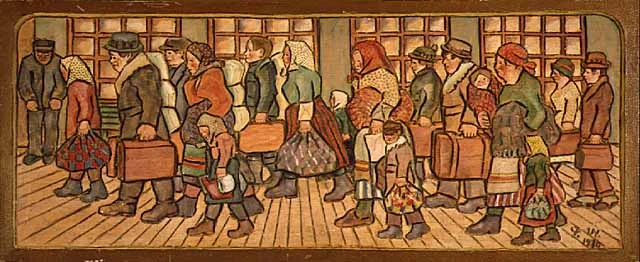
Related posts
Jul 28, 2025
Why social media platforms spread the worst political messages
Jul 28, 2025
Jul 28, 2025
Apr 24, 2024
TikTok has many problems, but the hysteria around this app distracts us from the larger problem of unregulated tech companies
Apr 24, 2024
Apr 24, 2024
Prince-Harry.jpg
Jan 17, 2023
Yet another tedious Prince Harry hot take shamelessly written to get clicks
Jan 17, 2023
Jan 17, 2023
Hannah-Arendt.jpg
Dec 20, 2022
Hannah Arendt would be worried about how information technology makes evil more likely
Dec 20, 2022
Dec 20, 2022
George_Orwell_press_photo.jpeg
Jul 31, 2022
How George Orwell predicted our very online political discourse
Jul 31, 2022
Jul 31, 2022
social-media.jpg
May 26, 2020
Does the left live in a bubble?
May 26, 2020
May 26, 2020
Jan 13, 2019
What are the limits to free speech online?
Jan 13, 2019
Jan 13, 2019
nathan-barely.jpg
Dec 23, 2018
Nathan Barley is standing in our light
Dec 23, 2018
Dec 23, 2018
Dec 9, 2018
What would William Morris think of the modern work place?
Dec 9, 2018
Dec 9, 2018
John Bercow.jpg
Oct 21, 2018
The Bercow scandal shows that Remain fake news is a problem
Oct 21, 2018
Oct 21, 2018
December 23, 2018 /Alastair J R Ball
Technology
Comment

What would William Morris think of the modern work place?

December 09, 2018 by Alastair J R Ball in Technology

A man wakes up after a sleep of 122 years into a world that has changed entirely. A world of thinking machines and a glass skyscrapers taller than the world’s tallest cathedrals. In this world, the middle classes no longer want mass production of standardised items, but handcrafted goods. This is a world where we drink locally sourced craft beer and lovingly stitch our own quilts.

The man who awoke would be forgiven for thinking that while he was asleep a revolution occurred that change the country. The people of Britain don't perform backbreaking Labour in filthy factories or mines anymore. We now have clean, bright officers which are ergonomically designed and have free tea and coffee for employees. The dehumanising working conditions of Victorian Britain have been conquered by technology.

If this man was William Morris, would he believe he had awoken in his book, News From Nowhere? Would he think that that the working class had cast off the oppressive factory conditions that horrified him in his life? Would he think people aren't exploited anymore?

Well that would depend on how much of the world he saw. Morris would probably be horrified in how we have moved production so far away from consumers that we don't think about it anymore. The industrial working class of today still eek out a wretched existence in dangerous factories, but these are in huge Chinese cities that we don't know the names of. Our world is not Morris's ideal of people working with their hands to make beautiful, high-quality objects, as they did in the imagined medieval Britain he idealised.

I can see Morris being fascinated by craft breweries and artisan bakeries, which are in many ways his spiritual successor. He would also be interested in the tech industry, where lavish perks are bestowed on highly paid workers. Is this the closest we have come to the ideals that William Morris wanted from production?

In the tech industry, people work in beautiful offices with lots of flexibility to explore projects that interest them. They have high-quality food and entertainment provided by their employer. Workers are not regimented into performing repetitive tasks over and over by harsh bosses who watch them hawkishly.

These offices are a million miles away from soul-crushingly oppressive factories of Victorian Britain. Many tech companies have a flat (or flatter) management structure like the Medieval Guilds that Morris thought were greatly superior to Victorian factories. The products that tech companies produce are high quality and lovingly worked on (or at least have many hours poured into them) by the startup employees. Is this what Morris thought work would be like in the future?

Morris said: “That thing which I understand by real art is the expression by man of his pleasure in Labour.” I know from when I worked in a tech company that people take real pleasure in writing code and creating high-quality products that their customers (or fans) really appreciate. Their work environments and products are beautiful, as was Morris's ideal. Of course, many of the products of the tech industry can only be afforded by the wealthy, but the same can be said for Morris's furniture. The iPhone today serves much the same purpose as owning a William Morris chair. They don’t buy them for the functionality or the beautiful design, but to make a statement that they are the type of person who buys such as thing.

The big question for Morris would be: whether these tech company workers were connected to what they worked on. Morris believed that the best way to work was with your hands, creating something. This is why he was interested in the violence of Medieval Knights, as it was hands on. This is why he placed a high value on handcrafted products.

There is a degree to which tech workers are removed from what they make by virtue of working with machines rather than a saw and plane. However, if Morris's ideas about what work should be like are to be anything other than reactionary and anti-modernity (as the Soviet constructivist critic Boris Arvatov thought Morris was) then they need to take into account that almost all work today is done with machines. Morris himself was not against machines, he believed they should be used to free workers from menial or boring tasks, which is one way they are used today.

The aspect of the tech industry that Morris would find most distasteful would be the difference between the working conditions of the employees of the tech companies and the army of self-employed "platform users" that they rely on. The difference between the pay and working conditions of the average Uber driver and the average Uber engineer is huge. The same is true for platforms from Deliveroo to Amazon's Mechanical Turk, which rely on low paid, insecure, arm's length, non-employees to do a lot of the important work. If Morris was horrified by the conditions in Victorian factories then he would probably be horrified by Uber drivers having to pee in bottles to maintain their driving schedules.

What would Morris think of our world? Would he think it glorious compared to his own or morally bankrupt? This question relates to how people in the future might see us. Will they look at us with the same disgust that we look at the Victorians with for their use of child labour?

Morris might think that not a lot had changed. Britain is still a place where the labour of many enriches a privileged few. A place where a few get to work in beautiful workshops and many more toil in terrible conditions. The only difference is that we have got better at hiding the truth. 

One thing is for sure and that is that Morris would need to sleep for many more years to wake up a world like News From Nowhere. A world free from exploitation and misery.

"William Morris wrap 3" by Mmm...Fiber! is licensed under CC BY-NC-ND 2.0
Related posts
Jul 28, 2025
Why social media platforms spread the worst political messages
Jul 28, 2025
Jul 28, 2025
Apr 24, 2024
TikTok has many problems, but the hysteria around this app distracts us from the larger problem of unregulated tech companies
Apr 24, 2024
Apr 24, 2024
Prince-Harry.jpg
Jan 17, 2023
Yet another tedious Prince Harry hot take shamelessly written to get clicks
Jan 17, 2023
Jan 17, 2023
Hannah-Arendt.jpg
Dec 20, 2022
Hannah Arendt would be worried about how information technology makes evil more likely
Dec 20, 2022
Dec 20, 2022
George_Orwell_press_photo.jpeg
Jul 31, 2022
How George Orwell predicted our very online political discourse
Jul 31, 2022
Jul 31, 2022
social-media.jpg
May 26, 2020
Does the left live in a bubble?
May 26, 2020
May 26, 2020
Jan 13, 2019
What are the limits to free speech online?
Jan 13, 2019
Jan 13, 2019
nathan-barely.jpg
Dec 23, 2018
Nathan Barley is standing in our light
Dec 23, 2018
Dec 23, 2018
Dec 9, 2018
What would William Morris think of the modern work place?
Dec 9, 2018
Dec 9, 2018
John Bercow.jpg
Oct 21, 2018
The Bercow scandal shows that Remain fake news is a problem
Oct 21, 2018
Oct 21, 2018
December 09, 2018 /Alastair J R Ball
Technology
Comment
Labour Party in parliament.jpg

Labour is not being radical enough on welfare

November 25, 2018 by Alastair J R Ball in Welfare

The British government needs to provide more generous welfare payments to the poor, unemployed and disabled. Tory cuts to benefits have driven millions into poverty and brought back conditions that were thought extinct, such as scurvy. A narrative of scroungers, pushed by right wing politics and newspapers, has led to the demonisation of the poor and the needy. This must be stopped and the way to do it is for benefits to be more generous.

What the Tories have done is incredibly cruel. People who are in work are unable to feed themselves. Food bank usage has exploded and even nurses are using their services. Homelessness has gone up. In every city and town across the country it can be clearly seen how many people are sleeping rough. Universal Credit is a disaster. Not even the Tories think it's a good idea any more, but they stick with it because they don't know what else to do.

A new UN report has damned the government and its welfare policy. The left has been using this as a stick to beat the Tories with, and it's heartening to see so many people standing up for the poor and needy against a government that is actively impoverishing them. It must be made clear to the Tories how sickening their treatment of the vulnerable has been.

At the same time, those of us on the left need to acknowledge that Labour and Corbyn have been too timid on this issue. So far they have confirmed that they will review Universal Credit and have not committed to increasing the amount that goes to needy people. There has been some talk of exploring Universal Basic Income (UBI) but this is a long term plan. Those suffering from homelessness and hunger need help faster than the timeframe that UBI can be brought in. They need more money through existing benefits.

Labour need to be bolder on this issue. They need to make a public statement that a vote for Corbyn is a vote for more benefits for the poor and disabled. Simple as. Labour also need to commit to doing what it takes to fix Universal Credit or to scrap it. A Labour government should mean that people won't have to sleep in shop doorways or rely on foodbanks. Currently, I can’t see the policy proposal from Labour that will achieve this.

I know that this will not be popular with middle England Daily Mail readers. I know that Labour doesn't want to be labelled as on the side of people who don't want to work. Labour can’t allow this to prevent them from helping the people who desperately need help and it need it quickly. The majority of people receiving benefits are in work, but still can't afford to pay rent and provide food for their family. This isn't giving a free handout to the workshy, this is making sure that if you work you can afford home and food.

If the Tories and the right wing press want to spin a narrative that helping the starving or the homeless is wrong then we need to tell them that in twenty century Britain we don't want to see people sleeping under bridges, or suffering from Victorian conditions, or children living in poverty. We need to tell the Tories and the right wing press that the people of Britain want the poor and the disabled to be helped. This message needs to be loud and clear.

Corbyn has been a radical leader of the Labour Party in many ways, but he has not been radical enough on welfare. Corbyn has also been a break from the centrist orthodoxy of the past and we need him to be a break from centrist orthodoxy on this crucial issue. This UN report is the perfect opportunity for Labour to get behind people's anger with the Tory government's cruelty, cease the narrative and take it in the direction of a radical program of help for those who need it the most.

The Labour Party needs to be pledge that when it power it will raise benefits so that people can afford a home and to eat. Once the suffering caused by the Tories has ended, then we can look at long term radical change such as UBI. I support UBI and think it would be a good policy, but it’s a long term solution and people need short term help. When you're homeless or starving you’re focused on the short term and long term solutions won't make a difference.

I want the next Labour government to be radical in all ways, not just those that test well with focus groups or swing voters. I want socialism to be more than more money for public sector workers and nationalising the railways (although those are good things). I want it to be a helping hand to those who need it to the most. We need a radical Labour government to make everyone's lives better. Especially the poorest.

Labour Party image created by David Holt and used under creative commons.

Related posts
Karl-marx.jpg
Mar 18, 2018
Marx was right about capitalism today
Mar 18, 2018
Mar 18, 2018
Crowd.jpg
Mar 11, 2018
The rest of Europe should be very worried about the far right’s success in Italy
Mar 11, 2018
Mar 11, 2018
British-rail.jpg
Mar 4, 2018
Labour’s history of nationalisation gives us hope for the future
Mar 4, 2018
Mar 4, 2018
red-flag.jpg
Feb 18, 2018
What makes a good Socialist blog?
Feb 18, 2018
Feb 18, 2018
Jan 8, 2017
Brexit must not distract us from poverty
Jan 8, 2017
Jan 8, 2017
November 25, 2018 /Alastair J R Ball
Welfare
Comment
The-First-World-War.jpg

Remembering the end of the First World War

November 11, 2018 by Alastair J R Ball in History

The First World War is a difficult issue for those of us on the radical left. There is a prominent view that the war was a waste of human life. That it was a mass slaughter for the glory of country at the expenses of millions of lives. The war deflected rising class tension into international conflict and used patriotism to prevent working people from turning on the class that oppressed them. This view holds that remembering the war encourages nationalism and discourages thinking about class issues.

To some degree, I believe in this. The war should certainly not be celebrated, and patriotism has gotten more people killed than it has helped. The war was not glorious. It sent millions of men to a violent death and subjected them to huge suffering beforehand. The war was a tragedy, not heroic.

I do wear a poppy, and I did observe the two minutes silence on Remembrance Sunday. I do this to remember those who had no choice about being sent to war, and maybe didn't even want to go, but where sent anyway and lost their lives.

I certainly don't agree with making a performance out of criticising people whose remembrance is different or attacking charities associated with remembrance, as Aaron Bastani did when he attacked the British Legion on Twitter. This doesn't change opinions, or address the real problem with the lack of support from the government for people leaving the army.  It just gets attention for people being controversial, which is the currency of social media.

It is important to remember the sacrifices made by ordinary people during the war. The people like me and you who died in their millions. Not generals, kings or Prime Ministers. It is the people who died, some of them in agony and fear, we must remember. As someone who would last about ten seconds in a war, I want to remember those whose lives were thrown away without feeling so that a line on a map could move a few inches.

There are lots of myths spread about the First World War. That it was a war for freedom and democracy against German Imperialism. This is not true. It was a war of nation against nation. It was fought by ordinary people of one nation against ordinary people of another. People fighting who had more in common with each other than the generals that sent them to their slaughter against walls of machine guns in fields of barbed wire.

The important political point to make about the First World War is that the scale of the death shows how terrible war is and how it must be avoided if at all possible.

The most fitting First World War memorial would be for the government to give every citizen free tickets to tour the sites of the battles. If everyone saw what happened at the Somme, at Verdun and Ypres and in other places, then they would know the terrible cost of war and seek to prevent it. If people saw what happens when the government cares more about the strength of the nation than the lives of its people, they wouldn’t want to fight people like them to make their country stronger. If people understood the terrible waste of life that is war, they would see that killing people that happened to be born under a different flag for the flag you happened to be born under is tragic and not heroic.

We need to keep the memory of the First World War alive so that we never do anything so stupid ever again. We need to remember it to prevent our leaders from thinking that they can feed people to the slaughter machine and claim it's fine when it's done for country and flag. The best way to honour the memories of those who died in the war is to make sure others don't have to suffer as they did. That way their sacrifices won't be in vain. 

Related posts
Oct 31, 2025
Farage’s new immigration plan is cruelty as a governing principle
Oct 31, 2025
Oct 31, 2025
Trump-rally.jpg
Sep 30, 2025
Dr. Strangelove goes to Tehran: The hottest new war nobody ordered
Sep 30, 2025
Sep 30, 2025
Sep 16, 2025
The right finally discovers that life sucks for Millennials, but guess who they still blame
Sep 16, 2025
Sep 16, 2025
960px-Official_portrait_of_Angela_Rayner_MP_crop_2,_2024.jpg
Sep 9, 2025
Rayner’s resignation is another unforced error from Labour
Sep 9, 2025
Sep 9, 2025
Union-Jack.jpg
Aug 20, 2025
Who really holds power? The cultural illusion of middle-class dominance
Aug 20, 2025
Aug 20, 2025
Labour Party in parliament.jpg
Aug 2, 2025
What would Max Weber make of our politicians?
Aug 2, 2025
Aug 2, 2025
Jul 28, 2025
Why social media platforms spread the worst political messages
Jul 28, 2025
Jul 28, 2025
Trump-rally.jpg
Jun 20, 2025
Elon Musk and Donald Trump: The Beavis and Butt-Head of right-wing edge lords
Jun 20, 2025
Jun 20, 2025
Capitalism.jpg
May 27, 2025
“That’s Your GDP”: Labour’s big growth delusion
May 27, 2025
May 27, 2025
nigel farage.jpg
May 15, 2025
Nigel Farage is seriously uncool
May 15, 2025
May 15, 2025
November 11, 2018 /Alastair J R Ball
History
Comment
  • Newer
  • Older

Powered by Squarespace

Related posts
Oct 31, 2025
Farage’s new immigration plan is cruelty as a governing principle
Oct 31, 2025
Oct 31, 2025
Trump-rally.jpg
Sep 30, 2025
Dr. Strangelove goes to Tehran: The hottest new war nobody ordered
Sep 30, 2025
Sep 30, 2025
Sep 16, 2025
The right finally discovers that life sucks for Millennials, but guess who they still blame
Sep 16, 2025
Sep 16, 2025
960px-Official_portrait_of_Angela_Rayner_MP_crop_2,_2024.jpg
Sep 9, 2025
Rayner’s resignation is another unforced error from Labour
Sep 9, 2025
Sep 9, 2025
Union-Jack.jpg
Aug 20, 2025
Who really holds power? The cultural illusion of middle-class dominance
Aug 20, 2025
Aug 20, 2025
Labour Party in parliament.jpg
Aug 2, 2025
What would Max Weber make of our politicians?
Aug 2, 2025
Aug 2, 2025
Jul 28, 2025
Why social media platforms spread the worst political messages
Jul 28, 2025
Jul 28, 2025
Trump-rally.jpg
Jun 20, 2025
Elon Musk and Donald Trump: The Beavis and Butt-Head of right-wing edge lords
Jun 20, 2025
Jun 20, 2025
Capitalism.jpg
May 27, 2025
“That’s Your GDP”: Labour’s big growth delusion
May 27, 2025
May 27, 2025
nigel farage.jpg
May 15, 2025
Nigel Farage is seriously uncool
May 15, 2025
May 15, 2025