Red Train Blog

Ramblings to the left

The Red Train Blog is a left leaning politics blog, which mainly focuses on British politics and is written by two socialists. We are Labour Party members, for now, and are concerned about issues such as inequality, nationalisation, housing, the NHS and peace. What you will find here is a discussion of issues that affect the Labour Party, the wider left and politics as a whole.

  • Home
  • Topics
    • Topics
    • EU referendum
    • The Crisis in the Labour Party
  • Art
  • Books
  • About us
  • Search
Russian-Revolution.jpg

100 years since the Russian Revolution: What happened

October 29, 2017 by Alastair J R Ball in Revolution

The Russian Revolution could be the most significant event in the history of left wing politics. During the course of 1917 a group of radical left wingers overthrew an authoritarian government and then tried to do something that had never been done before: create a state that exists for the benefit of everyone and not just the few in power. Any hope of this ended with the terror of Joseph Stalin and his purges. Mass death on a scale never seen before.

What went wrong? is the question I ask myself over and over. When did the noble idea of equality and emancipation from toil give way to violent oppression? The answer depends on what you want the “lesson” of the revolution to be.

What happened?

Some say that it was always doomed to end in terror: these are the people who cannot imagine a better world. Some say that the February Revolution was a flowering of liberal democracy and the October Revolution was an authoritarian coup: this is a simplistic reading of history. Some say that liberty won in 1917 was crushed by Stalin; this overlooks Lenin’s authoritarian streak.

Some say that it was Russia itself that corrupted the revolution. These people want to try again somewhere else without learning anything. Some praise the hope and mourn the loss of opportunity. These are the people who dwell endlessly on counterfactuals.

What you need to know

All of the above have some truth to them, but none are a complete explanation. After researching this question, I can say that I don’t know what exactly went wrong. To find out, I would need to read many more books and probably write one of my own to cover all the details. What follows is what all of us on the left need to know about 1917 and the Russian Revolution.

Russia in 1917

It cannot be understated how terrible Tsar Nicholas II was as ruler. Even amongst the royal families of Europe, he was especially authoritarian. He tolerated no opposition to his authority and believed he had a divine right to rule over all of Russia. He executed dissidents and suppressed newspapers that were critical of him. At several points the revolution (and ultimately his death and that of his children) could have been prevented if the Tsar had allowed a few modest, liberal reforms. He refused, and when reform fails, revolutionary sentiment will grow.

At the start of 1917 almost all Russian Marxists believed that Russia was not ready for a socialist revolution. The country was too backwards, there was too little industry, too many peasants and not enough industrial workers. Orthodox Marxism stated that a bourgeoisie revolution was needed to create a capitalist economy in Russia, which could then be overthrown by a socialist uprising. Many thought Britain in 1917 would be the better site for a socialist revolution than Russia.

The February Revolution

The February Revolution was a spontaneous uprising that took revolutionaries and reformers by surprise. Due to this, the February Revolution was many things and it cannot be said what it was for and what its trajectory was. It was not necessarily a liberal, democratic revolution like the American Revolution or the revolutions of 1848. The Provisional Government it created had many flaws, which led to the October Revolution.

The Provisional Government was weak. There were many far right and proto-fascist groups, such as the Black Hundreds, which talked openly about a military coup and creating an authoritarian government. Between February and October there were pogroms against Jews. Fascism could have easily been born in Russia and not in Italy.

The Provisional Government

The Provisional Government was not like the liberal, bourgeoisie governments of Britain or America at the time. It suppressed critical newspapers and jailed dissidents. It also didn’t do enough to satisfy the peasants on the key issue of land reform or improve the lot industrial workers. Strikes and unrest continued under the Provisional Government as it had under the Tsar.

The Provisional Government lost the support of the people and the army. This was mainly because it continued support for Russia’s involvement in the first world war. The war was unpopular and went badly for Provisional Government, as it had for the Tsar. Opposition to the war united disparate socialist groups that would have argued between themselves. Lenin adopted popular positions against the war and in favour of land reform. Ultimately, the October Revolution happened because the Provisional Government failed to effectively govern.

War Communism

After seizing power the Lenin and the Bolsheviks were thrown into the struggle against military counter-revolution and then the Russian Civil War. Millions died from the disease and starvation during the war. Both sides showed a terrifying degrees of cruelty against civilian supporters of their enemies. The War Communism that the Bolsheviks imposed on Russia was authoritarian in nature and put huge pressure on Russian society.

The task of managing and feeding the Red Army lead to increased centralisation of power, which was necessary to fight the war. The Red Army became the main engine of the Bolsheviks state and all talk about decentralisation and a workers’ run state were dropped under War Communism.

NEP and Stalin

After the Civil War, Lenin’s New Economic Policy (NEP) brought a degree of liberalisation. NEP was also a move away from economic policies of equality and towards policies focused around industrialisation. The Bolsheviks’ control was total, but all the idealism and potential of Revolution, and a government for the benefit of all, had been replaced by a one party authoritarian state.

Stalin increased centralisation and the authoritarian powers of the government. But Lenin had already created a state that was effective at crushing individual freedom and equality, a state where power was hoarded centrally and opposition was suppressed as it had been under the Tsar. The Bolsheviks’ state was already a dark place when Stalin began his blood soaked rule.

Overall

Despite the terror and blood shed there was progress after the October Revolution. There were advances in economic development, healthcare and literacy as well as women’s rights and a degree of autonomy for the separate nations that had made up the Russian Empire and now made up the USSR (such as Ukraine and Finland). Despite this, it was clear by the early 1920s that Lenin’s Russia was not a country moving towards equality of workers and emancipation from toil.

You can use the above as colours to paint any picture of the Russian Revolution you like. Was it doomed to failure because of Russia was not ready for a socialist revolution? Or was the flowing of freedom of February crushed by October? Or was the radical hope of October eradicated by the Civil War? Or was it Lenin’s thrust for power and refusal to accept opposition that killed the hope of a better form of government?

The Russian Revolution was many things in many different ways. There is no one truth of what it was or what it meant. Everyone on the left needs to take some time to understand it and find out what they think for themselves. The Revolution also has a long legacy for the left, which I will explore in my next article.

Monument to Lenin image created by Watchsmart and used under creative commons.

Related posts
Karl-marx.jpg
Mar 18, 2018
Marx was right about capitalism today
Mar 18, 2018
Mar 18, 2018
Crowd.jpg
Mar 11, 2018
The rest of Europe should be very worried about the far right’s success in Italy
Mar 11, 2018
Mar 11, 2018
British-rail.jpg
Mar 4, 2018
Labour’s history of nationalisation gives us hope for the future
Mar 4, 2018
Mar 4, 2018
red-flag.jpg
Feb 18, 2018
What makes a good Socialist blog?
Feb 18, 2018
Feb 18, 2018
Jan 8, 2017
Brexit must not distract us from poverty
Jan 8, 2017
Jan 8, 2017
October 29, 2017 /Alastair J R Ball
Revolution
Comment
the-death-of-stalin.jpg

The Death of Stalin

October 22, 2017 by Alastair J R Ball in Film

A lot of people have been down to the cinema to have a chuckle at some Communists in the middle of a panic. So far, so unremarkable - but some people don’t like that we’re having a laugh. Specifically, some people don’t like that we’re having a laugh about Joseph Stalin. Peter Hitchens wrote a piece about why our enjoyment of Armando Iannucci’s The Death of Stalin is in terribly bad taste and that we should read Billy Liar instead.

The core of Hitchens’s argument is that Stalin was a mass murderer and so shouldn’t be made fun of. The fact that Stalin’s brutal reign of terror was soaked in the blood of innocent people is not in doubt. Neither is the fact that he is one of biggest monsters of the 20th century’s, if not of all time.

A comedy about the Rwandan genocide or the Ethiopian famine would be in poor taste, even if it was written by one of the greatest living satirists. On the other hand, a film making fun of Napoleon or Vlad the Impaler would be fine - so long as it was actually funny. I can’t imagine people protesting outside London’s art house cinemas or writing huffy Mail Online columns about violent despots from centuries ago.

Where do you draw the line as to what history is too recent or too tragic to be made fun of? Everyone’s answer will be different, and so there will be disagreements about whether a particular film, book or TV show is in bad taste. Where there are disagreements, it’s worth us having a conversation.

In the spirt of having a conversation about The Death of Stalin, I would like to say that this film is not only very funny, but also it will open peoples’ eyes to what life was like in the USSR under Stalin. No one can watch this film and think that Stalinism or the Soviet Union’s particular take on Marxism was good. The real-life characters in this film are motivated by greed and paranoia, and they show a casual disregard for life that is chilling.

These people were so focused on their own survival and thirst for power that they allowed huge numbers of people to be beaten, raped, tortured and killed. This film exposes the terror of Stalin and the complacency of those in his inner circle. It is good that it was made and that lots of people are going to see it so that we can remember Stalin’s crimes and thereby prevent such a thing from ever happening again.

This film is clearly good entertainment and it is making history more accessible to a mass audience. So why is Hitchens so upset about it? There is something else going on in the words of Hitchens. There is a dog-whistle being blown here. It is found in Hitchens’s assertion that there hasn’t been a tragic film about how awful life under Stalin was. He laments that “Hitler’s crimes have been repeatedly explored in mass-market TV series, and major fictional films without number. But the equivalent documentaries and dramas about Stalin have yet to be made.”

Hitchens is suggesting that it is because of the left/liberal dominance in the media and arts that we don’t have a Schindler’s List for Stalin’s terror. Hitchens states: “fashionable showbiz persons [read: lefties] still can’t grasp that Stalin (Left-wing) was just as evil as Hitler (Right-wing).”

His implication is that the crimes of Stalin have been ignored by lefties because they don’t want to criticise him too much as they feel some sympathy with his cause and, on some level, justify his terror. Hitchens wants us to think that there are scripts about how awful Stalin was that are being passed over for production because lefties in the media are worried that if we start criticising Stalin then the unthinking masses will see what’s wrong with the entire left from Hillary Clinton to Slavoj Zizek, and go rushing into the arms of the Mail on Sunday.

Think for a second about all the Schindler’s Lists about Stalin that have been strangled in their cribs because lefty sensibilities don’t want to hear criticism of the Soviet Union, a criticism we can’t bear because at the end of the day Communism was a good idea even if it was terribly executed. In Hitchens’s view, lefties think mass murder must be excused so that they can feel smugly superior to Christians when they are homophobic.

Hitchens says that Hollywood has always been ambivalent towards Stalin and “that ambivalence goes back to Hollywood’s flirtation with Communism in the wartime 1940s,” when “Hollywood was soft on Stalin”. Maybe it was back in the 1940s, when Stalin was in our good books after helping us defeat Hitler. It wasn’t just the left that was “soft of Stalin” immediately post World War Two. 

Off the top of my head, I can think of films such as the Enemy at the Gates, which does show how bad Stalingrad was and how little the Red Army cared for its conscripts. This film starring Jude Law, Rachel Weisz and Ed Harris is not better known because, in short, it’s not very good.

Hitchens is right that there’s no Schindler’s List for Stalin and his victims. There’s also no Schindler’s List about the Indonesian mass killings. The fact that this piece of history doesn’t even have a proper noun, let alone a heart-wrenching slice of Hollywood Oscar-bait perhaps could be because the victims were Communists, or because in the West we don’t care about what happens in Indonesia?

A lot of history’s tragedies (recent and past) have not had the mainstream Hollywood treatment. The fact that Hollywood thinks there is money and Oscars (and Oscars just mean more money from DVD sales as you can put “winner of 5 Oscars on the box”) in a particular historic tragedy does not make it more or less of tragic than any other piece of history, and commentators obsessed with the masonic control that liberal Hollywood has over popular culture would do well to remember this.

I don’t know whether the general liberal persuasion of Hollywood has prevented there being a Schindler’s List for Stalin. My suspicion is that if Hollywood thought there would be money in it, their political beliefs wouldn’t stop them from making a film about it.

What is certain is that many people on the left, including the far left, deplore Stalinism and the terror of his bloody regime. In all my years on the political left, I have never heard anyone trying to defend Stalin or justify what he did. To imply that all liberals are secret apologists for Stalin is to twist reality to the perspective of paranoid conspiracy.

Hitchens is telling us that we shouldn’t have a chuckle in the cinema because “laughter is not necessarily an expression of happiness or delight. It is often an expression of conformism and almost invariably an attempt to identify with others.” Laughter can be an expression of astonishment or disbelief at the absurd actions of others, which has been the basis of satire and farce for centuries, and is the basis of much of the humour in The Death of Stalin.

Stop your virtue signalling conformity and read Court of the Red Tsar by Simon Sebag Montefiore instead. Then read Margaret Thatcher’s memoirs to divest yourself of any silly liberal ideas. Stop laughing at the back. Don’t you know what’s good for you?


October 22, 2017 /Alastair J R Ball
Film
Comment
Trump-rally.jpg

American cannot ignore the problems of its history

October 15, 2017 by Alastair J R Ball in Trump

American history is full of chapters many Americans would rather forget. The theft of land from the Native Americans, followed by introducing them to smallpox and whiskey for example. Writing slavery into the constitution and then suppressing African Americans via Jim Crow laws is another. There’s also the wars, started ostensibly to spread democracy, but actually to spread America’s power. There is also, the propping up of oppressive regimes sympathetic to America, or encouraging anti-democratic rebellions against democratically elected left wing governments.

How any country engages with the darker aspects of its own history is a fraught topic for its citizens. For America, which prides itself on being not just another country but a land of justice and liberty, it’s an even more emotionally explosive process. Americans can be quite sensitive about the times their country has failed to live up to the shining city on the hill it was supposed to be.

This is why I have a lot of respect for President Barack Obama who tried, to some degree, to atone for the terrible episodes of American history. As well as being the first black President and trying to heal America's racial wounds, he visited Laos and acknowledging that they are the most bombed country in history, thanks mainly to America, still dealing with problems today involving unexploded but still very dangerous ordnance. He was the first sitting US President to visit Hiroshima during the anniversary of the dropping of the atomic bomb on Japan and embraced Shigeaki Mori, a survivor of the bombing.

These were the right things to do. Obama was able to show remorse for the terrible parts of American history with a dignity that meant that the country was not brought low by this acknowledgement. He showed that America could engage with its past while trying to live up to what it promised. It was right for Obama to attempt address these historical injustices, not the least because the more America acknowledges its past tragedies, the more likely it is to avoid future tragedies.

It has become clear that many Americans don’t want to acknowledge the troubling episodes in their country’s history. They don’t want to engage with the systemic racial violence that is most of American history, and they certainly don’t want to atone for it. Many Americans are not happy about the spread of liberal ideas, such as: “it’s good that America show some humility towards countries like Laos and Japan that it has treated terribly”. They are also not happy about liberals asking why so many statues were put up to honour Confederate leaders during the Jim Crow era. There has been a cultural backlash against the idea that America has anything to be ashamed of.

America is currently embroiled in a liberal vs. conservative culture war that has dragged in everything from football to Rosie O'Donnell. Even supposedly independent institutions like the US military have been appropriated for this conflict. Part of this culture war is a fight over what America should say about itself. Should it be unashamedly proud of its own history or should it attempt to address historical injustices and atone for its past?

One side of this great divide had their man in the White House, so America briefly showed some shame about all the people it had killed and how it failed to be a shining city on the hill. Now the other side has its man in the White House and America will not admit that it has any flaws. Salute the flag or take a hike. Those are your only choices.

Donald Trump’s unselfconscious patriotism is so uncritical of American history that it goes out of its way to encourage the worst aspects of America: white nationalism. No matter how many Nazis or Ku Klux Klan members claim that they feel emboldened by Trump’s election, Trump still cannot bring himself to criticise anyone who assembles under the Stars and Stripes. He cannot conceive of any flaw with patriotism even when it is emboldening Nazis and thus he cannot believably condemn them.

For Trump, the flag and American history is something to be proud of and not apologise for in any way. He represents an America that is not ashamed of anything it has done, no matter how cruel, bloody, or a betrayal of the values America is supposed to stand for. Trump’s America does not need to show remorse.

This may sound very academic, but if America cannot acknowledge the problems of its past, or what people have done under the name of protecting or loving America, then it cannot avoid problems in the present. If American has done nothing wrong then it can do no wrong, especially when it is looking after its national interests. Trump has also gone out of his way to encourage the worst aspect of other countries. He has praised strongmen like Vladimir Putin and Recep Tayyip Erdogan. Trump is creating the associations that future liberal Presidents will have to apologise for and future Conservative Presidents will ignore as they continue the cycle of violence and oppression.

Ignoring the worst aspects of American history won’t make them go away. In fact it will lead to America doing terrible (and avoidable) things in the present. There are many tragedies in America’s history and they need to engage with. Otherwise they will only fester.

Trump can undo a lot of Obama’s work. He is trying his best to do exactly that, but he can’t get rid of America’s past and cannot extinguish the hope that Obama gave us. The hope that America can engage with its past and atone for the terrible things it has done.

Donald Trump picture taken by Gage Skidmore and used under creative commons.

October 15, 2017 /Alastair J R Ball
Trump
Comment
Capitalism.jpg

What voters want is healthy capitalism

October 08, 2017 by Alastair J R Ball in Economics

The public have spoken. Faith in capitalism has collapsed. What they want is a Stalinist super-state that owns all private property, represses all private business and controls every aspect of their existence. The only hope for free enterprise is a plucky band of conservative ministers.

At least that’s what you would think after Prime Minister Theresa May’s conference speech in which she “defended capitalism” from the an onslaught of mad Bolsheviks concerned about how much rail fares have risen over the last 25 years.

The reason why capitalism, the great creator of wealth and prosperity for everyone, is under threat is a recent study from the Legatum Institute, claiming that 83% of the public want nationalised water companies, 77% want to re-nationalise electricity and gas companies and 76% want to re-nationalise the railways.

Not to mention the Labour leader, Jeremy Corbyn, stating in his party conference speech say to that capitalism faced “a crisis of legitimacy”. All this prompted May to remark that capitalism “is unquestionably the best, and indeed the only, sustainable means of increasing the living standards of everyone in a country.” The fact that a Tory Prime Minister feels the need to make this point is remarkable.

I am going to take this opportunity to disagree with the Prime Minister (shocking I know) and say that I don't think that people are ready for Full Communism just yet. What this study show is that the public is against cartels and natural monopolies. Dig a bit deeper and you’ll find that they don’t like the excesses of City bankers or exploitative practices of companies like Sports Direct. They also don’t like the huge profits and huge price rises of private energy companies as well as the expensive and bad service delivered by private train operators.

What this report shows is that people are against “neo-liberalism” or as I prefer to say, “anything goes capitalism". The idea that it’s okay as long as it’s for business. Getting your t-shirts made in Vietnam by a child paid 3 cents a day and forced to work at gunpoint - that’s just business. Undercut small independent firms until they close and then jack up the price - that’s just business. Punch someone in the face, that’s wrong, but drop toxic waste in a lake and poison a town - that’s just business.

What people want is healthy capitalism. Capitalism as advertised, with competitive markets and innovative firms. Not natural monopolies that make huge amounts of money while the service gets steadily worse. If the public can’t have the capitalism that they were promised, the public wants that capitalism that they had before Margaret Thatcher took off all the restraints. If it takes state intervention in the markets to make capitalism healthy then the public is willing to accept this.

As well as being what the public wants, healthy capitalism is good for our economy. BHS was a perfectly viable business not long ago. Other European Countries have much better rail services and lower utility prices. The broader problem is that anything goes capitalism is not delivering on the promises of its proponents. Instead what has happened is that the value produced by our economy has been captured the owners of the large firms, natural monopolies and cartels. At the same real time wages have declined, jobs have become more insecure and many people can’t afford to a place to live.

The problem with anything goes capitalism is that it has made the British economy less inclusive. Free markets are not necessarily inclusive ones as Daron Acemoglu and James Robinson point out in their book Why Nations Fail. Their work explains how the inclusivity of a country’s economy determines its economic development. They state that the process to make the British economy and politics more inclusive from the 15th to 20th centuries is what has led to our great wealth.

The pursuit of anything goes capitalism has brought the British economy out the other side of Acemoglu and Robinson’s theory. We have given too much freedom to private firms, which has created vast inequalities and made our economy less inclusive. Tony Judt, in his book Ill Fares The Land, points out that during the years of the post-war consensus the economy grew faster and was more stable than it has been since the government began privatise, deregulate and shrink the state. Not for nothing was this period called “the golden age of capitalism”. The reason for this change in the stability economy is that prior to the reforms of the Thatcher government, our economy was more inclusive.

Today our economy is stagnating, wages are low, costs of living are high and workers have been seen real income fall by 10% between 2007 and 2015, making Britain the lowest advanced economy for wage growth. The inclusivity that built the great wealth of the British economy is being eroded by too much market freedom. We need a state hand on the rudder to steer our economy out of the economic problems created by anything goes capitalism.

These policies of reducing excessive corporate greed, reigning in cartels and taking natural monopolies into public ownership are roughly where the most voters are. These policies will be better for our economy than policies that create greater inequality and make our markets less inclusive.

This is, broadly, what Labour are offering. Nothing like this is being offered by the Tories or the Lib Dems. The question is, do the voters see it this way? The public is probably more Miliband than Corbyn, but it’s Corbyn that’s offering reform to them.

There is a danger that voters assume that Corbyn is offering something more radical because of the politician he is seen as. May, in her speech, was trying to exploit this weakness, by implying that Corbyn wanted to Britain more like Soviet Russia in the 1920s, where as he wants to make it more like it was in the 1950s - only less racist.

Labour has a chance to move to a position most of the electorate support by promoting healthy capitalism instead of naked greed and exploitation. This can be done by embracing the public’s dislike for cartels and corporate excesses. The policies of healthy capitalism offer a chance to fix some of problems with our economy by making it more inclusive.

This is not the end of capitalism, it is just capitalism changing, and to suggest that a criticism of cartels and corporate excess is an attempt to impose Communism on Britain is not only disingenuous, but it fundamentally misreads what voters want.

Money image created by Thomas's Pics and used under creative commons.

October 08, 2017 /Alastair J R Ball
Economics
Comment
automation.jpg

Why Corbyn is right about the future of work

October 01, 2017 by Alastair J R Ball in Corbyn

Why don’t we strive for more free time? Free time is great. You can watch the latest bleak Nordic crime thriller on Walter Presents or you can head to your local bookshop/café/art gallery for a gingerbread latte, a look at a 21st century take on surrealist painting and a copy of Kazuo Ishiguro’s Never Let Me Go or head to a pub for what I assume is everyone’s favourite past time: a pint of locally brewed craft beer and a pulled pork sandwich made with sourdough bread. Why wouldn’t you strive for life to be like this all the time?

Most people don’t strive for more free time to do these things. We strike for more money. Money helps you do these things and having more of it means you can do them more often, so we work harder and try to get promoted so that we have more money and can do more of the things we like. This ignores the fact that more work means less time for the things we like. That doesn’t matter. More money, not more free time, is the route to happiness.

How we get our money is fundamental to how we construct our identity. When someone asks me: “what do you do?” I don’t say: “I lie away at night worrying about the future of an internationalist left-wing movement in an age of increasing nationalism”. I say that I work in marketing, but both are true.

Our jobs, or where we get our money from, define us. We spend more waking time with our colleagues than with our loved ones. Many people spend more time at work than with their children. Much has been made of the social and personal value of work and that it provides dignity. There are certainly powerful political implications of people losing their jobs. The economic impact on places where there is less work is also self-evident. Work is important.

The nature of work in the West has changed dramatically over the last few decades. Manufacturing industries have declined and have been replaced by call centres and warehouses that pay less. Many industries have moved production overseas where costs are lower. Stripping away workers’ rights and crushing the power of trade unions (coupled with inflation) has put downward pressure on wages. It has also meant that the jobs that are available are less secure.

Automation is partly responsible for this. Jobs that used to be done by hand can now be done more efficiently by machines. The machines are also getting smarter, which means that they can do more jobs. Automation has taken the jobs of those making cars or staffing checkouts, but it is entirely possible that before long automation can be taking the jobs of translators or accountants. How long before it takes the jobs of doctors or copywriters? (okay, that last one is just my anxiety).

Last year the Bank of England said that as many as 15 million British jobs could be lost to machines. The growth in online shopping has already caused the loss of 62,000 job losses in the retail sector. The situation calls for radical thinking now - and not when all the jobs are gone, the tax base has collapsed and a few corporations who make the machines have all the money.

If automation continues at the predicted rate it will fundamentally change our society, because it will break the link between work and reward that has dominated the West since the industrial revolution. In the future, there will be no reward for work as there won’t be any work. All the reward will go to a few rentiers (please note that rentiers are different to renters as the former makes money off the later, usually without doing much).

There are policy proposals that could tackle this looming crisis. There is basic income, which should be explored vigorously. At the recent Labour conference, Jeremy Corbyn made it clear that Labour will be devising policy to tackle the problems of jobs lost to automation. It is certainly encouraging to see radical thinking on this issue from a party that could be in power soon. However, even a policy as radical as basic income does not go far enough in tackling the challenge of a fully automated world.

If money is the only thing we value and work is the only way most can attain money (this is a good 18-word summary of human civilian, apart from Bhutan, maybe, where they really like happiness) then when there is no work no one will create anything of value. There will be a lot of free time, but we don’t value free time. We value work. Basic income removes the need for work, which will be useful if there is no work, but it doesn’t tackle the fact everything of value comes from work. It doesn’t solve the problem of how do you have dignify in a world without work?

To tackle this, we need to get dignity from sources other than work. We need to find value in all the things we do when we’re not working. We need to find a way to explain the value of free time or creativity as self-evidently as the value of money. We need a system that rewards people (not necessarily financially) for painting or writing or playing with their children or going to a café or drinking pint of salted caramel stout.

The changes our society faces as machines do more and more of the work are beyond our ability to understand them if the only lense through which we can see the world is one of jobs, work and wages. Tony Judt wrote in his book Ill Fairs The Land about the need to think about cost and benefit of actions or policies not just in money terms but in social, moral and artistic terms. This is broad outline of the challenge we need to confront.

A simple wage economy and profit motive won't explain the world of the future. We need to think about other things we value. We need change how we think about jobs and money. Then maybe we can get to a place where we strive for more free time and not more money.

Robot arm image from Pixabay

October 01, 2017 /Alastair J R Ball
Corbyn
Comment
Corbyn.jpg

Doubt and politics

September 24, 2017 by Alastair J R Ball in Corbyn

Politics has always been an emotional subject for me. Some people view politics through a logical prism. My politics has always been about a yearning for things to be better than they are. This is reflected in the blogs I write and the campaigns I support. Those who know me might be surprised to know that I spend a lot of time doubting my beliefs. That’s because I believe it is important to be self-critical. Even if my feelings about politics are emotional, it’s important to re-examine your thinking every so often.

I was busy re-examining my thinking around at about 7am on Friday the 8th of May 2015. Some of this was fuelled by being awake for more than 24 hours staying up all night to watch the election results. The night had started badly with the exit polls and had gone downhill from there. I was worried about the future and what the first Tory majority budget in 18 years would mean for friends who were disabled, unemployed or needed care.

Beyond this worry was an anxiety that the way I saw the world was fundamentally different from the majority of people. I had thought that the electorate would take a look at the pain that five years of coalition austerity had caused and would vote David Cameron out of office. The opposite was true. The voters had taken a look at five years of cuts to essential services that people relied on and decided we needed more of the same.

Plagued by the doubt that what I wanted from politics was radically different to what most people wanted, I was in need of some hope. This hope arrived in the form of Jeremy Corbyn running for Labour leader. I had a strong feeling that the Corbyn was the change the Labour Party needed. I joined Facebook groups that were passionately pro-Corbyn and followed Corbyn-supporting Twitter feeds. Ordinary people were connecting online, drawn together by someone that they felt could change politics for the better. I wasn’t out of touch with people at all.

There are few news publications I read regularly (the Guardian, New Statesman, BBC – metropolitan, lefty stuff), but generally when I have a free moment I go to Twitter or Facebook. Soon I was regularly checking these pro-Corbyn Facebook and Twitter pages as it helped with the worry that my views were out touch with regular people. It’s worth noting that most of what I was reading didn’t come from people I knew personally, but from like pages, groups and feeds that social media sites suggested to me based on my politics. These sites convinced me I was connecting with ordinary people

Expect I wasn’t connecting with them, I was lurking. I was inhaling the interactions of others without leaving any mark on these pages. At the time I was fine with this, it was exhilarating to find people who felt about Corbyn as I did. Lurking or passive usage of social media sites can “can harm your emotional well-being” according to a story on Mashable.com that sites a study from the University of Copenhagen. According to Mashable the study stated that: “if one uses Facebook passively, one should reduce this kind of behaviour.” So it wasn’t good for my sense of certainty.

I’ll spare you the recent history recap, but 2016 was not a good year for the politics I support. The EU referendum, the unstoppable rise of Donald Trump, the Labour leadership election, all revived my doubt that the political changes I yearned for were not what other people wanted.

The political upsets of last year caused huge division on the social networking sites that I lurked on. The memes and new items posted by in Facebook became accusatory, the comments deseeded into harsh exchanges. Twitter users compressed as much rage as they could into 140 characters and fired them at their political enemies.

I felt that the collapse of Labour was my fault for wanting politics to change. My doubt in my beliefs, led me to try seek out different Facebook groups to lurk in. Ones where people were angry about Brexit and blamed Corbyn for his lack of an enthusiastic defence of the EU. I consumed angry tirades on how Brexit was Corbyn’s fault and how the Tories would be in power for decades. I also lurked in groups that continually denounced “Blairites” and those trying to sabotage the Labour leader. It was a vicious time in Labour social spaces and I drank it all in, trying to figure out what was right.

I couldn’t escape the fear that the problem was that I doubted. I doubted that Corbyn was the right man for the job. I doubted that Owen Smith would do any better. Everyone online seemed so certain, but I didn’t know what to do, so I voted for neither candidate in the leadership election.

The decisions facing the Labour Party and every party member had huge implications, which made my worry that I didn’t know what was right worse. Should Brexit be accepted as a democratic result or fought as economic folly? Was Corbyn taking Labour away from the centre ground and leading the party into the electoral wilderness? Or was he changing Labour to avoid the defeats suffered by Hillary Clinton, Benoît Hamon and Labour Party in the Netherlands? The centre-left didn’t have a solution to the crisis other than getting rid of Corbyn, but Corbyn himself was polling terribly and looked unlikely to be able to implement any policies.

There was so much certainty on each side, but all I had were doubts. Was there something wrong with me? Why couldn’t I see the way out of this mess as clearly as everyone else?

Fortunately, 2017 has been a better year. The predicted huge Tory majority failed to materialise in the general election. The future is still very uncertain and I still have doubts about what is right, but I have learned to accept these doubts. It may sound strange for someone who runs a political blog to say that they have doubts, but having an open mind is important as is caring about finding the right answers to the problems we face collectively.

Politics will always have a degree of subjectivity. Those who know what they believe and never doubt have a religious belief that can lead to serious errors.

This is not argument against belief, weak or strong, radical or conservative. This is not an argument for or against Corbyn, or Brexit, or anything else that has happened recently. This is an argument that politics is emotional. It is subjective and there is room for doubt along with belief. Your doubts don't have to lead to an existential crisis and the conviction of others is not weakness on your part. There's a place in politics for those who question.

Picture of Jeremy Corbyn taken by Garry Knight and used under creative commons.

September 24, 2017 /Alastair J R Ball
Corbyn
Comment
alt-left-news-website.jpg

The rise of alt-left news sites

September 17, 2017 by Alastair J R Ball in Technology

The business model for news organisations is fundamentally broken. Sales of paper newspapers and magazines are collapsing. Every week there is another story about an established (usually local) newspaper going out of business. Now that our news reading has shifted online, there is simply less money in news than there used to be.

A business model based on online advertising does not provide enough income to sustain large news organisations such as the Independent, which ceased its paper copy last year. This business model does favour smaller, online-only organisations that have lower overheads and don’t mind putting large amounts of adverts on their sites. They get most of their traffic from social media sites and write for this audience. Their output covers a broad spectrum. At one end are important stories that would not find a place in a traditional newspaper, but do have an audience online. At the other end are clickbait stories that demand the user’s attention but provide little of value to them.

Recently, I have written about the deficit in self-criticism on the far left. This, combined with the fact that social media sites filter back to users more of what they like (and don’t challenge them), and the collapse of the business models of the established bugles of the left, has created a space for smaller, leaner, less critical left wing news sites. These sites take advantage of social media’s algorithms to drive traffic to them, where they sell adverts. All this means that left wing click bait has become the order of the day.

What does all this mean for the left, the far left and media in general? Firstly, it has meant a growth in websites that are very pro-Corbyn. Sometimes embarrassingly so. I am pretty sure that is not the cutest video of the summer as I found this after about 30 seconds on YouTube. Even so, a news site fawning over a politician is not new, and unless you think that Corbyn is as bad as Stalin, then this sort of thing is just a little silly.

It should also be said that some of these sites do write good content aimed at informing people who don't like the way things are going and think that Corbyn is the person to sort it out. This is a general feeling a lot of people have and educating these people about the social problems in Britain faces can only make the left stronger. Novara Media is a website that I would put into this category. It has interesting articles on diverse topics on the far left or about politics such as this one about cuts to BME refuges.

Some of these sites are bad for the left in general. They spread conspiracy theories (such as the idea that Portland Communications had a role in the resignations of Corbyn’s cabinet in 2016) and outright lies - such as one website accusing Owen Smith of beating his wife. Sites such as Squawk Box have made up stories about gag orders and spread paranoia on the far left. A lot of their content is read very uncritically.

Worse still are news organisations directly aligned to totalitarian regimes, such as Russia Today (a pro-Putin news source) and Press TV (owned by the Iranian government, fined for broadcasting an interview with a journalist conducted "under duress" and banned in the UK for breaching the Communications Act). These sites distribute their content to far left or pro-Corbyn audiences on Facebook or Twitter (sometimes using the cover of social media accounts supposedly affiliated with the hacker group Anonymous - remember, anyone can claim to be in Anonymous as no one knows who they are really are).

These arms of totalitarian regimes intend to undermine western governments by seeding content that paints them in a positive light and is critical of our governments (usually our government's policies towards said regimes) through social media to audiences that are pro-Corbyn or on the far left. Many people in these audiences are not critical of a news source that supports their beliefs and backs up their emotional view of what is wrong with the world.

Aside from the sites that are actively pro-Russia or pro-Iran (I hope that we can all agree that those are bad) what is wrong with all this? Isn't this just another echo chamber, a left wing Daily Express or Daily Mail? Yes, the right does this at least as badly, but I had hoped that on the left we would be better. I had hoped that we would be interested in serious debate and not just want propaganda that backs up our worldview uncritically.

This hyper-partisan content is also contributing to the divide on the left. We have enough splits between pro or anti-Corbyn, town and country, etc. This echo chamber, only reflecting a narrow sub-section of the left that we already agree with back at us encourages us to be suspicious of people who think differently and divides us off into our own little cells.

Above all, the spread of lies and conspiracy theories will undermine us in the long run. I have no interest in reading propaganda. We’re not children who cannot handle an opinion that is critical of our worldview. I expect better than this.

It's good to read a wide variety of different news sources and not always rely on the output of a few well-established media brands. It is also good to be critical of the media you consume and think about its biases. However, I feel that on the left we fail to consider the biases or flaws in stories that broadly agree with our worldview. There are plenty of news organisation out there that are willing to exploit this. Some simply to take financial advantage of the changes to the media industry from digitisation. Others have much more sinister motives.

I am not trying to say that we shouldn't read alt-left or new independent news sites. I am just concerned about how uncritically this media is consumed. We can be better than this. We can engage with complex problems and political debates, not just have what we believe filtered back to us. It is important to always be open minded and to always read from a variety of sources that get every side of a story.

“Launching the new Geoloqi website” by Aaron Parecki is licensed under CC BY 2.0

September 17, 2017 /Alastair J R Ball
Technology
Comment
Corbyn CND.jpg

The fall of debate on the far left

September 10, 2017 by Alastair J R Ball in Corbyn

In political terms 2007 feels like eons ago. Tony Blair was still Prime Minister and the financial crash just the crazy predictions of a few anti-free market reactionaries. At the time I was still a student and one of the things I did with myself (aside from a pub crawl Lancaster’s twelve best pubs, which was overly ambitious to say the least) was join a Marxist discussion group.

In this group I learned a lot about radical left wing politics. I also saw first-hand the left’s Judean People’s Front-like tendencies, as SWP and SPGB members argued passionately about the finer points of exactly what Trotsky did when. I have affection for these men - and they were all men, all over 50, all with bushy grey beards, all drinking real ale in a tiny room above a community theatre - who seemed to genuinely believe that the world would be a better place if everyone memorised Das Kapital. Despite this affection, I knew they were not the radical left I wanted to see.

I felt you could be to the left of everyone in Tony Blair’s or Gordon Brown’s cabinet, but you didn’t have to join the SWP and read the Morning Star. I had the powerful feeling that there was an ideology out there, in the space to the left of mainstream politics. One that did not require encyclopaedic knowledge of the Russian Revolution; that spoke to the experiences of more than just handful of old men. This is still something that I am trying to articulate today.

In 2007 I felt that being left wing meant being as suspicious of the Socialist Worker as of the mainstream media. It was important to be critical of fellow travellers on the far left and open debate was an essential part of this. Ours was an ideology that involved reading a lot of books, so discussion was key to what we believed.

There were big issues that we engaged with, both in the aforementioned discussion group and out of it. If I can achieve one thing, then it would be encourage more serious debate on the left. The world faces huge challenges and we need to grapple with these big questions. How are we to plug the NHS funding gap? What do we do about the refugee crisis? What do we do about climate change? These issues require serious thoughts and an open mind.

In the ten years that have passed since 2007 I feel that the far left as a movement has lost the desire to debate the big questions. The 2017 Labour Manifesto offered little on the issue of tackling an imminent global climate based apocalypse. Debate should not conducted only by those who have memorised the Communist Manifesto, but we could talk more about what we want to achieve now that we are closer to power.

There has also been an increase in unquestioning support for anyone else on the far left or anyone who offers a narrative that the far left supports. In pro-Corbyn, or anti-Tory, Facebook groups I have seen people sharing articles from such dubious sources such as Russia Today, Iran’s Press TV and even David Icke. As well as a rise in coded anti-semitism through the use of terms such as “Zio”. This material is shared enthusiastically if it’s critical of our enemies.

This change amongst those outside the mainstream left has several causes, many of which can be traced the first time Jeremy Corbyn stood for Labour leader. Corbyn offered something different to the other candidates. Not only did his campaign bring new people into the Labour Party, it also brought many new people into the broader spectrum of the far left. These were people who are generally dissatisfied with the direction of politics. They knew that things were wrong, that things were getting worse - and that Corbyn was the person to do something about it.

Related to this was the very hostile reaction to Corbyn from many of the established bugles of the left. This hostility went deeper than the centre left reaction against the surge in popularity for its long term opponent. Even writers whose opinions are generally outside that centre left reacted negatively to Corbyn. Or, at least, showed a stunning lack of curiosity in what motivated his supporters, coupled with an easy of dismissal of them as the dangerous indulgences of a child. Their curiosity extended to supporters of the far right, but not to the far left. Had the emotional concerns that many people had about society at least been acknowledged, then we could have avoided the divisions on the left we have today.

It is easy to mistake this lack of curiosity for a coordinated campaign to stamp out opinions that differ from the narrow band of centrism approved by the establishment. The Guardian, for example, publish a huge range of different opinions. Jonathan Freeland, Gary Young, Polly Toynbee, Simon Jenkins, Dawn Foster, Aditya Chakrabortty, Nick Cohen, Frances Ryan and George Monbiot don’t all have the same opinions. They cover a huge range of opinion, pro and anti-Corbyn, subtle and overt. What we saw was a difference of opinion, not the targeted oppression of one side or the other.

Unfortunately, most people with a general dissatisfaction with the way the country is heading are not strange people like me to who make sure to read a wide variety of the different opinions published by left wing writers. They focus in on the pieces critical of what they believe and extrapolate from there.

A lot of political debate is engaged with in peer to peer discussions inside Facebook groups and on Twitter, which have a bubble effect. People join the groups or follow the feed that reinforce their opinions and ignore ones critical of their principals. Facebook and Twitter are designed to accelerate this process by using algorithms to filter back to you what you like and filter out things you don’t.

The effect of this is to push together those who believe something passionate (such as Corbyn is not being given a fair hearing) into a tightly knit tribe of homogeneous opinion. It stifles debate, and encourages and seals off the tribe from the rest of the broader movement. Corbyn supporters feel they have more in common with other Corbyn supporters (whatever else they believe) than the rest of the left. This has prevented Corbyn supporters of being critical of each other.

Ten years ago we didn’t accuse someone on the left of being a centrist or Blairite because they were critical of the SWP. You could be critical of Blair and the SWP at the same time. We could engage with someone from outside our narrow tribe and discuss the bigger ideas that affect society.

This has changed. Now we look at anyone with similar opinions our as our friend - regardless of what other opinions they hold. We have lost our ability to be critical of ourselves, and to paraphrase RuPaul: “If you don’t criticise yourself, how the hell are going to criticise somebody else? Can I get an amen?

The photo of Corbyn at a CND event was taken by Garry Knight and is used under creative commons.

September 10, 2017 /Alastair J R Ball
Corbyn
Comment

Inside the Church of Momentum

July 30, 2017 by Alastair J R Ball in Satire

I am very worried about the state of the Labour Party. Only a few years ago we were a friendly broad church that tolerated differences of opinion. Sure, there were disagreements between Blairites and Brownites or between supporters of Ed Balls and Ed Miliband, but generally we all got along. That changed when Jeremy Corbyn announced he was standing for Labour leader and thousands of hard left activists flooded into the Labour Party. The hostility of these Johnny-come-latelys to proper party members is palpable. They should remember they are guests at this party and not be so rude to the hosts.

You cannot even point out how fundamentally misguided these people are without being labelled a “neoliberal”, “Red Tory” or simply “scum”. In order to complete their takeover of the party and crush all dissenting opinion, this gaggle of former SWP members have banded together to form a clandestine party-within-a-party called Momentum.

Anyone with sensible, centre-left opinions views Monument as a dangerous cult. The fact that Momentum is responsible for all the party’s current woes is frequently discussed at Progress meetings. Many proper party members are worried about how this rabble of Trotskyists are dragging that party away from the values of Chuka Umunna and Yvette Cooper.

I wanted to learn more about the hostile force that has invaded my political home. So I went down to a local Momentum meeting to see what these belligerent worshipers of Jeremy Corbyn were like. The experience was harrowing and confirmed all of my suspicions.

The email I received said the meeting would take place on Sunday at Leytonstone High Road Methodist Church. I went down on Sunday morning and the first thing I noticed was that Leytonstone High Road Methodist Church was the sort of Modernist, concrete box that that only a metropolitan, liberal who was completely out of touch with reality could like.

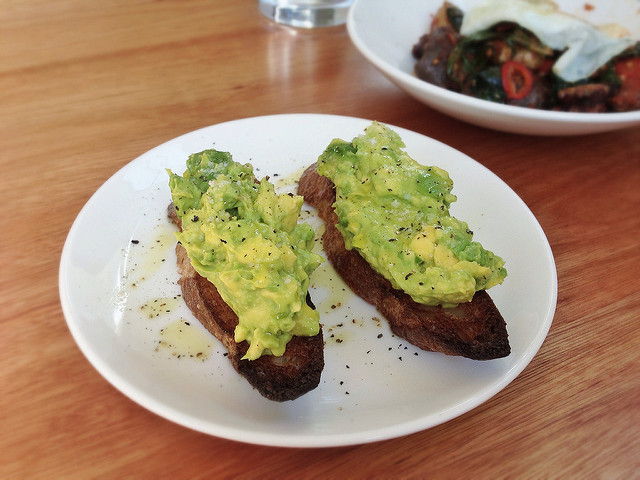
The meeting was well attended (it’s East London, Corbyn Central), but I was surprised to see so many students and young people out of bed early on a Sunday morning. I thought they would all be sleeping off craft beer induced hangovers and telling each other on SnapChat that Taylor Swift's new video was “problematic” before then heading down to Sodo Pizza Cafe for smashed avocado on toast.

It must have been passion for Corbyn that got so many young people up early. Momentum members behave in irrational ways, even for Millennials, who don’t vote and shouldn't be listened to. There were some older members, clearly Trotskyist infiltrators we kicked out of the party in the 1980s, still hell-bent on destroying Labour to prove some point about Communism being the future. They all had the Karl Marx beards and some had leather bound copies of Das Kapital with them.

I slipped in at the back, careful not to draw attention to myself. These people can smell a political activist with a firm understanding of what the electorate want a mile off and they don’t like it. I was ready for some unreconstructed old-school leftyness, but I was surprised that the meeting actually began with the singing of socialist anthems. I half expected Billy Bragg to appear with his guitar to lead everyone in in a chorus of the Red Flag. Instead, it was Jerusalem on an organ (I guess Mr Bragg was too busy at his mansion in Surrey).

Singing this song is clearly virtue-signalling of the highest order. A calling card marking out who is in the group designed to exclude people who aren't red flag waving nutters. They didn't sing Things Can Only Get Better because they secretly know that, under Corbyn, they can only get worse.

When the singing was over we moved on to the main subject of the meeting. I braced myself for a wave of hatred directed at Blairites and Red Tories, but the local chapter leader (I assume that’s what they are called) was a calm and soft-spoken young man who (credit where credit is due) had a real knack for talking to people on their level. At first I listened to him exalt the virtues of Corbyn or (JC as he called him) in his calm and reasonable voice. Then I remembered not to be taken in. Cult leaders don’t look like raving nutters at first. I needed to keep my wits about me during this meeting.

What was most striking about the meeting was that there is was no discussion of policy. At Progress meetings we all read from Policy Review and discuss what opportunities the gig economy presents for the future of work. At Momentum, everyone sits in silence and listens to the chapter leader. There is only one word for this: cult-like. What myself and my friends from the Liz Kendall For Leader campaign thought about Momentum was true.

Momentum members are not interested in listening to other people's views, only how great JC is and how he saved the party from awful Blairites. I heard about how JC died and came back to life - a reference to his poll ratings that have improved recently, but everyone knows this is only temporary, Corbyn has none of the sticking power of politician like Tristram Hunt

I was told how JC is both the son of the party and the party itself, a statement so contradictory and threateningly Orwellian that it could come from Chairman Mao himself. I heard about how JC suffered for our sins (clearly an attack on proper party members who supported Blair or read the fair and balanced debate in the mainstream media). The propaganda was dispensed in a reasonable way by a charming young man and these dulled fools lapped up every word of it, and to think that these closeted Communists have a go at religious people for being gullible.

Then came the most horrifying part. These delusional cultists practiced a ritual where they drank the blood of the Labour Party leader. Not literally. Symbolically using wine as a proxy, but I was still disturbed. The chapter leader poured the wine and invited the Corbnyistas to receive the blood of JC as a token of the suffering he endured (a clear reference to the PLP’s vote of non-confidence in Corbyn last summer).

I was worried what these lunatics might do to a non-believer. The walls of the meeting room were covered in pictures of a man going through some sort of wood and nails based torture, presumably to scare members into obedience. Things looked dark. I was about to be forced to symbolically drink the blood of a man who defied the Labour whip 617 times. This was unthinkable. I turned and ran screaming out of the meeting. I'm sorry to say that I shat myself a bit on the way.

Seeing inside the hard left cult of Momentum was the most disturbing experience of my life. These invaders have only one interest: driving out everyone who won’t take part in their righteous worship of JC. I was left believing that I was right about them all along and shouldn't have bothered to find out first hand.

Related posts
Labour Party.jpg
Dec 26, 2019
What should Labour do next?
Dec 26, 2019
Dec 26, 2019
satire-books-examples.jpg
Mar 3, 2019
5 examples of political satire books
Mar 3, 2019
Mar 3, 2019
fake_news.jpg
Dec 24, 2017
Top 5 best satirical pieces of 2017
Dec 24, 2017
Dec 24, 2017
Jul 30, 2017
Inside the Church of Momentum
Jul 30, 2017
Jul 30, 2017
Mar 20, 2017
We are all cool with this, right?
Mar 20, 2017
Mar 20, 2017
Mar 6, 2017
Brexit offers many opportunities for the Labour Party
Mar 6, 2017
Mar 6, 2017
British-leyland.jpg
Oct 22, 2012
Why you should not lend Ayn Rand your car
Oct 22, 2012
Oct 22, 2012


July 30, 2017 /Alastair J R Ball
Satire
Comment

Living memory of death in war

July 23, 2017 by Alastair J R Ball in Film

I am always surprised how little most people know about the Second World War. I find it strange that people don’t know the details of the most massive military conflict ever. I assumed that a basic understanding of Operation Market Garden or the Battle of the Atlantic was just a natural part of being British; information everyone absorbed through osmosis via our cultural obsession with the World War 2.

Dunkirk, the subject of a new film by Christopher Nolan, is a good example. I wonder how many people didn’t understand the scale of the evacuation of Normandy until they saw it on film. My knowledge is a product of the fact that I was raised on war stories. They formed a core part of the popular culture I consumed from an early age. From Saving Private Ryan to Medal of Honour, stories about the Second World War were a constant part of my childhood. We are not an especially military family, although dad is a historian, but through these stories I felt connected to something huge that was within living memory.

That connection to the actual lived experience of the Second World War is dying. The Normandy Veteran’s Association closed in November 2014 - the same year as the 70th anniversary of D-Day - because there are not enough Normandy Veterans left alive to sustain it. The war is becoming another collection of dates, battles and statistics, rather than something tangible that is a part of us via our collective memory. This is not necessarily a good or bad thing; it is just how time works.

As World War 2 has become history, something significant has changed. We have lost the direct connection to the people, the ordinary soldiers, who fight in wars. Help for Heroes is generously supported by the British public and we still observe the two minutes silence on Remembrance Sunday, but fewer people have or know someone who has a direct experience of war.

In the Battle of the Somme, 420,000 British soldiers died. The total population of the UK was around 42m people, so 1 in 100 people died in a single battle. Almost everyone would have known someone personally connected to the Somme. By contrast: 454 British soldiers were killed during the entire war in Afghanistan, out of a UK population of around 63 million. That’s 0.0007% of the population. This enormous shift is changing how we relate to war and the people who fight it.

The connection to war is fading partly because war has not recently taken place on a scale to touch everyone’s lives. The people who fight in wars are becoming abstract concepts to many, but recent conflicts are still woven through our popular culture. From Jarhead, in the cynical early 2000s, saying that there are no anti-war films to the Punisher’s origin story in the Netflix's Daredevil Series 2 being updated from Vietnam to Iraq (he could just have been a vigilante, but the story is more effective if the Punisher is a man of honour, scared while serving his country’s political interests overseas). War is still a big deal for our society, but we are increasingly disconnected from it.

This point was underlined recently when Amy Shafer from Center for a New American Security published a report highlighting: “the growing civil-military divide” in the US. Shafer’s report found that 60% of veterans under the age of 40 had a family member in the military, compared 39% of civilians. 25% had a parent who served. The report also found that geographical location is significant in the makeup of US armed forces, as 60% of recruits come from the South and West. 37% came from the South alone. Shafer said: “half of the states in the U.S. contribute more than their fair share, and half contribute less.” War is still a big part of society, but for most of us, war is something that happens far away and to other people

Strangely, this has not made war any less popular. Shafer states that: “60% of youths ages 18 to 29 supported sending ground troops to fight ISIS”. We are currently fighting several wars around the world and are deeply embroiled in a handful of other conflicts. There are fewer anti-war protests then when I was a teenager. The public either supports our current wars or is apathetic to them.

As someone who wants the country to involved in less conflict I find this interesting. Support for war remains high (certainly war as defined as bombing people in other countries, I am not sure the British public would want British boots on the ground anytime soon) despite the fact that war is isolated from us both physically and socially.

I don’t think it is good that only small sections of society are engaged with military service. If we are going to have an army (whether we should, and what we should use it for, is a different debate), then it should be reflective of the country it represents. However, getting more people into the army (either via the draft or national service) is not good for preventing more wars. It appears that our enthusiasm for war is not related to the size or structure of our armed services.

I am left thinking that if we understood history better, what wars involved and the devastation they caused, then maybe we would be more hesitant about dropping bombs from a great height on other countries. My education in war history (even though it was full of thinly disguised American pro-war propaganda like Saving Private Ryan) made me more anti-war, not pro-war. Do the 18 to 29 year-olds Shafer talked about in her article, isolated physically and socially from war, know about the history of recent conflicts? How many people died? The human cost?

The knowledge of war I am referring to is more than troop movements and casualty figures. It is the social changes that bringing women into the factories caused, or segregation in the US army. It is looking at the money spent rebuilding Germany after World War 2 and the denazification program. If we understood these things then more people might ask if we spent enough rebuilding Iraq after the invasion, or question whether we spent enough time on a new political settlement there. If those issues had been raised, then maybe the current situation could have been avoided. Mosul has been liberated from IS, but it has also been completely destroyed. Who will pay to rebuild it? Who is asking that question?

Britain is still a country obsessed with war and our past glories. But it is ironically a country that knows less and less about war and the people who fight it. As World War 2 moves further into the past and nature of our armed forces changes, being better connected to our history and understanding it is a way to prevent the experiences of people who live through wars fading from our minds entire.

July 23, 2017 /Alastair J R Ball
Film
Comment
Aylesbury Estate 1.png

Dispossession: The Great Social Housing Swindle

June 25, 2017 by Alastair J R Ball in Housing, Film

Look out your window. What do you see? I'll tell you: a housing crisis. Unless you're in the countryside, in which case you're probably looking at a nice field that will shortly become a site for shale gas exploration. As this blog is pretty metropolitan, I’ll assume that you're looking at houses.

Crucially, you are not looking at not enough houses. Not enough to meet the demand for accommodation. An Englishman's home is his castle, or so the saying goes. For this to be true castles would need to be redefined as mouldy bedsits that cost £700 a month to rent. We have a housing crisis, or a castle crisis if the saying is to be believed.

Whatever you call where you live (I go for Place de la Ball, but it's not catching on) it is becoming increasingly true that people with decent wages and money cannot afford to live in London or other big cities. We are, quite simply, not building enough houses.

Calls to tackle the problem of unaffordable homes have been getting louder for a while. Even the Daily Mail, the staunch defender of the property owner, is getting in on the act. However, we also have a crisis in social housing and this is less talked about. If you're struggling to pay for a bedsit in Tooting with your job as scrum manager and your landlord just raised the rent, then I feel for you mate. I really do. That's shit. However, we don't spend enough time talking about the housing that is supposed to be safety net for the less fortunate.

Since Margaret Thatcher's Right To Buy scheme in 1980, the social housing stock (mainly council housing, the homes owned directly by the government) has been run down. There is a massive shortage in housing generally but this more acutely felt in the social housing sector, which is supposed to provide for the poor, the disabled or those whose basic needs will not be met by the private rental market.

Houses prices are rising faster than my enthusiasm for a pub that just expanded its craft beer range, which means that the social housing stock is being run down. This is pushing more and more people into the private rental market and a lot of these people have basic needs that cannot be met at the price that the private rental market sets for accommodation. This is turn ultimately leads to the vulnerable being exploited.

A new film from director Paul Sng called Dispossession: the Great Social Housing Swindle, aims to shine a light on the current state of social housing. It is a powerful documentary that covers more than 30 years of history, politics and urbanism. Now, more than ever, this a topic that we need a public discussion about, so I urge you all to go and see this film.

The film examines the problems caused by the lack of social housing. It covers how the social housing stock has been run down as houses prices have grown. It looks at how people have lost of their homes or being priced out of accommodation that was supposed to provide for them for life. No one can claim to be human and not be moved by the plight of Beverley Robinson, who is refusing to leave her flat in the Aylesbury Estate in Walworth, London until the council offer her enough money to buy a home in the area. People like Beverley are the victims of the housing crisis.

The film shows specific examples of social housing, which was supposed to be set aside for the less well off, being taken away from the people who need in it. Not just Beverley in the Aylesbury Estate, but also residents of Balfron Tower, a brutalist marvel built by Erno Goldfinger, a Hungarian socialist who wanted to make housing for people with “deep roots in the immediate neighbourhood”. Sadly, middle class architecture enthusiasts who move to London to work, and live in East London (like me), are making Balfron Tower a fashionable place to live. This is leading to the people who should be living there; the people Goldfinger designed the building for, losing their homes.

When we talk about the housing crisis it is easy to focus on London, where price rises and austerity have taken a huge toll. However, we are in a grip of a national housing crisis with people in Birmingham, Liverpool and Newcastle unable to afford a place to live, while their neighbourhoods are colonised by people selling up in London. There is a social housing crisis across the land and Dispossession looks at estates such as St Ann’s in Nottingham, where residents have had to deal with the stigma associated with council housing for years. A stigma that is entirely false.

The film also looks at Glasgow and the huge privatisation of social housing that took place there. Between those exploited by rogue landlords and those who cannot afford to live in their home town, it is clear that the housing crisis is just as toxic in East Glasgow as it is in East London.

Dispossession talks to real people whose lives are affected by the social housing crisis and lets them tell their stories. This brings home the human side of an issue that can too often be dominated by discussion of policy on brown field land or relative house price inflation. Not that these things aren't important, but once you see the squalor that residents of Govanhill in Glasgow live in, you will feel compelled to act to help your fellow human beings.

Dispossession show the same pattern, being repeated across the country. Loss of social housing, through selling it off and bad deals that do not provide for the people who need it, and not enough new social housing being built. Across the country, people who want to stay in their homes cannot and vulnerable people are not having their basic needs met.

The conclusion from this is straightforward: the market mechanism for social housing cannot keep people in their homes meet their needs. We need more social housing. We need to stop the sale of the social housing that we have and we need to build more. Everyone has the right to a safe and secure home and should not lose it due a redevelopment deal or because rising house prices makes their central London plot incredibly desirable.

We cannot afford to overlook the problems of social housing when we tackle the housing crisis. The scrum manager struggling to make rent on his private rented bedsit in Tooting and Beverley, who risk being driven out of the Walworth area, are both victims of the same travesty. We need to know about each other's plight and work together to solve this problem so that everyone can have a safe and affordable home for life. This film is a critical step towards that.

If you want to see Dispossession: the Great Social Housing Swindle film screens across the country can be found here:

https://www.dispossessionfilm.com/


June 25, 2017 /Alastair J R Ball
Housing, Film
Comment

A huge bonfire of red tape

June 18, 2017 by Alastair J R Ball in Housing

There are many things that make me angry about the Grenfell Fire and the tragic loss of life it caused. However, to find the thing that most stuck in my craw, we have to travel halfway round the world to Colorado. A short while ago, Slate's Political Gabfest podcast (which, is great and you should all listen to it ) did a special live episode with guest Colorado Governor John Hickenlooper. Practically the first thing out of the Governor’s mouth was a claim that no one defends red tape and that his administration was working hard to get rid of as many regulations as possible. He seemed pretty proud of that.

This may not be as overtly enraging as factors on that ground in the Grenfell Fire - the poor response from the council, Theresa May refusing to talk to homelessness families - but it speaks to some pretty lazy assumptions that we have been making for a long time. Assumptions that have probably cost more than 100 lives in this case.

The UK equivalent of Governor Hickenlooper’s railing against red tape is "health and safety gone mad". The idea that regulations aimed at preventing the place where your children sleep being turned into a 25 story pillar of flame are somehow stifling private business and preventing them from creating a bounty of wealth for all.

Former Prime Minister David Cameron, said he wanted to cut back the health and safety “monster”. This idea has a lot of credence in politics. Donald Trump promised a "bonfire of red tape" when he was running for President and the Daily Telegraph supported the idea. The Telegraph is currently running a campaign to cut EU red tape post Brexit.

Too many laws are holding back the natural British entrepreneurial spirit. The next Steve Jobs can't get his tech company off the ground because of all the rules about how much screen time employees are allowed without a break. For years this idea has been pushed to the point where lots of people say it without thinking about what it means. It has led to complete disdain for government and red tape, but these rules are here to keeps us alive.

Red tape must be got rid of to help businesses grow, that's the argument, and growing business is the most important thing that anyone can do. It's our highest and noblest calling, or so the argument goes. It is parroted by people like the Governor of Colorado who should have other priorities beyond growing business, like using government look after people and make their lives better.

Wait, doesn't growing business make people's lives better, I hear you say? The core of Governor Hickenlooper’s argument is that growing business employees more people and creates more wealth so that we can all live in lovely homes and raise healthy happy children and then retire to live near the seaside. Cut the red tape and the struggling Steve Jobs out there will make lots of wealth for everyone.

Except it doesn’t quite work like that, because the jobs created are insecure, low paid and sometimes dangerous because we just got rid of the red tape preventing that sort of thing. Cameron wanted to get rid of the health and safety culture to help business make jobs but almost all of the jobs created were low paid and insecure.

We have spent decades reducing red tape to allow business to grow, and where are we now? High unemployment, whole communities where there are very few jobs (have you been to Whitehaven recently?), stagnant wage growth, massive inequality between those owning/running the businesses and those working in them, job insecurity, people in work being more likely to be in poverty than anyone else and a huge increase in people relying on food banks. Helping business is not helping ordinary people.

None of the benefit of the getting rid of red tape goes to the people in the tower blocks or the food banks or the low paid insecure jobs. It goes to the landlords, the company owners and the people employing workers on low wages and insecure contracts. These people suffer the low wages, the insecure work, the housing crisis, the benefit cuts. They never get anything back, but the people who own the businesses get tax cuts and bonfires of red tape to make their lives easier.

Cutting red tape allowed for Grenfell Tower to be dangerously re-clad at the cheapest price, because cutting red tape is inherently good and not a penny more than necessary should be spent on the houses of poor people. They deserve it through not working hard, so the argument goes. This idea is not an 80s retro throwback; it is alive today in the benefit cap and the bedroom tax. It lives on in the Tories’ rhetoric of ‘strivers and skivers’.

The end goal of all this is to punish the poor for being poor. You might see the Tory prime ministers saying that The Grenfell Fire is a tragedy on TV, but her party caused this by perpetuating the idea that the poor deserve less because they are where they are through their own fault. Tories use their divisive rhetoric to turn workers against unemployed, low paid workers against the slightly better off, non-immigrants against immigrants. By positioning one side as undeserving and the Tories as the champions of the good, honest, hard-working people, they create the circumstances when the homes of poor people can be turned into a death trap.

Why should they get a safe home when I don’t get anything from the government? So the argument goes. Poor people are lazy and don’t deserve anything nice or safe. If they don't like it, work harder. This is the subtext and often the text of what the Tories say. Now people are dead because of the idea that poor people deserve as little as possible.

The assumptions that underpin a lot of our current economic and political thinking allowed the Grenfell Fire to happen. A lot of people have said how upset they are by this, but I bet they are still concerned about how much the government spends housing the poor. Either you’re on the side of a "healthy economy" (few subsidies to the poor and a good business climate with little red tape) or you’re on the side of protecting people's lives. I am on the side of looking after people, which means that business needs to move over.

The materials used in the Grenfell cladding failed safety tests. This shows we need more red tape to keep everyone safe. Everyone should be safe in their beds while they sleep, regardless of how much tax they pay or how many services they use or what job they have or how much they earn. Everyone. If people being safe while they sleep is a problem for business, then we have a problem with business. If red tape keeps people safe while they sleep then it is something we should be proud of and the Hickenloopers of this world should be ashamed of their desire to use public office to reckless endanger the public.

The Grenfell Fire is a tragedy and something needs to be done so that it never happens again. Even if people in business don’t like it. These people don’t care about our lives. At least they don't care about our lives as much as they care about making life easier for business, which from where I stand today has not led us to the shining corporate sponsor city on the hill that it was supposed to. It has made us less equal, more insecure and less safe.

I sincerely hope that Grenfell leads to a change in public opinion about the role of regulation in keeping people safe. Everyone's life is important and I want them to be bound up in red tape if that’s what it takes to protect them.

Grenfell Tower image created by ChiralJon and used under creative commons.

June 18, 2017 /Alastair J R Ball
Housing
Comment

Meet the real nasty party

June 11, 2017 by Alastair J R Ball in Coalition of chaos

I can imagine Theresa May waking up one morning, still half asleep, imagining that it was all a terrible nightmare and that she has a 100 seat majority, with all the power to pass any legislation she wants. No opposition, no House of Lords or no rebellious back benchers to stop her. This lasts for a few glorious second before she remembers that it is real, she did gamble her party's majority on an election no one wanted and lost it. Now she has to limp on, wounded, demoralised and without a clear mandate.

Never was a truer word in politics was said when May addressed The 1922 Committee of Tory MPs, saying: "I got us into this mess and I'll get us out of it." Well, the first part is true. It was May who called the election and then put herself front and centre during the campaign, labouring under the misapprehension that people liked her. It was her bad judgement that led to an awful manifesto that people appreciated about as much as an unexpected trip to the dentist. It is her advisers whose heads have rolled, but to quote our other female Prime Minister: "Advisers advise and ministers decide." The blame for the Tory’s current woes can, and should, be laid squarely at the feet of their leader.

May's judgement is so poor that I half expect her to call another snap election in a few months, which Labour could easily win as Jeremy Corbyn’s approval is now higher than the Prime Minister’s. May’s proposed alternative to a Labour government is a "confidence and supply" arrangement with the DUP, a party so odious that I almost feel sorry for slightly likeable Tories like Ruth Davidson who have to be nice to the DUP in public.

The Tories must be desperate to consider this. They are frightened that any fuck up now could hand Jeremy Corbyn the keys to Downing Street. They are frightened of hanging on as an ineffectual monitory government that achieves nothing for the next five years (apart from screwing up Brexit because they are beholden to the most madly Eurosceptic Tory MPs) by the end of which everyone hates them so much that a bucket with a red rosette on it could beat them in an election.

The Tories are desperate to try something that is likely to reflect so poorly on them. Remember when Nick Clegg was blamed for the worst aspects of everything that went on in the coalition? Well it's going to be like that, with the Tories being blamed every time a DUP MP suggested we should bring back hang, drawing and quartering.

Do not be fooled into thinking that the DUP are regular conservatives, whatever the Tory Party tries to imply. DUP are more like American Conservatives; in other words, a bit much even for the sexually repressed, red trouser wearing, Daily Telegraph reading, retired Colonels living in Oxfordshire wing of the Tory Party. Even those guys are worried that global warming might affect the grouse season.

Here's a roll call of only some of the repugnant things that are perfectly acceptable in DUP circles: being against equal marriage (same sex couples still can't get married in Northern Ireland), being against abortion (see previous bracket) and denying climate change (in a scary Sarah Palin way, not in an annoying Jeremy Clarkson way) and supporting Loyalist militias (remember, it’s not terrorism if they’re waving the union flag while they murder you). Meet your new best friends everyone who voted Tory to keep Labour and Corbyn out. I hope you're happy with what you got.

It was May who coined the term nasty party during the Tories’ wilderness years to describe how the party is viewed by lots of people. She wasn't wrong, and before David Cameron detonated his own premiership on an unnecessary vote (Tory leaders should stop making the same mistake over and over) his biggest accomplishment was making people, ordinarily put off by the strong whiff of awfulness that the Tories give off, comfortable voting for the party.

May had the right idea back then, which is odd because since entering government she has become the poster child for everything that is nasty about the Tories. From savage welfare cuts to vans bullying immigrants into going home, May’s prints are on all of it. I thought that the lesson of the whole Tory revival post-2005 thing was that slavishly following whatever the Daily Mail wants alienates voters with even a little bit of conscience. Now May plans to out-Daily Mail the Daily Mail by finding some really backwards social conservatives and giving them actual power.

Of course the DUP are the real nasty party. They think that LGBT rights and women's rights are some sort of metropolitan thing that only people in London who queue for restaurants, drink hoppy craft beer and cycle everywhere think are important. You can tell they're the nasty party when you look at what they want from the Tories in exchange for not putting their wounded government out of its misery: the right to do their provocative marches through Catholic areas (and generally inflame tensions like only the Northern Irish know how), amnesty for people facing court cases (always a good sign, a politician who wants legal stuff to go away) and keeping their disgraced leader in charge in Stormont (after a terrible piece of legislation she supported that wasted nearly £490 million and brought down the government there). This is only the beginning. It will get worse over time. Confidence and supply means that I have confidence that the Tories will supply whatever the DUP want.

I doubt any good will come from this, but there is always a small possibility that the DUP will stop the Tories doing something mad involving a hard border between Northern Ireland and the Republic. They may also get the Tories to go down to the basement and bring out the magical money tree they have hidden down there (found next to the box where they keep Theresa May's human nature). It always rains in Northern Ireland, but now that will take on a whole new meaning. Soon everyone else on these damp isles will want the government to make it rain on their communities. In the next election, jibes about Labour spending will be worth about as much as May's claims to "strong and stable leadership."

We shouldn't underestimate the DUP. They may be dinosaurs, but they don't have brains the size of a pea. They are smart and good at politics. They didn't get to be the biggest party in Northern Ireland and the natural home of most unionist voters by accident. They'll milk this opportunity for all it's worth, but the strong and sweaty cheese that comes out of this won't be good for anyone except a few extremely conservative evangelical Christians.

Everyone who is to the left of Elien Foster on social issues (which is basically everyone) needs to keep pressure on the government to stop them from backsliding on a whole raft of basic rights for women or LGBTQ people.

Theresa May wanted to stop the at Tories being the nasty party. Now she may have ensured that this is what they're known as for years to come by getting into bed with a really nasty party.

Arlene Foster picture taken by Richter Frank-Jurgen and used under creative commons.


June 11, 2017 /Alastair J R Ball
Coalition of chaos
Comment

Why we should all vote Labour

June 04, 2017 by Alastair J R Ball in 2017 election

Cast your mind back to the 2015 general election. Cameron was Prime Minister, Barack Obama was the President, Britain was at least nominally committed to the European project, we were waiting David Bowie’s new album, Leicester were struggling in the Premier League and we didn't spend all day wonder what Covfefe is. I know it seems like ancient history, so I won’t be offended if you don’t remember this piece I wrote just before the election where I spelled out my reason for voting Labour.

Central to my argument was that we all vote for our local candidates and not the party leader; and my local Labour MP, Stella Creasy, is a good MP, which is a key reason why I was voting Labour. Fast forward to today and it looks more than ever like we are voting in a Presidential race, making a decision between Jeremy Corbyn or Theresa May’s vision for the future of the country.

That is the choice facing us. This election is likely to result in the highest combined vote share for the two parties in decades Lib Dem revival? It ain't going to happen. UKIP surge? Only in Paul Nuttall's dreams, which look like nightmares to any reasonable person.

I know to some people reading this, the decision between the two is like choosing between lovely fresh falafel wrap from a pop-up street kitchen washed down with pint of local craft IPA, or eating dog shit wrapped in a plastic bag. To others the choice is the difference between waking up to a cold shower or a flame thrower. I look forward to these metaphors being expanded in Facebook comments.

We must vote Labour because May’s vision for the future of Britain is a nightmare of rising poverty, inequality and greed. A vision of a nation that shrugs its shoulders towards suffering that we could alleviate by inconveniencing the rich a tiny little bit. The social justice that is common in many of our European neighbours is too much to ask in May’s Britain.

Corbyn has certainly been a less than impressive opposition leader and I have written before about my disappointment with him, despite voting for him in 2015. Surprisingly he has turned out, at the 11th hour, to be a quite an effective opposition campaigner, closing a 21 point gap in the polls to one point. This has been helped in no small part by Theresa May’s campaign, which has not just shat the bed, but burnt it down and then pissed on the ashes.

If the story of 2016 was the surprise success of the populist, anti-establishment campaigns then the story of 2017 is the return of the centre right at the expense of the centre left. This has been true in France and in the Netherlands, and is likely to happen in Germany. Britain looked like it would go down the same route, as May’s Tories triumphed over the Labour Party. Despite my concerns and if the polls hold, Corby could turn out to be the most effective leader of a left wing party in Europe this year.

Corbyn’s leadership could save the Labour Party from the Pasokification that has marred so many Western left wing parties and reduced Benoît Hamon (the French centre left Presidential candidate) to 6% in the first round of the French Presidential election. Gary Young has written elegantly about this here.

Policy reliably moves the dial in elections for more than a handful of hardcore politicos, but Corbyn’s manifesto has inspired praise from some of his harshest critics. It’s a good a platform of sensible policies that are only considered extreme in the minds of the most Thatcher worshiping tabloid editors. Again, this platform is helped by the contrast with the Tories’ platform, based on animal culturally and taking away the homes from people with dementia. I want to live in the Britain outlined in Labour’s manifesto. I really don’t want to live in the one outlined by the Tories.

The rally of support for Labour is more than just policies taken from the playbook of centre left European parties (the sort of things Labour should have offered in 2015). It is because Corbyn has become a symbol for a broad range of people who want things to be different, whether they agree specifically with him or not. Whether they understand his politics or history, Corbyn has become a vessel through which people are pouring their hopes for a different politics. A politics focused not focused on the bottom line of large companies, but on people’s lives. A politics best summed up as: “can’t we treat people a little better?”

If Corbyn represents the coalition of voters who want to make things better, then May represents the coalition of voters who want to make things worse. They want to make this a smaller, more inward looking, selfish and less tolerant country. A country where we don’t care about rising levels of child poverty, homelessness and food bank usage. A vote for the Tories is a vote for a Britain, which would rather kill foxes than help those in need.

Voting for Corbyn will be a compromise for many people. Myself included. The man and his leadership is flawed. However, we are faced with a clear choice: vote for a Labour Party that is at least trying to make things better or a Tory partly that doesn’t believe anything is wrong with the fact that the people most likely to be poverty are those who are in work.

We can't carry on as we are, so that is why I am voting Labour and urge you too as well. We can’t carry on with rising child poverty. We can’t carry on with a struggling NHS. We can’t carry on with low paying, insecure work. We can’t carry on with austerity punishing the poor and the sick for being poor and sick. I want things to be different, so I'm voting Labour.

Polling station image taken by Rachel H and used under creative commons.

June 04, 2017 /Alastair J R Ball
2017 election
Comment
Theresa May.jpg

Sensible Theresa May must save us from the radical left nightmare Jeremy Corbyn will unleash

May 28, 2017 by Alastair J R Ball in 2017 election

Labour has unveiled a crazy left wing manifesto. It was a clear declaration that the party wanted to create a workers’ state, where private property does not exist and everyone lives in identical homes, wearing identical clothes. Chairman Mao himself would be proud.

The manifesto contained lots of radical left ideas lifted straight from the Communist Manifesto, like re-nationalising the railways, abolishing university tuition fees, free child care for one year olds and a rent cap. These are the sort of dangerous, lefty policy programs you see in Communist dictatorships like North Korea. Sensible Labour leaders, like Harold Wilson, will be turning over in their graves.

How was this latter-day Das Kapital received? These policies were supported by extreme left, Trotskyist organisations like the Co-op Amongst the media, they found favour with well known Leninists, like Polly Toynbee, who’s been nothing but an uncritical supporter of Jeremy Corbyn’s leadership so far.

If we elect Labour on this platform, it could destroy the stability and prosperity we have enjoyed since the Tories came to power in 2010. Basic human rights, like paying all of your money for a draughty one-bed flat ten miles from central London and commuting for hours to work in a zero-hours contract, could be destroyed and replaced with oppressive domination of the Party, which will control us via world class healthcare and cheap, efficient public transport. Britain will become Venezuela. Only with worse whether.

It is imperative that we elect the Conservatives and Theresa May, who have sensible policies that everyone can agree on like bringing back fox hunting or taking away your home if you get dementia. This is definitely what the JAMs, swing voters and people who work in Tescos, who Theresa May has sworn to stand up for, need.

Theresa May is a politician for all Britain. Unlike Corbyn who only appeals to a few metropolitan liberals who spend all their time in radical bookshops, drinking pints of Sound Wave IPA, eating chicken katsu curry and talking about the next upcoming show at the White Cube Bermondsey.

May sums up the British nation and what we want in a leader. She is patriotic, sings the national anthem, is willing to put petty gripes with Europeans above the national interest, wants to start a war with Spain, wants to take away old people houses and loves to make small mammals murder other small mammals. This is definitely where the centrist, modern, aspirational voter is. This is why Bryon Burger has introduced a new fox meat burger and you can buy riding coats in Primark now.

Corbyn struggles to connect with the average voter, who really respects how May surrounds herself with Tory supporters and activists and pretends that’s the same as talking to the public. They like how she doesn’t take questions from journalists and even locks them in a room to stop them taking pictures of her walking. Refusing to talk to a press that generally fawns over you anyway is what I consider to be strong and stable leadership.

May stands firmly against far left ideas like feeding children, reducing child poverty, supporting carers, investing in the NHS so that it can make it through the winter without needing emergency care itself and providing nurses with the basic dignity of knowing that their rights will be respected post Brexit so that they can continue taking care of the sick and the old. These are the sorts of policies that can ruin this great country.

May has clever ideas for tackling the problems of the 21st century like bringing back grammar schools (we need to find those entrepreneurs from poorer backgrounds, the rest can be fast-tracked to their career to working in an Amazon distribution centre), crippling the economy by storming out of Europe in a huff (if that doesn’t encourage innovation nothing will) and being a beg-friend to Donald Trump (a man who definitely has our best interests at heart). She has the making of a great Prime Minister of the United Kingdom. Or possibly the last Prime Minister of the United Kingdom, which is pretty much the same thing.

No sensible person could support Labour with insane, radical ideas like the ones Corbyn proposes. If Blair were alive today (he died of a heart attack two years ago when Corbyn became party leader, what you have seen on TV is a robot that they found in Peter Mandelson’s garage) he would support the Tories as he could not condone a Labour government that had so completely abandoned the centre ground that it wanted to tackle child poverty and secure funding for the NHS.

It is essential that we all vote Tory on June the 8th to stop this Marxist-anarchist-Leninist madness. Britain could easily become a Communist dystopia like France, the Netherlands or Germany. It is essential that the belligerent, posh and slightly xenophobic centre right stops these dangerous radicals with their vision of a fairer and kinder society.

Theresa May picture created by Jim Mattis and used under creative commons. 
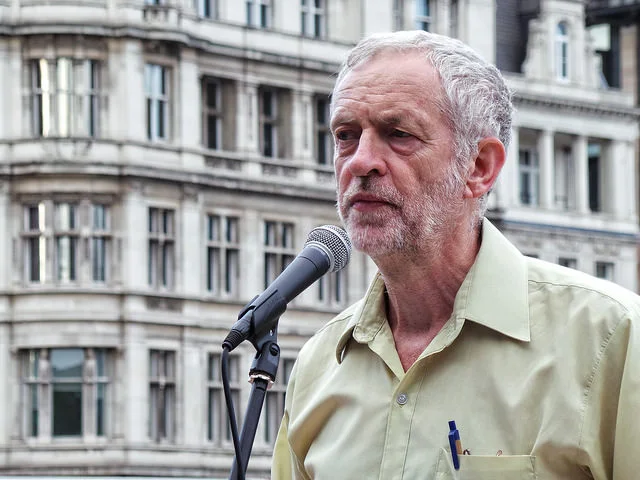
May 28, 2017 /Alastair J R Ball
2017 election
Comment

Who will take up the cause of the shat upon generation?

May 21, 2017 by Alastair J R Ball in Housing

Sometimes as a millennial it can feel that the world is against you. It is often stated that we are likely to be the first generation who are worse off than our parents. Housing is prohibitively expensive, jobs are less secure and pay less, whatever future we have is likely to be blighted by environmental disasters, economic instability and decades of Tory rule.

Sometimes it feels as if the planet itself is trying to crush our generation. Then I realise that it is not the world that is against us, it is one group in particular: the baby boomers.

The baby boom generation is pretty open about its hostility to my generation. Hardly a day can go by without an opinion piece accusing my generation of being entitled and lazy. Entitled seems to mean having the chutzpah to demand an affordable place to live and a decent job. That must seem like an outrageous demand to a generation who grew up with full employment and readily available council housing.

I was 22 when the 2008 financial crash occurred. I don't remember there being many people my age making the top decisions in banks and government, taking liberal advantage of the revolving door between public and private sector, leveraging as much debt as possible then taking a sledgehammer to the global economy. I don't remember there being many people my age deciding to invade Iraq and creating the conditions for a medieval death cult to grow and spread terror all over the world.

From where I stand there is only one generation that felt entitled enough to act as if there was no consequences to their actions. They are not the generation that suffers the consequences of every bad decision of the last 15 years.

There weren't many people from my generation who made the decision to sell off our council houses and not replace them. Nor are there many people of my generation in government failing to do anything to tackle the housing crisis or running developer firms that sit on land to keep the value of the few properties they do build high. It wasn't our decision to let house building fall to the lowest point since the 1920s.

It is my generation sitting in unsafe, expensive rental accommodation with little rights, while the prospect of owning our own home moves away faster than a space shuttle taking off. Apparently we're a spoiled and entitled generation, but if baby boomers were forced to deal with the rental market as it currently stands, you can bet reform would be top of all partys’ agendas. Instead we get useless advice and contempt for our problems, such as claiming that the reason why we cannot afford a house is because we spend too much on avocado toast.

So who is going to take up the cause of the shat upon generation? There is a general election going on, which means that someone should at least pretend to care about us. Which party wants to correct this injustice? Not the Tory Party: the only contact their leaders have with young people are Young Tories, who wear suits and take briefcases to uni lectures. The sort of people who probably get central London flats as a first birthday present.

Labour under Jeremy Corbyn has a lot of support amongst younger people. Although baby boomer columnists are pretty keen to pour scorn on our desire for a politics that is not complete cynical, from the comfort of homes that they could afford on a journalist’s salary. That is when they’re not using said columns to tell other baby bombers that we’re entitled and deserve the shit we get.

Now 60% of people in poverty are working families, which creates the feeling that society consists of a large number of people working hard and impoverishing themselves for the benefit of a rich, older class who do not work and benefited from cheaper houses and better jobs (the former of which they hog and the latter of which they did their best to destroy).

Perhaps I am being too harsh on the baby boom generation. Obviously, no one should be forced out of their home. Although to act as if that is being suggested when any corrective to the current state of the housing market is proposed is pretty entitled. People are living longer and the number of older people is rising, which is one of the causes of the current pressures on welfare and the housing marketing.

The solution to this is to bring in more immigrants to readdress the worker to dependent ratio. However, the baby boom generation's reaction to all this was to vote overwhelming for Brexit, so I guess that solution is off the table for now.

If immigration must come down to appease baby boomers who, for some reason, feel threatened by hearing Polish spoken on their bus, but welfare benefits to older people (the triple-lock, fuel allowance, freedom passes, etc) must remain despite a falling percentage of the population who are workers and more workers being in poverty then ... well ... all I am saying is, that is pretty entitled. So entitled that I can't believe someone would suggest that in public without fear of being laughed at.

Yet that is the situation we find ourselves in. The baby boomers get what they want and then accuse us of being entitled when we ask for things like jobs and houses so that we can do things like work every hour that God sends to pay for the triple lock and find somewhere to raise the next generation who are likely to be even more shat upon.

I don't know about you, but I get a sense that society is run for the benefit of old people against the interests of working age or young people. From housing to Brexit, young people are being kicked by the most entitled generation in history. Their cultural concerns, such as immigration or Britain's role in the world, are given credence, miles of column space and are the focus of government policy, regardless of how stupid, short-sighted and ruinous their demands are.

Our concerns, such as housing, employment or the environment, are either ignored or openly mocked. Sometimes I think that my generation has a parasitic creature attached, which is sucking the life from us until we die and then it can move onto the next host (ie our children).

The latest outrageous instance of this? A column in Sky News where baby boomers literally say they want to beat us and then send us off for National Service? Let us remember that the baby boom generation not only got everything handed to them on a plate, but also didn't fight a war because to have served in World War 2 you would have to be at least 90, by now and people over 90 were only 0.9% of the population in 2015.

It is the generation that came after the war, who lived in the glow of the post-war consensus and then dismantled it and told those who came after that we should be grateful to live in this dystopian hell hole of a future, who are the real problem. Although, record numbers of young people are registering to vote, so maybe in this election, or a future election, the most entitled generation that ever existed will get a surprise from the hard working generation who pay for their luxury.

Avocado toast image created by T.Tseng and used under creative commons.
May 21, 2017 /Alastair J R Ball
Housing
Comment

20 Years of Blair: Labour in the Wilderness

May 14, 2017 by Alastair J R Ball in 2017 election

20 years since Tony Blair won a huge Labour victory, the certainties that he ushered in are no longer certain. In my last post I outlined the iron law of Blair: that taking a socially liberal, economically liberal, centrist approach, and moving to where the voters are, is always the best course of action. Brexit broke that iron law. The centrist, socially and economically liberal position (Remain, if anyone is wondering what I am referring to) lost.

Previously it was unthinkable to adopt policies that would harm economic growth and inconvenience the private sector. Blair won three elections with this in mind. David Cameron defeated Labour twice using the same logic. Gordon Brown was seen as incompetent on economic issues and Ed Miliband was seen as too much of a risk.

Now the government is enacting Brexit with all the enthusiasm of Nigel Farage arriving at a traditional boozer following a long treck through an area of metropolitan, independent coffee shops. I cannot think of anything that will be worse for the already anaemic economy and more of a pain in the arse to big business than Brexit. Yet the Tories are hugely popular and cheered on vast swathes of the press and electorate - the same people who thought that Miliband was dangerous for wanting to tax a few mansions.

Not that any of this is of benefit to the Labour Party or its left wing leader, Jeremy Corbyn. In my previous post I talked about the need for radical new ideas. It goes without saying that you need to convince people of the benefit of these ideas. Currently Corbyn is doing a poor job of convincing people to vote for a few Milibandish policies.

If all pans out as everyone expects, Labour will be looking for a new leader 20 years after Blair’s huge victory. Doubtless the iron law of Blair will be invoked. But in the post-Brexit world it no longer applies. Voters have lost faith in social liberalism and economic liberalism. The former because of resentment of immigration and a cultural counter-revolution against tolerance and being nice to people. The latter because of the fall out of the 2008 crash and no one feels better off despite a lot of austerity. I can imagine that a Blair-inspired candidate today would be dismissed as “metropolitan middle class liberal” for standing up for these ideas.

This only leaves moving to where the electorate is and (as the general election is about to prove) the electorate is pretty happy with Brexit and the Tory government. Would a Blair for 2017 move Labour towards the Tory Party’s current position on immigration, Brexit, welfare and a host of other issues? I hope that the party members would prevent this. Not least because it would open the left flank of Labour to a Lib Dem onslaught.

So Labour will once again be faced with a difficult choice about its future.. It is hard to know what sort of party leader I should support. One who shares my values? That involves a lot of compromising, as Thomas Piketty can’t stand for Labour leader because he is French and not an MP. One who will win the next election? That person probably doesn’t exist.

Through the last 20 years I have found out something about myself. The politics that I would like are far to the left of the Overturn Window - or anything that is on offer. I feel that to meet the challenges of the 21st century - climate change, broken capitalism, refugees and automation -  we need to be more radical than ever. The world will not be saved by timid alterations around the edges. I am less willing to compromise as the general public cannot see the difference between "Red Ed", Corbyn and myself.

Due to the first past the post system, all left of centre ideologies are locked together into one party and fight over control of it. This has not advanced the cause of any of them. Usually we can live together. But recently we cannot, because there is no clear route forwards. So squabbling has taken the place of progress.

The Labour Party needs compromise and unity. The party is currently weak and divided and this serves no-one. Not the country, the members, or the people who are suffering under Tory rule. We need to desperately to find a way to make peace with ourselves so that the opposition can function. We can still bloody the Tories nose if Labour can be made to work.

So now we at a crossroads. 20 years on from the biggest labour win of my lifetime, and Labour looks further away from government than ever. I'm not willing to compromise, because centrism will not solve the world’s problems, but compromise is what the party needs.

Does this mean I have a future in the party that has defined all my political awareness since I was a child? Maybe the party would be better off without radicals like me in it. Some opposition is better than none and Labour needs to oppose the government, because I fear where 10-15 years of Tory rule could take us.

We can’t go back to Blair, as much as we might like to. Certainly Blair achieved a lot, not least making people hopeful about politics. However, in the post-Brexit world, Labour need something new to win power and to tackle the problems of the country.

20 years on from 1997 gives an opportunity to look back, but we should also look forwards. As Abraham Lincoln said: “The dogmas of the quiet past are inadequate to the stormy present.” I take this to mean that we should keep an open mind about the future.

Picture of Jeremy Corbyn taken by Garry Knight and used under creative commons.

May 14, 2017 /Alastair J R Ball
2017 election
Comment

20 Years of Blair: Labour in Opposition

May 07, 2017 by Alastair J R Ball in 2017 election

In the opinion of Tony Blair’s fans (and probably the man himself) there is an iron rule of politics: Blair always wins. This is partly because he won three elections, but it is also because the essence of Blairism is moving to where the electorate is. The flexibility of Blairism can be seen in his followers’ attitude to government spending. In government Blair invested heavily, but his followers (such as Liz Kendall in her 2015 leadership bid) advocate harsh fiscal discipline. Bear this in mind as our story continues. To see the first part go here.

It was not long after Tony Blair left Downing Street that the storm of the 2008 Financial Crisis started brewing. Around that time I realised that I was completely in the shit. Turns out being in full time education from age five to age 21 only qualified me to answer phones or type addresses into a spreadsheet. Something all my teachers had neglected to mention as they encouraged me sink further into debt.

Getting a job and earning enough to live on was a painful and frequently humiliating experience. I worked for some of the biggest cunts I have ever met, yet felt lucky to have a job at all. The whole thing was underscored with a feeling a pointlessness. When Lehman Brother collapsed, it looked for a while that global capitalism would be over by Friday and the first global water war would break out on Monday.

Meanwhile the iron law of Blair was being tested on the voters. After a mammoth election, that lasted for two days during which I didn't sleep, Cameron rode into Downing Street using Nick Clegg as both the horse and the whipping boy. A centrist, modelled in the image of Blair, had moved the Tory party to where the electorate was: social liberalism and free market economics, with a large side order of austerity. No more luxuries like disability benefits and school construction. This was New Labour without pretending to care about the poor.

It was around this time that I began reading contemporary left-wing commentators, especially the writing of Laurie Penny. Her work was a revelation to me. For the first time, someone I didn't know personally was saying the things I believed in. I was not the one mad person who hated the world out of sense of bitterness. There were others who thought that something was really wrong and we need to do something radical about it.

Penny's writing, among others - too many to name here - opened up my mind to ideas beyond socialism and economic inequality. It was around this time that I became aware of the interlinked nature of oppression and that it is as diverse as people are. I know I was a little late to the party on this one, but at least I made it in the end.

Meanwhile Labour was going through some introspection of its own. Ed Miliband was chosen as leader. A leftish, social democrat had been chosen over a Blairite (his own brother), as a reaction to the long shadow of Blair. There was a belief on the soft left that the financial crash would lead to the rebirth of social democracy and Keynesian economics as an alternative to neoliberalism.

Many people viewed Miliband as annoyingly posh, funny looking, awkward, geeky and thought he was too clever. As I am all of those things, I had a soft spot for Miliband. I thought that he had (some) good ideas and good intentions. His politics were to the right of what I wanted from the Labour Party, but I recognised that Labour was not getting into government on the policy platform of putting those who earned over £500k a year in stocks in Trafalgar Square and letting the public through faeces at them.

University Me was pleased for a chance to go back to Keynesianism and a mixed economy. Miliband was a compromise that both I and (I thought) the country would be willing to accept. Turns out I was wrong on both counts.

The Labour Party (and myself) was struck by crisis when Miliband lost. This was not a moment for social democracy; the cold, neoliberal argument had won out. The iron law of Blair had been proved right again: a centrist with socially liberal, economically liberal views had been chosen over a Keynesian social democrat who wanted a degree of market intervention.

Within the Labour Party, and myself, there was a sense of disappointment in the voters, almost betrayal. From our point of view we had the better candidate; a clever person who had ideas about what could be done to alleviate some of the problems of the post-crash era.

Yeah, he wasn't as flash as Mr PR, Media Personality, but he wanted to make a better country. From our point of view, Miliband was more genuine and had been rejected by voters in favour of a candidate that that was all spin and manipulation. A man who pitted the working poor against the unworking poor, or the disabled against workers or students against everyone else.

This was a turning point. The iron law of Blair looked like it was about to be evoked and the Labour Party would be moved to where the voters were: i.e. harsh austerity and free market economics. No more Keynesianism and intervention. However, that didn’t happen. Jeremy Corbyn happened instead.

Following the defeat there was a general consensus that moving to the right economically was the solution. Then Jeremy Corbyn entered the race to counter this. Pitted against three hopeless alternatives, all of which looked completely unelectable, and offering a change that the party needed after 8 years of soft left policies, he became the favourite. There was also a sense that Miliband had been a compromise; he had accepted austerity and controls on immigration that lots of party members did not want. Yet all the compromise had been for nothing.

I supported Corbyn because I wanted change in the party. I agreed with Corbyn more than any of the other candidates, but supporting him was still a compromise. This was not the move to the left I wanted, but neither did I want Labour to move to where the voters were on austerity, or as I call it: ruining the lives of the poor and the disabled.

The Labour Party led by Corbyn is now in a dismal state, trailing in the polls and likely to lose many seats in an election that comes 20 years after Blair’s historic win. The iron law of Blair appears to be holding. So if it is always true, then why have I always supported the Labour Party’s decision not to choose leaders modelled on Blair?

The iron rule of Blair does not mean that centrist policies and moving to where the electorate is are the right thing to do. In the last few years I have gained a new appreciation for how fucked up the world is. Everything from inequality, to the environment, to child poverty, social care, wage stagnation and worsening public services.. These issues cannot be tackled by a centrist modelled on Blair. Blair had huge political authority after his 1997 win and he could not solve these problems. We need radical change.

The problems outlined above require us to re-examine our thinking across a range of issues. The current tool box of economic policies and political rationales are insufficient to face the challenges of the 21st century. We need radical new ideas in economics, the environment and politics, but also new ideas about how we relate to each other and the world around us. We need to think about value in terms of more than money. We need to think about different people’s experiences. We need these soon before the water rises too far and our society becomes riven with division and hate.

I do not see these radical ideas coming from Corbyn and his ilk, although once I thought they might. I see now that I was wrong about that. I also don't see them coming from politicians who are unwilling to challenge the electorate, especially when the electorate has shown it does not care about rising child poverty and looming environmental destruction. If they did then the Tories would be 20 points behind in the polls.

I can see the appeal of the iron law of Blair. The hope that a moderate, flexible, charismatic leader could save us all. The French are currently hoping the same thing, we’ll see. how it works out of them. If you listen hard enough you can hear an echo of “things can only get better”.

In reality only some things got better - and that progress was quickly undone by the current Tory government. If we follow the iron law of Blair we won’t be able to save ourselves from ourselves. Now, we need to challenge the way things are and not accept them.

It was only a few months after Corbyn became leader that a grand re-ordering of politics took place. It owed something to Blair’s time in government more than we think, but stretched back further into our history. This huge change has broken the iron law of Blair. In the next part I will show why.

Ed Miliband image created by owen_lead and used under creative commons.


May 07, 2017 /Alastair J R Ball
2017 election
Comment

20 Years of Blair: Labour in Government

April 30, 2017 by Alastair J R Ball in 2017 election

This week it will be the 20th anniversary of Tony Blair's 1997 landslide victory, the largest Labour majority of my life so far - and likely to remain so. Lots of people on the left still look back at it with misty-eyed reverence and think of it as a magical moment of political perfection, only giving a cursory consideration to how everything went downhill from there. Here’s a prime example.

I remember the 1997 election clearly as I was 11 years old at the time. I didn't really understand the politics, or the reasons behind the huge victory, but there was a sense that something epochal had happened. There was optimism in the air and the sense that things would be different; that we had turned a corner as a country.

I joined the Labour Party when I was 18. At the time, I guess you could say I was a Blairite. Although at the time I thought Limp Bizkit were really cool, so approach the opinions of teenage-me with caution. I had grown up under New Labour and it is difficult to overstate how dominant the ideology of Blair was in the late 90s/early 2000s.

If only it could have stayed that way, Blair’s many fans today must think. If only people had not grown dissatisfied with Blair and New Labour. If only Blair had remained the youthful, dynamic politician doing headers with Kevin Keegan and not become the self-styled messiah of globalised tomorrow that we saw at his third victory speech. If we could have stopped time around 2001 then all the terrible things that have happened since might not have occurred.

It was shortly before Blair’s third electoral victory that I went to uni, where I promptly became a long haired, weed smoking, Levellers listening, ‘Introduction to Marx’ reading socialist. At the time I claimed that I was a Communist and wanted a workers’ state, where the party controlled everything. Aside for wearing a hammer-and-sickle T-shirt, what I was really in favour of was the post war consensus: social democracy, the welfare state and redistribution. Maybe with more taxing of the rich and nationalisation of banks than the average Keynesian, but that was broadly what I believed.

Basically, I believed in a more even distribution of wealth. I was certainly against the free-market consensus of Blair and his fans, and neoliberal economic dominance. This was a crucial change for me. This was the point when I realised that the establishment was not a benign force that looked after everyone's best interests, but a group with interests of their own that need to be opposed.

Uni was great, with lots of free time, booze and weed. Waking up 2pm and going to bed at 4am. I frequently forget other aspects of what it was like: the anxiety, the stress of exams, not having money, being hungry and listlessness a lot of the time. That’s nostalgia for you. Perhaps I could have spent it more productively, but I had a good time.

Blair’s premiership was rapidly going to pot at the same time. An Ipsos-MORI poll taken on 25th of April 2007 showed that 66% of people were not satisfied with his leadership. This is what happens when you go from blowing the winds of change to being the epitome of the establishment. Blair had become synonymous for everything that was modern and a bit rubbish, summed up by so many Peep Show jokes.

There were lots of events along the way (like the Iraq War, which I am glossing over because if I get started on that we’ll be here all day), but in essence people got sick of Blair. His personal satisfaction rating went from 80% in 1997 down to 28% when he left office in 2007.

Blair gave way to Gordon Brown at the point where New Labour had really lost its shine. Brown's dour Scotsman act might have been suited to leading a Jacobite rebellion against the hated English bastards, but in the mid-2000s it looked about as out of touch as John Major's evocation of cricket greens had in the 90s.

Plus, the Conservatives had found their own Blair: David Cameron. It is important remember how completely mired in shit the New Labour project looked to everyone at this point, beset by endless fuck-ups like leaving NHS data on a train or cabinet ministers exposing briefing notes to the press.

Much of today's Labour Party looks back on this time with the fervour that UKIP supporters look back to the 1950s. The past they are remembering never really existed. Blair was always just another politician, in a specific time and a place, not an iron law that can be applied to all of politics. The way the party looks back on those heady early 90s years, when rock stars wanted to be seen with its politicians, is the same way I look back on University: all the freedom and possibility, none of the wasted opportunities.

After I left uni, my politics became more left-wing and more grounded in my own experience. Outside the comfortable bubble of student life, I had to deal with working long hours for barely enough to cover my rent, so that I could enrich a boss with the temperament of a grumpy chimpanzee that had been roughly shaved, forced into a suit, filled with coke and given too much power over objects it barely recognised as people. I also had to confront spending most of my wages to live in a matchbox that was cold, leaked, had a wasp nest in the roof and had a bathroom that once exploded.

I have led a pretty privileged life and there are certainly people have endured worse working and housing conditions than me, plus added racial, gender or sexual discrimination. I acknowledge that I have been lucky and there's no need to get out a tiny violin for this middle class white bloke in London.

The real world is cruel when you stop living on Britpop nostalgia. The confusing mix of things I believed at uni give way to a more concrete understanding of the problems many young people face. Leaving uni and entering the real world didn’t make me a greedy Tory, keen to kick everyone who gets a handout. It made me angrier, more convinced that something was fundamentally fucked up about all of this, and that we need to do something about it.

The Labour Party might never have been the vehicle to achieve these changes. But it certainly wasn’t by the late 2000s. Blair was gone, but the party was the establishment in service of the establishment. It was not interested in the sort of change that would make people's' lives better. That's why, in 2010, in a fit of Nick Clegg mania, I voted Lib Dem. However, it didn't last because everything was about change for me, the Labour Party and the country.

In the next post I will look at my journey through the Labour opposition years and the legacy of Blair's time as party leader.

Tony Blair image created by Matthew Yglesias and used under creative commons.

April 30, 2017 /Alastair J R Ball
2017 election
Comment
Corbyn.jpg

A depressing beginning

April 23, 2017 by Alastair J R Ball in 2017 election

On the same day that Theresa May announced the 2017 general election, my Labour Party membership was renewed. This was not deliberate, the money comes out at the same time each year by direct debit, but it brought a sense of certainty to me about the immediate future. The election is happening, I am in the Labour Party and Jeremy Corbyn is our candidate for Prime Minister. It was a day to acknowledge facts, because facts are stubborn things that, if ignored, go away, get friends, and come back to do you over.

Another fact to be acknowledged is that the outlook for Labour is terrible at best. The atmosphere amongst some of my Labour-supporting friends is like that in a trench before a World War One advance: eventually we will have to put our heads above the parapet to be shot down.

A poll published a few days before the election was called put Labour 21 points behind the Tories. There is little doubt in anyone’s mind that the Conservatives are going to win a thumping majority. Speaking as a citizen of London, the level of smugness coming from the home countries is palpable.

For years I believed that the radical left could win power if it was given a chance. If a major political party adopted a genuinely left wing approach of standing up to the people who fuck us all over, rather than shaking their heads and accepting the fucking with a little less glee than other parties, then why wouldn’t people support it? The only obstacle to this was voters’ support for being fucked over, aka accusing anyone opposed to the status quo as “anti business”.

Today the iron rule that has govern politics for decades is broken. It is no longer electoral suicide to be labelled ‘anti-business.’ I cannot think of anything that would be worse for UK Plc (I physically shuddered writing that) than Brexit, i.e. the top priority of the Tory government. The cocaine and Champagne cocktails must really be getting to the bosses of the capitalist class if they are throwing their lot in with the Tories on this one. For the first time in my life the voters are willing to put other priorities ahead of what’s best for people who are already really wealthy - but the left has never been further from power.

Meanwhile Corbyn, the great white hope of the radical left, is himself adopting policies from Ed Miliband’s leadership. If the Lib Dems can come back from their 2015 hammering by adopting the unpopular position of being anti-Brexit, and Scottish Tories can come back from near extinction through supporting Unionism despite Scottish fervor for independence, why can’t Corbyn use this apocalyptic moment to stand for something really radical? Like everyone who votes Labour gets to personally kick a banker in the nuts? What does he think he has to lose?

There is also the issue that Corbyn has failed to reform the party to ensure greater debate and internal democracy. The Labour Party needs reform if it is going to be able disagree with parts of itself without self-destructing, however, the entire Corbyn project is invested in one person. Socialists who chided Miliband for being too moderate are championing the same polices under Corbyn. Why? Because it’s the person that they care about more than the policy.

All of this is mainly the fault of Corbyn himself. As leader he bears responsibility for the party and the movement that he heads. It is an understatement of the century to say that opportunities have been missed in the last 2 years.

Corbyn has become of the focus of the left in British politics today to the point where the idea of Corbyn was become divorced from the man himself. From people who wanted politics to be a bit more genuine to anarchists who wanted radical new powers for local communities, all of these hopes have become bound up in one man.

This is partly because, in 2015, we were desperate to take anything that wasn’t Tweedledum, Tweedledee and Tweedledipshit (I’ll leave you to work out who is who). Three candidates whose reaction to the awfulness of the 2015 defeat was become either more awful, or more boring than cream-coloured wallpaper. There seemed to be no viable alterative to Corbyn as a means of change - and in June, there will be no viable alternative to the status quo at all. We have failed to build a movement for change, and have instead adopted one individual as a symbol for so many different fights against the establishment.

There are a lot of good, passionate, interesting people supporting Corbyn because they want change. I mean this in terms of politicians, journalists and ordinary people. Many cannot see his flaws, because he has ceased to be a person and has became a vessel for everything we want to be different. Now some of us are taking a look at that vessel and have seen that it was never fit for purpose, but it is too late.

All of this leaves me depressed about the future of the country and the left. The Conservatives will be in power, with a huge majority and can use Brexit to remake the country as the rainy version of Singapore where the unemployed dance for the amusement of tax dodgers, and being caught not wearing union flag underwear carries the death penalty.

What happens to the left, post Corbyn? A lot of people will collapse into complete cynicism about politics and try their best to destroy the Labour party through infighting in retaliation for it being not good enough to deliver all their hopes and dreams. Some will search for a new vessel and repeat a process that is doomed to failure from the start. The smart people will look to build the movement that we needed and desperately lacked in 2015, however it will be against a backdrop of utter hopelessness.

The Labour Party is in a terrible state. By glancing down the thoroughly unrepresentative sample of the people posting in my Facebook feed, I can see that support for the party is at an all time low. I have already seen former Labour supporters talking about voting Tory, because what the world needs is more cynical, middle class, centre-right people. Many more saying they will vote Lib Dem, because we also need politicians with the moral fibre of used toilet paper.

The likelihood of all the awful things happening in the year future seem as certain as the fact that a general election will take place in May or that I will have some craft beer over the weekend. These events are moving toward us at a steady and unstoppable pace as inevitably as one day following the next, or Brewdog taking all of my money. For now the facts are that an election is coming, Corbyn is the Labour leader and I am in the Labour Party. Depending on what happens in the next year I might not be renewing my party membership. All in all, this is certainly a depressing beginning to a campaign.

Picture of Jeremy Corbyn taken by Garry Knight and used under creative commons.

April 23, 2017 /Alastair J R Ball
2017 election
Comment
  • Newer
  • Older

Powered by Squarespace

Related posts
Dec 11, 2025
Better content moderation for better discourse: A conversation with Madhuri Rahman of WeLivedIt.Ai
Dec 11, 2025
Dec 11, 2025
Oct 31, 2025
Farage’s new immigration plan is cruelty as a governing principle
Oct 31, 2025
Oct 31, 2025
Trump-rally.jpg
Sep 30, 2025
Dr. Strangelove goes to Tehran: The hottest new war nobody ordered
Sep 30, 2025
Sep 30, 2025
Sep 16, 2025
The right finally discovers that life sucks for Millennials, but guess who they still blame
Sep 16, 2025
Sep 16, 2025
960px-Official_portrait_of_Angela_Rayner_MP_crop_2,_2024.jpg
Sep 9, 2025
Rayner’s resignation is another unforced error from Labour
Sep 9, 2025
Sep 9, 2025
Union-Jack.jpg
Aug 20, 2025
Who really holds power? The cultural illusion of middle-class dominance
Aug 20, 2025
Aug 20, 2025
Labour Party in parliament.jpg
Aug 2, 2025
What would Max Weber make of our politicians?
Aug 2, 2025
Aug 2, 2025
Jul 28, 2025
Why social media platforms spread the worst political messages
Jul 28, 2025
Jul 28, 2025
Trump-rally.jpg
Jun 20, 2025
Elon Musk and Donald Trump: The Beavis and Butt-Head of right-wing edge lords
Jun 20, 2025
Jun 20, 2025
Capitalism.jpg
May 27, 2025
“That’s Your GDP”: Labour’s big growth delusion
May 27, 2025
May 27, 2025