Red Train Blog

Ramblings to the left

The Red Train Blog is a left leaning politics blog, which mainly focuses on British politics and is written by two socialists. We are Labour Party members, for now, and are concerned about issues such as inequality, nationalisation, housing, the NHS and peace. What you will find here is a discussion of issues that affect the Labour Party, the wider left and politics as a whole.

  • Home
  • Topics
    • Topics
    • EU referendum
    • The Crisis in the Labour Party
  • Art
  • Books
  • About us
  • Search

The rise of illiberal democracy

January 29, 2017 by Alastair J R Ball in Trump, Brexit

In my last post I talked about the threat to liberal democracy that comes from liberal undemocracy. Liberal democracy has been the basis of Western society since the end of World War 2, but now it is under threat from both liberal undemocracy and illiberal democracy, which is also spreading through the Western world.

To understand illiberal democracy, we need to start by looking at the basic elements of a liberal society. (This is liberal with a small “L” or liberal as in John Locke, not liberal like Hillary Clinton.) The main elements of a liberal society are a free press, an independent judiciary, a degree of economic freedom, a degree of social freedom and representative democracy coupled with universal suffrage. We are seeing the rise of a political movement that threatens all of these things and thus strikes at the heart of the liberal Western order.

Donald Trump is leading an attacking on the free press. He misses no opportunity to call the media biased against him and to question the legitimacy of any criticism of him. In Trump’s world there is no such thing as pro-Trump bias, there is only legitimate news that supports him and illegitimate news that criticises him. This is an attack on the liberal idea of a free press that holders the powerful to account.

Recently the independence of our judiciary has also been questioned. Following a High Court ruling that parliament (not the government) must decide to trigger Article 50, and begin the process of Britain leaving the EU, several British newspapers questioned the rights of judges to interpret the law and some even went so far as to label them “enemies of the people”. Another key principle of a liberal society is that parliament makes the law and judges are free to interrupt them. By suggesting that some political decisions are so important that judges must not be allowed to interrupt how the law applies to them is to question the independence of our judiciary. It is fine to claim that the judges made the wrong legal decision (or interpretation of the law), but to question their position as arbiters of the law is against liberalism.

Both of the above attacks were backed up by the fact that the political movements attacking liberalism (Trump and Brexit) won democratic elections. These political movements represent a huge change to Western society because they call into question our liberal democratic foundation. As political movements they attack liberalism in other ways: both want to restrict economic freedom and are a profound shift in the economic policy. This could be the end of neoliberalism and the beginning of a new age of economic nationalism. Although Brexit and Trump are profoundly different (Brexit is much more pro-free trade than Trump) they both question the current liberal economic consensus.

These two political movements also want to restrict social freedoms. At their core is nativist populism, which is frequently expressed as hostility to immigrants and non-whites. Winning elections based on illiberal practices such as curtailing immigration from certain countries, deporting large numbers Mexicans, banning Muslims from the country or exploiting latent xenophobia is an expression of hostility to the social freedoms that underpin liberalism. There is no valid liberal democracy without social liberalism and winning a democratic mandate on a platform of taking away people’s rights away is profoundly illiberal.

Trump and the Republican Party have even gone so far as to attack universal suffrage. Voting reforms put in place by Republicans and supported by Trump are designed specifically to stop poor people and ethnic minorities from voting. This is because they are more likely to vote for Democrats. We can expect to see more of this under President Trump and by making it difficult for citizens to vote, Trump is threatening the liberal principle of representative democracy through universal suffrage.

Finally, Trump attacks the foundations of liberal democracy by calling the election itself into question. Trump claims that millions voted illegally, which there is no evidence of. Questioning the legitimacy of elections themselves show the scale of Trump’s hostility to liberal democracy as does his fondness for dictators like Vladimir Putin and Recep Tayyip Erdoğan. Trump represents a clear and present danger to the very basis of western civilization through his attacks on liberal democracy.

These two occurrences, the rise of illiberal democracy and liberal undemocracy, are threatening liberal democracy because Western society is so divided. Trump, Brexit and other populist, nativist movements show the divisions of our society, which are mirrored by illiberal democracy and liberal undemocracy. Some people hail Trump and Brexit as the overturning of a corrupt political order and some see it as a threat to western society. Some are willing attack liberalism to destroy this corrupt political order and some want to subvert democracy in order to prevent them. This new divide between illiberal democracy and liberal undemocracy cuts across the old left and right political spectrum and is the key debate in contemporary politics. Restoring the old axis and liberal democracy is not possible until we unite our divided societies and return political debate to the old divisions.

This is not possible, partly because we cannot turn back time, but partly because the idea behind the old political debates do not explain the world we live in anymore. Neoliberalism does not make sense after the 2008 financial crash. Technocratic institutions are not protecting our society from existential threats. We need to engage with the ideas thrown up by illiberal democracy and liberal undemocracy so that we can combat the worst aspects of contemporary politics: ie racist populism and the desire of certain people to take away the rights of others.

The established liberal democratic ideas that underpinned Western society for decades are now being questioned. We cannot turn back the clock and stop this. Instead we need to ask ourselves: what do we want from our future and what must be stopped at all costs?

Donald Trump picture taken by Gage Skidmore and used under creative commons.
January 29, 2017 /Alastair J R Ball
Trump, Brexit
Comment

The rise of liberal undemocracy

January 22, 2017 by Alastair J R Ball in Brexit

Liberal democracy has been the bedrock of our society since the Second World War. The combination of representative democracy and a degree of economic and social liberalism is what united the West during the Cold War. It is this vision of government that we exported around the world, and since the fall of the Berlin Wall it has become the political structure that every country (bar a few exceptions) claims to have. Liberal democracy is so universal that it could be called the default form of government.

Now liberal democracy is being challenged in its own cradle. A conflict between liberalism and democracy has been born out of an old fear about democracy. Democracy has always been threatened by two fears: first, that the poor will use democracy to appropriate the wealth of the rich, and second, that democracy means the rule of the stupid over the smart against everyone’s best interest.

This has led to the rise of liberal undemocracy amongst liberals. Support for liberal undemocracy has become more prevalent in the UK since Britain voted to leave the EU. In its crudest form, it is the expression that the public is too stupid and too easily manipulated to be trusted with elections and referendums, with Brexit as the self-evident evidence of this. Liberal undemocracy’s more sophisticated form is the argument that it is in everyone’s best interest that the public are not allowed to make certain decisions.

Let me be clear that this criticism of liberal undemocracy is not support for Brexit. I am against Brexit, because I believe in workers’ rights and environmental protection at a European level. I believe that Britain should stay in the EU - mainly because for the above reasons it offers - but I am against liberal undemocracy for the reasons that I will outline below.

The reason for the popularity of liberal undemocracy is a belief in a greater good of public policy that is above politics and ideology. This is optimised by the reliance of Western governments on technocratic institutions, such as the European Commision or the Bank of England. These institutions were either created or given their independence to prevent politics and public opinion from influencing certain economic policy decisions. They work by moving key decisions away from parliaments - which respond to the will of the public through elections - to non-government institutions that are supposed to persue a non-ideological greater good of public policy. In short, they focus on “what works” rather than what people want, and as such they are fundamentally undemocratic.

There were good reasons for these institutions to be set up in the way that they were, as they stop politicians from making bad decisions that are politically convenient. However, they have their flaws as well, which were exposed in 2008 when the rule of "what works" in terms of economic policy stopped working. Our technocratic institutions did not save us from the banking crisis and biggest recession since the Second World War, despite having their independence.

What works stopped working because these institutions were free from politics, but no one is free from ideology. Technocratic institutions pursued what works, but no one asked the question who does it work for? It turns out that the who was large banks and finance companies, which focused on short-term profits. Our technocratic institutions were supposed to focus on the long-term health of the economy, but they failed to do so and we all suffered in the Great Recession.

The people running technocratic institutions (usually cut from the same upper crust of society that most politicians come from) are not free from ideology or prejudice. They may be independent from the daily cut-and-thrust of politics, but their decisions will still be influenced by how they see the world. Our technocratic institutions believed in free market economics so blindly that they did not foresee the banking crisis they were supposed to prevent. They were so wedded to this ideology that they saw no problem in turning over the fate of our economy to banks and finance companies that focus only on the short term and then to ignore the long-term consequences of this.

Technocratic institutions suffer from institutional rigidity and can be slow to change. This is one explanation why they did not act to prevent the baking crisis despite the warning signs. During the boom years of the 2000s they could not allow any other point of view beyond their own faith in neoliberalism. Due to their independence, there was no way to ensure that different opinions were heard in the meeting rooms of the technocratic institutions where all the important decision about our economy were made. We trusted them and they failed. This is the fundamental flaw of technocratic institutions.

If these technocratic institutions had been more accountable, then there was a chance that we could have seen their failure before it was too late. The lesson from years of liberal democracy is that accountability can only be through democracy and our institutions are stronger when they are more democratic. Parliament has it flaws as well, but it is responsive to change and more transparent than separate technocratic institutions.

The idea of liberal undemocracy is spreading because of decisions like Brexit and the second fear about democracy: the rule of the stupid over the smart. Voting to leave the EU was the wrong decision, but the voters were not divided between smart or stupid, there were plenty of smart or stupid people on both sides. The divisions in the referendum were between young/old, graduates/non-graduates, town/country and how we view the changes to the country of the last 40 years. No one should be denied a vote because they are old or from rural areas the country, which is essentially the argument of “stupid people voted for Brexit so stupid people should not allowed to vote”.

Liberal undemocracy is fundamentally not compatible with left-wing politics, because it appeals to a fundamental mistrust of the people. Liberal undemocracy involves taking decisions away from people because they cannot be trusted to make them and giving them instead to people who are supposed to be above politics to look after the greater good. In reality, these people pursue a narrow interest and are as ideologically-driven as anyyone else. On the left we need to believe that the people can make good decisions and not that decisions should be taken away from them.

The EU referendum result was a bad result, but we should not dismiss democracy because of it. We need to resist liberal undemocracy, because our institutions are stronger when they are more accountable through democracy. On the left, we need to recognise that liberal undemocracy is not the way to fight the other big threat to liberal democracy, which is illiberal democracy. More on that in the next post.

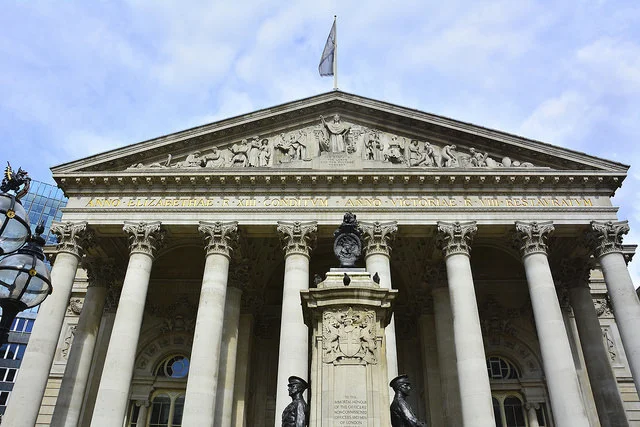
Bank of England picture taken by Martin Pettitt and used under creative commons.

January 22, 2017 /Alastair J R Ball
Brexit
Comment

Brexit must not distract us from poverty

January 08, 2017 by Alastair J R Ball in Socialism

At the beginning of 2017 it is clear that one issue will define the next 12 months of politics and probably a long time after that. Brexit: possibly the biggest and most complex undertaking in the history of this country. Certainly it is biggest task of government since the founding of the welfare state. It is important that we properly scrutinise the negotiations so that the government does not remove all protections for environmental and workers’ rights in their dash to take us out of the EU.

However, there are many other important issues that we must not lose sight of. While we are having a national conversation about Brexit, we have forgotten the rising level of poverty in Britain. Poverty has increased since the Tories came to power in 2010 and we cannot allow this new Tory government to wash its hands of its responsibility to the least fortunate in society. The left needs to fight to get tackling poverty higher up the agenda.

Most startling is the increase in child poverty. In the last year child poverty has risen by 200,000 children according to the latest official statistics. Frances Ryan wrote in the Guardian that: “this is the first increase in child poverty (when housing costs are included) since 2011-12." Rising child poverty is a damaging, and largely overlooked, indictment of our society.

Benefit cuts and low wage growth are behind the 3.9 million children now living in poverty. Two thirds of these children have family members in work, who are struggling to provide for their dependents because of low wages and the systematic cuts to the benefits that are a lifeline to those underemployed or in low paying jobs. The bedroom tax and other welfare reforms have hit the poorest the hardest. Cuts to housing benefit and working tax credit do not incentivise work as they are mainly claimed by those in work. They simply punish the poor for being poor. This was a political decision made by the previous Tory government. The welfare cuts of Iain Duncan Smith are directly to blame for rising child poverty. The government can do something about child poverty but it is choosing not to.

Homelessness has risen since David Cameron became Prime Minister. In 2015 in England 3,569 people slept rough on any one night according to official figures. 8,096 people slept rough in London during the 2015/16 financial year, a 6% rise on the previous year, and more than double the figure in 2009/10.

Homelessness is not just people sleeping on the streets. It is many people without a home living on friends or relatives’ sofas; it is many people with homes that are not fit for human habitation; it is many people in precarious housing situations. In the 2015/16 financial year in England, 114,790 households applied to their local authority for homelessness assistance - an 11 per cent increase on 2010/11. 57,750 households were accepted as homeless, a six per cent rise on 2014/15. All of these increases have occurred since the Tories came to power and since they started their program of welfare cuts. Research has shown that benefit cuts have led to an increase in homelessness.

Cameron's austerity program - enthusiastically supported by Theresa May - has taken a huge toll on the poorest members of society. We must not forget this. We must also not forget that the government has the power to do something about this tragedy and that it can help not hurt the least fortunate, it only lacks of the will to do so.

Just because Chancellor Philip Hammond has relaxed the deficit reduction goals does not mean he is spending more on welfare or being more generous to the poor. Hammond’s only consideration is making more money available to subsidised companies that threaten to leave the UK over Brexit. Hammond is most likely planning further cuts to public spending. Welfare, social care and other services the poorest rely on will be at the top of his list.

Remember that all this is a political choice. Leaving the single marketing to reduce immigration and thus encouraging business to leave the UK is a political choice. Bowing to pressure from large companies eager for subsidies and willing to strong-arm the government is also a political choice. So is cutting welfare or other services that the poorest members of society rely on. None of this is necessary.

Under the new government homelessness, child poverty and many other aspects of poverty will get worse. We cannot allow the Tories to get away with this. They have made child poverty and homelessness worse and they have the power to do something about it. They cannot claim to be decent, compassionate people whilst facilitating the impoverishment of huge numbers of their fellow human beings.

Another recession is still likely. The world economy has barely recovered from the last financial crisis and some areas of Britain have seen no improvement since 2008. Now we see the beginning of a fresh banking crisis brewing and Brexit makes a recession in Britain more likely. Child poverty and homelessness will get worse in a recession. Welfare and programs for the poor will be more important if the economy shrinks and they need to be expanded not cut. Under this new Tory government we are heading for harsher cuts and a worse economic climate, which will be directly the Tories’ and their Brexit policies’ fault. We cannot ignore this. We cannot allow them to get away with this.

Not only are we ignoring poverty and inequality because of Brexit, the government are likely to actively make these things worse because of Brexit. We must keep the government under pressure so that they do not throw our futures, environmental protection and workers’ rights under the bus to placate the howls of rage about immigration. We must also keep fighting for better welfare and more relief from poverty. The government created these problems and the government can solve them. We need to make it impossible to ignore these facts.

Cover image by Victoria Johnson and used under creative commons.

January 08, 2017 /Alastair J R Ball
Socialism
Comment

2016: the year everything stopped making sense

December 31, 2016 by Alastair J R Ball in Trump, Year in review, Brexit

In 2015 there were lots of surprises, but at the end of the year everything made sense. David Cameron had won an unexpected majority for the Tories, but the reasons for his victory were typical of past elections: the voters preferred Cameron as a lead and thought that Labour were weak on the economy. No one predicted that Jeremy Corbyn could be leader of the Labour Party when he declared his intention to run for the position, but his victory makes sense when you remember that the other candidate’s statements on welfare, spending and immigration were far to the right of what the average Labour Party member is comfortable with. 2015 made sense when viewed through our traditional lens for examining politics.

All that changed in 2016. It is as if our ability to understand the titanic shifts occurring in politics is itself breaking down.

This year saw surprise victories for Brexit and Donald Trump, as well as growing support for right wing nationalist populism all over the Western world. Despite the conventional left and right opposing these movements, and the combined weight of our civil institutes and media thrown against them, they succeeded by engaging in a different political debate that is completely parallel to the one being had by established politics. Cameron wanted to talk about the economy, but Nigel Farage was talking about borders. Hillary Clinton wanted to talk about experienced leadership, but Trump wanted to talk about crooked politicians.

Brexit was not a left wing or a right wing issue. The leaders of government and opposition were united in opposing it and are now united in supporting it. The supporters of Brexit and Remain are drawn from both safe Tory and Labour seats. People now politically identify more strongly with their referendum vote than any particular political party. This is an earthquake that has shaken up the way we have been doing politics since 1989 (perhaps since 1945).

British Politics is profoundly different after the referendum result. There is now a new political spectrum divided between nativists and globalists with both sides drawing support from both the main right and left wing parties. This is nothing short of a profound reordering of politics.

The same process is happening in America. The victory of Trump has shown that the most electorally successful position in the old way of doing politics (being socially and economically liberal) does not work when confronted with populism. The way of doing politics that has gone unchallenged in Britain and America since the days of Tony Blair and Bill Clinton is now dead. Seeing the world through their political prism no longer allows us to make sense of it.

The unusual victories of Brexit and Trump were driven by many factors, but a key one is the way that we consume our news today. Two points emerged this year: firstly, that many of us get most of our news from a social media bubble that feeds back opinions that we are likely to agree with and excludes ones that we are likely to disagree with. This has distorted our perception of politics and how widely accepted our opinions are. It has allowed ideas and positions to go completely unchallenged and preventing voters from interrogating their own opinions.

The second issue is that many people are consuming some degree of fake news. Stories that are completely untrue and would not see the light of day in a media landscape that was dominated by a few well established brands that respected the ethics of journalism. The complacency and narrow mindedness of some established media companies is partly to blame for this. However, responsibility also lies with ourselves as media consumers.

We are too willing to only read articles that we agree with and ignore articles that we disagree with. This is what has allowed us to be lied to at an industrial scale. We need to break out of our filter bubble and find some way of telling what is a lie from what is truth in a media landscape where both appear equally valid and where we are driven to the one that most suits our own bias.

Much like climate change, the solution to this problem does not require a technological fix, but for people to behave better and to be more open minded. How do we encourage people to avoid confirmation bias, to be open to new ideas and to challenge their own assumptions? Most people, it turns out, would prefer to be lied to than to challenge their own world view. In our current way of doing politics we accept news from the sources that we like or that broadly share our political opinions. In the world of fake news this leaves us open to being lied to and exploited.

The undisputed king of the fake news and media relativism is Vladimir Putin, a man who has extended his reach across the world this year, maybe as far as the White House. Politicians of the left and the right are united in the belief that something needs to be done about this tyrant and threat to democracy. However no-one knows what to do beyond the use of strong words.

In the old politics sunlight was the best disinfectant. It was sunlight that showed the BNP to be the incompetent thugs that they were, but how do we do use facts to bring down a man who shifts perceptions of reality itself? How do we argue with someone who exists in a murky world where every piece of information is equal regardless of how extreme or spurious it is? How do we present a better alternative to someone who insists that all government is equally flawed? Putin challenges even the fundamental idea of what a fact is. We cannot defeat him with conventional politics.

Putin’s biggest accomplishment this year has been saving Bashar Al Assad’s oppressive Syrian regime and successfully crushing the uprising against him. In the process hundreds, perhaps thousands of civilians have been killed. The suffering the people of Aleppo, meted out indiscriminately by these cruel despots, must move every human being. However, the West cannot do anything about it. The world is too complex, too unstable and too frightening - so we are paralysed by inaction. This is not the world of the 2000s; America and Britain cannot throw their weight around and hope this effects a smooth transition to a better, freer world. We do not understand the complexities of the geopolitics in the 2010s enough to stop something as awful mass slaughter.

Our entire way of understanding the world has stopped working. The current toolbox we use to understand politics is not sufficient to explain the new political system that we live under. This has led to those with painfully simple messages to cut through the confusion to great effect: “take back control”, “make America great again”. The answer is not to become simpler, but to find a way to navigate these new complexities.

In 2016 the soft left ran out of things to say that explain the world to voters. Between Hillary Clinton and Owen Smith, people simply do not believe in the old way of doing social democracy anymore. Corbyn offers something different, which is welcome, but I do not feel that his analysis of the political challenges of the early 21st century are complex enough or radical enough to be up to the task of inspiring large numbers of people to support a left wing political movement.

Let 2017 be a year of new ideas. Not 80s throwbacks, or 90s throwbacks, or insultingly simple answers to complex questions. Let 2017 be a year of brand new exciting ideas, deep thought about the world we now find ourselves in and an openness to re-examine the assumptions of the past. The left needs a vision of the future because the future is frightening. It needs to be new and it needs be radical, perhaps more radical than we have ever been before. I know we can do it if we find a way to remixing our thinking so that we can make sense of 2017.

Donald Trump picture taken by Gage Skidmore and used under creative commons.


December 31, 2016 /Alastair J R Ball
Trump, Year in review, Brexit
Comment

My concerns about immigration

December 26, 2016 by Alastair J R Ball in Brexit

I have concerns about immigration. Specifically that the views of most people are moving in a direction that I am not comfortable with. It is the level of fury expressed that frightens me. Whenever I watch Question Time or read social media comments, I am surprised by how angry the public is over the level of immigration to Britain. I am in a minority of people concerned by this rhetoric, and that frightens me even more.

Many of us on the left do not understand how angry people are. This anger is different from the usual political anger: dissatisfaction with the government or grumbling over taxes. People want far reaching change to the whole country. 26% of the population want the government to encourage migrants to leave the UK, even if they have children born here. People are willing to go to extremes to control immigration, like leaving the EU and wrecking the economy through a Brexit deal that prioritises control of immigration above all else.

There is complacency on the left and amongst liberal people about the level of change needed to placate people’s anger over immigration. We think that there will be an easy fix. We have assumed that it is only low-skilled migration from other EU countries that people object to. Leaving the European Common Market and tightening border controls will bring down low skilled migration. However, some groups express concern about the number of foreign nurses working in the NHS.

The lack of integration by some immigrants is often cited as a cause of hostility to immigration. Integration is clearly an issue, but I am not sure how we force people to integrate. What do we do with the people who are unwilling or unable to integrate? Should they be deported? Even if they have children born here? Remember that 26% of the country want the children of immigrants born in the UK deported, even if they are integrated. There is also the problem that people do not want to pay for programs that will help immigrants integrate. Most people would rather just have less immigration than pay for integration.

This hatred of immigration is not new; Britain did not suddenly become more xenophobic this year. However, the referendum result has exposed a hatred dwelling beneath the surface of our society. Nigel Farage, Boris Johnson, Daniel Hannan and others picked at a scab to get the result they wanted, and now they have exposed a deep wound. The origins of this wound are complex; they go back to the days of British Empire and the birth of a sense of British exceptionalism that has bred contempt for Europe and people from other countries.

Attitudes worsened after immigration increased following the enlargement of the EU in 2004. Tony Blair has primarily been blamed for not imposing transitional controls on the number of people who move to Britain. He chose not to advance an argument of how this immigration would benefit the country - filling many skill shortages, especially in the NHS and generating more tax to support the welfare state - and this left a space that the far right filled with xenophobia.

Blair believed society was inevitably moving in a socially and economically liberal direction. He viewed those opposed to mass immigration similarly to socialists opposing to his market liberalisation: their views did not need arguing against; history would ultimately prove him right. He viewed the country as a business that had to adapt to market changes. Blair did not realise that although the country prospered after his reforms, the people opposed to mass immigration did not go away. When a business fails to adapt it disappears, but people remain fixed in their views. The discontent with immigration did not disappear over time. It festered into the wound that we have today.

A few people will be convinced by more integration and a reduction in the number of low skilled workers entering the country, but the fire that heats this anger (reflected in the anti-immigrant Daily Mail, Daily Express and others) is a deep intolerance, which will endure. Most people will not simply accept a fall in migration statistics; they want to see the reduction reflected in their local environment. It is not a logical dislike of the economic impacts of immigration, it is a deep emotional dislike of how the country is changing and a powerful desire to turn these changes back. It cuts across class, region, gender, income and age and cannot be solved by addressing one concern.

A recent OECD report recommends that western countries allow immigration on an unprecedented scale to redress the imbalance between the number of workers paying into their welfare states and pension schemes and the growing number of people dependant on the welfare state because of our aging population. We need a lot more workers if we are going to sustain the NHS, our education system, state pensions and the rest of the welfare state. I am worried that people would rather the welfare state collapse than allow more migrants into the country.

Politicians are falling over themselves to give the people shouting about controls on immigration what they want, even if it is bad for the economy and the welfare state. This is especially disappointing when it comes from the Labour Party, but all the major parties are guilty of it. There is no sense from politicians that if the public want something really drastic to be done about immigrants they should not be allowed to have it. By not pushing back against open hostility to immigrants we are setting a dangerous precedent.

What happens if the people's anger at immigration is not placated by leaving the single market and tighter border controls? What happens if people are still this angry after Brexit and the Tories’ anti-immigration policies have been enacted? How bad does the anger have to get before someone says that we have a national problem with how much we hate immigrants? If we continue to allow politicians and the press to blame everything on immigrants and not stand up for them violence is likely to follow.

We are dangerously close to rounding up and deporting huge amounts of people because of a sense that they do not belong in this country. The justification for this will be that they do not belong because they do not have the right skills, or have not integrated properly, or it is politically convenient to do so. It is a horrifying thought.

Why are most people I speak to so unconcerned about this anger? Many on the left or who are liberal think that immigration is too high and should come down. These liberals underestimate how angry most people are and how radical a change they want. It is important that we stand up to hatred wherever we see it and spread awareness of its depth. We must not understate the damage that could be done by placing controlling immigration above all other political objectives.

Are my worries just the panic of someone completely out of touch with the opinions of ordinary people? I am completely over-reacting to people’s legitimate concerns? I would be interested to know if this is the case, because right now I am concerned about out attitude to immigration.

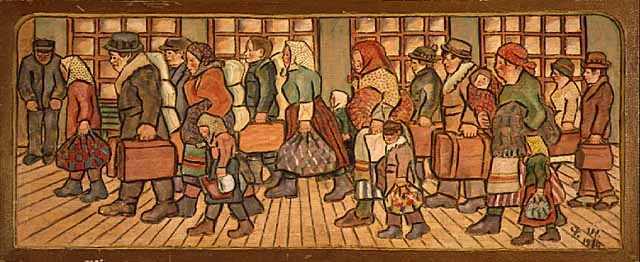
Immigration image provided by the Minnesota Historical Society and used under Creative Commons.

December 26, 2016 /Alastair J R Ball
Brexit
Comment

Could Brexit kill the Labour Party?

December 11, 2016 by Alastair J R Ball in Brexit

The government and the opposition are both united in confusion over Brexit. Whilst there is no concrete plan for Britain to leave the EU it is difficult to see what the opposition should actually be opposing. The Labour Party’s position on Brexit remains unclear, although many members have taken it as read that Labour must support some form of Brexit for either tactical or moral reasons. Is this really the case?

From a tactical point of view it initially looks like opposing Brexit bad idea as 17 million people, or roughly 52% of the electorate, voted for Brexit - even if it is unclear exactly what they voted for. A recent study has shown that in a parliamentary election between a leave and remain party, leave would win 2/3s of seats. Add to this the fact that UKIP are second in 120 seats and support for overturning the referendum results looks suicidal for Labour.

All of this was received wisdom until the Richmond Park by-election, where the Lib Dems outperformed Labour in a strongly pro-Remain constituency. Richmond was never going to be won by Labour, however there are some worrying sign in Labour’s very poor performance. The Lib Dems were able to take advantage of Labour’s woolly position on Brexit. Jeremy Corbyn’s support for Brexit counted against the party in a strongly Remain area. Suddenly Labour is questioning whether support for Brexit is the right choice.

“Brexit appears to have made Liberal Democrat candidates palatable to Labour voters,” Stephen Bush wrote in the New Statesman following the result. Even worse for the party is the results of a YouGov poll indicating that a pro-Brexit Labour Party would finish third behind a pro-second referendum Liberal Democrat party in share of vote in a national election.

Diving deeper into the data, it shows that Labour should at minimum campaign for a soft Brexit to prevent the advance of the Lib Dems in metropolitan areas. The study shows that Labour would win the largest vote share when supporting a 2nd referendum, as they pick up votes at the Lib Dem’s expense. However, this situation leads to the largest Tory and UKIP vote share as the electorate becomes more polarised between the Leave and Remain camps.

All this shows that the Lib Dems (and possibly the Greens) could steal a lot of Labour’s voters if they support Brexit. This makes sense as 65% of Labour voters supported Remain in the referendum. Corbyn has always been luke-warm at best towards EU membership and his call to immediately trigger article 50 after the referendum angered many Remain Labour voters. The Lib Dems are poised to take advantage of this as the most vocally pro-Remain party. Supporting Brexit could be the death blow to Labour.

None of this changes any of facts laid out at the start of this article: the strong support for Brexit nationwide and the number of Labour seats that UKIP are eyeing up for the next election. Labour is caught in a bind. Support Brexit and lose its liberal metropolitan voters to the Lib Dems; or support Remain (or a soft Brexit) and UKIP moves in on Labour’s seats in the former industrial North. Neither are particularly enticing options for the party.

Labour also have the problem that they cannot outmanoeuvre UKIP on Brexit or immigration. Regardless of how anti-immigration and anti-EU Labour becomes, UKIP will claim they are pro-EU, pro-migration and most people will believe them. As Abi Wilkinson wrote in the Independent recently: “voters simply don’t believe such rhetoric when it comes from Labour”. Remember that many voters believed that Ed Miliband would overspend as Prime Minister, despite his budget being signed off by the OBR.

Trying to compromise with the people whose only objectives are to take Britain out of the EU and reduce migration is what allowed UKIP and the Tory right to push David Cameron into a having referendum in the first place. We must not allow Labour to be pushed further and further to the right by UKIP. As Michael Chessum wrote in the New Statesman recently: “Attempt to negotiate a compromise on migration in the face of that wave [the anti-immigration populist right], or try to claim it as an “opportunity”, and there is simply no limit to how far Labour will be pushed”.

If Labour opts to put controls on immigration or manage immigration, they will be making the same mistake that led to the downfall of Cameron. By meeting the anti-EU, anti-immigration right halfway we conceded ground and encourage them to advance. Attempting to assert control over the issue of immigration is what has allowed the Tory party to right to the drift to the point where the new government is putting immigration above the health of the economy. If Labour opts for controls on immigration they will lose; UKIP will argue their controls are not tough enough. In the next election Labour’s controls will be tougher, but the same result will occur. Where does all this end?

It looks like Labour’s tactical options are all bad, but is there a moral issue to consider? The Labour Party also has a responsibility not to do massive long term damage to the economy, which Brexit surely would do. Leaving the EU would also threaten workers’ rights and human rights, as outside the EU, any future Tory government could abolish any rights they disliked. Labour also has a responsibility to stand up to the advancement of right wing populism and the branding of anyone opposed to Brexit as a “traitor”. Standing up to Brexit could be the right thing to do even if it is unpopular.

There are also moral issues around supporting Brexit. Does Labour have a responsibility to uphold the democratic outcome of the referendum? Even if what that outcome should be is painfully unclear? Many Labour voters do not feel listened to by the party. Directly ignoring them when they voted for Brexit is not a good idea, it only empowers the far right.

Personally, I think that leaving the EU is a really bad idea. If a significant proportion of the 52% who voted for Brexit can be convinced that it was the wrong decision then there is a case for holding a second referendum. However, I have not seen any evidence of massive ”buyer’s remorse” from Brexit voters. In fact I have seen more Remain voters becoming pro-Brexit and anti-immigration after the result. For now, the result stands and the democratic outcome of an election must be respected. The sad truth is that the Labour Party are likely to suffer whatever stance they take on Brexit; hard, soft, in favour or against.

Politics changed during 2016. The old political divisions no longer apply and a new spectrum is emerging. The traditional Labour voter coalition is being ripped apart by these changes. If politics continues to shift into a globalist/nativist configuration then there will no place for the Labour Party as it currently exists. This means that Labour needs to adapt and that they need to resolve some of the fundamental disputes that are dividing the party, especially over what form of Brexit does Labour stand for?


December 11, 2016 /Alastair J R Ball
Brexit
Comment

What I have learned about the Labour Party in the last five months?

December 04, 2016 by Alastair J R Ball in The crisis in Labour

I started this series of blog posts examining the ongoing crisis in the Labour by saying that I cannot remember a time when the Labour Party was in such a sorry state. The party’s prospects have not improved in the last five months. Recent research shows that trust in Labour is low. 66% of voters do not trust Labour and this is nothing to do with the Iraq War or Blair’s more authoritarian moments - as some have suggested. The problem is also nothing to do with the poorly planned and poorly executed coup that the PLP engaged in after the EU referendum. The problem with Labour is that the electorate does not like Jeremy Corbyn, and that Labour is seen as too soft on spending, benefits and immigration.

All wings and groups within the Labour Party need to face up the situation the whole party is in. Labour has a lot to do to win back the trust of the voters and to stand a chance of governing again in the next 15 years. The Party needs to address the issues of spending, benefits and immigration or else face a crushing defeat to the Tories. If you are relaxed about being defeated by the Tories - or intent on making excuses if this happens - then you should not be in the Labour Party. The Labour Party is not the Green Party; it is not a party of protest but a party of government and a government that changes things for the better.

The problems go much deeper than who should lead the party. Labour’s old base of support that won three general elections has collapsed and cannot be easily won back. This problem cannot be easily solved by repositioning the party to be in line with the public on immigration, spending and benefits; it can only be solved by finding a compelling vision for Labour. Once we have this, then we can discuss who should be leader.

The party needs unity until it can answer some key questions. Most importantly: what is the Labour Party for? Is it only for winning elections and undoing the worst of the damage the Tories have done, as the so called Clause One socialists would argue? If so, then maybe we need to be cynical about positioning the party. For all my reservations about Corbyn and his leadership, this is not what I want to happen.

I want the Labour Party to tackle real social issues such as the housing crisis, rising hostility to immigration, falling productivity, inequality and the economic problems caused by technological change. I want the party to help people abandoned by the Tory government. I want the party to offer a real, credible alternative to what we have now. This is what I want the Labour Party to be for.

For now, Corbyn is the party leader and all members need to accept that (unless they have a candidate who can beat him in a leadership election). However, Corbyn’s brand of 80s throwback politics will not offer the vision Labour needs to win an election.

Time has moved on. Across the world in the 20th century, left wing movements were all telling different versions of the same story. When Communism fell we lost that story, because we lost the belief that we were moving towards a better, more left wing future. Communism may have been a bastardisation of the dreams of many on the left, but it still represented the view that we can move forwards to something else. When Communism fell the word “progressive” became meaningless. What followed was the technocratic management politics of “what works”. Now “what works” has stopped working - the rise of Donald Trump and Brexit show that - and we need something new.

The left need to tell a new story for the 21st century. It needs to be about a future where the benefits of technology are shared between people and not hoarded by a few. A future where we work less and not more. A future where we rethink the role of the state. What can it do for us? What should it do for us? A future where we rethink ourselves as actors within society. What can we do for the world? What would be good?

We need a new narrative for the 21st century. The Conservatives are moving to the right socially to push out UKIP and the left economically to attract moderate Labour voters. In doing so they are redefining the centre ground as aggressively anti-immigration. They are targeting Labour’s former industrial heartland as they think they can use immigration to attract people alienated by Corbyn. At the same time the Tories are exposing the naked racism of Brexit, for example: 59% of voters support making companies report how many foreign workers they employ (Source: YouGov / 05 Oct). I have a horrible feeling that the Tory plan will work as the public is deeply opposed to immigration. Even half of all remain votes think immigration is too high and should come down. This is very electorally fertile ground that the Tories are moving in on.

Labour will face problems whatever it does. It is faced with general apathy towards politicians, a hostile right-leaning and pro-Brexit press, the rise of the far-right and bad memories of the Blair/Brown era. Economic stagnation and declining living standards present a new challenge to the party. Labour needs a policy for growth, a policy for housing, a policy for the NHS and a plan for Brexit (or a plan for stopping it). Labour must rise to these challenges.

The Labour Party will have to adapt to meet these challenges. We need a new way of discussing the left. Social democracy has run out of ideas to tackle our economic and political problems, so we need to start talking about it in new ways. We need to think about costs and value in terms of social good and not simply economic good. We need to look forwards and not backwards. Our new narrative needs to be informed by the past, however it cannot be dictated by it. As Abraham Lincoln said: “The dogmas of the quiet past are inadequate to the stormy present. The occasion is piled high with difficulty, and we must rise with the occasion. As our case is new, so we must think anew and act anew.”

There is some good news that this is already happening. At the most recent Labour Party conference, a Momentum fringe event showed some of the promise that Labour needs. Labour needs more discussion and more ideas. We need an answer to what is Labour for in the 21st century? If we can get a good answer to this question then we can start the fight back against the Tories and the resurgent far-right. If Labour cannot, then the party will be pulled apart by infighting and then swept under the carpet of history. I do not want this to happen and I am ready to fight for the Labour Party.

Picture of Jeremy Corbyn taken by Garry Knight and used under creative commons.

December 04, 2016 /Alastair J R Ball
The crisis in Labour
Comment

In defence of identity politics

November 27, 2016 by Alastair J R Ball in Trump

Alec MacGillis, at Pro Publica, wrote a piece that was typical of how we thought before the election. There was fear that Donald Trump would win over blue collar Democrats and non-voters and ride into office on the backs of the economically marginalised, those left behind by globalisation. It did not happen. According to Shane Bauer, Senior Reporter for Mother Jones, Trump supporters earned on average $11 thousand a year more than Hillary Clinton’s supporters.

This shows how divided America is politically. Millions of Republicans would not support Clinton despite the racism and sexism of the Trump campaign. However, rather than a divide between the haves and the have-nots, the divide is between those who like the way American culture and society is changing and those who are hostile to it.

This is an important fact about the state of contemporary politics in the West. Brexit has been described in similar terms, however, 59% of leave voters were middle class. As David Wearing, at the Centre for Labour and Social Studies, has argued: "The Leave vote correlates much more strongly with social attitudes than with social class."

Wearing goes on to show 81% of leave voters think multiculturalism is a hostile force and that 74% dislike feminism. 26% of the U.K. population (slightly less than the percentage who voted to leave the EU) agree with the statement that “the government should encourage immigrants and their families to leave Britain (including family members who were born in Britain)”. Taken together this paints a picture of people who are motivated primarily by hostility to multiculturalism and not economic anxiety.

70% of Brexit voters say they would make an economic sacrifice to leave the EU, which indicates that Leave supporters are not living on the breadline. As Wearing says: “If the white van man has become the iconic Brexiteer, it appears that what's more pertinent is the whiteness of the man rather than the van (and the fact that the van is more likely to be an Audi).” The key point is that the election of Trump and the Brexit vote were not caused by economic hardship, but a rejection of multiculturalism.

Why are so many people opposed to multiculturalism? For many on the left support for multiculturalism is self-evident. If many people are alienated by it then it must be because we are going about seeking equality the wrong way. The goal is fine, but the methods are wrong. People who hate identity politics, political correctness, safe spaces and privilege checking are responding with an anti-liberal backlash.

Recently Stephen Kinnock argued that Labour must stop “obsessing” over diversity or face the same defeat as Clinton. Kinnock argues for a one size fits all approach to social justice, saying that: “Every group is actually struggling with the same problems of social mobility, the same problems of disempowerment, the same problems of feeling that they are being left behind. It doesn’t matter what the colour of your skin is or what your background is. What matters is that you’re poor and you’re disadvantaged and we’ve got to be there to help and engage with every single one of you - not just those who seem to have been taking priority over others.”

Tackling poverty and disempowerment should be a priority of the Labour Party, but Kinnock is misrepresenting the growing political division as economic and not social. In Britain 48% of adults hold authoritarian, populist attitudes and 26% support a statement that is a clear definition of prejudice. This division cuts across economic groups and is a rejection of multiculturalism itself, not how we package it.

Prejudice and right wing populism is spreading. The victims will be immigrants and ethnic minorities. Already one in four people believe that you are not properly British if your parents were immigrants. Hostility to Muslims is spreading. A significant number of people believe that acceptance and tolerance of other cultures is a force for social ill. On the left we need to stand up to this. You can call this standing up for identity politics or political correctness or whatever you like, but it is what we need to do. It is not enough to have a one size fits all policy on equality, because we are not all the same. Some people suffer more discrimination than others. On the left we need to specifically stand with the people suffering from the backlash against equality. That is doing identity politics.

People who feel alienated by identity politics, political correctness, safe spaces and privilege checking are people who do not like the way that ethnic minorities or women ask for equality. Identify politics is the mechanism through which emancipation from prejudice is achieved. If someone feel uncomfortable with this, it is because they benefit from the systems of privilege that run through society and realising this is a painful experience.

We need to stop spreading the view that the disaffection of the poor created Trump, Brexit and the backlash against multiculturalism, because they wanted jobs and healthcare. This is simply not true. The root of this backlash is dislike of how our society is changing. It is a dislike of equality.

The growing backlash against equality needs to be directly confronted and not pandered to. People need to know that it is unacceptable to hold racist and xenophobic beliefs to stop holding them. To legitimise them in any way is encouraging racism and xenophobia. Identity politics, political correctness, safe spaces and privilege checking are all parts of this.

Donald Trump picture taken by Gage Skidmore and used under creative commons.

November 27, 2016 /Alastair J R Ball
Trump
Comment

Trump’s election shows how divided we are politically

November 19, 2016 by Alastair J R Ball in Trump

Already a lot of column inches have been filled by analysis of Donald Trump’s unprecedented victory. A lot focus on how racially divided the results were: 58% of white voters opted for Trump, whereas only 21% of non-white voters did. Despite the fact that Trump won the support of the majority of white voters, there was no white surge, i.e. he did not turn out millions of white non-voters. The support he did get was from traditional Republican voters. Trump turned out 90% of the Republican coalition that Mitt Romney did in 2012, and got around 1 million less votes than Romney did.

Trump won the election because Hillary Clinton did not turn out Democratic voters; she got 5 million votes less than Barack Obama in 2012. The effect of Trump and his extraordinarily racist campaign was to turn voters off, hence the lower turnout, rather than encouraging support for Clinton. It turns out that Americans would not vote for the candidate of another party, even if one party’s candidate is a sexist, xenophobic demigod without experience of government and temperamentally unsuited to the Presidency. Trump’s awfulness failing to translate into support for Clinton is because of the huge political divide that has opened up between the two different Americas that inhabit one country.

This divide ensured that Republicans would not vote for Clinton to keep Trump out. Republicans were willing to overlook racism to vote for their party's candidate; they knew how awful Trump was, but they did not care enough to vote for another candidate. Endorsing, with your vote, an openly racist candidate is racism, however, I do not believe voters were consciously voting for a candidate of white supremacy. They were voting for a party they supported against a party and a candidate they loathed.

How did we get to the point where millions of people are willing to support racism instead of changing their political allegiance? Certainly the false equivalence we saw during the campaign played a huge part. Anyone, whether professional pundit or casual social media commentator, claiming that both candidates were equally flawed was supporting the view that Republicans should stick with their disgusting monster of a candidate, because Clinton was just as bad. This is not true. One candidate was objectively worse than the other. Anyone engaging in false equivalence directly contributed to a Trump victory.

The filter bubble created by social media is crucial, it means that we do not see news that challenges our worldview. In order to curate the information environment that you will agree with, Facebook or Twitter also engage in a false equivalence of news sources. A blog putting out unsubstantiated, heavily biased “news” that you agree with is presented as equally credible to a news source putting out news you disagree with. A Republican may see an article about Trump being accused of sexual harassment from the New York Times, but below it is a Breitbart article or a post from a smaller blog claiming that Hillary Clinton had people killed. One of these is legitimate news from legitimate news source. The other is not, but our own confirmation bias and social media’s false equivalence mean that they are given equal weight.

Hatred of mainstream media feeds into this. We are quick to dismiss anything from a mainstream news source that might challenge our worldview and quick to accept anything, regardless of how flimsy or dubious it might be, that chimes with how we see the world.

There are lots of problems with how mainstream publications cover many stories, but the solution is not turn instead to news sites that have no reputation to uphold, no sense of journalistic standards, print outright lies or conspiracy theories. The Internet has provided a whole Universe of different news sources so that we can turn our backs on the mainstream media and never hear anything that challenges our deeply held beliefs. This has grown the political divide and leads us to a situation where people believe that Hillary Clinton is a worse candidate for President than Donald Trump.

Some have chosen to blame “safe spaces”, “political correctness”, or any aspect of social liberalism or pluralism that they do not like, as a cause of this divide. This is not the case. Political correctness is the desire for minority groups to be treated as equals to others, not a plan to marginalise white heterosexual males. Safe spaces are places where people can be sure they will not experience racism, sexism or other forms of prejudice. If you accept that they caused the divide then the solution is to abandon attempts to treat other people fairly, get rid of spaces where people can shelter from prejudice and accept more of the discourse of Trump and his followers into our politics.

Western society is very close to a breakthrough in the difficult struggle for racial equality. Movements such as Black Lives Matter and thousands of other grass roots campaigners, writers and journalists have detailed the struggle of ethnic minorities. The emphasis is now on politicians and members of privileged groups to act, however we are now confronted with a backlash from white people who believe that giving rights to others takes away their own rights. We have seen this in GamerGate, the Sad Puppies, accusations of ‘feminazis’ - and now in Brexit and Trump.

Calls to end political correctness and abolish safe spaces are calls to slow down the journey towards racial equality in favour of a slide backwards to a world where white privilege stands unchallenged. Some have claimed that social liberalism and pluralism is too confrontational and is exacerbating the political divide. They would prefer that women, people of colour and other oppressed groups made their objections as quietly as possible so that they can be easily ignored.

Social liberalism or pluralism is not the problem. The problem is that many of us have gone on a journey and not taken others with us. This is the cause of the divide. We have not made the case for political correctness in a convincing way, and that is where we have faltered. The problem is not being too confrontational - rights were never won by not being confrontational. The problem is not standing up for social liberalism and making the case.

We are deeply divided but not entirely irreconcilable. People on both sides of the divide hold common values of a sense of justice, fairness and community. It is through these values that we can appeal to other people, make our case and heal this division.

Donald Trump picture taken by Gage Skidmore and used under creative commons.
November 19, 2016 /Alastair J R Ball
Trump
Comment

Heathrow exposes the contradictions of Tory policy

November 13, 2016 by Tom Coley

All this fuss for a strip of tarmac? The government’s go-ahead for Heathrow Airport’s third runway is ultimately a local South East issue, so why does it need so much national airtime?

This was how one caller to BBC Radio 4’s ‘You And Yours’ programme last weekend saw it. And, indeed, the majority of the hour-long programme was taken up discussing such issues: noise, air quality, increased traffic on the already clogged M25. All important issues, but undoubtedly local ones. The problem with keeping the conversation local is that Heathrow will have consequences for all of us.

The decision to expand shines a light on two crucial contradictions of government policy. Firstly, how can a government committed, at least in theory, to reducing carbon emissions in line with last year’s Paris agreement simultaneously expand aviation? And secondly, in the shadow of yet another expensive, London-centric infrastructure project, what happened to the ‘Northern Powerhouse’?

The 2015 Paris Agreement commits all countries, albeit voluntarily, to move their economies away from fossil fuels in the hope of limiting global warming to the ‘safe’ level of 1.5C. Aviation is responsible for approximately 6% of the UK’s carbon emissions. This might not sound link much compared to, say, the 25% contributed by road transport. But whilst a future of zero-emissions cars is genuinely in sight (and at any rate can be alleviated by improved public transport), the same cannot be said for aircraft. Yes, jets are becoming ever more efficient, but are likely to be reliant on carbon-emitting kerosene fuel for the foreseeable future.

Even this might not matter so much in itself; according to the Committee on Climate Change, aviation emissions have actually fallen slightly in the UK, year on year, since the financial crisis. But the government sees encouraging aviation as crucial to business growth: the Heathrow decision makes this clear. The Tories may give lip service to taking climate change seriously, and signed up to Paris along with everyone else. But Heathrow flies in the face of all that (no pun intended).

‘Climate change means there can be no airport expansion at Heathrow – or anywhere’  responded George Monbiot, typically uncompromisingly. I’m not a particular fan of Monbiot’s pious, sanctimonious style, but he’s right. Other sectors have paths towards decarbonisation; aviation doesn’t. Acceptance of man-made climate change may have reached the political mainstream, but de-growth certainly hasn’t. The determination to expand aviation might contradict what the ‘green’ Cameron government said, but is entirely concurrent with the actions of a Prime Minister that shut down the Department for Climate Change immediately upon taking office.

Alternatively, however, let’s suppose that Theresa May genuinely does want to meet her Paris commitments. This means that she appreciates the ongoing, and possibly rising, contribution of aviation emissions to the UK’s total. This means one of two things. The first explanation if that other sectors – and other people – will have to compensate for the aviation sector’s emissions, by reducing emissions elsewhere. This means higher costs in other areas, which – as Monbiot explains – is unfair.

Essentially, by letting aviation off the hook to continue emitting, the rest of us will be paying for the holidays of the rich. Unlike Monbiot, I don’t begrudge the foreign holiday taken every year or two by the average traveller. But, like him, I recognise that the vast majority of frequent flyers are, in fact, the rich: 75% of all international flights are taken by just 15% of the population.

The other scenario is that Theresa May is well aware that aviation will have to be curtailed if we have any hope of meeting our Paris commitments. This explanation has Cameron and Osbourne’s ‘Northern Powerhouse’ squarely in its crosshairs. This answers the question of ‘why don’t we just expand Northern airports, as well as Heathrow?’ with the blunt answer of ‘we can’t’. Punitive taxes will eventually have to be applied to air fares; regional airports will decline. Instead of a way of expanding national airport capacity, it may be, as John Sauven speculates, an exercise in moving it. Away from the written-off North and towards the South East.

If this sounds a bit far-fetched, it’s worth pointing out that John Sauven is the Director of Greenpeace. He’s not an advocate for or against Tory policy, or for the ‘Northern Powerhouse’ – his only stake in this game is a belief that climate change needs drastic action.

It is also possible that the government isn’t really bothered about the contradictions, or the implications of navigating them, outlined above. Perhaps it’s just another symptom of a short-termist outlook. The government is trying to please as many people as it can at this specific moment, whilst prostrating itself at the feet of the international business community to make clear that Britain is ‘open for business’ in the face of Brexit and hoping they’ll notice. I highly suspect that this is the most likely explanation.

Getting back to Heathrow, the conversation we’ve had about it has been widespread, and yet stubbornly local. The ‘You and Yours’ programme, despite a few nods to wider issues, absolutely treated it as a local concern. As with many projects, the ‘nimbys verses progress’ dichotomy often serves primarily to obscure the bigger picture and other narratives. Similarly, the ridiculous advertising spat between Heathrow and rival Gatwick over who gets to expand served to make it into an either/or question. Why not both? Or, more importantly, neither?

Personally, I’m undecided as to whether expanding Heathrow was the right decision or not. I fly sometimes, and it would be hypocritical to argue that people shouldn’t. The affordability of overseas travel to the wider population is a positive thing. But aviation certainly needs to be limited to help prevent catastrophic climate change. The priority for the Left should be to ensure that this happens, but that it is done fairly. Rather than simply taxing flying so heavily that it reverts to a luxury for the very rich, I would support a rationing system: one return flight per year per person, for example. This would be politically tricky, but no more so that the heavy tax route. Emissions need to come down, certainly – but the poor shouldn’t have to pay for the mobility of the rich.

Heathrow airport picture taken by Tony Hisgett and used under creative commons.

November 13, 2016 /Tom Coley
Comment

Welcome to life inside the nightmare

November 11, 2016 by Alastair J R Ball in Trump

I am writing this on Wednesday evening while looking at the front page of the BBC news website. I cannot believe that the events of the last 24 hours are real. There was a moment, at about 4am on Wednesday morning, when I was confronted with the full ghastliness of what was happening and my sleep deprived brain decided that it was not true. This is just a dream, I thought and spent a good few seconds trying to wake myself up. It did not work. Reality remains stubbornly real. We now have to accept that we are living inside our worst nightmare.

Oscar Wild once said that “when the Gods wish to punish us, they answer our prayers.” This sums up the perverse way that I feel responsible for what has happened in America. For years I have wished that all the people oppressed by the neoliberal status quo would get together and throw their weight behind an alternative. Then we could rock our economic system to the foundations. This is what has happened, but it was not supposed to be like this.

The first question that came to mind is, how did an uprising against global hyper-capitalism come from the far right and not the left? How did we get to a point where millions of Americans are willing to vote for a candidate who is openly racist, has ties to Vladimir Putin, lies through his teeth, brags about sexually assaulting women, flirts with the alt-right, is supported by neo-Nazis and the KKK and shows contempt for democracy itself? Who is to blame for this?

It is a complex question. False equivalence is certainly a factor; the media and individuals on social media have created a myth that Donald Trump and Hillary Clinton are equally flawed candidates and this is simply not true. I am not the biggest fan of Clinton but she is a million times the better option than Trump. How partisan politics has become is also to blame. Despite Trump being obviously awful, millions of people could not bring themselves to vote for the candidate of the other party. There are the left behind, the people whose wages and living standards have declined over the last thirty years, who desperately want change. There is the overt racism spreading amongst the white population. There are other factors. It is not an easy question to answer.

There are obvious parallels to be made with Britain’s vote to leave the European Union in June of this year. Two distinct interpretations of Brexit have emerged. The first is that this was a rebellion against the unequal distribution of the economic growth caused by neoliberal globalisation. Jobs, wages and living standard have declined in post-industrial areas of Western economies. Many of these areas have been thrown under a bus in the dash for the market liberalisation, free movement of capital and financialisation of the economy - the tenets of the neoliberal capitalism embraced by both major parties. People from Flint, Michigan to Boston in Lincolnshire are angry about how bleak their future is. We need to listen to them and take steps to improve the quality of life in such places to stop radical, right wing populism spreading.

The second interpretation is that white Western people are becoming increasingly hostile to multiculturalism and the mingling of different races. They are angry at the loss of privilege that being white once brought. And men, who over-index in support for the populist right, are angry about the loss of male privilege. Racism and xenophobia are spreading in a backlash to social liberalism that has been adopted by all mainstream politicians. This needs to be directly confronted to create a more harmonious society. What is overlooked in many of these discussions is that this populist, right wing rebellion against the status quo can be both of these things at the same time. The two are intrinsically linked.

The radical populism of the right is a response to the changes in society that we have seen over the last thirty years. It is a response to the changes in social structures that have given more status to women and ethnic minorities, which some people believe is at the expense of white men. It is a response to globalisation, which has given increased freedom to business, created economic growth but also created huge inequalities. It is a response to changing economic landscape, the location of jobs, the types of jobs and sectors of employment. It is a response to the increased number of people living cities and the increased numbers of people holding degrees. It is a response to the way the whole world is changing by the people who want to tell “STOP” at the top of their voice.

This has led to the emergence of a new political spectrum. It is not left wing versus right wing, but those in favour of these changes versus those opposed to them. For now, we call these two groups globalists and nativists, but clearer definitions will emerge in time. This new spectrum cuts across existing political divides. That is one reason for the success of Trump, he reaches across the Republican/Democrat split and appeals to non-voters because he is the alternative people wanted to the way the world is going. The same can be said for the leave vote in Britain or a vote for Marine Le Pen in the upcoming French presidential elections or a vote for the AfD in Germany or a host of other new nativist movements.

What does all this mean for the left? It does show that there are many people who are opposed to the globalist status quo, but Trump and the Tories under Theresa May are already shifting to occupy this territory. Jeremy Corbyn or Bernie Sanders’s traditional left wing politics do not fit into the new political spectrum. They are anti-globalist, but not nativist. By not fitting into this spectrum they risk alienating people at both ends of it.

New politics needs new politicians and new policies. People schooled in the changing political discourse. The left needs something new. The technocratic neoliberalism of Tony Blair and Bill Clinton has been rejected by voters, but the old left politics of Corbyn and Sanders is not gaining much traction. I do not know what this something new will be, but it should contain a healthy amount of social liberalism and skepticism of globalisation with a thirst for the future and a politics that looks forwards to a more hopeful tomorrow and not back to a lost golden age.

The problem is that the left does not have much time to decide what this something new is before we cease to be relevant altogether. We need to get active and resist the populist right now, because I do not want to spend the rest of my life trapped inside a nightmare that I cannot wake up from.

Donald Trump picture taken by Gage Skidmore and used under creative commons.

November 11, 2016 /Alastair J R Ball
Trump
Comment

What problems do Labour face after the Brexit vote?

November 06, 2016 by Alastair J R Ball in The crisis in Labour

Brexit has split the nation in many ways. It has exposed significant divisions between the North and South, young and old, the degree-havers and have-nots. One of the strangest is the division it has exposed the political left. There was certainly an anti-immigration, racially charged aspect to the Brexit voter. However, there were also many people who had been ignored by the left and right for decades giving two fingers up to the establishment. The fact that the Brexit vote is both of these things has confused those of us on the left.

There is certainly a class element to this debate, a debate mainly being had by middle class people. It is important to remember that Leave would not have won had it only been supported by poor people in economically deprived areas. More scrutiny is needed of middle class hostility to immigration. The people who have something to defend are the ones most incensed by change, as they feel the most threatened.

There is also a racial element to this debate. White people are removed from the consequences of racism and thus approach it as an academic question. There has been a 58% year on year increase in racist incidents in the weeks following the EU referendum. Middle class white people are not aware of the impact this is having on the lives of ethnic minorities. While we are debating our response to Brexit, people are suffering.

There are two distinct interpretations of the Brexit vote: either it was an expression of anger directed at the political elite motivated by the decline in living standards experienced by vast areas of the country, or it was an expression of racism by people who are unhappy about how Britain is changing. The former means that we need to address the economic circumstances of some people to fight racism. The later needs to be directly confronted to stop racism and make this a more harmonious society. The fact that Brexit can actually be both is frequently overlooked.

There are those on the right of the Labour Party who want to connect with alienated voters by taking a tough stance on immigration. Chuka Umunna wants to leave the single market to end freedom of movement. This is an example of centrists wanting to move to where voters are, rather than showing leadership. Aside from the possibility that, as an electoral strategy it may not work, if the Labour Party adopted more aggressively anti-immigration rhetoric, it is only likely to fan the flames of hatred, not extinguish them. Merely putting “progressive” on the front of something does not stop it being racially or ethnically divisive. 

My inclination, as a middle class white person, is that state spending can address the problem of the Two Britains. If we can genuinely tackle the issues of affordable housing, school places and access to GPs, then we can help everyone and tackle the problem of our increasingly divided society. Re-establishing the immigration impact fund - set up Gordon Brown and abolished by David Cameron - would help to alleviate the pressures caused by new arrivals. Steps to redistribute wealth, to ensure that more people benefit from economic growth (itself partly fuelled by immigration), would also help reduce tension.

The problem with this is that this will require more taxes and middle class people are unwilling to pay them. I have lost count of the number of times I have been told by middle class people in London’s craft beer and pulled pork establishments that they cannot afford to pay more taxes. It is the role of the left to convince people to be altruistic and accept higher taxes so that we can create a more harmonious and equally prosperous society. Middle class selfishness, and economic policy that has redistributed wealth away from poor towards the middle class, is one of the key reasons why we are such a divided nation.

There is a cultural gulf opening up on the left: a gulf between those who worry about the cost of commuting and those who have no jobs to commute to; between those who criticise austerity and those who are victims of it; between those who cannot afford to buy a house and those without a roof over their heads; between those who are worried about the statistics showing a rise in racist incidents and those who experience them as part of everyday life.

In a recent Guardian long read, John Harris tells a story about an argument between young Labour activists and a UKIP voter in Broadstairs. It illustrates how divided the left is and makes the point that in the past these two people would be allies in a common cause and now they are diametrically opposed. The division Harris illustrates seem too big to gulf and thus there are many middle class lefties who do not want to bother trying. “They’ll never listen.” I have heard a lot recently, accompanied by a shrug. “They” usually refers to anyone who disagrees with the speaker.

The EU referendum vote was many things and we cannot pigeonhole it as either an anti-elitist uprising or a knee jerk nationalism. The left needs to make it a project to address the issues of poverty, lack of opportunity and racism wherever it is found. Neither of these goals is more or less important than the other.

Responding to the Brexit vote is huge challenge for the Labour Party and the left as a whole. With Theresa May pushing on towards a ‘hard’ Brexit that is heavy on rhetoric but short on specifics, it is imperative that the left finds ways to bridge the gap Brexit has opened up.

If the Labour Party cannot reach the people who voted Leave it will suffer and may be reduced to being an irrelevant political force. Political debates are changing and lines are being redrawn and if the left cannot make itself relevant to people’s daily struggles then UKIP and Tories will eat into their support from both ends and leave only a new right-leaning political spectrum, divided between racist nativism and neoliberal globalisation.

Exit sign picture taken by Paul Wilkinson and used under creative commons.

November 06, 2016 /Alastair J R Ball
The crisis in Labour
Comment

I, Daniel Blake

October 22, 2016 by Alastair J R Ball in Film

Ken Loach has never shied away from addressing controversial political topics in his films. His 1966 TV play Cathy Come Home uncovered the terrible state of housing in the 1960s and energised a social movement to improve the quality of housing. Since then he has tackled issues such as life on a Glasgow council estate, Irish Independence, the 1945 election and the damage caused by Thatcherism. His characters are usually working class and his films frequently have a left wing political message. In his latest film, I, Daniel Blake, Loach attacks the cruel and unsympathetic welfare system.

The film focuses on Daniel Blake, a carpenter from Newcastle who has been signed off work following a heart attack. When he is denied Disability Living Allowance he has to apply for Job Seekers Allowance, however, Dan quickly finds that the system is set against him. This is a film that states clearly that the safety net is not helping the people who need it, because of the restrictions on claiming benefits.

I, Daniel Blake is effective in making its point. Almost every scene is dedicated to showing how the loops that Dan has to jump through are set up to grind down his self-esteem. The film is filled with characters who try to help Dan, from his neighbours to a friendly Jobcentre employee, but the benefits system itself actively prevents them from making a difference. Loach is saying that people are good and want to help, but the rules prevents them from doing so. It is a bitter indictment of our collectively lack of humanity.

Loach digs into the wider economic and social problems that have contributed to Dan’s situation. When Dan is sent to a mandatory CV workshop by the Jobcentre, he makes the point that there are way too many job seekers for the amount of jobs that are available, so it does not matter how good his CV is. The housing crisis is examined through the character of Katie, an unemployed single mum that Dan befriends. Katie has been moved to Newcastle from London, because this is the nearest council flat available for her and her two children. Food poverty is tackled when benefit sanctions force Katie to visit a food bank. Katie also skips meals so that there is enough food for her children. One in five UK adults are current struggling to feed their children.

The audience knows that it was Tory austerity and Iain Duncan Smith’s welfare reforms that made it so much harder to claim benefits. It is these policies that have removed the safety net that was created to protect people like Dan or Katie when they were in need. The film does not point to specific policies, people or parties as responsible for the situation; the Tories and IDS are only mentioned once by an unnamed supporting character. Maybe this is because it would be out of character for Dan to understand the politics that oppress him. The result is that this is not a partisan film, it is about how cruel and unfair the system is.

The strength of I, Daniel Blake is that Dan and Katie are very sympathetic. They are good, honest people who want to and actively seek work. They are hard working families and cannot be described as scroungers. Through their story we see the very human cost of welfare restrictions, which makes the audience angry with the system and want to change it. It is worth remembering while the disaster of Brexit unfolds, the unemployed are still suffering under a cruel benefits system. Effectively conveying this fact to a large audience is a huge achievement for Loach.

One of my main concerns with the films is that Dan and Katie are so sympathise that the film could make it worse for benefit claimants. Campaigners against welfare cuts frequently use instances of the deserving to back up their case for a more just welfare system. Perversely, this actually increases support for welfare restrictions. This is because when the public find out about cases of the needy being unable to access benefits, they become angrier at the scroungers they read about in the papers taking money away from people like Dan and Katie. This leads to a desires to further tighten access to benefits as a means of helping deserving claimants.

My other concern about the film is whether it will reach the right audience? Cathy Come Home was very successful in starting a public campaign to improve housing conditions in the 1960s. However, Cathy Come Home was on the BBC when there were only two channels. We had less choice and therefore more people who ordinarily would not have been exposed to the ideas of the film found out about the state of housing at the time. Now we have a much wider choice in media and I worry that I, Daniel Blake will only be seen by an audience who already agree with its message.

At the screening I attended, in a middle class area of North London, a huge cheer rose from the audience when a character insulted Iain Duncan Smith, but I live in a safe Labour seat. The Daily Mail has barely covered I, Daniel Blake, even when it won the Palme d'Or at the Cannes film festival this year. They are able to pretend that it does not exist, because their audience will never find out to about it. The people who should have to experience the anguish of watching Dan suffer never will.

It is a problem with contemporary politics that we all live in bubbles filled with the opinions we already hold, fed back to us by social media and selective news that we consume. We are isolated from ideas that challenge our worldview. I, Daniel Blake is a brilliant piece of filmmaking, but regardless of how good it is, it will only ever be seen by people who agree with it.

We need more films that challenge the cruelty of our government and the callousness with which many of us have thrown huge numbers of the unemployed onto a scrap heap. However, if we cannot reach out to a broad range people who think differently, then no one’s opinions will alter and nothing will change. To paraphrase Karl Marx: I, Daniel Blake interprets the world. The point, however, is to change it.


October 22, 2016 /Alastair J R Ball
Film
Comment

The emergence of a new political spectrue

October 16, 2016 by Alastair J R Ball in The crisis in Labour

The strangest Tory Party conference in living memory just finished. We had the absurd situation of a Tory Prime Minister, who has been in government as Home Secretary for six years, railing against “elites”. Stranger than that was the sight of the Conservative Party - the party of free enterprise - picking a fight with business over Brexit. Theresa May broke with over 40 years of Tory neoliberalism that goes back to Margaret Thatcher becoming party leader in 1975.

The Conservatives are changing to focus on controlling immigration instead of growing the economy. They had pledges to phase out foreign doctors, cut down on the numbers of foreign students, put landlords in jail for not checking their tenants' residency status and to “name and shame”' companies for hiring foreign workers. May also says she will take the centre ground of politics, which is odd because it sounded like she is moving to the right of previous Conservative leaders. The scary thing is I think she is right. She is taking the Tory party to the centre ground. Not the centre of a left/right political axis, but the centre of a new nativist/globalist political axis.

Politics is in flux now and positions that would have been unthinkable five years ago are now being debated. A recent study has shown that, in Britain, authoritarian populist attitudes are held by 48% of adults - despite less than 20% of the population identifying itself as right wing. People are no longer divided by left or right, but by their views on our globalised, multicultural society.

Joe Twyman, YouGov’s head of political and social research for EMEA, said: “These results show that the old days of left-versus-right have been replaced by a much more complicated, nuanced mix of political groupings,” he also said: “Any political party or movement that can successfully appeal to those of an authoritarian populist leaning could benefit hugely when it comes to elections.” This means we are moving towards a new political spectrum where we are divided between nativists (socially conservative and economically protectionist) and globalists (socially liberal and economically liberal). This will be the important political divide of the future. Put simply by Twyman: “We need to understand that the battle between racist nationalism and liberal cosmopolitanism will be one of the defining ideological struggles of the 21st century.”

Brexit and the US election already show this divide. The EU referendum tore up existing party political lines, made strange allies and turned party member against party member. The division was simple: do you like the way Britain is going or do you not? Do you vote for the status quo or to smash it? The US election shows the same process: Donald Trump has broken with 35 years of Republican free-market orthodoxy to bring back the divisive politics of race. He is winning over blue collar Democrats while alienating metropolitan Republicans.

This new political axis has been partly created by the crisis in neoliberalism that has been slowly playing out since the 2008 financial crash. Deregulation and free market economics has failed to improve everyone’s standard of living, as was promised. It turns out that voters do not care about the huge inequality that emerged in the 1990s and 2000s, but they do care that they are materially worse off, as many people are now. People are angry at the system and want someone to blame.

This crisis has been exploited by the populist nativists. Free market economics - once so widely accepted that no other political idea could threaten it - is vulnerable to a challenge from socially conservative nativism, because it speaks to those who have been left behind by the last 30 years of unequally distributed economic growth. This is why nativists like Trump and UKIP are taking votes from the left and right. The left behind cut across the current political spectrum.

It is not just economic factors that are tearing up established politics. A major cause is the social changes caused by immigration. Neoliberalism has brought down borders and multiculturalism has led to far greater mixing of different communities than in the past. This has changed established social orders, mainly the status of white people within western society. In the past, being born white came with certain privileges that were nothing to do with what the state provided. In classically liberal Edwardian England and the Butskellist 1950s, white people were socially set above people of colour. This has been questioned over the last 30 years, and the social status granted to someone for being white has declined.

The nativist rebellion against the status quo is as much as about race and culture as it is about economics. Zack Beauchamp makes a strong case that change to the status of the white community in the West is the main cause of the rise of populist nativisim. Nativism predominantly appeals to the lower middle class. They are threatened by immigration and relative decline in status of being white because they feel they have something to lose. There has not been enough scrutiny of the racism spreading amongst middle class whites. It is clear that some whites are very resistant to the loss of this implicit superiority and that is why they are embracing nativism.

There is no space on this new spectrum for traditional left wing views. The Labour Party is caught between the statist nativists and the socially liberal globalists. Left wing values do not sit easily next to nativists concerns about immigration; however, they are not the natural ally of the free market globalists. It is possible that the Labour Party could move to the middle of this spectrum by borrowing the protectionism of nativists and the social liberalism of globalists but this risks drawing fire from both sides.

The Tories can see the way the wind is blowing and they are moving to the centre ground of this new spectrum. They are becoming more anti-immigration to appeal to nativists while still being the natural home of globalist business elites. May might have picked a fight with business, but they are unlikely to defect to Labour or UKIP.

If Labour does not do something it will be left behind. A fairer tax system, protecting the welfare state and well-funded public services will be secondary considerations in the future compared to the question of whether we are an open outward facing society or whether our primary concern is looking after our own people. The Labour Party needs to think about how it will fit into this new political spectrum.

If the left keeps speaking the old language of the past political divide then we will become increasingly irrelevant. I can see a future where British politics is divided between the Tories (a globalist party) and UKIP (a nativist party). Traditional left wing policies will be a fringe interest. This must be prevented if we care about our left wing values. There is no rule that there must always be a Labour Party. The Liberals have declined from the party of David Lloyd-George to the party of Tim Farron. If the Labour Party cannot find out how it fits into this new political spectrum, then it may vanish forever.

Nigel Farage picture taken by Gage Skidmore and used under creative commons.
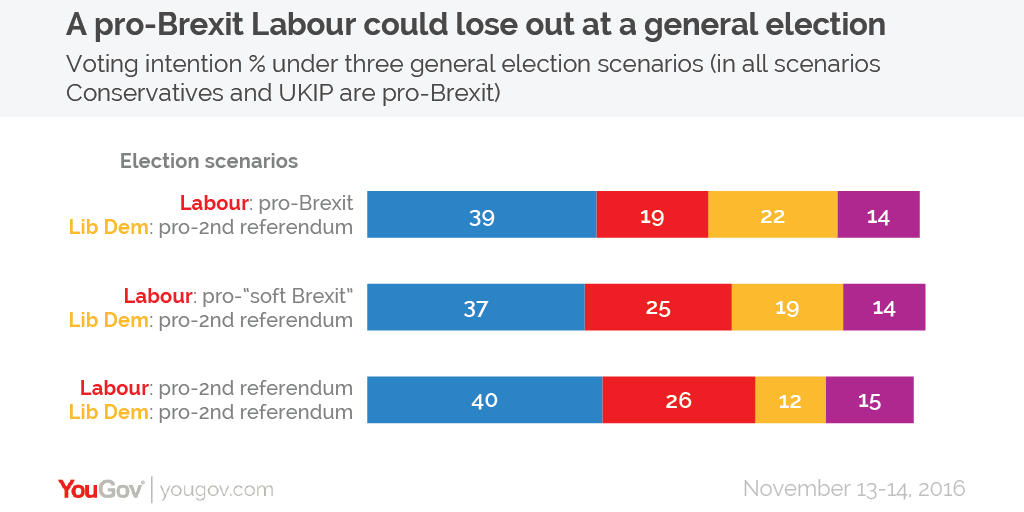
October 16, 2016 /Alastair J R Ball
The crisis in Labour
Comment

Who are the Corbyn-sceptics?

October 09, 2016 by Tom Coley in Corbyn

Between Jeremy Corbyn’s first leadership victory and his second, the issue of bad behaviour by his supporters has never been far from the news. The situation calls for two responses: condemnation, and an attempt to work out its root causes.

At Red Train we haven’t shied away from calling out bad behaviour on the left. Online abuse, anti-Semitism and misogyny is never acceptable, and nothing in this article condones or excuses it.

On the second point, not enough has been done to try and understand where the anger on the Left that sometimes spills over into unacceptable behaviour is coming from. Contrast this with the constant assertion amongst the political establishment that the surge in support for UKIP’s anti-immigration and xenophobic sentiments means we must pander to it. When the disaffected direct their anger towards political engagement of the UKIP variety – of intolerance and fear of change –politician fall over each other to ‘listen’ to them and ‘addressing their concerns’. When the same people turn towards the left and Corbyn, they’re usually ridiculed or dismissed as irrelevant.

This willingness on the Corbyn-sceptic side of the Labour Party to write-off Corbyn’s supporters is one of their greatest failings. Not only does it entrench the love of Corbyn, now at hero-worship level amongst his most ardent fans, but it also contributes to a misleading, one-sided narrative in which Corbyn supporters are always the perpetrators, and ‘moderate’ Labour MPs the victims. The problem with this narrative isn’t that it’s untrue, it’s that it’s incomplete.

It isn’t just a case of left-wing supporters bullying and intimidating a moderate PLP. Take Diane Abbott for example. She has received as much online abuse and hate-mail as practically anyone else in Parliament. Yet we’ve heard a lot more in the media about the abuse received by anti-Corbyn MP Jess Phillips.

Now, I certainly don’t agree with much of what Phillips says; her (as yet unfulfilled) threat to quit the party if Corbyn was re-elected was needlessly daft and divisive, but that in no way justifies the abuse she’s received. Why, though, is it any less worthy of coverage when directed at Abbott? This suspicion that the media and anti-Corbynites have colluded to encourage a simplistic narrative is one of the factors fanning the flames of anger on the left.

Some might say that the crucial difference is that those abusing Philips are Labour or Momentum members, whereas Abbott’s abusers are just the usual trolls that being a black woman in a prominent position makes her a magnet for. No-one is suggesting Corbyn-sceptic MPs are responsible for this in any way; everyone is willing to accept there are plenty of nutters out there, but is it really fair to heap blame on Corbyn for the actions of anyone and everyone who professes support for him? Especially when there’s no similar assumption of responsibility when the traffic is flowing the other way?

This unbalanced narrative extends beyond just the Labour party and the left. We’ve just spent a year discussing the rise of anti-Semitism on the left, and rightly so, but Theresa May can give a speech at Tory conference actively courting xenophobia, and receive widespread praise.

To be clear, the abuse and bullying we’ve seen amongst Corbyn supporters is unacceptable and, whilst he has condemned it, I’d like to see Corbyn try to do more to combat it. But let’s not contribute to a narrative that would have us believe that the bad behaviour has been completely one-sided. Much of the Corbyn-sceptic PLP has acted pretty appallingly over the last year, and this shouldn’t be ignored either. It’s what has fuelled the grievance and sense of foul play amongst Corbyn supporters.

Politics can be a dirty business and the validity of some of the PLP’s actions are debateable, but others are not. Trying to prevent members from voting in the recent leadership election, in many cases for the most arbitrary reasons, was simply wrong and undemocratic. I can’t see how initiating an attempted leadership coup in the immediate aftermath of Brexit can possibly have been a good idea; allowing, as it did, a willing media to refocus on Labour’s internal problems rather than holding the Tories to account over the mess that they’d caused.

Corbyn has often accused of being partisan; in fairness, he sometimes appears at his most animated when fighting political opponents within, rather than outside of, the party. However, in what way is Peter Mandelson suggesting that he’d like to see a Conservative election victory as a way of ousting Corbyn any less worthy of criticism?

Granted, none of this amounts to death-threats of the kind received by Jess Phillips, but it’s hardly comradely behaviour either. Labour, as it is often said, is a broad church. It needs to remain one now that the Left is nominally in charge, and that means compromise from Corbyn and his team. However, it also means that the other wings of the party need to accept that Corbyn won, and has a mandate. Much of the PLP’s behaviour has been bad for party cohesion, and feeds the unhealthy notion amongst some Corbynistas that it’s all an establishment conspiracy.

The point is that bad behaviour on either side doesn’t justify more bad behaviour from the other. In fact, what it tends to do is breed even more bad behaviour, and we’ve all seen the toxic outcome this creates. I sincerely hope that this is a lesson that all wings of the party have learnt from the past year – left and right, supporters of Corbyn or not.

Today, I was gratified to see that Corbyn seems to have made a real effort to put together a diverse shadow cabinet, which includes some of his critics, and appears to be doing his best to make peace with Tom Watson. They, for their part, have agreed to serve in it. I can only hope this is a positive sign of things to come.

Despite everything that has happened over the last year, conciliation now needs to be placed front and centre. The party is still on a knife edge. Pull together now and Labour might still have a chance of recovery; carry on fomenting discontent, and we can all forget about it.


October 09, 2016 /Tom Coley
Corbyn
Comment

Who are the Corbynistas?

October 02, 2016 by Alastair J R Ball in The crisis in Labour

The greatest achievement of Jeremy Corbyn is the way he has grown the Labour Party. He has brought many people into Labour and this is why he increased his majority in the recent leadership election. However, some Corbynistas are causing harm to the party, by bullying other members and refusing to accept the compromises that have allowed Labour’s broad church to function. Labour Party member Ruth Dee wrote a powerful piece about the problems caused by some of the new members.

There are several ways these Corbynistas are viewed. They are either:

●      A radical, far left group of SWP and SPBG infiltrators intent on destroying the party or dragging it somewhere to the left of Che Guevara.

●      Or, hate filled, social media thugs who will not tolerate any opposition and accuse anyone who disagrees with them of being a “Blairite”.

●      Or, deluded idiots who live in a bubble fed by the Canary, who cannot see anything wrong with Corbyn and are unaware of how bleak the future of the party is.

●      Or, ordinary people whose opinions have been left out of an increasingly right-leaning political debate, people who have been dismissed or taken for granted by Labour leaders for years.

Some people from the far left have joined the Labour Party, but they are a minority of the new members. There are not that many Trotskyists in the UK, so talk of an extreme left take-over is ridiculous. A lot of former Green Party members have joined Labour, but being concerned about the environment is hardly an extreme position. Surely one of Labour’s aims should be to convince supporters of other parties that Labour is the party you should be supporting?

The worst aspect of the increase in membership has been a rise in in anti-Semitic rhetoric and bullying from Labour Party members. This bullying (usually on social media) has especially targeted women and is laced with misogyny. On pro-Corbyn Facebook groups, anti-Semitism passes without comment, and anyone with a different opinion is pilloried as a Blairite. On these groups there is even support for George Galloway, a rape apologist and hate merchant who set up a political party with the express intention of stealing votes from Labour. There can be no tolerance of anti-Semitism, sexism and bigotry. Members caught engaging in such activities should be purged without hesitation.

It would be wrong to characterise all of the Corbynistas in this way. However many are willing to overlook the fact that their fellow travellers preach hate and intolerance. The worst arguments for Corbyn are made by his most passionate supporters, who ignore the massive looming electoral defeat in Labour’s near future and peddle conspiracy theories found on sites like the Canary. They talk of Labour providing a “genuine opposition” but there will be nothing genuine about a Labour opposition if the party loses 100 seats and the Tories have complete authority to do whatever they want.

Many of the new Labour members may deny the reality of Corbyn’s leadership, but that does not mean that they do not have valid criticisms of the current state of politics. Over the last 20 years Labour and the Tories have converged on a very narrow strip of the centre ground of the electorate. Opposing privatisation of public services, growing inequality or poorly planned foreign military interventions are considered to be extreme positions by much of the political establishment. These views are widespread, held by many reasonable people, and supported by recent events. Those who hold these views are looking for a political home.

Reading the comments in pro-Corbyn Facebook groups reveals huge numbers of people who were alienated from politics but are now excited by Corbyn. Underneath comments about a Blairite coup, there are peer-to-peer discussions about disability, mental health, benefits and the impact of Tory cuts. These are people frequently overlooked in our political discourse, not represented by politicians or journalists. These are people who have been politicised by austerity, but were put off Labour because of the party’s support of it. These are the people worried about the increasingly racist anti-immigrant rhetoric. These people want their objections to be heard and feel that Corbyn is the man who will do it.

Corbyn-sceptic party members also want to help people suffering under the Tory government, but they do not want to talk to them. An argument is being made by the Corbyn-sceptic side of the party that it is in the best interests of these people to be silenced so that the Labour Party can become electable again. I cannot agree that the future of the party is in ignoring people who are passionately arguing for social change and are suffering under a Tory government.

To win an election Labour must clearly reach out to people it is currently not appealing to. However it also needs to keep its activists on board and represent their views. Passionate and inspired people joining the Labour Party is clearly a good thing. However we cannot tolerate misogyny or anti-Semitism to any degree. Labour members must also be able to accept criticism of their leader and not blame the party’s poor recent performance on an elitist MSM conspiracy.

The root back to electability is by inspiring people - many people. Labour is currently inspiring a few people - many of whom have been ignored for a long time - which is a start. This is why I feel that this influx of Corbynistas is a good thing. However, we must be watchful for anyone engaging in bullying, spreading conspiracy theories or fuelling hatred. Together, new members and old, we can make the Labour Party stronger and more effective. So long as we work together.

The photo of Corbyn at a CND event was taken by Garry Knight and is used under creative commons.

October 02, 2016 /Alastair J R Ball
The crisis in Labour
Comment

Labour needs compromise and unity

September 25, 2016 by Alastair J R Ball in The crisis in Labour

Less than a week has passed since Jeremy Corbyn was re-elected to the Labour leadership and the party is fighting amongst itself again. Pro-Corbyn activists are flinging abuse at Corbyn-sceptic party members on social media, while supporters of Owen Smith’s failed leadership bid are tearing up their membership cards. There is a lot of anger in the party right now and although anger can energise campaigners, some of it is not constitutive. Bristol West CLP member Ruth Dee has written eloquently about the problems anger directed at fellow party members has caused.

This level of anger has stopped Labour from functioning properly as a party. Brexit presents the biggest challenge of a generation but the Labour Party is stuck in the middle of an “existential crisis”. This is not helpful for the people who need a Labour government.

A lot of the tension has arisen because people angry at the current political consensus have joined the Labour Party. In the past, members were either in support of, or reluctantly accepted, the free market ideology of the 80s and 90s. Now those alienated by centrist politics are getting involved with a mainstream party and are trying to change it to represent their views. Views they feel have been ignored for a long time.

This is creating conflict between new and existing members. It is not always conducted in the form of a gentlemanly disagreement, showing respect for your political opponents. It is hard to have respect for your political opponent or engage in calm debate when their views devastated your community, threaten to dehumanise you as a person, further impoverish you or cut the support network you depended on. Make no mistake that this has been the result of neoliberalism, fanning the flames of anti-immigration rhetoric, talking tough on benefits and austerity. All of which the Labour Party vocally supported in last year’s general election. People have a right to be angry, as Abi Wilkinson expressed much better than I can.

Not being angry about the current state of politics is a privileged position, a fact that Corbyn-sceptics would do well to bear in mind. Not wanting a radical alternative to the current political consensus is a privileged position; it shows that your community has not been systematically pummelled by 30 years of neoliberalism. It is a privileged position because it shows that Tory austerity is not grinding away your livelihood.

Contempt for those who are angry about being oppressed by the last 20 years of timid centrism, technocratic managerial politics and blind acceptance of the free market is damaging the party. These are people who remember the New Labour years not as a period of bountiful economic growth, but of continuing decline. There are those on the right of the Labour Party who would really like all the people concerned about work insecurity and the scapegoating of immigrants to shut up so that the party can get back to winning the support of Daily Mail-reading homeowners in Surrey. These members believe that the best way to help benefit claimants and immigrants is to silence them while we pander to people who actively hate them.

Labour cannot function while we have contempt for the people who are angry at the way they are being treated by a Tory government. The people who have found hope in Corbyn need to be listed to if we are to find a way to reach out to others suffering under the current government. However, the way to help the people left behind by neoliberalism and suffering under Tory cuts is not for the Labour Party to self-destruct because metropolitan Corbynistas refuse to compromise in any way, and would apparently rather suffer a crushing defeat to the Tories than make peace with the rest of the party.

People have a right to be angry. That does not mean that they get what they want all the time. It does not mean that they can ignore political reality and the looming crushing defeat to the Tories. Anger from the left is tearing the Labour Party apart and is preventing a compromise that could restore the party to stability. If we want a genuine opposition to the Tories then we need to unite and oppose. Simply taking a principled stand in the face of electoral suicide is not enough. Remember the 1980s? When the Tories completely dominated politics? They are not remembered as a decade of egalitarianism and social cohesion. The goals of socialists and social democrats are not served by badly losing an election.

Now Corbyn has won again we all need compromise and unify to make the party work. The anger of people who suffered during the Thatcher, New Labour and Cameron years needs to be recognised. There are people who do not see 13 years of Labour rule as substantially different to decade that came before it or the half decade since. Labour needs to acknowledge this if it going to move forwards and win back these people’s support.

However, anger needs to be channelled at our opponents and not at each other. Angrily stamping your feet and demanding that the party change to perfectly embrace your views is not being a good Labour member. It is fair enough to feel aggrieved that the party’s left was marginalised for so long, but that doesn’t make shouting down other wings of the party any more acceptable now. It is not respecting the broad church that allows the Labour movement to function.

We need solidarity now and not petty Twitter insults. The party needs compromise and unity if it is to survive. It needs to find a way to come to terms with its past and look towards the future. As a movement we are stronger together when everyone is pulling it the same direction. Achieving compromise and unity will not be easy. Some hate-spreading members need to go. Some members on the right, used to having their way for so long, will need to acknowledge the broad range of opinions in the party. Members from the left and new members will need to compromise with people who think differently to them.

Together we can and have achieve great things. This is the point of the Labour Party, not to be a small pressure group influencing politics in one direction from the edge but an alliance of people with common concerns to act together to change things for the better.

Labour Party image created by David Holt and used under creative commons.
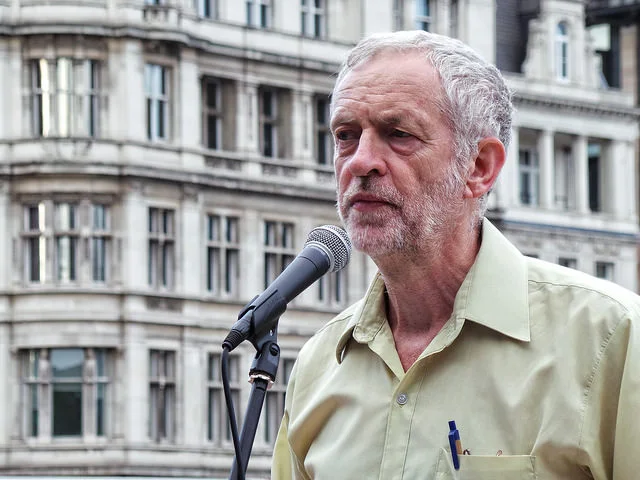
September 25, 2016 /Alastair J R Ball
The crisis in Labour
Comment

Who should be Labour leader?

September 20, 2016 by Alastair J R Ball in The crisis in Labour

Labour’s poll ratings are awful. The Tories currently have an 11 point lead in the polls and a significant number of 2015 Labour voters prefer Theresa May to Jeremy Corbyn. Labour are heading for a major election defeat. Some of Corbyn’s supporters are relaxed about this, but I cannot see how any of the goals of the left are served by giving the Tories a huge majority in parliament. The party membership is growing, but we must not confuse a large party with wide electoral support. We should look at the council elections from earlier this year, where Labour failed to make substantial gains. At this point in the electoral cycle, Ed Miliband was way ahead of the Tories and he still went on to lose.

Jeremy Corbyn, the current Labour leader, is ultimately responsible for the poor state of the party. However, I doubt that Owen Smith, the current challenger for Labour leader, would do any better because Labour’s problems go beyond who is leader and have causes that stretch back decades (this has been the point of my recent posts). Party members are currently faced with the choice between two leaders, both of whom would be defeated in the next general election.

Just because Labour cannot win the next election, does not mean the choice of leader is insignificant. Party members need to ask themselves what do we want from a leader who is bound to fail? Do we want someone who can build a broader social movement? Do we want someone who can make Labour stronger in the long term? Do we want someone who can unite the party?

The strongest case for Smith is that he could be a stepping stone towards electability. A vote for Smith is a vote to move away from the disastrous present and towards a better future. My main concern with Smith is that this more electable Labour Party that he would lead us towards is likely to be vehemently an anti-immigration and anti-benefits. The best case scenario for what follows Smith is a step back to the Miliband/Brown vision of social democracy that has been rejected twice by the voters.

If there is one political lesson of 2016 it is that lots of people are fed up with the status quo. We see that in Brexit and the rise of Donald Trump. Labour cannot win by offering more of the same. Corbyn is an alternative to the status quo, a break with the neoliberalism that as been the political consensus for the past 30 years. The Labour Party needs to offer something different from reheated free market economics with some social liberalism if it is to win again. Corbyn himself is different to most politicians and this inspires people. Smith is anything but inspiring.

There is much to dislike about Corbyn. He is indifferent to the bullying from some of his supporters. Over the last 30 years he has aligned himself with every anti-western cause. This includes calling Hamas and Hezbollah “friends” and appearing on the Iranian government’s propaganda channel Press TV, which has been banned by Ofcom and regular hosts anti-semites. I do not want a Labour Party leader with links to Iran, Hamas and Hezbollah. I do not want a Labour leader who at best turns a blind eye to the anti-semitism, homophobia and sexism of these groups.

With Smith in charge, Labour would escape the problems of having a serial rebel as leader. The party would not have a leader who has been linked to some awful organisations and who mistrusts the media to the point where he cannot get his message out. Labour would become a more efficiently run operation with a clear communication strategy under Smith.

What would the message behind Smith’s well-run communication strategy be? That is anything but clear. I do not think that he has a concrete plan to tackle the historic problems that have created Labour’s dismal present. Neither does Corbyn, but he does at least inspire some people. I do not think Smith would be any better at inspiring people to vote Labour. Smith can put out as many well-phrased press releases as he likes, but he needs to address the fundamental issue that people want something different from politicians.

There has to be acknowledgement of the fact that Corbyn has become very popular and Labour needs to learn from how he has inspired so many people alienated from politics. Corbyn has been able to cut through people’s cynicism with politics. Inspiring voters and offering hope is the only way that Labour can win a general election and exploiting the success that Corbyn has had needs to be a part of Labour strategy. A winning strategy may not inspire people in the exact way that Corbyn has, but Labour cannot afford to dismiss the fact that a throwback to the 1980s has become more popular than seasoned politicians who are supposed to be experts in winning public support.

Smith does not inspire any wing of the party; very few of the big beasts on the right of the party publicly support him. He is unlikely to grow the electoral support of the party in places where Labour is not already strong. If the party is getting rid of Corbyn then it must be to appoint a leader who can appeal to the voters Labour need to win over. This candidate is not Owen Smith. I am sure that he will be a competent Labour leader if he wins, but I do not see him winning over voters whom Ed Miliband did not convince.

There are many things to dislike about both candidates, and not a lot to inspire anyone who wants a Labour government anytime soon. Corbyn’s record of supporting unpleasant groups and his inability to tackle the abuse from some of his supports is a major strike against him. I am also frightened that the Labour Party will become rabidly anti-benefits and anti-immigration in order to become “electable” in the future. Smith’s rhetoric on immigration has only encouraged this fear. This is why I cannot support him for Labour leader.

This leaves me with no opinion other than to return a spoiled ballot paper as a gesture of protest against both candidates. This is not a decision I make lightly or one I am proud of. If there is one thing that this leadership contest has shown it is that Labour needs to change soon or face destruction.

Picture of Jeremy Corbyn taken by Garry Knight and used under creative commons.

September 20, 2016 /Alastair J R Ball
The crisis in Labour
Comment

The left is suffering because of its lack of vision

September 11, 2016 by Alastair J R Ball in The crisis in Labour

A recent article in the Guardian has data showing that even if had Labour won 100% of the 2015 Green vote, the Tories would still be the largest party in parliament. Green voters are switching to Labour, but other voters are deserting it. This, combined with the expected boundary changes, means the outlook for Labour in the 2020 general election is not good.

The takeaway from this is that Labour need to win over some Conservative voters to regain power. The simplest way to achieve this would be to move to the right, but will Labour ever have credibility with Tory voters on benefits and immigration? Not every Tory voter is a right wing ideologue, many can be convinced to vote Labour, but the party must have something to offer. Labour need a coherent vision of what they would do with power.

Across the world the left has become very good at describing problems of contemporary capitalism. In Britain much of the criticism of Tory austerity have turned out to be true: healthcare is suffering, junior doctors are on strike, students have rioted, inequality has widened, the cost of living has gone up, wages are stagnant, economic growth is lacklustre. However voters are less likely to vote Labour now than in 2010. This is because, as Ed Miliband discovered, criticising the government is not enough. Labour need to offer an alternative vision for society and not just a list of grievances, even if those grievances are valid. We need to answer the question: what exactly would we do in government?

The most obvious instance of having valid criticisms but no alternative is also the largest issue facing global capitalism: the failures of neoliberalism. The left has been criticising neoliberalism, privatisation and deregulation years before the 2008 financial crash exposed to the world the problems of anything goes capitalism. However the left had no economic model to replace neoliberalism. The best we could offer was a reheated socialism or a return to Keynesianism. Going back rarely inspires voters and thus neoliberalism survived the greatest economic crisis since the Wall Street Crash. A crisis it had directly caused.

Neoliberalism emerged to replace the post war consensus in the 1970s because it offered an alternative to the dominant Keynesian economic framework. Neoliberalism offered solutions to the economic problems of the time as well as having politicians and academics to champion it. In other words, when the post-war consensus stopped being a consensus, an alternative was ready. Now that alternative has run its course, but when the best possible opportunity to replace neoliberalism came along there was no economic model to replace it. Little has changed in the eight years since the financial crash. The left still needs an economic system to replace neoliberalism. This will be the core of the alternative the left offers the voters to get re-elected.

Related to neoliberalism is the issue of globalisation, an economic problem the left has many criticisms of, without any prescription for. Many politicians and thinkers recognise the problems of globalisation: the entrenched poverty caused by moving jobs overseas, the downward pressure on wages, the increase in inequality. The only alternative to globalisation are the disastrous suggestions of the far right. The likes of Donald Trump and Nigel Farage want to put up barriers (in the former case literally) to keep the rest of the world out. Trump has also suggested a 45% tax on Chinese imports to America, which would trigger a tariff war between the world's two largest economies.

Trying to keep the rest of the world out will only make us poorer and will not help us tackle our economic problems. However, the falling living standards and entrenched poverty caused by globalisation is fuelling support for reactionaries like Farage and Trump. The left need to find a way to mitigate the negative effects of globalisation without shutting the world out to neutralise the appeal of dangerously devise figures like Farage and Trump.

Linked to the backlash against globalisation is the wave of nationalism and nativism that is sweeping across the western world. From Trump to the True Fins to Jobbik and Marine Le Pen, nationalism is picking up the support of those left behind by neoliberal globalisation. The threat they pose is obvious, but aside from criticism, the left has no response. Without an alternative to neoliberalism, those who lose out from globalisation will turn to increasingly reactionary political movements. If the left cannot offer a credible alternative then the nationalists will.

The appalling lack of policy, and reliance on criticism without vision, applies equally to both the far left and centre left. It also applies to most left wing parties of all stripes across the western world. The centre left is still wrapped in the embrace of neoliberalism and believes that any deviation from the doctrine of free market capitalism is poison to the electorate. Their faith in a failed and widely unpopular economic system has meant that centre left leaders have lost support from the electorate and members of their own parties. If there is any political certainty in 2016, it is that voters are not want happy with the status quo. If the centre left want to regain power they need to rethink their relationship with neoliberalism.

Jeremy Corbyn and the far left are little better at offering a coherent alternative to neoliberalism. Corbyn, Sanders and assorted others who are attacking the political establishment from the left offer many criticisms but no practical alternative system. In some cases they show no inclination to do so. Corbyn has led the Labour Party for over a year but has outlined very little of an alternative vision. Corbyn’s shadow chancellor John McDonnell, has even signed George Osborne's fiscal charter, committing a Corbyn-led Labour government to austerity.

I supported Corbyn for Labour leader because I wanted him to articulate a left wing alternative to the neoliberal status quo that has existed since 1979. So far, Corbyn has shown more interest in fighting other members of Labour Party than presenting the convincing left wing alternative vision that the country desperately needs.

Across the western world left wing political parties are suffering a crisis of identity. The centre left has nothing new to offer alienated voters. Faced with radical - often disastrous - right wing alternatives, voters are deserting the left. This can be seen in the Brexit vote, a reaction to the painful pro status quo Remain campaign. This can be seen in Hilary Clinton's poor performance in the US presidential campaign so far. If she gets to be president it will only be because Trump is so vile. It can be seen in how Corbyn - a man who offers little more than 80s nostalgia - easily defeated three seasoned centre left politicians, because they had nothing more to offer than the status quo. Across the western world the centre left has run out of ideas but still clings to neoliberalism and thus bleeds support.

The far left should seize this opportunity for real social change. However, they offer many valid criticisms of the status quo and the centre left but little in terms of a concrete alternative. Corbyn offers something different, which is encouraging, but being different is not enough. The left need to offer a concrete vision, a plan, policies, an indication of what we would do with power, if we are to convince the electorate to support us.

Labour Party picture taken by Andrew Skudder and used under creative commons.

September 11, 2016 /Alastair J R Ball
The crisis in Labour
Comment

The case for making a case

September 04, 2016 by Alastair J R Ball in The crisis in Labour

Changing voters’ minds is a severely underrated skill in contemporary politics. Politicians instead prefer to talk in terms of positioning themselves; hence the rush to the right on immigration post EU referendum. The Remain campaign is the most obvious instance of positioning over conviction. The strategy of the Remain campaign was not to change anyone's mind about the EU; it was only to align a Remain vote with voters’ primary concerns, jobs and the economy. This approach seemed smart, but it failed.

Being aligned with economic stability allowed the Conservative Party to win a surprise majority in the 2015 election. Most rational voters support the party with the most economic credibility, or the party that is seen to have the most economic credibility. Why did the majority not vote Remain when the Stronger in Campaign had worked so hard to align a Remain vote with economic stability?

A narrative is forming in our public discourse (at least on the left) as to why Remain lost. That narrative states that it was the poor, Northerners, the left behind, the losers of globalisation that caused Brexit. It assumes that these voters could never have convinced of the merits of immigration and EU membership. The Stronger In campaign aligned Remain with economic stability but these people simply would not listen. Their minds were made up and there was nothing to be done.

This narrative falls down because there is evidence that Brexit was not caused only by voters in the former industrial North. They do not make up 52% of the population. So if angry, poor Northerners did not cause Brexit, what did?

The Stronger In campaign failed to win over many people with good jobs, or a degree, or who own a house, or live in the South voted for Brexit. These people care about economic stability (many voted Tory in 2015) but did not care that it was aligned with a Remain vote. These people do not like immigration or how the country has changed over the last 30 years and they want to stop it. Could they have been convinced to vote Remain with the right argument?

This argument would involve the fact that pressure on public services has been caused by government cuts and not by immigration. It would involve the fact that cuts to ESOL services has made it harder for recent immigrants to integrate. It could involve arguing for the establishment of a fund that invests in areas with high levels of immigration to alleviate the pressure - as Jo Cox argued. It could involve convince people that we have a humanitarian duty to help refugees. Or that unemployment and high costs of living are not caused by immigration but by our deregulated labour and housing markets. It would involve arguing that there is a different way of doing politics.

Who will make these arguments? Which politician or party will pick up the mantel of convincing people that we can collectively tackle our problems? Jeremy Corbyn and the Labour Party are not doing this. Corbyn has shown more interest in fighting other party members than convincing voters to support Labour. He has had a hostile media and unsupportive PLP to deal with, but he could have done more. He could make Labour a broader church instead of a divided one.

If Corbyn will not try to convince the electorate to vote Labour, then who will? Certainly not the most vocally Corbyn-sceptic wing. They only understand the tactic of repositioning the party and have no desire to convince anyone. Given control, they will shift the platform to anti-immigration and anti-benefits in an attempt to chase the centre ground. Even Owen Smith and Yvette Cooper (who are certainly to the left of the party) seem to be against making a pro-immigration argument and convincing voters.

The problem with re-positioning Labour towards the centre of British politics is the Tories have shifted the centre ground on benefits, public services and immigration substantially to the right. To chase this would fundamentally change what Labour stands for.

This what I most dislike in the Corbyn-sceptics: they do not want to change people's minds and convince them to vote Labour. This is evident in how they present the case for Owen Smith to become party leader. They do not argue for why the Labour Party should embrace centre left politics, they simply say the voters will never embrace socialism so we will water it down until it is something they will accept.

This approach has sustained the drift to the right on economic issues since 1979. Thatcher moved the economic centre ground to the right, then Blair repositioned Labour to match. Now we are seeing an increase in right wing rhetoric on immigration. Labour can either convince people this new racially charged streak to our politics is wrong, or re-position itself to match the new centre ground. My biggest worry about Owen Smith is that if he becomes Labour leader he will do the latter.

The folly of re-positioning your politics is shown in the EU referendum result. Attempts to align Remain with voters’ current beliefs failed to inspire enough people to vote Remain. Remain lost because they did not make the case for remain. Labour will lose if it tries to re-position itself in line with the new rightward centre ground. They need to convince people that they offer an alternative.

If you are against the racism of the Brexit campaign, the solution is to fight the narrative that Brexit was won by Northern idiots who will not change their mind. The solution is to convince people that an inclusive and accepting society is in all our best interests. If you want Labour to win an election again then we need to convince people that Labour offers a genuine alternative to the current government, not a slightly softer version. The left needs to argue from a certain position for change and not just re-position itself.

The main issue with this what alternative does the left offer? What exactly do we try and convince people to support? This will be the subject of the next article.

House of commons image created by Herry Lawford and used under creative commons.

September 04, 2016 /Alastair J R Ball
The crisis in Labour
Comment
  • Newer
  • Older

Powered by Squarespace

Related posts
Oct 31, 2025
Farage’s new immigration plan is cruelty as a governing principle
Oct 31, 2025
Oct 31, 2025
Trump-rally.jpg
Sep 30, 2025
Dr. Strangelove goes to Tehran: The hottest new war nobody ordered
Sep 30, 2025
Sep 30, 2025
Sep 16, 2025
The right finally discovers that life sucks for Millennials, but guess who they still blame
Sep 16, 2025
Sep 16, 2025
960px-Official_portrait_of_Angela_Rayner_MP_crop_2,_2024.jpg
Sep 9, 2025
Rayner’s resignation is another unforced error from Labour
Sep 9, 2025
Sep 9, 2025
Union-Jack.jpg
Aug 20, 2025
Who really holds power? The cultural illusion of middle-class dominance
Aug 20, 2025
Aug 20, 2025
Labour Party in parliament.jpg
Aug 2, 2025
What would Max Weber make of our politicians?
Aug 2, 2025
Aug 2, 2025
Jul 28, 2025
Why social media platforms spread the worst political messages
Jul 28, 2025
Jul 28, 2025
Trump-rally.jpg
Jun 20, 2025
Elon Musk and Donald Trump: The Beavis and Butt-Head of right-wing edge lords
Jun 20, 2025
Jun 20, 2025
Capitalism.jpg
May 27, 2025
“That’s Your GDP”: Labour’s big growth delusion
May 27, 2025
May 27, 2025
nigel farage.jpg
May 15, 2025
Nigel Farage is seriously uncool
May 15, 2025
May 15, 2025