Red Train Blog

Ramblings to the left

The Red Train Blog is a left leaning politics blog, which mainly focuses on British politics and is written by two socialists. We are Labour Party members, for now, and are concerned about issues such as inequality, nationalisation, housing, the NHS and peace. What you will find here is a discussion of issues that affect the Labour Party, the wider left and politics as a whole.

  • Home
  • Topics
    • Topics
    • EU referendum
    • The Crisis in the Labour Party
  • Art
  • Books
  • About us
  • Search
Corbyn.jpg

Taking stock of Corbyn so far

June 09, 2018 by Alastair J R Ball in Corbyn

I used to think that it was impossible for an overtly socialist politician to be leader of the Labour Party. The idea is completely antithetical to how the Labour was run for all of my adult life. Everything I knew about politics told me that it would be impossible for Jeremy Corbyn to have gotten as far as he has. Not only becoming Labour Party leader and being popular with the members, but also having a decent chance of becoming Prime Minister at the next election.

I used to think that radicalism was separate from mainstream politics. Maybe a small, local campaign somewhere could come up with an interesting policy idea that might possibly be more widely adopted after it had been watered down a bit and stripped of its radical context. There was no way that the Labour Party as a whole would be heading in a radical direction. Yet here we find ourselves.

The result in last year's general election was incredible. To go from being so far behind in the polls to improving Labour's position was an enormous achievement. One that came from the hard work of activists across the country. This shows that left wing policies can be popular when offered to the electorate and disproves the New Labour idea that Labour must tack towards the centre to win power.

Brexit and small towns

One year on from the election seems like a good moment to pause and to take stock of the Corbyn project so far. We shouldn't be complacent; there is still a long way to go before Labour can form a government. So a frank assessment of where we are now will give us some insights in what we should do next.

Brexit is a real threat to Corbyn's chances of becoming Prime Minister. The country remains divided between Leave and Remain camps and has settled down to a grudging acceptance that Brexit must go ahead. As a Remain voter, it’s painful to admit that it's tactically suicidal for Labour to oppose Brexit at this point. Becoming the party of Remain voters will not gain Labour the votes it needs to form a government. Neither will halfway measures such as offering a referendum on the final deal. There are a lot of pitfalls for Labour to avoid, on this issue.

There is also the problem that Labour is not making enough gains in small towns. It is clear that there was not enough liberal metropolitan voters in the county for Labour to form a government. Labour needs to win over more voters in small towns to gain power. An economically redistributive policy offer will help here, but more needs to be done to bridge the vast cultural gap opening up between the Labour Party and those who live in small towns.

If Labour can address these two crucial issues then the possibilities are staggering. Not only a return to power for Labour, but the chance to pass reforms that will address the big problems facing the country. What I want to see from the party is more radicalism in the face of these challenges, an openness to the far reaching reforms that are needed.

Radical reforms

These radical reforms will need to think about more than how much we spend on schools and hospitals, although these are important. We need to ask questions about how we relate to the state, how we participate in democracy, how we think about value and how we save the natural environment.

We need to ask ourselves: what is that we want to achieve? It’s not enough to get Corbyn into power, we need to know what we will do when he gets there. All the tactical thinking over Brexit will be for nothing it if we don't know what we’re fighting for.

Is the plan undoing neoliberalism and the damage that cold ideology has done to this country? An end to austerity and giving a lifeline to those who have suffered through years of cuts? Is it the rebirth of Keynesianism and idea that there is a role for the state to play in curbing the worst excesses of markets. Is it Universal Basic Income and giving a minimum standard of living to everyone? Is it something else more radical and more powerful?

We need something concrete to build the movement that can win the next election. Something that we are offering everyone in this country. Something that will transform their lives for the better. I believe that we can do this. We can change the country.

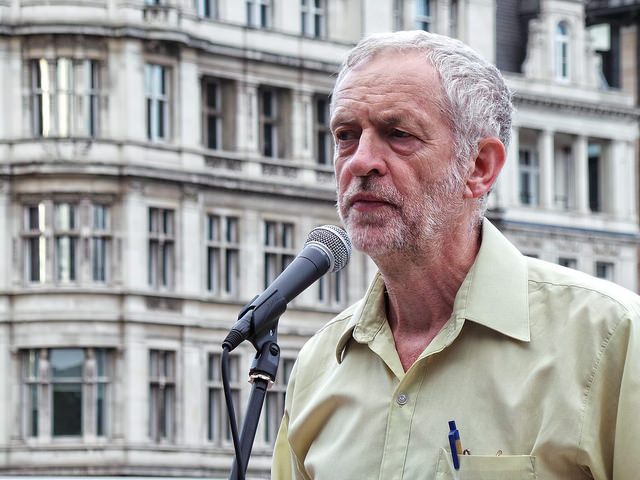
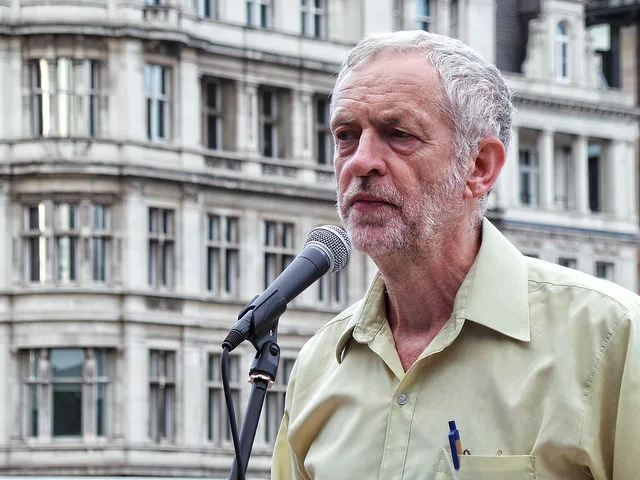
Picture of Jeremy Corbyn taken by Garry Knight and used under creative commons.

Related posts
Gaza-War.jpg
May 11, 2026
Max Weber’s thoughts on violence are as relevant today as they were in 1918
May 11, 2026
May 11, 2026
Wetherspoons.jpg
Apr 1, 2026
Last Orders for the Soul: The Bohemian Boozer and the British Psyche
Apr 1, 2026
Apr 1, 2026
polling-station.jpg
Mar 23, 2026
The Green victory shows the perils of Labour’s move to the right
Mar 23, 2026
Mar 23, 2026
Iran-war.jpg
Mar 9, 2026
Trump unleashes his politically incorrect war on Iran because of vibes
Mar 9, 2026
Mar 9, 2026
Keir_Starmer.jpg
Feb 28, 2026
Can someone please explain to me why Peter Mandelson keeps getting important jobs?
Feb 28, 2026
Feb 28, 2026
andrzejrembowski-microphone-4319526_640.jpg
Feb 23, 2026
The pressure on mental health services under late capitalism and how art therapy can help in the fight against the far-right: A conversation with activist and art psychotherapist Cat MacGregor
Feb 23, 2026
Feb 23, 2026
Trump-rally.jpg
Feb 15, 2026
Why does Trump get away with this unhinged foreign policy?
Feb 15, 2026
Feb 15, 2026
Feb 3, 2026
Legislating tech companies, free speech and porn: discourse on the online safety bill
Feb 3, 2026
Feb 3, 2026
polling-station.jpg
Jan 8, 2026
It’s a new year so here are some things that give me hope right now
Jan 8, 2026
Jan 8, 2026
Keir_Starmer.jpg
Jan 1, 2026
2025: The year of “stability”
Jan 1, 2026
Jan 1, 2026
June 09, 2018 /Alastair J R Ball
Corbyn
Comment
germany-left.jpg

What can the British left learn from Russian propaganda in Germany?

June 02, 2018 by Alastair J R Ball in Technology

Yeah, it’s wordy title, but Russian propaganda is complicated issue that affects the left globally. I have been thinking about this a lot recently and what follows are some conclusions I came to with the help of some clever people who study this sort of thing.

Being, in many ways, between the USA and Russia, the British left has had a complicated relationship to Russian foreign policy. Many view it as a necessary check on American Imperialism. In some instances, hostility to American foreign policy has muted into support for Vladimir Putin and his own brutal Imperialism.

I have criticism of any left wing politics that involves support for a brutal authoritarian who surrounds himself with, and represents the interests of, billionaire oligarchs. Until recently, I thought that this flirtation with Putin (usually expressed as sharing Russia Today news posts that support the Kremlin's line in left wing Facebook groups) was a peculiarly British thing.

I had assumed that things were different in Germany and that the German left would be united in their opposition to Putin. This is because Germany is the major player in the two institutions that are the most effective check on Putin, the EU and NATO. Britain is trying desperately to walk away from one and austerity is testing its commitment to the other. During this period of national navel gazing, we are leaving the crucial work of standing up to Putin to Germany.

This neat assumption that I had made was shattered recently when I read a paper called Make Germany Great Again by Anne Applebaum, Peter Pomerantsev, Melanie Smith and Chloe Colliver and published by Arena, based at the Institute of Global Affairs (IGA) within the LSE.

The paper looks into the Kremlin's attempts to interfere with last year's German Federal Election. The paper’s authors (who shall henceforth be referred to as Applebaum et al to save space more than anything else) look at the Kremlin's attempt to use online propaganda to influence the far right in Germany and the Russian-German community. However, the sections of the paper I read with the most interest were about the Kremlin's attempts to influence the far left in Germany.

The German left is a not the single monolithic institution I had naively assumed it was. Applebaum et al say that several groups on the Germany left are critical of Putinism, usually those who support feminism, environmentalism and human rights. There are also left wing groups that flirt with Putinism - as some elements of the British left do. These tend to be anti-Imperialist, anti-Zionist and against US hegemony.

I was surprised to learn that there are significant Putin-sympathetic groups on the Germany left. Applebaum et al say that the main German radical left party, Die Linke (literally The Left) has: "grown closer to the Russian government in the wake of the invasion of Ukraine." This is characterised by following the Kremlin's line on NATO, the US and Syria.

Some groups have a more complicated relations with Russia, such Alliance 90/The Green Party who criticise Russia as being undemocratic, but in the words of Applebaum et al: "occasionally portrays the Kremlin as the victim of the West." There are also groups on the German left that are strongly opposed to Putin, such as the anti-fascist movement.

After reading the work of Applebaum et al, I felt that this divide between pro and anti-Putin left wing groups in Germany is not a difference in ideology per se. It's not about different outlooks on the world or different thinking about the Putin regime. I believe it shows the differing media diets of different left wing groups.

Applebaum et al talk about how in Germany: "the far left users in our network map showed far less reliance on fringe outlets as top sources of information than those in the far right." Applebaum et al also state that the German left as a whole is less likely to share disinformation and more likely to debunk fake news.

I believe that this will be reflected in the German left wing groups that are anti-Putin. Certainly, what I have seen in Britain is that the left wing groups that are the most scornful of mainstream media are the ones that are most likely to be sharing Kremlin propaganda. British left wing groups with a varied media diet, are generally more hostile to Putin.

Applebaum et al talk about the: "rapid expansion of transnational networks of information and toxic speech." It would be wrong to see Putin as the spider in the middle of this web or as some kind of sinister puppet master of online hatred. Nationalists the world over, from Donald Trump’s supporters to Britain First, have been effectively organising online either with or without any aid from Putin. It would also be wrong to think that the infiltration of Kremlin propaganda into political debate is exclusively a right wing problem.

Applebaum et al have recommendations for the media in Germany to tackle the problems of pro-Kremlin propaganda. I think we need to take on these recommendations as a project for the left and not to leave it up to Western governments that have their own agenda to push - or might just do a terrible job of implementing the recommendations.

For example, Applebaum et al recommend that Germany: "invest in sustainable digital literacy programmes" and that "critical thinking skills need to not only be taught in schools, but also delivered via media and public awareness campaigns for adults." I can imagine this being done terribly. Imagine government infomercials telling worried parents about the signs that their child is reading Russian propaganda. Then imagine this ad campaign designed by a committee in the most centrist dad way possible. Noble as at intentions of this campaign would be, the state does not have the ear of the people the campaign needs to reach.

The left needs to tackle on this important work of teaching critical thinking and digital literacy so that well informed citizens can spot media propaganda, whether it's pro-corporate, pro-Russia bombing whoever they feel like this week or pro-America bombing whoever they feel like this week.

Applebaum et al also talk about the need to: "reduce the financial incentives for disinformation." As social media sites monopolise and sell our attention, and are more than happy to spread Russian propaganda or extremist content in the process, then a left wing critiques of these media companies and why they care more about making money than protecting their values of our society is necessary. We can’t talk about financial incentives for disinformation, without critiquing capitalism itself.

At the end of reading Make Germany Great Again, I was aware that the issues I thought were local to the British left are global. There are many similarities between Britain and Germany. How "wedge issues", such as immigration, are exploited by the far right or how a loss of trust in the mainstream media is creating gaps in the media diet that pro-Kremlin news sources are happy to fill.

The changes to media and technology of the last ten years present a global challenge to the left and to the Western governments. The left needs to globally rise to this challenge and offer a means for people to understand this brave new world that we live in. If we don't then the vacuum of media authority will be filled by authoritarians of one stripe or another. We need to be critical of Putin, and of our Western governments, and of the media companies that are "disrupting" how politics is done with new technology.

There is a lot of passion on the left right now and a lot of good new ideas. There has never been a better time to be on the left and there is a huge need for a prominent left wing narrative in our politics. I believe that we can make the difference the world needs.

Related posts
Feb 3, 2026
Legislating tech companies, free speech and porn: discourse on the online safety bill
Feb 3, 2026
Feb 3, 2026
Dec 11, 2025
Better content moderation for better discourse: A conversation with Madhuri Rahman of WeLivedIt.Ai
Dec 11, 2025
Dec 11, 2025
Jul 28, 2025
Why social media platforms spread the worst political messages
Jul 28, 2025
Jul 28, 2025
Apr 24, 2024
TikTok has many problems, but the hysteria around this app distracts us from the larger problem of unregulated tech companies
Apr 24, 2024
Apr 24, 2024
Prince-Harry.jpg
Jan 17, 2023
Yet another tedious Prince Harry hot take shamelessly written to get clicks
Jan 17, 2023
Jan 17, 2023
Hannah-Arendt.jpg
Dec 20, 2022
Hannah Arendt would be worried about how information technology makes evil more likely
Dec 20, 2022
Dec 20, 2022
George_Orwell_press_photo.jpeg
Jul 31, 2022
How George Orwell predicted our very online political discourse
Jul 31, 2022
Jul 31, 2022
social-media.jpg
May 26, 2020
Does the left live in a bubble?
May 26, 2020
May 26, 2020
Jan 13, 2019
What are the limits to free speech online?
Jan 13, 2019
Jan 13, 2019
nathan-barely.jpg
Dec 23, 2018
Nathan Barley is standing in our light
Dec 23, 2018
Dec 23, 2018
June 02, 2018 /Alastair J R Ball
Technology
Comment
government-lies.jpg

Are other governments lying to us worse than our own government lying to us?

May 27, 2018 by Alastair J R Ball in Technology

Whilst bouncing around left wing Facebook groups I came across this article by Caitlin Johnstone. It makes the argument that we cannot discuss Russian disinformation on social media (the stuff that may have helped get Donald Trump get elected) without talking about how Western governments lied when making the case for the invasion of Iraq. Johnstone says:

“Any argument about the truth of what’s happening with regard to Syria or Russia which does not begin with an explicit and thorough explanation as to why this is completely different from Iraq should be instantly rejected as illegitimate.”

This made me think that we often talk about the propaganda spread on social media by Russia as inherently bad, whilst failing to explain why it is worse than the lies told by our own government or our "free" Western media.

I am not naive enough to believe that our government doesn't lie to us. I believe that blind and uncritical faith in your government is a bad thing. I am also not naive enough to believe that Russia doesn't have a geo-political agenda in spreading its own media narratives via social media. Russia Today is not criticising the monarch on the weekend of the Royal Wedding because it stands for making Britain a more egalitarian society.

I thought about the issue Johnstone raised and realised that the whole thing boils down to one question: "Why are other governments lying to us worse than our own government lying to us?" Answering this question took a considerable amount of thought. Below are the conclusions I came to:

Firstly, let's take the instances of Russian disinformation spread via social media. By disinformation I mean stories that challenge or contradict the accepted narrative of our domestic media.

I believe these are a bad thing. Not because I believe our Western governments are paragons of truth and virtue, but because I believe that this disinformation is not spread with the aim of building a fairer and more just society in the west. Disinformation that helps advance the cause of Vladimir Putin is not good. It needs to be said to everyone on the left, loud and clear, that Putin is not our friend. He may oppose Western foreign policy that we also oppose, but that doesn't make him one of the good guys.

Putin is an ultra-capitalist, supported by billionaire oligarchs. He suppresses free speech and opposition in Russia. He throws around his military weight as much as America does, and he has allied himself with very conservative factions in his society that attack the rights of LGBTQ people. He has people he doesn’t like killed.

The disinformation spread by Russia is not designed to educate people, but is designed to turn us against each other. It exploits the divisions in Western society (young v old, town v country, rich v poor, conservative v liberal, etc.) to make it difficult for our society to function because we are constantly fighting each other. Look at how well Russia was able to use social media to exacerbate the divisions in American society before the 2016 election. America is more divided now than ever.

This hostility and suspicion of each other cases us to lose faith in the institutions of government and democracy. Not just faith in one government, party or leader, but faith in the entire political mechanism. This will make it harder to change society for the better - something I very much want to do - via democratic means.

It must be said that the above also happens when Western governments abuse their power and/or lie to their citizens. Again, the Iraq War is a good example of this, as is the expenses scandal that has shaken faith in democracy.

Stepping aside from the all the bad effects of Russia lying to us, is it harder to address the question of whether a generic foreign power's lies are worse than our own government's lies? All lies undermine faith in the idea of an objective truth. I am critical of the idea of objective truth; what is one person's objective truth is another's subjective opinion. Again the war in Iraq is a good example. We were told an objective truth, that Saddam Hussein was attempting to acquire weapons of mass destruction, and this turned out to be just the subjective opinion of the establishment with no basis in fact.

After a lot of thought, I came to the conclusion that the answer to the above question is no. Devoid of context, all lies are equally bad. However, what I also decided is that the question of whether generic country X lying to us is worse than our own government, misses the most important thing about disinformation.

We are lied to all the time: by Russia, by our own government, by newspapers in our own country. Pro-Brexit newspapers and politicians lied when they said that Brexit would be easy. Pro-Remain politicians lied when the said voting to leave the EU would trigger an instant economic meltdown. There are lots of lies out there, but the key question is why do we believe them? Also, why do we believe specific lies and not others?

The answer to these questions involves digging into the key issues in politics today. The answer is that because we are divided society, suspicious of groups who think differently to us. It’s because of rising inequality, which means that people in the same country, even the same city, live in vastly different economic worlds. It's because of the fragmentation of news media caused by technology and the rise of filter bubbles on social media sites. It's because we are becoming increasingly partisan in who we associate with and talk to.

If none of this were happening, then it wouldn't be so easy for either the Daily Mail or Russia Today to lie to us. Fully explaining these issues is too big a job to get into here, but I hope to dive into them in following blog posts. I will say that you need a leftist political framework to get to grips with them. You need a left wing political view to understanding rising inequality, social strife and the problems of big tech companies.

After all this thinking, and I like nothing better than having a good deep think about politics, I have determined that all of us on the left should be against Russian disinformation aimed at undermining democracy, but also have a healthy scepticism of our own government. To get to the truth of the big political issues, that disinformation exposes, you need to tackle them from a left wing perspective.


Related posts
Feb 3, 2026
Legislating tech companies, free speech and porn: discourse on the online safety bill
Feb 3, 2026
Feb 3, 2026
Dec 11, 2025
Better content moderation for better discourse: A conversation with Madhuri Rahman of WeLivedIt.Ai
Dec 11, 2025
Dec 11, 2025
Jul 28, 2025
Why social media platforms spread the worst political messages
Jul 28, 2025
Jul 28, 2025
Apr 24, 2024
TikTok has many problems, but the hysteria around this app distracts us from the larger problem of unregulated tech companies
Apr 24, 2024
Apr 24, 2024
Prince-Harry.jpg
Jan 17, 2023
Yet another tedious Prince Harry hot take shamelessly written to get clicks
Jan 17, 2023
Jan 17, 2023
Hannah-Arendt.jpg
Dec 20, 2022
Hannah Arendt would be worried about how information technology makes evil more likely
Dec 20, 2022
Dec 20, 2022
George_Orwell_press_photo.jpeg
Jul 31, 2022
How George Orwell predicted our very online political discourse
Jul 31, 2022
Jul 31, 2022
social-media.jpg
May 26, 2020
Does the left live in a bubble?
May 26, 2020
May 26, 2020
Jan 13, 2019
What are the limits to free speech online?
Jan 13, 2019
Jan 13, 2019
nathan-barely.jpg
Dec 23, 2018
Nathan Barley is standing in our light
Dec 23, 2018
Dec 23, 2018
May 27, 2018 /Alastair J R Ball
Technology
Comment
polling-station.jpg

The truth about local election results

May 06, 2018 by Alastair J R Ball in Corbyn

Hundreds of Labour activists across the country made a huge effort in this week's local elections. It was great to see so many people inspired by Jeremy Corbyn to get out on the doorstep and make the case for Labour directly to the electorate.

The results arrived over Thursday night and Friday morning and it looked like the hard work had paid off. Labour won 2,350 councillors to the Conservatives’ 1,332. Labour also took control of Plymouth Council and became the largest party in Trafford, meaning that the Tories no longer control any councils in Greater Manchester.

However, the view from the commentariat is that these results were not good for Labour. The general consensus is that this election was a draw between Labour and Tories, which seems unfair to Labour who won more councillors. 

False equivalence

Why would anyone claim this? False equivalence is certainly a factor here. Due to the BBC's hardwired neutrality, when both Labour and the Tories claim victory the BBC decides it was a draw rather than making a judgement that could be viewed as partisan. The issue is that this desire to be neutral can itself be interpreted as partisan when one party has won many more councillors than the other.

Another factor is that it is possible to read these results as positive for both parties. This might sound strange, as Labour won more elections than the Tories, but bear with me here.

Labour won more councillors, but didn't do as well as they wanted to. They failed to take Westminster and Wandsworth councils. The Tories on the other hand did better than was expected, winning Barnet and Redditch. As local elections are primarily seen as an indicator of how people will vote in a general election, this fits into a narrative of Labour's performance declining from year's general election (where Labour did well, but failed to gain a majority) and the Tories support increasing from last year (where they did poorly, but stayed in power).

Labour did well in the great cities of England, but the Tories did well in towns. The UKIP vote collapsed, but the Lib Dems did better than expected. There is no clear path to a majority for either main party. Certainly not while the country remains polarised between Leave and Remain groups and Labour is forced to do an awkward dance to appeal to both camps simultaneously.

Divided country

Labour's vote is becoming more metropolitan and the Tories is becoming more focused on small towns. There are not enough voters in either place for either party to win a majority so something must change, or we will be stuck with weak minority governments for a long time. Anyone who supports Corbyn’s vision of radical change to this country is hoping for a sizeable Labour majority after the next election.

The truth is that Labour did well in the local elections and were the clear winner. However, it is also true that the elections were a disappointment for Labour if they want to win the next general election. The good news is that the election is still likely to be years away and there is plenty of time to Labour to learn and get better.

Labour's performance over the last year and a bit has been inspiring, but we need to do more to win the next general election. Loads of people are being drawn into the Labour Party and many of them are out canvassing and making the case for Labour, which is really inspiring to see. With this energy we can go far.

Inspiration

The Party needs to grow this momentum (if you'll pardon the pun) to get rid of the Tories. Remember this is the party that has presided over a huge rise in child poverty and homelessness and brought the NHS to the brink of collapse. It's vital that Labour kick them out of power at the next general election and to do that we all need to work harder and win more.

We can do this. We can get more people involved. We can get more people out making the case for Labour, not just in the great cities but in the towns and suburbs that the Tories have forgotten. Places that need the change that Labour offers. We can spread the word further and get more Labour voters. I believe Labour can win the next general election.

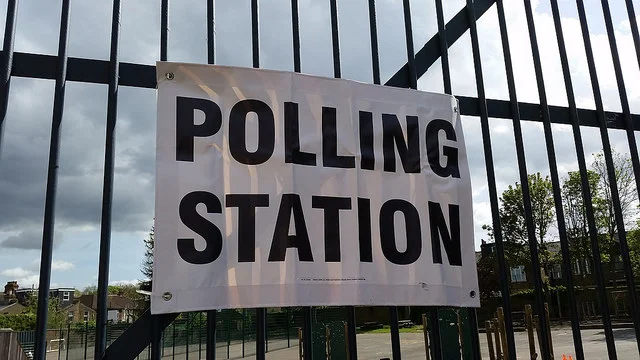
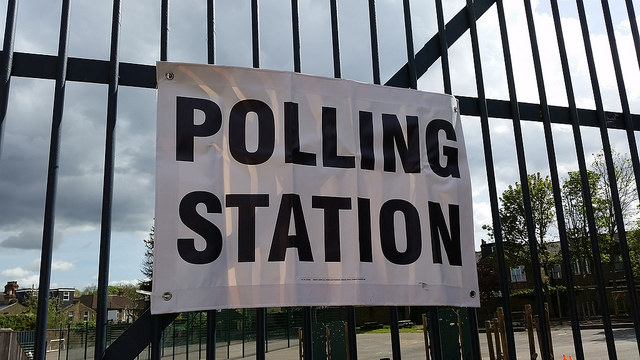
Polling station image taken by Rachel H and used under creative commons.

Related posts
Gaza-War.jpg
May 11, 2026
Max Weber’s thoughts on violence are as relevant today as they were in 1918
May 11, 2026
May 11, 2026
Wetherspoons.jpg
Apr 1, 2026
Last Orders for the Soul: The Bohemian Boozer and the British Psyche
Apr 1, 2026
Apr 1, 2026
polling-station.jpg
Mar 23, 2026
The Green victory shows the perils of Labour’s move to the right
Mar 23, 2026
Mar 23, 2026
Iran-war.jpg
Mar 9, 2026
Trump unleashes his politically incorrect war on Iran because of vibes
Mar 9, 2026
Mar 9, 2026
Keir_Starmer.jpg
Feb 28, 2026
Can someone please explain to me why Peter Mandelson keeps getting important jobs?
Feb 28, 2026
Feb 28, 2026
andrzejrembowski-microphone-4319526_640.jpg
Feb 23, 2026
The pressure on mental health services under late capitalism and how art therapy can help in the fight against the far-right: A conversation with activist and art psychotherapist Cat MacGregor
Feb 23, 2026
Feb 23, 2026
Trump-rally.jpg
Feb 15, 2026
Why does Trump get away with this unhinged foreign policy?
Feb 15, 2026
Feb 15, 2026
Feb 3, 2026
Legislating tech companies, free speech and porn: discourse on the online safety bill
Feb 3, 2026
Feb 3, 2026
polling-station.jpg
Jan 8, 2026
It’s a new year so here are some things that give me hope right now
Jan 8, 2026
Jan 8, 2026
Keir_Starmer.jpg
Jan 1, 2026
2025: The year of “stability”
Jan 1, 2026
Jan 1, 2026
May 06, 2018 /Alastair J R Ball
Corbyn
Comment
Ribblehead.jpg

This viaduct is more impressive when you know what went into building it

April 29, 2018 by Alastair J R Ball in Transport

Muslims visit the Al-Haram Mosque in Mecca, Catholics go to St Peter’s Basilica in the Vatican, Classicists go to the Colosseum in Rome, and British railway geeks go to Ribblehead on the Cumbrian/Yorkshire boarder to be awestruck by history.

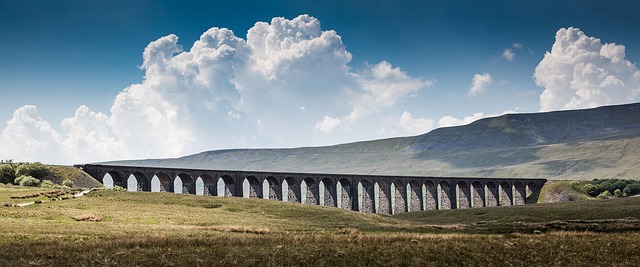
The Ribblehead Viaduct has to be the most impressive viaduct in England. Opened in 1875 it spans Batty Moss, carrying the line that connects Carlisle to Settle. It has 24 massive stone arches that rise 32 meters (104 feet) above the moor. Take a second to look at the picture above and drink in vastness.

Ironically the viaduct is best approached on foot, not via the railway, to get the sense of its sheer scale. It dominates the landscape and symbolises humanity's domination over nature, a popular belief of the Victorian society that built it. When you approach the arches you are stuck by the sense that this structure has the proportions of natural feature, not a human building. It is built on the scale of the hills that surround it.

It is a scale that defies that sense as it is impossible to take in the entire structure in from one viewing point. At a distance, the craftsmanship is hard to appreciate. Up close, it is too big to be viewed by one individual. The same is true of monumental religious buildings, from St Peters to Borobudur.

The Ribblehead Viaduct is more humbling when you know the human cost that went into building it. So many navvies (manual labourers working on civil engineering projects) died in its construction that the railway paid for an expansion of the local graveyard. Shanty towns grew up around the viaduct, which took four years to build. There were smallpox outbreaks and industrial accidents that led to the death of more than 100 navvies.

British rail spent a substantial amount of money renovating the viaducts to keep it operational and it was listed in November 1988. Ribblehead might have been the vision of engineer John Sydney Crossley, but it was built by bloody hard graft from hundreds of ordinary Victorian workers.

Today when we think of the railways we think of big brands or the thrillionaire businessmen who own it, like Richard Branson. When we think about its history we think about Brunel or Stevenson, intelligent people of great vision, but we overlook the sheer volume of hard work that ordinary people did to make the railways.

This is why the railways belong to us all, regardless of how it is broken up into companies and bits of it are sold to different owners. The hard, dangerous work that our ancestors put into building the railways cannot be dismissed or forgotten. The sacrifices that the railways’ builders made (many with their lives) cannot be bought by private companies or traded on stock markets.

The only fitting tribute to the thousands of people who lost their lives building the Ribblehead Viaduct, or Box Tunnel, or many other Victorian civil engineering projects is to bring the railways back into public ownership. That way the benefits of the hard work of the ordinary people who build the railways can be shared by all of us, and not captured by a few ultra-rich individuals.

The monumental, awe inspiring scale of Ribblehead stands as a testament to what the hard work and sacrifices of ordinary people can achieve. It is part of us all and we should all own it.


Featured
British-Rail.jpg
Mar 16, 2021
How can British Rail’s failed Modernisation Plan teach us to ‘build back better’?
Mar 16, 2021
Mar 16, 2021
Ribblehead.jpg
Apr 29, 2018
This viaduct is more impressive when you know what went into building it
Apr 29, 2018
Apr 29, 2018
British-leyland.jpg
Jan 21, 2018
Did politics kill British Leyland?
Jan 21, 2018
Jan 21, 2018
Apr 25, 2014
The Left’s Elephant in the Room
Apr 25, 2014
Apr 25, 2014
British-rail.jpg
Apr 1, 2013
HS2: On the Right Track?
Apr 1, 2013
Apr 1, 2013
April 29, 2018 /Alastair J R Ball
Transport
Comment
Hungary.jpg

The Hungarian election shows how Britain needs to be worried about the far right

April 08, 2018 by Alastair J R Ball in Europe

Every day the world seems to inch closer to completely falling apart. Donald Trump is stepping up the bellicose rhetoric against Bashar Al-Assad and his friend Vladimir Putin, Russia has launched a chemical weapons attack on British soil and London’s murder rate has overtaken New York’s.

Amongst all this you could be forgiven for overlooking the re-election of Viktor Orbán as Prime Minister of Hungary. On the service it doesn’t seem remarkable that an election took place in the world’s 58th largest economy, but Orbán’s re-election requires our attention - perhaps more so than Trump’s misadventures in international relations.

Orbán won his third time as Hungary’s Prime Minister by stirring up hatred of migrants and refugees. He has claimed increasing immigration would lead to “terrorism and crime, and would expose our womenfolk and daughters to danger.”

It is frightening how effective Orbán’s strategy has been. It’s unusual that a politician can remain consistently popular for as long as Orbán has. He has been Prime Minister of Hungary since 2000, weathering the financial crash, the Eurozone crisis and the migrant crisis by stoking fear of vulnerable people fleeing war, famine and poverty.

This is not the first time that hatred and fear of migrants has been used by unscrupulous right wing politicians to swing an election. What Orbán has done in Hungary is only a more brazen version of Trump’s rhetoric about Mexicans or the misinformation spread by Vote Leave ahead of the Brexit referendum. Across the world, right wing populist and aspiring authoritarians are exploiting fears to get the results they want.

Orbán is not the first strongman to use fear of migrants to gain power, but he could be the most successful and the most frightening. Orbán’s Fidesz party held onto their two-third majority in the Hungarian parliament following Sunday’s election, which means he retains the ability to pass amendments to the Hungarians constitution. Orbán has already made changes to turn Hungary into what he describes as an “illiberal democracy” a place where there are opposition parties and free elections, but the democratic process is hampered by a lack of independent media.

Hungary is the not the only country currently taking an anti-democratic turn. Poland and Austria both have their authoritarian leaders who dislike criticism and threaten the foundations of liberal democracy. However, the country Orbán’s Hungary bares the closest relationship to is Russia, where democracy is seriously threatened and it appears all but impossible that Putin will relinquish power.

Those of us who live in Western democracies should be very worried about the rise of these right wing authoritarian strongmen, who surf into power on a wave of xenophobic hatred of migrants and then get to work dismantling liberal democracy. Our democracy is only stable as long as we protect it.

There are plenty of aspiring despots in the UK. If Nigel Farage, Arron Banks and other high-priests of Brexit get their hands on the reigns of power they are likely to have as much respect for the institutions of liberal democracy as Putin does. These are the people who look at what Orbán is doing in Hungary and see the possibilities of what they can do here.

The centre and the left have very little that can counter the persuasive power of right wing populists like Orbán. The liberal LMP party did well in metropolitan Budapest, but poorly in the rest of the country. Hungary’s official opposition party is Jobbik, another nationalist party. From Hillary Clinton to the Remain campaign, liberal arguments are failing to connect with voters. Unless we can find a way to convince people of the value of an open, tolerant society, with healthy democratic institutions, then aspiring authoritarians will use their prejudices to undermine democracy.

The solution to the problem posed by Orbán and others is not to give into the easy option of demonising vulnerable people who are fleeing their homes and looking for a safe country to make a new life in. The solution is bridge the gap of understanding and to find a way to convince voters that liberal democracy offers a better solution to their problems then the nightmare of totalitarian illiberal democracy.

This needs to be done before it is too late. Authoritarian populists are on the march across the world, from Hungary to Britain, and they are coming to dismantle our democracy.

Related posts
Gaza-War.jpg
May 11, 2026
Max Weber’s thoughts on violence are as relevant today as they were in 1918
May 11, 2026
May 11, 2026
Wetherspoons.jpg
Apr 1, 2026
Last Orders for the Soul: The Bohemian Boozer and the British Psyche
Apr 1, 2026
Apr 1, 2026
polling-station.jpg
Mar 23, 2026
The Green victory shows the perils of Labour’s move to the right
Mar 23, 2026
Mar 23, 2026
Iran-war.jpg
Mar 9, 2026
Trump unleashes his politically incorrect war on Iran because of vibes
Mar 9, 2026
Mar 9, 2026
Keir_Starmer.jpg
Feb 28, 2026
Can someone please explain to me why Peter Mandelson keeps getting important jobs?
Feb 28, 2026
Feb 28, 2026
andrzejrembowski-microphone-4319526_640.jpg
Feb 23, 2026
The pressure on mental health services under late capitalism and how art therapy can help in the fight against the far-right: A conversation with activist and art psychotherapist Cat MacGregor
Feb 23, 2026
Feb 23, 2026
Trump-rally.jpg
Feb 15, 2026
Why does Trump get away with this unhinged foreign policy?
Feb 15, 2026
Feb 15, 2026
Feb 3, 2026
Legislating tech companies, free speech and porn: discourse on the online safety bill
Feb 3, 2026
Feb 3, 2026
polling-station.jpg
Jan 8, 2026
It’s a new year so here are some things that give me hope right now
Jan 8, 2026
Jan 8, 2026
Keir_Starmer.jpg
Jan 1, 2026
2025: The year of “stability”
Jan 1, 2026
Jan 1, 2026
April 08, 2018 /Alastair J R Ball
Europe
Comment
social-media.jpg

How the far right is using anger on social media to change politics

March 29, 2018 by Alastair J R Ball in Technology

Restaurant reviews aren’t something that I read. Occasionally one, such as this, pops up in my Facebook or Twitter feed. So, according to Facebook or Twitter, I am only interested in especially bad restaurant reviews.

I know that I’m not interested in particularly good or bad restaurant reviews, but the really bad ones (especially for a high profile restaurant) get a lot of shares and thus reach a wider audience. I am part of that wider audience for bad reviews that get shared a lot.

Film reviewer Mark Kermode has said that his worse reviews are more widely shared and travel further than his more positive ones. I can remember his rants about terrible films such as Dirty Grampa or Entourage: The Movie, but I can’t remember any of his glowing reviews off the top of my head.

Why do bad reviews travel further? It’s because there’s something satisfying about sharing an especially bad or angry review. A powerful sense of social media schadenfreude. There is something satisfying about saying, “take a look at this guy get taken down a peg”.

The same applies for political stories. It is cathartic to share an especially angry comment piece, that really lays into a politician or party that we hate. It’s much more cathartic than sharing a piece that celebrates someone we love. Most cathartic of all is sharing a piece expressing how angry we are about a snub or injustice aimed at a politician we love. Those pieces are shared more widely than the worst restaurant reviews.

This mechanism is essential to how social media platforms work. Stories that inspire an emotional reaction get more shares and find their way into in our time lines. By showing the most shared content - along with a few smart design tricks - platforms like Facebook or Twitter keep our eyeballs on their apps. There is even evidence this might be addictive.

Angry content seems to get the most shares and engagement, much more than anything positive, so social networks are designed to bring angry content to millions of people. This has not escaped the attention of the far right who are using this mechanism to reach a bigger audience via Facebook or Twitter than ever before. We thought Nazis were a thing of the past. Now they’re in our timelines recruiting people, getting stronger.

In the news this week has been data firm Cambridge Analytica, the information warfare mercenaries for hire connected to everything from Brexit to the election of Donald Trump. Angry shares on Facebook are Cambridge Analytica’s weapons in their electoral battles. Their “psychographics” are just clever ways of finding out what will push different groups of people’s rage buttons and how to target them on social media.

What Cambridge Analytica and the alt-right have in common is that they are taking advantage of how angry content is shared on social media platforms to reach a wider audience. They are using their intelligence to engineer the spread of their propaganda via our cathartic rage-sharing.

Social media platforms have an important role in this. We get most of our news via Facebook or Twitter but they don’t make money by providing quality news, social media platforms make their money by selling advertising to engaged users. They need the engaging content to keep users hooked and angry content is the best hook. By supplying users with a constant stream of rage-shares, they are keeping us hooked and consuming more adverts.

All this has an affect offline. What goes on online is no longer a separate world. Nazis openly marching in Charlottesville, attacks on refugees in Italy or the far right making noises in the UK is all possible because of the exposure these groups are getting online. They are growing, recruiting more members and getting stronger. We should be very worried about this.

What is the solution to all this? Better regulation of social media platforms would help. Facebook and others need to recognise their obligations as a media company not to spread hate speech and to provide an informed discourse to their readers.

We have a role too as social media users. We need to be responsible social media users. If we carry on constantly being angry we are just fueling the rise of hate preachers or the far right. We need to think before we rage-share. There is real world consequences for creating an atmosphere of constant rage on social media. One place to start would be to share reviews of places we like to eat. Bon appetit.

Related posts
Karl-marx.jpg
Mar 18, 2018
Marx was right about capitalism today
Mar 18, 2018
Mar 18, 2018
Crowd.jpg
Mar 11, 2018
The rest of Europe should be very worried about the far right’s success in Italy
Mar 11, 2018
Mar 11, 2018
British-rail.jpg
Mar 4, 2018
Labour’s history of nationalisation gives us hope for the future
Mar 4, 2018
Mar 4, 2018
red-flag.jpg
Feb 18, 2018
What makes a good Socialist blog?
Feb 18, 2018
Feb 18, 2018
Jan 8, 2017
Brexit must not distract us from poverty
Jan 8, 2017
Jan 8, 2017
March 29, 2018 /Alastair J R Ball
Technology
Comment
website-code.jpg

How is what Cambridge Analytica did different to selling mattresses online?

March 25, 2018 by Alastair J R Ball in Technology

A lot of the discussion of Cambridge Analytica obscures what it does with fancy language such as “information warfare” and “psychographics”. I think what they do is digital marketing, not too different to what agencies all over the world do to sell everything from flights to car insurance.

The data that Cambridge Analytica has (not just from Facebook), and the sophisticated understanding they have of psychology from Cambridge University academics, means they can do very detailed segmentation, targeting and positioning work on populations the size of the entire US electorate. STP is the bread and butter of what digital marketers do.

Cambridge Analytica work on a scale much bigger than what most digital marketers are capable of, (it’s easier to do this sort of thing when you have Robert Mercer’s checkbook) but it’s not radically different in approach to techniques used by the Obama campaign - or online mattress sellers.

Cambridge Analytica’s segmentation of the US electorate are very detailed and their political understanding means they know exactly who to target to have the desired effect and they know what messages these people will respond well to, (that’s positioning) but this is what digital marketers around the world are doing. Information warfare, whether it’s by Cambridge Analytica or Russia’s Internet Research Agency, seems to be little different to the process that made me a customer of Beer 52.

There are question marks over whether Cambridge Analytica is effective; most digital marketers are keen to demonstrate that their methods are effective. It’s difficult to say what got Donald Trump elected. His Tweets, false equivalence of both candidates’ flaws, Russian interference, dislike of Hillary Clinton, democrats being incumbents, the FBI email investigation and a vacant supreme court seat where certainly factors, along with fake news made by Macedonian teenagers and the general left/right cultural divide in America. It’s hard to identify the precise impact that Cambridge Analytica had amongst all of this.

Whistleblower Christopher Wylie implied that what Cambridge Analytica did went beyond digital marketing when he exposed their activities to the Guardian. He said that there activity was “worse than bullying,” because “if you do not respect the agency of people, anything that you’re doing after that point is not conducive to a democracy.”

This implies that Cambridge Analytica are doing goes beyond marketing for politicians and is against democracy. It implies that Cambridge Analytica took the data they had from Facebook (and other sources), put it through standard digital marketing processes and created weapons. If you can use your digital marketing to bring down a government then it’s a weapon. If you can use your digital marketing to prop up a tyrant then it is a weapon. What is a Kalashnikov, but a weapon to overgrow a government? The same can be said of digital marketing that destabilises democracy.

What I find most scary about Cambridge Analytica and what they can do is that its segments are so detailed, its targeting so sophisticated and their positioning so subtle that it would allow politicians to speak in very different ways to different audiences. Using this, politicians can safety identify people who would respond positively to racist messaging, exploit those prejudices and it be so subtle that other supporters of said politician or party, who would be horrified by racist campaigning, would never find out about it.

What has stopped politicians from appealing to our most carnal hatreds is fear that they will be found out. Very detailed segmentation, targeting and positioning makes it possible this would go unnoticed.

If this scares you as much as it scares me, then that’s good as it means we can do something about it. This could be the moment that people wake up to the risks of social media firms and big tech companies, just as they woke up to the problems of big tobacco firms in the 1960s.

We can pass laws that regulate these firms. The complete absence of regulation that they have operated in so far has led to this scandal, but we can prevent worse abuses of data in the future. It used to be possible to advertise cigarettes as healthy, now we are aware how bad such advertising would be and we don’t allow it. Maybe soon everyone will be aware of how bad digital marketing for politicians is?

“Launching the new Geoloqi website” by Aaron Parecki is licensed under CC BY 2.0

Related posts
Feb 3, 2026
Legislating tech companies, free speech and porn: discourse on the online safety bill
Feb 3, 2026
Feb 3, 2026
Dec 11, 2025
Better content moderation for better discourse: A conversation with Madhuri Rahman of WeLivedIt.Ai
Dec 11, 2025
Dec 11, 2025
Jul 28, 2025
Why social media platforms spread the worst political messages
Jul 28, 2025
Jul 28, 2025
Apr 24, 2024
TikTok has many problems, but the hysteria around this app distracts us from the larger problem of unregulated tech companies
Apr 24, 2024
Apr 24, 2024
Prince-Harry.jpg
Jan 17, 2023
Yet another tedious Prince Harry hot take shamelessly written to get clicks
Jan 17, 2023
Jan 17, 2023
Hannah-Arendt.jpg
Dec 20, 2022
Hannah Arendt would be worried about how information technology makes evil more likely
Dec 20, 2022
Dec 20, 2022
George_Orwell_press_photo.jpeg
Jul 31, 2022
How George Orwell predicted our very online political discourse
Jul 31, 2022
Jul 31, 2022
social-media.jpg
May 26, 2020
Does the left live in a bubble?
May 26, 2020
May 26, 2020
Jan 13, 2019
What are the limits to free speech online?
Jan 13, 2019
Jan 13, 2019
nathan-barely.jpg
Dec 23, 2018
Nathan Barley is standing in our light
Dec 23, 2018
Dec 23, 2018
March 25, 2018 /Alastair J R Ball
Technology
1 Comment
Karl-marx.jpg

Marx was right about capitalism today

March 18, 2018 by Alastair J R Ball in Socialism

Karl Marx:  hear his name socialists and tremble. It is he who laid the foundations of all the great work that has come after, from the Russian Revolution to the British welfare state. All future generations of socialists should behold the awesomeness of his works.

I have a lot of respect for Marx and his contribution to left wing politics. Although, I have always resisted the temptation to turn him into the socialist equivalent of a prophet. The above is a gentle parody of how some socialists approach the work of Karl Marx. Putting Marx on such a pedestal adds to his legend as an important, but difficult to approach, thinker.

Reading Marx is certainly not as easy as reading the journalism of today, but Marx shouldn’t be inaccessible to the majority of people on the left - like the Bible written in Latin. Marx understood some fundamental truths about capitalism, which still apply 150 years after he published them. Paul Mason, has done a great job making Marx accessible to a modern audience in his book Post-capitalism.

Capitalism changes, but the underlying ideas as understood by Marx don’t. Today’s tech companies and the gig economy are governed by the same principles as the factories of 19th century Manchester.

Revolutionary system

First of all, Marx understood that capitalism is a revolutionary system. It overthrows everything that came before it and remakes society anew. We can see that in how much industrialisation has changed China has changed during my lifetime, and I’m a Millennial.

Marx also saw that capitalism was a destructive system. Competitive firms are constantly destroying each other and some firms are destroying entire industries that came before them. You can see that in how digital publishing has destroyed the business model of print newspapers leading to the closure of local newspapers up and down the country.

Capitalism is also destructive to the environment. That was true when Marx was writing in the early days of industrialisation and it remains true today. Marx also described how capitalism creates vast inequalities. Before capitalism, there were only so many banquets a landed noble could have and only so many fine clothes he could buy, but under capitalism there is no end to the greed of the capitalists.

Alienation is one of the more difficult Marxist concepts to get your head around, but its effects can be keenly felt today. Marx said that capitalism alienates workers from what they produce as they either can’t afford it or are completely disconnected from the final product. Today we can see that in countries where smartphones are made by workers too poor to afford them or call centre workers who are entirely disconnected from any services that are being delivered. The businesses have changed since Marx’s time, but alienation remains a constant.

Overproduction of unnecessary goods

Mainly Marx knew that capitalism leads to the overproduction of goods that do not have a social value. We can see that today in the unnecessary quantities of plastics wrappings that is produced or in how much more money is poured into making viagra by big pharmaceutical companies as opposed to life saving medicine. This is misallocation of resources on a society-wide scale away from what will make people’s lives better.

Key to Marx’s writing is a fact that remains very much true today, and that is that capitalism needs to be overthrown. The capitalists who have economic power will not give it up easily so a revolution is necessary to have an economic system based not on profit motives, but on people's needs. I believe that this revolution need not be violent and when it happens it will be unlike anything that has come before it, even events that called themselves revolutions but merely changed who sat at the head of the table.

Marx understood that radical change was necessary to fix the problems of a capitalist society. That simple insight remains as relevant today as it did in Marx’s time. We lionise Marx, and his accomplishments are impressive, but the basic truth of his ideas are something we all experience everyday.

Related posts
Karl-marx.jpg
Mar 18, 2018
Marx was right about capitalism today
Mar 18, 2018
Mar 18, 2018
Crowd.jpg
Mar 11, 2018
The rest of Europe should be very worried about the far right’s success in Italy
Mar 11, 2018
Mar 11, 2018
British-rail.jpg
Mar 4, 2018
Labour’s history of nationalisation gives us hope for the future
Mar 4, 2018
Mar 4, 2018
red-flag.jpg
Feb 18, 2018
What makes a good Socialist blog?
Feb 18, 2018
Feb 18, 2018
Jan 8, 2017
Brexit must not distract us from poverty
Jan 8, 2017
Jan 8, 2017
March 18, 2018 /Alastair J R Ball
Socialism
Comment
Crowd.jpg

The rest of Europe should be very worried about the far right’s success in Italy

March 11, 2018 by Alastair J R Ball in Socialism

In 2016 it the far right made significant advances. Their arguments on nationalism and immigration became part of mainstream political discourse as far right backed campaigns such as Brexit and Donald Trump’s Presidential bid achieved electoral success.

In 2017 it looked like normality had reasserted itself as Emmanuel Macron defeated Marine Le Pen to become President of France, Angela Merkel held off the Alternative for Germany (AfD) and UKIP’s support collapsed in the British General Election. People all over the world worried about creeping nationalism and xenophobia breathed a sigh of relief.

We can't be complacent. A few setbacks have not defeated the emboldened far right. Social democracy as a political force is in a bad shape across Europe. Immigration and entrenched economic problems remain potent issues that the far right is using to rally support.

The far right did well in the recent Italian Elections. Former Prime Minister Silvio Berlusconi’s centre-right Forza Italia party didn’t do as well as many predicted. The Eurosceptic, populist Five Star Movement won the largest share of the vote and far right party The League (formally Lega Nord) performed much better than expected. The League, an aggressively anti-immigration party, are likely to be the main authority in a new far right/centre right government.

The success of The League is due to economic problems such as high unemployment (and especially high youth unemployment) and regional inequality (the North of Italy is much more prosperous than the South), but mainly hostility to immigration. This election campaign has been characterised by aggressive anti-immigration rhetoric; The League’s leader Matteo Salvini says he wants to deport all undocumented migrants and in Macerata a right wing extremist shot and wounded six migrants.

The centre-left’s performance was disappointing and the leader of the main centre-left party, Matteo Renzi of the Democratic Party, has resigned. Renzi was once hailed as the saviour of the European left and was thought of as the Tony Blair of Italy. He moved his party to the right to embrace the "mainstream" of economic and political thought. In 2013 The Independent wrote: “Mr Renzi has staked his claim on the centre-ground and made little secret of his opposition to the unreconstructed leftist policies held dear by large swathes of his own party.”

Now Renzi is out after failing to achieve domination of politics through occupying the centre ground that Blair did. Politics has changed since 1997 and the centre ground is a shifting mass of uncertainty, pushed and pulled by populist tremours. Renzi and his party have no counter argument to the far right’s anti-immigration rhetoric. Now the far right is closer to power in Italy than it has been for generations.

The centre left is failing across Europe. The Germany SPD is currently trailing the AfD in the polls and is about to yoked (again) to a Merkel-led centre right government. The main centre left party suffered a huge defeat in Dutcth elections last year, getting only 9% of the vote. In France the centre left candidate, Benoît Hamon, got only 6% in the first round of Presiental elections.

Interestingly, the Italian, French and Dutch centre left parties’ names all translate into English as the ‘Socialist Party’, but their policies are (to a greater or lesser extent) neoliberal. What has happened to all three parties is a common enough phenomenon that it has a name: Pasokifcation. This name comes from the Greek centre left party, Panhellenic Socialist Movement or PASOK, which was the first party to experience this. Again, note the transformation from socialist, to neoliberal, to collapse, that the party’s namesakes have followed in.

“The old project of European social democracy is over, and that what comes next will have to be radically different,” Paul Mason said in a recent post for Novara Media. It is clear that social democracy as a political movement is in crisis across Europe. Ed Miliband's 30% of the vote in 2015 appears to be a high water mark.

Immigration (of both refugees and economic migrants) is a key issue across Europe. It is fuelling the rise of the far right who are rocketing into power in a populist blast of dissatisfaction with mainstream politicians. Anti-Immigration parties are in power in Austria, Hungary, Poland and now it looks like Italy as well. The centre left has no response to this.

If the centre left cannot offer a response to the far right on the subject of immigration then it is up to the radical left to do so. We need to demand investment in communities hit hard by deindustrialisation to revitalise not only their economies, but also civic and community institutions. It is these areas of high unemployment, underfunded public services, housing shortages and high inequality where the far right are recruiting support. The left can do something about this.

The radical left also needs to vocally stand up for the rights of migrants and not be tempted to demonise them for short term political gain. The left should stand up for the most vulnerable in society, whether they are fleeing war in Syria, the collapse of Libya, poverty in Ethiopia or problems closer to home such as a lack of jobs and decent houses. By helping the poor and the vulnerable the radical left can turn the tide against the emboldened far right.

The problems of Europe are not being addresses by the centre left. This is fuelling support for the far right. We have seen too many right, anti-immigration populist parties seize power across Europe, Italy being the latest tragedy. We should be frightened for the future if the tide cannot be turned back against the far right. Only the radical left is in a position to do this.

Crowd image created by James Cridland and used under creative commons.

Related posts
Karl-marx.jpg
Mar 18, 2018
Marx was right about capitalism today
Mar 18, 2018
Mar 18, 2018
Crowd.jpg
Mar 11, 2018
The rest of Europe should be very worried about the far right’s success in Italy
Mar 11, 2018
Mar 11, 2018
British-rail.jpg
Mar 4, 2018
Labour’s history of nationalisation gives us hope for the future
Mar 4, 2018
Mar 4, 2018
red-flag.jpg
Feb 18, 2018
What makes a good Socialist blog?
Feb 18, 2018
Feb 18, 2018
Jan 8, 2017
Brexit must not distract us from poverty
Jan 8, 2017
Jan 8, 2017
March 11, 2018 /Alastair J R Ball
Socialism
Comment
British-rail.jpg

Labour’s history of nationalisation gives us hope for the future

March 04, 2018 by Alastair J R Ball in Socialism

I have always found the industrial nationalisations undertaken by the Clement Attlee's Labour government inspiring. It was an ambitious task to bring so much of the economy into public ownership. Few subsequent governments have had grand ambitions. The Blair government’s reforms pale in comparison.

In the 1940s Labour realised a long term socialist ambition to run industries democratically and for the benefit of all, not just a few rich owners. The nationalisations following World War 2 were widely supported. The government took control of the mines, railways, electricity, gas, iron and steel, the Bank of England, inland waterways, road haulage and Cable & Wireless Ltd.

These nationalisations were popular as they tackled big economic problems. The mining industry had been in financial trouble since the First World War and many small mines were closing, leading to unemployment. There was also a lot of concern about safety and the dire working conditions in many mines.

The railways were also in a bad state after the war. There had been heavy bombing of track and stations, and there was a shortage of locomotives. Both the railways and the mines had been successfully run by the government during the war, so it made sense that they should be nationalised.

Massive ambition

Over 800 coal mines were taken into public ownership under the National Coal Board (NCB). Conditions in the mines run by the NCB were more humane than they had been before nationalisation. The newly-nationalised British Rail also invested in new rolling stock to replace what had been destroyed in the war.

The nationalised industries were given money by the government for investment and modernisation. There was an expansion of civil aviation and of cable and wireless communications. This greater investment in energy, transport and communication was good for all businesses, not just the state-owned ones, and it contributed to postwar economic growth.

The nationalised industries could exploit economies of scale as they were much larger than the small firms they had replaced. British Rail could produce a locomotive or lay track much more efficiently than the smaller private rail companies as the steel was brought in bulk from another nationalised supplier that didn’t need to satisfy the demands of shareholders.

The main advantage of nationalisation was that the government could coordinate industries and plan across the entire economy. The vast apparatus of the state, which had so effectively prospected the war, could now be turned to creating jobs and wealth for all.

This was an impressive accomplishment. Never before had any government brought so much into public ownership. Mines, railways and other large industries were being run in the interests of ordinary people and not for the wealthy few. Decisions that affect the entire economy could be debated in the public sphere, not in shadowy boardrooms.

Selling the family silver

Of course it didn’t last. The Thatcher government privatised many of these state-owned industries in the 1980s. At the time it was described (by former Tory Prime Minister Harold Macmillan no less) as “selling off the family silver”. The comparison is apt as the revenue for the government can only be made once and then the gains of nationalisation were lost.

The Thatcher government did this because of its ideological commitment to free markets. At the core of all this was the greed of neoliberals, an economic belief that opening up markets for private companies is automatically best for everyone. Ultimately this has lead to the wealth created by these industries being captured by a few rich owners.

Today, the coal mines are almost all gone. The cost of privatised utilities are going up and up. A 2017 study by the University of Greenwich estimated that consumers in England were paying £2.3bn more year a year on their water bills than if the company was nationalised. £18.1bn was paid out in dividends, but little infrastructure investment was undertaken.

Private island

For anyone looking to learn more about this topic, James Meek’s book Private Island catalogues the errors and waste of privatisation. He traces the disastrous privatisations of the railways, the postal service and the utilities, showing that privatisation failed to achieve the increased innovation and economic dynamism that was promised.

There is some hope in the form of the current Labour opposition. Both Jeremy Corbyn and John McDonnell are in favour of nationalisation, and McDonnell has said that a Labour government would renationalise the railways, water companies, energy firms and the Royal Mail. The private rail franchises would not be renewed and the lines would be brought back into public ownership one by one as the franchises come up for renewal.

This gives me hope that the great accomplishments of the Attlee government aren’t lost forever. There is a future for nationalisation and the idea that it is better if industries are run openly, democratically and with the proceeds of their activity shared amongst us all.

British Rail image created by Steve Jones and used under creative commons.

Related posts
Karl-marx.jpg
Mar 18, 2018
Marx was right about capitalism today
Mar 18, 2018
Mar 18, 2018
Crowd.jpg
Mar 11, 2018
The rest of Europe should be very worried about the far right’s success in Italy
Mar 11, 2018
Mar 11, 2018
British-rail.jpg
Mar 4, 2018
Labour’s history of nationalisation gives us hope for the future
Mar 4, 2018
Mar 4, 2018
red-flag.jpg
Feb 18, 2018
What makes a good Socialist blog?
Feb 18, 2018
Feb 18, 2018
Jan 8, 2017
Brexit must not distract us from poverty
Jan 8, 2017
Jan 8, 2017
March 04, 2018 /Alastair J R Ball
Socialism
Comment
Corbyn.jpg

The Corbyn spy story is typical fake news

February 25, 2018 by Alastair J R Ball in Corbyn

As a writer and reader of politics blogs whose views are somewhat outside the mainstream, I am always depressed by the prevalence of conspiracy theories or blatant untruths that can be found on independent news sites (sorry pals, please continue to invite me to the monthly craft beer and pulled pork meet ups). Sometimes I worry that those of us on the radical left have watched too many seasons of 24 and believe that the world is controlled by a shadowy group whose existence can be exposed in a day with a bit of gumption.

Imagine my surprise this week when I saw that the mainstream media had just as much of an appetite for silly spy stories and secret conspiracies. The accusation that Jeremy Corbyn “gave information to a communist spy during the cold war” is just as crazy as the notion that the moon landing was faked or that Portland Communications had a role in the revolt of Labour MPs against Corbyn in 2016. I expected conspiracy theories from blogs written in bedrooms by hobbyists, not from national newspapers.

As the mainstream media is moving in on the crazy conspiracy theory space, on behalf of independent blogs I am moving into the serious analysis space with a few thoughts. First of all, the spreading of this story looks a lot like the spreading of the fake news that played a role in the Brexit vote and the election of Donald Trump.

This story has been shared on social media platforms by people who instinctively believe that it has to be true. The accusation that Corbyn was passing information to a Communist government fits so naturally with certain people’s worldview that they don’t check if this story is complete horseshit before hitting the share button. This is no different from sharing stories about Hillary Clinton secretly having cancer or the Pope endorsing Trump.

This story really matters to a group of people who really hate Corbyn and not only will they believe anything bad about him, but the more outlandish the accusation, the more likely they are to believe it. The spreading of this story has been helped by the filter bubbles of social media platforms that create an information space isolated from content that challenges their views.

All this allows a story that is obviously stupid to spread as the algorithms that run social media platforms show the story to people who are likely to be believe it without question. If the filter bubble means that you are never shown a challenging opinion about the Labour leader then you can believe anything you want, including that he played a minor role in a James Bond film.

It goes without saying that in the real world (not the fantasy land of anti-Corbyn fake news) this story is completely untrue, has been wildly debunked and a Tory MP who accused Corbyn of “selling British secrets to communist spies” has had been forced to apologise. However, many of the people who have a high propensity to consume anti-Corbyn fake news won’t see the retractions, or if they do will choose to ignore them. Probably blaming an independent media establishment that is hushing up the truth.

If the mainstream media is going to undermine the value of objective truth, to exploit people’s willingness to believe stories that aren’t true, but fit their worldview, and to use the design flaws of social media platforms to spread disinformation, then it’s up to the independent media to address this. We simply cannot allow the good name of stories posted on Facebook to be dragged through the mud by large news organisations.

It’s telling that Corbyn used a YouTube video shared on Twitter to debunk this bollocks instead of an editorial in a national newspaper. The system that spread the fake news is now being used to counter it.

I am aware that I sound a little like Trump, denouncing the lies of the mainstream media, but this story has been shown to be false and when the mainstream media plays fast and lose with the truth, whether to score political points or to get social media clicks and sell advertising, then it is the concept of democracy driven by an informed electorate that ultimately suffers.

Labour has moved ahead in the polls following this pantomime, which shows that the average voter is not someone who so unthinkingly hates Corbyn that they will believe any rubbish written about him even if it sounds like the rejected plot of a shit British remake of Homeland (this time with an American as the leading man, putting on a British accent).

People care more about the issues they are facing in their lives - such as the rising cost of living, the public sector pay freeze, the increased reliance on food banks or being unable to afford a home - than who said what to a Communist spy 30 years ago. The average voter has bigger things to worry about than conspiracy theories about Corbyn.

If the right wing portion of the mainstream media thinks they can distract voters from the problems of their lives with third-rate spy stories and fake news then they have completely lost touch with the concerns of ordinary people. The people hate-sharing Corbyn spy stories are not representative of the average voter, whose concerns are being spoken to by Corbyn.

Picture of Jeremy Corbyn taken by Garry Knight and used under creative commons.

Related posts
Karl-marx.jpg
Mar 18, 2018
Marx was right about capitalism today
Mar 18, 2018
Mar 18, 2018
Crowd.jpg
Mar 11, 2018
The rest of Europe should be very worried about the far right’s success in Italy
Mar 11, 2018
Mar 11, 2018
British-rail.jpg
Mar 4, 2018
Labour’s history of nationalisation gives us hope for the future
Mar 4, 2018
Mar 4, 2018
red-flag.jpg
Feb 18, 2018
What makes a good Socialist blog?
Feb 18, 2018
Feb 18, 2018
Jan 8, 2017
Brexit must not distract us from poverty
Jan 8, 2017
Jan 8, 2017
February 25, 2018 /Alastair J R Ball
socialism
Corbyn
Comment
red-flag.jpg

What makes a good Socialist blog?

February 18, 2018 by Alastair J R Ball in Socialism

As capitalism slowly collapses, the flaws of a system that worships money and creates massive inequality are becoming apparent. This has led to a surge in popularity for the far left and many more people reading Socialist blogs.

Left wing politics has always had a healthy ecosystem of independent media, but recently there has been an explosion of new blogs, podcasts, Twitter feeds and zines exploring issues related to the far left.

With all these sources to choose from, how do you know which ones are good? What makes a quality Socialist blog? After writing this blog for seven years, below is what I think makes a good quality left wing blog.

Being against capitalism

Let's start with the basics: capitalism is the root cause of a lot of society’s current problems, from rising food bank dependence to job loss from deindustrialisation. A good Socialist blog recognises the problems of capitalism, explores these and thinks about what economic system could replace capitalism.

There is a divide on the left between those who want to abolish capitalism and those who just want to make it more humane. A good Socialist blog should be on the abolish side. There is also a divide between Socialists who want to smash capitalism or get rid of it gradually. There are strong cases either way, and this should form the substance of a Socialist blog.

Being in favour of greater equality

It's not enough just to be against capitalism, you need to be in favour of an alternative. Again there is a lot of debate about what form this alternative should take, which is what left wing blogs exist to explore. Socialists should be in favour of an economic system that delivers more equality rather than one that moves vast amounts of wealth into the pockets of a few people.

Being in favour of radical change

What separates Socialists from Liberals is a belief in radical change. This change could come quickly or slowly over time, but the end result is a radically different society. Liberals want to make small changes around the edges, not great reforms.

Some problems can be tackled by small reforms around the edge. The lack of accessible public transport in many cities can be solved by our existing political and economic systems. However, the Liberal approach comes unstuck when faced with the larger problems of society. Climate change cannot be fixed by tinkering around the edge, only by radically rethinking our society.

Recognising that power structures go beyond class and wealth

There's a stereotype of Socialists being old, bearded, white men sitting in the back rooms of community centres, drinking real ale and having rambling discussions about the relationship between capital and the proletariat in Victorian London. Although this certainly does happen, most Socialists I know have a broader interest in the many different power structures and types of inequality in our society, not just economic ones.

Material inequality is a big problem, but so is racial and gender inequality. There are a lot of different types of oppression in society and even if you're not wealthy, but are white and male, you might be less oppressed than other people. It's important to understand this. It's also important to explore not only how economic exploitation happens, but also how gender or racial exploitation happens.

Being willing to challenge your own thinking

Socialist blogs shouldn't be Bible blogs with Das Capital as the holy text. There are no thinkers or ideas that are beyond criticism. As a Socialist it is important to be open to different ideas and different people's opinion. Being a Socialist is about being constantly open to learning more about society.

Socialists and socialist ideas get attacked frequently online or in personal debates, so it can be easy to fall into a bunker mentality where everyone in the bunker is on your side and cannot be wrong. If someone disagrees with you, it doesn't make them a traitor to the cause.

Being accessible

Not everyone has read Das Capital or volumes of Gramsci’s writings. Not everyone is intimately familiar with the concept of worker alienation. Far left politics can be seem strange to people, as if we have our own language. A good Socialist blog should recognise that we all have different levels of technical or theoretical understanding. Socialism is for everyone and it should be accessible.

Many of the people I have met on the far left don't necessarily identify with theory or what is written in books. Their politics is something they feel and experience in their everyday lives. A lot of people who I have met don't haven't the technical language to explain the ideas behind what they feel, but that doesn't make them any less intelligent, thoughtful or compassionate a person and it doesn't make them any less of a Socialist.

That's what I think makes a good socialist blog. I'd be interested which blogs my readers would recommend that meets these requirements. Please post them below so that we can all find new, interesting reading material.

Red flag image used under public domain dedication.

Related posts
Karl-marx.jpg
Mar 18, 2018
Marx was right about capitalism today
Mar 18, 2018
Mar 18, 2018
Crowd.jpg
Mar 11, 2018
The rest of Europe should be very worried about the far right’s success in Italy
Mar 11, 2018
Mar 11, 2018
British-rail.jpg
Mar 4, 2018
Labour’s history of nationalisation gives us hope for the future
Mar 4, 2018
Mar 4, 2018
red-flag.jpg
Feb 18, 2018
What makes a good Socialist blog?
Feb 18, 2018
Feb 18, 2018
Jan 8, 2017
Brexit must not distract us from poverty
Jan 8, 2017
Jan 8, 2017
February 18, 2018 /Alastair J R Ball
Socialism
Comment
Carillion.jpg

It’s ordinary people who will suffer from the collapse of Carillion

February 11, 2018 by Alastair J R Ball in Economics

The collapse of Carillion would be funny if it wasn't so tragic. It would be funny because Carillion collapsed under a debt mountain of £1.5 billion, after issuing several profit warnings, and despite having a portfolio of construction projects (such as the rebuilding of Battersea Power Station) and outsourced UK government contracts (such as managing 50,000 homes for the MOD and nearly 900 schools).

This is funny because Carillion exists only to make money, and yet failed because it couldn't make money. Carillion held so many public sector contracts (not just what I’ve mentioned above but also prisons, highways, the construction of Crossrail and a stake in HS2) because it was supposed to be better than the public sector. Well, it wasn’t.

The need to make a profit, which drives private companies like Carillion, is supposed to make them more efficient at delivering these projects than the public sector. At least, that is what neoliberals from Thatcher to May, via Blair and Brown, would have us believe.

The efficiency of these private companies, pumped full of public money, was supposed to make the provision of infrastructure and government services better for everyone. Now we’re left with a huge pile of debt and more than a few holes in the ground.

Outsourcing failure

Instead, Carillion turned out to be very inefficient at making profits and delivering infrastructure projects. Projects overran from Liverpool to Sandwell. The company fell into debt and ultimately failed. If you can't make profit, Carillion, then what is the point of you?

The craze for outsourcing still has its defenders despite three decades of failure. The railways aren't the paragon of cheap, sleek and well-invested services, like their state-owned counterparts in other European countries. Electricity and water are more expensive and invest less than they did when they were state owned. Even so, outsourcing fundamentalists insist that this is what’s best for all of us.

It's laughable that anyone still thinks that outsourcing and privatisation are efficient ways to run any kind of public works program, or indeed anything at all following the catalogue of failures of these policies. We aren't living in the shareholder democracy we were promised by Margaret Thatcher's government.

Human cost

Of course, this actually isn't funny. Carillion employs 43,000 people worldwide, with 20,000 in the UK. These people rely on their employer not just for their income, but for stability in their lives. So far it has been announced that 377 people have been made redundant, and 919 jobs have been saved by transferring them to other employers. However, over 18,000 jobs are still on the line. There is also a range of other companies, large and small, that supply Carillion and rely upon it to stay afloat. There will be job losses up and down the country because of this.

The Carillon story is made up of so many large things - £1.5 billion in debt, huge construction projects like the Aberdeen bypass - that it's easy to forget at the heart of it is ordinary people's lives. People who work, earn money, pay their rent, and save for their children's future. The world is filled with enough uncertainty and fear without your employer suddenly collapsing. We need to remember that ordinary people are suffering because of this huge fuck up.

Ordinary people who live paycheck to paycheck - no different from you or me. They don't have the resources to draw on that directors of multinational construction companies have or those who created this culture of outsourcing. Many Britons live a precarious existence, with 8 million people just one paycheck away from homelessness. This will cause massive suffering for individuals that will be overlooked in story about massive debt and huge construction projects.

The human cost of the Carillion fuck up is depressing. We need to remember that it's ordinary people who suffer when large companies fail. Outsourcing maybe be comically bad, but what's happening for the many people who depended on Carillion for their livelihood isn't funny.

Crane image created by Veggiefrog and used under creative commons.

Related posts
Karl-marx.jpg
Mar 18, 2018
Marx was right about capitalism today
Mar 18, 2018
Mar 18, 2018
Crowd.jpg
Mar 11, 2018
The rest of Europe should be very worried about the far right’s success in Italy
Mar 11, 2018
Mar 11, 2018
British-rail.jpg
Mar 4, 2018
Labour’s history of nationalisation gives us hope for the future
Mar 4, 2018
Mar 4, 2018
red-flag.jpg
Feb 18, 2018
What makes a good Socialist blog?
Feb 18, 2018
Feb 18, 2018
Jan 8, 2017
Brexit must not distract us from poverty
Jan 8, 2017
Jan 8, 2017
February 11, 2018 /Alastair J R Ball
Economics
Comment
angry-man.jpg

How to not be an angry man on the Internet

February 04, 2018 by Alastair J R Ball in Identity politics, Feminism

There are LOTS of angry men on the Internet. They’re angry about everything from judges blocking Trump's Muslim ban, to MPs asking for a final say on the Brexit deal, to people objecting to how frequently police officers shoot unarmed people of colour. They include centrists who want everyone to stop making such a fuss about safe spaces to the alt-right actively seeking to defence white privilege.

What if you have seen the angry-sharing of Fox News or Daily Mail content along with screams of fury about what the "liberal feminazis" have done now and you don't want to be one of those people? Well, here are a few simple tips as to how you can avoid being an angry man on the Internet.

Get the basics right

First of all don't be a racist or a misogynist or spout bile about people different to you. I know this sounds simple, and I am bagging my head against the keyboard at the fact this needs to be said 2018, but don't share a Britain First meme even if you really do "support our boys" or are apoplectic about Halal meat being served in schools. Take a second to think: is the person who wrote this someone who sits by themselves in the pub muttering into their pint of Carling about how Muslamists have taken over?

Calm down

When you read something online that you don't agree with, try not to hit the "go nuclear" button as your first response. Don't see red and then decide that you must inform this young woman on Twitter of some hard truths in words that she's going to remember. Don't fly off the handle just because someone isn't overflowing with excitement at all that regained sovereignty Britain has now we voted to leave the EU.

Maybe they have a perspective that is different to yours, one that could be as valid as yours. Don't assume that the reason someone didn't find your rape joke funny is because they’re a dried up humourless bitch husk in need of a good fuck. Maybe it just wasn't funny.

It's not all about you

While we're on the subject of not finding things funny, try not to feel personally attacked by other people's opinions. If someone says "in my experience men generally do this which is thoughtless and annoying" try not to fly into a whirlwind of fury as if someone had just thrown a fresh turd in your face. People don't have opinions to make you feel personally aggrieved.

Other people's opinions are also not signs that the entire world is against you. No one is trying to put you in a gulag or create a gender inverse Handmaid's Tale. If someone makes a comment about "white people" or "men on the Internet" don't be filled with fear that you're only days away from finding out that the government has frozen your bank account.

Don't accuse everyone else of being Hitler

Speaking of dystopian societies, people who have different opinions to you aren’t Nazis intent of "shutting down discussion" so that they can blast propaganda directly onto the back of your eyeballs. Even if someone rudely disagrees with you it is probably because that person is having a bad day, or is a bit rude, or misunderstood what you said. It’s not evidence of a conspiracy of Internet liberals trying to kill free speech.

Also, don't accuse people with different opinions about gender or racial politics of creating the alt-right. Women pointing out sexual harassment or people of colour talking about police harassment didn't get Donald Trump elected or create the global resurgence of ethno-nationalism. There were a whole range of complicated economic, political and cultural factors that led to the rise of the alt-right and the person on Twitter talking about gender neutral bathrooms isn't solely responsible.

Don't use projoritives

Try not to say "all women..." Or "all African Americans..." because the end of the sentence is probably not true. Just because someone you were matched with on Tinder didn't want to have sex with you doesn't give you some great insight into all women-kind that you need to explain to feminists on the Internet. See getting the basics right above.

Listen to people

Remember that we're all human beings and we find the enormity and complexity of the world frightening. Listening to other people's points of view can help us all face this fear. If you want to be heard yourself, then listening to others is a good place to start. Few productive conversions begin with anger.

There is a person on the other end of that Twitter account or Facebook update or YouTube video, do you really want them to suffer for their thoughts? At least remember that shouting at people rarely changes their minds. If you really disagree with someone then a productive conversion is better than the online equivalent of jumping up and down on your chair, screaming at the top of your voice and then throwing your shit at someone who thinks differently to you.

“Angry old man” by Arend is licensed under CC BY 2.0


February 04, 2018 /Alastair J R Ball
Identity politics, Feminism
Comment
Corbyn.jpg

Don't dismiss the concerns of Corbyn supporters

January 28, 2018 by Alastair J R Ball in Corbyn

This is a meme:

Amongst UK 16-24 year olds:

50% have never heard of Lenin.
70% have never heard of Mao.
72% have never heard of Pol Pot.

I think this helps explain why so many are prepared to back those (including Corbyn) who have flirted with the totalitarian far-left.

— James Bickerton (@JBickertonUK) November 23, 2017

This isn’t the only place online it appears. By a meme, I mean it’s an idea. An idea that says the reason why young people are supporting Jeremy Corbyn is because they don’t know how bad Chairman Mao or Pol Pot were.

It leads to ridiculous suggestions, like Britain should open a museum of Communist Terror, which was floated in the Spectator. Presumably to stop young people voting Labour, which I guess is what Tories think museums are for. That and recasting Britain’s colonial history as glorious.

That was a meme, but here are some truths: wages are stagnant, young people can’t afford to get on the housing ladder, nurses and teachers are using food banks to survive, the sick and injured are waiting hours for treatment in A&E. The only party leader who had serious suggestions for tackling these problems in the 2017 election was Corbyn. He wasn’t saying he wanted to seize the means of production and hand them over to worker controlled Soviets.

Let’s not forget that 40-45 year olds mainly voted Labour last year. These are people who grew up during the Cold War and voted for Tony Blair in 1997, 2001 and 2005 before supporting Corbyn now.

SnapChat socialists

Of course the writers above didn’t mean people in their 40s. They mean young people sharing Sassy Socialist Memes on Facebook. People too young to remember the Cold War. The entire implication is these SnapChat socialists don’t understand what they are supporting.

The economy right now really isn’t working for young people. Houses are too expensive. Rented homes are too expensive, insecure and are frequently in poor condition. Work is also insecure and poorly paid. Costs of living are rising while wages are stagnant. This is what a lot of young people want to change and they have found the symbol of that change in Corbyn. They don’t support him because they don’t know what the Killing Fields were.

Opponents of Corbyn are quick to say that they have sympathy with his supporters’ problems, but their proposals are that they should support politicians who are not offering solutions to them, and in some cases were in power for years whilst these problems got worse. What they are certain about is that what young people really mustn't do is vote for politicians who are offering solutions to these problems.

Dismissing concerns

It’s not a good long term strategy for centrists or conservatives to dismiss the concerns of young people like this. It shows how out of touch they are when they say that the reason for Corbyn’s surge in the polls is that young people don’t know about Stalin’s purges or his collectivisation of the farms.

Communism is not suddenly about to break out in the UK. Support for paying nurses and teachers more, building more affordable homes and bringing the railways into public ownership (as they are in almost every other European country - Germany is hardly a Communist country) were not policies of The Khmer Rouge.

Being out of touch with the pressures on young people and dismissing their concerns is what has led to the rise of politicians such as Corbyn and, in America, Sanders. If centrists or conservatives want to win back the support of the young (young people voted overwhelmingly for Thatcher in 1983) then not dismissing their concerns as the product of ignorance is a good place to start.

It is simply not true to compare raising taxes on the richest 5%, or wanting to tackle the rise in child poverty, or the growing dependency on food banks to Communism. Corbyn is not going to be a British Pol Pot and his opponents should stop sharing daft memes that imply that he is.

Picture of Jeremy Corbyn taken by Garry Knight and used under creative commons.

Related posts
Karl-marx.jpg
Mar 18, 2018
Marx was right about capitalism today
Mar 18, 2018
Mar 18, 2018
Crowd.jpg
Mar 11, 2018
The rest of Europe should be very worried about the far right’s success in Italy
Mar 11, 2018
Mar 11, 2018
British-rail.jpg
Mar 4, 2018
Labour’s history of nationalisation gives us hope for the future
Mar 4, 2018
Mar 4, 2018
red-flag.jpg
Feb 18, 2018
What makes a good Socialist blog?
Feb 18, 2018
Feb 18, 2018
Jan 8, 2017
Brexit must not distract us from poverty
Jan 8, 2017
Jan 8, 2017
January 28, 2018 /Alastair J R Ball
Corbyn
Comment
British-leyland.jpg

Did politics kill British Leyland?

January 21, 2018 by Alastair J R Ball in Industry, Transport

January 2018 marks fifty years since the formation of British Leyland Motor Corporation, a company (latterly a publicly owned one) synonymous with failed industrial policy. Whilst the disastrous history of what had been hoped would be Britain’s ‘national champion’ is hard to dispute, the question remains: did politics kill British Leyland?

The decision to form BL in the first place via the government’s Industrial Reorganisation Committee was an inherently political one. Harold Wilson’s Labour government was deeply interventionist by today’s standards. It all fitted in with the Wilson administration’s ‘white heat of technology’ rhetoric: Britain’s car industry would be a dynamic part of high-tech, forward-looking nation of the future.  In the deal brokered by politicians, Britain’s two biggest motor manufacturers, BMC (who made Austin and Morris cars) and Leyland (Triumph and Rover cars, plus trucks and buses) would merge to create the fifth-largest vehicle maker in the world.

The Industrial Reorganisation Committee was a tool of a government that believed intervention in the economy was not only necessary, but desirable. This is the first way in which government policy has been accused of killing BL – by enforcing an unworkable merger. The desire to form such a huge company was not an ideological socialist one; the aim was not to take the car industry into public ownership. The theory was that if the two manufacturers joined forces, they could benefit from economies of scale, on costs like research and development, and sharing components. In doing so, they’d be more focussed on fighting foreign competition, rather than each other, and assisting Britain’s balance of payments.

None of this was an inherently bad idea. The decades since 1968 have seen a consolidation of the car industry globally. BL was the right size, had some strong products, and should have been well positioned to benefit from combining the abilities and capacity of both companies – this is, after all, what VW has done in recent decades to great success. In retrospect, it is easy to say the merger shouldn’t have happened, that Leyland (the structurally stronger of the two) would have been better off alone. It was equally reasonable to assume that the newly merged company would get its act together.

The merger was far from a myopic, ideologically-driven scheme, ploughed ahead with by a bluntly technocratic government, as it is sometimes portrayed. It was a pragmatic plan, and it was met with huge optimism at the time. Yet, by the end of the ‘70s, BL was in a state of near-constant crisis and had ceased to be a serious global player.

Even so, one political failure did massively affect the fortunes of Britain’s car industry - France’s veto on Britain’s EEC membership application in 1963. This mattered because steep import duties were charged on cars from outside the Community, whilst a free market existed within it. Fiat, VW, Renault and the rest benefited from this, whilst Britain – the only significant Western European car manufacturing nation outside of the EEC – lost out.

It would have been the optimal time to join, too. At the time, BMC made a range of cars that appealed to European drivers – especially the Mini, and its larger brother, the 1100 series. Both were smart, well-designed cars, and already big sellers in the UK. They were sold at a significant premium over comparable European cars within the Community.

BMC, instead, concentrated their export efforts on the old Commonwealth countries, but cars designed for Britain’s well-maintained roads were never going to be ideal for South Africa or Australia, and it was these markets that the emerging Japanese car industry first conclusively conquered a few years later. All this meant BMC was in a weak position by the time of the ’68 merger.

Of course, Britain did eventually join the EEC in 1973. BL strongly supported the campaign. But by then – perhaps due to lack of understanding of the European market – it wasn’t in as strong a position to compete. Yes, the Mini’s sales increased – but what was really needed was a mid-size model that would be as strong a contender on the continent as BMC’s 1100 could have been in the ‘60s. But instead, they produced this.

The Austin Allegro was not the car Europe wanted. It was hardly even the car that Britain wanted. It never met the sales precedent set by the model it replaced, the 1100. There’s so much to say about what was wrong with the Allegro. It was not the VW Golf, a car launched the following year, and exactly the car Europe wanted.  

The Allegro is symptomatic of how capable BL was of sabotaging itself, regardless of the political context. All that capacity for market research, development and innovation somehow resulted in a car slower, heavier, uglier and with much less export appeal than the 10 year old design it replaced.

What about the other kind of politics – the kind that no conversation about BL is complete without? Industrial relations at the company were increasingly terrible as the ‘70s wore on. BL was hardly unique; the root cause being, to a great extent, that wages were not keeping up with inflation by the late ‘70s.

To me, that makes the grievances of those striking in the run up to the ‘Winter of Discontent’ far more sympathetic, despite the Thatcherite narrative through which the period is often recounted. Greater prominence has always been given to the – admittedly damaging – strikes over getting an extra five minutes on tea breaks and the like. Besides, even accepting the destructive behaviour of some shop stewards, poor industrial relations ought to be seen as a symptom of a structurally unsound company rather than the cause.

BL became a political football in 1975, when its precipitous decline reached the point where the government had to save it through nationalisation. The formation of BL in 1968 had been part of a political strategy, its nationalisation was reactive. Letting BL go to the wall, as some members of the Thatcher administration would later argue should happen, would have meant mass unemployment in the Midlands.

From then on, politics did kill BL, essentially. The Wilson, Callaghan and – interestingly – Thatcher administrations gave it sufficient bailouts to keep it going, but never enough to undo the strategic mistakes of 1968 – 1975. Thatcher’s solution was to break it up and sell it off in the late 1980s. That was, undisputedly, an ideological decision. The slimmed down group was beginning to turn itself around by then – and one of its privatised successors, the Rover Group, went on to have an (admittedly temporary) renaissance in the ‘90s, making re-badged Honda models. Dismantling BL was not the only option. In France, Renault went through a period of state ownership and emerged intact into the private sector.

Today’s economic and political climate has changed vastly since 1968. No longer is Britain a primarily industrial country, a land of trade union policy and Industrial Reorganisation Committees. No-one seriously suggests the kind of intervention that led to the creation of BL nowadays. However, the car industry is as hot a political potato as ever.

Car makers are footloose transnational corporations; the Japanese owned car factories in the UK are here because of Britain’s openness to trade, especially within the EU. What’s the government’s strategy for keeping them here after Brexit? Meanwhile, intervention is once again being seriously discussed to cajole the industry. Only when legislation began to be implemented by national and local governments to restrict fossil-fuel powered cars did the manufactures start to take electric vehicle development seriously. Last year’s VW emissions-test scandal suggests that, without insufficient oversight, corporations often don’t act in society’s best interests. The cars, and the people making them have changed, but political intervention in the car industry is here to stay.

Austin Allegro image created by Thomas Pics and used under creative commons.

Featured
British-Rail.jpg
Mar 16, 2021
How can British Rail’s failed Modernisation Plan teach us to ‘build back better’?
Mar 16, 2021
Mar 16, 2021
Ribblehead.jpg
Apr 29, 2018
This viaduct is more impressive when you know what went into building it
Apr 29, 2018
Apr 29, 2018
British-leyland.jpg
Jan 21, 2018
Did politics kill British Leyland?
Jan 21, 2018
Jan 21, 2018
Apr 25, 2014
The Left’s Elephant in the Room
Apr 25, 2014
Apr 25, 2014
British-rail.jpg
Apr 1, 2013
HS2: On the Right Track?
Apr 1, 2013
Apr 1, 2013
January 21, 2018 /Alastair J R Ball
Industry, Transport
Comment
Tim-Farron.jpg

Are liberals liberal when they’re being liberal?

January 07, 2018 by Alastair J R Ball in Liberal Democrats

Are liberals really liberal? Are the tolerant so tolerant that they are intolerant of the intolerant? What does liberal even mean? It’s become a catch-all term for everyone on the left side of the political culture war. It covers everyone from John Loch to Hillary Clinton. Even a socialist like Jeremy Corbyn is simultaneously criticised for being far left and only appealing to metropolitan liberals. We’re all obsessed with liberals, but what even is liberalism?

Tim Farron might know, he led the Liberal Democrats, and he thinks that liberals aren’t very liberal anymore. His evidence is that liberals have “discarded” Christianity and “kick away the foundations of liberalism,” but have liberals really become so illiberal?

It is true that the Liberal Democrats didn’t do as well in the 2017 election has you might have expected. A significant proportion of the 48% remain vote went to Labour, whose stance on Brexit (although vague) is that it should proceed. Why didn’t these voters all go to the Lib Dems as the most pro-EU party? Is it because these liberal Remainers couldn’t stomach voting for a party led by an evangelical Christian? Did pro-leave Corbyn appeal more liberal remain voters?

I don’t want to be drawn into the debate on what Tim Farron thinks about gay marriage. What does appear to be the case is that, in choosing an evangelical Christian as their leader, the Lib Dems sent a signal that metropolitan liberal voters didn’t like and this partly the reason for Lib Dems poor performance. Politics is about tribal identity and evangelical Christianity doesn’t seem to be compatible with the metropolitan liberal identity. On some level I feel sorry for Tim Farron as none of this is his fault and is partly based on a stereotype that evangelicals are illiberal.

In Farron’s Guardian article there are moments when he does send signals that are clearly off-putting to metropolitan liberals and they are nothing to do with his views on same-sex marriage. Speaking as a metropolitan liberal (London-living, pro-EU, pro-immigration, etc) a key part of the liberal identify is defending 21st century modernity. In his article he says: “five minutes on social media will give you a window into a society that condemns and judge” and “five minutes in the high street, now in the run-up to Christmas, will show you a society hooked on materialism.”

This sounds like a criticism of modernity. Does Farron think that we were better off in the past where also everyone was Christian by default? If you judge modern society via what you see on social media you’d think everyone’s life is a well-lit romp through artisan coffee shops, eating avocado on toast, before cuddling kittens and trying on new hats. When actually really life is a washed-out grey, spirit crushing, grind.

What Farron describes above is how most metropolitan liberals live. We’re social media obsessed, materialistic and happy with it. Even I couldn't resist getting a Google home. It sounds like Farron wants things to change. People to the left of liberals want it to change too, and they have their symbol of change in Jeremy Corbyn. Conservatives to the right of liberals also want to this to change. But liberals are comfortable with 21st century modernity even if Farron isn’t.

Being a liberal is more than being a “metropolitan liberal”. The Encyclopedia Britannica defines liberalism as: “political doctrine that takes protecting and enhancing the freedom of the individual to be the central problem of politics”. By this definition have liberals stopped being liberal? Have any of Farron’s rights been taken away? Is anyone stopping him from being a Christian or practicing his religion in anyway?

Farron’s faith didn’t stop him becoming the leader of a major political party. He claims to not be part of the establishment, saying: “whereas I am a liberal, but do not feel part of the elite,” but he was part of the elite as a major party leader and his faith didn’t prevent this.

Is Farron complaining about the fact that Christiny isn’t as popular as it once was? The number of people who are Christian has been decreasing for a while, the proportion of people who describe themselves as Anglican has halved since 1983. I would like to remind Farron that there is no right to be popular.

The fact that your religion and your party is not popular is not an infringement of your rights. Being a Christian or being a Lib Dem is a minority opinion, and the right to minority opinions should be protected, but you have no right to demand that your opinion be that of the majority. Even if you think everyone would better off.

I don’t think Farron’s rights are being oppressed. I don’t think being a Christian or being a Lib Dem makes you a victimised minority, despite the fact that people feel more comfortable making fun of Christianity now than they did in the past. The odd sausage roll joke isn’t the same as having your rights taken away. It’s just not being held in the same reverence that you once were.

If any faith has a fair claim that it is stigmatised or treated with hostility, then it is Islam. Even from people who consider themselves to be liberals, I have heard blanket statements of suspicion about Muslim communities or objections to the number of Muslim refugees allowed into Europe. Five minutes on social media will give you a window into a society that is angry at and frightened of Islam. A 2016 ComRes report found that 43% of people surveyed agreed with the statement “Islam is a negative force in the UK”. 

Liberals don’t talk about Christianity the way they talk about Muslims. Farron is fostering a sense of grievance amongst Christians that has little basis in fact. Christians are not treated with hostility and suspicion. The Prime Minister is a Christian. Christians are not oppressed in this country. Not by liberals or anyone else. Farron also shows no concern about prejudice against other people’s faiths, such as Islamophobia or rising anti-semitism.

If you are worried about how liberal or tolerant a society we are, worry about how we treat people who look different to the majority. Not how we treat people who look like the majority of people, get to lead major political parties and get to publish articles in national newspapers.

Tim Farron image taken by David Spender and used under creative commons.

January 07, 2018 /Alastair J R Ball
Liberal Democrats
Comment
polling-station.jpg

2017: The year normality returned

December 31, 2017 by Alastair J R Ball in Year in review

One year ago, I excitedly declared that 2016 had changed everything in politics. There were a lot surprises last year and it looked like 2017 would also be a year of upheaval. But generally, it wasn't. The most surprising thing about 2017 was that it was quite unsurprising.

2017 was the year that the vague promises of a resurgent Britain post-Brexit had to become some kind of reality. It was of no surprise that this process revealed that the government had no idea what it wanted from Brexit, had a weak negotiating hand and was more interesting in keeping the Tory party together than in the best interests of the country. What hasn't happened is a grand re-organisation of British politics around a nativist/globalist axis. This is mainly because there is no serious energy behind overturning or ignoring the result of the referendum.

Unsurprisingly, the Brexit program became unstuck when it met the political reality of the EU. The government has no solution to the problems raised by the Irish border and no leverage to reduce the divorce bill, as no deal is far worse for Britain than the EU. The referendum didn't deliver any idea of what the country specifically wanted from Brexit (EEA, customs union, Canada plus, Norway minus) so the government, not having an easy option available, is handling Brexit the same way as everything else: badly.

Leaving the EU is progressing in a fairly normal way. The government is trying to keep all its various factions on side, whilst trying not to do anything that would devastate the British economy and leave the Tories unelectable for a generation. This is, in essence, what every government does all the time. This is normal. It doesn't mean that Brexit won't be a disaster - it could well be - but it is progressing exactly as we expected.

One of last year's biggest shocks was Donald Trump's surprise victory in the US Presidential Election. Much like Brexit, Trump's programme has come unstuck when faced with political reality, despite his claims to be a brilliant deal maker. Trump has done little in his first year, save annoy liberals and shout at the media. His healthcare reforms have failed, the wall remains unstarted, his infrastructure program is nowhere to be seen. This administration has been characterised by incompetence and scandal. This is what happens when you elect an anti-system populist with no experience. Unsurprisingly, he does badly in a job he is not prepared for.

The biggest surprise of this year was firstly that Prime Minister Theresa May called a general election, after saying that she wouldn't, and then that Labour did so well. In April the polls indicated that Labour were headed for a massive defeat, but Jeremy Corbyn was able to do the unprecedented and close a 24 point poll gap in six weeks. This showed that politicians do get second chances at a first impression, as May was able to fall so far in the estimation of the electorate and Corbyn was able to rise so much. I am glad that the biggest surprise of this unsurprising year was a good one.

Neither Brexit nor the general election changed the alignment of British politics. The broadly left and broadly right camps are stronger than ever. The two main parties received 82% of the vote between them their largest share of the vote since 1970. Corbyn didn't run on a populist anti-globalist platform and May didn't make defending neo-liberal globalisation the central message of her campaign. Labour ran on building houses, protecting the NHS, lifting the public sector wage gap, abolishing student fees and renationalising the railways. May tried to run on the economy and her record in government. These are standard centre left and centre right platforms.

Despite sometimes hinting that more radical ideas were being considered, there was no mention of breaking up the banks (or even separating the high street and investment banks), abolishing the GDP growth targets, making a big investment in green energy or introducing universal basic income. The Corbyn campaign was successful in moving the Overton Window to the left on issues such as rail nationalisation and tuition fees. It also proved that young people will vote if they offered a platform that appeals to them.

Corbyn's manifesto is standard social democratic politics in a lot of our European neighbours. Despite the backdrop of Brexit and Corbyn's past being very different to a standard Labour Party leader, this election didn't signal a titanic shift in politics. Corbyn was able to defy all expectations and Labour are now in a much stronger position to win the next general election. But he did this by rallying the liberal sections of society around a social democratic platform not by proposing to overthrow the system.

On the international stage there were few surprises. IS were driven out of Mosul and are likely to be completely defeated soon. This shows that when the world's most powerful countries collectively decide that they want to destroy something, they can. Whether they can build a lasting peace is another question.

North Korea did exactly what we expected and tested more ballistic missiles. The rest of the world is paralysed when faced with the option of a nuclear missile armed North Korea or a war that could cost the lives of millions. None of this is shocking. The problem is that we are only faced with bad options.

This year saw an explosion in allegations of sexual harassment against prominent politicians and members of the media. Sadly, I was not surprised that men in positions of power had been abusing female colleagues for years. The scale of the accusations indicates that a change of some sort is likely to follow. The hushing up of such cases cannot be allowed to continue. These revelations could be the event of 2017 that has the biggest long-term impact. Although at the time of writing, a lot has been said, but wide sweeping change is yet to come.

Next year Brexit, the Trump administration and the North Korean problem will continue as we expect. On Brexit, a deal that makes no one happy, but avoids a disaster, will most likely be struck. The world will still not know what to do about North Korea. The American midterm elections have the greatest potential to be surprising. Will Trump's poor performance see a massive defeat for the Republicans and the effective (or literal) end of his presidency? Will right-wing populism be shown as ineffective and doomed to failure? Will Trump surprise us again and defy the odds to win? There may be some surprises (good or bad) next year.

In 2017 politics feels as if it has settled down (as much as it ever does) after a tumultuous 2016. There are still issues to be addressed. Anti-politics remains a potent force. The culture war exemplified by Brexit has not gone away. America remains a divided country. The problems with our economy, the environment and global-political structures haven't been resolved. However, these are not causing dramatic changes to how we do politics.

I have some hopes for next year, mainly that the Labour Party will build on the gains of this year. There might be a general election next year and power is within reach for Labour. Other hopes I have is that a Brexit deal is reached that won’t destabilise Northern Ireland, guarantee the rights of the EU citizens living in the UK and will prevent an economic meltdown. On the Trump and North Korea issues, I simply hope that they don’t destroy the world.

2018 could well be a surprising year. The financial crisis will be ten years old and it's most powerful effects may be still to come. The global economy remains weak, growth is anaemic across the West and a recession is likely. The spectre of war is stalking the edge of the West and are we incapable of tackling authoritarian strongmen. We have had a calmer year, but I don't think normality is back for good.

Polling station image taken by Rachel H and used under creative commons.

December 31, 2017 /Alastair J R Ball
Year in review
Comment
fake_news.jpg

Top 5 best satirical pieces of 2017

December 24, 2017 by Alastair J R Ball in Satire

A good piece of political satire can quickly illuminate a truth or make a point that can take thousands of words of straight up reporting. Satire is also capable of bringing information outside the current context to a story or it can use humour to take an important story to a wider audience. I enjoy political satire, and 2017 has been a great year for satirists with lots of events ripe for satirisation, so I have chosen five of my favourite examples from this year.


5. London is lost claims alt-right snowflake doing literally everything ISIS want from him

No list of the best political satire of the year would be complete without something from NewsThump.com and this article is one of their best. Like all good satire it is both funny and makes an important point. The article mocks British alt-right YouTube personality and general purveyor of hatred Paul Joseph Watson, while making the important point that by blaming all Muslims for every terrorist attack he is creating just the culture of fear and hatred that extremists use to recruit more terrorists.

It is the goal ISIS and their ilk to convince Muslims that they cannot live in the West and practice their religion without being the subject of suspicion and hostility. Whereas most British people can generally see the difference between a few extremists and a peaceful majority, it is self-important alt-right hate mongers with a vision of apocalyptic culture war who are feeding a climate of suspicion of all Muslims that allows ISIS to flourish. This piece gets bonus points for finding a model who looks as punchable as Watson for their cover photo.


4. It’s not our fault they don’t take black kids at Eton says Oxford

Like NewsThump.com above, no list of British satire would be complete without the Daily Mash. Oxford and Cambridge Universities came under criticism this year for classism in admissions. It was revealed that twenty-one Oxbridge colleges didn’t accept a single student of colour from the UK. This article makes the point that it is not just Britain's top universities that are riddled with classism, but the entire education system and our entire society.

In 21st century Britain your lot in life is decided by your class and racial background. Why? Because we are very unequal society and the advantages your parents can give you matter more than your talent or hard work. Even institutions created to be social levellers, like grammar schools, have been colonized by middle class parents with sharp elbows. The classism in the admissions policy of Oxford and Cambridge is just a very visible example of this. The scandal goes beyond Oxbridge and Eton, and effects the entire country.


3. I’m a Google  manufacturing robot and I believe humans are biologically unfit to have jobs in tech

We cross the pond now to look at a depressing news story that was too ripe for satire. A grumpy Google employee (now ex-employee) decided that because he was a conservative, he was actually the most discriminated against person in the world, and to prove this, he wrote a memo claiming that women can’t work in tech because their brains don’t work that way.

This article, written from the point of a view of a robot manufacturing products for Google, artfully parodies some of said grumpy Google employee’s own arguments through exaggeration. For example, the robot’s claim that humans and machines “inherently differ” takes aim at the tired trope that women’s brains aren’t set up right for jobs in the tech industry. This article also make the point that robots are much better suited for the world of work than humans, so maybe we should think about all jobs they’ll be doing in the future before we all wake up to a world where there is no work and no one can earn any money.


2. The Malt-right/Is genocide the new counter-culture?

A truly brilliant piece of satire should be easily confused with what it is mocking, yet at the same time be a clear parody of it. This satirical piece of podcasting was so subtly done that I have to admit that at first I was taken in. Joel, Marsin, Iain and Craig run their podcast Kraken where they take a funny and irreverent look at anything from politics to Punisher comics. They often have guests and in this episode they invited on Alliot, who is a fictional far right activist whose analogies about racial purity always come back to single malt whiskey.

Alliot’s impression of a softly spoken, reasonable sounding, deeply racist alt-right nut job is note perfect. Depressingly believable moments include when he accuses Theresa May of being on the left (because she doesn’t support his vision of a racially segregated society and wants people to mix like blended whiskies) or when he claims that he disliked how a group of vagabonds stole from a cohesive, harmonious society of beautiful formed beings in in Guardian of the Galaxy Volume 2 (siding with the villains over the heroes).

As a character Alliot is just crazy enough and just real enough that I could believe that really are alt-right activists who believe that single malt whisky is the basis for a perfect society. This satire is so on the nose that I was actually left fuming that one of my favourite podcasts had given a platform to such an awful person.


1. Deep In Macron Country

The best piece of satire I read all year was written by a serious political journalist, not a professional satirist, and it is a perfect humorous parody of a lot of articles I have read. Like the Malt-right above, I was at first taken in that this was a serious piece of on-the-scene reporting from a town in France that had voted overwhelmingly for Emmanuel Macron. As the piece progresses, the French stereotypes subtly become more obvious until the basis in satire becomes evident.

What makes this piece so brilliant is that there are two interesting points being made here. The first is making fun of all the metropolitan journalists who dashed to forgotten post-industrial towns to grab a few quick insights in the wake of the Brexit vote or Trump’s election. The article parodies journalists were keen to seek out an archetypical member of the left-behind to grab a few quick quotes from about what madness had driven them to ruin the country for everyone.

As well as this, the article shows how Macron was able to easily defeat the far right candidate Marine Le Pen for president, by contrasting the French presidential election with the American one. Points such as how other right wing French politicians threw their “weight behind a centrist in the final round” instead of “pander[ing] to her more in order to prop up their own base”. This shows a country less politically fraught than America, where a conventional politician was able to defeat populists. Like all good satire, this article is witty and has a real insight.

These are my favourite pieces of satire from this year. What are yours? Let me know in the comments below.

Related posts
Labour Party.jpg
Dec 26, 2019
What should Labour do next?
Dec 26, 2019
Dec 26, 2019
satire-books-examples.jpg
Mar 3, 2019
5 examples of political satire books
Mar 3, 2019
Mar 3, 2019
fake_news.jpg
Dec 24, 2017
Top 5 best satirical pieces of 2017
Dec 24, 2017
Dec 24, 2017
Jul 30, 2017
Inside the Church of Momentum
Jul 30, 2017
Jul 30, 2017
Mar 20, 2017
We are all cool with this, right?
Mar 20, 2017
Mar 20, 2017
Mar 6, 2017
Brexit offers many opportunities for the Labour Party
Mar 6, 2017
Mar 6, 2017
British-leyland.jpg
Oct 22, 2012
Why you should not lend Ayn Rand your car
Oct 22, 2012
Oct 22, 2012


December 24, 2017 /Alastair J R Ball
Satire
Comment
  • Newer
  • Older

Powered by Squarespace

Related posts
Gaza-War.jpg
May 11, 2026
Max Weber’s thoughts on violence are as relevant today as they were in 1918
May 11, 2026
May 11, 2026
Wetherspoons.jpg
Apr 1, 2026
Last Orders for the Soul: The Bohemian Boozer and the British Psyche
Apr 1, 2026
Apr 1, 2026
polling-station.jpg
Mar 23, 2026
The Green victory shows the perils of Labour’s move to the right
Mar 23, 2026
Mar 23, 2026
Iran-war.jpg
Mar 9, 2026
Trump unleashes his politically incorrect war on Iran because of vibes
Mar 9, 2026
Mar 9, 2026
Keir_Starmer.jpg
Feb 28, 2026
Can someone please explain to me why Peter Mandelson keeps getting important jobs?
Feb 28, 2026
Feb 28, 2026
andrzejrembowski-microphone-4319526_640.jpg
Feb 23, 2026
The pressure on mental health services under late capitalism and how art therapy can help in the fight against the far-right: A conversation with activist and art psychotherapist Cat MacGregor
Feb 23, 2026
Feb 23, 2026
Trump-rally.jpg
Feb 15, 2026
Why does Trump get away with this unhinged foreign policy?
Feb 15, 2026
Feb 15, 2026
Feb 3, 2026
Legislating tech companies, free speech and porn: discourse on the online safety bill
Feb 3, 2026
Feb 3, 2026
polling-station.jpg
Jan 8, 2026
It’s a new year so here are some things that give me hope right now
Jan 8, 2026
Jan 8, 2026
Keir_Starmer.jpg
Jan 1, 2026
2025: The year of “stability”
Jan 1, 2026
Jan 1, 2026

Privacy Policy
Cookie Policy