
Red Train Blog

Ramblings to the left

The Red Train Blog is a left leaning politics blog, which mainly focuses on British politics and is written by two socialists. We are Labour Party members, for now, and are concerned about issues such as inequality, nationalisation, housing, the NHS and peace. What you will find here is a discussion of issues that affect the Labour Party, the wider left and politics as a whole.

  • Home
  • Topics
    • Topics
    • EU referendum
    • The Crisis in the Labour Party
  • Art
  • Books
  • About us
  • Search

Heathrow exposes the contradictions of Tory policy

November 13, 2016 by Tom Coley

All this fuss for a strip of tarmac? The government’s go-ahead for Heathrow Airport’s third runway is ultimately a local South East issue, so why does it need so much national airtime?

This was how one caller to BBC Radio 4’s ‘You And Yours’ programme last weekend saw it. And, indeed, the majority of the hour-long programme was taken up discussing such issues: noise, air quality, increased traffic on the already clogged M25. All important issues, but undoubtedly local ones. The problem with keeping the conversation local is that Heathrow will have consequences for all of us.

The decision to expand shines a light on two crucial contradictions of government policy. Firstly, how can a government committed, at least in theory, to reducing carbon emissions in line with last year’s Paris agreement simultaneously expand aviation? And secondly, in the shadow of yet another expensive, London-centric infrastructure project, what happened to the ‘Northern Powerhouse’?

The 2015 Paris Agreement commits all countries, albeit voluntarily, to move their economies away from fossil fuels in the hope of limiting global warming to the ‘safe’ level of 1.5C. Aviation is responsible for approximately 6% of the UK’s carbon emissions. This might not sound link much compared to, say, the 25% contributed by road transport. But whilst a future of zero-emissions cars is genuinely in sight (and at any rate can be alleviated by improved public transport), the same cannot be said for aircraft. Yes, jets are becoming ever more efficient, but are likely to be reliant on carbon-emitting kerosene fuel for the foreseeable future.

Even this might not matter so much in itself; according to the Committee on Climate Change, aviation emissions have actually fallen slightly in the UK, year on year, since the financial crisis. But the government sees encouraging aviation as crucial to business growth: the Heathrow decision makes this clear. The Tories may give lip service to taking climate change seriously, and signed up to Paris along with everyone else. But Heathrow flies in the face of all that (no pun intended).

‘Climate change means there can be no airport expansion at Heathrow – or anywhere’  responded George Monbiot, typically uncompromisingly. I’m not a particular fan of Monbiot’s pious, sanctimonious style, but he’s right. Other sectors have paths towards decarbonisation; aviation doesn’t. Acceptance of man-made climate change may have reached the political mainstream, but de-growth certainly hasn’t. The determination to expand aviation might contradict what the ‘green’ Cameron government said, but is entirely concurrent with the actions of a Prime Minister that shut down the Department for Climate Change immediately upon taking office.

Alternatively, however, let’s suppose that Theresa May genuinely does want to meet her Paris commitments. This means that she appreciates the ongoing, and possibly rising, contribution of aviation emissions to the UK’s total. This means one of two things. The first explanation if that other sectors – and other people – will have to compensate for the aviation sector’s emissions, by reducing emissions elsewhere. This means higher costs in other areas, which – as Monbiot explains – is unfair.

Essentially, by letting aviation off the hook to continue emitting, the rest of us will be paying for the holidays of the rich. Unlike Monbiot, I don’t begrudge the foreign holiday taken every year or two by the average traveller. But, like him, I recognise that the vast majority of frequent flyers are, in fact, the rich: 75% of all international flights are taken by just 15% of the population.

The other scenario is that Theresa May is well aware that aviation will have to be curtailed if we have any hope of meeting our Paris commitments. This explanation has Cameron and Osbourne’s ‘Northern Powerhouse’ squarely in its crosshairs. This answers the question of ‘why don’t we just expand Northern airports, as well as Heathrow?’ with the blunt answer of ‘we can’t’. Punitive taxes will eventually have to be applied to air fares; regional airports will decline. Instead of a way of expanding national airport capacity, it may be, as John Sauven speculates, an exercise in moving it. Away from the written-off North and towards the South East.

If this sounds a bit far-fetched, it’s worth pointing out that John Sauven is the Director of Greenpeace. He’s not an advocate for or against Tory policy, or for the ‘Northern Powerhouse’ – his only stake in this game is a belief that climate change needs drastic action.

It is also possible that the government isn’t really bothered about the contradictions, or the implications of navigating them, outlined above. Perhaps it’s just another symptom of a short-termist outlook. The government is trying to please as many people as it can at this specific moment, whilst prostrating itself at the feet of the international business community to make clear that Britain is ‘open for business’ in the face of Brexit and hoping they’ll notice. I highly suspect that this is the most likely explanation.

Getting back to Heathrow, the conversation we’ve had about it has been widespread, and yet stubbornly local. The ‘You and Yours’ programme, despite a few nods to wider issues, absolutely treated it as a local concern. As with many projects, the ‘nimbys verses progress’ dichotomy often serves primarily to obscure the bigger picture and other narratives. Similarly, the ridiculous advertising spat between Heathrow and rival Gatwick over who gets to expand served to make it into an either/or question. Why not both? Or, more importantly, neither?

Personally, I’m undecided as to whether expanding Heathrow was the right decision or not. I fly sometimes, and it would be hypocritical to argue that people shouldn’t. The affordability of overseas travel to the wider population is a positive thing. But aviation certainly needs to be limited to help prevent catastrophic climate change. The priority for the Left should be to ensure that this happens, but that it is done fairly. Rather than simply taxing flying so heavily that it reverts to a luxury for the very rich, I would support a rationing system: one return flight per year per person, for example. This would be politically tricky, but no more so that the heavy tax route. Emissions need to come down, certainly – but the poor shouldn’t have to pay for the mobility of the rich.

Heathrow airport picture taken by Tony Hisgett and used under creative commons.

November 13, 2016 /Tom Coley
Comment

Welcome to life inside the nightmare

November 11, 2016 by Alastair J R Ball in Trump

I am writing this on Wednesday evening while looking at the front page of the BBC news website. I cannot believe that the events of the last 24 hours are real. There was a moment, at about 4am on Wednesday morning, when I was confronted with the full ghastliness of what was happening and my sleep deprived brain decided that it was not true. This is just a dream, I thought and spent a good few seconds trying to wake myself up. It did not work. Reality remains stubbornly real. We now have to accept that we are living inside our worst nightmare.

Oscar Wild once said that “when the Gods wish to punish us, they answer our prayers.” This sums up the perverse way that I feel responsible for what has happened in America. For years I have wished that all the people oppressed by the neoliberal status quo would get together and throw their weight behind an alternative. Then we could rock our economic system to the foundations. This is what has happened, but it was not supposed to be like this.

The first question that came to mind is, how did an uprising against global hyper-capitalism come from the far right and not the left? How did we get to a point where millions of Americans are willing to vote for a candidate who is openly racist, has ties to Vladimir Putin, lies through his teeth, brags about sexually assaulting women, flirts with the alt-right, is supported by neo-Nazis and the KKK and shows contempt for democracy itself? Who is to blame for this?

It is a complex question. False equivalence is certainly a factor; the media and individuals on social media have created a myth that Donald Trump and Hillary Clinton are equally flawed candidates and this is simply not true. I am not the biggest fan of Clinton but she is a million times the better option than Trump. How partisan politics has become is also to blame. Despite Trump being obviously awful, millions of people could not bring themselves to vote for the candidate of the other party. There are the left behind, the people whose wages and living standards have declined over the last thirty years, who desperately want change. There is the overt racism spreading amongst the white population. There are other factors. It is not an easy question to answer.

There are obvious parallels to be made with Britain’s vote to leave the European Union in June of this year. Two distinct interpretations of Brexit have emerged. The first is that this was a rebellion against the unequal distribution of the economic growth caused by neoliberal globalisation. Jobs, wages and living standard have declined in post-industrial areas of Western economies. Many of these areas have been thrown under a bus in the dash for the market liberalisation, free movement of capital and financialisation of the economy - the tenets of the neoliberal capitalism embraced by both major parties. People from Flint, Michigan to Boston in Lincolnshire are angry about how bleak their future is. We need to listen to them and take steps to improve the quality of life in such places to stop radical, right wing populism spreading.

The second interpretation is that white Western people are becoming increasingly hostile to multiculturalism and the mingling of different races. They are angry at the loss of privilege that being white once brought. And men, who over-index in support for the populist right, are angry about the loss of male privilege. Racism and xenophobia are spreading in a backlash to social liberalism that has been adopted by all mainstream politicians. This needs to be directly confronted to create a more harmonious society. What is overlooked in many of these discussions is that this populist, right wing rebellion against the status quo can be both of these things at the same time. The two are intrinsically linked.

The radical populism of the right is a response to the changes in society that we have seen over the last thirty years. It is a response to the changes in social structures that have given more status to women and ethnic minorities, which some people believe is at the expense of white men. It is a response to globalisation, which has given increased freedom to business, created economic growth but also created huge inequalities. It is a response to changing economic landscape, the location of jobs, the types of jobs and sectors of employment. It is a response to the increased number of people living cities and the increased numbers of people holding degrees. It is a response to the way the whole world is changing by the people who want to tell “STOP” at the top of their voice.

This has led to the emergence of a new political spectrum. It is not left wing versus right wing, but those in favour of these changes versus those opposed to them. For now, we call these two groups globalists and nativists, but clearer definitions will emerge in time. This new spectrum cuts across existing political divides. That is one reason for the success of Trump, he reaches across the Republican/Democrat split and appeals to non-voters because he is the alternative people wanted to the way the world is going. The same can be said for the leave vote in Britain or a vote for Marine Le Pen in the upcoming French presidential elections or a vote for the AfD in Germany or a host of other new nativist movements.

What does all this mean for the left? It does show that there are many people who are opposed to the globalist status quo, but Trump and the Tories under Theresa May are already shifting to occupy this territory. Jeremy Corbyn or Bernie Sanders’s traditional left wing politics do not fit into the new political spectrum. They are anti-globalist, but not nativist. By not fitting into this spectrum they risk alienating people at both ends of it.

New politics needs new politicians and new policies. People schooled in the changing political discourse. The left needs something new. The technocratic neoliberalism of Tony Blair and Bill Clinton has been rejected by voters, but the old left politics of Corbyn and Sanders is not gaining much traction. I do not know what this something new will be, but it should contain a healthy amount of social liberalism and skepticism of globalisation with a thirst for the future and a politics that looks forwards to a more hopeful tomorrow and not back to a lost golden age.

The problem is that the left does not have much time to decide what this something new is before we cease to be relevant altogether. We need to get active and resist the populist right now, because I do not want to spend the rest of my life trapped inside a nightmare that I cannot wake up from.

Donald Trump picture taken by Gage Skidmore and used under creative commons.

November 11, 2016 /Alastair J R Ball
Trump
Comment

What problems do Labour face after the Brexit vote?

November 06, 2016 by Alastair J R Ball in The crisis in Labour

Brexit has split the nation in many ways. It has exposed significant divisions between the North and South, young and old, the degree-havers and have-nots. One of the strangest is the division it has exposed the political left. There was certainly an anti-immigration, racially charged aspect to the Brexit voter. However, there were also many people who had been ignored by the left and right for decades giving two fingers up to the establishment. The fact that the Brexit vote is both of these things has confused those of us on the left.

There is certainly a class element to this debate, a debate mainly being had by middle class people. It is important to remember that Leave would not have won had it only been supported by poor people in economically deprived areas. More scrutiny is needed of middle class hostility to immigration. The people who have something to defend are the ones most incensed by change, as they feel the most threatened.

There is also a racial element to this debate. White people are removed from the consequences of racism and thus approach it as an academic question. There has been a 58% year on year increase in racist incidents in the weeks following the EU referendum. Middle class white people are not aware of the impact this is having on the lives of ethnic minorities. While we are debating our response to Brexit, people are suffering.

There are two distinct interpretations of the Brexit vote: either it was an expression of anger directed at the political elite motivated by the decline in living standards experienced by vast areas of the country, or it was an expression of racism by people who are unhappy about how Britain is changing. The former means that we need to address the economic circumstances of some people to fight racism. The later needs to be directly confronted to stop racism and make this a more harmonious society. The fact that Brexit can actually be both is frequently overlooked.

There are those on the right of the Labour Party who want to connect with alienated voters by taking a tough stance on immigration. Chuka Umunna wants to leave the single market to end freedom of movement. This is an example of centrists wanting to move to where voters are, rather than showing leadership. Aside from the possibility that, as an electoral strategy it may not work, if the Labour Party adopted more aggressively anti-immigration rhetoric, it is only likely to fan the flames of hatred, not extinguish them. Merely putting “progressive” on the front of something does not stop it being racially or ethnically divisive. 

My inclination, as a middle class white person, is that state spending can address the problem of the Two Britains. If we can genuinely tackle the issues of affordable housing, school places and access to GPs, then we can help everyone and tackle the problem of our increasingly divided society. Re-establishing the immigration impact fund - set up Gordon Brown and abolished by David Cameron - would help to alleviate the pressures caused by new arrivals. Steps to redistribute wealth, to ensure that more people benefit from economic growth (itself partly fuelled by immigration), would also help reduce tension.

The problem with this is that this will require more taxes and middle class people are unwilling to pay them. I have lost count of the number of times I have been told by middle class people in London’s craft beer and pulled pork establishments that they cannot afford to pay more taxes. It is the role of the left to convince people to be altruistic and accept higher taxes so that we can create a more harmonious and equally prosperous society. Middle class selfishness, and economic policy that has redistributed wealth away from poor towards the middle class, is one of the key reasons why we are such a divided nation.

There is a cultural gulf opening up on the left: a gulf between those who worry about the cost of commuting and those who have no jobs to commute to; between those who criticise austerity and those who are victims of it; between those who cannot afford to buy a house and those without a roof over their heads; between those who are worried about the statistics showing a rise in racist incidents and those who experience them as part of everyday life.

In a recent Guardian long read, John Harris tells a story about an argument between young Labour activists and a UKIP voter in Broadstairs. It illustrates how divided the left is and makes the point that in the past these two people would be allies in a common cause and now they are diametrically opposed. The division Harris illustrates seem too big to gulf and thus there are many middle class lefties who do not want to bother trying. “They’ll never listen.” I have heard a lot recently, accompanied by a shrug. “They” usually refers to anyone who disagrees with the speaker.

The EU referendum vote was many things and we cannot pigeonhole it as either an anti-elitist uprising or a knee jerk nationalism. The left needs to make it a project to address the issues of poverty, lack of opportunity and racism wherever it is found. Neither of these goals is more or less important than the other.

Responding to the Brexit vote is huge challenge for the Labour Party and the left as a whole. With Theresa May pushing on towards a ‘hard’ Brexit that is heavy on rhetoric but short on specifics, it is imperative that the left finds ways to bridge the gap Brexit has opened up.

If the Labour Party cannot reach the people who voted Leave it will suffer and may be reduced to being an irrelevant political force. Political debates are changing and lines are being redrawn and if the left cannot make itself relevant to people’s daily struggles then UKIP and Tories will eat into their support from both ends and leave only a new right-leaning political spectrum, divided between racist nativism and neoliberal globalisation.

Exit sign picture taken by Paul Wilkinson and used under creative commons.

November 06, 2016 /Alastair J R Ball
The crisis in Labour
Comment

I, Daniel Blake

October 22, 2016 by Alastair J R Ball in Film

Ken Loach has never shied away from addressing controversial political topics in his films. His 1966 TV play Cathy Come Home uncovered the terrible state of housing in the 1960s and energised a social movement to improve the quality of housing. Since then he has tackled issues such as life on a Glasgow council estate, Irish Independence, the 1945 election and the damage caused by Thatcherism. His characters are usually working class and his films frequently have a left wing political message. In his latest film, I, Daniel Blake, Loach attacks the cruel and unsympathetic welfare system.

The film focuses on Daniel Blake, a carpenter from Newcastle who has been signed off work following a heart attack. When he is denied Disability Living Allowance he has to apply for Job Seekers Allowance, however, Dan quickly finds that the system is set against him. This is a film that states clearly that the safety net is not helping the people who need it, because of the restrictions on claiming benefits.

I, Daniel Blake is effective in making its point. Almost every scene is dedicated to showing how the loops that Dan has to jump through are set up to grind down his self-esteem. The film is filled with characters who try to help Dan, from his neighbours to a friendly Jobcentre employee, but the benefits system itself actively prevents them from making a difference. Loach is saying that people are good and want to help, but the rules prevents them from doing so. It is a bitter indictment of our collectively lack of humanity.

Loach digs into the wider economic and social problems that have contributed to Dan’s situation. When Dan is sent to a mandatory CV workshop by the Jobcentre, he makes the point that there are way too many job seekers for the amount of jobs that are available, so it does not matter how good his CV is. The housing crisis is examined through the character of Katie, an unemployed single mum that Dan befriends. Katie has been moved to Newcastle from London, because this is the nearest council flat available for her and her two children. Food poverty is tackled when benefit sanctions force Katie to visit a food bank. Katie also skips meals so that there is enough food for her children. One in five UK adults are current struggling to feed their children.

The audience knows that it was Tory austerity and Iain Duncan Smith’s welfare reforms that made it so much harder to claim benefits. It is these policies that have removed the safety net that was created to protect people like Dan or Katie when they were in need. The film does not point to specific policies, people or parties as responsible for the situation; the Tories and IDS are only mentioned once by an unnamed supporting character. Maybe this is because it would be out of character for Dan to understand the politics that oppress him. The result is that this is not a partisan film, it is about how cruel and unfair the system is.

The strength of I, Daniel Blake is that Dan and Katie are very sympathetic. They are good, honest people who want to and actively seek work. They are hard working families and cannot be described as scroungers. Through their story we see the very human cost of welfare restrictions, which makes the audience angry with the system and want to change it. It is worth remembering while the disaster of Brexit unfolds, the unemployed are still suffering under a cruel benefits system. Effectively conveying this fact to a large audience is a huge achievement for Loach.

One of my main concerns with the films is that Dan and Katie are so sympathise that the film could make it worse for benefit claimants. Campaigners against welfare cuts frequently use instances of the deserving to back up their case for a more just welfare system. Perversely, this actually increases support for welfare restrictions. This is because when the public find out about cases of the needy being unable to access benefits, they become angrier at the scroungers they read about in the papers taking money away from people like Dan and Katie. This leads to a desires to further tighten access to benefits as a means of helping deserving claimants.

My other concern about the film is whether it will reach the right audience? Cathy Come Home was very successful in starting a public campaign to improve housing conditions in the 1960s. However, Cathy Come Home was on the BBC when there were only two channels. We had less choice and therefore more people who ordinarily would not have been exposed to the ideas of the film found out about the state of housing at the time. Now we have a much wider choice in media and I worry that I, Daniel Blake will only be seen by an audience who already agree with its message.

At the screening I attended, in a middle class area of North London, a huge cheer rose from the audience when a character insulted Iain Duncan Smith, but I live in a safe Labour seat. The Daily Mail has barely covered I, Daniel Blake, even when it won the Palme d'Or at the Cannes film festival this year. They are able to pretend that it does not exist, because their audience will never find out to about it. The people who should have to experience the anguish of watching Dan suffer never will.

It is a problem with contemporary politics that we all live in bubbles filled with the opinions we already hold, fed back to us by social media and selective news that we consume. We are isolated from ideas that challenge our worldview. I, Daniel Blake is a brilliant piece of filmmaking, but regardless of how good it is, it will only ever be seen by people who agree with it.

We need more films that challenge the cruelty of our government and the callousness with which many of us have thrown huge numbers of the unemployed onto a scrap heap. However, if we cannot reach out to a broad range people who think differently, then no one’s opinions will alter and nothing will change. To paraphrase Karl Marx: I, Daniel Blake interprets the world. The point, however, is to change it.


October 22, 2016 /Alastair J R Ball
Film
Comment

The emergence of a new political spectrue

October 16, 2016 by Alastair J R Ball in The crisis in Labour

The strangest Tory Party conference in living memory just finished. We had the absurd situation of a Tory Prime Minister, who has been in government as Home Secretary for six years, railing against “elites”. Stranger than that was the sight of the Conservative Party - the party of free enterprise - picking a fight with business over Brexit. Theresa May broke with over 40 years of Tory neoliberalism that goes back to Margaret Thatcher becoming party leader in 1975.

The Conservatives are changing to focus on controlling immigration instead of growing the economy. They had pledges to phase out foreign doctors, cut down on the numbers of foreign students, put landlords in jail for not checking their tenants' residency status and to “name and shame”' companies for hiring foreign workers. May also says she will take the centre ground of politics, which is odd because it sounded like she is moving to the right of previous Conservative leaders. The scary thing is I think she is right. She is taking the Tory party to the centre ground. Not the centre of a left/right political axis, but the centre of a new nativist/globalist political axis.

Politics is in flux now and positions that would have been unthinkable five years ago are now being debated. A recent study has shown that, in Britain, authoritarian populist attitudes are held by 48% of adults - despite less than 20% of the population identifying itself as right wing. People are no longer divided by left or right, but by their views on our globalised, multicultural society.

Joe Twyman, YouGov’s head of political and social research for EMEA, said: “These results show that the old days of left-versus-right have been replaced by a much more complicated, nuanced mix of political groupings,” he also said: “Any political party or movement that can successfully appeal to those of an authoritarian populist leaning could benefit hugely when it comes to elections.” This means we are moving towards a new political spectrum where we are divided between nativists (socially conservative and economically protectionist) and globalists (socially liberal and economically liberal). This will be the important political divide of the future. Put simply by Twyman: “We need to understand that the battle between racist nationalism and liberal cosmopolitanism will be one of the defining ideological struggles of the 21st century.”

Brexit and the US election already show this divide. The EU referendum tore up existing party political lines, made strange allies and turned party member against party member. The division was simple: do you like the way Britain is going or do you not? Do you vote for the status quo or to smash it? The US election shows the same process: Donald Trump has broken with 35 years of Republican free-market orthodoxy to bring back the divisive politics of race. He is winning over blue collar Democrats while alienating metropolitan Republicans.

This new political axis has been partly created by the crisis in neoliberalism that has been slowly playing out since the 2008 financial crash. Deregulation and free market economics has failed to improve everyone’s standard of living, as was promised. It turns out that voters do not care about the huge inequality that emerged in the 1990s and 2000s, but they do care that they are materially worse off, as many people are now. People are angry at the system and want someone to blame.

This crisis has been exploited by the populist nativists. Free market economics - once so widely accepted that no other political idea could threaten it - is vulnerable to a challenge from socially conservative nativism, because it speaks to those who have been left behind by the last 30 years of unequally distributed economic growth. This is why nativists like Trump and UKIP are taking votes from the left and right. The left behind cut across the current political spectrum.

It is not just economic factors that are tearing up established politics. A major cause is the social changes caused by immigration. Neoliberalism has brought down borders and multiculturalism has led to far greater mixing of different communities than in the past. This has changed established social orders, mainly the status of white people within western society. In the past, being born white came with certain privileges that were nothing to do with what the state provided. In classically liberal Edwardian England and the Butskellist 1950s, white people were socially set above people of colour. This has been questioned over the last 30 years, and the social status granted to someone for being white has declined.

The nativist rebellion against the status quo is as much as about race and culture as it is about economics. Zack Beauchamp makes a strong case that change to the status of the white community in the West is the main cause of the rise of populist nativisim. Nativism predominantly appeals to the lower middle class. They are threatened by immigration and relative decline in status of being white because they feel they have something to lose. There has not been enough scrutiny of the racism spreading amongst middle class whites. It is clear that some whites are very resistant to the loss of this implicit superiority and that is why they are embracing nativism.

There is no space on this new spectrum for traditional left wing views. The Labour Party is caught between the statist nativists and the socially liberal globalists. Left wing values do not sit easily next to nativists concerns about immigration; however, they are not the natural ally of the free market globalists. It is possible that the Labour Party could move to the middle of this spectrum by borrowing the protectionism of nativists and the social liberalism of globalists but this risks drawing fire from both sides.

The Tories can see the way the wind is blowing and they are moving to the centre ground of this new spectrum. They are becoming more anti-immigration to appeal to nativists while still being the natural home of globalist business elites. May might have picked a fight with business, but they are unlikely to defect to Labour or UKIP.

If Labour does not do something it will be left behind. A fairer tax system, protecting the welfare state and well-funded public services will be secondary considerations in the future compared to the question of whether we are an open outward facing society or whether our primary concern is looking after our own people. The Labour Party needs to think about how it will fit into this new political spectrum.

If the left keeps speaking the old language of the past political divide then we will become increasingly irrelevant. I can see a future where British politics is divided between the Tories (a globalist party) and UKIP (a nativist party). Traditional left wing policies will be a fringe interest. This must be prevented if we care about our left wing values. There is no rule that there must always be a Labour Party. The Liberals have declined from the party of David Lloyd-George to the party of Tim Farron. If the Labour Party cannot find out how it fits into this new political spectrum, then it may vanish forever.

Nigel Farage picture taken by Gage Skidmore and used under creative commons.

October 16, 2016 /Alastair J R Ball
The crisis in Labour
Comment

Who are the Corbyn-sceptics?

October 09, 2016 by Tom Coley in Corbyn

Between Jeremy Corbyn’s first leadership victory and his second, the issue of bad behaviour by his supporters has never been far from the news. The situation calls for two responses: condemnation, and an attempt to work out its root causes.

At Red Train we haven’t shied away from calling out bad behaviour on the left. Online abuse, anti-Semitism and misogyny is never acceptable, and nothing in this article condones or excuses it.

On the second point, not enough has been done to try and understand where the anger on the Left that sometimes spills over into unacceptable behaviour is coming from. Contrast this with the constant assertion amongst the political establishment that the surge in support for UKIP’s anti-immigration and xenophobic sentiments means we must pander to it. When the disaffected direct their anger towards political engagement of the UKIP variety – of intolerance and fear of change –politician fall over each other to ‘listen’ to them and ‘addressing their concerns’. When the same people turn towards the left and Corbyn, they’re usually ridiculed or dismissed as irrelevant.

This willingness on the Corbyn-sceptic side of the Labour Party to write-off Corbyn’s supporters is one of their greatest failings. Not only does it entrench the love of Corbyn, now at hero-worship level amongst his most ardent fans, but it also contributes to a misleading, one-sided narrative in which Corbyn supporters are always the perpetrators, and ‘moderate’ Labour MPs the victims. The problem with this narrative isn’t that it’s untrue, it’s that it’s incomplete.

It isn’t just a case of left-wing supporters bullying and intimidating a moderate PLP. Take Diane Abbott for example. She has received as much online abuse and hate-mail as practically anyone else in Parliament. Yet we’ve heard a lot more in the media about the abuse received by anti-Corbyn MP Jess Phillips.

Now, I certainly don’t agree with much of what Phillips says; her (as yet unfulfilled) threat to quit the party if Corbyn was re-elected was needlessly daft and divisive, but that in no way justifies the abuse she’s received. Why, though, is it any less worthy of coverage when directed at Abbott? This suspicion that the media and anti-Corbynites have colluded to encourage a simplistic narrative is one of the factors fanning the flames of anger on the left.

Some might say that the crucial difference is that those abusing Philips are Labour or Momentum members, whereas Abbott’s abusers are just the usual trolls that being a black woman in a prominent position makes her a magnet for. No-one is suggesting Corbyn-sceptic MPs are responsible for this in any way; everyone is willing to accept there are plenty of nutters out there, but is it really fair to heap blame on Corbyn for the actions of anyone and everyone who professes support for him? Especially when there’s no similar assumption of responsibility when the traffic is flowing the other way?

This unbalanced narrative extends beyond just the Labour party and the left. We’ve just spent a year discussing the rise of anti-Semitism on the left, and rightly so, but Theresa May can give a speech at Tory conference actively courting xenophobia, and receive widespread praise.

To be clear, the abuse and bullying we’ve seen amongst Corbyn supporters is unacceptable and, whilst he has condemned it, I’d like to see Corbyn try to do more to combat it. But let’s not contribute to a narrative that would have us believe that the bad behaviour has been completely one-sided. Much of the Corbyn-sceptic PLP has acted pretty appallingly over the last year, and this shouldn’t be ignored either. It’s what has fuelled the grievance and sense of foul play amongst Corbyn supporters.

Politics can be a dirty business and the validity of some of the PLP’s actions are debateable, but others are not. Trying to prevent members from voting in the recent leadership election, in many cases for the most arbitrary reasons, was simply wrong and undemocratic. I can’t see how initiating an attempted leadership coup in the immediate aftermath of Brexit can possibly have been a good idea; allowing, as it did, a willing media to refocus on Labour’s internal problems rather than holding the Tories to account over the mess that they’d caused.

Corbyn has often accused of being partisan; in fairness, he sometimes appears at his most animated when fighting political opponents within, rather than outside of, the party. However, in what way is Peter Mandelson suggesting that he’d like to see a Conservative election victory as a way of ousting Corbyn any less worthy of criticism?

Granted, none of this amounts to death-threats of the kind received by Jess Phillips, but it’s hardly comradely behaviour either. Labour, as it is often said, is a broad church. It needs to remain one now that the Left is nominally in charge, and that means compromise from Corbyn and his team. However, it also means that the other wings of the party need to accept that Corbyn won, and has a mandate. Much of the PLP’s behaviour has been bad for party cohesion, and feeds the unhealthy notion amongst some Corbynistas that it’s all an establishment conspiracy.

The point is that bad behaviour on either side doesn’t justify more bad behaviour from the other. In fact, what it tends to do is breed even more bad behaviour, and we’ve all seen the toxic outcome this creates. I sincerely hope that this is a lesson that all wings of the party have learnt from the past year – left and right, supporters of Corbyn or not.

Today, I was gratified to see that Corbyn seems to have made a real effort to put together a diverse shadow cabinet, which includes some of his critics, and appears to be doing his best to make peace with Tom Watson. They, for their part, have agreed to serve in it. I can only hope this is a positive sign of things to come.

Despite everything that has happened over the last year, conciliation now needs to be placed front and centre. The party is still on a knife edge. Pull together now and Labour might still have a chance of recovery; carry on fomenting discontent, and we can all forget about it.


October 09, 2016 /Tom Coley
Corbyn
Comment

Who are the Corbynistas?

October 02, 2016 by Alastair J R Ball in The crisis in Labour

The greatest achievement of Jeremy Corbyn is the way he has grown the Labour Party. He has brought many people into Labour and this is why he increased his majority in the recent leadership election. However, some Corbynistas are causing harm to the party, by bullying other members and refusing to accept the compromises that have allowed Labour’s broad church to function. Labour Party member Ruth Dee wrote a powerful piece about the problems caused by some of the new members.

There are several ways these Corbynistas are viewed. They are either:

●      A radical, far left group of SWP and SPBG infiltrators intent on destroying the party or dragging it somewhere to the left of Che Guevara.

●      Or, hate filled, social media thugs who will not tolerate any opposition and accuse anyone who disagrees with them of being a “Blairite”.

●      Or, deluded idiots who live in a bubble fed by the Canary, who cannot see anything wrong with Corbyn and are unaware of how bleak the future of the party is.

●      Or, ordinary people whose opinions have been left out of an increasingly right-leaning political debate, people who have been dismissed or taken for granted by Labour leaders for years.

Some people from the far left have joined the Labour Party, but they are a minority of the new members. There are not that many Trotskyists in the UK, so talk of an extreme left take-over is ridiculous. A lot of former Green Party members have joined Labour, but being concerned about the environment is hardly an extreme position. Surely one of Labour’s aims should be to convince supporters of other parties that Labour is the party you should be supporting?

The worst aspect of the increase in membership has been a rise in in anti-Semitic rhetoric and bullying from Labour Party members. This bullying (usually on social media) has especially targeted women and is laced with misogyny. On pro-Corbyn Facebook groups, anti-Semitism passes without comment, and anyone with a different opinion is pilloried as a Blairite. On these groups there is even support for George Galloway, a rape apologist and hate merchant who set up a political party with the express intention of stealing votes from Labour. There can be no tolerance of anti-Semitism, sexism and bigotry. Members caught engaging in such activities should be purged without hesitation.

It would be wrong to characterise all of the Corbynistas in this way. However many are willing to overlook the fact that their fellow travellers preach hate and intolerance. The worst arguments for Corbyn are made by his most passionate supporters, who ignore the massive looming electoral defeat in Labour’s near future and peddle conspiracy theories found on sites like the Canary. They talk of Labour providing a “genuine opposition” but there will be nothing genuine about a Labour opposition if the party loses 100 seats and the Tories have complete authority to do whatever they want.

Many of the new Labour members may deny the reality of Corbyn’s leadership, but that does not mean that they do not have valid criticisms of the current state of politics. Over the last 20 years Labour and the Tories have converged on a very narrow strip of the centre ground of the electorate. Opposing privatisation of public services, growing inequality or poorly planned foreign military interventions are considered to be extreme positions by much of the political establishment. These views are widespread, held by many reasonable people, and supported by recent events. Those who hold these views are looking for a political home.

Reading the comments in pro-Corbyn Facebook groups reveals huge numbers of people who were alienated from politics but are now excited by Corbyn. Underneath comments about a Blairite coup, there are peer-to-peer discussions about disability, mental health, benefits and the impact of Tory cuts. These are people frequently overlooked in our political discourse, not represented by politicians or journalists. These are people who have been politicised by austerity, but were put off Labour because of the party’s support of it. These are the people worried about the increasingly racist anti-immigrant rhetoric. These people want their objections to be heard and feel that Corbyn is the man who will do it.

Corbyn-sceptic party members also want to help people suffering under the Tory government, but they do not want to talk to them. An argument is being made by the Corbyn-sceptic side of the party that it is in the best interests of these people to be silenced so that the Labour Party can become electable again. I cannot agree that the future of the party is in ignoring people who are passionately arguing for social change and are suffering under a Tory government.

To win an election Labour must clearly reach out to people it is currently not appealing to. However it also needs to keep its activists on board and represent their views. Passionate and inspired people joining the Labour Party is clearly a good thing. However we cannot tolerate misogyny or anti-Semitism to any degree. Labour members must also be able to accept criticism of their leader and not blame the party’s poor recent performance on an elitist MSM conspiracy.

The root back to electability is by inspiring people - many people. Labour is currently inspiring a few people - many of whom have been ignored for a long time - which is a start. This is why I feel that this influx of Corbynistas is a good thing. However, we must be watchful for anyone engaging in bullying, spreading conspiracy theories or fuelling hatred. Together, new members and old, we can make the Labour Party stronger and more effective. So long as we work together.

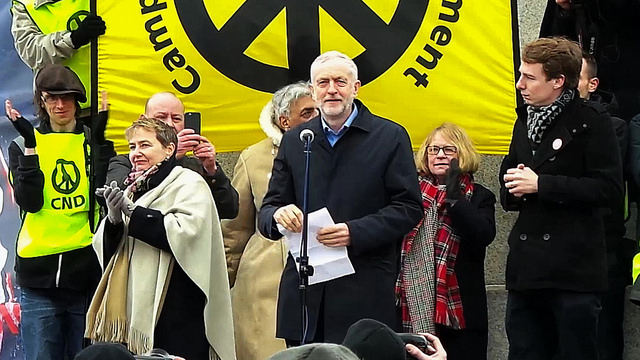
The photo of Corbyn at a CND event was taken by Garry Knight and is used under creative commons.

October 02, 2016 /Alastair J R Ball
The crisis in Labour
Comment

Labour needs compromise and unity

September 25, 2016 by Alastair J R Ball in The crisis in Labour

Less than a week has passed since Jeremy Corbyn was re-elected to the Labour leadership and the party is fighting amongst itself again. Pro-Corbyn activists are flinging abuse at Corbyn-sceptic party members on social media, while supporters of Owen Smith’s failed leadership bid are tearing up their membership cards. There is a lot of anger in the party right now and although anger can energise campaigners, some of it is not constitutive. Bristol West CLP member Ruth Dee has written eloquently about the problems anger directed at fellow party members has caused.

This level of anger has stopped Labour from functioning properly as a party. Brexit presents the biggest challenge of a generation but the Labour Party is stuck in the middle of an “existential crisis”. This is not helpful for the people who need a Labour government.

A lot of the tension has arisen because people angry at the current political consensus have joined the Labour Party. In the past, members were either in support of, or reluctantly accepted, the free market ideology of the 80s and 90s. Now those alienated by centrist politics are getting involved with a mainstream party and are trying to change it to represent their views. Views they feel have been ignored for a long time.

This is creating conflict between new and existing members. It is not always conducted in the form of a gentlemanly disagreement, showing respect for your political opponents. It is hard to have respect for your political opponent or engage in calm debate when their views devastated your community, threaten to dehumanise you as a person, further impoverish you or cut the support network you depended on. Make no mistake that this has been the result of neoliberalism, fanning the flames of anti-immigration rhetoric, talking tough on benefits and austerity. All of which the Labour Party vocally supported in last year’s general election. People have a right to be angry, as Abi Wilkinson expressed much better than I can.

Not being angry about the current state of politics is a privileged position, a fact that Corbyn-sceptics would do well to bear in mind. Not wanting a radical alternative to the current political consensus is a privileged position; it shows that your community has not been systematically pummelled by 30 years of neoliberalism. It is a privileged position because it shows that Tory austerity is not grinding away your livelihood.

Contempt for those who are angry about being oppressed by the last 20 years of timid centrism, technocratic managerial politics and blind acceptance of the free market is damaging the party. These are people who remember the New Labour years not as a period of bountiful economic growth, but of continuing decline. There are those on the right of the Labour Party who would really like all the people concerned about work insecurity and the scapegoating of immigrants to shut up so that the party can get back to winning the support of Daily Mail-reading homeowners in Surrey. These members believe that the best way to help benefit claimants and immigrants is to silence them while we pander to people who actively hate them.

Labour cannot function while we have contempt for the people who are angry at the way they are being treated by a Tory government. The people who have found hope in Corbyn need to be listed to if we are to find a way to reach out to others suffering under the current government. However, the way to help the people left behind by neoliberalism and suffering under Tory cuts is not for the Labour Party to self-destruct because metropolitan Corbynistas refuse to compromise in any way, and would apparently rather suffer a crushing defeat to the Tories than make peace with the rest of the party.

People have a right to be angry. That does not mean that they get what they want all the time. It does not mean that they can ignore political reality and the looming crushing defeat to the Tories. Anger from the left is tearing the Labour Party apart and is preventing a compromise that could restore the party to stability. If we want a genuine opposition to the Tories then we need to unite and oppose. Simply taking a principled stand in the face of electoral suicide is not enough. Remember the 1980s? When the Tories completely dominated politics? They are not remembered as a decade of egalitarianism and social cohesion. The goals of socialists and social democrats are not served by badly losing an election.

Now Corbyn has won again we all need compromise and unify to make the party work. The anger of people who suffered during the Thatcher, New Labour and Cameron years needs to be recognised. There are people who do not see 13 years of Labour rule as substantially different to decade that came before it or the half decade since. Labour needs to acknowledge this if it going to move forwards and win back these people’s support.

However, anger needs to be channelled at our opponents and not at each other. Angrily stamping your feet and demanding that the party change to perfectly embrace your views is not being a good Labour member. It is fair enough to feel aggrieved that the party’s left was marginalised for so long, but that doesn’t make shouting down other wings of the party any more acceptable now. It is not respecting the broad church that allows the Labour movement to function.

We need solidarity now and not petty Twitter insults. The party needs compromise and unity if it is to survive. It needs to find a way to come to terms with its past and look towards the future. As a movement we are stronger together when everyone is pulling it the same direction. Achieving compromise and unity will not be easy. Some hate-spreading members need to go. Some members on the right, used to having their way for so long, will need to acknowledge the broad range of opinions in the party. Members from the left and new members will need to compromise with people who think differently to them.

Together we can and have achieve great things. This is the point of the Labour Party, not to be a small pressure group influencing politics in one direction from the edge but an alliance of people with common concerns to act together to change things for the better.

Labour Party image created by David Holt and used under creative commons.
September 25, 2016 /Alastair J R Ball
The crisis in Labour
Comment

Who should be Labour leader?

September 20, 2016 by Alastair J R Ball in The crisis in Labour

Labour’s poll ratings are awful. The Tories currently have an 11 point lead in the polls and a significant number of 2015 Labour voters prefer Theresa May to Jeremy Corbyn. Labour are heading for a major election defeat. Some of Corbyn’s supporters are relaxed about this, but I cannot see how any of the goals of the left are served by giving the Tories a huge majority in parliament. The party membership is growing, but we must not confuse a large party with wide electoral support. We should look at the council elections from earlier this year, where Labour failed to make substantial gains. At this point in the electoral cycle, Ed Miliband was way ahead of the Tories and he still went on to lose.

Jeremy Corbyn, the current Labour leader, is ultimately responsible for the poor state of the party. However, I doubt that Owen Smith, the current challenger for Labour leader, would do any better because Labour’s problems go beyond who is leader and have causes that stretch back decades (this has been the point of my recent posts). Party members are currently faced with the choice between two leaders, both of whom would be defeated in the next general election.

Just because Labour cannot win the next election, does not mean the choice of leader is insignificant. Party members need to ask themselves what do we want from a leader who is bound to fail? Do we want someone who can build a broader social movement? Do we want someone who can make Labour stronger in the long term? Do we want someone who can unite the party?

The strongest case for Smith is that he could be a stepping stone towards electability. A vote for Smith is a vote to move away from the disastrous present and towards a better future. My main concern with Smith is that this more electable Labour Party that he would lead us towards is likely to be vehemently an anti-immigration and anti-benefits. The best case scenario for what follows Smith is a step back to the Miliband/Brown vision of social democracy that has been rejected twice by the voters.

If there is one political lesson of 2016 it is that lots of people are fed up with the status quo. We see that in Brexit and the rise of Donald Trump. Labour cannot win by offering more of the same. Corbyn is an alternative to the status quo, a break with the neoliberalism that as been the political consensus for the past 30 years. The Labour Party needs to offer something different from reheated free market economics with some social liberalism if it is to win again. Corbyn himself is different to most politicians and this inspires people. Smith is anything but inspiring.

There is much to dislike about Corbyn. He is indifferent to the bullying from some of his supporters. Over the last 30 years he has aligned himself with every anti-western cause. This includes calling Hamas and Hezbollah “friends” and appearing on the Iranian government’s propaganda channel Press TV, which has been banned by Ofcom and regular hosts anti-semites. I do not want a Labour Party leader with links to Iran, Hamas and Hezbollah. I do not want a Labour leader who at best turns a blind eye to the anti-semitism, homophobia and sexism of these groups.

With Smith in charge, Labour would escape the problems of having a serial rebel as leader. The party would not have a leader who has been linked to some awful organisations and who mistrusts the media to the point where he cannot get his message out. Labour would become a more efficiently run operation with a clear communication strategy under Smith.

What would the message behind Smith’s well-run communication strategy be? That is anything but clear. I do not think that he has a concrete plan to tackle the historic problems that have created Labour’s dismal present. Neither does Corbyn, but he does at least inspire some people. I do not think Smith would be any better at inspiring people to vote Labour. Smith can put out as many well-phrased press releases as he likes, but he needs to address the fundamental issue that people want something different from politicians.

There has to be acknowledgement of the fact that Corbyn has become very popular and Labour needs to learn from how he has inspired so many people alienated from politics. Corbyn has been able to cut through people’s cynicism with politics. Inspiring voters and offering hope is the only way that Labour can win a general election and exploiting the success that Corbyn has had needs to be a part of Labour strategy. A winning strategy may not inspire people in the exact way that Corbyn has, but Labour cannot afford to dismiss the fact that a throwback to the 1980s has become more popular than seasoned politicians who are supposed to be experts in winning public support.

Smith does not inspire any wing of the party; very few of the big beasts on the right of the party publicly support him. He is unlikely to grow the electoral support of the party in places where Labour is not already strong. If the party is getting rid of Corbyn then it must be to appoint a leader who can appeal to the voters Labour need to win over. This candidate is not Owen Smith. I am sure that he will be a competent Labour leader if he wins, but I do not see him winning over voters whom Ed Miliband did not convince.

There are many things to dislike about both candidates, and not a lot to inspire anyone who wants a Labour government anytime soon. Corbyn’s record of supporting unpleasant groups and his inability to tackle the abuse from some of his supports is a major strike against him. I am also frightened that the Labour Party will become rabidly anti-benefits and anti-immigration in order to become “electable” in the future. Smith’s rhetoric on immigration has only encouraged this fear. This is why I cannot support him for Labour leader.

This leaves me with no opinion other than to return a spoiled ballot paper as a gesture of protest against both candidates. This is not a decision I make lightly or one I am proud of. If there is one thing that this leadership contest has shown it is that Labour needs to change soon or face destruction.

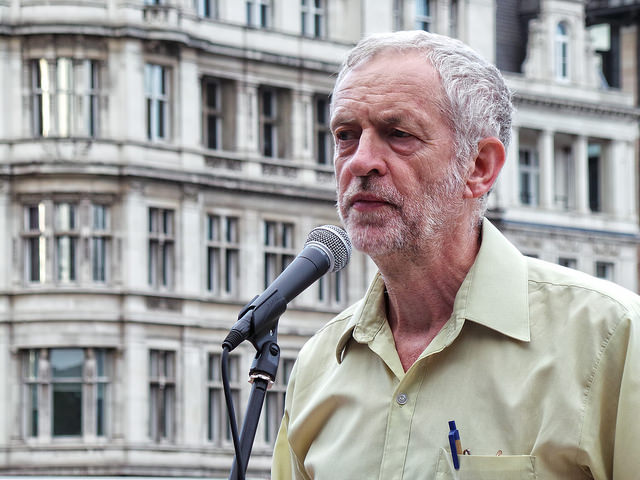
Picture of Jeremy Corbyn taken by Garry Knight and used under creative commons.

September 20, 2016 /Alastair J R Ball
The crisis in Labour
Comment

The left is suffering because of its lack of vision

September 11, 2016 by Alastair J R Ball in The crisis in Labour

A recent article in the Guardian has data showing that even if had Labour won 100% of the 2015 Green vote, the Tories would still be the largest party in parliament. Green voters are switching to Labour, but other voters are deserting it. This, combined with the expected boundary changes, means the outlook for Labour in the 2020 general election is not good.

The takeaway from this is that Labour need to win over some Conservative voters to regain power. The simplest way to achieve this would be to move to the right, but will Labour ever have credibility with Tory voters on benefits and immigration? Not every Tory voter is a right wing ideologue, many can be convinced to vote Labour, but the party must have something to offer. Labour need a coherent vision of what they would do with power.

Across the world the left has become very good at describing problems of contemporary capitalism. In Britain much of the criticism of Tory austerity have turned out to be true: healthcare is suffering, junior doctors are on strike, students have rioted, inequality has widened, the cost of living has gone up, wages are stagnant, economic growth is lacklustre. However voters are less likely to vote Labour now than in 2010. This is because, as Ed Miliband discovered, criticising the government is not enough. Labour need to offer an alternative vision for society and not just a list of grievances, even if those grievances are valid. We need to answer the question: what exactly would we do in government?

The most obvious instance of having valid criticisms but no alternative is also the largest issue facing global capitalism: the failures of neoliberalism. The left has been criticising neoliberalism, privatisation and deregulation years before the 2008 financial crash exposed to the world the problems of anything goes capitalism. However the left had no economic model to replace neoliberalism. The best we could offer was a reheated socialism or a return to Keynesianism. Going back rarely inspires voters and thus neoliberalism survived the greatest economic crisis since the Wall Street Crash. A crisis it had directly caused.

Neoliberalism emerged to replace the post war consensus in the 1970s because it offered an alternative to the dominant Keynesian economic framework. Neoliberalism offered solutions to the economic problems of the time as well as having politicians and academics to champion it. In other words, when the post-war consensus stopped being a consensus, an alternative was ready. Now that alternative has run its course, but when the best possible opportunity to replace neoliberalism came along there was no economic model to replace it. Little has changed in the eight years since the financial crash. The left still needs an economic system to replace neoliberalism. This will be the core of the alternative the left offers the voters to get re-elected.

Related to neoliberalism is the issue of globalisation, an economic problem the left has many criticisms of, without any prescription for. Many politicians and thinkers recognise the problems of globalisation: the entrenched poverty caused by moving jobs overseas, the downward pressure on wages, the increase in inequality. The only alternative to globalisation are the disastrous suggestions of the far right. The likes of Donald Trump and Nigel Farage want to put up barriers (in the former case literally) to keep the rest of the world out. Trump has also suggested a 45% tax on Chinese imports to America, which would trigger a tariff war between the world's two largest economies.

Trying to keep the rest of the world out will only make us poorer and will not help us tackle our economic problems. However, the falling living standards and entrenched poverty caused by globalisation is fuelling support for reactionaries like Farage and Trump. The left need to find a way to mitigate the negative effects of globalisation without shutting the world out to neutralise the appeal of dangerously devise figures like Farage and Trump.

Linked to the backlash against globalisation is the wave of nationalism and nativism that is sweeping across the western world. From Trump to the True Fins to Jobbik and Marine Le Pen, nationalism is picking up the support of those left behind by neoliberal globalisation. The threat they pose is obvious, but aside from criticism, the left has no response. Without an alternative to neoliberalism, those who lose out from globalisation will turn to increasingly reactionary political movements. If the left cannot offer a credible alternative then the nationalists will.

The appalling lack of policy, and reliance on criticism without vision, applies equally to both the far left and centre left. It also applies to most left wing parties of all stripes across the western world. The centre left is still wrapped in the embrace of neoliberalism and believes that any deviation from the doctrine of free market capitalism is poison to the electorate. Their faith in a failed and widely unpopular economic system has meant that centre left leaders have lost support from the electorate and members of their own parties. If there is any political certainty in 2016, it is that voters are not want happy with the status quo. If the centre left want to regain power they need to rethink their relationship with neoliberalism.

Jeremy Corbyn and the far left are little better at offering a coherent alternative to neoliberalism. Corbyn, Sanders and assorted others who are attacking the political establishment from the left offer many criticisms but no practical alternative system. In some cases they show no inclination to do so. Corbyn has led the Labour Party for over a year but has outlined very little of an alternative vision. Corbyn’s shadow chancellor John McDonnell, has even signed George Osborne's fiscal charter, committing a Corbyn-led Labour government to austerity.

I supported Corbyn for Labour leader because I wanted him to articulate a left wing alternative to the neoliberal status quo that has existed since 1979. So far, Corbyn has shown more interest in fighting other members of Labour Party than presenting the convincing left wing alternative vision that the country desperately needs.

Across the western world left wing political parties are suffering a crisis of identity. The centre left has nothing new to offer alienated voters. Faced with radical - often disastrous - right wing alternatives, voters are deserting the left. This can be seen in the Brexit vote, a reaction to the painful pro status quo Remain campaign. This can be seen in Hilary Clinton's poor performance in the US presidential campaign so far. If she gets to be president it will only be because Trump is so vile. It can be seen in how Corbyn - a man who offers little more than 80s nostalgia - easily defeated three seasoned centre left politicians, because they had nothing more to offer than the status quo. Across the western world the centre left has run out of ideas but still clings to neoliberalism and thus bleeds support.

The far left should seize this opportunity for real social change. However, they offer many valid criticisms of the status quo and the centre left but little in terms of a concrete alternative. Corbyn offers something different, which is encouraging, but being different is not enough. The left need to offer a concrete vision, a plan, policies, an indication of what we would do with power, if we are to convince the electorate to support us.

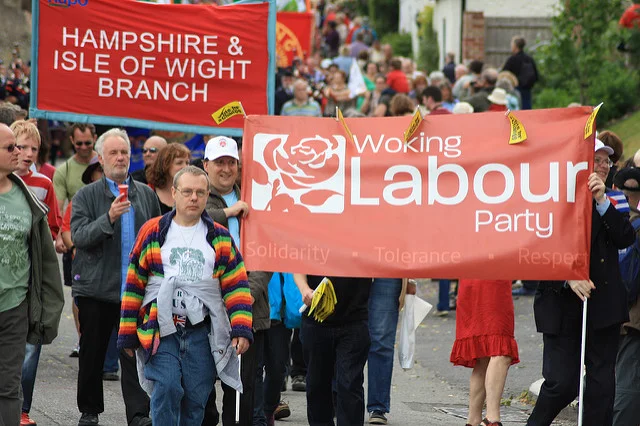
Labour Party picture taken by Andrew Skudder and used under creative commons.
September 11, 2016 /Alastair J R Ball
The crisis in Labour
Comment

The case for making a case

September 04, 2016 by Alastair J R Ball in The crisis in Labour

Changing voters’ minds is a severely underrated skill in contemporary politics. Politicians instead prefer to talk in terms of positioning themselves; hence the rush to the right on immigration post EU referendum. The Remain campaign is the most obvious instance of positioning over conviction. The strategy of the Remain campaign was not to change anyone's mind about the EU; it was only to align a Remain vote with voters’ primary concerns, jobs and the economy. This approach seemed smart, but it failed.

Being aligned with economic stability allowed the Conservative Party to win a surprise majority in the 2015 election. Most rational voters support the party with the most economic credibility, or the party that is seen to have the most economic credibility. Why did the majority not vote Remain when the Stronger in Campaign had worked so hard to align a Remain vote with economic stability?

A narrative is forming in our public discourse (at least on the left) as to why Remain lost. That narrative states that it was the poor, Northerners, the left behind, the losers of globalisation that caused Brexit. It assumes that these voters could never have convinced of the merits of immigration and EU membership. The Stronger In campaign aligned Remain with economic stability but these people simply would not listen. Their minds were made up and there was nothing to be done.

This narrative falls down because there is evidence that Brexit was not caused only by voters in the former industrial North. They do not make up 52% of the population. So if angry, poor Northerners did not cause Brexit, what did?

The Stronger In campaign failed to win over many people with good jobs, or a degree, or who own a house, or live in the South voted for Brexit. These people care about economic stability (many voted Tory in 2015) but did not care that it was aligned with a Remain vote. These people do not like immigration or how the country has changed over the last 30 years and they want to stop it. Could they have been convinced to vote Remain with the right argument?

This argument would involve the fact that pressure on public services has been caused by government cuts and not by immigration. It would involve the fact that cuts to ESOL services has made it harder for recent immigrants to integrate. It could involve arguing for the establishment of a fund that invests in areas with high levels of immigration to alleviate the pressure - as Jo Cox argued. It could involve convince people that we have a humanitarian duty to help refugees. Or that unemployment and high costs of living are not caused by immigration but by our deregulated labour and housing markets. It would involve arguing that there is a different way of doing politics.

Who will make these arguments? Which politician or party will pick up the mantel of convincing people that we can collectively tackle our problems? Jeremy Corbyn and the Labour Party are not doing this. Corbyn has shown more interest in fighting other party members than convincing voters to support Labour. He has had a hostile media and unsupportive PLP to deal with, but he could have done more. He could make Labour a broader church instead of a divided one.

If Corbyn will not try to convince the electorate to vote Labour, then who will? Certainly not the most vocally Corbyn-sceptic wing. They only understand the tactic of repositioning the party and have no desire to convince anyone. Given control, they will shift the platform to anti-immigration and anti-benefits in an attempt to chase the centre ground. Even Owen Smith and Yvette Cooper (who are certainly to the left of the party) seem to be against making a pro-immigration argument and convincing voters.

The problem with re-positioning Labour towards the centre of British politics is the Tories have shifted the centre ground on benefits, public services and immigration substantially to the right. To chase this would fundamentally change what Labour stands for.

This what I most dislike in the Corbyn-sceptics: they do not want to change people's minds and convince them to vote Labour. This is evident in how they present the case for Owen Smith to become party leader. They do not argue for why the Labour Party should embrace centre left politics, they simply say the voters will never embrace socialism so we will water it down until it is something they will accept.

This approach has sustained the drift to the right on economic issues since 1979. Thatcher moved the economic centre ground to the right, then Blair repositioned Labour to match. Now we are seeing an increase in right wing rhetoric on immigration. Labour can either convince people this new racially charged streak to our politics is wrong, or re-position itself to match the new centre ground. My biggest worry about Owen Smith is that if he becomes Labour leader he will do the latter.

The folly of re-positioning your politics is shown in the EU referendum result. Attempts to align Remain with voters’ current beliefs failed to inspire enough people to vote Remain. Remain lost because they did not make the case for remain. Labour will lose if it tries to re-position itself in line with the new rightward centre ground. They need to convince people that they offer an alternative.

If you are against the racism of the Brexit campaign, the solution is to fight the narrative that Brexit was won by Northern idiots who will not change their mind. The solution is to convince people that an inclusive and accepting society is in all our best interests. If you want Labour to win an election again then we need to convince people that Labour offers a genuine alternative to the current government, not a slightly softer version. The left needs to argue from a certain position for change and not just re-position itself.

The main issue with this what alternative does the left offer? What exactly do we try and convince people to support? This will be the subject of the next article.

House of commons image created by Herry Lawford and used under creative commons.
September 04, 2016 /Alastair J R Ball
The crisis in Labour
Comment

The Case For (And Against) Voting Owen Smith

August 25, 2016 by Alastair J R Ball in Corbyn

Love him or loathe him, Jeremy Corbyn was necessary – that’s my view. I say this because Labour’s 2015 result didn’t feel like the narrow defeat it should have done. It felt like an existential crisis. The party didn’t know what it stood for anymore. Even Yvette Cooper, who could have been a formidable leader in different circumstances, came across as bland and insubstantial in last year’s leadership election. Having hollowed out the party’s soul, the PR-driven politics of the New Labour era had decisively run out of road.

When I voted for Corbyn in 2015, I knew that Labour – whoever led it – was a long way from power. But I believed that more of the same wouldn’t address the underlying issues of the 2010 and 2015 defeats. What we needed was someone who’d rebuild the party’s grass roots, to lead a debate about what the Labour Party is for. I didn’t see Corbyn as a natural leader, but that seemed academic in the context.

My assumption (shared by Owen Jones, amongst others) was that, once he’d got this soul-searching process underway, he’d step aside in 2018 or so, to make way for someone who shared his left-wing principals, but was younger and more ambitious – more leader-material, basically. Someone who’d then fight the 2020 General Election and win. Clearly, Brexit and Labour’s own infighting have rendered that hope irrelevant.

We’re faced once again with a ballot paper, and the threat of a snap election remains prescient. My disdain for the way Corbyn has been plotted against, and for those on the right of the party who refused to work with him from the start, should be taken as read – because of this, my instinctive position is to vote for Corbyn again. But I also feel that Owen Smith, despite some of the daft name calling (which, in fairness, is very much a two-way street at the moment), isn’t the real enemy. He’s no Blairite, and deserves a fair hearing.

On the ‘Blairite’ point, it seems fair to point out that, whilst plenty of actual Blairites support Smith, they’re doing so by default – the ‘anyone but Corbyn’ candidate. I’m less interested in their views than I am of the increasing number of non-Blairites who are backing him, or at least doubting whether Corbyn remaining in charge is the best course of action. Tom Watson and Sadiq Kahn, for example, may not be perfect, but they cannot fairly be described as on the right of the party. In the blogosphere, writer Owen Jones recently wrote a piece outlining his worries about Corbyn’s performance – and was promptly accused of being a Blairite stooge. The reality is that plenty of decent left-of-centre people are seriously agonising over the way forward, and I’m one of them.

The case for voting Owen Smith centres on his claim that he’ll be as radical as Corbyn, but actually deliver by winning elections. The first part of this claim doesn’t sound far off the mark: Smith is talking about reversing austerity and investing for prosperity. He’s doing so in a way that would have been unthinkable a year ago, when Burnham and Cooper were banging on about ‘aspiration’ and so on. Corbyn seems to have shifted the conversation to the left, which I’m grateful for. But now that he has done, Smith argues he’d be a surer pair of hands at the wheel.

The claim that he’s more electable is debateable. As stated above, Labour’s problems started way before Corbyn’s leadership. But he is certainly much more skilled in handling the media. He seems to know how to marshal it in a way Corbyn just doesn’t seem to attempt, performing well on Radio 4’s combative Today programme. Even his minor gaffes (Theresa May’s heels and all that) arguably lend him human relatability; no-one wants media-savviness to lapse into Blair-era slickly choreographed insincerity.

In contrast, one of my primary frustrations with Corbyn is that he doesn’t seem to have a media strategy it all. He and his team should have focussed strongly on deflecting and anticipating the inevitably-thrown muck, and countering it with a strong, consistent, and most importantly, relentlessly repeated message. That’s all Farage really did – the ever-available rent-a-gob – and it largely worked.

Unfortunately, there’s still a significant case against voting for Smith. It has nothing to do with fanclub-like adoration of Corbyn (a phenomenon which is overstated amyway). Smith’s refusal to work with Corbyn, if he wins, is childish. If there’s any hope of making Labour vaguely functional after this contest, it’s incumbent on all factions, left and right, to start building bridges. Owen Smith ought to be leading by example on this.

Policy-wise, I can overlook his pro-Trident stance, even though I disagree with it. The decision’s already been made. But his position on Brexit is frankly odd. Whilst I voted Remain, it’s clear to me that the result must be honoured. Smith’s second referendum would look too much like the political establishment sneering at the majority who voted Leave, insisting on re-running the contest until the ‘correct’ decision is reached. That’s not a good image for a ‘man of the people’.

But for me, the main reason against voting for Smith is that I’m not convinced he really gets it. Why so many members voted Corbyn in 2015. We’ve heard a lot about SWP entryists, anti-semitism, death-threat sending thugs and so on. But whilst these things are real and condemnable (although the bad behaviour cuts both ways), most Labour members have nothing to do with any of it.

Smith isn’t doing enough to talk to people like me: pragmatic socialists who, contrary to some accusations, really do want Labour to win elections whilst retaining its core values. People who don’t want Labour to be some kind of left-wing cult, but are tired of twenty-plus years of comprehensive marginalisation. He needs to acknowledge these people and prove he understands why we voted Corbyn last time.

I also don’t like the feeling that a vote for Smith would be playing into the hands of those who’ve spent the year plotting a coup. But we are where we are, and I won’t let that alone influence my decision. My ballot paper still lies, unopened, on my desk. My vote is essentially there for the taking – but Owen Smith doesn’t seem bothered to do so.


August 25, 2016 /Alastair J R Ball
Corbyn
Comment

Positioning and perception

August 21, 2016 by Alastair J R Ball in The crisis in Labour

"The British electorate will never elect a socialist government," a friend told me recently. I have heard this argument in varying forms over the last year: Labour under Jeremy Corbyn has moved to the left and although this pleases some people alienated during the Blair/Brown era, it means they have lost touch with the centre ground of British politics that decides elections.

This argument presents the Labour Party's problems as simply one of positioning: shift to the centre and win an election. This argument is closely aligned to the argument that all Labour needs to do is to replace Corbyn as leader and their problems will be solved. Labour's troubles are not just limited to the leader. They are complex, deep rooted and have causes that stretch back decades. In these recent articles I have been exploring the many factors behind Labour's current woes.

There is arrogance on the Corbyn-skeptic side of the party that paints Corbyn as the only problem. They forget that Ed Miliband lost a general election because of the way that Labour was perceived by the voters. Miliband had policies that were popular- energy price freeze, a mansion tax to fund the NHS - but the public viewed the Labour Party as too much of a risk with the recovery so fragile. Labour needs to ask why there were not trusted if they want to win power anytime in the next decade.

Miliband’s foremost perception problem was economic competence. The accusation that the last Labour government recklessly borrowed and overspent has stuck, because the Tories relentlessly hammered it home. Labour tried to address this negative perception by promising a balanced budget and getting the OBR to sign off on their manifesto commitments. It made little difference and Labour still lost because the voters did not want Miliband to turn on the money taps.

The belief that they would be economically irresponsible is linked to another perception problem for Labour: they were seen as too generous with benefits. Public support for welfare spending is at an all time low. Even voters who rely on benefits believe spending on benefits is too high and that a lot of the money is going to people who do not need support. Labour have also tried to address this but have so far been successful. Any future Labour leader will have to deal with this perception problem.

Another problem is that Labour was seen as being too soft on immigration. Blair and Brown massively increased migration to the UK but failed to make the case for why this was a good thing. This vacuum was filled by the far right and now racist anti-immigration rhetoric has become part of our accepted political discourse. Again Labour have tried to tackle this perception problem by adopting a watered down version of this rhetoric, most notably with Owen Smith saying that immigration was too high in some areas of the country and his claim of a "progressive case against freedom of movement". Putting the word “progressive” in front of something does not stop it being right wing rhetoric. The view that Labour is too relaxed about immigration is still solid and the Brexit vote shows that a substantial part of the population wants immigration to come down. Any post-Corbyn Labour leader will have to deal with how hostile to immigration the electorate have become.

These perceptions are tied to the fact that Labour is seen as not on the side of the ordinary voter, David Cameron's oft-mentioned "hard working people". Political reality has little to do with this. Remember it was Cameron who wanted to cut in work benefits whilst passing on a billion pound subsidy to the finance industry in the form of discounted shares when RBS was fully privatised. These facts do not matter. Labour is seen as on the side of scroungers, the work shy and the recent immigrant by many a swing voter in places like Nuneaton. It this perception that preventing Labour from rebuilding its election winning coalition.

This is linked to the view that Labour is not seen as very patriotic, a perception that the Tories are eager to encourage. While this is a problem for Labour I am doubtful whether a sudden burst of flag waving would help the party much. No one will believe that Corbyn is patriotic, and it is unlikely that Owen Smith, Tristram Hunt or Chuka Umunna would be more believable. The only thing more toxic than being seen as unpatriotic would be insincere patriotism, or to be seen as cynically exploiting it for electoral gain. Miliband's clumsy attempts to address voters "concerns" about immigration came across as patronising to some, driving them to UKIP, while it made others uncomfortable and drove them to the Greens. I remain unconvinced that the British public want more American style flag waving in their politics.

Taken together this all looks very bad for Labour. It is part of a narrative of the wider decline of social democratic parties across the western world. Unable to provide new ideas to response to our current challenges they have fallen back on the 1990's combination of economic and social liberalism that is not conceiving voters anymore. Assailed from the left on economic issues and the right on social ones (mainly immigration) social democracy across Europe is in poor health.

Labour are currently positioned very poorly in the eye of the voters and this will cost them the next election. Getting rid of Corbyn would not change this. There is no front line Labour politician who can convince the public that Labour is strong on the economy and immigration. Labour can adopt all the policies on border control and cutting benefits they like but it will not change their positions problem.

This means that Labour need stop thinking in terms of positioning themselves and start thinking in terms of convincing voting of the merits of voting Labour. More on that in my next post.

Chess image taken by Eigenberg Fotografie and used under Creative Commons.


August 21, 2016 /Alastair J R Ball
The crisis in Labour
Comment

The collapse of Labour's broad base of support

August 14, 2016 by Alastair J R Ball in The crisis in Labour

If a general election was called tomorrow Labour – once an election winning machine - would lose. A result similar to the one that Gordon Brown achieved in 2010 is very unlikely. The collapse of its broad base of support is the biggest problem the party is facing. Tony Blair was good at winning elections, but he had a booming economy and faced weak opposition leaders. Labour cannot repeat the strategy of the 1990s in the 2010s; they need to engage with why they have lost their electoral coalition if the party is to win an election in the future.

The Labour Party typically wins general elections when it has the support of 3 groups: industrial workers (or people living in former industrial areas); metropolitan liberals (Guardian readers); and aspirational centrists (people who think that a Labour government is in their best interests). In 2015 UKIP ate into Labour's support in the first group, the Greens took some of the second, and the Tories took a huge bite out of the third. Despite once dominating these groups, today the prospect of uniting this coalition is distant.

The Labour Party does have some support, mainly amongst middle class, metropolitan, liberals. Many of these are long standing Labour voters, who support Labour because they are the main left wing party. Others are voters who defected to the Greens or Lib Dems and have now been won back by Jeremy Corbyn. These are all voters who are happy with the leftward movement of Labour.

Many of these Labour supporters are people who are put off by politics in general, but are now inspired by Corbyn. Voters who complained that New Labour and the Tories were too similar and like Corbyn because he is different to most politicians. The problem is there are not enough of these people - even if they formed a progressive alliance - to unseat the Tories from power in Westminster.

The collapse of Labour's broad base of support is in part because Labour has become a party of middle class, metropolitan, liberals. Support amongst this demographic has increased under Corbyn, but they do not hold the balance of power in important swing seats like Nuneaton. For Labour to win a general election they need to appeal to a wider group of people. Unfortunately, as support amongst middle class, metropolitan liberals increases, support amongst aspirational centrist voters is decreasing.

The lack of support from centrist aspirational voters is a key reason why Labour lost the 2010 and 2015 general elections. These people blame Labour for the recession and for the stagnant economy that we are still experiencing. They were convinced by Tory rhetoric about balancing the budget and Labour's over spending. Unlike metropolitan liberals, this demographic tends to be less engaged with politics, so the personality of leaders is important to them. Crucially they did not like Ed Miliband and they do not like Corbyn. This is a large voting block that Labour has lost.

The loss of this demographic did not occur under Corbyn. It mainly happened under Miliband's leadership - although Corbyn is not winning them back. Miliband had policies aimed at aspirational centrists - who tend to be more concerned with what a party can do for them than metropolitan liberals – such as gas price freezes, housing market reform, balanced budgets and controls on immigration. However the message was not particularly well delivered, while the Tories’ simple message about economic responsibility, backed up with recent memories of a recession that began under Labour, connected with this group. The 2015 defeat was mainly because Labour could not speak to aspirational centrists anymore.

Is the lesson from this that Labour should move to the centre to win power? Labour could try and win back this group by opposing Brexit, or being tougher on benefits. However this would risk alienating industrial workers. Labour cannot win power with only the support of metropolitan liberals and aspirational centrists.

Industrial workers (or those who live in former industrial areas) are the other key group Labour need, and whose support has been bleeding away before Corbyn was chosen as leader. The main explanation is rising immigration in the Blair/Brown years. Miliband tried to address these voters "concerns" but failed to convince - whilst simultaneously driving more metropolitan liberals towards the Greens. These voters are more likely to have supported Brexit and a reduction in immigration is their key demand. They perceived Miliband as weak (easily portrayed as in the pocket of the SNP) and Corbyn as unpatriotic. Labour is losing these voters to UKIP.

These voters have been characterised as the “left behind”. They are the ones who are losing out from globalisation as industrial jobs are moved overseas to be replaced by low paid and insecure work. These voters have been traditionally represented by the Labour Party, but they have seen a marked decline in their living standards since Labour embraced neoliberal globalisation. UKIP has been successful at winning these voters by blaming their economic problems on the EU and immigration.

Miliband was unable to win them back, and Corbyn does not speak to them, but nor does the right of the Labour Party who still refuse to acknowledge the role of the globalisation they encouraged in eroding living standards.

Tristram Hunt has argued that repositioning on immigration and a more patriotic image would win back these voters, but there are risks of the party alienating voters more if they are seen as being insincere in their patriotism. Cynically exploiting the patriotism of industrial workers for electoral gains will feed the fire of anti-politics, much like Miliband’s statements on immigration drove metropolitan liberals to the Greens and industrial workers to UKIP.

To win over the support of industrial workers Labour needs a means of protecting the living standards of those disadvantaged by globalisation without resorting to UKIP’s tactic of putting up walls and trying to keep the rest of the world out. This is the key challenge facing parties of the left worldwide, from Hillary Clinton to François Hollande. No faction of Labour has a convincing answer to this problem and until someone does, Labour will struggle to win back the support of industrial workers without losing the metropolitan liberals or aspirational centrists.

Labour needs to try and win over from these three electoral groups, but they want different things. This is encapsulated in the question of how Labour should respond to the vote to leave the EU. If it embraces Brexit and controls on immigration to win back industrial workers it is likely to alienate metropolitan liberals (who voted remain) and a significant number of aspirational centrists (who want the economy protected and are were generally in favour of the stability of remain). By opposing Brexit or attempting to limit the degree of Brexit, Labour risk alienating industrial workers who typically voted to leave.

Brexit is just one issues where the views of the three groups differ. Blair was able win huge majorities, but it was much easier for him 20 years ago when the country was less divided and the economy was in Labour’s favour. I am not sure what platform Labour could stand on - with or without Corbyn - that could win back the support of enough voters. There is clearly no easy option and all run the risk of worsening Labour’s predicament. Labour needs to engage with issue head on if they are ever to win an election again. The first issue they need to engage with the wide negative perception of the Labour Party.

Polling station image taken by Rachel H and used under creative commons.
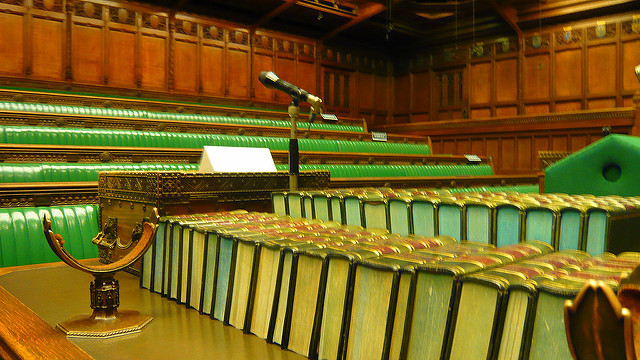
August 14, 2016 /Alastair J R Ball
The crisis in Labour
Comment

What is the appeal of Jeremy Corbyn to Labour voters?

August 07, 2016 by Alastair J R Ball in Corbyn

No one expected Jeremy Corbyn to become leader of the Labour Party when he narrowly scraped onto the list of nominees. Diane Abbott - the previous left-wing candidate to stand for Labour leader - came last, with only 6% of the vote. It was expected that Corbyn would only do slightly better.  A year later, Labour is on course for electoral disaster: the Tories’ poll lead is far greater than it was at any point under Ed Miliband's leadership. However, Corbyn remains popular amongst his fans and party members. This defies political logic and has caused some consternation.

There have been articles claiming Corbyn followers are paranoid or a cult. Uncritical support for your own side and disregard for anyone else's opinion is fine when discussing football, but not when it isolates Labour Party members from electoral reality. So what is going on here? Has the Labour Party gone mad?

There is definitely delusional and cult-like behaviour from Corbyn supporters on Facebook and Twitter. I have been told, repeatedly, by Corbyn supporters that he would win a general election or that the only obstacles to him winning is the opposition of the PLP. This is simply not true. Many people inspired by Corbyn are unwilling to accept how deeply unpopular he is and how badly Labour is going to be crushed by the Tories at the next election.

There are many people who are inspired by Corbyn, his long history opposing the Tories and the fact that he is different from most politicians. People who have complained for years that they do not see a difference between Labour and the Tories are drawn to Corbyn. Many of these people are disenfranchised by politics or have been supporters of fringe left wing parties. These voters are inspired by Corbyn personally not necessarily his policies. It is these people who are most vocal in their support for Corbyn and these who are the most convinced that he can win a general election. However these people are not the majority of the Labour Party.

Last year, Corbyn won the support of the majority of existing Labour Party members (his election as leader did not depend on the new registered supporters), and he still has wide support amongst long-standing party members. I do not think that the Labour Party has gone insane or has been taken over by Trotskyists. Realistically, I doubt that there are 180,000 Trotskyists in all of Britain, yet that many people have joined the Labour Party recently. Not everyone who supports Corbyn is delusional about his chances of becoming Prime Minister. Many Labour members are aware of the danger facing the party, but continue to support Corbyn. Why do people who care about how electable Labour is support Corbyn?

Corbyn did not become Labour leader because of a sudden enthusiasm for Socialism. It was a shock when Labour lost the 2015 election, and the party was unwilling to examine why it lost. Miliband's soft left, liberal vision of Britain was rejected by voters, despite a Tory government that had brought rising child poverty, rising cost of living and stagnant wage growth, and had returned the country to a recession. The Labour Party did not want to do the hard work to find a vision for liberalism that would appeal to enough voters. How does Labour find a policy platform that appeals to both middle-class voters in the south-east and working-class voters in the former industrial north? This is not easy, and the party decided not to do the hard work of questioning itself and why it had become so unpopular.

As Martin Robbins said in the article cited above: “Unable to accept that Labour had simply lost arguments over austerity, immigration and the economy, people began constructing their own reality”. Corbyn became party leader because Labour had lost faith in the soft left of Miliband and Brown, and was unwilling to find a way to make the policies of the soft left work. A new direction was called for.

Lots of Labour Party members were worried about rightward drift in the party, now that the soft left consensus had gone. Party members (who are mainly metropolitan liberals) did not want a Labour Party that was critical of benefits claimants and immigrants, whilst encouraging neoliberal, anything-goes capitalism. However, it looked like that was the party they would get, when Andy Burnham said Labour must distance itself from “people who want something for nothing”.

People who find discussion of immigration inherently uncomfortable do not want to hear the rhetoric of UKIP coming from their leaders. Many Labour member disliked Miliband’s attempts to address voters’ concerns over immigration - I even met people who voted Green in 2015 because of it. Labour Party members were willing to hold their noses and vote for Blair, but not for a party that was anti-immigration and anti-benefits, which is what Andy Burnham, Yvette Cooper and Liz Kendall were offering to different degrees.

There are many good reasons to oppose this rightward drift within Labour. Using the rhetoric of anti-immigration at best serves the Tories (who are always viewed as better on immigration than Labour), and at worst plays into the hands of the far right. In this new age of political chaos and uncertainty, reheated neoliberalism will not win Labour an election. No one was convinced of the ability of Burnham, Cooper or Kendall to win a general election. Labour Party members had good reasons for voting for Corbyn, even though his leadership is doing serious damage to the party.

The continuing high level of support for Corbyn is not the product of widespread delusions or cult-like thinking within the Labour Party - although this is certainly present in some of Corbyn's more ardent supporters. Middle-class metropolitan liberals have rallied to Corbyn because there is a real fear that after the Brexit vote aggressive anti-immigrant rhetoric could become Labour Party policy.

Owen Smith has done much to encourage this fear. His statements on immigration make Labour Party members uneasy. He has done more than Corbyn himself to perpetuate the suspicion of many metropolitan liberals that a vote for anyone other than Corbyn is a vote for an anti-immigration, anti-benefits, neoliberal Labour Party. The average Labour Party member is not as left wing as Corbyn, but they are sufficiently left wing not to want a neoliberal, anti-immigration Labour Party.

Personally, I do not want a Labour Party that adopts the language of anti-immigration and the policies of letting business do whatever it wants, because this is somehow in our best interest - the 2008 financial crisis shows that this idea is moronic. The problem is that Labour is heading for a crushing defeat under Corbyn. Some vocal Corbyn supporters are in denial about this, but most are fully aware of it. They refuse to compromise, and these middle-class metropolitan liberals are not the ones who will suffer under years of Tory rule. They will get the party they want but it will lose badly. I do not see how the cause of being against the scapegoating of immigrants and those on benefits is served by the complete destruction of the Labour Party.

Corbyn will not be beaten in a leadership election until the PLP realise that the members do not want a neoliberal, anti-benefits, anti-immigration Labour Party. A compromise for party unity would have to involve the new leader accepting this, in order to convince those who are going to give up their evenings and weekend to make him or her Prime Minster that they share common values. The Labour activists will not work hard persuading the country to embrace anti-immigration rhetoric that they do not believe in or think is actively poisonous.

As the factions within Labour become more pronounced, I do not see a compromise happening. That leaves only the looming certainty of electoral defeat, possibility in the next several general elections. Personally, I do not want a Labour Party that cynically exploits the public’s fear of immigration for power. I also do not want a Labour Party that is heavily defeated in elections and unable to offer meaningful opposition in parliament. This leaves me at an impasse from which I have no idea how to proceed.

It is worth remembering that those who support Corbyn do so not because of the delusion that he will become Prime Minister, but because there is no alternative that they can accept. It also worth remembering how bad Labour's current polling is, and how bad for country a crushing defeat for Labour would be.

Picture of Jeremy Corbyn taken by Garry Knight and used under creative commons.
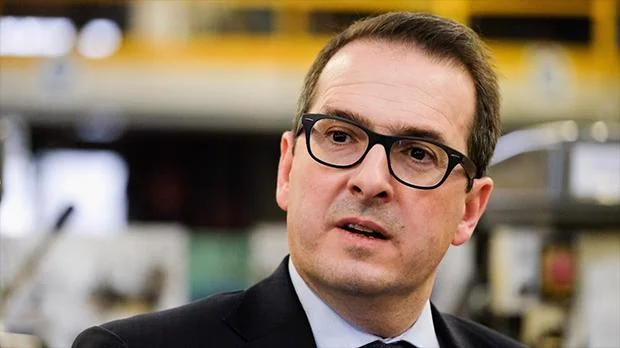
August 07, 2016 /Alastair J R Ball
Corbyn
jeremy-corbyn-labour-party

Labour’s time off is over

July 25, 2016 by Alastair J R Ball

I always thought I’d be happy on the day that Cameron left 10 Downing Street, but that was because I imagined him leaving after a humiliating general election defeat to be replaced by a responsibly left wing Labour government. In reality, my pleasure was tempered by my fear of what will come next.

There was a lot that I did not like about David Cameron. Austerity has seen a huge growth in child poverty, rising inequality and the transfer of wealth from the poor to the rich. Homelessness is up, more people are in causal or insecure work and the number of people using food banks has grown from 41,000 a year in 2010 to over one million people in 2015. Unemployment and disability benefits have been cut and, to justify this, there’s been an increase rhetoric accusing the poor and disabled of being scroungers. Six years of Cameron as PM have been characterised by a return to recession, stagnation, economic uncertainty and declining living standards. While everyone else in the country became worse off, there were huge subsidies for the financial sector in form of RBS privatization - at a loss to the taxpayer of £22bn.

Cameron gambled the future of the UK on an EU referendum to placate the Right of his party. His loss will be his legacy. It will cause huge damage to the UK and may even lead to its breakup. This damage will be felt by the poorest and most vulnerable, while the rich denizens of the Tory shires will continue to grow wealthier. Cameron was a disaster for this country - and now he is gone.

The resignation in shame of an elitist Tory Prime Minister has not made me happy because the Tory Party is still in power. The agenda will still be to enrich the few at the expense of the many. For a few weeks the Tories looked like they might disintegrate into post referendum factionalism, but they have ruthlessly stitched their party back together. They have reformed from their shattered, desperate units into an effective fighting machine faster than the T1000 in Terminator 2. The Tories are getting comfortable with Theresa May as their new leader and Prime Minister. She will be pragmatic, careful, technocratic and, unfortunately for us, most likely very popular. I can see her winning elections and moving the centre of politics to the right. The Tories are stronger now that Cameron is gone.

Most of this strength and unity is because they have been given a free pass by the Labour Party, who have completely splintered into factional infighting. It’s embarrassing to watch Labour go to pieces at the point where the country needs them most. The Labour Party must unite and start fighting back against the Tories, who have already used Labour's divisions to get Trident renewed. This degree of infighting is seriously damaging to Labour and could ultimately cost the party its future.

Of course there is a lot debate within Labour about what form this opposition should take, hence the infighting. Agreeing with austerity and controls on immigration didn’t get Ed Miliband elected as Prime Minister, but neither did opposing Tory welfare cuts. Labour does not know how to win back its politically alienated base, how to reach out to new voters, what economic model would best replace neoliberal capitalism, or how to respond to the vote to leave the EU. If any faction within Labour had a convincing answer to these questions, it would crush the others. The debate about the direction of the Labour Party is important, but the party cannot be allowed to tear itself apart. A compromise must be found.

The Tories are emerging from their own infighting, uniting and getting back to the business of government. The country needs Labour to put on a united front to stand up to May. There is alot at stake, such as the Human Rights Act to defend and the ‘Snoopers Charter’ to oppose. The Tories cannot be allowed to dictate the terms of Brexit. We need the Labour Party to oppose Tory economic policy and fight for climate change legislation, increased NHS funding, steps to alleviate child poverty and electoral reform. None of this it can be achieved when party members’ primary concern is slagging off each other on Twitter. The country cannot afford for Labour not to oppose the Tories.

The Labour Party has become completely dysfunctional, and radical change is needed so that it can start being an opposition again. This could involve removing Jeremy Corbyn as leader, if Owen Smith can unite the party and restore it to functionality. I would prefer Corbyn to stay as leader, but not if Labour ceases to function with him in charge.

If Labour continues in the same vein, then the future will be a dystopian, oppressive, corporate vision of Britain. It will be the poorest who lose the most. This is the truth that Corbyn supporters need to accept. Middle class, metropolitan Corbynites can refuse to compromise with the rest of the party, but it is not middle class, metropolitan Corbnites who will feel the pain of a Tory government. It is the poor, the ethnic minorities, the immigrants and the disabled who will suffer under Prime Minister May. Are we willing to let these people suffer so that we do not have to compromise?

Cameron is gone, and good riddance to him, but May could well be worse, especially if she is not opposed. The Labour Party has been on a break since the referendum and has been thinking about itself too much. Break time is over. It is time to oppose the real enemies.


July 25, 2016 /Alastair J R Ball
Crowd.jpg

The return of fascism

July 17, 2016 by Alastair J R Ball in Far right

Although the aftermath of Britain’s Brexit vote still dominates the news, it’s not the only story unfolding in Europe right now. A shadow has been cast across the continent, a shadow that has stretched from the Turkish border to the arctic circle. This shadow is the return of fascism to Europe.

Nationalism, xenophobia and authoritarianism are rising at an alarming rate in Europe. In Greece there is the Golden Dawn, in Hungary we have Jobbik, France has a newly resurgent National Front, Finland has the True Finns and in Britain the remnants of the BNP and EDL are coalescing around Britain First. The rise of such parties is a serious problem that should terrify anyone who believes democracy and liberty.

The question is, what has caused this sudden rise of authoritarian parties? Is it because capitalism has become so unjust, and mainstream politicians so impotent, that voters are turning to extremes? This seems unlikely, as we have not seen a corresponding rise support for radical anti-capitalist parties. Is it that the memory of past fascist regimes has faded to the point where voters have forgotten the danger they present? Unlikely, as the memory of fascism in Europe runs deep.

Is this just an expression of human cruelty, people refusing to recognise the humanity of others and trying to make their lives more difficult? What is happening seems like more than sadism unleashed; it is organised and popular. The simple truth is that the defenders of democracy have no response to the return of fascism, because we do not understand its causes.

Fascism itself is difficult to identify, partly because overuse of the word has muddied its meaning. ‘Body fascist’ and ‘kitchen fascist’ are two such overuses cited by writer and broadcaster, Jonathan Meades, in his masterful documentary Ben Building on Benito Mussolini, as examples of how the word has lost all meaning. Fascism is not a perversion of the politics of the far right - or even the far left. Meades says: "if the extreme right is a race horse and the extreme left is a cart horse, what sort of horse is fascism? It is the sort of horse that is called a combine harvester, which is not a horse". This is the essence of what makes fascism different.

The problem is we think of fascism as a political system; it does not have an ideology. Every time Mussolini was asked what fascism was, he defined in a different way that was convenient to him at that point. Fascism is so new that it eradicates the past, but it also deeply rooted in the traditions of the past. Fascism desires total control through authority. Fascism does not accept criticism. Fascism does not object to murder or even mass death. Fascism turns its leaders into living gods. Fascism desires total war. Fascism glorifies death, especially death for country and leader. This is the anatomy of fascism, but it is not an ideology. Fascism is not the perversion of a democratic system. It is an entirely different system, like a monarchy or theocracy.

Are the collections of far right, nationalist and authoritarian parties I mentioned above fascist? They all have elements of fascism in them, but it is hard to tell if they are truly fascist because fascism is not one thing.

Across the Atlantic, Donald Trump has become the Republican nominee for President by stirring up nationalism, racial strife and refusing to accept any criticism. The debate about whether he is fascist continues, as fascism is difficult to spot until you are in the midst of it. I would say that Trump has elements of fascism - certainly his authoritarianism, and refusal to accept criticism - but he is not a true fascist. Given more power and less oversight he could evolve into one.

If fascism is one thing then it is against democracy and individual liberty, and seeks to overturn these in its parallel system of government. What we are seeing across Europe in the rise of these new parties is a movement to suppress the liberty of certain people. These people are the Other. The migrants; the people who are different from the “indigenous population”. If liberty trumpets the rights of the individual, and fascism suppresses the rights of the individual, then the suppression of the individual rights of one group of people is as much fascism as the suppression of the rights of all people. It is in the racism of these new nationalist parties we can see origins of fascism.

Is modern fascism like old fascism? The essence of fascism is its totalitarian control of all of individuals. Vladimir Putin has created a cult of personality and effectively eliminated opposition in Russia. This is the direction many of these proto-fascist parties want to move in. They appear to be modern democratic movements, but their goal is to move their countries outside the democratic process so that they can brutalise the people they do not like. Fascism may have changed its face, embraced social media and contemporary crises in Europe, but at its root is still the desire to control others through aggression.

Pointing at people who are odious (like Trump) and calling them a fascist does not bring us any closer to understanding what fascism is or what these new authoritarian, aggressive and nationalist movements are. Those opposed to fascism and its constituent parts of hatred, violence, egomania, war and tyranny have no response to the return of fascism because of this lack of understanding. To defend democracy and liberty we must first understand what threatens it. Fascism should not be dismissed; it should be a warning sign that this is something we need to pay attention to.

Defenders of democracy and liberty need to think about what has brought us to this dangerous cross roads, where fascism has returned to Europe when we thought it had been banished to the history textbooks. Understanding fascism is the route to fighting it, and we need a means of fighting fascism.

Crowd image created by James Cridland and used under creative commons.

July 17, 2016 /Alastair J R Ball
Far right

Why I am depressed about the future of the Labour Party

July 05, 2016 by Alastair J R Ball in Corbyn

On a recent episode of the Guardian's Politics Weekly podcast, Nick Cohen claimed that Labour supporters were not sufficiently scared. The writer and journalist suggested that members engaged in internecine fighting were not frightened enough of prolonged Tory rule. Let me to tell you, Nick, as a Labour Party member I am very frightened right now. Probably more frightened than I have been at any point in my adult life.

I cannot see any way out of mess the party has found itself in. The Labour Party seems more divided than the country as a whole, and the prospect of a permanent split is greater than at any point in the last 30 years. Whatever path it chooses, I only see ruin in its future.

The most likely short term outcome is that Jeremy Corbyn survives the current attempt to remove him as leader (or he is replaced by someone who also does not hold the confidence of the PLP, like John McDonnell). Any leader not from the Corbyn faction would have to win over the party membership, who are firmly pro-Corbyn.

So Corbyn stays and Labour mostly likely splits into two parties directly in competition with each other for the same voters. Due to First Past The Post, they would both fare poorly in a general election and the total number of left wing MPs would fall considerably. Labour's loss is the Tories’ gain. What follows is 15-20 years of Conservative rule, as Nick Cohen suggested in his podcast. In order to get back into power Labour (or what survived of it) would probably stand on a platform similar to what David Cameron offered in 2015 as a moderate alternative.

As a Corbyn supporter, I would be willing to accept a compromise to avoid this. The last thing I want to see is permanent split in the party - remember how well that went in the early 80s? This compromise would need a clear plan of how the party is to progress towards winning an election. As I have said before, “put Dan Jarvis in charge” is not a plan.

Suppose for a moment that the less likely short term outcome does occur, and an alternative to Corbyn succeeds in becoming party leader. This new leader would have to crush the left wing of the party to secure their authority, losing thousands of party members. We would go back to the days of senior party figures saying that Labour had been too soft on disabled and unemployed people who want some kind of quality of lifeand being intensely relaxed about the rich avoiding their taxes.

Voters want politicians they view as genuine. The Labour Party does not have on their front bench any communicator as talented as David Cameron. Still, despite his obvious skill in using the media and presenting his arguments, Cameron has struggled to build a consensus behind his premiership, because he seen as inauthentic. Do the Labour moderates feel that any of their pale Cameron imitators will do any better in convincing voters that they genuinely care about their lives? The Labour Party has lost the ability to communicate with sections of its core support, and I do not see Hilary Benn or Chuka Umunna doing any better.

Would deposing Corbyn herald a change from a party of protest to a government in waiting? This overlooks the obvious lack talent on the party’s right who cannot even execute a coup properly. With Scotland out of play, any Labour leader would need to win as big in England and Wales as Tony Blair did in 1997, and I do not see any front bench Labour politician who can achieve this.

This hypothetical Labour leader would need to be both a conviction and a consensus politician; media savvy yet authentic. Able to appease the party’s left and right. Anyone who thinks that person is Dan Javis or Tristram Hunt is wildly overestimating their abilities as politicians. If the moderates take back the party we will be lucky if we return to Ed Miliband levels of competency.

Even if the Labour moderates did retake the party and unite its disparate factions, they would then have to face the Tories in a general election AND deal with the fallout from the EU referendum. They have no means of responding to Brexit’s victory; they are pro-EU but confused by elections that they do not win. They have only one analysis for defeat: we were too left wing, we must become more right wing.

The Labour Party is faced with an impossible blind, as writer and journalist Laurie Pennyrecently said, "we have a choice between riots now and riots later". A general election will be called soon and it will be fought over the Brexit vote. The Labour Party would most likely stand on a pro EU, pro freedom of movement platform and lose the election after alienating 52% of voters, many of whom are its former core supporters. UKIP would pick up a lot of former Labour voters and the country would be led by a radically right wing coalition.

Possibly even worse is the prospect Labour could win that election, keep Britain in the EU or negotiate a Norwegian form of Brexit that protects freedom of movement. This would be seen as a betrayal of the 17 million voters who voted for Brexit mainly because they opposed immigration. Many of these Brexit voters are already very alienated from mainstream politics. If even 0.5% of these people are motivated to violence by this betrayal then the country could descend into race riots, the flames fanned by ongoing austerity.

What if Labour opposes freedom of movement, and backs ‘full Brexit’ in a cynical attempt to win over those 17 million voters? This involves the party supporting a campaign based on racism and xenophobia, as well as causing a huge recession, thus making the Labour Party very unpopular and probably leading to rising violence as sudden falls in GDP are related to civil unrest. Hence as Laurie Penny said, violence now from betraying the Brexit vote or violence later from a recession.

The future for Labour looks bleak. I am really depressed about the situation Labour is in and I cannot see any way forwards. The Tories are in a complete shambles, still divided over Europe and with no plan to implement Brexit. Many senior Tories are directly responsible for a divisive and racist EU referendum campaign, but still Labour cannot find a way to capitalise on Tory woes. It is infuriating to watch.

The country needs the Labour Party to unite and become an effective opposition because this brief spell of Tory infighting will end and then they will return, united and committed to a radically right wing vision of Britain. Labour need to get their act together now for the sake of the future.

I cannot see any chance of this happening. Even if Labour survives the current spate of internecine fighting then the problems of the Brexit vote and the lack of a clear plan to win a general election means the long term future of the party is awful to contemplate. We could be looking at the end of the Labour Party as a meaningful political force. So, Nick Cohen, yes I am very scared right now. Scared, and with a pronounced sense of hopelessness.

Labour Party picture taken by Andrew Skudder and used under creative commons.
July 05, 2016 /Alastair J R Ball
Corbyn
Corbyn.jpg

It is madness to get rid of Corbyn now

June 27, 2016 by Alastair J R Ball in Corbyn

The Blairites have made no secret of the fact that they have wanted Jeremy Corbyn removed as Labour leader since he was elected last September with a huge mandate from party members. Now they are in open rebellion against Corbyn, trying to force him to resign. The timing is perfect for the Blairites. The mainstream media is distracted by the fallout from EU referendum vote, the Prime Minister has resigned and the pound is tumbling in value – it’s the perfect opportunity to move against Corbyn. His enemies are hoping for a quick palace coup before anyone notices and have chosen now as their moment to strike.

However the so called "moderates’" plan is remarkably short sighted. They can force a vote of no confidence in the party leader (which is likely to pass) but then they will face a leadership election. The party membership is firmly behind Corbyn and there is nothing to stop him standing again for leader and winning. Eventually the Labour moderates will have to come to terms with the fact that they are deeply unpopular with the grass roots of the party. Their plan is not that well thought through.

Even if they were able to take control of the party and install Chuka Umunna or Tristram Hunt as leader, then what? Under Corbyn the party had a clear direction. What will the new direction be? Have the moderates considered what they would do with power? Remember, a general election is probably going to be called soon, so whoever leads the party needs a plan to face the electorate.

Just so that we are clear. Here are some things that are not plans:

  • Anyone but Corbyn for leader

  • Step 1: Make Tristram Hunt the leader

  • Step 2: Er...

  • Step 3: Win general election

  • Surf into power on the back of the huge popular recognition of and support for Dan Jarvis based purely on the fact that he used to be in the army. People like soldiers, right?

  • A commitment to austerity and controls on immigration. Just like Ed Miliband, proposed.

  • Whatever the Sun says the plan is, that’s the plan.

Labour Party is facing a lot of external challenges right now. Challenges that predate Corbyn’s selection as leader. UKIP is gaining support in the former industrial North. The Tories are eating into its middle class support. Scotland is firmly off the table as a source of Labour MPs to form a majority government. Disillusionment with professional, media trained politicians is turning voters away from the large parties. The country is divided, between those gaining and losing out from globalisation, while politicians lack a narrative to bring it together unity. All of these will be important factors for Labour in a future election. So, what‘s the platform the moderates will offer to tackle these issues and win an election? What is the plan for solving the nation's problems?

Under Corbyn's leadership the party has grown in members. People now know what Labour stands for, whereas under Ed Miliband it was unclear. The public are responding well to Corbyn's authenticity, the fact that he is clearly different from inauthentic media trained politicians, and that he has clear principles. Policy is being developed from a range international economists including Thomas Piketty and Yanis Varoufakis. It is better to stick with the current platform and leader than to face the country with nothing expect a new leader who no one outside the Westminster bubble has heard of.

This sudden change in leadership being pressed for by the Blairites is a bad idea, especially if the new Tory Prime Minister calls an early election. It is a really bad idea to get rid of Corbyn now and replace him with uncertainty and lack of policy. The actions we have seen from Labour's moderates over the last few days do not indicate that they have a well thought through plan. This is just a reckless attempt to divide the party.

 Picture of Jeremy Corbyn taken by Garry Knight and used under creative commons.
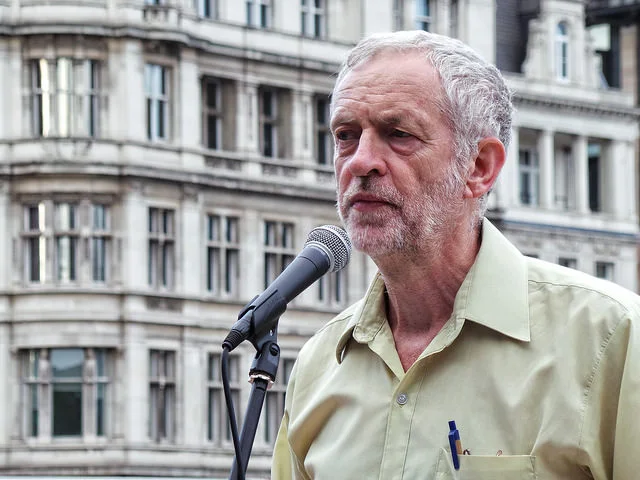
June 27, 2016 /Alastair J R Ball
Corbyn
EU flag.jpg

What does a Brexit vote mean for the left?

June 26, 2016 by Alastair J R Ball in EU referendum

We were told it would never happen. We were told the public was too sensible for this. We were told no-one ever lost an election running on the platform of a stronger economy. We were told wrong. This is not the Britain we thought it was.

Brexit, and the fall of a moderate pro-European Prime Minister, is the result of this massive assumption. To the outward observer, this looks very much like a right wing palace coup. The higher offices of government will soon be held by Boris Johnson (a man who would support King Herod if it would get him one inch closer to Downing Street), Michael Gove, Chris Grayling and Iain Duncan Smith. Nigel Farage has been on TV, looking like the cat that got the cream. You could be forgiven for thinking that the country lurched to the right on Thursday.

You would be wrong. Not everyone who voted for Brexit voted for the above – although it was very likely to happen. The EU referendum campaign showed how divided Britain is, but this is not a country divided by left and right. The division in this election was between those doing well and those losing out from globalisation. Those who voted for Brexit were drawn from the ranks of Labour, Tory, UKIP and non-voters. This election redrew the political map. This is the only election that I have found myself arguing alongside Tories and against members of my own party. Brexit was not caused by a surge in support for the right.

Many people who voted for Brexit wanted to shake up the political system that is working against them. They had voted Labour or Tory and nothing changed in their lives, their communities, or their towns. So they voted against the thing that the leaders of all the main parties were telling them support. Brexit may have been a moment of anti-establishment hatred, crystallised into action, but it is a false one. This result will not hurt the establishment. The recession and right wing Tory government that is likely to follow will hurt the poorest most. We have kicked out an Etonian Oxford graduate from Number 10 to be replaced by an Etonian Oxford graduate.

The anger at the political and economic establishment that led to Brexit should be fueling the left, however the left has failed to win support from those who lose out from globalisation. The Labour Party is currently sleep walking into a major election defeat – one that moved much closer now that the Prime Minister has resigned.

There is no plan to take back the country, from either the Jeremy Corbyn leadership or his critics. There is no plan to appeal to anyone outside the narrow band of middle class, metropolitan liberals who already support the Labour Party. Their lacklustre EU referendum campaign shows this. Labour should have found a way to reach out to disaffected Brexit supporters, but Labour could not get its message out to those who are losing out from globalisation.

This problem is not unique to Labour. Cameron was a much better communicator than anyone on the Labour front bench. He had a much more disciplined communication team and a much better grasp of strategy, but still failed to effectively communicate the benefits of staying in the EU to those who were opposed to it. Even the heavy-handed doom mongering of leaving did not work.

Politicians of all stripes have lost the ability to talk or listen to large sections of society. Before her death, Jo Cox told the Guardian that she was concerned that voting for Brexit had given large groups of Labour supporters the confidence to switch to voting for UKIP in future elections. The consequences for Labour from this inability to talk to their natural supporters could be dire.

Labour need to change its approach to stand a chance of winning an election in the future. This does not mean that Labour should shift to the right. The assumption that Brexit is an indication that the country is drifting further to political right is a false one. The new senior members of government will be more right wing, but the country is not rushing to embrace the Tory right. Labour have an opportunity to present a passionate, policy driven and genuine opposition to the government.

Scotland is making moves towards independence again (which is bad news if Labour want to be back in government). There are renewed calls for a united Ireland and a letter of no confidence against Corbyn has been submitted by MPs. Brexit has shaken up the political establishment and the political landscape could be very different by the end of year. Everything is up in the air right now.

Labour (and the left in general) need to think about how we are going to change our approach after this vote. Corbyn’s authentic nature and outsider status has endeared him to some voters alienated by Blair’s smooth, heavily media trained politicians, but the increasing transformation of Labour into a party of middle class, metropolitan liberals has alienated others. The lack of a clear strategy to win back popular support (again this criticism applies to all factions of the party) is troubling.

The left could not convince people of the merits of staying in the EU. Now the poorest members of society will suffer the most under a new recession, Prime Minister Boris Johnson and the new austerity plus that is likely to follow.

We are not living in the Britain that UKIP and the Tory right want us to live in, but it is quickly becoming it. The lesson the left need to learn today is that we need to get better at listening to and talking to the people who are losing out from globalisation, the people who are outside our usual communication comfort zone. If we the left can unite divided Britain, then we can achieve real progress. If we continue the way we are - then the future is bleak indeed.

EU flag image created by Yanni Koutsomitis and used under creative commons.
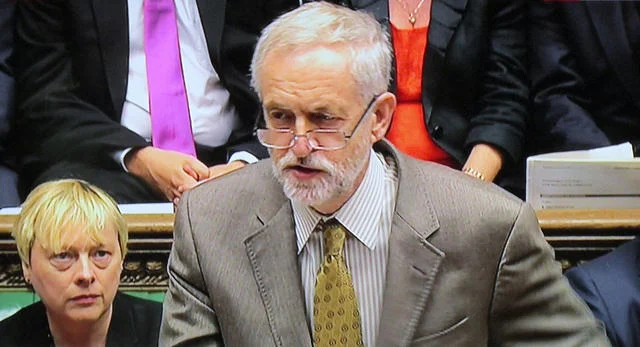
June 26, 2016 /Alastair J R Ball
EU referendum
  • Newer
  • Older

Powered by Squarespace

Related posts
Gaza-War.jpg
May 11, 2026
Max Weber’s thoughts on violence are as relevant today as they were in 1918
May 11, 2026
May 11, 2026
Wetherspoons.jpg
Apr 1, 2026
Last Orders for the Soul: The Bohemian Boozer and the British Psyche
Apr 1, 2026
Apr 1, 2026
polling-station.jpg
Mar 23, 2026
The Green victory shows the perils of Labour’s move to the right
Mar 23, 2026
Mar 23, 2026
Iran-war.jpg
Mar 9, 2026
Trump unleashes his politically incorrect war on Iran because of vibes
Mar 9, 2026
Mar 9, 2026
Keir_Starmer.jpg
Feb 28, 2026
Can someone please explain to me why Peter Mandelson keeps getting important jobs?
Feb 28, 2026
Feb 28, 2026
andrzejrembowski-microphone-4319526_640.jpg
Feb 23, 2026
The pressure on mental health services under late capitalism and how art therapy can help in the fight against the far-right: A conversation with activist and art psychotherapist Cat MacGregor
Feb 23, 2026
Feb 23, 2026
Trump-rally.jpg
Feb 15, 2026
Why does Trump get away with this unhinged foreign policy?
Feb 15, 2026
Feb 15, 2026
Feb 3, 2026
Legislating tech companies, free speech and porn: discourse on the online safety bill
Feb 3, 2026
Feb 3, 2026
polling-station.jpg
Jan 8, 2026
It’s a new year so here are some things that give me hope right now
Jan 8, 2026
Jan 8, 2026
Keir_Starmer.jpg
Jan 1, 2026
2025: The year of “stability”
Jan 1, 2026
Jan 1, 2026

Privacy Policy
Cookie Policy